Preparation is the key to success in any interview. In this post, we’ll explore crucial Air Traffic Control and Surveillance interview questions and equip you with strategies to craft impactful answers. Whether you’re a beginner or a pro, these tips will elevate your preparation.
Questions Asked in Air Traffic Control and Surveillance Interview
Q 1. Explain the concept of ‘sterile cockpit’ and its importance.
The ‘sterile cockpit’ rule is a critical safety procedure in aviation, mandating that all non-essential activities be suspended during critical phases of flight. These phases typically include taxi, takeoff, approach, and landing, as well as any other times when the flight crew’s full attention is needed for safe operation. Think of it like this: imagine a surgeon performing a complex operation – distractions are unacceptable. Similarly, during these crucial flight phases, the cockpit needs to be focused on the primary task of safely controlling the aircraft.
Its importance lies in minimizing distractions for the pilots. A conversation about a weekend trip, for instance, might seem trivial, but it could divert attention at a critical moment, leading to potential errors in judgment or response. By enforcing a sterile cockpit, the risk of human error—the leading cause of aviation accidents—is significantly reduced. The rule ensures that pilots are fully concentrated on flight controls, navigation, communication with air traffic control, and monitoring aircraft systems.
Q 2. Describe the different types of radar used in air traffic control.
Air traffic control utilizes several types of radar systems to track aircraft. Primary radar, the most basic type, transmits radio waves and measures the time it takes for the signal to bounce off the aircraft and return. This provides range information. However, it only identifies the aircraft’s position – no information on the aircraft’s identity or altitude is available.
Secondary radar, on the other hand, interacts with a transponder on board the aircraft. This transponder receives the radar signal and sends back information about the aircraft’s identity, altitude, and sometimes even speed. This vastly improves the precision and detail of the information ATC receives. Think of primary radar as a simple ‘blip’ on a screen; secondary radar adds a ‘label’ with identifying information.
Weather radar is another crucial tool. It’s used to detect precipitation and other weather phenomena, which are critical for flight safety and planning. Knowing the location and intensity of storms allows controllers to reroute aircraft, avoiding hazardous weather conditions.
Q 3. What are the limitations of radar surveillance?
While radar is an invaluable tool in air traffic control, it does have limitations. One key limitation is its susceptibility to ground clutter. This refers to radar signals bouncing off buildings, mountains, or other ground obstacles, producing false echoes and potentially obscuring actual aircraft.
Another limitation is the effect of weather conditions. Heavy rain or snow can significantly attenuate radar signals, reducing the range and accuracy of tracking. Furthermore, radar can’t ‘see’ through clouds, and in areas with significant cloud cover, it can be challenging to maintain a clear picture of all aircraft.
Finally, radar doesn’t provide information on aircraft intentions. While it shows an aircraft’s position and speed, it doesn’t indicate whether the pilot plans to turn, climb, or descend. This is where pilot communication with ATC becomes crucial for maintaining safe separation.
Q 4. Explain the process of conflict resolution in a busy airspace.
Conflict resolution in busy airspace is a dynamic process requiring swift and accurate decision-making. When two or more aircraft approach too close for safety, controllers employ several strategies to resolve the conflict.
First, the controller assesses the situation, considering the aircraft’s altitudes, speeds, and headings. They then issue instructions to one or both aircraft, such as altering their altitude, heading, or speed to maintain safe separation. These instructions are carefully worded and unambiguous, prioritizing the safety and efficiency of the situation.
For example, if two aircraft are converging on the same altitude, the controller may instruct one to climb or descend to a different altitude, providing sufficient vertical separation. If the aircraft are converging horizontally, a heading change might be issued. The controller constantly monitors the situation, making adjustments as needed to maintain safety throughout the conflict resolution process.
In high-traffic areas, sophisticated computer systems aid in the detection and resolution of conflicts, providing automated alerts and suggesting appropriate maneuvers. These tools assist controllers, but the final decision-making remains with the human controller, who brings judgment and situational awareness.
Q 5. How do you handle communication with pilots during emergencies?
Communication during emergencies is crucial. Controllers use clear, concise, and standardized phraseology to convey information efficiently and avoid misunderstandings. The priority is always to convey essential information to the pilot and support them in addressing the emergency.
First, the controller calmly establishes communication, confirming the nature and severity of the emergency. The priority is always to maintain a calm, confident tone, reassuring the pilot. Instructions are issued clearly and directly, while actively listening for responses and confirming understanding.
Depending on the nature of the emergency, the controller may coordinate with emergency services (fire, ambulance, etc.), relaying crucial information to facilitate rescue efforts. They may also coordinate with other controllers, for example, to clear a runway for an emergency landing or redirect other aircraft to prevent interference.
Effective communication in an emergency relies on training, experience, and precise adherence to established communication protocols. The ability to stay calm and think clearly under immense pressure is paramount in this situation.
Q 6. Describe your understanding of Instrument Flight Rules (IFR) and Visual Flight Rules (VFR).
Instrument Flight Rules (IFR) and Visual Flight Rules (VFR) are two sets of regulations governing the operation of aircraft. IFR procedures apply when a pilot relies primarily on instruments for navigation, primarily in instrument meteorological conditions (IMC) – conditions with low visibility, such as clouds, fog, or heavy rain. Pilots flying under IFR must file a flight plan, receiving clearances from ATC throughout the flight.
VFR operations, on the other hand, involve pilots who primarily rely on visual cues for navigation in visual meteorological conditions (VMC) – when they can clearly see outside the aircraft. While ATC still provides advisories, pilots operating under VFR have greater flexibility in flight planning and execution. Think of it this way: VFR is like driving a car on a sunny day, while IFR is like driving the same car in a blizzard – you need instruments and guidance to stay safe.
The choice between IFR and VFR depends on the weather conditions, the pilot’s qualifications, and the aircraft’s capabilities. IFR operations are significantly more regulated and require specific training and certifications, reflecting the increased complexity and challenges of flying in poor visibility.
Q 7. What are the responsibilities of an air traffic controller in managing aircraft separation?
Maintaining aircraft separation is a fundamental responsibility of an air traffic controller. This involves ensuring that sufficient distance exists between aircraft to prevent collisions. The required separation distances depend on several factors, including aircraft type, altitude, and the operational environment.
Controllers use radar and other surveillance tools to monitor the positions of aircraft and predict their future trajectories. They issue instructions to pilots, such as altitude changes, heading adjustments, or speed adjustments, to maintain or restore safe separation. This requires a deep understanding of airspace regulations, flight procedures, and the capabilities of various aircraft types.
In busy airspace, controllers leverage sophisticated computer systems that aid in predicting potential conflicts and propose solutions. However, they still maintain overall responsibility for safety and must make informed decisions based on their professional judgment. Their role is not just about following procedures but also about actively managing the flow of traffic to ensure the safety and efficiency of the airspace.
Q 8. How do you manage multiple aircraft approaching an airport simultaneously?
Managing multiple aircraft approaching an airport simultaneously is a complex task requiring precise coordination and adherence to established procedures. It’s like a conductor leading an orchestra, ensuring each instrument (aircraft) plays its part harmoniously without collisions. We use a combination of techniques:
- Sequencing: Aircraft are assigned arrival times and routes based on their estimated time of arrival (ETA), speed, and runway availability. This is often done using sophisticated software that takes into account wind conditions, aircraft type, and other factors.
- Spacing: We maintain safe separation distances between aircraft both horizontally and vertically, using radar and other surveillance technologies to monitor their positions accurately. These minimum separations are dictated by regulations and aircraft performance characteristics.
- Vectoring: We issue precise instructions to pilots, guiding them along specific flight paths using headings, altitudes, and speeds. This allows us to efficiently manage traffic flow and minimize delays.
- Coordination: We communicate constantly with other controllers, both within the airport and at neighboring facilities, to ensure a seamless handover of aircraft as they transition between different sectors of airspace.
For example, during peak hours, we might utilize different arrival procedures, such as parallel approaches, to increase runway capacity. We also prioritize aircraft based on factors such as emergency situations, fuel reserves, and weather conditions.
Q 9. Explain your understanding of the various types of airspace classifications.
Airspace classification categorizes airspace based on the level of air traffic control and the types of flight operations permitted. Think of it as zoning for the sky. Different zones have different rules and regulations.
- Class A: Highest altitude, IFR (Instrument Flight Rules) only, controlled by ATC. Like a highly secured area requiring advanced permissions and equipment.
- Class B: Surrounds major airports, requiring prior authorization and two-way radio communication. Think of a bustling city center with strict access control.
- Class C: Similar to Class B but with slightly less stringent requirements. A smaller, more manageable city.
- Class D: Usually surrounds smaller airports, with controlled airspace during operating hours. Like a suburban area with controlled access during certain times.
- Class E: Generally uncontrolled airspace at higher altitudes, extending from Class D or C airspace upwards. Think of open country with some guidance available.
- Class G: Uncontrolled airspace, generally below 1200ft AGL (above ground level). Like open wilderness, pilots are responsible for their own separation.
Understanding these classifications is crucial for pilots to plan their flights and for controllers to manage air traffic safely and efficiently. A pilot flying in Class A airspace will have much more interaction with ATC than a pilot flying in Class G.
Q 10. How do you use weather information to make air traffic control decisions?
Weather information is absolutely critical in air traffic control. We use various sources, including radar, satellite imagery, pilot reports (PIREPs), and automated weather observation systems (AWOS/ASOS). This information allows us to anticipate potential problems and make informed decisions.
- Route Planning: We might reroute aircraft around areas of severe weather, such as thunderstorms or heavy snow. Think of redirecting traffic around a flooded road.
- Departure Delays: If the weather is poor at the destination, we may delay departures to avoid potential diversions or holding patterns. This prevents unnecessary delays and fuel consumption.
- Holding Patterns: We might use holding patterns to keep aircraft separated and safe while awaiting improved weather conditions. Similar to managing a queue in traffic.
- Minimums: We will monitor weather conditions to ensure aircraft can meet the required minimums (visibility, ceiling) for approach and landing. This guarantees a safe approach even in challenging conditions.
For example, if a strong thunderstorm is predicted to move over an airport’s approach path, we may proactively hold arriving flights or divert them to a nearby airport. This prevents potentially hazardous conditions for aircraft.
Q 11. Describe your experience with different types of air traffic control systems.
I have extensive experience with various air traffic control systems, both ground-based and radar-based. These systems are constantly evolving to improve safety and efficiency.
- Radar systems: These provide real-time tracking of aircraft positions, allowing us to monitor separation and guide aircraft. Think of it like a live map showing the location of every aircraft.
- Automated Dependent Surveillance-Broadcast (ADS-B): This technology allows aircraft to transmit their position data directly to the ground, increasing precision and reducing reliance on traditional radar.
- Data Communication Systems (DCS): These systems allow for faster and more efficient communication between controllers and pilots. Like instant messaging for air traffic control.
- Tower control systems: These systems manage aircraft movements on the ground, ensuring safe taxiing and runway operations.
- Arrival and Departure management systems: These systems help manage and coordinate the arrival and departure flow of aircraft.
My experience encompasses both traditional radar systems and the newer, data-driven technologies. The transition to these newer systems requires continuous training and adaptation to maximize their benefits while maintaining safety.
Q 12. What is your understanding of NOTAMs (Notice to Airmen)?
NOTAMs, or Notices to Airmen, are essential safety messages that provide critical information about potential hazards to flight operations. They are like important announcements, broadcasting potential disruptions or changes in the flight environment.
NOTAMs might inform about:
- Runway closures: A runway might be closed due to construction or repairs.
- Construction or obstructions: A new building or construction might affect aircraft operations.
- Weather hazards: Severe weather conditions like thunderstorms or fog might affect flights.
- Equipment outages: Navigation aids or other essential equipment might be temporarily unavailable.
- Military activities: Military exercises or operations may temporarily restrict airspace.
Pilots are required to check NOTAMs before each flight to ensure they are aware of any potential hazards and can plan their flights accordingly. Controllers also use NOTAMs to plan traffic flows and make necessary adjustments.
Q 13. Explain the importance of maintaining situational awareness.
Maintaining situational awareness is paramount in air traffic control. It’s the foundation of safe and efficient operations. It’s about having a complete picture of the air traffic around you – like a chess player visualizing the entire board and anticipating opponents’ moves.
This involves:
- Monitoring radar screens: Constantly observing the position and movement of aircraft.
- Listening to radio communications: Paying attention to pilot communications for any potential issues.
- Checking weather reports: Keeping abreast of current and predicted weather conditions.
- Coordinating with other controllers: Sharing information and coordinating movements with other controllers.
- Knowing aircraft performance capabilities: Understanding the limitations of different aircraft types.
Loss of situational awareness can lead to serious incidents. For example, failure to notice an aircraft approaching too closely can result in a near-miss or collision. Maintaining constant alertness and a comprehensive understanding of the traffic environment is crucial.
Q 14. How do you handle communication difficulties with a pilot?
Communication difficulties with a pilot are handled using a structured approach, prioritizing clarity and safety:
- Repeat and Verify: I would repeat the pilot’s transmission to confirm I understand their message correctly. This is crucial for preventing misunderstandings.
- Clarification: If there is any ambiguity, I would ask clarifying questions. Simple, clear language is key.
- Alternative Communication Methods: If radio communication is severely hampered, we could utilize other means, such as data-links or contacting the pilot’s airline directly for assistance. Similar to using multiple channels to get your message through during network failure.
- Emergency Procedures: If communication is completely lost and safety is compromised, we follow emergency procedures which may include diverting the aircraft or initiating a search and rescue operation.
- Documentation: All communication difficulties are meticulously documented to aid in future investigations.
The goal is always to ensure a safe resolution. Clear and precise communication is paramount, and sometimes it involves finding creative ways to overcome obstacles and maintain control.
Q 15. Describe a challenging situation you faced and how you resolved it.
One particularly challenging situation involved a sudden, unexpected thunderstorm cell that developed directly over our airspace. Several aircraft were already inbound, and the rapidly changing weather conditions posed a significant risk of severe turbulence and potential delays.
My immediate action was to coordinate with the weather service for real-time updates on the storm’s movement and intensity. Simultaneously, I instructed the pilots of inbound aircraft to adjust their altitudes and flight paths to circumvent the affected area. This involved clear and concise communication, utilizing standard phraseology, to avoid confusion and ensure safety. We utilized available radar data and weather reports to dynamically adjust flight plans, prioritizing aircraft approaching the most critical points and coordinating with neighboring sectors to manage the overall air traffic flow. I also ensured that the affected runways remained operational for landings while simultaneously managing departures to ensure minimum disruption.
Through swift action, coordinated communication, and effective use of available technology and resources, we successfully navigated the situation, minimizing delays and ensuring the safe landing and departure of all aircraft. This experience highlighted the importance of rapid decision-making, adaptability, and close collaboration within a team under extreme time pressure.
Career Expert Tips:
- Ace those interviews! Prepare effectively by reviewing the Top 50 Most Common Interview Questions on ResumeGemini.
- Navigate your job search with confidence! Explore a wide range of Career Tips on ResumeGemini. Learn about common challenges and recommendations to overcome them.
- Craft the perfect resume! Master the Art of Resume Writing with ResumeGemini’s guide. Showcase your unique qualifications and achievements effectively.
- Don’t miss out on holiday savings! Build your dream resume with ResumeGemini’s ATS optimized templates.
Q 16. What are your strengths and weaknesses related to this role?
My strengths lie in my ability to remain calm and focused under pressure, my strong communication skills, and my proficiency in utilizing air traffic control systems and technologies. I have a proven track record of making sound judgments in complex and rapidly changing situations. I’m also a highly efficient multitasker and a dedicated team player who is committed to continuous learning and professional development.
One area I’m actively working to improve is my delegation skills. While I’m capable of handling a large workload independently, I recognize the benefits of effectively distributing tasks within a team to optimize efficiency and potentially prevent burnout. I’m currently participating in leadership training to refine this aspect of my skillset.
Q 17. How do you prioritize tasks under pressure?
Prioritizing tasks under pressure relies heavily on a combination of risk assessment and urgency. I use a system that prioritizes tasks based on their impact on safety and their time sensitivity. This often involves employing a modified version of the Eisenhower Matrix, categorizing tasks as Urgent & Important, Important but Not Urgent, Urgent but Not Important, and Neither Urgent Nor Important. Safety-critical tasks, like resolving a conflict between aircraft, always take precedence. Next, I’ll prioritize tasks with imminent deadlines that could lead to significant delays or safety issues. Finally, I address less time-sensitive but still important tasks such as completing routine checks or paperwork, ensuring all duties are completed effectively and safely.
Imagine a scenario with a potential mid-air collision alert, a delayed aircraft requiring a priority landing, and routine documentation. My prioritization would undoubtedly be: 1) Resolve the mid-air collision alert immediately; 2) manage the priority landing; and 3) complete the documentation afterwards, ensuring it is done within operational parameters.
Q 18. What are your methods for managing stress and fatigue?
Managing stress and fatigue in this high-pressure environment is paramount. My approach is multifaceted. Firstly, I prioritize sufficient sleep and maintain a healthy diet. Secondly, I practice mindfulness and stress reduction techniques such as deep breathing exercises during breaks. Regular physical exercise is also crucial for maintaining both physical and mental well-being. Further, open communication with my colleagues and supervisors is essential; sharing workload and concerns helps prevent burnout. Finally, the ATC facility itself provides resources like counseling services and fatigue management programs, which I utilize as needed. Maintaining a work-life balance is equally crucial, ensuring time for personal pursuits and relaxation outside of work hours. It’s a continuous effort, but well worth it for both safety and mental health.
Q 19. Describe your understanding of aircraft performance characteristics.
Understanding aircraft performance characteristics is fundamental to safe and efficient air traffic management. This knowledge encompasses various aspects, including:
- Takeoff and Landing Performance: I understand the factors affecting takeoff and landing distances, such as weight, runway length, temperature, wind conditions, and aircraft type.
- Cruise Performance: I am familiar with the relationship between altitude, airspeed, fuel consumption, and range for various aircraft types.
- Climb and Descent Rates: Knowing the typical climb and descent rates allows for accurate separation and efficient trajectory management.
- Flight Envelope: I understand the operational limits of various aircraft, including airspeed limits, maneuvering limitations, and service ceilings.
This knowledge isn’t just theoretical; it’s applied daily. For example, when coordinating the spacing of departing aircraft, I consider their takeoff performance data to ensure sufficient separation based on their respective weights and runway conditions. During approach management, I factor in landing distance requirements to ensure safe arrival at the destination.
Q 20. How do you maintain a high level of accuracy in a high-pressure environment?
Maintaining accuracy under pressure in air traffic control relies on a combination of rigorous training, adherence to standard operating procedures, and meticulous attention to detail.
- Standard Operating Procedures (SOPs): Strict adherence to SOPs ensures consistency and reduces errors.
- Cross-checking: I always cross-check information from multiple sources, such as radar data, flight plans, and pilot communications, to verify its accuracy.
- Teamwork: Collaboration within the team allows for error detection and mutual support. If unsure, I always ask for clarification from colleagues.
- Regular Audits and Training: Continuous training and regular proficiency checks maintain skills and knowledge to a high standard.
- Technology: Modern ATC systems incorporate automated checks and alerts, aiding in minimizing errors.
A simple example: Before issuing an instruction to a pilot, I cross-check the aircraft’s position on the radar with its reported position and altitude from the pilot’s communication. This redundancy minimizes the chances of an incorrect instruction. Regular practice keeps my responses automatic and reduces the chance of human error, even in stressful situations.
Q 21. Explain the principles of air traffic flow management.
Air Traffic Flow Management (ATFM) aims to optimize the flow of air traffic across the National Airspace System (NAS) to maximize capacity, minimize delays, and ensure safety. It involves predicting and managing air traffic demand using various tools and strategies to prevent congestion and ensure efficiency.
Key principles include:
- Demand Forecasting: Predicting future air traffic demand to proactively adjust capacity and resources.
- Capacity Management: Optimizing the use of airspace and airport resources to accommodate predicted demand.
- Flow Control: Implementing measures such as speed restrictions or ground delays to manage air traffic flow and prevent congestion.
- Coordination: Collaboration between different ATC facilities and stakeholders, including airlines, airports, and weather services, to coordinate flow management strategies.
- Continuous Monitoring: Real-time monitoring of traffic flow to detect and respond to unexpected events or deviations from the planned flow.
For instance, during peak hours or anticipated weather disruptions, ATFM might implement ground delays to prevent the arrival of too many aircraft at once, exceeding the airport’s capacity or leading to stacking patterns in the sky. This proactive measure, though potentially inconvenient for passengers, prevents more significant delays and ensures safety.
Q 22. How do you ensure the safety of aircraft during periods of low visibility?
Ensuring aircraft safety in low visibility conditions relies heavily on a multi-layered approach. It’s not about a single solution, but a combination of technologies and procedures working together.
- Instrument Flight Rules (IFR): Aircraft operating in low visibility are required to follow IFR procedures, meaning they rely on instruments and radio communication with air traffic control. This allows us to guide them safely to their destination, even without visual contact with the ground or other aircraft.
- Ground-Based Navigation Aids: We utilize various navigational aids such as Instrument Landing Systems (ILS), VOR (VHF Omnidirectional Range), and GPS to provide precise guidance to aircraft. For example, an ILS provides vertical and horizontal guidance to help pilots land safely in poor weather conditions.
- Radar Surveillance: Air traffic controllers use radar systems to monitor the position and movement of aircraft, even in low visibility. This allows us to maintain separation between aircraft and provide timely warnings and instructions.
- Enhanced Communication: Clear, concise, and frequent communication with pilots is paramount. This might involve giving more frequent position updates or providing additional guidance during challenging approaches.
- Minimums: Every airport and approach procedure has published minimums (visibility and ceiling requirements) below which operations are prohibited. We carefully monitor weather conditions and ensure flights operate only within these safe limits.
For instance, I once guided a flight through a heavy fog using only radar and the pilot’s adherence to the prescribed ILS approach. It was a tense but ultimately successful operation demonstrating how layered safety systems are crucial.
Q 23. Describe your familiarity with emergency procedures.
My familiarity with emergency procedures is extensive. Training encompasses various scenarios, from engine failures and medical emergencies to hijackings and severe weather events. We use a standardized approach involving:
- Immediate Action: First priority is always to address the immediate threat and ensure the safety of the aircraft and those on board.
- Communication: Alerting relevant emergency services, such as fire and rescue, and coordinating actions with other air traffic controllers and facilities.
- Coordination: Working closely with other agencies (e.g., airport emergency services, law enforcement) to execute the appropriate emergency response plan.
- Documentation: Meticulous record keeping of all communications, actions taken, and post-incident analysis.
We conduct regular drills and simulations to practice emergency procedures and refine our response capabilities. I have participated in several such simulations that realistically reflected emergency scenarios, ensuring my proficiency and preparation.
Q 24. What is your understanding of the role of ground controllers?
Ground controllers are essential for the safe and efficient movement of aircraft on the ground. Their responsibilities encompass:
- Taxiing: Guiding aircraft from the gate to the runway and vice versa, ensuring they follow designated taxi routes and maintain safe separation from other aircraft and ground vehicles.
- Pushback: Coordinating the movement of aircraft away from the gate, ensuring proper clearance from obstacles.
- Runway Occupancy: Managing runway access, ensuring that only one aircraft occupies the runway at a time, which prevents collisions.
- Emergency Response: Providing immediate assistance to aircraft in distress, guiding them to a safe location or facilitating emergency services.
Think of them as the traffic police of the airport, managing ground traffic just as air traffic controllers manage air traffic. Their role is crucial for seamless airport operations.
Q 25. How do you handle communication with other air traffic control facilities?
Communication with other air traffic control facilities is critical for seamless handoffs and maintaining a cohesive traffic flow. This is achieved through:
- Voice Communication: Primarily via VHF radio, using standardized phraseology to ensure clarity and prevent misunderstandings.
- Data Link Communication: Modern systems often use data link technologies like ADS-B (Automatic Dependent Surveillance-Broadcast) to exchange aircraft position information, which improves efficiency and reduces reliance on voice communication. This is also used to transmit flight plans and other relevant data.
- Coordination: Before handing off an aircraft, controllers coordinate the transfer of responsibility, confirming the receiving controller’s understanding of the aircraft’s status, position, and flight plan.
A typical handoff might involve phrases like, “Tower, departing flight 123 is handed off to Departure Control, 123 is at 5000 feet, maintaining VFR.” The standardized language ensures smooth transitions and reduces the chances of error.
Q 26. Describe your experience with different types of navigation systems.
My experience encompasses a wide range of navigation systems, both ground-based and satellite-based:
- Ground-based Navigation: VOR, ILS, DME (Distance Measuring Equipment) are all essential tools that are integral to instrumental approaches, especially in low-visibility operations.
- Satellite-based Navigation: GPS (Global Positioning System) and WAAS (Wide Area Augmentation System) provide accurate positioning data and are frequently used for en-route navigation and precision approaches, providing more reliable guidance than older, ground-based systems. GNSS (Global Navigation Satellite System) including Galileo and GLONASS are also becoming increasingly important.
- RNAV (Area Navigation): This allows for more flexible routing, reducing reliance on traditional airways, and creating more efficient flight paths.
Understanding the capabilities and limitations of each system is crucial for effective air traffic management. For example, I know that GPS signals can be affected by atmospheric conditions or intentional interference, so I must be aware of these potential limitations when providing guidance to pilots.
Q 27. Explain the concept of handoff procedures between controllers.
Handoff procedures between controllers are designed to ensure a smooth and safe transfer of responsibility for aircraft. This involves:
- Clear Communication: The controllers coordinate using standardized phraseology to clearly communicate the aircraft’s position, altitude, speed, and flight plan.
- Confirmation: The receiving controller confirms their understanding of the aircraft’s status before accepting responsibility.
- Coordination of Frequency Changes: The handover usually includes a prompt for the pilot to change their radio frequency to communicate with the new controller.
- Monitoring: The transferring controller usually monitors for a short period after the handoff to ensure a seamless transition.
Imagine a relay race: one runner (controller) passes the baton (aircraft) to the next, ensuring a clean handover and continuing the race (flight) safely and smoothly. A precise handoff prevents confusion and ensures continuous, safe separation from other aircraft.
Q 28. How do you stay current with changes in aviation regulations and technology?
Staying current with aviation regulations and technology is paramount. I accomplish this through:
- Continuing Education: Regular participation in recurrent training courses and seminars, covering updates to regulations, procedures, and technologies. This also often involves simulator sessions to practice new techniques and scenarios.
- Regulatory Publications: Staying abreast of changes through reviewing official publications from aviation authorities (such as the FAA or ICAO) and industry journals.
- Industry Conferences and Webinars: Attending relevant conferences and webinars to learn about the latest technological developments and best practices.
- Professional Networking: Engaging with other air traffic controllers and industry professionals to share knowledge and stay informed of emerging trends.
The aviation industry is constantly evolving, with new technologies and regulations being implemented regularly. Continuous learning is essential for maintaining competence and providing safe and efficient air traffic control.
Key Topics to Learn for Air Traffic Control and Surveillance Interview
- Air Traffic Flow Management: Understanding concepts like sectorization, conflict resolution, and efficient aircraft sequencing. Practical application includes analyzing radar data to predict potential conflicts and proactively implement solutions.
- Radar Systems and Navigation: Familiarize yourself with primary and secondary surveillance radar, their limitations, and how they contribute to safe and efficient air traffic management. Consider practical applications like interpreting radar returns and understanding the impact of weather on radar performance.
- Communication Procedures: Mastering clear, concise, and standardized communication protocols is crucial. Practical application includes understanding phraseology, emergency procedures, and effective communication under pressure.
- Meteorology and its Impact on Flight Operations: Understanding weather phenomena and their effects on flight safety and efficiency. Practical application involves interpreting weather reports and making informed decisions based on weather conditions.
- Aeronautical Regulations and Procedures: A strong understanding of relevant regulations and procedures is essential. This includes knowing how to apply rules and procedures to various scenarios.
- Emergency Procedures and Response: Thorough understanding of emergency procedures and response protocols for various scenarios. This includes practical application of decision-making under pressure and prioritizing safety.
- Human Factors and Teamwork: Understanding the importance of situational awareness, teamwork, and stress management in a high-pressure environment. This involves reflecting on how individual actions impact the team and overall safety.
Next Steps
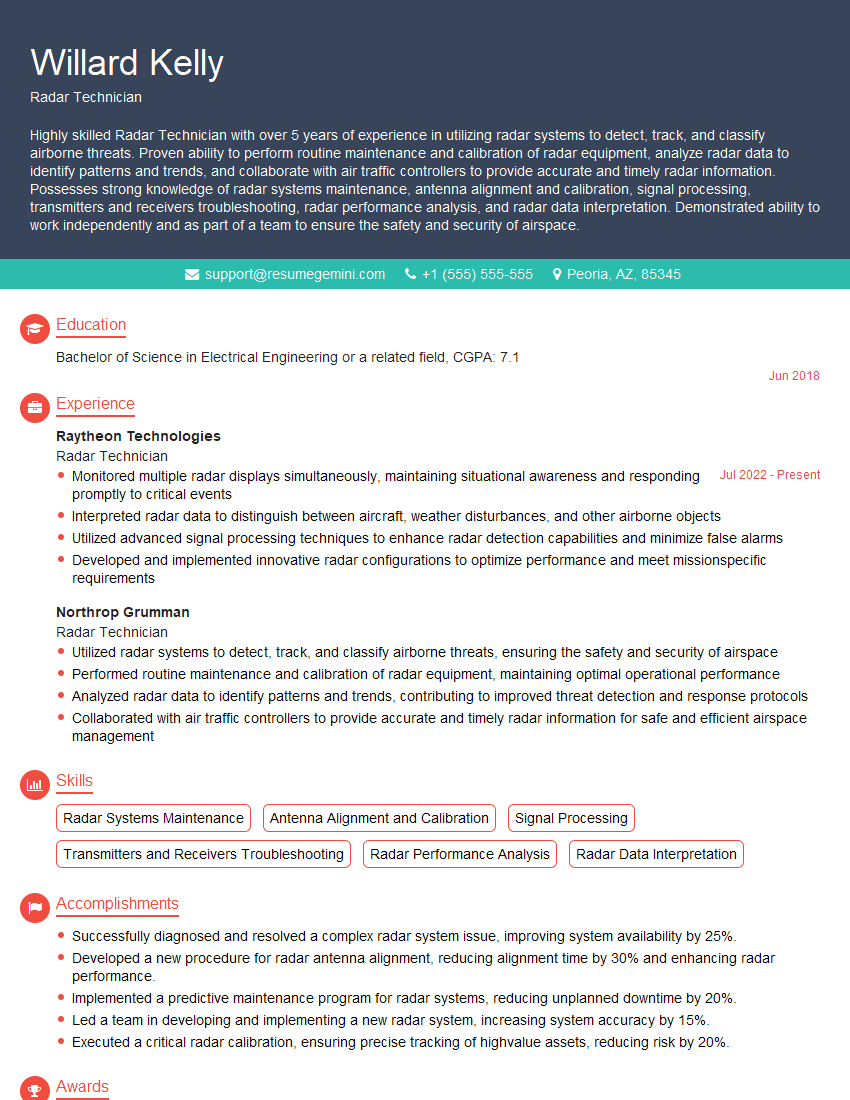
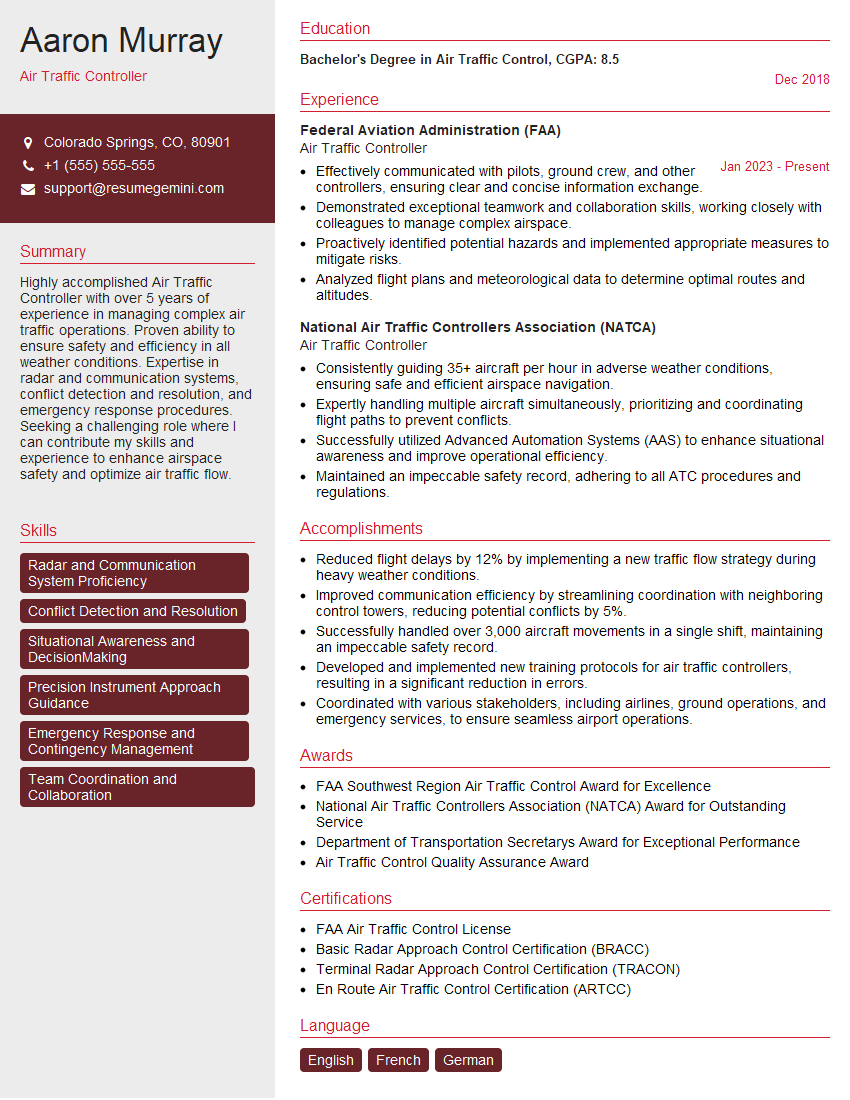
Mastering Air Traffic Control and Surveillance opens doors to a rewarding career with significant responsibility and impact on global aviation safety. To maximize your job prospects, creating a compelling and ATS-friendly resume is crucial. ResumeGemini can help you build a professional resume that highlights your skills and experience effectively. We provide examples of resumes tailored to the Air Traffic Control and Surveillance field to guide you through the process. Invest time in crafting a strong resume – it’s your first impression on potential employers.
Explore more articles
Users Rating of Our Blogs
Share Your Experience
We value your feedback! Please rate our content and share your thoughts (optional).
What Readers Say About Our Blog
Very informative content, great job.
good