Every successful interview starts with knowing what to expect. In this blog, we’ll take you through the top Subsurface Exploration interview questions, breaking them down with expert tips to help you deliver impactful answers. Step into your next interview fully prepared and ready to succeed.
Questions Asked in Subsurface Exploration Interview
Q 1. Explain the difference between seismic reflection and refraction methods.
Seismic reflection and refraction methods are both geophysical techniques used to image subsurface structures, but they differ in how they utilize seismic waves. Imagine throwing a pebble into a pond; you see ripples (waves) spreading out. Similarly, seismic sources generate waves that travel through the Earth.
Seismic reflection focuses on the waves that reflect off subsurface interfaces (boundaries between layers with different properties, like rock types). These reflected waves return to the surface where sensitive sensors (geophones) detect them. The time it takes for these waves to travel down and back up allows us to determine the depth of the reflecting interfaces, essentially creating a picture of the subsurface. Think of it like an echo – the sound bouncing back tells you about the object it hit.
Seismic refraction, on the other hand, analyzes the waves that refract (bend) as they pass through different layers. The bending occurs because the wave velocity changes as it enters a layer with different properties. By measuring the travel times of these refracted waves, we can determine the velocities in different layers, which helps us infer their properties and depths. It’s like observing how light bends as it passes from air into water – the change in direction reveals information about the water’s properties.
In summary: Reflection methods use reflected waves to image interfaces, while refraction methods use refracted waves to determine layer properties and velocities. Reflection is more commonly used for detailed subsurface imaging, especially in hydrocarbon exploration, while refraction is often used for shallower investigations or to determine the velocity structure of the subsurface.
Q 2. Describe the principles of well logging and its applications.
Well logging is a crucial technique in subsurface exploration that involves lowering various instruments, called logging tools, into a borehole to measure various physical properties of the rocks and fluids within the well. It’s like taking a detailed medical scan of a geological formation.
The principles are based on the interaction of the logging tools with the surrounding formations. Different tools measure different properties, such as:
- Gamma ray logging: Measures natural radioactivity, indicating the type and lithology of the rocks.
- Resistivity logging: Measures the electrical resistance of the formations, providing information about the presence of hydrocarbons (which are resistive) and water (which is conductive).
- Porosity logging: Measures the amount of pore space in the rock, which is critical for hydrocarbon storage.
- Density logging: Measures the bulk density of the formations, helping to determine lithology and porosity.
- Neutron logging: Measures the hydrogen index, which is related to porosity and fluid content.
Applications of well logging are numerous, including:
- Identifying reservoir rocks and determining their properties (porosity, permeability, fluid saturation).
- Correlating different strata between different wells.
- Defining the boundaries of hydrocarbon accumulations.
- Monitoring production performance of wells.
- Guiding drilling operations and placement of casing.
Q 3. How do you interpret well logs to determine reservoir properties?
Interpreting well logs involves analyzing the data obtained from different logging tools to determine reservoir properties. This is a multi-step process that often relies on integrating information from different logs.
For example, to determine porosity, we might use density and neutron logs. The density log measures the bulk density, while the neutron log measures the hydrogen index. Combining these logs allows us to estimate the porosity of the formation, considering the densities of the rock matrix and fluids within the pores.
To determine water saturation, we often use resistivity logs. Hydrocarbons have a much higher resistivity than water. By comparing the measured resistivity with the resistivity of the water, we can estimate the fraction of the pore space that contains hydrocarbons.
Permeability, which is a measure of the ease with which fluids flow through a rock, is more challenging to directly measure from logs. However, we can often infer permeability from porosity and other measurements like the formation factor (derived from resistivity logs). Empirical relationships between porosity, formation factor, and permeability are often used.
Furthermore, lithology (the type of rock) can be inferred from the combination of gamma ray, density, and neutron logs. Each rock type has characteristic signatures in these logs.
This interpretation process often involves using specialized software and considering the geological context of the well location. Experienced petrophysicists play a vital role in this process, ensuring accurate interpretation and reliable estimates of reservoir properties.
Q 4. What are the different types of seismic waves and how are they used in subsurface exploration?
Seismic waves are elastic waves that propagate through the Earth. Several types exist, but the most important for subsurface exploration are P-waves (primary waves) and S-waves (secondary waves).
P-waves are compressional waves, meaning they cause particles in the medium to vibrate parallel to the direction of wave propagation. Think of a slinky being compressed and expanded; P-waves are the fastest and can travel through solids, liquids, and gases.
S-waves are shear waves; particles vibrate perpendicular to the direction of wave propagation. Think of moving a rope up and down – the wave travels along the rope, but the rope itself moves perpendicularly. S-waves are slower than P-waves and cannot travel through liquids or gases, only solids.
In subsurface exploration, both P- and S-waves are used, but P-waves are more commonly recorded because of their faster propagation and ability to travel through all materials. The difference in arrival times between P- and S-waves can provide information about the elastic properties of the rocks. Additionally, surface waves (like Rayleigh and Love waves) are also present but are typically filtered out, as they mostly carry near-surface information.
The data from these waves are used to build subsurface images (seismic sections), identifying structures, faults, and horizons relevant to hydrocarbon exploration and other geological studies.
Q 5. Explain the concept of porosity and permeability in reservoir rocks.
Porosity and permeability are two fundamental properties of reservoir rocks that determine their ability to store and transmit fluids (like oil and gas). Imagine a sponge:
Porosity is the fraction of the total rock volume that is occupied by pore spaces (voids). It’s essentially how much ‘space’ is available to hold fluids. A higher porosity means more space available to store hydrocarbons. Porosity is expressed as a percentage (e.g., 20% porosity means 20% of the rock is pore space).
Permeability is a measure of how easily fluids can flow through the pore spaces. It depends not only on the amount of pore space but also on the size, shape, and interconnection of the pores. Even a highly porous rock can have low permeability if the pores are small, isolated, or poorly connected. Permeability is expressed in darcies (or millidarcies), a unit that reflects the flow capacity.
Both porosity and permeability are crucial for assessing the hydrocarbon potential of a reservoir. A reservoir needs both high porosity (to store a large volume of hydrocarbons) and high permeability (to allow for efficient production). Rocks with low porosity or permeability are generally poor hydrocarbon reservoirs.
Q 6. How do you identify potential hydrocarbon traps using seismic data?
Seismic data helps identify potential hydrocarbon traps by revealing subsurface structures that can prevent hydrocarbons from migrating upwards and escaping to the surface. Hydrocarbon traps need a reservoir rock (porous and permeable), a seal (impermeable layer to prevent upward migration), and a structure that provides a ‘closure’ to prevent lateral escape.
Seismic data allows us to identify several types of traps:
- Anticline traps: These are formed by upward folds in the rock layers, creating a dome-like structure where hydrocarbons accumulate at the crest.
- Fault traps: Faults (fractures in the rock) can create barriers to hydrocarbon migration, trapping hydrocarbons against the fault plane.
- Stratigraphic traps: These traps are created by variations in rock layers, such as unconformities (erosional surfaces) or changes in porosity and permeability that prevent hydrocarbon migration.
Seismic interpretation involves identifying these structures on seismic sections. We look for:
- Closed structures: These are subsurface geometries that form a bowl-shaped or dome-shaped structure, preventing hydrocarbon escape.
- Changes in acoustic impedance: The boundary between hydrocarbon-saturated rocks and surrounding rocks will often exhibit a noticeable change in acoustic impedance (product of rock density and velocity), which is reflected as a bright spot or a distinctive reflection on a seismic section.
- Flat spots: These are horizontal reflections which often indicate the presence of a hydrocarbon-water contact (the interface between hydrocarbons and water).
The presence of these features on seismic data, combined with other geological information, allows geoscientists to assess the potential of a structure to form a hydrocarbon trap.
Q 7. Describe the process of geological modeling.
Geological modeling is the process of creating a 3D representation of the subsurface geology. It integrates various data sources, such as seismic data, well logs, and geological maps, to build a detailed model of the subsurface structures, stratigraphy, and properties. This is analogous to creating a detailed blueprint of the Earth’s subsurface.
The process generally involves these steps:
- Data Acquisition and Processing: Gathering and processing of all relevant geological and geophysical data.
- Horizon Picking and Fault Interpretation: Identifying key geological horizons and faults on seismic data and well logs.
- Structural Modeling: Building a 3D model representing the geometry of the faults and folds. This step uses the horizon and fault interpretations to create a framework for the subsequent steps.
- Property Modeling: Assigning geological properties to different layers, such as porosity, permeability, and fluid saturation. These property models are created using well log data, core analysis results, and seismic data. Geostatistical techniques are often employed here.
- Model Validation and Updating: Comparing the model with available data and refining it as needed. This iterative process improves model accuracy and consistency.
The resulting geological model provides a valuable tool for reservoir characterization, resource estimation, and planning of drilling and production operations. Different software packages are available to aid in this complex process, utilizing powerful algorithms and visualization techniques.
Q 8. What are the different types of drilling fluids and their functions?
Drilling fluids, also known as muds, are crucial in subsurface exploration. They serve multiple vital functions during the drilling process. The type of fluid used depends heavily on the specific geological formation being drilled and the desired outcome.
Water-based muds: These are the most common and cost-effective. They consist of water, clay, and various additives to control properties like viscosity, density, and filtration. They are suitable for many formations but may not be ideal in high-temperature or high-pressure environments.
Oil-based muds: These are used in challenging formations, offering better lubricity and preventing wellbore instability. They are more expensive and pose environmental concerns, requiring careful management. They are often employed in shale formations or where significant pressure challenges exist.
Synthetic-based muds: These are environmentally friendly alternatives to oil-based muds. They provide similar performance benefits with reduced environmental impact. They are a more sustainable option though often more expensive than water based muds.
Air/Gas drilling: In certain formations, air or gas can be used as a drilling fluid, especially in shallower, stable formations. This method is faster and cleaner but may not be suitable for all conditions.
The functions of drilling fluids include:
- Cooling and lubricating the drill bit: Preventing overheating and wear.
- Removing cuttings from the wellbore: Ensuring a clear path for drilling.
- Controlling formation pressure: Preventing blowouts and maintaining wellbore stability.
- Supporting the wellbore walls: Preventing collapse of unstable formations.
- Protecting the environment: Minimizing contamination risks.
Choosing the right drilling fluid is a critical decision based on a thorough understanding of the subsurface conditions and operational objectives.
Q 9. Explain the concept of formation pressure and its significance.
Formation pressure refers to the pressure exerted by the fluids (water, oil, gas) within the pores and fractures of a rock formation. Understanding formation pressure is absolutely vital for safe and efficient subsurface exploration.
Significance:
Wellbore stability: If the formation pressure is higher than the pressure exerted by the drilling fluid (mud pressure), a blowout can occur – a dangerous and potentially catastrophic event where formation fluids surge uncontrollably to the surface. Conversely, if the mud pressure is too high, it can cause formation fracturing or collapse.
Drilling efficiency: Proper management of formation pressure allows for optimal drilling parameters, reducing the risk of complications and improving overall drilling speed.
Reservoir characterization: Formation pressure data helps determine reservoir properties like porosity and permeability, providing insights into hydrocarbon accumulation.
Production forecasting: Understanding formation pressure aids in predicting reservoir performance and optimizing production strategies.
Imagine a pressurized balloon underground: the pressure inside is the formation pressure. If we puncture the balloon (drill a well) without managing this pressure, the contents will erupt. Careful monitoring and control are essential.
Q 10. How do you evaluate the risk associated with subsurface exploration projects?
Risk evaluation in subsurface exploration is a systematic process aimed at identifying, analyzing, and mitigating potential hazards. It’s crucial to ensure project safety, efficiency, and cost-effectiveness.
A common framework involves:
Hazard Identification: Identifying potential hazards like geological instability, unexpected formation pressures, equipment failure, environmental impacts, and regulatory non-compliance.
Risk Assessment: Evaluating the likelihood and consequences of each identified hazard. This often involves assigning probabilities and severity levels (e.g., low, medium, high).
Risk Mitigation: Developing strategies to reduce the likelihood or impact of high-risk hazards. This might include using specialized drilling techniques, implementing enhanced safety protocols, or employing contingency plans.
Risk Monitoring and Review: Continuously tracking and updating the risk assessment throughout the project lifecycle, adjusting strategies as needed based on new data or changing conditions. This may involve regular safety meetings and reviews of operational procedures.
For example, drilling in a seismically active area requires a detailed seismic hazard assessment, incorporating measures to handle potential ground movement and wellbore instability. Similarly, drilling near environmentally sensitive areas necessitates stringent environmental impact assessments and mitigation strategies.
Q 11. Describe the various methods used for subsurface imaging.
Subsurface imaging employs various techniques to create visual representations of subsurface formations. The choice of method depends on the target depth, desired resolution, and geological context.
Seismic reflection: This is the most widely used method, employing sound waves to image subsurface structures. Different rock layers reflect sound waves differently, creating a seismic image representing their geometry and properties.
Seismic refraction: This method uses the bending of sound waves as they travel through different rock layers to determine layer velocities and depths. It’s particularly useful for imaging the shallower subsurface.
Electromagnetic methods: These techniques employ electromagnetic waves to detect variations in electrical conductivity or magnetic susceptibility of subsurface materials. They are useful for locating conductive ore bodies or mapping groundwater resources.
Gravity and magnetic surveys: These passive methods measure variations in the Earth’s gravitational and magnetic fields, indicating density and magnetic susceptibility contrasts in the subsurface. They provide broader-scale information about geological structures.
Borehole logging: This involves deploying various sensors down a borehole to measure different physical properties (e.g., density, porosity, resistivity) of the surrounding formations. It provides high-resolution data along the wellbore.
Imagine taking an X-ray of the Earth: each method provides a different ‘view’ allowing geologists to build a comprehensive understanding of the subsurface.
Q 12. What are the common challenges encountered during subsurface exploration?
Subsurface exploration presents several challenges, often interconnected and requiring innovative solutions.
Uncertainties in subsurface data: Geophysical and geological data are often indirect and subject to interpretation. Uncertainties can lead to misinterpretations and inaccurate predictions.
High cost and risk: Exploration projects are expensive and risky, demanding careful planning and risk management.
Technological limitations: Current technologies might not always provide sufficient resolution or reach desired depths.
Environmental regulations and concerns: Exploration activities must adhere to strict environmental regulations and minimize any potential impact on the environment.
Access limitations: Difficult terrain, remote locations, and political issues can impede access to exploration sites.
Data integration and interpretation: Integrating data from multiple sources (e.g., seismic, well logs, geological data) and interpreting them consistently is challenging.
For example, predicting the exact location and extent of a hydrocarbon reservoir based on indirect geophysical data can be challenging, requiring an iterative process of data acquisition, analysis and interpretation.
Q 13. How do you handle uncertainties in subsurface data interpretation?
Handling uncertainties in subsurface data interpretation is crucial for successful exploration. It’s not about eliminating uncertainty, but about quantifying and managing it.
Strategies include:
Probabilistic modeling: Employing statistical methods to quantify the uncertainty in input parameters and predict the uncertainty in model outputs. This helps define the range of possible outcomes rather than a single deterministic prediction.
Sensitivity analysis: Assessing the impact of variations in input parameters on the model outputs. This identifies which parameters are most influential and where to focus data acquisition efforts.
Ensemble modeling: Running multiple simulations with different input parameters to generate a range of possible outcomes. This provides a distribution of possible scenarios rather than a single best-estimate.
Data integration and validation: Combining data from multiple sources and using independent validation methods (e.g., well testing, core analysis) to refine interpretations.
Expert elicitation: Incorporating the experience and judgment of experts to refine interpretations and reduce uncertainty.
Imagine a detective investigating a crime: they don’t rely on a single piece of evidence, but gather multiple pieces of evidence, weighing their reliability and inconsistencies to build a more complete and robust picture. This is similar to subsurface data interpretation. The goal is to understand the range of possibilities, not to pinpoint the single ‘correct’ answer.
Q 14. Explain the concept of reservoir simulation and its applications.
Reservoir simulation is a powerful tool used to model the behavior of fluids (oil, gas, water) within a reservoir over time. It’s a complex process employing numerical methods to solve equations governing fluid flow, heat transfer, and chemical reactions within the porous reservoir rock.
Applications:
Production forecasting: Predicting the amount of hydrocarbons that can be recovered from a reservoir under different production scenarios.
Reservoir management optimization: Determining optimal well placement, production rates, and injection strategies to maximize hydrocarbon recovery.
Enhanced oil recovery (EOR) studies: Evaluating the effectiveness of different EOR techniques (e.g., waterflooding, chemical injection) to improve oil recovery.
Risk assessment and mitigation: Assessing the risk associated with different reservoir development scenarios and identifying potential problems early on.
Uncertainty analysis: Quantifying the uncertainty associated with reservoir parameters and predictions.
Imagine a sophisticated computer game simulating fluid movement within a complex underground network. Reservoir simulation allows us to ‘play’ with different parameters (production rates, well locations) to understand their impact on the overall recovery and optimize reservoir production, maximizing economic and environmental returns.
Q 15. What software packages are you familiar with for subsurface data analysis?
Throughout my career, I’ve become proficient in a range of software packages crucial for subsurface data analysis. This includes industry-standard tools like Petrel, Kingdom, and SeisWorks for seismic interpretation and reservoir modeling. I’m also experienced with well log analysis software such as Techlog and IHS Kingdom, and geological modeling packages such as Gocad and Leapfrog Geo. My familiarity extends to programming languages like Python, which I use for automating data processing, analysis, and visualization tasks, often leveraging libraries such as NumPy, SciPy, and Matplotlib. For instance, I’ve used Python to create custom scripts for automating well log correlations and generating 3D geological models from complex datasets. The choice of software often depends on the specific project requirements and the data types involved; my experience allows me to select and effectively utilize the most appropriate tool for the task at hand.
Career Expert Tips:
- Ace those interviews! Prepare effectively by reviewing the Top 50 Most Common Interview Questions on ResumeGemini.
- Navigate your job search with confidence! Explore a wide range of Career Tips on ResumeGemini. Learn about common challenges and recommendations to overcome them.
- Craft the perfect resume! Master the Art of Resume Writing with ResumeGemini’s guide. Showcase your unique qualifications and achievements effectively.
- Don’t miss out on holiday savings! Build your dream resume with ResumeGemini’s ATS optimized templates.
Q 16. Describe your experience with 3D seismic interpretation.
3D seismic interpretation is a cornerstone of my expertise. I have extensive experience in interpreting complex subsurface structures from 3D seismic datasets, using various techniques to identify geological features such as faults, folds, and stratigraphic layers. My workflow typically involves horizon picking, fault interpretation, attribute analysis, and volume rendering to create detailed geological models. For example, in a recent project involving a deepwater exploration, I used 3D seismic data to identify subtle stratigraphic traps, which were later confirmed by well data. This involved advanced techniques like pre-stack depth migration (PSDM) data interpretation to resolve complex subsurface structures accurately. I am adept at integrating various seismic attributes (e.g., amplitude, curvature, coherence) to enhance the visualization and interpretation of subtle geological features, improving the accuracy and reliability of the subsurface model.
Q 17. How do you integrate data from different sources (e.g., seismic, well logs, geological maps) to build a comprehensive subsurface model?
Building a comprehensive subsurface model requires seamless integration of diverse data sources. Think of it like assembling a jigsaw puzzle, where each piece (data source) contributes to the complete picture. I begin by assessing the quality and accuracy of each data type – seismic data, well logs (gamma ray, resistivity, porosity), geological maps, and core samples. I then use appropriate software to integrate this information. For instance, well log data provides crucial information about lithology and reservoir properties at specific locations, which can be used to calibrate and constrain the interpretation of seismic data. Seismic data provides a large-scale view of the subsurface, revealing structural features and stratigraphic relationships, while geological maps provide regional context and surface geological information. These data are integrated using techniques like well-to-seismic tie, geostatistical modeling, and stratigraphic correlation. The final result is a 3D geological model that accurately reflects the subsurface geology, incorporating uncertainty and aiding in reservoir characterization and exploration planning. Imagine using a map (geological map), a detailed building blueprint (well logs), and aerial photography (seismic data) to create a comprehensive model of a city’s underground infrastructure.
Q 18. Explain the concept of fault interpretation in seismic data.
Fault interpretation in seismic data involves identifying discontinuities in seismic reflections that indicate the presence of faults. These discontinuities manifest as disruptions in continuous reflections, offsets in horizons, or changes in reflection amplitude or continuity. I use various techniques to interpret faults, including visual interpretation of seismic sections, horizon tracking, and automated fault detection algorithms within seismic interpretation software. For example, I often use coherence attributes, which highlight areas of discontinuity, to enhance the visibility of faults. Furthermore, I analyze fault geometries, displacement, and their spatial relationships to understand their impact on subsurface structures and fluid flow. Understanding fault properties is crucial, as they can be significant drilling hazards or create compartments within hydrocarbon reservoirs. Interpreting faults accurately helps to refine reservoir models and mitigate drilling risks. For example, in a recent project, identifying a previously unmapped fault zone altered the drilling trajectory, preventing potential problems and saving significant time and money.
Q 19. How do you identify potential drilling hazards?
Identifying potential drilling hazards is critical for safe and efficient drilling operations. My approach involves a multi-faceted analysis of subsurface data to identify potential risks. This includes reviewing seismic data for the presence of faults, fractures, and other structural complexities that could compromise wellbore stability. I also carefully examine well log data for indications of unstable formations, high pore pressure zones, and the presence of potentially hazardous materials (e.g., H2S). Geological information, including previous drilling reports and regional geological studies, are crucial. For example, the presence of overpressured zones can lead to well kicks or blowouts, while unstable formations can cause wellbore collapse. Detailed pre-drill hazard assessments, incorporating all available data, help mitigate these risks, leading to safer and more economical drilling campaigns.
Q 20. What is your experience with different rock types and their properties?
My experience encompasses a wide range of rock types and their properties, including clastic sedimentary rocks (sandstones, shales, conglomerates), carbonate rocks (limestones, dolomites), and igneous and metamorphic rocks. I understand the relationship between rock properties (porosity, permeability, density, elastic properties) and their impact on reservoir quality and drilling conditions. I leverage this knowledge to interpret well log data, calibrate seismic data, and build accurate subsurface models. For example, identifying a high-porosity sandstone layer from well log data and seismic attributes is crucial for reservoir characterization and production forecasting. Similarly, understanding the strength and stability of different rock types is essential for wellbore design and completion strategies. My understanding extends beyond simple classification; I can analyze the impact of diagenesis (post-depositional changes) on rock properties, further improving model accuracy and hydrocarbon exploration success.
Q 21. Describe your experience with data quality control in subsurface exploration projects.
Data quality control (QC) is paramount in subsurface exploration projects. Poor data quality can lead to inaccurate interpretations and flawed decisions, resulting in wasted resources and potential safety risks. My QC procedures begin with a thorough evaluation of the raw data from each source. This involves checking for inconsistencies, noise, and artifacts. For seismic data, I examine the signal-to-noise ratio, assess the quality of processing, and identify any potential migration artifacts. For well log data, I verify the calibration of tools and look for spurious or erroneous readings. I also perform cross-validation checks between different datasets. For instance, I’d check for consistency between well log interpretations and seismic interpretations. Identifying and addressing these issues early in the workflow is crucial to ensure the integrity and reliability of the final subsurface model. This process often involves iterative cycles of data review, correction, and re-analysis. Using established QC protocols and incorporating robust statistical analysis ensures the high-quality data needed for confident decision-making.
Q 22. How do you assess the economic viability of a subsurface exploration project?
Assessing the economic viability of a subsurface exploration project requires a careful balancing act between potential rewards and inherent risks. It’s not just about the potential discovery; it’s about ensuring the project’s profitability throughout its lifecycle. This involves a multi-faceted approach:
- Resource Assessment: We start by estimating the size and quality of the target resource (oil, gas, minerals, groundwater, etc.). This involves sophisticated geological modelling, incorporating data from seismic surveys, well logs, and core samples. For instance, we might use volumetric calculations based on seismic interpretations to estimate the potential volume of hydrocarbons in a trap.
- Cost Estimation: This is a critical step and includes exploration costs (seismic surveys, drilling, etc.), development costs (well construction, pipeline installation), production costs (operation and maintenance), and decommissioning costs. We often use software packages to model and optimize these costs.
- Price Forecasting: We need to predict the future price of the resource, considering market trends and global economic factors. This involves reviewing historical price data, analyzing future demand, and considering geopolitical influences.
- Risk Assessment: Subsurface exploration is inherently risky. Geological uncertainties, technological challenges, and regulatory hurdles can significantly impact project viability. We use probabilistic methods to quantify these risks, incorporating factors like exploration success rates and potential environmental liabilities. For example, we might assign probabilities to different geological scenarios to determine the expected value of the project.
- Financial Analysis: Ultimately, we use Discounted Cash Flow (DCF) analysis, Net Present Value (NPV) calculations, and Internal Rate of Return (IRR) assessments to determine the project’s economic viability. A positive NPV and IRR above the hurdle rate indicate a potentially profitable project. Sensitivity analysis is crucial to understand how changes in key variables (resource size, price, costs) can impact the project’s financial performance.
For example, I worked on a project where initial seismic data suggested a large gas field. However, thorough risk assessment, considering the possibility of geological faults and uncertainties in reservoir quality, revealed a significantly lower NPV than initially anticipated, leading to a decision to defer further exploration.
Q 23. Explain your understanding of different exploration strategies.
Exploration strategies are tailored to the specific geological setting and the type of resource being sought. There’s no one-size-fits-all approach. Here are some common strategies:
- Regional Exploration: This involves large-scale surveys (e.g., aeromagnetic surveys, gravity surveys) to identify broad geological trends and potential areas of interest. This is often the initial phase, narrowing down vast areas to more promising targets.
- Targeted Exploration: Once promising areas are identified, more detailed surveys (e.g., seismic reflection surveys, detailed geological mapping) are conducted to pinpoint specific targets. This involves integrating various datasets to build a detailed 3D geological model.
- Prospect Generation: This focuses on identifying individual prospects (potential accumulations of hydrocarbons or minerals) within a defined area, using techniques like seismic interpretation and geological modelling to define the likely size and characteristics of the potential resource.
- Exploratory Drilling: This is the most direct method, involving drilling wells to confirm the presence and quality of the resource. It’s expensive but provides crucial data for resource estimation and reservoir characterization.
- Brownfield Exploration: This involves exploring areas near existing production facilities, leveraging infrastructure and existing data to reduce costs and risks.
- Greenfield Exploration: This targets completely unexplored areas, offering potentially larger rewards but with higher uncertainty and risk.
The choice of strategy depends on factors such as the geological complexity of the area, the availability of existing data, and the budget constraints. For example, in a remote, unexplored region, regional exploration would be the first step, whereas in a mature oil field, brownfield exploration using detailed seismic surveys and well logging would be more appropriate.
Q 24. What are the environmental considerations for subsurface exploration?
Environmental considerations are paramount in subsurface exploration. We must minimize our impact on the environment throughout the project lifecycle. Key considerations include:
- Waste Management: Proper management of drilling muds, cuttings, produced water, and other wastes is essential to prevent soil and water contamination. We adhere to strict regulations and utilize best practices for waste treatment and disposal.
- Air Quality: Emissions from drilling rigs and other equipment must be controlled to minimize air pollution. This includes using appropriate emission control technologies and monitoring air quality regularly.
- Water Resources: We must protect water resources from contamination during drilling and production. This involves careful well construction, preventing spills, and managing produced water effectively. Water usage itself should be carefully planned and minimized.
- Biodiversity: Exploration activities can impact local flora and fauna. We conduct environmental impact assessments (EIAs) to identify potential impacts and implement mitigation measures to minimize disturbance to ecosystems and protected species. This might include habitat restoration or relocation of affected species.
- Seismic Surveys: Marine seismic surveys can potentially impact marine life. Mitigation strategies, such as using lower intensity sound sources and employing marine mammal observers, are crucial. The use of airguns, for example, requires careful planning to minimize the impact on marine organisms.
- Remediation: In case of accidents or spills, robust contingency plans for remediation are essential to minimize the environmental damage.
In my experience, I’ve been involved in projects where environmental concerns were a primary driver of project design. For example, we used directional drilling to avoid sensitive wetlands and implemented innovative waste management systems to minimize our impact on a nearby river system. Environmental permits and compliance with environmental regulations are always central to project success.
Q 25. Describe your experience with different types of subsurface mapping techniques.
Subsurface mapping involves integrating various techniques to create a comprehensive 3D image of the subsurface. My experience encompasses a wide range of methods:
- Seismic Surveys: This is a cornerstone of subsurface mapping, using sound waves to image subsurface structures. I have extensive experience with both 2D and 3D seismic surveys, including land, marine, and transition zone acquisition. Different types of seismic sources (vibrators, air guns) and receiver arrays are selected based on the specific geological setting and objectives.
- Gravity and Magnetic Surveys: These methods measure variations in the Earth’s gravitational and magnetic fields, revealing subsurface density and magnetic susceptibility contrasts. These are particularly useful for identifying large-scale geological structures and mapping basement rocks.
- Electromagnetic Surveys: These techniques use electromagnetic fields to detect variations in electrical conductivity, which can help identify hydrocarbons, minerals, and groundwater. Techniques like ground-penetrating radar (GPR) are also used for shallow subsurface investigations.
- Well Logging: This involves measuring various physical properties of rocks within boreholes (wells), providing detailed information on lithology, porosity, permeability, and fluid content. Different types of logs (gamma ray, resistivity, sonic) provide complementary information.
- Borehole Geophysics: Crosshole and Vertical Seismic Profiling (VSP) surveys use sound waves to map geological formations between boreholes and from the surface to the borehole. These help to improve our understanding of geological structures and reservoir properties.
Data from these various techniques are integrated using sophisticated software packages to create detailed 3D geological models. For example, I once used seismic data to map a fault system, then integrated well log data to characterize the reservoir properties within the fault blocks. This combined approach provided a much more comprehensive understanding of the subsurface than any single technique could provide in isolation.
Q 26. How would you approach the interpretation of ambiguous seismic data?
Interpreting ambiguous seismic data requires a systematic and iterative approach. It’s often not a straightforward process, and multiple interpretations are often possible. Here’s my strategy:
- Data Quality Control: First, I carefully examine the data quality, identifying any noise or artifacts that might obscure the true geological signals. This involves using various processing techniques to enhance the signal-to-noise ratio.
- Well Log Integration: Integrating well log data with the seismic data is crucial for ground-truthing interpretations. Wells provide direct measurements of subsurface properties, which can help constrain the possible interpretations of the seismic data.
- Geological Knowledge: A strong understanding of regional geology and tectonic history is essential for interpreting the seismic data in a geologically meaningful way. I use this knowledge to develop plausible geological models consistent with the available data.
- Seismic Attributes: I utilize various seismic attributes (amplitude, frequency, phase) to enhance the identification of key geological features, such as faults, unconformities, and stratigraphic horizons.
- Multiple Interpretations: I always consider multiple possible interpretations and evaluate their plausibility based on the available data and geological knowledge. This often involves creating several competing geological models.
- Uncertainty Quantification: I assess the uncertainty associated with each interpretation, acknowledging the limitations of the data and the inherent uncertainties in geological modelling. This involves quantifying the range of possible outcomes.
- Iteration and Refinement: The interpretation process is often iterative. As new data become available (e.g., from additional seismic surveys or exploratory drilling), the initial interpretation is refined and updated.
For example, I encountered ambiguous seismic data in a deepwater exploration project. By integrating well log data from nearby wells and applying advanced seismic attributes, we were able to differentiate between a subtle fault and a stratigraphic pinch-out, which significantly impacted the resource assessment.
Q 27. Explain your understanding of reservoir characterization techniques.
Reservoir characterization is the process of defining the physical and geological properties of a reservoir rock that are crucial for predicting its hydrocarbon production potential. This is a crucial step after a successful discovery, moving from exploration to development.
- Petrophysical Analysis: This involves analyzing core samples and well logs to determine the reservoir rock’s porosity, permeability, and fluid saturation. These parameters directly control the flow of hydrocarbons.
- Seismic Inversion: Seismic inversion techniques can be used to estimate reservoir properties directly from seismic data, providing a spatially continuous representation of the reservoir characteristics across a large area.
- Geological Modelling: We build 3D geological models of the reservoir to integrate all available data (seismic, well logs, core data) and represent the reservoir’s geometry, stratigraphy, and structural features.
- Reservoir Simulation: Reservoir simulation is a powerful tool used to predict the flow of fluids within the reservoir under different production scenarios. This helps to optimize production strategies and maximize hydrocarbon recovery.
- Fluid Analysis: Analyzing fluid samples (oil, gas, water) from the reservoir provides crucial information on the composition and properties of the fluids, which impacts production and processing strategies.
Effective reservoir characterization requires an integrated approach, combining data from various sources and using advanced modelling techniques. For example, I worked on a project where we used seismic inversion to map reservoir porosity and permeability, which was then integrated into a reservoir simulation model to predict production performance under different operating conditions. This allowed us to optimize the well placement and production strategy, maximizing the economic recovery of the hydrocarbons.
Key Topics to Learn for Subsurface Exploration Interview
- Seismic Interpretation: Understanding seismic data acquisition, processing, and interpretation techniques. Practical application includes identifying subsurface structures and potential hydrocarbon reservoirs.
- Well Logging: Analyzing well logs (e.g., gamma ray, resistivity, porosity) to characterize subsurface formations. Practical application includes determining lithology, porosity, permeability, and fluid saturation.
- Reservoir Characterization: Integrating geological, geophysical, and petrophysical data to build a 3D model of the reservoir. Practical application includes optimizing reservoir management and production strategies.
- Subsurface Modeling: Utilizing geological and geophysical data to create accurate subsurface models. This includes understanding different modeling techniques and their limitations.
- Formation Evaluation: Assessing the hydrocarbon potential of subsurface formations. This involves understanding core analysis, well testing, and other formation evaluation techniques.
- Data Analysis & Interpretation: Developing strong analytical skills to interpret complex datasets and draw meaningful conclusions. This includes proficiency in relevant software and statistical methods.
- Drilling & Completion Techniques: Understanding the principles and practices of drilling wells and completing them for hydrocarbon production. This includes knowledge of well design, drilling fluids, and completion strategies.
- Health, Safety, and Environment (HSE): Demonstrating a commitment to safety protocols and environmental regulations in subsurface operations.
Next Steps
Mastering subsurface exploration opens doors to exciting and impactful careers in the energy industry, offering opportunities for innovation and significant contributions to global energy needs. To maximize your job prospects, it’s crucial to present your skills and experience effectively. Creating an ATS-friendly resume is paramount in getting your application noticed by recruiters. We strongly encourage you to leverage ResumeGemini, a trusted resource for building professional and impactful resumes. ResumeGemini provides examples of resumes specifically tailored to Subsurface Exploration professionals, helping you showcase your qualifications in the best possible light.
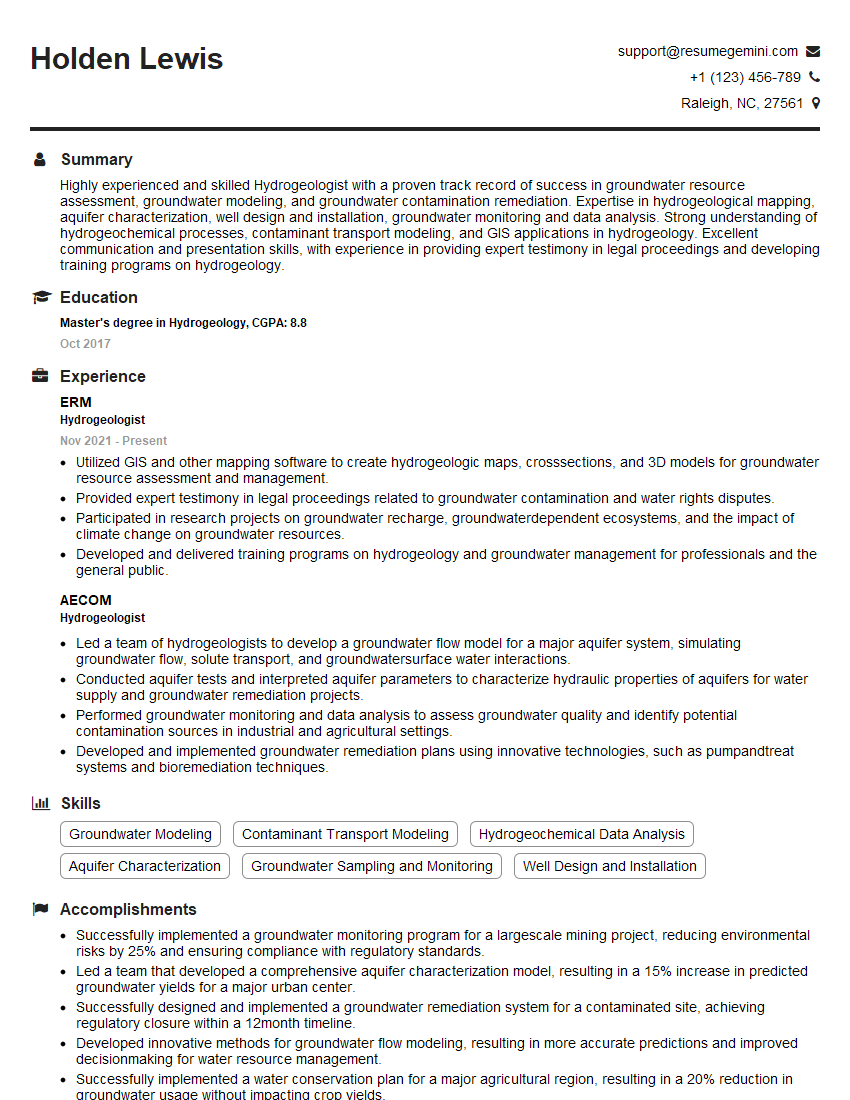
Hydrogeologist Resume Sample

Geotechnical Engineer Resume Sample

Reservoir Engineer Resume Sample
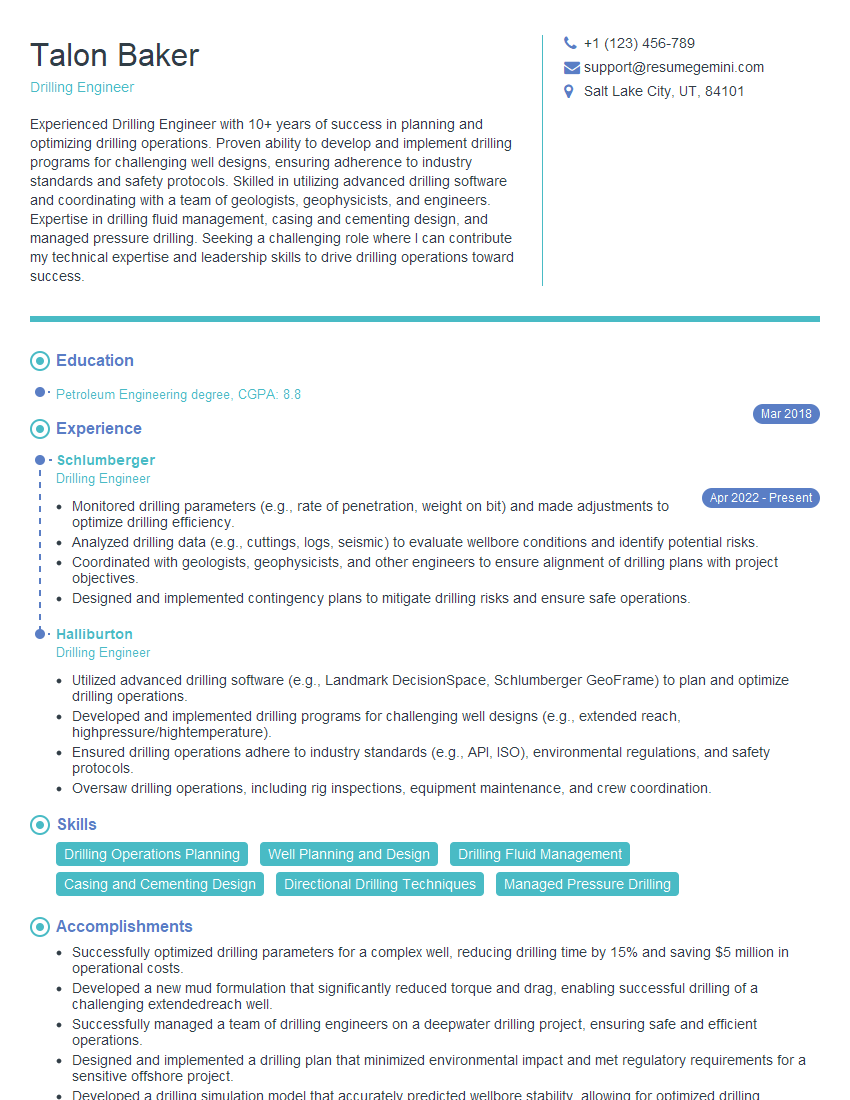
Drilling Engineer Resume Sample

Field Geologist Resume Sample
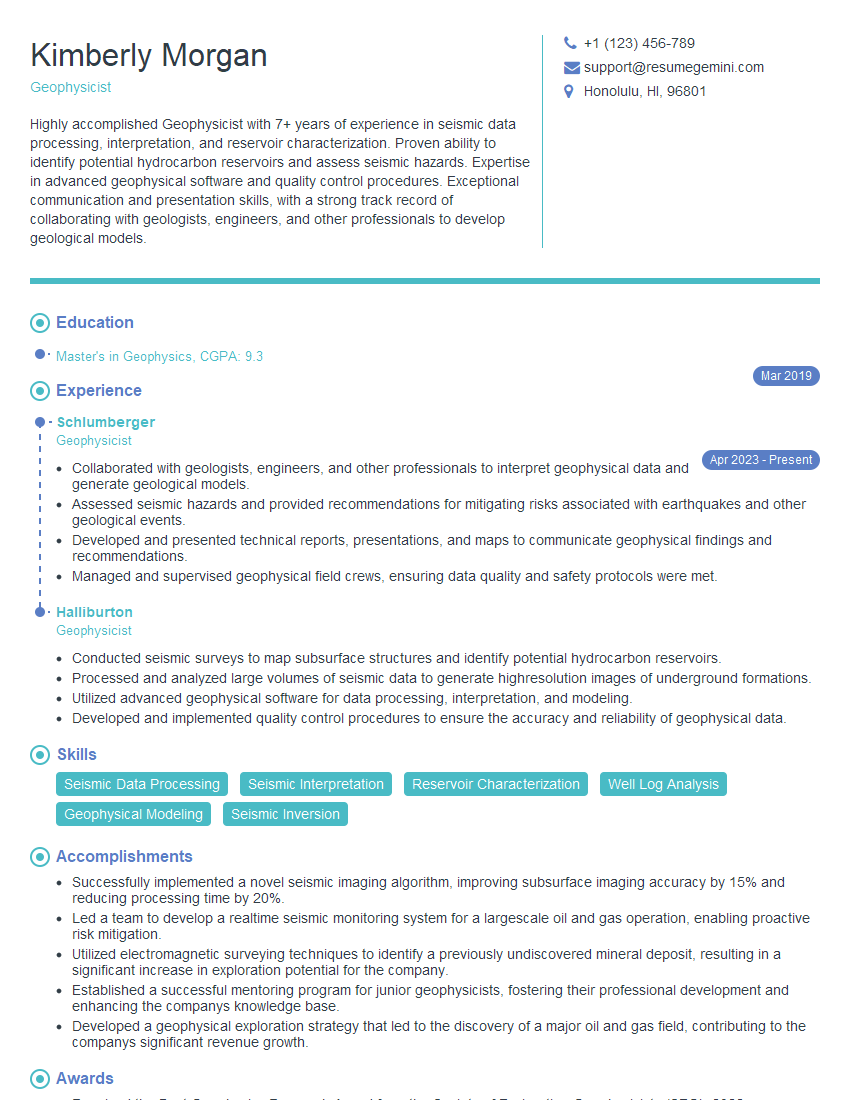
Geophysicist Resume Sample
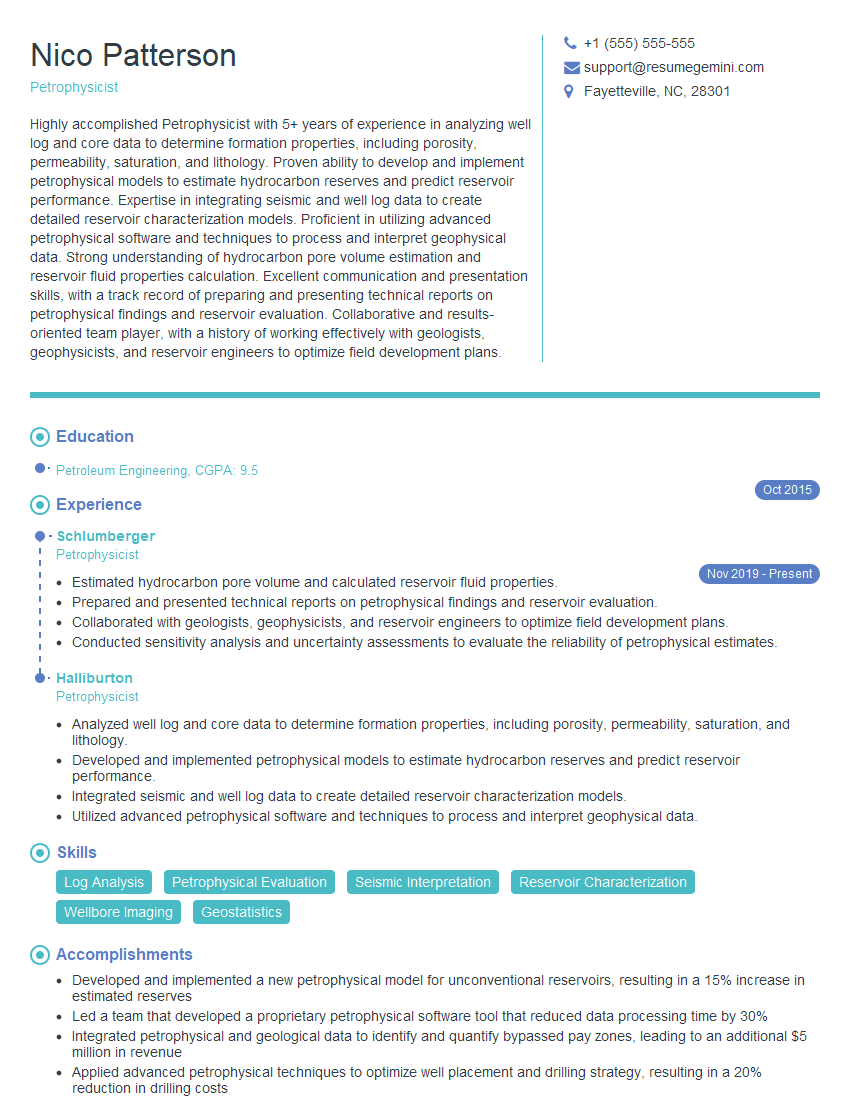
Petrophysicist Resume Sample

Project Geologist Resume Sample
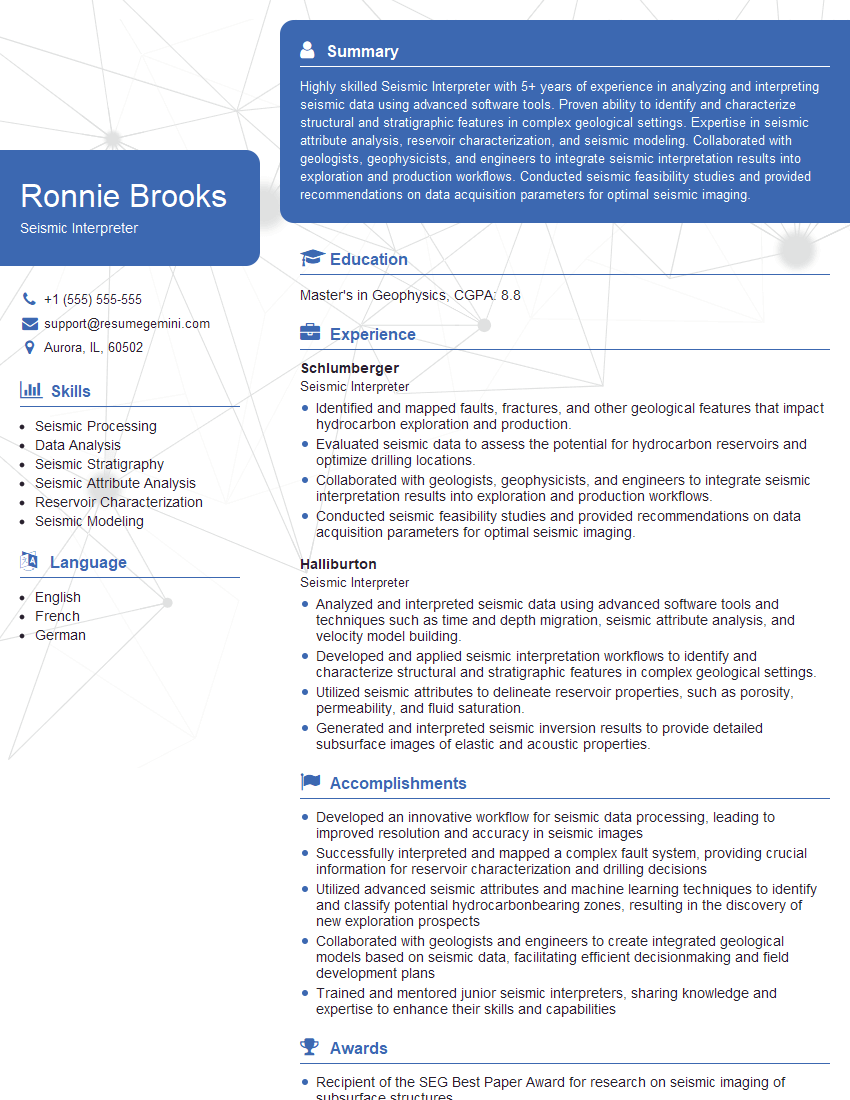
Seismic Interpreter Resume Sample
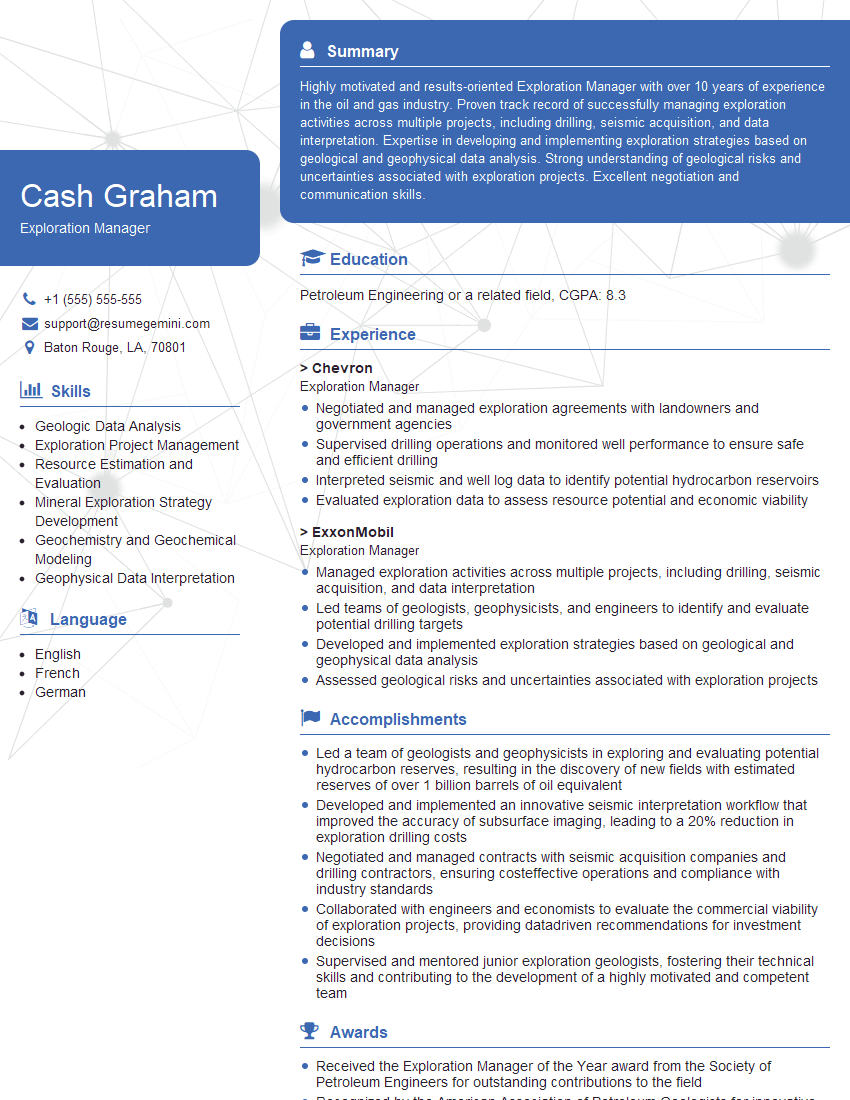
Exploration Manager Resume Sample
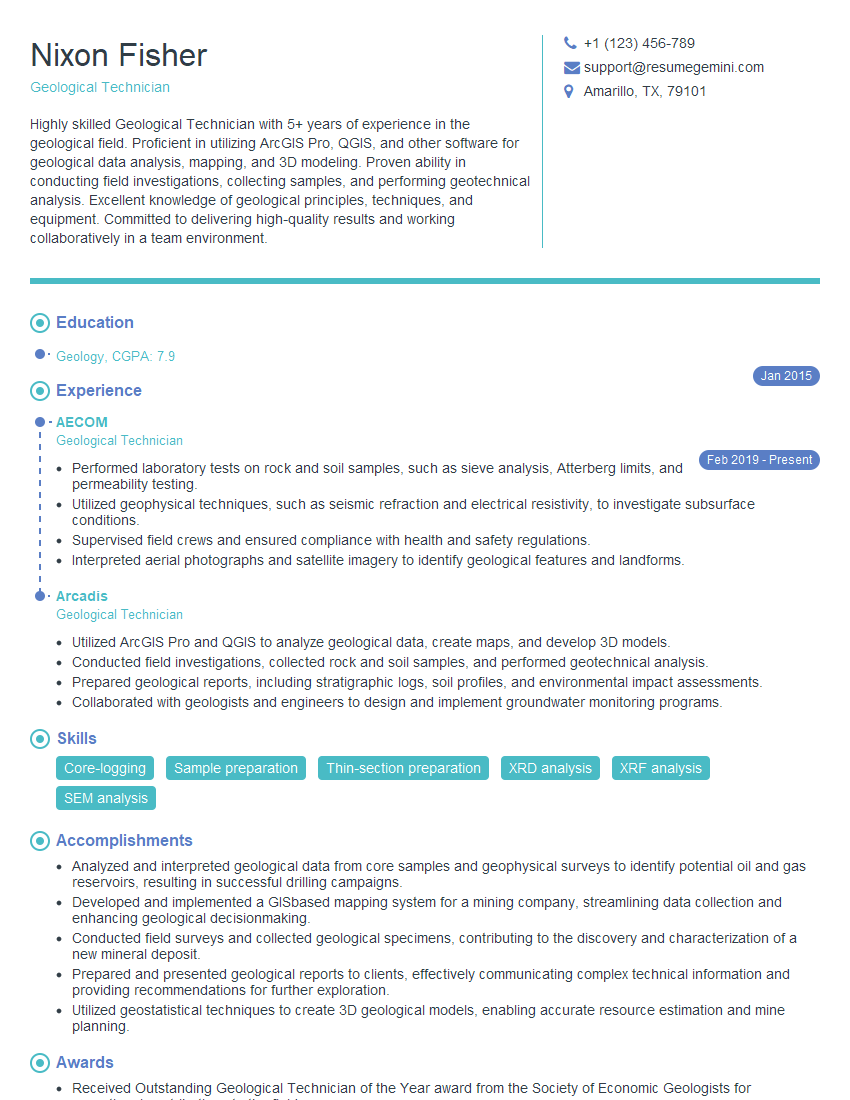
Geological Technician Resume Sample
Explore more articles
Users Rating of Our Blogs
Share Your Experience
We value your feedback! Please rate our content and share your thoughts (optional).
What Readers Say About Our Blog
Very informative content, great job.
good