Are you ready to stand out in your next interview? Understanding and preparing for Aircraft Operations Planning and Execution interview questions is a game-changer. In this blog, we’ve compiled key questions and expert advice to help you showcase your skills with confidence and precision. Let’s get started on your journey to acing the interview.
Questions Asked in Aircraft Operations Planning and Execution Interview
Q 1. Explain the process of flight planning, including crucial factors considered.
Flight planning is a critical process ensuring safe and efficient air travel. It involves meticulously detailing every aspect of a flight, from takeoff to landing. This isn’t just about plotting a course on a map; it’s a complex procedure involving numerous calculations and considerations.
- Route Planning: Determining the most efficient route, considering factors like distance, air traffic, weather patterns, and potential airspace restrictions. We utilize specialized software and navigation databases (like Jeppesen) to analyze various routes and select the optimal one.
- Performance Calculations: Assessing the aircraft’s capabilities given weight, altitude, temperature, and wind conditions. This ensures the aircraft can safely operate under the predicted conditions and arrive at its destination within the required performance parameters. For example, we need to calculate takeoff and landing distances to ensure sufficient runway length.
- Weather Briefing: Obtaining comprehensive weather forecasts along the planned route and at destination airports. This includes wind speed and direction, temperature, precipitation, turbulence, icing conditions, and visibility. Changes in weather can drastically alter the flight plan.
- Fuel Planning: Calculating the required fuel considering the planned route, weather conditions, reserves, and any unforeseen delays or diversions. Fuel efficiency is paramount both economically and for safety, so we consider various fuel-saving strategies.
- Navigation Planning: Identifying waypoints, navigation aids (VORs, ILS), and contingency plans in case of navigation equipment malfunction or unforeseen circumstances.
- Compliance with Regulations: Ensuring the flight plan adheres to all applicable national and international regulations and airspace restrictions. This often includes filing a flight plan with Air Traffic Control (ATC).
For example, during a recent transatlantic flight, we had to adjust the flight path to avoid a severe thunderstorm system predicted along the initial route. This required recalculating fuel burn and adjusting the Estimated Time of Arrival (ETA).
Q 2. Describe your experience with flight following and communication procedures.
Flight following involves maintaining constant communication with Air Traffic Control (ATC) throughout the flight. Clear, concise, and standardized communication is absolutely vital for safety. We use established phraseology, adhering strictly to international standards (like ICAO).
My experience spans various aircraft types and operational environments, from busy metropolitan airspace to remote oceanic routes. I am proficient in using various communication systems, including VHF radio, satellite communications, and data link systems (like ADS-B). I’m confident in managing communication challenges, such as radio interference or language barriers, maintaining professionalism and clarity at all times.
For instance, during a flight over mountainous terrain, we had to coordinate with ATC for altitude adjustments to avoid other air traffic and maintain safe separation. My proficiency in communication ensured efficient and safe navigation.
Q 3. How do you handle unexpected weather deviations during a flight?
Unexpected weather deviations require immediate and decisive action. Safety is the paramount concern. The process typically involves:
- Assessment: Obtaining the most up-to-date weather information from ATC, satellite imagery, and onboard weather radar.
- Options Evaluation: Exploring various options, including rerouting, holding, or diverting to an alternate airport. This requires considering fuel reserves, aircraft performance capabilities, and the severity of the weather.
- Decision Making: Based on the assessment and options, determining the safest and most efficient course of action. This requires collaboration with the flight crew and ATC.
- Implementation: Executing the chosen plan, which might involve requesting a new flight path from ATC, adjusting flight levels, or preparing for an emergency landing.
- Communication: Keeping ATC and other stakeholders informed every step of the way.
For example, I once experienced unexpectedly severe icing conditions during a flight. We had to divert to a nearby airport with appropriate de-icing facilities. Quick decision-making and efficient communication with ATC ensured the safety of the passengers and crew.
Q 4. What are your methods for optimizing flight routes for fuel efficiency?
Optimizing flight routes for fuel efficiency is a key aspect of cost-effective and environmentally responsible operations. Methods include:
- Route Optimization Software: Utilizing specialized software to analyze various routes and select the one with the lowest fuel consumption, considering wind conditions, altitude, and air traffic.
- Wind Optimization: Taking advantage of tailwinds to reduce fuel burn. We meticulously examine weather forecasts to find the most favorable wind conditions.
- Altitude Optimization: Flying at optimal altitudes where the air density is low, reducing drag and improving fuel efficiency. This is often a trade-off with other factors like weather conditions and air traffic.
- Continuous Descent Approaches (CDA): Utilizing CDA to reduce fuel consumption during the descent phase by maintaining a continuous descent rate instead of a series of step descents.
- Weight Management: Minimizing unnecessary weight on board. This includes optimizing fuel load based on accurate estimations and removing unnecessary baggage or cargo.
For a recent long-haul flight, by carefully optimizing the route based on wind forecasts and implementing a CDA, we managed to reduce fuel consumption by approximately 3%, which translates to significant cost savings and reduced emissions.
Q 5. Explain your understanding of weight and balance calculations in aircraft operations.
Weight and balance calculations are crucial for aircraft safety and performance. They ensure the aircraft’s center of gravity remains within acceptable limits throughout the flight. An incorrect weight and balance calculation can lead to handling difficulties, structural damage, or even catastrophic accidents.
The process involves determining the weight of the aircraft (empty weight), fuel, passengers, baggage, and cargo. This data is then used to calculate the aircraft’s center of gravity (CG). We utilize approved weight and balance charts and software to verify that the CG is within the manufacturer’s specified limits. These calculations must be performed before every flight and checked throughout the flight if there are changes in weight or cargo distribution.
For example, if a significant amount of cargo is added to one side of the aircraft, we need to re-calculate the weight and balance to ensure the CG remains within the acceptable range. Failure to do so could affect the aircraft’s stability and control.
Q 6. How do you manage crew scheduling and ensure compliance with regulations?
Crew scheduling requires careful planning to ensure compliance with regulations regarding flight and duty time limitations, rest periods, and training requirements. This includes compliance with regulations like those set by the FAA (Federal Aviation Administration) or EASA (European Union Aviation Safety Agency).
My approach involves utilizing specialized crew scheduling software to optimize crew assignments, considering factors such as flight schedules, crew qualifications, and rest requirements. The software takes into account the various legal constraints to ensure that no crew member exceeds their allowable flight hours or duty periods within a given timeframe. We also maintain meticulous records of crew flight hours and rest periods for audit purposes. The system will flag potential conflicts and suggest alternative scheduling options.
Furthermore, we continuously monitor regulatory updates to ensure our scheduling practices remain compliant. Regular training ensures all personnel are aware of the latest regulations and procedures.
Q 7. Describe your experience with aircraft performance calculations.
Aircraft performance calculations are essential for safe and efficient flight operations. These calculations determine the aircraft’s capabilities under various conditions, such as different weights, altitudes, temperatures, and wind speeds. This involves using performance charts, graphs, and specialized software provided by the aircraft manufacturer.
My experience encompasses calculating takeoff and landing distances, fuel consumption, climb and descent rates, and flight times. These calculations are crucial for determining appropriate flight paths, assessing the aircraft’s ability to meet the demands of the flight, and ensuring sufficient safety margins. For instance, if we anticipate high temperatures at our destination airport, we need to carefully calculate the landing distance required to account for the reduced lift available at higher temperatures. Similarly, for high-altitude flights, we account for the reduced engine performance in thinner air.
Accurate performance calculations not only ensure safety but also optimize fuel efficiency, reducing operational costs and minimizing environmental impact.
Q 8. How do you handle emergency situations during flight operations?
Handling emergency situations during flight operations requires a calm, decisive, and systematic approach. Our priority is always the safety of passengers and crew. This involves immediate activation of emergency procedures, which are rigorously practiced during training.
The first step is a thorough assessment of the situation. This includes identifying the nature of the emergency (e.g., engine failure, medical emergency, security threat), its severity, and the available resources. Then, we follow established checklists and protocols, communicating clearly and concisely with air traffic control (ATC) and other relevant parties.
For instance, if we experience an engine failure, the pilots will immediately follow the emergency checklist, while simultaneously notifying ATC and initiating a mayday call, providing our location, nature of the emergency and intentions. ATC will then provide guidance and assistance, including potential diversion to a suitable airport. The cabin crew will concurrently prepare for an emergency landing, briefing passengers and ensuring everyone is properly secured.
Post-emergency, a comprehensive investigation is conducted to determine the root cause of the incident and implement corrective actions to prevent similar events from occurring in the future. This may involve reviewing flight data recorders, conducting interviews with crew members, and analyzing maintenance records.
Q 9. What are the key performance indicators (KPIs) you track in aircraft operations?
Key Performance Indicators (KPIs) in aircraft operations are critical for monitoring efficiency, safety, and profitability. We track a range of metrics, categorized broadly into safety, operational efficiency, and financial performance.
- Safety KPIs: These include incident rates (e.g., runway incursions, near misses), accident rates, safety audit scores, and the effectiveness of safety management systems.
- Operational Efficiency KPIs: This category includes on-time performance, aircraft utilization rates, fuel efficiency, turn-around times, and flight delays. Analyzing these helps identify bottlenecks and areas for improvement.
- Financial Performance KPIs: These focus on revenue generation, operational costs, cost per flight hour, load factors, and yield management. These metrics provide crucial insight into the financial health of operations.
Regular monitoring and analysis of these KPIs are crucial for identifying trends, forecasting challenges, and making data-driven decisions to enhance operational safety and financial outcomes. For example, a consistently low on-time performance might indicate issues with ground handling or maintenance scheduling.
Q 10. Explain your understanding of NOTAMs (Notices to Airmen) and their importance.
NOTAMs, or Notices to Airmen, are essential safety announcements that provide critical information about potential hazards to flight operations. They communicate temporary changes to airport facilities, navigational aids, airspace restrictions, and other relevant conditions that could impact flight safety.
Think of NOTAMs as the real-time updates for aviation. They alert pilots about temporary runway closures, construction in the flight path, obstructions near airports, or changes in air traffic control procedures. These are crucial for safe flight planning and execution. Ignoring a relevant NOTAM could lead to serious consequences, ranging from flight delays to accidents.
Accessing NOTAMs is a mandatory part of pre-flight preparation. Pilots use various online databases and software tools to check for relevant NOTAMs before each flight. This information is incorporated into the flight plan, ensuring the safety and efficiency of the journey.
For example, a NOTAM might alert pilots about a temporary airspace restriction due to military exercises, prompting them to adjust their flight path or request special authorization.
Q 11. How do you ensure compliance with FAA regulations (or equivalent in your region)?
Ensuring compliance with FAA regulations (or equivalent) is paramount in aircraft operations. This involves a multifaceted approach incorporating continuous training, meticulous record-keeping, and proactive adherence to all applicable rules and regulations.
- Regular Training: All crew members undergo rigorous recurrent training on regulations, safety procedures, and emergency response. This ensures everyone remains up-to-date with the latest guidelines and best practices.
- Detailed Record-Keeping: We maintain meticulous records of maintenance activities, flight logs, training certifications, and any deviations from standard operating procedures. These records undergo periodic audits to verify compliance.
- Safety Management System (SMS): A robust SMS helps proactively identify and mitigate risks. This includes conducting regular safety audits, hazard identification, and the implementation of corrective actions to prevent safety-related incidents.
- Compliance Audits: We actively seek out and welcome regular audits by relevant aviation authorities to ensure our operations meet all regulatory standards.
Non-compliance can lead to serious repercussions, including fines, operational suspensions, and reputational damage. Therefore, consistent and proactive compliance is prioritized across all aspects of our operations.
Q 12. Describe your experience with flight data analysis and reporting.
Flight data analysis and reporting is a crucial part of improving safety and operational efficiency. We utilize flight data recorders (FDRs) and other data sources to analyze flight parameters, identify trends, and pinpoint areas needing improvement. This involves using specialized software to extract, process, and interpret vast amounts of data.
For instance, we might analyze data to identify recurring patterns in fuel consumption. This could reveal potential inefficiencies in flight planning or aircraft performance issues that need attention. Similarly, we might analyze data related to approaches and landings to identify potential safety risks or areas where pilot training could be enhanced. The process helps us make evidence-based decisions in optimizing flight operations and maintaining high safety standards.
The reporting aspect involves generating regular reports that highlight key findings, recommendations, and actions taken to address the identified issues. This data is shared with pilots, maintenance teams, and management to promote continuous improvement.
Q 13. How do you manage aircraft maintenance schedules and ensure airworthiness?
Managing aircraft maintenance schedules and ensuring airworthiness are critical for safety and operational reliability. This is done through a comprehensive maintenance program compliant with all applicable regulations. It relies heavily on predictive maintenance strategies.
We use sophisticated maintenance tracking software to monitor aircraft components’ lifespan, schedule routine inspections, and promptly address any identified issues. The software considers various factors such as flight hours, cycles, and component usage to predict potential failures and schedule proactive maintenance.
Airworthiness is ensured through detailed inspections, thorough documentation of maintenance activities, and the use of certified parts and qualified personnel. We utilize a combination of scheduled maintenance (based on time and cycles) and condition-based maintenance (triggered by component health monitoring) to optimize maintenance intervals and minimize disruptions.
Example: Regular inspections of the aircraft’s engines, landing gear, and flight control systems are performed according to the manufacturer’s recommendations and regulatory requirements. Any detected issues are promptly addressed, ensuring the aircraft remains airworthy.
Q 14. What is your experience with different types of aircraft and their operational requirements?
My experience encompasses a wide range of aircraft types, from smaller regional jets to larger wide-body aircraft. Each aircraft type has its unique operational requirements, including performance characteristics, systems, and procedures.
For example, operating a narrow-body aircraft on short-haul flights requires different considerations compared to operating a wide-body aircraft on long-haul routes. Factors such as payload capacity, fuel efficiency, maintenance schedules, and crew requirements will vary significantly. Furthermore, advanced technologies integrated within different aircraft models also present unique operational considerations.
My experience includes detailed knowledge of operational manuals, performance limitations, emergency procedures, and relevant regulatory guidelines for each aircraft type. I’m proficient in adapting operational strategies to effectively and safely manage various aircraft in diverse operational environments.
Q 15. Explain your experience with various flight planning software and tools.
Throughout my career, I’ve gained extensive experience with a variety of flight planning software and tools. This includes everything from legacy systems to the latest cloud-based solutions. My proficiency extends to both route planning and performance calculation software. For example, I’m highly skilled in using Jeppesen FliteDeck, a comprehensive flight planning and navigation suite that allows for efficient route optimization, considering factors like weather, airspace restrictions, and fuel efficiency. I’ve also worked extensively with FlightAware, a flight tracking and data analysis tool crucial for real-time monitoring and post-flight analysis. Additionally, I have experience with specialized software for weight and balance calculations, ensuring aircraft are always within safe operating limits. My experience also encompasses using simpler tools for quick estimations and contingency planning, understanding the importance of choosing the right tool for the specific task.
For complex long-haul flights, Jeppesen FliteDeck’s advanced features are invaluable, allowing me to analyze various routes and select the most optimal one based on several factors. In contrast, for shorter, simpler flights, a quicker, less complex tool might suffice, avoiding unnecessary time expenditure on features not necessary for the operation.
Career Expert Tips:
- Ace those interviews! Prepare effectively by reviewing the Top 50 Most Common Interview Questions on ResumeGemini.
- Navigate your job search with confidence! Explore a wide range of Career Tips on ResumeGemini. Learn about common challenges and recommendations to overcome them.
- Craft the perfect resume! Master the Art of Resume Writing with ResumeGemini’s guide. Showcase your unique qualifications and achievements effectively.
- Don’t miss out on holiday savings! Build your dream resume with ResumeGemini’s ATS optimized templates.
Q 16. How do you handle conflicts between operational efficiency and safety?
Operational efficiency and safety are not mutually exclusive; they are intrinsically linked. While efficiency is important for cost-effectiveness and timely operations, it must never compromise safety. My approach is to prioritize safety above all else. This means proactively identifying and mitigating potential risks, even if it slightly reduces operational efficiency. For instance, if a flight is slightly delayed due to adverse weather conditions, I would prioritize rerouting to ensure passenger safety, even if it means a longer flight time and increased fuel consumption. This isn’t simply a matter of following regulations; it’s about a holistic risk assessment that anticipates problems and builds in safety margins.
I use a risk management framework that involves identifying potential hazards, analyzing their likelihood and severity, and implementing control measures. This might include implementing alternate flight plans, modifying procedures, or enhancing crew training. The key is balancing the risk against the benefit, ensuring a safe operation within acceptable levels of risk.
Q 17. Describe your experience in crew resource management (CRM).
Crew Resource Management (CRM) is fundamental to safe and efficient air operations. It’s about leveraging the skills and expertise of the entire flight crew, fostering open communication, and making informed decisions collectively. My experience with CRM is extensive, encompassing both theoretical knowledge and practical application in various operational settings. I understand the importance of clear communication, active listening, and assertive communication in managing workload and stress. This includes effectively managing workload distribution among crew members, ensuring each person is aware of their roles and responsibilities. I’ve participated in CRM training programs covering topics like situational awareness, decision-making under pressure, and conflict resolution. I’ve also applied these principles in real-world situations, effectively resolving conflicts amongst crew members, and avoiding the pitfalls of complacency or groupthink.
For example, I once had to assist a pilot who was experiencing significant workload during an approach in challenging weather conditions. By calmly and directly offering assistance, re-allocating tasks, and ensuring open communication, we successfully completed the approach safely and efficiently.
Q 18. How do you communicate effectively with pilots, air traffic control, and other stakeholders?
Effective communication is paramount in aircraft operations. I prioritize clear, concise, and accurate communication with all stakeholders, adapting my communication style to the audience and situation. With pilots, my communication is typically focused on operational details, weather briefings, and any pertinent information affecting the flight plan. With air traffic control, I adhere strictly to standard phraseology, ensuring clarity and precision to avoid misunderstandings and maintain the flow of air traffic. With other stakeholders such as maintenance personnel, ground handlers, or company management, my communication emphasizes clear reporting of operational status, issues, and planned actions.
I use various communication methods – telephone, radio, email, and real-time messaging systems – selecting the most appropriate channel for the situation. For example, for time-critical updates, I’d use the radio or a real-time messaging system. For detailed reports, email might be more appropriate. Regardless of the method, I ensure my communication is documented and readily accessible for reference and audit trails.
Q 19. What is your approach to risk management in aircraft operations?
My approach to risk management is proactive and systematic. It’s not just about reacting to incidents, but anticipating and preventing them. I employ a structured risk assessment process that follows a systematic approach: identifying hazards, analyzing their risks, evaluating controls, and implementing mitigation strategies. This is a continuous process, not a one-time event. It involves regular review and updates, especially when new information or significant changes occur.
For instance, before each flight, I conduct a pre-flight risk assessment considering the weather, aircraft condition, crew capabilities, and any other relevant factors. If high-risk situations are identified, I implement appropriate mitigating actions. This might include rerouting the flight, delaying departure, or implementing special procedures. This proactive approach aims to minimize potential risks and ensure the highest level of safety.
Q 20. How do you stay updated with changes in aviation regulations and best practices?
Staying current with aviation regulations and best practices is a continuous process. I actively monitor regulatory changes through official publications like the Federal Aviation Administration (FAA) or the European Union Aviation Safety Agency (EASA) notices and publications. I also subscribe to industry newsletters, attend conferences and seminars, and participate in professional development programs. This ensures that I remain abreast of the latest safety mandates and operational recommendations. Staying informed isn’t simply about compliance; it’s about continuous improvement and proactively implementing the latest knowledge to enhance operational safety and efficiency.
Furthermore, I actively participate in professional organizations, where I can network with peers and exchange knowledge, benefiting from collective experience and insights. The collaborative nature of the aviation community allows for sharing best practices, benefiting from lessons learned from incidents and accidents to avoid their recurrence.
Q 21. Describe a time you had to make a quick decision in a challenging operational situation.
During a flight to a remote location, we encountered unexpected severe turbulence. The initial flight plan had to be quickly reassessed due to the unexpected weather conditions. My immediate response involved several steps: first, we switched to a more conservative fuel consumption profile to account for potential deviations. Second, I coordinated closely with the pilots and air traffic control to identify an alternate route that avoided the most turbulent areas while remaining within fuel-efficient parameters. Third, I communicated the changes to the ground crew and passengers, ensuring transparency and building confidence. The situation demanded quick, informed decisions prioritizing safety and minimizing disruption.
The successful resolution of this incident highlighted the importance of a well-defined contingency plan, strong communication, and a collaborative approach in navigating unexpected operational challenges. It demonstrated my capability to think critically under pressure, and maintain a calm and composed demeanour while coordinating a rapid response to ensure the safety of the flight crew and passengers.
Q 22. How familiar are you with different airspace classifications and their restrictions?
Airspace classifications are crucial for safe and efficient air traffic management. They categorize airspace based on the level of air traffic activity and the associated risks. Different classes have varying regulations regarding pilot qualifications, flight clearances, and communication protocols.
- Class A: Controlled airspace from 18,000 feet MSL (mean sea level) up to and including FL600 (Flight Level 600). IFR (Instrument Flight Rules) operations only, requiring sophisticated navigation equipment and strict adherence to air traffic control instructions. Think of it as the ‘superhighway’ of the sky, heavily regulated and monitored.
- Class B: Surrounds major airports, typically extending up to 10,000 feet. Requires two-way radio communication with ATC and specific transponder codes. It’s a busy area needing tight control to prevent collisions near major hubs.
- Class C: Similar to Class B but with a less stringent level of control and a smaller radius. Usually surrounds smaller airports with significant traffic. The regulatory standards still prioritize safety but allow for more flexibility.
- Class D: Controlled airspace extending up to 2,500 feet above the airport elevation. ATC services are available, but not always mandatory depending on weather conditions and flight rules. Consider this a stepping stone between controlled and uncontrolled airspace.
- Class E: Generally above 1,200 feet and covers much of the non-Class A, B, C, or D airspace. IFR and VFR (Visual Flight Rules) operations are possible but require adherence to relevant regulations, including visibility and cloud clearance criteria. This area’s rules depend heavily on the weather and pilot proficiency.
- Class G: Uncontrolled airspace below 1,200 feet. Pilots are responsible for seeing and avoiding other aircraft, and ATC services aren’t available. It’s like driving on a rural road—you must be extra cautious.
Understanding these classifications is vital for pilots and air traffic controllers to plan and execute flights safely, knowing the specific regulations and restrictions for each airspace type.
Q 23. How do you manage and resolve conflicts arising from scheduling issues?
Scheduling conflicts are inevitable in aircraft operations. Effective management requires proactive planning and a robust conflict resolution process. My approach is multi-faceted:
- Proactive Scheduling: Utilizing advanced scheduling software that considers aircraft availability, crew schedules, maintenance requirements, and airport slot availability. This minimizes initial conflicts. Think of it like a well-organized calendar – you plan everything in advance to avoid clashes.
- Real-time Monitoring: Constant monitoring of flight progress to identify potential delays or conflicts. This allows for preemptive adjustments, reducing the impact of unforeseen circumstances. Imagine having a live feed on all flights, allowing for quick adjustments.
- Conflict Resolution Strategies: When conflicts arise, a systematic approach is needed. This involves prioritizing flights based on factors such as passenger impact, cargo deadlines, and operational efficiency. This involves diplomacy and sometimes tough decisions about prioritizing various flights based on several factors.
- Communication: Open communication with all stakeholders (pilots, ATC, ground crews, passengers) is crucial. Transparent communication minimizes misunderstandings and facilitates cooperation. Keeping everyone informed is key to preventing issues from escalating.
- Contingency Planning: Having backup plans for various scenarios (e.g., aircraft substitution, crew changes, alternative routes) enables swift response to unexpected events. It’s like having a spare tire – you don’t want to use it, but it’s vital to have in case of emergency.
By combining these methods, I ensure that scheduling conflicts are identified early, resolved efficiently, and disruptions are minimized.
Q 24. Explain your understanding of fuel management strategies and techniques.
Fuel management is paramount for operational efficiency and safety. It involves careful planning and execution to ensure sufficient fuel for the flight while minimizing unnecessary weight and cost. Key strategies include:
- Trip Fuel Calculation: Accurate calculation of the total fuel required for the flight, considering factors like distance, altitude, weather conditions, and aircraft weight. This involves using sophisticated flight planning software and considering various scenarios.
- Fuel Reserves: Including sufficient fuel reserves to account for unexpected delays, diversions, or holding patterns. Safety regulations dictate minimum fuel reserves. For example, if the predicted flight time is 2 hours, regulations might require 1 hour of extra fuel.
- Fuel Efficiency Techniques: Optimizing flight paths, utilizing cruise climb techniques, and maintaining optimal airspeed to reduce fuel consumption. These are crucial for minimizing fuel costs and environmental impact.
- Fuel Monitoring: Continuous monitoring of fuel consumption during the flight to detect any anomalies. This ensures that the flight remains within the planned fuel limits and allows for adjustments if necessary. Modern aircrafts and softwares help with this automated tracking.
- Weight and Balance: Careful management of the aircraft’s weight and balance to minimize fuel consumption and ensure operational safety.
Effective fuel management requires a deep understanding of aviation regulations, meteorological factors, and aircraft performance characteristics. It’s a delicate balance between cost-effectiveness and safety.
Q 25. How do you ensure the security of aircraft operations?
Aircraft security is a critical concern, encompassing various aspects to protect against threats and maintain operational safety. A multi-layered approach is essential:
- Pre-flight Security Checks: Thorough inspections of the aircraft and its surroundings before each flight to identify potential security threats. This is vital before any operations begin.
- Passenger and Baggage Screening: Implementing strict security protocols for passengers and their baggage, including screening for prohibited items and explosives. This ensures that only authorized personnel and items board the plane.
- Crew Training: Providing crew members with comprehensive security training to enable them to identify and respond to potential security threats. This ensures the crew is adequately equipped to handle any potential threats.
- Communication Protocols: Establishing clear communication procedures between the crew, ground staff, and security agencies to facilitate timely responses to any incident. Effective communication is key to successful security operations.
- Access Control: Restricting access to secure areas of the airport and aircraft to authorized personnel only. This is important to restrict access only to authorized individuals.
- Cybersecurity: Protecting aircraft systems from cyberattacks that could compromise their safety and security. This is increasingly important with the adoption of advanced aircraft systems.
Maintaining robust aircraft security requires constant vigilance and adaptation to evolving threats. It’s a collaborative effort involving all stakeholders, from airport security to airline personnel to regulatory bodies.
Q 26. Describe your experience with performance monitoring and reporting systems.
I have extensive experience with various performance monitoring and reporting systems. These systems are crucial for analyzing operational efficiency, identifying areas for improvement, and ensuring compliance with regulations. Examples include:
- Flight Data Monitoring (FDM): Analyzing flight data recorders to identify trends and potential safety hazards. This involves analyzing various data parameters for deviations from standards.
- Operational Performance Metrics: Tracking key performance indicators (KPIs) such as on-time performance, fuel efficiency, and aircraft utilization. This helps measure and track efficiency across various flight parameters.
- Maintenance Tracking Systems: Monitoring aircraft maintenance schedules and tracking costs associated with maintenance activities. This allows for better planning and cost management for aircraft maintenance.
- Crew Resource Management (CRM) Data: Assessing crew performance through CRM training and observation to improve crew coordination and safety. This data helps train crew members on better coordination and problem-solving skills.
These systems generate reports that allow management to make data-driven decisions, optimize operations, and enhance safety. I am proficient in using various software applications to collect, analyze, and present this data effectively, for example, using data visualization tools to effectively display findings and make them easily understandable for a range of audiences.
Q 27. How do you handle delays and disruptions in flight operations?
Handling delays and disruptions is a crucial skill in aircraft operations. My approach involves a combination of proactive measures and reactive problem-solving:
- Proactive Measures: Monitoring weather patterns, air traffic congestion, and potential mechanical issues to anticipate potential disruptions. This minimizes the impact of unforeseen delays.
- Communication: Keeping passengers and stakeholders informed about the situation and any potential delays. Transparency is crucial during disruptions.
- Contingency Planning: Having backup plans in place to handle various disruptions, such as rerouting flights, arranging alternative accommodation for passengers, and coordinating with ground crews and ATC.
- Problem-Solving: Identifying the root cause of the delay and implementing solutions to minimize further disruptions. This might involve resolving mechanical problems, coordinating with ATC for slot adjustments, or finding alternative routes.
- Post-Incident Review: Analyzing the disruption to identify areas for improvement and prevent similar issues in the future. Learning from previous disruptions is vital for improving future performance.
Effectively handling delays and disruptions requires a calm and decisive approach, effective communication, and a proactive mindset. The goal is always to minimize passenger inconvenience and ensure safety.
Q 28. What is your understanding of the principles of human factors in aviation?
Human factors in aviation encompass the study of human capabilities and limitations within the aviation system. It recognizes that humans are a critical component of the system and their performance can significantly impact safety and efficiency. Key principles include:
- Situational Awareness: Maintaining a clear understanding of the environment and the aircraft’s state. This is fundamental to safe operations.
- Decision-Making: Making sound judgments based on available information and taking appropriate actions. This involves careful analysis and quick, decisive actions when needed.
- Communication: Clear and effective communication between crew members and with ATC. Miscommunication is a significant contributor to aviation accidents.
- Stress Management: Developing strategies to manage stress and fatigue, which can negatively impact decision-making and performance. Fatigue and stress reduction is a crucial part of aviation safety.
- Workload Management: Balancing the workload among crew members and managing tasks effectively to prevent overload. This is crucial in high-pressure situations.
- Error Management: Understanding that errors are inevitable and developing strategies to prevent, detect, and mitigate their impact. Establishing fail-safe mechanisms and processes is critical.
By understanding and applying human factors principles, we can design safer cockpits, improve training programs, and create a more resilient aviation system. It’s about recognizing human limitations and building systems that account for them.
Key Topics to Learn for Aircraft Operations Planning and Execution Interview
- Flight Planning Fundamentals: Understanding flight planning software, calculating flight time and fuel requirements, navigating various airspace classes, and creating contingency plans. Practical application includes demonstrating proficiency in specific software used in the industry (mention examples if appropriate for your audience).
- Crew Resource Management (CRM): Discuss effective communication, teamwork, and decision-making strategies within the flight operations team. Practical application includes describing scenarios where you’ve successfully collaborated to overcome challenges or improve efficiency.
- Dispatch & Flight Following: Explain the role of dispatch in ensuring safe and efficient operations, including pre-flight checks, monitoring flights in real-time, and handling unforeseen circumstances. Practical application could involve detailing your experience with flight tracking systems and problem-solving during unexpected delays or diversions.
- Regulatory Compliance: Demonstrate understanding of relevant aviation regulations (e.g., FAA, EASA) and their impact on operational planning and execution. Practical application might involve explaining how you ensure compliance with specific regulations in your daily work.
- Risk Management & Safety Procedures: Explain how risk assessments are performed in flight operations and how safety procedures are implemented and adhered to. Practical application could be showcasing your understanding of safety protocols and how they are implemented in real-world scenarios.
- Operational Efficiency & Cost Optimization: Discuss strategies for optimizing flight schedules, minimizing fuel consumption, and maximizing aircraft utilization. Practical application includes describing your experience with optimizing routes or schedules to reduce operational costs.
- Data Analysis & Reporting: Explain how operational data is used for performance monitoring, identifying trends, and improving overall efficiency. Practical application includes describing your experience with analyzing flight data to identify areas for improvement.
Next Steps
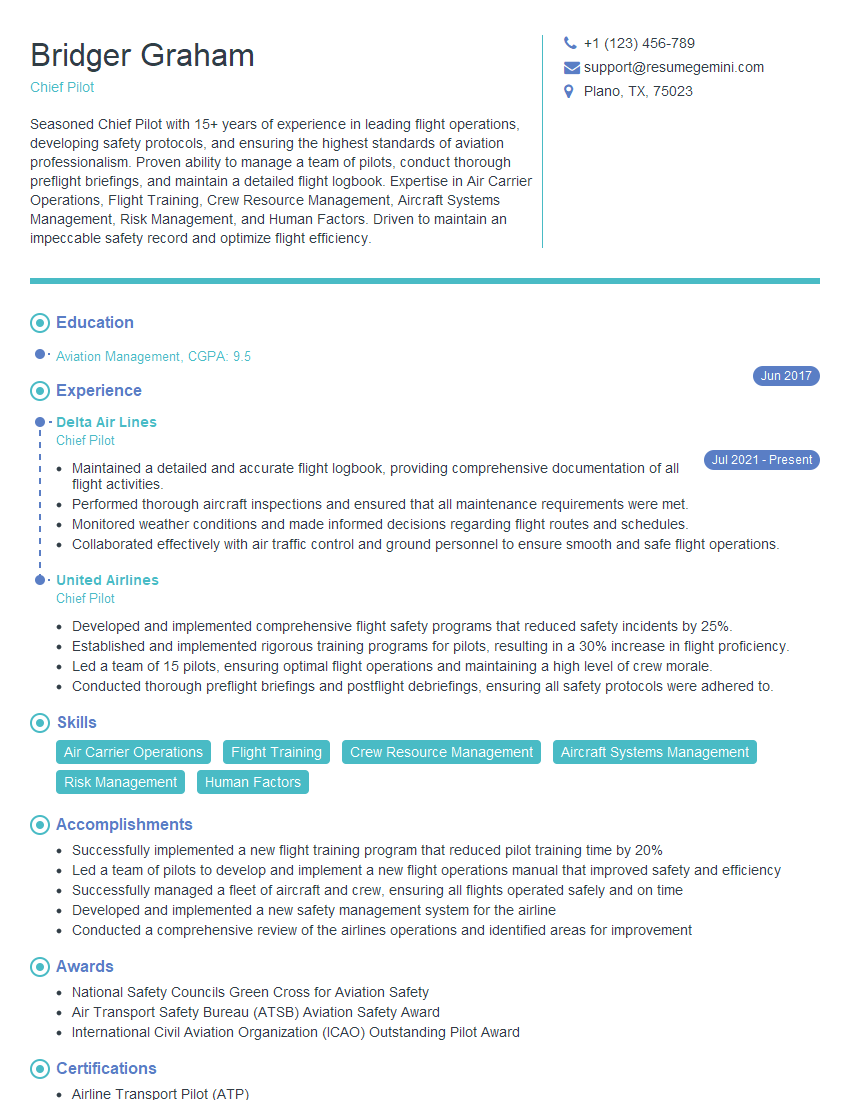
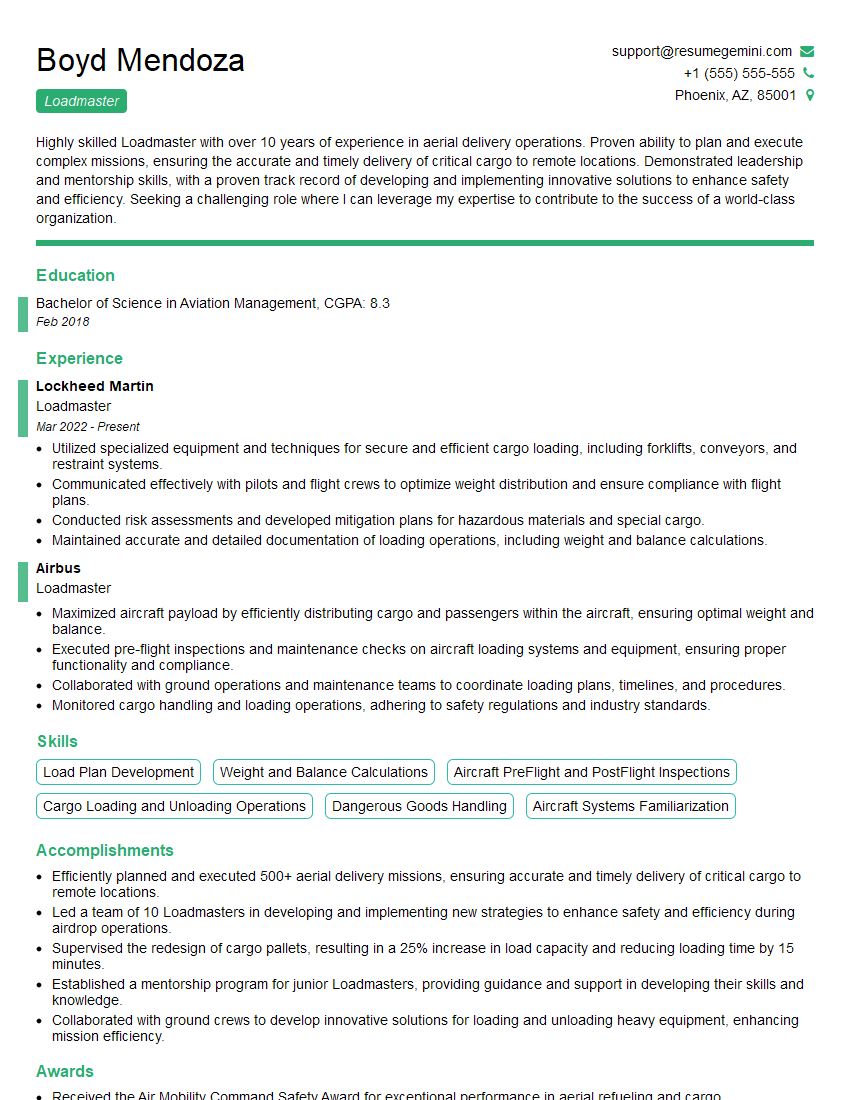
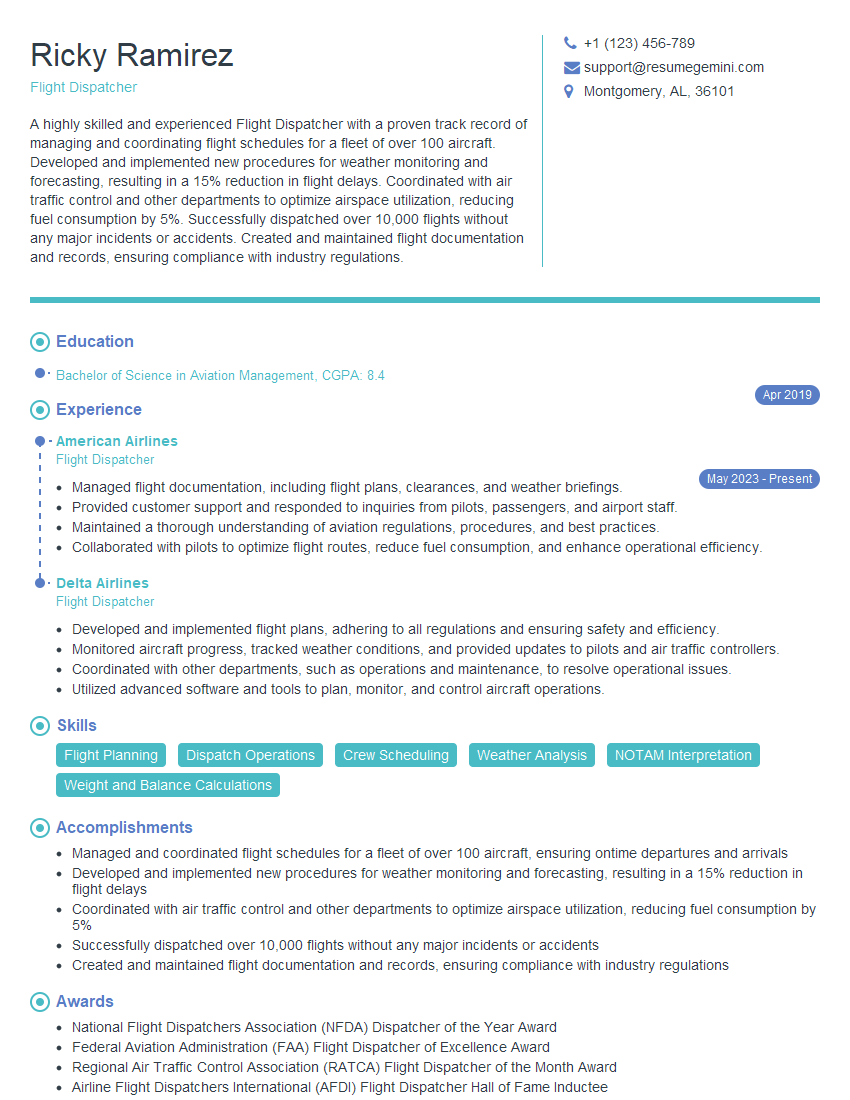
Mastering Aircraft Operations Planning and Execution opens doors to exciting career advancements within the aviation industry, leading to increased responsibility and higher earning potential. To maximize your job prospects, crafting a strong, ATS-friendly resume is crucial. ResumeGemini is a trusted resource that can help you build a professional and impactful resume tailored to the specific requirements of this field. Examples of resumes tailored to Aircraft Operations Planning and Execution are available to help guide you. Take advantage of these resources to showcase your skills and experience effectively and confidently land your dream job.
Explore more articles
Users Rating of Our Blogs
Share Your Experience
We value your feedback! Please rate our content and share your thoughts (optional).
What Readers Say About Our Blog
Very informative content, great job.
good