Unlock your full potential by mastering the most common Aircraft Structural Repair interview questions. This blog offers a deep dive into the critical topics, ensuring you’re not only prepared to answer but to excel. With these insights, you’ll approach your interview with clarity and confidence.
Questions Asked in Aircraft Structural Repair Interview
Q 1. Explain the process of repairing a damaged aircraft composite panel.
Repairing a damaged composite aircraft panel is a meticulous process requiring specialized skills and materials. It involves several key steps, starting with a thorough damage assessment. This includes identifying the extent of the damage, determining the type of impact (e.g., impact damage, delamination, punctures), and checking for hidden damage using Non-Destructive Testing (NDT) methods like ultrasonic inspection.
Next, the damaged area needs to be prepared. This often involves careful cleaning, removing loose or damaged material, and potentially grinding or sanding the surrounding area to create a clean surface for repair. Then, the appropriate repair technique is applied; this could range from simple patching, using prepreg patches cured in an autoclave, to more complex repairs involving the addition of layers of fabric and resin to rebuild the damaged section. Finally, post-cure inspection is performed using NDT to verify the integrity of the repair. The whole process is carefully documented, adhering to strict manufacturer specifications and airworthiness regulations.
For example, a small impact on a winglet might involve a simple patch repair, while significant delamination within a critical structural component may require more extensive reconstruction using specialized resin infusion techniques.
Q 2. Describe different types of aircraft structural damage and their repair methods.
Aircraft structural damage varies widely, from minor scratches to catastrophic failures. Common types include:
- Impact Damage: Dents, punctures, or crushing caused by collisions with birds, ground equipment, or foreign objects. Repair methods range from simple patching to complete section replacement, depending on severity and location.
- Fatigue Cracking: Cracks that develop due to repeated stress cycles. These require careful inspection and repair, often involving drilling the crack tip to stop propagation.
- Corrosion: Chemical deterioration, particularly in metallic structures. Repair involves removing affected material, surface treatment, and potentially applying corrosion-resistant coatings.
- Delamination: Separation of layers in composite materials. Repair often involves injecting resin into the delaminated area or using patches to rebond the layers.
- Fretting Corrosion: Degradation due to rubbing or vibration between components. Repair may include replacement of components, applying anti-fretting compounds, or improving component fit.
The choice of repair method depends on the type and severity of damage, the aircraft’s material and structural design, and regulatory requirements.
Q 3. How do you determine the repairability of a damaged aircraft structure?
Determining repairability hinges on several factors. First, a thorough damage assessment is essential. We use various NDT methods to evaluate the extent of the damage, including hidden damage, not visible to the naked eye. Next, we consult the aircraft’s structural repair manual (SRM) and manufacturer’s instructions. These documents provide specific guidance on repairable limits and repair procedures for different types of damage. Finally, the repair must meet airworthiness standards, ensuring the repaired structure is as strong and reliable as the original.
For example, a small dent in an aluminum skin panel might be easily repairable using techniques like hammering and smoothing, while extensive corrosion or cracks near a critical structural member might necessitate a component replacement.
Q 4. What are the common NDT methods used in aircraft structural repair?
Non-Destructive Testing (NDT) is crucial for aircraft structural repair. Common methods include:
- Visual Inspection (VI): A basic but essential method, involving close examination of the structure for visible defects.
- Liquid Penetrant Inspection (LPI): Used to detect surface cracks by applying a dye that penetrates cracks and then revealing the cracks after cleaning.
- Magnetic Particle Inspection (MPI): Suitable for ferromagnetic materials, it uses magnetic fields to detect surface and near-surface cracks.
- Ultrasonic Inspection (UI): Uses high-frequency sound waves to detect internal flaws and measure material thickness.
- Radiographic Inspection (RT): Uses X-rays or gamma rays to detect internal flaws.
The choice of NDT method depends on the type of material, the suspected flaw, and the access to the structure. Often, multiple methods are employed for comprehensive evaluation.
Q 5. Explain the importance of proper documentation in aircraft structural repair.
Proper documentation in aircraft structural repair is paramount for safety and regulatory compliance. It ensures traceability, allowing for verification of the repair process and its effectiveness. Documentation typically includes:
- Damage Report: A detailed description of the damage, including location, extent, and photographs.
- Repair Procedure: The specific steps taken during the repair, referencing the relevant SRM.
- NDT Records: Results from all NDT inspections performed.
- Material Certifications: Proof that all materials used meet required specifications.
- Inspection Sign-off: Confirmation from qualified personnel that the repair meets airworthiness requirements.
This meticulous documentation is essential for maintaining the aircraft’s airworthiness certificate and ensuring future maintenance personnel can understand the history of the aircraft and its repairs.
Q 6. Describe your experience with composite material repair techniques.
I have extensive experience in composite material repair techniques, encompassing both prepreg and wet layup methods. I’m proficient in various repair strategies, from simple patching using prepreg patches cured in an autoclave to complex repairs involving the addition of layers of fabric and resin to rebuild damaged sections. My expertise includes the use of resin infusion techniques for larger repairs.
I’ve worked on numerous aircraft repairs, including repairing delamination in composite control surfaces, patching damaged leading edges, and restoring structural integrity to composite fairings. I’m familiar with different composite materials, their properties, and appropriate repair techniques for each. This includes the selection of appropriate resins, fabrics, and curing processes. My work consistently adheres to stringent quality control standards and regulatory guidelines to guarantee the safety and airworthiness of the aircraft.
Q 7. How do you handle discrepancies found during an aircraft inspection?
Handling discrepancies during an aircraft inspection requires a systematic approach. First, the discrepancy is meticulously documented, including location, type, and severity. Then, depending on the nature and severity of the discrepancy, different actions are taken. For minor discrepancies, a decision may be made to monitor the issue and track its development. For more serious discrepancies that do not affect airworthiness, a repair may be scheduled. For discrepancies that compromise airworthiness, the aircraft is grounded until the issue is addressed.
The appropriate SRM and maintenance manuals are always consulted to determine the correct procedure. Communication with the relevant engineering and maintenance personnel is crucial, particularly for significant discrepancies. Thorough investigation is often necessary to understand the root cause of the discrepancy and prevent future issues. The entire process, including decisions made and actions taken, is meticulously documented.
Q 8. What are the limitations of various repair methods for aluminum structures?
Aluminum repair methods, while effective, have inherent limitations. The choice of method depends on the extent and nature of the damage, the aircraft’s operational requirements, and regulatory compliance.
- Patching: While simple for minor damage, patches can introduce stress concentrations around their edges, potentially weakening the structure if not properly designed and installed. This is especially true with larger patches. Furthermore, patches may not be suitable for heavily corroded areas.
- Riveting: A common method, but improper riveting can lead to fatigue cracks near the rivet holes if not done precisely according to specifications. Over-riveting can create excess stress and under-riveting can compromise joint strength.
- Welding: Welding aluminum requires specialized techniques and skilled personnel to avoid heat damage and distortion. Improper welding can weaken the material and create porosity (tiny holes) in the weld, reducing its strength.
- Bonded Repairs: These are strong and efficient, but require meticulous surface preparation and the right adhesive to ensure a lasting bond. Failure to achieve proper adhesion can result in a delamination (separation of the bonded layers) causing catastrophic failure.
- Composite Repairs: Using composites may be necessary for complex repairs or areas experiencing high stress, but introducing composites may complicate future repairs and require special expertise.
For example, a small dent might be easily repaired with a patch, but extensive corrosion would require more significant intervention, possibly involving a section replacement.
Q 9. How do you ensure compliance with FAA regulations during repair procedures?
FAA compliance is paramount in aircraft structural repair. We achieve this through meticulous documentation, adherence to approved data, and rigorous quality control throughout the process.
- Approved Data: All repairs are carried out according to the manufacturer’s structural repair manual (SRM), service bulletins, and FAA-approved repair schemes. These documents provide detailed procedures and specifications.
- Documentation: Every step of the repair process is meticulously documented, including material used, methods employed, and inspection results. This documentation serves as a record for future maintenance and ensures traceability of the repair.
- Nondestructive Testing (NDT): NDT methods such as dye penetrant inspection, magnetic particle inspection, ultrasonic testing, and radiography are used to inspect for flaws before, during, and after the repair. These tests verify the integrity of the repair and ensure there are no hidden defects.
- Certification: Upon completion, the repair is certified according to FAA regulations. This involves completing the necessary paperwork and ensuring that all inspections have been satisfactory. Certified personnel only carry out these repairs and sign off on the work.
Imagine building a house: the FAA is like the building code, the SRM is the blueprint, and our documentation and inspections are the building inspections. Every step must adhere to these regulations to ensure airworthiness.
Q 10. Explain the process of repairing corrosion damage in an aircraft structure.
Corrosion repair in aircraft structures is a critical aspect of maintenance, as corrosion can significantly weaken the structure. The repair process depends on the severity and extent of the corrosion.
- Assessment: Thoroughly assess the extent and depth of the corrosion. This often involves using specialized tools and techniques to determine if underlying structures are affected.
- Corrosion Removal: Carefully remove all corroded material, using methods like wire brushing, chemical cleaning, or abrasive blasting. It’s crucial to remove all traces of corrosion to prevent recurrence.
- Surface Preparation: Prepare the cleaned surface for repair. This involves ensuring the surface is clean, smooth, and free from any contaminants. This is crucial for proper bonding or welding.
- Repair Method Selection: Choose the appropriate repair method based on the severity of the damage: patching, welding, or section replacement. Minor corrosion may only require a patch, while severe corrosion may necessitate a complete section replacement.
- Repair Implementation: Carefully perform the chosen repair method following manufacturer specifications and adhering to all safety procedures.
- Inspection and Certification: Conduct thorough NDT inspections to ensure the repair’s integrity. Document the entire process and obtain necessary certification.
For example, superficial corrosion might only require cleaning and sealing, while deep pitting corrosion might require material removal and subsequent welding or replacement of the damaged section.
Q 11. What are the safety precautions you take when working with hazardous materials in aircraft repair?
Safety is paramount when working with hazardous materials in aircraft repair. We follow strict procedures to protect ourselves and the environment.
- Personal Protective Equipment (PPE): We always use appropriate PPE, including respirators, gloves, eye protection, and protective clothing, tailored to the specific hazardous materials being used.
- Material Safety Data Sheets (MSDS): We consult the MSDS for all hazardous materials to understand their risks and the necessary precautions. This includes knowing how to handle spills and emergencies.
- Ventilation: Adequate ventilation is essential, especially when working with solvents, paints, or other volatile substances. This might involve working in a well-ventilated area or using specialized ventilation equipment.
- Spill Response: We have established spill response procedures to effectively contain and clean up spills of hazardous materials. This involves having the right absorbent materials and disposal procedures in place.
- Waste Disposal: Hazardous waste is disposed of properly according to all applicable regulations, ensuring that we don’t cause environmental contamination.
For instance, when working with chromic acid, a potent corrosive, we would always wear acid-resistant gloves, eye protection, and a respirator to prevent inhalation or skin contact. All waste would be carefully collected and disposed of by a licensed hazardous waste disposal company.
Q 12. Describe your experience with different types of aircraft bonding techniques.
I have extensive experience with various aircraft bonding techniques, crucial for repairs and composite structure integration.
- Structural Adhesives: I’m proficient in using various structural adhesives, including epoxy, polyurethane, and acrylic-based systems. The selection depends on the substrate materials and the environmental conditions the bonded joint will face. Proper surface preparation is vital for optimal bonding strength.
- Bonded Repairs: I have experience repairing damaged structures using bonded patches and inserts. This requires precise surface preparation, accurate adhesive application, and curing according to the manufacturer’s instructions.
- Composite Bonding: I’m skilled in bonding composite materials to metal substrates and to other composites. This technique is commonly used in modern aircraft repairs, particularly in areas requiring high strength and lightweight materials.
- Adhesive Selection: My experience allows me to choose the correct adhesive for different applications considering factors like environmental resistance, fatigue strength, and temperature requirements. Each application requires a unique approach based on these factors.
For example, in one repair, I utilized a high-strength epoxy adhesive to bond a composite patch to an aluminum aircraft skin. The success of this repair depended on meticulous surface preparation to ensure adequate bond strength.
Q 13. How do you interpret and utilize engineering drawings and repair manuals?
Engineering drawings and repair manuals are essential for accurate and compliant aircraft repairs. My expertise lies in interpreting and applying their information effectively.
- Drawing Interpretation: I can readily interpret various types of engineering drawings, including schematics, detail drawings, and assembly drawings. I understand the significance of dimensions, tolerances, and material specifications shown on these documents.
- Repair Manual Usage: I’m proficient in using repair manuals to identify the correct repair procedure for a given damage type. I understand the steps, tools, and materials required for each procedure.
- Part Number Identification: I can correctly identify part numbers and specifications from both engineering drawings and repair manuals to ensure that the correct materials are used in the repair.
- Compliance Adherence: My ability to thoroughly understand and apply the information from these documents ensures compliance with regulatory requirements and manufacturer specifications.
For instance, I recently used an SRM to guide a repair of a damaged wing rib. The drawings showed the exact dimensions of the replacement part and the manual detailed the riveting procedure to ensure structural integrity.
Q 14. Explain your experience with stress corrosion cracking and its repair.
Stress corrosion cracking (SCC) is a serious concern in aircraft structures, especially in aluminum alloys. It’s a form of cracking that occurs under tensile stress in a corrosive environment.
- Identification: Identifying SCC requires careful inspection, often involving NDT techniques like dye penetrant or ultrasonic testing to locate cracks which can be very fine and hard to spot visually.
- Repair Methods: Repairs for SCC range from simple surface treatments (if the cracks are superficial and limited in extent) to more invasive methods like section replacement. The appropriate method is dictated by the severity and location of the cracking. Severe cases will generally require parts replacement.
- Preventive Measures: Prevention is key. This involves corrosion control measures such as proper surface protection and regular inspections to detect any cracking at the earliest possible stage. Understanding the corrosive environment of the aircraft is essential for effective preventative strategies.
- Material Selection: Selecting materials with improved resistance to SCC is essential during the design and manufacturing stages. Using newer alloys with better stress-corrosion crack resistance is an ongoing development.
In a past incident, we identified SCC on an aircraft component. The repair required the removal of the affected section and replacement with a new, crack-free part followed by comprehensive NDT inspection to verify the repair’s effectiveness.
Q 15. How do you maintain a clean and organized workspace in aircraft maintenance?
Maintaining a clean and organized workspace in aircraft maintenance isn’t just about tidiness; it’s crucial for safety and efficiency. Think of it like a surgeon’s operating room – any misplaced tool or stray part could lead to costly mistakes or even accidents. My approach involves a multi-pronged strategy:
- 5S Methodology: I rigorously follow the 5S principles – Sort, Set in Order, Shine, Standardize, and Sustain. This involves regularly sorting through tools and parts, assigning specific locations for everything, thoroughly cleaning the work area, establishing standardized procedures for organization, and consistently maintaining the system.
- Designated Tool Areas: Each tool and part has a designated place, usually within a shadow board or labelled container. This prevents time wasted searching and ensures nothing gets lost or misplaced. For example, all my rivet sets are stored in a numbered shadow board, allowing for quick identification and retrieval.
- Regular Cleanup: At the end of each task, and certainly at the end of each day, I thoroughly clean the workspace. This includes wiping down surfaces, sweeping the floor, and disposing of waste materials properly. This prevents debris from interfering with the next task.
- Visual Management: I use visual cues like color-coded labels, shadow boards, and clearly marked storage areas to quickly identify and locate items. This aids in quick and accurate work, reducing errors and delays.
This systematic approach ensures a safe and efficient working environment, minimizing the risk of errors and improving overall productivity. A well-organized workspace directly translates into higher quality work and fewer incidents.
Career Expert Tips:
- Ace those interviews! Prepare effectively by reviewing the Top 50 Most Common Interview Questions on ResumeGemini.
- Navigate your job search with confidence! Explore a wide range of Career Tips on ResumeGemini. Learn about common challenges and recommendations to overcome them.
- Craft the perfect resume! Master the Art of Resume Writing with ResumeGemini’s guide. Showcase your unique qualifications and achievements effectively.
- Don’t miss out on holiday savings! Build your dream resume with ResumeGemini’s ATS optimized templates.
Q 16. What is your experience with different types of rivets and their application?
My experience encompasses a wide range of rivets, each suited for different applications and materials. Understanding the nuances of each type is critical for achieving a strong, reliable repair. Some examples include:
- Solid Rivets: These are the most common type, used for general-purpose fastening. They come in various materials like aluminum, steel, and titanium, each chosen to match the surrounding material. I’ve extensively used these in skin repairs and structural component assembly. The choice of diameter and length depends on the materials thickness and structural requirements.
- Blind Rivets: These are invaluable for situations where access to the rear of the joint is limited. I’ve used various types, including pull-through and self-plugging rivets, in areas like access panels and interior components. The installation requires specialized tools, and choosing the correct rivet type is paramount for achieving the proper clamping force.
- Countersunk Rivets: These offer a flush surface finish, crucial for aerodynamic smoothness on aircraft skin. I’ve used them extensively in wing and fuselage repairs, making sure the countersink angle is appropriate for the rivet head type.
- Cherrymax Rivets (or similar): For high-strength applications, or in situations where consistent clamping force is critical, I will often use these self-piercing rivets. They require specialized tooling but excel in efficiency and strength where appropriate.
Proper rivet selection involves considering the material compatibility, shear strength requirements, accessibility, and the desired aesthetic finish. Incorrect rivet selection can lead to structural failure, so careful attention to detail is paramount.
Q 17. Describe your experience with the use of specialized tooling in aircraft repair.
Specialized tooling is indispensable in aircraft repair, offering precision and efficiency unavailable with general-purpose tools. My experience includes the use of:
- Rivet Guns & Buckings Bars: From pneumatic to hydraulic rivet guns, I’m proficient in using various types, selecting the appropriate one based on rivet size and material. Mastering bucking bar techniques is crucial for proper rivet head formation and consistent joint strength.
- Hole Punches & Drills: I use specialized aircraft-grade hole punches and drills with precise guides to ensure accurate hole placement and size, vital for maintaining structural integrity.
- Specialized Measuring Tools: Precise measurements are critical. I routinely use digital calipers, micrometers, and surface plates to ensure dimensions conform to stringent tolerances.
- Bonding Equipment: For composite repairs, I’m experienced with dispensing guns, mixing nozzles, and curing ovens for precise application and proper curing of adhesives. Maintaining cleanliness during bonding is also extremely critical.
- Non-destructive Testing (NDT) Equipment: I’m trained in using NDT methods like dye penetrant inspection, magnetic particle inspection, and ultrasonic testing to identify hidden flaws in materials and welds.
The proper use and maintenance of these tools is crucial, not only for efficient repairs but also for worker safety and quality control. Incorrect use can easily damage components or even lead to injury.
Q 18. Explain your troubleshooting skills in identifying structural damage.
Troubleshooting structural damage requires a systematic and methodical approach, combining visual inspection with advanced techniques. My process typically involves:
- Visual Inspection: I begin with a thorough visual inspection, noting the location, type, and extent of the damage. This often involves using magnifying glasses and lighting to identify subtle cracks or deformations.
- NDT Techniques: As mentioned, I utilize various NDT methods (dye penetrant, magnetic particle, ultrasonic) to detect hidden damage such as fatigue cracks, corrosion, or delamination not visible to the naked eye.
- Dimensional Checks: Using precise measurement tools, I carefully check dimensions to identify any deviations from the original specifications, indicating possible warping or distortion.
- Stress Analysis (If Necessary): For complex damage, I may consult stress analysis reports or conduct calculations to assess the structural integrity and determine the appropriate repair strategy.
- Consultation with Engineering: In cases of significant damage or uncertainty, I consult with structural engineers to determine the most appropriate repair procedure, ensuring compliance with all regulations and standards.
For instance, a seemingly minor dent on an aircraft skin may hide a fatigue crack that needs immediate attention. My ability to quickly and accurately diagnose these issues is key to maintaining airworthiness and preventing serious incidents.
Q 19. How do you manage multiple repair tasks concurrently?
Managing multiple repair tasks concurrently requires careful planning and prioritization. My approach is based on:
- Prioritization: I prioritize tasks based on urgency and criticality, focusing first on repairs that impact flight safety or airworthiness. Emergency repairs always take precedence.
- Task Breakdown: I break down complex repairs into smaller, manageable tasks to improve efficiency and tracking. This also aids in resource allocation.
- Scheduling: I utilize a scheduling system, either digital or manual, to track progress, deadlines, and resource allocation for each task. This allows me to anticipate potential delays and adjust schedules as needed.
- Resource Management: I ensure I have the necessary tools, materials, and personnel allocated for each task, avoiding bottlenecks and delays.
- Regular Review: I regularly review progress and adjust schedules as needed, adapting to unexpected challenges or delays. This ensures tasks are completed on time and within budget.
Think of it like an orchestra conductor: I need to coordinate various instruments (tasks) to create a harmonious result (a timely and efficient repair process). Effective communication and coordination are vital to success.
Q 20. How do you ensure the quality of your aircraft repair work?
Ensuring the quality of aircraft repair work is paramount. My approach encompasses:
- Adherence to Standards: I meticulously follow all relevant regulations, industry standards (like FAA regulations or EASA regulations), and manufacturer’s specifications. This includes using approved materials and repair procedures.
- Thorough Documentation: I maintain detailed records of all repairs, including materials used, procedures followed, and inspection results. This documentation is crucial for traceability and compliance.
- Quality Control Checks: I conduct thorough inspections at each stage of the repair process, verifying the accuracy of the work and adherence to specifications. This often includes using NDT techniques to detect hidden flaws.
- Use of Approved Materials: I only utilize materials that are certified and approved for use in aircraft maintenance, ensuring they meet stringent quality and safety standards.
- Independent Verification: Often, a second inspector will independently verify my work to ensure adherence to quality standards and regulations. I welcome this scrutiny as it helps maintain the highest level of quality.
Compromising on quality in aircraft repair is simply unacceptable. The safety of lives depends on the meticulous attention to detail and adherence to quality standards throughout the entire repair process.
Q 21. Describe your experience with different types of welding used in aircraft repair.
Welding is less frequently used in modern aircraft repair compared to riveting and bonding, but it does have its applications, primarily in certain high-strength, specialized components. My experience includes:
- Gas Tungsten Arc Welding (GTAW or TIG welding): This process provides excellent control over the weld pool, essential for producing high-quality welds in thin-gauge materials, commonly used in aircraft structures. I’ve used it for repairing titanium and stainless steel components, where precision and cleanliness are paramount.
- Gas Metal Arc Welding (GMAW or MIG welding): While less common than TIG welding in aircraft repair due to the higher risk of spatter and porosity, I’ve utilized GMAW for certain applications where higher deposition rates are needed, and thorough post-weld cleaning is performed.
Regardless of the welding process, careful pre-weld preparation, including cleaning and fitting, is crucial. Post-weld inspection using NDT techniques is also critical to ensure the integrity of the weld. Improper welding can easily compromise structural integrity, thus only highly skilled welders with specific certifications are involved in this type of repair.
Q 22. How do you handle unexpected challenges during an aircraft repair project?
Unexpected challenges are par for the course in aircraft structural repair. My approach centers around a systematic problem-solving methodology. First, I prioritize safety – ensuring the area is secure and personnel are protected. Next, I conduct a thorough assessment, documenting the unexpected issue, its potential impact, and available resources. This often involves consulting relevant manuals, engineering drawings, and collaborating with colleagues. Then, I explore potential solutions, weighing their feasibility, cost, and adherence to regulations. I meticulously document all steps taken, deviations from the original plan, and the rationale behind my decisions. Finally, a post-repair assessment ensures the fix meets all standards before sign-off. For example, during a fuselage repair, we discovered hidden corrosion beyond the initial damage report. We immediately stopped work, re-assessed, revised the repair plan, and documented the entire process, including the unexpected discovery and the corrective actions. This proactive approach ensures both the safety and airworthiness of the aircraft.
Q 23. Describe your experience with the repair of hydraulic or pneumatic systems within aircraft structures.
I have extensive experience repairing aircraft hydraulic and pneumatic systems. This often involves working within the aircraft structure itself, demanding a high level of precision and understanding of both the system and the surrounding structure. Repairing a hydraulic line, for instance, necessitates careful removal of the damaged section, ensuring the integrity of the surrounding components, before precisely installing a new section using approved materials and methods. Similar precision is required when repairing pneumatic components, such as actuators or valves. Furthermore, it’s crucial to thoroughly test the repaired system to ensure its proper functionality and leak-free operation. One project involved repairing a hydraulic line within a wing spar. This required delicate work to avoid compromising the structural integrity of the spar while ensuring the hydraulic line was correctly aligned and sealed to prevent leaks.
Q 24. How do you stay up-to-date with the latest advancements in aircraft structural repair?
Staying current in this field is crucial. I actively participate in industry conferences and workshops, like those hosted by organizations such as SAE International and the FAA. I also subscribe to leading aviation publications and online resources, keeping abreast of new materials, repair techniques, and regulatory updates. Furthermore, I regularly review the latest manufacturer’s service bulletins and airworthiness directives, which are vital for ensuring compliance and the safe operation of the aircraft. The continuous learning is vital in this fast-paced technological environment. For example, I recently attended a seminar on the latest composite repair technologies, learning about new adhesives and repair processes which I have already incorporated into my current practice.
Q 25. Explain your knowledge of fatigue analysis and its relevance to aircraft structures.
Fatigue analysis is fundamental to aircraft structural repair. It involves predicting the lifespan of a structure by analyzing how it responds to repeated cyclic loading. Aircraft structures are subjected to millions of stress cycles during their operational lifetime, and fatigue failure can occur even at stresses well below the material’s ultimate strength. Fatigue cracks often start as small, microscopic imperfections, gradually growing larger over time until catastrophic failure occurs. Understanding fatigue principles allows us to assess the impact of damage, predict residual life, and develop appropriate repair strategies. Software like Nastran or Abaqus are often used for complex analyses. In a practical scenario, we might conduct a fatigue analysis on a component that sustained damage to determine if it requires repair or replacement. The analysis would consider the magnitude and frequency of loading the component experiences in flight.
Q 26. What are your experiences with different types of sealant application and maintenance?
Sealant application is critical for protecting aircraft structures from environmental factors. I have experience with various types, including polysulfide, silicone, polyurethane, and epoxy sealants, each possessing unique properties and applications. Proper surface preparation is paramount, including cleaning, priming, and applying the sealant according to manufacturer’s instructions. Different sealants require varying cure times and environmental conditions. Maintenance involves regular inspection for cracks, gaps, and degradation. If required, removal of the old sealant followed by proper cleaning and reapplication is necessary. For instance, when sealing fuel tanks, meticulous application of a specialized fuel-resistant sealant is crucial to prevent leaks. Failure to adhere to correct application and curing procedures can lead to leakage, jeopardizing safety and aircraft functionality.
Q 27. How do you effectively communicate technical information to non-technical personnel?
Effective communication is essential. When communicating technical information to non-technical personnel, I use clear, concise language, avoiding jargon. I employ visual aids like diagrams and photographs to illustrate complex concepts. I tailor my explanations to the audience’s level of understanding, focusing on the essential aspects of the repair and its impact. I also encourage questions and actively listen to ensure comprehension. For example, when explaining a complex repair to an airline client, I’d focus on the safety implications, the timeline, and the costs, rather than delving into intricate technical details unless they specifically requested it.
Q 28. Describe a time you had to make a critical decision during an aircraft repair.
During a major repair of a landing gear component, we discovered significant corrosion that compromised structural integrity. The initial plan was to repair the affected area locally. However, upon further investigation, I realized that this approach would not guarantee long-term reliability. Considering the safety implications of a landing gear failure, I made the critical decision to replace the entire component, even though it increased costs and extended the repair time. While this meant a temporary delay, I prioritized safety and airworthiness, which are non-negotiable. The thorough documentation of the decision-making process, including the detailed assessment, alternative considered, and the final decision with its supporting rationale, was a crucial part of maintaining accountability and transparency. The subsequent thorough testing demonstrated that my decision ensured a safe and reliable repair.
Key Topics to Learn for Aircraft Structural Repair Interview
- Materials Science and Metallurgy: Understanding the properties of aircraft materials (aluminum alloys, composites, titanium) and their behavior under stress, including fatigue and corrosion.
- Structural Analysis: Applying principles of mechanics and stress analysis to assess damage and determine repair solutions. This includes understanding load paths and stress concentrations.
- Repair Techniques and Methods: Familiarity with various repair methods such as patching, bonding, riveting, and composite repair techniques. Practical experience with specific tools and processes is highly valuable.
- Damage Assessment and Inspection: Mastering Non-Destructive Testing (NDT) methods like visual inspection, ultrasonic testing (UT), and radiographic inspection (RT) to identify and evaluate damage accurately.
- Repair Documentation and Compliance: Understanding and adhering to regulatory requirements (e.g., FAA regulations) and accurately documenting all repair procedures and inspections.
- Corrosion Control and Prevention: Knowledge of corrosion mechanisms, preventative measures, and repair techniques for corrosion-related damage.
- Safety Regulations and Procedures: Demonstrating a thorough understanding of safety protocols and best practices within the aircraft maintenance environment.
- Problem-Solving and Troubleshooting: Ability to systematically analyze complex structural problems, identify root causes, and develop effective repair strategies.
- Practical Application: Being able to articulate how theoretical knowledge translates into practical application in real-world repair scenarios. Examples of specific repairs and challenges overcome are highly beneficial.
Next Steps
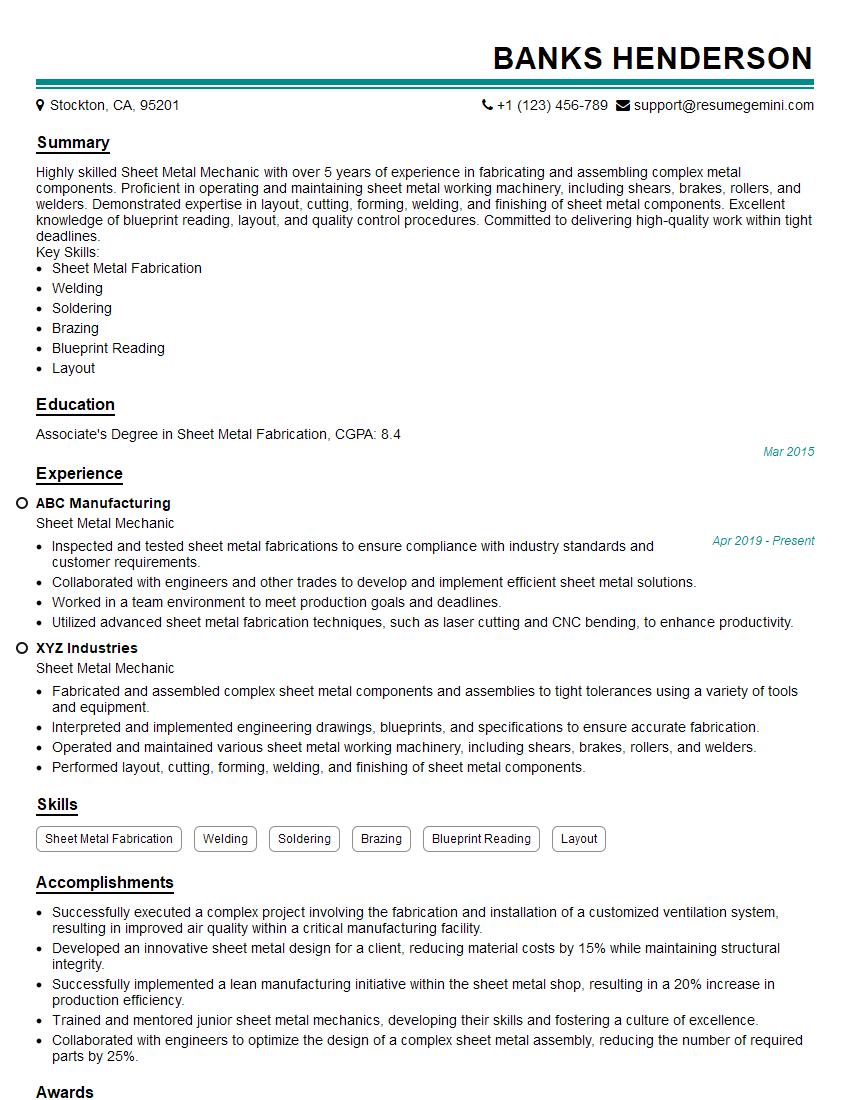
Mastering Aircraft Structural Repair opens doors to a rewarding and highly specialized career with excellent growth potential. Advancement opportunities include leading teams, specializing in specific repair techniques, or moving into management roles. To maximize your job prospects, creating a strong, ATS-friendly resume is crucial. ResumeGemini is a trusted resource that can help you craft a professional and impactful resume tailored to the aviation industry. Examples of resumes specifically designed for Aircraft Structural Repair professionals are available to guide you. Invest the time to build a compelling resume – it’s your first impression and a key to unlocking your career goals.
Explore more articles
Users Rating of Our Blogs
Share Your Experience
We value your feedback! Please rate our content and share your thoughts (optional).
What Readers Say About Our Blog
Very informative content, great job.
good