Every successful interview starts with knowing what to expect. In this blog, we’ll take you through the top Aircraft Structures and Systems interview questions, breaking them down with expert tips to help you deliver impactful answers. Step into your next interview fully prepared and ready to succeed.
Questions Asked in Aircraft Structures and Systems Interview
Q 1. Explain the differences between metallic and composite aircraft structures.
Metallic and composite aircraft structures offer distinct advantages and disadvantages. Metallic structures, traditionally aluminum alloys and steel, are well-understood, readily manufactured, and possess high strength-to-weight ratios. However, they are susceptible to fatigue and corrosion, requiring regular maintenance and inspection. Composite structures, typically using carbon fiber reinforced polymers (CFRP) or glass fiber reinforced polymers (GFRP), offer higher strength-to-weight ratios, improved fatigue resistance, and corrosion resistance. However, they are more expensive to manufacture, their damage detection is more challenging, and their behavior under extreme loads can be complex.
Think of it this way: Aluminum is like a strong, reliable workhorse, while composites are like a high-performance sports car – lighter and faster, but requiring more specialized care.
- Metallic Structures: High strength-to-weight ratio (relative to older materials), well-established manufacturing processes, readily available materials.
- Composite Structures: Higher strength-to-weight ratio than metals, improved fatigue and corrosion resistance, design flexibility.
Q 2. Describe the process of finite element analysis (FEA) in aircraft structural design.
Finite Element Analysis (FEA) is a powerful computational technique used to predict the structural behavior of an aircraft under various loading conditions. The process involves dividing the aircraft structure into numerous smaller elements (finite elements), each with simplified properties. These elements are interconnected at nodes, creating a mesh representing the entire structure. Loads and boundary conditions are then applied, and sophisticated software solves for the resulting stresses, strains, and displacements within each element. This allows engineers to assess the structural integrity of the aircraft design, identify potential weak points, and optimize the design for weight and performance.
For example, during the design of a new wing, FEA can simulate the effects of aerodynamic loads, maneuver loads, and gusts. The analysis will highlight areas of high stress concentration, allowing engineers to reinforce those areas or redesign the wing for improved performance and safety.
The FEA process generally involves these steps:
- Geometry Modeling: Creating a 3D model of the aircraft structure.
- Mesh Generation: Dividing the model into a mesh of finite elements.
- Material Properties Assignment: Defining the material properties of each element (e.g., Young’s modulus, Poisson’s ratio).
- Load Application: Applying loads and boundary conditions to the model.
- Solution: Solving the system of equations to determine stresses, strains, and displacements.
- Post-Processing: Analyzing the results to identify critical areas and refine the design.
Q 3. How do you account for fatigue and damage tolerance in aircraft structure design?
Fatigue and damage tolerance are critical considerations in aircraft structural design. Fatigue refers to the progressive and localized structural damage that occurs when a material is subjected to cyclic loading. Damage tolerance focuses on designing structures that can withstand some level of damage without catastrophic failure. This is achieved through several methods:
- Material Selection: Choosing materials with high fatigue resistance, like specific aluminum alloys or advanced composites.
- Design for Fatigue: Avoiding stress concentrations and using smooth transitions in geometry to reduce fatigue crack initiation.
- Crack Growth Analysis: Predicting the rate of crack growth under various loading conditions using Fracture Mechanics principles.
- Non-Destructive Inspection (NDI): Regularly inspecting the aircraft for cracks or other damage using techniques such as ultrasonic testing or radiography.
- Redundancy: Designing structures with multiple load paths to ensure that failure in one component does not lead to complete structural collapse.
Consider this: A seemingly minor crack might not immediately cause failure, but repeated stress cycles can lead to progressive growth, eventually leading to a catastrophic event. Damage tolerance ensures the structure can safely withstand this damage for a defined period, allowing for inspection and repair.
Q 4. Explain the significance of safety factors in aircraft structural design.
Safety factors are crucial in aircraft structural design, acting as a buffer against uncertainties and unforeseen events. They represent the ratio of the ultimate strength of a structural member to the allowable stress. This means a safety factor of 1.5 indicates that the structure can withstand a load 1.5 times greater than its design load before failure. Safety factors account for variations in material properties, manufacturing tolerances, uncertainties in load estimations, and potential environmental factors. They are determined based on regulations (e.g., FAA regulations) and the criticality of the component. A higher safety factor signifies a greater margin of safety, but also typically leads to increased weight and cost.
For instance, a critical component like a wing spar might have a higher safety factor than a less critical part, ensuring enhanced reliability and minimizing the risk of catastrophic failure.
Q 5. What are the common failure modes of aircraft structures?
Aircraft structures can fail in various ways, each demanding careful consideration in design and maintenance:
- Fatigue Failure: Progressive crack growth due to cyclic loading.
- Yielding: Permanent deformation of a material exceeding its elastic limit.
- Fracture: Complete separation of a material due to excessive stress.
- Buckling: Sudden collapse of a structural member under compressive loads.
- Creep: Time-dependent deformation of a material under sustained stress (more common at high temperatures).
- Corrosion: Degradation of material properties due to chemical reactions with the environment.
Understanding these failure modes is paramount in selecting appropriate materials, optimizing designs, and implementing effective inspection procedures.
Q 6. Describe your experience with different types of aircraft structural joints.
Throughout my career, I’ve worked extensively with various aircraft structural joints, each with its own strengths and weaknesses. These include:
- Bolted Joints: Common and versatile, allowing for disassembly and maintenance. Design considerations involve bolt preload, hole tolerances, and fatigue considerations.
- Riveted Joints: Used extensively in metallic structures, providing high shear strength. However, they are permanent joints, limiting maintenance flexibility.
- Welded Joints: Strong and efficient, but can be susceptible to stress concentrations and require careful quality control.
- Bonded Joints: Primarily used in composite structures, providing high strength and stiffness. The selection of adhesive and surface preparation are crucial for joint integrity. I’ve also worked with hybrid joints combining different joining techniques.
For example, in designing a wing structure, I might use bonded joints for primary structural elements to take advantage of the high strength-to-weight ratio of composites, and bolted joints for secondary structures allowing access for maintenance.
Q 7. How do you ensure compliance with relevant aerospace standards (e.g., FAA, EASA)?
Compliance with aerospace standards like those from the FAA (Federal Aviation Administration) and EASA (European Union Aviation Safety Agency) is paramount for aircraft safety. This involves adhering to detailed design standards, manufacturing processes, and certification requirements. Our team utilizes a structured approach that includes:
- Design Reviews: Regular design reviews ensure that the design meets all relevant standards and requirements.
- Testing and Validation: Conducting rigorous testing and analysis to demonstrate the structural integrity of the aircraft.
- Documentation: Maintaining meticulous documentation of all design, manufacturing, and testing activities.
- Certification Processes: Working closely with regulatory authorities to obtain the necessary approvals.
- Continuous Monitoring: Implementing a system for continuous monitoring and improvement to ensure ongoing compliance.
Non-compliance can lead to significant delays, costly modifications, and potentially compromise aircraft safety. A proactive approach to compliance is vital throughout the entire design and development process.
Q 8. Explain your understanding of stress concentration and its effects on aircraft structures.
Stress concentration refers to the localized increase in stress that occurs around geometric discontinuities in a structure, such as holes, notches, fillets, or changes in cross-section. These areas experience significantly higher stresses than the surrounding material under the same applied load. Imagine a piece of wood with a knot – the knot acts as a stress concentrator. If you bend the wood, the fibers around the knot are far more likely to break than those in the smoother sections.
In aircraft structures, stress concentration is a major concern because it can lead to premature fatigue failure, even if the overall average stress is well below the material’s yield strength. These high localized stresses initiate micro-cracks that propagate under cyclic loading (like repeated take-offs and landings), eventually leading to catastrophic failure. Therefore, careful design practices that minimize stress concentration are crucial. This includes using smooth transitions in design, avoiding sharp corners, and strategically placing holes.
For example, consider a wing spar with a hole for a bolt. The stress around the hole will be considerably higher than in the rest of the spar. Engineers use stress concentration factors (Kt), determined experimentally or through finite element analysis (FEA), to quantify this effect and account for it in design calculations. They might use larger diameter bolts or reinforce the area around the hole to mitigate the issue.
Q 9. How do you determine the buckling strength of an aircraft component?
Determining the buckling strength of an aircraft component involves analyzing its susceptibility to instability under compressive loads. Buckling is a sudden, large deformation that occurs when a slender structural member subjected to axial compression reaches a critical load. Think of a soda can – if you squeeze it, it will buckle before it actually crushes.
The most common method is using Euler’s buckling formula, which provides a theoretical prediction of the critical buckling load (Pcr) for a perfectly straight, slender column with pinned ends:
Pcr = (π²EI) / (Le)²Where:
- E is the Young’s modulus of the material
- I is the area moment of inertia of the cross-section
- Le is the effective length of the column (dependent on the end conditions)
However, this formula is idealized. Real-world components have imperfections, residual stresses, and may experience combined loading. Therefore, more sophisticated methods like finite element analysis (FEA) are often employed to accurately predict the buckling strength. FEA can account for complex geometries, material nonlinearities, and boundary conditions, providing a more realistic assessment.
Experimental testing, such as compression tests on representative specimens, is also crucial to validate analytical predictions and account for factors not easily modeled computationally. The ultimate goal is to ensure the component’s buckling strength significantly exceeds the anticipated maximum compressive load it will experience during flight.
Q 10. Describe your experience with structural testing and analysis techniques.
My experience with structural testing and analysis techniques is extensive. I’ve been involved in various projects utilizing both experimental and computational methods. On the experimental side, I’m proficient in conducting static and fatigue testing, using equipment such as universal testing machines, strain gauges, and acoustic emission sensors. I’ve worked with both metallic and composite materials, ensuring that specimens are prepared according to relevant standards.
For instance, in a recent project involving a composite wing component, we used strain gauges to monitor the strain distribution under various loading conditions. This data was then compared to FEA predictions to validate the model and refine the design. Acoustic emission monitoring allowed us to detect micro-cracking during fatigue testing, providing valuable insights into the component’s fatigue life.
On the computational side, I’m highly skilled in using FEA software such as ANSYS and ABAQUS. I’ve built detailed finite element models of aircraft structures, employing various element types to accurately represent different components and material properties. I’ve performed linear and nonlinear analyses to assess strength, stiffness, buckling, and fatigue life under diverse loading scenarios, including static, dynamic, and thermal loads.
My expertise encompasses both the practical execution of tests and the interpretation and application of the results in design optimization and certification processes.
Q 11. What are the different types of aircraft landing gear systems?
Aircraft landing gear systems are crucial for safe takeoff and landing. They are broadly classified into several types:
- Conventional Gear: This is the most common type, featuring a main gear under the wings or fuselage and a nose gear or tail gear for balance. Think of most commercial airliners.
- Tricycle Gear: Similar to conventional gear, but the main gear is placed beneath the wings/fuselage, and a nose gear is located in front of the fuselage. This provides better ground handling and taxiing stability.
- Tandem Gear: This features two main gear assemblies placed one behind the other, typically along the centerline of the aircraft. Useful in aircraft with a long fuselage, such as bombers.
- Bicycle Gear: This arrangement uses two main gears located one on either side of the aircraft. This allows for a narrow main gear track, improving high-speed taxiing and reducing ground friction.
- Ski Gear: Specifically designed for operation on snow or ice.
- Float Gear: Used for water landings (seaplanes).
The selection of a specific landing gear system depends on factors like aircraft type, size, intended operational environment and performance requirements.
Q 12. Explain the function of the flight control system and its key components.
The flight control system is responsible for maintaining the aircraft’s attitude (orientation) and trajectory. It enables pilots to control the aircraft’s movement in pitch, roll, and yaw. It’s a complex system that involves many interconnected components.
Key components include:
- Flight control surfaces: These are the movable surfaces on the aircraft that generate aerodynamic forces for control, such as ailerons (roll), elevators (pitch), and rudder (yaw).
- Control columns and pedals: These are the pilot’s primary inputs to the flight control system.
- Actuators: These convert pilot commands into mechanical movements of the flight control surfaces. These could be hydraulic, electric, or mechanical.
- Sensors: These provide feedback on the aircraft’s current state, such as angle of attack, airspeed, altitude, etc.
- Flight control computer (FCC): In modern aircraft, the FCC processes sensor data and pilot inputs, calculating and sending commands to the actuators. It can also incorporate fly-by-wire technology for enhanced stability and safety.
- Control linkages: This intricate network of pushrods, cables, and other mechanical elements connects the flight control surfaces to the actuators and pilot controls.
The flight control system ensures safe and efficient aircraft operation, allowing for precise maneuvering and stability even under adverse conditions.
Q 13. Describe your understanding of hydraulic and pneumatic systems in aircraft.
Hydraulic and pneumatic systems are vital in aircraft for various functions. They leverage the power of fluids under pressure to actuate components.
Hydraulic systems use incompressible fluids (typically specialized oils) to transmit power. Their high power-to-weight ratio makes them ideal for actuating heavy flight control surfaces and landing gear. A hydraulic system consists of a pump, reservoir, valves, actuators, and lines. Think of it like your car’s braking system, but far more complex.
Pneumatic systems use compressible fluids (air) to provide power for various functions, often lower-power applications. They are often simpler and less expensive than hydraulic systems, making them suitable for tasks like cabin pressurization, de-icing, and starting engines. The air is usually supplied by bleed air from the engines or a separate air compressor.
Modern aircraft often utilize a combination of both systems, leveraging the strengths of each. For example, hydraulics handle the heavy lifting of landing gear and flight controls, while pneumatics manage other less demanding tasks. Reliability and redundancy are critical aspects of aircraft fluid systems, ensuring safety and preventing catastrophic failures.
Q 14. How do environmental control systems maintain cabin pressure and temperature?
Environmental control systems (ECS) in aircraft are crucial for maintaining a comfortable and safe cabin environment for passengers and crew. They regulate cabin pressure, temperature, and humidity.
Maintaining Cabin Pressure: At high altitudes, the ambient air pressure is significantly lower than at sea level. The ECS uses bleed air from the engines or an auxiliary power unit (APU) to pressurize the cabin to a comfortable level, equivalent to a much lower altitude. This prevents hypoxia (oxygen deprivation) and protects the aircraft structure from potentially damaging stress.
Maintaining Cabin Temperature: The ECS uses air conditioning and heating systems to control the cabin temperature. Ram air (outside air) is often used for cooling, while heating is provided by bleed air or electrical heaters. Sophisticated controls and sensors regulate the air temperature, humidity, and flow rate throughout the cabin to ensure uniform conditions.
The ECS typically involves various components, including air compressors, heat exchangers, valves, control units, and air distribution ducts. Precise control is achieved through sophisticated sensors and control algorithms that constantly monitor and adjust the system’s operation to maintain optimal cabin conditions throughout the flight.
Q 15. Explain the principles of avionics systems and their integration.
Avionics systems encompass all the electronic systems on an aircraft, from navigation and communication to flight control and engine management. Their integration is crucial for safe and efficient operation. Think of it like a sophisticated orchestra – each instrument (system) plays its part, but the conductor (integration) ensures harmony and prevents chaos.
Integration involves careful consideration of several factors:
- Data Busses: Aircraft use various data busses (like ARINC 429, AFDX) to allow different systems to communicate efficiently and share information. This reduces wiring complexity and improves reliability.
- Software Integration: Complex software manages data flow and system interactions, ensuring seamless operation. This involves rigorous testing and validation to prevent conflicts.
- Hardware Interfaces: Physical interfaces are meticulously designed to ensure compatibility between different components. This includes electrical connectors, power distribution, and signal conditioning.
- Redundancy and Fail-Safes: Critical systems often have redundant components and fail-safe mechanisms to ensure continued operation even if one part fails. For example, a flight control system might have triple redundant actuators.
A practical example is the integration of the GPS navigation system with the autopilot. The GPS provides position data, which the autopilot uses to maintain the desired flight path. This requires careful data processing, error handling, and precise control algorithms.
Career Expert Tips:
- Ace those interviews! Prepare effectively by reviewing the Top 50 Most Common Interview Questions on ResumeGemini.
- Navigate your job search with confidence! Explore a wide range of Career Tips on ResumeGemini. Learn about common challenges and recommendations to overcome them.
- Craft the perfect resume! Master the Art of Resume Writing with ResumeGemini’s guide. Showcase your unique qualifications and achievements effectively.
- Don’t miss out on holiday savings! Build your dream resume with ResumeGemini’s ATS optimized templates.
Q 16. What is your experience with aircraft electrical power systems?
My experience with aircraft electrical power systems spans several years, encompassing both design and troubleshooting. I’ve worked on various aircraft types, from small general aviation planes to larger commercial airliners. My expertise includes understanding and managing AC and DC power generation, distribution, and regulation.
I’m familiar with different power sources, including:
- Constant Speed Drives (CSDs): These regulate the AC generator output to ensure stable voltage and frequency.
- Transformers and Rectifiers: These convert AC power to DC power for various systems.
- Battery Systems: I understand the role of batteries in providing backup power and starting the engines.
- Power Distribution Networks: I’m proficient in analyzing and designing power bus architectures to ensure reliable power delivery to all aircraft systems.
- Power Management Units (PMUs): These sophisticated systems manage and distribute electrical power, providing load shedding capabilities in case of power emergencies.
In one project, I successfully diagnosed and resolved an intermittent power failure affecting the flight management system by identifying a faulty contact in a power bus relay. This involved meticulous fault isolation, testing, and replacement of the affected component, ensuring the aircraft’s safe return to operation.
Q 17. Describe the role of sensors and actuators in aircraft systems.
Sensors and actuators are the eyes and hands of an aircraft. Sensors collect data about the aircraft’s state, such as airspeed, altitude, and engine parameters, while actuators respond to commands by controlling surfaces or systems. Think of it as a feedback loop: the pilot sets a desired flight condition, sensors measure the current state, and actuators adjust accordingly.
Examples of sensors include:
- Air Data Systems (ADS): Measure airspeed, altitude, and air temperature.
- Inertial Measurement Units (IMUs): Measure aircraft orientation and acceleration.
- Engine Monitoring Systems: Collect data on engine parameters like temperature, pressure, and fuel flow.
Examples of actuators include:
- Hydraulic Actuators: Control flight surfaces like ailerons, elevators, and rudders.
- Electrical Actuators: Control smaller flight surfaces and other systems.
- Fuel Control Valves: Regulate fuel flow to the engines.
The precise interaction between sensors and actuators is critical for stability, control, and safety. For example, an autopilot uses sensor data to adjust actuator positions, maintaining a stable flight path despite wind gusts or turbulence.
Q 18. How do you troubleshoot and resolve issues in aircraft systems?
Troubleshooting aircraft systems requires a systematic and methodical approach. It’s not about guessing; it’s about using a logical process to identify the root cause of a malfunction.
My troubleshooting process generally follows these steps:
- Gather Information: Collect information from pilots, maintenance logs, and any available diagnostic data.
- Identify Symptoms: Clearly define the problem and any associated symptoms.
- Develop Hypotheses: Based on the symptoms, develop several possible causes.
- Test Hypotheses: Use diagnostic tools and techniques to systematically test each hypothesis.
- Isolate the Fault: Once the faulty component or system is identified, isolate it to prevent further damage.
- Repair or Replace: Repair the faulty component or replace it with a serviceable unit.
- Verify Repair: Thoroughly test the system to ensure that the repair has resolved the problem.
- Document Findings: Document all findings, repairs, and testing procedures.
I’ve used various diagnostic tools, including built-in test equipment (BITE), specialized test sets, and fault-finding software. One instance involved a complex hydraulic system malfunction. Through systematic testing and analysis of system pressures and flow rates, I pinpointed a faulty hydraulic valve, preventing a potential major safety hazard.
Q 19. Explain your experience with aircraft maintenance and repair procedures.
My experience with aircraft maintenance and repair procedures is extensive, covering various aspects of airframe and systems maintenance. I’m familiar with industry best practices, regulatory requirements, and the importance of meticulous documentation.
My experience includes:
- Scheduled Maintenance: Performing routine inspections and maintenance tasks according to the aircraft’s maintenance manual.
- Unscheduled Maintenance: Troubleshooting and repairing unexpected system failures.
- Component Replacement: Replacing damaged or worn-out components, ensuring proper installation and testing.
- Corrosion Control: Identifying and addressing corrosion issues to prevent structural degradation.
- Compliance with Regulations: Adhering to all applicable regulations and guidelines, including those set forth by regulatory bodies like the FAA or EASA.
I’m proficient in interpreting maintenance manuals, technical drawings, and service bulletins. A significant project involved overseeing the repair of a damaged aircraft wing after a minor incident. This required careful assessment of the damage, selecting the appropriate repair techniques, ensuring adherence to structural integrity standards, and providing detailed documentation for regulatory compliance.
Q 20. What is your understanding of structural health monitoring?
Structural Health Monitoring (SHM) involves using sensors and data analysis techniques to assess the condition of an aircraft’s structure throughout its service life. It’s like giving the aircraft a continuous health checkup. This proactive approach allows for early detection of damage, preventing catastrophic failures and reducing maintenance costs.
SHM typically involves:
- Sensor Integration: Embedding or attaching sensors to the aircraft structure to measure strain, vibration, and acoustic emissions.
- Data Acquisition: Collecting sensor data using wireless or wired data acquisition systems.
- Data Processing and Analysis: Using advanced signal processing and machine learning techniques to analyze sensor data and identify anomalies.
- Damage Detection and Prognosis: Identifying potential damage and predicting its growth or progression.
SHM is crucial for ensuring the long-term safety and reliability of aircraft structures. It enables proactive maintenance planning and allows for the timely replacement or repair of damaged components, maximizing the operational life of an aircraft.
Q 21. Describe your experience with CAD software for aircraft design.
My experience with CAD software for aircraft design is extensive. I’m proficient in using industry-standard software packages such as CATIA, NX, and SolidWorks. I understand the importance of creating accurate 3D models that meet stringent engineering requirements and standards. This involves not just creating aesthetically pleasing designs, but ensuring functionality, structural integrity, and manufacturability.
My experience encompasses:
- 3D Modeling: Creating detailed 3D models of aircraft components and assemblies.
- Finite Element Analysis (FEA): Using FEA software to simulate the structural behavior of components under various loads.
- Computational Fluid Dynamics (CFD): Utilizing CFD simulations to analyze airflow around aircraft components.
- Design Optimization: Employing design optimization techniques to improve performance and reduce weight.
- Collaboration and Data Management: Working effectively in collaborative design environments and managing large design datasets.
In a recent project, I used CATIA to design a new winglet for an existing aircraft. I employed FEA to ensure that the design met the required strength and stiffness criteria. Subsequently, CFD simulations assisted in optimizing the winglet geometry for improved aerodynamic efficiency.
Q 22. Explain your understanding of different materials used in aircraft construction (e.g., aluminum alloys, titanium, composites).
Aircraft construction utilizes a diverse range of materials, each chosen for its specific properties and the demands of the aircraft’s various components. The selection is a careful balance between strength, weight, cost, and manufacturability.
- Aluminum Alloys: These are the workhorses of aircraft construction, particularly in airframes. Their high strength-to-weight ratio, excellent formability, and relatively low cost make them ideal for many applications. Different alloys (e.g., 2024-T3, 7075-T6) offer varying properties, allowing engineers to tailor material selection for specific structural needs. For example, 2024-T3 is commonly used for fuselage skins due to its good formability, while 7075-T6 might be preferred for highly stressed components like wing spars, where higher strength is critical.
- Titanium Alloys: Titanium offers superior strength and corrosion resistance compared to aluminum, at a higher cost. It’s crucial in high-temperature applications like engine components and in areas requiring exceptional fatigue resistance. Its higher density compared to aluminum means it’s used more judiciously, often in critical areas where its unique properties justify the added weight.
- Composites: These materials, typically consisting of a fiber reinforcement (e.g., carbon fiber, glass fiber) embedded in a resin matrix (e.g., epoxy), are increasingly prevalent in modern aircraft. Their remarkable strength-to-weight ratio, tailored stiffness, and corrosion resistance allow for lighter, more fuel-efficient designs. However, their high manufacturing cost and the complexity of their design and maintenance processes are significant factors. For example, carbon fiber reinforced polymers (CFRPs) are frequently used in wing structures, offering high stiffness and enabling the creation of complex aerodynamic shapes.
The choice of material depends heavily on the specific design requirements and involves detailed stress analysis and life cycle considerations. For instance, a high-speed military aircraft might utilize more titanium and composites in critical sections to maximize performance, whereas a commercial airliner might prioritize aluminum alloys for cost-effectiveness and ease of maintenance in less critically stressed areas.
Q 23. How do you handle design changes and revisions in an aircraft project?
Handling design changes and revisions in an aircraft project requires a rigorous and systematic approach, emphasizing collaboration and adherence to strict regulatory standards. Changes aren’t implemented casually; they undergo a thorough change management process.
- Impact Assessment: Any proposed change is first evaluated for its impact on the overall design, weight, performance, and certification requirements. This often involves detailed finite element analysis (FEA) to assess the structural integrity.
- Documentation and Traceability: Every change is meticulously documented, including the justification, analysis results, and the impact on other systems. A clear and auditable trail is essential for traceability.
- Configuration Management: A robust configuration management system helps track all design revisions and ensures that everyone is working with the latest approved drawings and specifications.
- Verification and Validation: Changes must be thoroughly verified and validated through testing (e.g., static testing, fatigue testing) to ensure that they meet the required safety and performance standards. This often requires retesting of affected components or even complete assemblies.
- Regulatory Compliance: Any change impacting the aircraft’s certification must be approved by the relevant aviation authorities. The process follows strict guidelines to ensure continuing airworthiness.
A well-defined change control process is crucial to maintain the integrity of the aircraft design and to minimize risks throughout the project lifecycle. Ignoring this process can lead to costly delays, safety hazards, and potential certification issues.
Q 24. Describe your experience with working within a team environment on complex engineering projects.
Throughout my career, I’ve consistently worked in collaborative team environments on complex engineering projects. My experience underscores the importance of effective communication, shared responsibility, and mutual respect within a diverse team.
For instance, during the development of a new composite wing structure, I worked closely with stress analysts, material scientists, manufacturing engineers, and testing personnel. My role involved coordinating the design, analyzing test results, and resolving discrepancies between design predictions and experimental findings. We used collaborative software platforms for document sharing and communication and held regular progress meetings to track our goals and address challenges. Open communication and the ability to listen to and incorporate feedback from different team members were paramount in the successful completion of the project. I believe my skills in conflict resolution and collaborative problem-solving contributed significantly to a positive and productive team dynamic. Understanding the perspectives of each team member and working towards a common goal is essential in navigating complex engineering challenges. The collaborative nature of aerospace engineering projects often pushes the boundaries of innovation and necessitates a team-oriented approach for optimal outcomes.
Q 25. How do you prioritize tasks and manage your time effectively?
Prioritizing tasks and managing my time effectively are critical skills in the fast-paced world of aerospace engineering. I employ a combination of techniques to ensure efficient task completion.
- Prioritization Matrix: I utilize a prioritization matrix (e.g., Eisenhower Matrix – Urgent/Important) to categorize tasks based on their urgency and importance. This helps me focus my efforts on high-impact activities first.
- Task Breakdown: I break down large, complex tasks into smaller, more manageable subtasks. This makes the overall project less daunting and allows for more effective tracking of progress.
- Time Blocking: I allocate specific time blocks for dedicated tasks, minimizing distractions and maximizing concentration. This structured approach enhances focus and productivity.
- Regular Review and Adjustment: I regularly review my schedule and adjust my priorities as needed based on changing circumstances and new information. This dynamic approach ensures that I remain adaptable and efficient.
- Tools and Technology: I leverage project management tools (e.g., Jira, Asana) to track progress, manage deadlines, and collaborate with team members. These tools enhance efficiency and transparency.
My experience has shown that proactive time management is crucial to meeting deadlines, managing multiple projects simultaneously, and maintaining a healthy work-life balance. Failing to prioritize and manage time effectively can lead to missed deadlines, stress, and potentially compromised project quality.
Q 26. What are your strengths and weaknesses as an aircraft structures and systems engineer?
My strengths lie in my analytical abilities, problem-solving skills, and my ability to work effectively within a team. I have a strong understanding of aircraft structures and systems, coupled with proficiency in relevant software and analytical tools (e.g., FEA software, CAD software). My detailed-oriented nature ensures accuracy and thoroughness in my work.
A potential weakness could be my tendency towards perfectionism, which can sometimes lead to spending excessive time on tasks. However, I am actively working to manage this by setting realistic deadlines and learning to delegate when appropriate. I’m also constantly striving to improve my skills in areas such as project leadership and public speaking to further enhance my capabilities as a well-rounded engineer.
Q 27. Describe a challenging project you have worked on and how you overcame the challenges.
One challenging project involved the structural redesign of a critical component on a regional jet experiencing unexpected fatigue cracks. The initial analysis indicated a potential safety hazard requiring immediate attention.
The challenge lay in implementing a solution that met stringent safety and regulatory requirements within a compressed timeframe and without disrupting the airline’s operational schedule. We used a multi-pronged approach:
- Root Cause Analysis: A thorough investigation was carried out to pinpoint the root cause of the fatigue cracks. This involved examining material properties, manufacturing processes, and in-service loading conditions.
- Design Optimization: Using advanced FEA techniques, we redesigned the component to significantly improve its fatigue life, while minimizing weight increase and maintaining structural integrity.
- Accelerated Testing: We conducted accelerated fatigue testing on prototypes of the redesigned component to validate the effectiveness of the improvements and obtain necessary certification data swiftly.
- Phased Rollout: To minimize disruptions, we implemented a phased rollout plan for the replacement components across the airline’s fleet, ensuring that the planes were always airworthy.
Through effective teamwork, careful analysis, and meticulous planning, we successfully addressed the safety hazard, exceeding the initial expectations by minimizing downtime and keeping the aircraft operational safely.
Q 28. Where do you see yourself in five years in the aerospace industry?
In five years, I envision myself as a highly experienced and respected aircraft structures and systems engineer, potentially in a leadership role. I aspire to contribute to the design and development of next-generation aircraft, utilizing my expertise to improve safety, efficiency, and sustainability in air travel. I would like to be involved in innovative projects, pushing the boundaries of aerospace technology, and mentoring junior engineers. Continuous learning and professional development are key to achieving this vision; I plan to pursue advanced certifications or possibly a master’s degree to further broaden my knowledge base and technical expertise.
Key Topics to Learn for Aircraft Structures and Systems Interview
- Aircraft Materials and Manufacturing: Understanding material properties (e.g., aluminum alloys, composites), manufacturing processes (e.g., riveting, bonding, machining), and their impact on structural integrity. Practical application: Analyzing stress concentrations in composite structures.
- Structural Analysis and Design: Mastering concepts like stress, strain, fatigue, and failure analysis. Practical application: Calculating load paths and determining safe operating limits for aircraft components.
- Aerodynamics and Loads: Understanding aerodynamic forces acting on aircraft and how they translate into structural loads. Practical application: Evaluating the effects of gust loads on wing structures.
- Flight Control Systems: Knowledge of flight control surfaces, actuators, and their integration with the aircraft structure. Practical application: Troubleshooting issues related to control surface movement and effectiveness.
- Aircraft Systems Integration: Understanding the interplay between different aircraft systems (e.g., hydraulics, pneumatics, electrical) and the structural implications. Practical application: Analyzing the impact of system failures on structural safety.
- Damage Tolerance and Repair: Understanding damage mechanisms, inspection techniques, and repair methods for aircraft structures. Practical application: Assessing the structural integrity after damage and planning appropriate repair strategies.
- Finite Element Analysis (FEA): Familiarity with FEA software and its application in structural analysis. Practical application: Simulating structural behavior under various loading conditions.
- Regulatory Compliance: Understanding relevant aviation regulations and certification standards. Practical application: Ensuring compliance with safety standards during design and maintenance.
Next Steps
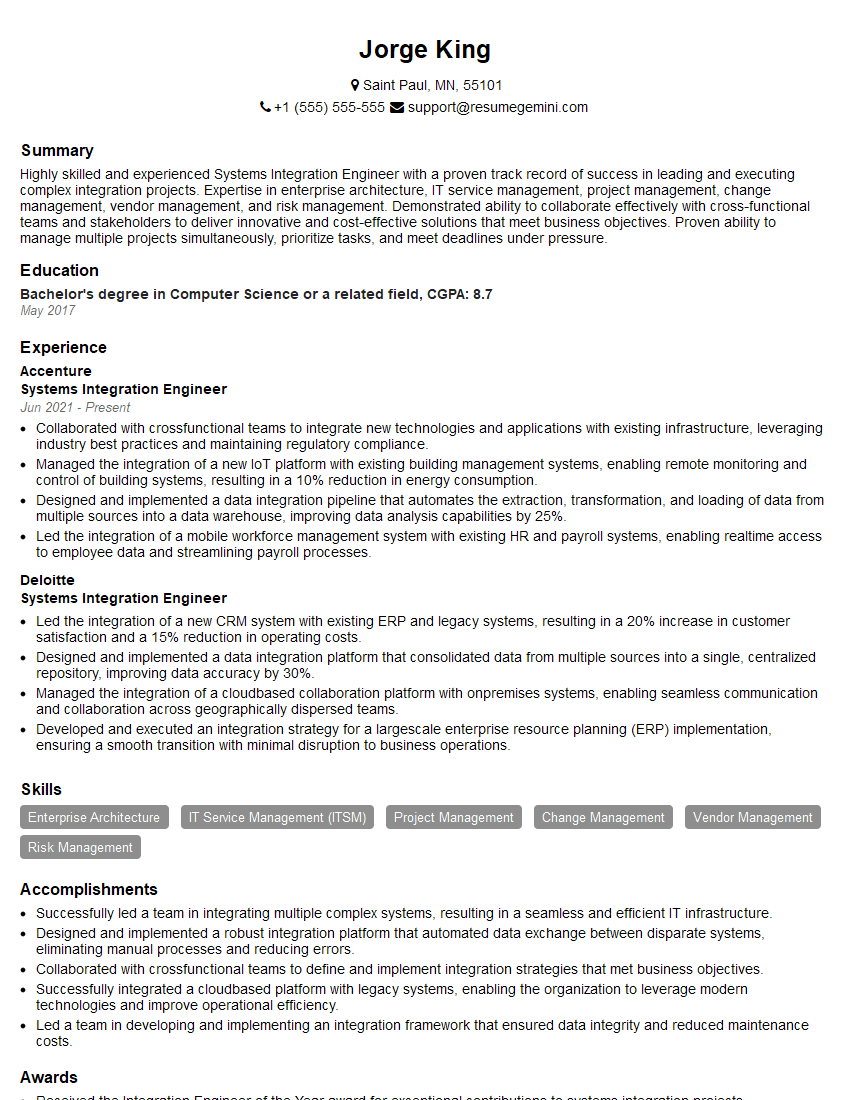
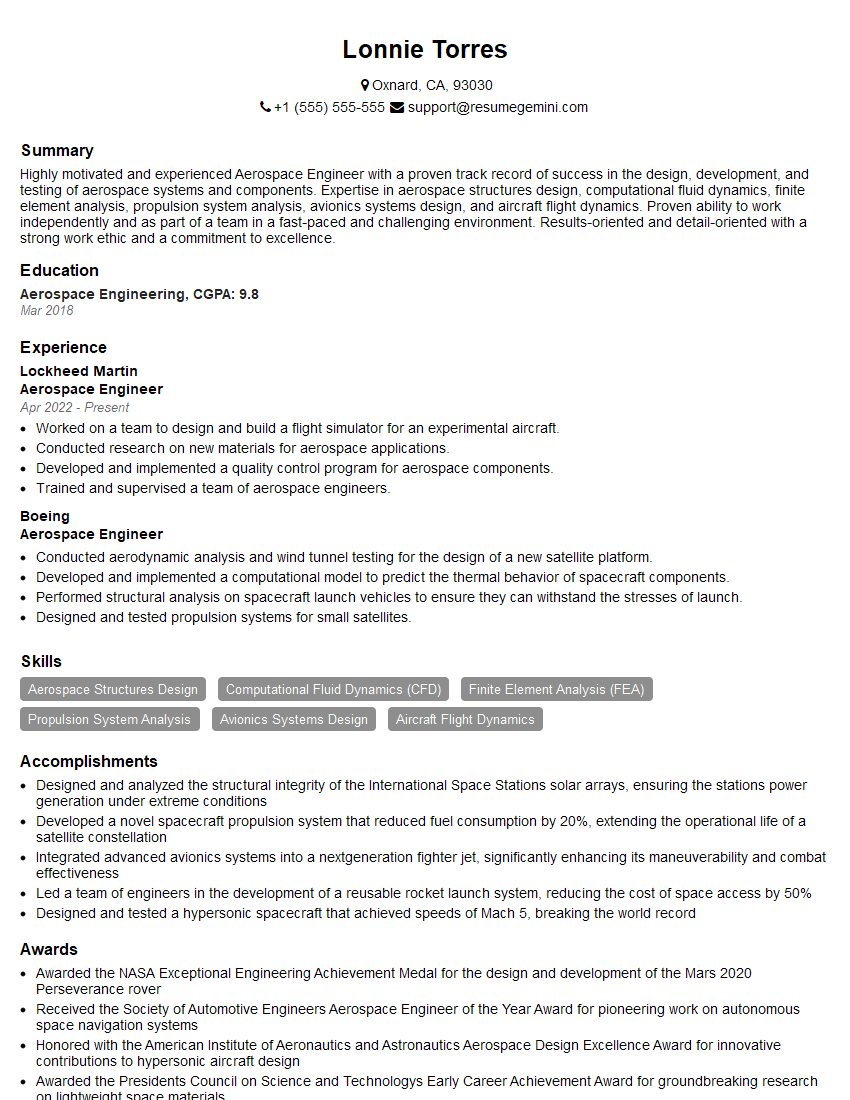
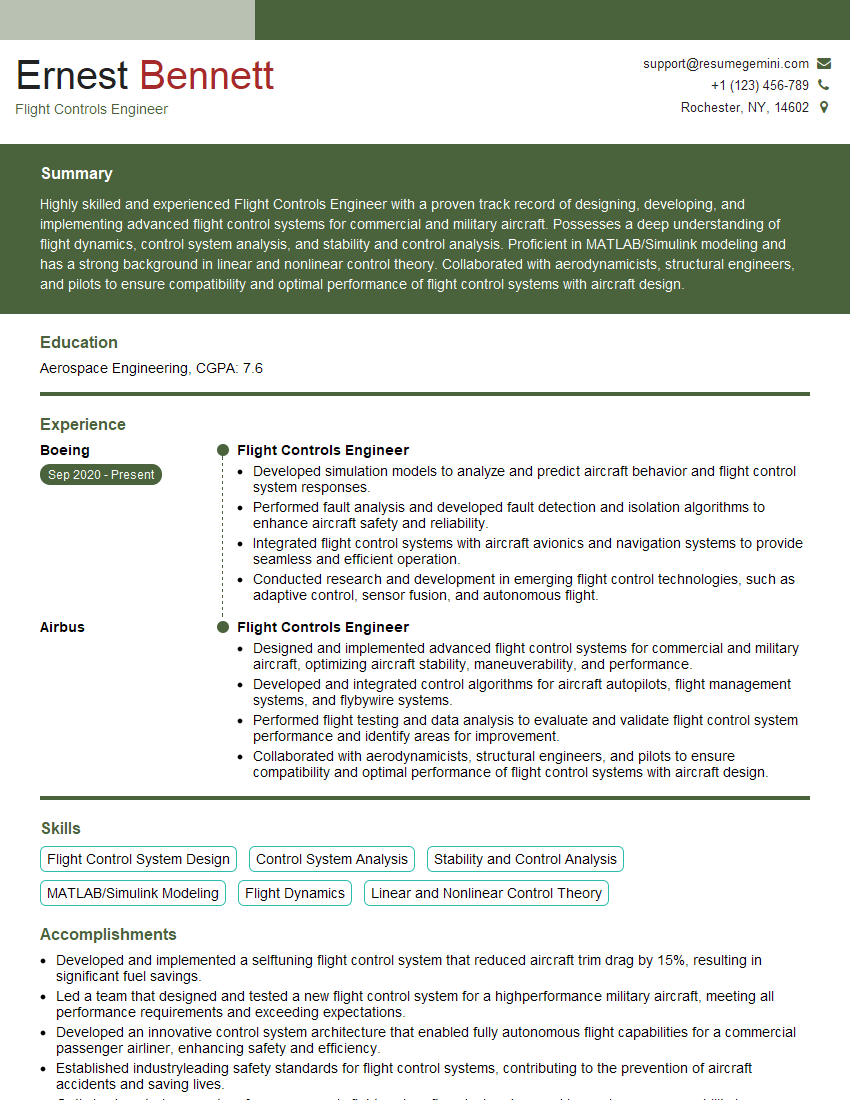
Mastering Aircraft Structures and Systems is crucial for a successful and rewarding career in the aerospace industry, opening doors to exciting roles and significant growth potential. A strong resume is your key to unlocking these opportunities. Crafting an ATS-friendly resume is essential to ensure your application gets noticed by recruiters. To help you build a compelling and effective resume, we recommend using ResumeGemini. ResumeGemini provides a user-friendly platform and offers examples of resumes tailored to Aircraft Structures and Systems, giving you a head start in presenting your skills and experience in the best possible light.
Explore more articles
Users Rating of Our Blogs
Share Your Experience
We value your feedback! Please rate our content and share your thoughts (optional).
What Readers Say About Our Blog
Very informative content, great job.
good