Cracking a skill-specific interview, like one for Aircraft Systems and Components, requires understanding the nuances of the role. In this blog, we present the questions you’re most likely to encounter, along with insights into how to answer them effectively. Let’s ensure you’re ready to make a strong impression.
Questions Asked in Aircraft Systems and Components Interview
Q 1. Explain the principles of flight control systems.
Flight control systems are the brain and muscles of an aircraft, allowing pilots to maneuver the plane. They consist of several interconnected components working in harmony to respond to pilot inputs and maintain stability. Think of it like driving a car – the steering wheel, pedals, and other controls are analogous to the flight controls, while the engine, chassis, and suspension are comparable to the aircraft’s structure and propulsion system. The primary goal is to control three axes of motion: pitch (nose up/down), roll (banking left/right), and yaw (nose left/right).
Pilot Inputs: These are the commands the pilot issues through the control column (pitch and roll) and rudder pedals (yaw).
Control Surfaces: These are movable aerodynamic surfaces like ailerons (roll control), elevators (pitch control), and rudder (yaw control). They deflect airflow to create the forces needed for maneuvering.
Actuators: These are the “muscles” that move the control surfaces. Common actuators include hydraulic, electric, or even mechanical systems, depending on the aircraft.
Flight Control Computer (FCC): In modern aircraft, an FCC processes pilot inputs, sensor data (like airspeed, altitude, and attitude), and calculates the necessary control surface movements to achieve the desired flight path. It provides stability augmentation and redundancy to ensure safe operation.
Sensors: These provide critical feedback to the FCC, including airspeed indicators, altimeters, gyroscopes, accelerometers, and angle-of-attack sensors. Accurate sensor data is vital for effective flight control.
For instance, if a pilot wants to turn left, they would apply pressure to the left rudder pedal. The rudder would deflect, causing a yawing moment. The FCC, in modern aircraft, might also coordinate with the ailerons to bank the aircraft, making the turn smoother and more controlled.
Q 2. Describe the function of a hydraulic system in an aircraft.
A hydraulic system in an aircraft is essentially a high-pressure fluid power system. Think of it as the aircraft’s muscles, providing the power needed to operate various flight control surfaces, landing gear, brakes, and other heavy-duty mechanisms. It’s far more efficient than using mechanical linkages alone, especially for larger aircraft.
Hydraulic Fluid: This special fluid, often oil-based, transmits pressure from the pump to the actuators.
Hydraulic Pump: This is the heart of the system, driven by an engine and providing the high-pressure fluid.
Actuators: These convert hydraulic pressure into linear or rotary motion, moving control surfaces, extending landing gear, or actuating the brakes.
Reservoirs: These hold a supply of hydraulic fluid to compensate for leaks and consumption.
Valves and Controls: These regulate the flow and pressure of the fluid, allowing pilots or automated systems to control the actuators.
For example, when a pilot retracts the landing gear, a series of valves are activated, sending pressurized hydraulic fluid to the landing gear actuators. These actuators then extend or retract the gear, a task impossible with manual levers given the size and weight of the gear. The redundancy built into the system (multiple hydraulic systems) ensures that even if one system fails, the aircraft can still operate safely.
Q 3. What are the different types of aircraft engines and their operating principles?
Aircraft engines are categorized primarily by their operating principle: reciprocating, turboprop, turbofan, and turboshaft. Each has its own strengths and weaknesses, making them suitable for different types of aircraft and missions.
Reciprocating Engines: These are piston engines, similar to those found in cars, but often more robust and powerful. They are relatively simple but less fuel-efficient than turbine engines. They’re commonly found in smaller, general aviation aircraft.
Turboprop Engines: These are gas turbine engines that drive a propeller. They offer better fuel efficiency than reciprocating engines at higher speeds and are common in smaller regional aircraft and some military transport planes.
Turbofan Engines: These are the workhorses of modern commercial aviation. They use a fan to accelerate a large volume of air, bypassing the core engine, and a core engine that produces hot, high-velocity exhaust. This results in high thrust and relatively good fuel efficiency, particularly at high speeds and altitudes.
Turboshaft Engines: These gas turbine engines produce shaft power instead of thrust. They’re typically used to drive helicopters’ rotors and are suited for applications where high torque is required.
The operating principle of gas turbine engines (turboprop, turbofan, and turboshaft) involves the compression of air, combustion with fuel, expansion of hot gases through a turbine, and finally, conversion of energy to thrust (turbofan, turboprop) or shaft power (turboshaft). Each type optimizes this cycle differently to achieve the desired performance characteristics. For example, a turbofan engine with a high bypass ratio is better suited for long-haul commercial flights due to its fuel efficiency, whereas a turboprop engine might be preferred for short-haul regional flights due to lower cost and better performance at lower speeds.
Q 4. How does an aircraft’s environmental control system work?
An aircraft’s environmental control system (ECS) maintains a comfortable and safe cabin environment for passengers and crew, regardless of the external conditions. This is crucial for pilot performance, passenger comfort, and equipment function.
Air Conditioning: This cools the air using refrigeration cycles, often employing bleed air (air tapped from the engine compressor) as the primary heat source for the refrigeration cycle.
Heating: Bleed air, often supplemented by electric heaters, provides warmth in colder climates.
Air Circulation: Fans and ducts distribute conditioned air throughout the cabin, ensuring even temperature and pressure.
Pressurization: At high altitudes, the cabin needs to be pressurized to prevent hypoxia (lack of oxygen) and maintain comfortable pressure. This is usually done by taking in outside air and using air cycle machines.
Air Quality: Filters remove contaminants from the air, and ventilation systems remove stale air and replace it with fresh air.
In essence, the ECS is a sophisticated system of pumps, valves, heat exchangers, and controls that works to keep the cabin at a stable temperature, pressure, and air quality, regardless of altitude or outside conditions. A failure in the ECS could lead to discomfort, hypoxia, or even structural damage to the aircraft due to pressure imbalances. For example, in a cold climate, bleed air is used for both cabin heating and anti-ice system, demonstrating the integration and importance of the ECS within the overall aircraft system.
Q 5. Explain the purpose and function of an aircraft’s electrical system.
An aircraft’s electrical system is essential for powering all non-engine-driven systems, from lights and radios to flight instruments and flight controls. It’s a complex network of power sources, distribution systems, and various electrical components. The reliability and safety of this system are paramount.
Power Sources: These can include engine-driven generators, auxiliary power units (APUs), batteries, and, in some cases, fuel cells. Redundancy is vital; multiple power sources ensure that a single failure doesn’t cripple the entire aircraft.
Power Distribution: This intricate system of wires, bus bars, and circuit breakers distributes power safely and efficiently to all essential components. Different buses might be dedicated to critical functions (flight controls, for example), ensuring power availability even in case of a failure.
Electrical Components: These include motors, lights, radios, instruments, computers, and actuators. The electrical system powers them, enabling the aircraft’s operation.
Modern aircraft have sophisticated electrical systems, often including multiple buses with varying levels of criticality. For example, some systems like lighting and entertainment might be on a less critical bus, while flight controls and essential instruments are on a higher-priority bus, ensuring continuous operation even during faults. This distribution system uses circuit breakers and other safety mechanisms to prevent cascading failures if a component malfunctions.
Q 6. Describe the various types of aircraft instrumentation.
Aircraft instrumentation provides pilots with the critical information necessary for safe and efficient flight. The types of instruments have evolved dramatically, with modern cockpits incorporating advanced digital displays and integrated systems.
Flight Instruments: These include airspeed indicators, altimeters, vertical speed indicators (VSIs), and attitude indicators (artificial horizons), providing essential information about the aircraft’s speed, altitude, and orientation.
Navigation Instruments: These guide pilots along their planned route and include GPS receivers, VOR (VHF Omnidirectional Range) receivers, and ADF (Automatic Direction Finder) systems.
Engine Instruments: These monitor engine parameters such as temperature, pressure, and RPM, providing critical data for safe engine operation.
System Instruments: These monitor various aircraft systems, including fuel levels, hydraulic pressure, electrical voltage, and the status of other key systems.
Integrated Displays: Modern aircraft increasingly use Electronic Flight Instrument Systems (EFIS) and integrated displays that combine information from multiple sources onto a few large screens, enhancing situational awareness.
For example, a pilot uses the airspeed indicator to maintain safe speeds during takeoff and landing, while the altimeter provides critical information about altitude to avoid terrain collisions. Engine instruments alert the pilot to any issues that might require attention, and the navigation systems guide the pilot to their destination. The evolution to EFIS and integrated displays provides a more streamlined and efficient way for pilots to access and understand all this data.
Q 7. What are the common causes of aircraft hydraulic system failures?
Hydraulic system failures can have severe consequences, so understanding their causes is critical. Failures can range from minor leaks to complete system loss.
Leaks: These are common causes and stem from damaged lines, fittings, or seals. Wear and tear, corrosion, or impacts can all contribute to leaks.
Contamination: Foreign particles in the hydraulic fluid can damage valves, pumps, and actuators, leading to malfunctions. This contamination can occur during maintenance or due to system failures.
Pump Failure: Hydraulic pumps are vital; their failure will result in system pressure loss. Overheating, wear, or damage can cause pump failure.
Actuator Failure: Actuators can malfunction due to wear and tear, internal damage, or hydraulic fluid contamination. This will affect the movement of control surfaces or other critical components.
Valve Malfunction: Valves control fluid flow, and their malfunction can result in incorrect actuation of control surfaces or a complete lack of response.
System Component Wear: Over time, components like pipes, hoses, and seals degrade, leading to leaks and failures.
The consequences of hydraulic system failure can be severe, potentially leading to a loss of control surfaces or the inability to operate essential systems like landing gear. To mitigate this, aircraft have redundant hydraulic systems, and regular maintenance checks, including fluid analysis and visual inspections, are crucial to identify and address potential problems early.
Q 8. How are aircraft systems designed for redundancy and safety?
Aircraft system design prioritizes safety through redundancy and robust engineering. Imagine a car – it usually has two headlights; if one fails, you still have the other. Aircraft systems employ a similar principle, but on a much larger and more critical scale. Redundancy means having multiple systems or components capable of performing the same function. If one fails, another takes over seamlessly, preventing catastrophic failure.
- Multiple Power Sources: Aircraft often have multiple generators and batteries to power essential systems, ensuring continued operation even if one fails.
- Dual Hydraulic Systems: Flight controls are often driven by two independent hydraulic systems. If one fails, the other can still provide control.
- Backup Flight Control Systems: In some aircraft, mechanical backup systems exist for critical flight control functions, acting as a failsafe if the primary hydraulic or electrical systems fail.
- Data Redundancy: Sensors and data buses are often duplicated, providing cross-checks and reducing the risk of erroneous information affecting critical systems.
Beyond redundancy, safety is enhanced through rigorous design standards, thorough testing, and robust failure detection mechanisms. These measures collectively ensure a high level of safety and reliability even in the face of unexpected system malfunctions.
Q 9. Explain the process of troubleshooting an aircraft system malfunction.
Troubleshooting an aircraft system malfunction is a systematic process that requires meticulous attention to detail and adherence to strict procedures. It typically starts with identifying the malfunction using built-in diagnostic systems, pilot reports, or visual inspection.
- Identify the Problem: What system is malfunctioning? What are the symptoms? This often involves consulting the aircraft’s documentation, including fault codes and maintenance manuals.
- Gather Data: Collect all relevant data – flight data recorder (FDR) information, pilot reports, and maintenance logs.
- Isolating the Fault: Use diagnostic tools and systematic checks to pinpoint the source of the problem. This might involve checking wiring, sensors, actuators, or other components.
- Implement Corrective Action: Once the faulty component is identified, the appropriate corrective action must be taken, which may include repair, replacement, or temporary workaround.
- Verification and Testing: After the repair or replacement, thorough testing must be carried out to confirm that the system is functioning correctly. This often involves functional tests and flight tests (if necessary).
- Documentation: Meticulous documentation is crucial throughout the entire process. All findings, actions, and test results must be recorded accurately. This information is used for future maintenance and regulatory compliance.
Example: A malfunctioning flight control system might be investigated by checking the hydraulic pressure, examining the flight control actuators for damage, and inspecting the control surface linkages for free movement. The process is both analytical and procedural, emphasizing methodical elimination of possible causes.
Q 10. Describe your experience with aircraft maintenance procedures.
My experience with aircraft maintenance procedures spans over [Number] years, encompassing various aircraft types and maintenance tasks. I’ve worked on both scheduled maintenance checks (A-checks, B-checks, C-checks, etc.) and unscheduled maintenance related to various system malfunctions.
My experience includes:
- Performing detailed inspections of aircraft systems and components according to relevant maintenance manuals.
- Troubleshooting malfunctions, replacing faulty components, and carrying out necessary repairs.
- Working with sophisticated diagnostic tools to pinpoint faults and ensure accurate repairs.
- Adhering to strict safety regulations and maintenance procedures to maintain the airworthiness of aircraft.
- Maintaining comprehensive maintenance records in accordance with regulatory requirements.
- Collaborating effectively with other maintenance personnel and engineers to resolve complex issues.
I’ve had the opportunity to work on [Mention specific aircraft types or systems], gaining significant practical experience in a wide range of maintenance procedures and troubleshooting techniques. I’m highly proficient in [mention specific skills or software used]. A memorable experience was [Briefly mention a specific, relatable, and positive experience, demonstrating problem-solving skills and technical expertise].
Q 11. What are the regulatory requirements for aircraft maintenance?
Aircraft maintenance is governed by stringent regulatory requirements to ensure safety and airworthiness. These requirements vary by country but are largely harmonized through international standards such as those set by the International Civil Aviation Organization (ICAO). Key regulatory bodies include the FAA (Federal Aviation Administration) in the US and EASA (European Union Aviation Safety Agency) in Europe.
Regulations cover:
- Airworthiness Directives (ADs): These are mandatory instructions issued by aviation authorities to address safety concerns related to specific aircraft models or components. They often mandate inspections, repairs, or modifications.
- Maintenance Programs: Aircraft operators must implement approved maintenance programs that define the types of maintenance, intervals, and procedures to be followed. These programs are designed to prevent failures and maintain the aircraft’s airworthiness.
- Personnel Certification: Maintenance personnel must hold appropriate licenses and certifications to perform maintenance tasks. These certifications demonstrate the required knowledge, skills, and experience.
- Record Keeping: Detailed and accurate maintenance records must be kept, documenting all inspections, repairs, and maintenance actions. These records are essential for tracking aircraft history and compliance with regulations.
- Part Inspections: Aircraft undergo regular inspections, often categorized as A-checks, B-checks, C-checks, etc., with increasing depth and scope. These checks ensure the aircraft remains airworthy.
Non-compliance with these regulations can lead to severe penalties, including fines, grounding of the aircraft, and legal action.
Q 12. What are the different types of aircraft materials and their properties?
Aircraft construction utilizes a variety of materials, each selected for its specific properties and suitability for the intended application. The choice of material is crucial for weight optimization, strength, durability, and resistance to corrosion and fatigue.
- Aluminum Alloys: Widely used due to their high strength-to-weight ratio, good corrosion resistance, and ease of fabrication. However, they are susceptible to fatigue and corrosion over time.
- Steel: Used for high-strength components where weight is less critical, such as landing gear components and engine mounts.
- Titanium Alloys: Offer exceptionally high strength-to-weight ratio, excellent corrosion resistance, and high-temperature capabilities, making them ideal for high-stress components in engines and airframes.
- Composite Materials: These materials, typically consisting of fibers (carbon fiber, fiberglass) embedded in a resin matrix, offer high strength-to-weight ratios, good fatigue resistance, and design flexibility. They are increasingly used in modern aircraft structures.
- Polymer Composites: Used for non-structural components such as interior panels and fairings, owing to their lightweight and moldable properties.
The selection of materials considers factors such as structural load, environmental conditions (temperature, humidity), fatigue life requirements, and manufacturing processes. Modern aircraft often utilize a combination of these materials to optimize performance and reduce weight.
Q 13. Explain the principles of aircraft structural integrity.
Aircraft structural integrity relies on a combination of factors ensuring the airframe can withstand the stresses and loads encountered during flight, takeoff, and landing.
- Material Properties: The selection of appropriate materials with high strength-to-weight ratios, good fatigue resistance, and corrosion resistance is paramount.
- Structural Design: Aircraft structures are designed using advanced engineering principles, including finite element analysis (FEA), to ensure they can withstand stresses under various flight conditions. This involves careful consideration of load paths and stress distribution.
- Redundancy and Fail-Safe Design: Multiple load paths and redundant structures are incorporated to provide backup in case of component failure. Fail-safe designs are implemented to prevent catastrophic failure even if individual components fail.
- Fatigue and Corrosion Protection: Aircraft structures are designed to resist fatigue (progressive damage due to cyclic loading) and corrosion, which can weaken the structure over time. Protective coatings, inspections, and maintenance procedures are employed to mitigate these risks.
- Non-Destructive Testing (NDT): Regular inspections using NDT methods (ultrasonic inspection, radiography) are used to detect hidden flaws and cracks that could compromise structural integrity.
Imagine a bridge – its design ensures it can support the weight of cars and trucks. Similarly, aircraft structural design is crucial for ensuring the safe operation of the aircraft throughout its lifespan. Regular inspection and maintenance are integral to preserving structural integrity.
Q 14. How do you ensure the safety and reliability of aircraft systems?
Ensuring the safety and reliability of aircraft systems requires a multi-faceted approach that incorporates multiple layers of safety and redundancy.
- Rigorous Design and Testing: Aircraft systems undergo extensive design reviews, simulations, and testing to identify and mitigate potential hazards. This includes both theoretical analyses and physical testing.
- Redundancy and Fail-Safe Mechanisms: Multiple systems or components capable of performing the same function are incorporated to provide backup in case of failure. Fail-safe mechanisms are designed to prevent catastrophic failure even in the event of multiple component failures.
- Regular Maintenance and Inspections: Scheduled maintenance and inspections are performed to identify and address potential problems before they lead to failure. These procedures are governed by strict regulatory requirements and maintenance manuals.
- Advanced Diagnostic Tools: Modern aircraft are equipped with sophisticated onboard diagnostic systems that help to identify and diagnose malfunctions quickly and accurately.
- Continuous Improvement: The aviation industry constantly strives to improve safety and reliability through ongoing research, analysis of accident data, and the implementation of new technologies and procedures.
- Pilot Training: Pilots receive comprehensive training on the operation and limitations of aircraft systems, enabling them to respond effectively to malfunctions and emergencies.
Safety and reliability are not simply achieved; they are continuously pursued and refined. It is a collective effort that combines rigorous engineering, strict regulations, and diligent maintenance practices.
Q 15. Describe your experience with avionics systems.
My experience with avionics systems spans over 15 years, encompassing design, integration, testing, and troubleshooting of various systems across different aircraft platforms. I’ve worked extensively with both legacy and modern avionics architectures, including those based on ARINC standards. This includes hands-on experience with flight management systems (FMS), communication systems (SATCOM, VHF, HF), navigation systems (GPS, INS), and display systems. For example, I led a team that successfully integrated a new weather radar system onto a fleet of regional jets, significantly improving safety and operational efficiency. This involved not only the physical installation but also the software integration and rigorous testing to ensure seamless functionality with the existing avionics suite. Another significant project involved troubleshooting a recurring communication problem on a long-haul aircraft, requiring detailed analysis of signal paths and system logs to identify and resolve the issue. My expertise extends to understanding the complexities of data bus architectures (e.g., ARINC 664, AFDX) and their impact on system performance and reliability.
Career Expert Tips:
- Ace those interviews! Prepare effectively by reviewing the Top 50 Most Common Interview Questions on ResumeGemini.
- Navigate your job search with confidence! Explore a wide range of Career Tips on ResumeGemini. Learn about common challenges and recommendations to overcome them.
- Craft the perfect resume! Master the Art of Resume Writing with ResumeGemini’s guide. Showcase your unique qualifications and achievements effectively.
- Don’t miss out on holiday savings! Build your dream resume with ResumeGemini’s ATS optimized templates.
Q 16. Explain the function of a GPS navigation system in an aircraft.
A GPS (Global Positioning System) navigation system in an aircraft uses a constellation of satellites orbiting Earth to pinpoint the aircraft’s precise location. The aircraft’s receiver picks up signals from multiple satellites, using the time it takes for these signals to reach the receiver to calculate its distance from each satellite. Through triangulation, the receiver then determines its latitude, longitude, and altitude. Think of it like using three known points on a map to find your location. This precise location data is then used by the flight management system (FMS) for navigation, calculating flight paths, and providing vital information to the pilots, including estimated time of arrival (ETA) and ground speed.
Beyond basic position, modern aircraft GPS systems offer additional functionalities such as: differential GPS (DGPS) for improved accuracy by correcting for atmospheric errors; WAAS (Wide Area Augmentation System) or EGNOS (European Geostationary Navigation Overlay Service) for even greater precision; and RAIM (Receiver Autonomous Integrity Monitoring) to detect and alert pilots to potential GPS errors.
Q 17. What are the different types of communication systems used in aircraft?
Aircraft use a variety of communication systems, each serving a different purpose and operating on different frequencies and protocols. These include:
- VHF (Very High Frequency) Communications: Used for short-range communication with air traffic control (ATC) towers and other aircraft. This is the primary means of communication during takeoff, landing, and taxiing.
- HF (High Frequency) Communications: Employed for long-range communication, particularly over oceans where VHF range is insufficient. HF communication is susceptible to atmospheric conditions and signal interference.
- SATCOM (Satellite Communication): Allows for communication almost anywhere globally, irrespective of ground-based infrastructure. This is particularly important for oceanic flights and remote areas. Different types of SATCOM systems exist, each with varying bandwidth capabilities.
- ACARS (Aircraft Communications Addressing and Reporting System): A digital data link system used for exchanging messages between the aircraft and ground stations, primarily for maintenance, flight data reporting, and operational communications.
- ADS-B (Automatic Dependent Surveillance-Broadcast): This modern system broadcasts the aircraft’s position, altitude, speed, and other information to ground stations and other aircraft, improving situational awareness and airspace management.
Q 18. Describe your experience with flight data recorders and their function.
Flight data recorders (FDRs), commonly known as ‘black boxes,’ are crucial safety devices that continuously record various parameters during a flight. These parameters include flight controls inputs, engine performance data, altitude, airspeed, and other crucial information. My experience involves both the practical aspects of FDR data retrieval and analysis, as well as understanding the regulatory requirements for their maintenance and operation. I’ve been involved in accident investigations where FDR data played a crucial role in determining the cause of the incident. The FDR is not just a recorder; the data is invaluable in improving aircraft safety by identifying potential issues and informing design improvements. For example, analyzing FDR data from a series of minor incidents could reveal a pattern leading to the discovery of a previously unknown design flaw. The data is also instrumental in optimizing operational procedures to enhance safety.
The FDR is often coupled with a Cockpit Voice Recorder (CVR) which captures audio from the cockpit, providing additional context during investigations.
Q 19. Explain the process of conducting pre-flight inspections.
Pre-flight inspections are a critical step in ensuring aircraft safety and operational readiness. These inspections follow a standardized checklist and are meticulously performed by pilots and maintenance personnel. The process typically involves a thorough visual inspection of both the exterior and interior of the aircraft, checking for any damage, leaks, or anomalies. Functional checks are performed on essential systems like engines, flight controls, lights, navigation systems, and communication equipment. For example, a pilot would verify the proper operation of the flight controls, ensuring smooth movement without any binding or unusual play. They would also check the functionality of critical instruments, such as the altimeter, airspeed indicator, and compass. The pre-flight inspection checklist varies depending on the aircraft type and regulatory requirements, but its core purpose remains consistent: to identify and address any potential problems before flight to ensure safe operation. A meticulous pre-flight inspection is essentially a gatekeeper against potential operational hazards.
Q 20. What are the common types of aircraft sensors and their applications?
Aircraft employ a wide array of sensors to monitor various aspects of the flight and the aircraft’s condition. Here are some common examples:
- Air Data Sensors: These measure airspeed, altitude, and outside air temperature. This data is critical for navigation and flight control.
- Inertial Navigation System (INS) Sensors: Measure acceleration and rotation, providing navigational information independently of GPS. These are usually gyroscopes and accelerometers.
- Angle of Attack (AoA) Sensors: Measure the angle between the airflow and the aircraft’s wing, providing crucial data for flight safety, particularly during low-speed flight or high-angle-of-attack maneuvers.
- Engine Sensors: Monitor various engine parameters such as temperature, pressure, fuel flow, and vibration. This data is essential for monitoring engine health and performance.
- GPS Receivers (as sensors): While also a navigational system, the GPS receiver acts as a sensor providing precise position data.
- Weather Radar Sensors: Detect precipitation, turbulence, and other weather phenomena, enhancing safety and enabling efficient flight planning.
The specific types and number of sensors vary greatly depending on the aircraft type and its mission.
Q 21. Describe your experience with aircraft performance calculations.
Aircraft performance calculations are critical for safe and efficient flight operations. My experience involves using various methods and tools to predict aircraft performance under different conditions. This includes calculating take-off and landing distances, fuel consumption, climb and descent rates, and cruise speeds. These calculations often involve complex mathematical models that account for factors like weight, altitude, temperature, wind conditions, and aircraft configuration. For instance, determining the required runway length for takeoff involves considering the aircraft’s weight, the density altitude, the wind component, and the aircraft’s performance characteristics. Incorrect calculations in this area can result in serious safety risks. Software tools are widely used for these calculations, however, understanding the underlying principles is vital to ensure the accurate interpretation of the results and to account for limitations. I’ve used these calculations extensively for flight planning, performance analysis, and troubleshooting operational challenges, providing critical data for optimizing flight schedules and minimizing fuel consumption.
Q 22. How do you stay up-to-date on the latest technologies in aircraft systems?
Staying current in the rapidly evolving field of aircraft systems requires a multi-pronged approach. I regularly attend industry conferences like the AIAA SciTech Forum and the Paris Air Show, where leading experts present the latest advancements. I also actively subscribe to and read publications such as Aviation Week & Space Technology and Flight International. Furthermore, I leverage online resources, including professional societies like SAE International and AIAA’s digital libraries, to access research papers and technical reports. Finally, participation in online forums and professional networking platforms like LinkedIn allows me to engage directly with colleagues and stay abreast of emerging trends and industry best practices. This continuous learning ensures that my knowledge base remains relevant and up-to-date with the most cutting-edge technologies in aircraft systems.
Q 23. Explain the concept of fail-operational and fail-passive systems.
Fail-operational and fail-passive are two critical design philosophies for aircraft systems, focusing on how the system behaves in the event of a failure. A fail-operational system is designed to continue operating, albeit potentially at reduced capacity, even when a component fails. Think of a fly-by-wire system with multiple redundant computers; if one fails, the others take over seamlessly, ensuring continued flight control. In contrast, a fail-passive system simply shuts down safely when a component fails, preventing catastrophic consequences. A good example is a backup power supply; if the primary fails, the backup activates only if completely necessary, protecting the system from harmful overload conditions. The choice between fail-operational and fail-passive depends critically on the system’s criticality; life-critical systems like flight controls often favor fail-operational designs, while less critical systems might adopt a fail-passive approach.
Q 24. Describe your experience with aircraft system testing and certification.
My experience in aircraft system testing and certification spans several years and encompasses various stages, from initial design verification through to final regulatory approval. I’ve been involved in developing and executing test plans, conducting both environmental and functional tests (including vibration, thermal cycling, and electromagnetic compatibility testing), analyzing test data, and preparing certification reports. I’m intimately familiar with relevant regulations such as FAA Part 25 and EASA CS-25, understanding the rigorous standards required for certification. Specifically, I’ve worked on certifying flight control systems, avionics packages, and environmental control systems, utilizing both hardware-in-the-loop and software-in-the-loop simulation techniques to ensure system safety and reliability before flight testing. This involved documenting the entire process meticulously, as required for regulatory compliance.
Q 25. How would you handle a critical system failure during flight?
Handling a critical system failure during flight demands immediate, decisive action, grounded in established procedures and a calm demeanor. The first step is to immediately identify the failed system and its impact on aircraft operation. This often involves referencing the aircraft’s quick reference handbook (QRH) and consulting relevant checklists. Next, I’d prioritize safety, executing emergency procedures as outlined in the QRH, which might include shutting down non-essential systems to conserve power, rerouting power, or implementing backup systems. Simultaneously, I’d attempt to diagnose the root cause of the failure while maintaining communication with air traffic control to report the situation and request assistance, potentially including an emergency landing. My approach is based on a structured problem-solving methodology, focusing on risk mitigation and the safe return of the aircraft and passengers.
Q 26. What is your experience with different aircraft types and their specific systems?
My experience encompasses a variety of aircraft types, ranging from narrow-body commercial airliners (like the Airbus A320 family and Boeing 737 family) to wide-body aircraft (such as the Boeing 777 and Airbus A350). I’ve also worked with regional jets and even some smaller, general aviation aircraft. Each aircraft type presents unique system configurations and operational considerations. For example, the flight control systems in a modern fly-by-wire airliner differ significantly from those in a more traditional mechanically-controlled aircraft. Similarly, the avionics suites and environmental control systems vary considerably, requiring a thorough understanding of each aircraft’s specific design and its associated systems’ integration and operational limitations. This extensive experience allows me to adapt readily to various aircraft systems and their operational parameters.
Q 27. Describe a time you had to troubleshoot a complex aircraft system problem.
During a routine pre-flight inspection, we discovered an anomaly in the aircraft’s hydraulic system pressure readings. Initial checks pointed towards a possible leak in the system, which could compromise flight safety. We systematically checked each component of the hydraulic system, using pressure gauges and visual inspection tools. However, the leak remained elusive. It was only after careful examination of the system schematics and a thorough review of recent maintenance records, we discovered a faulty pressure sensor that was giving false readings, thereby masking the actual problem. Replacing the sensor resolved the issue, underscoring the importance of meticulous investigation and careful analysis, rather than relying solely on initial indicators. This experience reinforced my understanding of the interconnected nature of aircraft systems and the need for a methodical troubleshooting approach, always prioritizing thoroughness and accuracy.
Q 28. Explain the difference between scheduled and unscheduled maintenance.
Scheduled and unscheduled maintenance are two distinct categories in aircraft maintenance, guided by established maintenance programs and regulatory requirements. Scheduled maintenance is performed at predetermined intervals, based on manufacturers’ recommendations, flight hours, or calendar time. These are preventative measures designed to prevent potential failures and keep the aircraft airworthy, encompassing tasks like oil changes, inspections, and component replacements. Unscheduled maintenance, on the other hand, is performed in response to unexpected failures or malfunctions that occur during operation. This can range from minor repairs to extensive overhauls, depending on the severity of the problem. The difference is essentially proactive versus reactive: scheduled maintenance aims to prevent problems, while unscheduled maintenance addresses them after they have already occurred. Detailed records are meticulously kept for both, adhering to strict aviation regulations to ensure safety and compliance.
Key Topics to Learn for Aircraft Systems and Components Interview
- Flight Control Systems: Understand the principles of flight control, including primary and secondary flight controls, flight augmentation systems (fly-by-wire), and their interactions. Consider practical applications like troubleshooting system malfunctions and understanding the impact of component failures.
- Propulsion Systems: Gain a thorough grasp of various engine types (turbojets, turbofans, turboprops), their operating principles, performance characteristics, and maintenance procedures. Explore practical applications like engine diagnostics and performance monitoring.
- Avionics Systems: Master the fundamentals of navigation systems (GPS, INS), communication systems (VHF, HF), and flight management systems (FMS). Consider practical applications like interpreting navigation data and troubleshooting communication failures.
- Hydraulic and Pneumatic Systems: Learn the principles of hydraulic and pneumatic systems in aircraft, including their components, functions, and maintenance. Explore practical applications like understanding system pressure regulation and troubleshooting leaks.
- Electrical Systems: Understand the aircraft’s electrical power generation and distribution systems, including generators, batteries, and bus systems. Explore practical applications like power management and troubleshooting electrical faults.
- Environmental Control Systems: Learn the principles of cabin pressurization, air conditioning, and heating systems. Explore practical applications like understanding system malfunctions and ensuring passenger comfort and safety.
- Landing Gear Systems: Understand the design, operation, and maintenance of aircraft landing gear systems, including their components and safety mechanisms. Explore practical applications like troubleshooting retraction and extension issues.
- Materials and Structures: Familiarize yourself with the materials used in aircraft construction (e.g., aluminum alloys, composites) and their properties, including fatigue and corrosion resistance. Explore practical applications like understanding material selection criteria for specific applications.
- Systems Integration and Troubleshooting: Develop strong problem-solving skills to diagnose and resolve malfunctions within complex aircraft systems. Practice identifying root causes and implementing effective solutions.
Next Steps
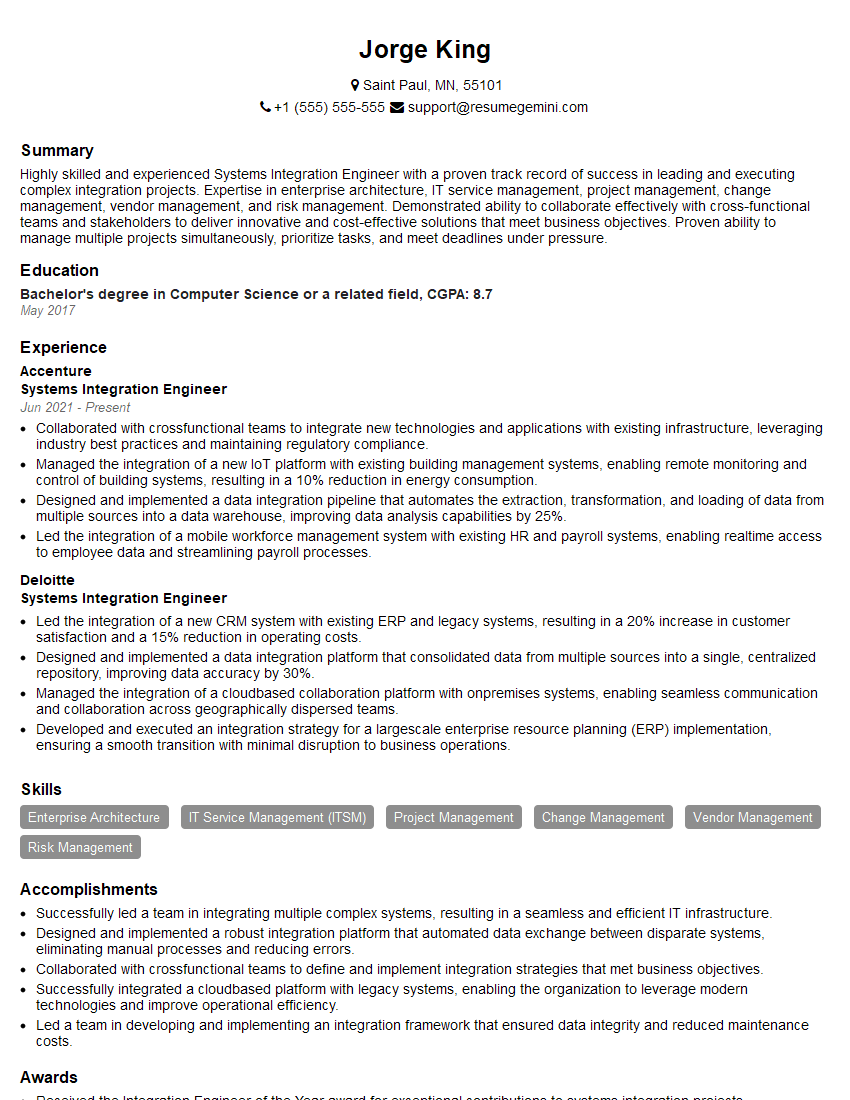
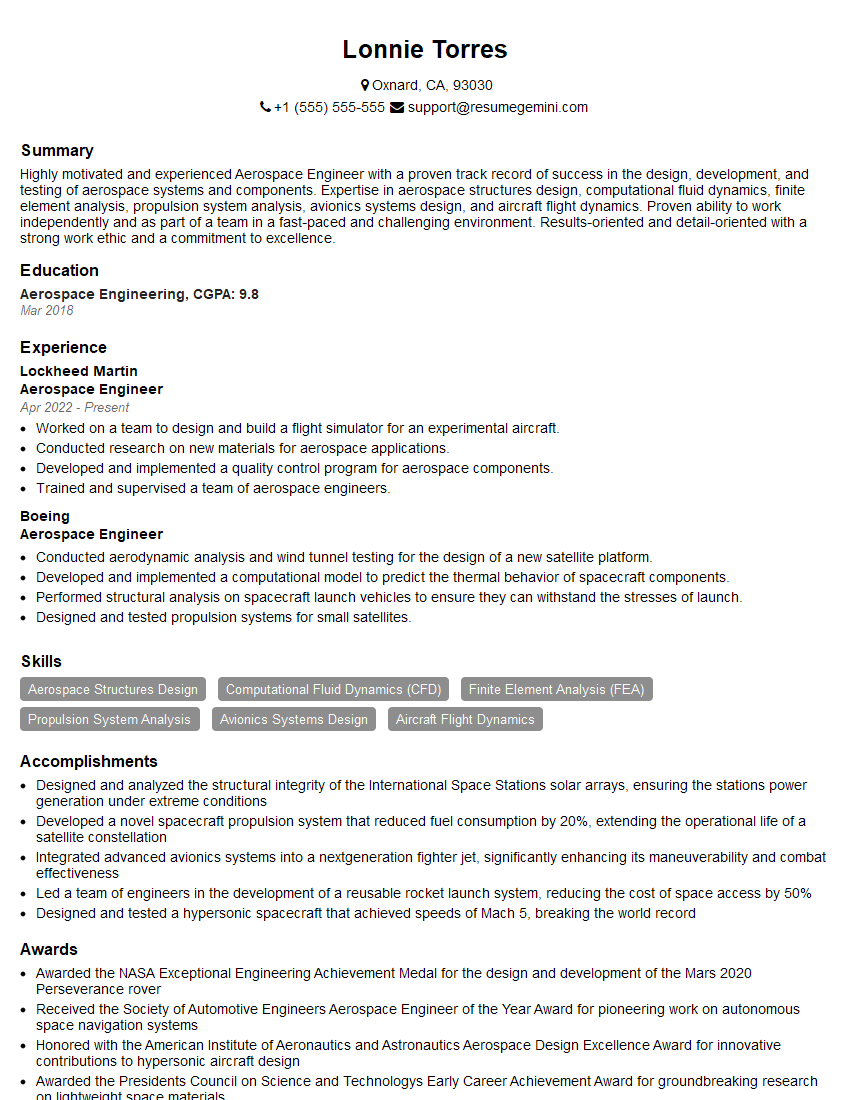
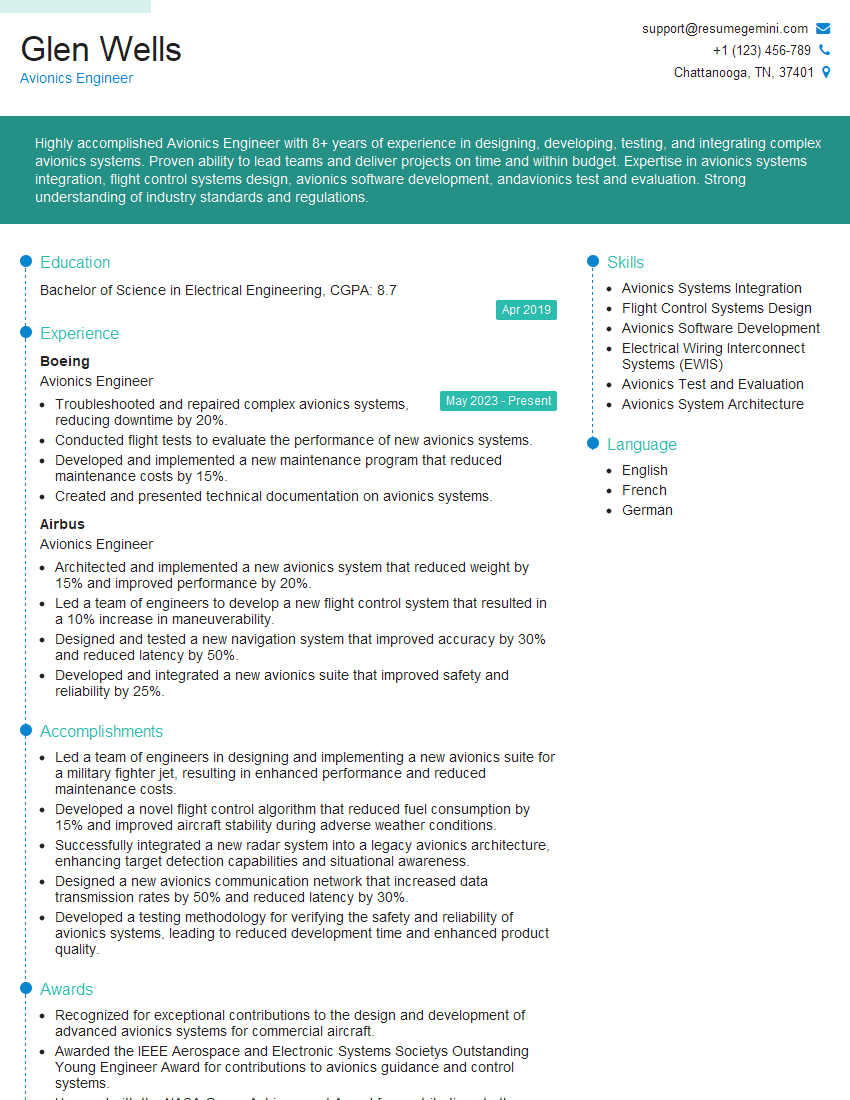
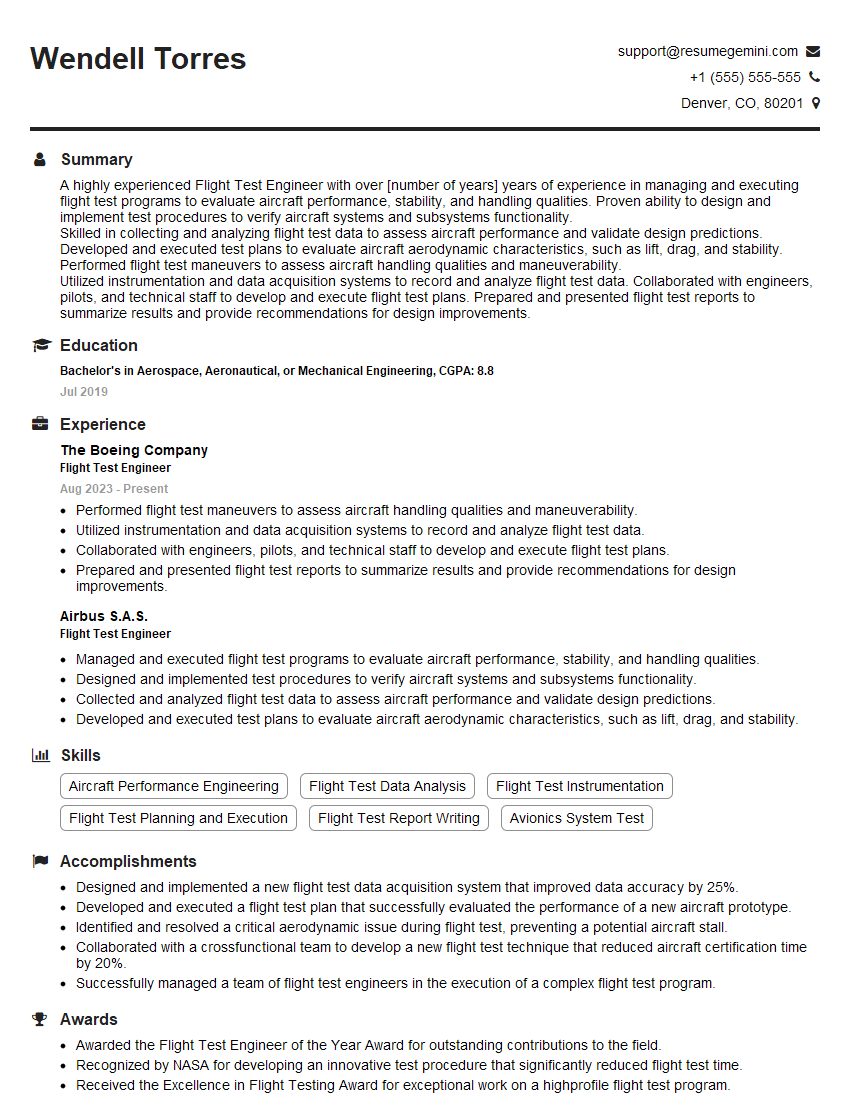
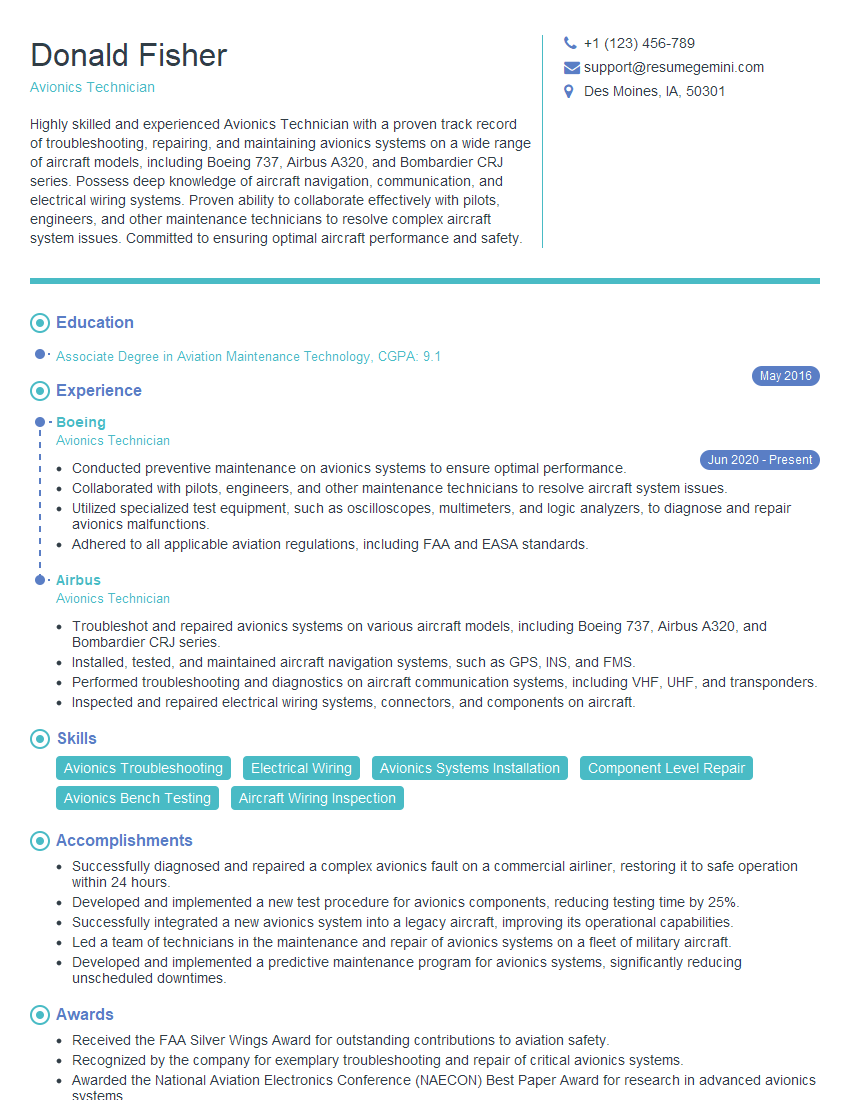
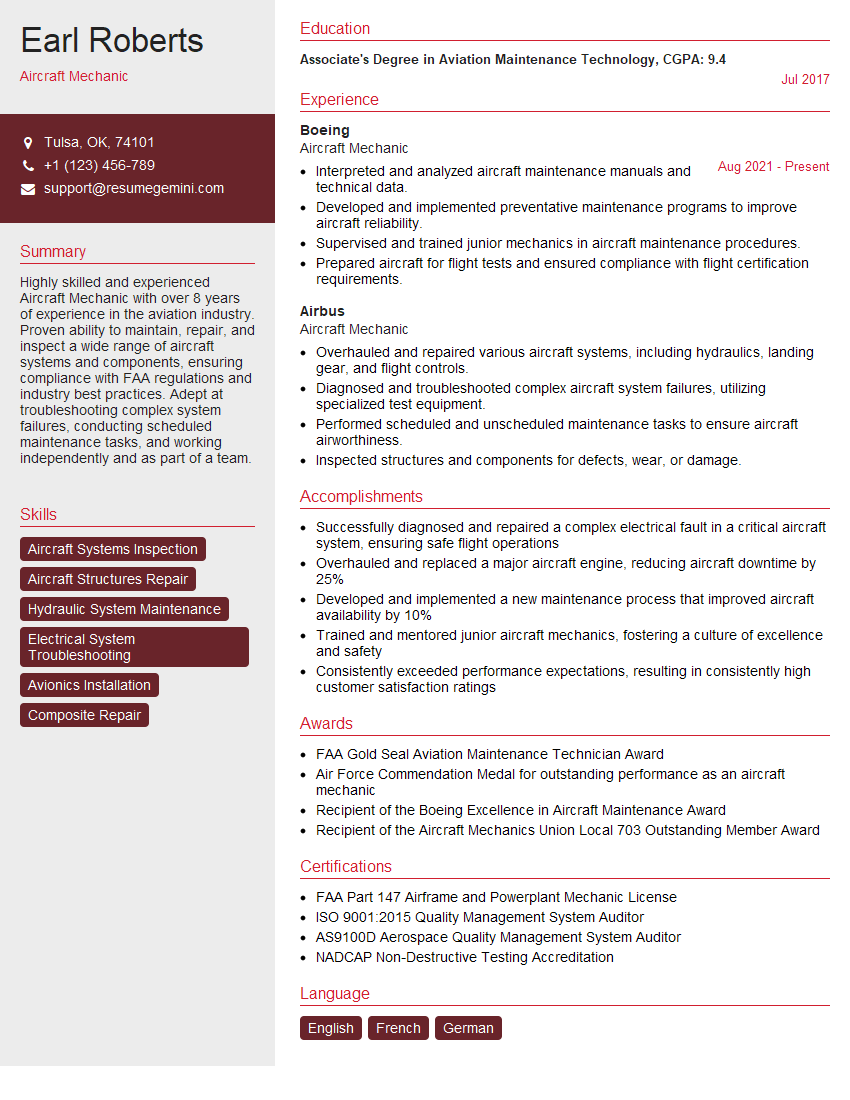
Mastering Aircraft Systems and Components is crucial for advancing your career in the aerospace industry, opening doors to specialized roles and higher earning potential. A well-crafted, ATS-friendly resume is essential for highlighting your skills and experience to potential employers. To make your resume stand out, we encourage you to use ResumeGemini, a trusted resource for building professional resumes. ResumeGemini provides examples of resumes tailored to the Aircraft Systems and Components field, helping you present your qualifications effectively and increase your chances of securing your dream job.
Explore more articles
Users Rating of Our Blogs
Share Your Experience
We value your feedback! Please rate our content and share your thoughts (optional).
What Readers Say About Our Blog
Very informative content, great job.
good