Are you ready to stand out in your next interview? Understanding and preparing for Altering Garments interview questions is a game-changer. In this blog, we’ve compiled key questions and expert advice to help you showcase your skills with confidence and precision. Let’s get started on your journey to acing the interview.
Questions Asked in Altering Garments Interview
Q 1. Explain the difference between hemming pants and a skirt.
Hemming pants and skirts involves shortening the garment, but the techniques differ slightly. With pants, you’re often dealing with a curved hemline and potentially inseams that need adjusting. Skirts can have a simpler straight hem or a more complex, asymmetrical one. The fabric type also influences the choice of hemming method.
Hemming Pants: Typically involves measuring the desired length, marking the hemline, and then using a serger or sewing machine to create a clean, finished edge. For a more professional finish, a blind hem stitch might be employed to minimize visible stitching. Inseams may need to be let out or taken in to ensure the correct fit. Consider the pant leg shape; straight legs are easier than flared or bootcut ones.
Hemming Skirts: Similar to pants, it starts with measurement and marking, but the process might be simpler for straight skirts. For circular or A-line skirts, careful attention is required to achieve an even hem. Different hems like rolled hems or double-fold hems can be chosen depending on fabric weight and desired aesthetic.
Example: When hemming a pair of jeans, I usually consider the original hem finish; I might replicate it to maintain the garment’s character. With a silk skirt, a delicate hand-stitched rolled hem would be appropriate.
Q 2. How do you adjust a garment’s shoulder width?
Adjusting shoulder width involves altering the shoulder seams of a garment. This can be done by taking in (reducing) or letting out (increasing) the seam allowance.
Taking in the Shoulder Seam: Requires carefully removing the existing seam, making sure to keep the stitching lines aligned. Then, reduce the seam allowance to the required width before resewing the seam. This is done more easily with set-in sleeves. If the shoulder pads are contributing to the width issue, they can be adjusted or removed. Always test fit along the way to avoid creating a pulling or puckering in the garment.
Letting out the Shoulder Seam: Similar to taking in, this requires carefully unpicking the seam. If there’s limited seam allowance, you might need to subtly release the shoulder dart or add a small fabric insert to increase the shoulder width. This procedure is more delicate and often requires skill and a matching fabric swatch.
Example: I once adjusted a tailored blazer by carefully taking in the shoulder seams. For a vintage dress that needed wider shoulders, I had to add thin strips of matching fabric into the seam.
Q 3. Describe your experience with taking in or letting out seams.
Taking in and letting out seams is a fundamental alteration skill. It involves adjusting the seam allowance of a garment to achieve a better fit. Taking in reduces the garment’s size, while letting out increases it.
Taking in Seams: This is done by carefully unpicking the original seam, pressing it open, and then resewing the seam closer together, thereby reducing its width. The amount of seam allowance is crucial; it must be sufficient to hold the new seam securely. It’s critical to make sure the seam lines remain perfectly aligned.
Letting Out Seams: This involves carefully unpicking the seam and then resewing it further apart, increasing the seam width. If the original seam allowance is too small, you might have limited ability to let the garment out. Using seam rippers helps avoid damaging the surrounding fabric.
Example: I’ve taken in countless side seams on trousers to create a more tailored look. I’ve also successfully let out the seams of a vintage dress to give it a more modern, flowing silhouette. The key is meticulous work and accurate measurement.
Q 4. What methods do you use for repairing tears in delicate fabrics?
Repairing tears in delicate fabrics requires a gentle hand and specialized techniques. The goal is to invisibly mend the tear while preserving the fabric’s integrity.
Methods: For very small tears, a simple whip stitch or ladder stitch using a thread matching the fabric can suffice. For larger tears, a more involved process might be required. This may include using a fabric patch applied underneath the tear, or using an invisible mending technique with similar thread weight. The choice of stitching is also important; a small, delicate stitch is best for fine fabrics. Darning is often a good option for delicate fabrics, as it is less likely to cause damage.
Example: I recently repaired a small tear in a silk blouse using an invisible ladder stitch. The repair was virtually undetectable. For a larger tear in a lace dress, I used a similar-color lace patch adhered with a fusible interfacing to avoid stitching directly onto the delicate fabric.
Q 5. How do you handle alterations on different fabric types (e.g., silk, denim, leather)?
Different fabrics require different techniques and tools for alterations. The weight, weave, and fiber content all influence the approach.
Silk: Requires delicate handling. Use fine needles, sharp shears, and a gentle touch to avoid snags or pulls. Hand-stitching is often preferred for seams.
Denim: A relatively durable fabric, denim can tolerate more robust techniques. Heavy-duty needles and a strong sewing machine are ideal. Raw edges can be finished with a zigzag stitch or serger.
Leather: Needs specialized tools and techniques. Leather needles, a walking foot on the sewing machine (to prevent slippage), and possibly even leather glue or specialized thread might be required. Careful attention to seam allowance is crucial to avoid stretching the leather.
Example: While altering a silk scarf, I opted for a fine hand-stitched hem. Conversely, working with denim jeans allowed me to use the industrial sewing machine for a clean and sturdy finish. Repairing a leather jacket required the use of leather needles and a heavier thread, which ensured the stitches wouldn’t tear easily.
Q 6. Describe your experience with working with various sewing machines.
I have extensive experience working with a variety of sewing machines, from basic domestic machines to industrial-grade equipment. My proficiency extends to both manual and computerized machines. This wide experience allows me to adapt my technique to the capabilities of each machine.
Domestic Machines: Excellent for most alterations, especially those involving delicate fabrics. I’m adept at using various stitch types and adjustments on these.
Industrial Machines: Used for heavier fabrics and tasks requiring high speed and durability, such as hemming jeans or constructing garments from heavy canvas. My skills with industrial machines ensure efficiency and speed when working on larger scale projects.
Computerized Machines: These provide greater precision and control, often useful for complex alterations. I understand programming and customization aspects of these machines to enhance efficiency and create bespoke alterations.
Example: For fine fabrics, I prefer my domestic machine with its various stitch options. However, for large batches or bulky fabrics, the industrial machine’s power and durability are indispensable.
Q 7. What are your strategies for fitting garments on clients?
Fitting garments on clients is a crucial step in the alteration process. It allows for accurate measurements and identification of areas needing adjustment. My approach involves a combination of careful observation, precise measurement, and client communication.
Process: I begin by observing the client in the garment to identify any obvious fit issues. I then take detailed measurements, paying close attention to areas like shoulder width, bust, waist, and hip circumference. Throughout the fitting process, open communication with the client about their preferences, expectations, and comfort level is essential. I might use pins to mark areas for adjustments and provide constructive feedback on the garment’s fit and the potential alterations.
Example: During a recent fitting, I noticed that a client’s trousers were too tight around the waist. After taking precise measurements, I altered the side seams, removing a section to create a more comfortable fit. The whole process involved open communication to ensure the final alteration was perfect.
Q 8. How do you manage alterations with complex designs or embellishments?
Altering garments with intricate designs or embellishments requires meticulous planning and a delicate touch. It’s not just about adjusting seams; it’s about preserving the artistry of the original garment. My approach involves a multi-step process:
- Careful Assessment: I begin by thoroughly examining the garment, identifying the location and type of embellishments (beading, embroidery, sequins, etc.). I note their placement relative to seams and structural elements. This step is crucial to avoid damaging them during the alteration process.
- Pattern Manipulation: Instead of simply adjusting the existing pattern, I often create a new pattern piece that incorporates the embellishments as integral parts. This allows for precise adjustments without compromising the design’s integrity.
- Specialized Techniques: I might use techniques like hand-sewing to carefully relocate or reattach embellishments after making the necessary adjustments to the garment. For delicate fabrics and embellishments, I employ special needles and threads to minimize damage. For example, when altering a heavily beaded bodice, I might use a small, sharp needle and fine silk thread to carefully pick and replace beads if needed.
- Test Fitting: Before finalizing any alterations, I always perform test fittings to ensure the adjustments are correct and haven’t negatively impacted the balance or overall aesthetic of the garment.
For example, I once altered a wedding dress featuring intricate hand-embroidered flowers. To adjust the waist, I carefully removed the embroidered sections, adjusted the underlying fabric, and then painstakingly reattached the embroidery, ensuring each flower was perfectly positioned.
Q 9. What techniques do you use for altering patterns?
Altering patterns is a fundamental skill in garment alteration. I use a variety of techniques, depending on the specific alteration needed:
- Slash and Spread/Slash and Pivot: These are classic techniques for adding or subtracting width or length. For instance,
Slash and spreadinvolves making a series of cuts parallel to a seamline, then spreading the fabric apart to increase width.Slash and pivotis useful when adjusting curves. It’s essentially the same technique but the fabric is adjusted by pivoting around the slash point. - Grading: This involves adjusting the pattern pieces by adding or subtracting seam allowances to make a garment larger or smaller. This is particularly effective for simple alterations.
- Pattern Drafting: For complex alterations or unique designs, drafting a completely new pattern might be necessary. This technique requires a thorough understanding of body measurements and pattern construction principles.
- Using Digital Tools: Modern pattern-making software allows for greater accuracy and efficiency, enabling precise manipulations and adjustments to the pattern pieces. These softwares allow for virtual adjustments which can then be traced onto paper to be used on the material.
The choice of technique depends on the type and complexity of the alteration. For minor adjustments, grading or slash and spread techniques work well. For major changes, drafting a new pattern offers greater control and precision.
Q 10. Describe your experience with bridal gown alterations.
Bridal gown alterations are a specialized area requiring precision and artistry. I have extensive experience in this field, having altered hundreds of gowns. The challenges are unique; gowns are often intricate, made from delicate fabrics, and hold significant sentimental value. My work includes:
- Length adjustments (hems): Adjusting the length of the train, hemline, or sleeves requires careful consideration of the fabric and any embellishments.
- Bodice alterations: This can involve adjusting the fit across the bust, waist, or back. This often requires significant pattern manipulation and often involves adding or removing fabric.
- Straps and straps alterations: Adjusting or replacing straps, adding or removing straps requires a careful understanding of the garment’s construction
- Closure adjustments: Ensuring the zipper or other closure mechanisms function properly and comfortably. Often this requires reworking the closure system entirely.
- Seam adjustments: To change the fit around the hips, bust or waist, seam adjustments are frequently made.
I always prioritize maintaining the gown’s original design aesthetic while ensuring a perfect fit. The process includes multiple fittings to ensure client satisfaction and a flawless result. For instance, I recently altered a gown with a heavily beaded bodice; I used special needles and threads to maintain the integrity of the beadwork while adjusting the bust size.
Q 11. How do you ensure accuracy and precision in your alterations?
Accuracy and precision are paramount in garment alterations. I employ several strategies to ensure high-quality results:
- Precise Measurements: I take meticulous measurements of the client and the garment using a measuring tape and a fitting tape. I document these measurements carefully.
- Accurate Pattern Adjustments: I use various techniques as mentioned previously to ensure that all pattern adjustments are precise. Testing the fit along the way ensures accuracy and avoids costly mistakes.
- High-Quality Tools and Materials: I use professional-grade sewing machines, needles, threads, and pressing equipment. These tools are essential for achieving a clean, professional finish.
- Multiple Fittings: I conduct multiple fittings throughout the alteration process. This allows for adjustments as needed, ensuring a perfect fit and addressing any issues early.
- Quality Control Checks: Before returning the garment to the client, I always conduct a final quality control check, scrutinizing every seam, detail, and embellishment for any imperfections.
Attention to detail is my guiding principle; even small discrepancies can negatively affect the overall outcome. Every stitch, every seam allowance, every adjustment is made with precision and care.
Q 12. How do you handle difficult or complex alteration requests?
Handling difficult or complex alteration requests requires a combination of expertise, creativity, and effective communication. My process involves:
- Thorough Consultation: I begin by having a detailed discussion with the client, listening carefully to their requests and understanding their expectations. It is important to fully understand the scope of the requested alterations, including any technical challenges.
- Feasibility Assessment: I evaluate the feasibility of the alterations, considering the garment’s construction, fabric type, and design elements. If an alteration is impractical or could damage the garment, I discuss alternative options with the client.
- Creative Problem-Solving: I brainstorm solutions to address any challenges, utilizing my knowledge of tailoring, patternmaking, and design. This might involve creating new pattern pieces, adapting techniques, or finding innovative ways to achieve the desired result.
- Transparency and Communication: I keep the client informed throughout the process, discussing potential challenges and adjustments. This transparency builds trust and ensures that both the client and I are on the same page.
- Documentation: I document every step of the alteration process, including diagrams, notes, and measurements. This helps me to maintain consistency and clarity throughout.
For instance, I once received a request to alter a vintage gown with severely damaged fabric. Instead of simply repairing the tears, I worked with the client to incorporate decorative elements to camouflage the damage, transforming what was once a challenge into a striking design element.
Q 13. What is your process for determining the appropriate alteration techniques?
Choosing the right alteration technique depends on several factors:
- Type of Alteration: Is it a simple hem adjustment, or a complex bodice restructuring? Different techniques are appropriate for different alterations.
- Fabric Type: Delicate fabrics, like silk or lace, require different techniques than sturdy fabrics like denim or canvas.
- Garment Design: Intricate designs or embellishments necessitate careful consideration of how to modify the garment without harming the design.
- Client’s Preferences: The client’s input, of course, is crucial in determining the best method, whether or not to sacrifice something from the original design.
I often use a combination of techniques. For example, a waist reduction might involve grading the pattern, then using slash-and-spread to adjust a specific section, whilst carefully considering the placement of buttons or any other design elements. My goal is always to choose the most effective and least intrusive approach that maintains the garment’s integrity.
Q 14. How do you communicate with clients about alterations?
Clear and effective communication is essential for successful garment alterations. My communication strategy involves:
- Initial Consultation: I have a detailed discussion with the client, understanding their needs and expectations. I ask clarifying questions and make sure everything is understood. I explain any potential limitations or challenges.
- Visual Aids: When necessary, I use sketches, diagrams, or even fabric samples to illustrate the alteration process and explain any complex concepts.
- Progress Updates: I keep the client informed about the progress of their alteration and address any questions or concerns they have.
- Multiple Fittings: I always conduct multiple fittings to ensure the garment fits perfectly and that the client is satisfied with the results.
- Written Confirmation: I confirm the alteration details in writing, including the price and timeline. This avoids misunderstandings and clarifies expectations.
Open communication ensures that the final product meets the client’s expectations and builds trust and confidence in my work. This fosters a positive relationship, and ultimately, a beautiful end result.
Q 15. Describe your experience with measuring and marking alterations.
Accurate measuring and marking are foundational to successful alterations. I begin by carefully measuring the garment on the client, noting specific areas needing adjustment – sleeve length, waist circumference, etc. I use a variety of tools including measuring tapes, rulers, and French curves to ensure precision. Then, I transfer these measurements to the garment itself using tailor’s chalk, marking pens, or pins. I always double-check my measurements before making any cuts. For example, if I’m taking in a seam, I’ll mark the seam allowance precisely, ensuring equal reductions on both sides to maintain garment symmetry. I also consider the drape and fabric type; a stiff fabric requires more precise marking than a flowing one.
For complex alterations, I might create a muslin mock-up – a test version in inexpensive fabric – to perfect the fit before working on the actual garment. This allows for error correction without risking the client’s valuable clothing. This process is particularly crucial for alterations involving significant adjustments to the pattern or construction of a garment.
Career Expert Tips:
- Ace those interviews! Prepare effectively by reviewing the Top 50 Most Common Interview Questions on ResumeGemini.
- Navigate your job search with confidence! Explore a wide range of Career Tips on ResumeGemini. Learn about common challenges and recommendations to overcome them.
- Craft the perfect resume! Master the Art of Resume Writing with ResumeGemini’s guide. Showcase your unique qualifications and achievements effectively.
- Don’t miss out on holiday savings! Build your dream resume with ResumeGemini’s ATS optimized templates.
Q 16. How do you maintain your sewing equipment?
Maintaining my sewing equipment is crucial for producing high-quality alterations. My sewing machine gets regular cleaning and oiling according to the manufacturer’s instructions. I use a lint brush to remove dust and fluff from the bobbin area and feed dogs. I replace the needle frequently, typically after every few projects, as a dull or bent needle can damage fabric. My irons are kept clean, using distilled water to prevent mineral buildup. I also regularly check and sharpen my shears and other cutting tools to ensure clean, precise cuts. Proper maintenance extends the life of my equipment and improves the quality of my work.
Q 17. How do you ensure the structural integrity of a garment after alteration?
Preserving the structural integrity of a garment after alteration is paramount. This involves understanding the garment’s construction, choosing appropriate techniques, and using durable materials. For example, when shortening a skirt, I might use a technique that reinforces the hemline to prevent stretching. If I’m letting out a seam, I need to ensure the seam allowance is sufficient and the stitching strong enough to support the added fabric. I might add support features like interfacing to maintain shape and prevent stretching or sagging, particularly in areas such as shoulder seams or collars. For example, when taking in a jacket, I might use interfacing to help maintain the shape of the shoulders after the alteration.
Q 18. How do you handle customer complaints or dissatisfaction with alterations?
Addressing customer dissatisfaction is a crucial aspect of my work. I start by actively listening to their concerns and validating their feelings. I then work collaboratively to find a solution. Sometimes, a minor adjustment is all it takes, like a small alteration to the length or fit. In other cases, a more extensive rework might be necessary. If I am unable to fully resolve the issue, I will strive to offer a fair compromise or refund. Open communication and transparency are vital in navigating these situations; my goal is always to achieve client satisfaction and maintain their trust.
I always document the alteration process, including the initial measurements and the agreed-upon changes. This documentation serves as a reference point if any issues arise later.
Q 19. Explain your experience with different types of closures (zippers, buttons, hooks).
I have extensive experience working with various closures. Zippers require precision; I can replace, shorten, or lengthen zippers, paying close attention to the zipper teeth alignment and ensuring a smooth operation. Button attachment involves selecting the right button and using appropriate techniques – hand sewing for delicate fabrics, machine sewing for sturdier materials. I’m also adept at working with hooks and eyes, ensuring they’re securely attached and positioned to provide a secure and comfortable closure. Choosing the right closure depends on the garment’s style, fabric, and the client’s preferences. I can advise on the best options for durability and aesthetics.
Q 20. What are your methods for pressing and finishing altered garments?
Pressing is as important as sewing. My pressing techniques are tailored to the fabric. I use a variety of pressing tools including irons, pressing cloths (to prevent shine), and tailor’s ham (for curved surfaces). After each sewing step, I press the seam to set the stitches and shape the garment, paying attention to the grain and preventing distortion. Final pressing ensures a crisp, professional finish. I use steam strategically, understanding that too much steam can damage delicate fabrics, while insufficient steam won’t create the desired crispness.
Finishing touches such as hand-stitching hems or reinforcing seams add durability and a refined appearance. The final pressing is crucial; it creates a flawless look and feel.
Q 21. What safety precautions do you take when using sewing machines and other tools?
Safety is paramount in my work. I always use my sewing machine with the safety cover in place and keep my fingers away from the needle. I use sharp shears cautiously, keeping them stored away when not in use. I avoid wearing loose clothing or jewelry that could get caught in the machine. When working with pins, I carefully remove them before pressing or finishing the garment. I have a designated space for tools and equipment to maintain order and prevent accidents. I also maintain a clean, well-lit workspace to minimize the risk of errors and injuries.
Q 22. Describe your experience with working under pressure and meeting deadlines.
Working under pressure and meeting deadlines is crucial in garment alterations. Think of a wedding dress needing alterations just days before the ceremony – that’s high-pressure! My approach involves careful planning. I meticulously assess the alteration request, breaking down the task into smaller, manageable steps with realistic timelines. This allows for efficient workflow and helps avoid last-minute rushes. For instance, if a client needs a hem shortened and sleeves taken in, I’d first measure and mark the hems, then move to the sleeves, ensuring I allocate sufficient time for each. I also communicate transparently with clients, setting clear expectations about turnaround times and potential challenges. Open communication prevents misunderstandings and ensures everyone’s on the same page.
I’ve honed my time management skills over years of experience, learning to prioritize urgent tasks while still maintaining quality. I regularly review my workload and adjust my schedule as needed, ensuring I stay on track and deliver exceptional results, even amidst tight deadlines.
Q 23. How do you stay up-to-date on the latest trends and techniques in garment alterations?
The fashion world is constantly evolving, so staying current is key. I subscribe to industry magazines like Threads and Burda Style, which provide insights into the latest techniques and trends. I also attend workshops and seminars offered by renowned textile and fashion schools. These events often showcase innovative approaches to pattern making and construction. Additionally, I actively engage with online communities and forums dedicated to sewing and alterations. These platforms are great for discussions, problem-solving, and discovering new methods. I regularly review online tutorials, watching videos on advanced techniques like invisible zipper installation or couture-level finishing methods to refine my skillset. Following influential designers and brands on social media is also beneficial for staying ahead of trends.
Q 24. How do you manage your workload and prioritize tasks effectively?
Effective workload management is essential for delivering high-quality alterations on time. I use a combination of methods to prioritize tasks. Firstly, I categorize alterations based on urgency and complexity. Urgent alterations, like those mentioned before, take precedence. Secondly, I create a detailed schedule, allocating specific time slots for each task. This ensures that time is utilized efficiently. I also utilize a digital task management system to track progress, deadlines, and client communication. This system ensures that nothing slips through the cracks. Finally, I regularly review my schedule and adjust as needed based on the workload and any unexpected delays.
For example, I might have several simple hemming jobs along with one complex dress alteration. I’d prioritize the dress alteration, dedicating sufficient time, while strategically fitting in the hemming jobs between other tasks. This approach ensures that I manage both the workload and maintain the required level of precision for each project.
Q 25. What is your preferred method for repairing damaged seams?
My preferred method for repairing damaged seams depends on the type and extent of the damage. For minor tears or unraveling, I use a whip stitch or ladder stitch, which are invisible and strong. These stitches mimic the original seam, creating a seamless repair. For more significant damage, I might need to carefully remove a section of the seam, reinforce the underlying fabric, and then resew it, ensuring a neat and durable repair. Sometimes, when dealing with delicate fabrics, I might use a special adhesive designed for fabrics to reinforce the seam before stitching. I always choose the stitch that best matches the original garment’s construction to ensure an undetectable repair.
The key is to match the thread color and type to the garment and utilize appropriate needle sizes to prevent further damage to the fabric. Each repair is treated individually, carefully assessing the best technique for lasting results.
Q 26. Explain your experience with altering different garment types (e.g., jackets, dresses, coats).
My experience encompasses a wide range of garment types. I’ve altered everything from tailored jackets, requiring precise adjustments to shoulder pads and lining, to flowing dresses, where maintaining the drape and silhouette is paramount. With coats, I’ve handled everything from minor adjustments to substantial restructuring, involving pattern adjustments and re-cutting. Each garment presents unique challenges and requires a nuanced understanding of construction and fabric properties. For example, altering a structured jacket requires a different approach than altering a knit dress. With jackets, precision and stability are key. With dresses, maintaining fluidity and drape is crucial.
I have a deep understanding of various construction techniques, from set-in sleeves to raglan sleeves, and I adapt my approach based on the garment’s design. I’ve developed a keen eye for detail and a strong understanding of fabric behavior, which allows me to make effective alterations, preserving the original design’s integrity while meeting the client’s needs.
Q 27. How do you determine the appropriate pricing for different alterations?
Pricing alterations requires a balanced approach considering several factors. Firstly, I assess the complexity of the alteration. A simple hem is priced differently from a complex waistline adjustment or a significant alteration to a sleeve. Secondly, the type of fabric plays a role. Delicate fabrics require more time and care, hence a higher price. Thirdly, the garment’s style and construction complexity influence the pricing. A tailored jacket requires more skill and attention than a basic T-shirt. Fourthly, I factor in my labor costs and overhead expenses, ensuring profitability while offering competitive pricing.
I often provide a detailed breakdown of the pricing to my clients, explaining the rationale behind the cost. Transparency builds trust and ensures that clients understand the value of the service.
Q 28. Describe your experience with creating custom patterns for alterations.
Creating custom patterns for alterations is a skill I’ve developed over many years. It’s particularly crucial when dealing with significant alterations that go beyond simple adjustments. I start by carefully studying the garment’s existing construction, identifying areas that need adjustments. Then, I create a detailed sketch or use specialized software to draft a new pattern that accounts for the desired changes. This may involve adding or removing seams, altering the shape of specific sections, or even completely redrawing parts of the pattern.
For instance, if a client wants to significantly alter the waistline of a dress, I would carefully measure the existing garment, draft a new pattern piece for the waistline, and then meticulously adjust other pattern pieces to maintain the garment’s overall balance and proportion. This process demands an advanced understanding of pattern making principles, ensuring that the final garment fits perfectly and maintains its structural integrity. I always test the new pattern using muslin (a lightweight cotton fabric) before working on the actual garment. This test ensures that the fit is correct before committing to the final alteration.
Key Topics to Learn for Altering Garments Interview
- Fabric Knowledge: Understanding various fabric types (natural vs. synthetic, weave structures, drape), their properties, and suitability for alterations.
- Seam Construction: Analyzing existing seams to identify construction methods, assess durability, and plan appropriate alterations. Practical application: Knowing how to correctly reinforce seams during alterations.
- Measurement and Fitting Techniques: Mastering accurate body measurements and understanding how to interpret fitting issues (e.g., ease, shoulder slope, waistline). Practical application: Diagnosing fitting problems and developing solutions.
- Alteration Techniques: Proficiency in various alteration methods (e.g., taking in seams, letting out seams, adjusting shoulder straps, shortening/lengthening garments). Practical application: Demonstrating knowledge of different alteration techniques for various garment types (dresses, pants, jackets).
- Pattern Alterations: Understanding how to adjust patterns to accommodate specific body measurements and alteration requests. Practical application: Adapting patterns to create a perfect fit.
- Machine Operation and Maintenance: Competency in operating industrial sewing machines and maintaining their optimal function. Practical application: Troubleshooting common machine issues and performing basic maintenance.
- Customer Service and Communication: Effectively communicating with clients to understand their needs and manage expectations. Practical application: Handling client inquiries and resolving potential conflicts professionally.
- Safety Procedures: Adhering to safety protocols and using appropriate equipment safely. Practical application: Demonstrating awareness of workplace hazards and proper safety measures.
Next Steps
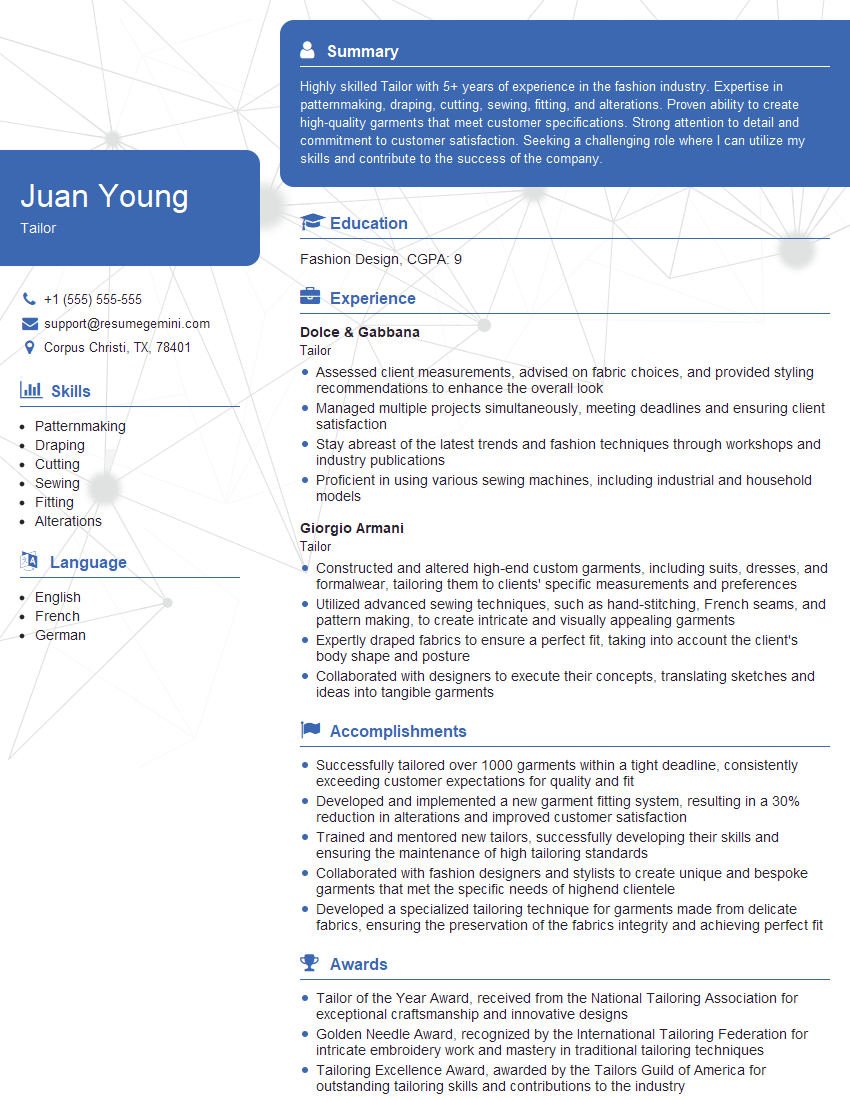
Mastering the art of altering garments opens doors to a rewarding career with excellent growth potential. A strong understanding of these techniques makes you a highly valuable asset in the fashion industry, offering opportunities for advancement and higher earning potential. To maximize your job prospects, it’s crucial to create a compelling and ATS-friendly resume that highlights your skills and experience. We strongly encourage you to use ResumeGemini, a trusted resource for building professional resumes that get noticed. ResumeGemini provides examples of resumes tailored specifically to the Altering Garments field to help you present yourself effectively to potential employers.

Explore more articles
Users Rating of Our Blogs
Share Your Experience
We value your feedback! Please rate our content and share your thoughts (optional).
What Readers Say About Our Blog
Very informative content, great job.
good