Interviews are more than just a Q&A session—they’re a chance to prove your worth. This blog dives into essential Alumni and Donor Engagement interview questions and expert tips to help you align your answers with what hiring managers are looking for. Start preparing to shine!
Questions Asked in Alumni and Donor Engagement Interview
Q 1. Describe your experience in building and maintaining relationships with alumni.
Building and maintaining strong alumni relationships is the cornerstone of successful alumni engagement. It’s not just about transactional interactions; it’s about fostering genuine connections that last a lifetime. My approach is multifaceted and focuses on personalized communication, meaningful engagement opportunities, and consistent outreach.
- Personalized Communication: I believe in moving beyond generic emails. I leverage data to tailor messages, acknowledging individual achievements and interests. For example, I might congratulate an alumnus on a recent promotion or invite them to an event related to their field of expertise.
- Meaningful Engagement Opportunities: I organize and participate in events that cater to diverse interests, including networking events, career workshops, mentoring programs, and volunteer opportunities. This provides alumni with a sense of belonging and a chance to give back.
- Consistent Outreach: Regular communication, whether through newsletters, social media updates, or personal calls, keeps alumni engaged and informed about the institution’s progress and upcoming events. I believe in building a two-way communication channel where alumni feel heard and valued.
For instance, in my previous role, I implemented a mentorship program connecting recent graduates with successful alumni in their field, leading to increased engagement and a significant rise in alumni donations.
Q 2. Explain your approach to identifying and cultivating major gift prospects.
Identifying and cultivating major gift prospects requires a strategic and research-intensive approach. It goes beyond simply looking at donation history; it involves understanding the alumnus’s passions, philanthropic interests, and capacity to give.
- Research and Profiling: I utilize donor databases and conduct thorough research to identify alumni with a history of significant giving, professional success, or demonstrated commitment to the institution’s mission. This involves analyzing their career trajectory, board memberships, and past giving patterns.
- Cultivation: Once identified, I cultivate relationships through personalized communication, invitations to exclusive events, and meaningful interactions. This builds trust and rapport, essential for securing a major gift. This might involve a personal visit, a phone call, or an invitation to a private dinner with the university president.
- Strategic Engagement: I engage prospects by showcasing the impact of their potential gift, aligning it with their personal values and philanthropic interests. This requires a deep understanding of their motivations and a compelling narrative of how their contribution can make a real difference.
For example, I successfully cultivated a relationship with a successful entrepreneur who was passionate about environmental sustainability. By highlighting the university’s commitment to green initiatives and showcasing the impact of a potential gift on a new research lab, I secured a substantial donation.
Q 3. How do you measure the success of an alumni engagement program?
Measuring the success of an alumni engagement program requires a multi-faceted approach, going beyond simply tracking dollars raised. Key performance indicators (KPIs) should reflect both quantitative and qualitative results.
- Quantitative Metrics: These include the number of alumni engaged, donation amounts and participation rates, event attendance, and website traffic.
- Qualitative Metrics: These focus on gauging the impact of the program. This involves gathering feedback through surveys, focus groups, and individual interactions, assessing alumni satisfaction, and measuring the strength of the alumni network.
For example, success might be measured by a 20% increase in alumni giving participation, a 15% rise in event attendance, or overwhelmingly positive feedback from alumni surveys about their engagement experiences.
A robust dashboard showcasing these KPIs allows for regular monitoring and adjustments to the program’s strategy, ensuring continuous improvement.
Q 4. What strategies do you employ to increase alumni giving participation?
Increasing alumni giving participation requires a comprehensive strategy that focuses on building strong relationships, showcasing impact, and providing compelling reasons to give.
- Compelling Storytelling: Share impactful stories of how alumni donations are making a difference in students’ lives and the institution’s overall mission. Use visuals and testimonials to make the impact tangible.
- Multiple Giving Opportunities: Offer a variety of giving options to cater to different levels of capacity and interest. This includes monthly giving programs, crowdfunding campaigns, and matching gift initiatives.
- Engaging Communication: Employ a multi-channel approach to reach alumni, using email, social media, print materials, and personalized outreach.
- Recognition and Appreciation: Acknowledge and appreciate alumni donors through public recognition, exclusive events, and personalized thank-you notes.
- Strong Alumni Network: Foster a sense of community and belonging among alumni through networking events and volunteer opportunities. This strengthens the connection to the institution and encourages giving.
For example, a successful campaign might involve highlighting a specific student success story funded by alumni donations, coupled with a matching gift opportunity, leading to a significant increase in participation.
Q 5. How familiar are you with donor databases and CRM systems (e.g., Raiser’s Edge, Blackbaud)?
I am highly proficient in using donor databases and CRM systems, including Raiser’s Edge and Blackbaud. My experience encompasses data entry, data management, query creation, report generation, and the use of these systems to support strategic alumni engagement efforts.
I am adept at utilizing these systems to segment alumni based on various criteria such as graduation year, major, geographic location, giving history, and career path. This allows for targeted communication and personalized engagement strategies. I can also utilize the reporting features of these systems to track key performance indicators (KPIs) and assess the effectiveness of alumni engagement initiatives. For example, I can generate reports on donation trends, event attendance, and alumni engagement levels to inform strategic decision-making.
Q 6. Describe your experience in planning and executing alumni events.
Planning and executing successful alumni events requires meticulous attention to detail, strong organizational skills, and a deep understanding of the target audience. My approach involves a detailed planning process, effective communication, and post-event analysis.
- Needs Assessment: I begin by identifying the needs and interests of the target alumni group, tailoring the event to their preferences and ensuring it aligns with the institution’s strategic goals.
- Logistics and Budget Management: I manage all aspects of event planning, from venue selection and catering to marketing and registration, ensuring the event remains within budget.
- Effective Communication: I develop and disseminate effective marketing materials, promoting the event through various channels and ensuring clear communication with attendees.
- Post-Event Analysis: After the event, I gather feedback and analyze data to evaluate its success, identifying areas for improvement for future events.
For example, I organized a highly successful networking event for alumni working in the tech industry, securing a prestigious venue, attracting a large number of attendees, and fostering numerous valuable connections.
Q 7. How do you segment your alumni base for targeted engagement?
Segmenting the alumni base is crucial for targeted engagement and maximizing the impact of communication and fundraising efforts. I utilize a multi-faceted approach to segmentation, leveraging data from the donor database and other sources.
- Demographic Segmentation: This involves grouping alumni based on factors such as graduation year, major, geographic location, and age.
- Psychographic Segmentation: This focuses on alumni’s interests, values, and lifestyles. This can be gleaned from their professional profiles, social media activity, and engagement with previous communications.
- Behavioral Segmentation: This segments alumni based on their past behavior, such as giving history, event attendance, and engagement with communications.
By combining these segmentation methods, I create highly targeted segments that allow for more personalized and effective communication and fundraising strategies. For example, I might create a segment of recent graduates interested in career networking, another of high-capacity donors interested in supporting scholarships, and yet another of geographically-concentrated alumni who may be interested in local events. This ensures that communication remains relevant and impactful, improving response rates and overall engagement.
Q 8. How do you handle difficult or challenging donor interactions?
Handling difficult donor interactions requires empathy, active listening, and a commitment to finding mutually agreeable solutions. It’s crucial to remember that donors, like anyone, may have valid concerns or frustrations. My approach involves several key steps:
- Active Listening: I begin by attentively listening to the donor’s concerns without interruption. This allows me to fully understand their perspective and identify the root cause of their dissatisfaction.
- Empathy and Validation: I acknowledge and validate their feelings, demonstrating that I understand their viewpoint. Phrases like, “I understand your frustration,” or “I appreciate you bringing this to my attention,” can be incredibly effective.
- Problem-Solving: Once I fully understand the issue, I collaboratively work with the donor to find a solution. This might involve reviewing their donation records, clarifying program details, or exploring alternative options.
- Transparency and Communication: I maintain open and honest communication throughout the process, keeping the donor informed of my progress and any potential delays. Transparency builds trust and demonstrates accountability.
- Follow-up: After resolving the issue, I follow up with the donor to ensure their satisfaction and to reiterate my commitment to their relationship with the organization. This follow up is crucial for maintaining a positive and lasting relationship.
For example, I once had a donor who was concerned about the lack of transparency in how their donation was utilized. By actively listening, providing detailed reports on program outcomes, and explaining our financial processes, I was able to successfully address their concerns and strengthen our relationship.
Q 9. Explain your understanding of planned giving and its importance.
Planned giving encompasses charitable gifts made by donors during their lifetime or through their estate plans. It’s a crucial component of a robust fundraising strategy because it provides organizations with long-term financial stability and predictability. These gifts can take many forms, including:
- Bequests: Gifts specified in a will or trust.
- Charitable Gift Annuities: Contracts providing donors with regular income payments while supporting the organization.
- Charitable Remainder Trusts: Trusts that provide income to the donor(s) during their lifetime(s), with the remainder going to the charity upon termination.
- Life Insurance Policies: Donating a life insurance policy to the organization.
The importance of planned giving lies in its ability to significantly impact an organization’s long-term financial health. These gifts often represent larger sums of money than typical annual donations, providing substantial resources for future projects and initiatives. Furthermore, planned giving cultivates a deeper engagement with donors, strengthening their connection to the organization’s mission. Building relationships with individuals considering planned giving requires careful cultivation, building trust, and demonstrating the impact of their generosity over the long term.
Q 10. What is your experience with grant writing or proposal development?
I have extensive experience in grant writing and proposal development. My experience spans various funding agencies and focuses on effectively communicating the organization’s needs and demonstrating the impact of potential funding. My approach involves:
- Thorough Research: I meticulously research potential funding opportunities, aligning them with the organization’s mission and strategic goals.
- Compelling Narrative: I develop a compelling narrative that clearly articulates the problem being addressed, the proposed solution, and the expected outcomes. This often involves using data and statistics to support claims.
- Strong Budget Justification: I create detailed and well-justified budgets, demonstrating how the funds will be used to achieve the project’s objectives.
- Tailored Proposals: I tailor each proposal to the specific requirements and guidelines of the funding agency. This ensures the proposal is competitive and aligns with the funder’s priorities.
- Proofreading and Editing: I thoroughly proofread and edit each proposal to ensure it is free of errors and professionally presented.
I’ve successfully secured funding from foundations, government agencies, and corporate sponsors, demonstrating a consistent track record of success in grant writing. For example, I recently secured a significant grant from a major foundation to support a new scholarship program, resulting in increased access to education for underprivileged students.
Q 11. How do you track and report on key performance indicators (KPIs) in alumni and donor relations?
Tracking and reporting on KPIs is crucial for assessing the effectiveness of alumni and donor relations strategies. We utilize a comprehensive data management system to track key metrics. These metrics usually include:
- Donor Acquisition Cost: The cost of acquiring a new donor.
- Donor Retention Rate: The percentage of donors who make repeat gifts.
- Average Gift Size: The average amount donated by donors.
- Fundraising ROI: Return on investment for fundraising efforts.
- Website Engagement: Tracking website traffic and interactions from alumni and donors.
- Event Attendance: Measuring the success of alumni and donor events.
- Social Media Engagement: Tracking interactions on social media platforms.
We use these KPIs to monitor progress, identify areas for improvement, and inform strategic decision-making. Regular reports are generated and shared with stakeholders, providing transparency and accountability. We utilize data visualization tools to present the data clearly and concisely, making it easy to understand the overall performance of our efforts. For example, by analyzing donor retention rates, we identified a segment of lapsed donors and implemented a targeted re-engagement campaign that resulted in a significant increase in donations.
Q 12. Describe your experience with developing and implementing a comprehensive fundraising plan.
Developing and implementing a comprehensive fundraising plan requires a strategic and phased approach. My experience involves:
- Needs Assessment: Defining the organization’s fundraising goals and objectives, identifying resource needs, and establishing realistic targets.
- Target Audience Identification: Identifying potential donor segments and understanding their motivations and giving patterns.
- Fundraising Strategies: Developing a diversified fundraising strategy incorporating various methods like major gifts, planned giving, annual giving, and events.
- Budget Development: Creating a detailed budget allocating resources effectively across different fundraising activities.
- Implementation and Monitoring: Implementing the plan, monitoring progress against targets, and making adjustments as needed.
- Evaluation and Reporting: Regularly evaluating the effectiveness of the fundraising plan and providing reports to stakeholders.
In a previous role, I developed a comprehensive fundraising plan that increased annual giving by 25% within two years. This was achieved through a combination of enhanced donor stewardship, targeted marketing campaigns, and the launch of a new planned giving program.
Q 13. What is your experience with prospect research and qualification?
Prospect research and qualification are vital for identifying and prioritizing potential donors who are most likely to support the organization’s mission. My experience involves:
- Data Collection: Gathering information from various sources such as alumni databases, online research, public records, and networking.
- Data Analysis: Analyzing the collected data to identify potential donors based on factors such as wealth, giving history, affinity to the organization, and philanthropic interests.
- Rating and Ranking: Rating and ranking potential donors based on their capacity, inclination, and proximity to the organization.
- Creating Profiles: Creating detailed profiles of potential donors to understand their motivations and giving patterns.
- Qualification: Determining the suitability of potential donors for different fundraising initiatives.
Utilizing a combination of professional databases and publicly available information, I have successfully identified high-potential prospects resulting in significant fundraising success. For instance, through targeted research, we discovered a previously unknown group of high-net-worth alumni who shared a strong connection to the institution and were interested in supporting specific programs; this led to a significant increase in major gift donations.
Q 14. How do you build trust and rapport with donors?
Building trust and rapport with donors is paramount for successful fundraising. My approach centers on:
- Authenticity and Transparency: Presenting myself and the organization honestly and openly, building trust through genuine interactions.
- Personalized Communication: Tailoring communication to each donor’s interests and preferences, demonstrating respect for their time and individuality. This might involve personalized thank-you notes, tailored email communications, or phone calls.
- Active Listening and Empathy: Listening attentively to donors’ concerns and showing genuine interest in their experiences and perspectives.
- Demonstrating Impact: Clearly communicating the impact of their donations, showcasing how their contributions are making a difference.
- Regular Updates: Providing regular updates on the organization’s progress, programs, and impact of the donations.
- Relationship Building: Cultivating long-term relationships with donors through ongoing communication and engagement beyond transactional interactions.
I often use storytelling to connect with donors on an emotional level, sharing inspiring stories of how the organization’s work has transformed lives. This creates a more meaningful connection, fostering a deeper sense of trust and shared purpose. For example, I once shared a story of a student whose scholarship was funded by a specific donor, illustrating the direct impact of their gift and strengthening the donor’s connection to the organization.
Q 15. How do you manage donor expectations?
Managing donor expectations is crucial for fostering long-term relationships. It involves clear, consistent communication about how their donations will be used, realistic timelines for projects, and transparent reporting on impact. It’s about setting the right expectations from the outset and consistently exceeding them where possible.
For instance, if a donor contributes to a specific scholarship fund, I ensure they receive regular updates on the students who benefit from their generosity – perhaps a student profile, their academic achievements, or even a thank-you note. I also proactively communicate any unforeseen challenges or changes in project implementation, providing a rationale and alternative plans if necessary. This transparency builds trust and prevents disappointment.
Failing to manage expectations can lead to donor attrition. For example, promising a specific outcome that is not achieved can severely damage the relationship. Therefore, a proactive, communicative approach focused on realistic expectations and consistent updates is paramount.
Career Expert Tips:
- Ace those interviews! Prepare effectively by reviewing the Top 50 Most Common Interview Questions on ResumeGemini.
- Navigate your job search with confidence! Explore a wide range of Career Tips on ResumeGemini. Learn about common challenges and recommendations to overcome them.
- Craft the perfect resume! Master the Art of Resume Writing with ResumeGemini’s guide. Showcase your unique qualifications and achievements effectively.
- Don’t miss out on holiday savings! Build your dream resume with ResumeGemini’s ATS optimized templates.
Q 16. Describe your experience with cultivating relationships with volunteers.
Cultivating relationships with volunteers is similar to donor engagement, but focuses on recognizing and rewarding their time and skills. It involves understanding their motivations, aligning their skills with organizational needs, and providing them with a sense of ownership and impact. Effective volunteer management is crucial for successful fundraising and alumni engagement initiatives.
In my previous role, I implemented a volunteer recognition program, including awards, public acknowledgements, and opportunities for professional development. I also created a robust volunteer onboarding process that provided clear expectations, training, and ongoing support. Regular check-ins and feedback sessions were vital to understand their experiences and address any concerns. This fostered a strong sense of community and increased volunteer retention significantly. Open communication and a genuine appreciation for their time contributed to building lasting relationships.
Q 17. How do you use social media to engage alumni and donors?
Social media is a powerful tool for engaging alumni and donors. It allows for two-way communication, sharing updates, celebrating successes, and creating a sense of community. A multi-platform approach using platforms like LinkedIn, Facebook, Instagram, and even TikTok (depending on the target audience) is generally most effective. The key is to create engaging content that aligns with the platform’s strengths.
For example, we used Instagram to showcase student success stories, using high-quality images and short videos. On LinkedIn, we shared articles about research breakthroughs and faculty achievements to reach a more professional audience. Facebook allowed for broader reach and community building through event announcements and alumni spotlights. We consistently monitored engagement metrics to adapt our strategy, ensuring content resonated with our audiences.
Successful social media engagement requires a well-defined content calendar, consistent posting, and active community management – responding to comments and messages promptly and engaging in meaningful conversations.
Q 18. What is your experience with creating compelling donor communications?
Creating compelling donor communications involves understanding the donor’s motivations and tailoring the message accordingly. This means moving beyond simple transactional updates and focusing on storytelling to showcase impact. Data visualization, such as infographics, can help communicate complex information effectively. High-quality design and a consistent brand identity are also critical.
For example, instead of simply stating the amount raised for a specific project, I’d share compelling stories about the students or communities that benefited from the donations. I’d include photos, videos, and quotes to personalize the message and create an emotional connection. I use data visualization to demonstrate the impact of the donations in a clear and concise manner. A/B testing different messaging and design elements helps optimize the effectiveness of the communication.
Q 19. How do you maintain data integrity in a donor database?
Maintaining data integrity in a donor database is crucial for accurate reporting, effective segmentation, and building trust with donors. This involves implementing robust data entry procedures, regularly cleaning and updating the data, and using data validation techniques. Data security is also paramount, adhering to all relevant privacy regulations such as GDPR and CCPA.
We implemented a multi-step data entry process with checks and balances at each stage. Regular data cleansing was conducted using automated tools and manual verification to identify and correct errors. We also enforced a standardized data entry format and trained staff on proper data handling procedures. Finally, access to the database was restricted to authorized personnel only, and regular security audits were conducted.
Q 20. Describe your experience in managing a budget for alumni and donor relations.
Managing a budget for alumni and donor relations requires careful planning, prioritization, and ongoing monitoring. It involves allocating resources effectively across different initiatives, such as events, communication campaigns, and database management. Tracking expenses and evaluating the return on investment (ROI) for each initiative is vital for making data-driven decisions.
We used a zero-based budgeting approach, justifying each expense and prioritizing initiatives based on their strategic alignment with the overall goals. We tracked expenses meticulously using a dedicated budgeting software and regularly reviewed the budget against actual spending. We also evaluated the ROI of different initiatives through metrics like donor retention rates, fundraising totals, and volunteer engagement levels. This allowed us to make informed decisions about resource allocation, optimizing our budget for maximum impact.
Q 21. How do you adapt your communication style to different donor segments?
Adapting communication style to different donor segments is crucial for effective engagement. This requires understanding the unique motivations and preferences of each segment, tailoring the message accordingly. For example, younger donors may respond better to digital communication and social media, while older donors may prefer traditional mail or phone calls.
We segmented our donor base based on various factors like age, giving history, and engagement level. We then developed different communication strategies for each segment, using appropriate channels and messaging. For example, we used email marketing for younger donors, sharing engaging content and updates through social media links. For major donors, we utilized personalized letters and phone calls, offering exclusive events and opportunities to build stronger relationships. By personalizing our approach, we fostered stronger relationships and improved engagement across all segments.
Q 22. How do you ensure compliance with regulations related to fundraising and donations?
Ensuring compliance in fundraising is paramount. It involves understanding and adhering to a range of regulations, varying by location and the type of organization. This includes federal, state, and sometimes even local laws. Key areas of focus are:
- Transparency and Disclosure: We must be completely transparent with donors about how their contributions will be used, providing clear and concise information on our organization’s financial health and program impact. This often involves providing regular reports and statements.
- Solicitation Laws: Different jurisdictions have specific rules regarding who can solicit donations and how. We meticulously adhere to these rules, ensuring we have the proper permissions and are following the correct procedures.
- Data Privacy and Security: Protecting donor information is crucial. We comply with regulations like GDPR (in Europe) and CCPA (in California), ensuring data is handled securely and ethically. This includes implementing robust data security measures and obtaining proper consent for data collection and use.
- Tax Laws: Understanding tax implications for both the donor and the organization is vital. We ensure that all donation processes and documentation comply with relevant tax laws to enable donors to claim tax deductions where applicable and that the organization itself is correctly managing its tax obligations.
- Charitable Registration: Maintaining proper charitable registration is crucial. This involves ensuring that all required filings and reports are submitted on time and accurately reflect our financial position and activities.
For example, in one instance, we had to review our donation acknowledgment letters to ensure complete compliance with new state regulations on transparency regarding administrative fees. This involved a careful review and revision of our templates, coupled with staff training to ensure accurate implementation.
Q 23. What is your experience with legacy giving or planned gifts?
Legacy giving, also known as planned giving, involves securing donations that will benefit the organization after the donor’s lifetime. My experience encompasses various aspects of this, including:
- Developing and implementing strategies to cultivate relationships with prospective planned gift donors. This includes identifying high-potential donors and building a strong case for legacy giving.
- Educating donors on various planned giving options, such as bequests in wills, charitable gift annuities, and life insurance policies. This requires a clear and patient approach, tailoring explanations to individual circumstances and financial goals.
- Managing the legal and administrative processes associated with planned gifts. This includes working with legal counsel to ensure the proper documentation and transfer of assets.
- Cultivating and stewarding relationships with planned gift donors and their families to foster a sense of gratitude and trust. This includes providing regular updates on how their gift is making a difference.
In a previous role, I spearheaded a campaign focusing on legacy giving, which resulted in a significant increase in planned gifts, securing the organization’s future financial stability for years to come. We achieved this through targeted outreach, personalized communications, and impactful storytelling that resonated with the values of our alumni.
Q 24. Describe a time you had to overcome a challenge in donor relations.
A significant challenge arose when a major donor expressed disappointment with the lack of visible progress on a project they had generously funded. They felt their contribution wasn’t making the impact they envisioned. Overcoming this required a multi-pronged approach:
- Open Communication: I initiated a direct and empathetic conversation with the donor, actively listening to their concerns and validating their feelings. I made it clear that their feedback was valued.
- Transparency and Accountability: I provided detailed updates on project progress, highlighting both achievements and challenges. I offered realistic timelines and explained any delays transparently.
- Showcasing Impact: I shared compelling stories and data showcasing the positive impact of the project, even if it hadn’t reached its ultimate goal yet. This focused on the tangible results, however incremental.
- Strengthening the Relationship: I proactively maintained communication, offering regular updates and inviting the donor to future events, keeping them engaged and informed.
The result was a restored relationship, reinforced trust, and a renewed sense of commitment from the donor. This experience taught me the importance of proactive communication, transparency, and the human element in donor relations.
Q 25. How do you stay up-to-date on best practices in alumni and donor engagement?
Staying current in this dynamic field involves continuous learning and professional development. My strategies include:
- Networking: Actively participating in professional organizations like the CASE (Council for Advancement and Support of Education) and attending conferences and workshops to learn from best practices and connect with peers.
- Reading Industry Publications: Staying abreast of current trends and research through publications such as the Chronicle of Philanthropy and other relevant journals.
- Online Resources and Webinars: Utilizing online resources and webinars offered by educational institutions and fundraising consultancies.
- Benchmarking: Regularly reviewing the strategies and successes of leading institutions in alumni and donor engagement to identify best practices that can be adapted for optimal results.
- Continuous Improvement: Regularly evaluating the effectiveness of our own engagement strategies and adapting accordingly based on data analysis and feedback from donors.
For instance, I recently participated in a webinar on the use of AI in donor engagement, gaining insights into how this technology can enhance personalization and improve efficiency.
Q 26. What are some ethical considerations in alumni and donor engagement?
Ethical considerations are central to successful alumni and donor engagement. They guide our actions to build and maintain trust. Key considerations include:
- Transparency and Honesty: Always being upfront and truthful about how donations are used and the organization’s financial status.
- Respect for Donor Intent: Honoring the donor’s wishes and using their gifts as intended. This includes clear communication of the project and its impact.
- Data Privacy and Security: Protecting donor information and ensuring its confidential handling in accordance with all relevant regulations.
- Avoiding Conflicts of Interest: Ensuring that personal interests do not interfere with decisions regarding the use of donations.
- Stewardship and Accountability: Regularly reporting back to donors on how their gifts have been used and demonstrating the impact of their support. This strengthens the donor-institution relationship.
- Solicitation Ethics: Employing ethical solicitation practices, avoiding high-pressure tactics and manipulative language, and respecting a donor’s right to say no without repercussions.
For example, we carefully review all communication materials to ensure they are clear, accurate, and free from any misleading or exaggerated claims.
Q 27. How would you approach increasing the participation rate of young alumni?
Increasing young alumni participation requires a tailored approach that recognizes their unique needs and preferences. Strategies should be:
- Digital-First: Leveraging social media, email marketing, and online giving platforms to reach young alumni where they are most active.
- Engaging Content: Creating content that is relevant, visually appealing, and shares impactful stories that resonate with young alumni’s values and aspirations.
- Peer-to-Peer Engagement: Encouraging young alumni to engage with each other through events and online communities, fostering a sense of connection and shared purpose.
- Volunteer Opportunities: Offering diverse volunteer opportunities that allow young alumni to give back in ways that align with their interests and skill sets.
- Small, Frequent Gifts: Promoting low-barrier giving opportunities, such as monthly giving programs, that make it easy for young alumni to donate regardless of their financial capacity.
- Personalized Communication: Tailoring communication based on individual interests and preferences. This could involve segmenting the audience based on career, location, or major.
For instance, we developed a mentorship program that connected junior and senior alumni, fostering a sense of community and encouraging donations from both sides.
Q 28. Describe your experience working with a diverse group of alumni and donors.
Working with diverse groups of alumni and donors requires sensitivity, cultural awareness, and inclusive practices. My experience has involved:
- Culturally Sensitive Communication: Tailoring communication styles to reflect the diverse backgrounds and preferences of our alumni base. This often involves translating materials into multiple languages or adapting the tone and messaging to resonate with different cultural contexts.
- Inclusive Event Planning: Designing events and programs that are accessible and welcoming to alumni from all backgrounds, ensuring representation across gender, ethnicity, and socioeconomic status.
- Diverse Fundraising Strategies: Employing diverse fundraising strategies that cater to different giving preferences and capacities, ranging from major gifts to small, recurring donations. Understanding the motivations of diverse donor groups helps personalize outreach.
- Building Relationships through Trust: Cultivating trust with alumni and donors by demonstrating genuine interest in their perspectives and experiences and ensuring that the institution’s actions align with its stated values. This creates a positive and welcoming atmosphere for all.
In one instance, I led the effort to create a multilingual alumni newsletter, increasing engagement amongst international alumni considerably. Our commitment to diversity and inclusion is reflected in our policies and engagement strategy, ultimately enriching the entire alumni community.
Key Topics to Learn for Alumni and Donor Engagement Interview
- Understanding Donor Motivations: Explore philanthropic motivations, gift planning strategies, and major gift cultivation.
- Building Relationships: Learn effective communication techniques for cultivating relationships with alumni and donors at various giving levels. Consider strategies for personalized outreach and event planning.
- Data Management & Analysis: Understand the importance of CRM systems (like Raiser’s Edge or Salesforce) in tracking donor interactions, analyzing giving patterns, and identifying potential donors.
- Fundraising Strategies & Events: Explore various fundraising models, including annual giving campaigns, crowdfunding, and major gift solicitations. Analyze the planning and execution of successful alumni and donor engagement events.
- Stewardship & Recognition: Master the art of acknowledging gifts appropriately, maintaining ongoing communication with donors, and fostering long-term relationships through meaningful stewardship programs.
- Legal & Ethical Considerations: Understand relevant regulations, compliance requirements, and ethical practices in fundraising and donor relations.
- Budget Management & Reporting: Learn how to manage budgets effectively, track expenditures, and prepare compelling reports demonstrating ROI on engagement initiatives.
- Digital Engagement Strategies: Explore the role of social media, email marketing, and online fundraising platforms in building and maintaining donor relationships.
- Diversity, Equity, and Inclusion (DEI) in Fundraising: Understand how to cultivate a diverse donor base and incorporate DEI principles into all aspects of your engagement strategies.
Next Steps
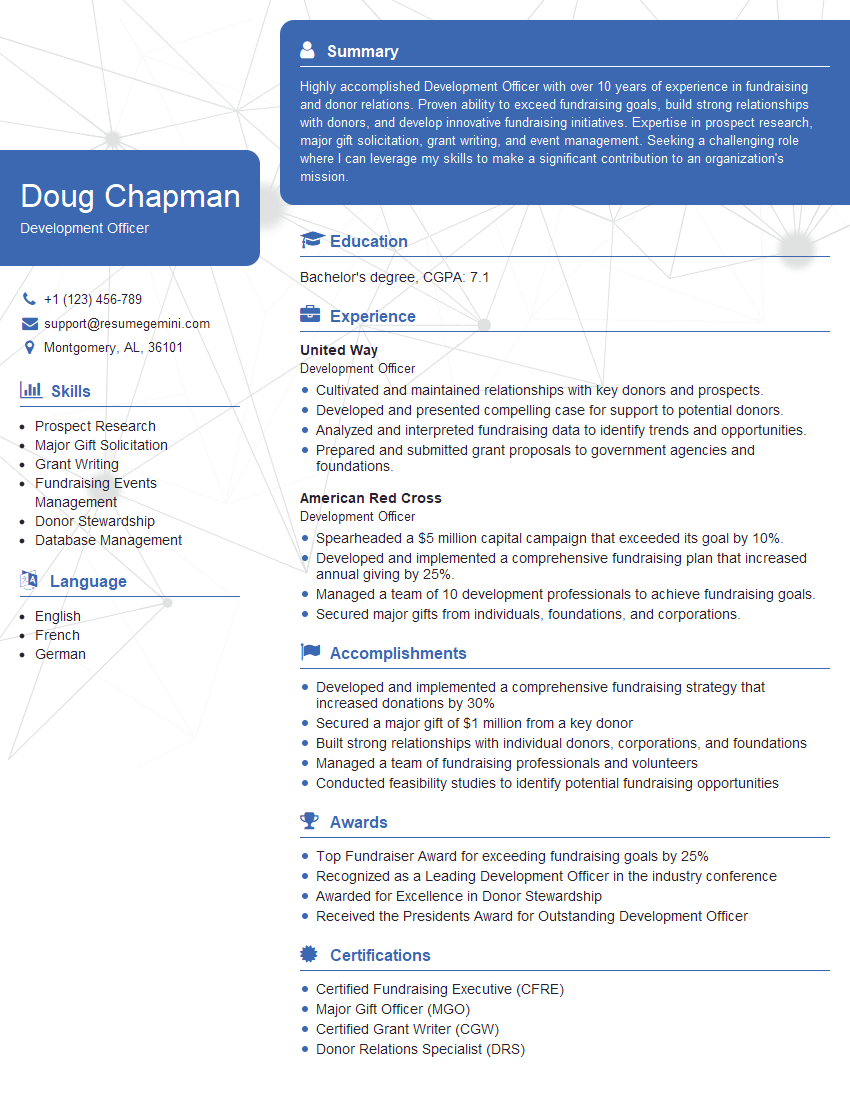
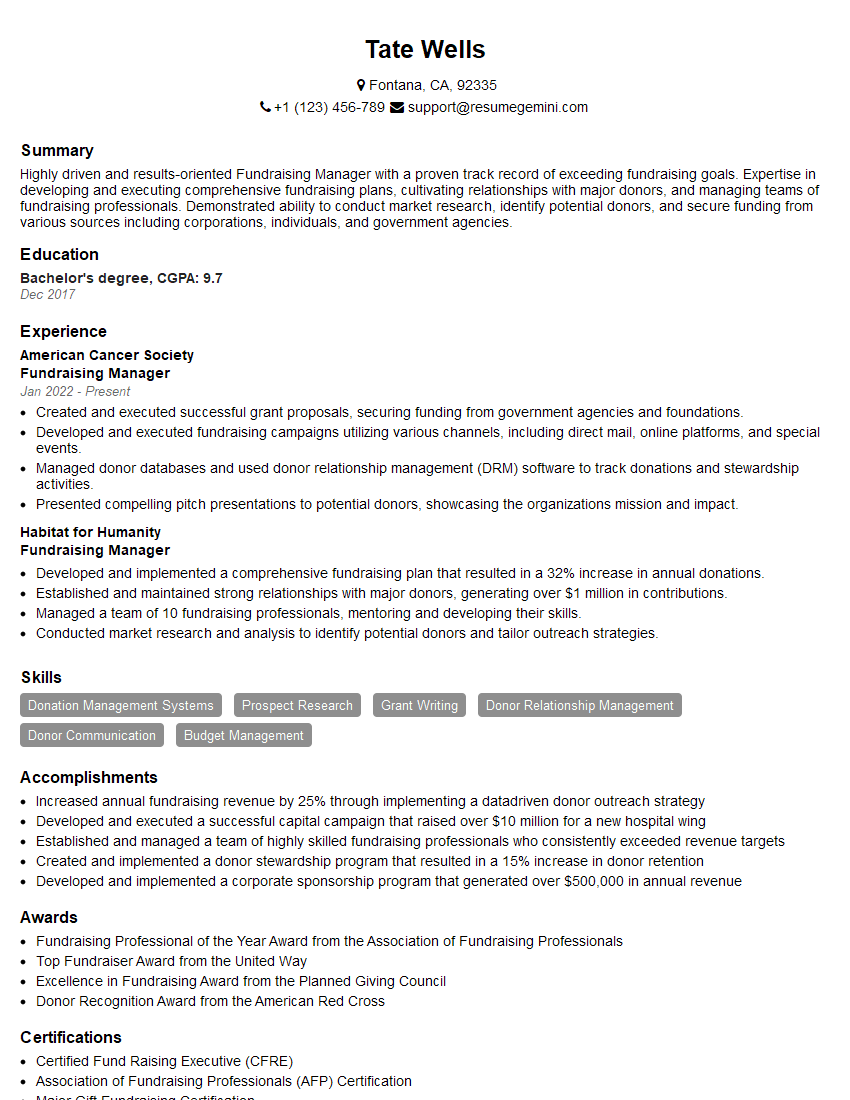
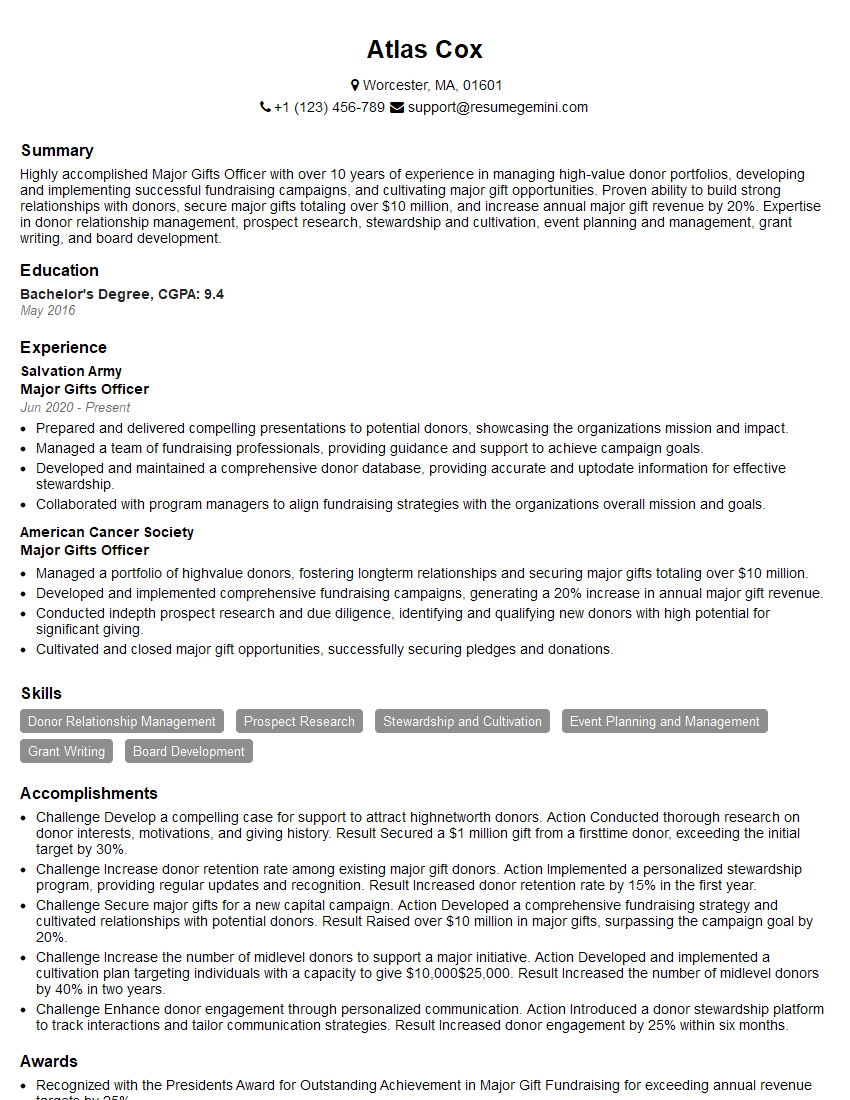
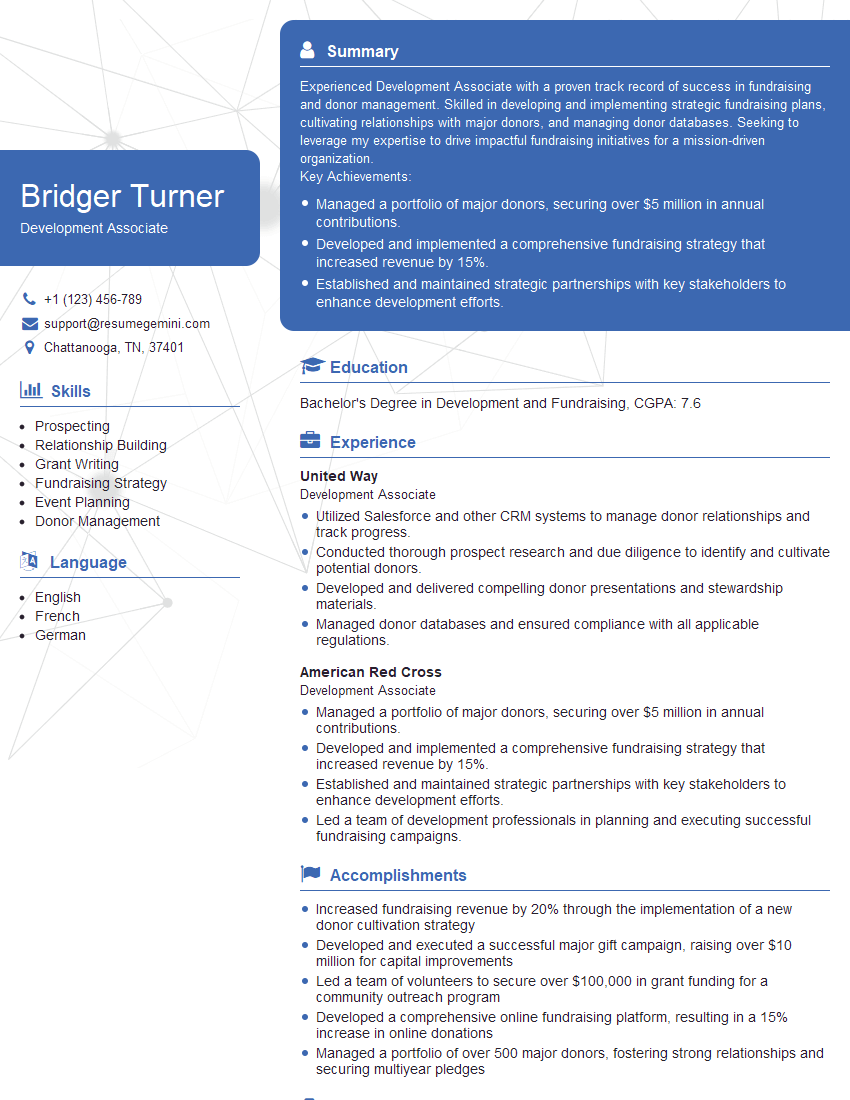
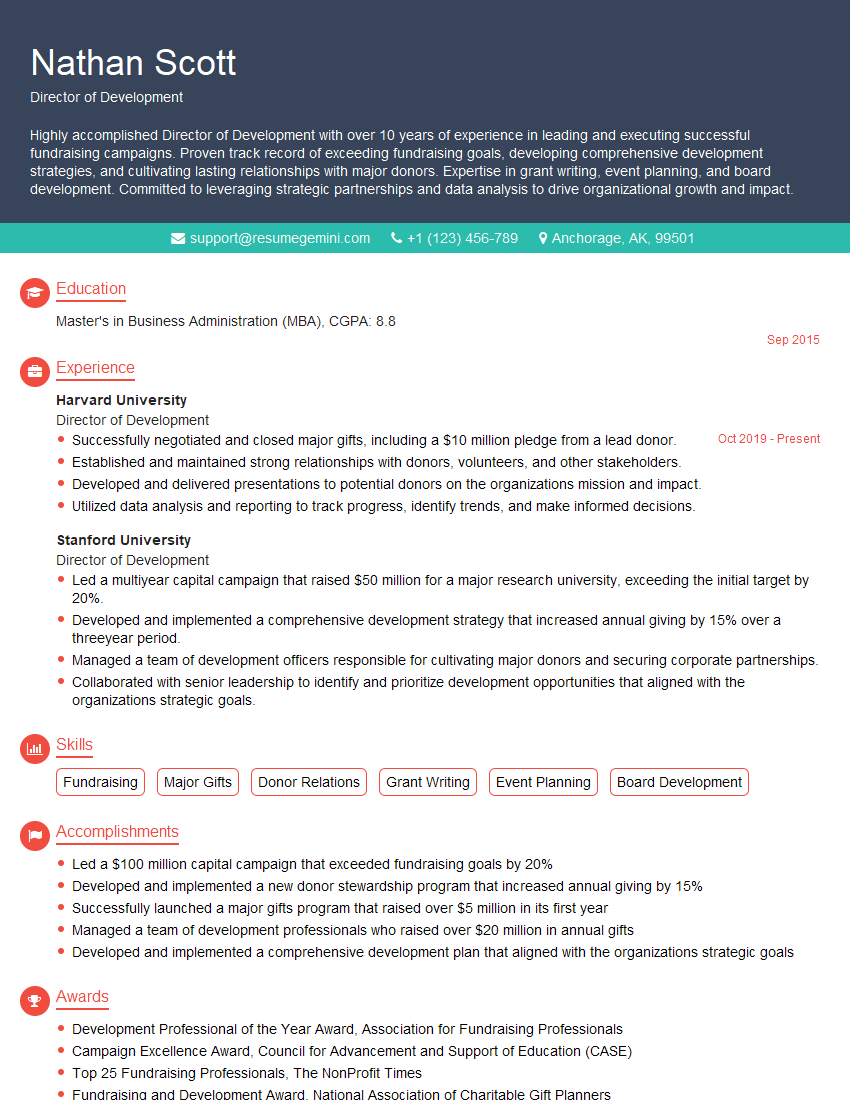
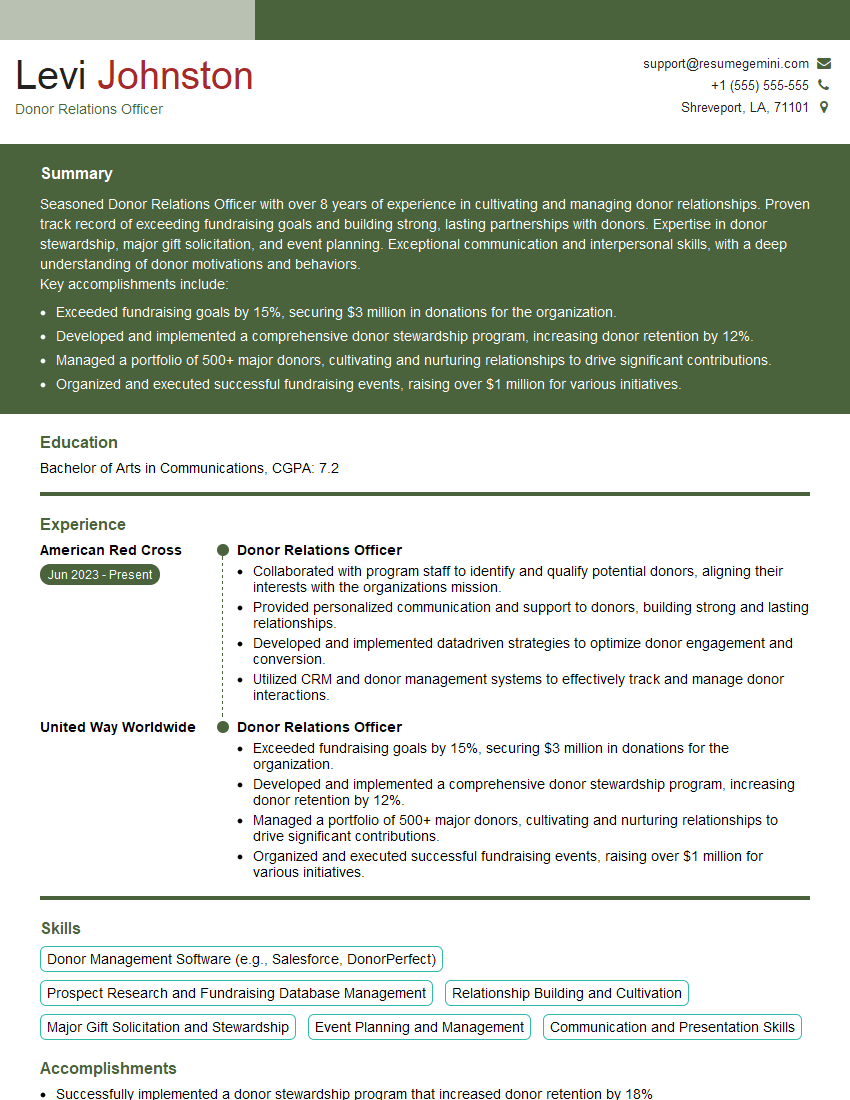
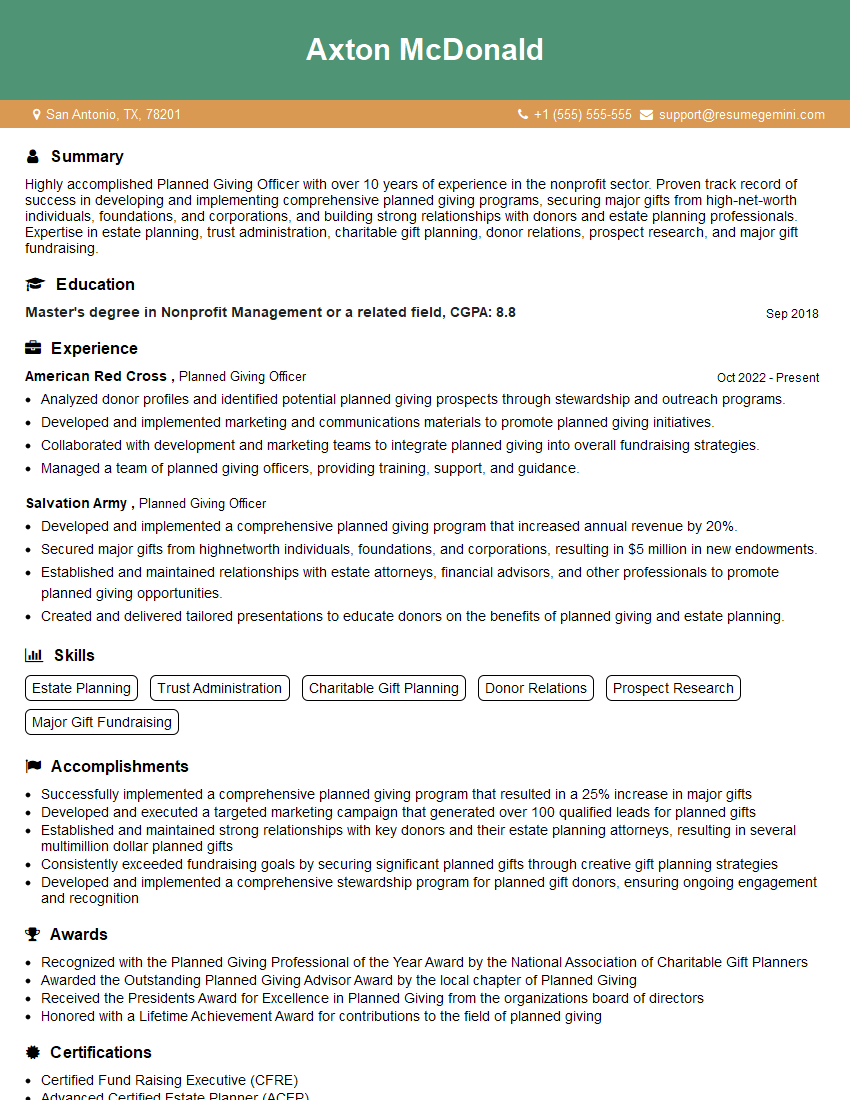
Mastering Alumni and Donor Engagement opens doors to fulfilling and impactful careers in higher education, non-profit organizations, and other sectors. A strong understanding of these principles is crucial for career advancement and securing your dream role. To maximize your job prospects, creating an Applicant Tracking System (ATS)-friendly resume is essential. ResumeGemini is a trusted resource that can help you craft a compelling and effective resume tailored to highlight your skills and experience in Alumni and Donor Engagement. Examples of resumes specifically designed for this field are available to guide you through the process.
Explore more articles
Users Rating of Our Blogs
Share Your Experience
We value your feedback! Please rate our content and share your thoughts (optional).
What Readers Say About Our Blog
Very informative content, great job.
good