Feeling uncertain about what to expect in your upcoming interview? We’ve got you covered! This blog highlights the most important Animal Exclusion interview questions and provides actionable advice to help you stand out as the ideal candidate. Let’s pave the way for your success.
Questions Asked in Animal Exclusion Interview
Q 1. Describe your experience with various animal exclusion techniques.
My experience spans a wide range of animal exclusion techniques, tailored to specific species and situations. This includes preventative measures like sealing potential entry points, using exclusion devices such as one-way doors and wire mesh, and implementing repellents. I’ve also worked extensively with more involved techniques, like creating physical barriers and modifying building structures. For example, I once successfully excluded a family of raccoons from an attic using a combination of one-way doors and sealing all other access points. In another instance, I employed specialized netting to prevent birds from nesting under eaves. Each project requires a thorough assessment to determine the most effective and humane approach.
- Exclusion Devices: One-way doors, wire mesh, hardware cloth.
- Physical Barriers: Fencing, concrete barriers, customized screens.
- Repellents: Commercial repellents (using them cautiously and responsibly, prioritizing animal welfare), natural deterrents (e.g., strong scents).
- Structural Modifications: Sealing gaps and cracks, installing flashing around pipes and vents.
Q 2. What are the common entry points for wildlife in buildings and how do you address them?
Wildlife often exploit surprisingly small gaps to enter buildings. Common entry points include:
- Rooflines and attics: Gaps around vents, chimneys, and flashing.
- Walls and foundations: Cracks, holes, gaps around pipes and utilities.
- Doors and windows: Damaged weather stripping, broken seals, gaps under doors.
- Utility penetrations: Openings around plumbing, electrical wiring, and ductwork.
Addressing these entry points requires a thorough inspection. I typically start with a visual inspection, looking for any openings larger than a half-inch. Then, I use specialized tools, like a flashlight and a borescope, to check hard-to-reach areas. Once identified, I seal openings with appropriate materials – caulking for smaller gaps, steel wool for larger ones, and often use specialized concrete patching for foundation cracks. The choice of material depends on the size of the opening and the species involved.
Q 3. Explain your knowledge of different animal behaviors and how this impacts exclusion strategies.
Understanding animal behavior is crucial for effective exclusion. Different species have unique habits and preferences that dictate where they enter and how they behave within a structure. For instance, raccoons are adept climbers, often entering through rooflines, while rodents might exploit even tiny gaps in the foundation. Knowing these behaviors allows me to tailor my exclusion strategy. For example, if dealing with squirrels, I might focus on blocking access to trees and overhead branches, while working with a rodent problem might involve sealing all potential entry points at the base of the building. This includes understanding their nesting habits, foraging patterns and even their communication methods. A deep understanding allows for humane and effective resolutions.
Q 4. What safety precautions do you take when working with wild animals?
Safety is paramount. When working with wildlife, I always prioritize my safety and the safety of others. This involves several precautions:
- Proper Protective Gear: Wearing sturdy gloves, eye protection, and appropriate clothing. I also wear a respirator when dealing with materials that might create dust or contain allergens.
- Understanding Animal Behavior: Knowing how animals might react to my presence, and recognizing signs of aggression. I never approach a cornered or agitated animal.
- Appropriate Tools: Using tools designed for the job, such as long-handled tools or cages for capturing animals.
- Collaboration with Wildlife Professionals: In cases involving potentially dangerous animals (such as bears or venomous snakes), I collaborate with licensed wildlife rehabilitators or removal specialists.
- Emergency Procedures: Having a plan in place in case of an emergency, including knowing how to contact emergency services.
Q 5. How do you determine the species of animal causing a problem?
Identifying the species is the first step in developing an effective exclusion plan. I use a variety of methods:
- Visual Inspection: Observing droppings, tracks, fur, or other signs of the animal’s presence. Droppings, in particular, offer strong clues.
- Trapping (with proper permits and ethical considerations): Carefully setting up traps that allow for safe capture and release or humane relocation. This should only be done by licensed professionals if necessary.
- Camera Traps: Installing motion-activated cameras to capture images or videos of the animal.
- Consultation with Wildlife Experts: If identification is difficult, I consult with local wildlife experts or biologists for assistance.
Accurate identification ensures that I use the appropriate exclusion methods and understand the animal’s behaviors.
Q 6. What are the legal and ethical considerations regarding wildlife exclusion?
Legal and ethical considerations are critical in animal exclusion. Many jurisdictions have laws protecting wildlife and regulating trapping, relocation, and handling. I always obtain necessary permits before undertaking any work that might involve trapping or handling animals. Ethical considerations include minimizing stress and harm to animals. Relocation is a delicate matter, as it can disrupt ecosystems and may not be a successful long-term solution. I always prioritize humane methods, aiming to exclude animals without causing them injury or unnecessary distress. Prioritizing prevention and ensuring proper habitat modification is key to long term ethical solutions.
Q 7. Describe your experience with installing one-way doors and other exclusion devices.
One-way doors are a common and effective exclusion device. They allow animals to exit a building but prevent them from re-entering. I have extensive experience installing these in attics, crawl spaces, and other areas where animals have gained access. The installation process involves creating an opening slightly larger than the door, securely attaching the door to the opening, and ensuring that there are no gaps or areas where the animal can squeeze through. Other exclusion devices I frequently use include wire mesh for sealing larger openings and specialized hardware cloth for blocking access points in walls or foundations. Successful installation involves careful measurement, precise cutting, and secure fastening, ensuring a long-lasting solution. Proper sealing around the device is also crucial to prevent animals from finding alternative routes.
Q 8. How do you prevent future wildlife entry after exclusion?
Preventing future wildlife entry after exclusion involves a multi-pronged approach focusing on eliminating entry points and deterring future attempts. Think of it like securing your home after a break-in – you fix the broken window and install a better lock.
Repairing Entry Points: This is the most crucial step. All holes, cracks, gaps, and other openings, no matter how small, must be sealed. This includes gaps around pipes, vents, and utility lines. We use materials appropriate to the size and location of the opening, from steel wool and caulk to more substantial repairs involving concrete or metal flashing.
Installing Physical Barriers: Once entry points are sealed, we add layers of protection. This might involve installing fine mesh wire screens over vents, sealing gaps under doors with weather stripping, or adding flashing around rooflines. The goal is to create a completely impenetrable barrier.
Using Deterrents: While physical barriers are paramount, deterrents can discourage future attempts. These could include motion-activated sprinklers, ultrasonic devices (though their effectiveness is debated), or strategically placed predator scents (such as coyote urine).
Addressing Underlying Attractants: Animals are attracted to food, water, and shelter. Removing these attractants is essential. This involves proper sanitation, securing trash cans, eliminating water sources like leaky pipes, and trimming back overgrown vegetation near the building.
Regular Inspections: Finally, regular inspections are key. Wildlife is persistent, so checking for new damage or signs of entry on a regular basis (especially after storms or other weather events) is essential for early detection and prevention.
Q 9. What types of materials are best for creating effective barriers?
Material selection for effective barriers depends heavily on the animal species, the location of the entry point, and the environmental conditions. Durability and resistance to weather are crucial.
Metal: Galvanized steel mesh, aluminum flashing, and stainless steel are excellent choices for their strength and resistance to corrosion. They’re particularly effective against rodents and larger animals like raccoons.
Concrete: Ideal for filling larger holes or cracks, especially in foundations. It offers robust and long-lasting protection.
Hardware Cloth: A fine mesh wire netting perfect for sealing small openings and preventing entry by rodents. It’s flexible and relatively easy to work with.
Caulk and Sealants: Used to fill small cracks and gaps, ensuring a complete seal. Choose a high-quality, weatherproof sealant.
Wood: While less durable than metal, wood can be used for certain applications. However, it’s crucial to use pressure-treated or naturally rot-resistant wood to prolong its lifespan and prevent damage from weather.
For example, I once used a combination of galvanized steel mesh and concrete to seal a large hole in a foundation that was allowing entry to a family of raccoons. The steel mesh prevented them from chewing through the concrete, creating a permanent and effective solution.
Q 10. How do you handle situations where animals are trapped or injured?
Handling trapped or injured animals requires caution and adherence to local regulations. Safety for both the animal and the human is paramount.
Assessment: First, assess the situation. Is the animal injured? Is it trapped in a way that puts it at risk? Is it a species that poses a potential threat?
Contacting Professionals: In most situations, involving qualified wildlife professionals like myself or a wildlife rehabilitator is the safest and most humane approach. We have the experience and specialized tools to handle these situations safely and efficiently.
Never Attempt to Handle Wild Animals Directly: Unless you have extensive training, attempting to handle a wild animal yourself is extremely dangerous and can result in injury to both you and the animal. Animals in pain can behave unpredictably and may bite or scratch.
Legal Considerations: Many jurisdictions have specific regulations regarding the handling of wildlife, including permitting requirements. Always check your local laws and regulations before taking any action.
For instance, I once had to deal with a squirrel trapped in a chimney. While it wasn’t injured, I needed specialized tools to safely remove it. I used a net and gently coaxed it out, ensuring minimal stress for the animal.
Q 11. Explain your experience working with different types of traps and deterrents.
My experience encompasses a wide range of traps and deterrents, each with its own strengths and weaknesses. The choice depends entirely on the target species and situation.
Traps: I’ve worked with live traps (for humane capture and relocation), snap traps (for rodents – used cautiously and with due consideration for non-target species), and specialized traps designed for specific animals (e.g., raccoon traps).
Deterrents: My experience includes using various deterrents, such as motion-activated sprinklers, ultrasonic devices (although the effectiveness of these is limited), predator urine, and visual deterrents like owl decoys. I always tailor my approach to the specific problem.
For example, in one case, a homeowner had a persistent raccoon problem. Simple deterrents weren’t effective, so I utilized a specialized raccoon trap to safely capture and relocate the animal, after which I then sealed all points of entry to prevent re-entry. The trap choice was crucial because a snap trap would have been inhumane and potentially illegal.
Q 12. Describe your knowledge of local wildlife regulations and permits.
Knowledge of local wildlife regulations and permits is essential for ethical and legal animal exclusion. Ignoring these regulations can lead to fines and other penalties.
Permits: In many areas, permits are required for handling certain wildlife species, especially for relocation or removal. I’m well-versed in obtaining the necessary permits for my area.
Protected Species: I have an in-depth understanding of protected species and the restrictions surrounding their handling. I am always careful to comply with all regulations regarding the handling and relocation of protected animals.
Species-Specific Laws: Regulations vary depending on the species of animal involved. For instance, bats are often protected, and special handling procedures are required if exclusion involves bats.
I regularly review and update my knowledge of local, state, and federal regulations to ensure I remain compliant and can provide clients with informed advice regarding the legal aspects of wildlife management on their properties.
Q 13. How do you assess the structural integrity of a building related to wildlife entry?
Assessing the structural integrity of a building concerning wildlife entry is a crucial part of effective exclusion. It’s about finding the weaknesses.
Visual Inspection: This involves a thorough examination of the exterior of the building, looking for cracks, gaps, holes, damaged siding, loose mortar, or areas where materials have deteriorated.
Roof Inspection: The roofline is a common entry point. I check for missing or damaged shingles, gaps around chimneys and vents, and openings around roof penetrations.
Foundation Inspection: Cracks or gaps in the foundation are major entry points for many animals. I carefully inspect the foundation for any signs of damage or deterioration.
Attic and Crawl Space Inspection: Access to attics and crawl spaces should be carefully examined for any gaps or openings. These spaces often provide shelter and nesting sites for animals.
Interior Inspection (when necessary): In some cases, it may be necessary to conduct an interior inspection to identify areas where animals have gained access from within walls or other internal areas.
For example, during an inspection I found that a client’s problem with rodents was due to a significant gap between the foundation wall and the floorboards, which I then repaired using expanding foam and sealant.
Q 14. What are the signs of a rodent infestation vs. other wildlife issues?
Distinguishing between rodent infestations and other wildlife issues relies on careful observation of signs and behaviours.
Rodents: Signs of rodent infestation include droppings (which vary in size and shape depending on the species), gnaw marks on wood, wires, or food packaging, tracks in dusty areas, and the presence of nests made from shredded materials.
Other Wildlife: Signs of other wildlife can vary significantly. Raccoons might leave tracks in the mud, tear up garbage bags, or create dens in attics. Squirrels might chew on wood or create nests in trees or chimneys. Birds might build nests in eaves or create droppings around entry points.
For instance, small, dark droppings clustered in a pantry usually indicate a mouse infestation, while larger droppings found near a damaged roofline are more indicative of a raccoon. A careful assessment of these signs helps determine the appropriate exclusion strategy for the specific problem.
Q 15. How do you communicate effectively with clients about wildlife issues?
Effective communication with clients regarding wildlife issues starts with active listening and clear, jargon-free explanations. I begin by asking open-ended questions to understand their concerns, such as the specific animal, the extent of the damage, and their comfort level with various solutions. I then clearly explain the situation, the potential risks (e.g., damage to property, health hazards), and the available options, outlining the pros and cons of each. Visual aids, like photos of potential entry points or diagrams of exclusion methods, are incredibly helpful. Finally, I always emphasize realistic expectations, managing their hopes and avoiding over-promising. For example, if a raccoon has already established a den, complete removal and exclusion might take several days, involving multiple site visits.
I also provide a written summary of our conversation and the proposed plan, ensuring complete transparency and client understanding. This approach builds trust and ensures everyone is on the same page from the start.
Career Expert Tips:
- Ace those interviews! Prepare effectively by reviewing the Top 50 Most Common Interview Questions on ResumeGemini.
- Navigate your job search with confidence! Explore a wide range of Career Tips on ResumeGemini. Learn about common challenges and recommendations to overcome them.
- Craft the perfect resume! Master the Art of Resume Writing with ResumeGemini’s guide. Showcase your unique qualifications and achievements effectively.
- Don’t miss out on holiday savings! Build your dream resume with ResumeGemini’s ATS optimized templates.
Q 16. How do you handle difficult or aggressive animals?
Handling aggressive or difficult animals requires a combination of caution, expertise, and appropriate equipment. Safety is paramount. I never approach an animal directly without proper personal protective equipment (PPE), including sturdy gloves, eye protection, and potentially protective clothing. Depending on the animal, specialized tools might be necessary, like traps, nets, or even remote deterrents. I carefully assess the situation, considering factors like the animal’s species, behavior, and its environment. If the animal is injured or exhibiting concerning behaviors (like rabies symptoms), I immediately contact wildlife control specialists or animal control services.
For example, if confronted with an aggressive raccoon, I’d utilize a one-way door trap to safely remove it from the property. I’d never attempt to handle it directly. If a skunk is spraying, I would maintain a safe distance and use appropriate deterrents to move it along, only approaching once I’m certain it’s safely contained and removed from the property.
Q 17. Describe your experience with attic or crawl space wildlife removal.
I have extensive experience in attic and crawl space wildlife removal. This often involves a multi-step process. First, a thorough inspection is crucial to identify entry points, the extent of the infestation (e.g., nesting materials, droppings), and the species involved. This often requires using flashlights, mirrors, and sometimes even cameras to access hard-to-reach areas. Once the animals are identified, I strategically set traps, ensuring they are humane and effective. This might include using one-way doors or live traps, depending on the species and local regulations. Once the animals are removed, I then proceed with exclusion work, sealing all entry points using materials suitable for the situation, such as hardware cloth or galvanized flashing. This prevents re-entry. Finally, I thoroughly clean and sanitize the affected areas to remove droppings, debris, and any potential health hazards.
One memorable case involved a family with squirrels in their attic. We used a combination of exclusion techniques and live traps. The process involved carefully sealing entry holes, followed by cleaning the attic of debris and droppings. Post-exclusion, we installed a squirrel-proof vent cover to prevent future infestations.
Q 18. What are some common misconceptions about wildlife exclusion?
Several common misconceptions surround wildlife exclusion. One is that simply repelling animals with sprays or noisemakers is enough; it’s not. These deterrents often only temporarily displace animals, and they often return. Another misconception is that sealing up every crack and crevice is always necessary; It’s important to allow for proper ventilation and prevent structural damage. Excessive sealing can lead to moisture buildup and other issues. Finally, many believe wildlife exclusion is a one-time fix. It actually requires ongoing monitoring, particularly after significant weather events, as animals can find new ways to enter a building or property.
For example, using mothballs to deter rodents is ineffective and potentially harmful. Also, sealing every single opening in a home might block essential ventilation, creating issues with moisture and potentially leading to higher energy bills.
Q 19. How do you create a wildlife exclusion proposal?
A comprehensive wildlife exclusion proposal begins with a detailed site assessment. This includes identifying the species involved, determining entry points, and assessing the extent of damage. I use high-quality photos and videos to document these findings. The proposal then outlines the recommended solutions, including the specific methods of exclusion (e.g., one-way doors, sealing, repairs), the materials to be used, and the estimated timeline for completion. I always specify the costs involved, clearly outlining labor, materials, and any additional expenses (e.g., cleaning). I also include a guarantee, outlining the duration of the warranty against re-entry. Finally, I always emphasize responsible animal handling and disposal, adhering to all local and state regulations.
Each proposal is customized to the client’s specific needs and situation, ensuring transparency and a clear understanding of the process and associated costs.
Q 20. Explain your knowledge of animal-borne diseases and prevention.
Knowledge of animal-borne diseases and prevention is crucial. I am aware of the risks associated with various animals and the diseases they can transmit, such as rabies, leptospirosis, and hantavirus. I always adhere to strict safety protocols, using appropriate PPE and minimizing direct contact with animals. I emphasize the importance of vaccination and safe handling procedures to clients and always advise professional cleaning and disinfection of areas contaminated with animal droppings or urine. Prevention is key; therefore, I always highlight the importance of exclusion measures to prevent future contact and potential disease transmission.
For instance, if dealing with rats, I would inform the clients about the risks of hantavirus and emphasize the need for thorough cleaning after removal and exclusion. Similar precautions apply to raccoons and bats, with a focus on rabies prevention.
Q 21. Describe your experience with using cameras or other monitoring devices for wildlife identification.
I frequently use trail cameras and other monitoring devices to identify wildlife species, their activity patterns, and their preferred entry points. Trail cameras offer a non-invasive way to observe animals without disturbing them. They provide valuable data on animal behavior, allowing me to develop targeted solutions. For instance, if a camera reveals that raccoons are entering a building through a damaged roofline, this information allows for focused repairs. Other monitoring techniques include using night vision equipment to spot animals in low-light conditions and deploying acoustic sensors to detect the sounds of specific species.
In one project, trail camera footage revealed that squirrels were not only using the obvious roof entry points but also gaining access through a poorly sealed chimney. This information allowed us to implement a more comprehensive exclusion plan.
Q 22. What software or technology do you utilize for animal exclusion projects?
Technology plays a crucial role in modern animal exclusion. We don’t just rely on hammers and nails! My work involves a range of software and tools, depending on the project’s specifics. For example, I use CAD software (like AutoCAD or SketchUp) to design exclusion plans, especially for complex situations involving buildings or large properties. This allows me to create detailed blueprints that ensure the solution is effective and aesthetically pleasing.
Additionally, I use project management software such as Asana or Trello to track projects, manage schedules, and ensure clear communication with clients. This is especially important for large-scale projects involving multiple technicians or subcontractors. Finally, I utilize mobile apps for things like photographing damage, documenting completed work, and generating client reports on-site, saving time and ensuring thorough record-keeping.
For instance, recently I used CAD software to design a custom-fit bird exclusion system for a historic building. The detailed plans ensured we could effectively prevent bird entry without damaging the building’s architectural integrity. The project management software kept the project running smoothly, informing the client and team members about progress and any changes.
Q 23. How do you prioritize animal removal based on urgency?
Prioritizing animal removal is crucial, balancing humane treatment with the urgency of the situation. We consider several factors. Immediate threats to public health and safety always take precedence. This might include a rabid animal, a venomous snake in a playground, or a swarm of bees near a school.
Significant property damage is another high-priority factor. For instance, a rodent infestation causing structural damage or a colony of bats ruining a building’s interior will warrant quicker action than a single raccoon in a backyard.
The species itself plays a role; some animals, like certain types of bats, are protected, necessitating a more delicate approach with permits and specialized handling. Finally, client concerns and preferences are considered, always prioritizing humane solutions where possible.
Think of it like a triage system in a hospital: life-threatening situations get immediate attention, while other issues are addressed based on severity and available resources. We use a simple prioritization matrix internally to assign urgency levels to each case.
Q 24. What are some alternative solutions to trapping and killing animals?
Trapping and killing are often considered last resorts. Thankfully, many humane alternatives exist! Exclusion is the cornerstone of our approach. This involves identifying entry points and sealing them off, preventing animals from accessing the area. This is often combined with habitat modification; for example, removing attractants like overflowing garbage cans or unsecured food sources.
Relocation, in accordance with local regulations and ethical practices, can be used for certain species. However, this should be done carefully and only by professionals, as it can potentially create new problems if not executed correctly. Repellents, such as ultrasonic devices or scent deterrents, can be effective in certain situations, though their effectiveness varies based on the animal and environment.
We also focus on prevention. Educating clients on proper sanitation, storage of food, and sealing potential entry points is vital in preventing future problems. For example, a client might be taught to seal cracks in their foundation to prevent rodent entry, instead of relying on continuous trapping.
Q 25. How do you handle complaints or dissatisfied clients?
Client satisfaction is paramount. When complaints arise, I approach them with empathy and a commitment to finding a solution. I start by actively listening to understand their concerns. Then, I review the work performed to assess whether there were any issues in our methods or any unforeseen circumstances.
Open communication is key. I explain clearly the steps we took, the reasons behind those decisions, and the limitations we might have encountered. If our methods did not produce the desired results, we discuss potential alternative solutions, which might include adjustments to the exclusion strategy, additional work, or even a partial refund, depending on the circumstances.
I maintain thorough documentation for every project, which helps during these conversations. A well-documented approach prevents misunderstandings and provides evidence of the work done. Most importantly, I emphasize my commitment to resolving the issue and ensuring the client’s satisfaction, even if it means going the extra mile.
Q 26. How do you maintain accurate records of your work?
Accurate record-keeping is crucial for legal compliance, insurance purposes, and efficient project management. We use a combination of physical and digital record-keeping. For each project, I maintain a detailed file containing the following:
- Client information and contact details
- Site assessment notes and photos
- Detailed plans and specifications of the work performed
- Material and equipment used
- Progress photos and videos documenting the work
- Invoices and payment records
- Any correspondence with the client
This information is stored both digitally (using cloud-based storage and project management software) and physically (hard copies stored securely in the office). This dual approach ensures data redundancy and accessibility, even in the event of technical failure. Furthermore, a well-maintained record system simplifies insurance claims, audits, and client inquiries, promoting accountability and professionalism.
Q 27. Describe your experience working in various environmental conditions.
Experience in diverse environmental conditions is crucial for effective animal exclusion. I’ve worked in extreme heat, frigid temperatures, torrential rain, and even during snowstorms. The type of personal protective equipment (PPE) and work techniques vary drastically depending on the conditions. For example, working in freezing temperatures necessitates extra layers of clothing, heated equipment, and shorter working periods to avoid hypothermia.
In hot and humid conditions, staying hydrated and avoiding overexertion is paramount. Heavy rain necessitates waterproof gear and may require rescheduling work if conditions become too hazardous. Each condition presents unique challenges and requires adaptability and appropriate safety measures. My experience allows me to assess risks, plan accordingly, and adjust techniques to maintain both safety and efficiency across all conditions. We prioritize safety above all and always choose to postpone a job rather than compromise our safety or the safety of those around us. For example, I recall having to postpone a bird exclusion project due to a severe thunderstorm, avoiding potential electrocution hazards.
Q 28. How do you stay updated on new techniques and regulations in animal exclusion?
Staying updated is essential in this field, as new techniques, products, and regulations emerge constantly. I utilize several strategies to maintain my knowledge. I actively participate in professional organizations focused on wildlife management and pest control, attending conferences, workshops, and webinars.
I subscribe to relevant industry publications and journals, keeping abreast of new research and best practices. I also regularly consult online resources and databases provided by government agencies regarding animal control and wildlife protection regulations. I regularly maintain my professional certifications and licenses to ensure that my skills are up-to-date. Finally, I actively seek mentorship and peer learning opportunities, engaging with colleagues to discuss challenges and share expertise. For instance, recently, I learned about a new type of bird repellent from an industry journal which has proven extremely effective in certain situations.
Key Topics to Learn for Animal Exclusion Interview
- Understanding Animal Behavior: Learn about different animal species, their habits, and common entry points into buildings. This includes understanding territoriality, foraging behaviors, and predator-prey dynamics.
- Exclusion Methods and Materials: Explore various exclusion techniques, from sealing entry points with caulk and mesh to installing one-way doors and specialized barriers. Familiarize yourself with different materials and their applications, considering durability and cost-effectiveness.
- Inspection and Assessment Techniques: Practice identifying potential animal entry points and vulnerabilities in structures. This involves understanding building codes, recognizing signs of animal activity, and developing thorough inspection methods.
- Safety and Best Practices: Understand safety procedures when working with wildlife, including handling potentially aggressive animals and using appropriate personal protective equipment (PPE). Familiarize yourself with relevant health and safety regulations.
- Pest Control Integration: Explore the overlap between animal exclusion and pest control, understanding how integrated pest management (IPM) strategies can enhance effectiveness and minimize environmental impact.
- Legislation and Regulations: Become aware of local, state, and federal regulations concerning wildlife handling, trapping, and relocation. This includes understanding humane treatment standards and permit requirements.
- Problem-Solving and Troubleshooting: Develop your ability to analyze complex situations, identify the root cause of animal intrusion, and devise effective and long-term solutions.
Next Steps
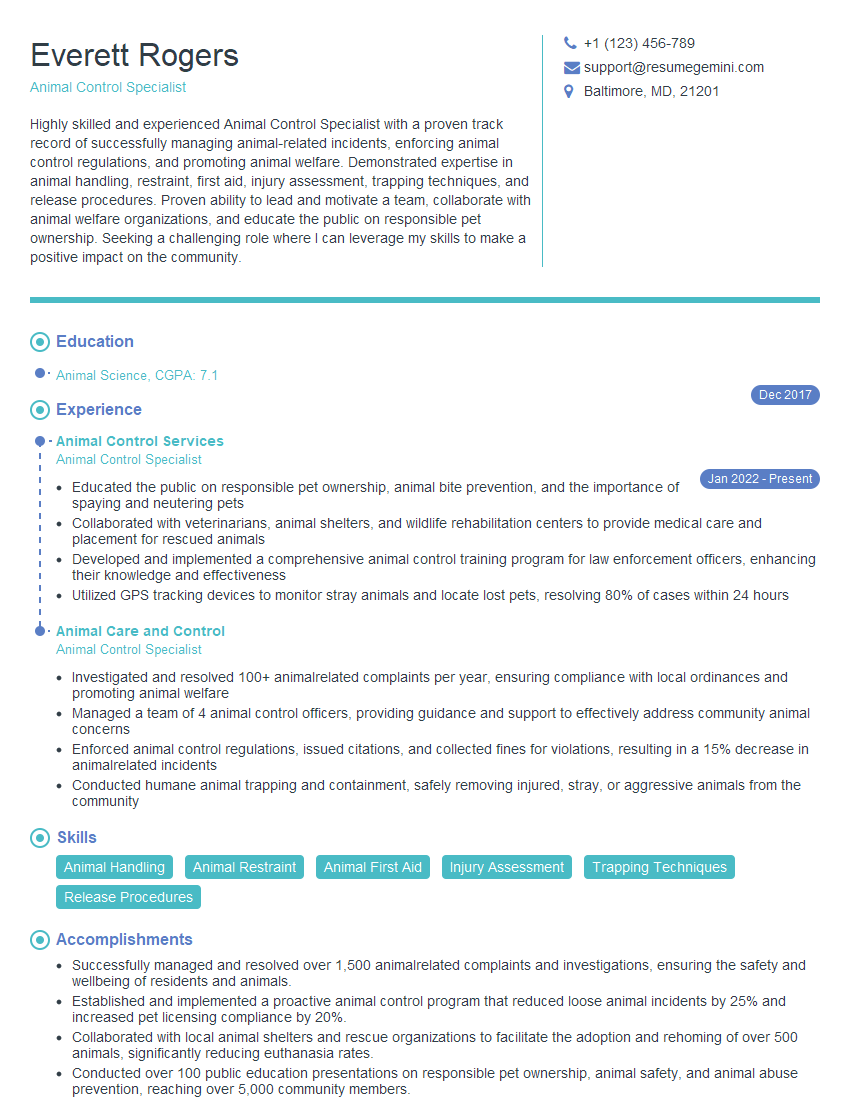
Mastering animal exclusion opens doors to a rewarding career with excellent growth potential in a growing industry. A strong resume is crucial for showcasing your skills and experience to potential employers. Creating an ATS-friendly resume significantly improves your chances of getting noticed by recruiters. To help you build a compelling resume that highlights your expertise in animal exclusion, we recommend using ResumeGemini. ResumeGemini provides a user-friendly platform and offers examples of resumes tailored to the Animal Exclusion field, ensuring your application stands out from the competition.
Explore more articles
Users Rating of Our Blogs
Share Your Experience
We value your feedback! Please rate our content and share your thoughts (optional).
What Readers Say About Our Blog
Very informative content, great job.
good