Cracking a skill-specific interview, like one for Animal identification and selection, requires understanding the nuances of the role. In this blog, we present the questions you’re most likely to encounter, along with insights into how to answer them effectively. Let’s ensure you’re ready to make a strong impression.
Questions Asked in Animal identification and selection Interview
Q 1. Explain the differences between various animal identification methods (e.g., microchipping, ear tagging, DNA analysis).
Animal identification methods are crucial for managing populations, tracking individuals, and ensuring animal welfare. Different methods offer varying levels of permanence, cost-effectiveness, and information they provide.
- Microchipping: A tiny microchip, about the size of a grain of rice, is injected under the animal’s skin. A scanner reads the unique ID number, linking the animal to its records. This is permanent and relatively inexpensive, making it ideal for pets and livestock. For example, microchipping is mandatory for dogs in many countries to aid in reunification if lost.
- Ear Tagging: Tags, usually made of plastic or metal, are attached to the animal’s ear. These can be visual tags with numbers or electronic tags that can be scanned. They are cost-effective but can be lost or damaged, and readability can be impacted by wear and tear. They are commonly used in livestock farming for individual identification and management of herds.
- DNA Analysis: This advanced technique involves analyzing an animal’s unique DNA sequence. It offers the highest level of accuracy and can be used to establish parentage, identify breeds, or even detect genetic predispositions to disease. Although more expensive and complex than other methods, DNA analysis is invaluable for breed registration, conservation efforts, and forensic investigations. For instance, DNA analysis is used in wildlife studies to monitor population size and genetic diversity.
The choice of method depends on factors like species, budget, the permanence needed, and the type of information required. Often, a combination of methods is used for greater accuracy and redundancy.
Q 2. Describe your experience with pedigree analysis and its role in animal selection.
Pedigree analysis is a fundamental tool in animal selection, tracing the ancestry of animals to predict the likelihood of inheriting desirable or undesirable traits. It’s like a family tree, but for animals. I have extensive experience using pedigree analysis in various livestock breeding programs, particularly with dairy cattle and thoroughbred horses.
By studying the pedigree, we can identify animals with a strong history of producing high milk yields (in dairy cattle) or superior racing performance (in horses). We can also identify potential risks, such as genetic disorders that tend to run in families. For example, if a certain line shows a high incidence of hip dysplasia, we can avoid breeding animals from that line to reduce the risk in future generations.
This information allows us to make informed decisions about which animals to breed together to maximize the chances of producing offspring with superior characteristics. Software programs and databases are frequently utilized to manage and analyze complex pedigrees, allowing for sophisticated statistical analysis to predict breeding outcomes.
Q 3. How do you assess the genetic diversity within an animal population?
Assessing genetic diversity within an animal population is crucial for maintaining the health and adaptability of the population. Low genetic diversity can lead to inbreeding depression, making the animals more susceptible to diseases and less able to adapt to environmental changes.
Several methods are used to assess genetic diversity. One common approach is to analyze the frequency of alleles (different versions of a gene) within the population. A high frequency of rare alleles indicates high diversity. Techniques like microsatellite analysis and single nucleotide polymorphism (SNP) genotyping are powerful tools for quantifying this. SNP analysis, in particular, has revolutionized the ability to assess vast genetic data efficiently and cost-effectively.
Another important aspect is evaluating the population’s effective population size (Ne), which represents the breeding potential. A low Ne indicates limited genetic diversity and a higher risk of inbreeding. Furthermore, genetic distance measures between individuals or populations highlight relatedness and identify potential bottlenecks in the past. In practical terms, I’ve used these methods to help manage endangered species programs, advising on suitable breeding pairs to maximize genetic diversity and the long-term survival of the species.
Q 4. What are the ethical considerations involved in animal selection and breeding?
Ethical considerations are paramount in animal selection and breeding. The welfare of the animals must always be the priority. This involves several key aspects:
- Avoiding unnecessary suffering: Breeding practices should minimize pain, stress, and disease. This includes careful selection of breeding pairs to avoid genetic conditions that cause suffering.
- Responsible breeding practices: Overbreeding can lead to overcrowding and neglect. Breeders must ensure appropriate housing, nutrition, and veterinary care.
- Considering the impact on the environment: Breeding programs should avoid practices that could harm the environment, such as the introduction of invasive species.
- Transparency and traceability: Maintaining clear and accurate records of animal origins and breeding practices ensures accountability and helps to prevent unethical practices.
- Genetic diversity maintenance: Avoiding inbreeding and promoting genetic diversity are crucial to the long-term health and viability of animal populations.
For example, the selective breeding of certain dog breeds has led to an increased prevalence of genetic disorders. Ethical breeders strive to mitigate these risks by careful selection and health screening. Ultimately, ethical breeding involves a commitment to the overall well-being of the animals, both individually and as a population.
Q 5. Explain the concept of heritability and its importance in animal breeding programs.
Heritability is a measure of how much of a trait’s variation is due to genetic factors, as opposed to environmental influences. It’s expressed as a value between 0 and 1, with higher values indicating a stronger genetic influence. Understanding heritability is essential in animal breeding programs because it helps predict how effectively a trait can be improved through selective breeding.
For instance, a trait with high heritability, like milk yield in dairy cattle (often around 0.3-0.4), indicates that a significant portion of the variation in milk production between cows is attributable to their genes. This means that selecting high-producing cows as parents is more likely to result in offspring with high milk yields. In contrast, a trait with low heritability, such as disease resistance, may be more influenced by environmental factors (nutrition, hygiene) and therefore less responsive to selection based solely on the parents’ performance.
In practical terms, I utilize heritability estimates in designing selection indexes. These indexes combine multiple traits, weighting them according to their heritability and economic importance. This allows for a more holistic approach to animal selection, aiming to improve multiple desirable characteristics simultaneously.
Q 6. How do you identify and manage genetic defects within a breed?
Identifying and managing genetic defects within a breed requires a multi-faceted approach. First, we need comprehensive health screening programs using methods like pedigree analysis (as mentioned earlier) and genetic testing. Genetic testing allows us to pinpoint specific genes associated with particular defects. For example, we can test for genes associated with hip dysplasia in dogs or certain inherited metabolic disorders in cattle.
Once a genetic defect is identified, management strategies vary. We might avoid breeding animals that carry the defective gene or use genetic selection techniques to reduce the frequency of the gene in the population. In some cases, advanced reproductive technologies, such as in-vitro fertilization and embryo selection, can be utilized to select embryos free from the defective gene. For instance, I’ve worked on projects implementing such strategies in purebred dog populations struggling with particular genetic diseases.
Furthermore, educating breeders about the risks associated with specific genetic defects is vital. Transparent communication and access to genetic testing are essential to fostering responsible breeding practices and reducing the incidence of these harmful conditions. Early detection through screening and careful breeding strategies are crucial in controlling these defects.
Q 7. Describe your experience with animal health records and how they inform selection decisions.
Animal health records are indispensable in informing selection decisions. They provide valuable insights into an animal’s overall health, disease history, and performance. These records encompass a wide range of information, including vaccination records, treatment history, reproductive performance (in breeding animals), and production records (milk yield, egg production, etc.).
In my experience, thorough health records are crucial for identifying animals with a history of health problems or poor reproductive performance. This information allows us to exclude these animals from breeding programs, reducing the likelihood of passing on undesirable traits. For example, consistently poor reproductive performance in a dairy cow may indicate underlying genetic factors that should be considered when selecting breeding stock.
Moreover, health records help monitor the effectiveness of breeding programs in improving animal health. By analyzing health records across generations, we can assess the impact of genetic selection on disease prevalence. Using statistical analysis of this data, one can make improvements to breeding protocols and implement further health checks. This is particularly valuable in managing potential disease outbreaks and ensuring the long-term health and productivity of the animal population.
Q 8. How do you evaluate the phenotypic traits of animals for selection purposes?
Evaluating phenotypic traits for animal selection involves a systematic assessment of observable characteristics. We use a combination of visual appraisal and objective measurements. For example, in dairy cattle, we’d assess milk yield, body condition score, udder conformation (shape, size, teat placement), and leg structure. In beef cattle, it would focus on muscle mass, growth rate, and carcass traits. For each trait, we develop a scoring system – often numerical – to ensure consistency and objectivity across animals. This could involve using standardized scoring charts or even employing technology such as image analysis software for precise measurements. Data collected is then analyzed to identify superior animals for breeding, focusing on those exceeding breed standards and showing desirable traits consistently across generations.
For instance, if we are selecting for increased milk production, we would prioritize cows with high milk yield records, ideally across multiple lactations, demonstrating heritability. We would also consider the health of the udder to ensure longevity and productivity. Similarly, for selecting breeding pigs, we look at things like litter size, piglet survival rate, and growth rate. The key is to establish clear selection criteria based on the desired traits and use reliable, consistent methods for measuring them.
Q 9. Explain the concept of inbreeding depression and its consequences.
Inbreeding depression refers to the reduced fitness in offspring resulting from mating closely related individuals. Think of it like this: inbreeding increases the chances of homozygous recessive genes – those carrying undesirable traits – appearing in offspring. These recessive genes, which might be masked in heterozygous individuals (carrying one copy of the gene), now have a greater chance of being expressed, leading to reduced viability, fertility, and overall performance. The consequences can be significant, ranging from decreased growth rates and milk production to increased susceptibility to diseases and reduced reproductive success.
For example, repeated inbreeding in a dog breed might lead to an increase in genetic disorders like hip dysplasia or specific eye problems. Similarly, in livestock, inbreeding can result in lower birth weights, higher infant mortality, and a reduction in overall herd productivity. Therefore, careful pedigree management and avoiding close matings are crucial to mitigate the negative effects of inbreeding depression. Genetic diversity within a population is key to maintaining robustness and avoiding these issues.
Q 10. How do you select animals for disease resistance?
Selecting animals for disease resistance involves a multifaceted approach. One method is to use pedigree analysis to identify animals with a history of resistance within their family lines. Animals consistently free of particular diseases, despite exposure, are valuable candidates. Another approach is to use performance testing or challenge studies, where animals are exposed to controlled levels of a pathogen to observe their response. Those showing minimal signs of illness or rapid recovery demonstrate better resistance.
Furthermore, advanced techniques like genomic selection are increasingly used. By analyzing an animal’s DNA, we can identify genetic markers associated with disease resistance. This allows for more accurate and efficient selection, even before the animal shows any signs of disease. For example, selecting breeding cattle with genetic markers for resistance to mastitis (a common udder infection) can significantly improve herd health and reduce economic losses. The combination of pedigree analysis, performance testing, and genomic selection provides a powerful strategy to enhance disease resistance in selected populations.
Q 11. What are the key factors to consider when selecting animals for optimal production efficiency?
Selecting animals for optimal production efficiency involves considering multiple interdependent factors. Firstly, we assess genetic merit, evaluating an animal’s inherent ability to produce. This involves using breeding values or Estimated Breeding Values (EBVs), which are statistical predictions of an animal’s genetic merit based on its own performance and that of its relatives. Secondly, we assess the animal’s health status and overall robustness. A healthy animal will perform better and require less input.
Thirdly, we consider factors relating to feed efficiency – how efficiently an animal converts feed into productive output (meat, milk, eggs, etc.). Animals with higher feed conversion ratios are more efficient. Fourthly, we look at reproductive efficiency – factors like litter size, calving interval, and fertility rates. Fifthly, we also consider factors such as adaptability to the environment and ease of management. By considering this complex interplay, we can select animals capable of consistently high performance while minimizing resource use and maximizing profit.
Q 12. Describe your experience with artificial insemination and embryo transfer techniques.
I have extensive experience with both artificial insemination (AI) and embryo transfer (ET) techniques. AI involves the artificial introduction of semen into the female reproductive tract, allowing for broader genetic access and improved reproductive management. I’m proficient in semen handling, insemination techniques (various methods based on species), and record-keeping, crucial for successful AI programs. My experience spans various species, including cattle, swine, and poultry.
Embryo transfer involves collecting embryos from superior donor females and transferring them to recipient females. This allows for rapid multiplication of genetically superior animals. My experience includes embryo collection techniques (such as nonsurgical methods for cattle), embryo evaluation and grading, and embryo transfer procedures. Both AI and ET are vital tools for maximizing genetic gain and improving overall animal production efficiency. Data management and strict hygiene protocols are essential components of successful AI and ET programs, and I have a strong track record in ensuring these procedures are followed to the highest standards.
Q 13. How do you use statistical analysis to evaluate animal selection data?
Statistical analysis is fundamental to evaluating animal selection data. We typically use techniques like linear mixed models to analyze data on multiple traits simultaneously, accounting for various factors like age, sex, and environmental effects. This allows us to estimate genetic parameters such as heritability and genetic correlations between traits. Heritability indicates the proportion of phenotypic variation due to genetic factors, while genetic correlations describe the association between genetic merit of different traits.
Example: A linear mixed model might be used to analyze milk yield data, considering factors such as cow age, lactation number, and herd effects. The model would estimate the genetic and environmental components of milk yield variation, allowing for accurate selection decisions. Furthermore, we use statistical software like ASReml or R to perform these analyses, providing accurate and reliable estimates to inform breeding decisions. The results of these analyses are crucial for developing effective selection indices that weigh different traits according to their economic importance and heritability.
Q 14. How do you manage data from animal identification systems?
Managing data from animal identification systems requires a robust and organized approach. We typically use electronic databases with unique identifiers (ear tags, microchips, etc.) linked to detailed information on each animal, including pedigree, performance records, health data, and management details. Data security and integrity are paramount, requiring regular backups and stringent access control measures.
These databases allow us to track animal performance across their lifespan, assess genetic trends within a population, and generate reports for various purposes (e.g., breeding decisions, health monitoring, and compliance with regulations). Data integration with other systems (e.g., feed management, reproductive tracking) is often crucial for a holistic view of animal performance and overall farm operations. Regular data audits and validation ensure accuracy and reliability. Data visualization tools are also employed to identify patterns and trends in performance data to optimize management decisions.
Q 15. What software or databases are you familiar with for animal genetic data management?
Managing animal genetic data requires robust software and databases capable of handling large datasets and complex analyses. I’m proficient with several, including:
- BreedDB: A versatile system for managing pedigree information, phenotypic data, and genomic data, allowing for efficient data entry, validation, and querying.
- ASReml: A powerful statistical package widely used in animal breeding for mixed model analyses, crucial for estimating breeding values and heritability.
- PLINK: A widely used command-line toolset for performing various genome-wide association studies (GWAS) and population genetic analyses. I utilize it for analyzing SNP data and identifying important genetic markers.
- GCTA (Genome-wide Complex Trait Analysis): A software package allowing the estimation of genetic variance components from SNP data, which is fundamental for genomic prediction and selection.
- Commercial Databases: Depending on the specific needs of a project, I also have experience with commercial databases designed for animal breeding programs, offering features like data visualization tools and automated reporting.
My familiarity extends beyond simple data entry; I’m comfortable with data cleaning, quality control, and the application of appropriate statistical methods for analysis and interpretation. For example, I’ve used BreedDB to track the genetic progress of a dairy cattle herd over several generations, identifying superior sires based on genomic predictions and phenotypic records.
Career Expert Tips:
- Ace those interviews! Prepare effectively by reviewing the Top 50 Most Common Interview Questions on ResumeGemini.
- Navigate your job search with confidence! Explore a wide range of Career Tips on ResumeGemini. Learn about common challenges and recommendations to overcome them.
- Craft the perfect resume! Master the Art of Resume Writing with ResumeGemini’s guide. Showcase your unique qualifications and achievements effectively.
- Don’t miss out on holiday savings! Build your dream resume with ResumeGemini’s ATS optimized templates.
Q 16. How do you determine the best mating strategy for specific breeding goals?
Determining the optimal mating strategy hinges on the specific breeding goals. It’s a multi-faceted process that involves a careful consideration of several factors:
- Breeding Objectives: Clearly defined goals are paramount. Are we aiming for increased milk production in dairy cattle, improved meat quality in pigs, or enhanced disease resistance in poultry? The selection criteria will differ significantly based on the objective.
- Genetic Evaluation: Accurate estimation of breeding values (EBV) for each animal is crucial. EBVs predict the genetic merit of an animal based on its own performance and the performance of its relatives. This often involves complex statistical models and the use of software like ASReml.
- Pedigree Analysis: Understanding the genetic relationships within the population helps avoid inbreeding depression and maximize genetic diversity. Pedigree information is essential for predicting the likelihood of undesirable recessive genes.
- Genomic Information (if available): Genomic selection uses DNA markers to predict breeding values with greater accuracy, particularly for traits with low heritability or difficult-to-measure phenotypes.
- Mating Systems: Different mating strategies exist, each with its own advantages and disadvantages. These include:
- Positive Assortative Mating: Mating individuals with similar phenotypes or breeding values for a specific trait (e.g., mating high-producing cows with high-producing bulls).
- Negative Assortative Mating: Mating individuals with dissimilar phenotypes or breeding values to increase genetic diversity and potentially avoid inbreeding depression.
- Linebreeding: Mating animals that are related to concentrate desirable genes from a specific ancestor.
For instance, in a pig breeding program focused on improving lean meat percentage, I would utilize genomic selection data along with performance records to identify superior boars and sows, opting for positive assortative mating to concentrate favorable alleles associated with lean meat percentage, while carefully monitoring inbreeding coefficients to prevent negative consequences.
Q 17. Explain the concept of genetic gain and how it’s measured.
Genetic gain refers to the improvement in the average breeding value of a population over time. It’s essentially a measure of how much better the next generation is genetically compared to the previous generation. Think of it as the rate of genetic improvement.
Genetic gain is measured as the change in the average breeding value per generation. This can be calculated using:
Genetic Gain = Selection intensity x Heritability x Genetic Standard DeviationWhere:
- Selection intensity: Measures the difference between the average breeding value of selected parents and the average breeding value of the entire population.
- Heritability: Indicates the proportion of phenotypic variation attributable to genetic factors. A higher heritability implies greater potential for genetic gain.
- Genetic standard deviation: Represents the variability in breeding values within the population.
For example, if we observe a 10% increase in milk yield per generation in a dairy herd, that represents a positive genetic gain. The actual value, however, would be calculated using the formula above, and factors influencing this gain, like selection intensity and the heritability of milk yield, would be analyzed to understand the progress and to improve strategies in the future.
Q 18. Describe your experience with animal performance testing and evaluation.
My experience with animal performance testing and evaluation encompasses various species and traits. I’m familiar with designing and implementing testing protocols, collecting data, and employing statistical methods for analysis and interpretation.
This involves:
- Developing standardized protocols: Ensuring consistent and accurate data collection across individuals and environments.
- Data management: Utilizing appropriate software and databases to organize and store large amounts of phenotypic data.
- Statistical analysis: Employing mixed-model analyses (using software like ASReml) to account for environmental factors and genetic relationships when estimating breeding values.
- Performance evaluation: Interpreting the results to identify superior animals and inform selection decisions.
For example, in a beef cattle operation, I’ve designed and implemented a performance testing program to measure growth rate, carcass characteristics, and feed efficiency. This involved collecting data on individual animals’ weight gain, feed intake, and ultimately carcass measurements after slaughter. These data were then analyzed using mixed models to adjust for environmental factors such as age, sex, and feed quality, ultimately resulting in accurate breeding values and the identification of superior sires.
Q 19. How do you interpret genetic markers and their implications for animal breeding?
Genetic markers are specific DNA sequences that can be used to identify particular genes or genetic regions associated with certain traits. Understanding their implications for animal breeding is crucial for efficient selection.
Interpreting genetic markers involves:
- Genome-Wide Association Studies (GWAS): These studies identify associations between specific genetic markers and phenotypic traits. This involves statistical analysis to determine if certain marker alleles are more frequent in animals with desirable traits.
- Linkage Disequilibrium (LD): This is the non-random association of alleles at different loci. It’s crucial in GWAS because markers in LD with a gene affecting a trait can be used as indirect indicators of that gene.
- Quantitative Trait Loci (QTL) mapping: QTL mapping aims to identify specific chromosomal regions containing genes that influence quantitative traits. Markers flanking QTL can then be used in marker-assisted selection (MAS).
For instance, if a GWAS reveals a strong association between a specific SNP marker and milk yield in dairy cattle, breeders can use this marker to select animals likely to have higher milk production, even if their own milk yield is not yet measurable. This is particularly useful for traits with low heritability or traits that are expensive or difficult to measure.
Q 20. How do you incorporate genomic selection techniques in animal breeding programs?
Genomic selection is a powerful technique that leverages genome-wide marker data to predict the breeding values of animals with greater accuracy than traditional methods. It’s especially beneficial for complex traits influenced by many genes with small individual effects.
Incorporating genomic selection into animal breeding programs involves:
- Genotyping: Collecting DNA samples from a representative population and genotyping them using high-throughput technologies to identify SNPs across the genome.
- Reference Population: Establishing a reference population of animals with both genomic data and accurate phenotypic records. These data are used to train prediction models.
- Model Training: Developing statistical models (often using machine learning techniques) to predict breeding values based on the genomic data from the reference population.
- Genomic Prediction: Applying the trained model to predict breeding values for animals without phenotypic records, often young animals or animals for which phenotypic data is expensive or time-consuming to obtain.
- Selection Decisions: Using genomic predictions to guide selection decisions, selecting animals with superior predicted breeding values.
For example, in a sheep breeding program aimed at improving wool quality, genomic selection could significantly improve the accuracy of breeding value predictions for fiber diameter and length, enabling faster genetic progress compared to traditional methods relying solely on phenotypic data.
Q 21. How do you balance genetic improvement with animal welfare concerns?
Balancing genetic improvement with animal welfare is crucial for ethical and sustainable animal breeding. It requires a holistic approach that considers both productivity and the well-being of the animals.
Strategies for achieving this balance include:
- Careful Trait Selection: Focusing on traits that enhance both productivity and welfare. For example, selecting for disease resistance reduces the need for medication and improves animal health.
- Monitoring Welfare Indicators: Regularly monitoring welfare indicators such as lameness rates, mortality, and behavior to detect potential negative consequences of selection.
- Genetic Diversity: Maintaining sufficient genetic diversity to prevent inbreeding depression and to maintain adaptability to environmental changes. Inbreeding can lead to reduced fitness and increased susceptibility to disease.
- Ethical Breeding Practices: Avoiding practices that compromise animal welfare, such as extreme selection intensity that may lead to compromised health or fertility.
- Breed-Specific Considerations: Recognizing that different breeds have different predispositions to certain health issues. Selection strategies should be tailored to each breed to avoid exacerbating existing problems.
For instance, when selecting for increased egg production in poultry, it’s crucial to monitor for potential negative impacts on bone strength and overall health. Balancing increased egg production with maintaining the birds’ welfare requires careful selection of traits, monitoring key indicators, and avoiding excessive selection pressure.
Q 22. Describe a time you had to make a difficult decision regarding animal selection.
One of the most challenging decisions I faced involved selecting breeding stock for a herd of dairy cows. We had two exceptional bulls, both with high milk production genetics. However, one bull carried a recessive gene for a debilitating leg condition, while the other had slightly lower milk production but was genetically sound. Choosing the genetically sound bull meant a slight decrease in immediate milk yield, but it prevented the potential long-term devastating effects of the recessive gene and avoided costly treatments and culling. This decision required carefully weighing short-term gains against the long-term health and economic viability of the herd. I used a combination of genetic evaluation tools, pedigree analysis, and economic modeling to forecast the potential outcomes of each decision before selecting the healthier bull. This proactive approach helped ensure the long-term success and health of the herd.
Q 23. Explain how you would address a situation where a genetic defect is identified within a breeding program.
Identifying a genetic defect in a breeding program necessitates a swift and comprehensive response. The first step is confirmation through genetic testing and potentially further investigation by veterinary specialists to determine the mode of inheritance (dominant, recessive, etc.) and prevalence within the population. Once the defect is fully characterized, several strategies can be employed. For recessive defects, selective breeding and genetic testing of potential breeding stock are crucial to identify and eliminate carriers. This often involves excluding affected animals and carefully selecting mates for carriers, reducing the probability of homozygous affected offspring. In some cases, more advanced techniques like marker-assisted selection (MAS) can assist in identifying and selecting against the gene. For dominant defects, culling affected animals is often the most effective approach. Transparency and open communication with stakeholders throughout the process are essential to maintain trust and manage potential economic impacts. For example, if a lethal recessive gene is identified, we might cull affected animals and implement rigorous screening of breeding stock using DNA markers to eradicate the problem over time. This may involve more rigorous testing and a temporary reduction in breeding numbers but will protect the long-term health of the herd.
Q 24. How do you stay current with the latest advances in animal identification and selection techniques?
Keeping abreast of advancements in animal identification and selection is crucial. I actively participate in professional organizations like the American Society of Animal Science and attend conferences and workshops to learn about the latest techniques. I subscribe to key scientific journals, such as the Journal of Animal Science, and regularly review online databases like PubMed for relevant research. Furthermore, I maintain a professional network with leading researchers and practitioners in the field, engaging in discussions and collaborative projects. Staying updated allows me to implement cutting-edge technologies such as genomic selection, which can significantly enhance the accuracy and efficiency of breeding programs. For example, learning about new DNA marker technology enabled me to improve my genetic evaluation program resulting in higher accuracy in selecting for specific traits.
Q 25. What are the advantages and disadvantages of different animal breeding strategies?
Various animal breeding strategies exist, each with advantages and disadvantages.
- Inbreeding concentrates desirable genes, but increases the risk of expressing recessive genetic defects and reduces genetic diversity.
- Linebreeding, a milder form of inbreeding, focuses on maintaining desirable traits while minimizing the risk of inbreeding depression. It allows for the concentration of desirable genes without the same level of risk as inbreeding.
- Outcrossing involves mating unrelated animals from the same breed to increase genetic diversity and improve overall health. While it increases diversity, it can result in a loss of specific desirable traits.
- Crossbreeding involves mating animals from different breeds to exploit hybrid vigor (heterosis) and combine desirable traits from different lines. However, maintaining desirable traits in subsequent generations requires careful planning and selection.
The optimal strategy depends on the specific goals of the breeding program, the available genetic resources, and the inherent risks associated with each method. For example, in a conservation breeding program, outcrossing would be prioritized to preserve genetic diversity, while in a commercial breeding program aimed at maximizing milk production, linebreeding might be favored, provided that genetic health is carefully monitored.
Q 26. How do you evaluate the economic implications of animal selection decisions?
Economic implications are always a central consideration in animal selection. I use several approaches to evaluate these implications. First, I conduct a thorough cost-benefit analysis considering factors like initial animal cost, feed costs, healthcare expenses, reproductive performance, and market value of products (e.g., meat, milk, eggs). I may employ sophisticated economic modeling tools to forecast potential returns and assess the profitability of different selection strategies over time. Additionally, I factor in indirect costs such as labor and potential losses due to disease or genetic defects. For instance, selecting animals with higher disease resistance can reduce veterinary costs and prevent production losses, while choosing superior genetic lines for growth rate can translate to quicker market turnover and higher profits. For example, when choosing between two bulls with different genetic merit indexes, I use an economic model to simulate the impact on milk yield, feed efficiency, and overall profitability to guide my decision-making process.
Q 27. Describe your experience with animal quarantine procedures and their relevance to identification and selection.
Animal quarantine procedures are essential for biosecurity and disease prevention. They play a crucial role in animal identification and selection by preventing the introduction and spread of infectious diseases that could affect breeding stock. Quarantine procedures usually involve strict isolation of newly acquired animals, health checks including thorough physical examinations and testing for specific pathogens, and careful monitoring for any signs of illness. Accurate identification methods, such as electronic tagging or microchipping, are used to track animals throughout the quarantine period. Successful quarantine ensures that animals entering a breeding program are disease-free, safeguarding the genetic integrity of the existing population. A properly executed quarantine protocol protects the economic investment and the overall health of the breeding program.
Q 28. How do you ensure the accuracy and reliability of animal identification data?
Ensuring the accuracy and reliability of animal identification data is paramount. This involves utilizing a combination of methods, including electronic identification systems (e.g., RFID tags, microchips), visual identification (e.g., ear tags, tattoos), and pedigree recording systems. Data quality is maintained by implementing rigorous data entry protocols, regular data audits to detect and correct errors, and using appropriate software to manage and analyze the data. Cross-referencing data from different sources enhances accuracy. For example, comparing RFID tag data with physical examination records and pedigree information helps identify and rectify any discrepancies. Maintaining data integrity is crucial to the success of breeding programs, ensuring that genetic information is accurate and reliable, helping inform selection decisions and improving the efficiency and overall outcome of the operation.
Key Topics to Learn for Animal Identification and Selection Interview
- Animal Anatomy and Physiology: Understanding the physical characteristics and biological functions of various animal species crucial for accurate identification.
- Identification Techniques: Mastering visual inspection, biometric data analysis, and genetic testing methods for precise identification.
- Breed Standards and Genetics: Familiarizing yourself with breed-specific traits, genetic markers, and pedigree analysis for accurate selection.
- Health Assessment and Disease Recognition: Developing proficiency in identifying signs of illness, genetic defects, and assessing overall animal health.
- Behavioral Assessment: Understanding animal behavior, temperament, and assessing suitability for specific purposes (e.g., breeding, working animals).
- Selection Criteria and Decision-Making: Applying knowledge of breed standards, health, temperament, and performance to make informed selection decisions.
- Ethical Considerations in Animal Selection: Understanding the ethical implications of animal selection practices and responsible breeding programs.
- Data Management and Record Keeping: Proficiency in maintaining accurate records of animal identification, health, and performance data.
- Practical Application: Case Studies: Analyze real-world scenarios involving animal identification challenges and selection decisions. Consider different livestock, companion animals, or wildlife contexts.
- Problem-Solving and Critical Thinking: Develop your ability to analyze complex situations, identify potential issues, and propose effective solutions related to animal identification and selection.
Next Steps
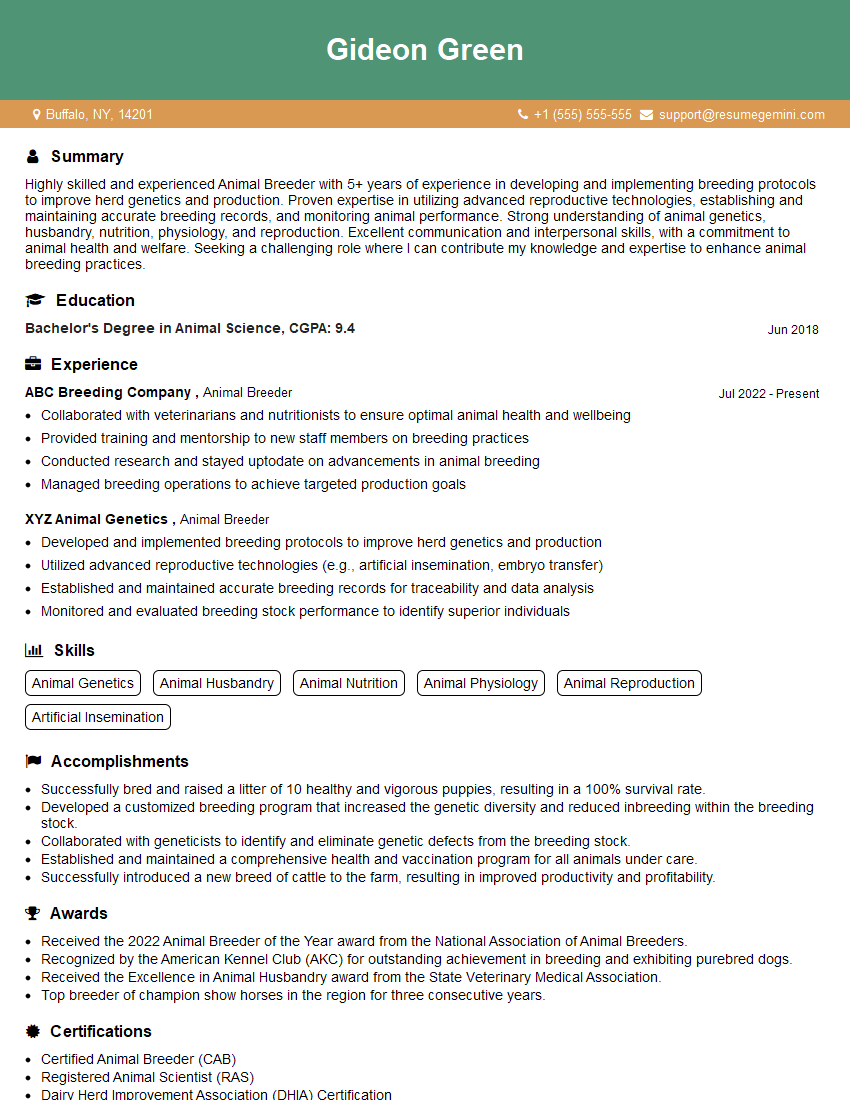
Mastering animal identification and selection is paramount for career advancement in various fields, including animal breeding, veterinary science, agriculture, and conservation. A strong foundation in these skills will significantly enhance your job prospects and open doors to exciting opportunities. To maximize your chances of landing your dream role, creating a compelling and ATS-friendly resume is crucial. ResumeGemini is a trusted resource that can help you build a professional resume that highlights your unique skills and experience. ResumeGemini provides examples of resumes tailored to Animal identification and selection, allowing you to craft a document that effectively showcases your qualifications for potential employers. Invest time in building a strong resume – it’s your first impression and a key to unlocking your career aspirations.
Explore more articles
Users Rating of Our Blogs
Share Your Experience
We value your feedback! Please rate our content and share your thoughts (optional).
What Readers Say About Our Blog
Very informative content, great job.
good