The right preparation can turn an interview into an opportunity to showcase your expertise. This guide to Experience with waste collection and disposal interview questions is your ultimate resource, providing key insights and tips to help you ace your responses and stand out as a top candidate.
Questions Asked in Experience with waste collection and disposal Interview
Q 1. Describe your experience with different waste collection methods.
My experience encompasses a wide range of waste collection methods, from traditional curbside collection to more advanced systems. Curbside collection, using trucks with automated arms, is common for residential areas and smaller businesses. This is relatively straightforward but can be less efficient in areas with limited street access or complex building layouts. For larger commercial and industrial clients, we often utilize roll-off containers – large bins that are placed on-site and emptied periodically by specialized trucks. This offers greater capacity and flexibility. In dense urban environments, specialized compactors are employed to maximize space efficiency and reduce the number of collection trips. Finally, I’ve also worked with pneumatic waste collection systems, where waste is transported through underground pipes using air pressure. This is a cleaner and more efficient method, particularly suitable for pedestrianized areas.
- Curbside Collection: Efficient for residential areas, requires clear access.
- Roll-off Containers: High capacity, suitable for commercial/industrial sites.
- Compactors: Space-saving, ideal for dense urban areas.
- Pneumatic Systems: Clean, efficient, suited for pedestrian zones.
Q 2. Explain the process of waste segregation at source.
Waste segregation at source is crucial for effective waste management and resource recovery. It involves separating different types of waste materials at the point of generation – the household or business. This typically includes categories like:
- Organic Waste: Food scraps, yard waste (leaves, grass clippings).
- Recyclables: Paper, cardboard, plastics, glass, metals.
- Residual Waste (Garbage): Items that cannot be recycled or composted.
- Hazardous Waste: Batteries, paints, chemicals, electronics (often requiring separate handling).
Effective source separation requires clear communication and education. We use labeled bins, public awareness campaigns, and in some cases, specialized training programs for large generators of waste, to make it easy for people to understand and participate. Think of it like sorting your clothes before doing laundry – it simplifies the process and makes it much more efficient.
Q 3. How do you ensure compliance with environmental regulations in waste management?
Compliance with environmental regulations is paramount in waste management. We maintain meticulous records of all waste streams, quantities, and disposal methods. This documentation ensures traceability and facilitates audits by regulatory bodies. We adhere strictly to all local, regional, and national environmental protection laws, including those related to landfill operations, hazardous waste handling, and emissions. Regular internal audits and external inspections help identify potential areas for improvement and ensure continued compliance. We also actively participate in industry-specific training programs to stay updated on evolving regulations and best practices. For example, we meticulously monitor landfill leachate and gas levels to prevent environmental contamination.
Q 4. What are the different types of landfills and their respective advantages/disadvantages?
Landfills vary in their design and operational features. Here are some common types:
- Sanitary Landfills: These are engineered to minimize environmental impact. Waste is compacted and covered with layers of soil daily, reducing odor and preventing the spread of disease vectors. They typically include systems for leachate collection and methane gas management (to prevent groundwater contamination and greenhouse gas emissions). Advantages: Relatively inexpensive, widely available. Disadvantages: Occupy significant land area, potential for groundwater contamination if not properly managed, contribute to greenhouse gas emissions (methane).
- Secure Landfills: Designed for the disposal of hazardous waste. They feature multiple layers of liners and leachate collection systems, stringent monitoring, and often specialized construction materials to prevent contamination. Advantages: Prevents hazardous materials from entering the environment. Disadvantages: Very expensive to build and operate, stringent regulatory requirements.
Q 5. Describe your experience with hazardous waste handling and disposal procedures.
Handling hazardous waste requires specialized knowledge and rigorous procedures. We work with licensed hazardous waste contractors who have the expertise and permits to transport, treat, and dispose of materials safely and in compliance with regulations. This includes developing detailed manifests that track each hazardous waste item from generation to final disposal. We utilize appropriate safety equipment, follow strict protocols for handling and storage, and conduct regular training to ensure our staff and contractors are fully aware of potential hazards and safety protocols. For instance, the disposal of used batteries requires careful handling to avoid exposure to hazardous chemicals. We follow specific protocols that are defined by environmental regulations.
Q 6. How do you manage and resolve issues related to missed collections or overflowing bins?
Missed collections or overflowing bins are addressed promptly and efficiently. We use a combination of route optimization software, GPS tracking of vehicles, and real-time communication with our drivers to monitor collection progress. Customers can report issues through various channels, such as phone calls, emails, or a dedicated online portal. We investigate each reported issue, determine the cause (e.g., equipment malfunction, traffic congestion, incorrect bin placement), and dispatch a crew to rectify the situation. For overflowing bins, we implement temporary solutions, like providing additional bins, until the situation is resolved. Clear communication with customers is key to managing expectations and maintaining positive relationships.
Q 7. What safety measures do you implement during waste collection and disposal operations?
Safety is a top priority in our operations. Our employees receive comprehensive safety training before handling any equipment or waste materials. We provide personal protective equipment (PPE) such as gloves, safety glasses, high-visibility clothing, and appropriate footwear. Regular safety inspections are conducted to identify and address potential hazards. Vehicles are equipped with safety features such as backup cameras and audible warnings. We follow strict protocols for handling sharps and other potentially infectious waste, adhering to all relevant workplace safety regulations. For instance, our workers always use appropriate lifting techniques to prevent injuries. We regularly review our safety procedures to keep up with best practices in the field.
Q 8. Explain your understanding of waste-to-energy technologies.
Waste-to-energy (WtE) technologies are processes that convert non-recyclable waste materials into usable energy sources, such as electricity or heat. This offers a sustainable alternative to landfilling, reducing greenhouse gas emissions and reliance on fossil fuels. Several technologies exist, each with its own advantages and disadvantages.
- Incineration: Waste is burned at high temperatures, generating steam that drives turbines to produce electricity. Ash residue requires careful management.
- Gasification: Waste is heated in the absence of oxygen, producing a syngas (a mixture of carbon monoxide and hydrogen) that can be used to generate electricity or fuel.
- Anaerobic Digestion: Organic waste is broken down by microorganisms in an oxygen-free environment, producing biogas (primarily methane) which can be used as a fuel source.
For example, in a large city, a WtE plant using incineration could significantly reduce landfill burden while providing a portion of the city’s electricity needs. However, careful consideration must be given to air emissions and the management of the resulting ash.
Q 9. How do you optimize waste collection routes for efficiency?
Optimizing waste collection routes is crucial for efficiency and cost-effectiveness. This involves careful planning and the use of route optimization software.
- Data Collection: Accurate data on waste generation, collection points, and road networks is essential. This might involve GPS tracking of trucks and using GIS (Geographic Information Systems) mapping.
- Route Planning Software: Specialized software uses algorithms to create the most efficient routes, minimizing travel time and fuel consumption. Factors like traffic patterns, road closures, and vehicle capacity are considered.
- Regular Route Review: Routes should be regularly reviewed and adjusted based on changes in waste generation patterns, road conditions, and other factors. This is an iterative process.
Imagine a scenario where a city’s waste collection routes haven’t been optimized in years. By implementing route optimization software and analyzing data, we could potentially reduce fuel costs by 15% and collection time by 10%, leading to significant savings and improved service.
Q 10. Describe your experience with recycling programs and their implementation.
Successful recycling programs require a multifaceted approach, encompassing public education, infrastructure development, and efficient materials processing. My experience includes designing and implementing programs that focus on maximizing participation and material recovery.
- Public Awareness Campaigns: Educating the public about what materials can be recycled, proper sorting techniques, and the environmental benefits is crucial. This can involve community outreach events, educational materials, and public service announcements.
- Infrastructure Development: Providing convenient and accessible recycling bins and drop-off locations is essential. This includes designing effective curbside collection systems and ensuring sufficient capacity at material recovery facilities (MRFs).
- Material Recovery Facility (MRF) Management: MRFs are critical for sorting and processing recyclable materials. Efficient MRF operations are necessary to ensure high-quality recyclables for market sale.
In one project, we implemented a city-wide curbside recycling program that increased participation rates by 30% within the first year, primarily through a combination of improved communication and convenient bin placement.
Q 11. How do you calculate the cost-effectiveness of different waste management strategies?
Cost-effectiveness in waste management is assessed by comparing the costs of different strategies against their environmental and social benefits. A life-cycle cost analysis (LCCA) is often used, considering all costs associated with a strategy from waste generation to final disposal.
- Capital Costs: This includes the cost of equipment, infrastructure, and facilities (e.g., landfills, incinerators, recycling plants).
- Operational Costs: This includes labor, transportation, maintenance, and energy costs.
- Environmental Costs: These are often monetized and include the costs associated with greenhouse gas emissions, pollution, and landfill space.
- Social Costs: These are less easily quantified but can include health impacts from pollution and the social equity implications of waste management policies.
For example, comparing the cost of landfilling versus anaerobic digestion requires careful consideration of the capital investment in the digester, its operational costs, the value of the biogas produced, and the reduced landfill fees.
Q 12. Explain your understanding of leachate management in landfills.
Leachate is a liquid that forms in landfills as water percolates through waste, dissolving various compounds. Effective leachate management is critical for environmental protection. It involves containment, collection, treatment, and disposal.
- Leachate Collection System: Landfills typically have a system of pipes and liners to collect leachate.
- Leachate Treatment: Treatment methods vary depending on the leachate composition. Common techniques include biological treatment (aerobic or anaerobic), chemical treatment, and filtration.
- Leachate Disposal: Treated leachate may be discharged to a wastewater treatment plant or reused for irrigation (after stringent quality checks).
Failure to manage leachate properly can lead to groundwater contamination, soil degradation, and the release of harmful substances into the environment. Regular monitoring of leachate quality is essential.
Q 13. How do you monitor and report on key performance indicators (KPIs) in waste management?
Monitoring and reporting KPIs is essential for assessing the performance of a waste management system. Key KPIs can include:
- Recycling Rates: The percentage of waste diverted from landfills through recycling.
- Waste Diversion Rates: The overall percentage of waste diverted from landfills through recycling, composting, and other methods.
- Collection Efficiency: The efficiency of waste collection operations, measured in terms of cost per ton collected or time spent on routes.
- Landfill Gas Emissions: The amount of methane and carbon dioxide released from landfills.
- Citizen Satisfaction: Feedback from residents on the quality of waste management services.
We typically use data dashboards and reporting software to track KPIs and generate regular reports. These reports are used to identify areas for improvement and demonstrate the effectiveness of waste management initiatives. For example, a drop in recycling rates might signal a need for a public awareness campaign or improvements to the collection system.
Q 14. Describe your experience with waste audits and their importance.
Waste audits provide a detailed analysis of waste generation and composition within an organization or community. They are essential for identifying opportunities for waste reduction, recycling, and improved resource management.
- Waste Characterization: The audit involves sorting and weighing waste samples to determine their composition (e.g., paper, plastics, organics, etc.).
- Data Analysis: The data collected is analyzed to identify the major waste streams and opportunities for waste reduction and diversion.
- Recommendations: The audit typically concludes with recommendations for improved waste management practices, such as implementing a new recycling program or reducing packaging use.
I’ve conducted numerous waste audits for businesses and municipalities, leading to significant reductions in waste disposal costs and environmental impact. For instance, one audit revealed that a significant portion of a company’s waste was avoidable through better inventory management and sourcing practices.
Q 15. How do you handle complaints related to noise, odor, or other issues from waste facilities?
Handling complaints about noise, odor, or other issues from waste facilities requires a systematic and proactive approach. It begins with establishing clear communication channels for residents and businesses to report concerns. This could involve a dedicated phone line, online portal, or even a mobile app.
Upon receiving a complaint, a detailed record is created, noting the nature of the complaint, the date, time, and location, and the complainant’s contact information. This allows for tracking and trend analysis. A prompt investigation is crucial. This might involve on-site inspections to identify the source of the problem – a malfunctioning piece of equipment, a build-up of waste, or inadequate odor control measures.
Once the cause is identified, corrective actions are implemented immediately. This may involve repairs, cleaning, adjustments to operating procedures, or even temporary facility shutdowns if necessary. Regular maintenance schedules are key to preventing these issues in the first place. Finally, the complainant is updated on the investigation findings and the steps taken to address the complaint. A follow-up is essential to ensure the problem is resolved and customer satisfaction is achieved.
For example, if persistent odor complaints stem from a compost facility, we’d investigate factors such as aeration systems, turning frequency, and the types of waste accepted, making adjustments as needed to minimize odors. We might also explore installing odor control equipment like biofilters or activated carbon systems.
Career Expert Tips:
- Ace those interviews! Prepare effectively by reviewing the Top 50 Most Common Interview Questions on ResumeGemini.
- Navigate your job search with confidence! Explore a wide range of Career Tips on ResumeGemini. Learn about common challenges and recommendations to overcome them.
- Craft the perfect resume! Master the Art of Resume Writing with ResumeGemini’s guide. Showcase your unique qualifications and achievements effectively.
- Don’t miss out on holiday savings! Build your dream resume with ResumeGemini’s ATS optimized templates.
Q 16. Explain your knowledge of different waste treatment technologies (e.g., anaerobic digestion, incineration).
Waste treatment technologies are crucial for minimizing environmental impact and resource recovery. Let’s explore a few:
- Anaerobic Digestion: This biological process breaks down organic waste in the absence of oxygen, producing biogas (primarily methane and carbon dioxide) and digestate. Biogas can be used to generate electricity or heat, while digestate can be used as a soil amendment. This technology is particularly suitable for food waste, agricultural residues, and sewage sludge. It’s a sustainable method that reduces landfill burden and recovers energy.
- Incineration: Incineration involves burning waste at high temperatures to reduce its volume and weight. Modern incinerators employ sophisticated air pollution control systems to minimize emissions. While incineration reduces landfill space, it raises concerns about air quality and the production of ash, which requires careful management. Energy recovery from incineration is often incorporated, utilizing the heat generated for electricity production.
- Landfilling: Landfilling remains a widely used method, but modern landfills incorporate features like liners and leachate collection systems to prevent groundwater contamination. However, it’s considered the least desirable method due to its environmental impact, including greenhouse gas emissions. Landfill gas collection and energy recovery is increasingly being implemented to mitigate these impacts.
The selection of an appropriate technology depends on various factors, such as the type and composition of waste, the available resources, environmental regulations, and economic considerations.
Q 17. How do you ensure the proper documentation and record-keeping for waste management operations?
Proper documentation and record-keeping are paramount for efficient and compliant waste management operations. It ensures traceability, accountability, and allows for informed decision-making. We utilize a comprehensive system that includes both physical and digital records.
Physical Records: These include manifests for waste transportation, daily operational logs detailing activities at waste facilities, inspection reports on equipment and facilities, and maintenance records. These are crucial for tracking waste movement and ensuring adherence to regulations.
Digital Records: We use software systems to manage waste data, including waste generation, collection routes, treatment processes, and disposal methods. These systems allow for real-time tracking, data analysis, and reporting. Data security is paramount, and access control measures are in place to safeguard sensitive information.
Examples of documented information include:
- Waste stream characterization data (composition, volume)
- Records of waste generator agreements
- Detailed records of environmental monitoring (air, water, soil)
- Training records for personnel
This meticulous record-keeping ensures compliance with environmental regulations and allows for continuous improvement of our operations. It’s also essential for demonstrating accountability to regulatory bodies and stakeholders.
Q 18. Describe your experience with training and supervising waste management personnel.
Training and supervising waste management personnel is critical for ensuring safe and efficient operations. It involves a multi-faceted approach, combining theoretical knowledge with practical skills development.
Training Programs: We conduct comprehensive training programs covering topics such as:
- Safety procedures: Proper handling of hazardous waste, personal protective equipment (PPE) use, emergency response protocols.
- Equipment operation: Safe and efficient operation of collection vehicles, compactors, and other equipment.
- Waste stream management: Sorting, segregation, and handling of different waste streams.
- Environmental regulations: Compliance with local, state, and federal regulations.
Supervision: Regular supervision involves on-site observations, performance reviews, and feedback sessions. This helps identify areas for improvement, address performance issues, and ensure adherence to safety standards and best practices. We use both formal performance appraisals and informal daily check-ins to maintain open communication and provide timely support.
Example: For new drivers, we start with classroom training on route planning, vehicle maintenance, and safety protocols, followed by supervised on-the-job training where experienced drivers mentor them. Regular performance reviews ensure compliance and continuous skills development.
Q 19. How do you handle emergency situations related to waste spills or leaks?
Handling waste spills or leaks requires a swift and coordinated emergency response. Our procedures are based on a pre-planned emergency response plan that’s regularly reviewed and updated.
Initial Response: The first step involves immediate containment of the spill or leak to prevent further spread. This might involve deploying absorbent materials, dams, or other containment measures. Personnel must wear appropriate PPE to protect themselves from hazardous materials.
Notification and Reporting: We immediately notify the appropriate authorities, such as emergency services and regulatory agencies, as per the established reporting protocols. This ensures that the necessary resources are mobilized promptly.
Cleanup and Remediation: A specialized cleanup crew, often contracted for specific hazardous materials, is deployed to clean up the spill and remediate the affected area. This might involve specialized equipment, techniques, and disposal of contaminated materials. Thorough documentation of the incident, cleanup procedures, and any environmental monitoring is maintained.
Post-Incident Analysis: Following the cleanup, a thorough investigation is conducted to determine the cause of the incident and implement preventive measures to minimize the risk of future occurrences. This analysis informs improvements to our operational procedures and training programs.
Q 20. Explain your experience with waste contract management and negotiation.
Waste contract management and negotiation require a thorough understanding of the market, legal frameworks, and the specific needs of our organization. We develop clear specifications for our waste services, outlining volumes, types of waste, required technologies, and performance expectations.
Market Analysis: We thoroughly research the waste management market to identify potential vendors, compare their services and pricing, and assess their capabilities and track records. This helps us build a robust competitive bidding process.
Negotiation Strategies: During negotiations, we emphasize clarity, transparency, and a win-win approach. We leverage our market analysis to negotiate favorable terms on pricing, service levels, performance guarantees, and environmental compliance. We clearly define key performance indicators (KPIs) to measure the vendor’s performance against contractual obligations. For instance, we might include penalties for missed pickups or exceeding allowable emissions.
Contract Management: Post-contract award, we closely monitor the vendor’s performance, ensuring that they meet all the contractual obligations. Regular communication, performance reviews, and proactive problem-solving are crucial for successful contract management. The contracts are meticulously reviewed and updated to reflect changes in regulations, technological advancements, or our operational needs.
Q 21. How do you utilize technology to improve efficiency in waste management (e.g., GPS tracking, route optimization software)?
Technology plays a significant role in improving efficiency and sustainability in waste management. We leverage various technologies to optimize our operations.
GPS Tracking and Route Optimization: GPS tracking systems on our collection vehicles allow real-time monitoring of vehicle location, speed, and routes. Route optimization software analyzes data to determine the most efficient collection routes, minimizing travel time and fuel consumption. This leads to cost savings and reduced environmental impact.
Smart Bins and Sensors: Smart bins are equipped with sensors that monitor fill levels, providing real-time data on bin status. This helps optimize collection schedules, preventing overflowing bins and reducing unnecessary trips. Sensors can also detect illegal dumping.
Waste Management Software: Dedicated software systems manage various aspects of waste management, from waste characterization and tracking to reporting and compliance. These systems facilitate data analysis, allowing for informed decision-making and continuous improvement. For example, we can track diversion rates (recycling and composting) and identify opportunities to improve recycling programs.
Data Analytics and Predictive Modeling: Utilizing data analytics and predictive modeling techniques, we can anticipate potential issues such as increases in waste generation during holidays or identify areas prone to illegal dumping. This allows proactive planning and resource allocation.
Q 22. What are the key challenges in managing municipal solid waste?
Managing municipal solid waste (MSW) presents numerous interconnected challenges. One major hurdle is the sheer volume and diversity of waste generated. We’re dealing with everything from organic materials like food scraps and yard waste to plastics, metals, paper, and hazardous materials. This diverse composition makes sorting, processing, and disposal complex and costly.
Another key challenge is the lack of consistent and efficient waste collection infrastructure, particularly in developing countries or underserved communities. Inefficient collection systems lead to overflowing landfills, illegal dumping, and environmental pollution. Furthermore, the ever-increasing population and changing consumption patterns exacerbate these issues, leading to a continuous rise in waste generation.
Financial constraints also play a significant role. Building and maintaining proper waste management facilities, including landfills, recycling plants, and waste-to-energy facilities, requires substantial financial investment. Securing funding and implementing cost-effective solutions are ongoing battles.
Finally, public awareness and participation are crucial. Without public buy-in, even the best-designed waste management systems will struggle. Promoting responsible waste disposal habits and encouraging recycling requires ongoing education and community engagement.
Q 23. How do you promote public awareness and engagement in waste reduction and recycling programs?
Promoting public awareness and engagement is essential for successful waste reduction and recycling programs. We utilize a multi-pronged approach that combines education, incentives, and community involvement. This includes:
- Educational Campaigns: We conduct workshops, distribute informative brochures and flyers, and utilize social media platforms to educate the public about waste reduction techniques, proper sorting methods, and the environmental benefits of recycling. We use clear, simple language and engaging visuals to reach a broad audience.
- Incentive Programs: We often implement reward systems, such as discounts on waste collection fees for households that consistently recycle or participate in composting programs. This positive reinforcement encourages behavior change.
- Community Partnerships: We collaborate with local schools, businesses, and community organizations to organize cleanup drives, awareness events, and educational programs. This fosters a sense of collective responsibility.
- Accessible Information: Ensuring easily accessible information, through websites, apps, and clearly marked bins, is crucial. This reduces confusion and barriers to participation.
- Data-Driven Feedback: Tracking recycling rates and waste composition helps to identify areas for improvement in our outreach and adjust our strategies accordingly. Sharing this data transparently with the community builds trust and accountability.
For instance, one successful campaign involved partnering with a local school to teach children about recycling and composting. These children then became ‘ambassadors’ within their households, educating their families and encouraging participation in the community programs.
Q 24. Describe your experience with different types of waste containers and their suitability for different waste streams.
Different waste streams necessitate different container types to optimize sorting and processing efficiency. For example:
- Colored Recycling Bins: Using distinctly colored bins (e.g., blue for paper, green for glass, yellow for plastic) simplifies sorting at the curbside and reduces contamination. The use of clear labels and symbols further enhances understanding.
- Multi-Compartment Bins: These bins allow for simultaneous collection of different waste streams (e.g., recycling, organic waste, landfill waste) directly from the source, improving efficiency and reducing the need for multiple containers.
- Specialized Containers for Hazardous Waste: Hazardous waste, including batteries, e-waste, and medical waste, requires specialized containers to prevent leakage and contamination. These often include secure lids and clearly labeled warnings.
- Underground Waste Containers: In densely populated areas, underground containers are useful for minimizing the visual impact of waste storage and reducing odor issues. They also often have larger capacity, reducing collection frequency.
- Composting Bins: Home composting bins encourage the processing of organic materials like food waste and yard waste, which reduces landfill burden and creates valuable compost. These containers are typically designed for aeration and efficient decomposition.
The choice of container depends on factors such as the volume of waste generated, available space, and the specific needs of the community. Our strategy involves ongoing evaluation to ensure we’re using the most appropriate and effective container systems.
Q 25. Explain your knowledge of the hierarchy of waste management (reduce, reuse, recycle, recover, dispose).
The waste management hierarchy prioritizes waste reduction strategies in this order: Reduce, Reuse, Recycle, Recover, Dispose. This framework guides effective waste management by minimizing environmental impact and maximizing resource utilization.
- Reduce: This focuses on minimizing waste generation at the source. Examples include purchasing products with minimal packaging, reducing food waste, and promoting sustainable consumption patterns.
- Reuse: This involves finding alternative uses for items before discarding them. Examples include repurposing containers, donating clothes, and repairing items instead of replacing them.
- Recycle: This involves processing used materials into new products. This conserves resources and reduces the demand for virgin materials. Effective recycling requires proper sorting and efficient processing facilities.
- Recover: This involves extracting energy or other valuable resources from waste that cannot be recycled. Waste-to-energy incineration is one example, although careful consideration of emissions is necessary.
- Dispose: This is the final option, involving the safe disposal of waste in landfills or other designated facilities. Minimizing this stage is a key objective.
Applying the hierarchy ensures that we prioritize the most environmentally friendly options first. For example, before resorting to landfill disposal, we explore opportunities to reduce waste generation, reuse materials, and maximize recycling and recovery options.
Q 26. How do you ensure the proper disposal of e-waste and other electronic devices?
E-waste, which encompasses discarded electronic devices, poses a significant environmental and health hazard due to the presence of toxic materials. Proper disposal is crucial. We ensure proper e-waste disposal through a combination of strategies:
- Designated Collection Points: We establish designated collection centers where residents can drop off their e-waste for responsible recycling. This offers a convenient and safe alternative to improper disposal.
- Partnerships with E-waste Recyclers: We collaborate with certified e-waste recyclers who have the expertise and infrastructure to safely dismantle electronic devices, recover valuable materials, and manage hazardous waste responsibly.
- Public Awareness Campaigns: We conduct public awareness campaigns highlighting the dangers of improper e-waste disposal and emphasizing the importance of using designated collection points. We stress the environmental and health consequences of improper disposal.
- Extended Producer Responsibility (EPR) Programs: We advocate for and support EPR programs where producers are held responsible for the end-of-life management of their products. This incentivizes manufacturers to design more sustainable and recyclable products.
- Regulation and Enforcement: We work with regulatory authorities to enforce laws and regulations pertaining to the proper disposal of e-waste and penalize illegal dumping.
For example, we recently partnered with a local electronics retailer to set up an e-waste collection kiosk in their store, making it more convenient for customers to recycle their old devices.
Q 27. How do you stay up-to-date with the latest advancements and regulations in waste management?
Staying updated on advancements and regulations in waste management is crucial for maintaining best practices and adapting to evolving challenges. We employ a number of methods:
- Professional Organizations: Active membership in professional organizations like the Solid Waste Association of North America (SWANA) provides access to conferences, publications, and networking opportunities, keeping us informed about industry trends and best practices.
- Industry Publications and Journals: We regularly read industry publications and journals, staying abreast of research findings, technological advancements, and new regulations.
- Government Agencies and Regulatory Bodies: We monitor government agencies and regulatory bodies (e.g., EPA) for changes in regulations, policies, and guidelines. This ensures we remain compliant and leverage the latest updates.
- Conferences and Workshops: Attending conferences and workshops provides valuable opportunities to learn from experts, share best practices, and network with colleagues. This allows for exchange of knowledge and insights on evolving technologies and strategies.
- Online Resources: We utilize online resources, including databases of research articles and industry reports, to access the latest information and data.
For instance, recently attending a conference on anaerobic digestion allowed us to explore new technologies for organic waste processing, potentially leading to improved efficiency and reduced landfill reliance within our operations.
Key Topics to Learn for Waste Collection and Disposal Interviews
- Waste Stream Management: Understanding the different types of waste (residential, commercial, industrial, hazardous), their characteristics, and appropriate handling methods. This includes knowledge of source separation, collection routes, and transfer stations.
- Collection Equipment and Operations: Familiarity with various collection vehicles (e.g., front-load, side-load, roll-off), their maintenance, and safe operating procedures. This also includes understanding of route optimization and scheduling for efficient collection.
- Disposal Methods and Regulations: Knowledge of landfill operations, recycling processes, composting, incineration, and other waste treatment technologies. Understanding relevant environmental regulations (local, state, and federal) and compliance procedures is crucial.
- Safety Procedures and Risk Management: Detailed understanding of safety protocols for handling waste, operating equipment, and interacting with the public. This includes hazard identification, risk assessment, and mitigation strategies.
- Waste Reduction and Recycling Programs: Knowledge of strategies and initiatives to minimize waste generation, promote recycling, and improve resource recovery. This includes understanding of public education and outreach strategies.
- Data Analysis and Reporting: Ability to track and analyze key performance indicators (KPIs) related to collection efficiency, recycling rates, and environmental impact. Understanding data reporting requirements and best practices is essential.
- Problem-Solving and Decision-Making: Demonstrating the ability to troubleshoot equipment malfunctions, manage unexpected events (e.g., overflowing bins, inclement weather), and make efficient and safe decisions under pressure.
Next Steps
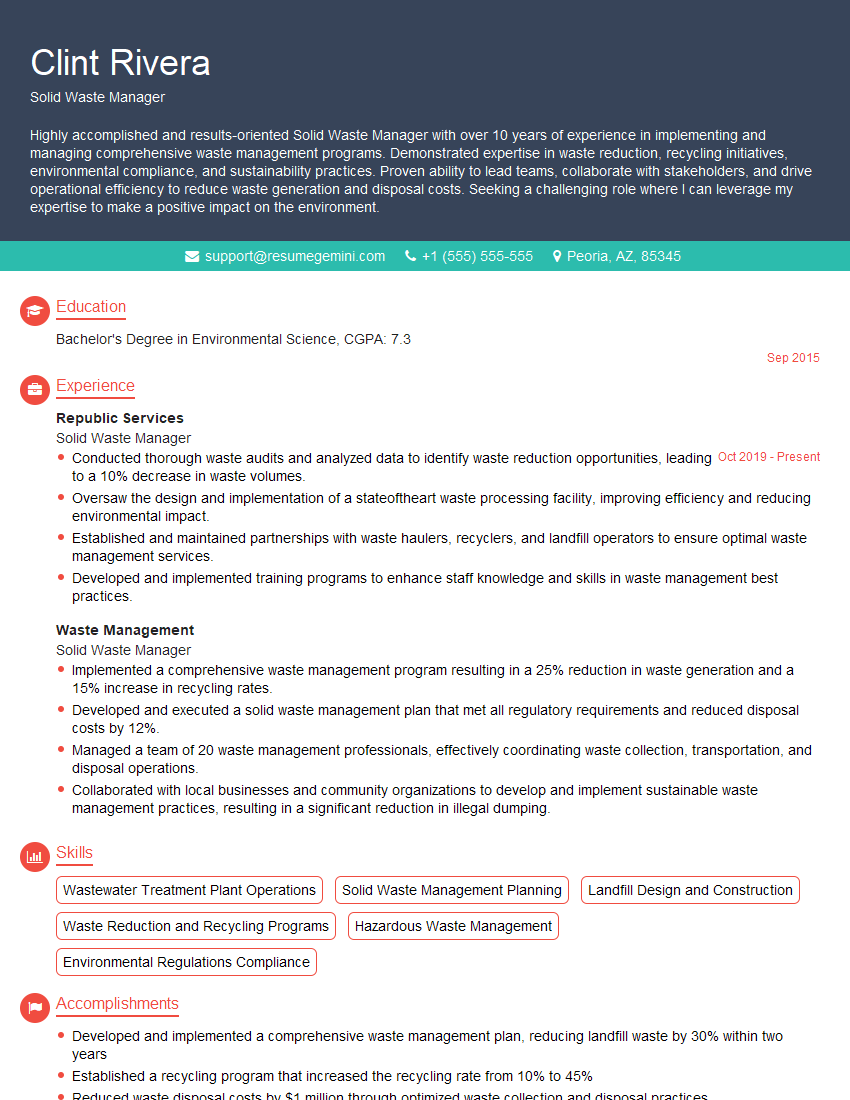
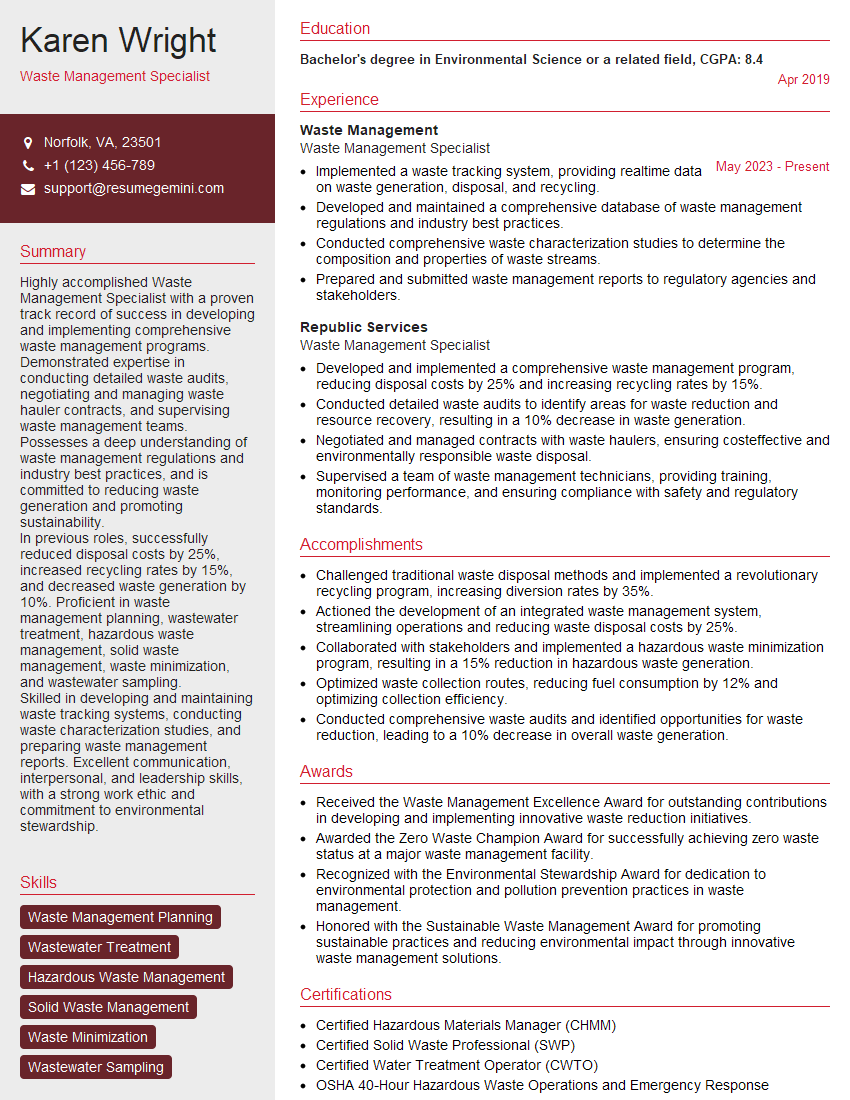
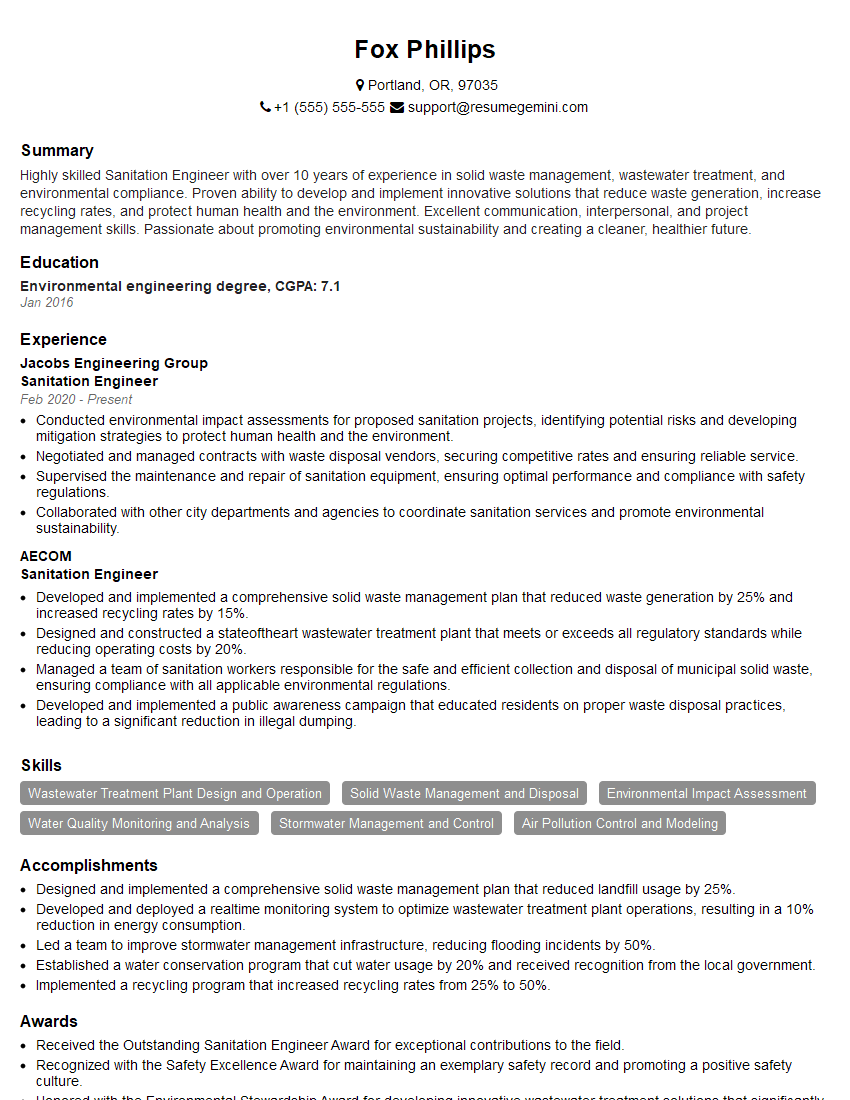
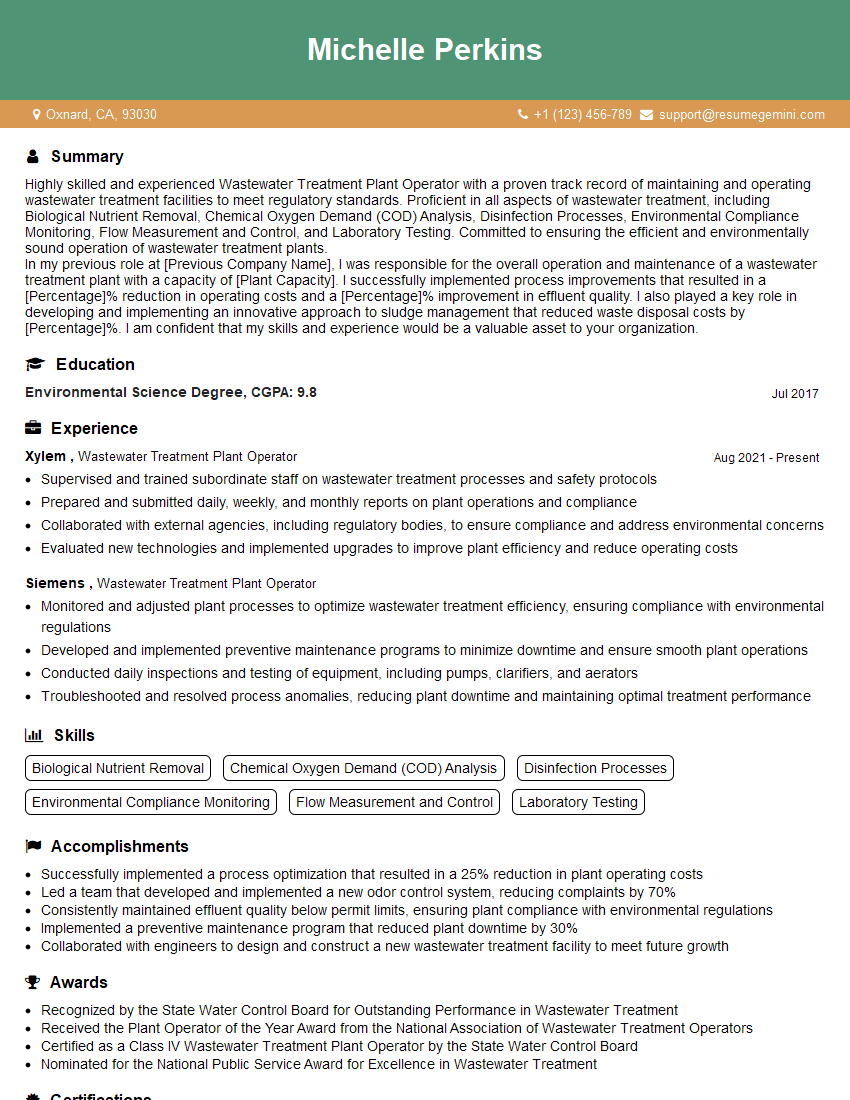
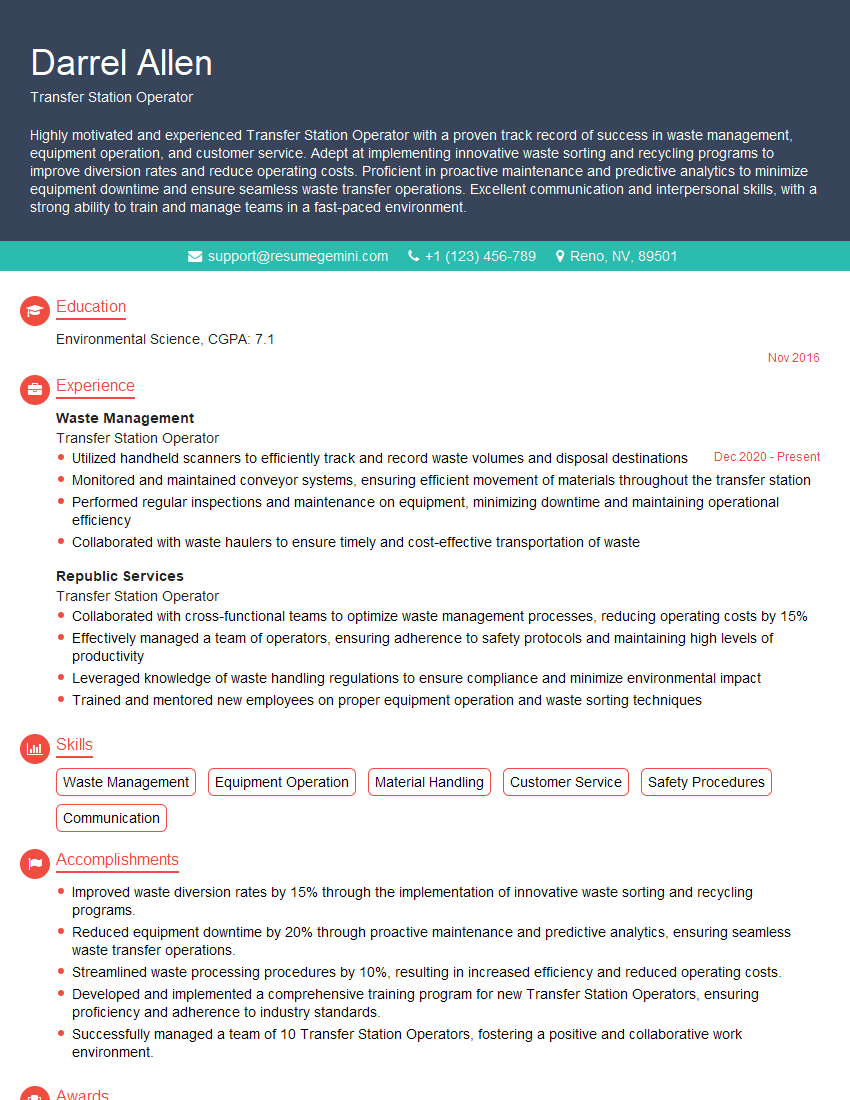
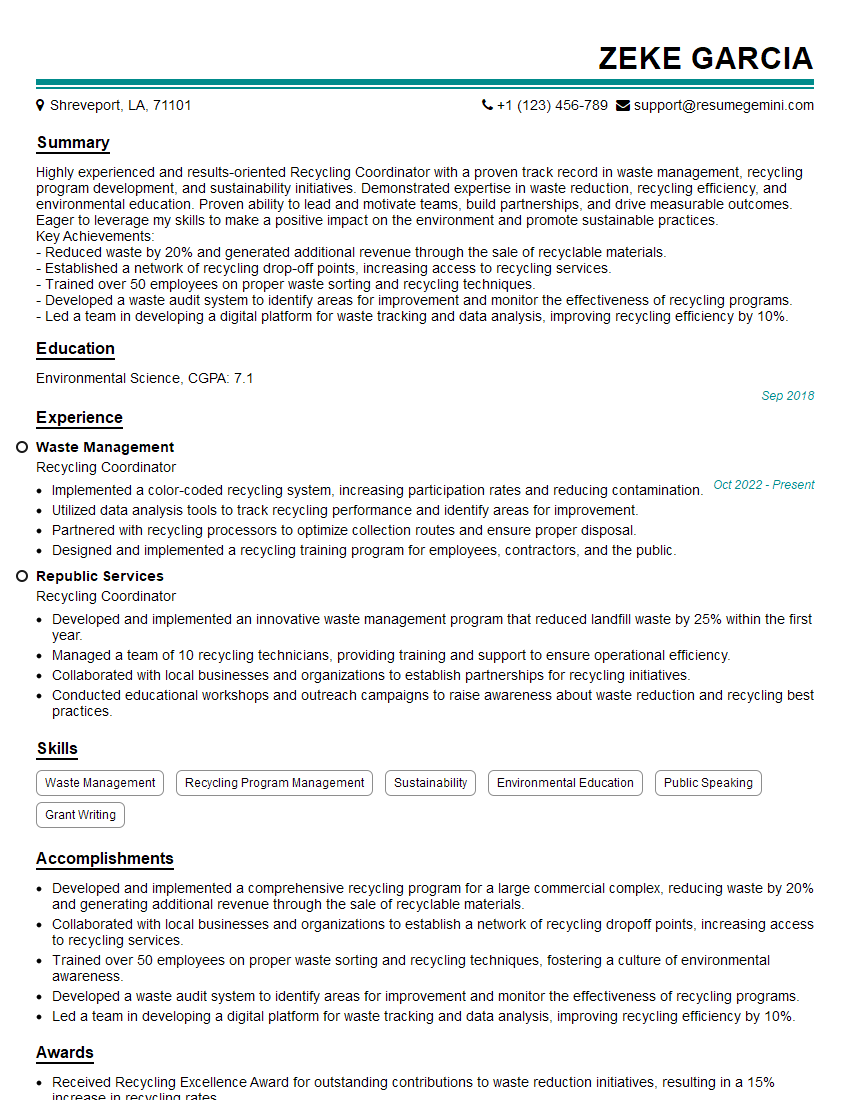
Mastering the intricacies of waste collection and disposal is key to unlocking exciting career opportunities in a growing and vital industry. A strong understanding of these topics will significantly improve your interview performance and set you apart from other candidates. To maximize your job prospects, it’s crucial to create a professional and ATS-friendly resume that highlights your skills and experience effectively. ResumeGemini is a trusted resource to help you build a compelling resume tailored to your specific experience. We provide examples of resumes specifically designed for professionals in waste collection and disposal to guide you through the process. Take advantage of these resources to present yourself in the best possible light to potential employers.
Explore more articles
Users Rating of Our Blogs
Share Your Experience
We value your feedback! Please rate our content and share your thoughts (optional).
What Readers Say About Our Blog
Very informative content, great job.
good