The right preparation can turn an interview into an opportunity to showcase your expertise. This guide to Annealing Furnace Operation interview questions is your ultimate resource, providing key insights and tips to help you ace your responses and stand out as a top candidate.
Questions Asked in Annealing Furnace Operation Interview
Q 1. Explain the different types of annealing processes.
Annealing is a heat treatment process that alters the physical and sometimes chemical properties of a material to improve its ductility and machinability, relieve internal stresses, and refine the grain structure. Different annealing processes are categorized by their temperature ranges and the resulting microstructure.
- Stress Relief Annealing: This process is used to reduce residual stresses in a material after processes like welding or machining. The temperature is usually held below the recrystallization temperature, preventing significant changes in grain size. Imagine it like gently relaxing a tightly wound spring.
- Recovery Annealing: This targets the removal of internal stresses without significant grain growth. It’s a lower temperature process than stress relief annealing and is often used for materials that are sensitive to high temperatures. Think of it as a gentle massage for the metal.
- Recrystallization Annealing: This involves heating the material to a temperature where new, stress-free grains form, replacing the deformed grains. This improves ductility and reduces hardness. It’s like replacing old, worn-out building blocks with new, perfectly aligned ones.
- Full Annealing: This is a more comprehensive process that involves heating the material to a temperature above the critical transformation range, followed by slow cooling. It results in a completely softened and ductile material with a homogeneous microstructure. It’s a complete reset for the metal, leaving it in its most malleable state.
- Process Annealing: This is done during the manufacturing process of a material to improve its workability during subsequent steps like forming or drawing. It’s a tailored approach designed to improve manufacturing efficiency.
Q 2. Describe the safety procedures for operating an annealing furnace.
Safety is paramount in annealing furnace operation. Procedures must be rigorously followed to prevent accidents and injuries. Key safety measures include:
- Lockout/Tagout Procedures: Before any maintenance or repair, the furnace must be completely shut down and locked out using a lockout/tagout system to prevent accidental activation.
- Personal Protective Equipment (PPE): Operators must wear appropriate PPE, including heat-resistant gloves, safety glasses, and protective clothing to shield against heat, sparks, and molten materials. Hearing protection may also be necessary.
- Emergency Shutdown Procedures: All personnel must be trained on emergency shutdown procedures in case of equipment malfunction or fire. Knowing where emergency shut-off valves and fire extinguishers are located is crucial.
- Regular Inspections: Thorough inspections of the furnace and its components, including refractories, heating elements, and safety systems, must be conducted regularly to identify potential hazards and prevent accidents.
- Proper Ventilation: Adequate ventilation is essential to remove harmful gases and fumes produced during the annealing process. This often involves using exhaust systems to carry fumes away from the work area.
- Heat Stress Prevention: In hot environments, measures must be taken to prevent heat stress amongst operators, such as providing adequate hydration and breaks.
Regular safety training and drills are essential to ensure that all personnel are aware of and comply with safety protocols.
Q 3. How do you monitor and control the temperature within an annealing furnace?
Precise temperature control is critical for achieving the desired annealing results. This is typically achieved through a combination of sensors, controllers, and sophisticated algorithms.
- Thermocouples: These sensors measure the furnace temperature at various points. Multiple thermocouples are often used to provide a more uniform temperature reading across the furnace chamber.
- Programmable Logic Controllers (PLCs): These advanced controllers manage the heating elements based on the readings from the thermocouples, ensuring that the temperature remains within the specified setpoints throughout the annealing cycle. They can also control the heating rate and cooling rate of the furnace.
- Data Acquisition Systems (DAS): These systems collect and record temperature data, allowing for ongoing monitoring and analysis of the annealing process. This data is essential for quality control and process optimization.
- Temperature Uniformity: Strategies like proper furnace design, effective insulation, and controlled airflow contribute to maintaining uniform temperature distribution within the furnace chamber, ensuring consistent annealing across all parts.
Sophisticated software interfaces allow operators to monitor temperature profiles in real-time, make adjustments as needed, and generate reports for quality control purposes. Think of this system as a highly precise thermostat for a very large and complex oven.
Q 4. What are the common causes of furnace malfunctions and how do you troubleshoot them?
Malfunctions in annealing furnaces can stem from various sources. Troubleshooting often involves a systematic approach.
- Heating Element Failure: This can be due to wear and tear, electrical faults, or damage from overheating. Troubleshooting involves checking for continuity, replacing faulty elements, and examining the overall electrical system.
- Controller Malfunction: Problems with the PLC or DAS can lead to inaccurate temperature control. Troubleshooting often involves inspecting wiring, reviewing error logs, and potentially recalibrating sensors.
- Refractory Damage: Cracks or damage to the furnace lining can lead to heat loss and uneven temperature distribution. This requires repair or replacement of the damaged refractories.
- Sensor Failure: Malfunctioning thermocouples or other sensors can give inaccurate temperature readings, leading to improper annealing. This necessitates checking sensor calibration and replacing faulty sensors.
- Gas Leaks: Leaks in gas supply lines can lead to safety hazards and uneven heating. This requires thorough leak detection and repair.
A methodical approach, using diagnostic tools like multimeters and thermal imaging cameras, is key to identifying the root cause and implementing effective repairs. Detailed logs and records from the DAS can prove invaluable during troubleshooting.
Q 5. Explain the importance of atmosphere control in annealing furnaces.
Atmosphere control is crucial in annealing because the atmosphere surrounding the material during the heat treatment significantly impacts the final properties of the annealed product. An improperly controlled atmosphere can lead to oxidation, decarburization, or other undesirable changes.
- Protective Atmospheres: Inert gases like argon or nitrogen are often used to prevent oxidation, which is particularly important for materials that are susceptible to surface degradation at high temperatures. Imagine it like creating a protective blanket to shield the metal from harmful reactions.
- Controlled Oxidizing Atmospheres: For some materials and applications, a controlled oxidizing atmosphere might be needed to achieve the desired surface properties. This is carefully controlled to prevent excessive oxidation.
- Carburizing Atmospheres: In certain processes, a carburizing atmosphere is used to increase the carbon content in the surface of the material, enhancing its hardness and wear resistance.
- Vacuum Annealing: Vacuum annealing eliminates the atmosphere entirely, preventing any interactions between the material and the surrounding gases. This is a high-precision method, often used when extreme purity is required.
The choice of atmosphere depends on the material being annealed and the desired properties of the final product. Precise control of the atmosphere composition is essential for consistent and repeatable results.
Q 6. How do you ensure the quality and consistency of the annealed products?
Ensuring the quality and consistency of annealed products requires a multi-faceted approach:
- Precise Temperature Control: Maintaining the annealing temperature within strict tolerances is crucial. Deviations from the specified temperature profile can lead to inconsistent results.
- Controlled Atmosphere: Maintaining the correct atmosphere throughout the annealing cycle is critical for preventing unwanted reactions and ensuring consistent surface properties.
- Regular Calibration and Maintenance: Regular calibration of sensors, controllers, and other equipment ensures accurate and reliable operation, reducing the likelihood of errors.
- Statistical Process Control (SPC): Implementing SPC techniques involves collecting and analyzing data to monitor process variability and identify potential problems before they lead to non-conforming products.
- Non-Destructive Testing (NDT): NDT methods such as hardness testing, microstructure analysis, and tensile testing provide valuable feedback on the properties of the annealed material, allowing for continuous improvement and process optimization.
- Documentation and Traceability: Thorough documentation of the annealing process parameters and the results of quality checks is crucial for maintaining traceability and identifying the root cause of any defects.
Combining precise control with consistent monitoring and analysis allows for the production of high-quality annealed products with the desired properties.
Q 7. Describe your experience with different types of annealing furnaces (e.g., bell, pusher, rotary).
My experience encompasses a variety of annealing furnace types, each with its unique characteristics and applications.
- Bell Furnaces: I’ve worked extensively with bell furnaces, which are particularly well-suited for batch annealing of smaller parts. Their design allows for excellent atmosphere control, making them ideal for applications requiring precise control over the annealing environment. I’ve overseen the operation and maintenance of several bell furnaces, including optimizing their loading and unloading procedures for maximum efficiency.
- Pusher Furnaces: Pusher furnaces are excellent for continuous annealing of larger volumes of materials. I have experience in optimizing the push rate and temperature profiles in pusher furnaces to achieve consistent annealing while maximizing throughput. This involved detailed understanding of the material properties and the furnace’s capabilities.
- Rotary Furnaces: Rotary furnaces are ideal for processing wire and other continuous materials. My experience includes troubleshooting and optimization of rotary furnaces, focusing on improving temperature uniformity and minimizing material degradation during the annealing process. This also included working with different gas mixtures for specialized atmospheres.
My experience with these diverse furnace types has given me a broad understanding of the challenges and nuances of annealing processes, and has honed my ability to select and optimize furnace operations for any given application.
Q 8. How do you interpret and use temperature charts and graphs from an annealing cycle?
Temperature charts and graphs are crucial for monitoring and optimizing the annealing process. They provide a visual representation of the furnace’s temperature profile over time, allowing us to assess whether the heat treatment is proceeding as planned. For instance, a typical chart would show the temperature rising to the desired soak temperature, holding at that temperature for a specific duration, and then a controlled cooling ramp down.
I use these charts to identify potential issues like:
- Deviations from the setpoint: Significant deviations indicate problems with the furnace’s heating elements, controllers, or even insulation. I would investigate the root cause and adjust accordingly.
- Uneven heating: Variations in temperature across different points in the furnace (often seen in larger furnaces) can cause inconsistencies in the annealing of materials. This requires adjustments to the furnace’s air circulation or repositioning of the material load.
- Incorrect soak time: If the material doesn’t spend enough time at the soak temperature, the annealing might be incomplete, resulting in residual stresses and undesirable properties. I would carefully check the programming and duration to ensure adequate soak time.
- Too rapid cooling: A cooling rate that’s too fast can introduce thermal shocks, leading to cracking or warping. I would compare the cooling curve with pre-defined process parameters and make adjustments to ensure the material cools slowly enough.
By analyzing these charts regularly, I can fine-tune the annealing process, ensuring consistent and high-quality results. For example, by tracking trends over many cycles, I can predict potential equipment failures and implement preventative maintenance before they impact production.
Q 9. What are the common defects found in annealed materials and their causes?
Common defects in annealed materials are often related to improper control of the annealing cycle or contamination.
- Residual stress: Incomplete stress relief due to insufficient soak time or uneven heating causes internal stresses that can lead to warping, cracking, or premature failure in service. Think of it like bending a metal rod; if you don’t anneal it properly, it’ll spring back to its original shape when released, causing distortion.
- Brittle fracture: This occurs when the cooling rate is too rapid, introducing thermal shock. Imagine quickly cooling hot glass – it’s likely to crack. Annealing requires a slow, controlled cooling to avoid this.
- Oxidation or scaling: Exposure to high temperatures in the presence of oxygen can lead to oxidation and the formation of a surface scale, affecting the material’s appearance and properties. Proper furnace atmosphere control is essential to mitigate this.
- Decarburization: For carbon steels, this is the loss of carbon from the surface layer at high temperatures in an oxidizing atmosphere, which significantly reduces its strength and hardness. This again underscores the need for carefully controlled furnace atmosphere.
- Soft spots: Localized areas of insufficient annealing caused by non-uniform heating can result in areas of lower hardness or strength.
Root causes are often related to insufficient soak time, poor temperature control, improper furnace atmosphere, or contamination during the process.
Q 10. Describe your experience with preventative maintenance on annealing furnaces.
Preventative maintenance is crucial for ensuring the long-term reliability and safety of annealing furnaces. My experience includes developing and implementing a comprehensive PM program that encompasses both scheduled and condition-based maintenance.
- Scheduled maintenance: This involves regular inspections of heating elements, burners, insulation, refractory lining, control systems, and safety equipment. We have a detailed checklist and schedule, ensuring everything is checked and serviced at predefined intervals. Examples include burner cleaning, thermocouple calibration, and refractory inspections.
- Condition-based maintenance: This uses data from furnace sensors (temperature, pressure, gas flow) to identify potential problems before they become major issues. We monitor trends in sensor data and use predictive analytics to anticipate maintenance needs. For example, a gradual decrease in heating element efficiency might indicate wear and tear, prompting replacement before a complete failure.
- Documentation: Meticulous record-keeping is essential. We maintain detailed logs of all maintenance activities, including dates, performed tasks, and any findings or corrective actions. This allows us to track the health of the equipment, predict future maintenance requirements, and identify any recurring problems.
A well-maintained furnace reduces downtime, improves product quality, and enhances safety. A proactive approach reduces the risk of unexpected failures and costly emergency repairs.
Q 11. How do you manage and interpret data from furnace sensors and control systems?
Furnace sensors and control systems provide a wealth of real-time data that’s critical for efficient operation. I’m proficient in interpreting data from various sensors, including thermocouples (temperature), pressure transducers, gas flow meters, and safety interlocks.
My approach involves:
- Data Acquisition: Using the furnace’s data acquisition system (often SCADA), I collect data from all relevant sensors. This data is typically logged at high frequency, allowing for detailed analysis.
- Real-time Monitoring: I constantly monitor real-time data to identify any anomalies or deviations from the setpoints. Alarm systems are often set up to alert me of critical events, such as high temperature excursions or low gas pressure. The SCADA system is really the core of this.
- Data Analysis: I use statistical process control (SPC) techniques to analyze historical data, identify trends, and detect potential problems. This can help us predict when maintenance will be needed.
- Control System adjustments: If I find any discrepancies, I use the furnace’s control system (PLC or DCS) to make necessary adjustments to maintain the desired annealing cycle. This could be adjusting gas flow, controlling the heating elements, or changing the cooling ramp rate.
An example: Suppose I observe a gradual increase in energy consumption for a given cycle. By analyzing the data, I could pinpoint a potential problem with the furnace insulation, prompting a timely maintenance intervention.
Q 12. Explain the process of loading and unloading materials from an annealing furnace.
Loading and unloading materials from an annealing furnace is a critical step requiring safety and efficiency. The specific process depends on the furnace design and material characteristics.
The process typically involves:
- Preparation: Ensuring materials are properly organized and prepared for loading. This includes checking for any damage, contamination, or inconsistencies in the batch. We often use specialized fixtures or containers to support the material during the annealing process.
- Loading: Materials are carefully loaded into the furnace using appropriate equipment, such as carts, conveyors, or robotic systems, ensuring even distribution and avoiding damage. In some larger batch furnaces this may involve using a specifically designed charge system to distribute the load evenly.
- Cycle initiation: Once loaded, the annealing cycle is initiated according to pre-defined parameters (temperature, time, atmosphere). This often involves loading the program parameters into the furnace controller.
- Unloading: After the annealing cycle is complete, materials are carefully unloaded and inspected. This may involve using similar equipment as in loading. Proper cooling procedures are essential to prevent thermal shock and material damage.
- Post-processing: This could involve cleaning, inspection for defects, sorting, and further processing steps before the material is ready for the next stage of manufacturing.
Safety protocols are strictly adhered to throughout the entire process, including the use of appropriate Personal Protective Equipment (PPE) and adhering to lock-out/tag-out procedures for equipment maintenance.
Q 13. How do you handle emergency situations within the annealing furnace area?
Emergency situations in the annealing furnace area are handled with a structured approach, prioritizing safety and minimizing damage.
My approach includes:
- Emergency shutdown: I’m trained to rapidly shut down the furnace in case of equipment malfunction, fire, or other hazardous events. This involves using emergency shutdown switches and following established procedures.
- Emergency response: I’m familiar with emergency response protocols, including fire safety procedures, first aid, and contacting emergency services.
- Hazard assessment: Following an emergency, I perform a thorough hazard assessment to determine the cause, extent of damage, and steps required for recovery.
- Repair and recovery: Once the situation is under control, I work with maintenance personnel to repair damaged equipment and restore the furnace to operation. This includes documenting the entire incident.
- Root Cause Analysis: To prevent future incidents, we conduct a root cause analysis, implementing corrective actions to prevent similar occurrences.
Regular safety training and drills ensure that we are prepared to effectively handle emergency situations.
Q 14. What are the environmental regulations related to annealing furnace operation?
Environmental regulations regarding annealing furnace operation are stringent and vary by region. They mainly focus on minimizing emissions of pollutants such as particulate matter, nitrogen oxides (NOx), and carbon monoxide (CO).
Key regulations often include:
- Air emission standards: These set limits on the amount of pollutants that can be released into the atmosphere. We must comply with these regulations by using appropriate emission control technologies, such as scrubbers or catalytic converters, and regular monitoring and reporting.
- Energy efficiency standards: Regulations promoting the use of energy-efficient furnace designs and operational practices are becoming increasingly common. These may include incentives for using more efficient heating technologies.
- Waste management: Proper handling and disposal of any waste generated during the annealing process (e.g., spent refractory materials) must comply with applicable regulations.
- Permitting and reporting: We need to obtain necessary operating permits and regularly report our emissions data to the environmental agencies.
Compliance with environmental regulations is paramount. We continuously monitor emissions, maintain detailed records, and invest in upgrading equipment to stay ahead of regulations and promote environmental responsibility. Non-compliance can result in significant penalties.
Q 15. Describe your experience with different types of annealing atmospheres (e.g., reducing, oxidizing, inert).
Annealing atmospheres play a crucial role in controlling the chemical reactions on the surface of the material being annealed. The choice of atmosphere depends heavily on the material and the desired outcome. I’ve extensive experience with three main types:
- Reducing Atmospheres: These atmospheres are rich in reducing gases like hydrogen or carbon monoxide. They prevent oxidation and can even remove existing oxides from the material’s surface. This is crucial for preventing surface degradation and maintaining the material’s desired properties. For instance, in the annealing of steel, a reducing atmosphere helps prevent the formation of surface scales that could weaken the material. The precise gas mixture is critical and carefully controlled.
- Oxidizing Atmospheres: Conversely, oxidizing atmospheres are rich in oxygen. They are used to promote the formation of oxide layers, which can improve certain properties like corrosion resistance. This is common in the annealing of some alloys where controlled oxidation forms a protective layer. It’s essential to carefully control the oxygen partial pressure to prevent excessive oxidation, leading to unwanted brittleness or degradation.
- Inert Atmospheres: Inert atmospheres, such as argon or nitrogen, prevent any chemical reactions from occurring on the material’s surface. They are ideal when you want to minimize any changes to the material’s composition and surface properties. This is commonly used for annealing materials susceptible to oxidation or other chemical reactions, such as certain types of specialty steels or reactive metals. The purity of the inert gas is vital to guarantee the absence of reactive contaminants.
My experience spans various applications, from heat treating stainless steel in inert atmospheres to precisely controlling the decarburization of low carbon steel in a controlled reducing atmosphere. Each scenario demanded a deep understanding of the material’s chemistry and the precise control of the furnace atmosphere.
Career Expert Tips:
- Ace those interviews! Prepare effectively by reviewing the Top 50 Most Common Interview Questions on ResumeGemini.
- Navigate your job search with confidence! Explore a wide range of Career Tips on ResumeGemini. Learn about common challenges and recommendations to overcome them.
- Craft the perfect resume! Master the Art of Resume Writing with ResumeGemini’s guide. Showcase your unique qualifications and achievements effectively.
- Don’t miss out on holiday savings! Build your dream resume with ResumeGemini’s ATS optimized templates.
Q 16. Explain the role of quenching in the annealing process.
Quenching is a rapid cooling process that follows the annealing heat treatment. It’s not always part of the annealing process; it’s more closely associated with hardening. However, some annealing processes may incorporate a controlled cooling phase, rather than quenching. Quenching dramatically affects the microstructure and mechanical properties of the material. Think of it like this: Annealing is like gently letting a stressed piece of metal relax; quenching is then abruptly ‘freezing’ it in that relaxed state. It prevents or limits the formation of certain phases or structures that would occur during slow cooling. The rate of cooling during quenching is crucial, as it dictates the final microstructure. Different quenching media, such as oil, water, or polymer solutions, are used depending on the material and the desired properties. For instance, rapid quenching in oil might be used to achieve a particular martensitic structure in a steel alloy, which will improve its hardness.
In annealing applications where controlled cooling is used instead, it’s a crucial aspect of manipulating the material’s final properties. The cooling rate is carefully calibrated to avoid internal stresses or undesirable phase transformations.
Q 17. How do you calculate the annealing time and temperature for a specific material?
Calculating annealing time and temperature isn’t a simple formula; it’s a complex process that depends on several factors. I typically use a combination of experience, material data sheets, and specialized software. These considerations are key:
- Material Type and Composition: Different materials have vastly different annealing characteristics. Steel alloys, for example, need different treatments compared to non-ferrous metals.
- Desired Microstructure and Properties: The target properties (hardness, ductility, grain size) determine the required temperature and time.
- Material Thickness and Geometry: Thicker sections require longer annealing times for uniform heat penetration. Complex geometries can make this even more challenging.
- Heating and Cooling Rates: The rate at which the material is heated and cooled significantly influences the outcome. Too fast or slow could cause cracking or undesirable structures.
I often refer to established time-temperature-transformation (TTT) diagrams, which provide a visual representation of how a particular material’s microstructure changes over time at different temperatures. These diagrams, combined with metallurgical handbooks, are invaluable for determining the optimal annealing parameters. In some cases, iterative trial runs are used to fine-tune the process for a specific application, always prioritizing controlled testing and accurate documentation of the results.
Q 18. What are the key performance indicators (KPIs) you monitor in an annealing process?
Key Performance Indicators (KPIs) for an annealing process are multifaceted and are chosen based on the specific requirements for a given application. However, some common ones include:
- Temperature Uniformity: Variations in temperature within the furnace can lead to inconsistent results. Sensors throughout the furnace continuously monitor temperature and help maintain uniformity.
- Annealing Time Accuracy: Precise control over annealing time is crucial for achieving the desired properties. Any deviation can affect the end result.
- Material Properties After Annealing: Hardness, ductility, tensile strength, and grain size are often measured to ensure the process meets specifications. These tests are carried out in a dedicated quality control lab, comparing the results to pre-determined acceptance criteria.
- Process Efficiency: This involves monitoring factors like energy consumption, throughput, and downtime. It is important to continually improve the process, both from a quality and efficiency standpoint.
- Defect Rate: The number of defective parts produced per batch is a key indicator of process stability and quality. This information assists with identifying potential issues in the process and improving quality control.
Regular monitoring of these KPIs allows for proactive adjustments, ensuring consistent product quality and optimized process performance.
Q 19. How do you ensure the safety of personnel working near the annealing furnace?
Safety is paramount in a high-temperature environment like an annealing furnace. Our safety protocols include:
- Lockout/Tagout Procedures: Before any maintenance or repair work, the furnace is completely isolated from power and gas supply, using lockouts and tags to prevent accidental operation. This is a non-negotiable safety measure in our facility.
- Personal Protective Equipment (PPE): Employees working near the furnace must wear appropriate PPE, including heat-resistant gloves, safety glasses, and protective clothing to prevent burns or other injuries.
- Emergency Shutdown Systems: The furnace is equipped with multiple emergency shutdown systems, including temperature limiters and fire suppression systems, to react promptly in case of any malfunction or incident. This reduces the risk of accidents.
- Regular Training and Audits: Employees receive regular training on safe working procedures, emergency response, and the use of PPE. Regular safety audits ensure that all protocols are followed consistently.
- Environmental Controls: The furnace room is properly ventilated to prevent the buildup of harmful gases. Monitoring equipment ensures air quality remains within safe limits. Proper exhaust systems are crucial for handling fumes produced during various processes.
We conduct rigorous safety training, emphasizing that safety is a shared responsibility. A strong safety culture is critical to prevent accidents and protect our personnel.
Q 20. Describe your experience with the documentation and record-keeping for annealing operations.
Detailed documentation and record-keeping are essential for traceability, quality control, and regulatory compliance. Our documentation includes:
- Batch Records: Each annealing batch has a complete record including the material type, quantity, annealing parameters (temperature, time, atmosphere), and the results of quality control tests. This ensures full traceability.
- Furnace Logs: Continuous monitoring of furnace temperature, atmosphere composition, and other parameters is logged. This data is essential for identifying trends and potential problems. Data is archived and maintained in accordance with regulatory and company policies.
- Maintenance Logs: All maintenance activities performed on the furnace, including preventative maintenance and repairs, are meticulously documented. This history aids in planning future maintenance and improves the equipment’s lifespan.
- Safety Records: Safety incidents, training records, and safety audits are documented to maintain a comprehensive safety record. This is critical for continuous improvement of the safety management system.
Our system is designed to be easily searchable and auditable, ensuring that all relevant information is readily available when needed. Digital record-keeping using database software enhances both organization and retrieval of crucial information.
Q 21. How do you identify and address process deviations during annealing?
Process deviations during annealing are identified through continuous monitoring of the KPIs mentioned earlier. When a deviation occurs, a systematic approach is followed:
- Identify the Deviation: Real-time monitoring systems promptly alert us to deviations from set parameters (temperature, time, etc.).
- Investigate the Root Cause: We investigate the root cause through analysis of the furnace logs, material properties, and other relevant data. This may involve reviewing the sequence of events leading to the deviation.
- Implement Corrective Actions: Based on the root cause analysis, appropriate corrective actions are implemented to address the problem and prevent recurrence. This might involve adjustments to furnace settings, improvements to the control system, or changes in material handling procedures.
- Verify Effectiveness: After corrective actions are taken, the process is closely monitored to ensure that the problem is resolved and the system is performing according to specifications. Further testing may be required to assess the impact of the corrective actions.
- Document the Deviation and Resolution: A detailed report documenting the deviation, root cause, corrective actions, and verification results is created and added to the overall operational records.
Our approach emphasizes prevention, proactively working to mitigate potential issues rather than just reacting to them. Continuous improvement and feedback loops are integral to our process optimization.
Q 22. What is your experience with different types of furnace fuels (e.g., gas, electricity)?
My experience encompasses a wide range of furnace fuels, primarily natural gas and electricity. Natural gas furnaces offer high heat transfer rates and are cost-effective for many applications, especially in large-scale operations. However, they require robust safety systems and are subject to fluctuating gas prices and potential environmental concerns. I’ve extensively worked with burners and combustion controls, optimizing gas flow and air-fuel ratios for maximum efficiency and minimal emissions. Electric furnaces, on the other hand, offer precise temperature control and cleaner operation, ideal for applications requiring extremely tight tolerances or sensitive materials. My experience includes working with different resistance heating elements, understanding their lifespan and replacement schedules, and managing power consumption effectively. In one instance, I successfully switched a client from a gas-fired furnace to an electric one, resulting in a 15% reduction in energy costs and a significant improvement in product consistency.
I’ve also worked with some smaller scale projects utilizing propane, but my primary focus has remained on natural gas and electric systems.
Q 23. Describe your understanding of material properties and how they relate to annealing.
Understanding material properties is fundamental to successful annealing. Annealing is a heat treatment process that alters the microstructure of a material to improve its properties like ductility, machinability, and stress relief. Different materials have different melting points, recrystallization temperatures, and critical transformation points. For instance, steel alloys require careful temperature control to avoid grain growth or undesirable phase transformations. Understanding the material’s composition – including alloying elements – is crucial, as these elements significantly impact the annealing temperature and time required. I’ve worked with a wide variety of materials, including various steel grades, aluminum alloys, and even some specialty metals. For each, a detailed understanding of its phase diagram and mechanical properties is essential to tailor the annealing process for optimal results. For example, in one project involving a high-strength steel, I had to carefully manage the cooling rate to prevent the formation of brittle martensite, achieving a superior balance of strength and toughness.
Q 24. How do you ensure the accurate calibration and maintenance of furnace instruments?
Accurate calibration and maintenance of furnace instruments are paramount to ensure consistent annealing results. This involves regular calibration of thermocouples, pyrometers, and other temperature sensors using traceable standards. I typically follow a rigorous schedule of calibration checks, often monthly or quarterly, depending on the instrument and its criticality. Beyond temperature sensors, I also ensure the calibration and maintenance of gas flow meters, pressure gauges, and safety devices like emergency shut-off valves. Preventive maintenance is key—this includes regular cleaning of burners, inspections of insulation, and lubrication of moving parts. A well-maintained furnace not only yields better product quality but also reduces the risk of unexpected downtime and safety hazards. I usually employ a computerized maintenance management system (CMMS) to track maintenance activities and proactively schedule necessary repairs, significantly reducing the instances of unexpected breakdowns.
Q 25. What is your experience with Continuous Annealing Lines?
My experience with continuous annealing lines (CAL) is extensive. CALs are highly automated systems designed for high-volume production, where coils of material are continuously processed through a series of heating, cooling, and processing zones. I’ve been involved in all aspects of CAL operation, including process optimization, troubleshooting, and maintenance. My expertise includes understanding and managing the complex interactions between heating zones, cooling zones, and process parameters like tension, speed, and atmosphere control. One particular challenge I addressed involved optimizing the cooling rate in a CAL for aluminum alloys, leading to a significant improvement in surface finish and reduced defect rates. This involved careful analysis of the cooling system’s design and fine-tuning of the cooling water flow and temperature profile.
Q 26. Explain your experience with batch annealing processes.
Batch annealing processes, while less efficient than CALs for high-volume production, are crucial for smaller production runs or materials requiring specific processing conditions. My experience includes working with various types of batch furnaces, including bell furnaces, car-bottom furnaces, and pit furnaces. I understand the importance of accurate temperature control, atmosphere control (for example, using protective gases), and the selection of appropriate annealing cycles tailored to the specific material and desired properties. In one project, I improved the efficiency of a batch annealing process by optimizing the heating and cooling schedules, reducing the overall cycle time by 15%. This was accomplished by employing advanced temperature profiling and modeling techniques.
Q 27. Describe your problem-solving approach when dealing with annealing furnace issues.
My problem-solving approach to annealing furnace issues is systematic and data-driven. I typically follow a structured approach:
- Identify the problem: Precisely define the issue—is it temperature inconsistencies, poor product quality, equipment malfunction, or safety concern?
- Gather data: Collect relevant data such as temperature logs, process parameters, material specifications, and any error messages from the control system.
- Analyze the data: Look for patterns, trends, and correlations that may indicate the root cause of the problem. This may involve statistical analysis or process simulation.
- Develop and implement solutions: Based on the analysis, develop potential solutions and implement them in a controlled manner, testing their effectiveness.
- Verify and document: Ensure the solution addresses the problem and document the process for future reference.
For example, when faced with inconsistent annealing results, I might first check the calibration of thermocouples, inspect the furnace insulation, and analyze the heating element’s performance. If the problem persists, I might then explore issues with the control system or material inconsistencies. I am adept at utilizing process control charts and statistical process control (SPC) methods for continuous improvement and root cause analysis.
Q 28. How do you stay up-to-date with the latest advancements in annealing furnace technology?
Staying current in annealing furnace technology is vital. I actively participate in professional organizations like the ASM International and attend industry conferences and workshops. I regularly read trade journals and technical publications, keeping abreast of the latest developments in heating elements, control systems, automation, and energy-efficient technologies. I also utilize online resources and databases to research specific materials and processes. Furthermore, I maintain a strong network of colleagues and industry experts, engaging in discussions and exchanging information. In my current role, I actively encourage continuous learning and development within my team, fostering a culture of innovation and improvement.
Key Topics to Learn for Annealing Furnace Operation Interview
- Furnace Types and Applications: Understanding different annealing furnace designs (batch, continuous, etc.) and their suitability for various materials and processes.
- Temperature Control and Monitoring: Mastering the principles of temperature regulation, including thermocouple calibration, PID controllers, and process optimization for consistent annealing.
- Atmosphere Control: Knowledge of different furnace atmospheres (e.g., reducing, oxidizing, inert) and their impact on material properties during the annealing process. Practical experience managing gas flows and compositions is crucial.
- Material Science Fundamentals: A solid understanding of metallurgical transformations during annealing, including recrystallization, grain growth, and stress relief. This will enable you to explain the “why” behind the process.
- Safety Procedures and Regulations: Familiarity with relevant safety protocols, emergency procedures, and industry regulations related to high-temperature operations and hazardous materials handling.
- Troubleshooting and Maintenance: Ability to identify common malfunctions, perform basic troubleshooting, and conduct preventative maintenance to ensure optimal furnace operation and minimize downtime.
- Data Analysis and Process Optimization: Understanding how to interpret process data (temperature profiles, material properties), identify areas for improvement, and implement changes to enhance efficiency and product quality.
- Quality Control and Assurance: Knowledge of quality control methods used to verify the effectiveness of the annealing process and ensure the final product meets specifications.
Next Steps
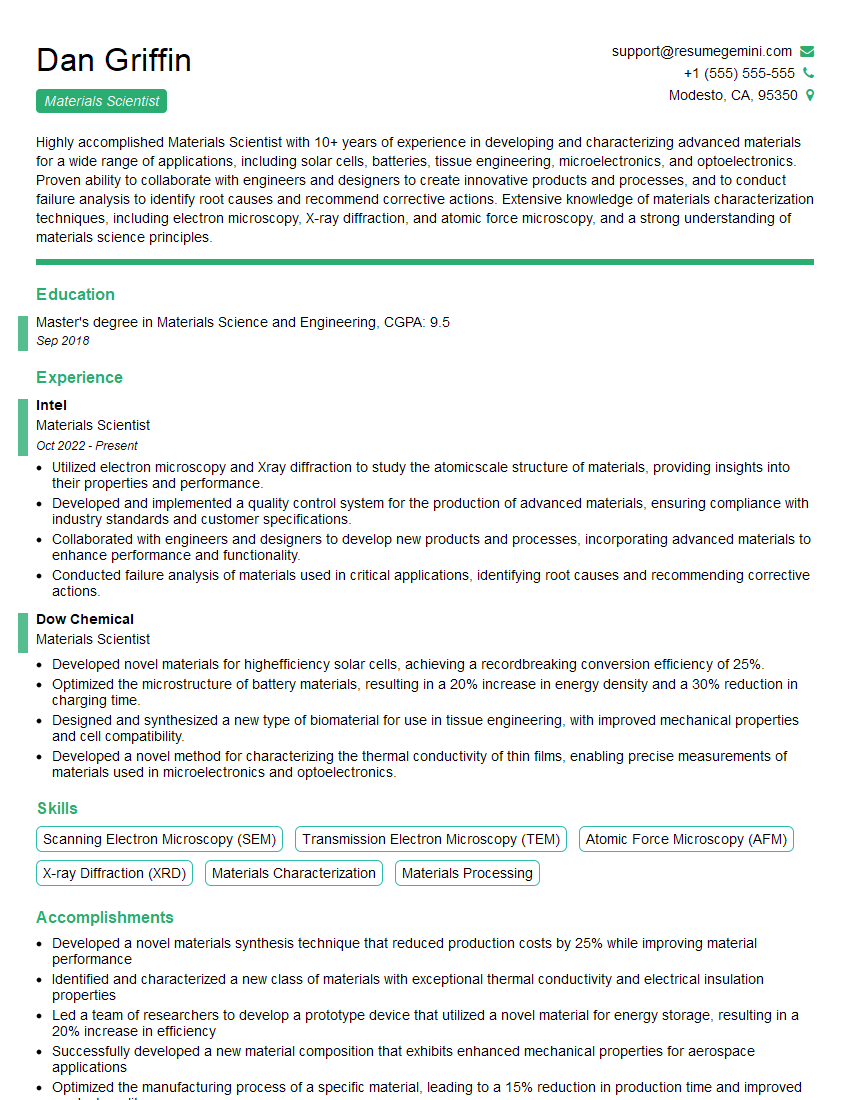
Mastering Annealing Furnace Operation opens doors to rewarding careers in manufacturing, materials science, and related industries. A strong understanding of these processes significantly enhances your value to potential employers. To maximize your job prospects, creating an ATS-friendly resume is essential. ResumeGemini can help you build a professional and impactful resume that highlights your skills and experience effectively. We provide examples of resumes tailored to Annealing Furnace Operation to guide you in showcasing your qualifications. Invest in crafting a compelling resume – it’s your first impression and a key to unlocking your career potential.


Explore more articles
Users Rating of Our Blogs
Share Your Experience
We value your feedback! Please rate our content and share your thoughts (optional).
What Readers Say About Our Blog
Very informative content, great job.
good