The thought of an interview can be nerve-wracking, but the right preparation can make all the difference. Explore this comprehensive guide to Anodized Surface Inspection interview questions and gain the confidence you need to showcase your abilities and secure the role.
Questions Asked in Anodized Surface Inspection Interview
Q 1. Describe the different types of anodizing processes.
Anodizing is an electrochemical process that converts the surface of a metal, typically aluminum, into a decorative and protective oxide layer. There are primarily two main types of anodizing processes, differentiated by the type of electrolyte used and the resulting coating properties:
- Sulfuric Acid Anodizing: This is the most common type, utilizing sulfuric acid as the electrolyte. It produces a relatively thin, porous coating suitable for dyeing and sealing. Think of it as the workhorse of anodizing, used for a wide range of applications.
- Chromic Acid Anodizing: This process employs chromic acid as the electrolyte. It yields a thinner, harder, and less porous coating than sulfuric acid anodizing. It’s often preferred when a very thin, durable layer is needed, even if dyeing isn’t required. However, due to environmental concerns, its use is declining.
- Other Anodizing Processes: While less common, other acids like oxalic acid or boric acid can be used. These specialized processes might be employed for specific applications requiring unique coating properties such as high corrosion resistance or particular surface textures.
The choice of anodizing process depends heavily on the intended application and the desired properties of the final product. For example, a part requiring vibrant color would use sulfuric acid anodizing, while a part needing exceptional wear resistance might use chromic acid anodizing (though alternatives are being increasingly used due to environmental regulations).
Q 2. Explain the purpose of each step in the anodizing process.
The anodizing process typically involves several crucial steps:
- Pre-treatment: This stage involves cleaning the aluminum to remove any oils, grease, or other contaminants that could interfere with the anodizing process. Think of this as preparing a canvas before painting – a clean surface is vital for a quality coating.
- Anodizing: This is the core process where the aluminum is immersed in an electrolyte solution and subjected to an electric current. This electrochemical reaction forms the aluminum oxide layer on the surface. It’s like slowly ‘growing’ a protective shell on the metal.
- Dyeing (Optional): For decorative purposes, the anodized layer can be dyed with organic or inorganic dyes to achieve various colors. The porous nature of the anodized coating allows the dye to penetrate and be trapped, creating vibrant and long-lasting color.
- Sealing: The final step involves sealing the pores of the anodized layer to improve corrosion resistance, durability, and colorfastness. Common sealing methods include boiling water sealing or nickel acetate sealing. Imagine this as ‘locking in’ the dye and further strengthening the protective coating.
Each step is critical for achieving a high-quality anodized finish. Skipping or neglecting any step can compromise the overall quality, durability, and appearance of the anodized coating.
Q 3. What are the common defects found in anodized surfaces?
Several defects can occur during the anodizing process, impacting the final product’s quality and appearance. Common defects include:
- Pitting: Small holes or indentations in the anodized coating, often caused by impurities in the aluminum or problems in the anodizing process itself. It’s like having tiny blemishes on a perfectly smooth surface.
- Burning: This occurs when the current density is too high during anodizing, leading to localized melting or discoloration of the aluminum. Think of it as scorching the surface.
- Discoloration: Uneven or unwanted coloring of the anodized layer, often due to inconsistencies in the dyeing process or contamination. It’s like having an uneven paint job.
- Poor Adhesion: The anodized layer may not adhere properly to the aluminum substrate, leading to peeling or flaking. This is akin to paint peeling off a wall.
- Cracking or Scratches: Mechanical damage to the anodized surface during handling or processing.
Identifying and understanding these defects is crucial for effective quality control in anodizing production. A thorough inspection process is vital to maintain high standards.
Q 4. How do you measure the thickness of an anodized coating?
The thickness of an anodized coating is usually measured using one of two primary methods:
- Microscopic Measurement: A cross-section of the anodized sample is prepared and examined under a microscope. This allows for direct measurement of the coating thickness. It’s a precise method, but destructive, requiring the sample to be damaged.
- Electrochemical Measurement: This non-destructive method involves measuring the amount of electricity required to dissolve the anodized layer. The thickness is calculated from the measured charge. This is a widely used technique for its efficiency and non-destructive nature.
The choice of method depends on the specific requirements of the application. For example, a non-destructive method might be preferred for quality control checks during production, whereas microscopic analysis could be used for more detailed research or analysis of a finished product.
Q 5. What are the different testing methods for anodized coatings?
Several testing methods are employed to evaluate the quality and properties of anodized coatings:
- Thickness Measurement: As described previously, this assesses the coating’s thickness, a crucial indicator of its protective properties.
- Adhesion Testing: This evaluates how well the anodized coating adheres to the aluminum substrate. Common methods include tape tests or scratch tests.
- Corrosion Resistance Testing: This assesses the coating’s ability to protect the aluminum from corrosion. Salt spray tests are frequently used to simulate harsh environmental conditions.
- Dye Fastness Testing: For dyed anodizing, this tests the color’s resistance to fading or bleeding.
- Porosity Testing: This evaluates the density and pore size distribution of the anodized layer, influencing its overall performance.
The choice of testing methods depends on the specific requirements and specifications for the anodized component. For example, aerospace applications require significantly more rigorous testing than consumer-grade products.
Q 6. What are the standards and specifications for anodized coatings?
Standards and specifications for anodized coatings vary depending on the application and geographical location. However, common standards include:
- ASTM B580: This standard covers the specifications for anodic coatings on aluminum. It defines various types of anodizing, testing methods, and acceptance criteria. It’s a widely recognized benchmark for quality in the anodizing industry.
- MIL-A-8625: This military specification provides requirements for anodizing aluminum alloys. It outlines strict quality control procedures and acceptance criteria.
- National and International Standards: Many countries have their own national standards for anodized coatings, often referencing or aligning with international standards such as those from ISO (International Organization for Standardization).
Adherence to these standards is crucial for ensuring consistent quality, reliability, and compliance with industry regulations. Manufacturers often seek certifications to demonstrate their commitment to these standards.
Q 7. Explain the difference between Type I, Type II, and Type III anodizing.
Type I, II, and III anodizing refer to different classifications based on the thickness and characteristics of the anodized coating, primarily within the context of sulfuric acid anodizing:
- Type I: This is a thinner anodizing coating, typically used for decorative purposes. It’s often followed by dyeing for color. Think of it as a light protective layer with a focus on aesthetics.
- Type II: This is a thicker, more protective anodizing coating, offering better corrosion resistance and wear properties compared to Type I. It might or might not be dyed depending on the application.
- Type III: This is a hard anodizing process that produces a much thicker, exceptionally hard and wear-resistant coating. It’s typically not dyed due to the non-porous nature of the coating and is generally reserved for applications demanding exceptional durability, such as aerospace or industrial components.
The choice between these types depends entirely on the application’s specific needs. For instance, a decorative trim might use Type I, while a high-wear part like a piston might require Type III.
Q 8. How do you identify porosity in an anodized coating?
Identifying porosity in an anodized coating is crucial for ensuring its quality and durability. Porosity refers to tiny holes or imperfections within the anodic layer that compromise its protective properties. We use several methods to detect these flaws. The most common is a dye penetrant test. This involves immersing the anodized part in a dye solution, allowing it to penetrate any pores, then rinsing and using a developer to draw the dye out, making the pores visible. Another method is pore size measurement using a specialized microscope, which quantifies the size and density of pores. Finally, electrical testing, often using a high voltage, can detect imperfections that lead to increased current flow through the coating.
For example, imagine inspecting a batch of anodized aluminum parts for aerospace use. Even small pores could lead to corrosion, causing catastrophic failure. The dye penetrant test is particularly effective here. We would visually inspect the parts after the dye test, looking for any colored indications revealing porous areas. Any part exceeding a predefined porosity level would be rejected. Failing to properly identify and address porosity can significantly impact product reliability and lifespan.
Q 9. How does the anodizing process affect the substrate material?
The anodizing process significantly alters the substrate material, primarily by forming a thick oxide layer on its surface. This layer is chemically different from the base material. For example, anodizing aluminum creates a hard, wear-resistant aluminum oxide layer. This process increases the substrate’s hardness, corrosion resistance, and wear resistance. It can also improve its aesthetic appeal through color changes. However, the process does slightly alter the dimensions of the part, as the anodize layer adds thickness. This dimensional change must be considered during design and manufacturing. The change in dimension is usually slight but can be critical in precision applications. The base material itself also experiences minimal changes; however, the chemical processes involved can impact its inherent properties on a microscopic level in some specific cases.
Think of it like adding a protective shell to a piece of fruit. The fruit (substrate) remains largely the same, but the shell (anodized layer) provides significant benefits in terms of protection and durability. Precision measurements are essential before and after anodizing to accommodate for this added layer.
Q 10. What are the environmental concerns related to anodizing?
Anodizing presents several environmental concerns, primarily related to the chemicals used in the process. Chromic acid anodizing, while offering superior corrosion resistance, uses hexavalent chromium, a highly toxic and carcinogenic substance. Its use is heavily regulated, and environmentally friendly alternatives are increasingly preferred. The disposal of the spent chemicals and rinsing solutions also poses a challenge. These solutions often contain heavy metals and acids requiring specialized treatment and disposal to prevent water contamination. Additionally, the energy consumption involved in the anodizing process contributes to the overall carbon footprint. Sustainable anodizing practices, focusing on minimizing chemical usage, improving process efficiency, and employing responsible waste management, are vital for minimizing environmental impact.
For instance, a company might choose to switch from chromic acid to sulfuric acid anodizing, which significantly reduces the environmental risk, even though it may result in a slightly less corrosion-resistant coating.
Q 11. What are the safety precautions when handling anodizing chemicals?
Safety precautions when handling anodizing chemicals are paramount due to their corrosive and toxic nature. Proper personal protective equipment (PPE) is essential, including chemical-resistant gloves, eye protection (goggles or face shield), and lab coats. Adequate ventilation is crucial to prevent inhalation of hazardous fumes. Detailed safety data sheets (SDS) for each chemical must be readily available and thoroughly understood by all personnel. Spills must be handled according to the outlined procedures with appropriate neutralizing agents. Emergency eyewash stations and safety showers should be readily accessible. Regular training and refresher courses on safe handling practices are necessary. Proper labeling of containers and storage areas is critical.
A common scenario would involve accidentally spilling sulfuric acid. Immediate action is crucial. We would immediately evacuate the area and notify emergency services. Then, using the appropriate neutralizing agent, we’d carefully neutralize the spill following all safety protocols before cleaning up.
Q 12. Describe your experience with different types of surface inspection equipment.
My experience encompasses a wide range of surface inspection equipment used in anodized coating analysis. This includes optical microscopes for evaluating surface finish and detecting macroscopic defects. I’m proficient in using scanning electron microscopes (SEM) for high-resolution imaging of the anodized layer’s microstructure and the identification of minute defects. I’ve worked extensively with dye penetrant inspection systems, performing both visible dye and fluorescent penetrant testing for porosity detection. I’m familiar with various thickness measurement techniques, including eddy current testing and cross-sectional microscopy. I’ve also utilized salt spray chambers and other environmental testing equipment to assess the corrosion resistance of the anodized coatings.
For example, in one project, we used SEM to analyze the formation of micro-cracks in an anodized layer subjected to cyclic thermal loading. This allowed us to understand the failure mechanism and make adjustments to the anodizing process to improve the coating’s resistance to thermal stress.
Q 13. How do you interpret the results of a salt spray test?
The salt spray test, also known as the ASTM B117 test, assesses the corrosion resistance of an anodized coating by exposing it to a controlled salt environment. The results are typically evaluated by assessing the appearance of corrosion products (rust) after a specified exposure time. A higher resistance to corrosion indicates a superior coating. The severity of corrosion is often rated using a standardized scale, describing the extent and type of corrosion observed. The test doesn’t just determine if corrosion occurs; it evaluates the rate at which it develops, indicating the coating’s effectiveness in providing protection.
For example, a sample might show minimal corrosion after 240 hours of salt spray testing, indicating excellent corrosion resistance and meeting the specified requirements. However, a sample with significant rust formation after a shorter duration would indicate a coating failure.
Q 14. How do you interpret the results of a dye penetrant test?
A dye penetrant test reveals surface-breaking discontinuities in the anodized coating, such as cracks, pores, or other imperfections. The test involves applying a dye to the surface, allowing it to penetrate any openings, removing excess dye, and then applying a developer to draw the dye out, making any defects visible. The interpretation focuses on the size, location, and distribution of the dye indications. The size of the indications helps determine the severity of the flaw, while their distribution provides insight into the overall quality of the anodizing process. A detailed visual inspection is crucial, documenting the findings accurately.
For example, a high density of small dye indications might indicate a problem with the anodizing process itself, suggesting the need for process optimization. A few larger indications could indicate localized damage that occurred after anodizing.
Q 15. How do you handle non-conforming anodized parts?
Handling non-conforming anodized parts involves a systematic approach focused on identifying the root cause, containing the defect, and implementing corrective actions. First, we quarantine the affected parts to prevent them from entering the supply chain. Then, a thorough investigation is conducted, often involving visual inspection under magnification, thickness measurements using a coating thickness gauge, and potentially destructive testing like cross-section microscopy to assess the quality of the anodic layer. The investigation determines whether the non-conformity is due to a process issue, a material defect in the base metal, or an issue with the anodizing parameters (voltage, current density, temperature, time).
Based on the root cause, we determine the appropriate action. This might involve re-anodizing the parts, if the defect is minor and easily rectifiable. If the defect is severe or the root cause is a significant process deviation, the parts might be scrapped. Detailed records are kept of the non-conforming parts, the root cause analysis, and the corrective actions taken, allowing us to improve our processes and prevent similar issues in the future. For instance, if consistent thickness issues are detected, we would analyze the bath chemistry and the equipment calibration, adjusting parameters and performing regular maintenance as needed.
Career Expert Tips:
- Ace those interviews! Prepare effectively by reviewing the Top 50 Most Common Interview Questions on ResumeGemini.
- Navigate your job search with confidence! Explore a wide range of Career Tips on ResumeGemini. Learn about common challenges and recommendations to overcome them.
- Craft the perfect resume! Master the Art of Resume Writing with ResumeGemini’s guide. Showcase your unique qualifications and achievements effectively.
- Don’t miss out on holiday savings! Build your dream resume with ResumeGemini’s ATS optimized templates.
Q 16. Explain your understanding of statistical process control (SPC) in anodizing.
Statistical Process Control (SPC) is crucial in anodizing for ensuring consistent quality and minimizing defects. We use control charts, such as X-bar and R charts (for monitoring average and range of coating thickness), to track key process parameters like coating thickness, voltage, current density, and bath temperature. These charts allow us to monitor process stability over time, identify trends, and detect any shifts or deviations from the target values early on. By setting control limits (usually 3 standard deviations from the mean), we can visually determine if the process is in or out of control.
For example, if the coating thickness consistently falls outside the upper or lower control limits, it signals a potential problem that requires immediate investigation. This might indicate a problem with the anodizing bath, a malfunctioning power supply, or a change in the composition of the aluminum alloy. SPC is a proactive approach; detecting minor variations before they lead to major defects. It allows us to make data-driven decisions, optimizing our anodizing process for superior consistency and yield.
Q 17. What are the common causes of anodizing defects?
Anodizing defects can stem from various sources, broadly categorized into process-related issues and material-related issues. Common process-related causes include:
- Insufficient or uneven coating thickness: This often results from incorrect anodizing parameters (voltage, current density, time), problems with the anodizing bath (contamination, depleted chemicals), or uneven current distribution.
- Pitting or etching: This can be due to impurities in the aluminum, improper cleaning procedures before anodizing, or aggressive anodizing conditions.
- Burn marks or discoloration: These occur from excessively high current density or localized overheating.
- Cracking or flaking: Often caused by insufficient sealing, aggressive bending or forming after anodizing, or improper handling.
Material-related causes include inconsistencies or impurities in the aluminum substrate itself that are revealed during the anodizing process.
Q 18. How do you troubleshoot problems in the anodizing process?
Troubleshooting anodizing problems is a methodical process. First, we identify the specific defect, either visually or through measurement. Then, we gather data related to the process parameters for the affected batch (voltage, current density, temperature, time, bath chemistry). We might inspect the aluminum substrate for defects before anodizing. We also analyze the anodizing bath itself, looking for contamination or depleted chemicals.
Following a structured approach such as a Fishbone Diagram (Ishikawa Diagram) can be beneficial. This helps visualize potential root causes grouped by categories (manpower, machines, materials, methods, measurements). After identifying the likely cause, we implement corrective actions such as adjusting process parameters, cleaning or replenishing the anodizing bath, or improving the cleaning or pretreatment steps. We then monitor the process closely to verify the effectiveness of the implemented changes. For instance, if we find a consistent problem with pitting, we might investigate the cleaning process, adjust the anodizing parameters, or analyze the aluminum composition. This iterative process continues until the root cause is identified and resolved.
Q 19. What are the key performance indicators (KPIs) for anodizing quality?
Key Performance Indicators (KPIs) for anodizing quality focus on both the process and the resulting coating. These include:
- Coating thickness: Measured at multiple points to ensure uniformity and adherence to specifications.
- Porosity: A measure of the density of pores in the anodic layer, affecting corrosion resistance. Often tested using dye penetration or electrochemical methods.
- Adhesion: The strength of the bond between the anodic layer and the aluminum substrate. Measured using tape tests or other specialized adhesion tests.
- Corrosion resistance: Assessed using salt spray testing or other relevant corrosion tests.
- Yield: The percentage of parts successfully anodized without defects, reflecting overall process efficiency.
- Defect rate: The percentage of parts with detectable defects.
Tracking these KPIs allows for continuous monitoring of process performance, identification of areas for improvement, and demonstrating the consistent quality of the anodized products.
Q 20. What is your experience with root cause analysis?
Root cause analysis (RCA) is fundamental to our approach. We utilize various techniques, including the 5 Whys, Fishbone diagrams, and Fault Tree Analysis. For example, if we have a high defect rate due to pitting, we would systematically ask “Why?” five times to uncover the underlying causes. This might reveal a problem with the cleaning solution, the concentration of the anodizing bath, or even a problem with the aluminum alloy.
The Fishbone diagram would help us visually organize the potential causes, allowing for collaborative brainstorming and problem-solving. Fault tree analysis would assist in identifying various factors that could contribute to a specific failure (in this case, pitting). By diligently following these methods and documenting the process, we are able to systematically determine the root cause of anodizing defects and implement effective and lasting solutions. The emphasis is always on preventative measures, ensuring the same issue doesn’t recur.
Q 21. How do you ensure the consistency of the anodizing process?
Consistency in the anodizing process is paramount. This is achieved through several interconnected strategies: Regular calibration and maintenance of equipment (power supplies, tanks, temperature controllers) are crucial. Precise control of anodizing parameters (voltage, current density, temperature, time) through automated control systems and regular monitoring is vital. Consistent pre-treatment and cleaning of the aluminum parts ensure a uniform surface before anodizing. Careful management of the anodizing bath chemistry, including regular analysis and replenishment of chemicals, is critical. A robust quality control system, involving regular inspections and testing at various stages, is essential.
Utilizing standardized operating procedures (SOPs) and training personnel thoroughly ensures all staff follows consistent methods. SPC, as mentioned earlier, provides data-driven insights into process stability, allowing for proactive adjustments and prompt identification of potential issues. By integrating all these measures, we strive for a process that produces consistent, high-quality anodized parts.
Q 22. Describe your experience with different types of microscopes used in surface inspection.
My experience with microscopes in anodized surface inspection spans several key types, each offering unique advantages. Optical microscopes are fundamental, providing high-resolution visual inspection of surface features like porosity, pitting, and cracks. I’m proficient in using both stereomicroscopes for lower magnification, ideal for overview assessment, and metallurgical microscopes for higher magnification, allowing for detailed analysis of microstructural characteristics. Furthermore, I have extensive experience with Scanning Electron Microscopes (SEMs). SEMs provide unparalleled high-resolution imaging and elemental analysis, crucial for detecting minute defects and analyzing the composition of the anodic layer. For instance, SEM allowed me to identify a recurring issue of aluminum particle contamination in an anodizing bath which was previously undetectable with optical microscopy alone. Finally, I’ve also utilized confocal laser scanning microscopy (CLSM) for three-dimensional surface profiling, enabling precise measurements of surface roughness and coating thickness. This technology proved particularly valuable in a project where we needed to determine the uniformity of the anodizing across a complex component.
Q 23. How do you maintain accurate inspection records and documentation?
Maintaining accurate inspection records is paramount. My process involves a multi-step approach. First, every inspection uses a standardized checklist detailing the specific parameters being measured (e.g., pore size, coating thickness, surface roughness). I use a combination of digital imaging software to capture and annotate microscopic images, and a robust database system to record all quantitative data and observations. This ensures traceability of every inspected part. Secondly, all data is cross-referenced with the corresponding batch records, including anodizing parameters (time, current density, temperature, etc.) to understand the relationship between the process and the resulting surface quality. Any discrepancies or deviations are documented with detailed descriptions and photographs, and corrective actions are immediately planned and logged. Finally, our company employs a secure server for data storage and version control, complying with our internal quality management system and ensuring data integrity and accessibility. Think of it like a meticulously kept scientific journal, but for industrial anodizing.
Q 24. How do you ensure compliance with industry regulations and standards?
Compliance with industry regulations and standards is non-negotiable. I’m intimately familiar with relevant standards such as ASTM B117 (salt spray testing), ASTM B580 (corrosion testing of aluminum coatings), and MIL-A-8625 (military specifications for anodizing). My approach starts with thorough understanding of the specific requirements for each project and customer. This includes reviewing specifications, identifying key parameters, and ensuring alignment with relevant industry standards. Then, during the inspection process, I meticulously document every step and test result, ensuring complete traceability. Regular calibration and validation of all inspection equipment are crucial, and I am responsible for overseeing and scheduling these procedures. I’ve even participated in internal and external audits, successfully demonstrating our company’s adherence to these standards. For example, we recently upgraded our testing equipment to meet the latest revisions of ASTM B117, ensuring ongoing compliance and improving the accuracy of our corrosion testing.
Q 25. Describe your experience with different types of surface preparation techniques before anodizing.
Surface preparation is critical for achieving high-quality anodizing. My experience encompasses various techniques, each chosen based on the alloy composition and the desired final finish. I’m proficient in mechanical methods like abrasive blasting, which is effective in removing surface imperfections and creating a desired surface roughness. I also have experience with chemical etching, using various solutions to remove surface oxides and contaminants, often followed by chemical brightening to achieve a more uniform and reflective surface. Electropolishing is another technique I utilize for producing extremely smooth surfaces, ideal for applications requiring high reflectivity. The selection of the appropriate technique involves careful consideration of the substrate material, desired surface finish, and the overall process parameters. For instance, I once had to switch from abrasive blasting to electropolishing for a project involving highly reflective optical components to meet the customer’s stringent surface finish requirements.
Q 26. What are your salary expectations for this role?
Based on my experience and the requirements of this role, my salary expectations are in the range of [Insert Salary Range Here]. This is based on industry standards for professionals with my level of expertise and proven track record of success in anodized surface inspection.
Q 27. What are your career goals?
My career goals center on continued professional growth and leadership within the quality control and materials science fields. I aspire to become a leading expert in anodized surface analysis, contributing to advancements in techniques and standards within the industry. I am particularly interested in exploring the application of advanced analytical techniques like AI-assisted image analysis for automated defect detection and classification, and I see this role as an excellent stepping stone to achieve those goals.
Q 28. Why are you interested in this position?
I’m highly interested in this position because of [Company Name]’s reputation for excellence in anodizing and its commitment to quality. The opportunity to work with cutting-edge equipment and contribute to a high-performing team aligns perfectly with my career aspirations. The detailed description of the role highlighted my key skills and experience, suggesting a perfect match between my capabilities and the challenges presented. I am particularly excited by the opportunity to [mention a specific aspect of the job description that particularly interests you, demonstrating your research of the company and the position].
Key Topics to Learn for Anodized Surface Inspection Interview
- Anodization Process Fundamentals: Understanding the chemical and electrochemical processes involved in anodizing aluminum, including different anodizing types (e.g., sulfuric acid, chromic acid).
- Surface Finish Characteristics: Identifying and analyzing various surface finishes, including pore size, thickness, and color. Understanding the relationship between process parameters and resulting surface characteristics.
- Defect Identification and Analysis: Recognizing common surface defects such as pitting, cracking, staining, and discoloration. Developing strategies for root cause analysis of these defects.
- Inspection Techniques and Equipment: Familiarity with various inspection methods, including visual inspection, microscopy (optical and electron), and surface roughness measurement techniques. Understanding the capabilities and limitations of each method.
- Quality Control and Standards: Knowledge of relevant industry standards and specifications (e.g., ASTM, MIL-STD) for anodized coatings. Implementing quality control procedures to ensure consistent product quality.
- Data Analysis and Reporting: Interpreting inspection data, generating reports, and communicating findings effectively to stakeholders. Using statistical process control (SPC) methods where applicable.
- Problem-Solving and Troubleshooting: Applying systematic problem-solving methodologies to identify and resolve issues related to anodizing processes and surface quality.
Next Steps
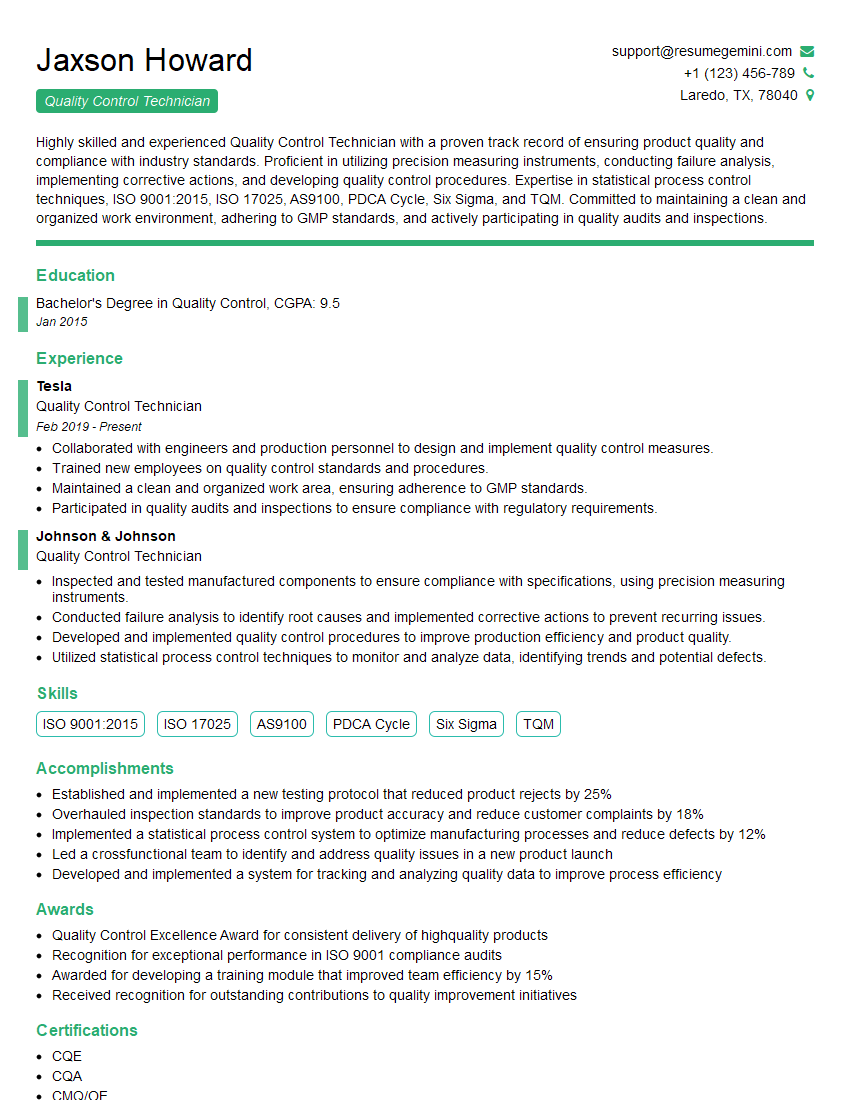
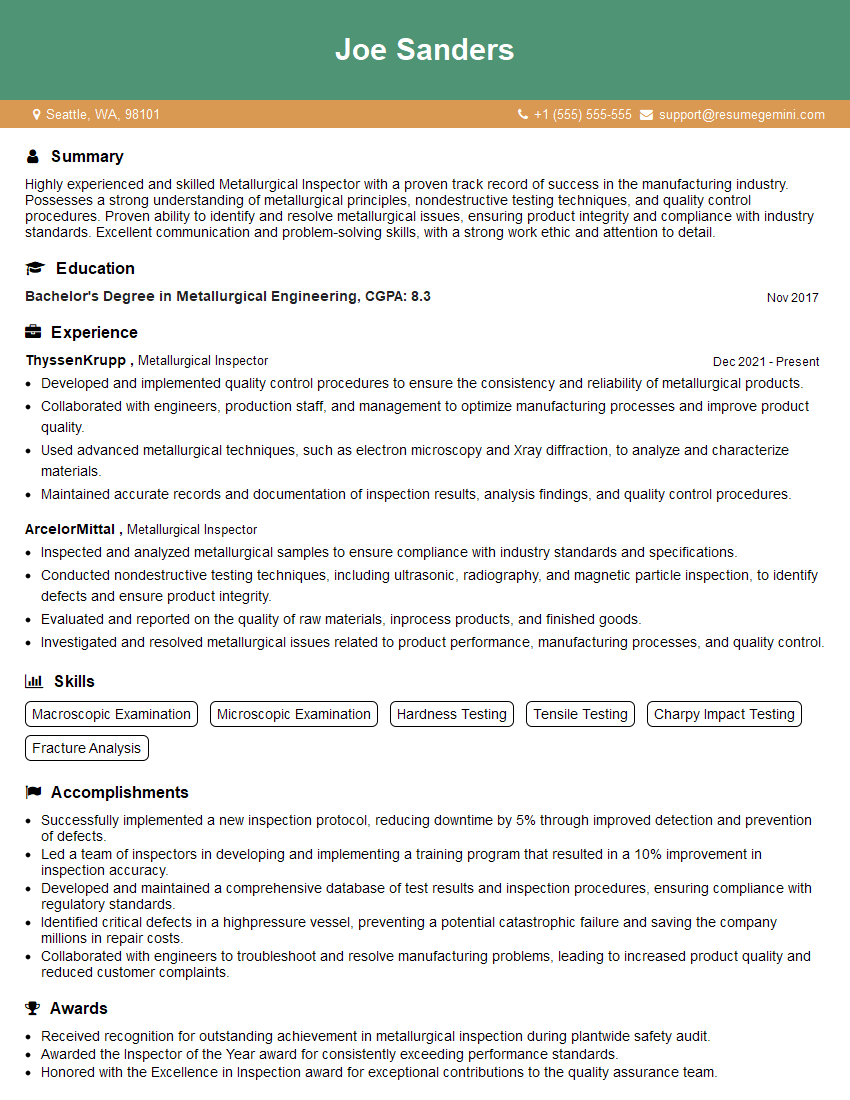
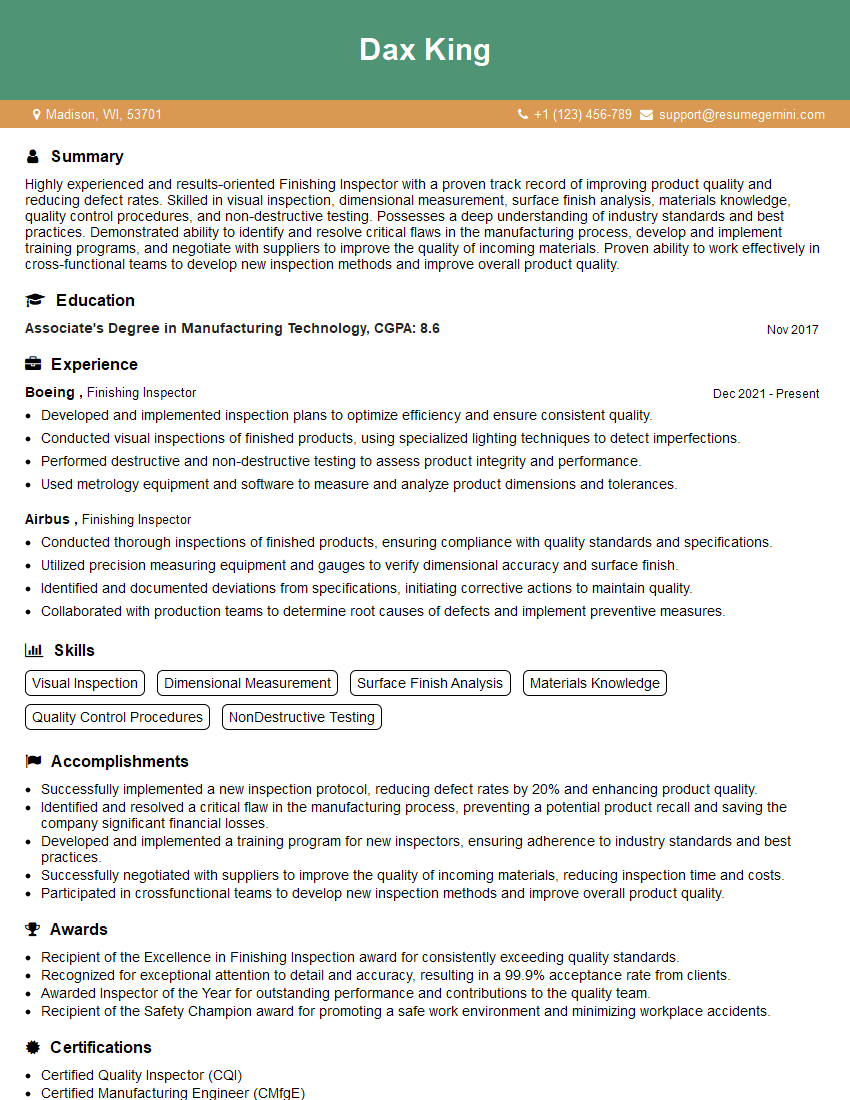
Mastering Anodized Surface Inspection opens doors to exciting career opportunities in manufacturing, aerospace, and other high-tech industries. A strong understanding of this field demonstrates valuable technical skills and attention to detail, highly sought after by employers. To maximize your job prospects, creating an ATS-friendly resume is crucial. ResumeGemini can help you build a professional and impactful resume that highlights your skills and experience effectively. We provide examples of resumes tailored specifically to Anodized Surface Inspection to guide you in crafting a compelling application. Invest time in building a strong resume – it’s your first impression with potential employers.
Explore more articles
Users Rating of Our Blogs
Share Your Experience
We value your feedback! Please rate our content and share your thoughts (optional).
What Readers Say About Our Blog
Very informative content, great job.
good