Cracking a skill-specific interview, like one for ANSI/ASQ Z1.9, requires understanding the nuances of the role. In this blog, we present the questions you’re most likely to encounter, along with insights into how to answer them effectively. Let’s ensure you’re ready to make a strong impression.
Questions Asked in ANSI/ASQ Z1.9 Interview
Q 1. Explain the purpose and scope of ANSI/ASQ Z1.9.
ANSI/ASQ Z1.9, “Quality management systems — Fundamentals and vocabulary,” establishes the fundamental principles and terminology for quality management systems (QMS). Its purpose isn’t to prescribe a specific QMS but rather to provide a common understanding of the core concepts, ensuring consistent communication and implementation across various industries and organizations. The scope encompasses definitions of key terms, the structure of a QMS, and the principles guiding its effective implementation. Think of it as the foundational textbook for building a successful quality management system.
Q 2. Describe the key elements of a quality management system (QMS) as defined in Z1.9.
A QMS as defined in Z1.9 is a system of interconnected elements that work together to achieve quality objectives. Key elements include:
- Leadership and commitment: Top management must be actively involved, establishing a quality policy and providing the necessary resources. This isn’t just lip service; it’s about visible, tangible action.
- Customer focus: Understanding and meeting customer needs and expectations is paramount. This involves gathering feedback, analyzing requirements, and continuously striving for improvement.
- Process approach: Managing activities as interrelated processes, optimizing efficiency and effectiveness through workflow analysis and improvement cycles.
- Continual improvement: A commitment to ongoing enhancement of the QMS through regular review, assessment, and adaptation. It’s not about reaching perfection, but rather striving for continuous improvement.
- Evidence-based decision-making: Using data and analysis to guide decisions, ensuring objectivity and effectiveness. This means relying on facts, not just opinions.
- Relationship management: Building strong relationships with suppliers and other stakeholders to ensure mutual success. It’s about collaboration, not just transactional interactions.
Imagine building a house. Z1.9 provides the blueprint – it details the essential components and how they interrelate, but the specific design and materials are up to the builder (the organization).
Q 3. What are the different types of audits covered in Z1.9?
While Z1.9 doesn’t explicitly categorize audit types, it provides the framework for various audits within a QMS. These can be broadly classified as:
- Internal audits: Conducted by personnel within the organization to assess compliance with the QMS. These are crucial for identifying weaknesses and opportunities for improvement before external scrutiny.
- External audits: Performed by independent third parties to verify the effectiveness of the QMS. This often involves certification audits, where conformity to specific standards is verified.
- Supplier audits: Assessing the QMS of suppliers to ensure they meet the organization’s requirements. This is particularly important for critical supplies or services.
- Product audits: Focusing on specific products or services to verify they meet the required specifications. This can involve testing, inspection, and review of documentation.
Think of these audit types as different levels of a quality checkup, from routine internal checks (internal audits) to comprehensive external evaluations (external audits), each with its own focus and purpose.
Q 4. How does Z1.9 address calibration and measurement systems?
Z1.9 emphasizes the importance of accurate and reliable measurement and calibration systems. It stresses that the validity of audit findings depends on the accuracy of measurements. The standard doesn’t prescribe specific calibration methods but strongly suggests a documented calibration system, ensuring traceability to national or international standards. This involves:
- Calibration procedures: Establishing a defined process for calibrating measuring equipment.
- Calibration records: Maintaining accurate records of calibration activities, including dates, results, and any corrective actions.
- Equipment maintenance: Ensuring that measuring equipment is properly maintained to preserve its accuracy.
Imagine a factory producing precision parts. If their measuring tools are inaccurate, their products will be faulty, undermining the entire quality system. Z1.9 necessitates a robust calibration system to avoid this.
Q 5. What is the role of management in a QMS compliant with Z1.9?
Management plays a pivotal role in a Z1.9-compliant QMS. Their responsibilities include:
- Establishing a quality policy: Defining the organization’s overall commitment to quality.
- Providing resources: Allocating the necessary personnel, budget, and infrastructure.
- Promoting a quality culture: Fostering an environment where quality is valued and prioritized by all employees.
- Reviewing the QMS: Regularly assessing the effectiveness of the QMS and initiating improvements.
- Ensuring compliance: Confirming that the QMS meets all applicable requirements.
Management is not merely overseeing the system; they are the driving force behind its success. Their active participation sets the tone and direction for the entire organization’s quality efforts.
Q 6. Explain the importance of corrective and preventive actions (CAPA) as per Z1.9.
Corrective and preventive actions (CAPA) are crucial for continuous improvement within a Z1.9-compliant QMS. A CAPA process involves:
- Identifying nonconformities: Detecting deviations from requirements or standards.
- Analyzing root causes: Investigating the underlying reasons for the nonconformities (this is often the most challenging part).
- Implementing corrective actions: Addressing the immediate problem to prevent recurrence.
- Implementing preventive actions: Taking steps to eliminate the root cause and prevent similar problems in the future.
- Verification: Confirming that the implemented actions have been effective.
Imagine a car manufacturer discovers a faulty brake system. Corrective action would involve recalling affected vehicles. Preventive action would involve reviewing the manufacturing process and improving quality control measures to prevent the problem from happening again. Z1.9 emphasizes this proactive approach to preventing future problems.
Q 7. Describe the process for conducting a quality audit according to Z1.9.
A quality audit according to Z1.9 involves a systematic and independent examination to determine whether the QMS conforms to planned arrangements and whether these arrangements are implemented and maintained effectively. The process typically involves:
- Planning: Defining the audit scope, objectives, and criteria. This includes selecting the audit team and resources.
- Conducting the audit: Gathering evidence through interviews, document review, observation, and testing. This involves using a structured approach and documenting all findings.
- Reporting: Documenting the audit findings, including any nonconformities and recommendations for improvement. The report should be clear, concise, and objective.
- Follow-up: Monitoring the implementation of corrective and preventive actions arising from the audit.
Think of it as a thorough health check for your QMS. It involves careful examination, documentation of findings, and a plan for addressing any issues found, ensuring continuous improvement.
Q 8. How does Z1.9 address document control?
ANSI/ASQ Z1.9 doesn’t explicitly detail a specific document control system, but it strongly implies the need for one as a crucial component of a robust quality management system (QMS). Effective document control ensures that all documents relevant to the quality of products and services are identified, reviewed, approved, updated, and distributed in a controlled manner. This prevents the use of outdated or incorrect information, leading to consistent processes and reliable outcomes.
Think of it like a recipe: If your bakery uses outdated recipes, your cakes might not turn out right! Z1.9 emphasizes maintaining the integrity of your ‘recipes’ (documents) through version control, change management, and distribution processes. This typically involves assigning document numbers, revision levels, approval signatures, and clear distribution lists. A well-defined document control process minimizes errors and ensures everyone is working with the most up-to-date and approved information.
- Identification and control of documents: Establishing a system for numbering and versioning documents.
- Review and approval: Implementing procedures for review, approval, and authorization of documents.
- Distribution and access: Defining processes for distributing documents to the relevant personnel and controlling access.
- Obsoletion and archival: Establishing a system for managing obsolete documents and archiving important records.
Q 9. What are the key performance indicators (KPIs) related to a QMS aligned with Z1.9?
Key Performance Indicators (KPIs) for a Z1.9-aligned QMS should directly reflect the system’s effectiveness in preventing defects and improving quality. These KPIs should be measurable and trackable. Here are some examples:
- Defect rate: The percentage of nonconforming products or services. A lower defect rate indicates better quality control.
- Customer complaints: The number of customer complaints received. A decrease in complaints shows improved customer satisfaction.
- Internal audit findings: The number and severity of nonconformities identified during internal audits. A reduction in findings suggests improvements in process control.
- Corrective action effectiveness: The percentage of corrective actions implemented that successfully resolve the root cause of the problem. This KPI demonstrates the effectiveness of your problem-solving processes.
- On-time delivery rate: The percentage of orders delivered on or before the agreed-upon delivery date, reflecting the efficiency and reliability of your processes.
- Employee training completion rate: Percentage of employees completing required training, showing commitment to quality improvement.
The selection of specific KPIs should be tailored to the organization’s context and strategic goals. Regular monitoring and analysis of these KPIs allow for continuous improvement of the QMS.
Q 10. Explain the concept of risk-based thinking in a QMS.
Risk-based thinking in a QMS, as encouraged by Z1.9 (although not explicitly stated), is a proactive approach to identifying, assessing, and mitigating potential problems that could affect the quality of products or services. It moves beyond simply reacting to problems to anticipating and preventing them.
Imagine building a house: A risk-based approach would involve assessing potential risks like poor foundation, bad weather during construction, or faulty materials. You’d then implement preventative measures like geotechnical surveys, building permits and weather monitoring, and strict material inspections. This is more efficient and cost-effective than fixing problems after the fact.
In a QMS, risk-based thinking involves:
- Identifying potential risks: What could go wrong? Use methods like brainstorming, Failure Mode and Effects Analysis (FMEA), and process mapping.
- Assessing the likelihood and impact of risks: How likely is each risk to occur, and what would be the consequences if it did?
- Developing and implementing risk mitigation strategies: What actions can be taken to reduce the likelihood or impact of each risk? This could involve process improvements, additional training, new equipment, or better quality control.
- Monitoring and reviewing risk: Continuously monitor the effectiveness of mitigation strategies and update the risk assessment as needed.
Q 11. How does Z1.9 address internal audits and management reviews?
Z1.9 doesn’t prescribe specific procedures for internal audits and management reviews, but it strongly emphasizes their importance in maintaining a robust QMS. Internal audits provide objective evaluation of the QMS’s effectiveness against defined requirements. Management reviews ensure the QMS remains suitable, adequate, and effective.
Internal Audits: These are planned and documented evaluations conducted by trained personnel to verify conformity to the defined QMS. They should assess areas like document control, process effectiveness, and corrective actions. Findings from these audits are then used to identify areas for improvement. Think of them as regular check-ups for your QMS.
Management Reviews: These are formal meetings held periodically by management to review the QMS’s performance and effectiveness. They assess the overall effectiveness of the QMS, focusing on the strategic direction and resource allocation. They review data like KPI’s, audit results, and customer feedback, making decisions to address significant issues or to initiate strategic changes. Think of this as an annual performance review for your whole quality system.
Both processes require documented procedures, qualified personnel, and a system for tracking and resolving findings. The frequency of audits and reviews should be determined based on risk and the complexity of the organization’s processes.
Q 12. Describe the importance of traceability in a QMS.
Traceability in a QMS is the ability to trace the origin, history, and application of any product, process, or component throughout its lifecycle. This is vital for identifying the source of defects, tracking changes, and ensuring compliance. It’s like leaving a breadcrumb trail, allowing you to follow the journey of a product from raw materials to the finished good, or a process from start to finish.
Importance:
- Defect identification and correction: If a defect is found, traceability helps quickly pinpoint the root cause and implement corrective actions. For example, if a batch of products is faulty, traceability helps identify which specific materials or process steps caused the defect.
- Product recall management: In case of a product recall, traceability enables efficient and targeted recall actions, minimizing disruption and protecting consumers.
- Supply chain management: Traceability ensures the authenticity and quality of materials and components throughout the supply chain.
- Compliance and auditing: Traceability provides evidence of compliance with regulatory requirements and standards, simplifying audits and inspections.
- Continuous improvement: Data collected through traceability can be used for continuous improvement and process optimization.
Implementing traceability often involves using unique identification numbers for materials, components, and products, along with detailed records of processes and actions. This could involve barcodes, RFID tags, or detailed documentation in a controlled database.
Q 13. How does Z1.9 relate to ISO 9001?
ANSI/ASQ Z1.9 and ISO 9001 are both standards related to quality management systems, but they have different focuses. ISO 9001 provides the framework for a QMS, focusing on requirements for achieving and maintaining a quality management system that consistently meets customer and applicable regulatory requirements. Z1.9, on the other hand, is more specific, providing guidance on quality and performance improvement, offering tools and techniques for implementing and improving processes. It’s not a standalone QMS standard like ISO 9001 but a valuable supplement.
Think of it this way: ISO 9001 is the blueprint for building a house, outlining the essential elements of a quality home. Z1.9 provides a toolbox full of specialized tools and techniques to build the house efficiently and effectively, improving the quality of the construction process.
Many organizations use Z1.9’s guidance to enhance their ISO 9001-compliant QMS, implementing tools like statistical process control and risk assessment to improve process control and effectiveness. There’s significant overlap in areas like internal auditing and management review but Z1.9 offers more practical tools to do so. The key difference lies in scope: ISO 9001 defines what to do, while Z1.9 often suggests how to do it better.
Q 14. Explain the role of statistical process control (SPC) in maintaining a QMS.
Statistical Process Control (SPC) is a powerful tool used to monitor and control processes, helping maintain a QMS by identifying and preventing variations that could lead to defects. It uses statistical methods to analyze process data and identify patterns and trends, allowing for timely intervention to prevent problems. Think of it as a dashboard for your processes showing you if everything is running smoothly or if adjustments are needed.
Role in maintaining a QMS:
- Early detection of process variations: SPC helps identify small variations before they become major problems, enabling proactive corrections. This is much more efficient than only reacting to defects once they are already produced.
- Process optimization: By analyzing data, SPC can help identify areas where processes can be improved, leading to higher efficiency and reduced waste.
- Reduction of defects: By controlling variations, SPC significantly reduces the number of defects and enhances product quality.
- Data-driven decision making: SPC provides objective data for decision-making, moving away from subjective judgments and ensuring all decisions are based on factual evidence.
- Compliance demonstration: SPC provides evidence of process control and compliance with quality standards, making audits easier.
Common SPC tools include control charts (like X-bar and R charts, p-charts, c-charts) that visually display process data over time. By analyzing these charts, you can identify patterns indicating instability or shifts in the process and determine if corrective actions are necessary.
Q 15. What are the common challenges in implementing a QMS based on Z1.9?
Implementing a Quality Management System (QMS) based on ANSI/ASQ Z1.9, while beneficial, presents several challenges. These often stem from a lack of understanding, insufficient resources, or resistance to change within an organization.
- Resistance to Change: Employees may resist adopting new processes or relinquishing old habits. This is particularly true if the benefits of the QMS aren’t clearly communicated or if training is inadequate.
- Lack of Management Commitment: A successful QMS requires strong leadership commitment and active participation from top management. Without this buy-in, the system can falter due to a lack of resources or support.
- Insufficient Resources: Implementing a robust QMS demands dedicated time, personnel, and financial resources for training, documentation, audits, and ongoing maintenance. Underestimating these needs can lead to failure.
- Integration with Existing Systems: Integrating the QMS with existing business processes and software can be complex and time-consuming. Poor planning during this phase can create inefficiencies and data silos.
- Measuring Effectiveness: Demonstrating the return on investment (ROI) of a QMS can be difficult. Establishing clear Key Performance Indicators (KPIs) from the outset is crucial for measuring its effectiveness and justifying the resources invested.
For example, a small manufacturing company might struggle to dedicate an employee full-time to managing the QMS, leading to inconsistencies and a lack of attention to detail. Effective communication, strong leadership, and phased implementation can mitigate these challenges.
Career Expert Tips:
- Ace those interviews! Prepare effectively by reviewing the Top 50 Most Common Interview Questions on ResumeGemini.
- Navigate your job search with confidence! Explore a wide range of Career Tips on ResumeGemini. Learn about common challenges and recommendations to overcome them.
- Craft the perfect resume! Master the Art of Resume Writing with ResumeGemini’s guide. Showcase your unique qualifications and achievements effectively.
- Don’t miss out on holiday savings! Build your dream resume with ResumeGemini’s ATS optimized templates.
Q 16. How would you address nonconformances found during an audit?
Addressing nonconformances found during a Z1.9-based audit is a crucial aspect of continuous improvement. The process should be systematic and documented, focusing on correction and preventative action.
- Identify and Document: Clearly define the nonconformity, including its location, severity, and potential impact.
- Investigate the Root Cause: Conduct a thorough investigation to determine the underlying causes of the nonconformity, going beyond simply addressing the immediate problem. Use tools like 5 Whys or fishbone diagrams.
- Corrective Action: Implement immediate actions to correct the nonconformity and prevent it from recurring. This might involve repairing a faulty product, retraining personnel, or modifying a process.
- Preventative Action: Develop and implement preventative actions to address the root cause and prevent similar nonconformities from happening in the future. This might involve improving a process, updating equipment, or revising a procedure.
- Verification: Verify the effectiveness of the corrective and preventative actions taken. This may involve a follow-up audit or inspection.
- Documentation: Document all aspects of the process, including the nonconformity, investigation, corrective and preventative actions, and verification results.
For example, if an audit reveals inconsistencies in calibration records, corrective action would involve updating missing records, while preventative action might be implementing a new, more streamlined calibration process with reminders and automated tracking.
Q 17. What are the different types of sampling methods mentioned or implied in Z1.9?
While Z1.9 doesn’t explicitly detail specific sampling methods, it strongly implies the use of statistically sound sampling techniques to ensure representative data. The choice of method depends on factors like the population size, the level of risk acceptable, and the characteristics of the product or process being sampled. Common methods include:
- Random Sampling: Each item in the population has an equal chance of being selected. This helps ensure the sample is representative, especially for large populations.
- Stratified Sampling: The population is divided into strata (subgroups) based on characteristics (e.g., different production batches). A random sample is then taken from each stratum, providing a more representative sample if there’s variation between strata.
- Systematic Sampling: Items are selected at fixed intervals (e.g., every 10th item). This is efficient but can be biased if there’s a pattern in the population.
- Acceptance Sampling: This method is used to decide whether to accept or reject a batch of items based on a sample inspection. It uses acceptance sampling plans (e.g., defined by MIL-STD-105E or similar standards) to define the sampling size and acceptance criteria.
The selection of the appropriate sampling method is crucial for obtaining reliable and unbiased data during audits or quality control inspections. Using an inappropriate method can lead to inaccurate conclusions and flawed decision-making.
Q 18. Explain the significance of measurement uncertainty in calibration and testing.
Measurement uncertainty plays a critical role in calibration and testing, impacting the reliability and validity of results. It quantifies the doubt associated with a measurement result, reflecting the range of values within which the true value likely lies. A smaller measurement uncertainty indicates higher precision and confidence in the measurement.
In calibration, understanding uncertainty helps ensure that measuring instruments provide accurate and reliable results. If the uncertainty of a calibration standard is high, the uncertainty of measurements made using the calibrated instrument will also be high, affecting the quality of subsequent measurements. For instance, if a pressure gauge is calibrated with a high uncertainty, measurements taken using that gauge will be less reliable.
In testing, measurement uncertainty influences the interpretation of test results. A large uncertainty might obscure the actual value and lead to inconclusive results. For example, if the uncertainty in a tensile strength test is large, it might be impossible to definitively determine if a material meets its specified strength requirements.
Z1.9 emphasizes the importance of documenting and controlling measurement uncertainty to ensure the accuracy and reliability of quality data. This includes identifying and quantifying all sources of uncertainty and using appropriate methods to minimize their impact.
Q 19. How does Z1.9 address customer satisfaction?
ANSI/ASQ Z1.9 doesn’t explicitly detail specific methods for measuring customer satisfaction, but it strongly emphasizes the importance of understanding and meeting customer needs and requirements. This is achieved indirectly through various clauses and principles.
- Focusing on Requirements: Z1.9 advocates for a strong focus on understanding and meeting customer requirements, which directly relates to customer satisfaction. This includes clearly defining requirements, ensuring processes are capable of meeting them, and regularly monitoring customer feedback.
- Feedback Mechanisms: The standard implies establishing feedback mechanisms to gather information about customer satisfaction. This might involve surveys, feedback forms, or direct communication with customers.
- Continuous Improvement: The cyclical nature of continuous improvement, driven by data and customer feedback, implicitly addresses customer satisfaction. By using customer feedback to identify areas for improvement, organizations demonstrate a commitment to meeting customer needs.
- Process Monitoring and Control: By closely monitoring and controlling processes, organizations can ensure consistent product or service quality, leading to greater customer satisfaction. Nonconformities are identified and addressed before they affect customers.
For example, a company might implement customer satisfaction surveys to gather feedback on product quality, service responsiveness, and overall experience. This feedback can then be used to identify areas for improvement in processes and products, leading to improved customer satisfaction and loyalty.
Q 20. Describe the process for managing changes within a QMS.
Managing changes within a QMS based on Z1.9 is critical to maintaining its effectiveness and relevance. Changes should be controlled to ensure that they don’t negatively impact the QMS’s performance or compliance.
- Propose the Change: Identify the need for a change and clearly document the proposed change, including its rationale, potential impact, and the required resources.
- Review and Evaluate: Evaluate the proposed change against established criteria, assessing its potential impact on the QMS and related processes. This review may involve cross-functional teams.
- Authorize the Change: Obtain approval from the appropriate authority before implementing the change. This often requires sign-off from management.
- Implement the Change: Implement the approved change systematically, following documented procedures and ensuring effective communication to all affected parties.
- Verify the Change: Verify the effectiveness of the implemented change, ensuring it achieves the intended outcome and doesn’t introduce new issues. This often involves audits or inspections.
- Document the Change: Document the entire change process, including the proposal, review, approval, implementation, and verification. This documentation should be retained as part of the QMS records.
For example, if a new piece of software is introduced to track quality data, the change management process would ensure that the new software is properly integrated, personnel are trained, and the data integrity is verified.
Q 21. Explain the concept of continuous improvement within the context of Z1.9.
Continuous improvement, a cornerstone of Z1.9, is a commitment to ongoing enhancements to the QMS, processes, and products. It’s a cyclical process driven by data analysis, feedback, and a proactive approach to identifying and addressing areas for improvement. It’s not just about fixing problems but also about proactively seeking better ways to work.
The Plan-Do-Check-Act (PDCA) cycle is a widely used framework for continuous improvement.
- Plan: Define the objectives and methods for improvement. Identify potential areas for improvement and develop a plan to address them.
- Do: Implement the improvement plan. Collect data to monitor the effectiveness of the changes.
- Check: Analyze the data collected and evaluate the effectiveness of the changes implemented. Were the goals met? Were there unexpected results?
- Act: Based on the evaluation, either standardize the improved process or adjust the plan and repeat the cycle. If successful, the improvements are standardized and become part of regular operations.
Imagine a company using a PDCA cycle to reduce defect rates. They might plan to implement a new training program for operators (Plan), then train the operators and track defect rates (Do). After the program, they analyze the defect rate data (Check) and decide whether the training program was effective and needs to be implemented across the organization (Act) or requires modifications (return to Plan).
Continuous improvement is not a one-time event but a continuous process of striving for better performance, customer satisfaction, and efficiency. Z1.9 emphasizes this ongoing improvement through proactive identification of opportunities and utilization of data.
Q 22. How do you ensure the objectivity and impartiality of audits?
Objectivity and impartiality are paramount in auditing, ensuring the audit’s findings are unbiased and credible. We achieve this through several key strategies. First, a carefully planned audit scope prevents pre-conceived notions from influencing the process. The auditor must have no vested interest in the outcome; for example, they should not be directly involved in the processes being audited or benefit financially from a particular result. Secondly, rigorous adherence to the ANSI/ASQ Z1.9 standard itself provides a framework for objectivity. The standard mandates specific procedures and documentation requirements, helping ensure consistency and minimizing bias. Finally, a thorough review process, ideally by a second auditor, is crucial for identifying potential biases or oversights. Imagine a judge in a court case – they maintain impartiality by following strict procedural rules and carefully evaluating the evidence presented. Similarly, an auditor must maintain that same professional distance and rely solely on facts and evidence.
Q 23. What is the role of a quality auditor in ensuring compliance with Z1.9?
A quality auditor’s role in ensuring compliance with Z1.9 is central to a successful audit. They are responsible for understanding and applying all aspects of the standard throughout the audit process. This starts with planning the audit – defining the scope, selecting appropriate sampling methods (as outlined in Z1.9), and establishing the audit criteria. During the audit itself, the auditor must meticulously document findings, using objective evidence to support each observation. This involves checking records, interviewing personnel, and observing processes to confirm compliance with established requirements. They must be proficient in identifying non-conformances and properly classifying their severity. Following the audit, the auditor compiles the findings in a comprehensive report, presenting them clearly and objectively. Crucially, the auditor ensures all findings are directly traceable to specific requirements within Z1.9 and the audited organization’s Quality Management System (QMS).
Q 24. Describe your experience in developing and implementing QMS procedures.
In a previous role at a manufacturing company, I led the development and implementation of a new QMS based on ISO 9001, aligning closely with the principles of Z1.9 for our internal audits. We began by conducting a thorough gap analysis, identifying where our existing processes fell short of the standard’s requirements. This involved reviewing existing documentation, interviewing staff across different departments, and analyzing process data. We then developed new procedures, incorporating risk assessments and documented controls to address identified gaps. The implementation phase involved training staff on the new QMS, establishing clear communication channels, and deploying a robust documentation system. We used a phased approach, implementing changes incrementally and monitoring their effectiveness. We also implemented a system of regular internal audits to verify effectiveness and identify opportunities for continuous improvement. Key to success was securing buy-in from all levels of the organization, emphasizing the benefits of a robust QMS for both product quality and operational efficiency.
Q 25. How familiar are you with different audit methodologies (e.g., first-party, second-party, third-party)?
I’m very familiar with the different audit methodologies – first-party, second-party, and third-party. First-party audits are internal audits conducted by an organization on its own processes – think of it as a self-check. Second-party audits are performed by one organization on its supplier or customer – evaluating a partner’s capabilities. Third-party audits, often conducted by independent certification bodies, are used for certification to standards like ISO 9001. Each methodology has its strengths and weaknesses; first-party audits allow for focused internal improvements, while second-party audits help manage supply chain risks. Third-party audits provide external validation and credibility. My experience includes leading all three types of audits, each requiring a slightly different approach and skill set, but always grounded in the principles of objectivity and Z1.9’s guidelines.
Q 26. Describe a situation where you identified a process improvement opportunity based on audit findings.
During a second-party audit of a supplier, I discovered inconsistent calibration practices for their precision measurement equipment. While their procedures documented calibration requirements, on-site observation and record review revealed significant gaps. Some equipment hadn’t been calibrated in months, exceeding the recommended intervals. This posed a risk to product quality and consistency. I documented this as a significant non-conformance in my audit report. Following the audit, I collaborated with the supplier to develop a corrective action plan that included improved calibration scheduling software, enhanced training for their metrology personnel, and a revised process for tracking and verifying calibration status. This proactive approach significantly reduced the risk of producing non-conforming products.
Q 27. How do you handle conflicts or disagreements during an audit?
Conflicts or disagreements during an audit are handled professionally and objectively. First, I listen carefully to all parties involved, ensuring everyone feels heard. The key is to maintain a neutral stance, focusing on factual evidence rather than personal opinions. If a disagreement arises regarding the interpretation of a standard or a specific finding, I refer to the relevant standard documentation (like Z1.9) and any supporting evidence. I clearly explain my rationale and encourage open discussion to reach a mutual understanding. If the disagreement persists, I document all perspectives and escalate the issue to the appropriate management level for resolution. Transparency and clear communication are crucial in resolving conflicts constructively.
Q 28. Explain your understanding of the relationship between Z1.9 and other relevant standards (e.g., ISO 17025).
ANSI/ASQ Z1.9 provides a framework for conducting quality audits, offering guidance on audit planning, execution, and reporting. Standards like ISO 17025 (for testing and calibration laboratories) often require regular audits as part of their accreditation process. Z1.9’s principles of objectivity, evidence-based assessment, and documented procedures directly support ISO 17025’s requirements for quality management. In essence, Z1.9 provides the ‘how-to’ for conducting audits that verify compliance with standards like ISO 17025 or ISO 9001. The relationship is complementary; Z1.9 offers a systematic approach to auditing, ensuring that audits conducted to assess conformity to other management system standards are performed effectively and efficiently. They work in tandem to ensure robust quality systems and reliable results.
Key Topics to Learn for ANSI/ASQ Z1.9 Interview
- Understanding the Scope of Z1.9: Grasp the standard’s overall purpose and its application in various industries. Consider the relationship between Z1.9 and other relevant standards.
- Methods for Risk Assessment and Hazard Analysis: Learn the practical application of different risk assessment techniques within the framework of Z1.9. Be prepared to discuss real-world scenarios and how you would apply the standard.
- Developing Control Measures and Mitigation Strategies: Understand how to develop effective control measures to mitigate identified risks. Practice explaining the hierarchy of controls and selecting the most appropriate methods for different situations.
- Documentation and Communication of Findings: Master the process of clearly and concisely documenting risk assessments, control measures, and their effectiveness. Be prepared to discuss communication strategies with various stakeholders.
- Data Analysis and Interpretation: Familiarize yourself with how data is used to support risk assessments and decision-making within Z1.9. Practice analyzing hypothetical data sets and drawing appropriate conclusions.
- Legal and Regulatory Compliance: Understand the legal implications of Z1.9 and how it relates to regulatory requirements in different jurisdictions. Be ready to discuss compliance strategies and best practices.
- Practical Application in Diverse Settings: Explore case studies and examples of how Z1.9 is applied across a range of industries and contexts (manufacturing, healthcare, etc.). This will demonstrate your versatility and understanding.
Next Steps
Mastering ANSI/ASQ Z1.9 is crucial for advancing your career in safety and risk management. Demonstrating a deep understanding of this standard significantly enhances your marketability and opens doors to more challenging and rewarding roles. To maximize your job prospects, create an ATS-friendly resume that effectively highlights your skills and experience. ResumeGemini is a trusted resource to help you build a professional and impactful resume. Examples of resumes tailored to ANSI/ASQ Z1.9 are available to guide you, ensuring your qualifications shine through.
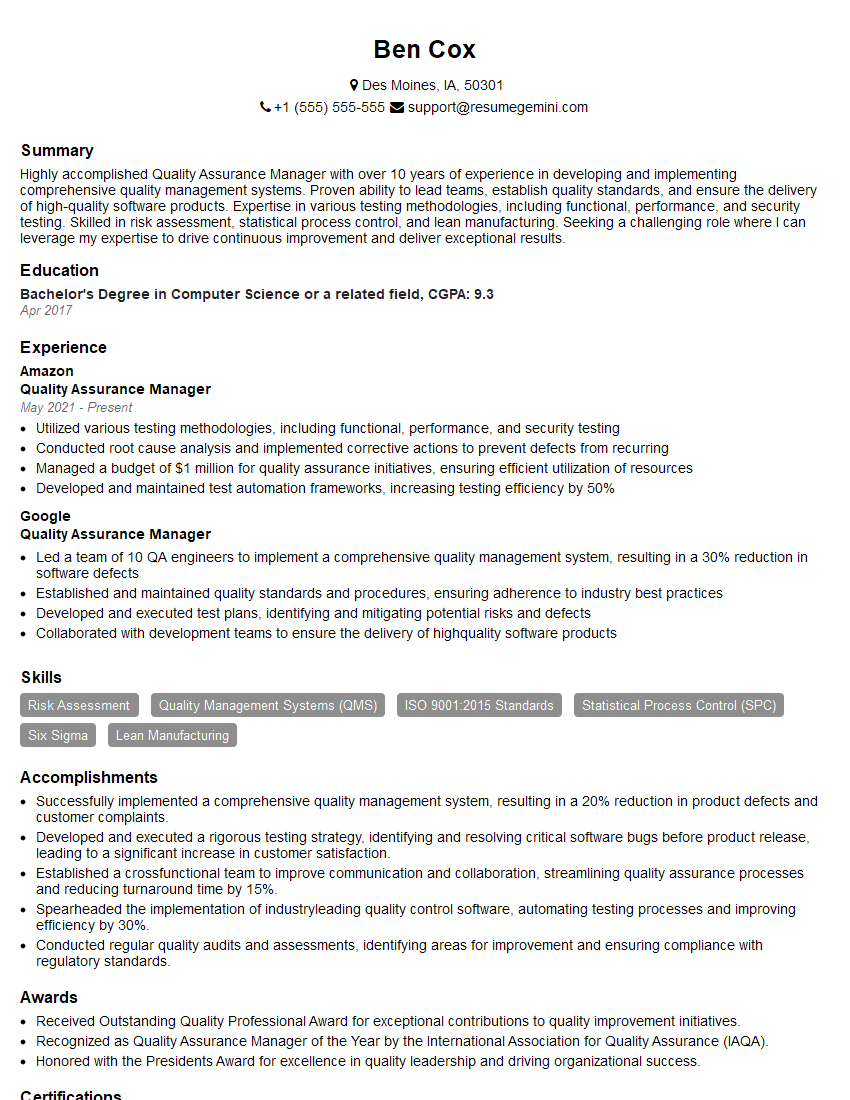
Quality Assurance Manager Resume Sample
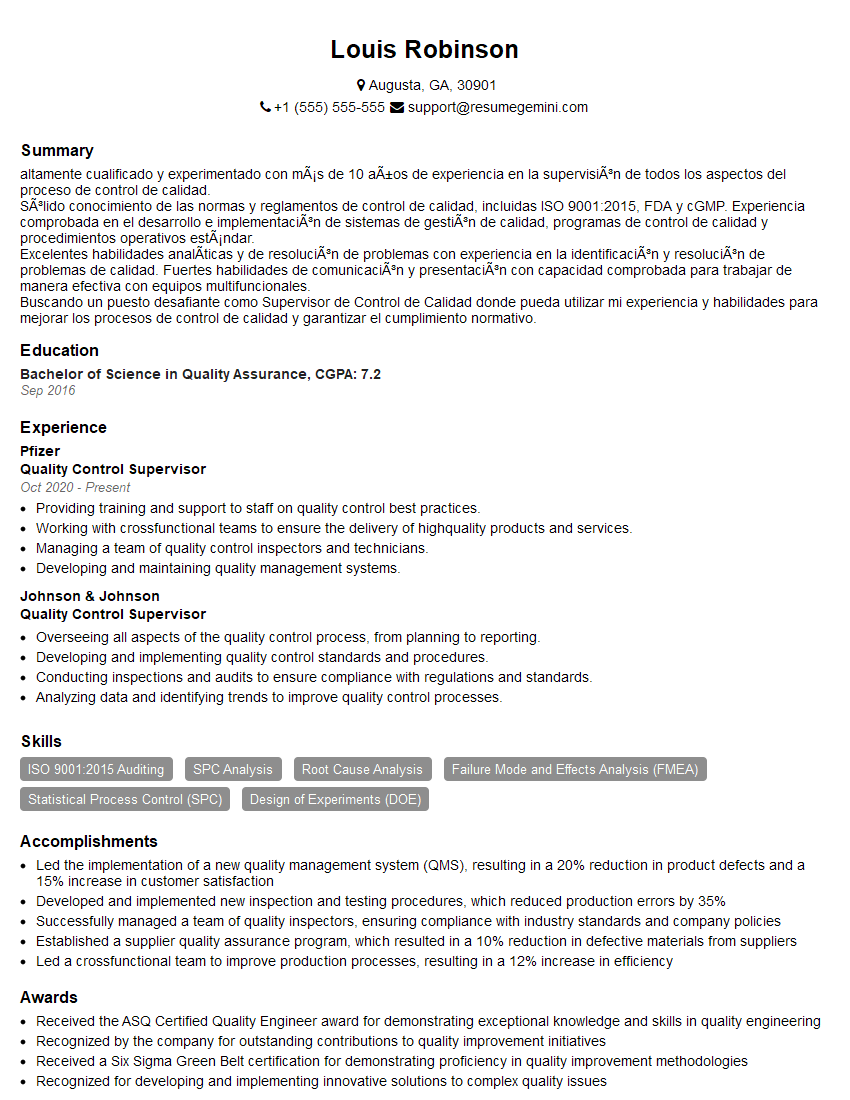
Quality Control Supervisor Resume Sample
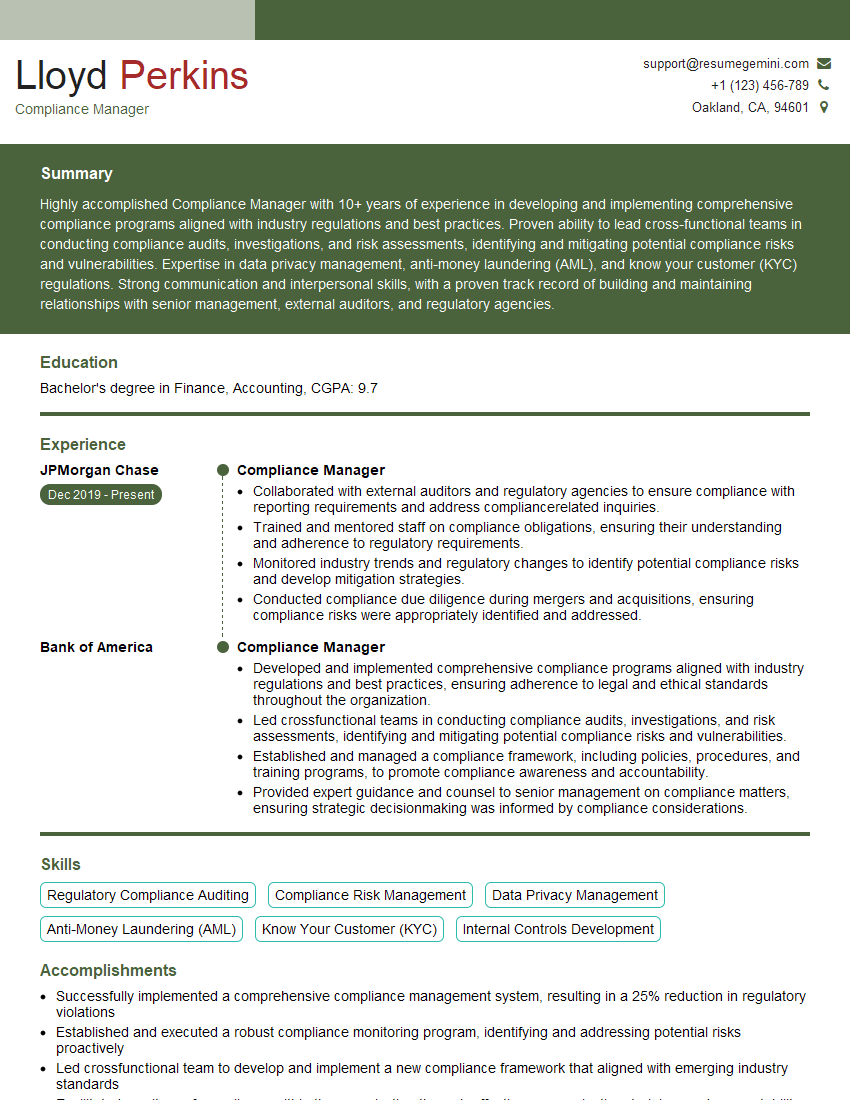
Compliance Manager Resume Sample
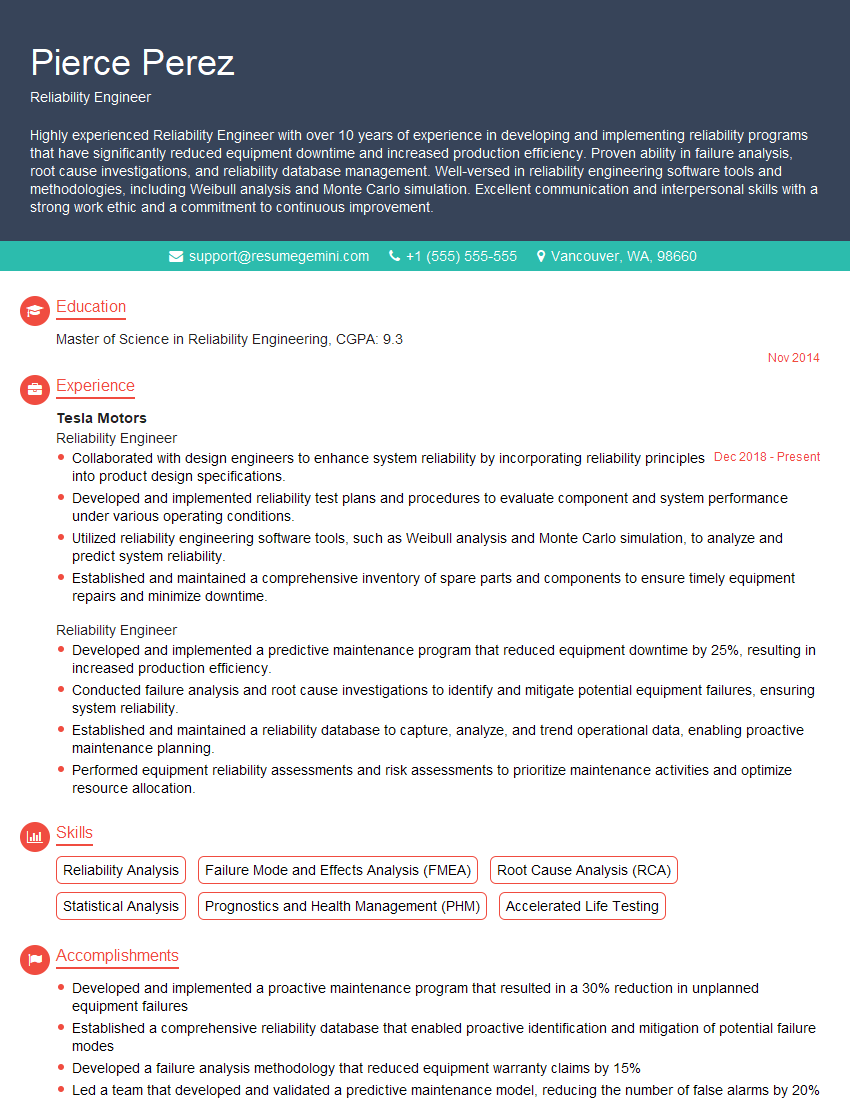
Reliability Engineer Resume Sample
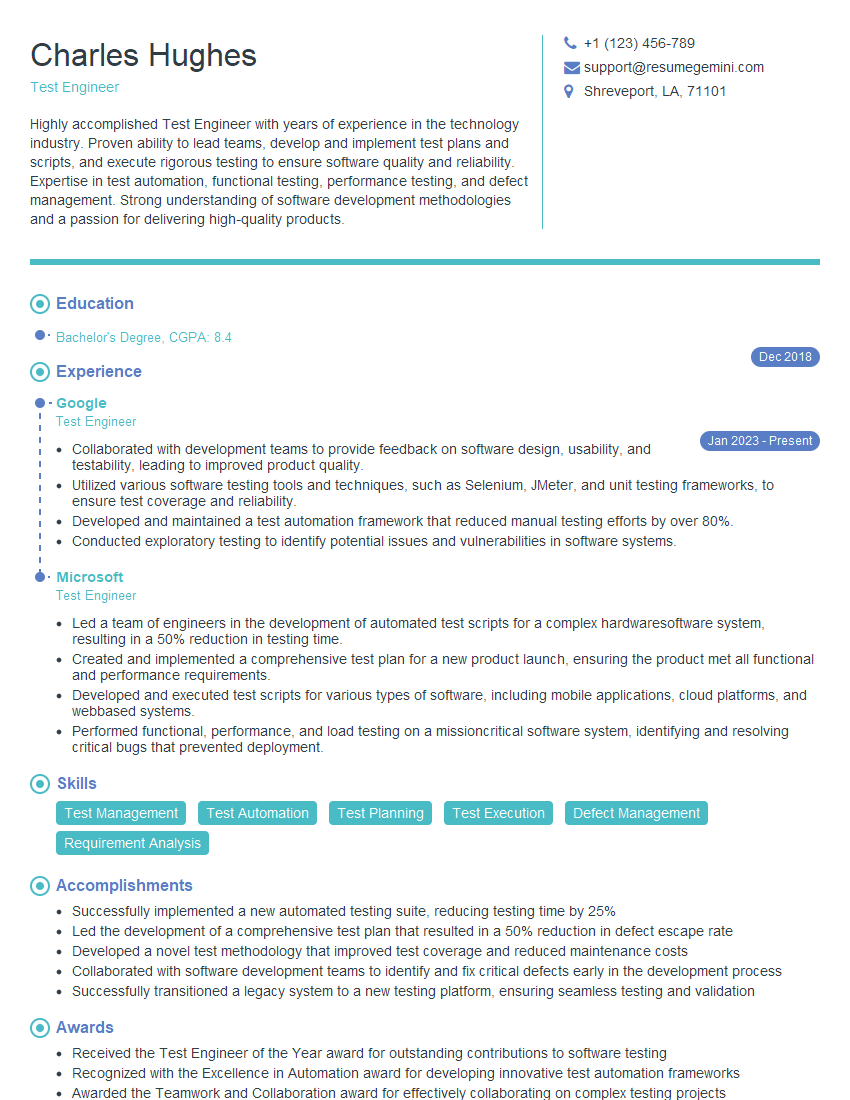
Test Engineer Resume Sample
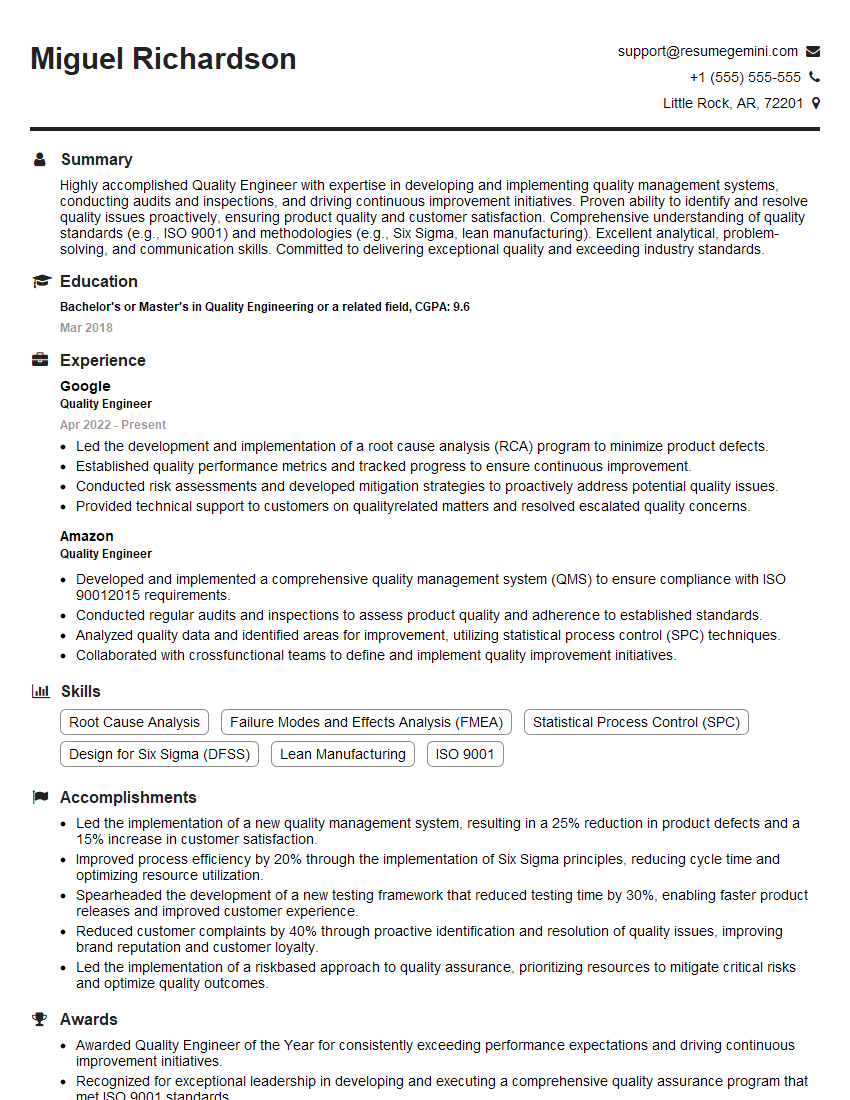
Quality Engineer Resume Sample
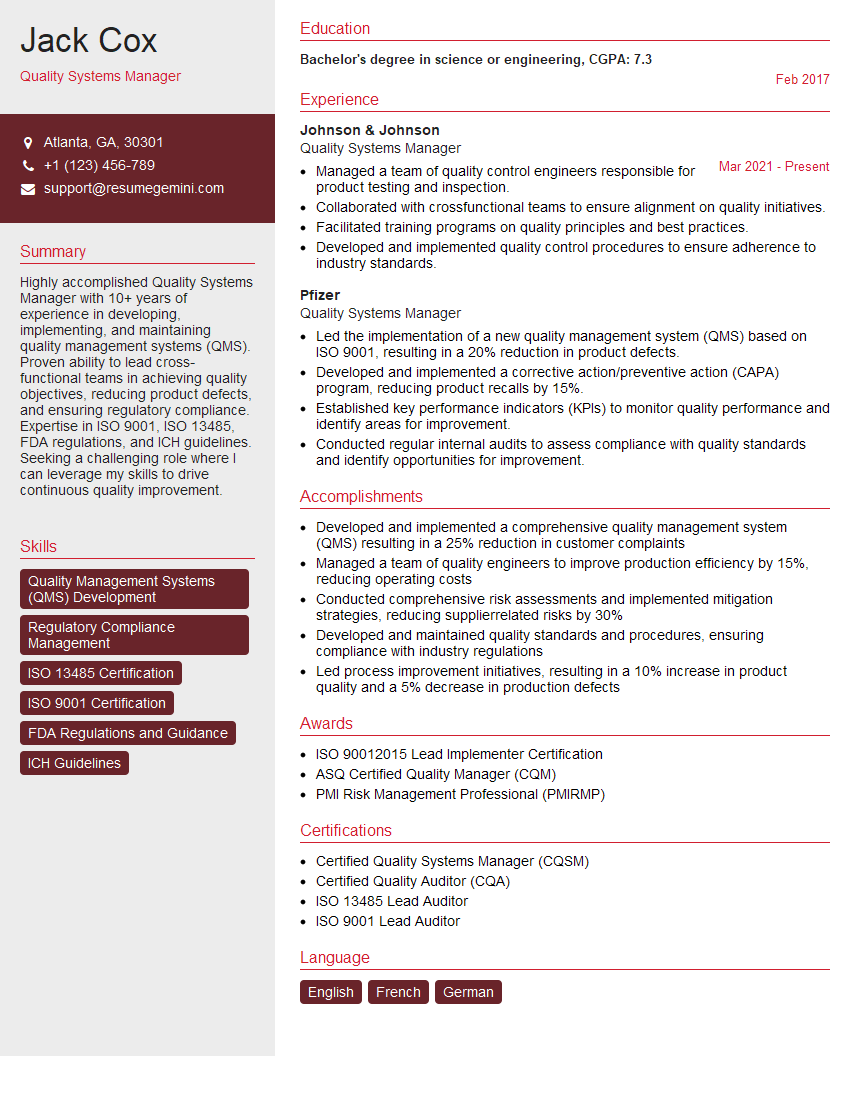
Quality Systems Manager Resume Sample
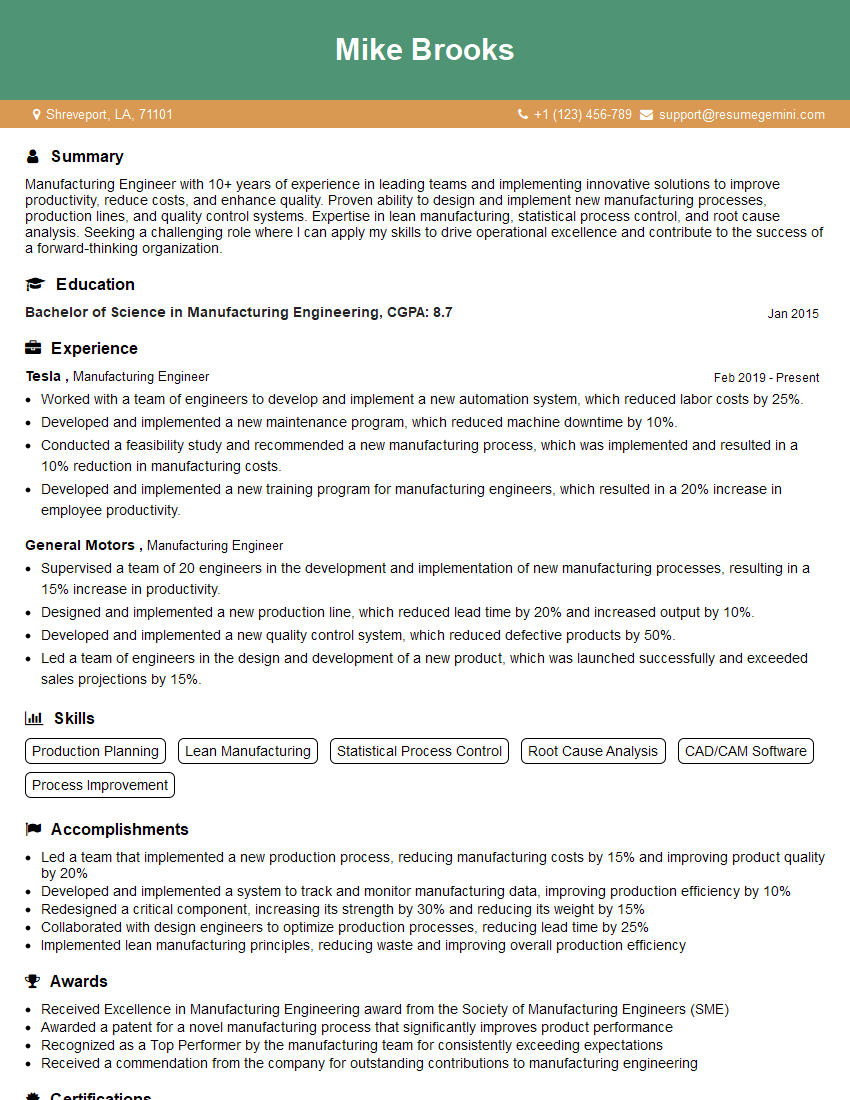
Manufacturing Engineer Resume Sample
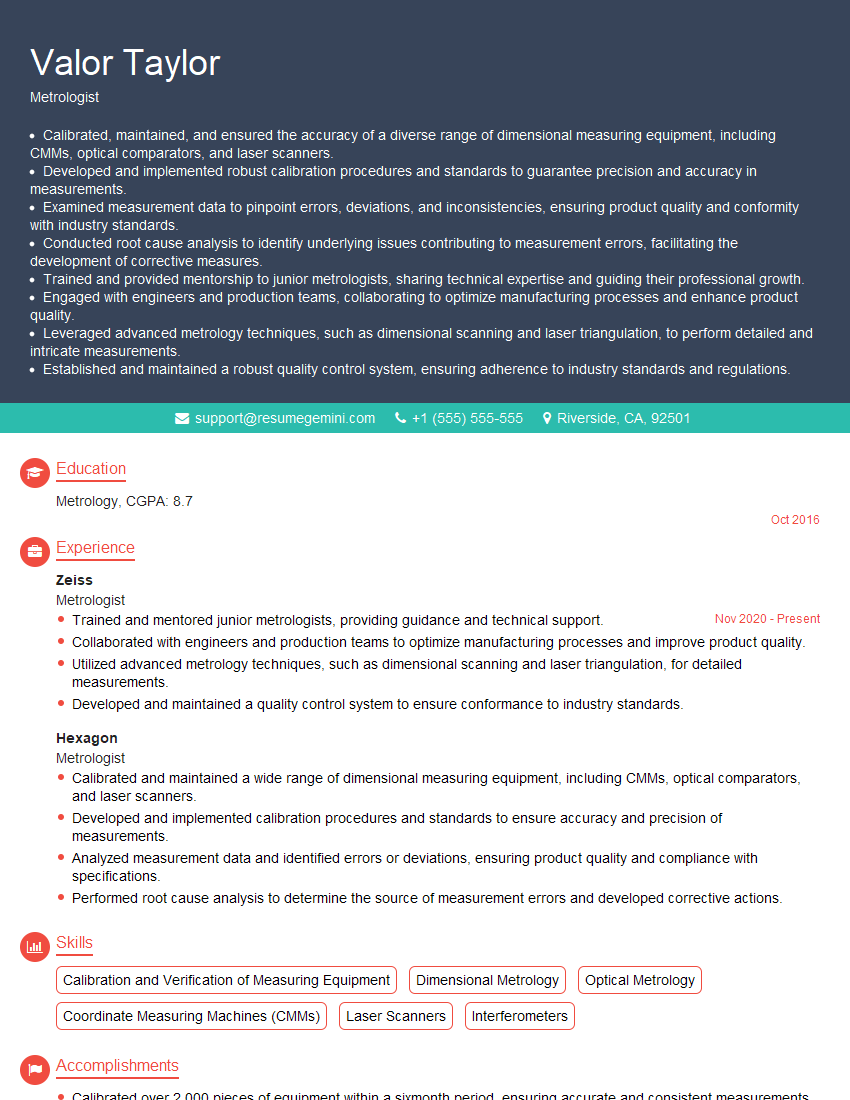
Metrologist Resume Sample
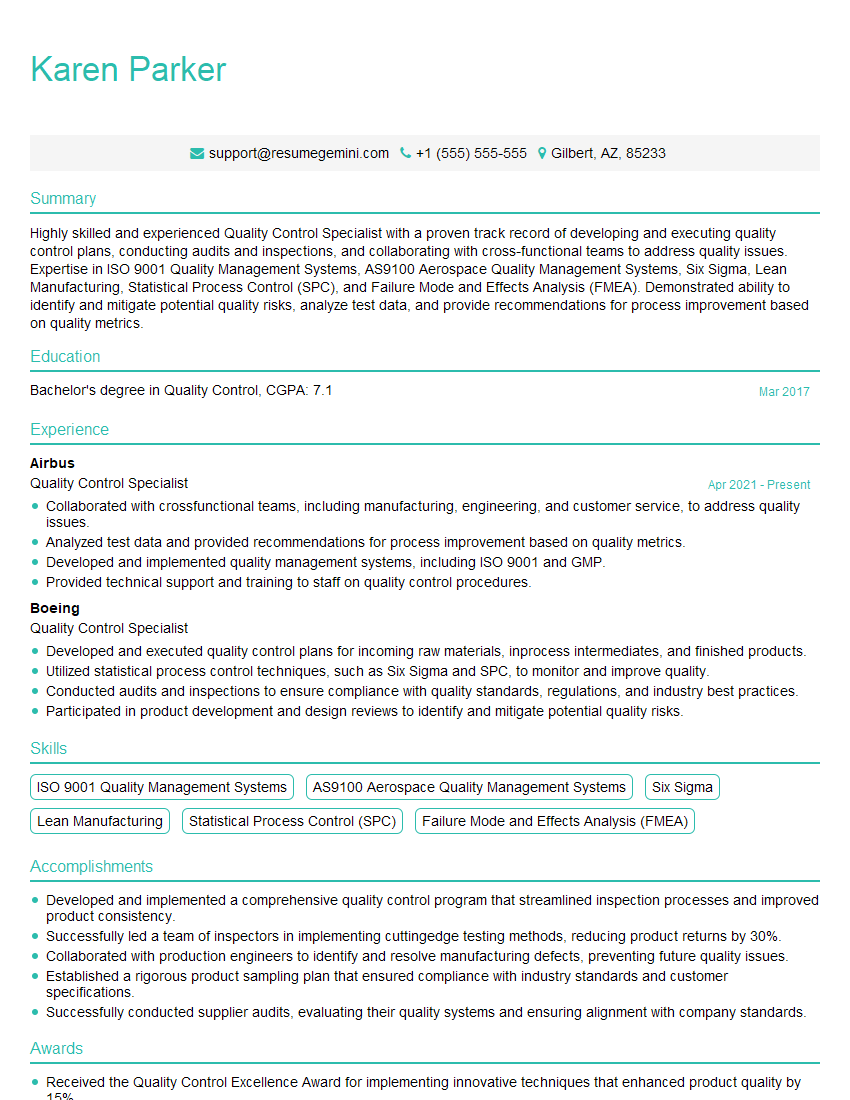
Quality Control Specialist Resume Sample
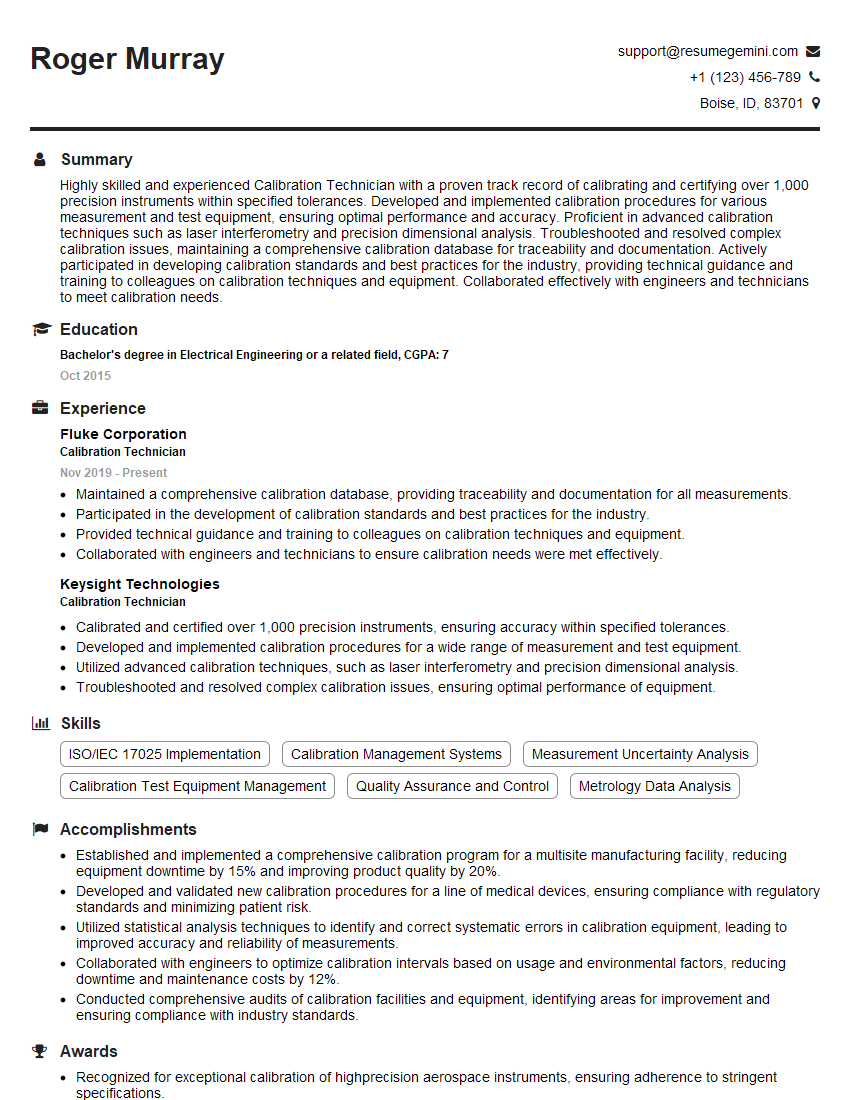
Calibration Technician Resume Sample
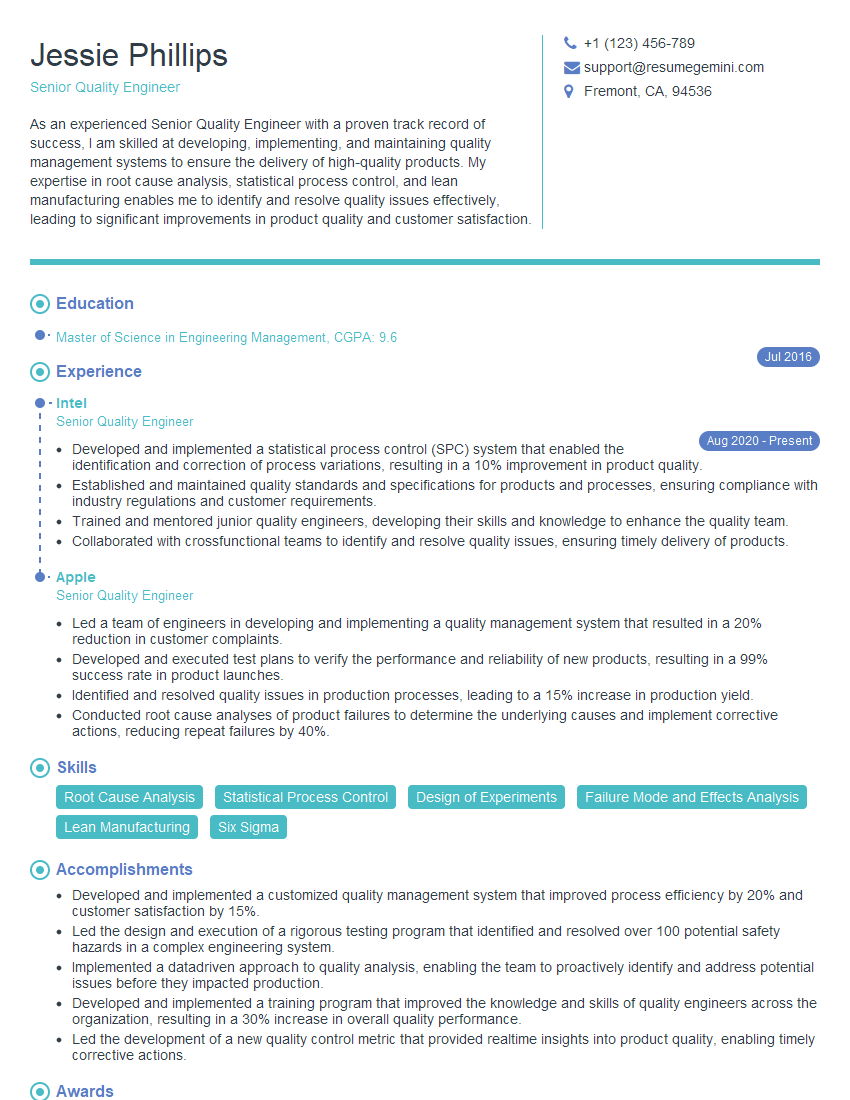
Senior Quality Engineer Resume Sample
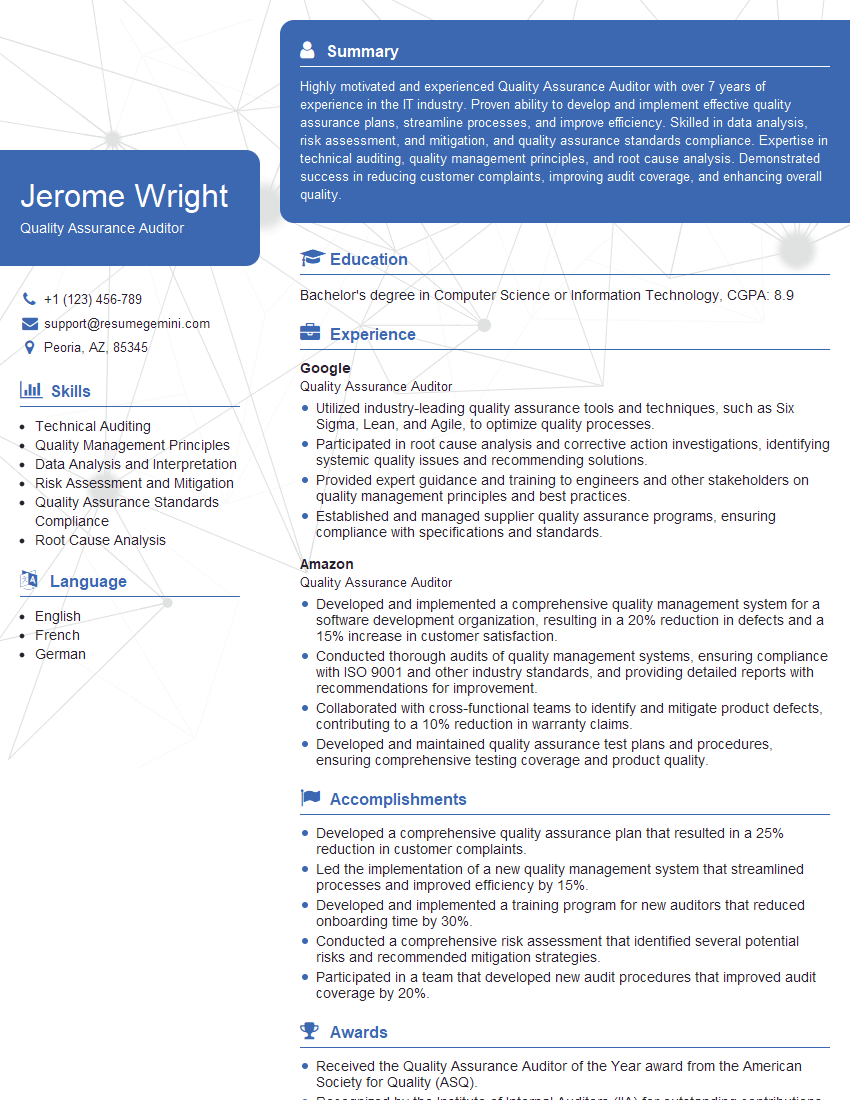
Quality Assurance Auditor Resume Sample
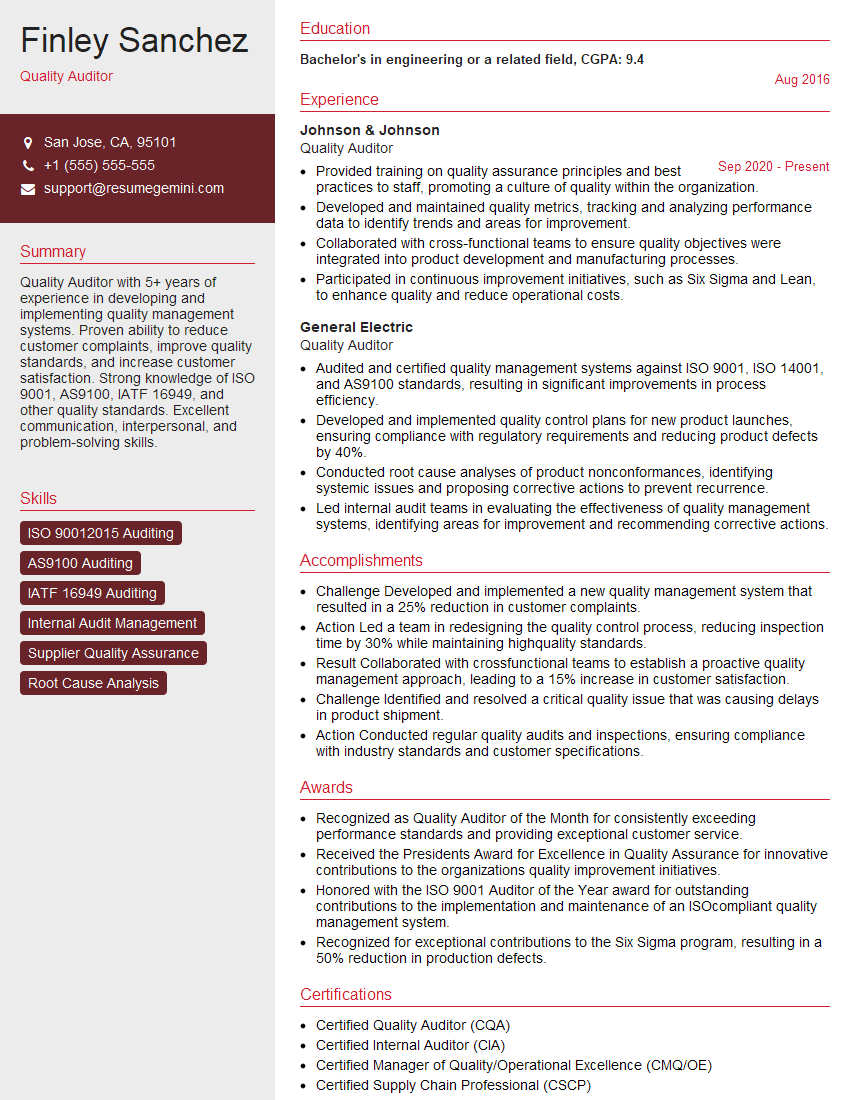
Quality Auditor Resume Sample
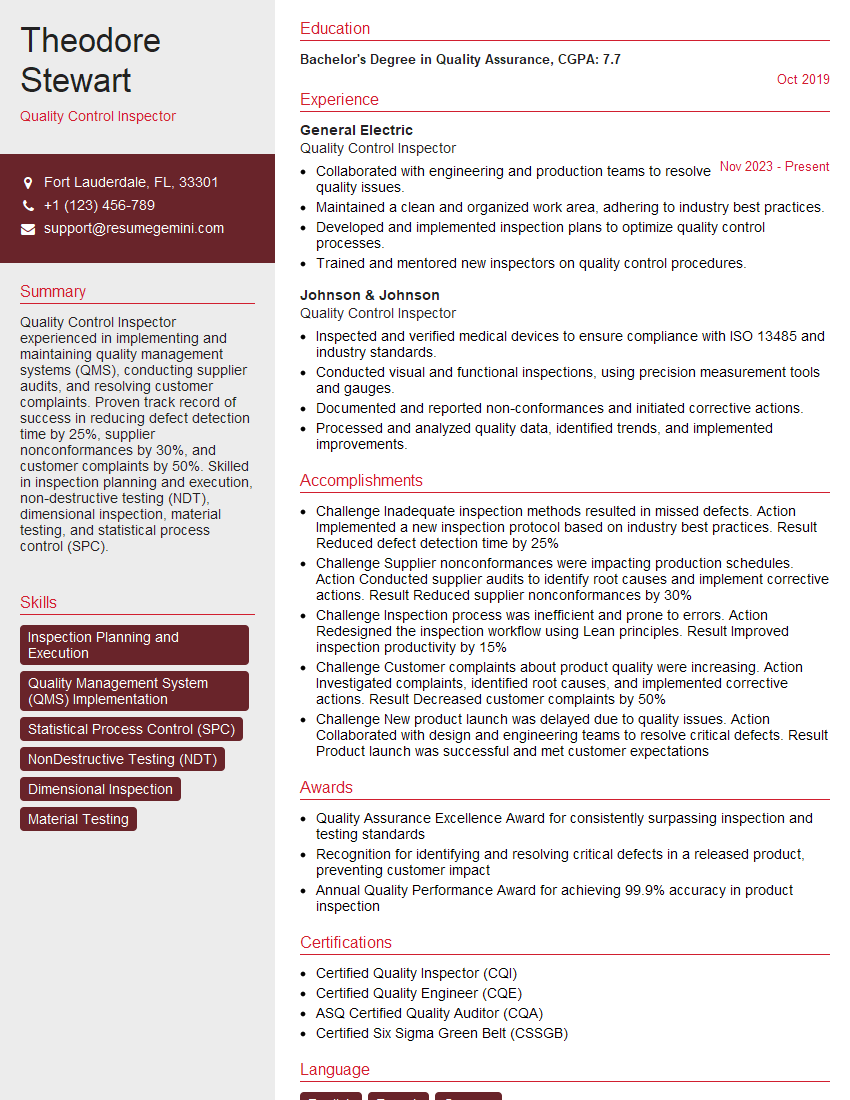
Quality Control Inspector Resume Sample
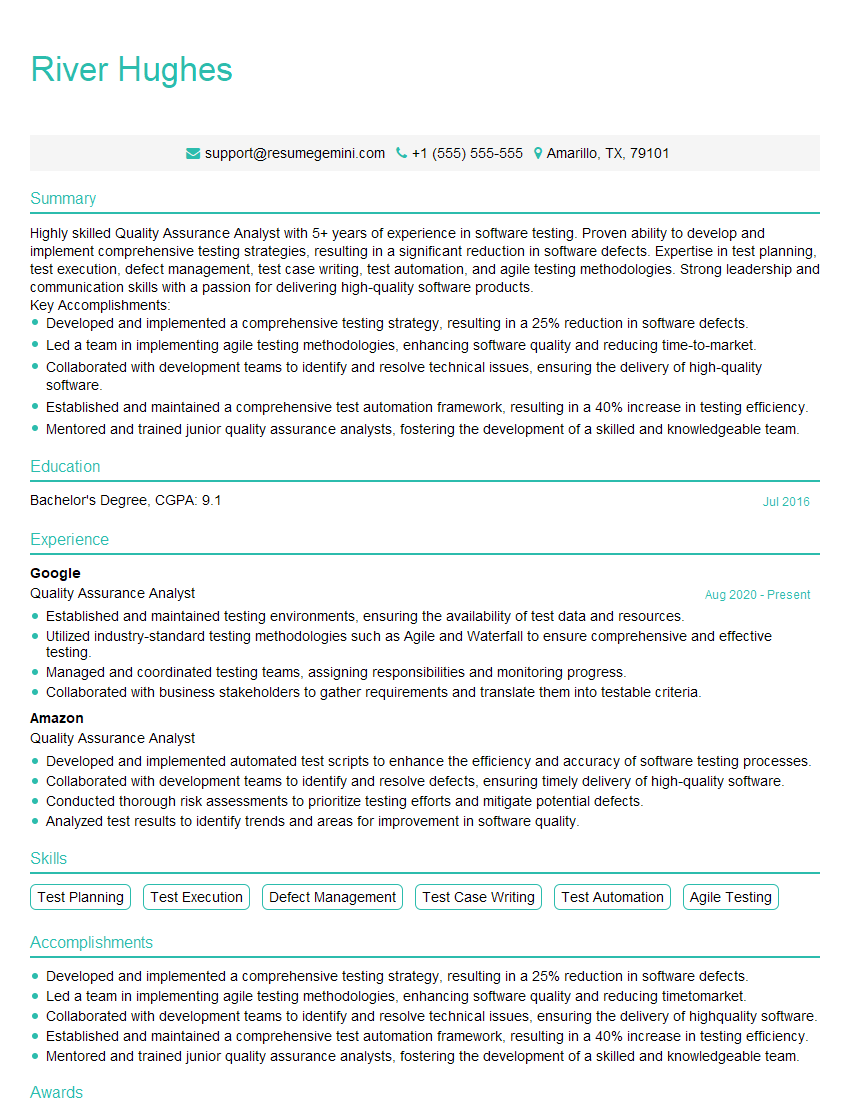
Quality Assurance Analyst Resume Sample
- Quality Assurance Manager
- Quality Control Supervisor
- Compliance Manager
- Reliability Engineer
- Test Engineer
- Quality Engineer
- Quality Systems Manager
- Manufacturing Engineer
- Metrologist
- Quality Control Specialist
- Calibration Technician
- Senior Quality Engineer
- Quality Assurance Auditor
- Quality Auditor
- Quality Control Inspector
- Quality Assurance Analyst
Explore more articles
Users Rating of Our Blogs
Share Your Experience
We value your feedback! Please rate our content and share your thoughts (optional).
What Readers Say About Our Blog
Very informative content, great job.
good