Preparation is the key to success in any interview. In this post, we’ll explore crucial Aquaculture Practices interview questions and equip you with strategies to craft impactful answers. Whether you’re a beginner or a pro, these tips will elevate your preparation.
Questions Asked in Aquaculture Practices Interview
Q 1. Describe different aquaculture systems (e.g., RAS, ponds, cages).
Aquaculture systems vary greatly depending on species, scale, and environmental factors. Three primary systems are Recirculating Aquaculture Systems (RAS), ponds, and cages.
- Recirculating Aquaculture Systems (RAS): RAS are highly controlled environments where water is continuously circulated, filtered, and treated. This allows for high stocking densities and year-round production, regardless of climate. Think of it like a highly sophisticated, technologically advanced fish tank. Water quality parameters like temperature, dissolved oxygen, and ammonia are meticulously monitored and controlled. A common example is land-based salmon farming in colder climates where natural water sources might be unsuitable or unavailable.
- Ponds: These are more traditional systems utilizing earthen or lined ponds to raise fish. They are generally less intensive than RAS, relying more on natural water exchange and biological processes for water quality maintenance. Pond aquaculture is suited to warmer climates and species tolerant of fluctuations in water quality. A classic example is catfish farming in the Southern United States.
- Cages: These are net enclosures suspended in lakes, rivers, or coastal waters. Cages allow for higher stocking densities than ponds while still utilizing the natural water environment. Careful monitoring of water quality is still crucial, especially in regards to currents and oxygen levels. This system is often used for salmon, trout, and other species that thrive in cooler, flowing waters. For example, many salmon farms in Norway utilize this technique.
Q 2. Explain the principles of water quality management in aquaculture.
Water quality management is the cornerstone of successful aquaculture. It involves maintaining optimal levels of various parameters crucial for fish health and growth. Think of it as providing the fish with a healthy and comfortable ‘home’ in the water.
- Dissolved Oxygen (DO): Sufficient DO is vital for fish respiration. Low DO levels lead to stress, disease, and mortality. Aeration systems, proper stocking densities, and water exchange are crucial to maintain adequate DO.
- Ammonia (NH3) and Nitrite (NO2): These are toxic waste products of fish metabolism. Effective biofiltration systems (e.g., using beneficial bacteria) are essential to convert these toxic compounds into less harmful nitrate (NO3). Regular monitoring and water changes are crucial.
- pH: The pH level affects the availability of nutrients and the toxicity of ammonia. Maintaining a stable and appropriate pH range is essential for fish health.
- Temperature: Fish are ectothermic (cold-blooded), meaning their body temperature is dictated by their environment. Maintaining optimal water temperature is critical for growth and disease prevention. This often involves the use of heaters or chillers.
- Salinity: For saltwater species, maintaining correct salinity is obviously vital. For freshwater species, changes in salinity can be equally detrimental.
Effective water quality management often involves a combination of these techniques, tailored to the specific needs of the species being cultivated and the aquaculture system used. Regular monitoring through water testing is essential.
Q 3. What are the common diseases affecting farmed fish and their treatments?
Farmed fish are susceptible to various diseases, bacterial, viral, and parasitic. Prevention is always the best strategy, but effective treatment is needed when outbreaks occur.
- Bacterial Diseases: Examples include Aeromonas and Vibrio infections, often manifesting as skin lesions, fin rot, and internal infections. Treatments can involve antibiotics, but careful consideration of antibiotic resistance is crucial. Prophylactic measures include good water quality and biosecurity.
- Viral Diseases: Viral hemorrhagic septicemia virus (VHS) and infectious pancreatic necrosis (IPN) are examples of highly contagious viral diseases. Unfortunately, there are currently no effective cures for viral diseases in fish; preventative measures are paramount, such as selective breeding for disease resistance and strict biosecurity protocols.
- Parasitic Diseases: Sea lice are a significant problem in salmonid aquaculture, causing skin irritation and reducing growth. Treatments include chemical treatments (with careful consideration of environmental impact), freshwater dips, and biological control methods.
Diagnosis is crucial in selecting appropriate treatment. This typically involves a combination of clinical signs, laboratory testing, and possibly even necropsy (animal autopsy). It’s essential to always follow veterinary guidance and adhere to regulations regarding the use of medications in aquaculture.
Q 4. Discuss various fish feed formulations and their impact on growth and health.
Fish feed formulations are critical to optimizing growth, health, and overall production efficiency. The composition of the feed impacts everything from growth rates to the nutritional content of the fish itself.
- Ingredient Selection: Formulations typically include protein sources (fishmeal, soybean meal, insect meal), carbohydrates (grains), fats and oils, vitamins, and minerals. Sustainable and cost-effective sourcing of ingredients is increasingly important.
- Nutrient Levels: Feeds are formulated to meet the specific nutritional requirements of the fish at different life stages. Juvenile fish need different nutritional profiles than adult fish.
- Feed Types: Feeds come in various forms such as pellets, crumbles, and extruded feeds. Feed type affects palatability, digestibility, and environmental impact.
- Impact on Growth and Health: A well-formulated diet leads to optimal growth, enhanced immune function, and improved disease resistance. Conversely, inadequate or inappropriate nutrition can lead to poor growth, increased susceptibility to disease, and reduced product quality.
For example, using a diet enriched with omega-3 fatty acids will result in healthier, more nutritious fish for human consumption. Similarly, including probiotics in the feed can positively impact the fish’s gut microbiome and overall health. Ongoing research constantly refines fish feed formulations to enhance efficiency and sustainability.
Q 5. How do you monitor and control fish health in your operation?
Monitoring and controlling fish health is an ongoing process requiring vigilance and a multi-faceted approach.
- Regular Observation: Daily visual inspections are essential to detect any abnormal behavior, such as lethargy, loss of appetite, or unusual swimming patterns. Early detection is key to effective disease management.
- Water Quality Monitoring: Continuous monitoring of water quality parameters (as discussed above) is essential to maintain a healthy environment.
- Sampling and Diagnostic Testing: Regular sampling of fish allows for diagnostic testing to identify potential pathogens or parasites. This often involves collaborating with veterinary laboratories.
- Vaccination: Many commercially important fish species are vaccinated against specific diseases, reducing the risk of outbreaks.
- Treatment and Quarantine: If disease is detected, appropriate treatment strategies (as discussed above) are implemented. Quarantine procedures are crucial to prevent the spread of disease.
The effectiveness of this process depends on the careful monitoring, consistent application of best practices, and the rapid response to any identified problem.
Q 6. Explain the concept of biosecurity in aquaculture and its importance.
Biosecurity in aquaculture focuses on preventing the introduction and spread of diseases and parasites. It’s like establishing a strong immune system for your entire aquaculture operation. It is absolutely essential for the long-term viability and success of any aquaculture facility.
- Quarantine Procedures: All new fish introductions should undergo a rigorous quarantine period to ensure they are free of diseases. This might involve a dedicated quarantine facility with strict water management and monitoring.
- Hygiene Practices: Maintaining high hygiene standards throughout the farm is crucial, including regular cleaning and disinfection of equipment and facilities.
- Visitor Control: Limiting access to the farm and implementing strict protocols for visitors (e.g., changing clothes, disinfecting boots) reduces the risk of introducing pathogens.
- Waste Management: Proper management of waste products is crucial to prevent the spread of disease. This involves careful disposal or treatment of dead fish, uneaten feed, and other waste materials.
- Pest and Wildlife Control: Managing wild birds, mammals, and other animals that could potentially carry diseases into the farm is essential.
A strong biosecurity program, meticulously implemented, is paramount to preventing devastating disease outbreaks and ensuring the long-term sustainability of the operation.
Q 7. What are the key factors to consider when selecting a suitable aquaculture site?
Site selection is a critical step in establishing a successful aquaculture operation. Numerous factors must be carefully considered.
- Water Quality: The water source must meet the specific requirements of the species being cultivated. This includes parameters such as temperature, DO, pH, salinity, and flow rate.
- Water Availability: Sufficient water supply is essential, ensuring consistent water flow and quality throughout the year.
- Accessibility: Ease of access for transportation of feed, equipment, and harvested product is vital for efficient operations.
- Environmental Impact: The potential impact of the operation on the surrounding environment must be carefully assessed and mitigated. This includes potential impacts on water quality, biodiversity, and surrounding ecosystems.
- Regulations and Permits: Compliance with all relevant environmental and aquaculture regulations and obtaining necessary permits are critical.
- Infrastructure: Availability of necessary infrastructure such as power, roads, and communication systems is essential.
- Land Availability and Cost: The availability of suitable land at a reasonable cost is also a key consideration.
Careful consideration of these factors is crucial for minimizing risks, optimizing production, and ensuring the long-term sustainability of the aquaculture operation. Ignoring these factors can lead to major economic losses, environmental damage, and regulatory issues.
Q 8. Describe different methods for harvesting fish.
Harvesting fish in aquaculture varies greatly depending on the species, culture system, and scale of the operation. Think of it like harvesting different crops – you wouldn’t harvest strawberries the same way you harvest wheat. Here are some common methods:
- Seine netting: Used in ponds or cages, this involves pulling a large net around the fish to enclose them, then hauling the net to shore. It’s efficient for larger groups of fish but requires careful planning to avoid stressing the fish.
- Trap netting: Fish are lured into traps, which are then hauled to collect the catch. This is less stressful but can be less efficient.
- Draining ponds: For smaller ponds, the water is simply drained, leaving the fish in the pond bottom which are then collected manually or with smaller nets. This method is only feasible for smaller-scale operations and species tolerant of exposure to air.
- Pumping: Larger facilities might use pumps to transfer fish directly from rearing tanks to processing areas. This is less stressful and more controlled than other methods but requires specialized equipment.
- Individual fish handling: In some high-value species operations, fish might be individually selected and removed from tanks. This is labor-intensive but minimizes stress and maximizes quality control.
The choice of method depends on factors like fish size, species behavior, water depth, pond size and the overall goal of minimizing stress and maximizing fish quality and efficiency.
Q 9. How do you manage waste and effluent in an aquaculture system?
Waste management is critical in aquaculture to protect both the environment and the health of the fish. Untreated waste can lead to water quality deterioration and the spread of diseases. Effective waste management strategies are essential for sustainable aquaculture operations. Here are key aspects:
- Solid waste removal: Regularly removing uneaten feed, fish feces, and other solid waste from ponds or tanks prevents the build-up of organic matter which can deplete oxygen and cause pollution.
- Effluent treatment: This is crucial for intensive systems. Treatment methods can range from simple sedimentation ponds to advanced technologies like biofilters and constructed wetlands. These systems help remove excess nutrients (nitrogen and phosphorus), solids, and pathogens before wastewater is discharged back into the environment.
- Water exchange and recirculation: Regularly exchanging water in open systems dilutes waste, while recirculation systems use filtration and biological processes to clean the water repeatedly before it is reused, minimizing water consumption.
- Integrated Multi-Trophic Aquaculture (IMTA): This sustainable approach incorporates different species into the system, allowing some species (like seaweed or shellfish) to consume waste products from other species, reducing pollution and creating a more balanced ecosystem.
Selecting the appropriate treatment method depends heavily on factors such as the scale of the operation, the species being farmed, local regulations, and available resources. The cost-effectiveness of different treatments must also be considered.
Q 10. What are the principles of sustainable aquaculture practices?
Sustainable aquaculture aims to produce seafood responsibly while minimizing environmental impact and ensuring long-term viability. Key principles include:
- Minimizing environmental impact: Reducing water pollution, energy consumption, and greenhouse gas emissions is paramount. This involves efficient feed utilization, responsible waste management, and careful site selection.
- Protecting biodiversity: Avoiding the destruction of natural habitats and minimizing negative impacts on wild fish populations is crucial. This may involve selecting appropriate sites, using selective harvesting practices, and employing responsible stocking strategies.
- Ensuring social equity: Sustainable aquaculture should benefit local communities, creating jobs and economic opportunities while ensuring fair labor practices and respecting local traditions and cultures.
- Economic viability: The operation needs to be economically sound in the long term to ensure its sustainability. This requires efficient production practices, careful market analysis, and responsible pricing strategies.
- Responsible use of resources: This encompasses efficient water use, sustainable feed production (reducing reliance on wild-caught fishmeal and fish oil), and minimizing the use of chemicals and antibiotics.
In essence, sustainable aquaculture balances economic productivity with environmental stewardship and social responsibility. It’s not just about producing fish; it’s about doing it the right way.
Q 11. Explain the role of genetics in aquaculture.
Genetics plays a vital role in modern aquaculture, enabling improvements in various desirable traits. Think of it like plant breeding but for fish. Genetic selection and manipulation can lead to:
- Faster growth rates: Breeding fish that grow faster reduces production time and increases efficiency.
- Improved disease resistance: Selecting for genetic resistance to common diseases reduces the need for antibiotics and minimizes mortality.
- Enhanced feed conversion ratios: Breeding fish that utilize feed more efficiently reduces costs and environmental impact.
- Improved stress tolerance: Fish with higher stress tolerance are better able to handle changes in environmental conditions during transport and farming.
- Desirable quality traits: Genetics can influence meat quality (e.g., flavor, texture, fat content), improving marketability.
- Sterility in some species: This prevents unwanted reproduction and escape into the wild. This is particularly important for genetically modified fish, to control spread into the wild population.
Genetic improvement programs utilize techniques like selective breeding, marker-assisted selection, and genetic engineering to achieve these goals. However, ethical considerations around genetic modification and potential risks to biodiversity must always be carefully addressed.
Q 12. Discuss different aquaculture species and their specific needs.
The aquaculture industry cultivates a wide array of species, each with unique requirements. Consider these examples:
- Salmon (Salmo salar): Requires cold, well-oxygenated water and a specific diet. They are typically raised in net pens or tanks.
- Tilapia (Oreochromis spp.): A warm-water species that is relatively hardy and tolerant of various conditions. They are often grown in ponds or cages.
- Shrimp (Litopenaeus vannamei): Require brackish or saltwater environments and careful water quality management. They are typically cultured in ponds or raceways.
- Catfish (Ictalurus punctatus): Can tolerate a range of water conditions, making them suitable for different culture systems. They are often raised in ponds or tanks.
- Oysters (Crassostrea gigas): Filter feeders that require specific water quality and substrate conditions for optimal growth. They are typically cultured on the seabed or in suspended culture systems.
Understanding the specific needs of each species—including water quality parameters (temperature, salinity, dissolved oxygen), diet, growth rates, and disease susceptibility—is critical for successful aquaculture operations.
Q 13. What are the challenges associated with intensive aquaculture?
Intensive aquaculture, while highly productive, faces several challenges:
- High stocking densities: Lead to increased competition for resources, accumulation of waste, and higher susceptibility to diseases. Think of it like overcrowding a city – more people means more problems.
- Water quality issues: High densities and waste accumulation can rapidly deteriorate water quality, harming fish health and potentially causing environmental damage.
- Disease outbreaks: Close proximity of fish increases the risk of disease transmission. Outbreaks can result in significant economic losses and potential environmental consequences.
- High feed costs: Intensive systems often rely on commercially produced feeds, which can represent a substantial portion of the production costs.
- Waste management: Effective and sustainable waste management is crucial but can be complex and expensive, especially in high-density systems.
- Escape of farmed fish: Can have significant impacts on wild populations through genetic introgression, competition for resources, and the spread of diseases.
Addressing these challenges requires careful planning, appropriate technology, and a strong focus on biosecurity and sustainable practices. It’s a balancing act between maximizing production and minimizing negative impacts.
Q 14. How do you manage stress in farmed fish?
Stress in farmed fish can significantly impact growth, health, and overall productivity. Think of it as similar to stress in humans – it weakens the immune system and makes the fish more susceptible to disease. Effective stress management involves:
- Maintaining optimal water quality: Ensuring adequate dissolved oxygen, appropriate temperature, and minimizing fluctuations in salinity are essential.
- Appropriate stocking density: Avoiding overcrowding reduces competition and aggression.
- Gentle handling techniques: Minimizing physical trauma during handling and transport.
- Proper nutrition: Providing a balanced diet helps build resilience to stress.
- Reducing noise and visual disturbances: Minimizing sources of stress in the farm environment.
- Vaccination and disease prevention: Proactive strategies help prevent disease outbreaks, a major source of stress.
- Acclimation procedures: Gradually adjusting fish to new environments during transport or stocking.
Monitoring fish behavior for signs of stress (e.g., increased gill ventilation, loss of appetite, lethargy) is crucial for timely intervention. A healthy, less-stressed fish is a productive fish.
Q 15. Describe your experience with aquaculture record-keeping and data analysis.
Accurate record-keeping is the backbone of successful aquaculture. My experience encompasses utilizing various software and manual methods to track everything from water quality parameters (temperature, dissolved oxygen, pH) and feed consumption to fish growth rates, mortality, and disease outbreaks. I’m proficient in using spreadsheet software like Excel to analyze this data, identifying trends, and predicting potential issues. For instance, by tracking daily feed conversion ratios (FCR), I can pinpoint if there’s a problem with feed quality, water parameters affecting appetite, or a disease affecting growth. I also have experience with more sophisticated data management systems that integrate with sensors and automate data collection, allowing for real-time monitoring and more efficient decision-making.
My data analysis skills extend to identifying correlations between various factors. For example, I might analyze the relationship between water temperature and disease prevalence, allowing for preventative measures. I use statistical analysis techniques to draw meaningful conclusions from the data and create reports for stakeholders, which include production summaries, cost analysis, and projections for future yields. This data-driven approach helps optimize operations and improve profitability.
Career Expert Tips:
- Ace those interviews! Prepare effectively by reviewing the Top 50 Most Common Interview Questions on ResumeGemini.
- Navigate your job search with confidence! Explore a wide range of Career Tips on ResumeGemini. Learn about common challenges and recommendations to overcome them.
- Craft the perfect resume! Master the Art of Resume Writing with ResumeGemini’s guide. Showcase your unique qualifications and achievements effectively.
- Don’t miss out on holiday savings! Build your dream resume with ResumeGemini’s ATS optimized templates.
Q 16. How do you ensure the quality and safety of aquaculture products?
Ensuring the quality and safety of aquaculture products is paramount, involving a multi-faceted approach. This begins with maintaining optimal water quality through regular testing and implementing appropriate filtration and water treatment systems. Strict biosecurity measures are crucial to prevent disease outbreaks. This involves controlling access to the farm, implementing quarantine procedures for new stock, and employing effective disinfection protocols. I meticulously monitor feed quality, sourcing from reputable suppliers and adhering to strict feeding protocols to ensure optimal fish health and minimize the risk of contamination.
Furthermore, rigorous harvesting and handling procedures are employed to minimize stress on the fish and prevent damage. This includes appropriate stunning and bleeding techniques to ensure a humane harvest and maintain the quality of the product. Post-harvest handling, including chilling and storage, adheres to strict guidelines to maintain freshness and safety. Finally, regular testing for pathogens and contaminants guarantees that products meet all safety standards before reaching the consumer.
Q 17. Explain your experience with different aquaculture production techniques.
My experience spans various aquaculture production techniques, encompassing both extensive and intensive systems. In extensive systems, I’ve worked with integrated multi-trophic aquaculture (IMTA), where different species are grown together to enhance nutrient cycling and reduce environmental impact. For example, integrating seaweed cultivation with finfish farming can help absorb excess nutrients from fish waste.
In intensive systems, I’ve worked with recirculating aquaculture systems (RAS), which offer greater control over water quality and allow for higher stocking densities. This involves managing complex filtration systems, including mechanical, biological, and chemical processes to maintain optimal water conditions. I also have experience in cage culture, where fish are raised in submerged enclosures, requiring expertise in site selection, mooring systems, and the prevention of escapees.
Additionally, I’m familiar with pond aquaculture, requiring different management practices compared to RAS, including water level management, aeration, and weed control. My practical experience allows me to adapt to various systems and optimize production based on the specific species and environmental conditions.
Q 18. Describe your knowledge of relevant aquaculture regulations and certifications.
I possess a comprehensive understanding of relevant aquaculture regulations and certifications, including those related to water quality, biosecurity, food safety, and environmental impact. I’m familiar with regulations governing the use of chemicals and medications in aquaculture, ensuring adherence to maximum residue limits (MRLs) and avoiding any harmful impact on the environment or human health. I understand the importance of traceability systems and have experience implementing them to track the movement of fish from hatchery to harvest. This is crucial for meeting market demands and ensuring compliance with food safety standards.
My experience includes obtaining and maintaining various certifications, such as those related to sustainable aquaculture practices (e.g., Aquaculture Stewardship Council – ASC certification) and Good Agricultural Practices (GAP). These certifications demonstrate a commitment to quality, sustainability, and responsible aquaculture practices, enhancing the market value of the produced goods.
Q 19. How do you address environmental concerns in your aquaculture operation?
Addressing environmental concerns is a top priority in my approach to aquaculture. This involves minimizing the impact of operations on surrounding ecosystems through several key strategies. Firstly, careful site selection is crucial, avoiding sensitive habitats and minimizing disruption to existing ecosystems. Efficient feed management, choosing high-quality feed with optimal nutrient content and employing precise feeding strategies, minimizes waste and reduces nutrient loading into the water.
Secondly, effective waste management strategies are implemented. This can include the use of biofloc technology in RAS to break down waste products, or the integration of seaweed farming in IMTA systems to absorb excess nutrients. Regular monitoring of water quality parameters ensures compliance with environmental regulations and helps detect potential problems early on. Finally, I actively promote environmentally sustainable practices throughout the entire production cycle, aiming to reduce the ecological footprint of my operation.
Q 20. Explain your experience with troubleshooting aquaculture systems.
Troubleshooting aquaculture systems requires a systematic and analytical approach. When issues arise, I start with thorough observation and data analysis to identify the root cause. For instance, if fish growth is stunted, I would review factors like water quality, feed composition, stocking density, and disease prevalence. I might also examine the efficiency of the oxygenation and filtration system in RAS.
Based on this initial assessment, I develop and implement a solution. This could involve adjusting water parameters, modifying feeding regimes, treating diseases with approved medications, or upgrading or repairing equipment. I maintain detailed records of troubleshooting efforts, enabling continuous improvement and preventing future occurrences. For example, if a disease outbreak occurs, I would meticulously document the signs, implement control measures, and analyze the effectiveness of the interventions to improve future responses.
Q 21. What is your experience with the use of technology in aquaculture?
Technology plays a significant role in modern aquaculture, and I have experience using a range of technological solutions to enhance efficiency and sustainability. This includes the use of sensors and automated monitoring systems to collect real-time data on water quality, fish behavior, and environmental parameters. This data is then used for predictive modeling and preventative management.
I’m also familiar with the use of software for farm management, allowing for efficient record-keeping, data analysis, and reporting. Furthermore, I have experience with remote monitoring systems, enabling real-time oversight of the operation, even from remote locations. The application of artificial intelligence (AI) and machine learning (ML) algorithms are increasingly used for predictive maintenance, optimizing feed strategies, and detecting disease outbreaks early. Embracing technological advances allows for more precise control, improved efficiency, reduced costs, and more sustainable aquaculture practices.
Q 22. How do you manage labor and workforce in an aquaculture setting?
Effective labor management in aquaculture is crucial for profitability and operational efficiency. It involves a multi-pronged approach encompassing recruitment, training, retention, and fair labor practices. My strategy begins with carefully defining job roles and responsibilities, creating clear job descriptions that outline tasks, required skills, and performance expectations. This ensures we attract candidates with the right skill set from the outset.
Following recruitment, a robust training program is essential. This includes both on-the-job training and potentially external courses focusing on areas like fish handling, water quality management, disease prevention, and equipment operation. Regular performance reviews provide constructive feedback and identify areas for improvement or further training needs. Moreover, creating a positive work environment with fair compensation and benefits is key to employee retention, which reduces turnover costs and maintains operational consistency.
For example, in a previous role managing a large-scale shrimp farm, I implemented a tiered training system. New employees started with basic tasks, gradually progressing to more complex responsibilities as their skills developed. This not only enhanced their expertise but also built confidence and fostered a sense of achievement. Furthermore, I established a system for recognizing and rewarding exceptional performance, contributing to a motivated and productive team.
Q 23. Describe your approach to risk management in aquaculture.
Risk management in aquaculture is paramount due to the inherent vulnerabilities of aquatic environments and biological systems. My approach is proactive and comprehensive, encompassing various risk categories and mitigation strategies. It begins with thorough risk identification, using tools like SWOT analysis (Strengths, Weaknesses, Opportunities, Threats) and hazard analyses to pinpoint potential problems. These might include disease outbreaks, environmental changes (e.g., algal blooms, temperature fluctuations), equipment failure, market fluctuations, and regulatory changes.
Once risks are identified, I prioritize them based on likelihood and potential impact. This allows for focused resource allocation to address the most critical risks first. Mitigation strategies are then developed, incorporating preventative measures, contingency plans, and insurance policies where appropriate. For example, a disease outbreak risk might be mitigated through robust biosecurity protocols, regular health checks, and access to quick veterinary consultation. Market fluctuations might be addressed through diversification of products or securing long-term contracts with buyers.
Regular monitoring and evaluation are essential to assess the effectiveness of risk management strategies. Data collection, such as water quality parameters, fish health indicators, and production metrics, allows for timely adjustments and improvements to the overall approach. For instance, during a period of unusually high water temperatures in a salmon farm, I implemented temporary aeration strategies to prevent oxygen depletion, preventing fish mortality and significant financial losses.
Q 24. What is your experience with marketing and sales of aquaculture products?
My experience in marketing and sales of aquaculture products extends across multiple species and market segments. I understand that successful sales depend on understanding both the product and the customer. This includes knowledge of market trends, consumer preferences, and pricing strategies. I’ve worked extensively with direct sales to restaurants, supermarkets, and wholesalers, utilizing both traditional methods like relationship building and modern techniques such as online marketing and social media campaigns.
In one project, we successfully increased sales of sustainably farmed trout by highlighting its environmental benefits and superior taste through targeted marketing campaigns aimed at health-conscious consumers. We partnered with chefs and food bloggers to showcase recipes and promote the product’s versatility. Branding and packaging were also key aspects, ensuring that the product presentation reflected its quality and sustainability credentials. Developing strong relationships with key buyers is critical, involving regular communication, providing accurate and timely information, and ensuring product quality consistently meets agreed-upon standards.
Understanding traceability and certification schemes is also vital in building consumer trust and accessing premium markets. For instance, ensuring products meet standards like ASC (Aquaculture Stewardship Council) certification opens doors to higher-value markets and a premium price point. Effective marketing and sales require a data-driven approach, monitoring key performance indicators (KPIs) like sales volume, customer acquisition cost, and brand awareness to optimize strategies and maximize returns.
Q 25. Explain your understanding of the economics of aquaculture.
Aquaculture economics involves understanding the intricate interplay of production costs, market prices, and operational efficiency. It’s far more complex than simple cost-benefit analysis; it requires a deep understanding of various factors. Production costs encompass feed, labor, energy, land/water lease, equipment maintenance, and disease control. These costs can vary significantly depending on the species, farming system (e.g., intensive, extensive), location, and technology employed. Market prices are influenced by factors like supply and demand, consumer preferences, seasonal variations, and global trade dynamics.
Operational efficiency is vital for profitability. This includes maximizing yields, minimizing waste, and optimizing resource utilization. Factors like feed conversion ratios (FCR), which measures the amount of feed required to produce a unit of fish biomass, are critical indicators of efficiency. A lower FCR indicates better resource utilization and reduced costs. Financial management skills are crucial in aquaculture, including budgeting, forecasting, and understanding different financing options. Analyzing return on investment (ROI) and identifying opportunities for cost reduction are essential for long-term sustainability.
For instance, using advanced technologies like recirculating aquaculture systems (RAS) can significantly reduce water consumption and wastewater discharge, impacting both operational costs and environmental footprint. Likewise, optimizing feeding strategies based on fish size and growth stages can significantly improve FCR and reduce feed costs, a major component of production expenses. A thorough understanding of economic principles allows for informed decision-making regarding investments, expansion strategies, and risk management.
Q 26. How do you ensure the welfare of farmed fish?
Ensuring the welfare of farmed fish is not only an ethical imperative but also critical for maximizing production and product quality. My approach involves a holistic understanding of fish biology, behavior, and environmental needs. It begins with selecting appropriate species for the specific farming environment and ensuring suitable stocking densities to prevent overcrowding and stress. Maintaining optimal water quality, including temperature, dissolved oxygen, pH, and ammonia levels, is fundamental. Regular monitoring of water parameters and timely corrective actions are crucial.
Implementing effective disease prevention strategies, including biosecurity protocols (e.g., quarantine procedures for new fish, disinfection of equipment) and vaccinations where appropriate, is paramount. Early detection and treatment of diseases are also critical. This necessitates regular health checks, potentially employing non-invasive methods like visual observation and behavioral monitoring, to quickly identify any signs of disease. Careful handling techniques during harvesting, transport, and processing minimize stress and prevent injuries.
In practice, this could involve implementing stress reduction techniques like providing adequate shelter and hiding places within the farming environment, ensuring consistent feeding regimes, and minimizing handling disturbance. Continuous learning and staying up-to-date on the latest research in fish welfare science are essential to improve practices and maintain high ethical standards. For example, using anesthetic during harvesting can significantly reduce stress levels on the fish, resulting in improved fish quality and potentially higher market value.
Q 27. What is your experience with different types of aquaculture equipment?
My experience with aquaculture equipment is extensive, spanning various types of systems and technologies. This includes experience with both traditional and advanced equipment. In traditional systems, I’ve worked with various types of nets, cages, and ponds, understanding their suitability for different species and environments. I am familiar with the operation and maintenance of aerators, water pumps, and feeding systems, essential components of successful aquaculture operations.
In more advanced systems, I have worked extensively with recirculating aquaculture systems (RAS), which offer significant advantages in terms of water usage, waste management, and environmental control. Understanding the complexities of RAS systems, including filtration units, biofilters, and oxygenation systems, is crucial for their efficient operation. Experience with automated feeding systems, water quality monitoring sensors, and data acquisition systems enhances productivity and allows for precise control of farming parameters.
Further, I have hands-on experience with harvesting and processing equipment, including specialized nets and equipment for fish handling, grading, and sorting. Understanding the safety protocols and maintenance requirements of all equipment is crucial for preventing accidents and maximizing equipment lifespan. The choice of equipment should always be guided by species-specific requirements, farm scale, and budgetary considerations. A balanced approach combines proven technologies with innovative solutions to achieve optimal productivity and sustainability.
Q 28. Describe your experience with integrating sustainability into aquaculture practices.
Integrating sustainability into aquaculture practices is no longer optional; it’s a necessity for long-term viability and responsible environmental stewardship. My approach to sustainable aquaculture considers the entire lifecycle of the farmed product, from feed sourcing to waste management. This starts with selecting species and farming systems that minimize environmental impact. For example, favoring species with low feed conversion ratios and employing low-impact farming methods like integrated multi-trophic aquaculture (IMTA) can reduce reliance on wild fish stocks and minimize pollution.
Sustainable feed sourcing is crucial. Utilizing alternative protein sources, such as insects or single-cell proteins, reduces pressure on wild fish stocks used for traditional fishmeal and fish oil production. Efficient water management is another key aspect, implementing technologies like RAS to reduce water consumption and minimize wastewater discharge. Employing efficient energy sources and minimizing energy consumption throughout the production process reduces the carbon footprint of the operation.
Furthermore, effective waste management strategies are vital, including proper disposal or utilization of fish waste and sludge, possibly through composting or biogas production. Adopting responsible disease management practices minimizes the need for antibiotics and other chemicals, reducing the risk of pollution and promoting animal welfare. Transparency and traceability throughout the supply chain are essential for building consumer trust and promoting responsible aquaculture practices. Continuous improvement, data monitoring, and collaboration with stakeholders are key to enhancing the sustainability of aquaculture operations.
Key Topics to Learn for Your Aquaculture Practices Interview
- Sustainable Aquaculture Systems: Understanding different aquaculture systems (e.g., recirculating aquaculture systems (RAS), integrated multi-trophic aquaculture (IMTA)), their environmental impact, and best practices for sustainability.
- Species-Specific Husbandry: Knowledge of the life cycle, nutritional requirements, disease management, and optimal rearing conditions for various commercially important aquaculture species (e.g., salmon, shrimp, tilapia).
- Water Quality Management: Understanding parameters like dissolved oxygen, temperature, pH, ammonia, nitrite, and nitrate; methods for monitoring and maintaining optimal water quality; and troubleshooting water quality issues.
- Aquaculture Nutrition and Feed Management: Knowledge of different feed types, feed formulation, feed efficiency, and the impact of nutrition on fish health and growth. Understanding sustainable feed sources and reducing reliance on wild-caught fishmeal.
- Disease Prevention and Control: Recognizing common aquaculture diseases, implementing biosecurity measures, and understanding treatment strategies, including vaccination and quarantine protocols.
- Harvesting and Post-Harvest Handling: Understanding best practices for minimizing stress and mortality during harvesting, processing, and storage of aquaculture products to ensure quality and safety.
- Aquaculture Economics and Business Management: Understanding cost analysis, production planning, market trends, and financial aspects of aquaculture operations.
- Environmental Regulations and Compliance: Familiarity with relevant environmental regulations and permitting processes related to aquaculture.
- Problem-Solving and Critical Thinking: Demonstrating your ability to analyze complex problems, identify potential solutions, and make informed decisions in the context of aquaculture operations.
Next Steps: Unlock Your Aquaculture Career
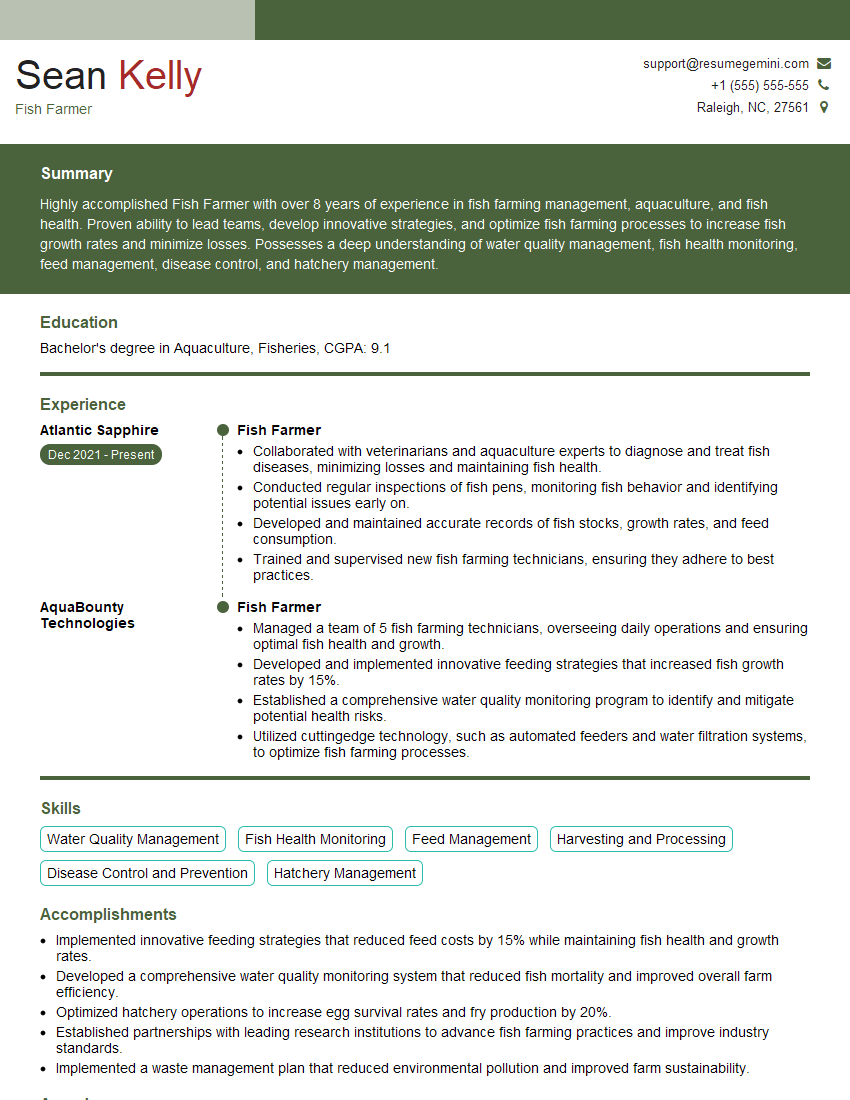
Mastering Aquaculture Practices is crucial for career advancement in this rapidly growing industry. A strong understanding of these principles demonstrates your expertise and commitment to sustainable and efficient aquaculture. To significantly boost your job prospects, focus on creating an ATS-friendly resume that highlights your skills and experience effectively. ResumeGemini is a trusted resource that can help you build a professional resume tailored to the aquaculture industry. We provide examples of resumes specifically designed for Aquaculture Practices to guide you in creating a compelling application.
Explore more articles
Users Rating of Our Blogs
Share Your Experience
We value your feedback! Please rate our content and share your thoughts (optional).
What Readers Say About Our Blog
Very informative content, great job.
good