Feeling uncertain about what to expect in your upcoming interview? We’ve got you covered! This blog highlights the most important Architectural Lighting Design interview questions and provides actionable advice to help you stand out as the ideal candidate. Let’s pave the way for your success.
Questions Asked in Architectural Lighting Design Interview
Q 1. Explain the difference between illuminance and luminance.
Illuminance and luminance are both measures of light, but they describe different aspects. Think of it like this: illuminance is how much light falls on a surface, while luminance is how much light that surface reflects or emits.
Illuminance (measured in lux) is the amount of luminous flux incident on a surface per unit area. It’s essentially the intensity of light falling on a surface. A brightly lit room has high illuminance.
Luminance (measured in candelas per square meter, or cd/m², also known as nits) is the luminous intensity emitted or reflected from a surface per unit area in a particular direction. It’s how bright a surface appears to the observer. A brightly lit, white wall has high luminance because it reflects a lot of light.
Example: Imagine a spotlight shining on a white wall and a black wall. Both walls receive the same illuminance (the same amount of light falls on them). However, the white wall will have much higher luminance because it reflects more light than the black wall.
Q 2. Describe various types of light sources and their applications in architectural lighting.
Architectural lighting uses a variety of light sources, each with its own strengths and weaknesses:
- Incandescent Lamps: Produce warm, inviting light but are energy inefficient and have short lifespans. Used sparingly now, perhaps for accent lighting where warmth is prioritized over efficiency.
- Halogen Lamps: Brighter and more energy-efficient than incandescent, but still generate heat and have a shorter lifespan than LEDs. Good for accent lighting or where a crisp, bright light is needed.
- Fluorescent Lamps: Energy-efficient and long-lasting, but can produce a cooler, less inviting light and have a slower start-up time. Often used in commercial spaces where energy efficiency is key.
- LEDs (Light Emitting Diodes): Highly energy-efficient, long-lasting, available in various color temperatures and can be controlled precisely. The dominant light source in modern architectural lighting due to their versatility and efficiency. They are used extensively for general lighting, accent lighting and dynamic lighting installations.
- High-Intensity Discharge (HID) Lamps (e.g., Metal Halide, High-Pressure Sodium): Very bright and energy-efficient, but require time to warm up and are less suitable for frequent switching. Often used for large spaces like stadiums or street lighting.
The choice of light source depends on factors like energy efficiency requirements, color temperature preferences, desired lifespan, and budget.
Q 3. What are the key considerations for designing lighting for a museum?
Museum lighting requires careful consideration to protect artifacts while enhancing the visitor experience. Key aspects include:
- Minimizing UV and IR radiation: UV and infrared radiation can damage delicate artifacts. Specialized filters and low-output light sources are crucial.
- Controlling light levels: Light levels must be carefully controlled to prevent fading and degradation. Illuminance levels are often kept low, with precise control over exposure time.
- Color rendering: Accurate color rendering is essential to display artifacts authentically. High CRI (Color Rendering Index) light sources are necessary.
- Glare control: Glare can be distracting and damaging. Careful placement of fixtures and use of diffusers are important to minimize glare.
- Security: Lighting can play a role in security, deterring theft and vandalism. Proper placement and control of lighting can highlight security sensitive areas.
- Energy efficiency: Museums often have large spaces, making energy efficiency a significant concern. LED lighting is a popular choice.
For example, a museum might use low-level, carefully directed LED spotlights to illuminate individual artifacts while keeping overall light levels low to protect the surrounding objects.
Q 4. How do you calculate the required lighting levels for a workspace according to IES standards?
Calculating lighting levels for a workspace according to IES (Illuminating Engineering Society) standards involves several steps:
- Determine the task: Identify the visual tasks performed in the workspace (e.g., reading, writing, computer work).
- Consult IES recommended illuminance levels: The IES publishes recommended illuminance levels for various tasks. These are usually given in lux (lx) or foot-candles (fc).
- Calculate the area: Determine the area of the workspace to be lit.
- Select luminaires and light sources: Choose appropriate luminaires (light fixtures) and light sources based on efficiency, aesthetics, and other factors.
- Determine the luminaire’s luminous efficacy: This is usually provided by the manufacturer and expressed in lumens per watt (lm/W).
- Calculate the number of luminaires: Use the following formula (a simplified approach):
Number of Luminaires = (Required Illuminance x Area) / (Luminous Flux per Luminaire x Utilization Factor x Maintenance Factor)Utilization and maintenance factors account for light loss due to fixture design and aging. These values are usually obtained from manufacturers’ data or lighting design software. - Verify uniformity and glare control: Ensure that the lighting provides uniform illumination and minimizes glare.
Lighting design software can significantly simplify these calculations, accounting for various factors like room dimensions, reflectance, and fixture characteristics.
Q 5. Explain the concept of color rendering index (CRI) and its importance in lighting design.
The Color Rendering Index (CRI) is a measure of how accurately a light source renders the colors of objects compared to a reference source (usually daylight). It’s a scale from 0 to 100, with 100 being perfect rendering.
Importance in Lighting Design: CRI is crucial because different light sources can make colors appear different. A high CRI (typically above 80) is essential where accurate color perception is important, such as in museums, art galleries, retail spaces, and food preparation areas. A low CRI light source can make colors look washed out, dull, or unnatural. For example, a food displayed under a low CRI light may appear less appetizing.
Example: A painting might appear vibrant and true-to-life under a high-CRI light source, but dull and muted under a low-CRI light source, even if both sources provide the same illuminance.
Q 6. What are the different types of lighting controls and their advantages/disadvantages?
Several types of lighting controls offer flexibility and energy savings:
- Manual switches: Simple and inexpensive, but lack flexibility. Suitable for basic lighting needs.
- Dimmers: Allow adjustment of light levels, offering control over ambiance and energy consumption. They can be used with many types of light sources, although the design of the dimmer switch must match the light source.
- Timers: Automatically turn lights on and off at preset times, ideal for security and energy savings. They are particularly useful in settings that require predictable lighting schedules.
- Occupancy sensors: Turn lights on when people enter a space and off when they leave, conserving energy. These sensors vary in their sophistication and are widely used in commercial spaces.
- Daylight harvesting systems: Adjust artificial lighting levels based on the amount of available daylight, maximizing natural light and minimizing energy use. These systems are becoming increasingly common in modern sustainable designs.
- Centralized lighting control systems: Allow remote control and monitoring of lighting throughout a building. These systems offer extensive control but are more complex and expensive to install.
The best control system depends on the project’s needs, budget, and complexity.
Q 7. Discuss the principles of daylighting and its integration with artificial lighting.
Daylighting involves using natural light to illuminate interior spaces. It’s a sustainable and energy-efficient approach to lighting design.
Principles of Daylighting: Effective daylighting involves strategic placement of windows, skylights, and light shelves to maximize natural light penetration while minimizing glare and heat gain. Design elements like light shelves, interior light reflecting surfaces, and carefully considered window placement are important in both maximizing the natural light and reducing direct sunlight glare.
Integration with Artificial Lighting: Daylighting is most effective when integrated with artificial lighting. Daylight harvesting systems can automatically adjust artificial lighting levels based on available daylight, ensuring sufficient illumination while minimizing energy waste. The artificial lights should be designed to complement the natural light, in terms of color temperature and light distribution. A well-designed system ensures a consistent and comfortable illumination throughout the day.
Example: A building might use large windows and light shelves to maximize daylight during the day. Sensors monitor the daylight levels and automatically dim or switch off artificial lights accordingly, resulting in significant energy savings and a pleasant, naturally lit environment.
Q 8. How do you select appropriate luminaires for different architectural spaces?
Selecting appropriate luminaires is crucial for achieving the desired lighting effect in any architectural space. It’s not just about brightness; it’s about creating the right ambiance, highlighting architectural features, and ensuring visual comfort. My approach involves a multi-step process:
- Understanding the Space: I first analyze the space’s function (e.g., office, retail, residential), its size and dimensions, ceiling height, and existing architectural elements. A large, high-ceilinged industrial space demands different luminaires than a cozy residential bedroom.
- Defining Lighting Requirements: Next, I determine the necessary illuminance levels (measured in lux) based on relevant lighting standards (like IES or CIE recommendations). These standards provide guidelines for various environments. For instance, a task-oriented space like a drafting room needs higher illuminance than a relaxing lounge area.
- Considering the Light Source: The type of light source significantly impacts the atmosphere. LEDs offer energy efficiency and longevity, while incandescent bulbs provide a warm, inviting glow. I also consider color temperature (measured in Kelvin), expressed as warm white (2700K), cool white (4000K), or daylight (6500K), choosing what best suits the space’s purpose.
- Luminaires Selection: Based on the above factors, I select luminaires (lighting fixtures). This could involve recessed downlights for general illumination, track lighting for accentuation, pendant lights for ambient lighting, or wall sconces for task and mood lighting. For example, in a museum, I’d likely use low-glare spotlights to highlight artwork, while in a restaurant, I’d employ warmer, more ambient lighting to create a cozy atmosphere.
- Material and Aesthetics: Finally, I consider the luminaire’s material and aesthetic to ensure it complements the overall design scheme. The fixture’s design should enhance the architecture rather than clash with it.
Q 9. Explain the importance of energy efficiency in architectural lighting design.
Energy efficiency is paramount in architectural lighting design, both economically and environmentally. Reducing energy consumption minimizes operational costs and reduces a building’s carbon footprint, aligning with sustainability goals.
My approach incorporates several strategies:
- Energy-Efficient Luminaires: Specifying high-efficiency luminaires with LEDs is crucial. LEDs offer significantly higher lumens per watt compared to traditional lighting technologies.
- Lighting Controls: Implementing intelligent lighting controls, such as occupancy sensors, daylight harvesting systems, and dimming capabilities, allows for dynamic adjustment of light levels based on occupancy and natural daylight availability. This prevents unnecessary energy waste.
- Optimized Lighting Layouts: Careful planning of luminaire placement minimizes energy consumption by optimizing light distribution and reducing spill light. Efficient layouts avoid over-illumination or dark spots.
- Light Pollution Reduction: Minimizing light trespass and uplight reduces light pollution. Shielding luminaires and directing light downwards helps preserve the night sky and reduce energy waste.
- Life Cycle Cost Analysis (LCCA): I conduct LCCAs to compare different lighting systems, considering initial investment, energy consumption, maintenance costs, and lamp replacement over the system’s lifespan. This holistic approach ensures long-term cost savings.
For example, in a recent project, incorporating daylight harvesting reduced energy consumption by 30%, demonstrating the significant impact of strategic energy-efficient design choices.
Q 10. Describe your experience with lighting simulation software (e.g., Dialux, Relux, AGi32).
I have extensive experience with lighting simulation software, including Dialux, Relux, and AGi32. These tools are invaluable for visualizing lighting schemes, analyzing illuminance levels, identifying glare issues, and optimizing energy efficiency before implementation.
In my work, I utilize these software packages to:
- Create 3D models of spaces: Import building plans and create accurate 3D models, incorporating architectural details and furniture placement.
- Simulate lighting schemes: Define luminaire types, placement, and specifications to simulate realistic lighting conditions.
- Analyze illuminance levels: Measure illuminance levels at various points in the space to ensure compliance with lighting standards.
- Identify and mitigate glare issues: Detect potential glare issues through simulations and adjust luminaire positioning or specifications to eliminate discomfort.
- Optimize energy consumption: Analyze energy consumption of different lighting scenarios and identify the most efficient solutions.
- Generate reports and visualizations: Produce comprehensive reports and visualizations to communicate lighting design proposals effectively to clients and stakeholders.
For instance, in a recent project using Dialux, I was able to identify a potential glare problem from poorly positioned spotlights before installation, saving time and resources by rectifying the design virtually.
Q 11. How do you address glare in lighting design?
Glare, the sensation of discomfort or visual impairment caused by excessive brightness, significantly impacts visual comfort and productivity. Addressing glare is a crucial aspect of my lighting design approach.
My strategies to mitigate glare include:
- Proper Luminaire Selection: Choosing luminaires with appropriate shielding, such as louvers, baffles, or parabolic reflectors, is crucial for directing light downwards and preventing direct light from reaching the eyes.
- Strategic Luminaire Placement: Positioning luminaires carefully, avoiding direct lines of sight, especially above eye level, minimizes glare. Recessed downlights, for example, are positioned to avoid direct glare.
- Control of Brightness: Implementing dimming controls allows for adjustments to light levels, ensuring the lighting doesn’t overwhelm the space, preventing discomfort.
- Use of Diffusers: Diffusers soften and distribute light, reducing harshness and glare.
- Surface Treatments: Utilizing matte or textured surfaces instead of highly reflective materials on walls and ceilings reduces glare by absorbing or scattering light.
- Lighting Simulation Software: Employing lighting simulation software helps predict glare issues and assess the effectiveness of various strategies before implementation. This allows for proactive adjustments in the design.
For example, in a hospital environment, glare from bright overhead lights is especially problematic. By using shielded luminaires and indirect lighting techniques, we can create a visually comfortable and less stressful environment for both patients and staff.
Q 12. What are the common lighting design challenges in sustainable buildings?
Sustainable buildings present unique lighting design challenges, requiring careful consideration of energy efficiency, daylight integration, and material selection. Common challenges include:
- Balancing Daylight and Artificial Light: Maximizing daylight while minimizing glare and ensuring sufficient artificial light for nighttime use requires sophisticated strategies, such as daylight harvesting systems and automated lighting controls.
- Thermal Comfort: Lighting fixtures can generate heat, impacting the building’s thermal performance and increasing cooling loads. Selecting low-heat luminaires and employing effective ventilation strategies are important.
- Material Sustainability: Ensuring the luminaires and lighting control systems are made from sustainable and recyclable materials is crucial for minimizing environmental impact.
- Integration with Building Systems: Efficient integration of lighting with other building systems, such as HVAC and shading devices, optimizes energy efficiency and improves overall building performance.
- Meeting stringent sustainability certifications: Designing lighting systems to meet the requirements of various green building certifications (e.g., LEED, BREEAM) requires meticulous attention to detail and adherence to specific standards.
For example, in a LEED-certified building, I might use bio-based materials for luminaires, implement a sophisticated daylight harvesting system, and ensure low-energy consumption through the use of high-efficiency LEDs and intelligent controls.
Q 13. Explain your understanding of lighting design standards and codes (e.g., IEC, ANSI).
A strong understanding of lighting design standards and codes is essential for ensuring safety, visual comfort, and compliance. I am familiar with various standards, including the International Electrotechnical Commission (IEC) and the American National Standards Institute (ANSI). These standards cover aspects such as:
- Illuminance levels: Standards define minimum and recommended illuminance levels for different types of spaces (e.g., offices, schools, hospitals).
- Glare limits: Standards specify limits on glare to prevent discomfort and visual impairment.
- Energy efficiency requirements: Standards often mandate energy efficiency levels for lighting systems.
- Safety requirements: Standards address safety aspects, such as preventing electrical hazards and ensuring proper installation.
- Color rendering: Standards define color rendering indices (CRI) to ensure accurate color reproduction.
I utilize these standards throughout the design process to ensure the lighting design meets all relevant safety and performance requirements. Non-compliance can lead to legal issues, safety hazards, and project delays. Understanding these standards allows me to create lighting designs that are both functional and compliant. For instance, knowing the specific illuminance requirements for a hospital operating room is critical in ensuring the safety and effectiveness of the surgical procedures.
Q 14. How do you incorporate lighting into the overall design concept of a project?
Lighting is not simply a functional element; it’s an integral part of the overall design concept, capable of shaping the mood, emphasizing architectural features, and enhancing the user experience. My approach to incorporating lighting begins early in the design process:
- Collaboration with the Design Team: Close collaboration with architects, interior designers, and other stakeholders is essential for aligning lighting design with the overall project vision.
- Mood and Ambiance: Lighting design should complement and enhance the desired mood and ambiance of the space. A warm, inviting atmosphere may require different lighting approaches than a modern, minimalist style.
- Highlighting Architectural Features: Lighting can be strategically used to emphasize key architectural features, such as ceilings, walls, or sculptures, adding depth and interest to the space. For example, accent lighting can highlight a dramatic staircase.
- Wayfinding and Circulation: Proper lighting guides users through the space, ensuring safety and ease of navigation. This might involve strategically placed path lights or uplights.
- Energy Efficiency and Sustainability: Energy-efficient solutions must be incorporated from the outset, aligning with overall sustainability goals.
- Storytelling through Light: Through careful lighting choices, I seek to create a narrative that enhances the space’s overall purpose and communicates a specific design intention. This could be achieved through a variety of techniques, from dramatic shadows to subtle changes in light color.
For example, in a museum, the lighting design would be critical in showcasing the artworks, providing sufficient illuminance while protecting the artifacts from light damage. The lighting design must complement the art and the overall aesthetic of the museum.
Q 15. Describe your experience with different lighting styles (e.g., minimalist, dramatic, etc.).
My experience spans a wide range of lighting styles, each demanding a unique approach. Minimalist design, for example, prioritizes simplicity and functionality. I’ve worked on projects where the lighting is almost invisible, integrated seamlessly into the architecture to highlight key features without drawing attention to itself. This often involves using recessed lighting or linear fixtures with a subtle finish. In contrast, dramatic lighting uses light and shadow to create strong visual impact and atmosphere. Think of a boutique hotel lobby with dramatic spotlights accentuating artwork and architectural details, creating a sense of luxury and excitement. I’ve utilized this approach in several projects, carefully selecting fixture types and placement to achieve the desired effect. I also have extensive experience with other styles, including contemporary, traditional, and even eclectic blends, adapting my approach to the specific design goals and client preferences.
For example, in a recent minimalist residential project, I used primarily recessed downlights with adjustable trims to offer flexible accent lighting. In contrast, a restaurant project demanded dramatic lighting to enhance the ambiance. Here, we used strategically placed pendant lights over bar seating and track lighting to highlight specific menu items, creating a visually engaging and exciting dining environment.
Career Expert Tips:
- Ace those interviews! Prepare effectively by reviewing the Top 50 Most Common Interview Questions on ResumeGemini.
- Navigate your job search with confidence! Explore a wide range of Career Tips on ResumeGemini. Learn about common challenges and recommendations to overcome them.
- Craft the perfect resume! Master the Art of Resume Writing with ResumeGemini’s guide. Showcase your unique qualifications and achievements effectively.
- Don’t miss out on holiday savings! Build your dream resume with ResumeGemini’s ATS optimized templates.
Q 16. How do you manage a lighting project budget effectively?
Managing a lighting project budget effectively requires a multi-stage approach. It starts with thorough upfront planning, carefully analyzing the scope of the project and translating the design vision into a detailed lighting plan that specifies the exact number and types of fixtures needed. We use sophisticated design software that allows for accurate quantity takeoffs and cost estimation early in the process.
Next, we explore various fixture options, comparing price points and features to find the best balance between quality, aesthetics, and budget. Value engineering plays a crucial role – we actively seek cost-effective alternatives without compromising on the design intent. For example, we might specify a slightly less expensive but equally effective LED fixture instead of a more premium option, or explore opportunities to consolidate lighting zones to reduce the overall fixture count. Regular budget monitoring throughout the project is also essential, tracking actual costs against the initial estimates to identify and address any potential overruns promptly. Collaboration with contractors and suppliers is key to securing competitive pricing and avoiding unforeseen expenses.
Q 17. What are your preferred methods for communicating design ideas to clients and collaborators?
Effective communication is fundamental to my process. I use a combination of methods to clearly convey my design ideas. High-quality renderings and 3D visualizations are essential, allowing clients to experience the lighting design before installation. These visuals, created with software like Dialux or AGi32, show the interplay of light and shadow, providing a realistic preview of the final product. I also utilize physical models and mood boards to help clients understand the concept and feel of the lighting scheme, providing a tangible representation of my ideas. Finally, clear and concise written documentation, including detailed lighting plans and specifications, ensures that everyone is on the same page.
In collaborative projects, I believe in transparent communication. Regular meetings and presentations are crucial to keep stakeholders informed, address questions, and solicit feedback. Utilizing shared cloud-based platforms for storing and sharing project files facilitates real-time collaboration and simplifies information exchange.
Q 18. Describe your approach to resolving conflicts between aesthetic and technical lighting requirements.
Conflicts between aesthetic and technical requirements are common in lighting design. My approach focuses on finding creative solutions that satisfy both. This often involves iterative design, testing different lighting strategies and evaluating their impact on the aesthetics and functionality. For example, if a desired aesthetic element proves technically challenging or expensive to illuminate, I explore alternative approaches to achieve similar visual effects with more manageable technical solutions. This might involve changing the fixture type, adjusting the light placement, or employing innovative lighting techniques.
Open communication with clients is crucial to resolve such conflicts. I present different options, clearly explaining the trade-offs between aesthetic choices and technical limitations. This collaborative process allows the client to make informed decisions, balancing their design vision with practical constraints.
Q 19. How do you ensure the safety and compliance of lighting installations?
Ensuring safety and compliance is paramount. Every lighting installation must adhere to relevant building codes and safety standards (e.g., IEC, ANSI). This includes careful selection of fixtures suitable for the specific environment (e.g., damp or wet locations), proper wiring and installation techniques to prevent electrical hazards, and ensuring compliance with emergency lighting regulations. I collaborate closely with electrical engineers and contractors to ensure all safety protocols are followed, including regular inspections and testing throughout the project lifecycle.
Documentation is vital here. Detailed lighting plans and specifications clearly outline the chosen fixtures, wiring diagrams, and safety measures, acting as a comprehensive guide for the installation team. I also ensure that all fixtures are properly labeled and that appropriate safety devices (e.g., GFCI protection) are incorporated.
Q 20. Explain your experience with different types of lighting fixtures (e.g., recessed, pendant, track).
My experience encompasses a wide range of lighting fixtures. Recessed lighting offers clean aesthetics and efficient use of space, perfect for general illumination in ceilings. I often specify these in residential and commercial spaces. Pendant lights, with their varied designs and styles, add visual interest and can serve as statement pieces in a room. They are perfect for creating focal points or highlighting specific areas, often used over dining tables or kitchen islands. Track lighting provides flexible solutions, allowing for easy adjustment of light direction and intensity. This is incredibly useful in retail settings, art galleries, or even home offices where lighting needs are dynamic. Beyond these, I have experience with surface-mounted fixtures, linear systems, and specialized lighting solutions like fiber optics or uplights, selecting the most appropriate type depending on the project’s specific requirements and architectural style.
The choice of fixture depends entirely on the context. A minimalist home might favor sleek recessed lights, while a vintage-style restaurant may benefit from ornate pendant fixtures. My skill lies in selecting the right fixture for the intended effect, considering factors like light distribution, color temperature, and energy efficiency.
Q 21. What are your thoughts on the use of LED lighting in architectural design?
LED lighting has revolutionized architectural design, offering significant advantages in terms of energy efficiency, lifespan, and design flexibility. The ability to control color temperature, dimming levels, and even color-changing capabilities expands the creative possibilities enormously. I believe LEDs are crucial for creating sustainable and energy-efficient lighting schemes. Their small size allows for more discreet integration into architectural details and their long lifespan significantly reduces maintenance costs over the lifetime of a building.
However, there are considerations. Proper heat management is critical to ensuring LED longevity, requiring careful selection of fixtures and installation techniques. Careful consideration must also be given to color rendering and light distribution to ensure the desired aesthetic effects are achieved. In summary, LED technology presents a powerful tool in achieving both sustainability and aesthetic excellence in architectural lighting, though careful planning and execution are paramount.
Q 22. Describe your experience working with BIM (Building Information Modeling) software for lighting design.
BIM (Building Information Modeling) software has revolutionized architectural lighting design. It allows for a collaborative, data-rich approach, moving beyond 2D drawings to create a 3D model encompassing all aspects of the building. My experience with platforms like Revit and DIALux involves utilizing their capabilities to model lighting fixtures, analyze illuminance levels, and simulate the impact of light on surfaces. This includes importing CAD files, defining materials’ light reflectivity, and setting up lighting simulations to predict the final result. For example, I used Revit to model the lighting scheme for a large museum, accurately placing fixtures within the architectural model and simulating daylight conditions to optimize energy efficiency and exhibit illumination. This allowed us to identify potential conflicts early in the design phase, preventing costly revisions during construction. The ability to coordinate with other disciplines, like MEP engineers, within the same BIM model ensures a smoother workflow and minimizes errors.
Beyond simple fixture placement, BIM enables advanced analysis such as glare calculations and energy consumption estimations. For instance, I utilized DIALux to analyze the potential for glare from LED spotlights in a high-end residential project and adjusted the fixture aiming and shielding accordingly. This level of precision significantly enhanced the client’s experience and ensured the project met stringent energy codes. In essence, my BIM experience helps me create more efficient, accurate, and cost-effective lighting solutions.
Q 23. How do you evaluate the effectiveness of a lighting design solution?
Evaluating the effectiveness of a lighting design solution is a multi-faceted process. It goes beyond simply achieving the required illuminance levels (the amount of light falling on a surface). My evaluation includes several key aspects:
- Visual Comfort: Does the lighting create a comfortable and enjoyable visual experience, free from glare, harsh shadows, and excessive brightness? This often involves subjective assessments, considering factors like the users’ visual tasks and the overall ambiance.
- Energy Efficiency: How efficiently does the lighting system use energy? I analyze this through metrics such as watts per square foot and lifecycle cost analysis, incorporating factors like fixture lifespan and energy prices. Using tools like lighting simulation software, we can optimize for energy conservation without compromising visual quality.
- Aesthetics & Ambiance: Does the lighting scheme support the architectural style and create the desired atmosphere? The lighting should enhance the space’s character, whether it’s a calming, intimate setting in a restaurant or a dynamic, energetic space in a retail store.
- Functionality: Does the lighting adequately support the intended activities within the space? For instance, task lighting in an office must provide sufficient illumination for reading and writing, whereas accent lighting in an art gallery needs to highlight specific features without causing glare or damage.
- Code Compliance: Does the design comply with all relevant building codes and regulations pertaining to safety, energy efficiency, and accessibility?
By meticulously evaluating these aspects, I ensure that the lighting design not only meets the project’s functional requirements but also creates a positive and enriching user experience.
Q 24. How do you incorporate user feedback into the lighting design process?
User feedback is paramount in lighting design. It’s impossible to design a truly effective lighting scheme without understanding the users’ needs and preferences. I incorporate user feedback throughout the design process:
- Early-Stage Consultations: I begin by actively engaging with stakeholders—architects, building owners, and end-users—to understand their vision, priorities, and concerns related to lighting. This might involve surveys, focus groups, or individual interviews.
- Mock-ups and Prototypes: Creating physical or digital mock-ups allows users to visualize and experience the lighting scheme before final implementation. This feedback informs adjustments to brightness levels, color temperature, and fixture placement.
- Post-Occupancy Evaluation: After the project is complete, I conduct post-occupancy evaluations (POE) to assess the lighting’s effectiveness in real-world conditions. This often involves questionnaires, observations, and even light level measurements to identify areas for improvement.
For example, during a recent hotel project, user feedback during the mock-up stage revealed a preference for warmer color temperatures in the guest rooms compared to the initially proposed design. This seemingly minor adjustment significantly improved guest satisfaction. Continuously integrating feedback ensures that the final lighting design aligns closely with the users’ expectations and enhances their overall experience within the space.
Q 25. What are some emerging trends in architectural lighting design?
Architectural lighting design is constantly evolving. Several key trends are shaping the field:
- Human-centric lighting (HCL): This approach focuses on using light to improve human wellbeing and productivity by adapting the color temperature and intensity of light throughout the day to mimic natural daylight cycles.
- Smart Lighting and IoT Integration: The increasing integration of smart lighting controls allows for personalized lighting experiences, automated energy management, and remote monitoring. This enhances user control and reduces energy waste.
- Sustainable and Energy-Efficient Solutions: There’s a growing emphasis on using energy-efficient lighting technologies, such as high-efficiency LEDs and daylight harvesting strategies, to reduce environmental impact and operating costs.
- Biophilic Design: Integrating natural light and mimicking natural lighting patterns indoors is increasingly important for creating healthy and productive spaces.
- Dynamic Lighting: Using lighting to create changing moods and atmospheres, often through programmable controls and color-changing fixtures, is gaining popularity in various settings, from retail spaces to entertainment venues.
These trends are not isolated but often intersect. For instance, a smart lighting system can be designed to incorporate HCL principles, optimizing both energy efficiency and occupant well-being. Keeping abreast of these advancements is crucial for designing innovative and impactful lighting solutions.
Q 26. Describe your experience with lighting for specific building types (e.g., retail, hospitality).
My experience spans various building types, and each demands a unique approach to lighting design:
- Retail: Retail spaces necessitate vibrant, high-energy lighting that showcases products effectively while creating an inviting atmosphere. This often involves a mix of ambient, task, and accent lighting strategically placed to highlight key displays and create visual interest. I’ve worked on several retail projects, focusing on optimizing the balance between illumination levels and energy consumption, and ensuring consistent brand aesthetics.
- Hospitality (Hotels, Restaurants): Hospitality settings require creating a specific mood and ambiance. In hotels, this involves balancing functionality (adequate illumination for navigation and tasks) with comfort and relaxation. In restaurants, lighting plays a pivotal role in enhancing the dining experience, often using warm, dimmable lighting to create an intimate setting. My work in this area emphasizes using layered lighting to create visual depth and warmth, while optimizing energy use and minimizing glare.
Understanding the unique needs and goals of each building type—the user experience, energy requirements, and aesthetic goals—is vital to crafting effective and impactful lighting designs. Every project presents a fresh set of challenges and opportunities, fostering continuous learning and refinement of my skills.
Q 27. How do you handle unexpected challenges or changes during a lighting project?
Unexpected challenges are inevitable in any design project. My approach to handling them involves:
- Proactive Problem-Solving: I strive to anticipate potential problems through thorough planning and risk assessment. This includes meticulously reviewing construction documents, engaging in open communication with contractors, and considering the potential impact of unforeseen circumstances.
- Adaptability and Flexibility: When unexpected challenges arise, I remain flexible and adapt the design to overcome obstacles while maintaining the project’s overall objectives. This might involve substituting fixtures, adjusting lighting levels, or exploring alternative solutions to meet deadlines and budget constraints.
- Collaboration and Communication: Effective communication with the entire project team is key. Openly sharing information, discussing potential problems, and collaborating on solutions ensures a smoother process and minimizes disruption.
- Documentation and Record Keeping: Maintaining detailed records of design changes, communication logs, and project decisions creates transparency and facilitates efficient problem-solving.
For instance, during a recent office refurbishment, a change in the ceiling construction necessitated a change in the planned recessed lighting fixtures. By collaborating with the contractor and exploring alternative solutions, we successfully implemented a visually comparable lighting scheme that met the revised structural constraints without significant budget or schedule impacts. My experience has taught me that adaptability and proactive communication are critical to successfully navigating unexpected situations.
Key Topics to Learn for Architectural Lighting Design Interview
- Lighting Principles & Theories: Understanding concepts like illuminance, luminance, color temperature, color rendering index (CRI), and light pollution.
- Practical Application: Designing lighting schemes for various spaces (residential, commercial, hospitality) considering factors like functionality, aesthetics, and energy efficiency. This includes selecting appropriate luminaires and controls.
- Software Proficiency: Demonstrating familiarity with industry-standard design software like Dialux, Revit, or AGI32.
- Energy Codes & Regulations: Knowledge of relevant building codes and energy efficiency standards related to lighting design.
- Daylighting Strategies: Understanding how to maximize natural light and integrate it seamlessly with artificial lighting systems.
- Lighting Simulations & Analysis: Ability to conduct lighting simulations and analyze results to optimize designs.
- Sustainability & LEED: Familiarity with sustainable lighting practices and LEED certifications.
- Problem-solving Approach: Articulating your problem-solving methodologies when faced with lighting design challenges, such as budget constraints or difficult spatial limitations.
- Client Communication & Collaboration: Demonstrating skills in effectively communicating design concepts and collaborating with architects, engineers, and contractors.
- Lighting Technologies: Understanding the latest advancements in lighting technologies, including LED, OLED, and other emerging solutions.
Next Steps
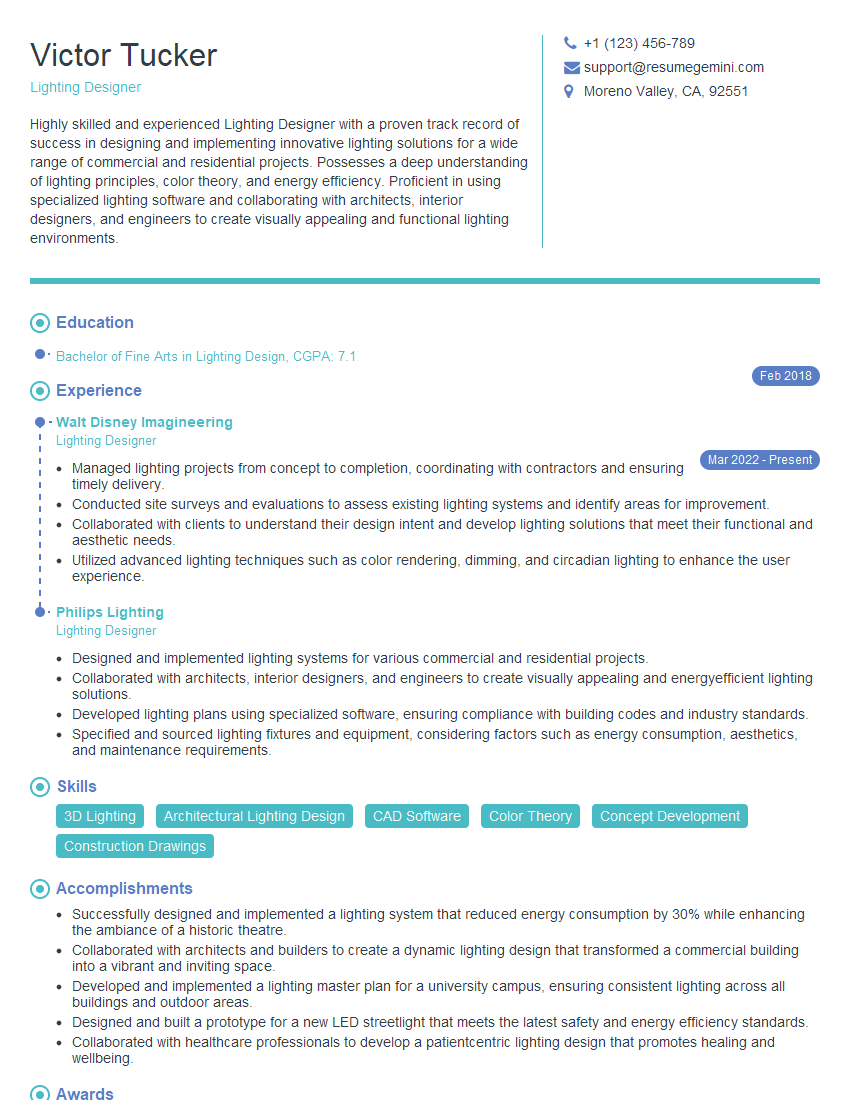
Mastering Architectural Lighting Design opens doors to exciting and rewarding career opportunities, offering a blend of creativity and technical expertise. To maximize your job prospects, crafting a strong, ATS-friendly resume is crucial. ResumeGemini is a trusted resource that can significantly enhance your resume-building experience, helping you present your skills and experience effectively to potential employers. ResumeGemini provides examples of resumes tailored specifically to Architectural Lighting Design, ensuring your application stands out. Take advantage of these resources to showcase your qualifications and land your dream job.
Explore more articles
Users Rating of Our Blogs
Share Your Experience
We value your feedback! Please rate our content and share your thoughts (optional).
What Readers Say About Our Blog
Very informative content, great job.
good