Are you ready to stand out in your next interview? Understanding and preparing for Architectural Signage interview questions is a game-changer. In this blog, we’ve compiled key questions and expert advice to help you showcase your skills with confidence and precision. Let’s get started on your journey to acing the interview.
Questions Asked in Architectural Signage Interview
Q 1. Explain the difference between wayfinding and environmental graphics.
While both wayfinding and environmental graphics contribute to a building or space’s overall communication strategy, they serve distinct purposes. Wayfinding focuses solely on guiding people to their destinations. It’s about providing clear and efficient directional information, helping users navigate a complex space with ease. Think of it as the ‘how to get there’ aspect of signage. Environmental graphics, on the other hand, encompass a broader range of visual communication elements that contribute to the overall atmosphere and identity of a space. This includes branding, decorative elements, and informative displays that enhance the user experience beyond just navigation. It’s the ‘why you’re here’ and ‘what this place is about’ messaging.
For example, a wayfinding system in a hospital would include directional signs to different departments and rooms, whereas environmental graphics might include artwork showcasing the hospital’s history or patient stories, in addition to signs indicating waiting areas and restrooms. Wayfinding is a subset of environmental graphics; the system operates within the larger context of the overall visual communication strategy.
Q 2. Describe your experience with ADA compliance in signage design.
ADA compliance is paramount in my design process. I’ve worked extensively on projects ensuring accessibility for people with disabilities. This involves meticulous adherence to the Americans with Disabilities Act (ADA) Standards for Accessible Design. My experience includes designing tactile signage with braille and raised characters for the visually impaired, ensuring sufficient contrast ratios between text and background colors for readability, and strategically placing signage to avoid obstructions in walkways for wheelchair users. I’m proficient in understanding regulations concerning character size, font type, symbol usage, and placement heights to meet ADA guidelines.
In one project for a university campus, I worked closely with accessibility specialists to create a wayfinding system using a combination of large, high-contrast signs with Braille, along with audio beacons strategically placed throughout the building. This involved extensive site surveys, careful material selection and thorough testing to ensure complete ADA compliance.
Q 3. What materials are best suited for exterior signage in harsh climates?
Selecting materials for exterior signage in harsh climates demands careful consideration of durability and longevity. Materials need to withstand extreme temperature fluctuations, UV exposure, wind, rain, snow, and ice. Some of the best options include:
- Aluminum: Lightweight, durable, and resistant to corrosion.
- Stainless Steel: Extremely durable, resistant to rust and weathering, but more expensive than aluminum.
- High-pressure Laminate (HPL): Offers excellent color stability and resistance to scratching and fading. It’s often used for building identification signs and wayfinding panels.
- Acrylic: Excellent clarity and weather resistance, suitable for illuminated signs but can scratch easily.
It’s essential to specify powder-coated finishes for added protection against the elements, and to consider the specific challenges of the environment. For instance, in coastal areas, materials need to resist salt spray corrosion. Selecting the right materials is crucial to ensuring the longevity and effectiveness of the signage.
Q 4. How do you ensure signage is legible from various distances and angles?
Legibility from various distances and angles is critical. I address this through several strategies:
- Font Selection: Simple, clear sans-serif fonts like Arial or Helvetica provide superior readability at a distance.
- Character Size: The height of lettering is calculated based on the viewing distance, using established guidelines that ensure readability from the furthest point of view.
I utilize design software to mock up signs and assess their readability from different perspectives. I’ll often conduct site visits to check the actual viewing angles and distances and adjust the design accordingly. Furthermore, I incorporate sufficient spacing between characters and lines, and I use high-contrast colors to improve legibility, especially important for elderly individuals or those with visual impairments.
Finally, using proper lighting for illuminated signage is crucial for ensuring visibility both day and night. Careful consideration of the ambient light levels in the location is key to preventing glare or washout effects.
Q 5. Discuss your experience with different types of signage (e.g., digital, illuminated, etc.).
My experience spans various signage types. I’ve worked with:
- Digital Signage: Offering dynamic content updates, excellent for displaying schedules, wayfinding information, or advertising. Experience includes designing user-friendly interfaces and ensuring compatibility with various content management systems.
- Illuminated Signage: Using LED, neon, or fluorescent lighting to increase visibility at night or in low-light conditions. This includes understanding different lighting technologies and their energy efficiency implications. I have expertise in selecting the proper lighting for different applications and locations to optimize visibility and minimize light pollution.
- Traditional Signage: Including fabricated signs using materials like aluminum, acrylic, or HPL. Experience covers a range of fabrication techniques, ensuring both aesthetic appeal and durability.
- Vinyl Graphics: Highly versatile for interior and exterior applications, offering a cost-effective solution for temporary or permanent installations. Expertise lies in selecting the appropriate type of vinyl for different surfaces and applications.
Each type of signage offers distinct advantages and is chosen based on project requirements, budget, and aesthetic considerations. I’m adept at integrating these different types effectively within a single wayfinding or environmental graphics system.
Q 6. How do you incorporate branding guidelines into signage design?
Brand consistency is essential. I meticulously integrate branding guidelines into signage design to maintain a cohesive brand identity. This starts with a thorough understanding of the client’s brand style guide, including logo usage, color palettes, typography, and overall messaging. I ensure that every aspect of the signage, from font selection to color choices and graphic elements, aligns perfectly with the brand’s established guidelines.
In practice, this means selecting fonts specified in the style guide, using brand colors accurately (including specific CMYK or Pantone values for print), and applying the logo appropriately according to the provided specifications. Maintaining consistency builds brand recognition and strengthens the overall user experience.
Q 7. Explain your process for designing a wayfinding system for a large complex.
Designing a wayfinding system for a large complex is a multi-stage process:
- Site Analysis: A thorough understanding of the building layout, entrances, exits, key destinations, and pedestrian flow is crucial. This includes physical site visits, studying architectural plans, and potentially using building information modeling (BIM) data.
- User Research: Understanding the users’ needs, abilities, and typical journeys is paramount. This might involve surveys, focus groups, or observing user behavior within similar spaces.
- System Design: Develop a comprehensive wayfinding plan, specifying signage types, locations, messaging, and hierarchy. This includes creating a legend or coding system that uses consistent colors, symbols and/or numbers to guide users. I often utilize mapping software and design mockups to visualize the system’s effectiveness.
- Material Selection & Fabrication: Selecting durable, appropriate materials for interior and exterior signage, while coordinating fabrication processes with vendors.
- Installation & Testing: On-site supervision of installation and a thorough review of the completed system to ensure its clarity and functionality.
Throughout the process, I maintain close communication with the client, ensuring that the system aligns with their expectations and meets the needs of the users. Regular reviews and feedback iterations are vital for a successful large-scale wayfinding project.
Q 8. Describe your experience with different sign fabrication methods.
My experience encompasses a wide range of sign fabrication methods, chosen based on the project’s specific needs, budget, and aesthetic goals. I’m proficient in both traditional and modern techniques.
- Traditional Methods: This includes hand-painting (for unique, artistic pieces), screen printing (ideal for consistent, large-volume production), and vinyl lettering (cost-effective and versatile for various applications).
- Modern Methods: I’m well-versed in digitally-printed signage, using large-format printers for high-resolution graphics on a variety of substrates like aluminum composite material (ACM), acrylic, and dibond. I also have experience with CNC routing for creating custom shapes and three-dimensional signage elements. We also utilize techniques like LED illumination and engraving to enhance the final product.
For instance, a project requiring a highly detailed, artistic logo might be best suited for hand-painting or high-resolution digital printing on a premium material like acrylic. Conversely, a simple directional sign for a large office building might be more economically produced using vinyl lettering on ACM panels.
Q 9. How do you manage a signage project’s budget and timeline?
Managing a signage project’s budget and timeline requires meticulous planning and proactive communication. I use a phased approach, beginning with a detailed breakdown of costs during the initial design phase.
- Detailed Cost Breakdown: This includes material costs, fabrication expenses, installation fees, permitting charges, and contingency funds. I present clients with transparent and accurate cost estimates.
- Project Timeline: A Gantt chart is utilized to outline all phases, from design and approvals to fabrication, installation, and final inspection. Critical path analysis helps identify potential bottlenecks and allows for timely adjustments.
- Regular Communication: Throughout the project, I maintain open communication with the client, providing regular updates on progress, addressing any issues promptly, and making necessary adjustments to maintain the project’s schedule and budget.
- Change Management: Any changes or unforeseen circumstances are documented, their impact on cost and timeline evaluated, and agreed upon before implementation.
For example, on a recent university project, by proactively identifying and resolving a potential delay in material sourcing, I saved the project three days and prevented cost overruns.
Q 10. What software do you use for signage design and production?
My proficiency in various software tools ensures efficient design and production. My go-to programs include:
- Adobe Creative Suite (Photoshop, Illustrator, InDesign): These are essential for designing and laying out signage, creating vector graphics, and managing typography.
- Vectorworks: This is crucial for architectural integration, allowing me to accurately model signage within the building’s context and ensure seamless integration with the overall design.
- AutoCAD: Useful for detailed technical drawings, especially for complex installations and structural considerations.
- Sign Production Software: I utilize specialized RIP (Raster Image Processor) software for driving large-format printers and ensuring color accuracy and print quality.
Example: In Illustrator, I create vector-based logo designs that can be scaled without loss of quality for various signage applications.
Q 11. How do you ensure signage is aesthetically pleasing and functional?
Achieving both aesthetic appeal and functionality is paramount. This balance involves careful consideration of several factors.
- Design Principles: I apply fundamental design principles – such as balance, contrast, and visual hierarchy – to create visually engaging signage. The design should be appropriate for its context and target audience.
- Material Selection: The chosen materials significantly impact the aesthetics and durability of the signage. Considerations include the look, feel, and longevity of materials in relation to the environment.
- Legibility and Readability: Signage must be easy to read from a distance, using appropriate font sizes, styles, and color combinations to ensure high readability, especially important for wayfinding signage.
- Illumination: Proper lighting enhances visibility and adds to the overall aesthetic impact, whether using internally lit signage or external lighting to highlight key features.
For example, I designed wayfinding signage for a museum using a clean, modern typeface and a color palette consistent with the museum’s brand identity, ensuring high visibility and readability in a variety of lighting conditions.
Q 12. Describe your experience with permitting and code compliance for signage.
Navigating permitting and code compliance is a crucial aspect of architectural signage. My experience includes:
- Code Research: I thoroughly research and understand all relevant local, state, and national building codes and regulations concerning signage, including size restrictions, location limitations, and material specifications.
- Permitting Process: I prepare and submit all necessary documentation for signage permits, ensuring compliance with all regulations.
- Stakeholder Communication: I effectively communicate with building officials and other stakeholders throughout the permitting process to address any concerns or questions promptly.
- Compliance Documentation: I meticulously maintain all relevant documentation for future reference and audits.
For a recent project, I successfully navigated a complex permitting process involving historical preservation regulations, ensuring the signage met all requirements while maintaining its aesthetic integrity.
Q 13. How do you collaborate with architects and other stakeholders on signage projects?
Collaboration is key to successful signage projects. I foster effective communication and information sharing with architects and other stakeholders through several strategies:
- Early Collaboration: I participate in design meetings from the initial phases of a project, offering input and ensuring signage is integrated seamlessly with the overall architectural design.
- Design Review: I present design options and receive feedback from architects and clients throughout the design process, allowing for iterative improvements.
- Technical Coordination: I coordinate with structural engineers and contractors to ensure the signage is structurally sound, correctly installed, and meets all safety requirements.
- Open Communication: I utilize various communication tools – such as email, project management software, and in-person meetings – to maintain open communication and ensure everyone is informed.
By working collaboratively, we ensure the signage complements the building’s design and enhances the user experience.
Q 14. What are some common challenges in architectural signage design and how do you address them?
Common challenges in architectural signage design include:
- Budget Constraints: Balancing aesthetic goals with budget limitations often requires creative solutions, such as exploring cost-effective materials or simplifying designs.
- Code Restrictions: Navigating restrictive building codes can necessitate innovative design approaches to meet regulatory requirements without compromising aesthetics.
- Integration with Existing Architecture: Harmoniously integrating new signage with existing architectural features requires careful consideration of style, materials, and proportions.
- Maintaining Legibility: Ensuring signage is legible from various distances and angles, especially in challenging lighting conditions, requires specialized knowledge and design techniques.
I address these challenges through thorough planning, creative problem-solving, and open communication with stakeholders. For example, I once overcame budget constraints by suggesting a more cost-effective material that still met the aesthetic goals of the project, resulting in client satisfaction and project success.
Q 15. Explain your understanding of sign materials and their properties (durability, cost, maintenance).
Selecting the right sign material is crucial for a project’s longevity and aesthetic appeal. The choice depends on factors like durability needs, budget constraints, and required maintenance. Let’s explore some common materials:
- Aluminum: Durable, lightweight, and relatively inexpensive. It’s excellent for exterior signage, requiring minimal maintenance but susceptible to scratches. Powder coating enhances its lifespan and provides a wide array of colors.
- Acrylic (Plexiglass): Offers excellent clarity and vibrant color reproduction, making it suitable for indoor and outdoor applications. While more expensive than aluminum, its relative ease of fabrication and low maintenance make it a popular choice for elegant signage. However, it can scratch easily.
- Wood: Provides a natural, sophisticated look but requires regular maintenance to protect against weathering and insects. It’s best suited for indoor or sheltered outdoor locations, and the cost varies greatly depending on the wood type and finish.
- Stainless Steel: Extremely durable and resistant to corrosion, making it ideal for high-traffic areas or harsh environments. It’s a premium option, significantly more expensive than aluminum but offering a long lifespan with minimal maintenance.
- Dibond (Aluminum Composite Material): A lightweight yet strong material with a smooth surface, ideal for printing and creating modern, sleek signage. It’s relatively easy to fabricate and maintain, offering a good balance of cost and durability.
For example, a hospital might choose durable stainless steel for wayfinding signs in high-traffic areas, while a boutique might opt for elegant wood for its storefront signage. The cost-benefit analysis is key; a cheaper material might require more frequent maintenance, ultimately offsetting initial savings.
Career Expert Tips:
- Ace those interviews! Prepare effectively by reviewing the Top 50 Most Common Interview Questions on ResumeGemini.
- Navigate your job search with confidence! Explore a wide range of Career Tips on ResumeGemini. Learn about common challenges and recommendations to overcome them.
- Craft the perfect resume! Master the Art of Resume Writing with ResumeGemini’s guide. Showcase your unique qualifications and achievements effectively.
- Don’t miss out on holiday savings! Build your dream resume with ResumeGemini’s ATS optimized templates.
Q 16. How do you incorporate sustainable practices into signage design and production?
Sustainability is a core principle in my design process. I incorporate eco-friendly practices throughout, from material selection to production and disposal. This includes:
- Using recycled materials: Specifying recycled aluminum or plastics for sign construction significantly reduces environmental impact. Many manufacturers now offer environmentally conscious options.
- Choosing sustainable inks and coatings: Opting for low-VOC (volatile organic compound) inks and coatings minimizes air pollution during printing and reduces harmful emissions. Water-based inks are an excellent alternative.
- Energy-efficient lighting: Incorporating LED lighting in illuminated signage drastically reduces energy consumption compared to traditional options. LEDs also have a much longer lifespan, reducing replacement frequency and waste.
- Designing for longevity: A well-designed sign that lasts longer requires fewer replacements, reducing the overall environmental footprint. Careful consideration of materials and construction techniques ensures durability.
- Promoting responsible disposal: End-of-life planning is crucial. Choosing materials that are easily recyclable or can be repurposed at the end of their lifespan minimizes waste sent to landfills.
For instance, recently, I designed wayfinding signage for a new eco-friendly office building. We used recycled aluminum and solar-powered LED lighting, ensuring the signs were both functional and environmentally responsible.
Q 17. Describe your experience with designing signage for different building types (e.g., hospitals, schools, office buildings).
My experience spans diverse building types, each requiring a unique approach to signage design. Here are some examples:
- Hospitals: Signage in hospitals requires clear, concise, and easily understandable wayfinding. Large, legible fonts, contrasting colors for visibility, and universal symbols are essential for efficient navigation, even for patients with cognitive impairments. Materials need to be easily sanitized and durable to withstand heavy use.
- Schools: School signage balances safety and aesthetics. Bright, engaging colors are often used to attract children’s attention. Durable materials are critical to resist damage from regular use. Signage might also include educational elements, such as alphabet charts or animal illustrations.
- Office Buildings: Office building signage often emphasizes professionalism and branding. The design reflects the corporate identity, incorporating the company logo and colors. Wayfinding is crucial for directing visitors and staff, often using a consistent design language across the building.
For example, I designed a large-scale wayfinding system for a new hospital, using a combination of durable stainless steel and high-visibility colors to create a user-friendly and attractive system. In contrast, a recent project for a primary school involved creating playful and colorful signs for classrooms, using durable materials to withstand student interaction.
Q 18. How do you handle design revisions and client feedback?
Design revisions and client feedback are integral parts of the process. I maintain open communication throughout, actively soliciting feedback at various stages.
- Regular Check-ins: I schedule regular meetings with clients to present progress and gather feedback, ensuring alignment on the design direction.
- Version Control: I maintain detailed records of all design revisions, allowing us to easily compare different iterations and track changes.
- Constructive Dialogue: I encourage clients to express their opinions openly, using their feedback to refine the design and meet their expectations.
- Iterative Design Process: I embrace an iterative approach, allowing for revisions and adjustments based on feedback. This ensures the final product perfectly reflects the client’s vision.
For a recent project, the client initially favored a bolder color scheme. After presenting several mockups and considering the building’s architecture, we mutually agreed on a more subdued palette that ultimately better complemented the existing environment.
Q 19. What is your approach to troubleshooting signage issues during installation or after completion?
Troubleshooting is a critical aspect of my work. My approach is systematic and proactive:
- Preventive Measures: Thorough planning and meticulous attention to detail during the design and production phases greatly minimize potential issues. This includes careful material selection and accurate measurements.
- On-Site Assessment: During installation, I am present to address any unexpected challenges that might arise. This allows for quick problem-solving and prevents delays.
- Communication: Open communication with the installation team is vital, ensuring everyone understands the design specifications and installation procedures.
- Post-Installation Inspection: A final inspection after installation is crucial to identify and rectify any minor defects or issues.
- Corrective Action Plan: If significant problems arise, I develop a corrective action plan, outlining the necessary steps to resolve the issue efficiently and effectively.
For instance, during one installation, we encountered a minor misalignment. Quick on-site adjustments resolved the issue before the project’s completion, minimizing disruption and maintaining project quality.
Q 20. How do you incorporate accessibility considerations into your signage design?
Accessibility is paramount in my signage design. I ensure compliance with ADA (Americans with Disabilities Act) guidelines and other relevant accessibility standards:
- Font Size and Style: Using clear, sans-serif fonts in appropriately sized lettering ensures readability for people with visual impairments.
- Color Contrast: Implementing sufficient color contrast between text and background makes signage easily visible to people with low vision.
- Tactile Signage: Incorporating braille and raised lettering allows visually impaired individuals to access information.
- Symbol Usage: Using universally understood pictograms alongside text makes signage more accessible to diverse populations.
- Placement and Height: Signs are placed at appropriate heights and locations to be easily accessible to people using wheelchairs or other mobility aids.
For a recent project involving a public library, we carefully considered all aspects of accessibility, incorporating braille, raised lettering, and high-contrast color schemes to make the wayfinding system inclusive for everyone.
Q 21. Explain your understanding of color theory and its application in signage.
Color theory plays a vital role in effective signage. Understanding color psychology and its impact on perception is crucial in creating impactful and communicative signage.
- Color Psychology: Different colors evoke different emotions and associations. For example, blue is often associated with trust and calmness, while red conveys urgency and excitement. Choosing colors carefully can enhance a sign’s message and impact.
- Color Contrast: Ensuring sufficient contrast between text and background is critical for readability. High contrast improves visibility, especially for people with visual impairments.
- Color Harmony: Using complementary or analogous colors can create a visually appealing and cohesive design. A harmonious color palette enhances the overall aesthetic appeal of the signage.
- Branding: Color consistency with a company’s brand guidelines helps create a unified brand identity across all signage elements.
For a fast-food restaurant, vibrant colors like red and yellow might be used to create a sense of energy and appetite, while a law firm might favor more conservative colors like blue and gray to convey professionalism and trustworthiness.
Q 22. Describe your experience with creating mockups and presentations for signage projects.
Creating compelling mockups and presentations is crucial for securing client approval and ensuring the final signage meets their vision. My process begins with a thorough understanding of the client’s needs, brand identity, and the architectural context of the building. I utilize industry-standard software like Adobe Photoshop, Illustrator, and InDesign, combined with 3D modeling software (as discussed later), to create photorealistic renderings and detailed design presentations.
For example, for a recent project involving wayfinding signage in a hospital, I created a series of 3D models showing different signage options within the hospital’s existing architectural design. This allowed the client to visualize how the signage would integrate with the environment and make informed decisions about size, materials, and placement. I also develop interactive presentations, incorporating animations and transitions to showcase design features more effectively. This allows clients to experience the design as a holistic, visual narrative instead of just static images. These presentations often include detailed material specifications, pricing breakdowns, and installation timelines.
Beyond visuals, I incorporate comprehensive design rationales explaining my choices, addressing accessibility considerations (such as ADA compliance for font sizes and placement), and highlighting the sustainability aspects of chosen materials. This holistic approach increases the likelihood of a smooth project execution and satisfied clients.
Q 23. How do you manage multiple signage projects simultaneously?
Managing multiple signage projects concurrently requires a highly organized and systematic approach. I leverage project management software like Asana or Trello to track tasks, deadlines, and communication across all projects. Each project has its own dedicated board with clearly defined milestones, assigning responsibilities to team members and myself. This allows for real-time monitoring of progress and the identification of potential bottlenecks early on.
Prioritization is key. I use a system based on deadlines, client urgency, and project complexity to allocate my time and resources effectively. Regular check-ins with clients and team members ensure that everyone is aligned and informed. Open communication is crucial to prevent conflicts and maintain project momentum. For instance, weekly status meetings with my team and bi-weekly meetings with clients are integral to maintaining efficiency and transparency.
Furthermore, I meticulously document every step of each project, including design decisions, material selections, and client feedback. This detailed record-keeping facilitates seamless collaboration and minimizes potential errors. Essentially, it’s a matter of prioritizing tasks, optimizing workflows, and fostering clear communication – all backed by strong organizational tools.
Q 24. What are your strategies for ensuring the longevity of signage?
Ensuring the longevity of signage involves careful consideration of materials, construction, and installation techniques. The primary focus is on selecting durable, weather-resistant materials capable of withstanding environmental factors like UV exposure, temperature fluctuations, and moisture. For exterior signage, materials like powder-coated aluminum, stainless steel, or high-quality acrylics are preferred for their resistance to corrosion and fading.
Proper installation is equally important. Signage should be securely mounted to prevent damage from wind or vandalism. For example, using appropriate fasteners and anchoring techniques is critical. Furthermore, regular maintenance, such as cleaning and minor repairs, extends the life of signage significantly. Finally, designing signage with modularity in mind allows for easy replacement of individual components without replacing the entire sign. This reduces long-term maintenance costs and environmental impact.
A practical example would be designing a building directory using modular panels. If a tenant changes, only the individual panel needs replacing, saving time and expense. Therefore, by utilizing robust materials, employing careful installation practices, and including design features that make maintenance easier, we significantly enhance signage longevity.
Q 25. How do you stay updated on the latest trends and technologies in architectural signage?
Staying current in this dynamic field necessitates a proactive approach to continuous learning. I subscribe to industry publications like SignCraft and Visual Merchandising & Store Design, attend industry conferences and workshops (such as those hosted by the SGIA), and actively participate in online communities and forums dedicated to architectural signage. This allows me to be informed about new trends, technologies, and materials.
Beyond traditional mediums, I actively explore emerging technologies, such as LED lighting and digital signage solutions, to understand their practical applications and design implications. I also follow leading signage designers and manufacturers on platforms like LinkedIn and Instagram for exposure to innovative designs and case studies. By staying informed about technological advancements, I can better serve my clients by recommending materials and designs that are cutting-edge while staying durable and reliable.
For instance, recently I’ve been researching advancements in sustainable signage materials, such as recycled plastics and eco-friendly LED lighting. This ensures my designs align with clients’ growing interest in environmentally conscious solutions.
Q 26. Discuss your experience with 3D modeling and rendering for signage design.
3D modeling and rendering are indispensable tools in my design process. I use software like SketchUp, Revit, or Cinema 4D to create highly realistic visual representations of signage designs. This allows clients to visualize the final product in its intended environment before any materials are ordered or fabricated.
For example, in designing a large-scale exterior monument sign for a corporate headquarters, I used 3D modeling to simulate how the sign would look under different lighting conditions and from various viewpoints. This provided a clearer understanding of the sign’s impact on the building’s facade and the surrounding landscape. I then render these models to create photorealistic images and animations, using software like V-Ray or Octane Render to enhance realism. This includes simulating light reflections, shadows, and textures to achieve a highly accurate visual representation.
The benefits extend beyond client visualization. 3D modeling facilitates precise calculations of material quantities and structural integrity, leading to efficient production and minimizing costly errors during installation. Essentially, 3D modeling transforms abstract concepts into tangible realities, significantly enhancing the design process and ultimately improving the overall quality of the final product.
Q 27. How do you assess the effectiveness of signage after installation?
Assessing the effectiveness of signage post-installation involves a multi-faceted approach. Initial observations are made during a site visit, checking for structural integrity, proper illumination, and accurate messaging. However, a more comprehensive evaluation requires gathering data on user interaction and perception.
I employ several methods: First, I may conduct informal user surveys or interviews to understand how easily people can locate information provided by the signage. Second, I can track foot traffic patterns through observational studies or by analyzing camera footage in high-traffic areas. Third, the effectiveness can also be quantitatively assessed by measuring the completion rate of specific tasks (e.g., finding a specific department in a large building) by a predetermined sample size of individuals. Data from these methods provides insight into areas requiring adjustments or improvements.
For instance, if observational studies reveal that a significant number of people are missing a crucial directional sign, it suggests a redesign or repositioning of that sign is needed. Regular post-installation evaluations, guided by data analysis, ensure signage continues to effectively serve its intended purpose and remains relevant over time.
Key Topics to Learn for Architectural Signage Interview
- Design Principles & Aesthetics: Understanding the principles of visual communication, typography, color theory, and their application in creating impactful signage.
- Materials & Fabrication: Knowledge of various signage materials (e.g., acrylic, metal, wood), fabrication methods, and their suitability for different applications and environments.
- Wayfinding & Navigation: Designing clear and intuitive signage systems that effectively guide people through a space, considering accessibility and user experience.
- Regulatory Compliance & Codes: Familiarity with building codes, ADA regulations, and other relevant guidelines affecting signage design and installation.
- Lighting & Illumination: Understanding how lighting affects signage visibility and readability, and choosing appropriate lighting solutions for different contexts.
- Sustainability & Environmental Impact: Considering the environmental implications of material choices and manufacturing processes in signage design.
- Project Management & Collaboration: Experience in managing signage projects, collaborating with architects, contractors, and other stakeholders.
- Budgeting & Cost Estimation: Ability to estimate project costs and manage budgets effectively.
- Digital Design & Software Proficiency: Proficiency in design software such as Adobe Creative Suite or similar programs for creating and presenting signage designs.
- Problem-Solving & Creative Thinking: Demonstrating the ability to address design challenges creatively and find practical solutions.
Next Steps
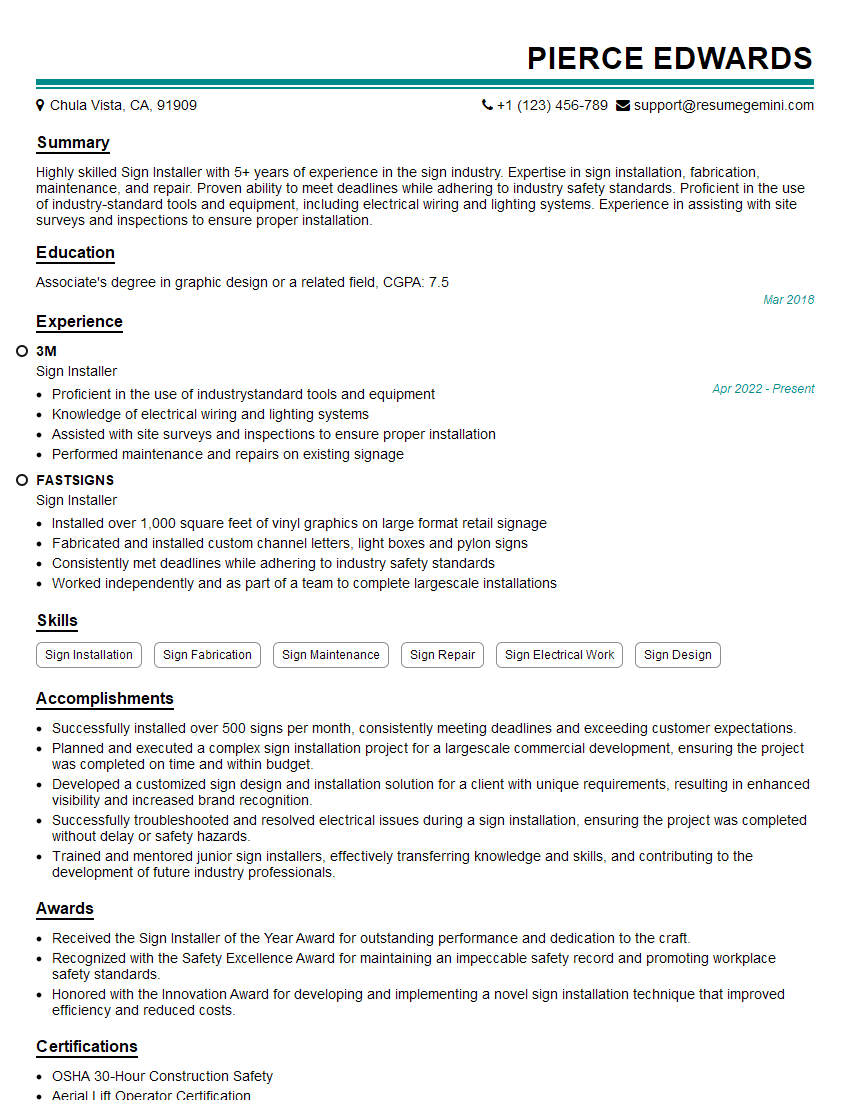
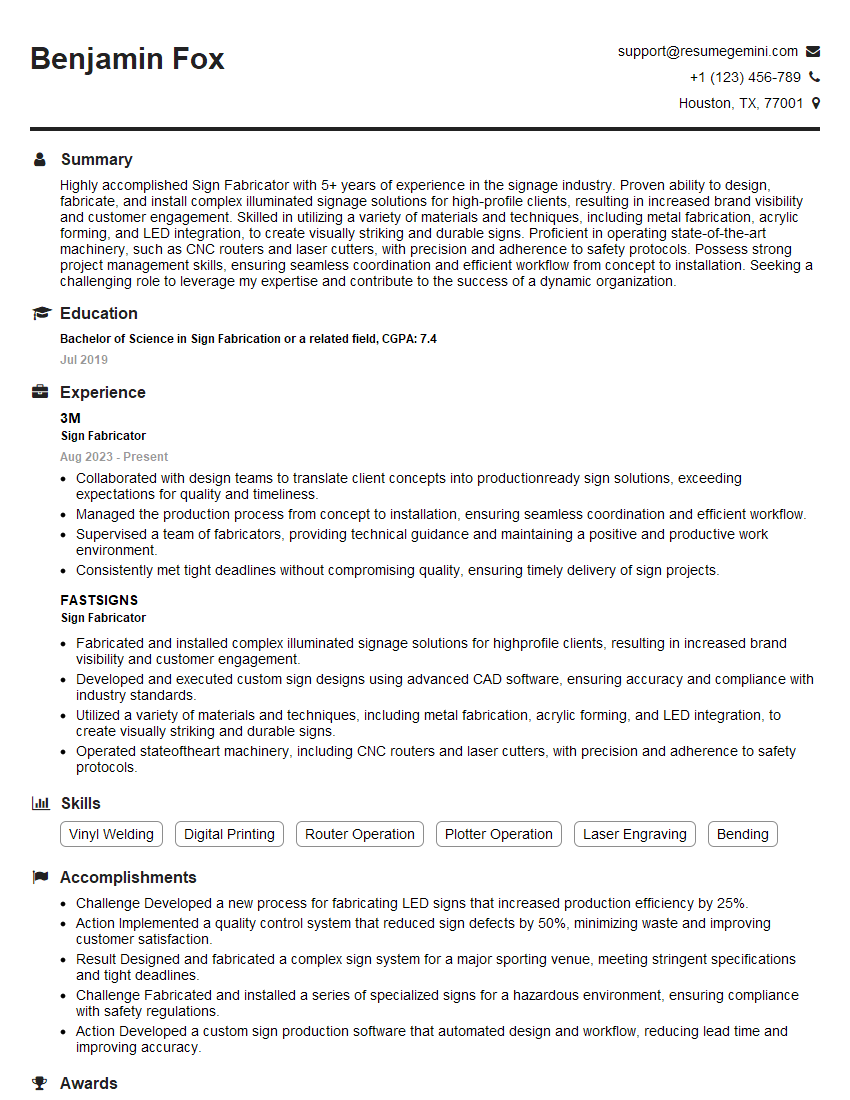
Mastering Architectural Signage opens doors to exciting career opportunities in a dynamic field that blends creativity and technical expertise. To maximize your job prospects, focus on creating a strong, ATS-friendly resume that highlights your skills and experience effectively. ResumeGemini is a trusted resource for building professional resumes, and we offer examples of resumes tailored to the Architectural Signage field to help you showcase your qualifications. Invest time in crafting a compelling resume – it’s your first impression on potential employers.
Explore more articles
Users Rating of Our Blogs
Share Your Experience
We value your feedback! Please rate our content and share your thoughts (optional).
What Readers Say About Our Blog
Very informative content, great job.
good