Interviews are more than just a Q&A session—they’re a chance to prove your worth. This blog dives into essential AREMA Standards interview questions and expert tips to help you align your answers with what hiring managers are looking for. Start preparing to shine!
Questions Asked in AREMA Standards Interview
Q 1. Explain the significance of AREMA’s role in railway safety and maintenance.
The American Railway Engineering and Maintenance-of-Way Association (AREMA) plays a crucial role in ensuring the safety and efficiency of North American railways. Its standards provide a comprehensive framework for design, construction, maintenance, and operation, minimizing risks and maximizing performance. Think of AREMA as the ‘rulebook’ for railway infrastructure. Its guidelines directly impact safety by dictating acceptable tolerances for track geometry, ensuring bridge integrity, and standardizing maintenance procedures. Non-compliance can lead to derailments, structural failures, and significant operational disruptions. AREMA’s influence extends to all aspects, from the smallest component like a tie plate to large-scale projects like bridge replacements. This comprehensive approach ensures a consistent level of safety and reliability across the entire railway network.
Q 2. Describe the different classifications of railway track based on AREMA standards.
AREMA classifies railway track based on several factors, primarily speed and traffic volume. While there isn’t a rigidly defined, numbered classification system, the standards implicitly categorize tracks based on their intended use and design parameters. For example:
- Main Lines: These are high-speed, heavy-traffic lines designed for frequent and fast-moving trains. They necessitate robust track construction with stringent geometry tolerances.
- Branch Lines: These lines typically carry less traffic and operate at lower speeds. The design and maintenance standards might be slightly less stringent than main lines, reflecting the lower operational demands.
- Yard Tracks: These tracks are located in railway yards and are designed for slower speeds and frequent switching operations. They prioritize ease of maneuvering rather than high-speed operation.
- Industrial Tracks: These serve industrial facilities and often have specific requirements based on the type of industry and the loads they carry.
The classification isn’t explicitly stated with specific names, but rather implied through the design parameters and recommended practices specified in the AREMA Manual for different track applications. Choosing the correct design parameters based on the intended use case is crucial for ensuring both safety and cost-effectiveness.
Q 3. How do AREMA standards address the design and construction of railway turnouts?
AREMA standards provide detailed guidance on the design and construction of railway turnouts (switches and crossings), critical components influencing train safety and operational efficiency. These standards cover various aspects, including:
- Geometry: Precise dimensions and angles of the switch points, frog, and connecting rails are meticulously defined to ensure smooth transitions at different speeds and to minimize wheel flange wear.
- Materials: Standards specify the required material properties of rails, switch points, and other components to withstand high stresses and loads.
- Construction: The standards detail the proper installation and maintenance procedures, ensuring that the turnout is correctly aligned and secured.
- Maintenance: Regular inspections and maintenance are crucial for preventing defects and maintaining safety. AREMA outlines inspection frequencies and procedures to identify and rectify potential problems.
Imagine a turnout as a complex puzzle; AREMA provides the blueprint, ensuring that each piece fits perfectly to guarantee a smooth, safe transition for passing trains. Ignoring these standards could lead to derailments due to misalignment or material failure.
Q 4. What are the key considerations for track geometry according to AREMA standards?
AREMA standards emphasize precise track geometry for safe and efficient train operation. Key considerations include:
- Alignment: Maintaining straight track sections and properly designed curves is essential to prevent derailments and ensure smooth train passage. Excessive curvature or misalignment can lead to high lateral forces on the wheels.
- Grade: Consistent grades are necessary to prevent excessive train speeds on downhill sections and provide sufficient power for uphill movement. Sudden changes in grade can stress the train’s components and the track.
- Surface Irregularities: Minimizing gauge widening, cross-level variations, and other surface irregularities is critical for ride quality and to reduce wheel and track wear. Rough track leads to discomfort for passengers and increased maintenance requirements.
- Track Gage: Maintaining the correct distance between the rails is vital for safe operation. Changes in gauge can cause derailments.
Think of it like a perfectly smooth highway: AREMA standards strive for that level of precision in track geometry to minimize wear and tear and ensure safety. Regular measurements and adjustments are necessary to maintain acceptable tolerances, which are specified in the standards.
Q 5. Explain the process of track inspection and defect identification as outlined in AREMA.
AREMA outlines a systematic approach to track inspection and defect identification, typically involving a combination of visual inspection, manual measurements, and increasingly, advanced technologies.
- Visual Inspection: Trained personnel visually examine the track for obvious defects, such as broken rails, loose fasteners, and damaged ties.
- Manual Measurements: Using specialized tools, inspectors measure track gauge, alignment, surface irregularities, and other geometric parameters to ensure compliance with AREMA standards.
- Technology-based Inspection: Modern methods include using track geometry cars equipped with advanced sensors that provide highly accurate measurements and identify subtle defects that might be missed during manual inspection.
- Defect Reporting and Documentation: All identified defects are documented and prioritized based on their severity and potential safety impact. A clear reporting system allows for effective maintenance planning.
Regular and thorough inspection is vital for preventing major incidents. A proactive approach, guided by AREMA standards, is much more cost-effective than dealing with catastrophic failures.
Q 6. Describe the role of ballast in track stability and maintenance, referencing AREMA guidelines.
Ballast plays a crucial role in track stability and maintenance, acting as a cushion and drainage system for the railway track. AREMA guidelines emphasize the importance of proper ballast selection, placement, and maintenance.
- Stability: Ballast distributes the weight of the train and track structure across a wider area, reducing stress on individual components. It also provides lateral support to the track structure, preventing displacement.
- Drainage: Ballast provides drainage, preventing water accumulation, which can lead to track degradation and instability. Proper drainage is essential for long-term track performance.
- Maintenance: AREMA standards recommend periodic ballast cleaning and renewal to maintain its drainage capacity and prevent the buildup of debris. Regular maintenance helps maintain track stability and extend its lifespan.
- Ballast Material: The standards specify appropriate ballast materials based on local conditions, considering factors like particle size, strength, and drainage properties.
Think of ballast as the foundation of the track. Just like a well-constructed building requires a solid foundation, a stable and well-maintained railway track depends on proper ballast management. Ignoring ballast maintenance can lead to track settling, leading to potential derailments.
Q 7. How do AREMA standards address the design and maintenance of railway bridges?
AREMA standards address the design and maintenance of railway bridges comprehensively, covering various aspects from initial design to ongoing inspection and rehabilitation. The standards emphasize safety and durability, considering factors like:
- Structural Design: AREMA provides detailed guidelines for the structural design of railway bridges, considering various load cases, environmental factors, and material properties. This includes detailed analysis and calculations to ensure structural integrity under various operational conditions.
- Material Selection: Standards specify appropriate materials for different bridge components based on strength, durability, and maintenance requirements. Material selection must account for environmental factors that could accelerate degradation.
- Inspection and Maintenance: Regular inspection and maintenance are critical for identifying potential defects and ensuring the long-term performance of railway bridges. AREMA outlines specific inspection procedures and recommended maintenance intervals.
- Rehabilitation and Replacement: Standards provide guidance on rehabilitation techniques to extend the life of existing bridges and procedures for safe bridge replacement when necessary. This involves detailed planning and execution to minimize disruption during construction.
Railway bridges are critical infrastructure, and AREMA’s standards ensure their safety and longevity, similar to how building codes ensure the safety of buildings. A failure could have catastrophic consequences, underscoring the importance of adhering to these standards.
Q 8. What are the different types of railway crossings and how are they addressed in AREMA?
AREMA addresses various railway crossings, categorized primarily by their level of interaction with road traffic. These include:
- At-grade crossings: Where the railway and road intersect at the same level. AREMA meticulously outlines design standards for these, emphasizing safety features like warning signals (lights, bells, gates), pavement design to ensure smooth vehicle transitions, and sight distance requirements to allow drivers ample time to react. Specific guidelines exist for different traffic volumes and train speeds. For example, a high-speed rail line crossing a busy highway will have far more stringent safety requirements than a low-speed freight line crossing a rural road.
- Grade separations: These eliminate at-grade crossings by separating road and rail traffic vertically, typically using bridges or underpasses. AREMA provides detailed structural design specifications, considering factors like soil conditions, traffic loads, and potential seismic activity. The design must ensure safe and efficient passage for both vehicles and trains.
- Specialized crossings: These cover less common situations, such as crossings for pedestrian or bicycle traffic, or crossings designed for specific industrial applications. AREMA provides guidance on accommodating the unique needs of these crossings, balancing safety and functionality.
The standards emphasize risk assessment and mitigation throughout the design, construction, and maintenance phases of all crossing types. Regular inspection and maintenance, often dictated by AREMA’s recommended schedules, are vital to ensuring long-term safety and performance.
Q 9. Explain the principles of railway signaling and communication as covered in AREMA standards.
AREMA standards for railway signaling and communication systems focus on safety, efficiency, and reliability. The core principles involve:
- Ensuring safe train separation: This is achieved through a combination of track circuits, signals, and interlocking systems. Track circuits detect the presence of trains, providing information to the signaling system to prevent collisions. Signals communicate to train drivers the permissible speed and route. Interlocking systems ensure that conflicting movements are prevented, essentially a sophisticated safety lock.
- Communication between trains and control centers: Modern systems often use various communication technologies, including radio systems and data transmission networks, to enable real-time communication between train crews and control centers. This allows for efficient traffic management and rapid response to incidents. AREMA standards specify the performance requirements and safety standards of these communication systems.
- Clear and unambiguous signaling: The design of signals and their placement must be unambiguous to train operators. AREMA dictates standards for signal aspects, locations, and visibility, considering factors like sight distance and environmental conditions.
- Redundancy and fail-safe mechanisms: The signaling system must be designed with redundant components and fail-safe mechanisms to ensure continued operation even in the event of a component failure. This is critical for safety.
AREMA’s standards incorporate current technologies and best practices. For example, the increasing adoption of positive train control (PTC) is addressed in AREMA’s recommendations, emphasizing its role in enhancing safety and preventing accidents.
Q 10. How do AREMA standards address the design and maintenance of railway tunnels?
AREMA standards provide comprehensive guidance for the design and maintenance of railway tunnels. Key considerations include:
- Geological investigation: Thorough investigation of the subsurface conditions is crucial to ensure stability. AREMA specifies detailed procedures for conducting geological surveys and geotechnical analyses.
- Structural design: The tunnel’s structural design must consider rock strength, potential ground movement, and the anticipated loads (from trains, equipment, and groundwater). AREMA provides detailed requirements for lining materials, support systems (e.g., rock bolts, shotcrete), and overall structural integrity.
- Ventilation and fire safety: Tunnels require adequate ventilation to prevent the buildup of hazardous gases and maintain air quality. AREMA outlines design criteria to ensure proper ventilation capacity. Fire safety is also a paramount concern, and standards specify fire-resistant materials, emergency exits, and fire suppression systems. This often involves complex simulations and modeling to assess risk.
- Drainage and water management: Managing water infiltration is crucial to prevent damage and ensure tunnel stability. AREMA details requirements for drainage systems and waterproof lining materials.
- Maintenance and inspection: Regular inspection and maintenance are essential to ensure the long-term safety and performance of railway tunnels. AREMA provides guidance on inspection procedures, maintenance schedules, and repair methods.
These guidelines ensure tunnel designs can withstand the harsh operating environment and maintain a high safety standard for both workers and passengers.
Q 11. Discuss the importance of proper drainage in railway track maintenance according to AREMA.
Proper drainage is absolutely fundamental to railway track maintenance according to AREMA. Poor drainage leads to a cascade of problems:
- Subgrade weakening: Water saturation reduces the bearing capacity of the subgrade, leading to track settlement and instability.
- Frost heave: In colder climates, water freezing and thawing can cause significant upheaval of the track structure.
- Erosion and scour: Water runoff can erode the ballast and subgrade, undermining track stability.
- Corrosion: Moisture accelerates the corrosion of track components, shortening their lifespan.
AREMA standards define requirements for effective drainage systems, including:
- Cross-drainage: Systems to remove water from the ballast layer, such as cross-drains or porous materials.
- Longitudinal drainage: Systems to direct water away from the track, such as ditches or pipes.
- Surface drainage: Features to divert surface water away from the trackbed.
AREMA emphasizes the importance of regular inspection and maintenance of drainage systems to prevent problems before they escalate into costly repairs or safety hazards.
Q 12. What are the key considerations for railway embankment design and construction as per AREMA?
AREMA standards for railway embankment design and construction focus on stability, longevity, and environmental considerations. Key aspects include:
- Geotechnical investigation: A comprehensive understanding of the soil properties is paramount to ensure stability. AREMA specifies investigations to determine soil strength, compressibility, and permeability.
- Slope stability analysis: The embankment’s slopes must be designed to prevent failures due to sliding or erosion. AREMA outlines methods for calculating slope stability and designing appropriate slopes.
- Material selection and compaction: Appropriate materials must be selected, and proper compaction techniques are crucial for ensuring stability and minimizing settlement. AREMA specifies requirements for material properties and compaction procedures.
- Settlement analysis: An assessment of potential settlement is necessary to prevent damage to the track structure. AREMA provides guidelines for predicting and mitigating settlement.
- Erosion and vegetation control: Measures to prevent erosion and promote vegetation growth are necessary to protect the embankment’s stability and minimize environmental impact. AREMA addresses erosion control measures such as riprap, vegetation, and other stabilization techniques.
Proper design and construction according to AREMA’s standards lead to long-lasting, stable embankments that support safe and reliable rail operations.
Q 13. Explain the role of substructure in track stability referencing AREMA guidelines.
The substructure, including the subgrade and ballast, plays a vital role in track stability, acting as a foundation for the superstructure (rails, ties, etc.). AREMA guidelines emphasize:
- Subgrade preparation: The subgrade must be properly prepared to provide a stable base for the track. This often involves excavation, compaction, and drainage improvements. The strength and stability of the subgrade directly impacts the overall track stability.
- Ballast design and placement: Ballast (typically crushed stone) provides drainage, distributes loads, and facilitates track maintenance. AREMA dictates ballast quality, depth, and placement procedures to ensure optimal performance. Insufficient ballast depth, or ballast of poor quality can lead to track instability and derailments.
- Subgrade drainage: Effective drainage prevents water from weakening the subgrade and destabilizing the track. AREMA outlines requirements for drainage systems, including cross-drains and longitudinal ditches, to ensure adequate water removal.
- Proper compaction: Compaction of both the subgrade and ballast is essential to enhance stability. AREMA specifies required levels of compaction to avoid excessive settlement.
A well-designed and maintained substructure, following AREMA standards, is critical to maintaining a stable and safe railway track.
Q 14. How are AREMA standards used to ensure the safety of railway employees?
AREMA standards are instrumental in ensuring the safety of railway employees by addressing various aspects of workplace safety, including:
- Track maintenance procedures: Standards specify safe work practices for track maintenance activities, such as the use of personal protective equipment (PPE), flagging procedures, and rules governing work near moving trains. They emphasize the importance of thorough risk assessments and detailed safety plans before any maintenance work commences.
- Signal and communication systems: Reliable and clear signaling systems are vital for employee safety, and AREMA standards ensure that these systems are properly maintained and function effectively to prevent incidents. This reduces the risk of collision and ensures efficient coordination between different work crews.
- Tunnel safety procedures: AREMA’s tunnel safety standards cover ventilation, emergency exits, lighting, and other safety systems to protect employees working in these confined and potentially hazardous environments.
- Equipment and machinery safety: Standards outline safety procedures for the use of various railway equipment and machinery to minimize the risk of accidents during operation and maintenance. Regular inspections and maintenance are prescribed to maintain the safety of the machinery itself.
- Training and certification: AREMA standards implicitly support training and certification programs for railway employees, ensuring that they possess the necessary skills and knowledge to perform their duties safely and efficiently.
By adhering to AREMA’s comprehensive safety standards, railways can create a safer working environment for their employees and minimize the risk of accidents and injuries.
Q 15. What are the latest updates and revisions to relevant AREMA standards?
AREMA standards are regularly updated to reflect advancements in technology, materials, and best practices. Tracking the latest revisions requires checking the AREMA website directly, as updates are released periodically and not all at once. However, recent updates often focus on areas like improved sustainability practices, enhanced safety measures incorporating the latest research in accident prevention, and the integration of new technologies such as advanced track monitoring systems and predictive maintenance techniques. For example, there have been significant revisions concerning the use of recycled materials in track construction and the implementation of more robust methods for assessing track geometry. A specific example might include revised criteria for allowable track curvature or changes to ballast specifications based on recent research into performance and longevity.
Career Expert Tips:
- Ace those interviews! Prepare effectively by reviewing the Top 50 Most Common Interview Questions on ResumeGemini.
- Navigate your job search with confidence! Explore a wide range of Career Tips on ResumeGemini. Learn about common challenges and recommendations to overcome them.
- Craft the perfect resume! Master the Art of Resume Writing with ResumeGemini’s guide. Showcase your unique qualifications and achievements effectively.
- Don’t miss out on holiday savings! Build your dream resume with ResumeGemini’s ATS optimized templates.
Q 16. How do AREMA standards influence the selection of railway materials?
AREMA standards heavily influence railway material selection by providing detailed specifications and performance requirements. These standards ensure materials meet specific strength, durability, and safety criteria. For instance, AREMA specifies the required tensile strength and fatigue resistance for rail steel, ensuring the track can withstand the high stresses of train operation. Similarly, the standards outline acceptable properties for ballast materials, such as size gradation, drainage capacity, and resistance to crushing, ensuring optimal track support and drainage. Failure to adhere to these standards could lead to reduced service life of track components, increased maintenance costs, and, critically, safety hazards. Material selection is not merely about cost; it’s a careful balancing act between performance, durability, and lifecycle costs, all guided by AREMA’s comprehensive specifications.
Q 17. Describe the process of track alignment and survey as outlined in AREMA.
Track alignment and surveying, as detailed in AREMA, is a crucial process ensuring safe and efficient train operation. It begins with a preliminary survey establishing the overall route alignment, considering factors such as terrain, environmental impact, and cost. This involves using advanced surveying techniques, including GPS and LiDAR, to create detailed topographic maps. Next comes the detailed design phase, where the exact alignment is defined, including curves, grades, and transitions. Precise measurements are then taken to set out the track centerline, using instruments like total stations. Regular monitoring and maintenance surveys are critical for detecting alignment deviations over time, which can result from factors like thermal expansion, ground settlement, or train traffic. These surveys often employ sophisticated track geometry cars to measure track alignment, cross-level, and other vital parameters. Any deviations outside of AREMA’s specified tolerances trigger corrective maintenance actions to maintain safe operating conditions. Think of it like constantly ensuring a perfectly smooth road; minor deviations are corrected to prevent significant problems later.
Q 18. What are the key considerations for railway track maintenance during extreme weather conditions according to AREMA?
AREMA standards address track maintenance during extreme weather conditions with a strong emphasis on proactive measures and safety protocols. Extreme heat can cause rail buckling, requiring speed restrictions or track cooling. Heavy rainfall and flooding necessitate thorough drainage inspections and potential adjustments to drainage systems. Snow and ice accumulation necessitates regular snow removal and the potential use of anti-icing agents. Strong winds can impact overhead lines, requiring careful monitoring and potential temporary shutdowns. AREMA guidelines emphasize the use of weather forecasting data to anticipate extreme events, allowing for proactive maintenance and safety interventions. For example, a railway might deploy specialized equipment and crews to address snow buildup before it becomes a critical safety issue. The key is preparedness and anticipating issues before they escalate into major problems impacting operations and safety.
Q 19. Explain the impact of different soil types on railway track design and maintenance based on AREMA standards.
Different soil types significantly influence railway track design and maintenance, as outlined in AREMA. For example, poorly drained clay soils require special sub-ballast and ballast materials to ensure adequate drainage, preventing water saturation and subsequent instability. Conversely, sandy soils, while offering good drainage, might require additional reinforcement to prevent settlement and track instability. Rock formations often allow for simpler designs, but careful consideration of potential rockfalls and blasting during construction is crucial. AREMA guidelines provide detailed specifications for subgrade preparation, including compaction requirements, to ensure a stable foundation. Failure to account for soil conditions can lead to track settlement, alignment problems, and increased maintenance costs. Detailed soil investigations are thus mandatory before commencing any track design or construction project, forming the basis for engineering decisions that consider soil properties and prevent later failures.
Q 20. How are AREMA standards applied to the design and maintenance of railway stations?
AREMA standards apply to railway station design and maintenance by addressing aspects such as platform design, accessibility, safety, and passenger flow. Platform heights and lengths must conform to AREMA specifications to ensure safe passenger boarding and alighting. AREMA addresses structural integrity, ensuring station buildings can withstand various loads and environmental conditions. Signal systems and communication systems are governed by AREMA to maintain efficient and safe train operations. Accessibility features, such as ramps and elevators, must comply with AREMA and broader accessibility standards. Maintenance practices, including cleaning and repair, follow AREMA guidelines to ensure the station’s functionality and lifespan. A well-designed station, adhering to AREMA, prioritizes both efficient operation and a safe, enjoyable experience for passengers.
Q 21. Describe the different types of railway ties and their application as per AREMA standards.
AREMA standards specify several types of railway ties, each with specific applications. The most common are wooden ties (typically treated timber), concrete ties, and composite ties (often a combination of wood and polymer). Wooden ties, while cost-effective, require periodic replacement due to deterioration. Concrete ties offer longer life spans and superior strength, but they are more expensive. Composite ties aim to combine the advantages of both, offering a balance of cost, performance, and lifespan. The choice of tie type depends on several factors, including traffic volume, climate, soil conditions, and overall cost considerations. AREMA standards provide detailed specifications for each type, covering dimensions, strength requirements, and installation procedures. The selection is driven by a thorough engineering analysis to choose the most appropriate tie considering long-term maintenance costs, performance, and environmental factors.
Q 22. How do AREMA standards influence the design of railway curves?
AREMA standards significantly influence railway curve design by dictating parameters that ensure both safety and ride comfort. These standards focus on minimizing centrifugal forces experienced by trains traversing curves, preventing derailments, and maintaining acceptable passenger comfort levels.
Key aspects covered include:
- Minimum radius: AREMA specifies minimum radii based on train speed, track gauge, and superelevation (cant). Smaller radii necessitate greater superelevation to counteract centrifugal force. This prevents excessive lateral forces on the train and the track.
- Superelevation (cant): This is the banking of the track on curves. AREMA provides detailed guidance on calculating the appropriate superelevation to offset centrifugal force. Insufficient or excessive cant can lead to instability and discomfort.
- Transition curves: AREMA mandates the use of transition curves (spiral curves) to smoothly change the curvature between straight track and a circular curve. This gradual change minimizes the abrupt shift in lateral acceleration, improving ride quality and reducing stress on both the train and the track structure.
- Curve design speed: The design speed for a curve is a critical parameter determined by the geometric design and other factors. AREMA standards stipulate design speed limits based on the curve’s characteristics to maintain safety margins.
For example, a high-speed rail line will have significantly larger minimum radii and more gradual transition curves compared to a low-speed freight line. Failure to adhere to these standards can result in derailments, passenger discomfort, and increased maintenance costs.
Q 23. What are the key safety considerations in railway track maintenance as outlined in AREMA?
AREMA prioritizes safety in railway track maintenance by establishing stringent guidelines covering various aspects. These ensure the structural integrity of the track and safe train operation. Key considerations include:
- Regular inspections: AREMA outlines frequency and methods for inspections, encompassing visual assessments, gauge measurements, and specialized testing to detect defects early.
- Defect detection and repair: Specific limits on acceptable defects are given, along with procedures for repair or replacement. This prevents minor problems from escalating into major safety hazards.
- Work zone safety: Procedures are established to ensure the safety of maintenance crews and the safe passage of trains through maintenance work zones. This involves things like flagging procedures, speed restrictions, and proper signaling.
- Material standards: AREMA specifies quality standards for materials used in track maintenance, ensuring structural integrity and durability.
- Drainage: Effective drainage is crucial; AREMA provides guidelines on maintaining proper drainage to prevent water accumulation and damage to the track structure. Water ingress leads to instability and potential failures.
Imagine a scenario where a track inspection reveals a broken rail. AREMA standards dictate the immediate speed restrictions in the area, the safe repair procedure, and the subsequent testing to verify the repair before returning to normal operational speeds.
Q 24. Explain the application of AREMA standards in the assessment of railway track condition.
AREMA standards provide a framework for assessing railway track condition, ensuring that tracks meet safety and performance criteria. Assessment involves both visual inspections and more advanced techniques.
The process often involves:
- Visual inspections: These identify obvious defects such as broken rails, gauge irregularities, and damaged ties.
- Geometric measurements: Using specialized equipment, track geometry (alignment, profile, and gauge) is measured to detect subtle deviations from standards, flagging potential instability or ride quality issues.
- Track testing: Techniques like ultrasonic testing and ground penetration radar are used to detect internal flaws in rails and other components that might not be visible to the naked eye.
- Data analysis: Collected data is analyzed against AREMA’s acceptable limits to determine the overall condition of the track, prioritizing areas requiring maintenance or repairs.
For instance, if a section of track shows excessive alignment deviations beyond AREMA’s permissible limits, it indicates a need for immediate attention, potentially involving track tamping or rail replacement to restore geometry and ensure safe train operation.
Q 25. How are AREMA standards used in the planning and execution of railway track rehabilitation projects?
AREMA standards are essential for planning and executing railway track rehabilitation projects, ensuring that these projects meet quality, safety, and cost-effectiveness goals.
The standards are applied in several stages:
- Needs assessment: AREMA guidelines help in identifying sections of track requiring rehabilitation based on condition assessments.
- Design and planning: Standards provide specifications for materials, construction methods, and track geometry, ensuring the project meets required performance standards.
- Construction: AREMA standards ensure quality control during construction, specifying tolerances for track alignment, and installation methods for rails, ties, and ballast.
- Testing and commissioning: Post-construction, AREMA standards guide testing procedures to validate that the rehabilitated track meets specified standards before returning to service.
A typical rehabilitation project might involve replacing worn-out rails and ties, optimizing track geometry, and improving drainage. AREMA standards would dictate the type of rail and tie to be used, the acceptable tolerances for track alignment, and the testing procedures to ensure a successful outcome.
Q 26. Describe the role of AREMA standards in ensuring the long-term sustainability of railway infrastructure.
AREMA standards play a vital role in ensuring the long-term sustainability of railway infrastructure by promoting efficient design, construction, and maintenance practices. This translates to reduced lifecycle costs and extended service life.
The standards contribute to sustainability by:
- Promoting the use of durable materials: AREMA specifies materials that are strong, resistant to wear, and have a long lifespan, minimizing the need for frequent replacements.
- Optimizing design for longevity: Proper design following AREMA’s guidelines ensures that the railway infrastructure can withstand the stresses of daily operation, minimizing future maintenance and repair costs.
- Establishing effective maintenance practices: The standards promote preventative maintenance, early detection of defects, and timely repairs, preventing small problems from developing into major ones and extending the service life.
- Encouraging environmentally responsible practices: While not explicitly focused on environmental sustainability, following AREMA standards leads to reduced waste from less frequent material replacements and less downtime.
By adopting AREMA’s recommendations, railway companies can significantly improve the long-term sustainability of their infrastructure, reducing environmental impact and saving money in the long run.
Q 27. Explain the use of AREMA standards in the design of railway signaling systems.
While AREMA standards primarily focus on track and structures, they indirectly influence the design of railway signaling systems by setting requirements for interoperability and safety. The standards don’t directly define signaling system design, but they establish criteria that signaling systems must meet. This includes:
- Train detection systems: AREMA standards indirectly influence the design by setting requirements for train detection accuracy and reliability, ensuring the signaling system accurately reflects the location and status of trains.
- Signal spacing: AREMA’s specifications on track geometry and operational speeds influence how far apart signals need to be placed for safe operation.
- Integration with other systems: AREMA encourages seamless integration between signaling systems and other railway subsystems (like train control systems) to ensure efficient and safe train operations.
For example, AREMA’s requirements on train speed and braking distances directly impact the design of the signal systems and the placement of signals along the track to guarantee adequate stopping distances between trains. These specifications are critical in ensuring train safety and preventing collisions.
Q 28. How do AREMA standards address the integration of different railway systems?
AREMA standards address the integration of different railway systems by promoting interoperability and establishing common guidelines where possible. While not explicitly specifying how systems should integrate, they emphasize the importance of compatibility to facilitate efficient and safe operations.
AREMA achieves this by:
- Defining common standards for data exchange: This ensures different systems can communicate effectively, sharing critical information for safe and efficient operation.
- Establishing requirements for interface compatibility: This ensures that different components and subsystems can interact seamlessly, preventing issues arising from incompatibility.
- Promoting modular design: Modular designs allow easier integration of new technologies and upgrades without requiring extensive system overhauls.
Imagine a scenario where a new signaling system is being integrated into an existing railway network. AREMA standards would guide the design and implementation, ensuring compatibility with existing track circuits, train control systems, and other infrastructure components, minimizing disruptions and potential conflicts during the integration process.
Key Topics to Learn for AREMA Standards Interview
- Track Geometry and Alignment: Understand curve design, superelevation, and the impact of these elements on train operations and safety. Consider practical applications like analyzing existing track alignment for potential improvements.
- Ballast, Subgrade, and Roadbed Design: Learn the principles of proper ballast design and maintenance, subgrade stabilization techniques, and their influence on track stability and longevity. Think about problem-solving scenarios involving track settlement or drainage issues.
- Rail Fastenings and Rail Design: Explore different types of rail fastenings, their strengths and weaknesses, and the factors influencing rail selection. Consider how to diagnose and troubleshoot rail failures.
- Turnouts and Switches: Master the design and operation of turnouts, including geometry, frog angles, and maintenance considerations. Develop problem-solving skills for addressing switch malfunctions.
- Signaling and Communications Systems: Understand the basics of railway signaling systems, their safety implications, and integration with train control systems. Consider practical applications like analyzing signal system failures and proposing solutions.
- Bridges and Structures: Familiarize yourself with the design and inspection of railway bridges and structures, encompassing load considerations and maintenance strategies. Consider how to assess structural integrity and identify potential risks.
- Maintenance Practices and Track Inspection: Understand preventative maintenance schedules, track geometry car data interpretation, and common track defects. Consider practical scenarios involving identifying and addressing track defects during inspections.
Next Steps
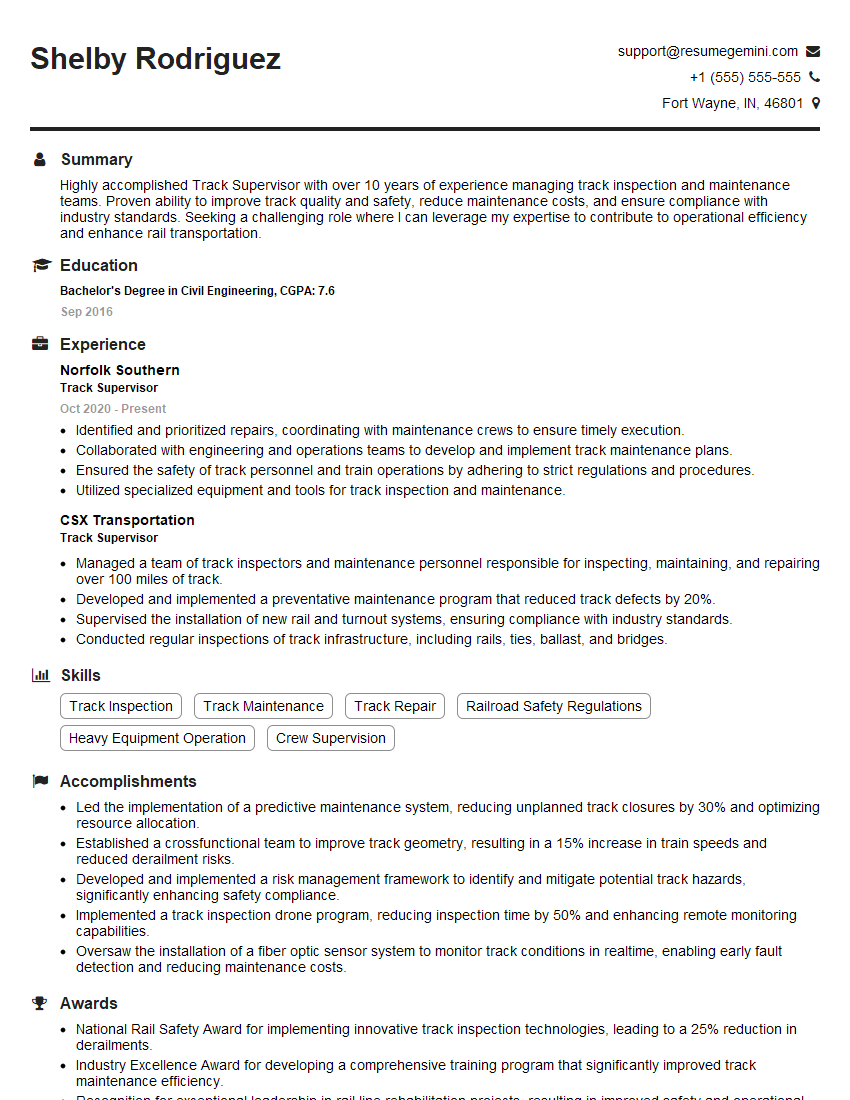
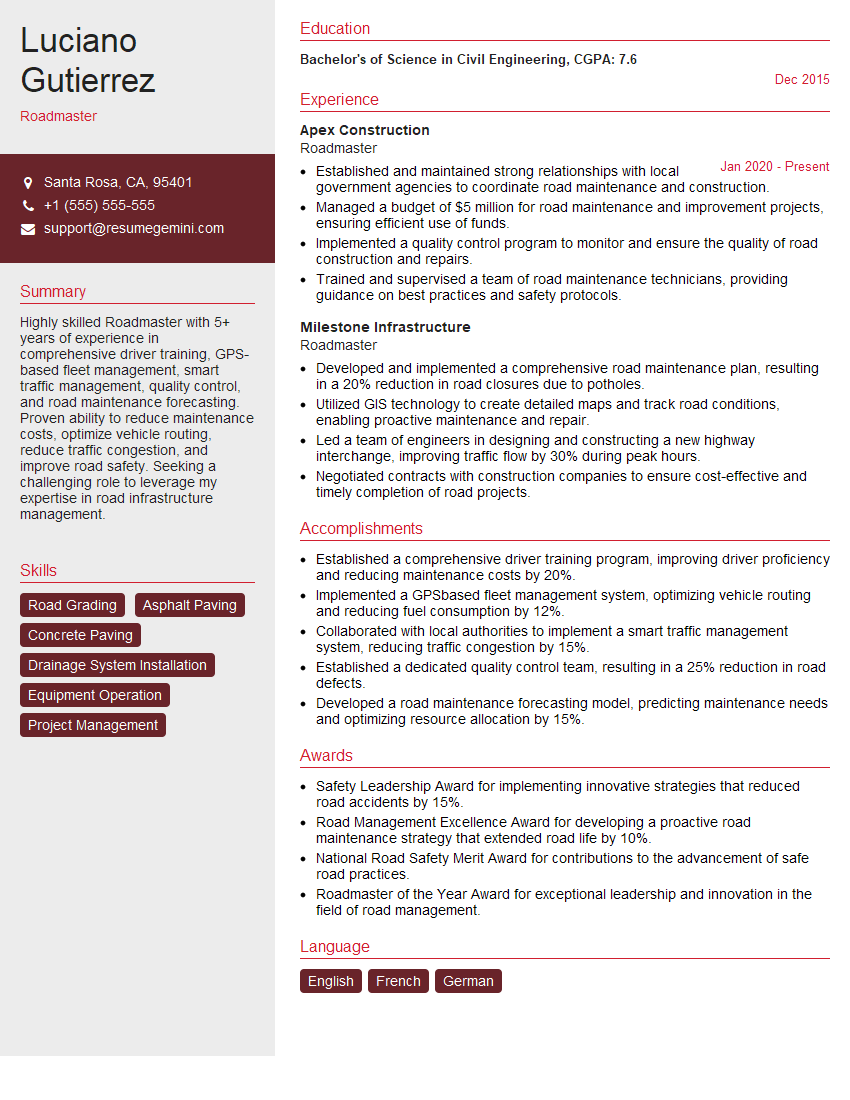
Mastering AREMA Standards is crucial for advancing your career in the railway industry. A strong understanding of these standards demonstrates technical expertise and commitment to safety, significantly enhancing your job prospects. To maximize your chances of landing your dream role, create an ATS-friendly resume that showcases your skills and experience effectively. ResumeGemini is a trusted resource that can help you build a professional and impactful resume tailored to the specific requirements of the railway industry. Examples of resumes tailored to AREMA Standards are available to help you craft your perfect application.
Explore more articles
Users Rating of Our Blogs
Share Your Experience
We value your feedback! Please rate our content and share your thoughts (optional).
What Readers Say About Our Blog
Very informative content, great job.
good