Cracking a skill-specific interview, like one for JustinTime (JIT) Inventory, requires understanding the nuances of the role. In this blog, we present the questions you’re most likely to encounter, along with insights into how to answer them effectively. Let’s ensure you’re ready to make a strong impression.
Questions Asked in JustinTime (JIT) Inventory Interview
Q 1. Explain the principles of Just-in-Time (JIT) inventory management.
Just-in-Time (JIT) inventory management is a manufacturing method aimed at receiving materials only as they are needed in the production process, minimizing inventory holding costs and maximizing efficiency. Think of it like a perfectly choreographed dance where each ingredient arrives just as the chef needs it to create the dish. Instead of large stockpiles, JIT relies on precise forecasting and highly efficient supply chains.
The core principles revolve around:
- Eliminating Waste: This is paramount. JIT strives to reduce all forms of waste, including excess inventory, unnecessary movement, and defects.
- Continuous Improvement (Kaizen): Constantly seeking ways to streamline processes and enhance efficiency is crucial for JIT’s success.
- Pull System: Production is driven by customer demand. Goods are only produced when an order is received, eliminating the risk of overproduction.
- Close Supplier Relationships: JIT relies on strong, reliable partnerships with suppliers who can deliver materials promptly and consistently.
- High-Quality Production: Defects are costly in a JIT system, as there’s no buffer of excess inventory to compensate for them.
Q 2. What are the key benefits and challenges of implementing a JIT system?
Benefits:
- Reduced Inventory Costs: Lower storage costs, less risk of obsolescence, and minimized capital tied up in inventory.
- Improved Efficiency: Streamlined processes and reduced waste lead to faster production cycles and higher productivity.
- Enhanced Quality: The focus on defect prevention leads to higher quality products.
- Increased Flexibility: JIT systems are more adaptable to changing customer demands.
- Reduced Lead Times: Faster production and delivery cycles satisfy customers quicker.
Challenges:
- Highly Dependent on Reliable Suppliers: Any disruption in the supply chain can severely impact production.
- Requires Precise Forecasting: Inaccurate demand forecasting can lead to stockouts or overstocking.
- Increased Coordination and Communication: Close collaboration with suppliers and internal teams is essential.
- Vulnerable to Unexpected Events: Natural disasters, economic downturns, or supplier issues can severely impact operations.
- High Initial Investment: Implementing JIT often requires significant investment in technology and training.
Q 3. How does JIT inventory impact lead times and production schedules?
JIT inventory significantly impacts both lead times and production schedules. By minimizing inventory, JIT systems reduce the time it takes to get materials from the supplier to the production floor. This directly shortens lead times—the time between order placement and delivery. Production schedules become more responsive to customer demand because there’s no waiting for materials to become available. A pull system ensures that only what’s needed, when it’s needed, is produced. Imagine a car manufacturer using JIT: parts arrive at the assembly line precisely when needed, resulting in a shorter production cycle and faster delivery to the customer.
Q 4. Describe the role of Kanban in a JIT environment.
Kanban is a visual signaling system that plays a crucial role in a JIT environment. It’s a method for managing workflow, ensuring that production is only triggered when needed. Imagine a supermarket shelf: when stock gets low, a signal (Kanban) automatically alerts the supplier to replenish the item. In a manufacturing context, Kanban cards or electronic signals communicate the need for more materials or components, triggering the next step in the production process. This ensures that production happens in a controlled, just-in-time manner, minimizing waste and maximizing efficiency. This system keeps inventory lean and prevents overproduction.
Q 5. How do you manage inventory levels in a JIT system to avoid stockouts and overstocking?
Managing inventory levels in a JIT system requires a delicate balance. Avoiding stockouts necessitates accurate demand forecasting and reliable supplier relationships. Tools like Kanban and robust inventory management software are critical. Frequent communication and collaboration with suppliers are key to ensuring timely material delivery. Regular inventory checks and adjustments are made to fine-tune the process based on real-time data. For example, a company might employ a buffer stock for critical items to minimize the impact of minor disruptions in the supply chain. This is a much smaller buffer than would be found in traditional inventory methods but still provides a safety net.
Q 6. What are the metrics used to measure the effectiveness of a JIT system?
Several key metrics are used to evaluate the effectiveness of a JIT system:
- Inventory Turnover Rate: Measures how efficiently inventory is used. A higher turnover rate indicates a more efficient JIT system.
- Lead Time: The time taken to procure and deliver materials. Shorter lead times reflect the success of JIT efforts.
- Production Cycle Time: The time it takes to manufacture a product. Reduction in cycle time shows improved efficiency.
- Defect Rate: A low defect rate indicates high product quality and efficiency in the production process.
- On-Time Delivery Rate: Measures the percentage of orders delivered on time. High rates signify a well-managed and responsive supply chain.
- Overall Equipment Effectiveness (OEE): Measures the effectiveness of equipment in the production process. Higher OEE suggests improved efficiency.
Q 7. How does JIT inventory relate to lean manufacturing principles?
JIT inventory is fundamentally linked to lean manufacturing principles. Lean manufacturing aims to maximize customer value while minimizing waste. JIT is a key tool in achieving this goal. By eliminating excess inventory—a major source of waste—JIT aligns perfectly with lean’s focus on waste reduction. Other lean principles, like Kaizen (continuous improvement) and value stream mapping, are integral to successful JIT implementation. Essentially, JIT is a practical application of several core lean principles to inventory management, facilitating efficient and waste-free production.
Q 8. Explain the concept of ‘pull’ system in JIT inventory management.
The ‘pull’ system in JIT inventory is the heart of its efficiency. Unlike traditional ‘push’ systems where materials are produced and pushed through the process based on forecasts, a pull system relies on actual customer demand to trigger production. Think of it like a domino effect: a customer order initiates the production of the final product, which then triggers the production of its components, and so on, all the way back to raw materials. This ensures that only what is needed, when it’s needed, is produced, minimizing waste and storage costs.
For example, imagine a bicycle manufacturer. Instead of producing thousands of wheels in anticipation of future orders, a pull system would only produce the wheels needed to fulfill specific customer orders received. This eliminates the risk of having excess inventory and frees up valuable warehouse space and capital.
- Kanban system: A visual signaling system often used in pull systems. Kanban cards indicate the need for replenishment of a particular component.
- Just-in-time delivery: Suppliers deliver materials precisely when they are needed on the production line.
Q 9. How do you handle unexpected disruptions to supply in a JIT system?
Unexpected supply disruptions are a major challenge in JIT. The key is to have robust contingency plans and a diversified supply chain. This involves:
- Identifying potential risks: Regularly assess your supply chain for potential vulnerabilities, such as natural disasters, political instability, or supplier bankruptcy.
- Developing backup suppliers: Maintain relationships with multiple suppliers for critical components. This ensures you have alternative sources if one supplier encounters problems.
- Holding safety stock for critical items: While JIT minimizes inventory, some safety stock for crucial components is often essential to buffer against minor delays.
- Flexible production processes: Design your production processes to be adaptable to changes in material availability. This may involve using alternative materials or slightly adjusting product designs.
- Strong communication: Maintain close communication with your suppliers to anticipate potential issues and proactively address them.
For instance, if a key supplier faces a production delay, having a backup supplier already lined up significantly minimizes production downtime.
Q 10. Describe your experience with implementing or improving a JIT system.
In my previous role at a food processing plant, we implemented a JIT system to reduce inventory holding costs and improve efficiency. Our initial system lacked robust tracking and communication, leading to occasional stockouts and production delays. To address this, we implemented a Kanban system using digital tools to track inventory levels in real-time. We also improved communication with our suppliers through regular meetings and shared online dashboards. The result was a 25% reduction in inventory holding costs and a 10% increase in production efficiency within six months. A crucial aspect of the improvement was the training we provided to all employees to ensure buy-in and understanding of the new system.
Q 11. What are the key considerations for selecting a vendor or supplier for a JIT system?
Selecting vendors for a JIT system requires meticulous evaluation beyond simple price comparisons. Key considerations include:
- Reliability and on-time delivery: Suppliers must demonstrate a strong track record of meeting deadlines consistently. Punctuality is critical for JIT’s success.
- Quality control: Rigorous quality checks at the supplier’s facility are essential. Defective materials arriving just-in-time cause significant disruptions.
- Proximity: Ideally, suppliers should be geographically close to reduce transportation time and costs. This minimizes lead times and risk of delays.
- Capacity and flexibility: Suppliers must have the capacity to meet fluctuating demands and quickly adapt to changes in order volume.
- Financial stability: Select financially sound suppliers to mitigate the risk of supplier bankruptcy.
- Technological capabilities: Look for suppliers who utilize advanced technologies for efficient inventory management and tracking.
For example, we prioritized suppliers with robust ERP systems and real-time data sharing capabilities to ensure transparency and accurate inventory tracking.
Q 12. How do you manage quality control in a JIT environment?
Quality control in a JIT environment is paramount because there’s minimal buffer stock to absorb defective materials. It requires a proactive approach that begins at the source:
- Supplier partnerships: Establish close working relationships with suppliers, involving them in quality control from the initial design phase.
- Strict quality standards: Define and enforce strict quality standards with suppliers, implementing regular audits and inspections.
- Statistical process control (SPC): Use SPC methods to monitor production processes and detect quality issues early.
- Total Quality Management (TQM): Implement a TQM philosophy that involves all stakeholders in continuous quality improvement.
- Early detection mechanisms: Implement systems to detect defects as early as possible in the production process, such as visual inspections and automated quality checks.
A culture of quality needs to be ingrained throughout the entire supply chain.
Q 13. How do you handle waste reduction in a JIT inventory system?
Waste reduction is a core principle of JIT. Lean manufacturing principles like 5S (Sort, Set in Order, Shine, Standardize, Sustain) are vital for eliminating waste in all forms. This includes:
- Overproduction: Avoid producing more than needed by aligning production with actual demand.
- Inventory: Minimize inventory levels to reduce storage costs and risk of obsolescence.
- Waiting: Optimize production flow to minimize idle time and bottlenecks.
- Transportation: Reduce material handling and optimize transportation routes.
- Motion: Improve workplace layout and streamline processes to minimize unnecessary movements.
- Overprocessing: Avoid unnecessary steps in the production process.
- Defects: Implement rigorous quality control to minimize defects.
By systematically addressing these areas, we can significantly improve efficiency and reduce costs.
Q 14. Explain the role of forecasting in a JIT system.
Forecasting in a JIT system is crucial, but it takes a different approach than in traditional inventory systems. While aiming for minimal inventory, accurate forecasting is needed to anticipate demand fluctuations. It’s less about predicting far-off future demand and more about creating a short-term, highly responsive forecast.
Techniques used include:
- Short-term forecasting: Focus on predicting demand over a short time horizon (e.g., daily, weekly).
- Demand aggregation: Combine demand from multiple sources to create a more accurate forecast.
- Statistical forecasting methods: Use statistical models (e.g., moving average, exponential smoothing) to analyze historical data and predict future demand.
- Collaboration with customers: Close communication with customers to gain insights into their future needs.
The goal is not perfect prediction, but to have a flexible system that can quickly adapt to minor forecasting inaccuracies.
Q 15. What are the different types of inventory in a JIT system?
In a Just-In-Time (JIT) system, the goal is to minimize inventory holding costs by receiving materials only when needed for production. Therefore, the types of inventory are significantly reduced compared to traditional systems. We primarily focus on:
- Raw Materials: These are the basic components directly used in manufacturing. JIT emphasizes receiving these only as they are required for the next production run, minimizing storage space and obsolescence risk.
- Work-in-Progress (WIP): Ideally, WIP in a JIT system is kept to a bare minimum. The production process is designed for smooth flow, minimizing the time materials spend in partially completed stages.
- Finished Goods: Similar to WIP, finished goods inventory is kept low. Production is driven by actual customer orders, reducing the risk of producing items that won’t sell immediately. This requires very accurate demand forecasting.
- MRO (Maintenance, Repair, and Operations) Inventory: While JIT focuses on minimizing production inventory, some MRO items are still necessary to keep equipment running. Even here, careful planning and potentially kanban systems are employed to manage stock efficiently.
Career Expert Tips:
- Ace those interviews! Prepare effectively by reviewing the Top 50 Most Common Interview Questions on ResumeGemini.
- Navigate your job search with confidence! Explore a wide range of Career Tips on ResumeGemini. Learn about common challenges and recommendations to overcome them.
- Craft the perfect resume! Master the Art of Resume Writing with ResumeGemini’s guide. Showcase your unique qualifications and achievements effectively.
- Don’t miss out on holiday savings! Build your dream resume with ResumeGemini’s ATS optimized templates.
Q 16. How do you balance the need for efficient inventory management with the risk of stockouts?
Balancing efficient inventory management with the risk of stockouts in JIT is a delicate act. It hinges on accurate forecasting and strong supplier relationships. We use several techniques:
- Demand Forecasting: Employing sophisticated forecasting methods like exponential smoothing or ARIMA models, combined with sales history and market analysis, enables us to predict demand accurately. This minimizes overstocking while reducing the chance of running out of crucial materials.
- Supplier Partnerships: Building strong relationships with suppliers is paramount. This fosters trust and reliability in timely delivery. We often collaborate closely with suppliers on production scheduling and inventory management.
- Safety Stock (Minimal): While JIT strives for zero inventory, a small safety stock might be strategically held for critical components to buffer against minor unforeseen disruptions in supply.
- Early Warning Systems: Implementing systems that proactively monitor inventory levels and supply chain disruptions allows for swift response in case of potential stockouts. This includes regular inventory audits and real-time tracking of material shipments.
Think of it like a tightrope walk – minimizing inventory reduces costs but increases the risk of falling (stockouts). Precise forecasting and supplier cooperation are our safety nets.
Q 17. How do you ensure timely delivery of materials in a JIT system?
Ensuring timely delivery of materials in a JIT system demands a tightly integrated supply chain. Key strategies include:
- Frequent Small Deliveries: Instead of large infrequent shipments, we schedule frequent smaller deliveries to align with production needs. This reduces storage space and minimizes the risk of inventory obsolescence.
- Vendor-Managed Inventory (VMI): Allowing key suppliers to manage our inventory directly, based on our production schedule, streamlines the process and reduces lead times.
- Dedicated Transportation: In some cases, dedicating specific transportation routes or using specialized carriers can ensure timely arrivals, minimizing delays.
- Just-in-Time Delivery Scheduling: Using sophisticated software to optimize delivery schedules and routes, coordinating with suppliers on precise delivery windows.
- Real-time Tracking: Utilizing tracking systems (GPS, RFID) to monitor shipments and get real-time updates on delivery status, enabling proactive responses to potential delays.
Q 18. What software or tools have you used to manage JIT inventory?
Throughout my career, I’ve utilized several software and tools to manage JIT inventory. These include:
- Enterprise Resource Planning (ERP) Systems: Systems like SAP or Oracle provide modules for inventory management, production planning, and supply chain coordination, crucial for JIT implementation.
- Material Requirements Planning (MRP) Software: MRP software helps calculate the exact quantity and timing of materials needed, ensuring efficient scheduling and minimizing waste.
- Kanban Systems (Software & Physical): These visual management systems, often implemented using specialized software or physical kanban cards, signal the need for material replenishment.
- Supply Chain Management (SCM) Software: SCM tools provide visibility across the entire supply chain, enabling proactive management of potential delays and disruptions.
- Data Analytics Platforms: Tools like Tableau or Power BI allow for data visualization and analysis of inventory trends, enabling informed decision-making.
Q 19. How do you train employees on JIT inventory management practices?
Training employees on JIT inventory management is crucial for success. We use a multi-pronged approach:
- Initial Training: Comprehensive training programs covering the principles of JIT, inventory management techniques, the use of specific software tools, and the importance of accuracy and collaboration.
- On-the-Job Training: Mentorship and hands-on experience are key. Experienced employees guide new hires, providing practical application of the learned concepts.
- Continuous Improvement Training: Regular workshops and training sessions focused on continuous improvement methodologies like Kaizen or Lean help employees identify and solve problems related to inventory management.
- Cross-functional Training: It’s essential to foster communication and collaboration across different departments (production, procurement, logistics). Training emphasizes teamwork and shared responsibility for inventory management.
- Gamification: Incorporating gamified elements into training can make the learning process more engaging and enhance knowledge retention.
Q 20. Describe a time you had to solve a problem related to inventory shortages in a JIT system.
In a previous role, we faced an unexpected shortage of a critical component due to a supplier’s production delay. This threatened to halt our entire production line. Here’s how we addressed the issue:
- Immediate Assessment: We quickly assessed the impact of the shortage on production schedules and identified alternative sources of the component.
- Problem-Solving Team: A cross-functional team was formed, including representatives from procurement, production, and quality control, to brainstorm solutions.
- Expedited Delivery: We negotiated an expedited delivery from the supplier, paying a premium for faster shipping to minimize downtime.
- Alternative Sourcing: Simultaneously, we explored sourcing the component from an alternative supplier. This involved a thorough evaluation of their quality and reliability.
- Production Adjustments: To minimize the impact of the shortage, we prioritized the production of high-demand items that didn’t rely on the affected component.
- Root Cause Analysis: Following the resolution, we conducted a thorough root cause analysis to understand the reasons for the supplier delay and to implement preventive measures to avoid similar issues in the future. This improved communication and risk mitigation strategies with suppliers.
Q 21. How do you use data analysis to optimize JIT inventory levels?
Data analysis is crucial for optimizing JIT inventory levels. We use several approaches:
- Inventory Turnover Rate Analysis: Analyzing the inventory turnover rate helps identify slow-moving items, allowing us to adjust production schedules and reduce excess inventory.
- Lead Time Analysis: Analyzing lead times from suppliers enables us to accurately predict when materials are needed and optimize delivery schedules.
- Demand Forecasting using Statistical Methods: As mentioned before, statistical methods like exponential smoothing or ARIMA models, combined with historical sales data and market trends, improve forecasting accuracy.
- ABC Analysis: Classifying inventory items based on their value and consumption (A-high value/high consumption, B-medium, C-low) allows us to focus on optimizing inventory levels for critical (A) items.
- Waste Analysis: Using data to analyze different forms of waste (overproduction, inventory, etc.) in the production process and finding ways to eliminate them is crucial for JIT effectiveness.
By leveraging data-driven insights, we can fine-tune our inventory levels, reducing carrying costs while maintaining adequate supplies to meet customer demands.
Q 22. Explain the relationship between JIT inventory and customer demand.
JIT inventory, or Just-in-Time inventory, is fundamentally intertwined with customer demand. The core principle is to receive materials and produce goods only when they’re needed to fulfill an order, minimizing inventory holding costs. This creates a direct, responsive relationship: high demand translates to increased production and material procurement; low demand leads to reduced production and a leaner inventory.
Think of it like a perfectly choreographed dance. The customer’s order is the music, and the JIT system is the dancer, moving precisely to the rhythm of demand. No unnecessary steps, no wasted energy, just efficient and timely delivery. For example, a bakery using a JIT system wouldn’t bake dozens of loaves of bread at the start of the day. They’d bake only the amount they expect to sell, based on past sales data and predicted demand, significantly reducing waste.
Q 23. What are the limitations of a JIT inventory system?
While highly efficient, JIT systems are not without limitations. One major drawback is their vulnerability to disruptions in the supply chain. Any delay in material delivery, even minor ones, can halt production, potentially leading to unmet customer orders and lost revenue. This reliance on precise timing also requires extremely robust supplier relationships and excellent forecasting accuracy.
Another limitation lies in the increased pressure on logistics and supplier management. The system necessitates meticulous planning and coordination, demanding advanced technologies and a highly responsive supply chain. Finally, JIT systems can be less flexible when facing unpredictable surges in demand. If demand suddenly spikes, the system might struggle to meet the increased orders promptly.
Q 24. How do you adapt a JIT system to changing market conditions?
Adapting a JIT system to changing market conditions necessitates flexibility and responsiveness. This involves leveraging sophisticated forecasting techniques, incorporating real-time data analytics, and building robust relationships with suppliers who can quickly adjust to fluctuating orders.
For instance, implementing a demand forecasting model incorporating machine learning can provide better predictions and enable proactive adjustments to production schedules. Secondly, building strategic partnerships with multiple suppliers creates redundancy in the supply chain, mitigating the risk of disruptions from a single source. Finally, incorporating agile methodologies allows for swift responses to market shifts, enabling quick changes in production plans as needed.
Q 25. How do you assess the return on investment (ROI) of a JIT inventory system?
Assessing the ROI of a JIT system involves a comprehensive analysis of various cost factors. The key is to compare the costs saved through reduced inventory holding, warehousing, and obsolescence, against the increased costs of expedited shipping, potentially higher unit prices due to smaller order volumes, and the risk of stock-outs.
A practical approach would be to calculate the reduction in inventory carrying costs (which typically includes storage, insurance, taxes, and obsolescence) and compare it to the increased logistics costs and the potential costs of lost sales due to stock-outs. This comparison will offer a clear picture of the financial benefits or drawbacks of adopting a JIT system in a specific context. For example, one might use a before-and-after analysis, comparing inventory-related expenses and sales figures before and after implementing JIT.
Q 26. Describe your experience with different JIT inventory strategies.
My experience encompasses a variety of JIT strategies, including Kanban, which uses visual signals to trigger material replenishment, and ConWIP (Constant Work-in-Process), which limits the number of items in production at any given time. I’ve worked with companies implementing JIT across various sectors, from automotive manufacturing to food processing.
In one project, a food processing company implemented a Kanban system for their packaging materials, resulting in a significant reduction in warehouse space and improved order fulfillment times. In another case, we applied ConWIP to a small-batch manufacturing facility, leading to a smoother workflow and a decrease in work-in-progress inventory.
Q 27. What are your thoughts on the future of JIT inventory management?
The future of JIT inventory management is bright but challenging. I believe we’ll see a stronger integration of advanced technologies, including AI-powered forecasting, blockchain for supply chain transparency, and IoT sensors for real-time inventory tracking. This will allow for even more precise demand predictions, greater supply chain visibility, and enhanced responsiveness to changes in the market.
However, building resilience to global disruptions will continue to be a key challenge. The increased interconnectedness of global supply chains makes them vulnerable to unforeseen events. Therefore, robust risk management strategies and diversified sourcing approaches will be crucial.
Q 28. How can technology improve the efficiency of a JIT inventory system?
Technology plays a crucial role in enhancing the efficiency of JIT systems. Real-time inventory tracking systems using RFID tags or barcode scanners provide up-to-the-minute visibility into inventory levels, allowing for immediate adjustments to production schedules. Advanced analytics platforms can predict demand with greater accuracy, reducing the risk of stockouts or overstocking.
Furthermore, automation technologies, such as automated guided vehicles (AGVs) and robotic process automation (RPA), can streamline material handling and reduce lead times. Supply chain management software integrates various aspects of the supply chain, offering a unified view and enhancing communication and coordination across the entire network.
Key Topics to Learn for JustinTime (JIT) Inventory Interview
- Fundamentals of JIT Inventory: Understanding the core principles, goals, and benefits of a Just-in-Time inventory system. This includes minimizing waste, reducing storage costs, and improving efficiency.
- Demand Forecasting & Planning: Mastering accurate demand prediction techniques to ensure timely procurement and avoid stockouts or overstocking. Explore various forecasting methods and their applications.
- Supplier Relationships & Management: Understanding the crucial role of strong supplier relationships in a JIT environment. Learn about vendor selection, collaboration, and communication strategies for seamless supply chain integration.
- Inventory Control & Tracking: Exploring different methods for tracking inventory levels and managing stock efficiently. This includes understanding Kanban systems, barcode scanning, and other inventory management technologies.
- Lean Manufacturing Principles: Connecting JIT inventory to broader lean manufacturing principles, focusing on waste reduction (muda), continuous improvement (kaizen), and value stream mapping.
- Problem-Solving & Optimization: Developing skills in identifying and resolving potential issues within a JIT system, such as supply chain disruptions, quality control challenges, and inventory discrepancies. Practice applying problem-solving methodologies.
- Implementation & Challenges: Understanding the practical challenges of implementing a JIT system and strategies to mitigate risks. This includes buffer stock considerations, potential disruptions, and contingency planning.
Next Steps
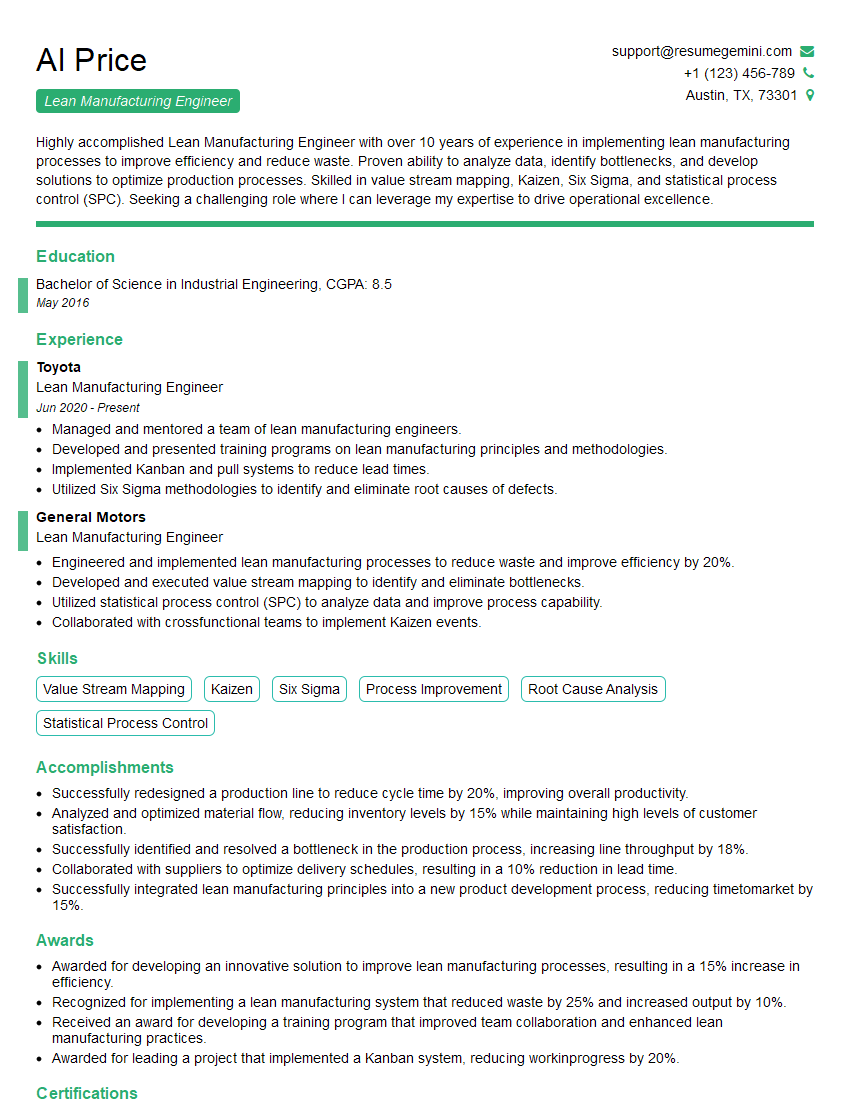
Mastering JustinTime (JIT) Inventory principles significantly enhances your marketability in today’s competitive job market. Companies highly value professionals who understand efficient inventory management, leading to increased productivity and profitability. To maximize your job prospects, focus on creating an ATS-friendly resume that highlights your relevant skills and experience. ResumeGemini is a trusted resource to help you build a professional and impactful resume that grabs recruiters’ attention. Take advantage of their tools and resources, and remember to review the provided examples of resumes tailored to JustinTime (JIT) Inventory for inspiration and best practices.
Explore more articles
Users Rating of Our Blogs
Share Your Experience
We value your feedback! Please rate our content and share your thoughts (optional).
What Readers Say About Our Blog
Very informative content, great job.
good