Unlock your full potential by mastering the most common Artistic Vision and Execution interview questions. This blog offers a deep dive into the critical topics, ensuring you’re not only prepared to answer but to excel. With these insights, you’ll approach your interview with clarity and confidence.
Questions Asked in Artistic Vision and Execution Interview
Q 1. Describe your process for translating a conceptual idea into a visual design.
Translating a conceptual idea into a visual design is a multi-stage process that I approach systematically. It begins with thorough understanding – delving deep into the core message, target audience, and desired emotional response. I often start with mood boards, sketching, and mind mapping to explore different visual directions. This brainstorming phase allows me to freely experiment without the pressure of immediate execution. Once I have a strong sense of the visual direction, I move into more refined sketching and digital prototyping using software like Adobe Photoshop and Illustrator. This iterative process involves constant refinement, testing different compositions, color palettes, and typography until the visual representation accurately reflects the initial concept.
For example, if the concept is ‘the serenity of a mountain lake,’ my initial sketches might focus on capturing the stillness of the water, the reflection of the sky, and the imposing presence of the mountains. I’d explore different color palettes – cool blues and greens versus warmer sunset hues – to determine which best conveys the desired feeling. Throughout this process, I consistently revisit the core concept to ensure the visual remains true to the initial idea.
Q 2. How do you ensure your artistic vision aligns with the project’s objectives?
Aligning artistic vision with project objectives is paramount. I achieve this through open communication and collaborative planning. Before I begin any design work, I engage in detailed discussions with the client or project team to fully grasp their goals, target audience, and desired outcomes. This includes reviewing existing brand guidelines, market research, and competitive analysis. I then create a detailed design brief outlining the project’s scope, objectives, and key performance indicators (KPIs). This document serves as a shared roadmap, ensuring everyone is on the same page regarding the project’s purpose and success metrics. Throughout the design process, I regularly present my work and solicit feedback, ensuring the visual direction remains aligned with the overall objectives.
Q 3. Explain your approach to incorporating client feedback while maintaining artistic integrity.
Incorporating client feedback while maintaining artistic integrity requires a delicate balance. I view client feedback as valuable input, not as a constraint. I actively encourage feedback at every stage of the design process, using it to refine and improve the design. However, I present my rationale behind specific design choices, explaining the artistic intent and how it contributes to the overall effectiveness of the design. If a client requests changes that compromise the design’s integrity or core message, I engage in a constructive dialogue, exploring alternative solutions that achieve their goals while still maintaining the design’s artistic merit. This often involves presenting multiple design options, each addressing the client’s feedback in slightly different ways. The goal is to find a compromise that satisfies both the client’s needs and my artistic vision.
Q 4. How do you handle creative differences with team members?
Creative differences are inevitable in collaborative projects. I approach these differences constructively, viewing them as opportunities for innovation and growth. When disagreements arise, I encourage open communication and active listening, ensuring all team members have a chance to express their ideas and perspectives. We discuss the design’s core principles and explore the rationale behind different approaches. We often engage in brainstorming sessions, exploring alternative solutions that incorporate elements from each team member’s vision. The goal is to find a design solution that is both aesthetically pleasing and effectively achieves the project’s objectives. Sometimes, a compromise involves creating different design iterations, allowing the team to compare and select the most effective approach.
Q 5. Describe a time you had to adapt your artistic vision due to unexpected constraints.
During a recent project designing a website for a sustainable fashion brand, I had envisioned a complex animation sequence for the homepage, showcasing the brand’s commitment to ethical sourcing and production. However, due to unexpected limitations in the client’s budget and the website’s hosting infrastructure, this animation proved technically infeasible. I had to adapt my artistic vision, focusing instead on creating a series of high-quality static images and using subtle parallax scrolling effects to achieve a similar impact. Although not initially planned, this simplification proved surprisingly effective, conveying the same message of elegance and sustainability without the technical complexity. This experience taught me the importance of flexibility and resourcefulness when facing unforeseen constraints.
Q 6. How proficient are you in Adobe Creative Suite (Photoshop, Illustrator, InDesign)?
I am highly proficient in the Adobe Creative Suite, particularly Photoshop, Illustrator, and InDesign. My skills encompass a wide range of functionalities within these programs, from image manipulation and retouching in Photoshop to vector illustration and logo design in Illustrator, and page layout and typography in InDesign. I’m confident in using these tools to create professional-quality designs across various media, from print collateral to digital assets. I regularly utilize advanced techniques such as layer masking, blending modes, and vector manipulation to achieve complex visual effects and ensure consistency across design projects.
Q 7. What software or tools are you most comfortable using for your chosen medium?
Beyond the Adobe Creative Suite, I am also comfortable using various other design tools depending on the project’s needs. For example, I’m proficient in Figma for collaborative design and prototyping, and After Effects for motion graphics and animation. My choice of tools is driven by the specific requirements of the project – ensuring that the chosen software best facilitates achieving the desired visual outcome and workflow. I am always open to learning new tools and expanding my skillset to stay current with industry best practices.
Q 8. Describe your workflow for managing multiple design projects simultaneously.
Managing multiple design projects effectively requires a robust system. My approach centers around meticulous organization and prioritization. I leverage project management tools like Asana or Trello to create individual boards for each project, outlining tasks, deadlines, and assigned resources. Within each board, I break down larger tasks into smaller, manageable sub-tasks. This granular approach prevents feeling overwhelmed and allows for better tracking of progress. Crucially, I schedule dedicated blocks of time for each project, preventing context switching and maximizing focus. For example, I might dedicate Monday mornings to project A, Tuesday afternoons to project B, and so on. Regular review of my project boards and calendar ensures I stay on track and allocate resources appropriately.
Furthermore, I utilize a color-coding system within my project management tools to visually represent project status (e.g., green for completed, yellow for in progress, red for delayed). This provides a quick, at-a-glance overview of my workload, helping me identify potential bottlenecks and adjust my schedule accordingly.
Q 9. How do you prioritize tasks to meet tight deadlines?
Prioritizing tasks under tight deadlines involves a strategic approach that balances urgency and importance. I employ the Eisenhower Matrix (urgent/important), categorizing tasks into four quadrants: Do First (urgent and important), Schedule (important but not urgent), Delegate (urgent but not important), and Eliminate (neither urgent nor important). This framework helps me focus on high-impact activities first. For instance, a critical design element for an impending launch would fall into the ‘Do First’ category, while less time-sensitive tasks like creating alternative logo variations might be scheduled for later.
Beyond the Eisenhower Matrix, I utilize time-blocking techniques, allocating specific time slots for high-priority tasks. I also regularly reassess priorities, adapting my schedule as circumstances change. This flexibility is key to successfully navigating unexpected hurdles and maintaining momentum even under pressure. Open communication with clients and stakeholders is essential to manage expectations and collaboratively adjust timelines when necessary.
Q 10. Explain your understanding of color theory and its impact on visual communication.
Color theory is the cornerstone of effective visual communication. My understanding encompasses color wheels, harmonies (complementary, analogous, triadic), temperature (warm vs. cool), and the psychological impact of different hues. For example, warm colors like reds and oranges evoke energy and excitement, while cool colors like blues and greens convey calmness and serenity. Understanding these principles allows me to craft visually appealing and emotionally resonant designs.
In practice, I use color palettes strategically to achieve specific communication goals. A website for a tech startup might employ a vibrant, modern palette using complementary colors to create a bold and innovative feel. Conversely, a website for a spa might utilize a calming palette of analogous colors to create a sense of tranquility. I often use online tools like Adobe Color to explore various color harmonies and generate palettes that meet specific project needs.
Q 11. How do you ensure visual consistency across different platforms and formats?
Maintaining visual consistency across platforms and formats requires a well-defined style guide. This document serves as a central repository for all brand assets, including logos, fonts, colors, and imagery guidelines. It outlines specifications for usage across various mediums, ensuring a unified brand experience. For example, the style guide might dictate specific font sizes for headlines and body text across websites, social media posts, and printed materials.
I utilize design systems, which are collections of reusable components and patterns, to ensure consistency across different projects. These systems might include pre-defined button styles, icons, and layout structures. Employing a design system reduces inconsistencies and accelerates the design process, saving time and effort while maintaining a cohesive brand identity.
Q 12. Describe your experience with user interface (UI) and user experience (UX) design principles.
My experience with UI/UX principles is extensive. I understand the importance of user-centered design, conducting thorough user research to understand user needs and behaviors. This involves techniques like user interviews, surveys, and usability testing. I then translate these findings into wireframes and prototypes, iteratively refining the design based on user feedback.
Key UI/UX principles I apply include information architecture (organizing content logically), interaction design (creating intuitive and engaging user flows), accessibility (ensuring the design is usable by individuals with disabilities), and visual hierarchy (guiding the user’s eye to important information). For example, I might use color, size, and placement to emphasize call-to-action buttons or other critical elements on a webpage. I prioritize creating designs that are not only aesthetically pleasing but also functional, efficient, and user-friendly.
Q 13. How do you measure the success of a design project?
Measuring the success of a design project involves a multifaceted approach. While aesthetic appeal is important, the ultimate measure is whether the design achieves its intended goals. Key metrics include:
- User engagement: Metrics such as website traffic, bounce rate, time on site, and conversion rates provide insights into user interaction.
- Brand awareness: Tracking social media engagement, website visits, and brand mentions helps gauge the impact on brand visibility.
- Usability testing results: Data from usability tests reveal areas for improvement and indicate how effectively the design meets user needs.
- Client satisfaction: Direct feedback from clients and stakeholders ensures alignment with their expectations.
A holistic approach, combining quantitative data (e.g., website analytics) and qualitative feedback (e.g., user interviews), offers a comprehensive view of the design’s success.
Q 14. How do you stay up-to-date with the latest design trends and technologies?
Staying current with the latest design trends and technologies is crucial in this rapidly evolving field. I actively participate in online communities, follow industry leaders on social media platforms like Behance and Dribbble, and attend conferences and workshops. I regularly explore online design resources such as Awwwards and CSS Design Awards to see inspiring projects and learn new techniques.
Furthermore, I subscribe to design newsletters and podcasts to stay abreast of emerging trends and technologies. Experimenting with new design tools and software is an essential part of my ongoing learning process. Continuous learning and adaptation are vital for remaining a competitive and relevant designer.
Q 15. What inspires your artistic vision?
My artistic vision is fueled by a potent blend of inspiration. It starts with a deep observation of the world around me – the vibrant hues of a sunset, the intricate patterns in nature, the raw emotion captured in a fleeting moment. I’m also deeply inspired by human stories, both historical and contemporary. These narratives, whether expressed through literature, film, or personal experiences, provide rich emotional landscapes that I translate into visual form. Furthermore, the works of other artists across various disciplines – painting, sculpture, photography, music – continuously challenge and inspire my own creative process. It’s a continuous cycle of observation, reflection, and interpretation that shapes my artistic vision.
Career Expert Tips:
- Ace those interviews! Prepare effectively by reviewing the Top 50 Most Common Interview Questions on ResumeGemini.
- Navigate your job search with confidence! Explore a wide range of Career Tips on ResumeGemini. Learn about common challenges and recommendations to overcome them.
- Craft the perfect resume! Master the Art of Resume Writing with ResumeGemini’s guide. Showcase your unique qualifications and achievements effectively.
- Don’t miss out on holiday savings! Build your dream resume with ResumeGemini’s ATS optimized templates.
Q 16. How do you develop a unique artistic style?
Developing a unique artistic style is a journey, not a destination. It’s about constantly experimenting and refining one’s approach. It begins with identifying your core artistic values – what aspects of visual communication resonate most deeply with you? Do you gravitate towards minimalism, bold color palettes, intricate details, or perhaps a combination? Once you have a sense of your preferences, start exploring different techniques and mediums. Don’t be afraid to experiment and fail. Every ‘failed’ experiment teaches you something about your strengths and weaknesses. Gradually, a cohesive style will emerge, reflecting your unique perspective and skillset. For instance, I consciously started incorporating geometric shapes and bold lines into my illustrations, gradually refining this aspect until it became a recognizable element of my work. This process demands continuous self-reflection and a willingness to embrace evolution.
Q 17. Describe your experience working with different design styles (e.g., minimalist, modern, vintage).
I’ve had the opportunity to work across various design styles, and each has presented unique challenges and rewards. Minimalist design, with its focus on simplicity and functionality, has taught me the power of restraint and the importance of strategic use of negative space. In modern design, I’ve explored innovative typography, clean layouts, and the integration of cutting-edge technologies. Working with vintage styles has been a fascinating exploration of nostalgia, requiring meticulous research into historical aesthetics and techniques. For example, I recently designed a website using a minimalist approach, focusing on clean lines and a limited color palette to create a sense of sophistication and elegance. In contrast, a recent branding project involved incorporating vintage elements, like Art Deco fonts and geometric patterns, to evoke a sense of timeless quality. Each style demands a different approach, requiring deep understanding of the underlying principles and aesthetic values.
Q 18. How do you approach designing for different target audiences?
Designing for different target audiences necessitates a deep understanding of their demographics, psychographics, and cultural contexts. The visual language you employ must resonate with their values and preferences. For instance, a design targeted at a younger audience might utilize vibrant colors, playful typography, and dynamic layouts, while a design for a more mature audience might favor a more sophisticated and restrained aesthetic. Thorough market research is essential, involving surveys, focus groups, and competitor analysis to identify the nuances of the target audience. This informed approach ensures that the design effectively communicates its message and achieves its intended impact. For example, a children’s book demands vibrant colors, simple illustrations, and large, easy-to-read fonts, vastly different from a corporate report which calls for a clean, professional layout and minimal ornamentation.
Q 19. Explain your understanding of typography and its impact on design.
Typography is more than just selecting fonts; it’s a powerful tool for conveying meaning and establishing tone. The choice of typeface, its size, weight, kerning, and leading all contribute to the overall visual hierarchy and readability of a design. Serif fonts often evoke a sense of tradition and formality, while sans-serif fonts are often perceived as more modern and clean. Understanding the nuances of different typefaces is crucial for creating designs that are both aesthetically pleasing and effectively communicate the intended message. For example, using a playful script font for a children’s book communicates a sense of whimsy, while employing a bold sans-serif font in a headline grabs immediate attention. Effective typography is about thoughtful selection and skillful application, balancing aesthetic appeal with clear communication.
Q 20. How do you use visual hierarchy to guide the viewer’s eye?
Visual hierarchy guides the viewer’s eye through a design, ensuring that the most important information is presented first and most prominently. This is achieved through various techniques, including size, contrast, color, and placement. Larger elements naturally attract more attention, as do elements with higher contrast against the background. Strategic use of color can also direct the eye, with brighter colors commanding more attention than muted tones. Placement within the design is critical, with elements placed higher or closer to the center typically receiving more attention. Consider a website homepage: the headline is usually the largest and most prominent element, followed by supporting text and images. This deliberate arrangement controls the viewer’s attention, ensuring a clear flow of information.
Q 21. How do you create a sense of balance and harmony in your designs?
Balance and harmony in design create a sense of visual equilibrium and order. There are two main types of balance: symmetrical and asymmetrical. Symmetrical balance creates a sense of formality and stability through mirroring elements on either side of a central axis. Asymmetrical balance achieves harmony through the visual weighting of elements, using size, color, and shape to create a sense of equilibrium without strict symmetry. Achieving harmony also involves careful consideration of color palettes, ensuring a cohesive and pleasing combination of hues and tones. The use of visual weight, proximity, alignment, and repetition also plays a critical role in establishing a sense of harmony and order. A well-balanced design feels both visually pleasing and intuitively understandable.
Q 22. Describe your experience with branding and logo design.
Branding and logo design are fundamental to establishing a company’s visual identity. A strong brand communicates values, personality, and purpose. My experience encompasses the entire process, from initial client consultations to final design delivery and implementation. This involves deep dives into market research to understand target audiences and competitive landscapes. I then develop mood boards, explore various design concepts, and refine them through iterative feedback. For example, I recently worked with a sustainable coffee company. Their brand needed to convey both ethical sourcing and a sophisticated, modern feel. We landed on a logo incorporating a stylized coffee bean within a leaf, utilizing earthy tones and a minimalist font. The resulting brand guidelines included a comprehensive color palette, typography, and image style guide ensuring consistency across all platforms.
Technically, I’m proficient in Adobe Creative Suite (Illustrator, Photoshop, InDesign), and I’m comfortable working with various file formats and printing specifications. I also understand the importance of creating scalable vector graphics for logos to ensure they look crisp across different sizes and mediums.
Q 23. How do you use imagery to evoke specific emotions or messages?
Imagery is a powerful tool for emotional communication. Color psychology plays a crucial role; for instance, warm colors like reds and oranges evoke feelings of energy and excitement, while cool colors like blues and greens often project calmness and serenity. Composition is just as important; a dynamic, action-filled composition can create a sense of urgency, while a symmetrical, balanced composition might communicate stability and trust.
For example, a campaign promoting a new adventure travel company might utilize vibrant, dynamic images of people exploring rugged landscapes, contrasting with more serene shots of stunning sunsets to show the balance of adventure and relaxation. The chosen color palette will support these feelings: bold blues and greens for the adventure and warm oranges and yellows to capture the peaceful sunsets.
Beyond color and composition, the subject matter itself conveys strong emotion. Images of smiling faces evoke happiness, while images of distressed landscapes might prompt concern for environmental issues. The skillful use of imagery allows me to align visual elements with desired emotional responses and create a persuasive narrative.
Q 24. Explain your process for creating effective visual storytelling.
Effective visual storytelling requires a strategic approach. I begin by defining the narrative’s core message and target audience. Then, I develop a storyboard – a visual outline of the story’s key moments. This storyboard serves as a roadmap, ensuring a cohesive and compelling narrative. I carefully select imagery and typography that aligns with the tone and style of the story.
My process involves several stages: Research and Concept Development: Understanding the client’s objectives, target audience, and overall message; Storyboarding and Visual Planning: Creating a detailed storyboard that outlines the sequence of visuals and their emotional impact; Image Selection and Creation: Sourcing or creating visuals that effectively communicate the story’s key elements; Layout and Design: Arranging the visuals and text to create a compelling and easy-to-understand narrative; Review and Refinement: Iterative feedback and revisions to ensure the story is engaging and achieves its intended purpose.
For instance, when creating a promotional video for a non-profit, I would focus on creating visuals that evoke empathy and highlight the impact of their work, using imagery of people being helped, contrasting this with before/after shots. The visual narrative would work in tandem with powerful music and voiceover to create a lasting and impactful message.
Q 25. How do you critique your own work?
Self-critique is a crucial part of my creative process. I approach it systematically, using a checklist and allowing for a period of distance before reviewing. Firstly, I look at the technical aspects: is the composition balanced? Is the color palette harmonious? Then, I consider the effectiveness of the design; does it convey the intended message clearly and engagingly? Finally, I step back and look at it objectively, considering how it might be perceived by others. This often involves getting feedback from trusted colleagues or friends.
For example, I might ask myself questions such as: “Does the logo work effectively at different sizes?”, “Is the typography legible and consistent with the brand’s identity?”, “Does the color palette evoke the desired emotions?”, and “Is the overall design original and memorable?” This process allows me to identify areas for improvement and refine the design until it meets my standards of excellence.
Q 26. Describe a time you had to overcome a significant creative challenge.
One significant challenge was designing a logo for a tech startup that aimed for a cutting-edge, yet approachable feel. The initial concepts felt either too sterile or too playful, failing to capture the balance they wanted. I overcame this by spending time researching their team, their values, and their target audience. I conducted user interviews to understand their perceptions of the company. This research revealed a desire for a logo that reflected innovation but also hinted at the human aspect of the technology. I ultimately created a logo that incorporated a stylized abstract circuit design, but softened it with a warm color palette and a friendly, modern font.
The key to overcoming this challenge was shifting from a purely design-focused approach to a more user-centered one. By focusing on the needs and expectations of the client and their audience, I was able to create a logo that resonated with them and effectively conveyed their brand identity.
Q 27. How do you handle constructive criticism?
I value constructive criticism as an opportunity for growth. I believe that no design is perfect on the first try. When receiving criticism, I try to approach it with an open mind and avoid becoming defensive. I actively listen to the feedback, ask clarifying questions, and assess its validity based on the design’s objectives. I then consider how I can integrate the feedback to enhance the design. This involves prioritizing constructive criticism that improves the quality and impact of the design, and filtering out opinions that do not align with the overall goals.
For example, if someone suggests a different color palette, I’d investigate if that color choice aligns better with the brand’s message and target audience. If it does, I’ll explore incorporating it into the design. If not, I’ll politely explain my reasoning while considering their suggestions in other ways. Ultimately, the goal is to create the best possible outcome by embracing the collaboration involved in creative feedback.
Q 28. Describe your experience with project management tools (e.g., Asana, Trello).
I have extensive experience using project management tools like Asana and Trello, primarily for organizing complex projects involving multiple stakeholders and deadlines. Asana is particularly useful for managing tasks, setting deadlines, and tracking progress within a team. Its features, such as assigning tasks, setting dependencies, and monitoring progress towards deadlines are invaluable in a collaborative environment. Trello’s Kanban-style boards are excellent for visualizing workflow and managing projects with flexible deadlines.
I leverage these tools to improve efficiency and ensure projects remain on track. For example, in a recent large-scale branding project, I used Asana to create a central hub for all tasks, including research, design iterations, client communication, and approvals. This allowed me to effectively manage timelines, delegate tasks to team members, and track progress efficiently throughout the entire project lifecycle. This led to improved project organization and increased client satisfaction.
Key Topics to Learn for Artistic Vision and Execution Interview
- Defining Your Artistic Vision: Understanding how to articulate your creative vision clearly and concisely, both verbally and visually. This includes identifying your unique style and approach.
- Conceptualization and Ideation: Exploring brainstorming techniques, developing strong concepts, and effectively communicating them to clients or collaborators. This involves sketching, mood boarding, and presenting initial ideas.
- Technical Proficiency and Execution: Demonstrating mastery of relevant software and tools (mention specific ones relevant to the target role, e.g., Photoshop, Illustrator, 3D modeling software). This includes showcasing your ability to translate concepts into finished products.
- Problem-Solving and Adaptation: Discussing your approach to overcoming creative blocks, adapting to unexpected challenges during the design process, and managing revisions effectively.
- Collaboration and Communication: Highlighting your ability to work effectively within a team, give and receive constructive criticism, and clearly communicate your ideas and progress to stakeholders.
- Project Management and Workflow: Understanding and explaining your approach to project organization, time management, and meeting deadlines. Demonstrating efficient workflow processes.
- Portfolio Building and Presentation: Articulating your strategies for showcasing your work effectively, including selecting strong pieces and presenting your portfolio professionally. Understanding how to tailor your portfolio to specific job requirements.
Next Steps
Mastering Artistic Vision and Execution is crucial for career advancement in the creative industries. It allows you to not only showcase your talent but also effectively communicate your ideas, manage projects, and collaborate successfully. To significantly boost your job prospects, creating a strong, ATS-friendly resume is essential. ResumeGemini is a trusted resource that can help you build a professional resume tailored to highlight your artistic vision and execution skills. Examples of resumes specifically tailored for Artistic Vision and Execution roles are provided to help guide your resume creation process.
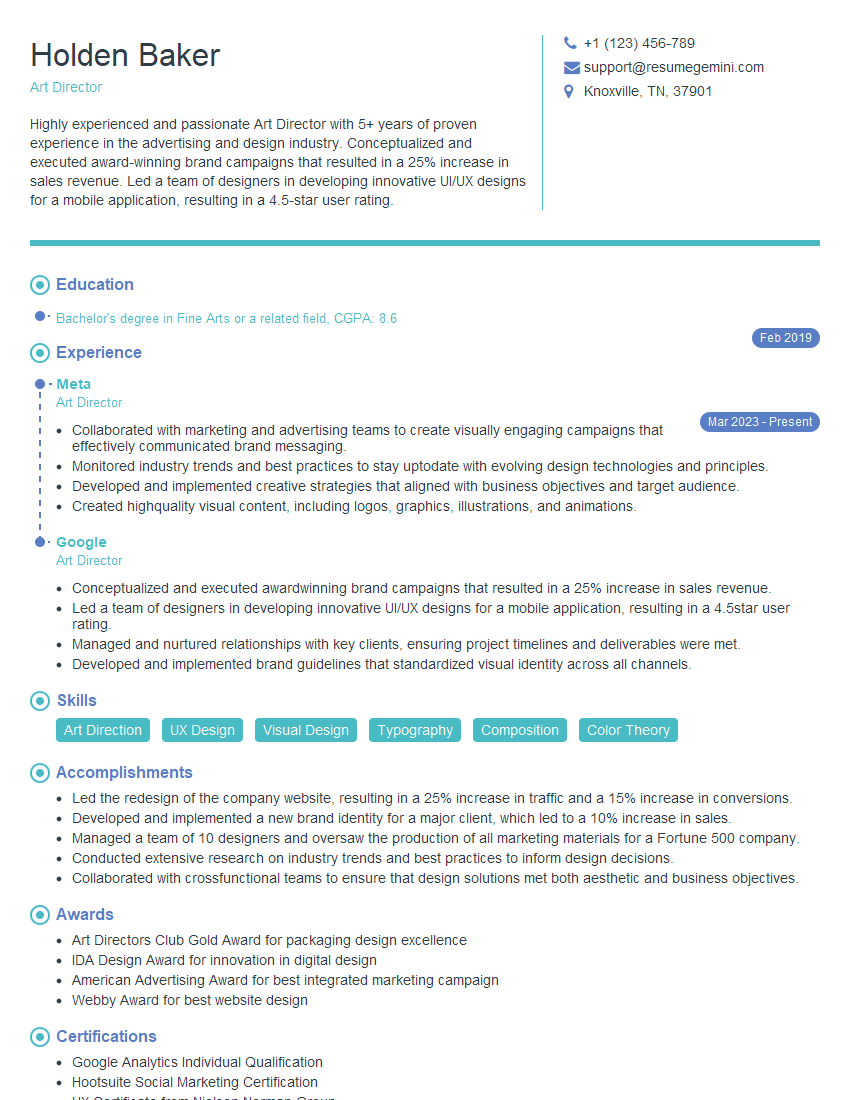
Art Director Resume Sample

Creative Director Resume Sample
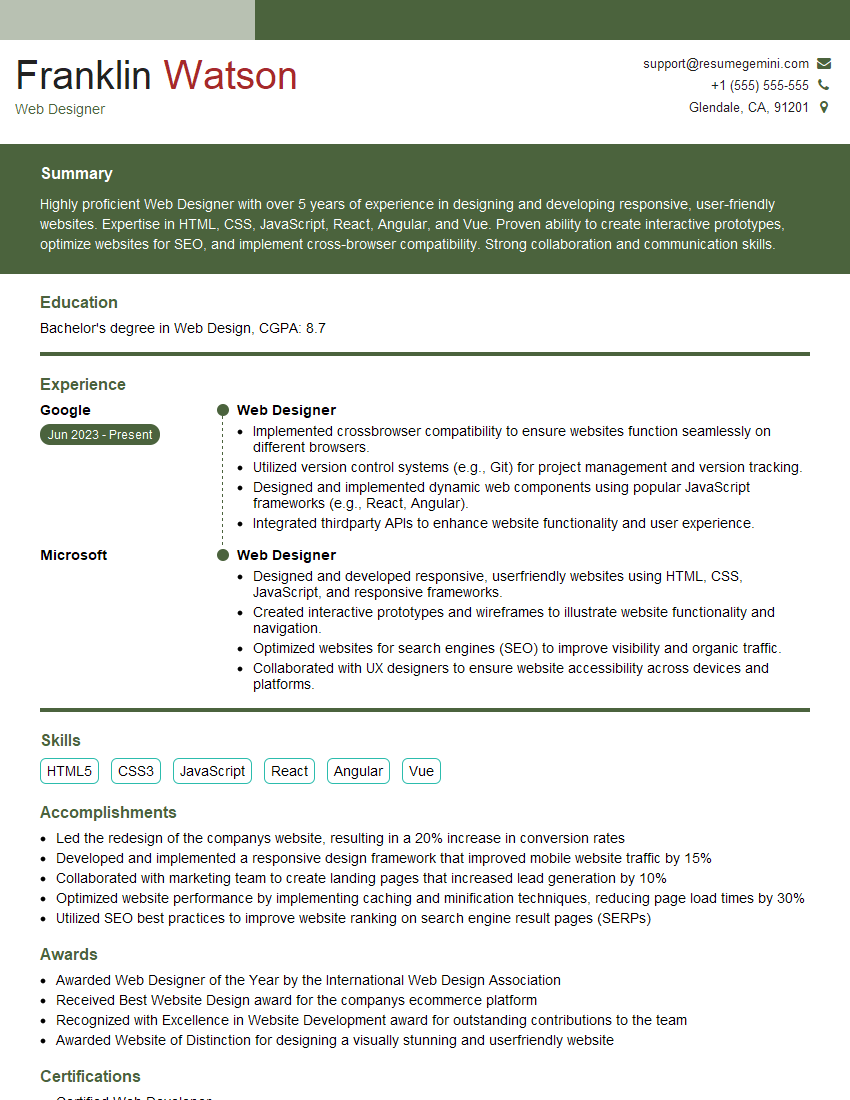
Web Designer Resume Sample
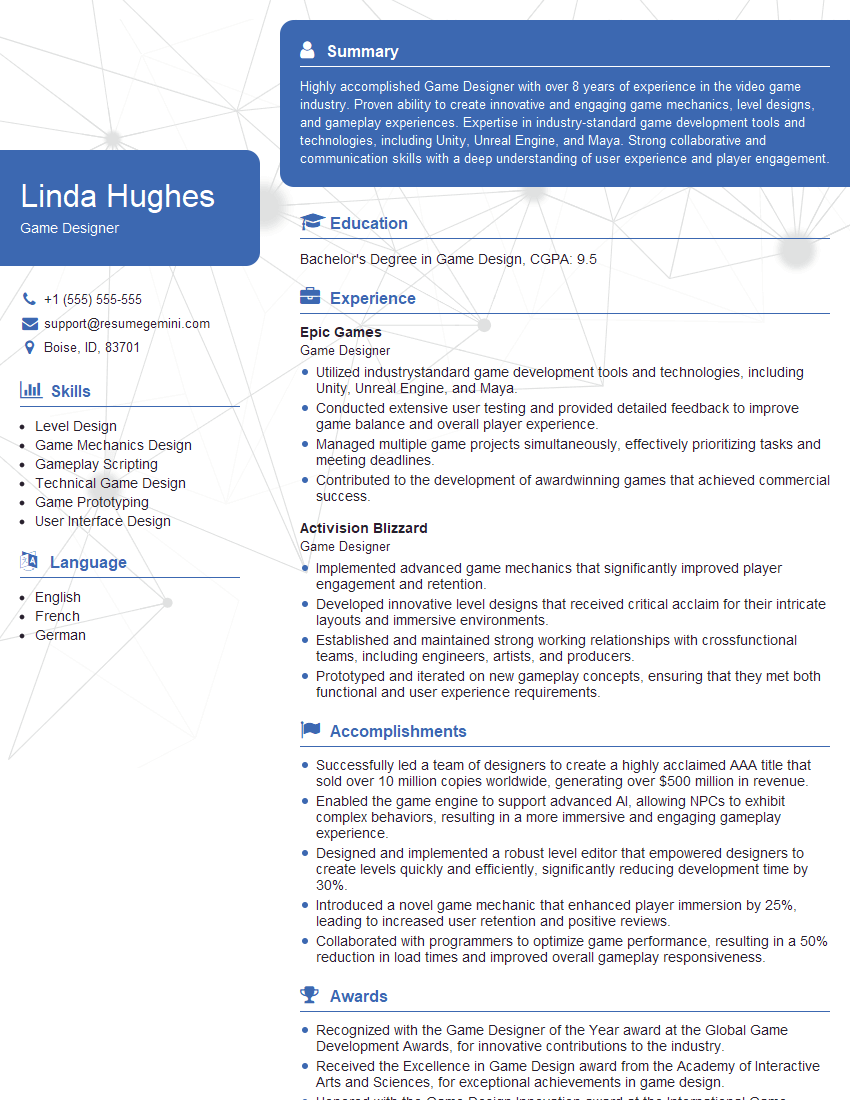
Game Designer Resume Sample
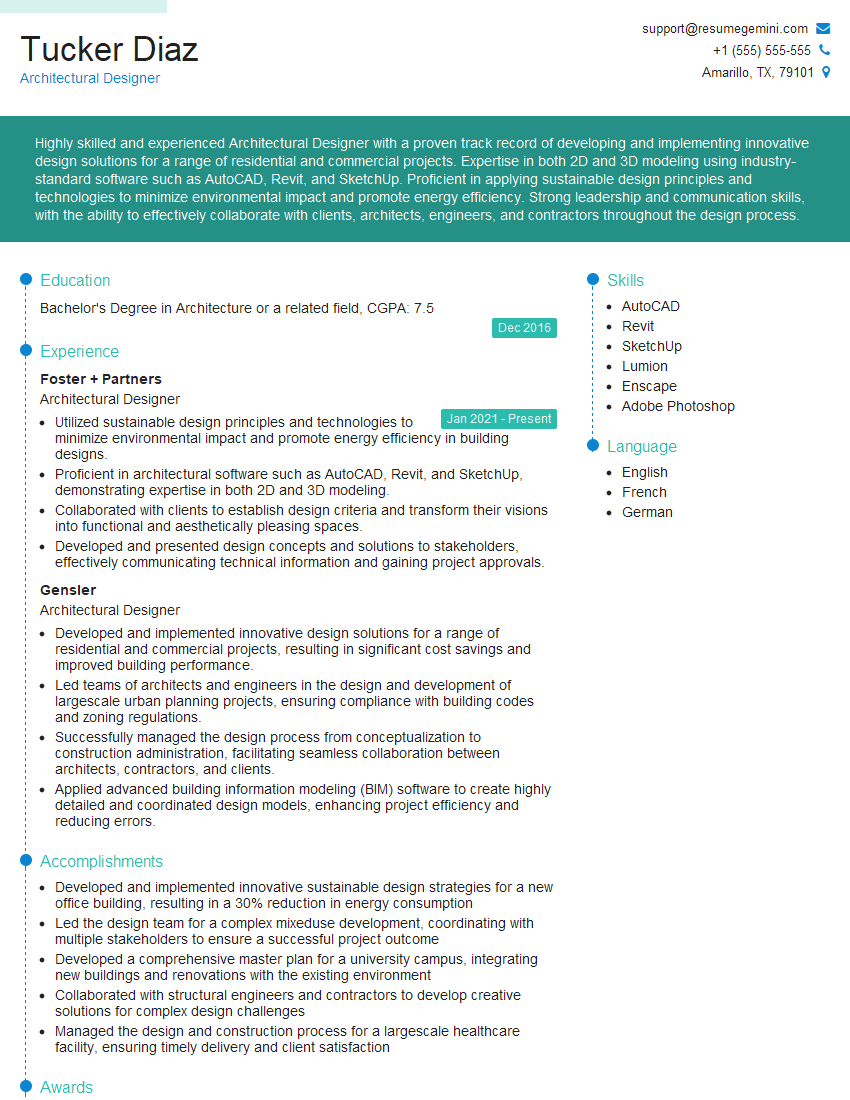
Architectural Designer Resume Sample
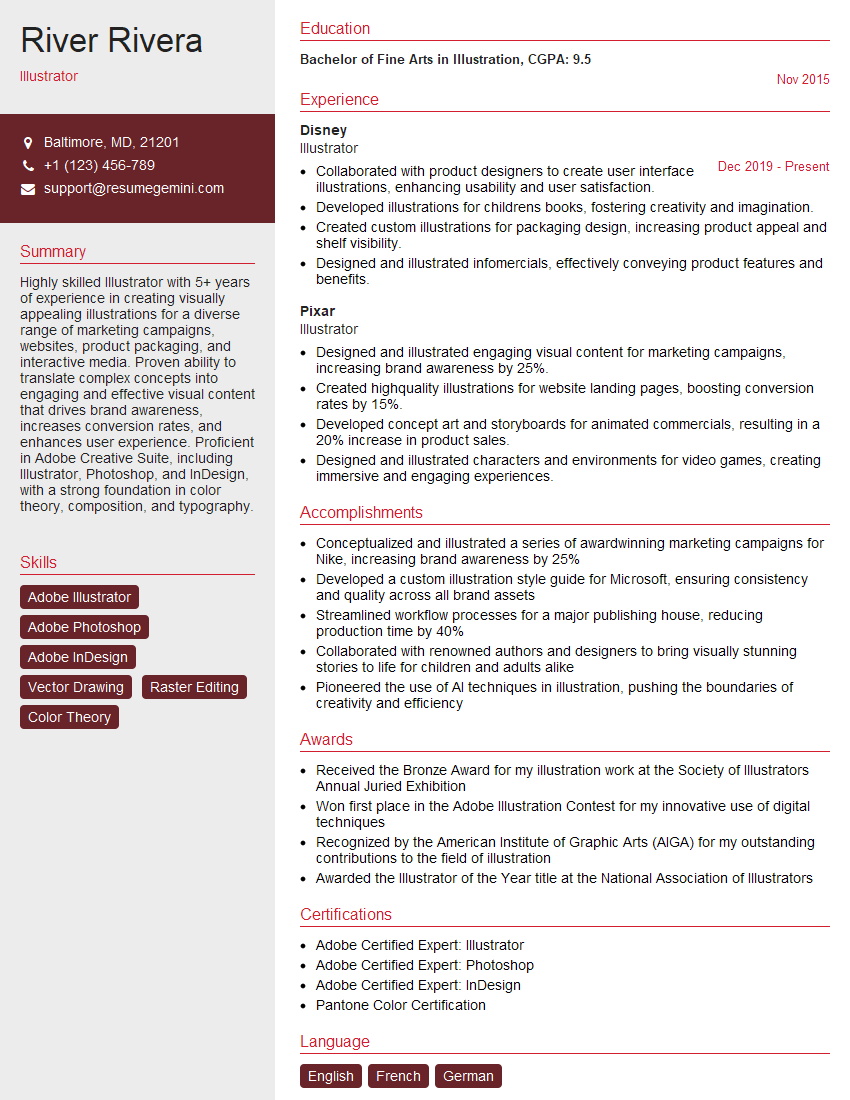
Illustrator Resume Sample
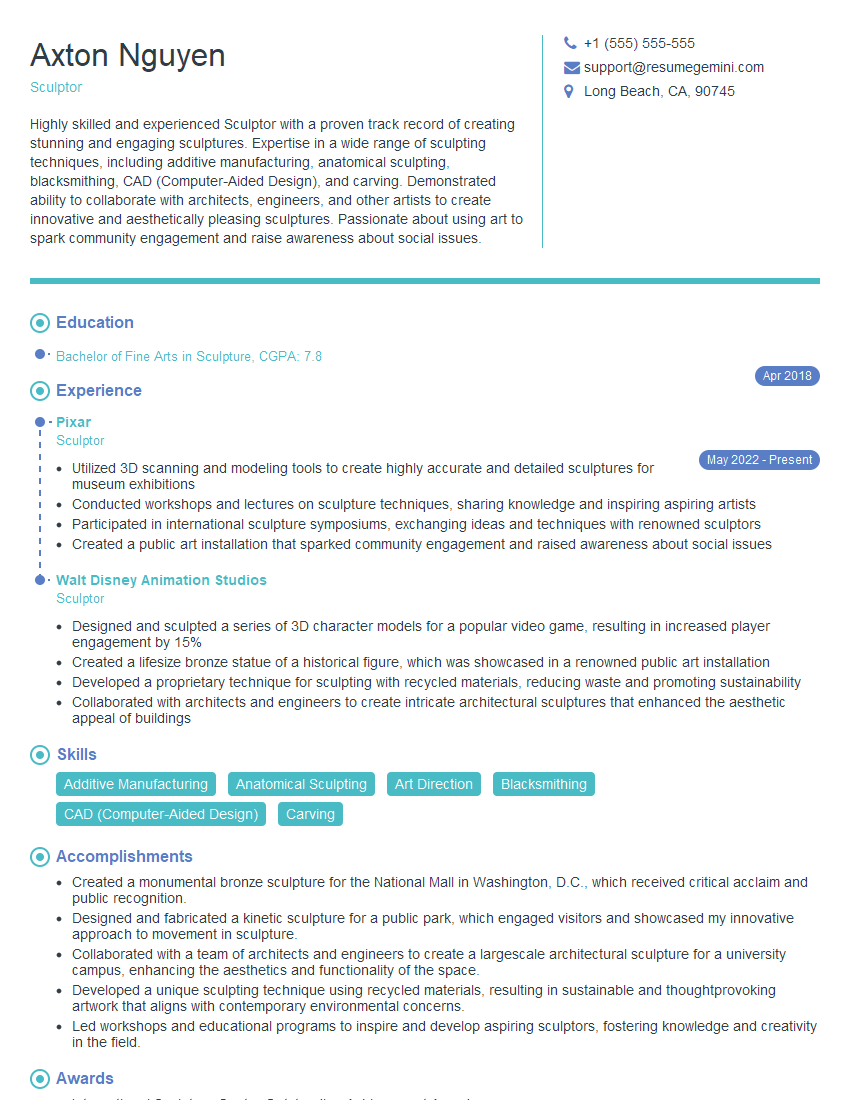
Sculptor Resume Sample
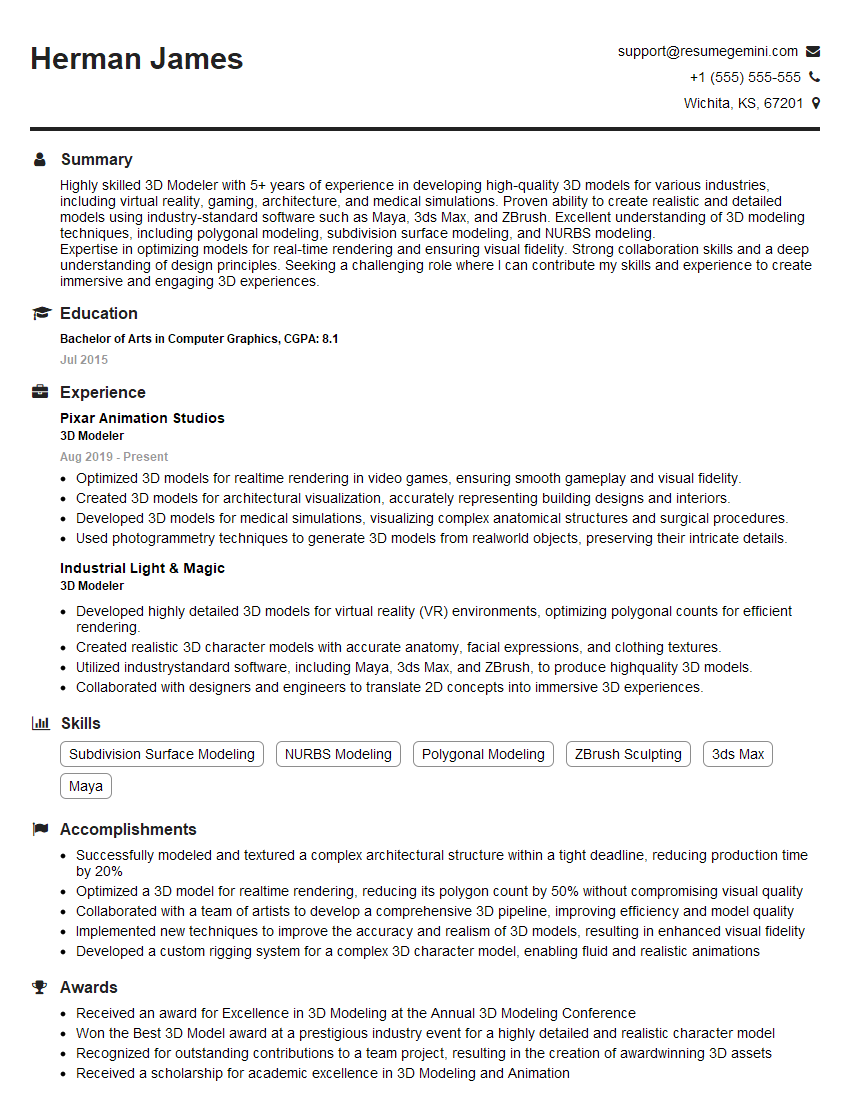
3D Modeler Resume Sample
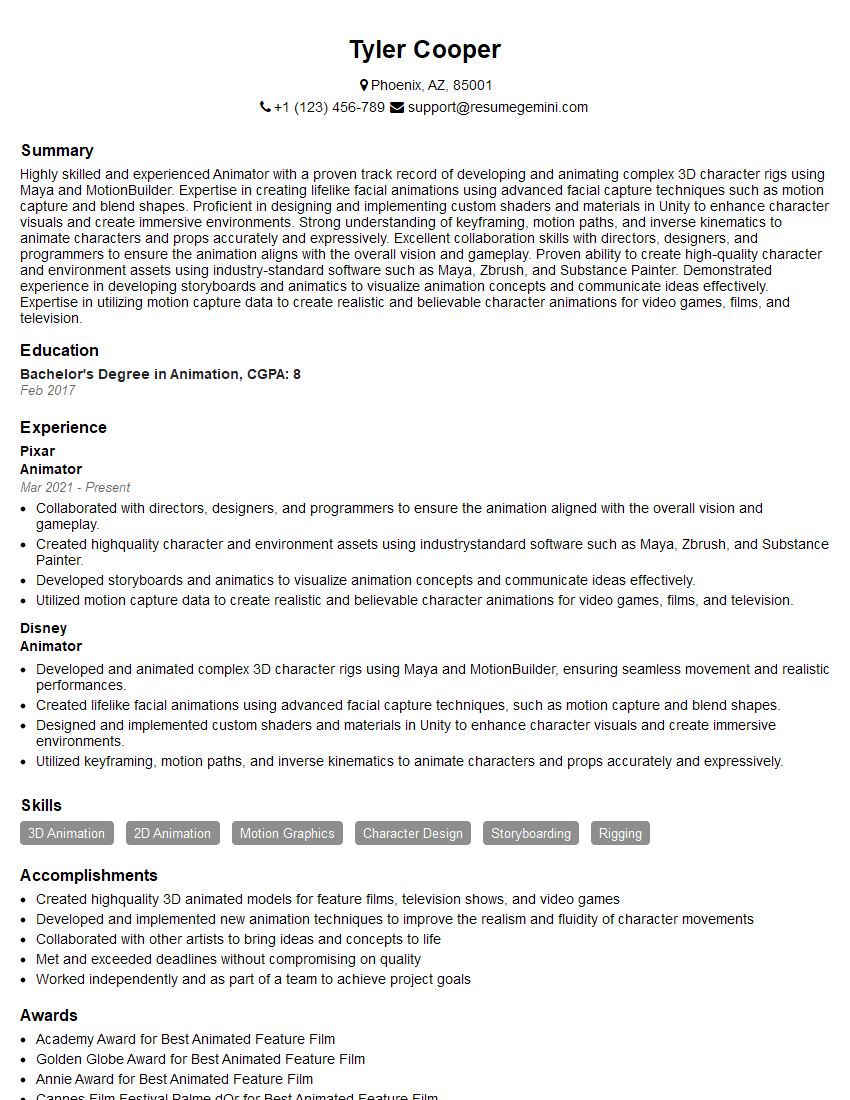
Animator Resume Sample
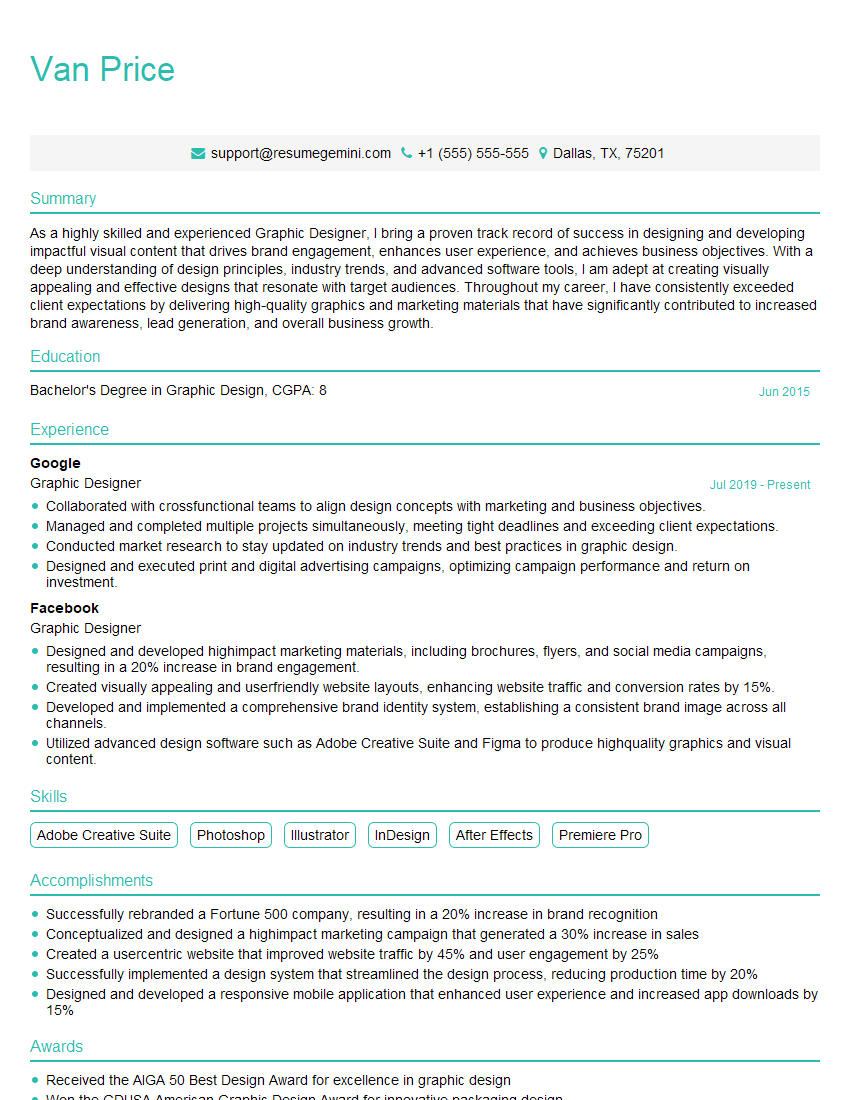
Graphic Designer Resume Sample
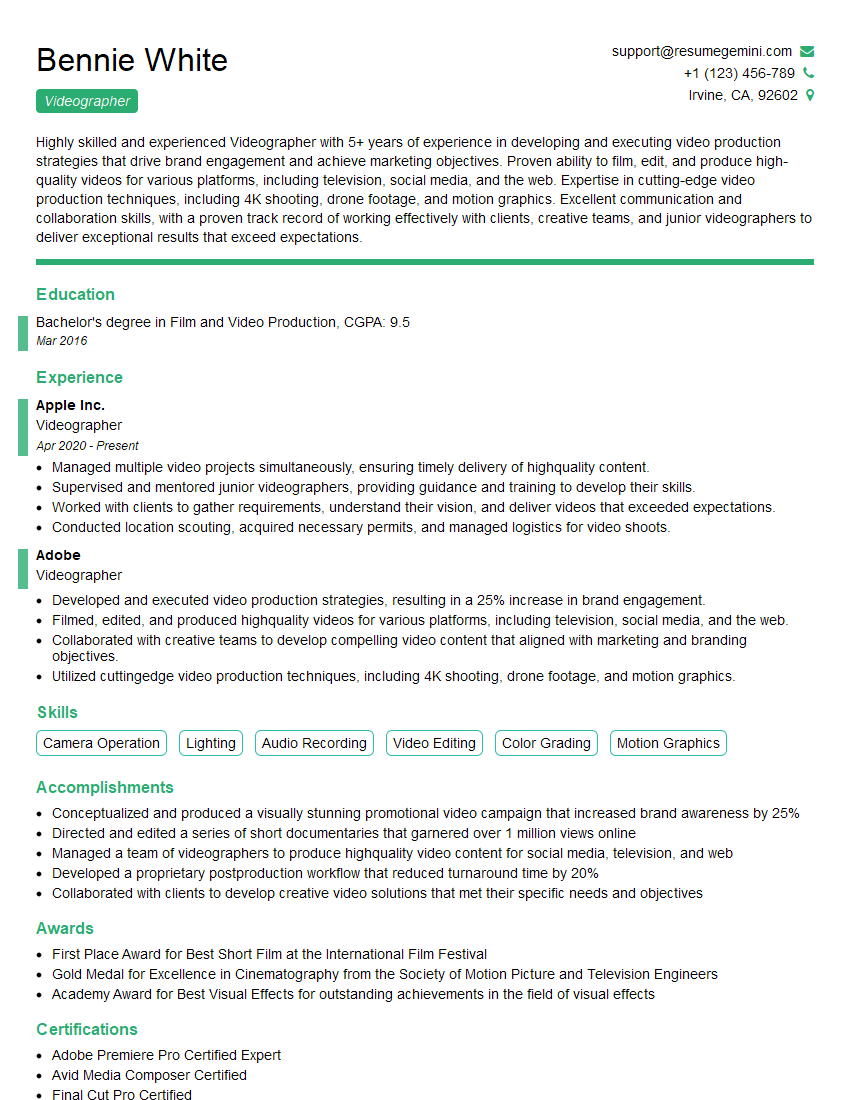
Videographer Resume Sample
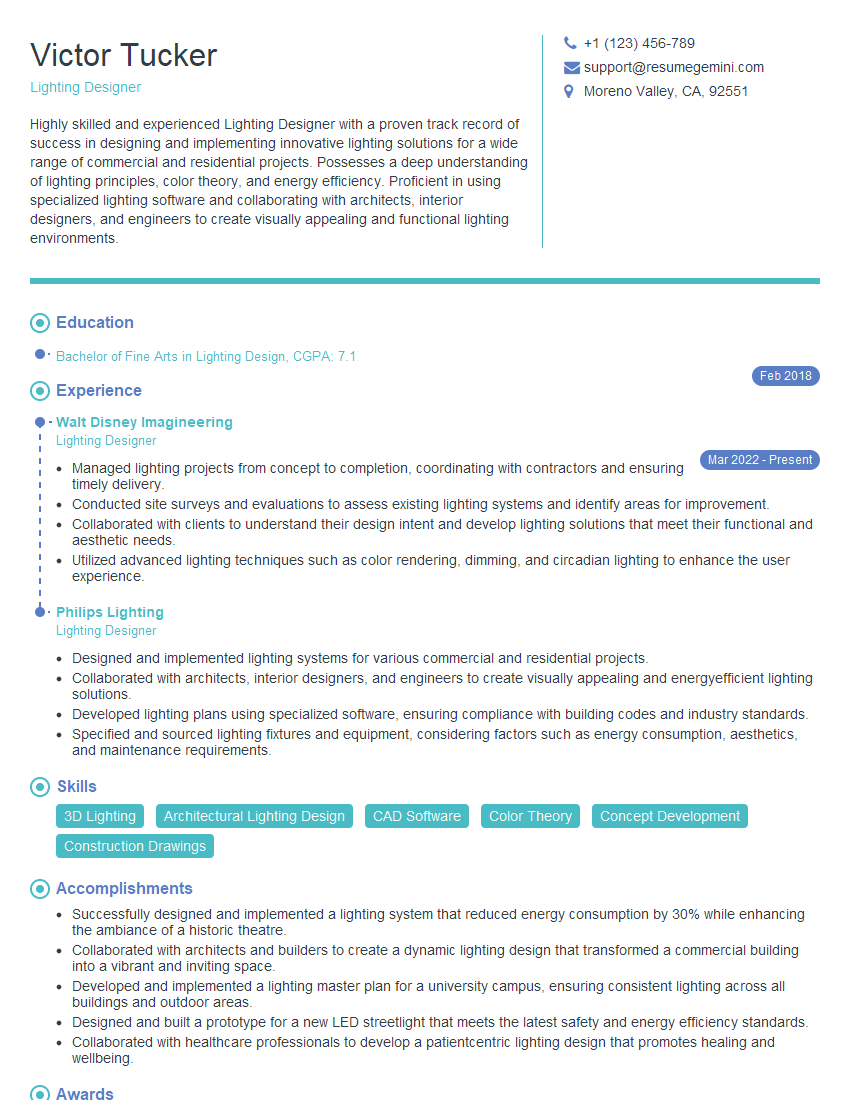
Lighting Designer Resume Sample
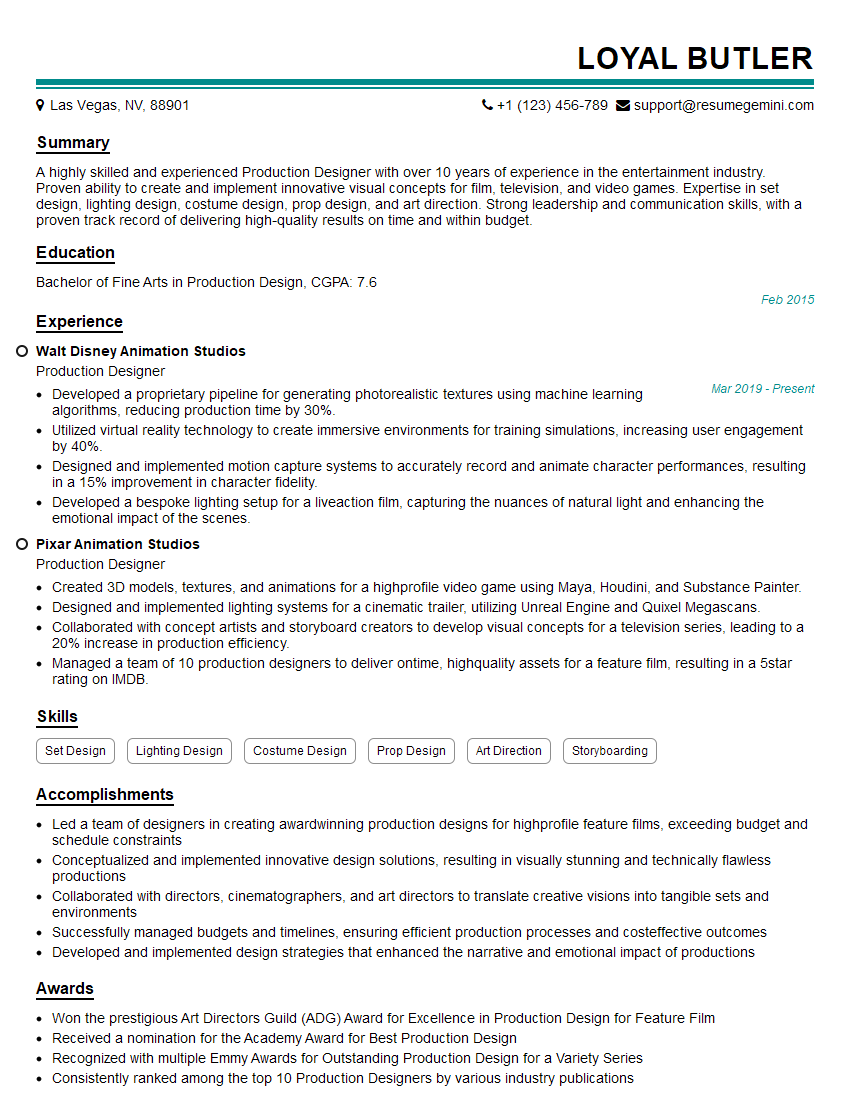
Production Designer Resume Sample
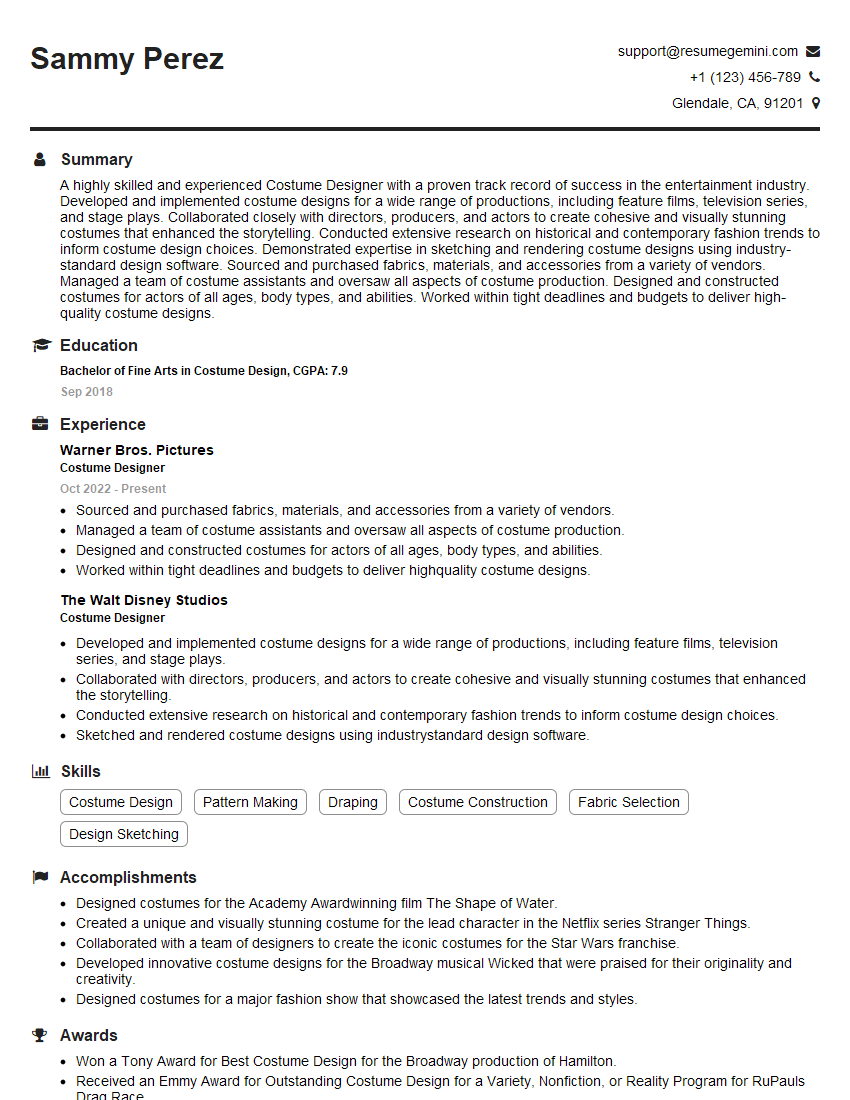
Costume Designer Resume Sample
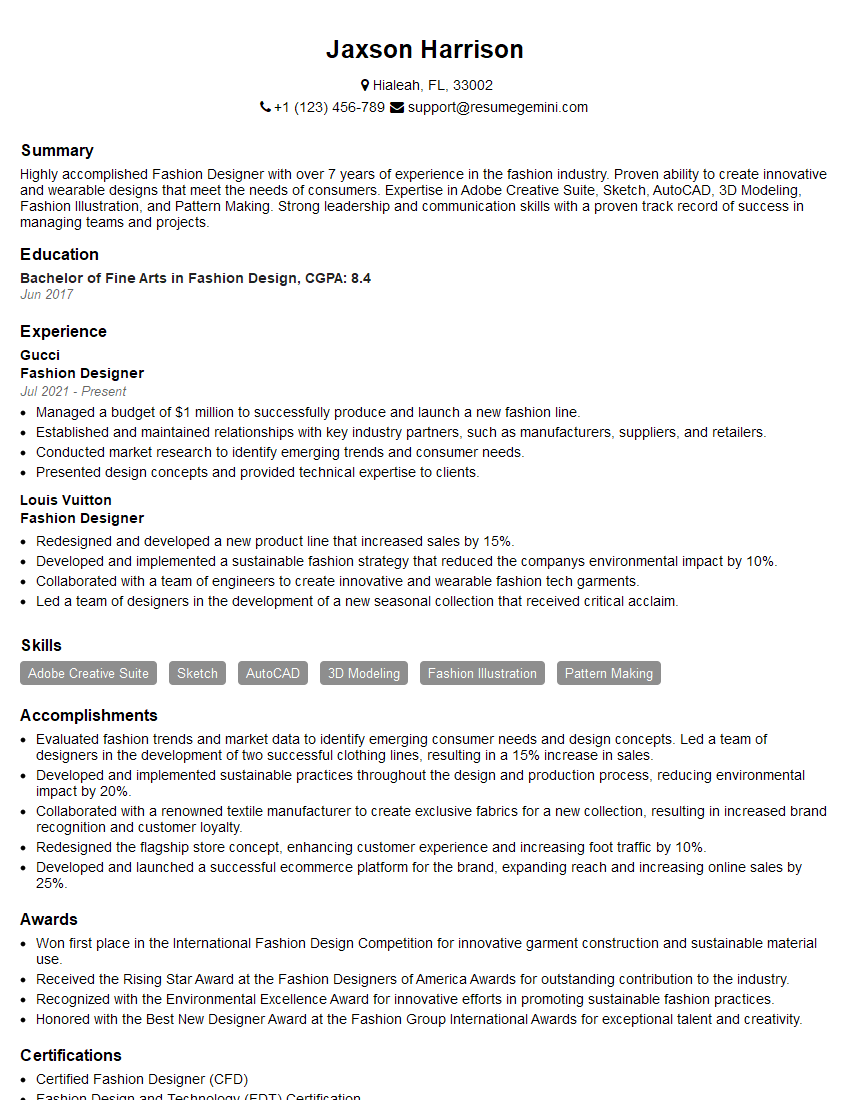
Fashion Designer Resume Sample
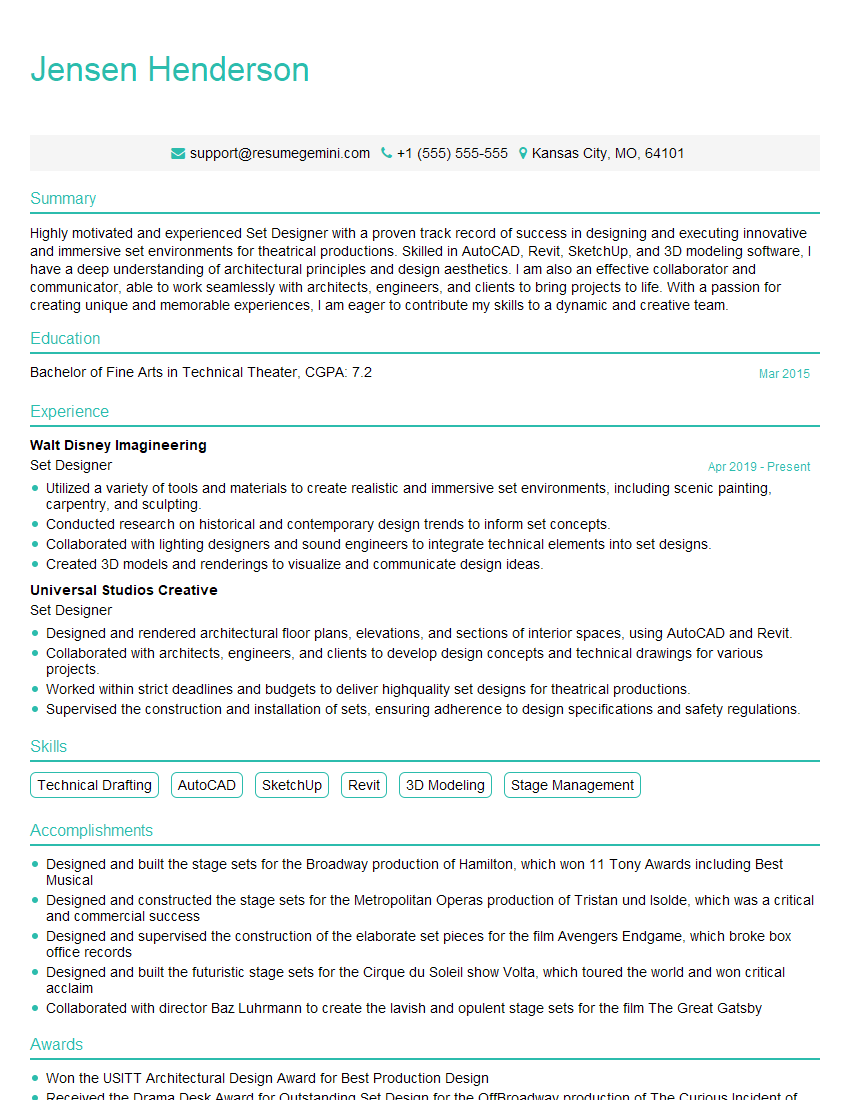
Set Designer Resume Sample
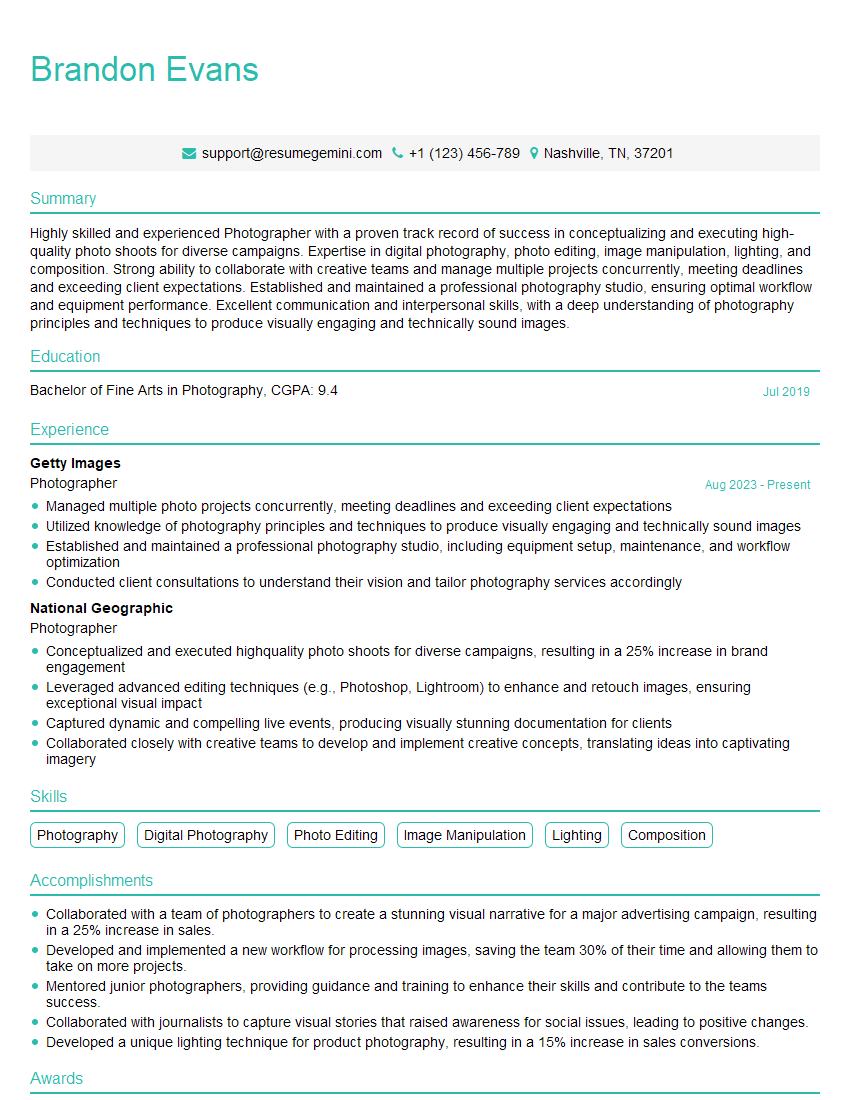
Photographer Resume Sample
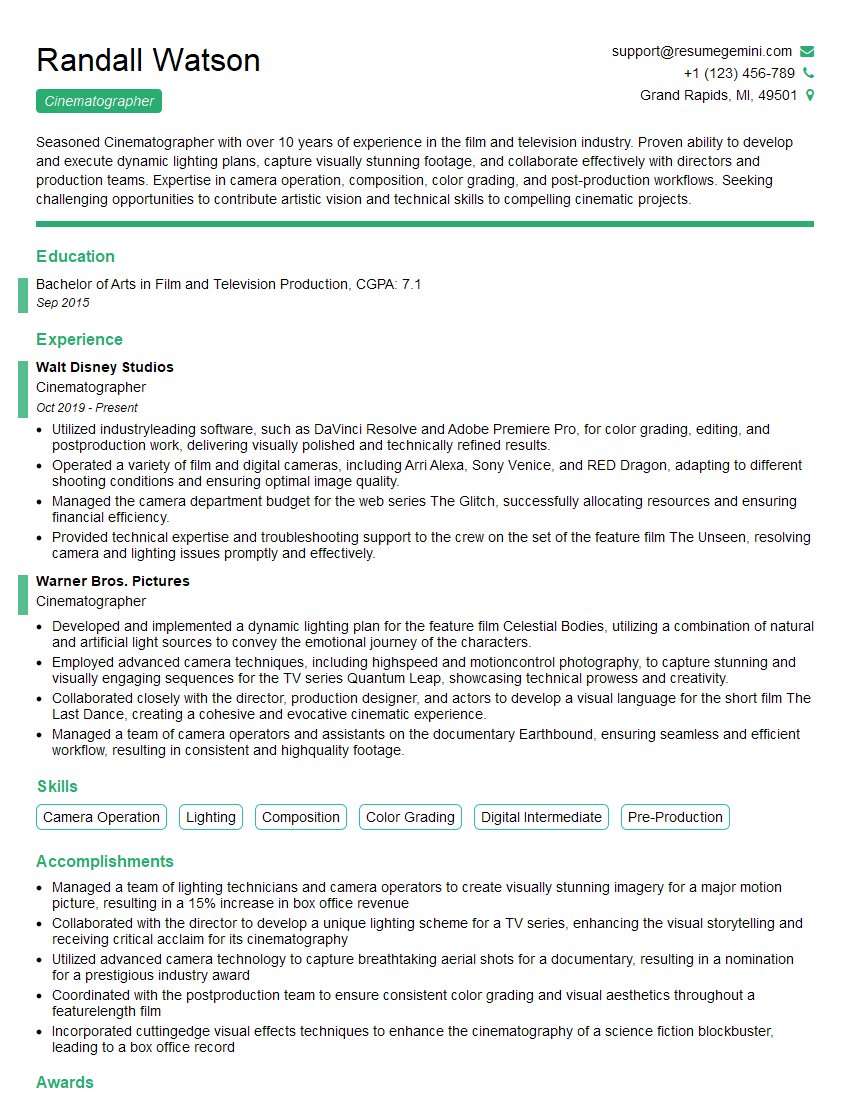
Cinematographer Resume Sample
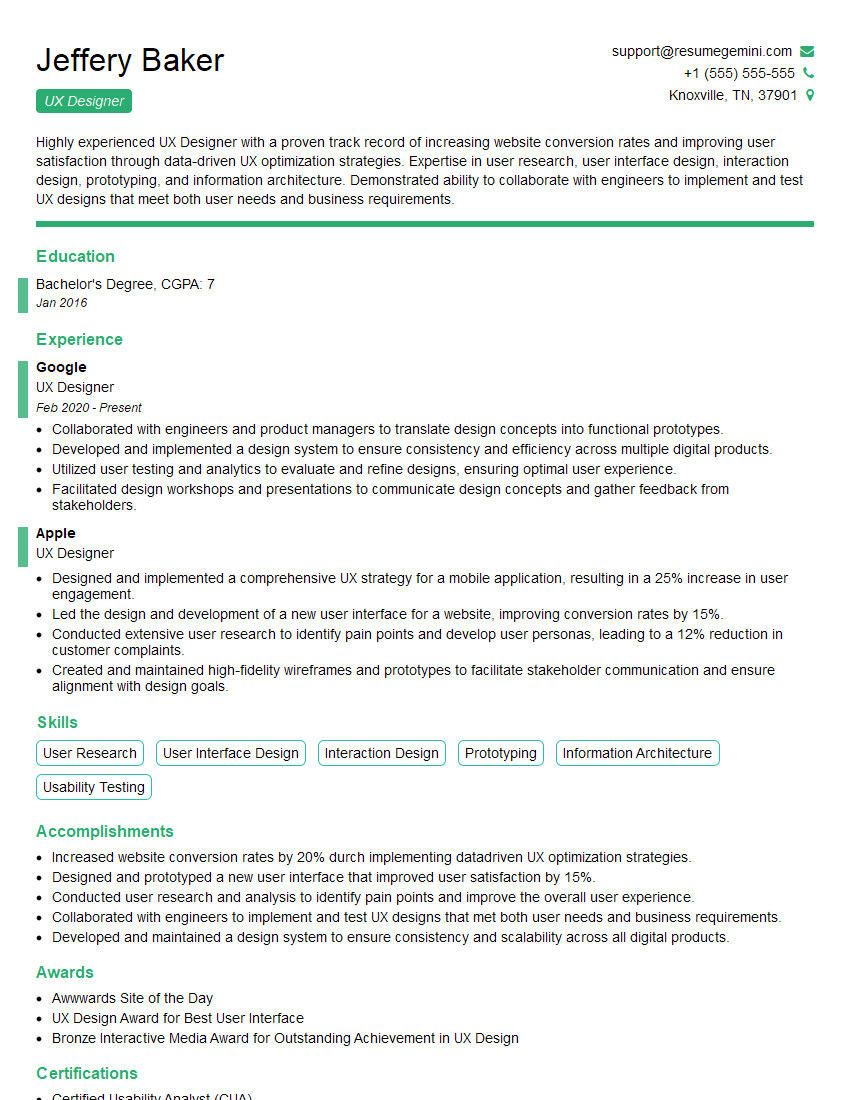
UX Designer Resume Sample
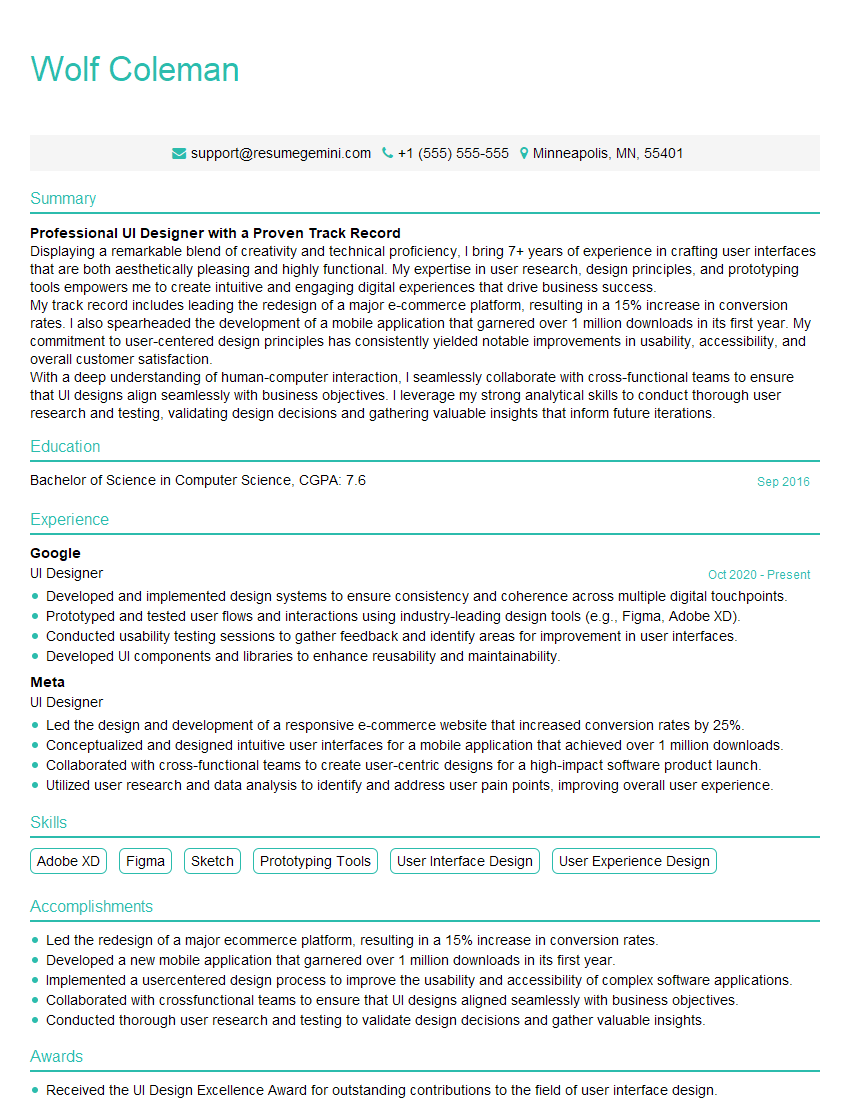
UI Designer Resume Sample
Explore more articles
Users Rating of Our Blogs
Share Your Experience
We value your feedback! Please rate our content and share your thoughts (optional).
What Readers Say About Our Blog
Very informative content, great job.
good