Preparation is the key to success in any interview. In this post, we’ll explore crucial Assembly and Finishing interview questions and equip you with strategies to craft impactful answers. Whether you’re a beginner or a pro, these tips will elevate your preparation.
Questions Asked in Assembly and Finishing Interview
Q 1. Describe your experience with different assembly methods (e.g., hand assembly, automated assembly).
My experience spans a wide range of assembly methods, from meticulous hand assembly to high-speed automated processes. Hand assembly, while slower, allows for intricate work and quality control at each step. I’ve worked extensively on projects requiring delicate components and precise alignment, where automation is simply impractical. For example, assembling a complex clock mechanism demands the dexterity and judgment a human provides. In contrast, automated assembly excels in high-volume production. I’ve been involved in setting up and optimizing automated assembly lines for consumer electronics, leveraging robotic arms and conveyor systems to achieve significant improvements in speed and consistency. This involved programming robotic cells and troubleshooting malfunctions, ensuring optimal throughput while maintaining quality standards. My experience includes working with both fixed-automation lines and flexible manufacturing systems, catering to different product demands and production volumes.
Q 2. Explain your understanding of quality control procedures in assembly and finishing.
Quality control in assembly and finishing is paramount. It’s a multi-stage process starting with incoming inspection of raw materials, ensuring they meet specifications. During assembly, I utilize various techniques like visual inspection, dimensional checks using calibrated tools (e.g., calipers, micrometers), and functional testing to ensure each component and the final assembly performs as expected. Statistical Process Control (SPC) charts help us track key metrics and identify potential problems early. For finishing, quality control includes checking for defects like surface imperfections, inconsistencies in coating thickness (using appropriate measuring devices), and adherence to color specifications using colorimeters. Documentation is crucial; I meticulously record inspection results and any corrective actions taken. This data helps us continuously improve our processes and maintain a high standard of quality.
Q 3. How do you ensure the accuracy and precision of your assembly work?
Accuracy and precision are achieved through a combination of techniques. Firstly, I meticulously follow assembly drawings and work instructions, paying close attention to details like tolerances and assembly sequences. The use of jigs and fixtures is crucial for maintaining consistent alignment and preventing errors. I regularly calibrate my tools and use appropriate measuring instruments to verify dimensions and ensure components are within specified tolerances. For example, when assembling a circuit board, using a fixture to ensure proper placement of components is critical to avoid short circuits. Moreover, I frequently employ visual checks throughout the assembly process, catching minor errors early. A final quality check before moving on ensures the work conforms to the required standards. This multi-layered approach minimizes errors and enhances the precision of the final product.
Q 4. Describe your experience with different types of finishing techniques (e.g., painting, powder coating, plating).
My finishing experience encompasses a range of techniques. Painting, a common method, involves preparation (surface cleaning, priming), application (using spray guns or other methods), and curing. I’m skilled in various paint types, including water-based and solvent-based, selecting the appropriate one based on the substrate and desired finish. Powder coating offers durability and a wide range of colors; I’ve worked with electrostatic powder coating systems, optimizing parameters like voltage and powder flow to ensure uniform coating thickness and quality. Plating, particularly electroplating, adds protective and decorative layers to metal components. I’ve been involved in processes like nickel plating and chrome plating, understanding the importance of pre-treatment and control over plating bath parameters. Each technique requires specific knowledge of materials, equipment operation, and safety protocols. I’ve worked extensively on selecting the optimal finishing technique based on factors such as cost, durability, and aesthetic requirements.
Q 5. How do you identify and troubleshoot assembly line issues?
Troubleshooting assembly line issues involves a systematic approach. I start by identifying the nature of the problem – is it a quality issue, a production bottleneck, or a machine malfunction? Data analysis, using production logs and SPC charts, helps pinpoint the root cause. If it’s a quality issue, I investigate the assembly process, checking for errors in procedures, component defects, or tool malfunction. For example, if there’s an increase in rejected parts due to a particular component, we might trace it back to a problem with the supplier. Bottlenecks require careful review of workflow and resource allocation, possibly necessitating adjustments to the line layout or operator training. Machine malfunctions often need detailed diagnosis and repair or replacement of faulty components. I use my understanding of both automated and manual assembly to systematically investigate and address the issue, always ensuring safety protocols are followed.
Q 6. What safety precautions do you take during assembly and finishing processes?
Safety is paramount. In assembly, I always use appropriate personal protective equipment (PPE), including safety glasses, gloves, and hearing protection as needed. I follow lockout/tagout procedures when working with machinery to prevent accidental start-ups. I’m trained in the safe handling of chemicals and solvents used in finishing, employing proper ventilation and protective gear. I’m familiar with emergency procedures and know how to use fire extinguishers and other safety equipment. Regular safety training and adherence to company safety policies are integral to my workflow. For instance, before operating a paint sprayer, I carefully read the MSDS (Material Safety Data Sheet) and ensure appropriate ventilation is in place. Proactive safety measures are integral to prevent accidents and create a safe working environment.
Q 7. How do you maintain a clean and organized workspace?
Maintaining a clean and organized workspace is essential for efficiency and safety. I follow 5S principles (Sort, Set in Order, Shine, Standardize, Sustain) to organize my work area. Tools and materials are stored in designated locations, readily accessible but preventing clutter. I regularly clean up spills and debris, ensuring a safe working environment. A tidy workspace prevents accidents and makes it easier to locate tools and materials, improving efficiency. I also adhere to workplace standards for waste disposal, properly segregating and disposing of hazardous materials. This systematic approach ensures a productive and hazard-free work environment.
Q 8. What are your experience with different assembly tools and equipment?
My experience with assembly tools and equipment spans a wide range, from basic hand tools like screwdrivers, wrenches, and pliers to more sophisticated power tools such as pneumatic drills, torque wrenches, and robotic arms. I’m proficient in using various fastening methods including screws, rivets, bolts, welding (basic MIG), and adhesives. I’ve also worked extensively with specialized equipment depending on the product, including automated assembly lines, CNC machines for precision parts, and 3D printers for prototyping. For example, in my previous role assembling circuit boards, I used a specialized soldering iron with adjustable temperature control to ensure high-quality connections. In another project involving the assembly of large machinery components, I operated a hydraulic crane for lifting heavy parts.
- Hand Tools: Screwdrivers (Phillips, flathead), wrenches (socket, open-end), pliers (needle-nose, slip-joint), etc.
- Power Tools: Pneumatic drills, impact wrenches, robotic arms, automated screwdrivers
- Specialized Equipment: Soldering stations, hydraulic presses, CNC machines
Q 9. Describe your problem-solving skills in a manufacturing environment.
Problem-solving in a manufacturing environment requires a systematic approach. I typically follow a five-step process: Identify the problem, Analyze its root cause using tools like the 5 Whys or fishbone diagrams, Develop potential solutions, Implement the best solution, and Evaluate its effectiveness. For example, when facing recurring assembly errors on a particular component, I analyzed the process, identified a poorly designed jig as the root cause, and redesigned it to improve accuracy and speed. This reduced errors by 70%, as demonstrated by our post-implementation quality checks. My experience with statistical process control (SPC) charts helps me analyze production data to pinpoint deviations and take timely corrective action.
Q 10. How do you handle high-volume assembly tasks?
Handling high-volume assembly tasks necessitates efficiency and standardization. I leverage lean manufacturing principles to optimize workflows, reducing waste and maximizing output. This involves implementing techniques such as 5S (sort, set in order, shine, standardize, sustain) to maintain a clean and organized workspace, and using Poka-Yoke (mistake-proofing) methods to prevent errors. For example, designing jigs and fixtures with clear visual cues or using color-coding to differentiate parts helps prevent incorrect assembly. Furthermore, I’m adept at optimizing assembly lines, identifying bottlenecks, and suggesting improvements. For example, by analyzing the process flow and reorganizing workstations, I improved the throughput of a certain assembly line by 15% in my last role.
Q 11. What is your experience with reading and interpreting technical drawings and blueprints?
Reading and interpreting technical drawings and blueprints is fundamental to my work. I’m proficient in understanding various drawing types, including orthographic projections, isometric views, and detailed assembly drawings. I can interpret dimensions, tolerances, material specifications, and surface finishes. I understand the use of symbols, annotations, and revision history. For instance, if a drawing specifies a tolerance of ±0.005 inches for a crucial dimension, I understand that I must maintain accuracy to within that range. My experience includes utilizing CAD software like SolidWorks and AutoCAD to review 3D models and verify dimensions.
Q 12. Describe your experience with different types of assembly jigs and fixtures.
My experience with assembly jigs and fixtures encompasses various types, including holding fixtures, positioning fixtures, and guiding fixtures. I’ve designed and utilized jigs for tasks ranging from simple parts alignment to complex multi-component assembly. For example, I designed a specialized jig to hold and precisely position a delicate electronic component during soldering, preventing damage and ensuring consistent soldering quality. Understanding the principles of ergonomics and efficient workflow is vital when designing or selecting jigs and fixtures. A well-designed jig reduces assembly time, increases accuracy, and improves worker safety.
Q 13. How do you ensure the consistent quality of finished products?
Ensuring consistent quality involves a multi-pronged approach. First, I follow strict adherence to manufacturing procedures and work instructions. Secondly, I utilize quality control checks at various stages of the assembly process, including in-process inspections, and final inspection before packaging. Thirdly, I utilize statistical process control (SPC) charts to monitor key parameters and identify potential quality issues proactively. For example, if the defect rate for a certain component starts to increase, I investigate the root cause and implement corrective actions. Finally, meticulous documentation of each step, including any deviations, is crucial for traceability and continuous improvement.
Q 14. What is your experience with lean manufacturing principles?
I have significant experience implementing lean manufacturing principles such as 5S, Kaizen (continuous improvement), and value stream mapping. I’ve been involved in projects aimed at reducing waste, improving workflow efficiency, and optimizing resource utilization. For example, I led a Kaizen event where we streamlined a specific assembly process by eliminating unnecessary steps and improving workstation layout. This resulted in a 20% reduction in cycle time and a significant improvement in overall efficiency. Understanding the principles of waste reduction (Muda) in lean manufacturing is central to my approach to optimizing assembly processes and boosting quality.
Q 15. How do you work effectively as part of a team in an assembly line environment?
Effective teamwork on an assembly line is crucial for productivity and quality. It’s less about individual heroics and more about a well-oiled machine. My approach centers around clear communication, mutual respect, and proactive problem-solving.
Communication: I always make sure to actively listen to my colleagues, share relevant information promptly, and offer assistance where needed. For instance, if I notice a colleague struggling with a particular task, I’ll offer help or suggest a different approach. This prevents bottlenecks and keeps the line moving smoothly.
Mutual Respect: Every member of the team contributes valuable skills. I treat everyone with respect, acknowledging their expertise and contributions, fostering a positive and collaborative environment. This makes it easier to work through challenges together.
Proactive Problem-Solving: I actively look for potential problems or inefficiencies in the assembly process. If I spot an issue, I immediately bring it to the attention of the team lead and suggest solutions. For example, if a particular tool is consistently causing delays, I might suggest a replacement or improvement to the workflow.
Career Expert Tips:
- Ace those interviews! Prepare effectively by reviewing the Top 50 Most Common Interview Questions on ResumeGemini.
- Navigate your job search with confidence! Explore a wide range of Career Tips on ResumeGemini. Learn about common challenges and recommendations to overcome them.
- Craft the perfect resume! Master the Art of Resume Writing with ResumeGemini’s guide. Showcase your unique qualifications and achievements effectively.
- Don’t miss out on holiday savings! Build your dream resume with ResumeGemini’s ATS optimized templates.
Q 16. How do you manage your time effectively to meet deadlines?
Time management on an assembly line hinges on prioritizing tasks, understanding the workflow, and anticipating potential delays. I use a combination of techniques to ensure deadlines are met consistently.
Prioritization: I focus on completing high-priority tasks first, which often involves identifying bottlenecks or critical steps in the assembly process. For example, if a certain component needs to be installed before others, I’ll tackle that first.
Workflow Understanding: A thorough grasp of the entire assembly process is vital. Knowing what tasks depend on others allows me to anticipate potential delays and adjust my pace accordingly. If one step is taking longer than anticipated, I may be able to adjust my workflow to compensate.
Anticipation and Planning: I regularly check the inventory of parts and tools to ensure there are no shortages that could halt progress. I always have a plan B in case unexpected problems arise. If a specific tool breaks down, I’ll know the backup solution and request assistance quickly to minimize downtime.
Q 17. Describe your experience with different types of adhesives and fasteners.
My experience encompasses a wide range of adhesives and fasteners, from simple mechanical fasteners to specialized epoxy resins. I understand the strengths and weaknesses of each and can select the appropriate one for a given application.
Mechanical Fasteners: Screws, bolts, rivets, and clips are commonplace in many assembly processes. I’m proficient in using various types and sizes, ensuring appropriate torque and secure fastening. I am familiar with different screw drive types (Phillips, Torx, etc.) and their appropriate tools. I also understand the importance of choosing fasteners with the appropriate strength and corrosion resistance.
Adhesives: I’ve worked with cyanoacrylates (super glue), epoxies, hot melt adhesives, and pressure-sensitive adhesives. Each has its unique properties—cure time, strength, temperature resistance, etc.—and selecting the right one depends on the materials being bonded and the application requirements. For instance, I would choose a high-temperature epoxy for bonding metal components in a high-stress application, while a cyanoacrylate might be suitable for a quick, low-stress bond between plastics.
Q 18. What are your experience with automated assembly systems?
My experience with automated assembly systems includes working with robotic arms, conveyor systems, and automated dispensing units. I understand the importance of safety protocols, programming, and troubleshooting these systems.
Robotic Arms: I’m familiar with programming simple robotic arm movements, though my expertise is primarily in working alongside them and understanding their limitations. I can troubleshoot basic malfunctions and understand the safety procedures necessary to operate in a robotic environment.
Conveyor Systems: I’ve worked with various conveyor systems, understanding their importance in moving components through the assembly process. I know how to identify potential jams or malfunctions and report them accordingly.
Automated Dispensing: I’ve used automated systems for dispensing adhesives or lubricants in precise amounts, resulting in greater consistency and efficiency compared to manual application.
Q 19. How do you handle defects or errors during the assembly process?
Handling defects and errors is a crucial aspect of assembly. My approach involves immediate identification, careful documentation, and corrective action.
Identification: I use visual inspection and sometimes specialized testing equipment to quickly identify defects. My training allows me to recognize various types of errors, from simple misalignments to more complex structural flaws.
Documentation: I meticulously document each defect, including its type, location, and the time of occurrence. This information is vital for quality control and identifying potential systemic issues in the assembly process.
Corrective Action: Depending on the severity of the defect, I may repair it myself, following established procedures, or flag it for a more senior technician. If the defect indicates a larger problem in the assembly process, I’ll communicate this to my team lead.
Q 20. How do you prioritize tasks and manage workload?
Prioritizing tasks and managing workload on the assembly line involves understanding the dependencies between tasks, optimizing workflows, and effectively using available resources.
Task Dependency: I understand that some tasks must be completed before others. I prioritize based on these dependencies and often utilize visual aids like flowcharts to manage complex sequences.
Workflow Optimization: I look for ways to improve the overall workflow. This might involve reorganizing the work area for better ergonomics or suggesting a more efficient order for assembly steps.
Resource Management: I efficiently utilize available tools and resources. For example, I ensure I have the necessary tools and materials before starting a task to avoid delays.
Q 21. Describe your experience with quality control documentation and reporting.
My experience with quality control documentation includes maintaining detailed records, using standardized forms, and generating reports that provide insights into production efficiency and product quality.
Detailed Records: I diligently record all relevant information, such as part numbers, serial numbers, inspection results, and any defects found during the assembly process. This information is typically entered into a computerized system.
Standardized Forms: I’m proficient in using standardized forms and checklists to ensure consistency in documentation across different products and assembly lines.
Reporting: I can generate reports that summarize quality control data, identify trends, and highlight potential areas for improvement. These reports are crucial for continuous process improvement and reducing the number of defects in future production runs.
Q 22. How do you maintain compliance with safety regulations and standards?
Maintaining compliance with safety regulations and standards in assembly and finishing is paramount. It’s not just about following rules; it’s about creating a safe and productive work environment. My approach involves a multi-faceted strategy:
Proactive Training: Regular, comprehensive safety training for all team members, covering topics like proper use of equipment (e.g., power tools, spray booths, ovens), handling of hazardous materials (paints, solvents, plating chemicals), and emergency procedures. We use hands-on training and regular refresher courses to ensure everyone stays up-to-date.
Strict Adherence to OSHA (or relevant regional) Standards: We meticulously follow all applicable OSHA guidelines, ensuring compliance with regulations related to personal protective equipment (PPE), ventilation, waste disposal, and machine guarding. We conduct regular safety audits to identify and correct any potential hazards.
Documentation and Record Keeping: Maintaining detailed records of safety training, inspections, incident reports, and corrective actions is crucial. This documentation helps us track our performance, identify trends, and demonstrate compliance to regulatory bodies.
Hazard Communication Program: A robust hazard communication program is essential. We ensure that all hazardous materials are properly labeled and Safety Data Sheets (SDS) are readily available and understood by everyone handling them. We communicate potential hazards clearly and effectively to minimize risks.
Employee Involvement: Encouraging employees to actively participate in safety initiatives, report hazards, and suggest improvements is key. A safe work environment requires collective effort and responsibility.
For example, in a previous role, we implemented a new system for storing and handling solvents that reduced spill incidents by 40% in the first year. This was achieved through better organization, improved labeling, and enhanced employee training.
Q 23. How do you stay updated on the latest advancements in assembly and finishing technologies?
The assembly and finishing landscape is constantly evolving. To stay ahead, I employ a multi-pronged approach:
Industry Publications and Trade Shows: I regularly read industry publications like Finishing Magazine and Products Finishing, and attend trade shows like FABTECH and SURFIN. These events showcase the latest technologies, materials, and best practices.
Professional Organizations: Membership in organizations like the American Electroplaters and Surface Finishers Society (AESF) provides access to valuable resources, networking opportunities, and continuing education programs.
Online Courses and Webinars: Many online platforms offer specialized courses and webinars on advanced assembly and finishing techniques, allowing for convenient and targeted learning.
Vendor Partnerships: Maintaining strong relationships with suppliers of equipment and materials keeps me informed about product innovations and potential improvements for our processes.
Internal Knowledge Sharing: I actively encourage knowledge sharing within my team and across departments. This includes brainstorming sessions, presentations on new technologies, and mentorship opportunities.
For example, recently I learned about a new robotic welding system at a trade show that significantly improved our welding speed and consistency in a specific assembly process. I then presented this to my team and we are currently evaluating its feasibility for implementation.
Q 24. Describe a time you had to troubleshoot a complex assembly issue. What was your solution?
In a previous role, we were experiencing consistent failures in the assembly of a complex electronic component. The issue resulted in significant rework and production delays. The problem appeared intermittent, and initial troubleshooting pointed to multiple potential causes – faulty components, incorrect assembly procedures, or even issues with the assembly jig itself.
My approach involved a systematic troubleshooting methodology:
Data Collection: We started by meticulously documenting every instance of failure, recording the specific steps in the assembly process, and noting any variations in component characteristics.
Visual Inspection: A thorough visual examination of the failed assemblies revealed a recurring pattern of stress cracks near a specific solder joint. This narrowed down the potential causes significantly.
Process Analysis: We closely reviewed the assembly procedures, looking for any deviations from the specifications or areas where excessive force might be applied. We discovered that a slightly incorrect placement of the component in the jig was causing undue stress during the soldering process.
Testing and Validation: We made modifications to the assembly jig to address the component placement issue. We then performed rigorous testing with the revised jig, resulting in a dramatic reduction in assembly failures.
Root Cause Analysis: We conducted a formal root cause analysis (RCA) to identify the underlying causes of the initial problem and implement preventive measures to avoid recurrence. This included updating the assembly procedures and conducting more robust quality control checks during component inspection.
The solution was ultimately relatively simple – a minor adjustment to the assembly jig. However, the systematic approach was crucial in quickly identifying and resolving the problem, minimizing downtime and reducing costs.
Q 25. What is your understanding of different surface preparation techniques?
Surface preparation is crucial for ensuring proper adhesion and durability of finishes. Different materials require different techniques:
Mechanical Cleaning: This involves removing dirt, grease, and loose material using methods like brushing, sanding, blasting (e.g., sandblasting, bead blasting), or grinding. The choice of method depends on the material and the desired surface finish.
Chemical Cleaning: This employs solvents, detergents, or etching solutions to remove contaminants that mechanical methods may not reach. Chemical cleaning is often necessary for metals to remove oxides or other surface films.
Electrochemical Processes: Techniques like electroplating, electropolishing, and anodizing are used to modify the surface properties of metals, enhancing their corrosion resistance, appearance, or other characteristics.
Example: Preparing steel for painting typically involves mechanical cleaning (e.g., wire brushing) followed by chemical cleaning (degreasing) to remove oil and rust. For aluminum, chemical etching might be used to improve paint adhesion.
Q 26. How do you ensure the proper application of finishes to meet specifications?
Ensuring proper finish application involves meticulous attention to detail and adherence to specifications. This includes:
Proper Surface Preparation: As previously discussed, thorough surface preparation is fundamental for optimal adhesion. Any imperfections or contaminants can compromise the finish’s integrity.
Material Selection: Choosing the right finishing material (paint, powder coating, plating solution, etc.) for the application is critical. This is based on factors such as the substrate material, environmental conditions, and desired performance characteristics.
Application Method: Selecting the appropriate application method (spraying, dipping, brushing, etc.) is essential. The method must be consistent with the chosen material and the desired finish.
Environmental Control: Maintaining optimal environmental conditions (temperature, humidity, air circulation) during the finishing process is crucial. This ensures proper curing and prevents defects.
Quality Control: Implementing rigorous quality control checks throughout the process ensures consistency and adherence to specifications. This may involve visual inspections, thickness measurements, and adhesion testing.
For instance, when applying a specific powder coating, we use a calibrated electrostatic spray gun to achieve uniform thickness and ensure even coverage. We also monitor oven temperature and curing time precisely to meet the manufacturer’s specifications and guarantee durability.
Q 27. What is your experience with different types of finishing materials (e.g., paints, coatings, plating solutions)?
My experience encompasses a wide range of finishing materials:
Paints: I’m proficient with various types of paints, including acrylics, epoxies, urethanes, and water-based paints. I understand the differences in their properties, application methods, and curing requirements. This includes knowledge of pigment selection, viscosity control, and color matching.
Coatings: Experience with powder coatings, electrocoatings, and other specialized coatings used for corrosion protection, wear resistance, and aesthetic enhancement. I understand the different curing processes required for each type.
Plating Solutions: I have experience with various electroplating processes, including zinc, nickel, chrome, and other metallic coatings. I understand the chemistry involved in these processes and the importance of controlling parameters like current density, bath temperature, and solution composition.
For instance, I once successfully resolved a problem of poor adhesion of a nickel plating on a specific alloy by adjusting the pre-treatment process before plating, specifically by changing the cleaning solution and incorporating a micro-etching step.
Q 28. Describe your experience with process improvement initiatives in an assembly or finishing environment.
I have been involved in several process improvement initiatives that significantly enhanced efficiency and quality in assembly and finishing environments. One example involved a bottleneck in our assembly line due to a slow and inefficient fastening process.
The process improvement initiative involved:
Identifying the Bottleneck: We used time-motion studies and data analysis to pinpoint the fastening process as the primary bottleneck in our assembly line.
Evaluating Alternatives: We researched and evaluated different fastening technologies, including automated screw-driving systems and the use of alternative fasteners.
Implementing the Solution: We decided to implement an automated screw-driving system that significantly reduced the time required for fastening each component.
Training and Support: We provided comprehensive training to our operators on the new system, ensuring a smooth transition and minimizing disruptions.
Monitoring and Evaluation: We tracked key metrics, like cycle time and defect rates, to evaluate the effectiveness of the implemented improvements.
The results were impressive. The new system improved our assembly line efficiency by 35%, resulting in significant cost savings and increased production capacity. This initiative demonstrated the value of a data-driven approach to process improvement and the importance of investing in appropriate technologies.
Key Topics to Learn for Assembly and Finishing Interview
- Understanding Assembly Processes: Learn the different types of assembly methods (manual, automated, robotic), their applications, and the advantages and disadvantages of each. Consider the impact of tooling and fixtures.
- Quality Control in Assembly: Explore methods for ensuring consistent quality throughout the assembly process, including inspection techniques, error detection, and preventative measures. Understand the importance of documentation and traceability.
- Finishing Techniques: Familiarize yourself with various finishing processes like painting, powder coating, plating, and polishing. Understand the properties of different materials and the suitability of various finishing methods for them.
- Safety Procedures and Regulations: Master the safety protocols and regulations relevant to assembly and finishing environments. This includes proper handling of tools and materials, PPE usage, and hazard identification.
- Lean Manufacturing Principles: Understand how Lean principles, such as Kaizen and 5S, apply to optimizing assembly and finishing processes for efficiency and waste reduction.
- Troubleshooting and Problem Solving: Practice identifying and resolving common issues in assembly and finishing. Develop your ability to analyze problems, identify root causes, and implement effective solutions.
- Teamwork and Collaboration: Highlight your experience working effectively in a team environment, communicating clearly, and contributing to a positive and productive work atmosphere. This is crucial in assembly and finishing roles.
- Technical Drawings and Specifications: Demonstrate your ability to interpret technical drawings, understand specifications, and apply them accurately during assembly and finishing.
Next Steps
Mastering Assembly and Finishing skills opens doors to diverse and rewarding career paths in manufacturing and related industries. To maximize your job prospects, it’s crucial to present your skills effectively. Building an ATS-friendly resume is key to getting your application noticed by recruiters. ResumeGemini is a trusted resource to help you craft a professional and impactful resume that showcases your abilities. Examples of resumes tailored to Assembly and Finishing are available to guide you, ensuring your application stands out from the competition. Invest time in creating a strong resume – it’s your first impression and a critical step in your job search journey.
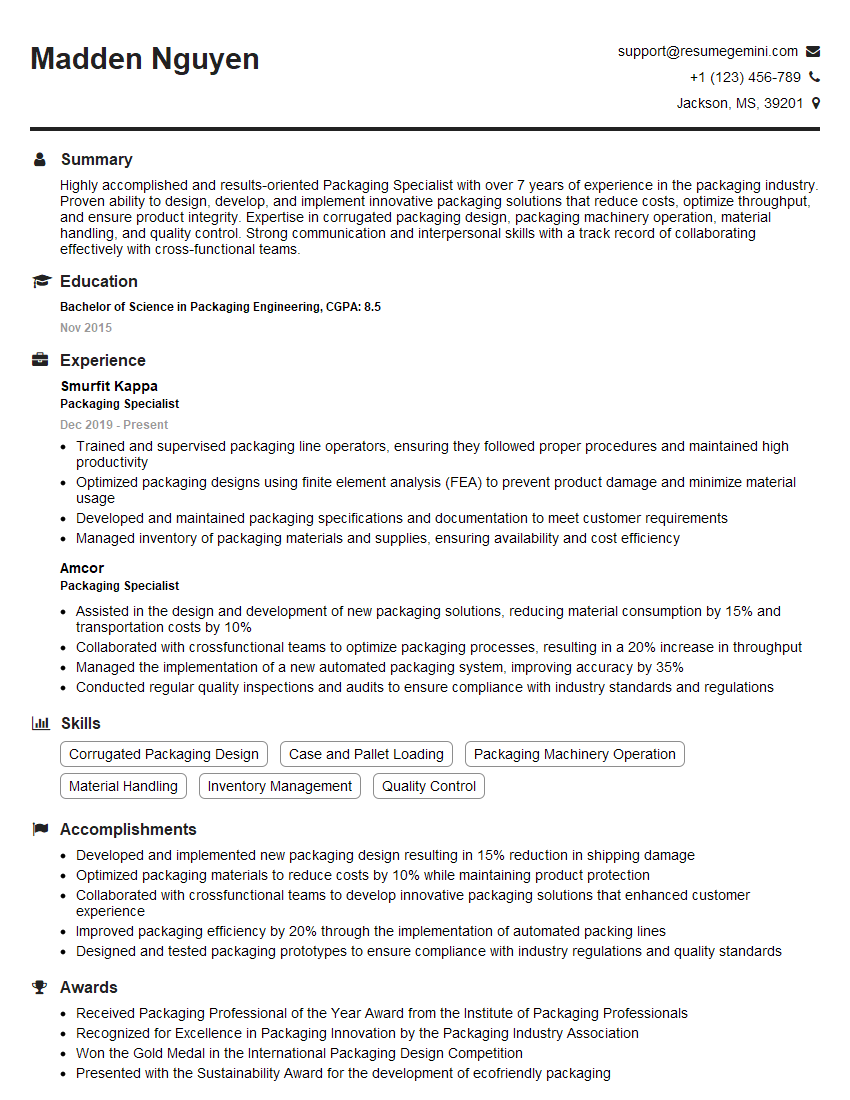
Packaging Specialist Resume Sample
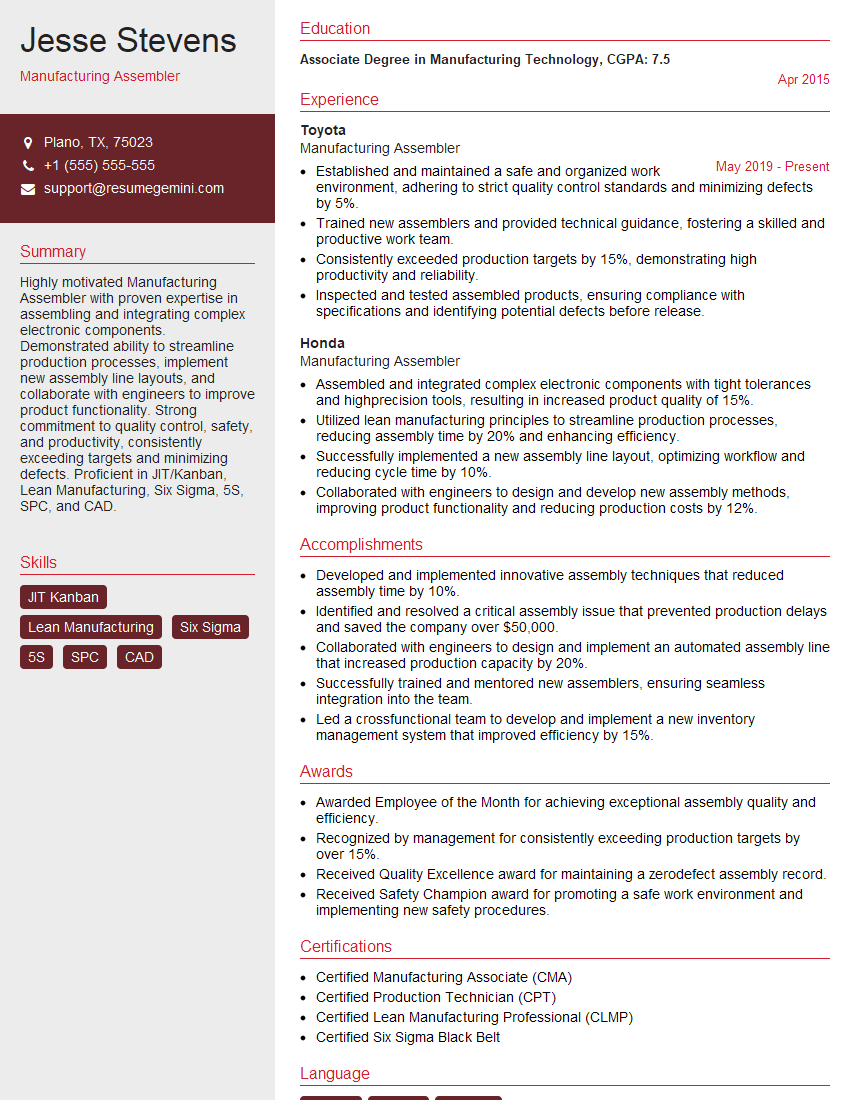
Manufacturing Assembler Resume Sample
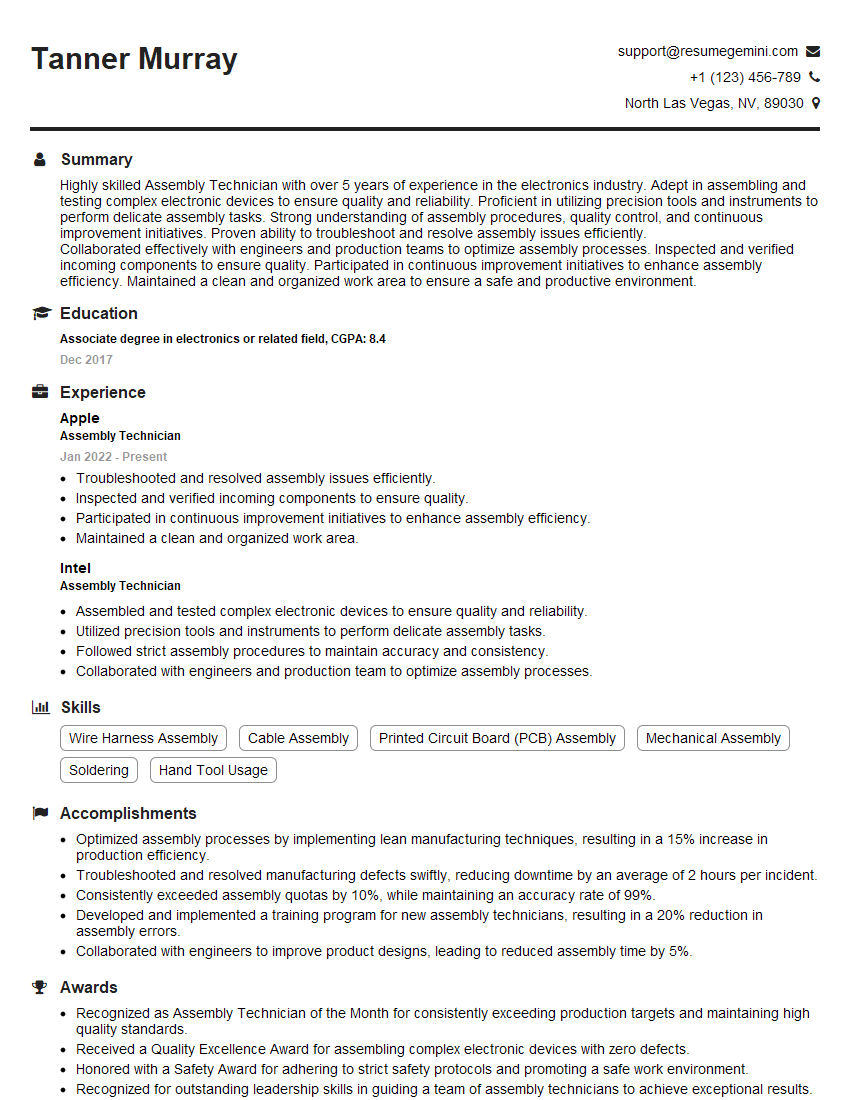
Assembly Technician Resume Sample
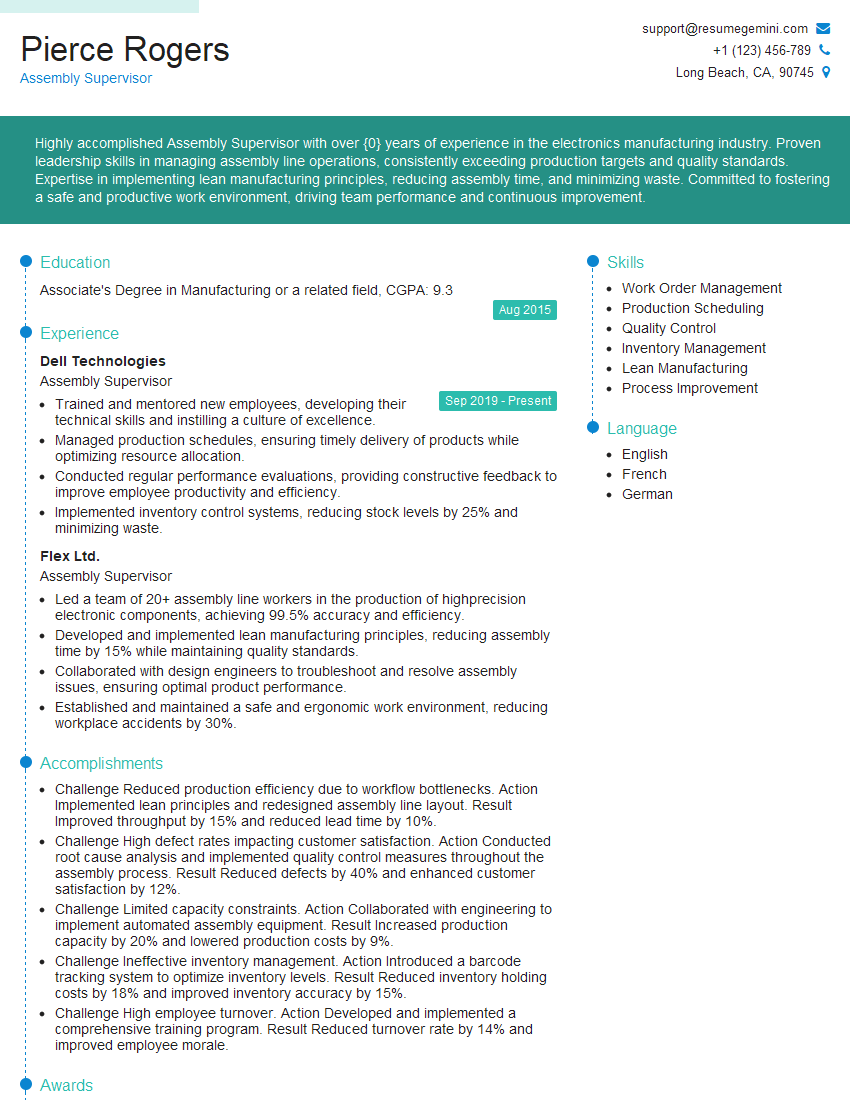
Assembly Supervisor Resume Sample
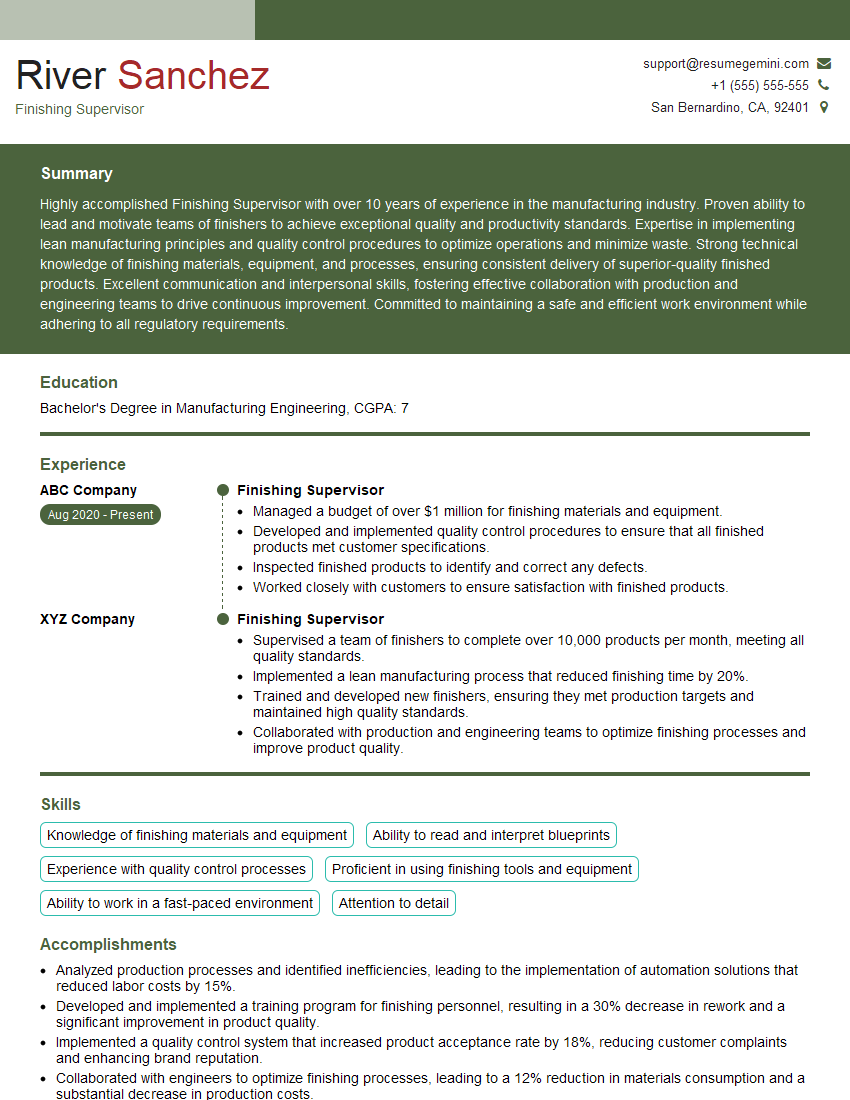
Finishing Supervisor Resume Sample

Aerospace Assembler Resume Sample
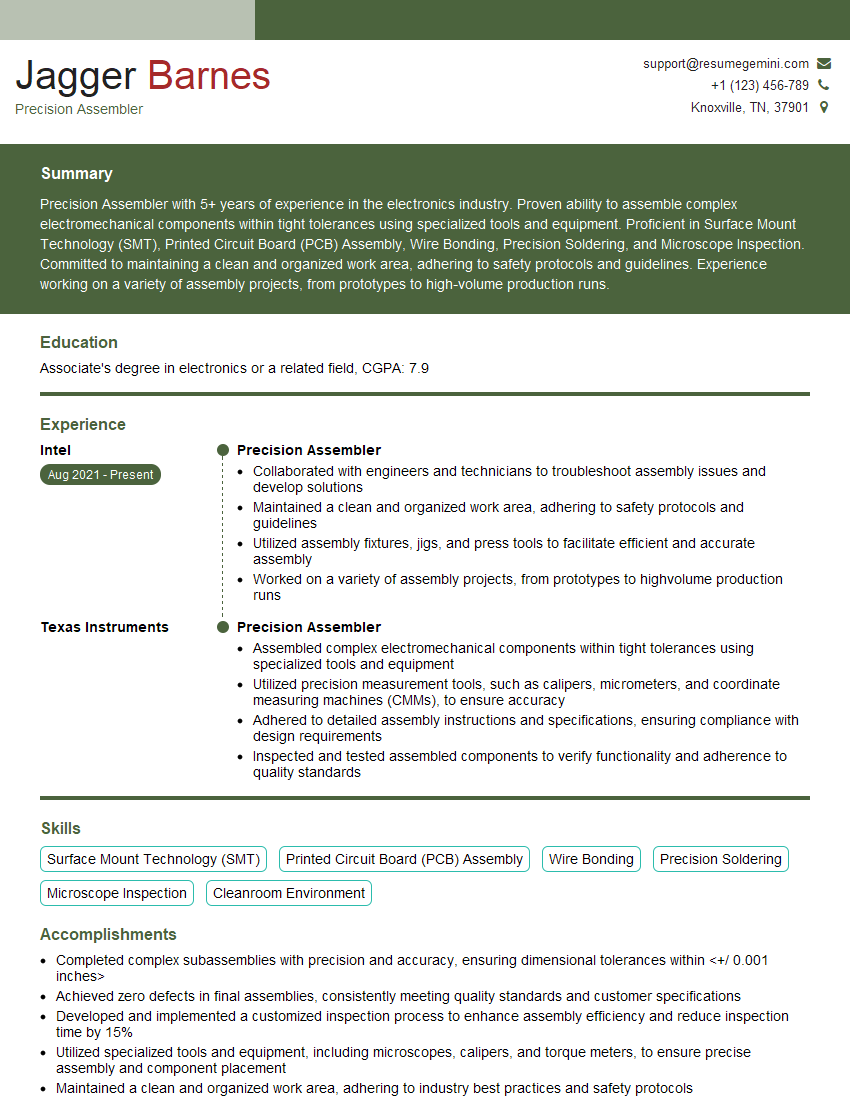
Precision Assembler Resume Sample
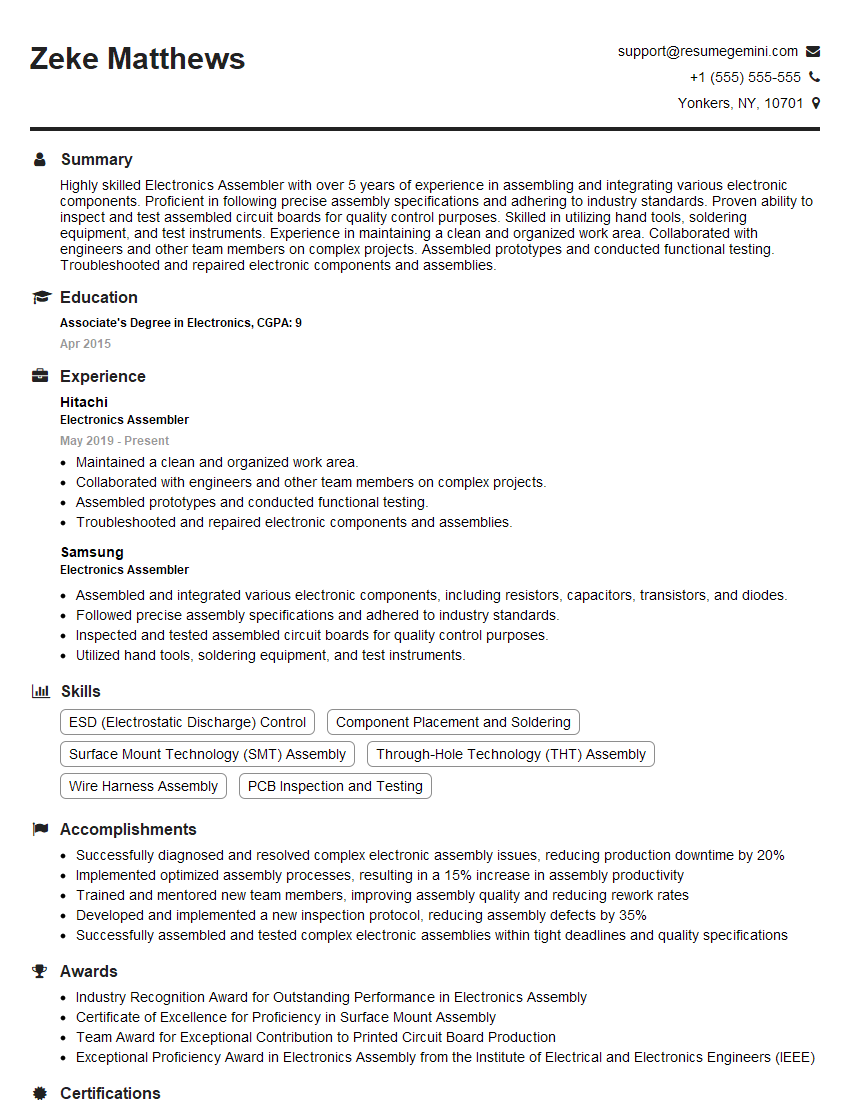
Electronics Assembler Resume Sample
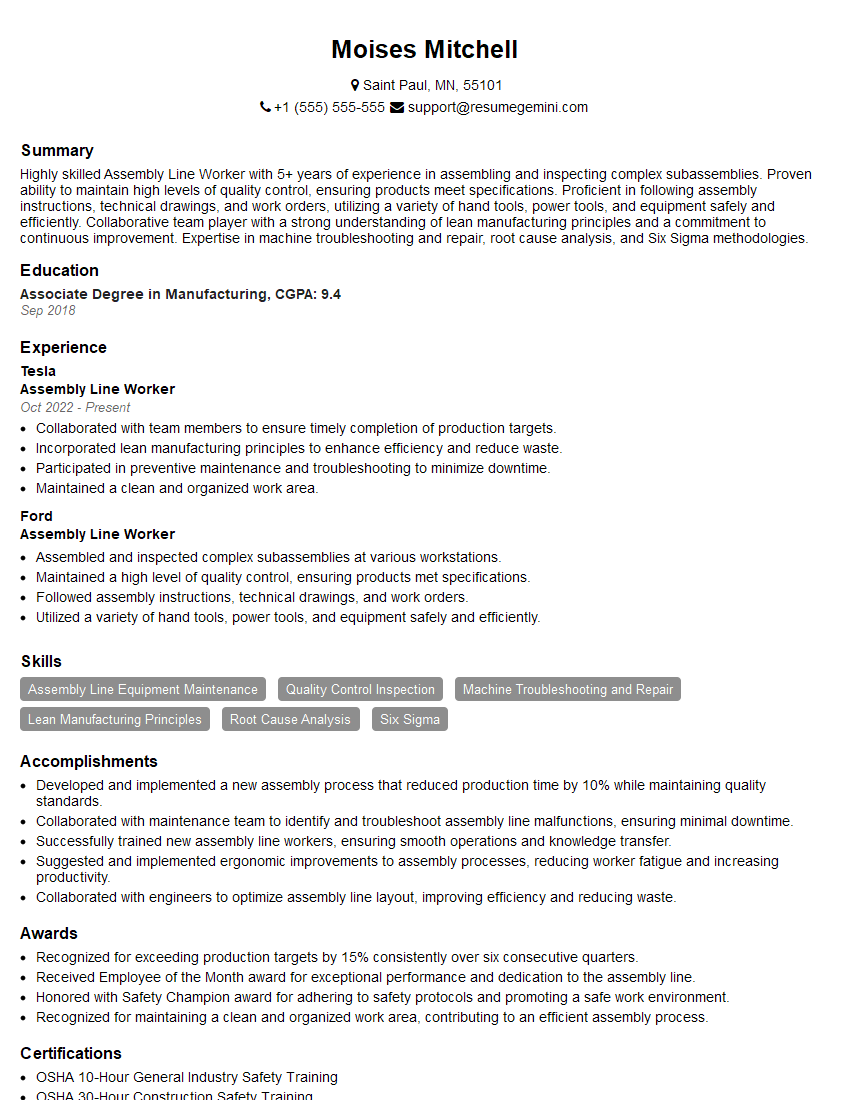
Assembly Line Worker Resume Sample
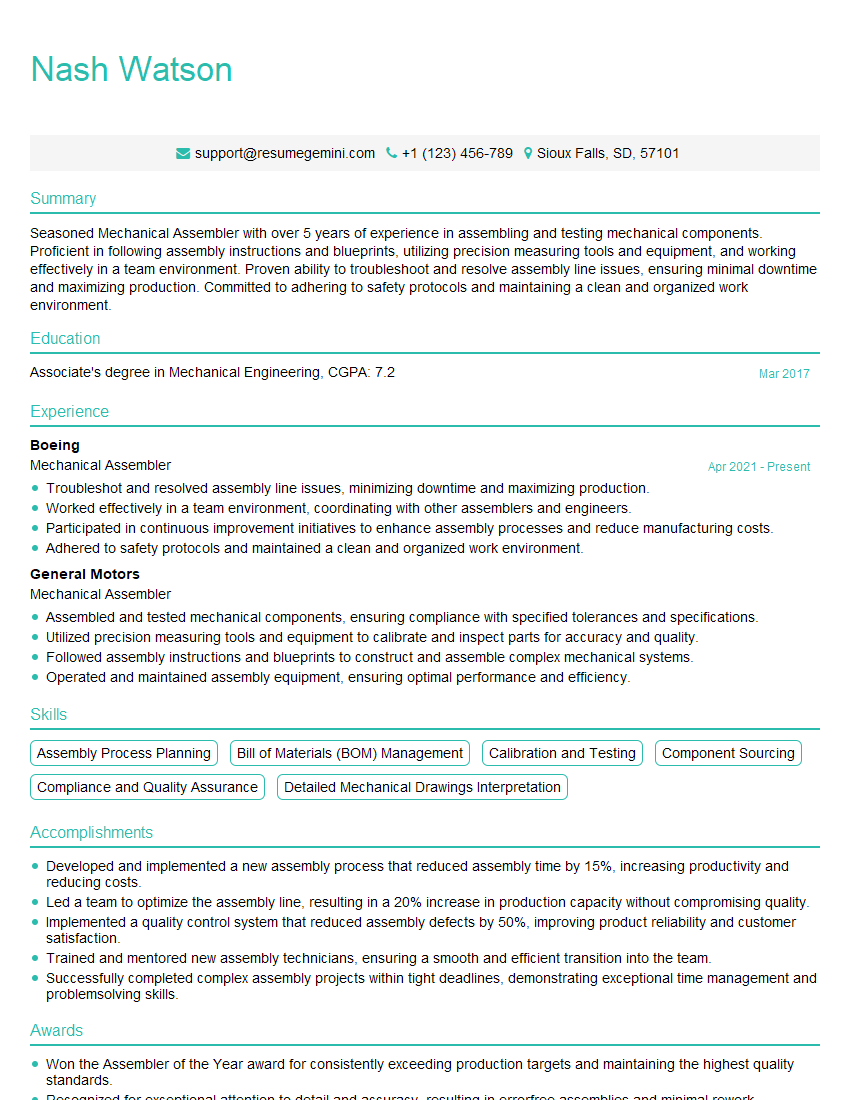
Mechanical Assembler Resume Sample
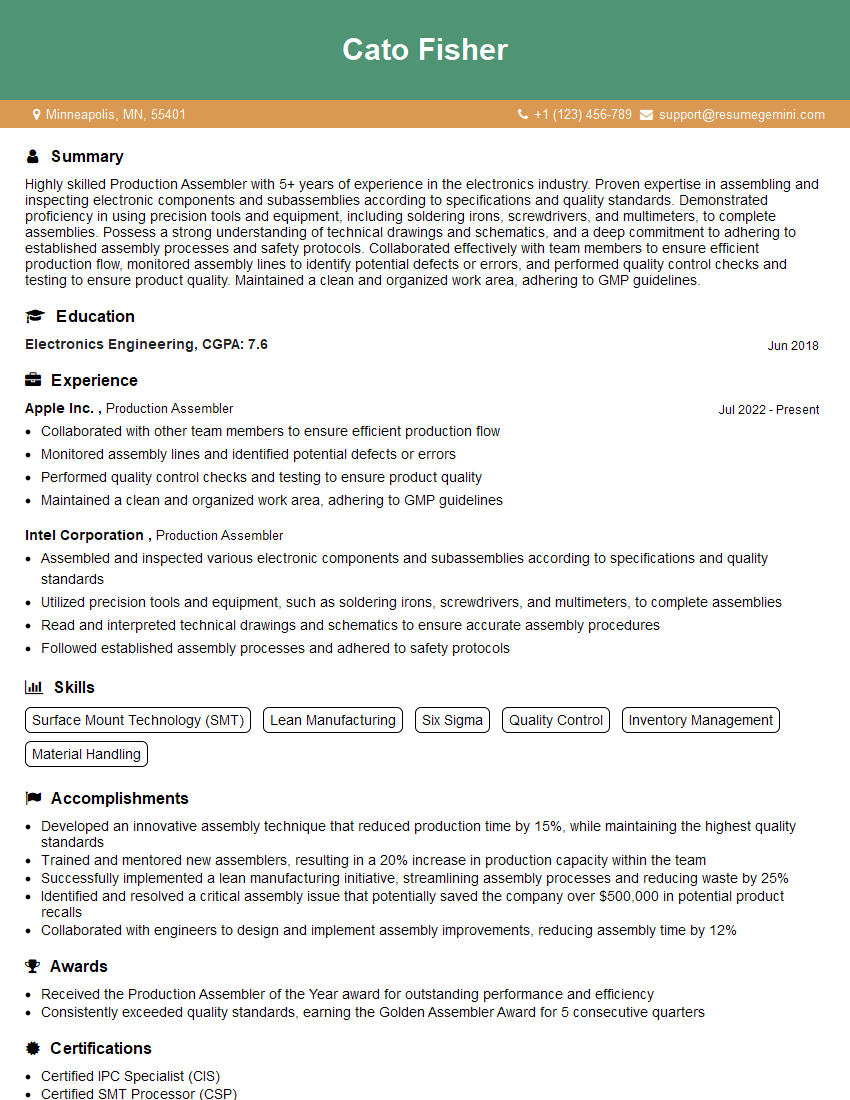
Production Assembler Resume Sample
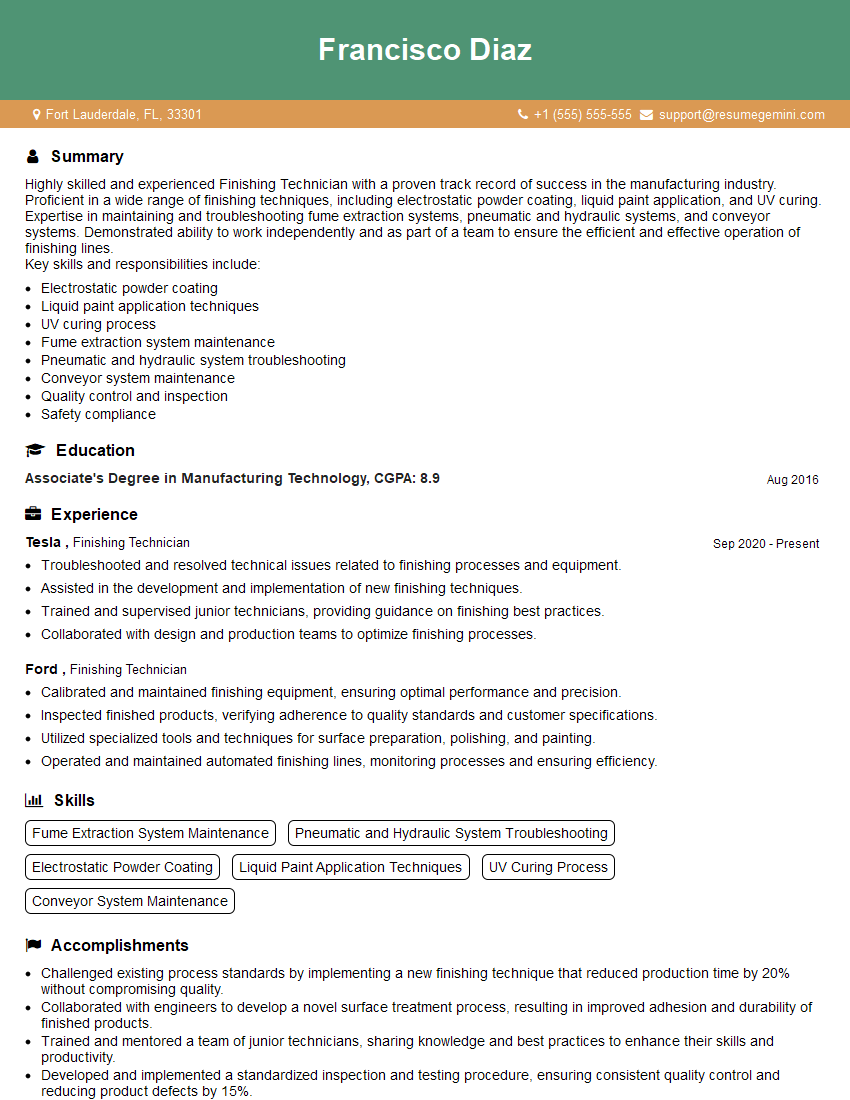
Finishing Technician Resume Sample
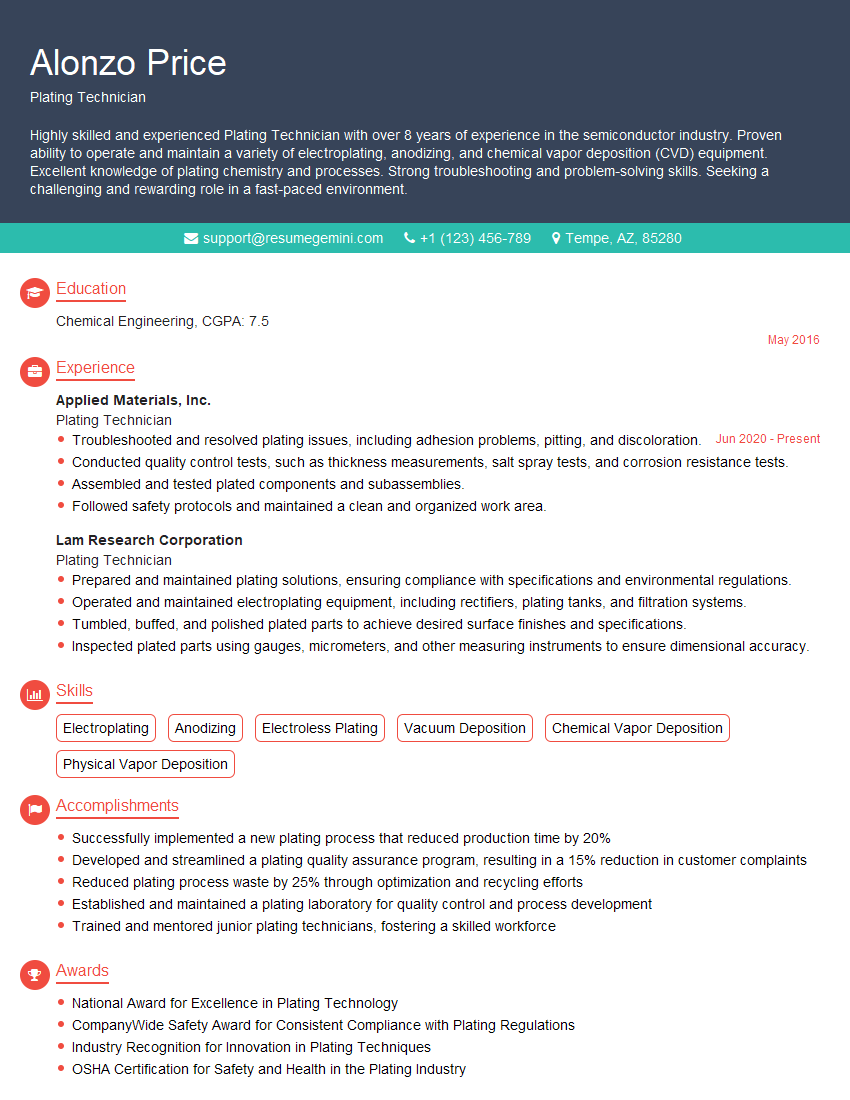
Plating Technician Resume Sample
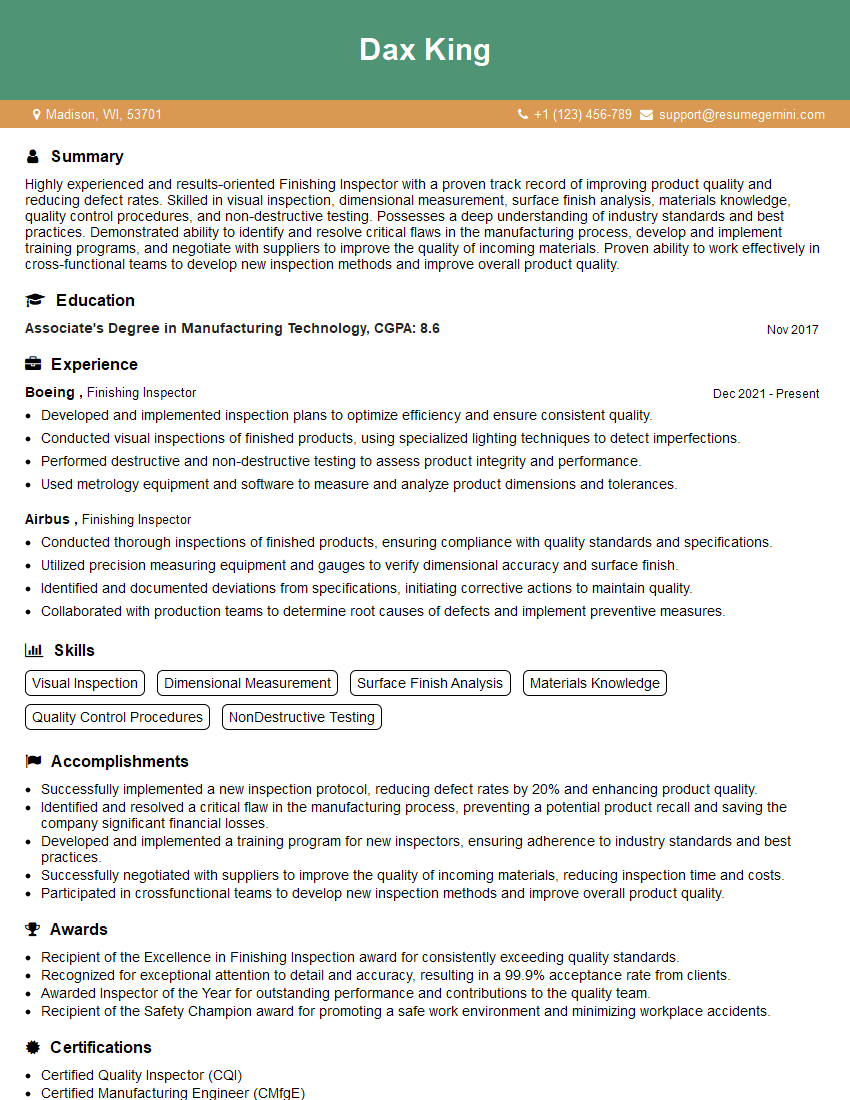
Finishing Inspector Resume Sample
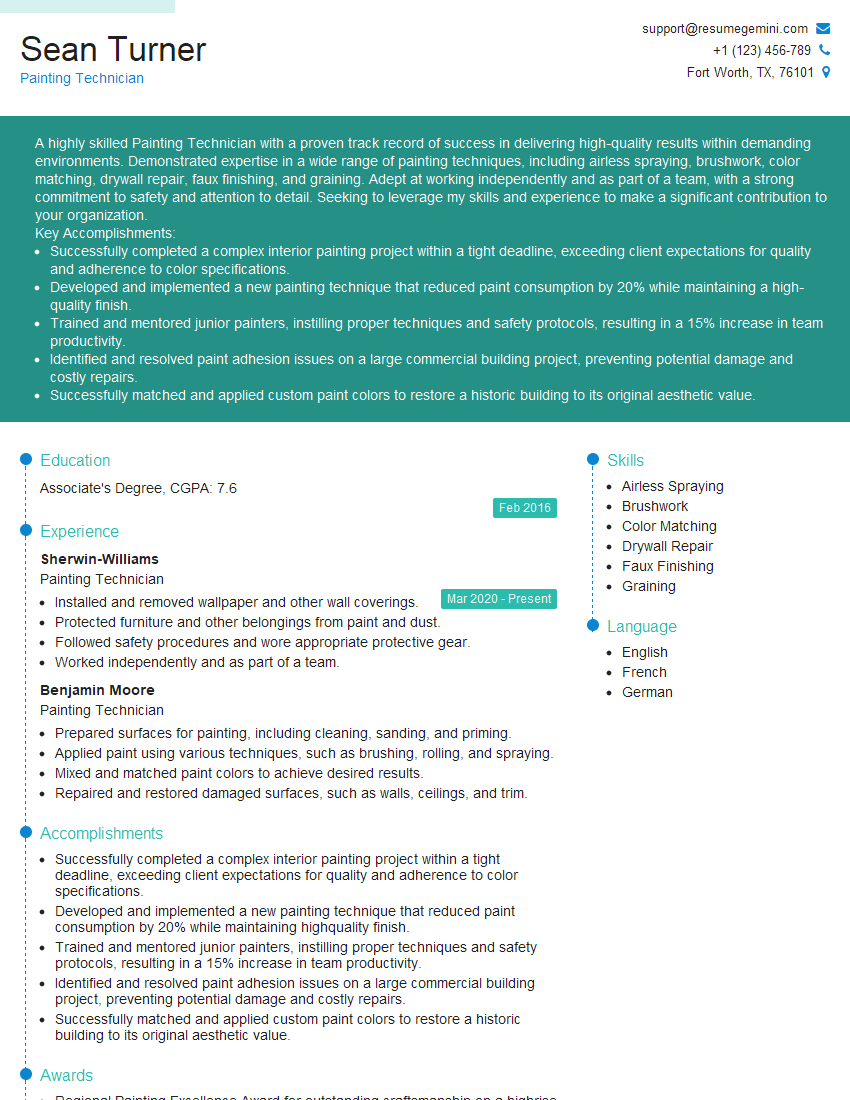
Painting Technician Resume Sample
- Packaging Specialist
- Manufacturing Assembler
- Assembly Technician
- Assembly Supervisor
- Finishing Supervisor
- Aerospace Assembler
- Precision Assembler
- Electronics Assembler
- Assembly Line Worker
- Mechanical Assembler
- Production Assembler
- Finishing Technician
- Plating Technician
- Finishing Inspector
- Painting Technician
Explore more articles
Users Rating of Our Blogs
Share Your Experience
We value your feedback! Please rate our content and share your thoughts (optional).
What Readers Say About Our Blog
Very informative content, great job.
good