Every successful interview starts with knowing what to expect. In this blog, we’ll take you through the top Power System Operation interview questions, breaking them down with expert tips to help you deliver impactful answers. Step into your next interview fully prepared and ready to succeed.
Questions Asked in Power System Operation Interview
Q 1. Explain the difference between a transmission and distribution system.
The transmission and distribution systems are both crucial parts of the power grid, but they operate at different voltage levels and serve different purposes. Think of it like a highway system: the transmission system is the interstate highway, carrying large amounts of power over long distances, while the distribution system is the network of local roads, delivering power to individual homes and businesses.
Transmission System: Operates at high voltages (typically 115 kV to 765 kV), transporting bulk power from generating stations to substations located closer to load centers. Its focus is on efficient, long-distance power transfer. Equipment includes high-voltage transformers, long transmission lines, and specialized protection and control systems.
Distribution System: Operates at lower voltages (typically 4 kV to 34.5 kV), distributing power from substations to end-users. It’s characterized by a more complex network structure, often including transformers, feeders, and protective devices to ensure reliable power delivery to individual customers. It’s designed for localized power delivery and management.
Key Differences Summarized:
- Voltage Level: Transmission uses much higher voltages than distribution.
- Distance: Transmission covers long distances; distribution covers shorter distances.
- Power Capacity: Transmission handles significantly higher power flows than distribution.
- Network Complexity: Distribution networks are more complex and branched than transmission networks.
Q 2. Describe the role of a SCADA system in power system operation.
A Supervisory Control and Data Acquisition (SCADA) system is the nervous system of a power system. It’s a centralized system that monitors and controls various aspects of the power grid in real-time. Imagine a massive dashboard showing the status of every component across the entire network.
Role in Power System Operation:
- Monitoring: SCADA continuously monitors voltage, current, frequency, power flow, and the status of equipment (e.g., transformers, generators, circuit breakers) across the entire power system.
- Control: It allows operators to remotely control various devices, like opening and closing circuit breakers to isolate faults or reroute power, adjusting generator output to meet demand, and managing voltage levels.
- Data Acquisition: SCADA gathers vast amounts of data from various sources, providing valuable insights into system performance and enabling predictive maintenance.
- Alarm Management: It generates alarms when abnormal conditions occur, alerting operators to potential problems requiring immediate attention.
- Data Analysis: Advanced SCADA systems incorporate sophisticated data analytics tools to support better decision-making and proactive grid management.
For example, if a fault occurs on a transmission line, SCADA would detect the fault, trigger protective relays to isolate the faulty section, and alert the control center operator, allowing for quick restoration of power to unaffected areas.
Q 3. What are the different types of power system protection schemes?
Power system protection schemes are designed to safeguard equipment and personnel from damage caused by faults (short circuits, overloads, etc.). They are crucial for maintaining grid stability and reliability. These schemes use various sensors and relays to detect faults and initiate corrective actions quickly.
Types of Protection Schemes:
- Overcurrent Protection: Detects excessive current flow and trips circuit breakers to isolate the faulty section. This is a fundamental and widely used protection scheme.
- Differential Protection: Compares currents entering and leaving a protected zone (e.g., a transformer). Any significant difference indicates an internal fault, triggering the protection system.
- Distance Protection: Measures the impedance between the relay location and the fault location. It’s particularly effective for protecting long transmission lines.
- Pilot Protection: Employs communication between protection relays at both ends of a transmission line to quickly detect and isolate faults.
- Busbar Protection: Protects the busbar, a critical component of a substation, from faults. Various schemes, including differential and overcurrent protection, can be applied.
- Transformer Protection: Uses various schemes including differential, overcurrent, and Buchholz relay (detects gas buildup within a transformer) protection.
Effective coordination between different protection schemes is vital to ensure that only the affected portion of the system is isolated during a fault, minimizing disruption to the rest of the grid.
Q 4. Explain the concept of power system stability.
Power system stability refers to the ability of the power system to maintain synchronism between generators after being subjected to a disturbance. Imagine a group of synchronized dancers; stability ensures they remain in sync even after a sudden push or unexpected event.
Types of Stability:
- Angle Stability (Rotor Angle Stability): Concerns the ability of synchronous generators to remain synchronized following a disturbance. Loss of synchronism leads to cascading outages.
- Frequency Stability: Deals with the system’s ability to maintain its nominal frequency (e.g., 50 Hz or 60 Hz) following a disturbance. Large frequency deviations can cause widespread instability.
- Voltage Stability: Relates to the system’s ability to maintain acceptable voltage levels at all buses after a disturbance. Voltage collapses can occur if the system cannot maintain sufficient voltage.
Maintaining power system stability requires careful planning, including adequate generation capacity, strong transmission networks, and effective control systems. Stability studies, using simulation software, are crucial in assessing system stability and identifying potential vulnerabilities.
Q 5. How do you manage voltage and frequency in a power system?
Maintaining stable voltage and frequency is crucial for the reliable operation of a power system. Deviations can lead to equipment damage and system instability. Think of it like maintaining the proper speed and pressure in a complex hydraulic system.
Voltage Management:
- Voltage Regulators: Transformers with tap changers adjust the voltage levels at various points in the system.
- Reactive Power Control: Generators and other devices (SVCs, STATCOMs) inject or absorb reactive power to regulate voltage levels.
- Load Tap Changers (LTCs): Adjust the voltage on distribution transformers to compensate for voltage variations in local areas.
Frequency Management:
- Automatic Generation Control (AGC): Uses feedback control to adjust the output of generators to maintain the system frequency at its nominal value.
- Load Shedding: In emergency situations, intentional disconnection of load can prevent a system-wide frequency collapse.
- Spinning Reserves: Additional generation capacity available to quickly respond to frequency deviations.
These strategies, along with advanced control technologies and real-time monitoring via SCADA, are employed to keep voltage and frequency within acceptable limits, ensuring the safe and efficient operation of the power grid.
Q 6. Describe your experience with power system simulations.
I have extensive experience with power system simulations using software packages like PSS/E, PowerWorld Simulator, and ETAP. These tools are invaluable for analyzing system behavior under various operating conditions and fault scenarios. My experience encompasses a range of simulations, including:
- Load Flow Studies: Determining power flows and voltage levels in a steady-state condition.
- Short Circuit Studies: Analyzing the magnitude and impact of short circuits on the system.
- Transient Stability Studies: Evaluating the system’s ability to maintain synchronism after major disturbances.
- Small Signal Stability Studies: Assessing the system’s response to small perturbations and identifying potential oscillations.
- Harmonic Analysis: Investigating harmonic distortions caused by nonlinear loads.
In a recent project, I used PSS/E to model a large-scale power system, including renewable energy sources, to assess the impact of different fault scenarios and develop strategies for enhancing system stability. The simulation results provided crucial insights for improving system design and operational planning, ultimately contributing to improved system reliability.
Q 7. What are the challenges of integrating renewable energy sources into the grid?
Integrating renewable energy sources (RES), such as solar and wind power, presents several challenges for power system operation:
- Intermittency and Variability: The output of RES fluctuates depending on weather conditions, making it difficult to predict and manage power generation.
- Lack of Controllability: Unlike conventional power plants, RES cannot be easily dispatched to meet changing demand. This requires advanced forecasting and control strategies.
- Grid Infrastructure Limitations: Existing grid infrastructure may need upgrades to accommodate the intermittent nature of RES and potentially higher fault currents.
- Voltage and Frequency Control Challenges: The intermittent nature of RES can impact voltage and frequency stability, requiring sophisticated control strategies.
- Location Constraints: Optimal locations for RES are not always close to load centers, necessitating upgrades to the transmission system.
- Grid Stability Concerns: High penetrations of RES can pose challenges to grid stability due to their lack of inertia and fast response characteristics.
Addressing these challenges requires a multi-faceted approach involving advanced forecasting techniques, grid modernization, energy storage solutions, and smart grid technologies to effectively integrate RES while maintaining grid reliability and security. For example, incorporating energy storage systems can help mitigate intermittency, and advanced grid control strategies can enhance stability in the face of fluctuating renewable generation.
Q 8. Explain the concept of economic dispatch in power system operation.
Economic dispatch is the process of allocating the generation of electricity among available generating units to meet the system load demand at the minimum cost while adhering to operational constraints. Imagine you have several power plants, each with a different cost of generating electricity. Economic dispatch finds the optimal combination of power output from each plant to minimize the overall cost.
It’s not simply about picking the cheapest plant; more expensive plants might be more efficient at certain levels of output. The algorithm considers factors like the incremental cost of generation for each unit (how much it costs to produce one more unit of power), transmission losses, and generator limits (minimum and maximum output).
A common method is using the Lambda-iteration method, which iteratively adjusts the power output of each generator until the incremental costs are equalized across all units (excluding transmission losses). This ensures optimal cost-effectiveness. Sophisticated models also factor in real-time price signals and predicted load fluctuations.
Q 9. How do you handle power system emergencies and contingencies?
Handling power system emergencies and contingencies requires a well-defined and practiced procedure. Think of it like a well-rehearsed fire drill – quick and efficient actions are crucial. The first step is immediate detection, typically through SCADA (Supervisory Control and Data Acquisition) systems that monitor the entire grid in real-time. Upon detection of a fault (e.g., a short circuit, loss of generation), the system will initiate protective relays to isolate the fault, preventing widespread damage.
Next, the control center operators analyze the situation, assessing the impact on the system. This may involve activating reserve generation to compensate for the lost capacity. Load shedding may be necessary as a last resort to prevent a complete system collapse – a controlled blackout to save the larger grid. The process also involves restoring the system in a controlled and coordinated manner, prioritizing critical loads. Regular training simulations and drills are essential for efficient and effective response to these emergency scenarios.
Q 10. What are the key performance indicators (KPIs) for a power system operator?
Key Performance Indicators (KPIs) for a power system operator focus on reliability, security, and efficiency. Some critical KPIs include:
- System Average Interruption Duration Index (SAIDI): The average length of time a customer experiences an interruption.
- System Average Interruption Frequency Index (SAIFI): The average number of interruptions experienced by a customer per year.
- Customer Average Interruption Duration Index (CAIDI): The average time it takes to restore service to a customer after an interruption.
- Forced Outage Rate (FOR): Measures the reliability of generating units.
- Spinning Reserve Margin: The amount of generating capacity available to immediately respond to unexpected events.
- Load Factor: Indicates the efficiency of electricity generation and demand management.
These KPIs provide a quantifiable measure of the system’s performance, enabling continuous improvement and proactive measures to enhance reliability and efficiency.
Q 11. Describe your experience with different types of power system relays.
My experience encompasses a wide range of power system relays, including:
- Overcurrent Relays: These are fundamental relays that detect excessive current flow, indicating a fault. They use various characteristics such as time-overcurrent, instantaneous overcurrent, and directional overcurrent to ensure selective tripping.
- Differential Relays: These are highly sensitive relays used for protection of transformers and generators. They compare the current entering and leaving the protected equipment; any significant difference indicates an internal fault.
- Distance Relays: These relays measure the impedance to the fault location and operate to isolate the fault within a specific distance zone. This is crucial for protection of long transmission lines.
- Busbar Protection Relays: These protect busbars, which are critical connection points in the system, using differential or other schemes to detect faults.
I’m proficient in relay settings, testing, and coordination, ensuring that the protection scheme functions reliably and selectively while avoiding unnecessary tripping.
Q 12. Explain the concept of load forecasting in power system operation.
Load forecasting is the prediction of future electricity demand. It’s essential for ensuring grid stability and efficient operation. Accurate load forecasts allow operators to schedule generation appropriately, minimizing costs and ensuring sufficient capacity to meet demand. Think of it as planning for a large party – you need to estimate how much food and drink to prepare based on the number of guests expected.
Various techniques are used, ranging from simple statistical methods like time series analysis (using historical data to predict future trends) to sophisticated machine learning models that incorporate weather data, economic indicators, and even social media activity to provide highly accurate predictions. The accuracy of load forecasting directly impacts the efficiency and reliability of the power system.
Q 13. How do you ensure the reliability and security of a power system?
Ensuring power system reliability and security involves a multi-faceted approach:
- Redundancy: Building in backup systems, such as spare generators and transmission lines, to handle unexpected failures.
- Preventive Maintenance: Regularly inspecting and maintaining equipment to minimize the risk of failures.
- Protective Relaying: Employing a comprehensive system of protective relays to quickly isolate faults and prevent cascading failures.
- Security Monitoring: Continuously monitoring the system for potential threats, such as cyberattacks and physical sabotage.
- Load Forecasting and Management: Accurately forecasting load and effectively managing demand to prevent overloads.
- Emergency Response Planning: Developing and regularly testing emergency response plans to handle unexpected events.
This combination of technical and operational measures significantly contributes to a secure and reliable electricity supply.
Q 14. What is your experience with power system fault analysis?
Power system fault analysis involves identifying the cause and impact of faults on the system. This involves using various tools and techniques to analyze fault currents, voltage dips, and other system parameters to determine the location and type of fault. It helps in understanding the system’s behavior during abnormal conditions and can inform improvements in protection schemes and system design.
My experience includes utilizing simulation software like PSS/E or PowerWorld Simulator to model the power system and simulate various fault scenarios. This allows us to assess the impact of different fault types and locations, analyze relay performance, and identify potential weaknesses in the system. Analyzing fault recordings from protective relays provides valuable real-world data for identifying and correcting system issues.
Q 15. Explain the concept of power flow studies.
Power flow studies are the backbone of power system analysis. They’re essentially a mathematical model that calculates the voltage, current, and real and reactive power flow throughout an entire power system network under a given set of operating conditions. Imagine it as a detailed map showing the electricity’s journey from power plants to consumers.
These studies are crucial for planning and operation. They help us determine things like:
- Voltage profiles: Ensuring voltages at all buses (nodes in the network) remain within acceptable limits (typically around +/- 5%). Too high, and equipment can be damaged; too low, and equipment may malfunction or even fail to operate.
- Line loadings: Checking if transmission lines are overloaded, preventing potential overheating and damage.
- Power losses: Identifying areas where energy is lost due to resistance in transmission lines and transformers, allowing for optimization and efficiency improvements.
- Stability analysis: Assessing the system’s ability to withstand disturbances, like sudden load changes or generator outages.
The process typically involves using sophisticated software packages that solve a set of non-linear equations, often employing iterative methods like the Newton-Raphson method. The input data includes network topology, generator characteristics, load demands, and transformer parameters.
For example, before commissioning a new power plant or upgrading a transmission line, we conduct extensive power flow studies to ensure the system can handle the increased capacity without compromising reliability and stability. We might run multiple scenarios, like peak load conditions, and loss of a major transmission line, to identify potential bottlenecks.
Career Expert Tips:
- Ace those interviews! Prepare effectively by reviewing the Top 50 Most Common Interview Questions on ResumeGemini.
- Navigate your job search with confidence! Explore a wide range of Career Tips on ResumeGemini. Learn about common challenges and recommendations to overcome them.
- Craft the perfect resume! Master the Art of Resume Writing with ResumeGemini’s guide. Showcase your unique qualifications and achievements effectively.
- Don’t miss out on holiday savings! Build your dream resume with ResumeGemini’s ATS optimized templates.
Q 16. Describe your experience with energy management systems (EMS).
My experience with Energy Management Systems (EMS) spans over eight years, encompassing both implementation and operational aspects. I’ve worked extensively with systems from multiple vendors, including ABB and GE. My roles have involved:
- System configuration and testing: Setting up and testing the EMS, ensuring seamless integration with SCADA (Supervisory Control and Data Acquisition) systems and various data sources.
- Real-time operation and monitoring: Using the EMS to monitor the entire power system in real-time, identifying potential issues, and taking corrective actions to maintain stability and reliability.
- State estimation and optimization: Employing state estimation algorithms within the EMS to accurately estimate the system state based on measured data, which is then used for optimal power flow (OPF) calculations to minimize losses and enhance efficiency.
- Security analysis: Using the EMS’s security analysis tools to assess the system’s response to various contingencies, such as generator or transmission line outages, and developing appropriate preventive or corrective control strategies.
For instance, during a period of high demand, I used the EMS to analyze the system’s load flow, identify overloaded transmission lines, and dispatch additional generation from available resources to prevent system instability or cascading outages. I have also been involved in upgrading EMS software to incorporate advanced functionalities, such as improved predictive capabilities and automated corrective actions.
Q 17. What are the different types of power system disturbances?
Power system disturbances can be broadly classified into several types, each with its own characteristics and impact:
- Faults: These are sudden, unintended disruptions in the system, such as short circuits (phase-to-ground, phase-to-phase, three-phase) caused by lightning strikes, insulation failure, or equipment malfunction. Faults are the most common type of disturbance and often lead to cascading events.
- Load changes: Sudden increases or decreases in load demand can destabilize the system, particularly if the changes are significant and rapid. These fluctuations can be due to various factors, such as unexpected industrial processes switching on or off or extreme weather patterns.
- Generator trips: The unexpected loss of a generator, due to equipment failure or protection system operation, can cause a substantial imbalance in the system, potentially leading to frequency deviations and voltage collapse.
- Loss of transmission lines: Transmission lines can be lost due to faults, severe weather events (e.g., ice storms), or equipment failure, impacting power flow and potentially leading to cascading outages.
- Voltage instability: This occurs when the system’s ability to maintain voltage levels is compromised, typically characterized by a slow decline in voltage that can lead to widespread outages.
- Frequency instability: This relates to deviations from the nominal system frequency (e.g., 50 Hz or 60 Hz), often resulting from an imbalance between generation and load. Significant deviations can damage equipment and disrupt service.
Understanding these different types of disturbances is essential for designing robust protection and control systems to mitigate their impact.
Q 18. How do you handle power system restoration after an outage?
Power system restoration after an outage is a complex process that requires a systematic and phased approach. The key steps generally involve:
- Assessment of the damage: Identifying the extent and cause of the outage, determining which parts of the system are affected and the status of key equipment.
- Isolation of the faulted area: Isolate the faulted section of the network to prevent further damage or cascading outages. This typically involves opening circuit breakers at strategic points.
- Restoration of critical loads: Prioritize restoring power to essential services such as hospitals, emergency services, and critical infrastructure.
- Gradual restoration of the system: Re-energizing the system in stages, starting with the main substations and gradually bringing back other parts of the network. This often involves carefully coordinating the switching operations and monitoring system parameters to prevent further disturbances.
- System stabilization: Once the system is back online, actions are taken to stabilize the frequency and voltage levels, as well as monitor the system for any further issues.
- Post-outage analysis: A thorough review of the event is conducted to identify the root cause, assess the effectiveness of the restoration process, and identify areas for improvement in system design, operation, or maintenance.
For example, following a major storm, I’ve been involved in coordinating the restoration efforts, working closely with field crews, dispatchers, and other engineers to ensure a safe and efficient process. This involves using sophisticated software to simulate different restoration scenarios and identify optimal switching sequences.
Q 19. What is your experience with power system modeling?
My experience with power system modeling encompasses both static and dynamic models. I’ve used various software packages, including PSS/E, PowerWorld Simulator, and DIgSILENT PowerFactory, to create detailed models of power systems ranging from small distribution networks to large interconnected grids.
My modeling work has involved:
- Developing detailed network models: Creating accurate representations of the power system network, including generators, transformers, transmission lines, loads, and protection devices.
- Performing steady-state and transient stability studies: Analyzing the system’s behavior under both normal operating conditions and various fault scenarios.
- Conducting short-circuit studies: Determining the fault currents and ensuring that protection systems are adequately designed to clear faults within the required time.
- Developing dynamic models of generators and control systems: Creating detailed models of the generators’ dynamic behavior and control systems to simulate the system’s response to disturbances.
- Validating models against real-world data: Comparing the simulation results with actual measurements to verify the accuracy and reliability of the models.
For instance, I developed a detailed dynamic model of a large interconnected grid to assess the impact of integrating a significant amount of renewable energy sources. This involved modeling the intermittency of renewables and the effects on system stability and frequency control.
Q 20. Explain the concept of reactive power compensation.
Reactive power compensation is a crucial aspect of power system operation. Reactive power, unlike real power (which does the actual work), is necessary for maintaining voltage levels and enabling efficient power flow. Think of it as the ‘support system’ for the real power.
Without adequate reactive power compensation, voltage levels can drop significantly, leading to instability, equipment damage, and even outages. This is because reactive power is consumed by inductive loads (like motors and transformers) and capacitive loads can supply it. An imbalance needs to be corrected.
Compensation is achieved by strategically placing devices that either generate or absorb reactive power, such as:
- Shunt capacitors: These are used to supply reactive power and raise voltage levels, particularly at times of high load or low generation.
- Shunt reactors: These absorb reactive power and are primarily used to control overvoltages, particularly in long transmission lines.
- Static VAR compensators (SVCs): These are advanced devices that can quickly and precisely control reactive power flow, enhancing system stability and voltage regulation. They are often used in locations with rapidly changing load or generation.
- Static Synchronous Compensators (STATCOMs): Similar to SVCs, but often employing voltage source converters for greater flexibility and faster response.
For example, in a distribution network with a heavy concentration of inductive loads (like factories), we might install shunt capacitors at strategic points to maintain acceptable voltage levels. The proper sizing and placement of these compensators requires detailed power flow and voltage stability studies.
Q 21. Describe your experience with substation automation systems.
My experience with substation automation systems includes design, implementation, testing, and operational support. I’ve worked with various systems, including IEC 61850-based solutions. My involvement has included:
- System design and engineering: Developing the architecture and specifications for substation automation systems, ensuring seamless integration with other power system components.
- Protection and control system configuration: Configuring and testing the protection relays and control devices within the substation, ensuring reliable and coordinated operation.
- Communication network implementation: Setting up and testing the communication networks within the substation, utilizing protocols such as IEC 61850 and Modbus.
- Human-machine interface (HMI) design: Designing user-friendly interfaces for operators to monitor and control substation equipment efficiently and effectively.
- Cybersecurity implementation: Implementing appropriate cybersecurity measures to protect the substation automation system from cyber threats.
In one project, I led the migration of an older substation to a modern IEC 61850-based system. This involved replacing aging equipment, implementing a new communication network, and developing a new HMI to improve the overall reliability, efficiency, and security of the substation.
Substation automation plays a critical role in enhancing the reliability, efficiency, and security of modern power systems. It enables remote monitoring and control, improved fault detection and isolation, and enhanced coordination between different protection and control devices.
Q 22. What are the different types of power system control strategies?
Power system control strategies aim to maintain a stable and reliable electricity supply while optimizing system performance. They can be broadly categorized into:
- Frequency Control: This ensures the system frequency remains within acceptable limits (typically 50Hz or 60Hz). It involves balancing generation and load in real-time. Methods include primary frequency control (fast response from individual generators), secondary frequency control (automatic generation control adjusting output based on frequency deviation), and tertiary frequency control (manual intervention to restore reserve capacity). Think of it like a thermostat regulating the temperature of a house – frequency is the temperature, and generation is the heating system.
- Voltage Control: This maintains voltage levels within acceptable ranges at various points in the network. Techniques involve tap-changing transformers, voltage regulators, and reactive power compensation. Maintaining voltage is crucial, as too high or too low voltages can damage equipment or disrupt service. This is similar to maintaining water pressure in a plumbing system – voltage is pressure, and transformers/regulators are the pressure valves.
- Economic Dispatch: This determines the optimal allocation of generation among power plants to minimize the overall cost of electricity production while meeting demand. This considers factors such as fuel costs, generation efficiency, and transmission losses. Imagine a manager assigning tasks to different employees to maximize overall productivity and minimize costs.
- Reactive Power Control: This manages reactive power flow to maintain voltage stability and minimize transmission losses. Reactive power is crucial for maintaining voltage levels and is managed using capacitors and reactors in the network. It is analogous to adjusting the pressure in a hydraulic system.
- State Estimation: This uses measurements from various points in the system to estimate the overall state of the network (voltages, flows, etc.) This information is critical for control and monitoring and is discussed in more detail in another question.
The specific strategies employed depend on factors such as the size and complexity of the system, the available control equipment, and regulatory requirements.
Q 23. How do you ensure compliance with power system regulations?
Ensuring compliance with power system regulations is paramount for safe and reliable operation. This involves a multi-faceted approach:
- Understanding Regulations: Thorough knowledge of all applicable local, national, and international standards and regulations is crucial. This includes understanding grid codes, safety standards, and environmental regulations.
- Implementation of Procedures: Establishing and maintaining comprehensive operational procedures, safety protocols, and maintenance schedules that adhere to these regulations is key. This includes regular audits and inspections to ensure compliance.
- Data Recording and Reporting: Accurate and timely recording of all relevant data, such as generation output, load demand, and system performance metrics, is essential. This data forms the basis for compliance reports to regulatory bodies. This data often requires automated systems for efficient management.
- Personnel Training: Regular and comprehensive training of personnel in all aspects of power system operation and regulatory compliance is vital. This ensures that everyone understands their responsibilities and can identify and address potential compliance issues.
- Continuous Improvement: Regular review and improvement of operational procedures and compliance mechanisms are necessary to adapt to evolving regulations and technological advancements. This is a continual process of learning and improvement.
Non-compliance can lead to significant penalties, including fines, operational restrictions, and even legal action. Therefore, a proactive and diligent approach to compliance is essential for any power system operator.
Q 24. Explain the concept of state estimation in power system operation.
State estimation in power system operation is a crucial process that uses measurements from various points in the network (e.g., voltage magnitudes, power flows, etc.) to estimate the overall state of the system. This provides a comprehensive picture of voltage magnitudes and angles at each bus and the real and reactive power flows on each transmission line. This is essential for real-time monitoring, control, and operational decision-making.
The process typically involves:
- Data Acquisition: Gathering measurements from various devices such as SCADA systems (Supervisory Control and Data Acquisition) and PMUs (Phasor Measurement Units).
- Data Preprocessing: Cleaning and validating the acquired data to remove erroneous or outlier measurements. This includes addressing bad data from sensors.
- State Estimation Algorithm: Employing an algorithm, often a weighted least squares method, to estimate the system state by minimizing the difference between the measured and estimated values. Sophisticated algorithms handle noisy and incomplete data.
- State Validation: Checking the plausibility of the estimated state, and identifying potential errors or inconsistencies in the data.
Imagine it as piecing together a puzzle using partial information. Each measurement is a piece, and the state estimation algorithm helps assemble these pieces to form a complete picture of the power system’s condition. This allows operators to accurately monitor and manage the network, preventing problems and ensuring reliable electricity supply.
Q 25. Describe your experience with power quality monitoring.
My experience with power quality monitoring involves the use of various techniques and technologies to identify and mitigate power quality issues. These issues include voltage sags, swells, harmonics, and transients. I have experience in:
- Installing and configuring power quality monitoring equipment: This includes deploying PMUs, power analyzers, and other monitoring devices at strategic locations in the power system.
- Analyzing power quality data: Using specialized software to analyze recorded data to identify trends, patterns, and potential issues affecting power quality. This often involves using statistical analysis and signal processing techniques.
- Identifying sources of power quality disturbances: Using the data analysis to pinpoint the sources of problems, which may include faulty equipment, inadequate grounding, or harmonic emissions from non-linear loads.
- Developing mitigation strategies: Proposing and implementing solutions such as power conditioning equipment (e.g., uninterruptible power supplies (UPS), harmonic filters) to address identified power quality issues.
- Reporting and documentation: Preparing comprehensive reports detailing findings, recommendations, and implementation plans. This involves providing data-driven analysis and communicating complex information in an easily understandable way.
For example, in a recent project, we identified significant harmonic distortion caused by a large industrial facility. Through detailed analysis and collaboration with the facility, we implemented harmonic filters to improve the overall power quality of the network, reducing equipment damage and improving reliability for all customers. My work focuses on ensuring continuous and high-quality power supply.
Q 26. What is your experience with power system optimization techniques?
My experience with power system optimization techniques encompasses various approaches aimed at improving efficiency, reliability, and cost-effectiveness. These techniques include:
- Optimal Power Flow (OPF): Using mathematical programming to determine the optimal operating point of the system, minimizing generation costs while satisfying operational constraints (e.g., voltage limits, transmission capacity limits). I have extensive experience implementing and applying various OPF algorithms in real-world scenarios.
- Unit Commitment (UC): Determining the optimal schedule for turning power plants on and off to meet predicted demand over a specified time horizon, minimizing the overall cost of generation. This often requires considering start-up costs, minimum up/down times, and ramp rate limits.
- Economic Dispatch (ED): As discussed previously, this involves distributing load among generating units to minimize the overall cost of generation while meeting demand. Advanced techniques can incorporate loss minimization strategies and other constraints.
- State Estimation (SE): State estimation is not only a monitoring tool but also an important aspect of optimization, as its results are frequently used as input data for OPF and other optimization techniques.
In one project, I successfully implemented an advanced OPF algorithm that reduced transmission losses by 5% and overall generation costs by 3% by improving the network operating point. These are significant savings for the utility company and consumers.
Q 27. Explain your understanding of smart grid technologies and their impact on power system operation.
Smart grid technologies are revolutionizing power system operation by leveraging advanced communication networks, data analytics, and automation to improve efficiency, reliability, and sustainability. Key technologies and their impact include:
- Advanced Metering Infrastructure (AMI): Smart meters provide real-time data on energy consumption, enabling better demand forecasting and load management. This helps in optimizing generation and improving grid stability.
- Distribution Automation Systems (DAS): Automated systems can detect faults, isolate them quickly, and reroute power, minimizing disruption to customers. This leads to faster restoration times after outages and improved overall reliability.
- Renewable Energy Integration: Smart grid technologies facilitate the integration of renewable energy sources (solar, wind) by providing better forecasting capabilities, improving grid stability, and enabling efficient management of intermittent generation.
- Demand Response Programs (DR): Smart grid technologies enable utilities to communicate with consumers, offering incentives to shift their energy consumption to off-peak hours. This helps balance supply and demand and reduces the need for peaking power plants.
- Data Analytics and Machine Learning: Advanced analytics tools can identify patterns and predict future events, enabling proactive maintenance and improved grid management. Machine learning is playing an increasingly important role in real-time system operation and anomaly detection.
For instance, the use of predictive analytics in conjunction with distribution automation systems significantly reduced the frequency and duration of power outages, leading to improved customer satisfaction and reliability indicators. The smart grid represents a paradigm shift toward a more efficient, resilient, and sustainable power system.
Key Topics to Learn for Power System Operation Interview
- Power System Stability: Understand concepts like transient and steady-state stability, and their impact on grid reliability. Explore methods for enhancing system stability, including control strategies and protective relaying.
- Power Flow Analysis: Learn how to analyze power flow in transmission and distribution networks using various methods (e.g., Gauss-Seidel, Newton-Raphson). Understand the practical application in optimal power dispatch and voltage regulation.
- Economic Dispatch and Optimal Power Flow (OPF): Grasp the principles behind minimizing generation costs while meeting demand and operational constraints. Explore the role of OPF in optimizing power system performance.
- State Estimation and SCADA Systems: Familiarize yourself with the process of estimating the state of the power system using measurements from SCADA systems. Understand the importance of data accuracy and its implications for system control.
- Protection and Control Systems: Deepen your knowledge of protective relays, circuit breakers, and other devices used to safeguard the power system. Understand the coordination of protection schemes and their role in preventing cascading failures.
- Renewable Energy Integration: Explore the challenges and opportunities associated with integrating renewable energy sources (solar, wind) into the power grid. Understand the impact on grid stability and control strategies for effective integration.
- Power System Monitoring and Control: Learn about the different control centers and their role in monitoring and controlling the power system in real-time. Understand the importance of communication networks and data analysis in efficient grid management.
- Fault Analysis and Disturbance Recording: Gain proficiency in analyzing power system faults and interpreting disturbance recordings to identify the root causes of outages and implement corrective actions.
Next Steps
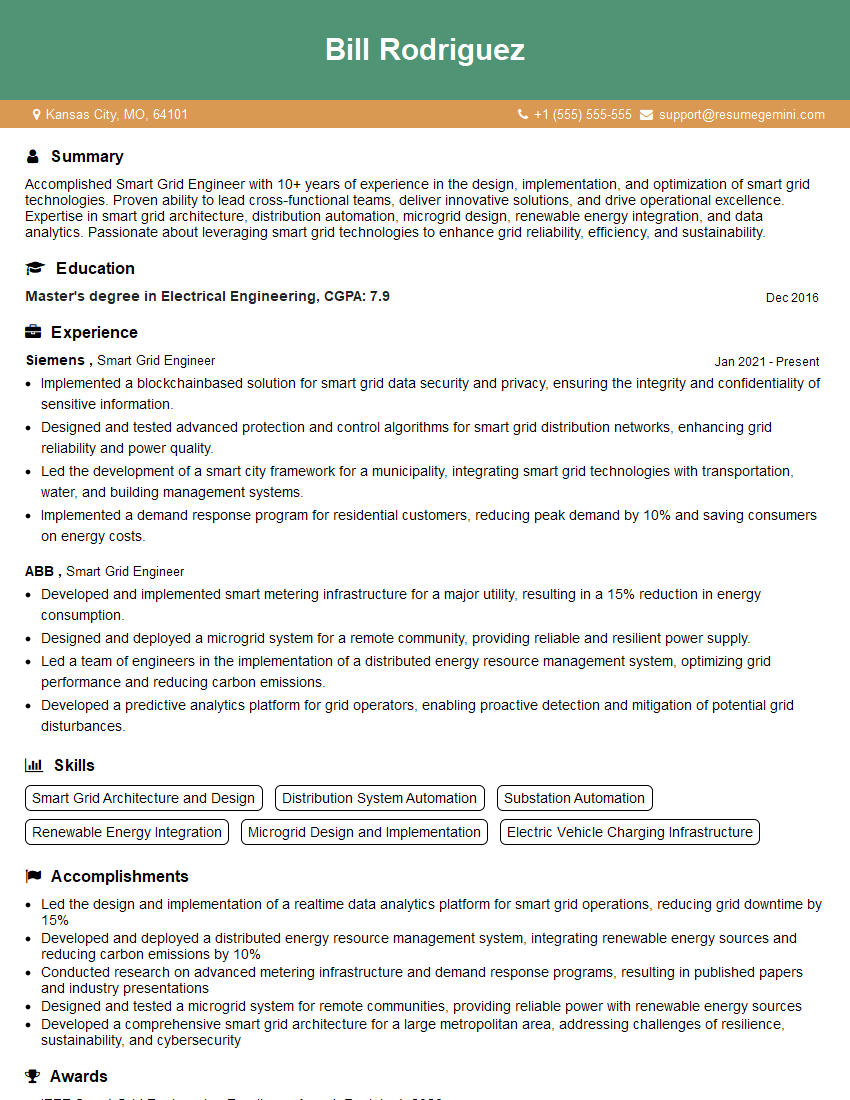
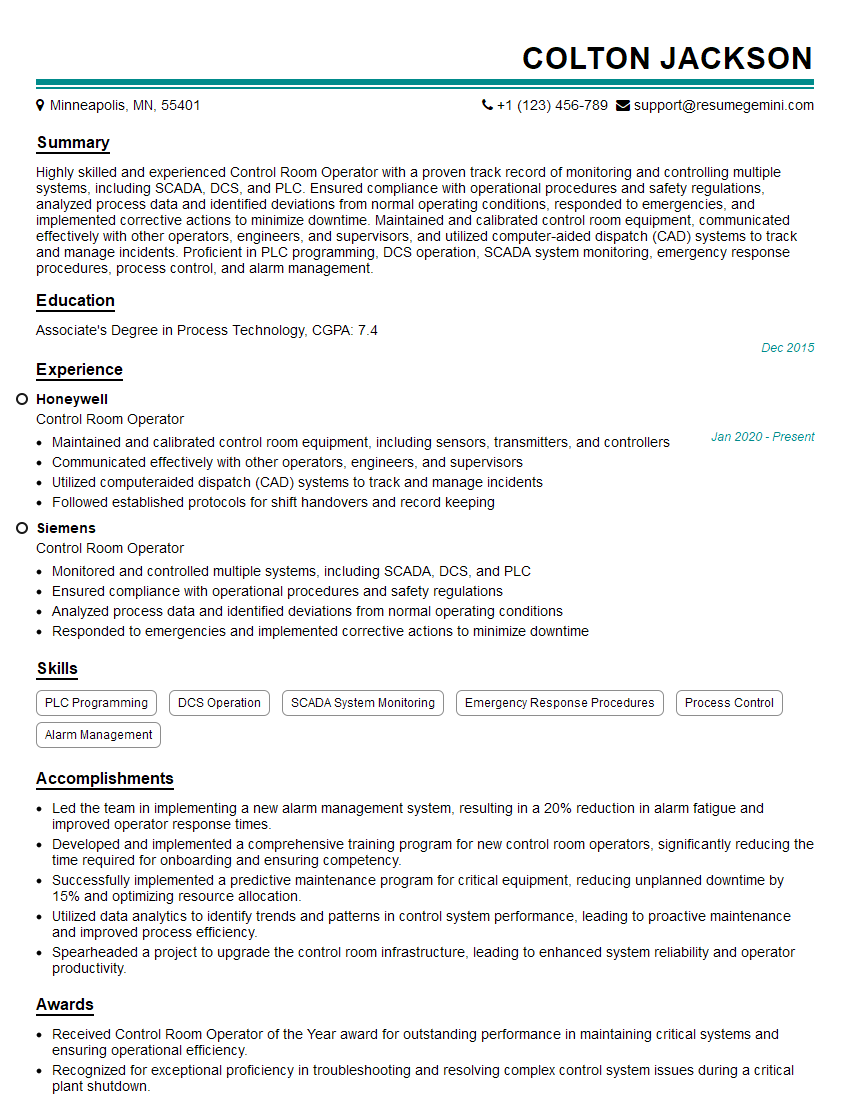
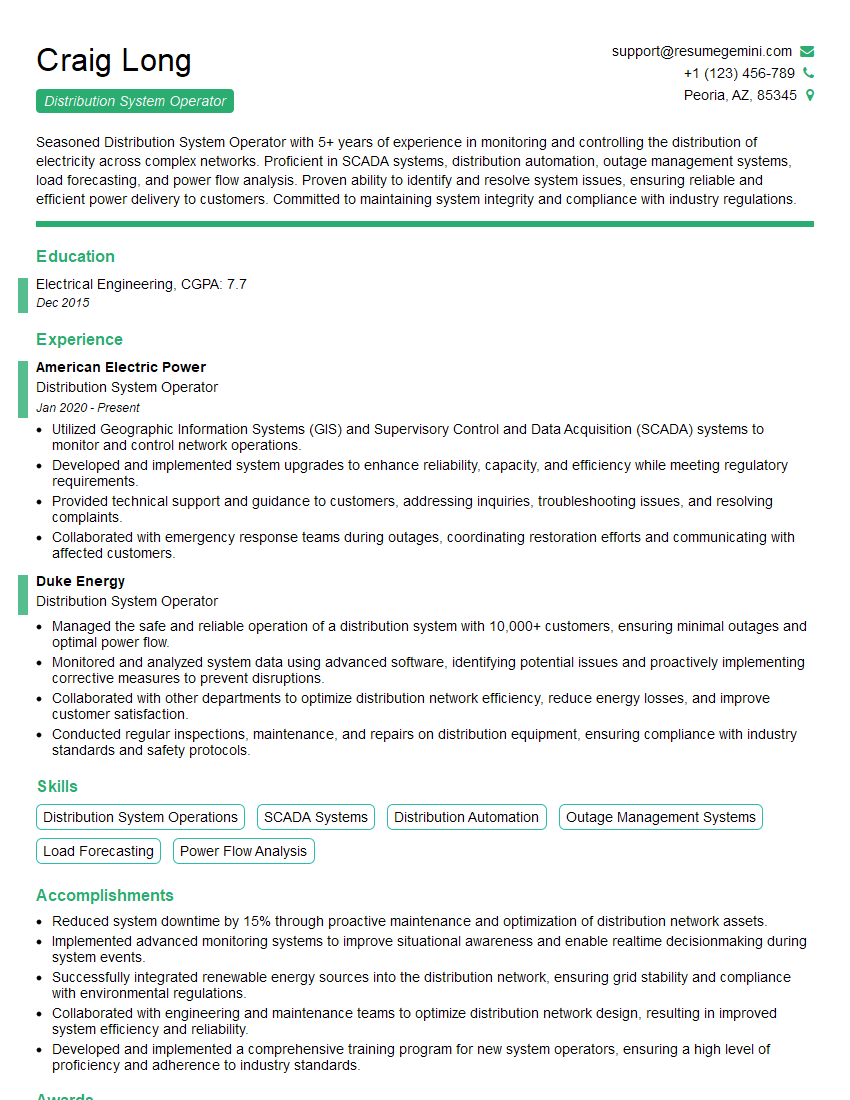
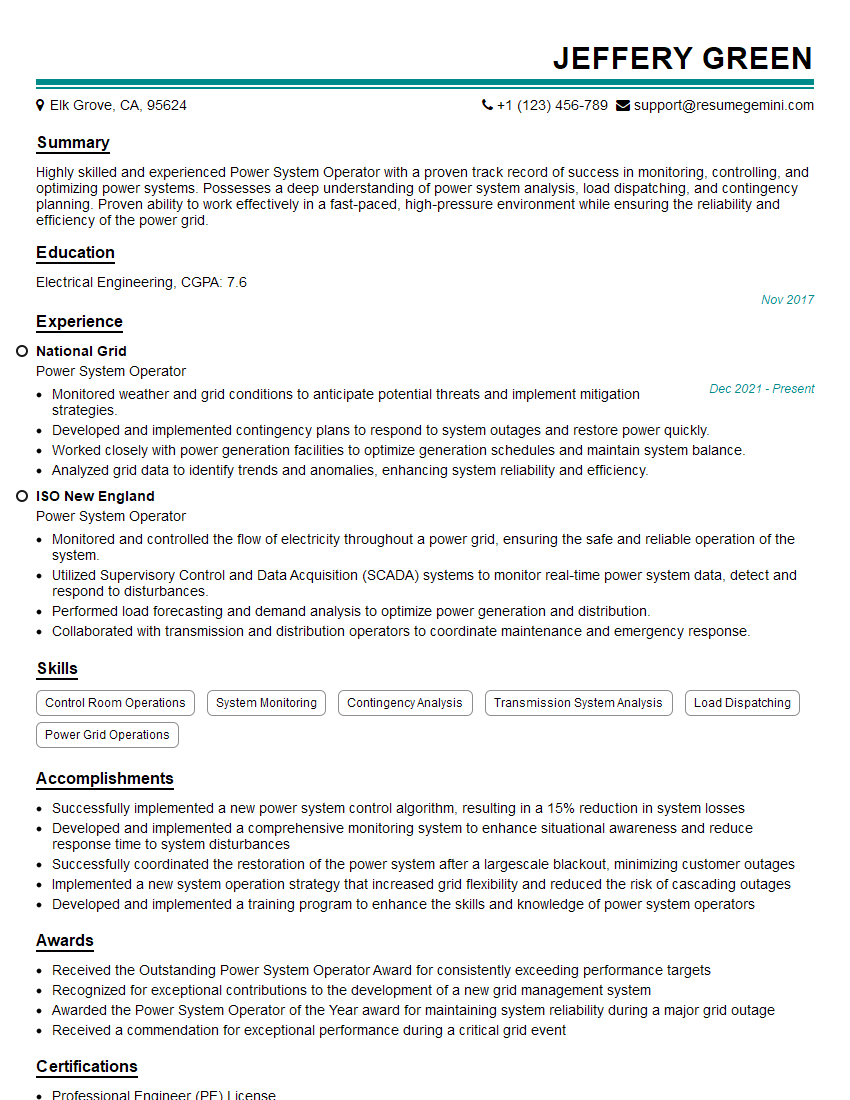
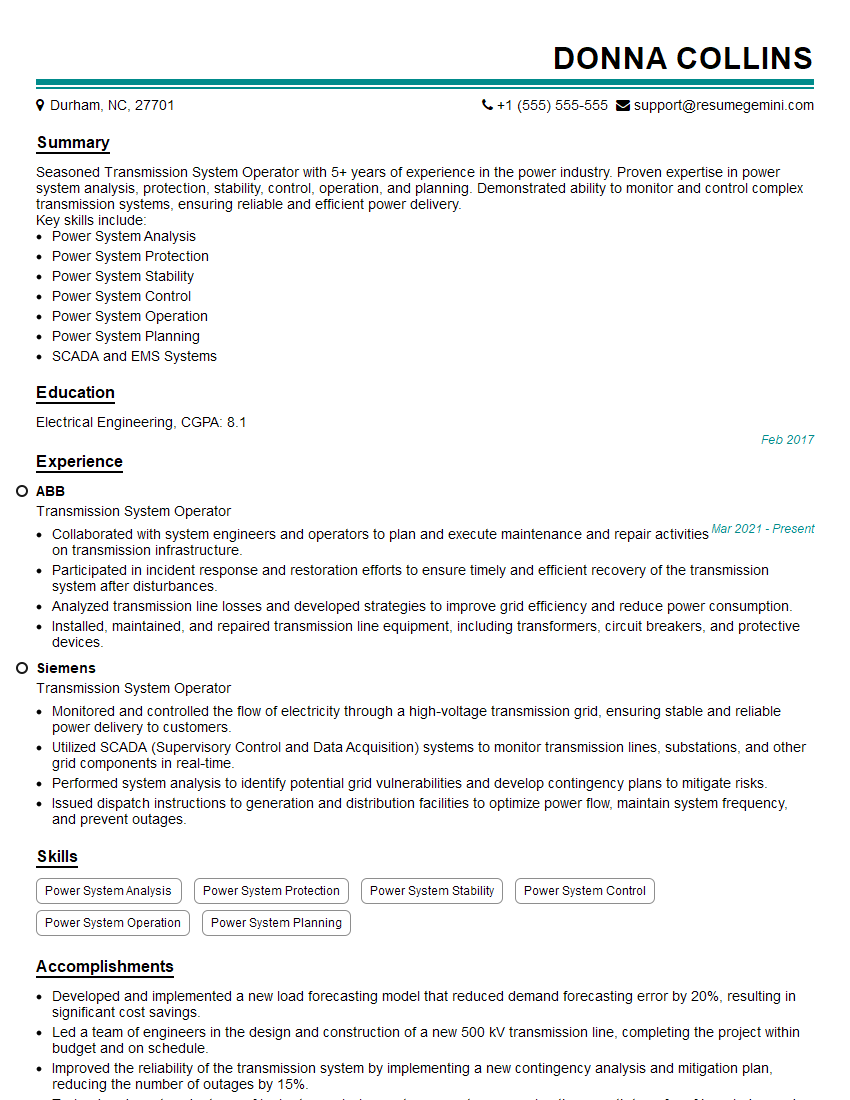
Mastering Power System Operation is crucial for a rewarding and impactful career in the energy sector, opening doors to leadership roles and opportunities for continuous learning and development. To maximize your job prospects, crafting an ATS-friendly resume is essential. ResumeGemini can help you build a compelling resume that highlights your skills and experience effectively. ResumeGemini provides examples of resumes tailored to Power System Operation professionals, ensuring your application stands out from the competition. Invest time in refining your resume; it’s your first impression on potential employers.
Explore more articles
Users Rating of Our Blogs
Share Your Experience
We value your feedback! Please rate our content and share your thoughts (optional).
What Readers Say About Our Blog
Very informative content, great job.
good