The thought of an interview can be nerve-wracking, but the right preparation can make all the difference. Explore this comprehensive guide to Athlete Conditioning interview questions and gain the confidence you need to showcase your abilities and secure the role.
Questions Asked in Athlete Conditioning Interview
Q 1. Explain the difference between strength training and conditioning.
Strength training and conditioning are often used interchangeably, but they represent distinct yet interconnected aspects of athletic development. Strength training primarily focuses on increasing the maximal force a muscle or muscle group can produce. Think of a powerlifter attempting a one-rep max squat. The goal is pure strength. Conditioning, on the other hand, encompasses a broader range of training methods designed to enhance an athlete’s overall performance capacity. This includes improving cardiovascular fitness, muscular endurance, flexibility, speed, agility, and power – all of which contribute to better performance in their sport. A marathon runner, for example, focuses on conditioning to improve their endurance and aerobic capacity, not just their maximal strength.
In essence, strength training is a component of conditioning, but conditioning is much more comprehensive.
Q 2. Describe your experience designing periodized training programs.
Periodization is the cornerstone of effective long-term athletic development. My experience involves designing programs across various sports, accounting for the specific demands of each. I typically utilize a macrocycle, mesocycle, and microcycle approach. A macrocycle might span a whole year, focusing on the overall competitive season. Within that, mesocycles (lasting several weeks to months) target specific aspects of training, such as strength, power, or endurance. Finally, microcycles (usually weekly) focus on the daily or weekly training plans to achieve the mesocycle’s goal. For example, in preparing a basketball player for the season, a macrocycle might incorporate a pre-season mesocycle focused on strength and conditioning, followed by a mesocycle emphasizing agility and speed, then game-specific training during the season.
I always assess the athlete’s current training status, injury history, and competitive goals to tailor the periodized plan. Data analysis through metrics like training load, recovery monitoring, and performance assessments informs adjustments throughout the process, ensuring optimal progress while minimizing injury risk.
Q 3. How do you assess an athlete’s current fitness level?
Assessing an athlete’s fitness level is a multi-faceted process that goes beyond simple observation. It requires a combination of testing and evaluation methods.
- Movement Screenings: Observing movement patterns reveals potential muscle imbalances or limitations.
- Submaximal and Maximal Tests: These include tests like the VO2 max test for cardiovascular fitness, 1RM (one-rep max) tests for strength, and various agility drills.
- Anthropometric Measurements: Assessing body composition (body fat percentage, lean mass) provides insight into overall physique.
- Performance-Based Assessments: Evaluating sport-specific skills provides a measure of functional fitness. For a basketball player, this might include sprint speed, vertical jump height, and shooting accuracy.
The data collected informs the development of a tailored training program.
Q 4. What are the key components of a comprehensive warm-up routine?
A comprehensive warm-up is crucial for injury prevention and optimal performance. It should consist of:
- General Warm-up (5-10 minutes): Light cardio activity like jogging or cycling to increase blood flow and heart rate.
- Dynamic Stretching (5-10 minutes): Active movements that take joints through their full range of motion, such as arm circles, leg swings, and torso twists. This improves flexibility and prepares muscles for activity.
- Sport-Specific Warm-up (5-10 minutes): Incorporating movements specific to the sport or activity to be performed. For a basketball player, this might include dribbling drills and shooting practice.
The duration and intensity of each component should be adjusted based on the athlete’s individual needs and the demands of the upcoming activity.
Q 5. Explain the principles of progressive overload.
Progressive overload is a fundamental principle in training stating that to continue making progress, the demands placed on the body must consistently increase. This means gradually increasing the intensity, volume, or frequency of training over time. Think of it like this: if you always lift the same weight, your muscles will adapt and stop growing stronger.
This can be achieved by manipulating several variables:
- Increasing Weight/Resistance: Gradually adding more weight to the exercises.
- Increasing Repetitions or Sets: Performing more repetitions or sets of an exercise.
- Decreasing Rest Periods: Shortening the rest periods between sets.
- Increasing Training Frequency: Training the same muscle groups more frequently.
- Adding Exercises or Sets: Incorporating new exercises or increasing the number of sets for existing ones.
Progressive overload is crucial for continuous adaptation and improvement, but it’s essential to monitor the athlete’s recovery and prevent overtraining.
Q 6. How do you incorporate plyometrics into an athlete’s training program?
Plyometrics, or jump training, involves explosive movements that utilize the stretch-shortening cycle to generate maximal force in a minimal amount of time. These exercises are excellent for improving power, speed, and agility. I carefully incorporate plyometrics into an athlete’s program, considering their training age, current fitness level, and injury history. Beginners start with basic exercises like box jumps (low height), jump squats, and lateral bounds, focusing on proper technique before progressing to more advanced drills.
The progression involves increasing the intensity by:
- Height of jumps/obstacles
- Speed of jumps
- Complexity of the movement
Plyometrics should be included strategically within the periodized training plan, not performed daily, to allow for adequate recovery. I always emphasize proper landing techniques to prevent injuries.
Q 7. Describe your experience with designing resistance training programs.
Designing effective resistance training programs requires a deep understanding of exercise selection, set/rep schemes, progressive overload, and recovery. My approach involves a thorough needs analysis, identifying the specific strength and power requirements of the athlete’s sport. I then select exercises that target relevant muscle groups, considering biomechanics and movement patterns. For instance, a swimmer might benefit from exercises that improve shoulder stability and back strength.
I use different training methodologies depending on the training phase. In a strength-focused phase, we’ll employ lower repetitions (1-5) with heavier weights. In a power phase, the rep range might be 3-5 with explosive movements, and in a hypertrophy phase (muscle growth), it might increase to 8-12 reps. Programming also accounts for recovery by strategically scheduling rest days and deload weeks to prevent overtraining and promote adaptation. Throughout this process, I carefully monitor the athlete’s progress and make adjustments as needed, ensuring their safety and maximizing their potential.
Q 8. What are the common signs and symptoms of overtraining?
Overtraining, a state of excessive training without adequate recovery, manifests in various ways. It’s not just about training too much; it’s about the imbalance between training stress and recovery.
- Physical Signs: Decreased performance despite increased training, persistent muscle soreness, fatigue, increased resting heart rate, difficulty sleeping, frequent illness, and unexplained weight loss.
- Mental Signs: Irritability, loss of motivation, decreased enjoyment of training, feelings of anxiety or depression, and difficulty concentrating.
Think of it like a bank account: Training deposits stress, while recovery makes withdrawals. Overtraining happens when you consistently make more deposits than withdrawals, leading to an ‘overdraft’. Recognizing these signs early is crucial for preventing serious health issues.
Q 9. How do you monitor an athlete’s progress and make adjustments to their training plan?
Monitoring athlete progress is a multifaceted process requiring a combination of objective and subjective data. We use a variety of methods:
- Performance Metrics: Tracking times, distances, reps, power output, and other relevant performance indicators. For example, I might track a sprinter’s 100m time, a cyclist’s power output during intervals, or a weightlifter’s maximum lift.
- Physiological Testing: Regularly assessing parameters like lactate threshold, VO2 max (for endurance athletes), and body composition. This gives a deeper understanding of their physiological capacity and response to training.
- Subjective Feedback: Regular check-ins with the athlete to gauge their perceived exertion, sleep quality, mood, and overall well-being. This helps to uncover potential issues that objective measures may miss.
- Injury Monitoring: Tracking any injuries, pain, or discomfort to address potential issues proactively.
Based on this data, training adjustments are made, often using a periodization model. This involves cyclical variations in training volume, intensity, and specificity throughout the year, to prevent overtraining and optimize performance. For example, we may reduce training volume during a period of intense competition or increase the intensity in the weeks leading up to a major event.
Q 10. How do you prevent common athletic injuries?
Injury prevention is paramount. My approach is holistic and encompasses several key areas:
- Proper Warm-up and Cool-down: Preparing the body for activity and aiding recovery. This includes dynamic stretching before exercise and static stretching afterward.
- Gradual Progression of Training Load: Avoiding sudden increases in training volume or intensity to minimize stress on the body. This principle, often referred to as progressive overload, ensures that the athlete’s body has time to adapt to the demands placed on it.
- Strength and Conditioning: Developing a strong base of strength, power, and endurance to reduce injury risk. This is particularly important for preventing injuries due to muscle imbalances.
- Proper Technique: Ensuring the athlete employs correct technique during training and competition. Poor technique is a major cause of injuries, so drills and coaching are crucial. For example, teaching a basketball player to properly land after a jump shot to prevent ankle injuries.
- Rest and Recovery: Sufficient rest and recovery are essential to allow the body to repair and adapt to the stresses of training. This includes adequate sleep, nutrition, and active recovery strategies.
Imagine building a house. You wouldn’t skip steps or rush the process. Injury prevention is similarly a carefully constructed process requiring attention to every detail.
Q 11. Explain your approach to nutrition and hydration for athletes.
Nutrition and hydration are fundamental to athletic performance and recovery. My approach emphasizes:
- Macronutrient Balance: A well-balanced intake of carbohydrates, proteins, and healthy fats tailored to the athlete’s training demands and energy expenditure. For endurance athletes, carbohydrate intake is crucial for fueling performance, while strength athletes require more protein for muscle growth and repair.
- Micronutrient Optimization: Ensuring adequate intake of vitamins and minerals crucial for various bodily functions and immune health. This often involves food diversity and potentially supplementation when needed.
- Hydration: Consistent hydration throughout the day, especially before, during, and after training. Dehydration negatively impacts performance and recovery. The athlete’s sweat rate can be used to determine individual needs, using hydration strategies accordingly.
- Timing of Nutrient Intake: Strategically timing nutrient intake to support training adaptations and recovery, like consuming carbohydrates and protein post-workout to replenish glycogen stores and aid in muscle protein synthesis.
I work closely with registered dietitians to personalize nutrition plans and ensure the athlete receives the necessary support.
Q 12. Describe your experience with different types of recovery strategies.
Recovery strategies are crucial for maximizing performance and minimizing injury risk. My experience spans several methods:
- Sleep: Prioritizing 7-9 hours of quality sleep per night is paramount. Poor sleep significantly impairs recovery and performance.
- Active Recovery: Engaging in low-intensity activities like light jogging, swimming, or cycling to promote blood flow and aid in muscle recovery without excessive stress.
- Passive Recovery: Techniques such as stretching, foam rolling, massage, and ice baths to reduce muscle soreness and inflammation.
- Compression Garments: Using compression sleeves or tights to improve circulation and reduce swelling.
- Stress Management Techniques: Incorporating mindfulness, meditation, or yoga to reduce stress hormones that can hinder recovery.
The optimal recovery strategy is individualized and depends on the athlete’s training load, sport, and personal preferences. I use a combination of techniques based on individual needs and feedback. I see recovery not as a ‘break’ but as an integral part of the training process itself.
Q 13. How do you adapt training programs for different sports and positions?
Training programs must be sport- and position-specific. The demands of a marathon runner are vastly different from those of a powerlifter or a soccer goalkeeper.
- Sport-Specific Demands: The training program must prioritize movements and physical qualities critical to success in the chosen sport. For example, a basketball player requires agility, speed, and power, while a long-distance runner needs endurance and stamina.
- Positional Requirements: Within a team sport, different positions have varying demands. A center in basketball is physically stronger than a point guard and needs strength and conditioning reflecting this. Similarly, a defensive lineman in football requires high levels of strength, while a wide receiver emphasizes speed and agility.
- Energy Systems: Training programs consider the predominant energy systems used in the sport. Endurance sports rely heavily on the aerobic system, while power sports utilize the anaerobic system. Training needs to align accordingly.
I work collaboratively with coaches and athletes to understand the specific needs of the sport and position and then design a training plan that effectively addresses these needs. It’s a very dynamic process which needs to take into account the individual capabilities and the goals of the athlete.
Q 14. What are the ethical considerations of athlete conditioning?
Ethical considerations in athlete conditioning are crucial. My approach is guided by several key principles:
- Athlete Welfare: The athlete’s health and well-being are paramount. This includes avoiding practices that could lead to injury, overtraining, or burnout. For example, I would never push an athlete to train through pain or ignore signs of overtraining.
- Informed Consent: Athletes must be fully informed about the training program, its risks and benefits, and have the autonomy to make decisions about their participation.
- Fairness and Equity: Providing equal opportunities for all athletes, regardless of gender, background, or ability. I ensure that training protocols consider individual differences and needs.
- Transparency and Honesty: Maintaining open communication with athletes and coaches, providing honest feedback, and avoiding misleading information.
- Compliance with Rules and Regulations: Adhering to all relevant anti-doping rules and regulations, promoting fair play and ethical competition.
Integrity is paramount in my work; I hold myself to the highest ethical standards and always place the well-being of the athlete first.
Q 15. What is your experience with testing athlete’s speed, agility, and power?
Assessing an athlete’s speed, agility, and power involves a multifaceted approach that goes beyond simple timed runs. It requires a blend of standardized tests and observation to provide a holistic picture of their capabilities and identify areas for improvement.
Speed: I typically use tests like the 40-yard dash (football), 100-meter sprint (track and field), or a 20-meter sprint test for more precise acceleration analysis. These provide objective data on linear speed. I also incorporate flight time analysis in jump tests to assess speed-related power.
Agility: Agility is about change of direction speed and efficiency. Common tests include the T-test, pro-agility shuttle, and cone drills. Video analysis helps me break down movement patterns to identify technical flaws impacting agility. For instance, I might observe if an athlete is exhibiting overstriding, causing loss of speed during changes in direction.
Power: Power is the rate at which work is done (force x velocity). I use vertical jump tests (e.g., countermovement jump, drop jump), broad jump, and medicine ball throws. Force plates provide quantitative data on the force produced, enabling a deeper understanding of power output. I analyze the jump height, velocity, and contact time to identify any weaknesses.
Integration: I often combine these tests, as strength, speed, and agility are interconnected. For example, a lack of lower body strength can limit jump height and acceleration during sprinting. The results help guide personalized training programs.
Career Expert Tips:
- Ace those interviews! Prepare effectively by reviewing the Top 50 Most Common Interview Questions on ResumeGemini.
- Navigate your job search with confidence! Explore a wide range of Career Tips on ResumeGemini. Learn about common challenges and recommendations to overcome them.
- Craft the perfect resume! Master the Art of Resume Writing with ResumeGemini’s guide. Showcase your unique qualifications and achievements effectively.
- Don’t miss out on holiday savings! Build your dream resume with ResumeGemini’s ATS optimized templates.
Q 16. Explain the role of flexibility and mobility in injury prevention.
Flexibility and mobility play critical roles in injury prevention by optimizing joint range of motion and muscle function. Limited flexibility and mobility increase the risk of muscle strains, ligament sprains, and other injuries by placing excessive stress on certain joint structures and muscles.
Flexibility: Refers to the range of motion around a joint. Good flexibility helps muscles lengthen and contract efficiently, reducing strain during explosive movements.
Mobility: Refers to the active ability to move a joint through its full range of motion. It involves both flexibility and neuromuscular control. Impaired mobility can disrupt movement patterns, increasing stress on joints and tissues.
Injury Prevention Mechanism: Insufficient flexibility and mobility can lead to compensatory movements. For example, limited hip flexibility might cause an athlete to overcompensate with their knees during running, raising the risk of knee injuries. Similarly, tight hamstrings can increase the risk of hamstring strains.
Practical Application: I incorporate flexibility and mobility exercises, like dynamic stretching before activity and static stretching after, into every training plan. I also address individual mobility limitations through targeted exercises and manual therapy techniques where appropriate.
Q 17. How do you integrate strength training with other aspects of athletic performance?
Strength training is not an isolated component; it’s a foundation for enhancing all aspects of athletic performance. I integrate it seamlessly with other training elements based on the athlete’s sport and individual needs.
Sport Specificity: Strength training programs are tailored to the demands of the sport. A basketball player needs different strength characteristics than a marathon runner. I use exercises that mimic the movements involved in the sport to improve strength transfer.
Power Development: Plyometrics (jump training) combines strength training and speed for improved power, crucial for many sports. Strength is the base, plyometrics adds explosive power, and speed turns it into a dominant performance.
Endurance Training: Strength training enhances endurance performance by improving efficiency of movement and reducing fatigue. For endurance athletes, strength training often focuses on strength endurance.
Injury Prevention: Strengthening supporting musculature prevents injuries by improving joint stability. For example, strengthening the rotator cuff muscles reduces the risk of shoulder injuries in throwing athletes.
Coordination and Agility: Strength training improves neuromuscular control which enhances coordination and agility. Functional strength exercises improve the athlete’s capacity to execute the movements required in competition.
Q 18. Explain your understanding of biomechanics and its application to training.
Biomechanics is the study of human movement. Understanding biomechanics is fundamental to designing effective and safe training programs. It allows me to analyze movement patterns, identify technical flaws, and develop targeted interventions to improve performance and reduce injury risk.
Movement Analysis: I use video analysis and motion capture technology to assess an athlete’s form during various movements. This provides objective data to pinpoint areas of inefficiency or risk.
Force Measurement: Force plates, alongside other devices, help to measure force production and ground reaction forces during activities like running and jumping, allowing me to tailor programs to optimize power and reduce stress on joints.
Injury Risk Assessment: Biomechanical analysis can identify movement patterns that predispose athletes to injury. By addressing these issues early, we can prevent future problems. For example, identifying an inefficient running gait that increases the risk of stress fractures.
Training Program Design: Biomechanical principles guide exercise selection and program design. This ensures that the training is both effective and safe.
Q 19. How do you work with other members of a sports medicine team?
Collaboration is key. I work closely with other members of the sports medicine team, including physicians, physical therapists, athletic trainers, and nutritionists, to provide holistic care for athletes.
Physician: I consult with physicians regarding injuries and medical conditions to ensure that training programs are appropriate and safe for the athlete’s health status. The physician provides critical medical clearance for return to play.
Physical Therapists: I collaborate with physical therapists to address injuries and mobility limitations. They help to rehabilitate athletes after injuries and restore full function.
Athletic Trainers: Athletic trainers provide on-field care and injury prevention strategies. We collaborate to develop comprehensive injury prevention programs and manage acute injuries.
Nutritionists: Nutrition plays a vital role in athletic performance and recovery. I work with nutritionists to develop personalized nutrition plans that support the athlete’s training goals.
Communication: Open communication among team members is essential. Regular communication ensures that all professionals are aware of the athlete’s progress and any issues that may arise.
Q 20. How do you handle an athlete’s refusal to follow the training program?
An athlete’s refusal to follow the training program is a common challenge. Addressing this requires a sensitive and collaborative approach.
Understanding the Reason: I first try to understand the reason for the athlete’s refusal. Is it due to a lack of understanding, physical limitations, personal beliefs, or other factors?
Open Communication: I initiate open and honest communication with the athlete, creating a safe space for discussion. I explain the rationale behind the program and address their concerns.
Collaboration: I work collaboratively with the athlete to modify the program if necessary, finding ways to make it more suitable to their needs and preferences, while still achieving the training objectives.
Setting Realistic Goals: Setting realistic and achievable goals is crucial to maintain motivation and compliance. Small, incremental goals are far more attainable than a massive overhaul, promoting adherence.
Seeking Support: Involving other members of the sports medicine team, like a sports psychologist, may be beneficial in addressing underlying motivational or psychological factors.
Consequences: If communication and collaboration fail, the consequences of not following the program need to be explained. This isn’t about punishment, but rather about emphasizing the potential impact on performance and risk of injury.
Q 21. Describe your experience using technology for performance tracking and analysis.
Technology has revolutionized athlete conditioning. I utilize various technologies for performance tracking and analysis, leading to better informed training decisions.
GPS Tracking Devices: These devices monitor an athlete’s speed, distance, acceleration, deceleration, and other metrics during training and competition. This data helps to objectively assess training load and identify areas for improvement.
Wearable Sensors: Wearable sensors, such as accelerometers and gyroscopes, provide detailed information about movement patterns and biomechanics. This helps in identifying technical flaws and designing targeted interventions.
Video Analysis Software: Software allows for detailed analysis of video footage to assess movement technique and identify areas for improvement. This is particularly useful for identifying subtle flaws that might not be apparent to the naked eye.
Force Plates: Force plates measure ground reaction forces, enabling accurate assessment of power output and jump technique. This data helps quantify improvements in strength and power.
Data Integration and Analysis: Integrating data from different sources provides a comprehensive picture of athlete performance. This allows for the development of more effective and personalized training programs.
Q 22. How do you modify training programs for athletes with injuries?
Modifying training programs for injured athletes requires a careful, individualized approach. The primary goal shifts from performance enhancement to injury rehabilitation and safe return to training. This involves close collaboration with medical professionals (physicians, physiotherapists) to understand the nature, severity, and healing process of the injury.
We begin by completely removing any exercises that aggravate the injury. We then focus on maintaining the athlete’s overall fitness level by implementing modified exercises focusing on areas unaffected by the injury. For example, if an athlete has a knee injury, we might focus on upper body strength training, core work, and low-impact cardiovascular exercise like cycling or swimming. As the injury heals, we gradually reintroduce exercises that progressively stress the injured area, ensuring the athlete is pain-free.
A key aspect is using the principles of progressive overload carefully. Instead of increasing the intensity immediately, we prioritize controlled progression, gradually increasing the load, repetitions, and sets. Regular monitoring of the athlete’s progress, including pain levels and functional movement assessments, are crucial for adjusting the program to avoid setbacks.
For example, a runner with a hamstring strain might begin with walking, then progress to stationary bike riding, then light jogging on a soft surface, carefully increasing distance over time. We would use functional movement screenings to monitor the athlete’s flexibility and strength before progressing to more strenuous activities.
Q 23. How do you manage the workload of athletes during peak competition seasons?
Managing athlete workload during peak competition seasons is a delicate balance between maximizing performance and minimizing risk of overtraining or injury. We employ periodization, a strategic planning approach that divides the training year into distinct phases with varying intensity and volume. The goal is to achieve peak fitness at the crucial competition moments.
During peak season, training volume typically decreases while intensity remains high or increases slightly, depending on the sport. We prioritize quality over quantity, focusing on refining technique, maintaining fitness levels, and tactical preparation. We might incorporate shorter, more intense training sessions with adequate rest periods. Active recovery strategies, such as light jogging or stretching, are also critical.
Monitoring physiological markers is crucial, including heart rate variability (HRV), sleep quality, and perceived exertion levels (using rating of perceived exertion scales, or RPE). Decreases in HRV, poor sleep, and consistently high RPE can indicate overtraining. In these instances, we reduce training volume and intensity, increase rest periods, or even implement a planned deload week to allow the body to recover. Regular communication with the athlete to assess their physical and mental state is also essential.
Imagine a marathon runner. In the weeks leading up to the race, their long runs will shorten, while their speed work sessions might increase slightly to maintain their fitness. Meanwhile, recovery and nutrition are meticulously monitored and adjusted based on physiological markers and the athlete’s feedback.
Q 24. What are your experience with different training modalities (e.g., circuit training, HIIT)?
I have extensive experience with various training modalities. Circuit training, which involves a series of exercises performed one after another with minimal rest, is excellent for improving cardiovascular fitness and muscular endurance. It’s highly adaptable and can be designed for various fitness levels. For example, a circuit could include squats, push-ups, rows, and burpees, alternating between upper and lower body exercises.
High-intensity interval training (HIIT), characterized by short bursts of intense exercise followed by brief recovery periods, is incredibly effective for improving both cardiovascular and anaerobic fitness. It’s time-efficient and can yield significant results. A sample HIIT protocol for running could be 30 seconds of sprinting followed by 90 seconds of jogging, repeated 8-12 times.
Beyond these, I also utilize strength training (using free weights, resistance machines), plyometrics (explosive movements like box jumps), and flexibility/mobility training (yoga, stretching). The choice of modality depends on the athlete’s sport, individual needs, and training goals. I frequently integrate these modalities into comprehensive training plans.
Q 25. How do you address the psychological aspects of athlete training?
Addressing the psychological aspects of athlete training is paramount for optimal performance and well-being. Mental fortitude, resilience, and focus are as crucial as physical fitness. I use a multifaceted approach, considering the athlete’s personality, training history, and competitive goals.
We employ strategies like goal setting, visualization, and mindfulness techniques to enhance focus and self-belief. Regular check-ins are conducted to monitor their mental state, identifying and addressing potential issues like anxiety, stress, or burnout. For example, I might use a sports psychologist to help athletes develop coping mechanisms for competition anxiety or to help build resilience in the face of setbacks.
Positive reinforcement and constructive feedback are essential components of my approach. Celebratory milestones and open discussions about challenges and successes are important to maintain positive morale and motivation. I believe a strong athlete-coach relationship built on trust and mutual respect is crucial in addressing psychological aspects.
Q 26. Explain your familiarity with different types of training equipment.
My familiarity with training equipment encompasses a wide range of tools, including free weights (dumbbells, barbells, kettlebells), resistance machines, plyometric equipment (jump boxes, medicine balls), cardiovascular equipment (treadmills, stationary bikes, rowing machines), and specialized equipment for specific sports.
I understand the biomechanics of each tool and how to utilize it safely and effectively to achieve specific training objectives. For example, I’m adept at designing programs using free weights to enhance strength and power, understanding the importance of proper form to prevent injury. Similarly, I can utilize resistance machines to target specific muscle groups and cardiovascular equipment to improve aerobic capacity.
Beyond equipment itself, I consider factors like equipment maintenance, safety protocols, and ensuring appropriate equipment selection for the athlete’s specific needs and abilities. Knowing the limitations and appropriate usage of each piece of equipment is critical to ensuring both safety and effectiveness.
Q 27. How do you ensure the safety of athletes during training?
Ensuring athlete safety is my top priority. This starts with a thorough understanding of the athlete’s medical history, including any pre-existing conditions or injuries. We perform regular physical assessments and functional movement screenings to identify potential vulnerabilities and address them proactively.
Proper warm-up and cool-down routines are mandatory before and after each training session. Appropriate technique is emphasized and continually monitored to reduce the risk of injury. I ensure the training environment is safe, with appropriate spacing between equipment and readily available first-aid supplies. Athletes are educated on safety protocols and emergency procedures.
Throughout the training process, close monitoring of the athlete’s physical and mental state is done to identify any signs of fatigue, pain, or discomfort. Open communication channels are established to ensure athletes feel comfortable reporting any concerns or issues without fear of judgment. The training program is dynamically adjusted based on the athlete’s response, prioritizing safety over pushing performance to extremes.
Q 28. What is your experience with designing training programs for specific age groups?
Designing training programs for different age groups requires understanding the unique physiological and psychological characteristics of each stage of development. Training young athletes (e.g., adolescents) requires a focus on proper technique, gradual progression, and adequate rest to prevent overuse injuries. Emphasis is placed on fun, engaging activities that promote long-term participation and a healthy lifestyle.
For adult athletes, the focus shifts to achieving specific performance goals while considering their current fitness level and any pre-existing health concerns. Program design involves periodization and attention to injury prevention and recovery. Older adult athletes require a careful approach that considers age-related changes in muscle strength, flexibility, and cardiovascular fitness, emphasizing functional fitness and injury prevention.
I utilize age-appropriate exercise selection, adjusting intensity and volume accordingly. For example, high-impact exercises might be avoided in older adults, while younger athletes might tolerate higher volumes. The training program is further tailored to the specific needs and goals of each individual athlete, whether they are aiming for competitive success or general fitness improvement.
Key Topics to Learn for Athlete Conditioning Interview
- Program Design & Periodization: Understanding the principles of periodization (macrocycles, mesocycles, microcycles), program design based on training phases (e.g., strength, power, endurance), and the integration of different training modalities.
- Strength & Conditioning Fundamentals: Practical application of exercise selection, training techniques (e.g., plyometrics, Olympic lifting), resistance training programming, and the physiological adaptations to these training methods. Demonstrate your ability to design safe and effective programs for various athletic populations.
- Nutrition & Recovery: Knowledge of sports nutrition principles, fueling strategies for different training intensities and durations, and the role of nutrition in recovery and injury prevention.
- Injury Prevention & Rehabilitation: Understanding common athletic injuries, risk factors, injury prevention strategies, and basic rehabilitation principles. Demonstrate knowledge of how conditioning programs can minimize injury risk.
- Testing & Assessment: Proficiency in conducting various fitness assessments (e.g., strength, power, speed, agility, flexibility), interpreting the results, and using the data to inform training programs. This includes understanding the limitations and biases of different assessments.
- Exercise Physiology & Biomechanics: A strong understanding of the physiological responses to exercise and the biomechanics of movement. Be prepared to explain the “why” behind your program design choices.
- Communication & Collaboration: Articulate your ability to communicate effectively with athletes, coaches, and other professionals within a team environment. Highlight your experience in collaborating on training programs and adapting to individual athlete needs.
Next Steps
Mastering Athlete Conditioning is crucial for career advancement in sports performance and related fields. A strong understanding of these principles will significantly enhance your job prospects and allow you to contribute meaningfully to an athletic team or organization. To maximize your chances of landing your dream role, building an ATS-friendly resume is essential. ResumeGemini is a trusted resource to help you craft a compelling and effective resume that highlights your skills and experience. They provide examples of resumes specifically tailored to Athlete Conditioning to give you a head start. Take advantage of this valuable tool to showcase your qualifications and secure your next opportunity.

Fitness Director Resume Sample

Rehabilitation Specialist Resume Sample
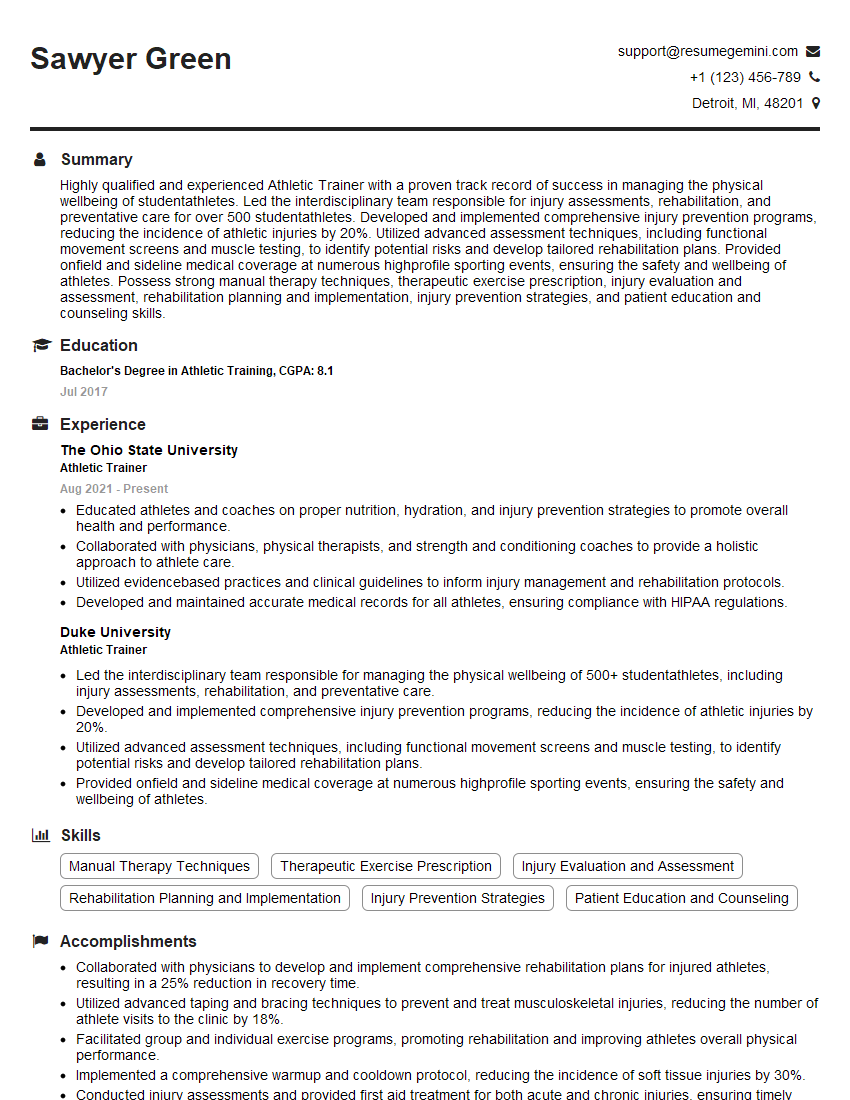
Athletic Trainer Resume Sample
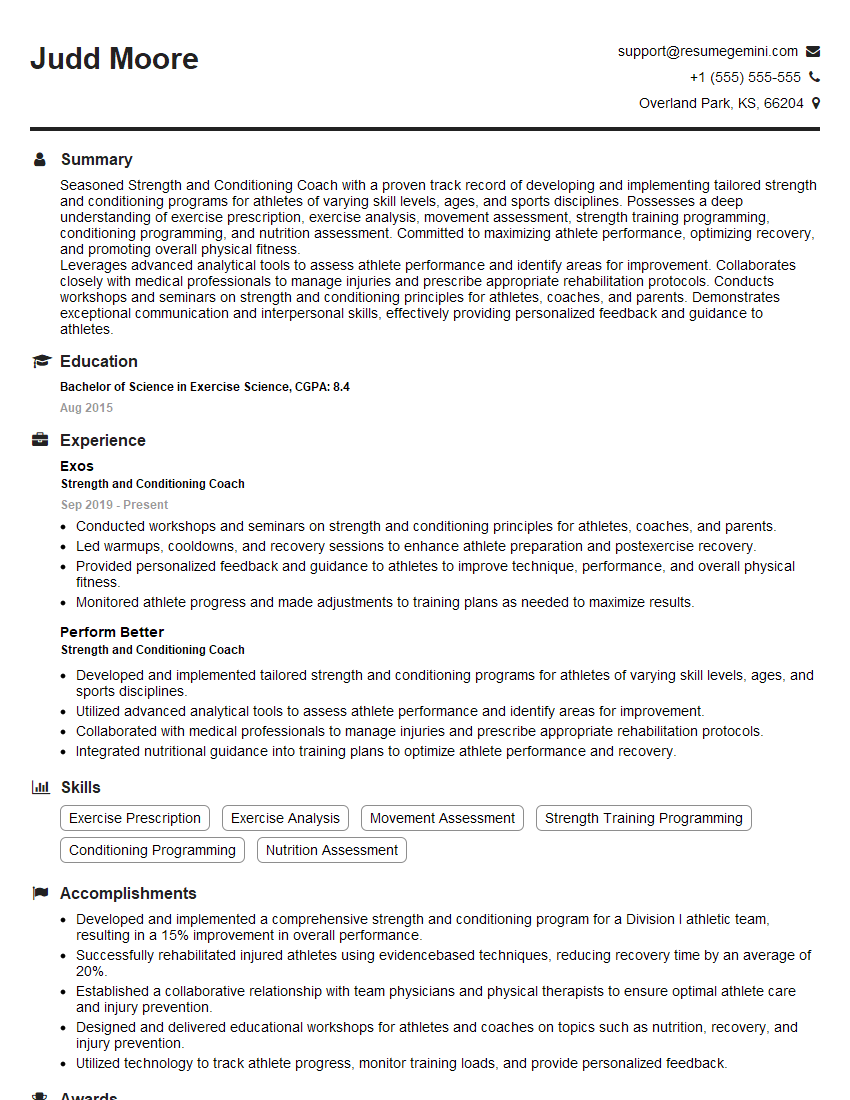
Strength and Conditioning Coach Resume Sample
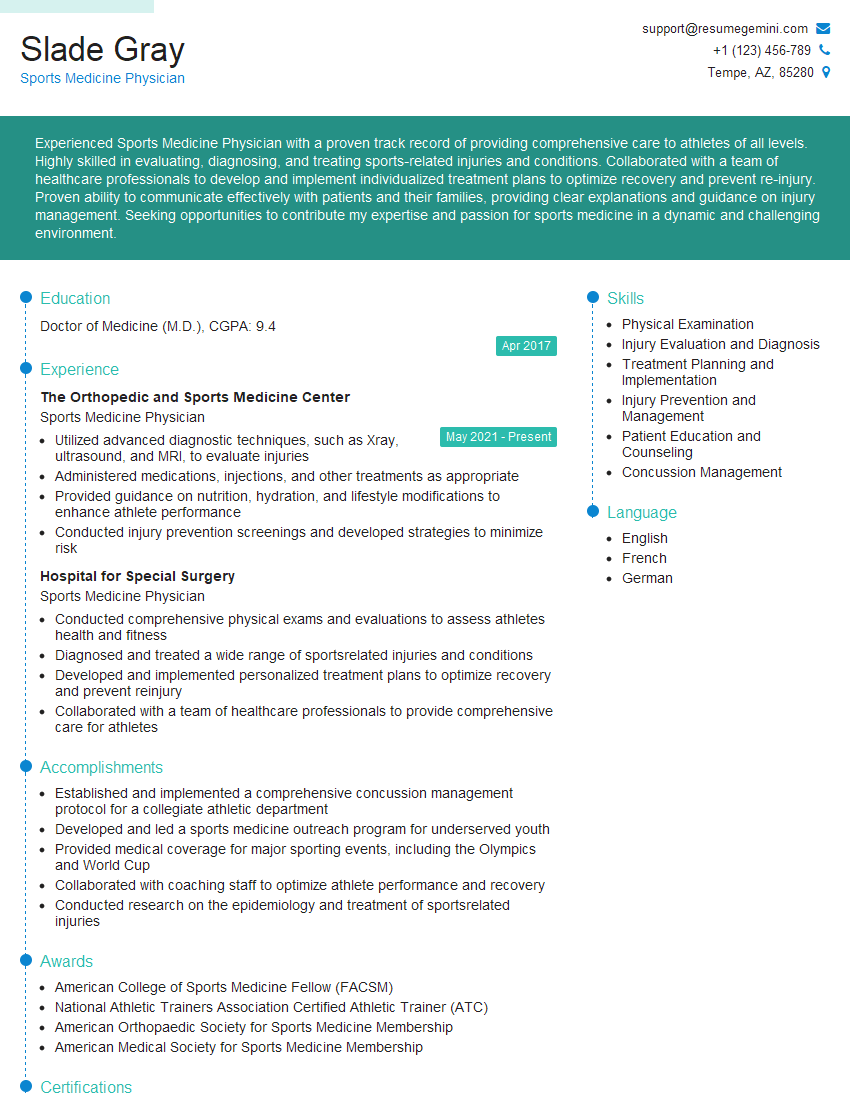
Sports Medicine Physician Resume Sample

Exercise Physiologist Resume Sample
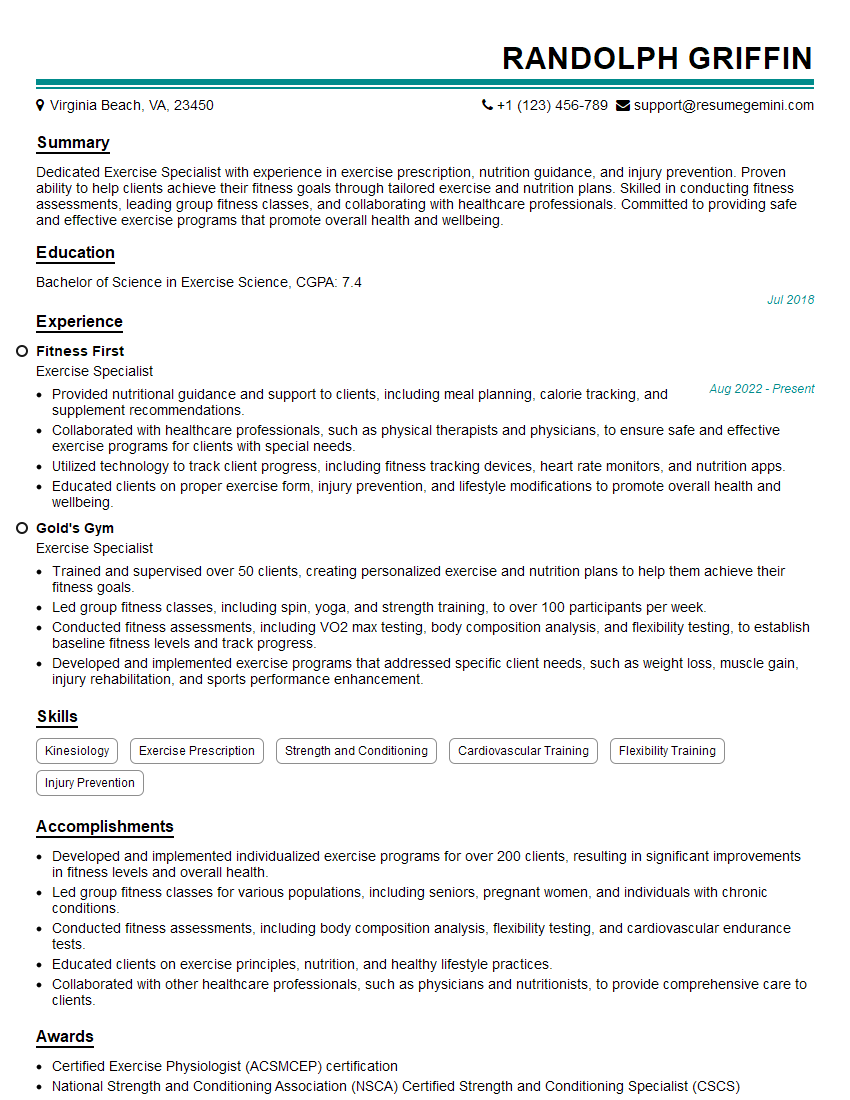
Exercise Specialist Resume Sample
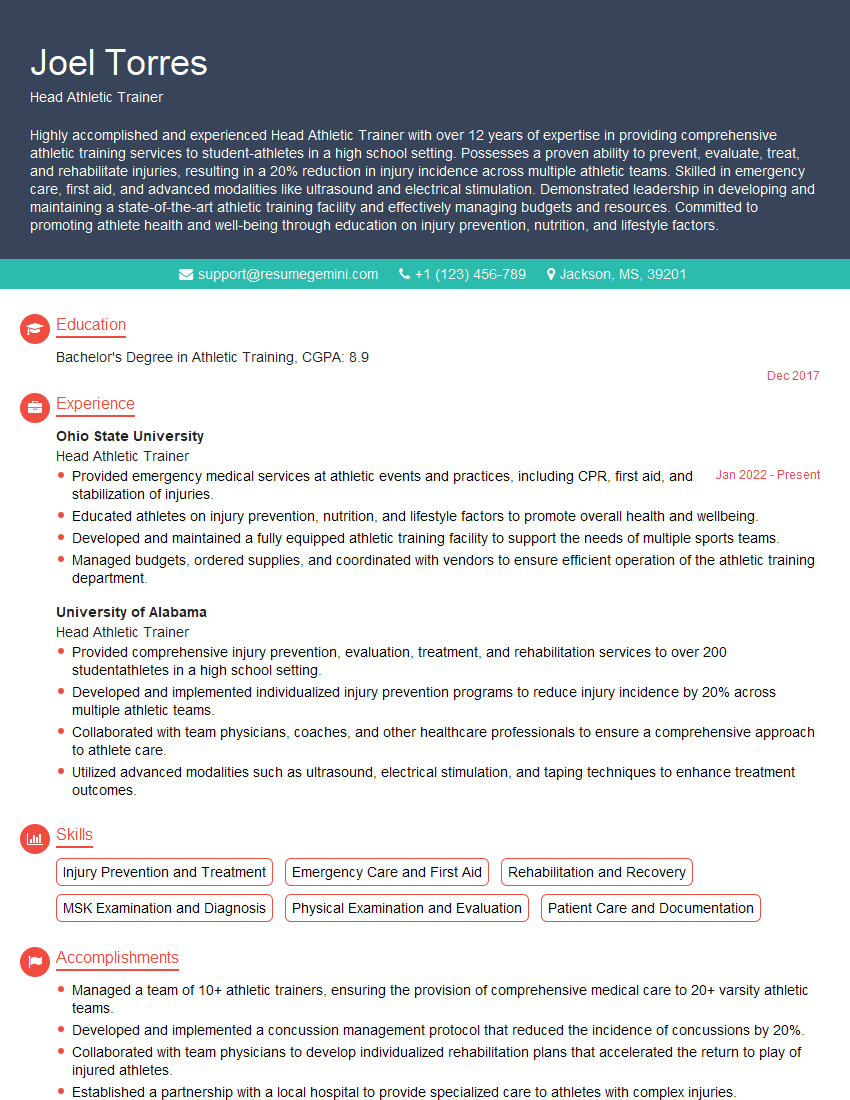
Head Athletic Trainer Resume Sample
Explore more articles
Users Rating of Our Blogs
Share Your Experience
We value your feedback! Please rate our content and share your thoughts (optional).
What Readers Say About Our Blog
Very informative content, great job.
good