Interviews are more than just a Q&A session—they’re a chance to prove your worth. This blog dives into essential Intelligence Briefings interview questions and expert tips to help you align your answers with what hiring managers are looking for. Start preparing to shine!
Questions Asked in Intelligence Briefings Interview
Q 1. Describe your experience in synthesizing complex information from diverse sources into concise intelligence briefings.
Synthesizing diverse information into concise intelligence briefings requires a structured approach. It’s like assembling a complex jigsaw puzzle – each piece of information (from open-source reports, human intelligence, signals intelligence, etc.) needs to be carefully examined, validated, and then fit into the overall picture. My process involves:
- Information Gathering: I systematically collect data from various sources, ensuring I understand the biases and limitations of each.
- Data Triangulation: I compare information from multiple sources to verify its accuracy and identify inconsistencies. This helps to eliminate errors and biases.
- Analysis and Interpretation: I analyze the collected data, identifying patterns, trends, and significant events. This involves critical thinking and making inferences based on the evidence.
- Synthesis and Prioritization: I prioritize the most critical and relevant information, discarding irrelevant details. This is crucial for producing a concise and impactful briefing.
- Structuring the Briefing: Finally, I structure the information logically, often using a narrative approach that tells a story, making it easier for the audience to understand.
For example, in one project analyzing a potential geopolitical crisis, I integrated data from satellite imagery showing troop movements, intercepted communications revealing strategic plans, and open-source reports on political rhetoric to paint a comprehensive picture of the escalating situation.
Q 2. How do you prioritize information when preparing an intelligence briefing, considering time constraints and audience needs?
Prioritizing information in intelligence briefings is critical, particularly under time constraints. I employ a multi-faceted approach prioritizing based on both the urgency and relevance to the specific audience. I use a framework similar to the Eisenhower Matrix (urgent/important), but tailored to intelligence analysis:
- Urgency/Impact: Information directly impacting immediate decisions or posing imminent threats gets top priority.
- Relevance to Audience: I consider the audience’s needs and knowledge base. Executives need high-level summaries, while technical experts may need detailed analysis.
- Credibility and Confidence: Information from highly credible sources and with high confidence levels is given greater weight.
- Actionable Intelligence: The briefing prioritizes information that leads to actionable recommendations or decisions.
For example, if preparing a briefing for a national security council on a cyber threat, immediate risks to critical infrastructure would be prioritized over long-term vulnerabilities, even if the latter are significant in the long run. The briefing would also be tailored to their decision-making needs, focusing on potential responses and mitigation strategies.
Q 3. Explain your process for identifying and assessing the credibility of intelligence sources.
Assessing source credibility is paramount in intelligence work. It’s like evaluating witnesses in a courtroom – you need to understand their biases, motivations, and track record. My process involves:
- Source Background Check: Thorough research on the source’s history, reputation, and potential biases. This might involve reviewing past performance, identifying potential conflicts of interest, and understanding their methodology.
- Information Corroboration: Comparing information from multiple independent sources to verify its accuracy. Discrepancies raise red flags requiring further investigation.
- Methodological Assessment: Evaluating the methods used to gather information. Is it human intelligence (HUMINT), signals intelligence (SIGINT), open-source intelligence (OSINT), etc.? Each has its strengths and limitations.
- Bias Identification: Recognizing and accounting for potential biases in the information. All sources have biases; the key is to identify and mitigate their influence.
- Confidence Assessment: Assigning a confidence level to the information based on its credibility and supporting evidence. This might be expressed qualitatively (high, medium, low) or quantitatively (using a percentage).
For instance, if receiving information from a foreign government, I would verify its reliability by cross-referencing it with information from other sources and considering that government’s past record of providing accurate intelligence.
Q 4. How do you tailor an intelligence briefing to different audiences (e.g., executives, technical experts, policymakers)?
Tailoring briefings to different audiences is essential for effective communication. It’s like adapting a story for different age groups – you maintain the core message but adjust the language and level of detail. I consider the following factors:
- Technical Expertise: For technical audiences, I can include detailed data, complex analyses, and specialized terminology. For non-technical audiences, I simplify the language and avoid jargon.
- Decision-Making Needs: Executives need concise summaries and key takeaways focused on strategic implications. Policymakers need information relevant to policy options and potential consequences.
- Time Constraints: The length and detail of the briefing are adjusted based on the available time.
- Communication Style: I adapt the presentation style to suit the audience’s preferences. Some prefer formal presentations, while others prefer more interactive discussions.
For example, when briefing executives, I focus on the ‘so what?’ – the implications and recommended actions. When briefing technical experts, I focus on the ‘how’ – the methodology, data, and supporting evidence.
Q 5. Describe a situation where you had to present complex information to a non-technical audience. How did you ensure clarity and understanding?
In one instance, I had to present a complex cyber-attack analysis to a board of directors with limited technical backgrounds. To ensure clarity and understanding, I used:
- Analogies and Metaphors: I compared the attack to a real-world scenario they could relate to (e.g., a physical burglary).
- Visual Aids: I used simple charts and diagrams to illustrate complex technical concepts.
- Plain Language: I avoided technical jargon and explained concepts in everyday language.
- Storytelling: I presented the information as a narrative, highlighting the key events and their consequences.
- Focus on Impact: I emphasized the business impact of the attack and the steps needed to mitigate future risks.
This approach helped the board understand the severity of the attack and its potential impact without getting bogged down in technical details. They were able to make informed decisions based on the information presented.
Q 6. What techniques do you use to ensure your briefings are clear, concise, and impactful?
Creating clear, concise, and impactful briefings involves employing specific techniques:
- Pyramid Structure: Presenting the most important information first, followed by supporting details. This ensures the key message is communicated effectively even if the audience doesn’t read the entire briefing.
- Active Voice and Concise Language: Using active voice and avoiding unnecessary jargon enhances clarity and improves readability.
- Data Visualization: Using charts, graphs, and maps to visually represent complex data makes it easier to understand.
- Executive Summary: Including a concise summary at the beginning and end of the briefing allows for quick comprehension of the key findings.
- Strong Conclusion and Recommendations: The briefing should conclude with clear recommendations or actions based on the presented information.
For example, instead of writing, “The assessment of the situation was conducted by the team and it concluded that…”, I’d write, “The team assessed the situation and concluded that…” This simple change improves clarity and concision.
Q 7. How do you handle conflicting or ambiguous information when preparing an intelligence briefing?
Handling conflicting or ambiguous information requires careful analysis and transparent reporting. It’s like investigating a crime scene where witness testimonies contradict each other – you need to examine the evidence carefully and present all perspectives honestly. My approach involves:
- Identifying Discrepancies: Clearly identify and document the conflicting information, specifying the sources and their potential biases.
- Assessing Source Credibility: Evaluate the credibility of each source, considering their track record and potential motivations.
- Analyzing Supporting Evidence: Examine the supporting evidence for each piece of information. Is it strong, weak, or inconclusive?
- Developing Multiple Hypotheses: Consider various explanations for the conflicting information, acknowledging the uncertainty involved.
- Transparent Reporting: Present the conflicting information honestly, highlighting the uncertainties and areas requiring further investigation. Avoid overconfidence or drawing premature conclusions.
For instance, if two sources offered conflicting information about the timing of an event, I would present both timelines, noting the source of each and highlighting the lack of definitive evidence to resolve the discrepancy. This transparency allows the audience to draw their own conclusions informed by the full picture.
Q 8. Explain your understanding of the intelligence cycle and how it impacts briefing preparation.
The intelligence cycle is a fundamental framework for gathering, processing, and disseminating intelligence. It typically involves five phases: Planning & Direction, where intelligence needs are identified; Collection, where raw data is gathered from various sources; Processing, where data is analyzed and refined; Analysis & Production, where insights are developed and intelligence products are created; and finally, Dissemination, where the intelligence is shared with consumers. This cycle directly impacts briefing preparation because each stage informs the content, format, and target audience of the briefing. For example, the Planning & Direction phase determines what questions the briefing needs to answer, while the Analysis & Production phase dictates the key findings and recommendations to be presented.
In practice, I ensure briefing preparation aligns perfectly with the intelligence cycle. If a request for a briefing centers around a specific event, I trace it back to the collection and processing phases to ensure the briefing accurately reflects the current understanding of the situation. My focus remains on delivering timely, relevant, and actionable intelligence tailored to the consumer’s needs, thereby contributing to effective decision-making.
Q 9. How do you incorporate visual aids effectively into your intelligence briefings?
Visual aids are crucial for enhancing understanding and engagement during intelligence briefings. They should be strategically used to highlight key data points, trends, and relationships, not simply to reiterate what’s already been said. I favor using clear and concise charts (bar, line, pie, etc.), maps, and images. For example, instead of describing the geographical spread of a specific threat actor, a map visually pinpointing their operational areas is far more impactful.
When incorporating visuals, I follow a few key principles: Keep it simple and avoid clutter; use high-quality, easily readable graphics; ensure visual aids are consistent with the briefing’s overall narrative; and always consider the audience and their level of expertise. For example, a highly technical briefing may include more detailed charts than one for a senior policymaker. I also preview all visuals on the presentation platform to ensure they display correctly and are easy to understand in the briefing environment.
Q 10. Describe your experience using various intelligence analysis methods (e.g., SWOT, PESTLE).
I have extensive experience applying various intelligence analysis methods, including SWOT (Strengths, Weaknesses, Opportunities, Threats) and PESTLE (Political, Economic, Social, Technological, Legal, Environmental) analyses. SWOT analysis helps assess the capabilities and vulnerabilities of actors, while PESTLE analysis provides a broader understanding of the macro-environmental factors shaping the operational landscape.
For example, when analyzing a potential competitor’s expansion into a new market, I’d employ both methods. SWOT would help evaluate their internal strengths (e.g., strong brand recognition) and weaknesses (e.g., limited supply chain), along with external opportunities (e.g., growing consumer demand) and threats (e.g., potential government regulations). PESTLE analysis would add context, providing insights into political stability, economic conditions, social attitudes towards the product, and applicable regulations. This combined approach enhances the depth and accuracy of my analysis, resulting in a more comprehensive intelligence product.
Q 11. How do you stay current with relevant geopolitical, technological, and economic developments impacting your analysis?
Staying current with relevant developments is paramount in intelligence analysis. I leverage a multi-faceted approach to ensure continuous awareness. This includes subscribing to reputable news sources (both mainstream and specialized), following key academics and experts on social media, attending conferences and workshops, and engaging with open-source intelligence (OSINT) platforms. I regularly review geopolitical risk assessments, technological trend reports, and economic forecasts from established institutions.
Furthermore, I use automated news aggregators and keyword alerts to receive real-time updates on issues relevant to my area of focus. This allows for prompt identification of emerging trends and potential threats. For example, any new technological advancements in military drone technology would automatically trigger my alert system and will be part of my regularly updated briefings. Continuous learning and adaptation are critical for maintaining analytical edge and delivering the most relevant insights.
Q 12. How do you manage information security and classification when preparing and presenting briefings?
Information security and classification are of utmost importance when handling sensitive intelligence. I strictly adhere to all relevant security protocols and classification guidelines. This includes using secure communication channels, employing appropriate access controls to limit access to classified information, and strictly following procedures for handling and storing classified documents.
Before preparing any briefing involving classified information, I carefully review the classification level of each data element, ensuring only authorized personnel have access to the appropriate information. I utilize secure systems to create and share briefings, including secure networks and encryption protocols. Moreover, I conduct regular training to update my understanding of evolving security threats and best practices.
Q 13. How do you identify and mitigate biases in your intelligence analysis?
Identifying and mitigating biases is a crucial aspect of maintaining the objectivity and credibility of intelligence analysis. I employ several strategies to counter biases, including structured analytical techniques, such as the use of checklists and structured decision-making frameworks that minimize subjectivity.
For example, I regularly challenge my assumptions, actively seeking out alternative perspectives and considering contradictory evidence. I also encourage diverse viewpoints within my team and actively seek feedback to identify potential biases in my analysis. Furthermore, I apply rigorous quality control procedures, including peer reviews and independent validation, to detect and address any biases before dissemination.
Q 14. Describe your experience with different briefing formats (e.g., written, verbal, PowerPoint).
I possess extensive experience in preparing and delivering intelligence briefings across diverse formats, including written reports, verbal presentations, and PowerPoint presentations. The choice of format depends heavily on the audience, the topic’s complexity, and the intended purpose of the briefing.
Written reports are beneficial for detailed analysis and permanent records; verbal briefings are effective for immediate communication and interactive discussion; and PowerPoint presentations excel in combining visual elements with concise narrative. I tailor the content and style of each briefing to maximize its impact and effectiveness. For example, a written report might contain detailed data tables, whereas a PowerPoint presentation would focus on visually representing key findings. My goal is to always choose the format best suited to ensuring the audience clearly understands the information presented.
Q 15. How do you evaluate the effectiveness of your intelligence briefings?
Evaluating the effectiveness of intelligence briefings is crucial for ensuring they meet their intended purpose: informing decision-making. My approach is multifaceted and involves both quantitative and qualitative measures.
- Post-briefing feedback surveys: I regularly solicit feedback from recipients, gauging their understanding of the information presented, the clarity of the briefing, and its relevance to their needs. This provides direct insight into areas for improvement.
- Tracking decision outcomes: When possible, I monitor the decisions made based on the information in my briefings and assess their outcomes. This allows me to evaluate the actionable intelligence provided and its impact. Did the intelligence contribute to a successful operation or a better informed decision?
- Analysis of intelligence failures: A critical aspect is analyzing instances where the intelligence was inaccurate or incomplete. This helps refine methodologies, identify biases, and improve future briefings. A rigorous ‘after-action report’ is crucial here.
- Peer review and internal evaluation: I actively participate in peer reviews of my own and colleagues’ briefings, offering constructive criticism and benefiting from feedback. This facilitates a continuous learning process.
For example, following a briefing on a potential cyber threat, I might track whether the recommendations led to successful mitigation strategies. If not, I’d analyze why, potentially revising my analytical methodology or briefing style.
Career Expert Tips:
- Ace those interviews! Prepare effectively by reviewing the Top 50 Most Common Interview Questions on ResumeGemini.
- Navigate your job search with confidence! Explore a wide range of Career Tips on ResumeGemini. Learn about common challenges and recommendations to overcome them.
- Craft the perfect resume! Master the Art of Resume Writing with ResumeGemini’s guide. Showcase your unique qualifications and achievements effectively.
- Don’t miss out on holiday savings! Build your dream resume with ResumeGemini’s ATS optimized templates.
Q 16. How do you handle unexpected questions or challenges during a briefing?
Handling unexpected questions during a briefing requires a combination of preparedness, quick thinking, and honesty. It’s impossible to anticipate every possible question, but a solid understanding of the subject matter is foundational.
- Acknowledge and rephrase: Begin by acknowledging the question and rephrasing it to ensure complete understanding. This buys time to formulate a thoughtful response.
- State what you know: Clearly articulate the information you possess, avoiding speculation or making things up. If you don’t have the answer, say so.
- Direct to resources: If appropriate, direct the questioner to available resources such as specific reports or subject matter experts.
- Promise follow-up: For questions requiring further investigation, commit to providing an answer later and follow through.
During a briefing on a foreign leader’s potential actions, if asked about a piece of unconfirmed intelligence, I would say something like, ‘That’s a good question. While we don’t have definitive confirmation on that specific point yet, our current assessment, based on [Source A and Source B], indicates…’
Q 17. Describe your experience working collaboratively with other analysts to develop intelligence assessments.
Collaboration is essential in intelligence analysis. Effective teamwork relies on open communication, shared understanding, and a diverse range of perspectives.
- Regular meetings and discussions: We often conduct regular meetings to discuss findings, compare data, and share insights from different areas of expertise.
- Joint analysis sessions: I’ve participated in many sessions where we collaboratively analyzed data, debated interpretations, and developed integrated assessments. This ensures a more comprehensive and robust end product.
- Leveraging individual strengths: Recognizing each analyst’s strengths is key. For example, one colleague might excel in open-source intelligence, another in signals intelligence. We leverage these skills to create a more complete picture.
- Conflict resolution: Disagreements are inevitable; however, productive conflict resolution through discussion, data validation, and a focus on shared goals is paramount to reaching consensus.
For instance, during the development of a threat assessment report, one analyst might focus on economic indicators, another on political developments, and yet another on military capabilities. Through collaboration, we integrate these insights into a cohesive assessment.
Q 18. How do you incorporate feedback to improve your briefing skills?
Incorporating feedback is crucial for continuous improvement. I actively seek feedback from multiple sources and use it to refine my briefing style and content.
- Formal feedback mechanisms: Post-briefing surveys, performance reviews, and direct feedback from supervisors are all valuable sources of information.
- Informal feedback: Casual conversations with colleagues and brief recipients can provide valuable insights into what resonated and what didn’t.
- Self-reflection: After each briefing, I review recordings or notes to identify areas for improvement in presentation skills, clarity, and flow of information.
- Continuous learning: I actively seek out training opportunities to improve my briefing and presentation skills, and regularly read articles and books on best practices.
For example, if feedback consistently highlights a lack of clarity on a specific topic, I might restructure that section of the briefing or use simpler language and visual aids.
Q 19. Explain your experience using specific intelligence analysis software or tools.
Throughout my career, I’ve utilized various intelligence analysis software and tools. These are essential for efficiently processing and analyzing large volumes of data.
- Palantir Gotham: This platform facilitates data visualization, linking disparate data sets, and identifying patterns.
Example: Using Palantir's graph visualization to map relationships between individuals in a criminal network. - Analyst Notebook: This software allows for the creation of link analysis charts and visual representations of intelligence information. It facilitates the development of hypotheses and the identification of key relationships.
- Open-source intelligence (OSINT) tools: I regularly use various OSINT tools, including search engines, social media platforms, and specialized databases to gather and analyze open-source information.
- Data mining and machine learning tools: In certain projects, I’ve used data mining and machine learning tools to identify patterns and anomalies in large datasets that would be difficult to detect manually.
These tools are not simply replacements for human analysis, but rather powerful instruments that greatly enhance our ability to process and understand complex information.
Q 20. How do you handle sensitive information and maintain confidentiality?
Handling sensitive information and maintaining confidentiality is paramount in intelligence work. Adherence to strict protocols and procedures is non-negotiable.
- Need-to-know basis: Information is shared only with individuals who have a legitimate need to know, based on their role and responsibilities.
- Secure communication channels: I utilize secure communication channels, such as encrypted email and secure messaging applications, to protect sensitive information during transmission.
- Data encryption and access control: Sensitive data is encrypted and access is restricted through robust access control measures. This limits access to authorized personnel only.
- Physical security: I follow procedures to safeguard physical documents and storage media containing sensitive information.
- Regular security training: I undergo regular security training to stay updated on current threats and best practices.
Any breach of confidentiality is a serious offense with significant consequences, and I’m meticulous in following all security protocols to prevent such breaches. For example, I would never discuss classified information in an unsecure environment or leave sensitive documents unattended.
Q 21. Describe a time you had to revise your briefing due to new information or changing circumstances.
Revising a briefing based on new information or changing circumstances is a common occurrence. Adaptability and a willingness to adjust are essential skills.
During a briefing on an upcoming political event, initial assessments pointed to a peaceful transition of power. However, new intelligence emerged indicating a potential for unrest. This necessitated a complete revision of the briefing. I had to:
- Assess the credibility of new intelligence: First, I rigorously evaluated the new information’s source, methodology, and potential biases.
- Update the assessment: Based on the validated intelligence, I revised the assessment to accurately reflect the increased risk of unrest.
- Adjust recommendations: I revised the recommendations to include contingency plans to address potential security challenges.
- Communicate changes: I clearly communicated the revised assessment and recommendations to recipients.
This situation highlighted the importance of flexibility and responsiveness in intelligence analysis. A successful briefing adapts to the evolving reality, even if it means deviating significantly from the original plan.
Q 22. How do you ensure your briefings are timely and relevant?
Timeliness and relevance are paramount in intelligence briefings. To ensure this, we employ a multi-pronged approach. First, we establish a robust intelligence collection and processing system that prioritizes immediate needs. This involves leveraging real-time data feeds, automated alerts, and human analysts constantly monitoring relevant sources. Second, we use sophisticated forecasting models and trend analysis to anticipate emerging threats and opportunities. This allows us to proactively address potential issues before they escalate. Third, we maintain close communication with our stakeholders, understanding their priorities and adjusting our focus accordingly. For example, if a sudden geopolitical event occurs, we immediately shift resources to assess its implications and produce a briefing for decision-makers. This process is iterative; briefings are continuously updated to reflect the latest information and its evolving relevance.
Imagine a scenario where a cyberattack is imminent. Our system would ideally detect suspicious activity early, analyze the threat, and present a timely briefing with mitigation strategies to our cybersecurity team before the attack unfolds.
Q 23. How do you use data visualization to effectively communicate complex intelligence findings?
Data visualization is crucial for effectively communicating complex intelligence. Instead of overwhelming the audience with raw data, we transform findings into easily digestible visuals. This might include interactive maps showing the spread of a disease, charts illustrating economic trends, or network graphs depicting relationships within a criminal organization. We carefully select the appropriate visualization technique based on the data type and the audience’s needs. For instance, a heatmap might highlight regions of high risk, while a timeline showcases the progression of events. Tools like Tableau or Power BI can aid in the creation of these dynamic and insightful visuals.
For example, to explain the spread of disinformation during an election, we would use a network graph to illustrate how false information is disseminated across various online platforms and social media accounts. This visual would highlight key influencers and the overall narrative’s reach, a clearer picture than a dense table of data points would provide.
Q 24. What are some common pitfalls to avoid when preparing an intelligence briefing?
Several pitfalls can undermine the effectiveness of an intelligence briefing. One major issue is information overload – providing too much detail, overwhelming the audience and hindering comprehension. Another is a lack of clarity and conciseness. The briefing should be straightforward, avoiding jargon and focusing on the most critical information. Bias is a critical concern; analysts must strive for objectivity. Finally, failing to tailor the briefing to the audience’s needs and knowledge level is a common mistake. A briefing for senior military leaders will differ significantly from one for junior analysts.
In one instance, a briefing focused heavily on technical details, losing the attention of senior leadership who needed a high-level overview of the strategic implications. Another instance involved presenting inconclusive findings with unwarranted certainty, leading to erroneous decisions based on speculation.
Q 25. How do you maintain objectivity and avoid personal biases in your analyses?
Maintaining objectivity is critical. We accomplish this through rigorous methodologies. First, we establish a clear chain of evidence, meticulously documenting our sources and analytical processes. Second, we employ multiple analysts with diverse backgrounds to review each other’s work, identifying potential biases. Third, we actively seek out contradictory information and consider alternative explanations to challenge our initial assumptions. Finally, we undergo regular training on bias awareness and critical thinking, learning to identify and mitigate potential cognitive biases in our own analyses. This multi-layered approach promotes a more balanced and objective perspective. Regular peer reviews and sensitivity reviews also help identify and correct any unintended biases.
For example, when analyzing a political situation, we would actively seek sources from multiple perspectives (opposition groups, government officials, independent journalists) to form a more comprehensive and balanced understanding, avoiding the trap of relying solely on information that confirms pre-existing assumptions.
Q 26. Describe your experience working under pressure and meeting tight deadlines.
Working under pressure and meeting tight deadlines is a routine part of intelligence work. I thrive in these environments. My experience involves handling numerous high-stakes situations requiring quick turnaround times. I’ve developed strong time management skills, prioritizing tasks effectively and delegating where appropriate. I also utilize collaborative tools and techniques to streamline the workflow. When faced with an urgent request, I break down the task into smaller, manageable components, focusing on delivering crucial information first, while continually updating stakeholders on progress. Clear communication and efficient coordination are key to success under pressure.
One example involved preparing a critical briefing on an emerging crisis just hours before a major international summit. By efficiently coordinating with the team and prioritizing key information, we successfully delivered a timely briefing that informed critical decision-making.
Q 27. How do you adapt your briefing style to the specific context and audience?
Adapting the briefing style is essential. The content, language, and format should align with the audience’s background and knowledge level. A highly technical briefing is inappropriate for a non-technical audience. Similarly, a concise briefing for senior executives will differ from a detailed briefing for junior analysts. I adjust my communication style to ensure comprehension and engagement. For example, visual aids might be more effective for some audiences, while others may prefer detailed written reports. Knowing the audience’s needs and tailoring the presentation accordingly is crucial for the briefing’s impact. This involves not only choosing the right content but also the right method of delivery.
If briefing military personnel, I’d use concise, direct language and possibly incorporate maps and diagrams. In contrast, briefing policymakers would require more nuanced explanations of political and economic implications.
Key Topics to Learn for Intelligence Briefings Interview
- Intelligence Cycle: Understanding the complete intelligence cycle—from planning and collection to analysis, dissemination, and feedback—is crucial. Consider the practical challenges and limitations at each stage.
- Data Analysis & Interpretation: Practice analyzing diverse data sources (e.g., open-source intelligence, human intelligence) to identify trends, patterns, and potential threats. Develop skills in critical thinking and objective assessment.
- Briefing Formats & Delivery: Master different briefing formats (e.g., verbal, written, visual) and tailor your communication style to different audiences. Consider the impact of effective visual aids and concise language.
- Threat Assessment & Risk Management: Develop a strong understanding of threat assessment methodologies and their application in real-world scenarios. Practice identifying and evaluating risks and proposing mitigation strategies.
- Information Security & Classification: Familiarize yourself with handling classified information and adhering to strict security protocols. Understanding the ethical implications of intelligence work is paramount.
- Communication & Collaboration: Intelligence work is highly collaborative. Prepare to discuss your experience working effectively in teams, conveying complex information clearly, and actively listening to diverse perspectives.
- Problem-Solving & Decision-Making under Pressure: Intelligence briefings often involve time-sensitive situations requiring quick, informed decisions. Practice your analytical skills and problem-solving approaches under pressure.
Next Steps
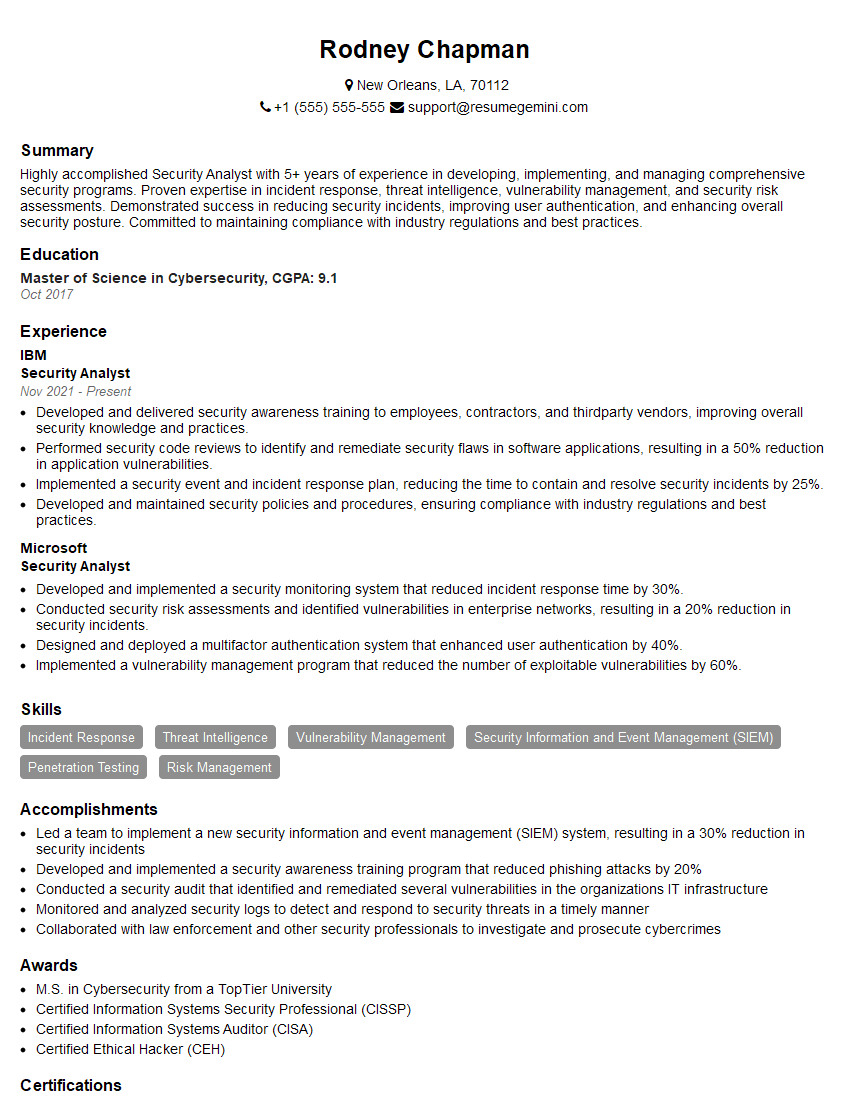
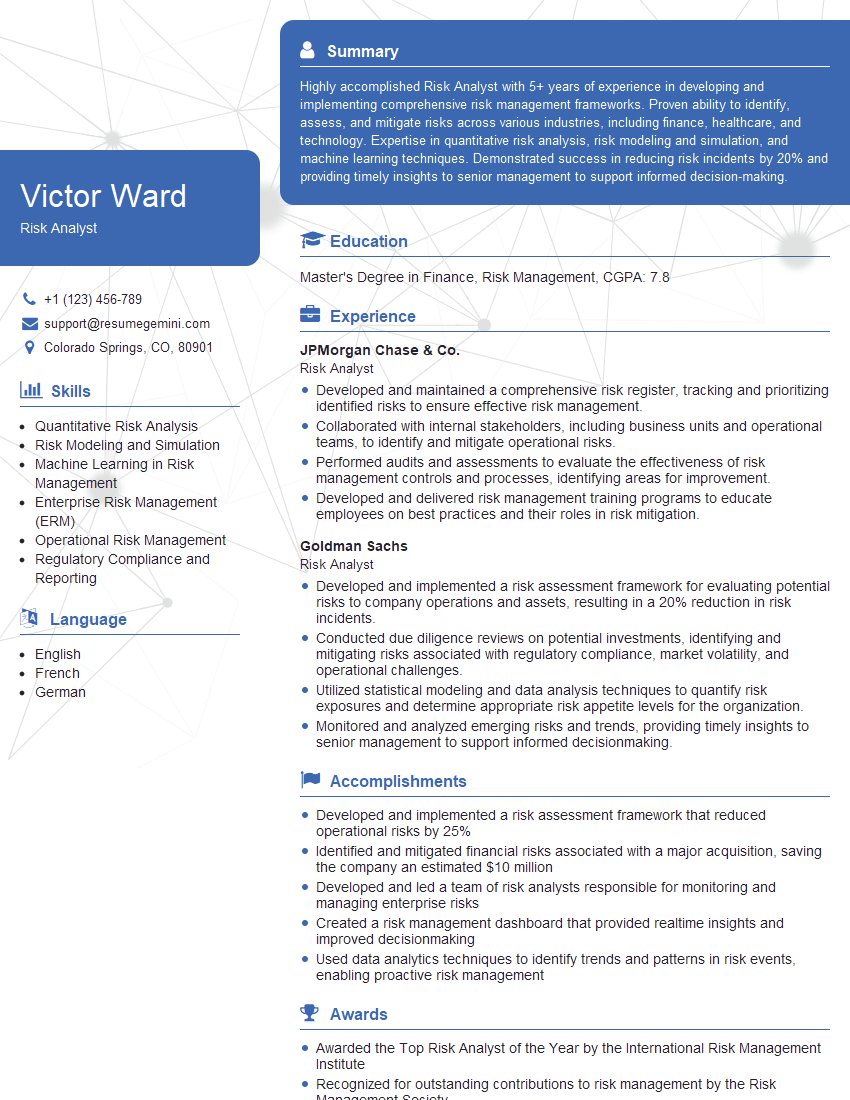
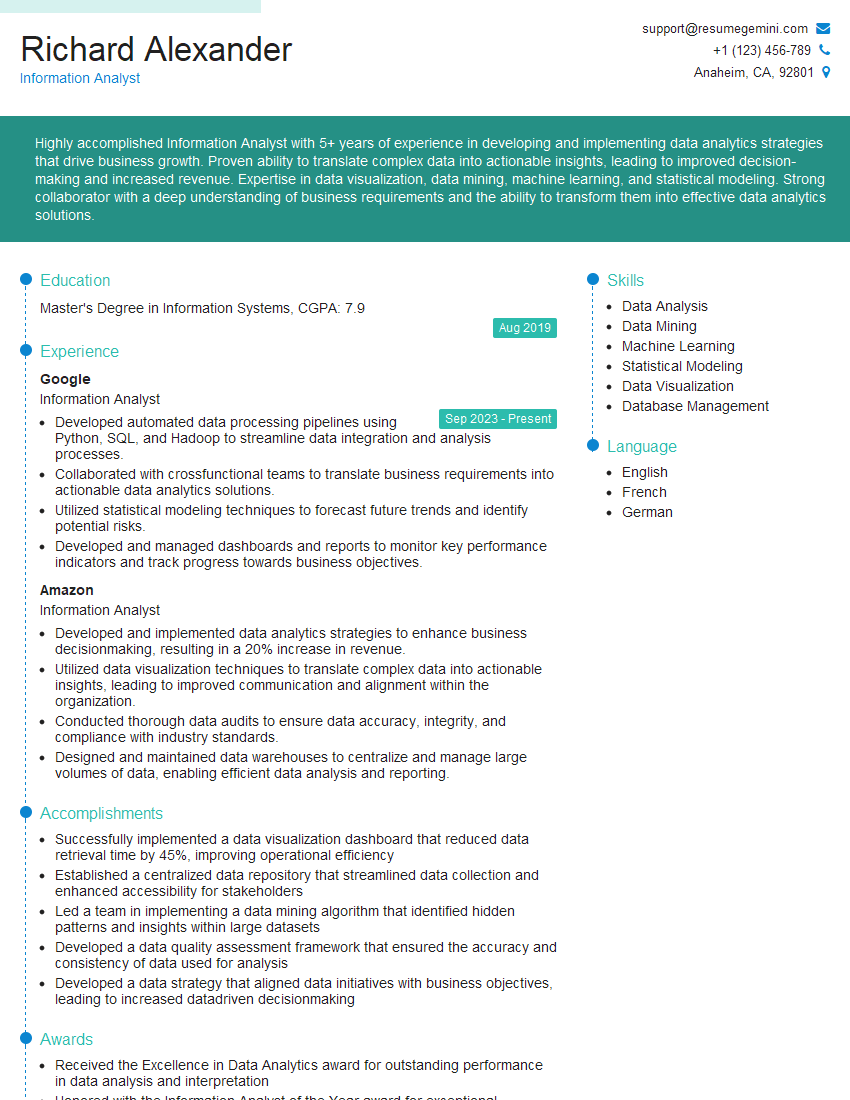
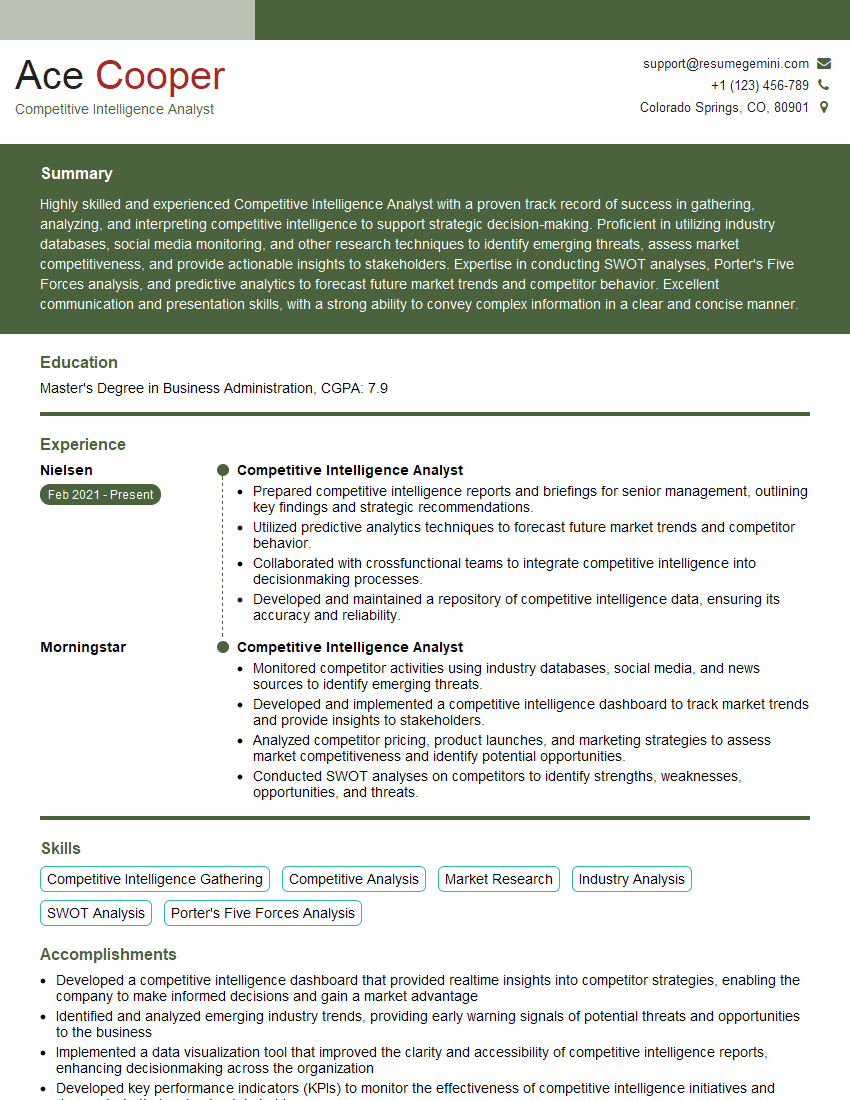
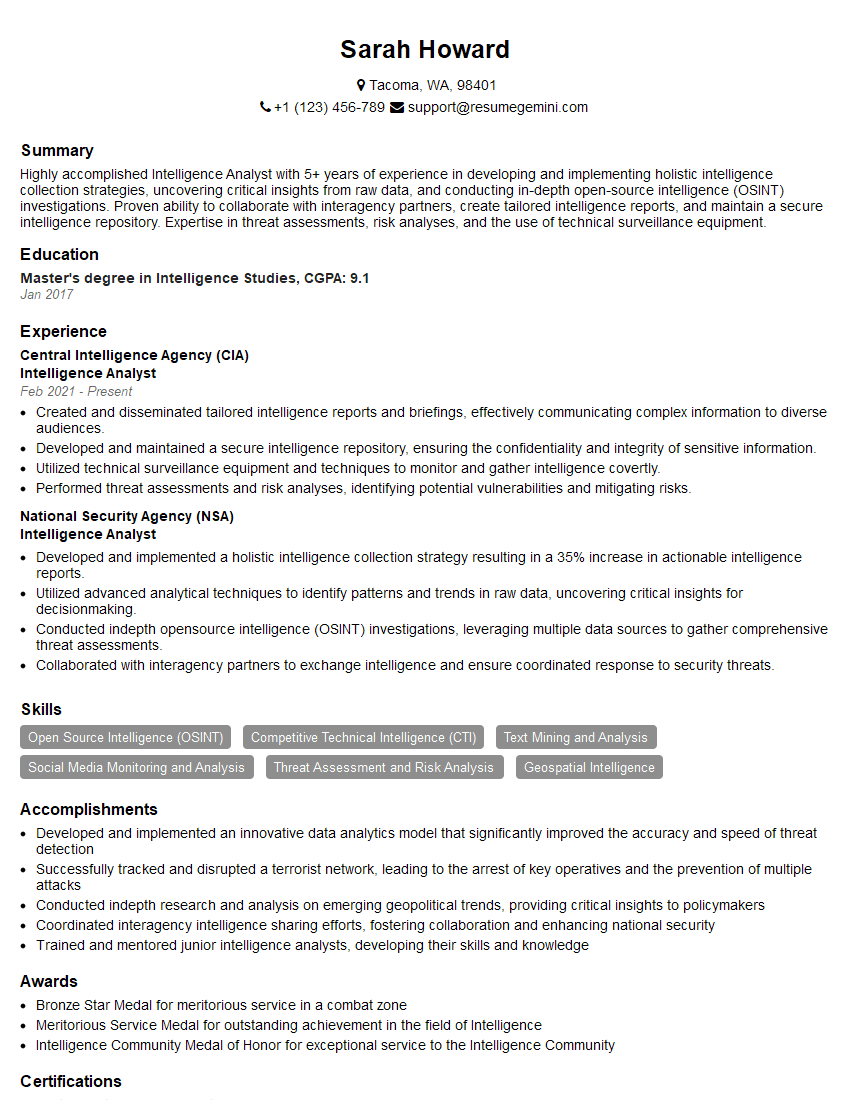
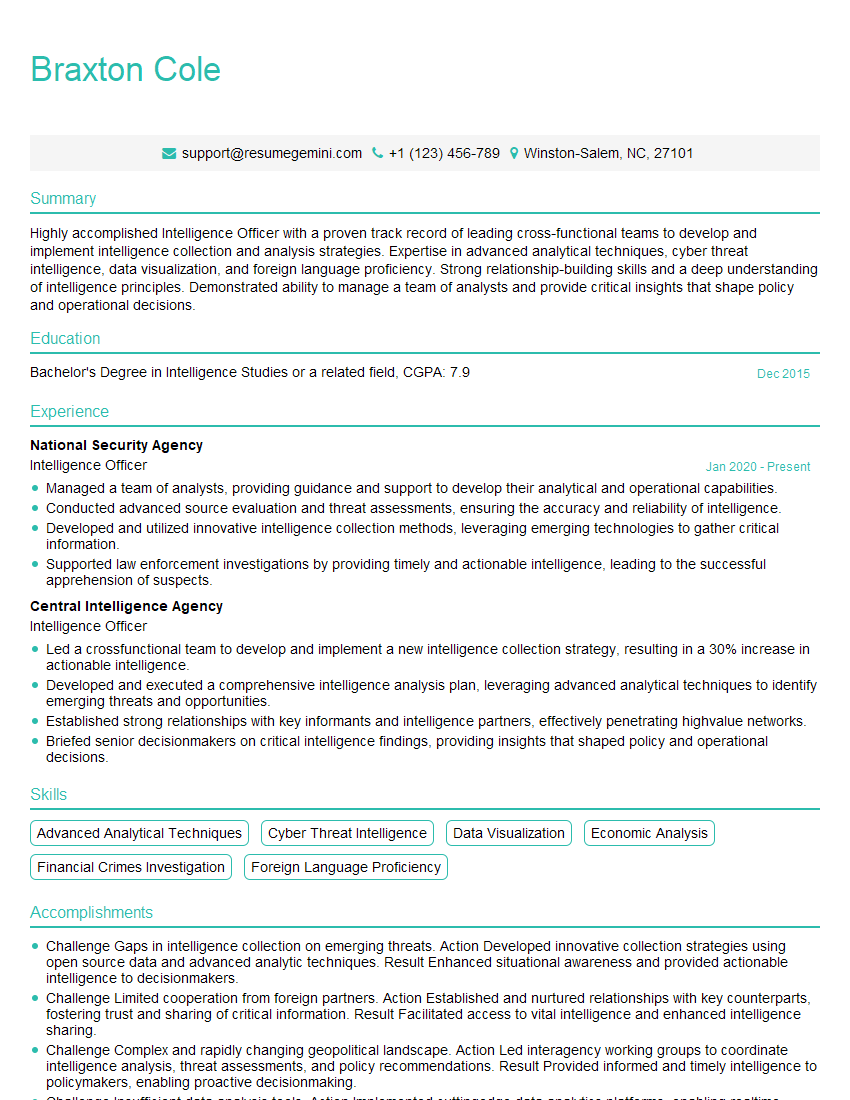
Mastering intelligence briefings significantly enhances your career prospects in the intelligence community and related fields, opening doors to challenging and rewarding roles. To maximize your job search success, focus on crafting an ATS-friendly resume that highlights your relevant skills and experience. ResumeGemini can be a valuable tool in this process, helping you create a professional and impactful resume that gets noticed. Examples of resumes tailored to Intelligence Briefings are available to guide you. Investing time in a well-structured resume is an investment in your future career.
Explore more articles
Users Rating of Our Blogs
Share Your Experience
We value your feedback! Please rate our content and share your thoughts (optional).
What Readers Say About Our Blog
Very informative content, great job.
good