Interviews are opportunities to demonstrate your expertise, and this guide is here to help you shine. Explore the essential Audience Measurement and Analysis interview questions that employers frequently ask, paired with strategies for crafting responses that set you apart from the competition.
Questions Asked in Audience Measurement and Analysis Interview
Q 1. Explain the difference between reach and frequency in audience measurement.
Reach and frequency are fundamental concepts in audience measurement, both crucial for understanding the impact of a marketing campaign. Reach refers to the total number of unique individuals exposed to your message at least once within a specific period. Think of it as the size of the audience you’ve actually reached. Frequency, on the other hand, measures the average number of times each individual within that reach was exposed to your message. It’s about the intensity of exposure.
Example: Imagine a radio advertisement aired 10 times during the day. If 1000 different listeners tuned in at least once, the reach is 1000. If, on average, each listener heard the ad twice, then the frequency is 2. A high reach indicates broad exposure, while a high frequency suggests a concentrated effort to reinforce the message.
Understanding both is crucial. High reach with low frequency might suggest a broad awareness campaign, whereas high frequency with lower reach might indicate a focused campaign targeting a specific segment.
Q 2. How do you measure the effectiveness of a marketing campaign using audience data?
Measuring campaign effectiveness using audience data involves analyzing various metrics, both before and after the campaign. Before the campaign, baseline metrics like website traffic and social media engagement help establish a benchmark. Post-campaign, we analyze changes in these metrics to assess the impact. Key indicators include:
- Website traffic: Did the campaign drive significant increases in website visits, particularly from target segments?
- Conversion rates: Did the campaign result in more leads, sales, or desired actions? We analyze conversion funnels to identify bottlenecks.
- Social media engagement: Did the campaign generate more likes, shares, comments, and followers on relevant platforms? This indicates audience resonance.
- Brand awareness and sentiment: Did the campaign improve brand perception and increase positive sentiment as reflected in social media monitoring and surveys?
- Customer acquisition cost (CAC): How much did it cost to acquire each new customer through this campaign? This measures efficiency.
By comparing these post-campaign metrics against the baseline, we can quantify the campaign’s success and identify areas for improvement in future campaigns.
Q 3. What are the key metrics you would track to assess the performance of a website or app?
Assessing website or app performance requires tracking several key metrics that fall broadly into the categories of user engagement, acquisition, and monetization (if applicable):
- User engagement: Metrics like session duration, pages per visit, bounce rate, time on page, and returning user rate reveal how users interact with the platform. A low bounce rate and high session duration, for example, signal strong engagement.
- Acquisition: Metrics like new user acquisition, sources of traffic (organic, paid, social), and conversion rates from different channels highlight how effectively the platform attracts users.
- Monetization (if applicable): For apps or websites with revenue models, key metrics would be revenue per user (ARPU), customer lifetime value (CLTV), conversion rates to paying customers, and average order value (AOV).
Comprehensive analysis of these metrics provides a holistic view of platform performance, identifying areas of strength and areas requiring optimization.
Q 4. Describe your experience with different audience segmentation techniques.
I have extensive experience with various audience segmentation techniques, using them to tailor marketing efforts and improve campaign effectiveness. Some common techniques include:
- Demographic segmentation: Dividing the audience based on age, gender, income, education, location, and family size. This provides a basic understanding of the audience’s characteristics.
- Geographic segmentation: Targeting audiences based on location, region, or even specific neighborhoods. This is particularly useful for location-based services or businesses with limited geographical reach.
- Psychographic segmentation: Segmenting based on personality traits, values, interests, lifestyle, and attitudes. This provides insight into the audience’s motivations and preferences.
- Behavioral segmentation: Grouping audiences based on their past actions, such as purchase history, website browsing behavior, and engagement with marketing messages. This is crucial for personalized recommendations and targeted advertising.
- Firmographic segmentation (for B2B): Segmenting businesses based on size, industry, revenue, employee count, and location. This helps tailor marketing campaigns to specific business types.
I often combine these techniques to create detailed audience personas, allowing for highly targeted and effective campaigns.
Q 5. How do you handle missing or incomplete data in audience measurement?
Missing or incomplete data is a common challenge in audience measurement. My approach involves a multi-pronged strategy:
- Data imputation: For numerical data, techniques like mean/median imputation or more sophisticated methods like k-Nearest Neighbors can be used to fill in missing values. The choice depends on the data’s characteristics and the desired level of accuracy.
- Data cleaning and validation: Before imputation, I thoroughly clean the data, identifying and correcting errors. This ensures the integrity of the data before any imputation is applied.
- Understanding the reason for missingness: Is the missing data missing completely at random (MCAR), missing at random (MAR), or missing not at random (MNAR)? The type of missingness influences the choice of imputation technique and how missing data is interpreted.
- Sensitivity analysis: I conduct sensitivity analyses to understand how different data imputation techniques affect the results and conclusions drawn from the data. This demonstrates robustness.
- Reporting limitations: If data is heavily incomplete and imputation may introduce significant bias, I will clearly report this limitation in my analysis, avoiding overconfident conclusions.
The goal is to minimize bias and provide the most accurate picture possible, always acknowledging the limitations imposed by incomplete data.
Q 6. What are some common challenges in audience measurement, and how have you overcome them?
Audience measurement faces several challenges. One is the increasing complexity of the digital landscape, with fragmented data sources and evolving technologies making it hard to get a complete view. Another challenge is data privacy concerns, limiting the availability of certain data points. Cross-device tracking and cookie deprecation are significant hurdles.
I address these challenges by:
- Employing a multi-source data strategy: Combining data from various sources (website analytics, social media platforms, CRM systems, etc.) to create a more comprehensive picture. This mitigates reliance on any single source.
- Utilizing privacy-preserving techniques: Employing anonymization and aggregation methods to protect user data while still allowing valuable insights.
- Staying updated on the latest technologies: Keeping abreast of developments in audience measurement methodologies and tools, adopting new techniques as they become available.
- Collaborating with experts: Working with other departments (e.g., IT, legal) to address technological and privacy challenges.
A proactive, adaptable approach is crucial for overcoming the challenges in audience measurement.
Q 7. Explain the concept of attribution modeling and its importance in audience measurement.
Attribution modeling is a crucial aspect of audience measurement. It’s the process of assigning credit for a conversion (e.g., a purchase) to different touchpoints in a customer’s journey. Instead of simply crediting the last click, it helps understand the contribution of all touchpoints – from initial exposure to the final conversion. This is important because understanding the contributions of various channels allows for better optimization of marketing spend and improved ROI.
Different attribution models exist, including:
- Last-click attribution: All credit goes to the last touchpoint before conversion (simplest, but often inaccurate).
- First-click attribution: All credit goes to the first touchpoint.
- Linear attribution: Credit is evenly distributed across all touchpoints.
- Time-decay attribution: More credit is given to touchpoints closer to the conversion.
- Position-based attribution: More credit is given to the first and last touchpoints.
- Algorithmic attribution: Uses machine learning to assign credit based on complex factors and data.
Choosing the right model depends on the specific business goals and the nature of the customer journey. A well-chosen model significantly improves the accuracy of insights and drives more effective marketing strategies.
Q 8. What tools and technologies are you familiar with for audience measurement and analysis?
My expertise in audience measurement and analysis spans a wide range of tools and technologies. I’m proficient in using web analytics platforms like Google Analytics, Adobe Analytics, and Amplitude, which provide detailed insights into website traffic, user behavior, and conversion rates. Beyond web analytics, I have experience with social media analytics tools such as Sprout Social and Brandwatch, allowing me to understand audience engagement across various platforms. Furthermore, I’m comfortable working with CRM systems (like Salesforce) to integrate audience data with customer relationship management efforts. For more advanced analysis and predictive modeling, I utilize programming languages such as Python and R, along with statistical software like SPSS. Finally, I leverage data visualization tools like Tableau and Power BI to effectively communicate findings to stakeholders.
- Google Analytics: Used for tracking website traffic, user behavior, and conversions.
- Adobe Analytics: A robust enterprise-level analytics platform offering advanced segmentation and reporting capabilities.
- Amplitude: Focuses on user behavior and product analytics, helpful for understanding user journeys and feature usage.
- Python & R: Programming languages used for data cleaning, analysis, and statistical modeling.
- Tableau & Power BI: Data visualization tools for creating interactive dashboards and reports.
Q 9. How do you interpret and present audience data to stakeholders?
Interpreting and presenting audience data effectively involves understanding the stakeholders’ needs and tailoring the presentation accordingly. I begin by identifying key performance indicators (KPIs) relevant to their objectives, whether it’s website traffic, engagement, or conversion rates. Then, I create clear and concise visualizations, avoiding overwhelming the audience with too much raw data. I use a combination of charts, graphs, and tables to highlight key trends and patterns. For example, I might use a line chart to show website traffic over time, a bar chart to compare engagement across different social media platforms, or a heatmap to illustrate user clicks on a webpage. I always back up the visuals with clear explanations, highlighting significant findings and their implications for the business. Finally, I conclude with actionable recommendations based on the data analysis.
For instance, if I find that a particular social media campaign underperformed, I wouldn’t just present the low engagement numbers. I would analyze the reasons (e.g., poor targeting, ineffective creative) and propose solutions (e.g., refining the target audience, improving the ad copy) to improve future campaigns.
Q 10. What are some best practices for data visualization in audience measurement?
Best practices for data visualization in audience measurement prioritize clarity, accuracy, and impact. The goal is to communicate complex information effectively and efficiently. Here are some key principles:
- Choose the right chart type: Select the chart that best represents the data; a pie chart for proportions, a bar chart for comparisons, a line chart for trends, etc.
- Keep it simple: Avoid clutter by using clear labels, consistent formatting, and minimizing unnecessary details.
- Use color effectively: Choose colors that are visually appealing and easy to distinguish; avoid overly saturated or distracting colors.
- Highlight key findings: Use annotations, callouts, or other visual cues to draw attention to important insights.
- Consider your audience: Tailor the visualization to the knowledge and understanding of your stakeholders.
- Interactive dashboards: Utilize interactive elements to allow stakeholders to explore the data at their own pace and focus on the aspects that interest them most.
For example, instead of presenting a massive spreadsheet of website traffic data, a well-designed interactive dashboard allows stakeholders to filter data by date range, geographic location, or user segment, allowing them to focus on specific areas of interest.
Q 11. Describe your experience with A/B testing and its role in optimizing audience engagement.
A/B testing is a crucial component of audience engagement optimization. It involves creating two or more versions of a piece of content (e.g., website headline, email subject line, social media ad) and comparing their performance. By randomly assigning users to different versions, we can determine which version achieves better results—higher click-through rates, conversion rates, or engagement metrics.
For example, I might A/B test two different headlines for a blog post to see which one attracts more readers. Or, I might test different call-to-action buttons on a landing page to see which one leads to more conversions. The results from A/B testing provide data-driven insights to improve the effectiveness of our audience engagement initiatives. I typically use platforms like Optimizely or VWO (Visual Website Optimizer) to conduct A/B testing and analyze the results. The process involves careful planning, including defining hypotheses, establishing KPIs, selecting the right sample size, and analyzing the data statistically to determine significance.
Q 12. How do you identify and analyze audience trends and patterns?
Identifying and analyzing audience trends and patterns relies on a combination of techniques. I begin by segmenting the audience into meaningful groups based on demographics, behavior, or interests. This allows me to understand the nuances within the overall audience. Then, I use various analytical methods, including:
- Time series analysis: Examining data over time to identify trends and seasonality.
- Cohort analysis: Comparing the behavior of different user groups over time.
- Regression analysis: Identifying relationships between different variables to understand the drivers of audience behavior.
- Clustering and segmentation: Grouping users with similar characteristics to identify distinct audience segments.
For instance, using cohort analysis, I might identify that users who signed up in the last quarter have a significantly higher engagement rate than users from previous quarters, which could indicate a change in marketing effectiveness or a shift in user behavior that requires further investigation.
Q 13. How do you measure the ROI of audience engagement initiatives?
Measuring the ROI of audience engagement initiatives requires a clear definition of objectives and the identification of relevant KPIs. It’s not just about vanity metrics like likes or followers; it’s about tying audience engagement to business outcomes. For example, the ROI of a social media campaign might be measured by the increase in sales or leads generated as a direct result of the campaign. Or, the ROI of a content marketing initiative might be measured by the increase in website traffic, lead generation, or brand awareness. This requires establishing a baseline before the initiative, tracking relevant metrics during and after its execution, and calculating the return on investment using appropriate formulas. A simple ROI calculation can be expressed as: (Revenue Generated - Cost of Initiative) / Cost of Initiative. However, it is crucial to consider both direct and indirect contributions and to accurately attribute the effects of different initiatives to avoid oversimplification.
Q 14. Explain the difference between quantitative and qualitative audience data.
Quantitative and qualitative audience data represent different facets of understanding your audience. Quantitative data is numerical and focuses on measurable aspects, such as website traffic, conversion rates, and engagement metrics. Think of it as the ‘what’ – what are the numbers telling us? This type of data provides insights into the size, reach, and effectiveness of our audience engagement efforts. It’s typically gathered through analytics platforms and surveys with closed-ended questions.
Qualitative data, on the other hand, focuses on understanding the ‘why’ behind audience behavior. This involves exploring attitudes, opinions, motivations, and experiences. This type of data is rich in context and provides deeper insights into user needs and preferences. Examples include user interviews, focus groups, and open-ended survey questions. Combining both quantitative and qualitative data provides a complete understanding of audience behavior, creating a holistic picture that informs more effective strategy and execution.
For example, you may find from quantitative data that a certain blog post has a high bounce rate. Qualitative data, perhaps via user interviews, may reveal that users found the post difficult to understand or irrelevant to their needs, explaining the high bounce rate. This dual-approach is critical for creating effective strategies.
Q 15. How do you use audience data to inform strategic decision-making?
Audience data is the cornerstone of effective strategic decision-making. It allows us to move beyond guesswork and make data-driven choices that optimize our reach and impact. I utilize audience data to understand who our current audience is, what their needs and preferences are, and how we can better engage them. This involves analyzing demographics, psychographics, online behavior, and engagement levels across various platforms.
For instance, if we see a significant drop in engagement from a specific demographic segment on our social media channels, we can investigate the reasons behind this decline – is it the content, the timing, or something else entirely? This insight helps us adapt our content strategy, refine our targeting, and reallocate resources for better results. Similarly, identifying high-value audience segments – those most likely to convert or become brand advocates – allows us to tailor messaging and experiences to maximize their lifetime value.
In a recent project for a major retailer, we used audience data to identify a key segment of younger consumers who preferred interactive shopping experiences. This led to the development of a new augmented reality app, resulting in a significant increase in sales and brand engagement among this target group.
Career Expert Tips:
- Ace those interviews! Prepare effectively by reviewing the Top 50 Most Common Interview Questions on ResumeGemini.
- Navigate your job search with confidence! Explore a wide range of Career Tips on ResumeGemini. Learn about common challenges and recommendations to overcome them.
- Craft the perfect resume! Master the Art of Resume Writing with ResumeGemini’s guide. Showcase your unique qualifications and achievements effectively.
- Don’t miss out on holiday savings! Build your dream resume with ResumeGemini’s ATS optimized templates.
Q 16. What are the ethical considerations in collecting and using audience data?
Ethical considerations in collecting and using audience data are paramount. Transparency, consent, and data privacy are central to responsible audience measurement. We must be upfront about how data is being collected, what it’s used for, and how it’s protected. Obtaining explicit consent before collecting any personally identifiable information is crucial. We must adhere to all relevant privacy regulations such as GDPR and CCPA, ensuring data is anonymized or pseudonymized whenever possible.
It’s also vital to avoid discriminatory practices. Audience segmentation should never lead to exclusionary or unfair treatment of particular groups. We should always strive to ensure our data collection and analysis methods are unbiased and equitable.
For example, we might employ differential privacy techniques to protect individual user data while still allowing for meaningful aggregate analysis. This involves adding carefully calibrated noise to the data to prevent identification of specific individuals, while still preserving valuable insights for strategic decision-making.
Q 17. Describe your experience with different data analysis techniques (e.g., regression, clustering).
My experience encompasses a broad range of data analysis techniques. Regression analysis is frequently used to model the relationship between different variables, such as the impact of advertising spend on website traffic. For example, I’ve used linear regression to predict the number of website visitors based on the amount spent on specific advertising campaigns.
Clustering techniques, such as k-means clustering, are valuable for segmenting audiences based on shared characteristics. I’ve applied this to identify distinct groups of customers with similar purchasing behaviors or media consumption habits. This allows us to tailor our messaging and offers to each segment, improving overall effectiveness.
Beyond these, I am proficient in other techniques including time series analysis for trend forecasting, factor analysis for data reduction, and various forms of statistical testing to validate hypotheses. I am also experienced in using data visualization tools to communicate findings clearly and concisely to both technical and non-technical audiences.
Q 18. How familiar are you with different data sources for audience measurement (e.g., website analytics, social media, CRM)?
I’m highly familiar with a variety of data sources for audience measurement. Website analytics platforms like Google Analytics provide invaluable insights into website traffic, user behavior, and conversion rates. Social media platforms offer data on audience demographics, engagement, and sentiment. Customer Relationship Management (CRM) systems hold rich data on customer interactions, purchase history, and preferences.
In addition to these, I’m experienced with using data from survey research, panel data, and third-party data providers to enrich our understanding of the audience. The integration of data from multiple sources allows for a more holistic and comprehensive view of the audience, avoiding the limitations of relying on a single source alone.
For instance, combining website analytics data with CRM data allows for a more complete picture of customer journeys, revealing which website activities correlate with higher conversion rates. This integration leads to more effective targeting and personalized marketing.
Q 19. How do you ensure the accuracy and reliability of audience data?
Ensuring the accuracy and reliability of audience data is crucial. This involves several key steps. First, we rigorously evaluate the quality of our data sources, considering factors like sampling methods, data collection techniques, and potential biases. We look for inconsistencies and outliers, investigating their root causes and making necessary adjustments.
Data cleaning is another critical step, involving removing duplicates, handling missing values, and correcting errors. Data validation involves comparing data from different sources and checking for consistency. We also employ various statistical methods to identify and address any anomalies or biases.
For example, we might use cross-validation techniques to ensure our models are robust and generalize well to new data. We also regularly audit our data collection and processing procedures to identify and correct any potential sources of error. Finally, we regularly compare our findings to industry benchmarks and other relevant metrics to gauge the overall accuracy and reliability of our data.
Q 20. Explain your process for defining key performance indicators (KPIs) related to audience measurement.
Defining Key Performance Indicators (KPIs) for audience measurement requires a clear understanding of business objectives. KPIs should be specific, measurable, achievable, relevant, and time-bound (SMART). They should directly reflect the goals we are trying to achieve. For example, if our goal is to increase brand awareness, relevant KPIs might include reach, impressions, and engagement rates on social media.
If our primary goal is driving conversions, KPIs might include website traffic, conversion rates, and customer acquisition cost. If we’re focused on customer retention, relevant KPIs could include customer lifetime value, churn rate, and customer satisfaction scores. Choosing the right KPIs is essential for tracking progress, identifying areas for improvement, and demonstrating the impact of our efforts.
In a recent project, we worked with a non-profit to define KPIs for their fundraising campaign. We agreed on website traffic from social media campaigns, unique visitors converting to donors, and the average donation value. Tracking these allowed us to optimize the campaign and maximize donations.
Q 21. How do you stay up-to-date with the latest trends and best practices in audience measurement?
Staying current in the dynamic field of audience measurement requires continuous learning. I actively participate in industry conferences and webinars, attending workshops and presentations on the latest tools and techniques. I regularly read industry publications, follow influential thought leaders, and participate in online communities focused on audience measurement and analytics.
I also dedicate time to exploring new technologies and data sources, always seeking ways to improve our methods and enhance the accuracy of our insights. This includes experimenting with new analytics tools, exploring innovative data visualization techniques, and mastering new programming languages relevant to data analysis.
For example, I recently completed a course on advanced machine learning techniques applied to audience segmentation, which has significantly enhanced my ability to identify and target high-value audience segments with greater precision.
Q 22. Describe your experience with using data to predict future audience behavior.
Predicting future audience behavior involves leveraging historical data and applying statistical modeling techniques. Think of it like predicting the weather – we don’t have a crystal ball, but we can analyze past weather patterns (temperature, pressure, wind speed) to create models that forecast future conditions with a certain degree of accuracy. Similarly, we analyze past audience engagement data, such as website visits, content consumption, social media interactions, and purchase history, to identify trends and patterns.
For instance, if we see a consistent increase in website traffic during specific holiday seasons, we can predict a similar surge in the future and adjust our marketing strategies accordingly. This prediction isn’t just based on intuition; it’s backed by data-driven models, such as time series analysis or machine learning algorithms (like regression or classification models). These models allow us to not only predict the magnitude of future behavior but also identify potential influencing factors. For example, we might find that social media campaigns are particularly effective during certain periods, enabling us to optimize campaign scheduling for maximum impact.
The accuracy of these predictions depends on data quality, model selection, and the complexity of the underlying patterns. Continuous monitoring and refinement of models based on new data are crucial for maintaining accuracy.
Q 23. How would you approach measuring the effectiveness of a new social media campaign?
Measuring the effectiveness of a social media campaign requires a multi-faceted approach. It goes beyond simply looking at the number of likes or shares. We need to define clear, measurable Key Performance Indicators (KPIs) aligned with the campaign objectives. These KPIs might include:
- Reach: How many unique users saw the campaign?
- Engagement: Likes, shares, comments, and other interactions.
- Website traffic: Did the campaign drive traffic to the company website?
- Conversions: Did the campaign lead to sales, sign-ups, or other desired actions?
- Brand awareness: Did the campaign increase brand mentions or sentiment on social media?
To measure these, we leverage social media analytics platforms (like Facebook Insights, Twitter Analytics) and potentially integrate web analytics (Google Analytics) to track website referrals. A/B testing different creative assets (images, videos, copy) allows us to optimize campaign performance. By comparing the results of different campaign variations against a control group, we can identify which elements resonate most with the target audience. Finally, post-campaign analysis helps identify areas for improvement and informs future campaigns.
Q 24. How do you identify and target specific audience segments for a marketing campaign?
Identifying and targeting specific audience segments involves using a combination of data and strategic thinking. We begin by defining our target audience based on demographics (age, gender, location), psychographics (interests, values, lifestyle), and behavioral data (website activity, purchase history). This allows for segmentation which is essential for effective marketing. Imagine trying to sell winter coats to people in a tropical climate—it’s a waste of resources.
Data sources for segmentation include CRM systems, website analytics, social media data, and third-party data providers. For example, we might use website analytics to segment users based on their browsing behavior or purchase history. Social media data helps identify interests and preferences. We can use these insights to create detailed buyer personas. Then, we use these personas to create targeted advertising campaigns on various platforms, customizing messaging and creative assets to resonate with each segment. For instance, we might tailor our ads on Facebook to reach specific age groups and interests, ensuring that our message is relevant and engaging for each audience segment.
Techniques like machine learning can enhance this process by automatically identifying patterns and grouping users based on similarities in their behavior.
Q 25. Describe a time you had to analyze a large dataset to identify key insights.
In a previous role, I analyzed a large dataset of customer interactions from various touchpoints (website, app, call center) to understand customer churn. The dataset included millions of rows and dozens of variables, including demographics, purchase history, customer service interactions, and app usage patterns. My approach involved several steps:
- Data cleaning and preprocessing: Handling missing values, outliers, and inconsistencies in the data.
- Exploratory data analysis (EDA): Using visualizations (histograms, scatter plots, etc.) to identify patterns and relationships between variables. For example, a scatter plot might reveal a correlation between frequency of app usage and churn rate.
- Feature engineering: Creating new variables from existing ones to improve model performance. For instance, combining purchase frequency and recency into a single metric.
- Model building: Using machine learning algorithms (logistic regression, random forest, gradient boosting) to predict the likelihood of churn. I used a method called cross-validation to validate the results.
- Model interpretation: Identifying the most important predictors of churn (e.g., low app usage, recent negative customer service interaction) to inform strategies to reduce churn.
The insights revealed key areas for improvement, such as enhancing the in-app experience and improving customer service responsiveness. This resulted in a significant reduction in customer churn.
Q 26. How do you ensure the privacy and security of audience data?
Ensuring the privacy and security of audience data is paramount. We adhere strictly to relevant data privacy regulations such as GDPR and CCPA. This includes obtaining explicit consent for data collection, anonymizing data whenever possible, and implementing robust security measures to protect against unauthorized access. This isn’t simply a checklist; it’s an ongoing commitment.
Our practices involve:
- Data encryption: Protecting data both at rest and in transit.
- Access control: Restricting access to data based on roles and responsibilities.
- Regular security audits: Identifying and addressing vulnerabilities.
- Data minimization: Collecting only the necessary data.
- Transparency: Being clear with users about how their data is collected and used.
We treat data security as a continuous improvement process, staying updated on emerging threats and adapting our security measures accordingly. We prioritize ethical considerations and strive to build trust with our users by demonstrating a commitment to data privacy.
Q 27. What is your preferred method for reporting and communicating audience insights?
My preferred method for reporting and communicating audience insights involves a combination of clear, concise visualizations and a narrative that contextualizes the findings. I avoid jargon and technical details that might confuse the audience. Instead, I focus on communicating the key takeaways and their implications for business decisions. A picture is worth a thousand words, so data visualization is critical.
For example, I might use interactive dashboards to present key metrics and allow stakeholders to explore the data. I also create concise presentations with clear visuals – charts, graphs, and maps – to illustrate key trends and patterns. In addition to visual representations, I provide a written summary that explains the findings in plain language, highlighting the implications and recommendations for action. The goal is to make the data accessible and actionable for everyone, regardless of their technical expertise. I always emphasize the ‘so what?’ – what do these insights mean for the business, and what actions should be taken as a result?
Q 28. How do you handle conflicting data sources or interpretations?
Handling conflicting data sources or interpretations requires a systematic approach. The first step is to investigate the discrepancies thoroughly. This involves verifying the data sources’ reliability and accuracy. We check data collection methods, sampling techniques, and potential biases. Are there errors in data processing? Are we using the right metrics for comparison?
Often, the conflict arises from differing methodologies or perspectives. In such cases, I’ll try to reconcile the differences by understanding the underlying assumptions and limitations of each data source. Sometimes, a deeper dive into the data reveals a nuanced truth, where both sources offer partial but valid perspectives. Statistical techniques, like hypothesis testing, can help determine if differences are statistically significant or simply due to random variation. If reconciliation is not possible, I’ll transparently document the discrepancies and explain the limitations of each interpretation, presenting all relevant information and suggesting further investigation where necessary. The ultimate goal is to reach a reasoned conclusion based on the available evidence, acknowledging the uncertainty when appropriate.
Key Topics to Learn for Audience Measurement and Analysis Interview
- Audience Segmentation: Understanding different audience segments (demographic, psychographic, behavioral) and the methods used to identify and analyze them. Practical application: Developing targeted marketing campaigns based on audience insights.
- Data Collection Methods: Familiarize yourself with various data collection techniques such as surveys, website analytics (Google Analytics, Adobe Analytics), social media listening, and panel data. Practical application: Choosing the appropriate data collection method for a specific research question.
- Quantitative & Qualitative Analysis: Mastering the interpretation of quantitative data (e.g., website traffic, conversion rates) and qualitative data (e.g., open-ended survey responses, social media sentiment). Practical application: Combining quantitative and qualitative data to gain a holistic understanding of the audience.
- Data Visualization & Reporting: Developing clear and concise visualizations (charts, graphs, dashboards) to effectively communicate audience insights to stakeholders. Practical application: Creating compelling presentations that showcase key findings and recommendations.
- Attribution Modeling: Understanding how to assign credit for conversions across different marketing channels. Practical application: Optimizing marketing spend based on attribution analysis.
- Statistical Analysis Techniques: A basic understanding of statistical concepts like significance testing, correlation, and regression analysis is beneficial. Practical application: Using statistical methods to draw meaningful conclusions from data.
- Audience Measurement Tools & Technologies: Become familiar with popular audience measurement platforms and their functionalities. Practical application: Selecting and utilizing the right tools for specific analytical needs.
Next Steps
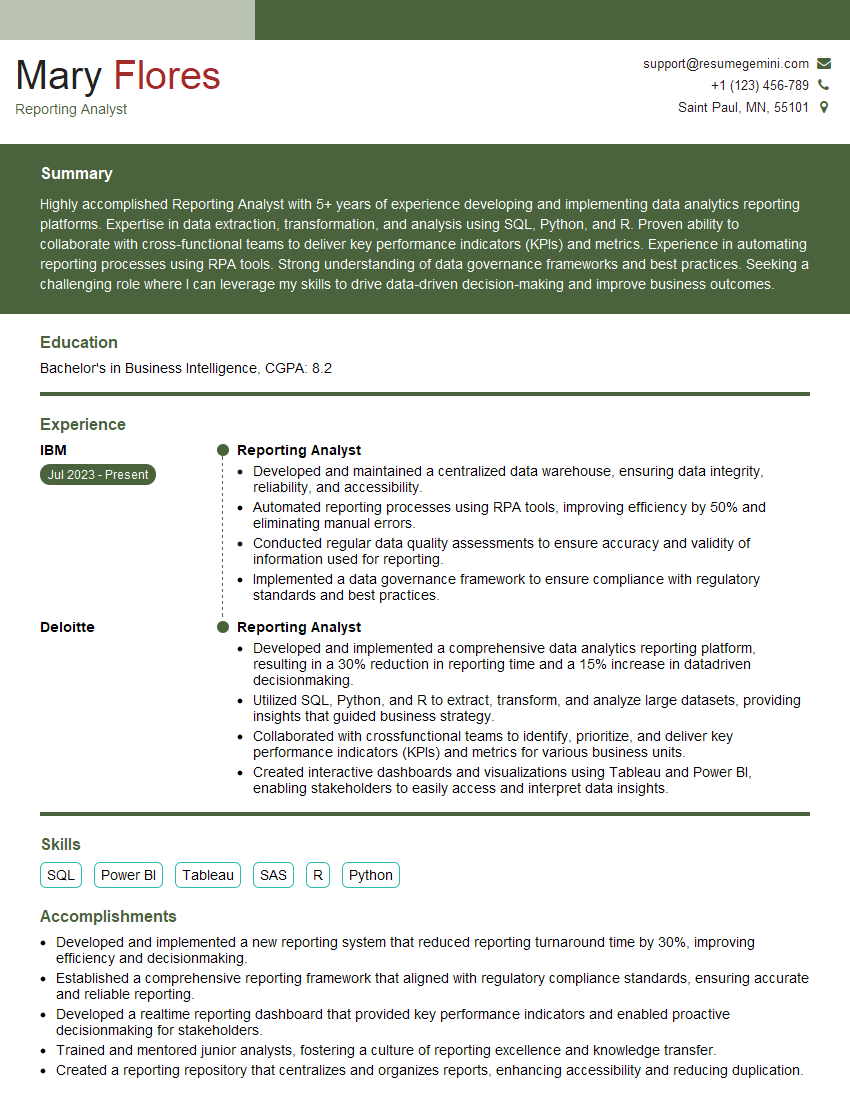
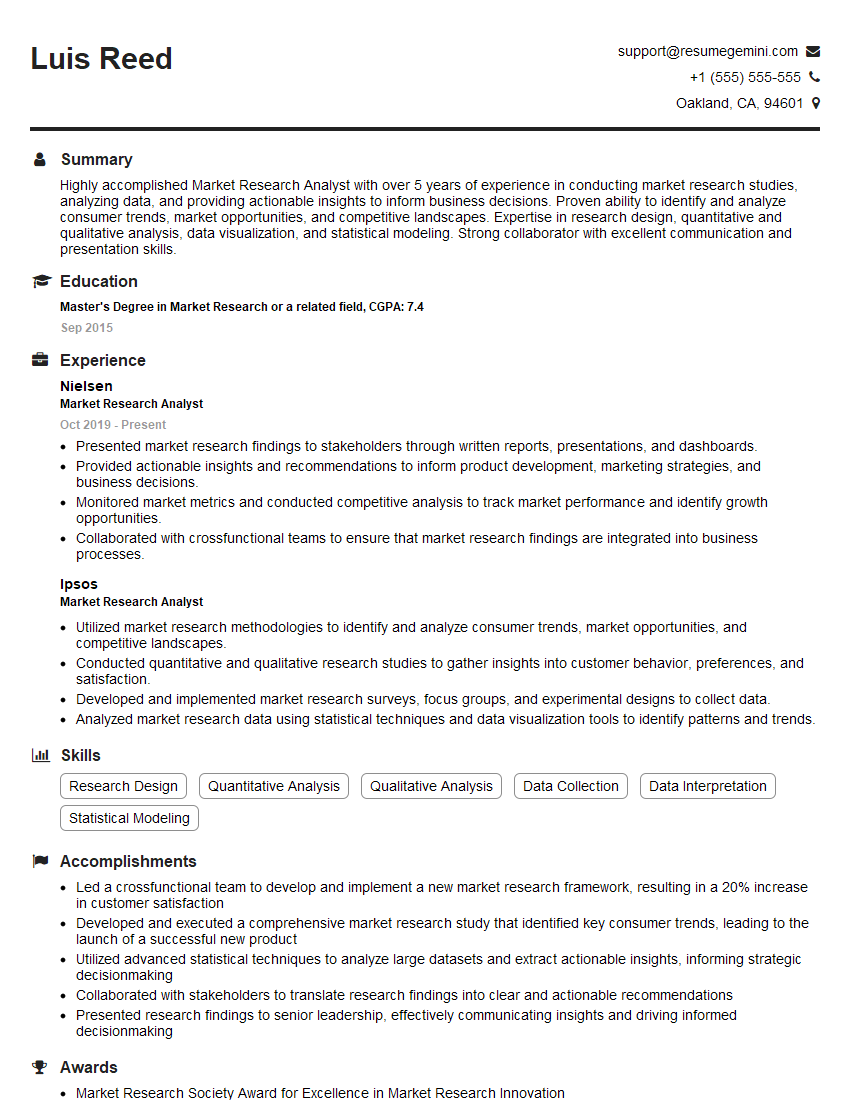
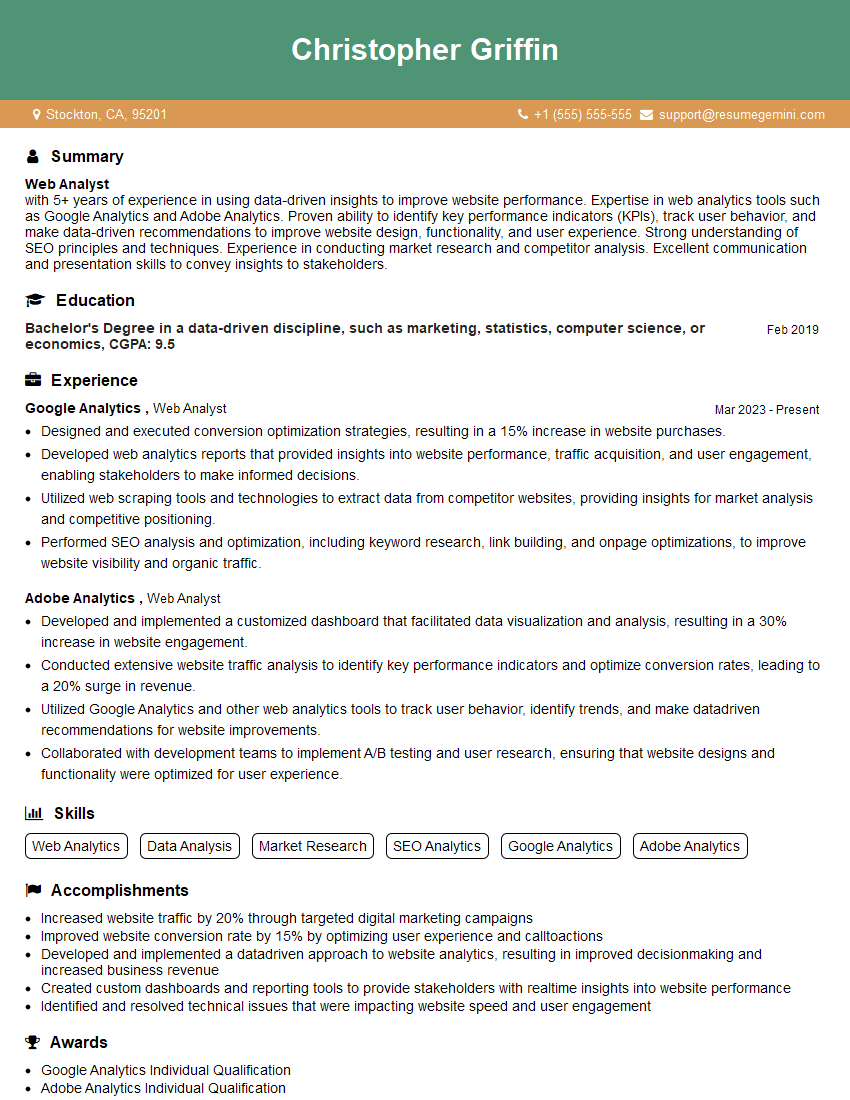
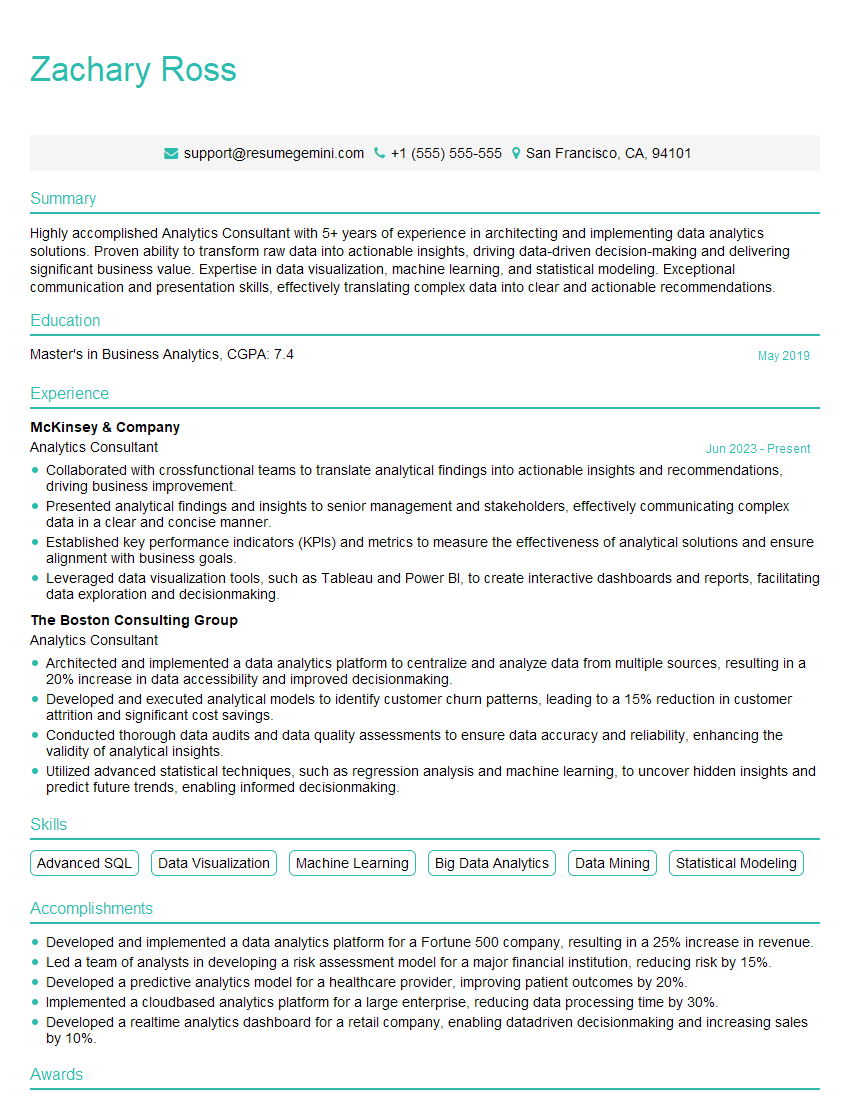
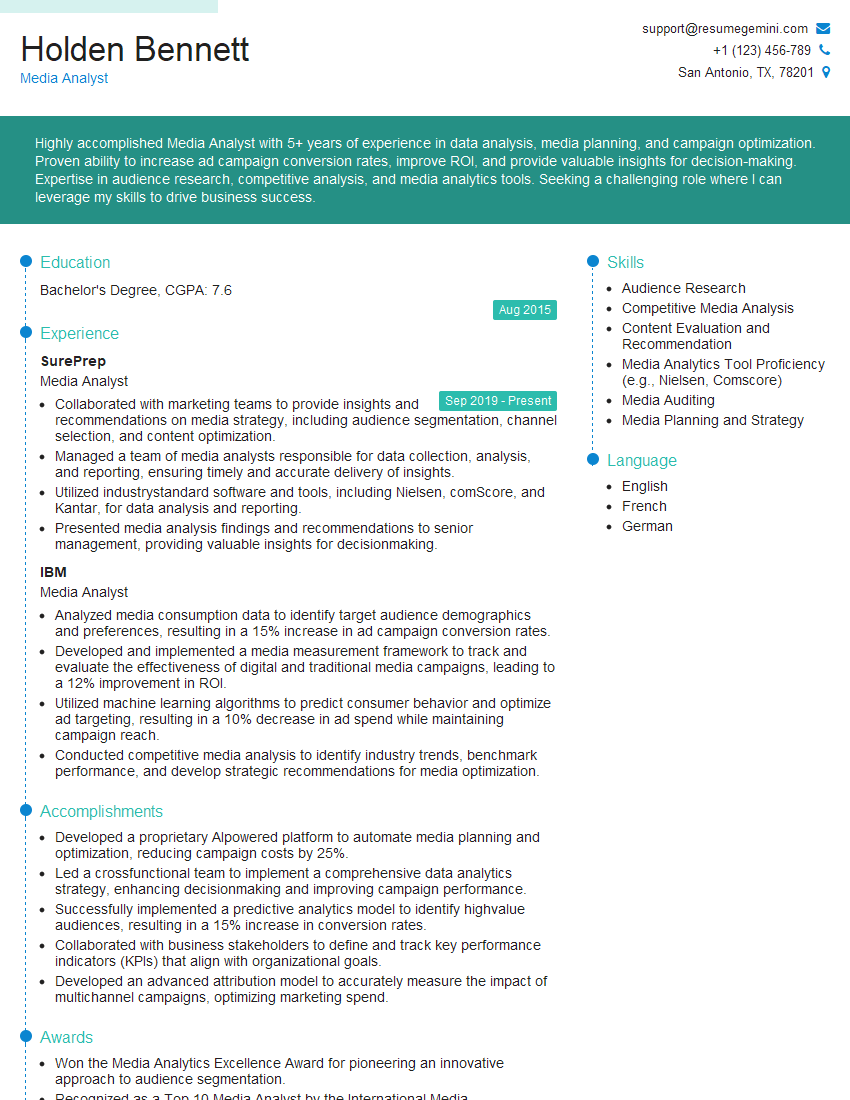
Mastering Audience Measurement and Analysis is crucial for career advancement in marketing, advertising, and data science. A strong understanding of audience behavior and data analysis significantly enhances your ability to drive strategic decision-making and improve business outcomes. To maximize your job prospects, focus on crafting an ATS-friendly resume that clearly highlights your skills and experience. We highly recommend using ResumeGemini, a trusted resource for building professional and effective resumes. Examples of resumes tailored to Audience Measurement and Analysis are available to help guide you.
Explore more articles
Users Rating of Our Blogs
Share Your Experience
We value your feedback! Please rate our content and share your thoughts (optional).
What Readers Say About Our Blog
Very informative content, great job.
good