Unlock your full potential by mastering the most common Chick Hatching and Monitoring interview questions. This blog offers a deep dive into the critical topics, ensuring you’re not only prepared to answer but to excel. With these insights, you’ll approach your interview with clarity and confidence.
Questions Asked in Chick Hatching and Monitoring Interview
Q 1. Explain the optimal temperature and humidity ranges for chick incubation.
Maintaining the correct temperature and humidity is crucial for successful chick incubation. Think of it like creating a perfect miniature climate inside the incubator, mimicking the hen’s natural warmth and moisture.
The ideal temperature range is generally between 99.5°F and 100.5°F (37.5°C and 38°C). Fluctuations outside this range can significantly impact embryonic development. For example, temperatures that are too low can slow or halt development, leading to weak or dead chicks. Conversely, temperatures that are too high can cause embryonic death.
Humidity should be maintained between 45% and 55%. Lower humidity can lead to excessive water loss from the eggs, while higher humidity can increase the risk of bacterial and fungal growth. Regularly monitoring and adjusting both temperature and humidity is essential using a reliable thermometer and hygrometer.
Q 2. Describe the process of egg candling and what you look for.
Egg candling is a simple yet powerful technique used to assess the internal development of the egg. It involves holding a strong light source (a candler) behind the egg to illuminate the interior.
What we look for during candling changes over the incubation period. Early on (around days 3-7), you’re primarily looking for a visible air cell (a small dark area at the larger end of the egg) and a faintly visible vascular network of blood vessels which grows over time. Later in incubation (around day 10-18), we look for a strong, well-defined vascular system that fills most of the egg. The embryo itself becomes visible as a dark mass near the yolk. By day 18, the egg should be mostly opaque and filled with the chick, and the air cell is larger, indicating a healthy chick.
Candling helps identify infertile eggs (lacking blood vessels), eggs with dead embryos (no blood vessel development or clear discoloration), and eggs with developmental abnormalities.
Q 3. What are the signs of a healthy developing chick embryo?
A healthy developing chick embryo shows several key indicators during candling and throughout the incubation period.
- Strong vascular network: A well-defined and extensive network of blood vessels indicates proper embryonic development and nutrient absorption.
- Active movement: In later stages of incubation, careful observation (without disturbing the egg) can reveal movement of the chick.
- Uniform coloration: The egg should appear relatively uniformly opaque (except for the air cell) as the chick fills the space.
- Consistent air cell growth: The air cell gradually increases in size as the chick develops and consumes the yolk.
Observing a large, dark, consistently growing area within the egg without any signs of bleeding or unusual color changes strongly suggest a healthy developing embryo. However, excessive movement or dark spots can be indicative of problems.
Q 4. How do you identify and address common incubation problems (e.g., chilling, overheating)?
Incubation problems, like chilling and overheating, can significantly affect hatch rates. Prompt identification and correction are key.
Chilling: If the incubator temperature drops below the ideal range, embryonic development slows or stops. Signs include slower than expected development during candling or, in severe cases, embryonic death. To address this, check the incubator’s thermostat and heating element to ensure proper functioning. Add more insulation if needed and possibly a second heat source, only ensuring a gradual temperature increase to avoid shocking the eggs.
Overheating: Temperatures exceeding the ideal range cause embryonic death. Signs include rapid development that’s still not successful, sticky eggs, or discoloration within the egg. This requires immediate action: reduce the incubator temperature, check the thermostat for malfunctions, increase ventilation to prevent overheating. A small fan can often help ensure proper airflow within the incubator. If the issue persists, consider replacing the heating element or seeking professional assistance.
Other problems such as improper humidity levels (leading to dehydration or bacterial growth) require separate adjustments – ensuring accurate moisture levels are crucial for successful hatching.
Q 5. What are the different types of incubators and their advantages/disadvantages?
Several incubator types are available, each with its own advantages and disadvantages:
- Forced-air incubators: These use a fan to circulate air, ensuring uniform temperature and humidity. They are efficient and offer better control but can be more expensive.
- Still-air incubators: Simpler and less expensive, still-air incubators rely on natural convection. Temperature uniformity can be a challenge, and careful placement of eggs and monitoring is essential.
- Automatic turners: Many incubators offer automated egg turning, simplifying the process and reducing the risk of human error. Manual turning requires care and attention to avoid damaging the eggs.
The choice depends on budget, experience, and scale. Beginners might start with a simpler still-air model, but those with large numbers of eggs or seeking greater control would benefit from a forced-air incubator with automatic turning.
Q 6. Explain the importance of proper egg turning during incubation.
Proper egg turning is vital for consistent embryonic development. In a natural setting, hens turn their eggs several times a day. This prevents the embryo from sticking to the eggshell, ensuring proper nutrient absorption and circulation.
Turning should be done gently, at least 3-4 times a day during the first 18 days of incubation. Different incubators offer various turning methods: manual turning (requires regular attention), automatic turning (done by a built-in mechanism), or a combination. The frequency of turning can vary slightly based on the specific species of bird being hatched.
Without adequate turning, the embryo may stick to the shell membrane, inhibiting further development and resulting in embryonic death or chicks with abnormalities.
Q 7. Describe the process of chick hatching and what to do immediately after hatch.
Hatching is the culmination of the incubation process, a truly exciting time for any poultry enthusiast. The process begins with the chick using its egg tooth to pip the eggshell. Then the chick will take several hours to fully emerge. Once the chick is out of the shell, it needs immediate attention.
Immediate Post-Hatch Care:
- Leave them alone: Resist the urge to help the chick too much. Most chicks will free themselves. Intervention is only needed if they’re severely stuck.
- Provide warmth: Newly hatched chicks need a warm environment (around 95°F or 35°C). Use a brooder with a heat lamp, keeping the temperature slightly warmer than that of the incubator.
- Keep it dry: A dry, clean environment helps prevent disease. Use absorbent bedding material.
- Observe the chicks: Monitor the chicks for signs of weakness or illness. If there are any concerns, veterinary assistance may be necessary.
By providing proper post-hatch care, the chicks can adjust to their new environment, gradually acclimating to normal temperatures.
Q 8. How do you maintain proper sanitation and biosecurity in a hatchery?
Maintaining proper sanitation and biosecurity in a hatchery is paramount to preventing disease outbreaks and ensuring chick health. It’s like creating a sterile operating room for baby birds! This involves a multi-pronged approach focusing on cleaning, disinfection, and controlled access.
- Cleaning: Regular and thorough cleaning of all surfaces – incubators, hatching trays, equipment, floors – is crucial. We use high-pressure washers with detergents to remove organic matter, followed by rinsing with clean water. Think of it like deep-cleaning your kitchen before baking a cake; you wouldn’t want any contaminants!
- Disinfection: After cleaning, we apply appropriate disinfectants, ensuring sufficient contact time to kill bacteria and viruses. The choice of disinfectant depends on the specific pathogens prevalent in the area and may include things like quaternary ammonium compounds or iodophors. It’s important to follow manufacturer instructions carefully to avoid damaging equipment or creating resistant strains.
- Pest Control: Rodents and insects can introduce diseases, so a robust pest control program is vital. Regular inspections and appropriate traps or treatments are essential.
- Biosecurity Measures: Limiting access to the hatchery, requiring personnel to wear protective clothing (coveralls, boots, masks), and implementing strict hygiene protocols (handwashing, footbaths) are all part of minimizing the risk of introducing pathogens.
- Waste Management: Proper disposal of waste materials, including used eggshells and dead chicks, is crucial to prevent contamination. This often involves incineration or composting, depending on regulations and facilities.
By implementing these measures, we significantly reduce the risk of disease transmission and ensure the health of the chicks.
Q 9. What are the common diseases that can affect chicks during incubation?
Several diseases can affect chicks during incubation, many stemming from bacterial or viral infections present in the eggs or the environment. Some of the most common include:
- Bacterial Infections: Salmonella, E. coli, and Pasteurella can cause mortality or severe illness in chicks. These bacteria can be present on the eggshell or contaminate the incubator.
- Viral Infections: Infectious bursal disease (IBD), Newcastle disease (ND), and avian influenza (AI) can severely impact chick health. These are highly contagious and often require strict biosecurity measures to control.
- Fungal Infections: Aspergillus and other fungi can lead to respiratory problems and mortality, especially in poorly ventilated incubators.
- Egg-borne Diseases: Some diseases can be transmitted directly through the egg itself, passed from the hen to the chick.
Early detection and identification are critical for effective treatment.
Q 10. How do you prevent and control these diseases?
Preventing and controlling these diseases requires a comprehensive strategy focusing on biosecurity, sanitation, and vaccination (where applicable).
- Vaccination: In many cases, vaccination of the parent flock is the best way to prevent viral diseases in chicks. This provides immunity passed on through the egg yolk.
- Sanitation and Disinfection: As discussed previously, meticulous cleaning and disinfection are fundamental to preventing disease spread.
- Proper Incubation Practices: Maintaining optimal incubation temperature and humidity reduces the likelihood of bacterial and fungal growth. Consistent monitoring is key.
- Egg Selection: Selecting high-quality eggs from healthy parent stock reduces the risk of egg-borne diseases. Discarding visibly soiled or cracked eggs is essential.
- Antibiotic Use (with Caution): In some cases, appropriate antibiotic use may be necessary under veterinary guidance to treat bacterial infections, but overuse can lead to antibiotic resistance.
- Quarantine: New birds or equipment should always be quarantined before introduction to the hatchery.
A proactive approach that prioritizes prevention is far more effective than trying to manage a disease outbreak.
Q 11. What are the different methods of chick sexing?
Chick sexing, the process of determining the sex of a chick, is crucial in commercial poultry production, as different sexes have varying market values. Several methods exist:
- Visual Sexing: Experienced individuals can visually distinguish males and females based on subtle feathering, color, and other characteristics. This is labor-intensive and accuracy relies heavily on the skill and experience of the sexer. For example, in some breeds, male chicks might have more pronounced down feathers or different colored patches.
- Vent Sexing: This involves examining the cloaca (vent) of the chick using a specialized technique. Different anatomical features are used to distinguish the sexes. It requires specialized training and experience. This is one of the most widely used commercial techniques.
- DNA Sexing: A more technologically advanced method, DNA sexing involves extracting DNA from a small blood sample or feather and analyzing it to determine the sex. This is highly accurate but costly and may not be practical for very large hatcheries.
- Automated Sexing: There are now automated systems that use computer vision and machine learning to identify sex based on visual features. These are becoming increasingly common, but they need to be carefully calibrated for different breeds.
The choice of method depends on factors like cost, accuracy requirements, and hatchery size.
Q 12. Explain the importance of ventilation in a hatchery.
Ventilation in a hatchery is absolutely critical for maintaining chick health and survival. It’s like providing fresh air to a crowded room – essential for comfort and well-being. Proper ventilation ensures:
- Temperature Regulation: Ventilation helps to remove excess heat generated by the chicks and the incubator, preventing overheating and stress.
- Humidity Control: Ventilation helps regulate humidity levels, preventing both excessive dryness and excessive moisture, both of which can be detrimental to chick development.
- Gas Exchange: Ventilation removes harmful gases like carbon dioxide and ammonia, which can accumulate and negatively impact chick health. Ammonia, in particular, is a byproduct of chick waste and can be severely irritating to their respiratory systems.
- Air Quality: Fresh air intake reduces the concentration of airborne pathogens and dust particles, minimizing the risk of disease transmission.
Inadequate ventilation can lead to a build-up of harmful gases, increased temperature and humidity, and ultimately, increased chick mortality. A well-designed hatchery incorporates a ventilation system that can be precisely controlled to maintain optimal conditions throughout the incubation process. This system often includes fans, inlets, and outlets to manage airflow effectively.
Q 13. Describe the process of setting and removing eggs from an incubator.
Setting and removing eggs from an incubator is a precise process requiring care and attention to detail. Every movement should be gentle to prevent damaging the eggs.
- Setting Eggs: Eggs are carefully placed into the incubator, typically on trays designed to provide optimal spacing and airflow. The orientation of the eggs might be adjusted during incubation (rotated) to prevent the yolk from sticking to the eggshell. The precise positioning and tray type will depend on the incubator type.
- Incubation Period: The incubation period varies depending on the species, typically around 21 days for chickens. During this time, the temperature, humidity, and ventilation are closely monitored and adjusted to maintain optimal conditions.
- Candling: At specific points during incubation, we candle the eggs, using a strong light to check for proper development and identify infertile or dead eggs. Infertile or compromised eggs are removed.
- Hatching: As hatching approaches, the humidity is typically increased to help the chicks pip (break the eggshell) and emerge. The incubator environment might be adjusted to provide a more supportive environment for hatching.
- Removing Chicks: After hatching, the chicks are carefully removed from the incubator and transferred to a brooder for further care. This requires careful handling to avoid injury.
Each step needs precision and hygiene to minimise stress on the eggs and prevent contamination.
Q 14. How do you monitor and control the humidity levels in an incubator?
Monitoring and controlling humidity is crucial for successful chick hatching. Humidity levels that are too high or too low can lead to developmental problems and mortality. This is similar to maintaining the right amount of moisture in a cake recipe.
- Monitoring: We use accurate hygrometers (devices that measure humidity) to regularly monitor humidity levels within the incubator. Modern incubators often have built-in sensors that display humidity levels digitally. Regular checks are essential to catch any deviations early.
- Controlling Humidity: Humidity can be controlled through various methods, including:
- Water Trays: Many incubators use water trays to add moisture to the air. The amount of water in the trays is adjusted to maintain the desired humidity level.
- Automated Systems: More advanced incubators use automated systems that precisely control humidity through sensors and actuators, adjusting the water levels automatically.
- Ventilation: Ventilation also plays a role in humidity control; appropriate ventilation can help to reduce excessive humidity.
- External Factors: Environmental conditions outside the incubator can also affect humidity levels. It’s important to consider this when planning the hatchery location and climate control.
The ideal humidity level depends on the stage of incubation, with higher humidity typically needed during hatching. Consistent monitoring and precise control are key to ensuring healthy chick development.
Q 15. What are the key indicators of successful incubation?
Successful incubation hinges on maintaining optimal conditions throughout the entire process. Key indicators include consistent temperature and humidity levels within the narrow ranges required by the specific species of bird. Regular monitoring of these parameters is crucial, ideally using digital thermometers and hygrometers for precise readings. Another key indicator is the consistent turning of eggs to prevent yolk adhesion. Proper egg turning, typically 3-6 times a day, ensures even embryonic development. Finally, observing pipping (the first cracks in the eggshell) and hatching behavior in a timely manner provides an indication of a successful incubation period. A healthy chick should emerge vigorously and be alert.
Think of it like baking a cake: you need the perfect temperature and the right amount of moisture. Too much or too little will negatively impact the final result.
Career Expert Tips:
- Ace those interviews! Prepare effectively by reviewing the Top 50 Most Common Interview Questions on ResumeGemini.
- Navigate your job search with confidence! Explore a wide range of Career Tips on ResumeGemini. Learn about common challenges and recommendations to overcome them.
- Craft the perfect resume! Master the Art of Resume Writing with ResumeGemini’s guide. Showcase your unique qualifications and achievements effectively.
- Don’t miss out on holiday savings! Build your dream resume with ResumeGemini’s ATS optimized templates.
Q 16. How do you calculate hatch rate and what factors influence it?
Hatch rate is calculated by dividing the number of successfully hatched chicks by the total number of fertile eggs set, and then multiplying by 100% to express the result as a percentage.
Hatch Rate = (Number of hatched chicks / Number of fertile eggs) x 100%
Many factors influence hatch rate. These include egg fertility (how many eggs have a viable embryo to begin with), incubation temperature and humidity, proper egg turning, egg storage conditions prior to incubation, and the overall health of the parent birds. Genetic factors within the breed can also play a significant role. For example, a flock with a history of poor fertility might have a lower hatch rate regardless of incubation conditions, whereas a healthy flock under optimal conditions could achieve a much higher hatch rate.
In my experience, a hatch rate above 85% is considered excellent, while rates between 75-85% are good, and below 75% indicates potential problems requiring investigation.
Q 17. What are the common causes of low hatch rates?
Low hatch rates stem from a variety of problems. Improper temperature and humidity control during incubation are among the most common. Consistent temperature fluctuations, even small ones, can significantly impact embryonic development. Similarly, incorrect humidity can lead to eggs drying out or becoming excessively wet, either of which can prove lethal to the developing embryo.
Other common causes include improper egg turning, resulting in yolk adhesion; poor egg quality due to stress or disease in the parent birds; inadequate sanitation, leading to bacterial or fungal contamination; and incubator malfunctions, like a faulty fan or heating element. In my experience, a thorough investigation of all these aspects is essential when dealing with a low hatch rate.
- Temperature Issues: Inconsistent temperatures lead to embryonic abnormalities.
- Humidity Problems: Too dry leads to dehydrated embryos, and too wet leads to fungal growth.
- Poor Egg Quality: Genetics, nutrition, and health of the parent birds influence egg quality.
- Incubator Malfunctions: Broken sensors, faulty heaters, or poor ventilation can cause major problems.
Q 18. How do you troubleshoot incubator malfunctions?
Troubleshooting incubator malfunctions begins with observing the symptoms. Is the temperature or humidity outside the desired range? Is the fan not working? Is there an unusual smell? A methodical approach is key.
First, check the incubator’s temperature and humidity controls. Are the sensors correctly calibrated? Are they displaying accurate readings? If there are issues, check the wiring and connections to ensure no loose connections or damaged parts are present.
Next, inspect the heating element and the fan. Is the heating element functioning correctly and are there any blockages hindering the fan’s operation? If there is any sign of damage to either, these components should be repaired or replaced.
Finally, consider the ventilation system. Poor ventilation can negatively impact the microclimate inside the incubator. A blocked vent, for example, could lead to stagnant air and elevated CO2 levels that can harm developing embryos. Regular cleaning and inspection of the ventilation system are essential for preventive maintenance.
Q 19. Explain the importance of regular maintenance of hatchery equipment.
Regular maintenance is paramount to ensuring consistent and reliable operation of hatchery equipment, maximizing hatch rates, and preventing costly breakdowns. This involves a range of tasks, including regular cleaning of the incubator to remove debris and prevent bacterial or fungal growth. Sensors and controllers should be calibrated regularly to ensure accuracy. Fans should be checked for proper operation, and any lubrication required should be applied. Heating elements should be inspected for any signs of damage or wear, and filters should be replaced as needed. Documentation of these maintenance tasks should always be carefully maintained.
Regular maintenance is comparable to servicing your car – preventative maintenance avoids major problems down the line. Neglecting maintenance inevitably leads to reduced efficiency and increased costs in repairs.
Q 20. Describe your experience with different types of hatchery equipment.
My experience encompasses a wide range of hatchery equipment, from simple cabinet incubators to sophisticated, automated multi-stage hatchers. I’ve worked with various brands and models, including those employing forced-air systems, still-air incubators, and those using different turning mechanisms like automatic egg turners versus manual turning. Each system has unique strengths and weaknesses; for instance, forced-air incubators provide excellent temperature uniformity, but they can be more complex to maintain. Still-air incubators are simpler but may exhibit greater temperature variation. Automatic egg turners offer convenience but require regular maintenance checks to ensure reliable operation. I’ve also had experience with different types of egg candling equipment, vital for assessing egg fertility and identifying potential problems.
Q 21. How do you handle chick mortality and record keeping?
Chick mortality is a sad reality in hatchery operations, but careful record keeping is vital for identifying trends and implementing improvements. When a chick dies, I carefully record the time of death, the stage of development (e.g., early embryo, late embryo, pipping, or post-hatch), and any visible abnormalities or deformities. Post-mortem examinations can help pinpoint causes, such as disease, genetic problems, or incubator malfunctions. This information is invaluable for improving future hatch rates. For example, if we consistently see a high mortality rate at a specific stage of development, it might suggest issues with the temperature or humidity at that stage, prompting a recalibration or adjustment of the incubator’s settings.
Comprehensive records also include daily observations of the incubator’s performance (temperature, humidity, and egg turning), and the total number of eggs set, fertile eggs, and hatched chicks, allowing for detailed analysis of the hatch rate.
Q 22. What are your experience with different types of incubation systems (e.g., forced air, still air)?
My experience encompasses both forced-air and still-air incubation systems. Forced-air incubators utilize fans to circulate warm air evenly throughout the incubator, ensuring consistent temperature and humidity. This is crucial for uniform chick development. I’ve worked extensively with large-scale commercial systems employing this method, optimizing fan speeds and placement for optimal results. Still-air incubators, on the other hand, rely on natural convection. While simpler, they require more precise temperature control and careful egg placement to maintain uniformity. I’ve used these in smaller-scale operations and found them suitable for specialized breeds or research projects where precise environmental control is paramount. The choice between the two depends on scale, budget, and the specific needs of the hatchery.
For example, in a large commercial setting with thousands of eggs, forced-air systems are essential for maintaining consistent conditions across all eggs. In a smaller hobby farm setting, a still-air system might be sufficient and more cost-effective.
Q 23. How do you ensure the proper air quality within the incubator?
Maintaining proper air quality is critical for chick health. This involves several key strategies. First, adequate ventilation is essential to remove carbon dioxide, ammonia, and other harmful gases produced by the developing embryos. We achieve this through controlled airflow, adjusting ventilation rates based on the stage of incubation. Second, regular cleaning and disinfection of the incubator are paramount to prevent the buildup of pathogens. This includes cleaning the interior surfaces, egg trays, and filters. Third, monitoring relative humidity is vital. Too high humidity can encourage bacterial growth and fungal infections, while too low humidity can lead to dehydration of the embryos. We utilize sensors to maintain optimal humidity levels and adjust accordingly through humidity control systems within the incubator. Think of it like regulating the ‘climate’ inside the incubator—a carefully balanced ecosystem to foster healthy development.
Q 24. What are the key safety measures to consider when working in a hatchery?
Safety in a hatchery is paramount. Key safety measures include strict hygiene protocols to prevent the spread of diseases, using appropriate personal protective equipment (PPE) like gloves and masks, and employing safe handling techniques to prevent injury to both staff and chicks. Proper ventilation is vital to mitigate exposure to ammonia and other harmful gases. Emergency procedures must be in place in case of power outages, equipment malfunctions, or disease outbreaks. Training staff on these procedures is crucial. Regular equipment inspections and maintenance are also essential to prevent accidents. For example, we have established protocols for cleaning and disinfecting equipment, using specialized disinfectants proven effective against avian pathogens, and having emergency power backup systems.
Q 25. Describe your experience with automated hatchery systems.
My experience with automated hatchery systems includes working with systems that automate egg turning, temperature and humidity control, and even chick removal. These systems utilize sensors, controllers, and automated actuators to ensure optimal incubation conditions. Data logging capabilities provide real-time monitoring and historical data analysis, allowing for efficient troubleshooting and process optimization. For instance, I’ve worked with systems that automatically adjust temperature and humidity based on real-time sensor data and algorithms. This reduces manual intervention and minimizes the risk of human error, leading to improved hatchability rates. The automated systems significantly improve efficiency and consistency compared to manual systems. One specific example is an automated egg-turning system that significantly reduces the workload and ensures uniform egg rotation. However, despite automation, skilled human oversight remains crucial to identify and address any unexpected issues.
Q 26. How do you manage and analyze hatchery data to improve efficiency?
Data management and analysis are critical for optimizing hatchery efficiency. We collect data on various parameters such as temperature, humidity, egg weight, hatchability rates, and chick quality. This data is then analyzed using statistical methods and visualization tools to identify trends, patterns, and potential areas for improvement. For example, we might track hatchability rates over time to pinpoint periods of low performance and investigate the underlying causes (e.g., temperature fluctuations, egg quality issues). This data-driven approach allows for continuous improvement in incubation processes and optimization of resource allocation. This helps us identify potential problems early, before they significantly impact production. Statistical process control techniques are employed to help flag deviations from optimal parameters. Software solutions are used to analyze and visualize this large dataset to identify trends and potential improvements.
Q 27. What are your strategies for minimizing chick stress during handling?
Minimizing chick stress during handling involves several key strategies. Gentle handling is crucial—avoiding sudden movements or loud noises. Maintaining a consistent temperature and humidity during the transfer process prevents thermal stress. Proper lighting and avoiding overcrowding are also important factors. We use specialized equipment like chick transport containers designed to provide comfortable transportation and prevent injuries. Prompt and efficient handling minimizes the time chicks are exposed to stressful conditions. It’s like being a gentle caregiver, ensuring the chicks transition smoothly to their new environment.
Q 28. Describe your experience with chick vaccination and other post-hatch procedures.
My experience with chick vaccination and post-hatch procedures includes administering vaccines through various methods, such as in-ovo vaccination (while the egg is still in the incubator) and through drinking water post-hatch. I’m familiar with various vaccine types and their administration protocols. Post-hatch procedures also include chick sexing, beak trimming (when necessary), and processing for transport to farms. Safety and hygiene are paramount during these procedures to minimize cross-contamination and disease transmission. Strict adherence to vaccination schedules ensures disease prevention, and proper processing techniques maintain the chicks’ health and well-being. The goal is to ensure each chick receives the necessary care to thrive.
Key Topics to Learn for Chick Hatching and Monitoring Interview
- Egg Candling and Selection: Understanding egg quality assessment techniques, identifying viable and non-viable eggs, and applying selection criteria for optimal hatching rates.
- Incubator Management: Practical application of temperature, humidity, and ventilation control within incubators; troubleshooting common incubator malfunctions and maintaining optimal hatching conditions.
- Hatching Process Observation: Monitoring chick development throughout the incubation period, recognizing normal and abnormal development stages, and identifying potential issues requiring intervention.
- Post-Hatch Monitoring: Assessing chick health and viability after hatching, identifying and addressing common post-hatch problems (e.g., dehydration, chilling), and implementing appropriate care procedures.
- Hygiene and Biosecurity: Implementing and maintaining strict hygiene protocols within the hatchery to prevent the spread of diseases and maintain a healthy chick population. Understanding and applying biosecurity measures to protect the flock.
- Record Keeping and Data Analysis: Maintaining accurate and detailed records of hatching parameters, chick health, and mortality rates. Analyzing data to identify trends, improve hatching success, and optimize hatchery operations.
- Emergency Procedures: Developing and implementing emergency protocols for handling unexpected events, such as power outages, equipment malfunctions, or disease outbreaks.
- Understanding Avian Embryology: Theoretical knowledge of avian embryonic development, including the different stages of development and the critical factors influencing successful hatching.
Next Steps
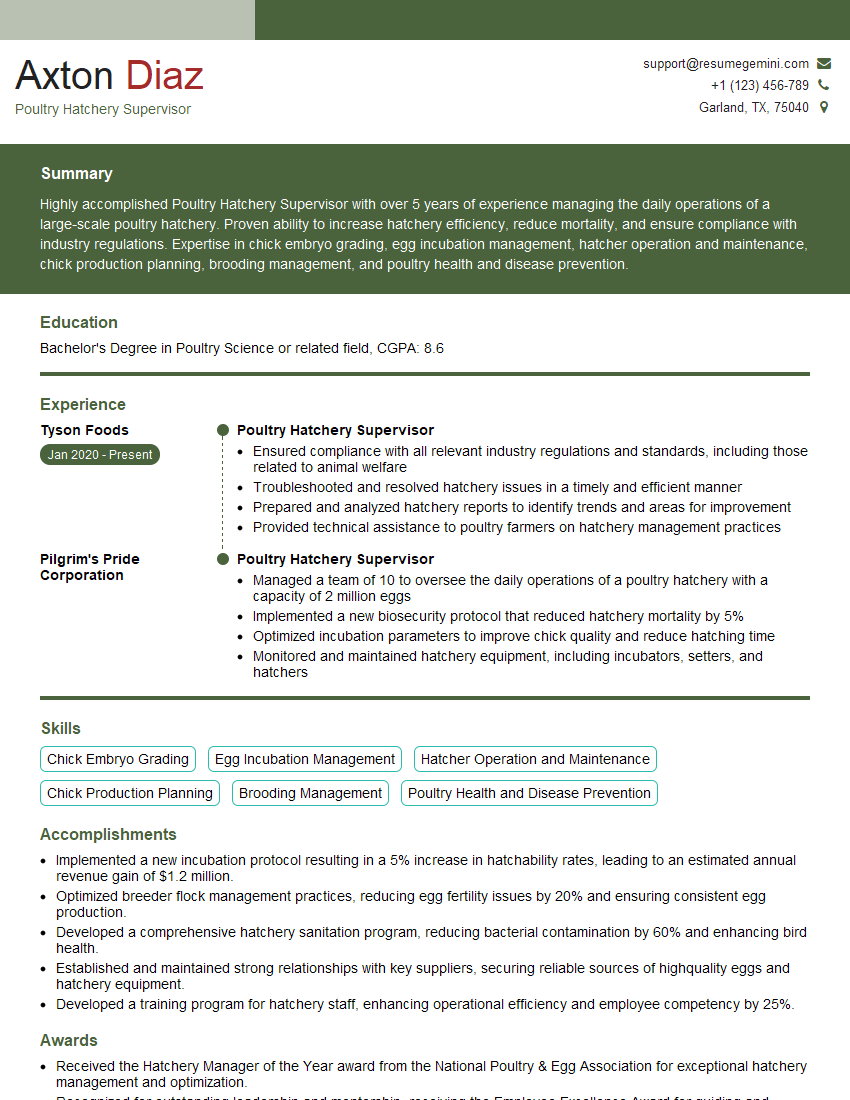
Mastering Chick Hatching and Monitoring opens doors to exciting career opportunities in poultry production, research, and related fields. A strong understanding of these principles is highly valued by employers, showcasing your technical skills and commitment to animal welfare. To maximize your job prospects, crafting an ATS-friendly resume is crucial. ResumeGemini is a trusted resource that can help you build a professional and impactful resume that highlights your relevant skills and experience. Examples of resumes tailored to Chick Hatching and Monitoring are available within ResumeGemini, providing you with templates and guidance to create a compelling application.

Explore more articles
Users Rating of Our Blogs
Share Your Experience
We value your feedback! Please rate our content and share your thoughts (optional).
What Readers Say About Our Blog
Very informative content, great job.
good