Are you ready to stand out in your next interview? Understanding and preparing for Audition Room Management interview questions is a game-changer. In this blog, we’ve compiled key questions and expert advice to help you showcase your skills with confidence and precision. Let’s get started on your journey to acing the interview.
Questions Asked in Audition Room Management Interview
Q 1. What software or systems have you used to manage audition schedules and logistics?
Over the years, I’ve utilized a variety of software and systems for managing audition schedules and logistics. Early in my career, we relied heavily on spreadsheets and shared calendars – a somewhat chaotic but workable system for smaller productions. However, as projects grew in scale, I transitioned to more sophisticated solutions. I’ve had extensive experience with dedicated casting software such as Casting Networks and Breakdown Services, which offer robust features for scheduling, communication, and tracking auditions. These platforms streamline the process by providing centralized calendars, automated reminders, and secure communication channels for sharing materials and feedback. I’m also proficient in using project management tools like Asana and Monday.com to manage audition-related tasks, particularly for larger-scale productions with numerous casting calls. These tools helped me coordinate various aspects, from scheduling audition rooms to tracking actor availability and communication.
Q 2. Describe your experience in coordinating multiple auditions simultaneously.
Coordinating multiple simultaneous auditions requires meticulous planning and excellent organizational skills. Think of it like conducting a complex orchestra – each section (audition room) needs to be perfectly timed and supported. My approach involves creating detailed master schedules, allocating resources efficiently (rooms, casting assistants, etc.), and using a color-coded system on a large whiteboard or digital dashboard to visualize the schedule and track progress in real-time. For example, on a recent project with three simultaneous auditions, I designated one assistant to each room to manage actor check-in, paperwork, and communication with the casting director. I also established a clear communication system using walkie-talkies and a centralized message board to address any unforeseen issues immediately. This approach minimized delays and ensured a smooth flow across all auditions.
Q 3. How do you handle last-minute changes or scheduling conflicts during auditions?
Last-minute changes are par for the course in the world of auditions. My strategy is to remain flexible and proactive. I always build buffer time into the schedule to accommodate unforeseen circumstances. When a conflict arises, I immediately assess the impact and communicate transparently with all involved parties. If a rescheduling is necessary, I leverage the flexibility of my chosen software to quickly adjust the schedule and notify affected actors via text or email – often with a brief explanation and apology for the inconvenience. I prioritize clear communication to mitigate frustration and ensure everyone stays informed. For instance, if an actor cancels last minute, I immediately contact the next actor on the waiting list, leveraging my pre-prepared contact list to do so quickly and efficiently.
Q 4. What strategies do you use to ensure a smooth and efficient audition process?
Ensuring a smooth and efficient audition process involves a multifaceted approach. First, pre-production planning is crucial. This involves creating detailed audition packets with all necessary materials, confirming actor availability well in advance, and prepping the audition rooms meticulously. Next, clear and concise communication is paramount. This includes providing actors with clear instructions regarding check-in procedures, providing a comfortable waiting area with water and refreshments, and having a designated point person to assist with any questions. Finally, post-audition tasks like promptly sending feedback to actors and updating casting databases are equally important for maintaining professionalism and efficiency. Thinking ahead and anticipating potential problems goes a long way towards a smooth audition process.
Q 5. Explain your approach to managing the flow of actors in and out of the audition room.
Managing the flow of actors is about creating a well-oiled machine. I use a system that combines pre-scheduled appointment times with a clear check-in process. Actors are greeted at a designated point, their paperwork is checked, and they are then directed to a comfortable waiting area. I use a numbered system or a sign-in sheet to track their arrival. When the casting director is ready, the next actor is called and escorted to the audition room. This ensures a steady flow without causing congestion or delays. For example, I might employ a digital queuing system to display the order and alert the next actor in line. A clear visual system prevents confusion and minimizes interruptions.
Q 6. How do you maintain a calm and professional atmosphere in a high-pressure audition environment?
Maintaining a calm atmosphere during high-pressure auditions requires a combination of preparation and interpersonal skills. I create a welcoming and organized environment from the start. The audition space should be clean, well-lit, and free of distractions. I encourage my team to be professional, courteous, and efficient in their interactions with actors. I act as a buffer between the actors and the potential stress of the casting process, ensuring a positive experience for all involved. If tensions rise, I use active listening skills to address concerns and diffuse any conflict promptly. I find that creating a relaxed environment from the start encourages positive energy throughout the day.
Q 7. What experience do you have with communicating effectively with actors, casting directors, and production staff?
Effective communication is the cornerstone of my role. I communicate clearly and concisely with actors, offering detailed instructions and answering their questions with patience and respect. With casting directors, my communication is focused on providing logistical updates, relaying actor feedback, and ensuring their needs are met. With production staff, my communication centers on coordinating schedules, managing resources, and maintaining open lines of communication to address challenges as they arise. I always aim for transparent and timely communication to avoid misunderstandings and maintain a collaborative atmosphere. Using a range of communication tools, from email and phone calls to project management software, ensures everyone is informed and aligned.
Q 8. Describe your methods for tracking actor attendance and feedback.
Tracking actor attendance and feedback is crucial for efficient audition management. My method involves a multi-pronged approach combining digital and physical tools. For attendance, I use a dedicated digital sign-in sheet, often integrated with our casting software, allowing for real-time tracking and notifications. This eliminates manual spreadsheets and provides instant updates on who has arrived and who’s still expected. For feedback, I utilize a structured feedback form, either digital or paper, depending on the project’s needs and scale. This form ensures consistency in capturing essential information like acting performance, suitability for the role, and any special notes. Immediately after each audition, I enter the feedback, linking it to the actor’s profile in our system. This allows for easy access and analysis during the selection process. I also use a color-coded system (e.g., green for strong, yellow for potential, red for not suitable) for quick visual assessment. For larger auditions, I often have a dedicated assistant to assist with this process, ensuring accurate and prompt recording.
For example, during a recent casting call for a major television drama, we used a custom-built app for actor sign-in, which automatically sent notifications to the casting director and me upon arrival. The digital feedback forms were instantly compiled and analyzed, making the decision-making process significantly faster and more efficient.
Q 9. How do you handle confidential information related to auditions and casting?
Confidentiality is paramount in the audition process. All materials—scripts, audition tapes, actor information—are treated with the utmost care. Access is strictly limited to authorized personnel only, with clear guidelines on data handling and security protocols. We utilize secure servers and cloud-based storage with encryption to protect sensitive information. All electronic devices used during auditions are password-protected, and physical documents are stored in locked cabinets or secure areas. We also implement strict Non-Disclosure Agreements (NDAs) with all participants, including actors, casting directors, and production staff, ensuring the protection of intellectual property and sensitive information. We regularly conduct training sessions to reinforce these policies.
For instance, during a high-profile film audition, all scripts were distributed only after actors signed the NDA. We also maintained a strict no-photography or recording policy within the audition space.
Q 10. Have you dealt with difficult or demanding actors during auditions? How did you resolve the situation?
Dealing with demanding actors requires patience, diplomacy, and a firm but respectful approach. My strategy is based on proactive communication and setting clear expectations from the outset. I address concerns promptly and directly, ensuring actors feel heard and understood. If conflicts arise, I try to find common ground through compromise and collaboration. If necessary, I involve the casting director or a relevant supervisor to mediate. The primary goal is to maintain a professional and respectful atmosphere while ensuring the audition proceeds smoothly. I find empathy is essential to understanding any underlying issues causing challenging behavior, enabling a more collaborative resolution.
For example, I once had an actor who became upset about the wait time. Instead of dismissing their frustration, I explained the situation openly, apologizing for the delay and offering them water and a comfortable seating area. This simple gesture resolved the situation quickly and efficiently.
Q 11. How familiar are you with industry-standard audition procedures?
I am highly familiar with industry-standard audition procedures. This includes understanding the nuances of different casting methods, from initial submissions and self-tapes to in-person auditions and callbacks. I’m adept at coordinating schedules, managing casting calls, preparing audition spaces, and working efficiently with casting directors, production teams, and actors. My experience encompasses a broad range of audition formats, catering to varied project needs and budgets, and I always ensure compliance with legal and ethical guidelines relating to fair casting practices and equal opportunities.
My experience includes working with various casting software and platforms designed to streamline the audition process, from managing submissions to scheduling auditions and tracking feedback.
Q 12. How do you ensure all necessary equipment is functioning properly before and during auditions?
Ensuring all equipment is functioning optimally is non-negotiable. Before each audition, I conduct a thorough equipment check, covering all aspects including: cameras (resolution, audio levels, focus), microphones (audio quality, positioning), lighting (brightness, shadows), and sound systems (volume, clarity). A detailed checklist helps to ensure nothing is overlooked. I also have backup equipment readily available to address any unexpected malfunctions. Regular maintenance and testing of the equipment are implemented to minimize the risk of technical problems. This proactive approach guarantees a smooth and uninterrupted audition process.
For example, I always have backup microphones and lighting available, and I regularly test all equipment to ensure optimal performance.
Q 13. What’s your experience with various audition formats, such as self-tapes, in-person auditions, and callbacks?
My experience encompasses a wide range of audition formats. I’m proficient in managing self-tapes, guiding actors on best practices for filming and submission. I’m equally adept at coordinating and running in-person auditions, ensuring a comfortable and professional environment for actors. I understand the logistical requirements of callbacks and the importance of providing constructive feedback at each stage. Regardless of the format, I prioritize creating a fair and consistent process, promoting the best performance from each actor.
I’ve managed everything from small-scale projects relying heavily on self-tapes to large-scale productions involving hundreds of in-person auditions and multiple rounds of callbacks. Adaptability is key to navigating the diverse needs of each project.
Q 14. How do you maintain accurate records and reports related to the audition process?
Maintaining accurate records is paramount. I utilize a combination of digital and physical record-keeping systems, depending on the project’s needs. Digital systems, often integrated with our casting software, allow for automated tracking of attendance, feedback, and scheduling. Physical records, such as signed NDAs and paper feedback forms, provide a backup and comply with legal requirements. All records are meticulously organized, ensuring easy retrieval and analysis. Regular data backups safeguard against data loss. Periodic reports, summarizing key metrics like attendance rates, feedback scores, and casting decisions, are generated to help inform future casting processes.
For example, our reporting system automatically generates a weekly summary of audition statistics, including the number of actors who attended, the average feedback score, and the number of callbacks scheduled. This data is vital for evaluating the efficiency and effectiveness of the casting process.
Q 15. How do you prioritize tasks and manage time effectively during busy audition periods?
Managing a high volume of auditions requires a robust system for prioritizing tasks and time management. Think of it like conducting an orchestra – each musician (actor) needs to be scheduled and prepared efficiently. My approach begins with a clear understanding of the casting director’s needs and deadlines. I use a combination of tools, including digital calendars, project management software like Asana or Trello, and a detailed audition schedule. I break down the overall process into smaller, manageable tasks, prioritizing those with the strictest deadlines first. This allows me to allocate time effectively and avoid last-minute rushes. I also build buffer time into my schedule to account for unforeseen delays or technical glitches. For example, if I know we have 10 actors scheduled in a 2-hour block, I wouldn’t schedule each audition for exactly 12 minutes. I’d allot 15 minutes, allowing for a smooth transition between actors and handling any unexpected issues. Regular review and adjustment of the schedule is vital to maintain efficiency.
Career Expert Tips:
- Ace those interviews! Prepare effectively by reviewing the Top 50 Most Common Interview Questions on ResumeGemini.
- Navigate your job search with confidence! Explore a wide range of Career Tips on ResumeGemini. Learn about common challenges and recommendations to overcome them.
- Craft the perfect resume! Master the Art of Resume Writing with ResumeGemini’s guide. Showcase your unique qualifications and achievements effectively.
- Don’t miss out on holiday savings! Build your dream resume with ResumeGemini’s ATS optimized templates.
Q 16. What is your experience with various casting software and databases?
My experience with casting software and databases is extensive. I’m proficient in industry-standard platforms like Casting Networks, Actors Access, and Breakdown Services. I understand the nuances of each platform – how to efficiently upload and manage actor profiles, track submissions, and generate reports. I’ve also worked with various custom databases, building and maintaining spreadsheets to track audition schedules, actor availability, and feedback. My skills extend to data entry, data analysis, and reporting, allowing me to extract valuable insights for future casting decisions. For example, I can easily analyze which actors are repeatedly called back for roles, suggesting possible trends in casting preferences.
Q 17. Describe a time you had to troubleshoot a technical issue during an audition. What was your solution?
During a particularly high-pressure audition day for a major commercial, our video conferencing software crashed just as an actor was about to begin their performance. Panic, of course, ensued! However, my experience kicked in. First, I remained calm and reassured the actor, explaining the situation. Simultaneously, I quickly assessed the issue. We had a backup plan – a secondary video platform pre-tested and ready to go. Within minutes, we successfully switched over to the backup platform, minimizing disruption. I even leveraged my knowledge of internet troubleshooting to quickly identify that the initial failure was due to a sudden spike in internet traffic, a learning point that allowed me to implement better network monitoring for future auditions. The actor was able to perform seamlessly, and the audition proceeded without further issues. It demonstrated the importance of having contingency plans and technical expertise in place.
Q 18. How do you ensure the privacy and security of actor materials and information?
Protecting the privacy and security of actor materials is paramount. We adhere to strict confidentiality protocols. All actor data, including headshots, resumes, and audition recordings, are stored on secure servers with restricted access. Access is granted only to authorized personnel on a need-to-know basis. Passwords are strong and changed regularly. We also use encryption to protect data both in transit and at rest. Furthermore, we have clear guidelines on data handling and destruction, ensuring that all materials are securely disposed of when no longer needed. For example, digital audition recordings are usually deleted after a project is completed, and physical materials are securely shredded. This commitment to security builds trust with actors and helps prevent data breaches.
Q 19. Explain your experience with creating and managing audition spreadsheets and databases.
I’m highly proficient in creating and managing audition spreadsheets and databases. I utilize tools such as Microsoft Excel and Google Sheets to track various aspects of the audition process. These spreadsheets often include actor information (name, contact details, experience), audition details (date, time, role), feedback from the casting director, and notes on each actor’s performance. The structure of these spreadsheets is customized to the specific needs of each project. For instance, one project might necessitate tracking specific skills, while another might focus on character suitability. I also frequently use these spreadsheets to generate reports for the casting director, summarizing key data and insights. The ability to effectively organize and analyze this data streamlines the decision-making process for the casting team.
Q 20. What is your understanding of legal and ethical considerations related to talent acquisition?
Understanding the legal and ethical considerations of talent acquisition is fundamental to my role. This includes being aware of labor laws regarding payment and working conditions, ensuring compliance with data privacy regulations like GDPR and CCPA, and avoiding any form of discrimination in the casting process. We ensure all contracts are legally sound and protect the rights of both the actors and the production company. Ethical considerations include maintaining fairness, transparency, and respect for all involved. For instance, we ensure that actors are treated professionally and with courtesy at all times, and that all communications are clear and transparent. This adherence to legal and ethical standards promotes a positive and professional casting environment.
Q 21. How familiar are you with different types of audition materials (headshots, resumes, reels)?
I’m very familiar with the various types of audition materials. Headshots serve as a visual representation of the actor, highlighting their appearance and persona. Resumes provide a detailed overview of their acting experience, including roles, credits, training, and skills. Reels showcase the actor’s performance capabilities through short clips from past projects. Understanding the nuances of each material is crucial for effective evaluation. For example, a headshot needs to be high-quality and current, accurately representing the actor’s appearance. A resume should be well-structured and clearly highlight relevant experiences for the role being cast. A reel must showcase the actor’s range and suitability for the type of role being offered. Efficiently reviewing and comparing these diverse materials helps identify the best-suited actors for each role.
Q 22. How do you identify and address potential conflicts of interest during the audition process?
Identifying and addressing potential conflicts of interest is paramount in maintaining the integrity of the audition process. This involves proactively identifying situations where personal biases, relationships, or external pressures could influence casting decisions. For instance, if I have a close personal relationship with an actor auditioning, I would disclose this to the casting director and potentially recuse myself from any decision-making involving that actor to ensure impartiality. A formal conflict of interest policy, reviewed and understood by all involved, is crucial. This might include procedures for reporting potential conflicts and a clear chain of command for addressing them. The goal is to create a fair and transparent process where every actor has an equal opportunity.
- Transparency: Open communication about any potential conflicts, no matter how seemingly minor.
- Recusal: Stepping back from decision-making processes where a conflict exists.
- Documentation: Maintaining detailed records of potential conflicts and how they were addressed.
Q 23. Describe your experience with preparing audition rooms and ensuring they are well-organized.
Preparing audition rooms involves much more than just setting up chairs and a camera. It’s about creating a comfortable, yet professional environment that puts actors at ease and allows them to perform their best. My approach begins with a detailed checklist ensuring the room is clean, well-lit, and properly equipped. This includes testing all audio and video equipment beforehand, ensuring a comfortable temperature, and having water readily available. Organization is key; I ensure all materials – scripts, sides, name tags – are clearly labeled and readily accessible. For example, I might color-code materials by audition time or character name for efficient retrieval during busy audition days. Finally, I always create a designated waiting area separate from the audition space to ensure a calm and focused atmosphere for actors before their turn.
Q 24. How do you manage feedback collection from casting directors and other stakeholders?
Efficient feedback collection is vital for refining the casting process. I typically use a combination of methods: structured feedback forms, which allow for consistent evaluation across all actors, and informal discussions with the casting director to capture more nuanced observations. The forms might include rating scales for various aspects of the performance, along with space for written comments. These forms are kept confidential and are used only to inform the casting decision. Post-audition meetings with the casting director help solidify the feedback and allow for a collaborative discussion about which actors best fit the role. Maintaining clear communication channels and timely feedback delivery ensures smooth decision-making.
Q 25. What are your strategies for effectively communicating audition results to actors?
Communicating audition results requires sensitivity and professionalism. I always aim for timely communication, typically within a specified timeframe communicated upfront. For those selected, the communication is enthusiastic and congratulatory, offering next steps and further information. For those not selected, I strive for a compassionate and respectful response, avoiding vague or generic language. A brief, personalized note explaining the decision, while respecting confidentiality, helps to maintain positive relationships. For example, I might mention specific aspects of their performance they excelled in, while avoiding comparisons to other actors. This approach aims to maintain the actors’ confidence and respect for the process.
Q 26. How would you handle an actor arriving late or unprepared for an audition?
Handling late or unprepared actors requires tact and firmness. If an actor arrives late, I would politely remind them of the audition schedule and proceed as efficiently as possible, minimizing disruption to the rest of the schedule. However, lateness may affect the available time for their audition. If an actor is unprepared, I will first assess the situation: perhaps they’ve encountered an unforeseen issue. If it’s a simple oversight, I might offer assistance, but if it’s a lack of preparation, I need to explain that while I appreciate their interest, this may impact their ability to perform effectively and fairly in comparison to other prepared actors. Documentation is key in both scenarios, and consistent enforcement of rules ensures fairness and professionalism.
Q 27. How do you maintain a positive and professional relationship with all involved in the audition process?
Maintaining positive relationships is crucial for a smoothly functioning audition process. This begins with clear, proactive communication. I ensure everyone understands the schedule, procedures, and expectations. Respectful treatment of all participants, from the most established actors to those just starting out, is essential. Active listening and a willingness to address concerns promptly demonstrate professionalism and build trust. Celebrating successes, both large and small, also contributes to a positive atmosphere. Regular feedback sessions with involved parties and ongoing professional development further enhance my understanding of best practices and effective relationship building. This ensures I’m providing a supportive and respectful experience for everyone.
Q 28. What steps do you take to ensure the safety and well-being of actors during auditions?
Ensuring actor safety and well-being is paramount. This includes providing a safe and comfortable physical environment. The audition space needs to be well-lit and accessible, free from hazards. Security measures, like a clear entry/exit system and potentially a designated security personnel, may be necessary depending on location and circumstances. I also establish clear communication channels – actors should know how to report concerns or incidents. Furthermore, fostering a respectful and inclusive atmosphere is crucial, with zero tolerance for harassment or any form of misconduct. This might involve providing clear guidelines on appropriate behavior and processes for reporting any violations. A safe environment is key to encouraging authentic performances and positive experiences.
Key Topics to Learn for Audition Room Management Interview
- Scheduling and Logistics: Understanding the complexities of scheduling auditions, managing calendars, coordinating with casting directors, actors, and other crew members. Practical application: Develop a system for efficient scheduling that minimizes conflicts and maximizes time utilization.
- Room Preparation and Setup: Knowing the technical requirements for different audition types (e.g., self-tape setups, in-person readings), ensuring the room is properly equipped and comfortable for both actors and the casting team. Practical application: Troubleshooting technical issues quickly and efficiently, creating a welcoming and professional atmosphere.
- Communication and Client Relations: Effectively communicating with all stakeholders, maintaining professionalism, and resolving any conflicts that may arise. Practical application: Handling last-minute changes, managing expectations, and providing excellent customer service.
- Data Management and Record Keeping: Accurately tracking audition details, maintaining organized records, and utilizing appropriate software or systems. Practical application: Utilizing digital tools for efficient data entry, reporting, and analysis.
- Workflow Optimization: Identifying bottlenecks in the audition process and implementing solutions to improve efficiency and productivity. Practical application: Streamlining processes, automating tasks, and using technology to enhance workflows.
- Security and Confidentiality: Maintaining the confidentiality of audition materials and respecting the privacy of actors and casting directors. Practical application: Implementing secure storage and access protocols for sensitive information.
Next Steps
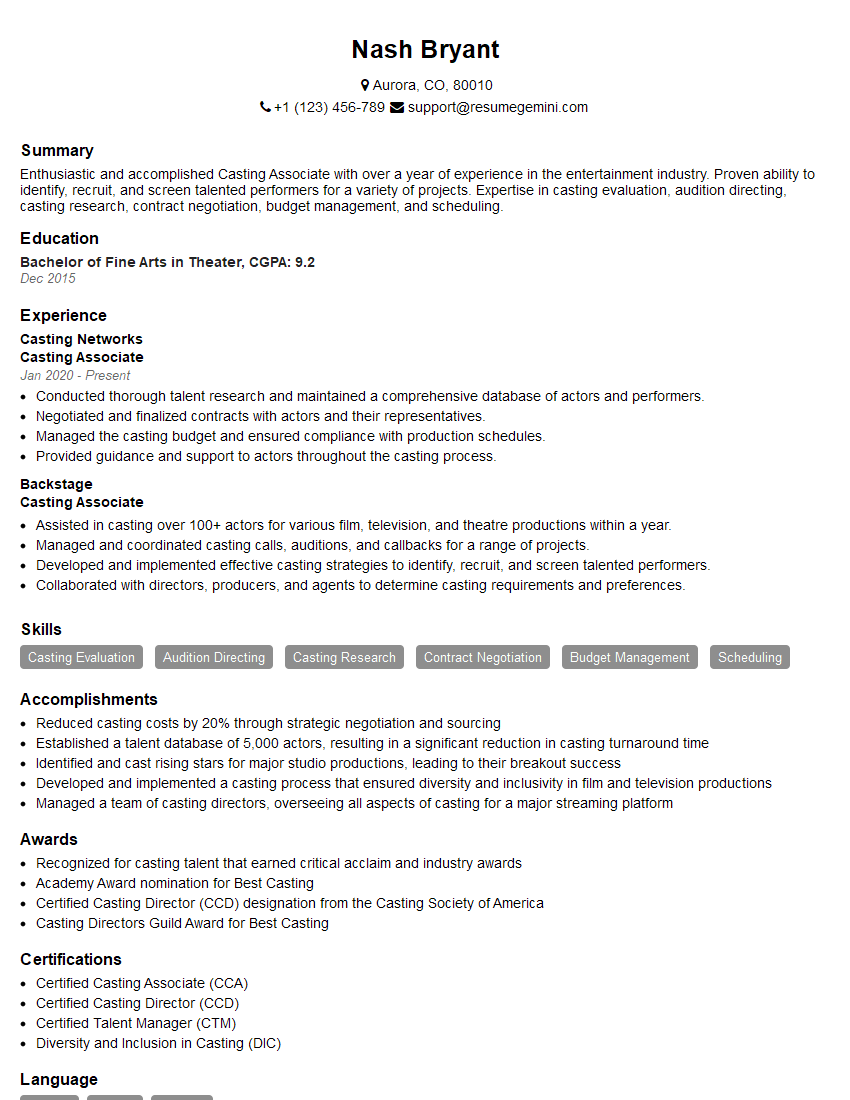
Mastering Audition Room Management is crucial for career advancement in the entertainment industry, opening doors to roles with increased responsibility and higher earning potential. A well-crafted resume is your first impression – make it count! Create an ATS-friendly resume to ensure your qualifications are effectively communicated to potential employers. ResumeGemini is a trusted resource to help you build a professional and impactful resume. Take advantage of our examples of resumes tailored to Audition Room Management to significantly enhance your job search.
Explore more articles
Users Rating of Our Blogs
Share Your Experience
We value your feedback! Please rate our content and share your thoughts (optional).
What Readers Say About Our Blog
Very informative content, great job.
good