The thought of an interview can be nerve-wracking, but the right preparation can make all the difference. Explore this comprehensive guide to Audition Scheduling interview questions and gain the confidence you need to showcase your abilities and secure the role.
Questions Asked in Audition Scheduling Interview
Q 1. Explain your experience with audition scheduling software.
My experience with audition scheduling software spans several years and various platforms. I’ve worked extensively with systems ranging from simple spreadsheet-based solutions to sophisticated cloud-based applications like [mention specific software names e.g., Casting Networks, Maestro, or other relevant industry software]. My proficiency includes not only scheduling appointments but also managing talent profiles, tracking communication, generating reports, and integrating the software with other project management tools.
For example, in a recent project for a major theatrical production, I utilized [Software Name] to schedule over 200 auditions across various locations within a tight three-week timeframe. The software’s features for managing conflicts, sending automated reminders, and generating detailed reports were invaluable in ensuring a smooth and efficient process.
Q 2. Describe your process for managing conflicting audition schedules.
Managing conflicting audition schedules requires a proactive and organized approach. My process begins with a thorough review of all incoming requests, noting any potential overlaps. I use color-coding or tagging within my scheduling software to highlight potential conflicts immediately. Then, I prioritize based on factors such as the seniority of the casting director, the actor’s availability, and the urgency of the production timeline.
If a conflict is unavoidable, I immediately communicate with the involved parties – actors and casting directors – to explore alternative times or suggest a solution, such as rescheduling one of the auditions or offering a brief alternative meeting.
Sometimes, I might even suggest a brief virtual meeting instead of an in-person audition to accommodate everyone’s schedule.
Q 3. How do you prioritize audition requests with competing deadlines?
Prioritizing audition requests with competing deadlines involves a structured approach combining several factors. I employ a system where I assess the requests based on factors like the production’s budget, the urgency of the deadline, the reputation and seniority of the casting director and the actor’s availability.
Essentially, I employ a weighted ranking system. For instance, a high-budget film with a tight deadline gets priority over a smaller independent project with a more flexible schedule. Transparency is key. I communicate the prioritization rationale to all parties, ensuring everyone understands the decision-making process. This prevents misunderstandings and maintains professional relationships.
Q 4. What strategies do you use to ensure accurate and timely communication with talent and casting agents?
Ensuring accurate and timely communication is paramount. I use a multi-pronged approach leveraging both the scheduling software’s built-in communication features and direct email or phone calls. Automated email reminders, confirmation messages, and updates regarding any schedule changes are routinely sent to all relevant parties.
For actors, I might use personalized emails specifying their audition time, location, required materials, and contact details of the casting team. For casting agents, I maintain a regular flow of information regarding the audition progress, ensuring they’re informed of any changes or potential issues. This proactive approach minimizes confusion and maintains positive working relationships.
Q 5. How do you handle last-minute changes to the audition schedule?
Last-minute schedule changes are an unfortunate reality in this field. My approach involves swift action and clear communication. When a change occurs, I immediately update the scheduling software, reflecting the new time slot or location. I then dispatch immediate email or SMS notifications to all impacted parties, clearly stating the change and reason, if possible.
For example, if an actor needs to reschedule, I’ll immediately reach out to the casting director to explore possible alternative times or propose solutions. Transparency and prompt action are crucial in minimizing disruption and maintaining a professional image.
Q 6. Explain your experience with calendar management software and tools.
My experience with calendar management software extends beyond simple scheduling. I’m proficient in utilizing tools like Google Calendar, Outlook Calendar, and specialized industry scheduling software. I leverage these tools’ features such as recurring events, reminders, and shared calendars to manage multiple projects and deadlines concurrently. This allows for effective team collaboration and real-time schedule visibility.
Furthermore, I often integrate my calendar with other project management software, syncing deadlines and tasks for optimal workflow. This integrated approach allows for seamless management of all aspects of production scheduling, beyond just auditions.
Q 7. How do you track and confirm audition attendance?
Tracking and confirming audition attendance is crucial for efficient production. I use a combination of methods. The scheduling software often includes features for automated attendance tracking. Before the audition, actors often need to RSVP through the software or email, helping confirm their attendance. Additionally, I typically maintain a sign-in sheet at the audition location itself for further verification.
After the auditions, I follow up with any no-shows and investigate the reason, maintaining open communication to understand any unforeseen circumstances. This comprehensive approach ensures accurate records and identifies potential logistical issues requiring attention.
Q 8. Describe your methods for maintaining organized audition records.
Maintaining organized audition records is crucial for efficient casting. My method relies on a multi-layered approach combining digital and physical organization. I utilize a dedicated database (often a CRM like Casting Networks or a spreadsheet with robust formulas) to track each actor’s details – contact information, headshots, resumes, audition dates, feedback notes, and availability. This allows for easy searching and filtering. In addition to the digital records, I maintain physical folders (or cloud folders meticulously organized by project) containing hard copies of resumes and headshots for quick reference. This redundancy is critical, ensuring access to information even with technical difficulties.
For example, imagine searching for actors with specific experience in period dramas. My database allows me to filter by keywords like “period,” “costume drama,” or even specify years of experience. The system is designed for speed and accuracy, minimizing the time spent searching and maximizing the time spent reviewing talent.
Q 9. How familiar are you with industry standard audition procedures?
I’m intimately familiar with industry-standard audition procedures, having worked on numerous projects ranging from independent films to major network television shows. This includes everything from understanding standard audition formats (self-tapes, in-person auditions) to the ethical handling of confidential materials and respecting actors’ time and privacy. I understand the importance of clear communication, detailed instructions to actors, and maintaining a professional and welcoming environment. This also encompasses navigating union regulations (SAG-AFTRA, Equity) when applicable and ensuring compliance with all relevant regulations around data privacy and equal opportunity hiring.
For instance, I’m well-versed in the nuances of self-tape guidelines, from specifying camera angles and lighting requirements to providing clear instructions on background and wardrobe. My experience ensures a streamlined and efficient process for everyone involved, ensuring high-quality submissions.
Q 10. What steps do you take to ensure the smooth flow of auditions?
Ensuring a smooth audition flow involves meticulous planning and coordination. It starts with clear communication: actors receive detailed instructions well in advance including date, time, location, sides (script excerpts), and any specific requirements. I schedule auditions strategically, accounting for travel time, breaks, and potential delays. I employ a system of confirmation emails and reminders to actors. On the day of auditions, I personally check in with actors to ensure a welcoming and comfortable environment, minimizing unnecessary waiting time. Efficient time management techniques and the ability to troubleshoot minor issues are paramount. A well-organized waiting area and clear communication between the casting director and the actors are also key components.
For example, if a technical issue arises during a self-tape audition, I will proactively offer support and solutions, potentially offering alternative submission methods to ensure timely submission. My experience helps in predicting potential hiccups and devising proactive solutions.
Q 11. How do you handle no-shows or cancellations?
No-shows and cancellations are unfortunately common. My approach involves a proactive strategy. First, I utilize a robust confirmation system, sending multiple reminders leading up to the audition. If a cancellation occurs, I immediately reach out to understand the reason and offer flexibility if possible. I then proceed to contact backup actors who fit the role, having a pre-selected “waitlist” ready for any last-minute needs. This ensures minimal disruption to the overall schedule. For no-shows, I document the incident and make a note in the actor’s file for future consideration.
For example, if a lead actor cancels an in-person audition only a few hours before, I immediately contact our backup actors and have them prepared for the audition time. This efficient use of the waitlist minimizes the production disruption.
Q 12. How do you reconcile conflicts between talent availability and production needs?
Reconciling conflicts between talent availability and production needs requires careful negotiation and planning. I begin by understanding the production’s schedule and the criticality of each role. I then cross-reference this information with the actors’ availability, using my database to identify actors who meet the criteria and are available during the needed timeframe. Sometimes compromises must be made – perhaps adjusting the shooting schedule slightly or considering alternative actors. Prioritizing roles based on their significance to the project and communicating honestly with the actors about scheduling limitations is key. The process involves careful analysis and effective communication to find a solution that works for everyone.
For example, if a key actor is only available on a specific date which conflicts with the initial shooting schedule, I may propose a slight reshuffling of the schedule or explore the possibility of using a split-shot technique if the scene permits. My aim is to find a creative compromise that doesn’t compromise the overall production.
Q 13. Describe your experience working in a fast-paced environment.
I thrive in fast-paced environments. My experience includes working on numerous projects with tight deadlines and ever-changing requirements. I’m adept at prioritizing tasks, multitasking efficiently, and maintaining a calm demeanor under pressure. I utilize project management tools and techniques, including detailed scheduling, and prioritize tasks based on their urgency and importance. I view these fast-paced environments as an opportunity to showcase my skills in quick thinking, adaptability, and problem-solving.
In one instance, I had to coordinate over 100 auditions in a span of only two weeks due to a sudden shift in the production schedule. By delegating tasks effectively and utilizing online scheduling platforms, I managed to stay on top of the schedule without compromising the quality of the audition process. The successful coordination was due to my efficient planning and quick thinking.
Q 14. How do you manage multiple projects and deadlines simultaneously?
Managing multiple projects and deadlines simultaneously requires a highly organized and systematic approach. I use a combination of tools and techniques, including project management software (like Asana or Trello), detailed spreadsheets, and a robust calendar system. I break down each project into smaller, manageable tasks with clearly defined deadlines. I prioritize tasks based on their urgency and importance and use time-blocking techniques to allocate specific time slots for each project. Regular review of my workload and adjusting my schedule based on priorities are essential to ensure successful completion of all projects.
For example, I might have three projects running concurrently: a feature film, a television series, and a commercial. I use my project management software to assign tasks to each project, set deadlines, and track progress. My calendar is color-coded to visually represent the allocation of time to each project, helping me maintain a holistic overview and preventing scheduling conflicts.
Q 15. How do you prioritize tasks when faced with competing demands?
Prioritizing competing demands in audition scheduling requires a strategic approach. I use a system that combines urgency, importance, and the potential impact of delays. I typically employ a matrix where I assess each task based on its deadline (urgency) and its overall importance to the project’s success.
For example, a last-minute cancellation for a high-profile actor in a major project would be high urgency and high importance, taking precedence over confirming a self-tape submission for a smaller role. I also factor in the potential cascading effects of delays. Missing a key actor’s availability could delay the entire production schedule, making it a higher priority than a minor scheduling conflict. Finally, I utilize project management tools and calendars to visualize all tasks and their dependencies, ensuring everything is accounted for.
Career Expert Tips:
- Ace those interviews! Prepare effectively by reviewing the Top 50 Most Common Interview Questions on ResumeGemini.
- Navigate your job search with confidence! Explore a wide range of Career Tips on ResumeGemini. Learn about common challenges and recommendations to overcome them.
- Craft the perfect resume! Master the Art of Resume Writing with ResumeGemini’s guide. Showcase your unique qualifications and achievements effectively.
- Don’t miss out on holiday savings! Build your dream resume with ResumeGemini’s ATS optimized templates.
Q 16. What is your experience with different types of audition formats (in-person, self-tape, etc.)?
My experience encompasses a wide range of audition formats. I’m proficient in managing both in-person auditions, which involve coordinating venue bookings, travel arrangements, and actor availability, and self-tape auditions, which necessitate clear communication of technical requirements, submission deadlines, and feedback mechanisms.
For in-person auditions, I handle logistics like room reservation, casting director schedules, and ensuring the availability of necessary equipment. For self-tapes, I’ve developed standardized instructions and templates to ensure consistency and clarity for actors. This includes providing specific instructions on camera angles, lighting, audio quality, and file submission. I also manage the collection and review of these self-tapes, ensuring they reach the right decision-makers in a timely fashion. I understand the unique challenges and advantages of each format and can adapt my approach accordingly.
Q 17. Describe your approach to troubleshooting scheduling issues.
My approach to troubleshooting scheduling issues is methodical and proactive. I first identify the root cause of the problem – is it a conflict in actor availability, a venue scheduling issue, or a misunderstanding of instructions? I utilize clear communication to understand the specifics and then develop a tailored solution.
For example, if an actor’s availability changes, I immediately contact all affected parties to discuss alternative dates or times. If a venue is unavailable, I explore alternative locations or propose shifting the audition schedule. If there’s a misunderstanding, I clarify instructions and expectations to avoid further confusion. My goal is to find the most efficient and least disruptive solution that maintains the integrity of the audition process. I keep meticulous records of all scheduling changes and communication to ensure transparency and accountability.
Q 18. How do you handle sensitive information related to talent and production?
Handling sensitive information is paramount in this role. I adhere strictly to confidentiality agreements and data protection policies. Access to audition schedules, talent contact information, and production details is restricted to authorized personnel only. I utilize secure platforms for communication and data storage, and I’m always mindful of potential security risks.
For example, I would never share an actor’s contact information without their explicit permission, and I would ensure all sensitive documents are password-protected and stored securely. I also regularly review our security protocols to ensure compliance with evolving industry standards. I am trained in best practices for protecting sensitive information in both digital and physical forms.
Q 19. How familiar are you with legal and contractual aspects of auditioning?
I have a strong understanding of the legal and contractual aspects of auditioning, including actor rights, intellectual property, and confidentiality agreements. I understand the importance of adhering to industry standards and regulations to avoid legal issues.
This involves being aware of regulations related to minors, ensuring proper compensation and credit arrangements, and understanding the terms of contracts and releases. I’m adept at identifying potential legal issues and escalating them to the appropriate legal personnel within the production company. My understanding prevents potential issues and ensures ethical and legally compliant processes.
Q 20. How do you utilize technology to streamline your scheduling processes?
Technology plays a crucial role in streamlining my scheduling processes. I utilize cloud-based calendar applications like Google Calendar or Outlook Calendar to manage auditions across multiple projects simultaneously. These platforms allow for easy scheduling, reminders, and notifications for both actors and production staff.
Furthermore, I leverage specialized casting software that integrates with calendars to manage audition submissions, track responses, and generate reports. This software often allows for online scheduling and automated reminders, minimizing manual effort and ensuring efficiency. The use of these systems significantly reduces the risk of scheduling conflicts and improves communication across the board.
Q 21. Explain your experience with data entry and record keeping.
Data entry and record-keeping are fundamental to my role. I maintain accurate and up-to-date records of all audition-related information, including actor details, audition dates and times, casting director notes, and any other relevant information. I ensure data accuracy and consistency using standardized formats and data entry procedures.
I’m proficient in using various software applications for data entry and record-keeping, including spreadsheets and dedicated casting databases. My attention to detail ensures that the information is readily accessible and reliable for future reference. I regularly back up data to prevent loss and ensure data integrity. Precise record-keeping is crucial for efficient workflow, reporting, and compliance with industry standards.
Q 22. What are your strategies for maintaining accurate and up-to-date scheduling information?
Maintaining accurate and up-to-date scheduling information is paramount in audition management. My strategy relies on a multi-pronged approach combining robust software, meticulous record-keeping, and proactive communication.
Centralized Scheduling System: I utilize dedicated scheduling software, allowing for real-time updates, calendar synchronization across all stakeholders (actors, casting directors, production teams), and automated reminders. This eliminates the risk of double-booking and ensures everyone is on the same page.
Version Control and Backup: Regular backups of the schedule are crucial. Think of it like saving your work frequently on a document – it safeguards against data loss. I also implement version control, allowing me to revert to previous versions if needed, minimizing the impact of any errors.
Confirmation Protocols: Every scheduled audition receives a confirmation, either via email or phone call. This is a crucial step in verifying availability and avoids misunderstandings. The confirmation also contains all crucial details: date, time, location, contact person, and any specific requirements.
Regular Audits: Periodically, I conduct a thorough review of the schedule to identify any inconsistencies or potential conflicts. It’s like a ‘spring cleaning’ for the schedule, ensuring accuracy and preventing future problems.
Q 23. How do you identify potential scheduling conflicts proactively?
Proactive conflict identification is key to smooth audition management. My approach combines technological solutions with careful manual review.
Software Features: Modern scheduling software often has built-in conflict detection features. These tools highlight potential clashes based on pre-set parameters such as time zones, overlapping appointments, and individual actor availability. This automated check is like having a second pair of eyes.
Manual Cross-Referencing: Even with advanced software, manual review is essential. I meticulously cross-reference individual actor schedules with the master audition calendar, paying close attention to details like travel time between venues and potential rehearsal conflicts. Think of it as a quality control check after the automated process.
Communication with Agents/Managers: Open communication is crucial. Regular contact with talent representatives allows me to stay abreast of any unforeseen conflicts or changes in an actor’s availability.
Q 24. Describe your experience with communication across various platforms (email, phone, etc.)
Effective communication is the backbone of successful audition scheduling. My experience spans various platforms, and I adapt my communication style to the context.
Email: Ideal for formal communication, confirmations, and distributing detailed schedules and instructions. I ensure emails are concise, clear, and professionally formatted.
Phone: Best for quick updates, resolving immediate issues, and addressing complex scheduling needs that require a more personal touch. I prioritize clear and concise messaging, and always confirm important details in a follow-up email.
Messaging Apps (e.g., WhatsApp, Slack): Useful for quick queries and informal updates, especially when dealing with multiple parties simultaneously. I maintain separate groups for different projects to avoid confusion.
Video Conferencing (e.g., Zoom, Skype): Excellent for virtual auditions and coordinating complex scheduling across different time zones. I use these platforms to ensure clear communication and minimize misunderstandings.
Regardless of the platform, I maintain a professional, courteous, and responsive communication style, ensuring all parties feel informed and valued.
Q 25. How do you ensure confidentiality of sensitive information related to auditions?
Confidentiality is paramount. I treat all sensitive information related to auditions with the utmost care, adhering to strict protocols.
Secure Data Storage: All scheduling information is stored on secure, password-protected servers or platforms compliant with industry data protection standards.
Access Control: Access to audition schedules is restricted to authorized personnel only. I implement role-based access control, ensuring that only individuals with a legitimate need have access.
Data Encryption: Where applicable, data encryption is employed to safeguard sensitive information during transmission and storage.
Confidentiality Agreements: If necessary, I work with actors and other parties to sign confidentiality agreements, further reinforcing the importance of data protection.
Maintaining confidentiality not only protects the privacy of individuals but also builds trust and reinforces professional integrity.
Q 26. How do you adapt your scheduling approach to different project sizes and scopes?
My approach to scheduling adapts to the scale and complexity of the project. For smaller projects, a simpler system might suffice, while larger projects demand more sophisticated tools and strategies.
Small Projects: A spreadsheet or a basic calendar might be sufficient for smaller projects with limited actors and schedules.
Large Projects: For larger, complex projects involving numerous actors, multiple locations, and overlapping schedules, I employ dedicated scheduling software. This allows for a centralized view of the entire schedule, facilitates efficient conflict resolution, and improves overall coordination.
Scalability: The chosen scheduling system needs to be scalable. This ensures it can handle the increasing demands of larger projects without compromising efficiency or accuracy. It’s like choosing a car – you might start with a compact car for short trips, but for long journeys, you’d opt for something bigger and more capable.
Q 27. Describe a time you successfully resolved a complex scheduling conflict. What was your approach?
In a recent large-scale theatrical production, we encountered a significant scheduling conflict. A lead actor was unexpectedly double-booked for a crucial rehearsal and a high-profile commercial shoot. This posed a major threat to our production timeline.
My approach involved a structured problem-solving process:
Immediate Communication: I immediately contacted the actor’s agent, the commercial production team, and our director to discuss the conflict openly.
Explore Alternatives: We explored several options, including rescheduling the rehearsal, negotiating with the commercial production team to adjust their shooting schedule, and even considering a potential replacement actor, although this was a last resort.
Negotiate and Compromise: Through careful negotiation and compromise, we managed to secure a small window of availability in the commercial shoot’s schedule, allowing the actor to attend the most crucial rehearsal scenes. This required flexibility from all parties involved.
Documentation and Confirmation: Once a solution was reached, I immediately updated the schedule, documenting all changes and ensuring confirmations were sent to everyone involved. Clear communication was vital to avoid future conflicts.
Through proactive communication, a collaborative spirit, and a willingness to explore different solutions, we successfully resolved the conflict, preventing a potential major setback for the production.
Key Topics to Learn for Audition Scheduling Interview
- Understanding Audition Workflow: Learn the entire process, from initial submission to final callback, including the role of different stakeholders (actors, casting directors, agents).
- Software Proficiency: Demonstrate familiarity with various scheduling software and platforms commonly used in the industry. Practice navigating these systems efficiently and accurately.
- Conflict Resolution & Scheduling Optimization: Understand how to manage competing schedules, resolve conflicts effectively, and optimize scheduling to maximize efficiency and minimize downtime.
- Communication & Collaboration: Practice clear and concise communication with actors, agents, and casting directors. Highlight your ability to collaborate effectively within a team.
- Data Management & Record Keeping: Explain your understanding of maintaining accurate and organized records of audition schedules, participant details, and related information.
- Problem-Solving in Scheduling: Prepare examples demonstrating your ability to identify and resolve scheduling challenges proactively, such as last-minute changes or unexpected conflicts.
- Technical Aspects (if applicable): Depending on the role, you may need to demonstrate understanding of database management, API integrations, or other technical components of scheduling systems.
Next Steps
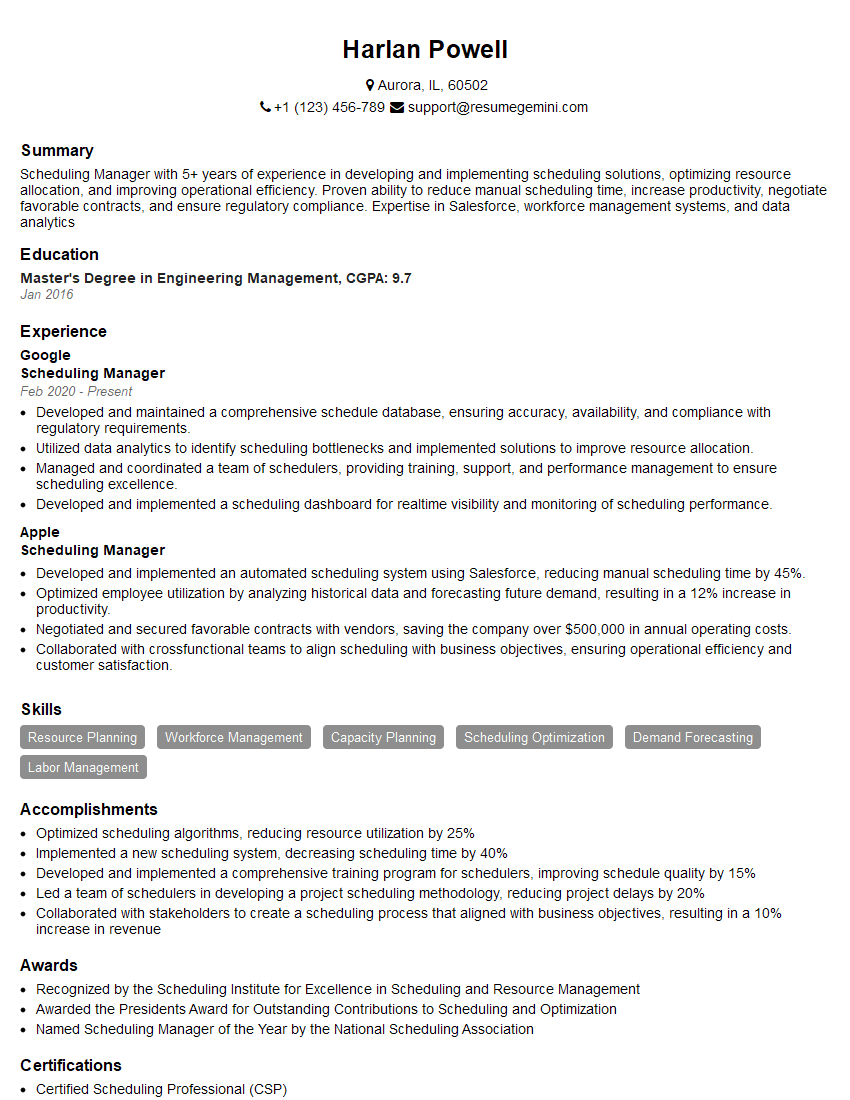
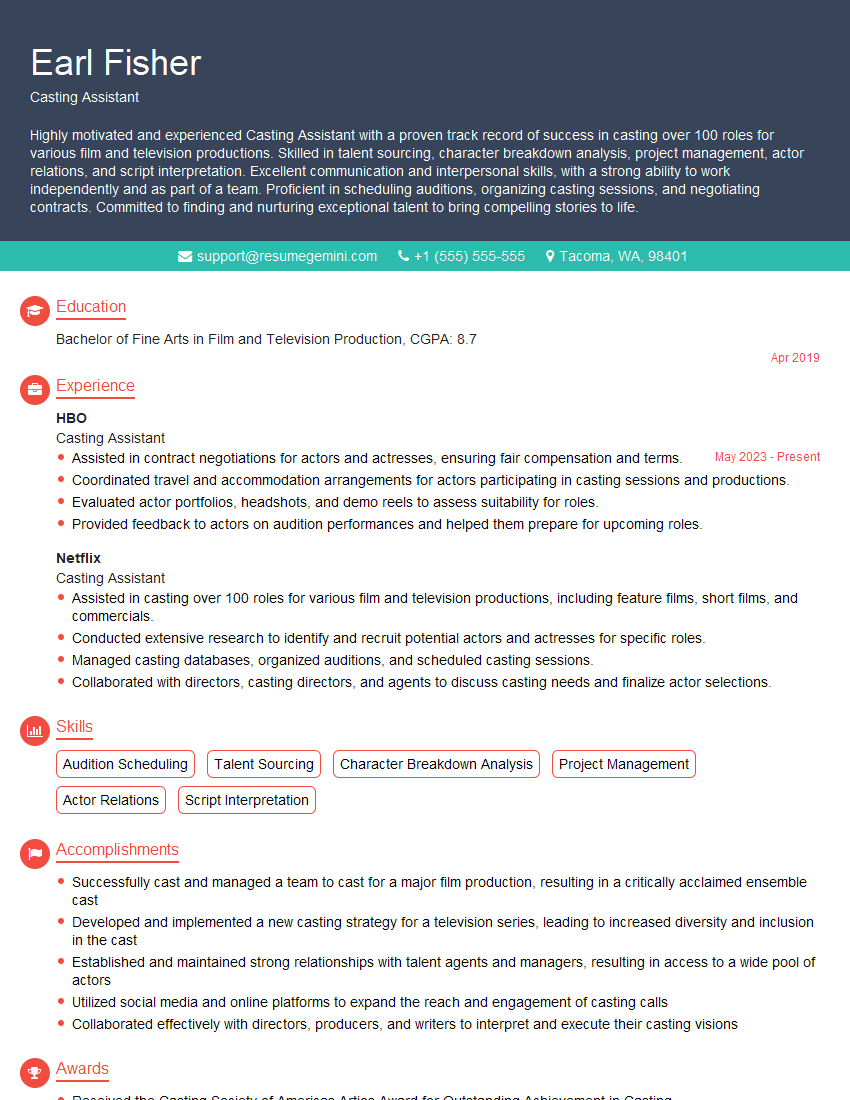
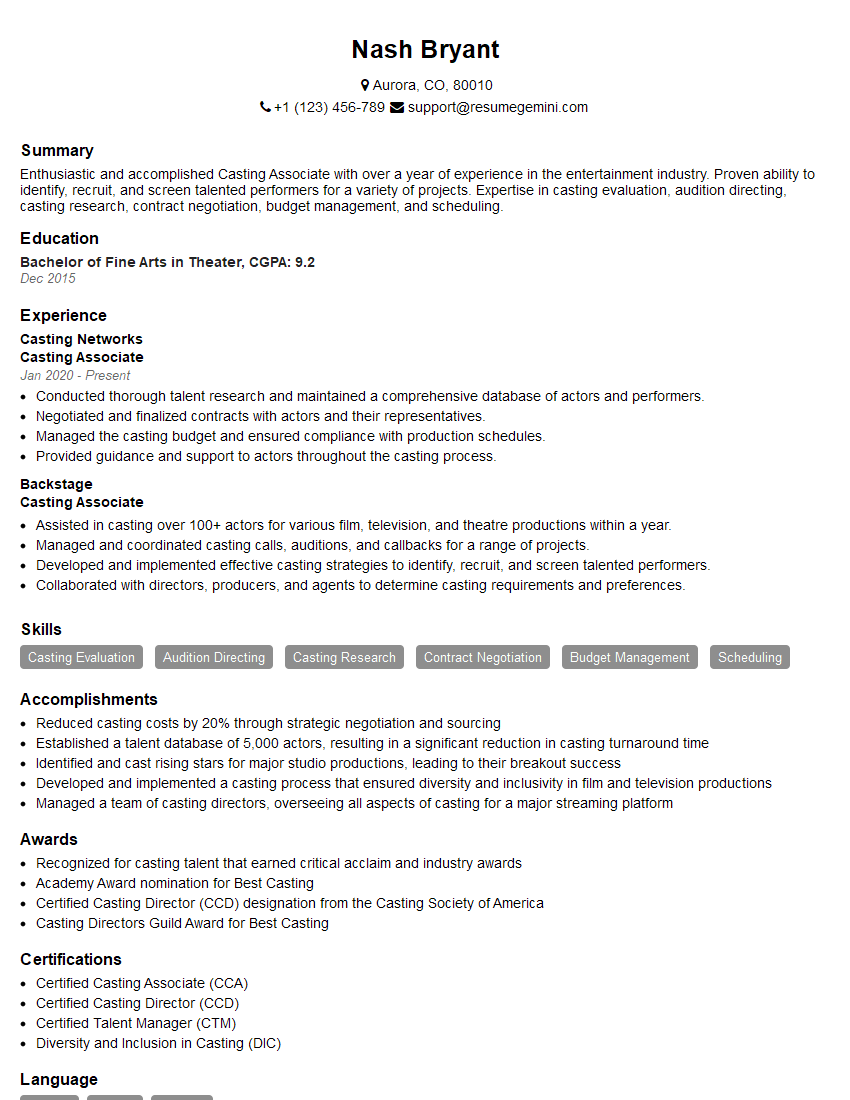
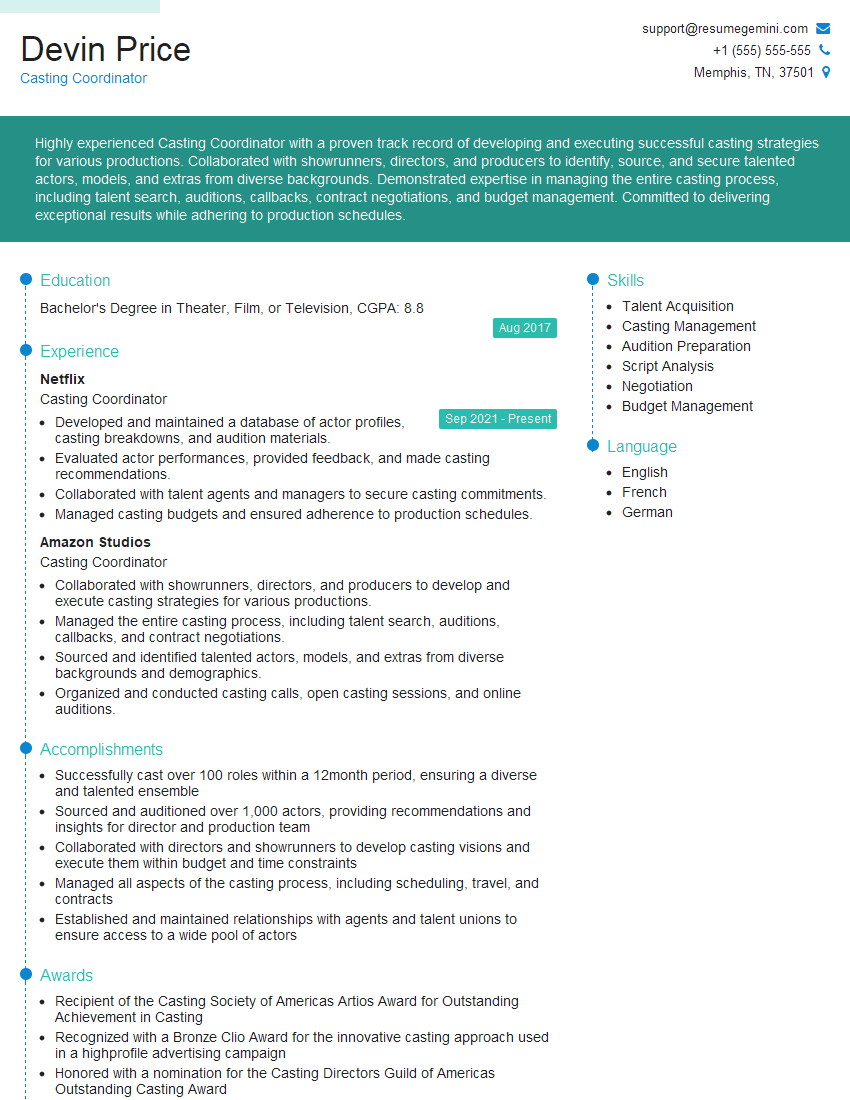
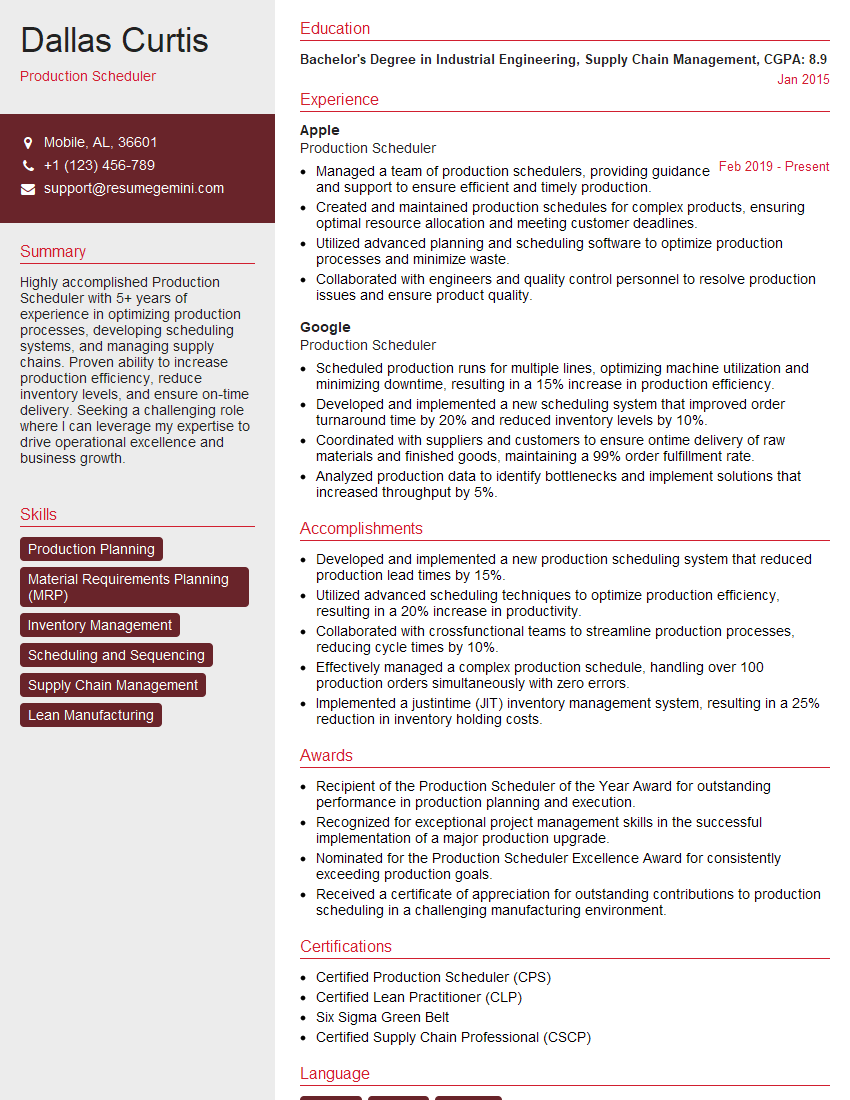
Mastering audition scheduling is crucial for a successful career in the entertainment industry. Proficiency in this area demonstrates organization, efficiency, and strong communication skills – highly valued attributes in any production environment. To boost your job prospects, creating a strong, ATS-friendly resume is essential. ResumeGemini is a trusted resource that can help you craft a professional and impactful resume tailored to your skills and experience. We provide examples of resumes specifically designed for Audition Scheduling professionals to help you get started.



Explore more articles
Users Rating of Our Blogs
Share Your Experience
We value your feedback! Please rate our content and share your thoughts (optional).
What Readers Say About Our Blog
Very informative content, great job.
good