Every successful interview starts with knowing what to expect. In this blog, we’ll take you through the top Auditioning interview questions, breaking them down with expert tips to help you deliver impactful answers. Step into your next interview fully prepared and ready to succeed.
Questions Asked in Auditioning Interview
Q 1. Describe your experience in preparing actors for auditions.
Preparing actors for auditions is a multifaceted process that goes beyond simply rehearsing lines. It’s about building confidence, understanding the character’s motivations, and honing their performance skills. My approach involves several key steps:
- In-depth script analysis: We dissect the script together, exploring the character’s backstory, relationships, objectives, and obstacles. This helps actors find the emotional truth within the text.
- Character development: We brainstorm different interpretations of the character, considering physicality, voice, and mannerisms. I encourage actors to draw on their own experiences to create a believable portrayal.
- Scene work and improvisation: We rehearse specific scenes from the script, focusing on pacing, rhythm, and emotional delivery. Improvisation exercises help develop spontaneity and adaptability.
- Audition technique: I guide actors on how to present themselves professionally, make strong choices, and effectively connect with the casting director. This includes advice on creating a compelling first impression and handling Q&A sessions.
- Feedback and refinement: I provide constructive criticism, focusing on strengths and areas for improvement. This is an iterative process, with multiple rehearsals and adjustments until the actor feels ready and confident.
For example, I once worked with an actor who struggled to portray a character’s vulnerability. Through character exploration exercises and focusing on specific moments of vulnerability in the actor’s personal experiences, we were able to unlock a deeply moving performance that landed them the role.
Q 2. How do you assess an actor’s suitability for a specific role during an audition?
Assessing an actor’s suitability involves a holistic evaluation of several factors beyond just their talent:
- Matching the character’s needs: I consider if the actor physically and vocally fits the part, but even more importantly, I assess their ability to embody the character’s personality, motivations, and emotional arc. This often includes evaluating their range and emotional depth.
- Understanding the casting director’s vision: It’s crucial to understand the specific directorial style and casting requirements for the production. What are they looking for in this particular role? A comedic approach? Dramatic intensity? This informs my evaluation.
- Observing their technique and professionalism: Do they understand the material? Are they prepared and punctual? How do they handle the audition environment? These aspects contribute to the overall assessment.
- Assessing their “chemistry” and presence: There’s an intangible quality that some actors possess: a captivating screen presence or an undeniable charisma. This is something I look for that translates into a memorable performance.
- Considering their potential and coachability: Even if an actor doesn’t perfectly fit the role initially, I assess their potential to grow into it with the right direction and coaching.
Imagine auditioning for a Shakespearean role. While technical skill is crucial, I’d also look for the actor’s ability to connect with the language, understand the subtext, and bring the classic text to life in a compelling way.
Q 3. Explain your process for providing constructive feedback after an audition.
Providing constructive feedback is a crucial aspect of my work. It’s delivered with empathy and a focus on growth:
- Positive reinforcement: I always begin by highlighting the actor’s strengths and what worked well in their audition. This sets a positive tone and builds confidence.
- Specific and actionable suggestions: Instead of vague criticism, I offer precise feedback on areas for improvement, suggesting specific actions the actor can take to enhance their performance. For example, instead of saying ‘your delivery was flat,’ I’d say, ‘try experimenting with slightly varied pacing and vocal inflection in these lines’.
- Focus on choices: I analyze the actor’s choices, both good and bad, providing context and exploring alternative options. I help actors understand the rationale behind my suggestions.
- Tailored to individual needs: My feedback is personalized. I take into account the actor’s experience level and individual strengths and weaknesses.
- Open dialogue: I encourage a two-way conversation, allowing the actor to ask questions and clarify points. It’s a collaborative process.
A typical feedback session might include a recap of the audition, a summary of what worked well, followed by suggestions for adjusting line delivery, character portrayal, and overall presentation.
Q 4. How do you handle actors who become nervous or anxious during auditions?
Nervousness is a common experience for actors. I handle it with compassion and practical strategies:
- Creating a safe space: I prioritize a calm and supportive environment, ensuring the actor feels comfortable and understood.
- Empathy and reassurance: I acknowledge and validate their feelings, reminding them that it’s normal to feel anxious and that I’m there to support them.
- Breathing and relaxation techniques: I might guide the actor through simple breathing exercises or mindfulness techniques to help manage anxiety before the audition.
- Breaking down the task: Instead of focusing on the entire audition, we can break it down into smaller, more manageable segments.
- Positive self-talk: I encourage positive self-talk and help the actor focus on their strengths and preparation.
Sometimes, a simple conversation about what’s causing their anxiety can be enough to help them relax. Other times, a quick breathing exercise can make a big difference.
Q 5. What techniques do you use to create a comfortable and supportive audition environment?
Creating a comfortable and supportive audition environment is paramount. My techniques include:
- Warm and welcoming approach: I begin with a friendly introduction and create a relaxed atmosphere through casual conversation.
- Clearly defined expectations: I ensure the actors understand the audition process, what’s expected of them, and the overall timeline.
- Providing refreshments: Offering water or light snacks can help ease tension and make the actors feel more at ease.
- Positive body language: I maintain open and encouraging body language, creating a non-judgmental space where the actor feels free to express themselves.
- Respecting their time: I always stick to the scheduled audition time, showing respect for the actors’ schedules.
A comfortable audition space, free from distractions, also makes a significant difference.
Q 6. How familiar are you with various audition formats (e.g., self-tape, live audition)?
I’m highly familiar with various audition formats, understanding the nuances and requirements of each:
- Self-tape auditions: I guide actors in setting up their space, lighting, sound, and camera angles to ensure professional-quality recordings. I also provide feedback on their self-tapes, helping them refine their performance for the next submission.
- Live auditions: I’m experienced in managing live auditions, coordinating schedules, and working with casting directors to ensure a smooth and efficient process.
- Callbacks: I help actors prepare for callback auditions, focusing on specific feedback received from the initial audition and addressing any remaining weaknesses.
- Online platforms: I’m adept at using various online audition platforms, including casting software.
The key difference between self-tape and live auditions lies primarily in the level of immediate feedback and interaction. Self-tapes require meticulous preparation, while live auditions allow for more immediate adjustments based on feedback.
Q 7. How do you identify and address potential technical issues during virtual auditions?
Virtual auditions present unique technical challenges. My approach to addressing these issues involves:
- Pre-audition technical check: I conduct a thorough technical check with the actor before the audition, ensuring their internet connection, microphone, camera, and software are functioning correctly. I also confirm they have sufficient lighting and a clean background.
- Troubleshooting during the audition: If technical issues arise during the audition, I have contingency plans in place. This might involve troubleshooting the problem remotely or rescheduling a portion of the audition.
- Clear communication: I maintain clear and consistent communication throughout the process, keeping the actors informed of any potential issues and solutions.
- Backup plans: We may have a backup method ready such as a phone call if internet connection proves unreliable.
- Testing different platforms: I test several platforms and choose the one that works best with the actor’s setup and the casting director’s preferences.
A clear communication plan before, during, and after the audition is key for managing potential technical issues. Having backup strategies in place ensures a smooth and stress-free virtual audition experience.
Q 8. How do you maintain confidentiality of audition materials and processes?
Maintaining confidentiality in auditions is paramount. It’s about protecting the intellectual property of the production, the privacy of the talent, and maintaining the integrity of the selection process. This starts with secure storage of all audition materials – scripts, music, casting calls – using password-protected files and cloud storage with strong encryption. Access is strictly limited to authorized personnel only. During the auditions themselves, we maintain a controlled environment, minimizing external observers and ensuring that all discussions about performances and candidates remain within the designated team. Any feedback given to candidates is carefully worded and focused on improving their craft, not offering harsh or unnecessary criticism. We also adhere to all relevant data protection regulations like GDPR, ensuring personal information is handled responsibly and securely. For example, I’ve personally used encrypted drives for storing sensitive material and implemented strict access protocols that logged every instance of file access. This rigorous approach ensures the sensitive nature of audition materials is respected and protected.
Q 9. What are your strategies for effectively managing multiple auditions simultaneously?
Managing multiple auditions simultaneously requires meticulous organization and effective time management. Think of it like conducting several orchestras at once – each needs individual attention but with a clear overall goal. I employ a detailed scheduling system, often using project management software like Asana or Trello to track deadlines, appointments, and communication with different talent agents and production teams. Each audition has its own dedicated folder with all relevant materials. I prioritize tasks based on urgency and deadlines, focusing on the most critical aspects first. To prevent burnout, I schedule breaks between auditions and maintain open communication with all parties involved, ensuring everyone is aware of the timelines and expectations. For instance, during a particularly busy period, I successfully managed four simultaneous musical theatre auditions across different age groups and genres using a color-coded calendar and frequent communication check-ins to keep myself on track and ensure every talent felt respected.
Q 10. Describe your experience in working with diverse talent.
My experience working with diverse talent has been extensive and incredibly rewarding. I’ve had the privilege of working with actors, singers, dancers, and musicians from a wide range of backgrounds, ethnicities, and abilities. This diversity enhances the creative process significantly. Understanding and appreciating the unique perspectives each individual brings is crucial. I focus on creating a safe and inclusive space where everyone feels comfortable expressing themselves. I’ve actively sought out training on unconscious bias and cultural sensitivity to ensure I am creating a fair and equitable environment for every individual. One memorable experience involved working with a deaf actor; through collaborative communication with a sign language interpreter, we created a dynamic performance that was both powerful and moving, demonstrating the beauty of inclusivity.
Q 11. How do you ensure auditions are inclusive and equitable for all participants?
Ensuring inclusive and equitable auditions requires proactive measures. This starts with the casting call itself: using inclusive language, clearly specifying what accommodations are available, and reaching out to diverse talent pools through targeted outreach. During the audition process, I prioritize blind auditions where possible, focusing solely on the talent’s performance without preconceptions based on their appearance or background. We provide clear guidelines and feedback to all participants, irrespective of the outcome. For instance, we always aim for a diverse panel of judges to prevent unconscious bias, ensuring fair and balanced evaluations. We also make reasonable accommodations for individuals with disabilities, offering alternative audition formats or equipment when necessary. A recent project required us to accommodate a visually impaired actor, providing large print scripts and audio descriptions to ensure participation.
Q 12. What software or tools are you proficient in using for audition management?
I am proficient in several software and tools for audition management. These include:
- Spreadsheet software (Excel, Google Sheets): For tracking applicant data, scheduling, and managing communication.
- Project management tools (Asana, Trello): For organizing audition schedules, tasks, and communication across teams.
- Cloud storage (Google Drive, Dropbox): For securely storing audition materials and sharing them with relevant parties.
- Casting software (Casting Networks, Casting Frontier): These platforms streamline the audition process, enabling online submissions, self-tapes, and efficient communication with casting directors and talent agents.
Q 13. How do you handle difficult personalities or unexpected situations during auditions?
Handling difficult personalities or unexpected situations requires diplomacy, professionalism, and quick thinking. I approach each situation with empathy and try to understand the underlying cause of any issues. This might involve addressing a technical malfunction calmly, providing reassurance to a nervous candidate, or mediating conflicts between individuals. Maintaining a calm and professional demeanor is key. I always strive to find solutions that respect everyone involved. For example, when a technical issue disrupted an audition, I quickly improvised a solution and showed adaptability, minimizing the disruption. Thorough planning, preparation, and backup plans help mitigate unexpected issues and ensure auditions progress smoothly.
Q 14. Describe your experience collaborating with casting directors and other members of a production team.
Collaboration with casting directors and other production team members is essential for a successful audition process. I believe in open and transparent communication, providing regular updates on progress and actively soliciting feedback from all stakeholders. I consider the casting director’s vision for the project and work closely with them to ensure the auditions align with their needs. Communication with other team members, such as production assistants or stage managers, is equally important to guarantee smooth logistics and a positive experience for the auditioning talent. Working effectively with a casting director on a recent film project allowed us to identify the perfect lead actor, using a combination of their insight and my expertise in managing the audition process smoothly and efficiently.
Q 15. How do you track and document audition results?
Tracking and documenting audition results is crucial for efficient casting and maintaining a record of talent. I utilize a comprehensive system, typically a digital database, that includes detailed information for each actor. This usually involves a unique identifier for each auditionee, alongside fields for their contact information, roles auditioned for, date of the audition, notes on their performance (strengths, weaknesses, suitability for specific roles), and the final decision (e.g., callback, rejection, cast).
For instance, I might use a spreadsheet software like Google Sheets or a dedicated casting software to meticulously record this data. This allows for easy searching, filtering, and comparison across multiple auditions. I also include any media collected, like self-tapes or performance recordings, linking them directly to the actor’s profile within the database. This ensures a transparent and easily accessible record for both myself and the production team.
Career Expert Tips:
- Ace those interviews! Prepare effectively by reviewing the Top 50 Most Common Interview Questions on ResumeGemini.
- Navigate your job search with confidence! Explore a wide range of Career Tips on ResumeGemini. Learn about common challenges and recommendations to overcome them.
- Craft the perfect resume! Master the Art of Resume Writing with ResumeGemini’s guide. Showcase your unique qualifications and achievements effectively.
- Don’t miss out on holiday savings! Build your dream resume with ResumeGemini’s ATS optimized templates.
Q 16. How do you stay updated on industry trends and best practices in auditioning?
Staying updated in the ever-evolving world of auditioning requires a multifaceted approach. I regularly attend industry workshops and conferences, networking with casting directors and other professionals to learn about new techniques and trends. I also subscribe to relevant industry publications and newsletters, keeping abreast of changes in technology and audition practices. Furthermore, I actively engage with online communities and forums dedicated to casting and acting, participating in discussions and staying informed through peer-to-peer learning. Observing current productions and analyzing casting choices helps me understand prevailing styles and preferences.
For example, understanding the rise of self-tape auditions and the changing expectations for actors in this format is crucial. I actively research the best practices for evaluating self-tapes, considering factors like lighting, audio quality, and the overall presentation. Continuous learning is paramount in this dynamic field.
Q 17. What are some common mistakes actors make during auditions, and how do you help them avoid these mistakes?
Actors often make common mistakes during auditions, stemming from nerves or lack of preparation. One frequent issue is inadequate preparation of the material; actors might not understand the character’s motivations or the overall context of the scene. Another common mistake is failing to connect with the casting director or focusing excessively on memorization rather than embodying the character. Some actors also forget to listen attentively to direction and might become defensive if they receive constructive criticism.
To help actors avoid these pitfalls, I encourage thorough script analysis, character exploration, and improvisation exercises. I emphasize the importance of being present and engaged during the audition, focusing on storytelling and emotional connection rather than rote memorization. I provide constructive feedback, offering specific suggestions for improvement while maintaining a supportive and encouraging demeanor. I also provide clear direction and offer opportunities for them to incorporate feedback during the audition, if time allows.
Q 18. How do you use feedback from previous auditions to improve future processes?
Feedback from past auditions is invaluable for refining future processes. After each audition round, I conduct a thorough review, analyzing both successful and unsuccessful aspects. This involves analyzing notes taken during auditions, reviewing recorded footage (if available), and gathering feedback from the production team or casting director. This process helps me identify patterns in what works well and what needs improvement. For example, if we noticed a trend of actors struggling with a particular scene, I might revise the instructions or provide additional context for future auditions. Similarly, if a certain audition format yielded less effective results, I would reconsider and adjust my approach for the next round.
I maintain a record of this feedback, allowing me to track trends and make data-driven decisions. This iterative process ensures continuous improvement and better outcomes in subsequent auditions. It’s like a feedback loop, constantly optimizing the system to find the most effective methods.
Q 19. How do you prioritize efficiency and effectiveness in the audition process?
Prioritizing efficiency and effectiveness requires careful planning and execution. This begins with clear communication and well-defined criteria for each role. I streamline the scheduling process, using online tools to manage appointments and communicate effectively with potential candidates. During the auditions, I create a structured and concise format that ensures all candidates receive equal time and opportunity to showcase their skills. For example, I might create a standardized list of questions or direct them through the same scene. I also make sure to provide timely feedback to all applicants to maintain transparency and respect their time.
Careful selection of audition spaces and technologies plays a crucial role. The entire process should be streamlined, eliminating unnecessary steps or bottlenecks that could waste valuable time. The goal is to make the audition experience efficient yet thorough, ensuring both the casting team and actors get the most from the interaction.
Q 20. Describe your understanding of different acting techniques and how they impact auditions.
Understanding various acting techniques is fundamental to effectively assess and guide actors during auditions. Methods such as Meisner, Stanislavski, and Method acting each have distinct approaches to character development and performance. Meisner emphasizes ‘living truthfully under imaginary circumstances,’ focusing on instinctive reactions and interactions. Stanislavski’s system emphasizes emotional recall and understanding a character’s motivations. Method acting involves deep immersion in the character’s psychology and experiences.
My expertise spans these different techniques, allowing me to identify and appreciate an actor’s approach and evaluate how well it serves the specific role. An actor trained in Meisner might excel in naturalism and reactive performances, while a Stanislavski-trained actor might demonstrate a profound understanding of character depth. Knowing these different techniques allows me to appreciate the nuanced choices actors make and effectively coach them to achieve the desired outcome within the context of a specific audition.
Q 21. How do you assess an actor’s ability to take direction and adapt their performance?
Assessing an actor’s ability to take direction and adapt is crucial. During the audition, I’ll often offer subtle adjustments or suggestions, observing how readily and effectively they incorporate the feedback. This might involve minor changes in line delivery, pacing, or character interpretation. I’m looking for actors who are receptive to guidance, demonstrate flexibility in their approach, and show a willingness to refine their performance based on the given direction.
For instance, I might ask an actor to try a different emotional approach to a scene, or suggest a specific physicality to enhance the character. An actor’s ability to quickly adapt and respond positively to suggestions indicates their adaptability and collaborative spirit, both essential qualities for successful collaborations in the professional environment. The ease with which they integrate those notes often indicates a more malleable performer, better suited to the collaborative nature of film and theatre productions.
Q 22. What is your experience with cold reading and how do you assess an actor’s ability in this area?
Cold reading is the ability to interpret and perform a script for the first time, on the spot, without prior preparation. Assessing an actor’s cold reading skills involves observing several key aspects. I look for their ability to quickly grasp the character’s motivations, relationships, and overall arc. This involves understanding the subtext – what’s implied rather than explicitly stated.
I evaluate their vocal delivery: Do they vary their tone and pace effectively? Is their pronunciation clear and their diction precise? I also observe their physicality: Do they use movement and gesture naturally to support the text? Their ability to engage with the scene and their fellow actors (if any) is crucial. A good cold reader will create believable chemistry and respond organically to their scene partner. Finally, I consider their emotional intelligence: Can they convey the character’s emotions truthfully and convincingly, even with limited time to prepare?
For example, I might give an actor a scene with conflicting emotions, requiring a swift shift in tone and demeanor. Observing their instinctive choices reveals much about their comprehension and adaptability.
Q 23. How do you balance the artistic considerations with the practical requirements of an audition?
Balancing artistic considerations and practical requirements is a constant juggling act in auditions. Artistic integrity means creating an environment where actors can showcase their talent authentically, allowing their creativity to shine. This involves choosing sides that are engaging and appropriate for the role, and providing sufficient direction without stifling their individuality. Practical considerations, however, dictate efficiency and time constraints. I need to manage the schedule effectively, making sure we see a sufficient number of actors within the allocated time.
My approach involves creating a well-structured audition process with clear instructions and time limits for each actor, while ensuring the material chosen is challenging but not overwhelming. Pre-screening videos can help streamline the process. I carefully select sides that offer a range of emotional and technical challenges, allowing actors to demonstrate their capabilities efficiently. I aim for a balance—an audition should feel professional and organized while still giving actors space to breathe and explore their artistry.
Q 24. Explain your approach to managing the logistics of a large-scale audition.
Managing the logistics of a large-scale audition requires meticulous planning and clear communication. I start by creating a detailed schedule outlining appointment times, audition rooms, and personnel assignments. This includes coordinating with casting assistants, production assistants, and any other support staff. We utilize a robust online scheduling system, preferably one allowing actors to self-schedule their auditions, reducing email back-and-forth.
We set up multiple audition rooms to maximize efficiency. Each room needs to have a designated reader, a camera operator (if recording auditions), and a comfortable waiting area for actors. Clear signage and a friendly welcome desk are essential. I ensure all necessary materials – scripts, headshots, and any other required forms – are readily available and organized. Finally, post-audition processes, such as data entry and feedback distribution, are planned for smooth flow. The goal is to create a seamless and efficient system that minimizes any disruptions or confusion.
Q 25. How do you ensure compliance with legal and ethical standards during the audition process?
Compliance with legal and ethical standards is paramount. This begins with ensuring equal opportunity for all actors, regardless of race, gender, age, or any other protected characteristic. The audition process must remain objective and fair, adhering to relevant anti-discrimination laws.
We maintain confidentiality of audition materials and actor information. Actors must give their informed consent before any recording or sharing of their performance takes place. Payment agreements must be clear and adhere to local regulations. The environment should always be respectful and professional, free from harassment or any inappropriate behavior. A detailed policy outlining our ethical standards is communicated to all participants. We often work with a legal professional to ensure our procedures are up-to-date and compliant with the latest regulations.
Q 26. What are your strategies for effective communication with actors and their representatives?
Effective communication is the cornerstone of a successful audition process. I emphasize clear and prompt communication with actors and their representatives. This involves providing timely updates, detailed instructions, and clear expectations. I use email primarily, but I’m also available for phone calls when necessary. My communication style is professional yet personable; I aim to build trust and rapport.
For instance, before the audition, I clearly communicate the audition format, the material provided, and the expected time commitment. After the audition, I promptly acknowledge receipt of the submissions, and if possible, give some form of feedback, even if it’s just a brief acknowledgment. I try to keep agents and actors updated on the timeline and decision-making process. Transparency and proactive communication builds strong relationships and fosters respect throughout the process.
Q 27. How do you contribute to creating a positive and productive audition experience?
Creating a positive and productive audition environment involves a multifaceted approach. Firstly, I ensure a comfortable waiting area where actors feel welcome and relaxed. This might involve offering refreshments or simply providing a quiet space to prepare. Secondly, the audition room should be a professional yet supportive environment. I aim to be welcoming and encouraging, offering words of support and positive feedback before the audition even begins.
I treat every actor with respect and provide constructive feedback, whether they are seasoned professionals or newcomers. I understand the audition process can be nerve-wracking, and I strive to create an atmosphere where actors can feel comfortable showcasing their talent. Prompt communication about outcomes, regardless of the decision, is crucial for maintaining professionalism and respect.
Q 28. Describe your approach to providing personalized feedback tailored to individual actor’s needs.
Personalized feedback is crucial for actor development. Instead of generic comments, I tailor feedback to the specific needs and performance of each actor. I start by highlighting their strengths – what aspects of their performance were particularly effective or impressive. Then I identify areas for improvement, offering constructive suggestions instead of criticisms. I always focus on specific, actionable steps they can take to enhance their skills.
For example, if an actor has a strong vocal delivery but struggles with emotional range, I might suggest exercises to improve emotional expressiveness. I avoid vague comments like “be more expressive” and instead offer specific strategies such as, “Try using subtext analysis to inform your emotional choices”. I also ensure my feedback is specific to the role and the director’s vision, aiming to help actors understand what was required and how they might have improved their audition given the specific criteria. I emphasize that the feedback is intended to help them grow, not to discourage them.
Key Topics to Learn for Auditioning Interview
- Understanding the Audition Process: From initial application to callbacks, grasp the entire audition journey. Consider the different stages and what skills are assessed at each.
- Character Analysis and Interpretation: Discuss your approach to analyzing scripts and characters. How do you create believable and compelling portrayals? Showcase your understanding of subtext and motivation.
- Vocal Technique and Physicality: Explain your understanding of vocal projection, articulation, and breath control. Discuss how you use physicality to enhance your performance. Be prepared to discuss different acting styles and techniques.
- Cold Reading and Improvisation: Highlight your ability to adapt quickly and perform effectively with minimal preparation. Discuss strategies for successfully navigating unexpected challenges.
- Handling Feedback and Criticism: Demonstrate your capacity to receive constructive criticism professionally and use it for self-improvement. How do you approach feedback and translate it into better performance?
- Collaboration and Teamwork: Explain how you work effectively with directors, other actors, and crew members to achieve a shared artistic vision. Discuss experiences showcasing teamwork and communication skills.
- Audition Preparation and Practice: Describe your audition preparation process. Explain the importance of selecting appropriate material and how you refine your performance through rehearsal.
Next Steps
Mastering the art of auditioning is crucial for career advancement in the performing arts. A strong and targeted resume is your first step towards landing your dream role. An ATS-friendly resume significantly increases your chances of getting noticed by casting directors. To ensure your resume makes a lasting impression, leverage the power of ResumeGemini. ResumeGemini provides a user-friendly platform to craft professional and effective resumes. Examples of resumes tailored specifically for auditioning professionals are available to help you get started.
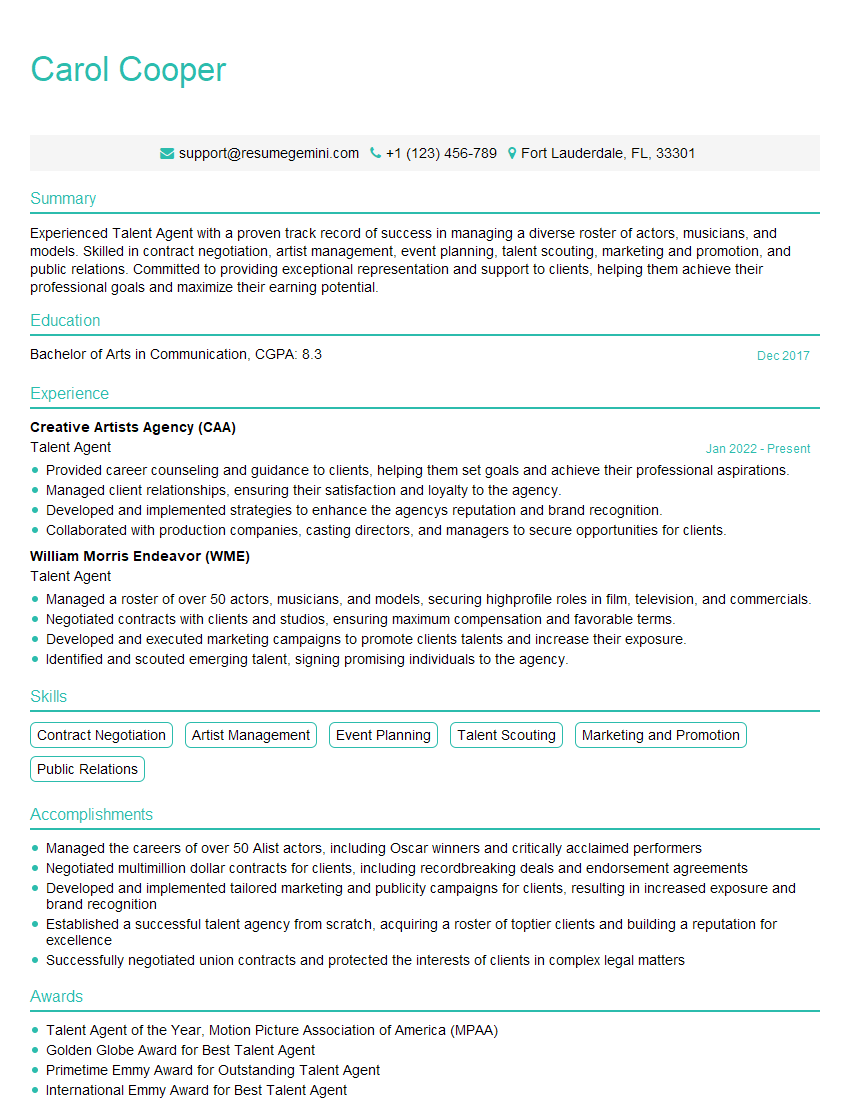
Talent Agent Resume Sample
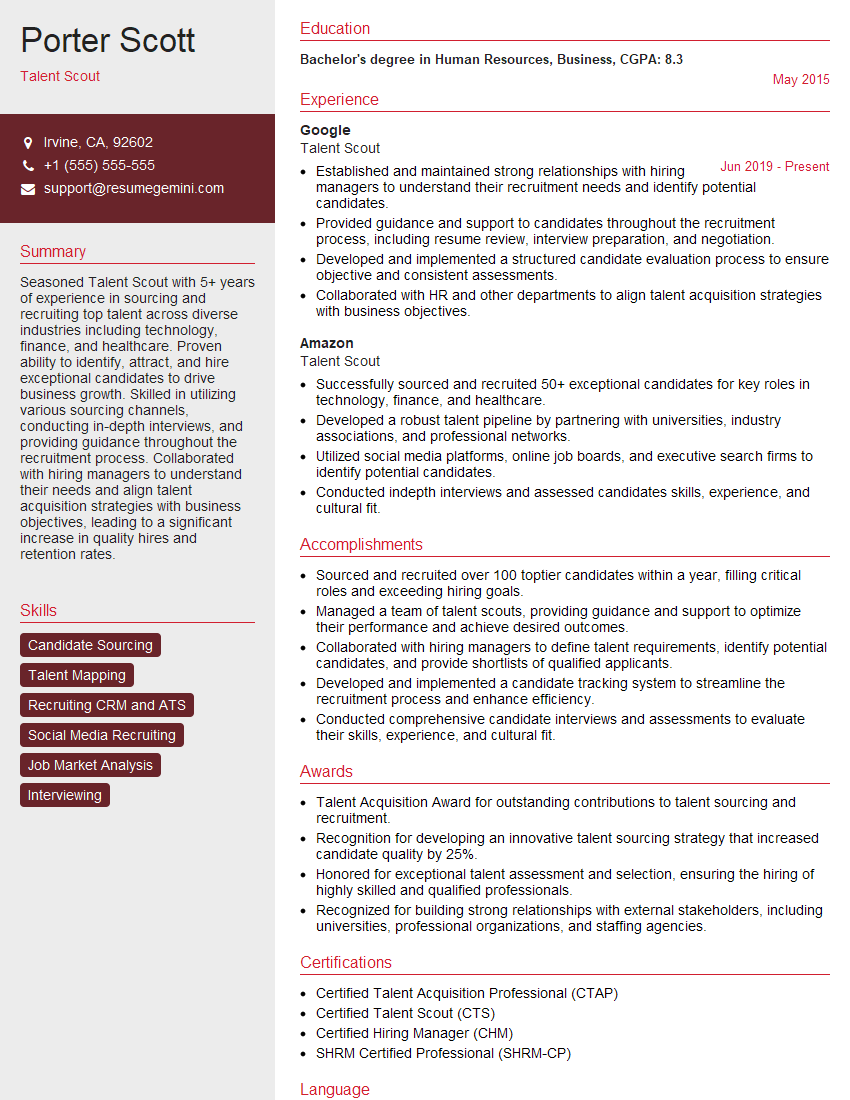
Talent Scout Resume Sample
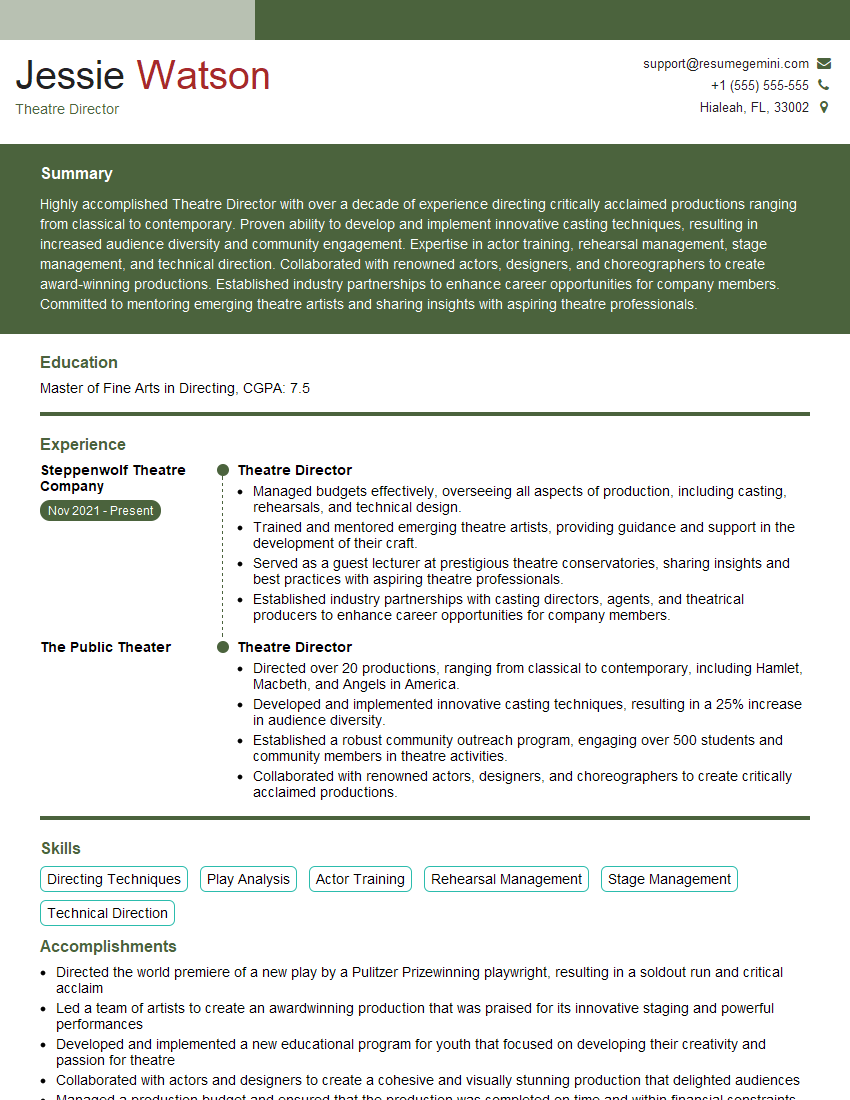
Theatre Director Resume Sample
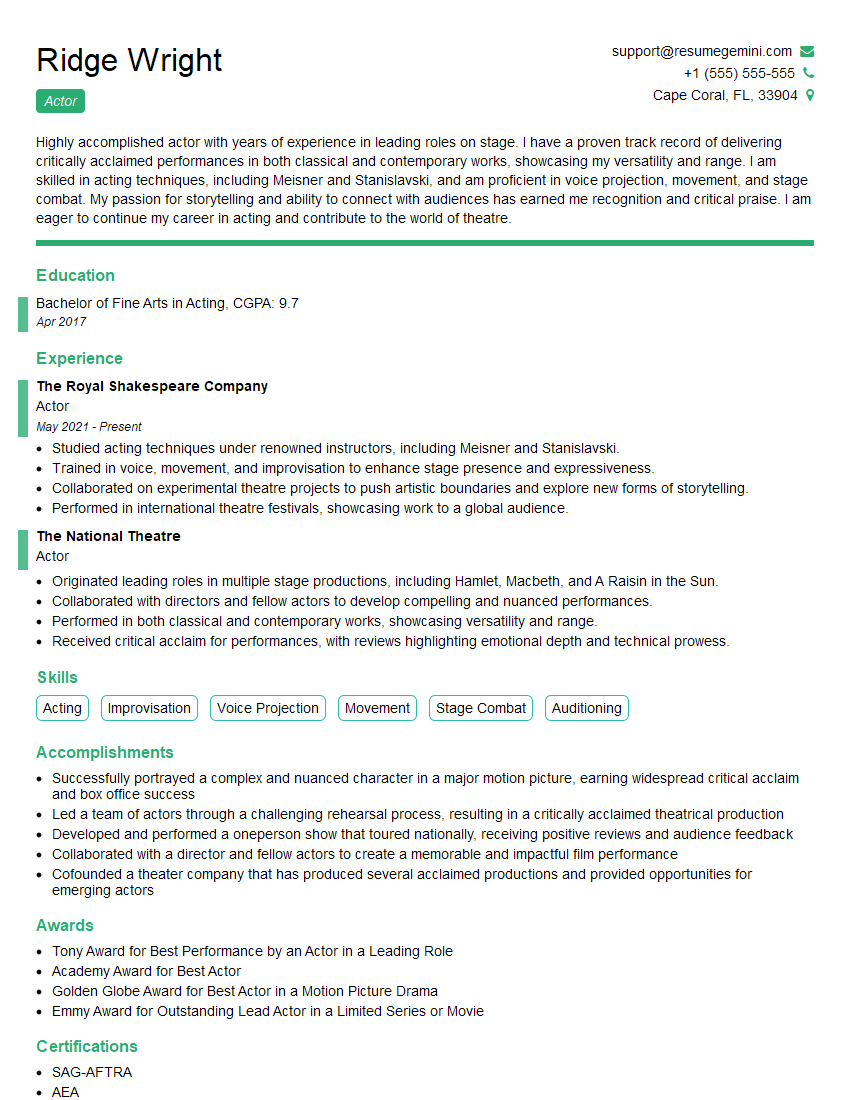
Actor Resume Sample
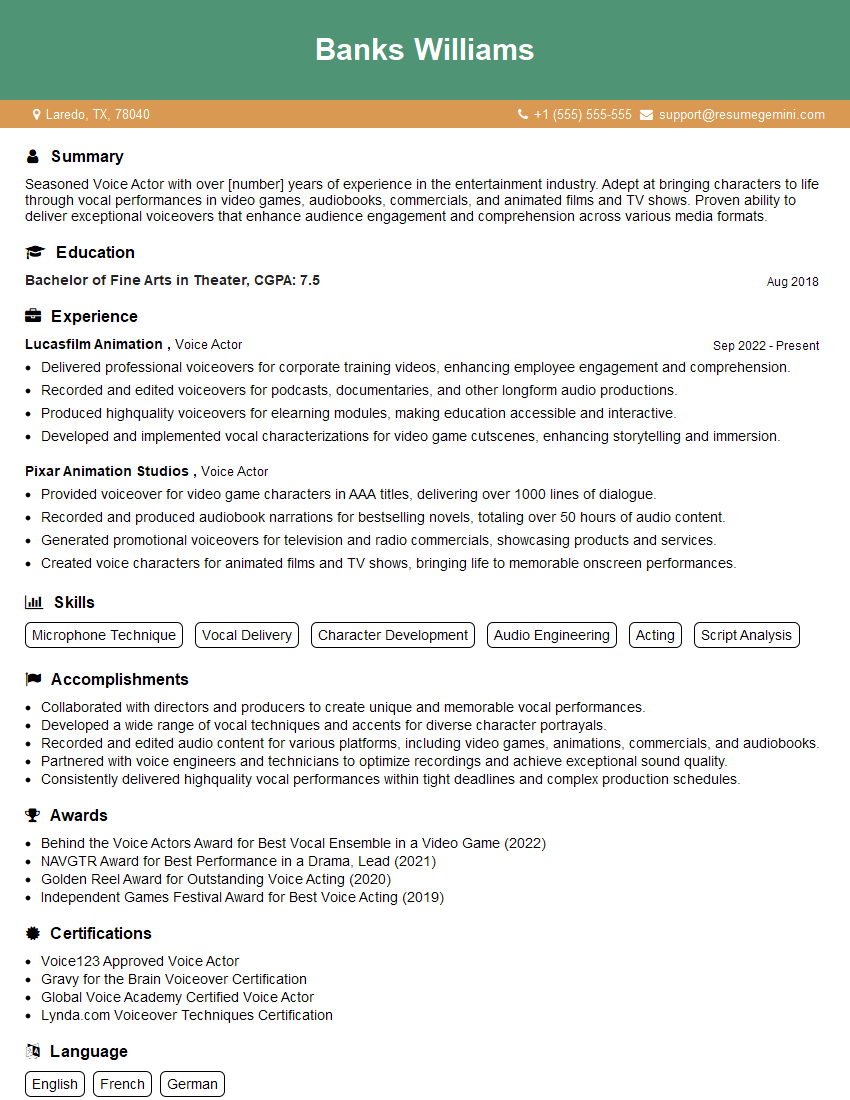
Voice Actor Resume Sample
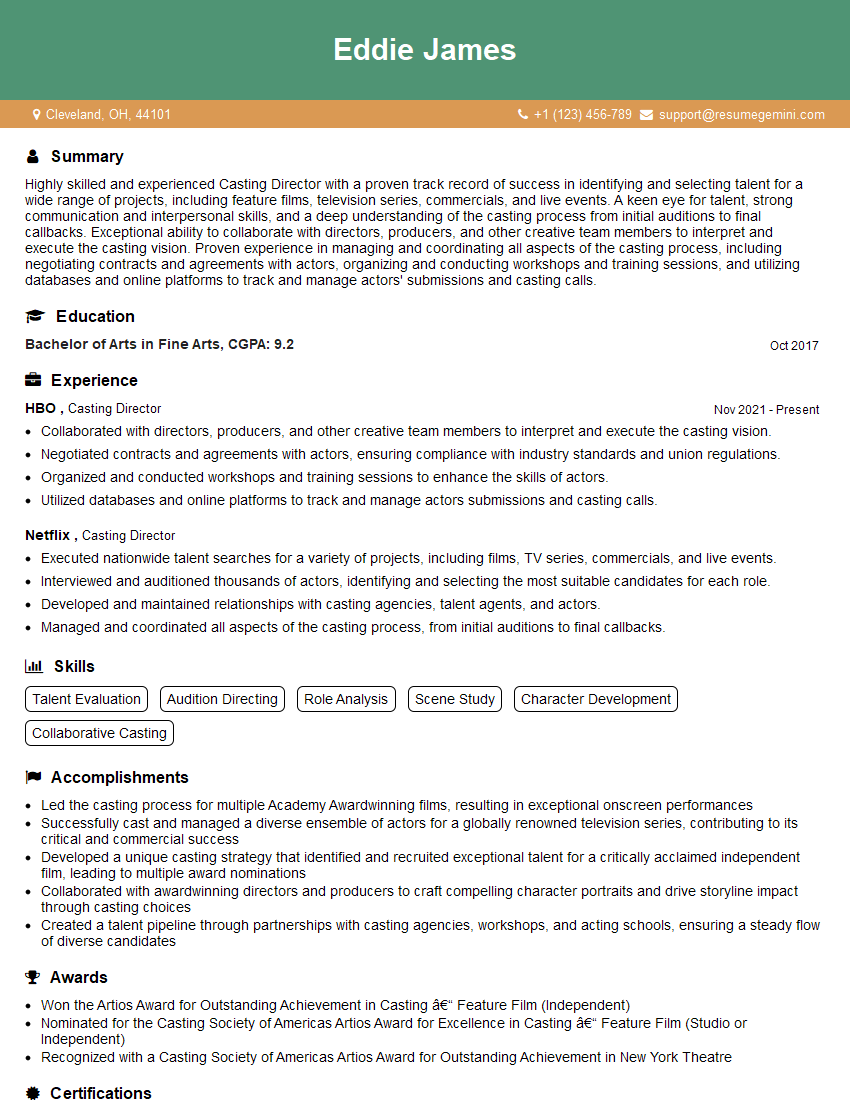
Casting Director Resume Sample
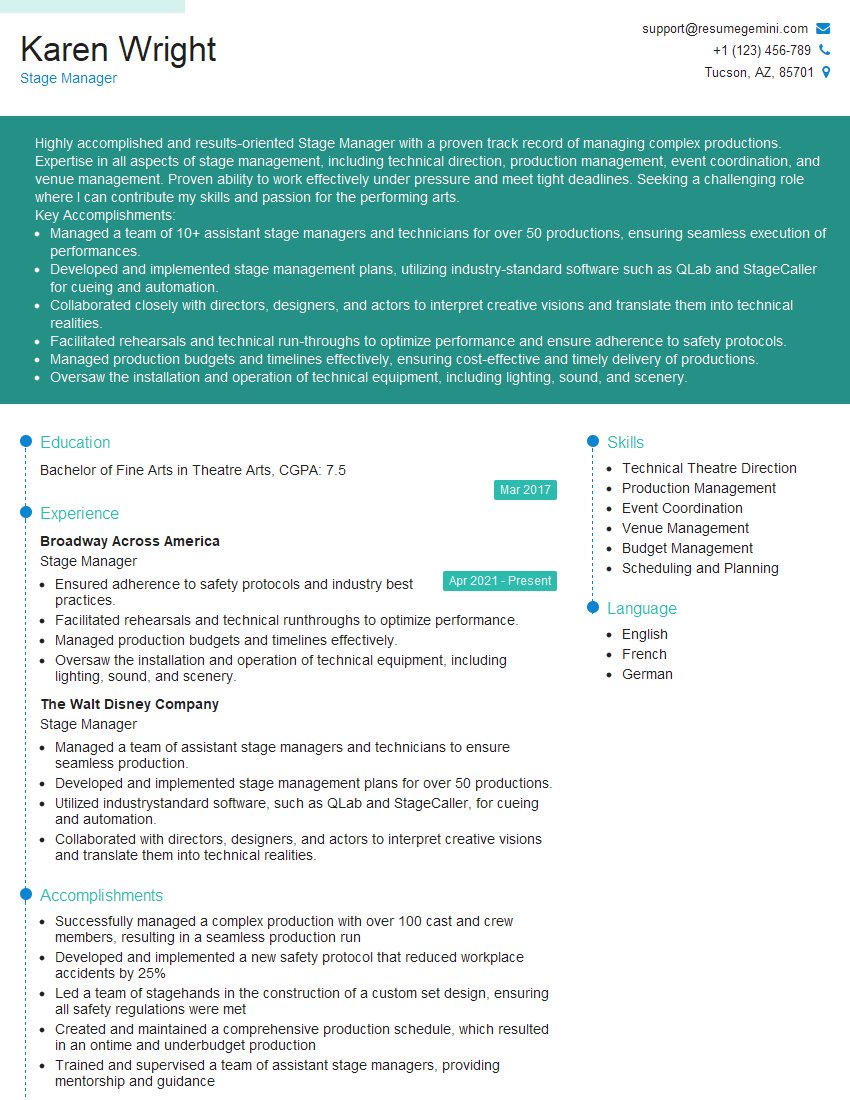
Stage Manager Resume Sample
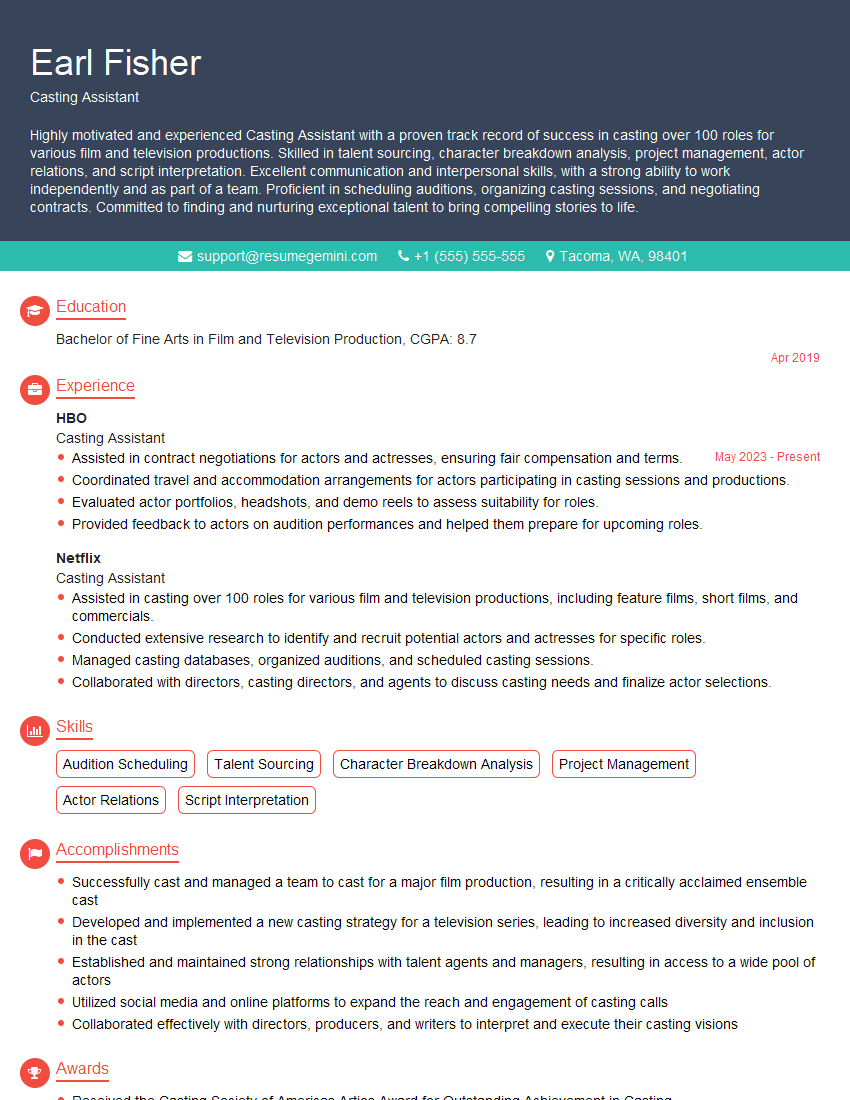
Casting Assistant Resume Sample
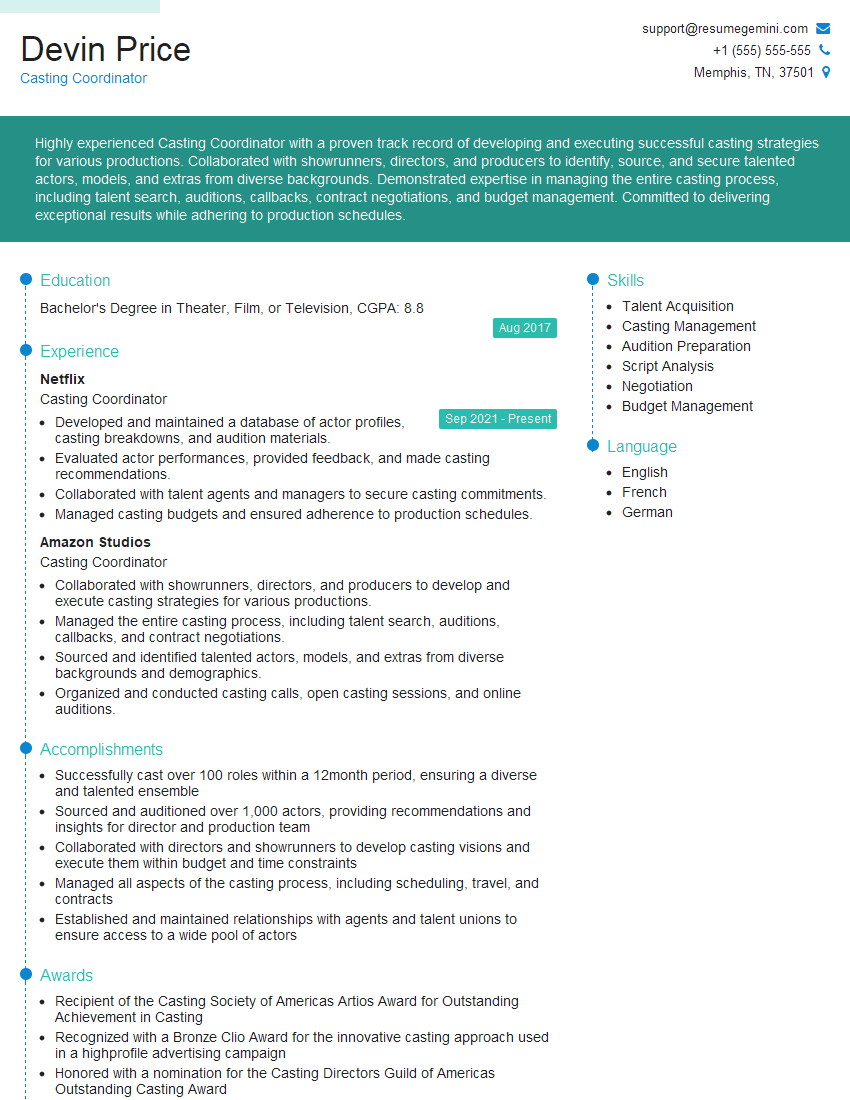
Casting Coordinator Resume Sample
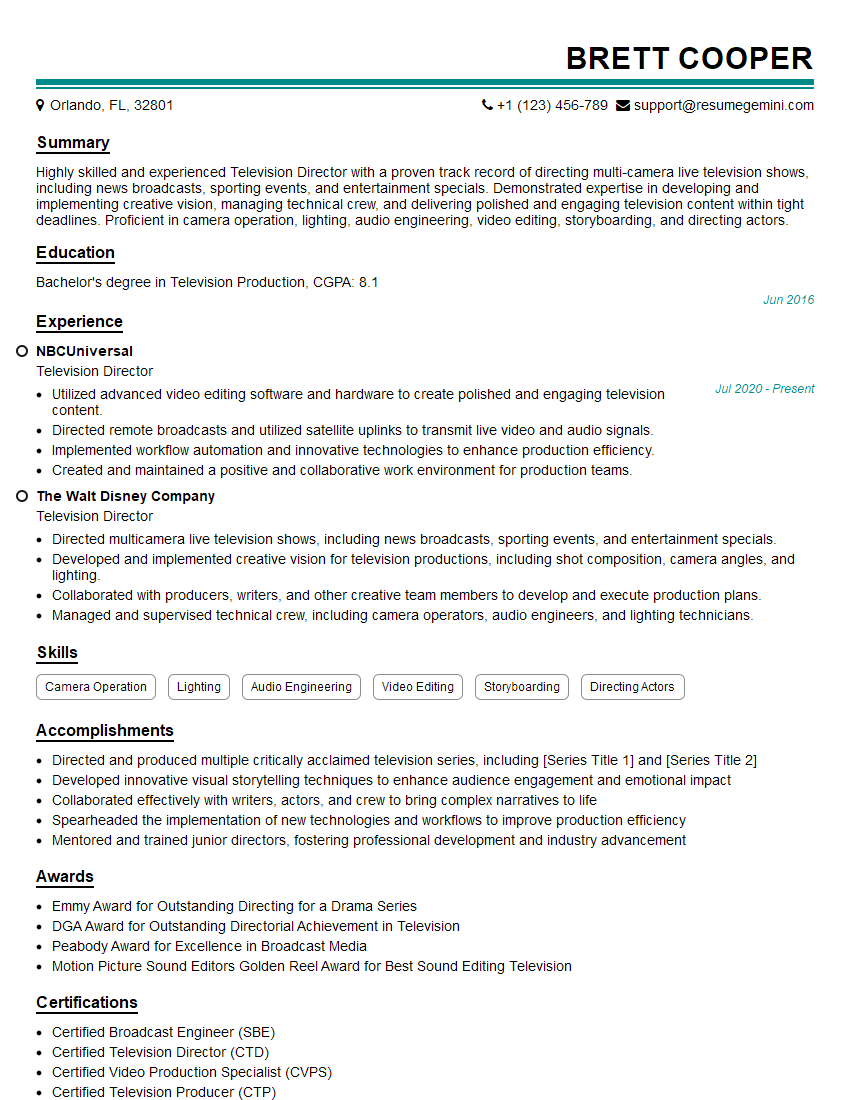
Television Director Resume Sample
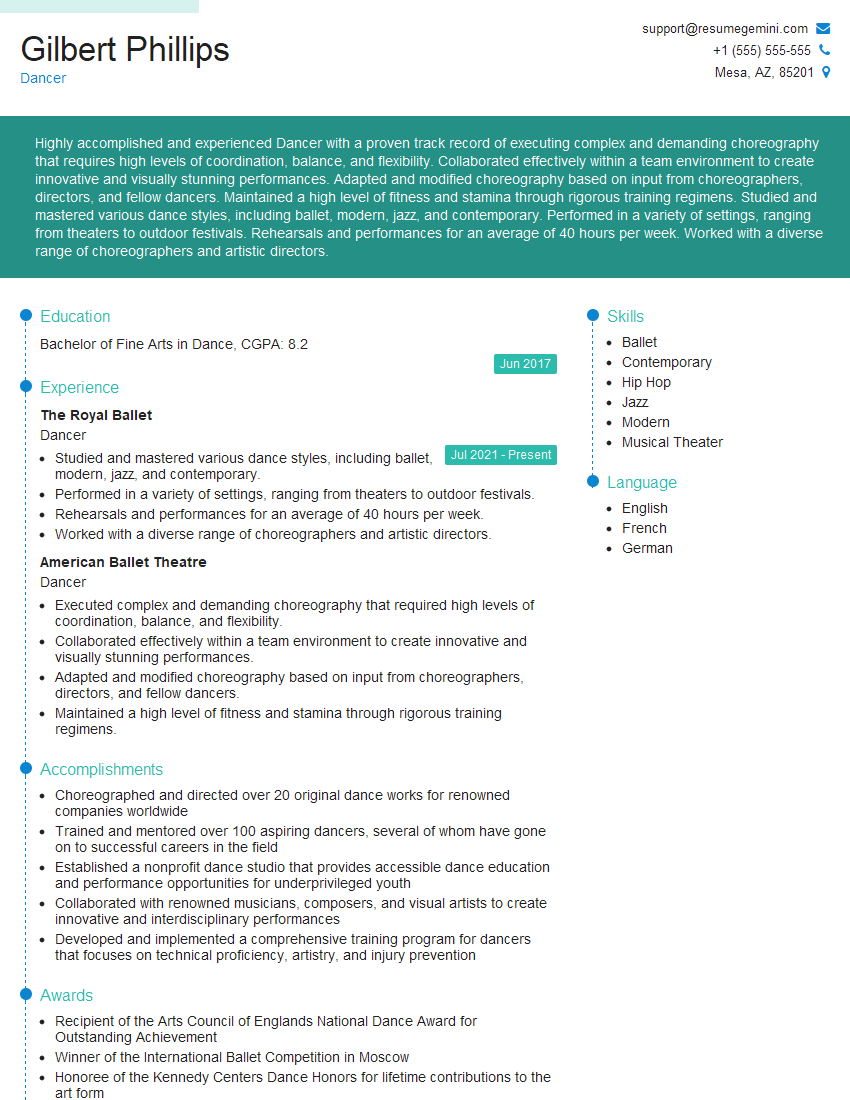
Dancer Resume Sample
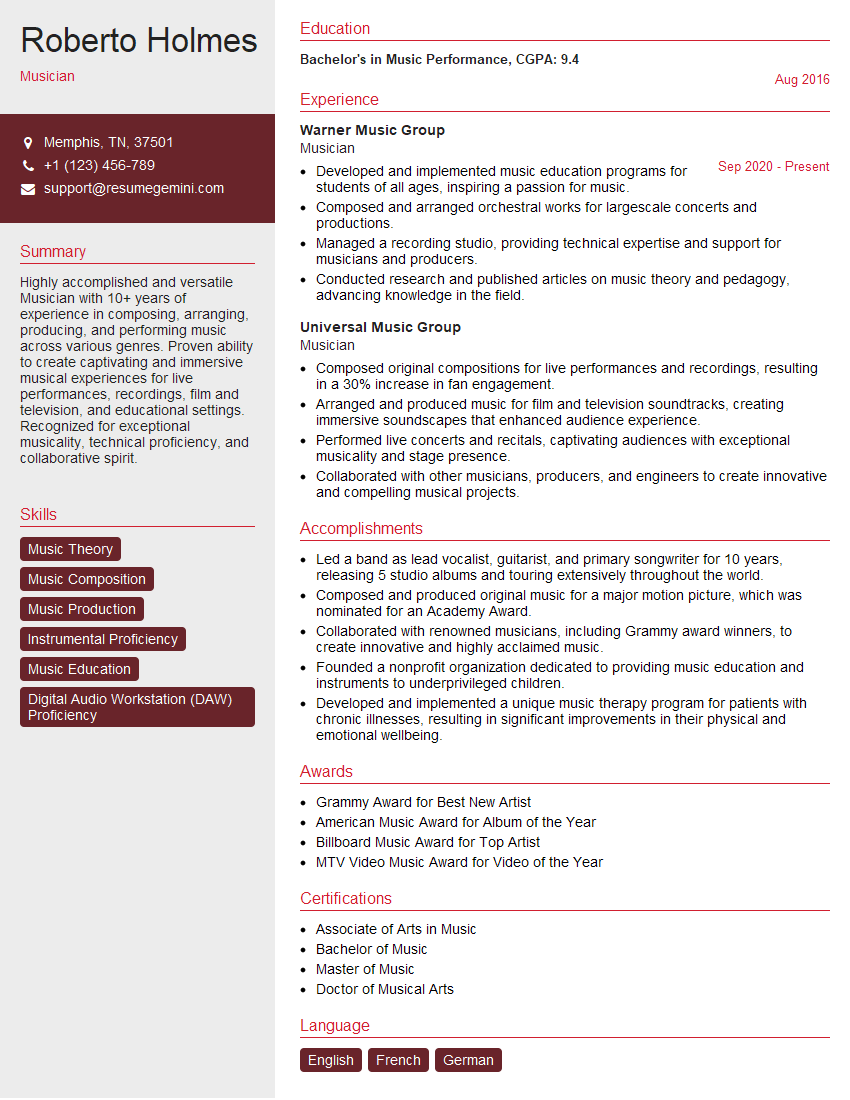
Musician Resume Sample
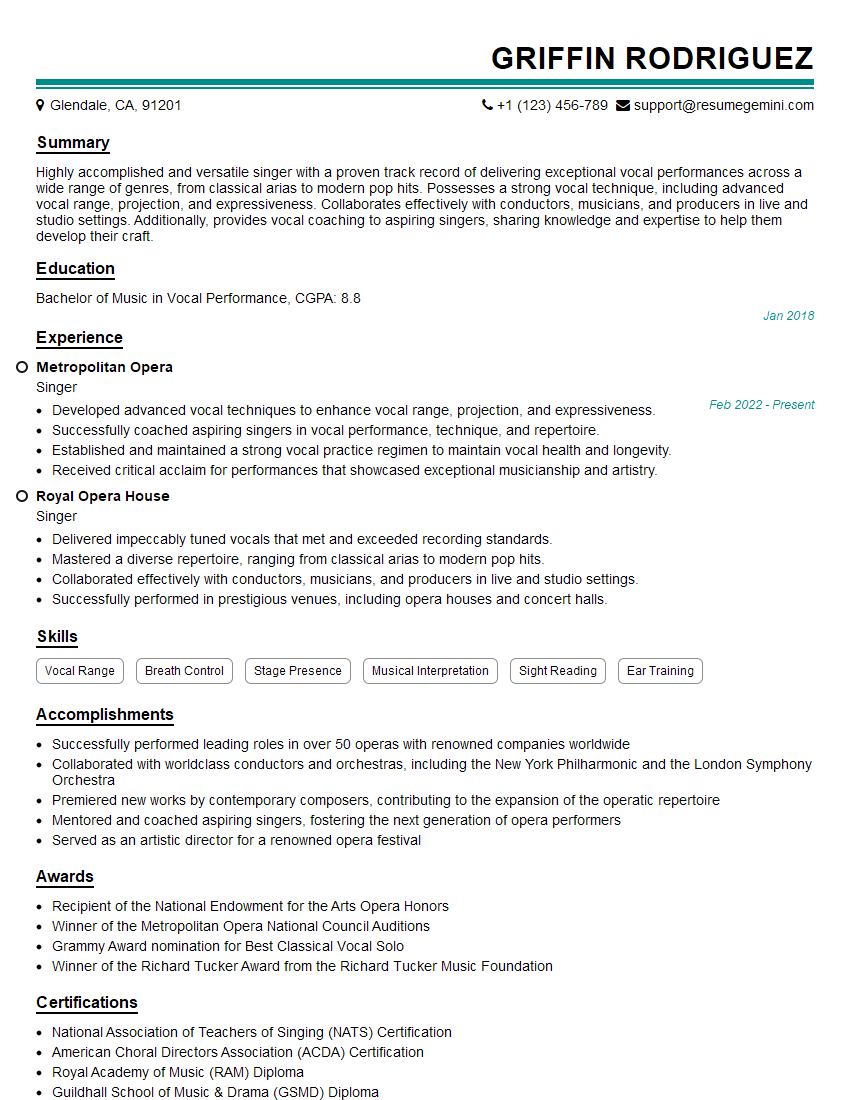
Singer Resume Sample
Explore more articles
Users Rating of Our Blogs
Share Your Experience
We value your feedback! Please rate our content and share your thoughts (optional).
What Readers Say About Our Blog
Very informative content, great job.
good