Interviews are opportunities to demonstrate your expertise, and this guide is here to help you shine. Explore the essential Aviation Regulations and Flight Safety interview questions that employers frequently ask, paired with strategies for crafting responses that set you apart from the competition.
Questions Asked in Aviation Regulations and Flight Safety Interview
Q 1. Explain the difference between FAR Part 91 and FAR Part 121 operations.
FAR Part 91 and FAR Part 121 represent two distinct categories of aircraft operations under US Federal Aviation Regulations. Think of it like this: Part 91 is for general aviation – essentially, everyone except airlines – while Part 121 governs the operations of large air carriers. The key differences lie in the level of operational complexity and the regulatory oversight required.
- FAR Part 91 (General Aviation): This part covers operations conducted by private pilots, flight schools, and other non-commercial entities. It has less stringent requirements for pilot qualifications, aircraft maintenance, and operational procedures. For example, a Part 91 flight might involve a single-pilot flight of a small airplane for personal travel. The regulations focus on ensuring a basic level of safety.
- FAR Part 121 (Air Carriers): This part sets forth much more rigorous standards for large commercial airlines and air taxi operations. It dictates strict requirements for pilot training and experience, maintenance procedures, flight operations, and safety management systems. Imagine the intricate planning involved in a large airline operation; Part 121 reflects that complexity with extensive regulations ensuring passenger safety. For example, a Part 121 operation requires multiple pilots, stringent crew rest regulations, and meticulous maintenance schedules.
In short, the difference boils down to the scale and complexity of the operation and the associated risk. Part 121 operations, due to their scale and potential impact, are subject to significantly more intense scrutiny and regulation than Part 91 operations.
Q 2. Describe the role of a Safety Management System (SMS) in aviation.
A Safety Management System (SMS) is a proactive, systematic approach to managing safety risks within an aviation organization. Instead of simply reacting to accidents, SMS focuses on identifying and mitigating hazards before they lead to incidents or accidents. Imagine it as a comprehensive safety net, constantly being adjusted and improved.
The core elements of a successful SMS usually include:
- Safety Policy: A formal statement of the organization’s commitment to safety.
- Safety Risk Management: Identifying hazards, assessing risks, and implementing controls.
- Safety Assurance: Monitoring the effectiveness of safety measures and identifying areas for improvement. This often involves analyzing data from safety reports.
- Safety Promotion: Creating a safety-conscious culture through training, communication, and reporting mechanisms.
An effective SMS fosters a culture of open communication, where employees feel comfortable reporting safety concerns without fear of retribution. This helps identify potential issues early on, leading to more effective preventative measures and ultimately enhancing safety.
Q 3. What are the key elements of a successful aviation safety program?
A robust aviation safety program hinges on several interconnected pillars:
- Strong Safety Culture: A culture that values safety above all else and encourages reporting without fear of blame. This starts at the top with management commitment and permeates through all levels of the organization.
- Effective Risk Management: This includes hazard identification, risk assessment, and the implementation of appropriate controls to mitigate those risks. Regular reviews and updates to the risk management process are crucial.
- Comprehensive Training Programs: Training should be tailored to the specific roles and responsibilities of individuals, covering both theoretical knowledge and practical skills. Regular recurrent training keeps knowledge and skills current.
- Rigorous Maintenance Programs: Aircraft maintenance is paramount to safety. Programs should adhere to regulatory requirements and industry best practices, encompassing preventative maintenance, scheduled inspections, and timely repairs.
- Data-Driven Decision Making: Collecting, analyzing, and using safety data to identify trends and patterns is essential for improving safety performance. This may involve investigating incidents and accidents to determine root causes and implementing corrective actions.
- Effective Communication: Clear, concise, and timely communication is vital for disseminating safety information to all stakeholders. This includes reporting procedures, safety alerts, and training updates.
These elements work synergistically. A weak link in one area can compromise the overall effectiveness of the safety program.
Q 4. How do you conduct a risk assessment for a specific aviation operation?
Conducting a risk assessment involves systematically identifying potential hazards and evaluating the likelihood and severity of their occurrence. A common framework is the HAZOP (Hazard and Operability) study, a structured and systematic approach. Let’s walk through an example of assessing the risk of a nighttime VFR (Visual Flight Rules) flight in mountainous terrain.
- Identify Hazards: Nighttime flying reduces visibility, increasing the risk of collision with terrain or other aircraft. Mountainous terrain introduces further challenges due to unpredictable weather, potential turbulence, and limited landing options.
- Assess Likelihood: Consider factors like weather forecasts, pilot experience, aircraft capabilities, and the complexity of the route. A poor weather forecast would increase the likelihood of an incident.
- Assess Severity: The severity ranges from minor inconvenience (e.g., a slight delay) to catastrophic failure (e.g., a fatal crash). In our example, a terrain collision carries the highest severity.
- Determine Risk: Risk is usually calculated as a combination of likelihood and severity. A high likelihood and high severity equates to a high-risk situation.
- Implement Risk Controls: Develop and implement strategies to mitigate the identified risks. For our example: obtain detailed weather briefings, utilize advanced navigation equipment, have an alternate plan, and ensure the pilot possesses the necessary experience and training for such a flight.
- Monitor and Review: After the flight, review the actual conditions against the initial assessment. This helps refine the risk assessment process for future flights.
This process should be tailored to the specific operation and can be applied to various aspects of aviation, from ground operations to flight planning and air traffic control.
Q 5. Explain the concept of human factors in aviation accidents.
Human factors encompass the psychological, physiological, and organizational influences on human performance and behavior, significantly contributing to aviation accidents. They’re not about blaming individuals but about understanding the interplay of human capabilities and limitations within the system.
Examples include:
- Pilot Error: While often cited as the primary cause, ‘pilot error’ is usually a symptom, not the root cause. Underlying factors like fatigue, stress, inadequate training, or poor communication can all contribute. For instance, a pilot fatigued from lack of rest may make critical decision errors.
- Crew Resource Management (CRM): Effective teamwork and communication within the cockpit are vital. Poor CRM can lead to errors being overlooked or not effectively addressed. For example, a first officer hesitant to speak up about a concerning situation could lead to a serious accident.
- Organizational Factors: These include aspects like inadequate training programs, ineffective safety management systems, insufficient resources, or pressure to meet schedules. A company’s obsession with on-time performance might incentivize pilots to take unnecessary risks.
- Environmental Factors: Extreme weather conditions, high altitude, and noise levels can all negatively impact human performance. For example, hypoxia at high altitude can impair judgment and reaction time.
Understanding human factors is crucial for designing safer aircraft, developing better training programs, and improving operational procedures. A holistic approach that considers these factors is vital for preventing accidents.
Q 6. Describe the process for reporting an aviation safety incident.
The process for reporting an aviation safety incident depends on the jurisdiction and the type of incident. However, the general principles remain consistent. The goal is to ensure a timely and accurate report to the relevant authority, allowing for investigation and preventative actions. There are usually different channels for reporting depending on the severity:
- Internal Reporting: Most organizations have internal reporting systems, allowing employees to report incidents anonymously or confidentially. This encourages a culture of safety reporting.
- External Reporting: Depending on the severity and nature of the event, there might be an obligation to report to a national aviation authority (e.g., the FAA in the US, EASA in Europe). This is crucial for tracking trends and improving safety measures.
The reporting process typically involves documenting the event with as much detail as possible: date, time, location, aircraft type, involved personnel, contributing factors, and any injuries or damage. Investigations often use tools such as the five whys (repeatedly asking ‘why’ to uncover the root cause) to understand the underlying factors that led to the event.
Confidential reporting systems are designed to encourage reporting without fear of blame, facilitating an open and transparent system that improves safety.
Q 7. What are the key regulations governing aircraft maintenance?
Aircraft maintenance is governed by a complex set of regulations designed to ensure airworthiness and safety. These regulations vary by country but share common goals. In the US, the main regulations are found within:
- FAR Part 43: This part outlines the requirements for maintenance, preventive maintenance, and alterations of aircraft. It specifies who can perform maintenance (certified mechanics), what records need to be kept, and how repairs must be documented.
- FAR Part 135: While this part focuses on air carrier operations, it also includes significant requirements for aircraft maintenance related to these operations. The maintenance standards are stricter given the higher risk associated with commercial air transport.
- FAR Part 91: Although less stringent than Parts 43 and 135, Part 91 outlines general maintenance requirements for general aviation operations. It specifies that aircraft must be maintained in an airworthy condition.
- Advisory Circulars (ACs): These are not regulations themselves, but guidance documents that provide recommendations and best practices for maintenance procedures. They often supplement the regulations with more detailed instructions and examples.
Maintenance manuals and airworthiness directives (ADs) are critical components of the regulatory framework, detailing specific procedures and required inspections for each aircraft type. ADs mandate specific actions to address known safety concerns. Failure to comply with these regulations can result in severe penalties, including fines and grounding of the aircraft.
Q 8. Explain the principles of airworthiness directives.
Airworthiness Directives (ADs) are mandatory instructions issued by aviation authorities, like the FAA in the US or EASA in Europe, to aircraft owners and operators. They address safety issues discovered after an aircraft is in service, requiring specific actions to correct potential hazards. Think of them as urgent safety patches for airplanes.
The principles underlying ADs are:
- Safety First: The primary goal is to prevent accidents or incidents by addressing identified safety deficiencies.
- Compliance is Mandatory: Failure to comply with an AD can result in severe penalties, including grounding of the aircraft.
- Based on Data: ADs are issued based on accident investigations, service difficulties, design flaws, or new safety findings. They are not arbitrary; they’re data-driven.
- Specific Actions Required: Each AD specifies the exact actions required, including inspections, repairs, modifications, or replacements of components.
- Timelines: ADs usually include deadlines for compliance, emphasizing the urgency of the corrective actions.
Example: If a specific model of aircraft engine is found to have a potential cracking issue in a critical component, an AD would be issued, mandating inspections of the engine and replacement if necessary within a specified timeframe.
Q 9. How do you ensure compliance with aviation regulations?
Ensuring compliance with aviation regulations is a multifaceted process requiring a proactive and systematic approach. It involves:
- Comprehensive Documentation: Maintaining meticulous records of all maintenance actions, flight operations, training records, and regulatory compliance certifications.
- Regular Audits and Inspections: Undergoing regular internal audits to check for adherence to regulations and external audits by regulatory authorities. These help identify areas for improvement.
- Training and Education: Providing comprehensive training to all personnel, including pilots, maintenance personnel, and air traffic controllers, on relevant regulations and safety procedures. This ensures everyone understands their responsibilities.
- Safety Management System (SMS): Implementing a robust SMS, a proactive and systematic approach to managing safety, identifying hazards, assessing risks, and implementing mitigations.
- Staying Updated: Continuously monitoring changes in regulations and incorporating them into operational procedures. Aviation regulations frequently change, so staying abreast is crucial.
- Reporting System: Establishing a system for reporting safety incidents and near misses, which is crucial for identifying areas requiring attention and preventing future occurrences. A blame-free culture encourages reporting.
Practical Example: A regular check of an airline’s maintenance logbooks for compliance with ADs, ensuring that all required inspections and repairs have been properly documented and completed on time.
Q 10. Describe your experience with aviation accident investigation.
My experience in aviation accident investigation involves participating in several investigations as part of a multidisciplinary team. This included analyzing flight data recorders (FDRs), cockpit voice recorders (CVRs), reviewing maintenance logs, interviewing witnesses, and reconstructing the accident sequence. A key aspect was applying systematic methodologies, like the NTSB’s or AAIB’s approach, ensuring a thorough and unbiased investigation.
One case I recall involved a controlled flight into terrain (CFIT). Our investigation meticulously examined weather conditions, navigational aids, pilot training records, and aircraft maintenance logs. Through rigorous analysis, we identified a confluence of factors including pilot fatigue, inadequate terrain awareness, and a lapse in procedural adherence. This investigation led to recommendations for improved pilot training, enhanced terrain awareness warning systems, and updated operational procedures.
The process highlighted the importance of thorough data analysis, meticulous documentation, and the collaboration of various experts. The goal is not just to determine the cause, but also to make recommendations that prevent similar accidents in the future.
Q 11. What are the common causes of pilot error?
Pilot error is a broad term often used in aviation accident reports. It’s crucial to remember it doesn’t imply negligence, but rather a breakdown in decision-making, skill execution, or adherence to procedures. Common causes include:
- Spatial Disorientation: A loss of orientation in three-dimensional space, particularly in low visibility conditions or at night.
- Lack of Situational Awareness: Failure to accurately perceive and understand the factors impacting the flight, including weather, air traffic, and aircraft status.
- Poor Decision-Making: Making flawed judgments under pressure or failing to recognize risks.
- Procedural Violations: Deviating from established checklists or procedures, which can compromise safety.
- Fatigue: Physical or mental exhaustion that impairs performance and judgment.
- Human Factors: A broad category encompassing psychological, physiological, and social influences such as stress, workload, and crew resource management (CRM) deficiencies.
Example: A pilot deviating from standard operating procedures during an approach, leading to a runway excursion. This might stem from pressure to meet a schedule (poor decision-making) or inadequate communication with the co-pilot (CRM deficiency).
Q 12. Explain the role of air traffic control in ensuring flight safety.
Air Traffic Control (ATC) plays a vital role in ensuring flight safety by providing separation between aircraft, guiding them along established routes, and managing traffic flow at airports. This is achieved through:
- Separation Services: Maintaining safe distances between aircraft to prevent collisions.
- Sequencing and Spacing: Managing the flow of aircraft at airports to prevent congestion and delays.
- Guidance and Control: Providing pilots with navigation instructions, weather information, and advisories to ensure safe and efficient flights.
- Emergency Response: Coordinating emergency response efforts in the event of an incident or accident.
- Communication: Maintaining clear and concise communication with pilots, coordinating with other ATC units, and relaying critical information.
Example: ATC guiding an aircraft through a busy airspace, ensuring it maintains a safe distance from other aircraft and avoiding conflicting trajectories. During an emergency, ATC will prioritize safe landing or diversion of an aircraft.
Q 13. Describe your understanding of ICAO standards and recommended practices.
The International Civil Aviation Organization (ICAO) sets global standards and recommended practices for aviation safety, security, and efficiency. My understanding encompasses:
- Annex 6 (Operation of Aircraft): This covers the operational aspects of flying, including airworthiness, licensing, and flight crew training.
- Annex 8 (Airworthiness of Aircraft): Deals with aircraft design, manufacturing, and maintenance standards to ensure their airworthiness.
- Annex 14 (Aerodromes): Establishes criteria for aerodrome design, construction, and operation, ensuring safe infrastructure for aircraft.
- SARPs (Standards and Recommended Practices): These provide guidance for states (countries) to implement aviation regulations and procedures, with standards being mandatory and practices being recommendations.
ICAO documents provide a framework for consistency across the globe, minimizing differences and improving international cooperation. They are essential for ensuring the safety and efficiency of international air travel. Deviation from these standards can result in operational incompatibility and increased risk.
Q 14. How do you handle a conflict between operational efficiency and safety?
Conflicts between operational efficiency and safety are inevitable in aviation. The resolution requires a prioritization of safety without compromising operational efficiency unduly. My approach involves:
- Risk Assessment: Analyzing the potential risks associated with both operational shortcuts and strict adherence to safety protocols. This helps in making informed decisions.
- Data-Driven Decision Making: Using historical data and statistical analysis to assess the likelihood and severity of risks. This provides objective evidence for decisions.
- Cost-Benefit Analysis: Weighing the costs of implementing safety measures against the potential costs of accidents or incidents.
- Transparency and Communication: Openly communicating potential conflicts to all stakeholders, including pilots, maintenance personnel, and management. This ensures alignment and understanding.
- Continuous Improvement: Regularly reviewing procedures and safety measures to identify opportunities for improvement and to maintain the balance between safety and operational efficiency.
Example: If a slightly faster routing saves fuel but increases the risk of encountering adverse weather, a risk assessment, including weather forecasts, will guide whether the operational efficiency is worthwhile or if the safer, slower route is preferred.
Q 15. What are your strategies for managing safety risks in a dynamic aviation environment?
Managing safety risks in aviation requires a proactive, layered approach. It’s not enough to simply react to incidents; we must anticipate and mitigate potential hazards. My strategy hinges on several key pillars:
- Hazard Identification and Risk Assessment: This involves systematically identifying potential hazards throughout the entire aviation operation, from maintenance procedures to flight operations. We use tools like HAZOP (Hazard and Operability Study) and bow-tie diagrams to analyze the likelihood and severity of risks. For example, identifying potential bird strikes at an airport would involve assessing factors like proximity to wetlands, flight paths, and the time of day.
- Safety Management System (SMS): Implementing a robust SMS is crucial. This framework encourages a proactive safety culture, involving continuous monitoring, risk mitigation, and performance measurement. Regular safety audits, internal reporting systems, and proactive safety training are all integral components. A successful SMS uses data analysis to identify trends and address systemic issues.
- Mitigation Strategies: Once risks are identified and assessed, we develop and implement mitigation strategies. These may include engineering controls (e.g., improved aircraft design), administrative controls (e.g., updated procedures), and personal protective equipment (e.g., protective gear for ground crews).
- Continuous Improvement: Aviation safety is a journey, not a destination. We must constantly monitor our safety performance, analyze incidents and near misses (using techniques like root cause analysis), and adapt our strategies based on what we learn. This iterative process is essential to staying ahead of emerging risks.
- Communication and Collaboration: Open communication and collaboration among all stakeholders, including pilots, maintenance personnel, air traffic controllers, and management, are paramount. A culture of open reporting, where individuals feel comfortable reporting safety concerns without fear of retribution, is essential for a successful safety management system.
For instance, during my time at [Previous Company Name], we implemented a new SMS framework which resulted in a 30% reduction in reported incidents within two years. This was achieved through improved hazard reporting procedures, enhanced training, and a strengthened safety culture.
Career Expert Tips:
- Ace those interviews! Prepare effectively by reviewing the Top 50 Most Common Interview Questions on ResumeGemini.
- Navigate your job search with confidence! Explore a wide range of Career Tips on ResumeGemini. Learn about common challenges and recommendations to overcome them.
- Craft the perfect resume! Master the Art of Resume Writing with ResumeGemini’s guide. Showcase your unique qualifications and achievements effectively.
- Don’t miss out on holiday savings! Build your dream resume with ResumeGemini’s ATS optimized templates.
Q 16. Explain the importance of crew resource management (CRM).
Crew Resource Management (CRM) is absolutely critical for aviation safety. It’s not just about the technical skills of the crew; it’s about how they work together as a team. CRM focuses on maximizing the use of all available resources—human, technical, and organizational—to enhance safety and efficiency.
Effective CRM involves several key elements:
- Communication: Clear, concise, and assertive communication is crucial. Pilots and other crew members must be able to communicate effectively, even under stressful conditions. This includes active listening, clear articulation, and the use of standard phraseology.
- Leadership: Effective leadership from the captain, but also shared leadership and participation from all crew members, is crucial. This involves fostering a positive team environment where everyone feels empowered to speak up and contribute.
- Decision-Making: The decision-making process should be collaborative, taking into account the perspectives and expertise of all crew members. This involves critical thinking, risk assessment, and the ability to make sound judgments under pressure.
- Situational Awareness: Maintaining a clear understanding of the situation—both internal (within the cockpit) and external (the surrounding environment)—is essential. This helps prevent errors and allows for proactive problem-solving.
- Workload Management: Effective workload management involves distributing tasks effectively and efficiently among crew members to prevent overload and fatigue.
Consider a scenario where an unexpected system malfunction occurs during flight. Good CRM would involve the crew calmly assessing the situation, efficiently managing their workload, communicating effectively with air traffic control, and working together to find a safe solution. Without effective CRM, the situation could escalate into a more serious incident.
Q 17. Describe your experience with safety audits and inspections.
I have extensive experience conducting and participating in safety audits and inspections, both internal and external. My experience covers a wide range of aspects, from reviewing maintenance records to observing flight operations. I’m proficient in using various auditing methodologies and documentation techniques.
During my career, I’ve been involved in:
- ICAO Annex 6 compliant audits: I have personally participated in audits that ensured compliance with international aviation safety standards. This includes reviewing documentation, conducting interviews with personnel, and observing operational practices.
- Internal audits: I’ve led and participated in internal audits focused on specific areas of operation, such as maintenance procedures, flight operations, or emergency response plans. These audits help identify areas for improvement and ensure compliance with company policies and procedures.
- Regulatory inspections: I’ve worked with regulatory bodies during inspections of our operations, ensuring full transparency and providing all necessary documentation and support. This includes responding to findings and implementing corrective actions.
One notable experience involved an audit that identified a minor deficiency in a maintenance procedure. Through the audit process, we uncovered the deficiency and rectified it before it could potentially lead to a more serious incident. This highlights the importance of proactive safety audits and the value of identifying and addressing issues before they escalate.
Q 18. How do you stay up-to-date with changes in aviation regulations?
Staying current with changes in aviation regulations is crucial. My approach involves a multi-faceted strategy:
- Subscription to Regulatory Bulletins and Notices: I actively subscribe to notifications and updates from relevant regulatory bodies such as the FAA (Federal Aviation Administration), EASA (European Union Aviation Safety Agency), and ICAO (International Civil Aviation Organization). This ensures I receive timely information on changes in regulations and guidance.
- Industry Publications and Journals: I regularly read industry publications and journals that provide insights into emerging safety issues and regulatory changes. These publications often include analysis and interpretation of new regulations and their practical implications.
- Professional Development Courses and Seminars: I participate in ongoing professional development courses and seminars to stay abreast of the latest regulations, best practices, and technological advancements impacting aviation safety. These courses provide opportunities to network with other professionals and learn from their experiences.
- Membership in Professional Organizations: Membership in relevant professional organizations provides access to resources, training, and networking opportunities, keeping me connected to the latest developments and discussions within the field.
- Internal Communication and Training: I actively participate in and contribute to internal training programs to ensure that all personnel are informed of relevant regulatory changes and their implications for our operations.
For example, recently, I attended a seminar on the implementation of the new drone regulations, which helped me understand the implications for our airport operations and develop appropriate mitigation strategies.
Q 19. Explain the concept of Just Culture in aviation safety.
Just Culture in aviation safety is a crucial philosophy that aims to balance the need for accountability with the need to learn from errors and improve safety. It doesn’t mean there are no consequences for unsafe acts, but it does promote a reporting environment where individuals feel safe to report errors and near misses without fear of punishment for unintentional mistakes.
The key principles of Just Culture are:
- Accountability: Individuals are accountable for their actions, and appropriate consequences are applied for reckless behavior or intentional violations. This ensures that serious misconduct is addressed.
- Learning: The primary focus is on learning from errors and near misses to prevent future incidents. This involves a thorough investigation of incidents to identify root causes and implement corrective actions.
- Reporting: A culture of open reporting is essential. Individuals should feel comfortable reporting errors without fear of blame or retribution for honest mistakes.
- Human Factors: Just Culture recognizes that human factors, such as fatigue, stress, and distractions, can contribute to errors. It aims to address these factors through training, procedural changes, and improved workplace design.
Imagine a scenario where a pilot makes a minor navigation error due to distraction. Under a Just Culture, the focus would be on understanding what led to the distraction and implementing measures to prevent similar errors in the future, rather than solely blaming the pilot. However, if the pilot acted recklessly or intentionally violated procedures, appropriate consequences would be applied.
Q 20. What are the challenges of implementing and maintaining an effective SMS?
Implementing and maintaining an effective Safety Management System (SMS) presents several challenges:
- Organizational Culture: Shifting an organization’s culture towards a proactive safety mindset can be difficult. This requires strong leadership commitment, effective communication, and ongoing training to foster a culture of open reporting and continuous improvement.
- Resource Constraints: Implementing and maintaining an SMS requires significant resources, including personnel, training, software, and hardware. Limited resources can hinder the effectiveness of the system.
- Data Management: Effectively collecting, analyzing, and utilizing safety data is crucial. Developing robust data management systems and processes can be complex and require specialized expertise.
- Regulatory Compliance: Staying up-to-date with regulatory requirements and ensuring compliance can be a challenge, particularly with constantly evolving regulations.
- Maintaining Momentum: Sustaining a strong SMS requires ongoing commitment and effort. Without constant attention, the system can become ineffective over time.
- Integration with Other Systems: An effective SMS needs to seamlessly integrate with other operational systems within the organization to avoid redundancies and inefficiencies.
For example, resistance to change from staff who are used to traditional ways of working can be a major obstacle. Overcoming this requires effective communication, demonstrating the benefits of the SMS, and providing adequate training and support.
Q 21. Describe your experience with emergency response procedures.
My experience with emergency response procedures is extensive and covers a range of scenarios, from aircraft emergencies to ground incidents. This involves both theoretical knowledge and practical application of procedures.
My experience includes:
- Emergency Response Training: I’ve undergone extensive training in various emergency response procedures, including emergency evacuation, fire suppression, and first aid. This training has included both classroom instruction and practical exercises.
- Incident Response Participation: I’ve participated in several real-world incident responses, working collaboratively with various emergency services personnel. These experiences have provided valuable insights into the practical challenges of emergency response and the importance of effective coordination.
- Emergency Plan Development and Review: I’ve contributed to the development and regular review of emergency response plans, ensuring their effectiveness and alignment with regulatory requirements. This includes tabletop exercises and simulations.
- Post-Incident Investigation: I’ve been involved in post-incident investigations, analyzing the events and contributing to the development of corrective actions to prevent similar incidents in the future.
For example, during a recent airport emergency involving a ground collision, I worked closely with airport emergency personnel to coordinate the response, ensure the safety of passengers, and assist in the investigation. This highlighted the importance of clear communication, efficient coordination, and the rapid implementation of established procedures.
Q 22. How would you handle a situation where a flight crew member violates a regulation?
Handling a flight crew regulation violation requires a structured approach prioritizing safety and due process. The severity of the violation dictates the response. Minor infractions, like a minor deviation from a standard operating procedure, might be addressed with verbal counseling and retraining. More serious breaches, such as operating under the influence or ignoring air traffic control instructions, demand immediate action. This could involve removing the crew member from duty, conducting a thorough investigation, and potentially initiating disciplinary proceedings, all in accordance with the airline’s internal policies and relevant national and international regulations.
For instance, if a pilot failed to properly complete a pre-flight checklist, a verbal warning and retraining might suffice. However, if a pilot deliberately disregarded an air traffic control instruction, a suspension, investigation by the relevant aviation authority, and potential license revocation could follow. The entire process needs to be meticulously documented, ensuring fairness and transparency. Crucial to this process is understanding the root cause of the violation – was it due to negligence, lack of training, fatigue, or something else? Addressing the underlying cause is just as important as addressing the immediate violation.
Q 23. What is your understanding of fatigue risk management?
Fatigue risk management (FRM) is a systematic approach to identifying, assessing, and controlling fatigue-related risks within the aviation industry. It recognizes that fatigue significantly impacts performance, judgment, and safety. A robust FRM program includes several key elements:
- Fatigue risk assessment: Identifying tasks and operational factors that contribute to fatigue.
- Crew scheduling: Designing flight and rest schedules to minimize fatigue risk, considering factors like flight duration, time zones crossed, and crew members’ individual characteristics.
- Education and training: Providing crew members with information on fatigue, its effects, and strategies for mitigating it.
- Monitoring and evaluation: Tracking fatigue-related incidents and evaluating the effectiveness of the FRM program.
Imagine a long-haul flight with multiple crew changes across several time zones. An effective FRM program would consider the impact of jet lag and crew rest periods, ensuring they are appropriately scheduled to minimize the risk of fatigue-related errors. This might involve optimizing flight schedules, providing adequate rest facilities, and encouraging the adoption of healthy sleep habits by crew members. Data analysis, including flight data monitoring and crew self-reporting, would help to continuously refine the FRM strategies and maintain high safety standards.
Q 24. Describe your experience with aviation security regulations.
My experience with aviation security regulations spans various aspects, from passenger screening and baggage handling to aircraft security and access control. I’m familiar with regulations such as those outlined by the International Civil Aviation Organization (ICAO) and national aviation authorities. This includes understanding and applying regulations related to:
- Known vulnerabilities: Identifying and mitigating known security weaknesses in airports and aircraft.
- Threat assessment: Evaluating potential threats and adjusting security measures accordingly.
- Security technologies: Utilizing advanced technologies like explosive detection systems and passenger screening equipment.
- Security training: Ensuring that all personnel involved in aviation security receive adequate training.
For example, my work has involved analyzing the effectiveness of security checkpoints, ensuring compliance with screening procedures for both passengers and cargo, and coordinating with law enforcement and security agencies to address potential threats. Understanding the legal framework surrounding these regulations is crucial for implementing and maintaining a secure environment at airports and on board aircraft.
Q 25. How do you communicate safety concerns effectively?
Effective communication of safety concerns requires a clear, concise, and non-accusatory approach. I use the following strategies:
- Hierarchical reporting: Using established reporting channels to communicate concerns to appropriate supervisors and management.
- Data-driven approach: Using data and evidence to support safety concerns, enhancing credibility.
- Proactive engagement: Encouraging open communication and feedback from all stakeholders.
- Using various communication methods: Utilizing formal reports, informal discussions, safety meetings, and even anonymous reporting systems where appropriate.
For example, if I observed a recurring pattern of near-miss incidents during takeoff, I would document these events meticulously, analyze the data to identify contributing factors, and present my findings to the relevant safety committee or management, suggesting specific corrective actions. The goal is not simply to point out problems but to proactively contribute to solutions that enhance safety.
Q 26. Explain the importance of proactive safety measures.
Proactive safety measures are critical because they address potential hazards *before* they cause incidents or accidents. Reactive measures, while necessary, are always a step behind. Proactive measures focus on preventing problems rather than reacting to them. This approach is far more cost-effective and efficient in the long run. Think of it like regular vehicle maintenance – changing the oil and performing routine inspections prevents major engine failure down the road.
Examples of proactive safety measures include hazard identification and risk assessment processes (HAZOP), safety audits, implementing safety management systems (SMS), and proactive training programs that anticipate potential risks. Proactive safety measures are fundamental to a strong safety culture, where everyone feels empowered to identify and report potential hazards.
Q 27. Describe your experience with flight data monitoring (FDM).
Flight data monitoring (FDM) is a crucial tool for improving aviation safety. It involves collecting and analyzing data from flight recorders, such as the flight data recorder (FDR) and cockpit voice recorder (CVR), to identify trends, patterns, and potential safety issues. My experience involves working with FDM data to:
- Identify safety trends: Analyzing data to spot recurring issues or near-miss situations.
- Improve flight operations: Using data-driven insights to refine procedures and training programs.
- Reduce risk: Implementing corrective actions to address identified safety concerns.
- Enhance crew resource management: Assessing crew performance and collaboration to identify opportunities for improvement.
For example, I’ve been involved in analyzing FDM data to identify recurring instances of unusual approach speeds, leading to the development of additional training modules focused on maintaining appropriate airspeeds during approach. FDM provides a powerful objective assessment of flight operations and allows us to anticipate and correct potential issues proactively.
Q 28. How do you ensure the accuracy and reliability of safety data?
Ensuring the accuracy and reliability of safety data is paramount. This requires a multi-faceted approach:
- Data validation: Implementing rigorous quality control procedures to ensure data integrity.
- Data source verification: Confirming the reliability and accuracy of data sources.
- Data analysis techniques: Using appropriate statistical methods to interpret data accurately.
- Regular audits: Conducting regular audits of data collection and analysis processes.
- Data security: Protecting the confidentiality and security of safety data.
For example, before analyzing FDM data, we verify the integrity of the data recorded by comparing it with other sources such as air traffic control recordings or pilot reports. We also utilize statistical methods to identify outliers or anomalies that might indicate errors in the data. This robust approach ensures that our safety analyses are based on reliable and accurate information, leading to effective and targeted safety improvements.
Key Topics to Learn for Aviation Regulations and Flight Safety Interview
- International Civil Aviation Organization (ICAO) Annexes: Understanding key annexes like Annex 6 (Operation of Aircraft), Annex 8 (Airworthiness of Aircraft), and Annex 14 (Aerodromes) is crucial. Consider the practical implications of these regulations on daily flight operations.
- National Aviation Regulations: Familiarize yourself with the specific regulations of the country or region you are applying to. Be prepared to discuss how these regulations impact flight planning, crew resource management, and safety procedures.
- Risk Management and Safety Assessments: Understand different risk assessment methodologies used in aviation and how these are applied to mitigate hazards. Be ready to discuss practical examples of hazard identification and risk mitigation strategies.
- Accident Investigation and Reporting: Knowing the process of accident investigation, the role of various stakeholders, and the importance of accurate reporting is vital. This includes understanding the use of data to improve safety.
- Human Factors in Aviation Safety: This encompasses a wide range of topics, including fatigue management, CRM (Crew Resource Management), and the impact of human error on safety. Be prepared to discuss practical strategies for mitigating human error.
- Emergency Procedures and Response: Demonstrate your understanding of emergency procedures for various scenarios, including engine failure, in-flight emergencies, and ground incidents. Focus on the practical application of these procedures and the importance of effective communication.
- Flight Data Monitoring (FDM) and Safety Management Systems (SMS): Discuss the role of FDM and SMS in proactive safety management. Understand how data is collected, analyzed, and used to improve safety performance.
Next Steps
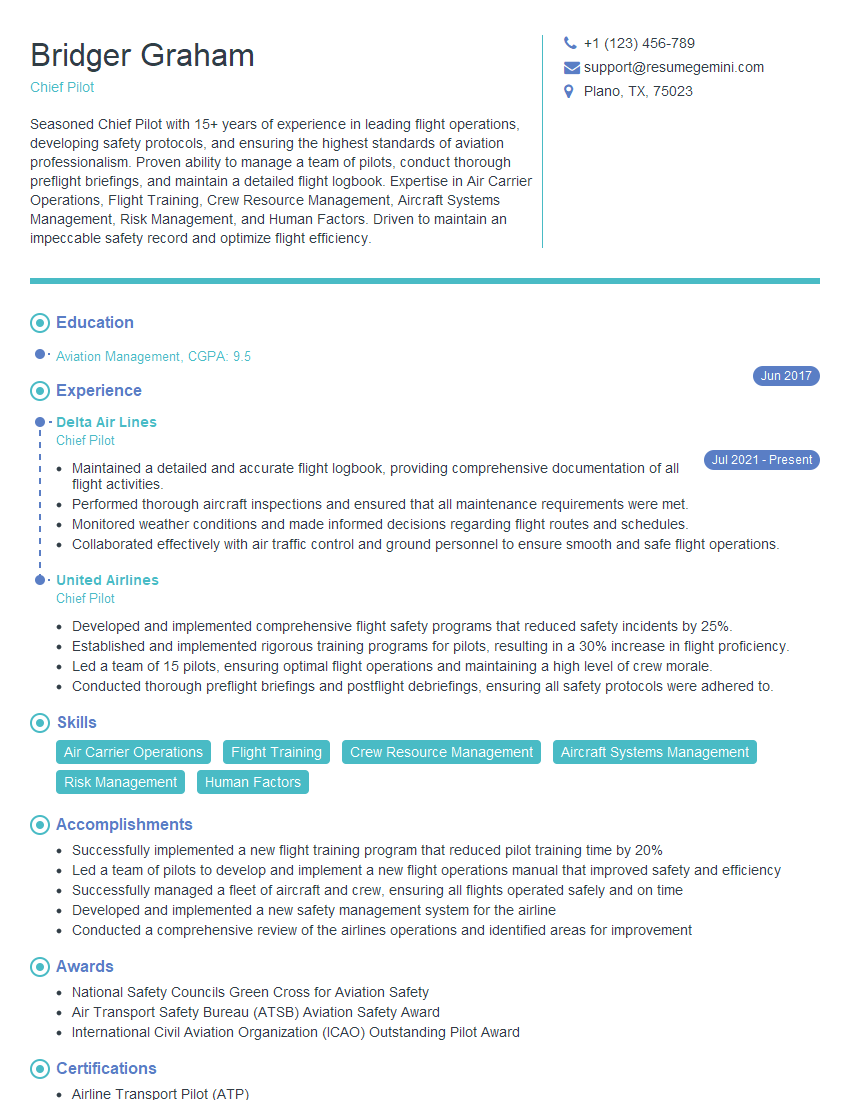
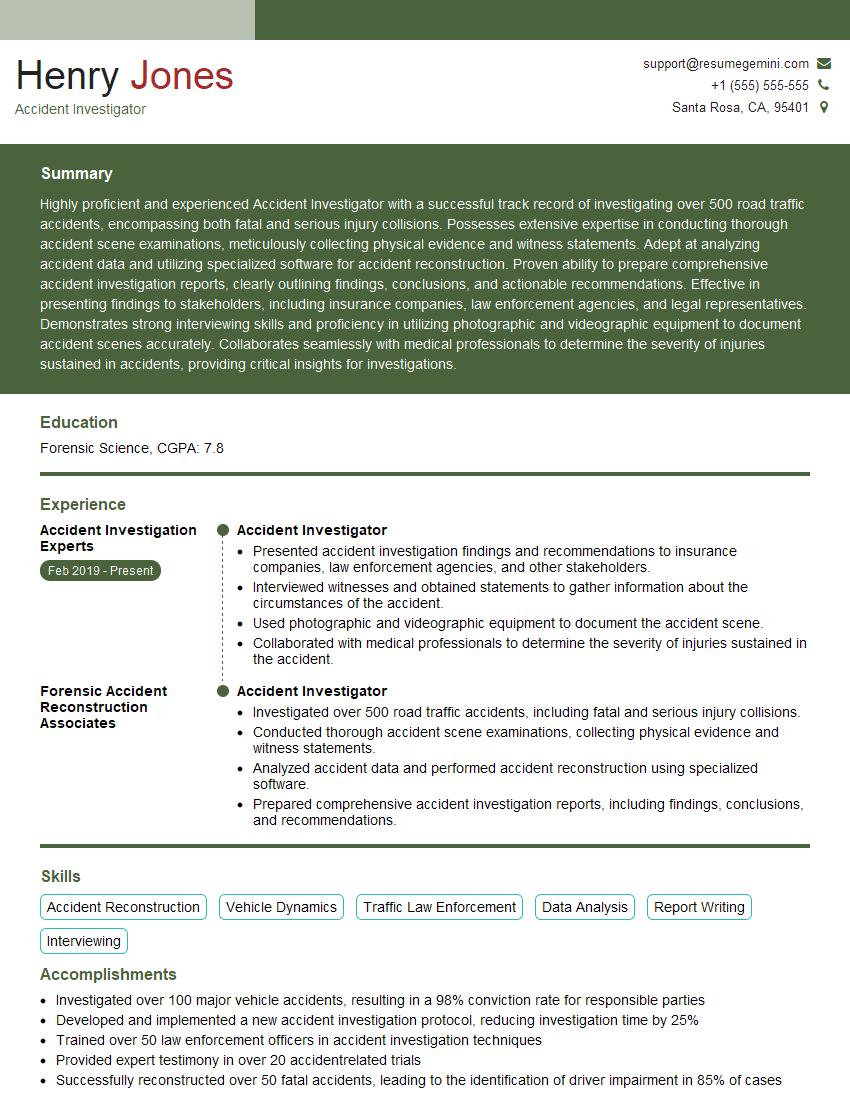
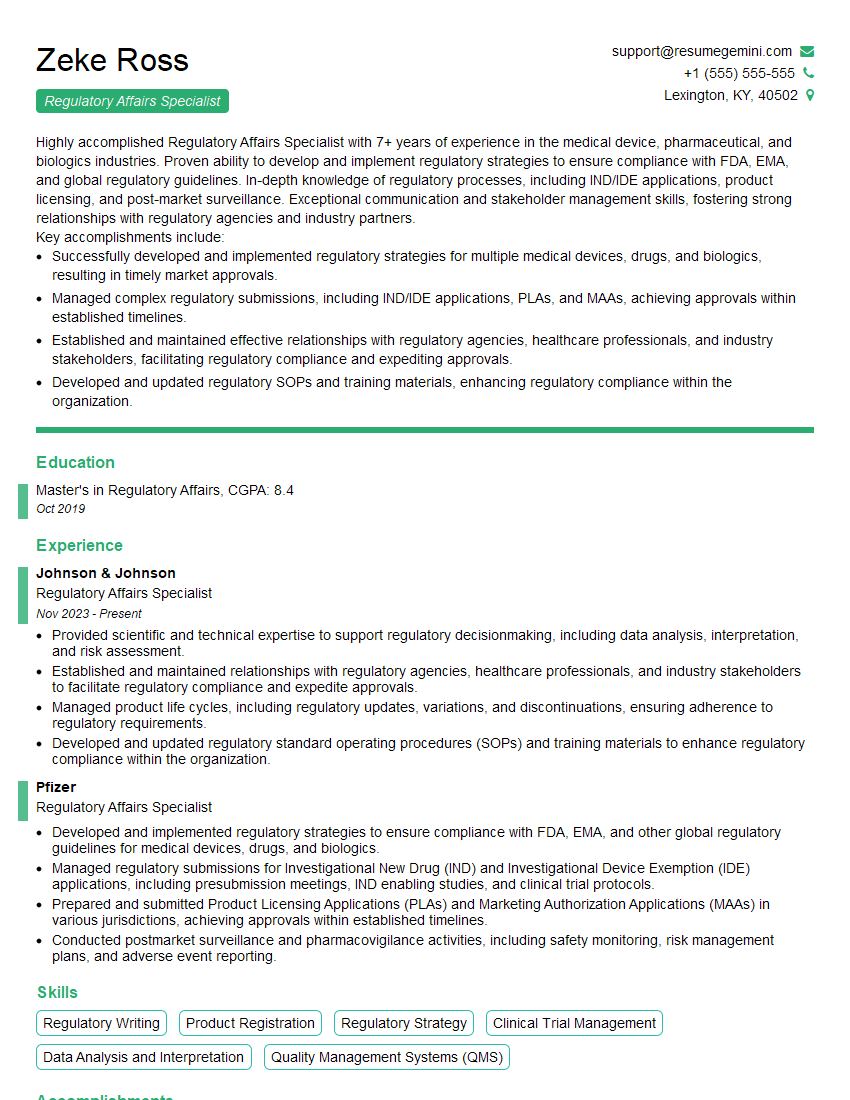
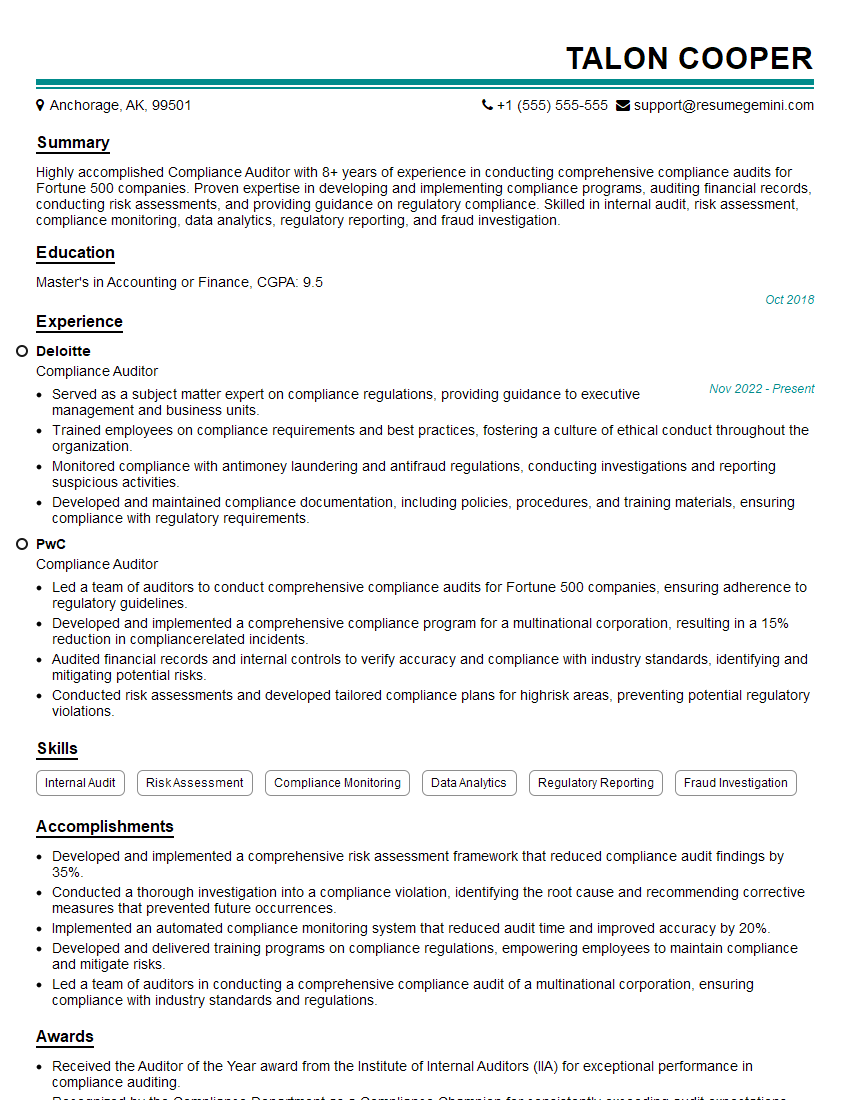
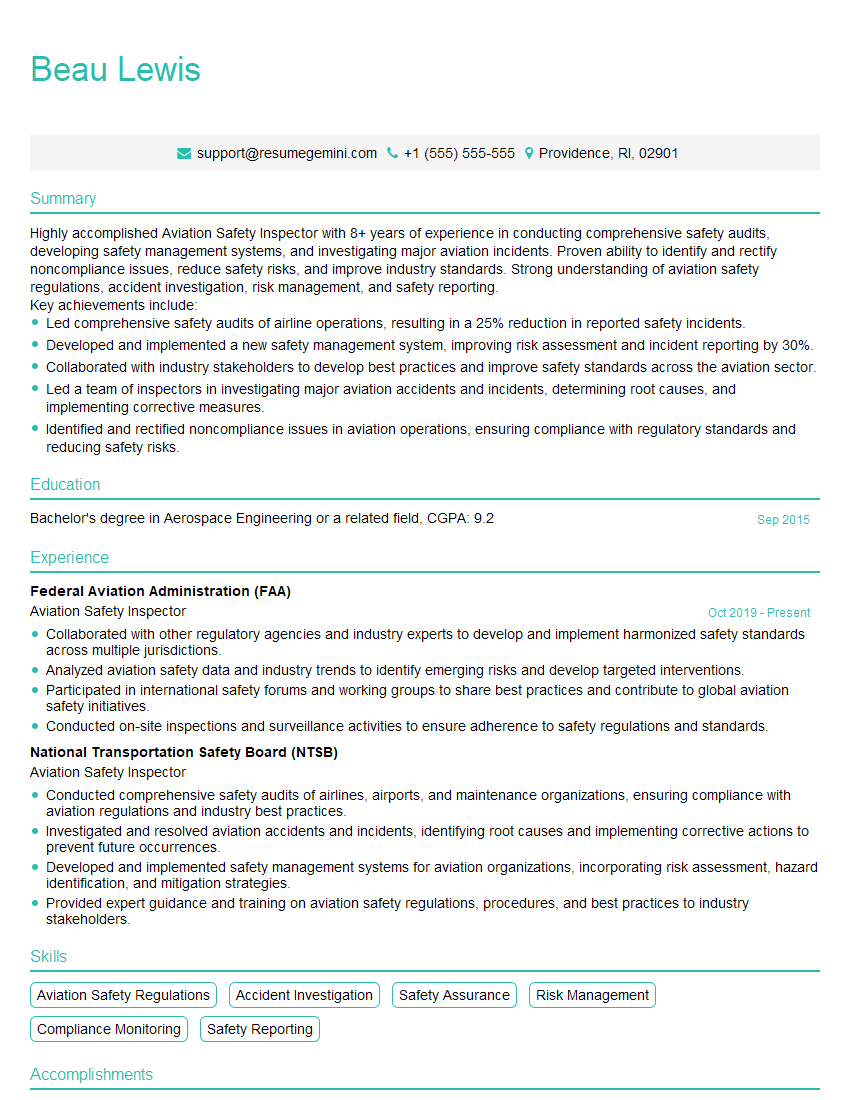
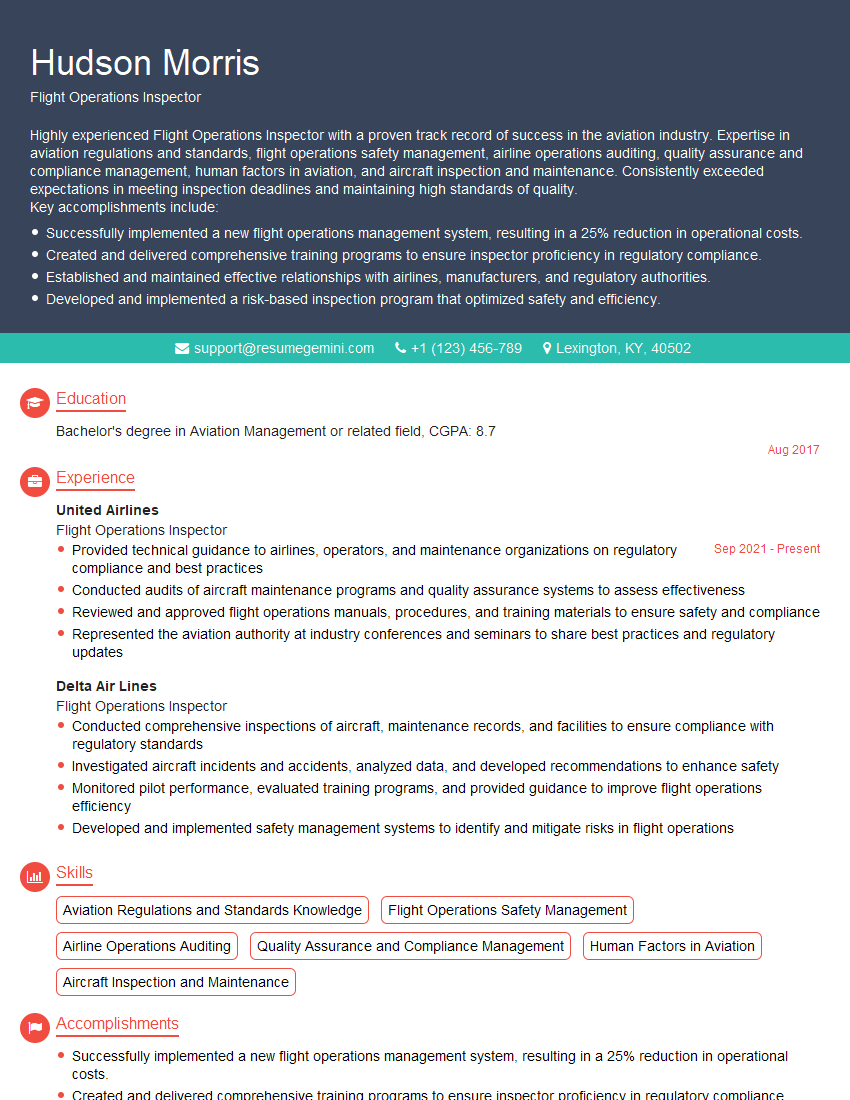
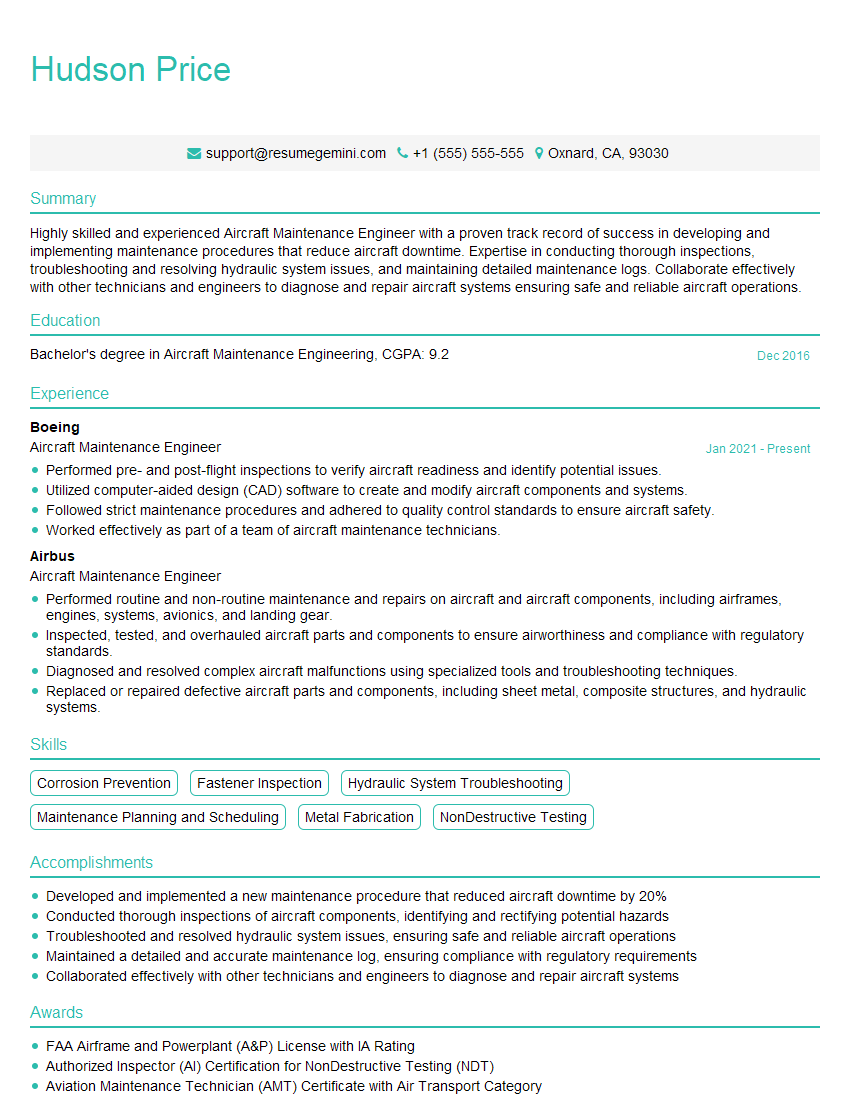
Mastering Aviation Regulations and Flight Safety is paramount for a successful and rewarding career in aviation. It demonstrates your commitment to safety and your ability to operate within a highly regulated environment, opening doors to diverse and challenging opportunities. To significantly enhance your job prospects, creating a compelling and ATS-friendly resume is essential. ResumeGemini is a trusted resource that can help you build a professional resume that showcases your skills and experience effectively. ResumeGemini provides examples of resumes tailored specifically to Aviation Regulations and Flight Safety roles, giving you a head start in your job search.
Explore more articles
Users Rating of Our Blogs
Share Your Experience
We value your feedback! Please rate our content and share your thoughts (optional).
What Readers Say About Our Blog
Very informative content, great job.
good