Preparation is the key to success in any interview. In this post, we’ll explore crucial Aviation Research and Development interview questions and equip you with strategies to craft impactful answers. Whether you’re a beginner or a pro, these tips will elevate your preparation.
Questions Asked in Aviation Research and Development Interview
Q 1. Explain the principles of Bernoulli’s principle and its application in aircraft lift generation.
Bernoulli’s principle states that an increase in the speed of a fluid occurs simultaneously with a decrease in pressure or a decrease in the fluid’s potential energy.
In the context of aircraft lift generation, this principle is applied to the airfoil shape of an aircraft wing. The wing is designed with a curved upper surface and a relatively flat lower surface. As air flows over the wing, the air traveling over the curved upper surface has to travel a longer distance in the same amount of time as the air flowing underneath. This results in a faster airflow over the top surface. According to Bernoulli’s principle, this faster airflow results in lower pressure on the upper surface compared to the higher pressure on the lower surface. This pressure difference creates an upward force, known as lift, that enables the aircraft to fly.
Think of it like this: imagine blowing air between two pieces of paper held close together. The increased airspeed between the papers creates lower pressure, causing the papers to move closer together. Similarly, the pressure difference across the wing generates the lift needed for flight. However, it’s important to note that while Bernoulli’s principle contributes significantly to lift, it’s not the sole factor. The angle of attack (the angle between the wing and the oncoming airflow) also plays a crucial role.
Q 2. Describe different types of aircraft propulsion systems and their relative advantages and disadvantages.
Aircraft propulsion systems can be broadly classified into several types:
- Reciprocating Engines: These piston engines are relatively simple, but less efficient and powerful than other options, often used in smaller aircraft.
- Turboprops: These combine a gas turbine engine with a propeller, offering better fuel efficiency than pure jet engines, particularly at lower speeds. They are commonly used in regional aircraft.
- Turbofans: These are the workhorses of modern commercial aviation, with a large fan at the front that accelerates a significant mass of air, providing high thrust efficiency. Variations exist based on bypass ratio (the ratio of air passing through the fan to the air passing through the core).
- Turbojets: These engines are characterized by their high speed and relatively low thrust at lower speeds. They are less fuel-efficient than turbofans and are mostly found in older or high-speed military aircraft.
- Ramjets: These are air-breathing engines that rely on the forward motion of the aircraft to compress incoming air. They only operate at high speeds and are often used in missiles and experimental aircraft.
- Rocket Engines: These carry their own oxidizer and fuel, allowing for operation outside the atmosphere. They produce tremendous thrust but are very fuel-intensive and not suitable for sustained atmospheric flight.
The choice of propulsion system depends heavily on the aircraft’s mission profile, desired speed, altitude, range, and payload capacity. For instance, a long-haul commercial airliner would benefit from the fuel efficiency of a high-bypass turbofan, while a supersonic fighter jet might require the high-speed performance of a turbojet or even a combination of engines.
Q 3. What are the key factors influencing aircraft stability and control?
Aircraft stability and control are governed by several key factors working in concert:
- Aerodynamic Stability: This refers to the aircraft’s tendency to return to its original flight path after a disturbance. Factors contributing to this include the aircraft’s shape (longitudinal, lateral, and directional stability), center of gravity location, and control surface effectiveness.
- Control Surfaces: These include ailerons, elevators, and rudder, enabling pilots to maneuver the aircraft. Their effectiveness is affected by factors such as airspeed and angle of attack.
- Center of Gravity (CG): The CG’s location significantly influences stability. If it’s too far forward or aft, the aircraft can become unstable. This is carefully considered during design and is affected by the distribution of weight inside the aircraft.
- Inertia: An aircraft’s mass and its moment of inertia (resistance to changes in rotation) significantly impact its response to control inputs and disturbances. Higher inertia means slower responsiveness and vice-versa.
- Weight and Balance: Proper weight and balance are crucial for stability and control. This involves distributing weight within the aircraft such that the CG remains within prescribed limits.
For instance, a poorly designed aircraft with an improperly located CG might be unstable and difficult to control, potentially leading to dangerous situations. Careful consideration of these factors throughout the aircraft’s design, testing, and operation is vital for safety.
Q 4. Explain the concept of critical Mach number and its significance in aircraft design.
The critical Mach number (Mcrit) is the freestream Mach number at which the airflow over any part of the aircraft first reaches the speed of sound (Mach 1). This is a significant design parameter because exceeding Mcrit leads to the formation of shock waves, causing a dramatic increase in drag, loss of lift, and potential structural issues. It impacts the overall design and performance of the aircraft.
In simpler terms, imagine throwing a rock into a calm pool of water. At low speeds, the water parts smoothly. However, if you throw it fast enough, you’ll create ripples or waves. Similarly, exceeding Mcrit causes shock waves in the airflow, drastically altering the aerodynamic characteristics of the aircraft. Aircraft designers meticulously analyze and manage the critical Mach number to optimize performance and avoid potentially hazardous conditions. They carefully shape the aircraft’s components to delay the occurrence of shock waves, maintaining efficient supersonic flight when needed.
Q 5. Discuss the role of Computational Fluid Dynamics (CFD) in aircraft design and development.
Computational Fluid Dynamics (CFD) is a powerful tool used extensively in aircraft design and development. It involves using numerical methods and algorithms to solve and analyze fluid flow problems. In essence, CFD simulates the airflow around an aircraft, enabling engineers to predict aerodynamic forces, pressure distributions, and other relevant parameters without building physical models.
CFD allows for the rapid exploration of various design alternatives, optimizing aerodynamic efficiency, reducing drag, improving lift, and minimizing noise. It provides valuable data during the early design phases, minimizing the need for extensive and expensive wind tunnel testing. For example, CFD can be used to analyze the airflow around a new wing design, comparing the performance of different airfoil shapes and identifying potential areas of flow separation or high drag. This information can then be used to refine the design and improve its aerodynamic performance.
However, CFD is not without its limitations. The accuracy of the results depends heavily on the quality of the computational mesh, the turbulence model used, and the accuracy of the boundary conditions. Therefore, CFD results often need to be validated against experimental data obtained through wind tunnel testing.
Q 6. Describe various methods used for aircraft structural analysis and design.
Aircraft structural analysis and design involves a combination of methods aimed at ensuring structural integrity and safety under various flight conditions:
- Finite Element Analysis (FEA): This is a widely used numerical method for analyzing complex structures. The structure is divided into smaller elements, and equations are solved to determine stress, strain, and displacement under various load conditions. FEA helps ensure that the aircraft structure can withstand anticipated loads during flight, including maneuvers, gusts, and landing.
- Experimental Stress Analysis: This involves physically testing components under various load conditions to validate FEA predictions. Strain gauges and other measurement devices are used to measure stresses and strains.
- Fatigue and Fracture Mechanics: Aircraft structures are subjected to cyclic loading throughout their service life, leading to fatigue. Analysis focuses on predicting fatigue life and preventing catastrophic failure due to crack propagation.
- Material Selection: The choice of materials is crucial for structural design. Factors such as strength-to-weight ratio, fatigue resistance, and cost are considered. Advanced materials like composites are increasingly used for their superior strength and weight characteristics.
These methods are applied iteratively, refining the design based on the analysis results. Safety factors are built into the design to account for uncertainties and variations in materials and manufacturing processes.
Q 7. Explain the different types of wind tunnel testing and their applications.
Wind tunnel testing is a crucial part of aircraft development. Different types exist, each serving specific purposes:
- Low-speed wind tunnels: These are used to test the aerodynamic characteristics of aircraft at relatively low speeds (typically up to Mach 0.3). They are useful for evaluating lift, drag, pitching moments, and stability characteristics of the aircraft design.
- High-speed wind tunnels: These facilities allow testing at higher speeds, even supersonic and hypersonic, offering invaluable data for high-speed aircraft design and testing. This helps researchers and engineers analyze and manage shock waves and other aerodynamic effects.
- Transonic wind tunnels: These operate at speeds around the speed of sound (Mach 0.7 to Mach 1.3). This is critical because this speed range presents complex aerodynamic challenges. It allows engineers to understand and optimize the aircraft’s behavior near the speed of sound.
- Cryogenic wind tunnels: These use extremely cold temperatures to reduce the viscosity and increase the Reynolds number of the air, allowing simulations that more accurately represent full-scale flight conditions. This improves test accuracy.
The choice of wind tunnel depends on the specific test requirements. Each provides specific data that helps engineers to validate CFD analysis, fine-tune designs, and ensure the aircraft’s safety and performance throughout its operational envelope.
Q 8. What are the key considerations in the design of flight control systems?
Designing a flight control system requires a multifaceted approach, prioritizing safety, performance, and reliability. It’s like orchestrating a complex dance, ensuring all parts work together seamlessly to maintain stability and maneuverability.
- Stability Augmentation: The system must counteract inherent instability in the aircraft’s design, ensuring smooth flight even in turbulent conditions. Think of it as a sophisticated balancing act, constantly making tiny adjustments to keep the plane level.
- Controllability: Pilots need precise control over the aircraft’s attitude (pitch, roll, yaw). This demands accurate sensors, powerful actuators, and responsive algorithms – allowing for effortless maneuvering, from gentle turns to rapid responses during emergencies.
- Fail-Operational/Fail-Safe Design: Redundancy and fault tolerance are critical. Multiple independent systems are often employed, so if one fails, another takes over without compromising safety. Imagine a backup system kicking in if the primary flight control malfunctions – a crucial safety net.
- Human-Machine Interface (HMI): The interface between pilot and flight control system must be intuitive and user-friendly. Clear displays, precise control inputs, and effective feedback are crucial for safe operation. This is analogous to a well-designed dashboard, providing clear and concise information to the driver.
- Environmental Considerations: The system must function reliably across a wide range of temperatures, pressures, and altitudes. For example, systems must perform well in the extreme cold of high-altitude flight.
Q 9. Describe the process of flight testing and the data acquisition involved.
Flight testing is a rigorous process involving systematic evaluation of an aircraft’s performance and handling characteristics. It’s like putting the aircraft through a series of carefully designed tests to validate its design and ensure it meets all safety requirements. Data acquisition is crucial for this process.
The process typically involves:
- Pre-flight planning and preparation: Defining test objectives, developing test plans, and calibrating sensors.
- Test execution: Conducting various maneuvers and data recordings according to the test plan. This might include high-speed passes, stall tests, spin recovery, and low-speed handling.
- Data acquisition: Utilizing an array of sensors measuring parameters like airspeed, altitude, acceleration, control surface deflections, engine performance, and structural stress. This data is often collected using onboard data acquisition systems (DAS) that record thousands of data points per second.
- Data analysis and post-processing: Processing raw data to identify trends, anomalies, and deviations from expected performance. Specialized software analyzes and interprets the immense data sets, identifying patterns and validating design parameters.
- Reporting and documentation: Preparing comprehensive reports summarizing test results, identifying any necessary design changes, and ultimately validating the aircraft’s airworthiness.
Example: During a spin test, sensors measure the aircraft’s rotational rate, airspeed, and angle of attack, helping engineers determine the aircraft’s spin characteristics and recovery capabilities.
Q 10. Explain the principles of aircraft icing and mitigation techniques.
Aircraft icing is a dangerous phenomenon where supercooled water droplets freeze on the aircraft’s surfaces, altering its aerodynamic shape and performance. It’s like adding an unexpected layer of ice to a car, affecting its handling and potentially leading to accidents. Mitigation techniques are crucial for safety.
Principles of Aircraft Icing:
- Supercooled Water: Water droplets remain liquid below 0°C (32°F) under certain atmospheric conditions. Upon impact with a surface colder than 0°C, they freeze.
- Accretion: The freezing process can lead to the accumulation of ice on the aircraft’s wings, tail, and other surfaces, changing the aircraft’s aerodynamic profile and increasing drag. This can severely impact lift, and stall the aircraft.
- Types of Ice: Rime ice (rough, opaque ice) and clear ice (smooth, transparent ice) are common, with clear ice being particularly dangerous due to its smooth aerodynamic shape.
Mitigation Techniques:
- Anti-icing systems: These prevent ice from forming, often using heated surfaces or pneumatic boots to remove ice before it accretes. Think of it as preventing ice from forming on a windshield with heated glass.
- De-icing systems: These remove ice after it has formed, often using heated fluids or chemical solutions. This is like using an ice scraper on a car’s windshield.
- Weather avoidance: Pilots use weather radar and forecasts to avoid areas with known or predicted icing conditions.
- Structural design: Aircraft surfaces are designed to minimize ice adhesion.
Q 11. Discuss the challenges in designing for high-altitude flight.
Designing for high-altitude flight presents unique challenges. The thinner air at high altitudes significantly impacts aircraft performance, making it a far different challenge than flying at lower altitudes. It’s like scaling a mountain – the environment changes dramatically with altitude, requiring specialized adaptations.
- Reduced air density: Engines require specialized designs to compensate for the reduced oxygen intake at high altitudes, requiring higher compressor ratios and potentially afterburners.
- Extreme temperatures: High-altitude flight involves significant temperature variations, requiring materials and systems to withstand extreme cold and rapid temperature changes.
- Thin air pressure: Cabin pressurization systems are essential to maintain a habitable environment for passengers and crew at altitude. This system must be robust enough to ensure safe pressurization at all altitudes.
- Increased radiation exposure: High-altitude aircraft are exposed to higher levels of cosmic radiation, necessitating shielding for sensitive electronic equipment and crew.
- Reduced aerodynamic efficiency: The thinner air reduces lift and increases drag, requiring larger wings and potentially different wing designs to achieve sufficient lift at high altitudes.
Q 12. How do you ensure the airworthiness of an aircraft?
Ensuring airworthiness involves a comprehensive process to verify that an aircraft meets all safety and operational requirements. It’s like a thorough health check for an aircraft, guaranteeing its fitness for flight. This is a continuous process, not a one-time event.
- Design certification: This involves rigorous design reviews, analysis, and testing to ensure the aircraft meets airworthiness standards defined by regulatory bodies (e.g., FAA, EASA). This includes stress testing, fatigue testing, and simulations.
- Manufacturing quality control: Stringent manufacturing processes and quality checks ensure the aircraft is built to the exact specifications.
- Operational maintenance: Regular inspections, maintenance, and repairs are vital to keep the aircraft in a safe and airworthy condition. This includes scheduled checks and unscheduled maintenance in case of problems.
- Continuing airworthiness management: A comprehensive system for tracking maintenance, repairs, modifications, and airworthiness directives ensures the aircraft remains airworthy throughout its operational life.
- Accident investigation and safety improvements: Thorough investigation of accidents and incidents leads to safety improvements and modifications to existing aircraft designs, regulations, and maintenance procedures.
Q 13. Explain the role of materials science in aerospace engineering.
Materials science plays a pivotal role in aerospace engineering, driving advancements in aircraft design and performance. It’s like the foundation upon which the entire structure of the aircraft is built, dictating its strength, weight, and longevity.
- Lightweight materials: The quest for fuel efficiency demands lightweight yet strong materials, such as aluminum alloys, titanium alloys, and composites, reducing the aircraft’s overall weight and improving fuel economy.
- High-strength materials: Aircraft structures must withstand significant stresses during flight, requiring high-strength materials capable of withstanding extreme loads and fatigue.
- Corrosion resistance: Aircraft materials must resist corrosion from environmental factors, extending their lifespan and reducing maintenance costs.
- High-temperature materials: Engine components operate at extremely high temperatures, requiring specialized materials like nickel-based superalloys that can retain their strength and integrity under harsh conditions.
- Material characterization: Advanced techniques are used to understand material properties and behavior under various conditions, optimizing material selection and improving aircraft design.
Example: The use of carbon fiber reinforced polymers (CFRP) in aircraft construction has significantly reduced weight while maintaining strength, leading to more fuel-efficient aircraft.
Q 14. What are the different types of composite materials used in aircraft construction?
Composite materials are increasingly used in aircraft construction due to their high strength-to-weight ratio. Think of them as building blocks offering a unique combination of lightness and strength.
- Carbon fiber reinforced polymers (CFRP): These consist of carbon fibers embedded in a polymer matrix, offering exceptional strength and stiffness, making them ideal for wing structures and fuselages.
- Glass fiber reinforced polymers (GFRP): These are less expensive than CFRP but still offer good strength and stiffness, often used for less critical components.
- Aramid fiber reinforced polymers (AFRP): These materials offer excellent impact resistance, often used in areas requiring high impact protection.
- Hybrid composites: Combining different fibers and matrices allows for tailoring material properties to specific applications, enhancing the overall performance and efficiency of the aircraft structure.
Example: The Boeing 787 Dreamliner is extensively constructed using CFRP, resulting in significant weight savings and improved fuel efficiency compared to traditional aluminum aircraft.
Q 15. Describe the process of designing and developing an avionics system.
Designing and developing an avionics system is a complex, multi-stage process requiring meticulous planning and collaboration across various engineering disciplines. It begins with defining the system’s requirements, which are often driven by the aircraft’s mission profile and operational needs. This includes specifying functionalities like navigation, communication, flight control, and engine monitoring.
- Requirements Definition: This initial phase involves detailed analysis of the aircraft’s intended operations, defining the necessary functionalities of the avionics suite, and establishing performance metrics (e.g., accuracy, reliability, weight limitations).
- System Architecture Design: The next step focuses on creating a system architecture, outlining the system’s components, their interactions, and data flow. This phase involves selecting appropriate hardware and software platforms, considering factors like redundancy, fail-safe mechanisms, and certification requirements.
- Hardware and Software Development: Once the architecture is finalized, the hardware and software components are designed and developed. This includes designing circuit boards, writing embedded software for processors, and creating user interfaces. Rigorous testing and verification are critical at each stage.
- Integration and Testing: The developed components are then integrated into a complete system. Extensive testing is performed at various levels (unit, integration, system) to ensure that the avionics system meets all defined requirements and operates reliably under various conditions. This may include laboratory testing, simulations, and flight testing.
- Certification and Deployment: Finally, the avionics system must undergo rigorous certification to meet regulatory standards (e.g., FAA, EASA) before it can be deployed on an aircraft. This involves extensive documentation, demonstrating compliance with safety regulations and demonstrating the system’s reliability and airworthiness.
For example, designing the avionics for a new passenger aircraft would involve considering factors such as passenger entertainment systems, air traffic control communications, and sophisticated flight management systems, all while adhering to stringent safety regulations. The process needs to be iterative, allowing for adjustments based on testing results and feedback.
Career Expert Tips:
- Ace those interviews! Prepare effectively by reviewing the Top 50 Most Common Interview Questions on ResumeGemini.
- Navigate your job search with confidence! Explore a wide range of Career Tips on ResumeGemini. Learn about common challenges and recommendations to overcome them.
- Craft the perfect resume! Master the Art of Resume Writing with ResumeGemini’s guide. Showcase your unique qualifications and achievements effectively.
- Don’t miss out on holiday savings! Build your dream resume with ResumeGemini’s ATS optimized templates.
Q 16. Explain the challenges in integrating new avionics technologies into existing aircraft.
Integrating new avionics technologies into existing aircraft presents significant challenges. These stem primarily from compatibility issues, certification complexities, and the need to minimize disruption to existing operations.
- Hardware Compatibility: New systems must be compatible with existing aircraft hardware and software, potentially requiring modifications or upgrades to the existing infrastructure. This might involve integrating new sensors with older data buses or adapting software interfaces to accommodate new functionalities.
- Software Integration: Integrating new software into an existing avionics suite requires careful consideration of potential conflicts and interactions between different software modules. Ensuring seamless data exchange and avoiding conflicts is crucial for safe operation.
- Certification: Modifying or upgrading an existing aircraft’s avionics system requires re-certification to demonstrate continued airworthiness. This is a time-consuming and costly process, involving rigorous testing and documentation. Meeting the regulatory requirements for modification is frequently the most significant hurdle.
- Cost and Downtime: Retrofitting existing aircraft with new avionics can be expensive, requiring significant investments in hardware, software, and certification. It can also lead to significant downtime, impacting operational schedules and potentially revenue.
For instance, integrating a new collision avoidance system into an older fleet of aircraft requires careful assessment of the aircraft’s electrical power system, data bus capacity, and display capabilities. It also requires a comprehensive certification program to demonstrate that the new system works seamlessly with the aircraft’s existing avionics without compromising safety.
Q 17. What are the safety considerations for designing and operating Unmanned Aerial Vehicles (UAVs)?
Designing and operating UAVs (Unmanned Aerial Vehicles) requires stringent safety considerations due to the unique challenges posed by autonomous operation.
- Redundancy and Fail-safes: UAVs must incorporate robust redundancy and fail-safe mechanisms to mitigate the risk of system failures. This includes redundant sensors, communication links, and control systems to ensure safe operation even in the event of component failures.
- Autonomous Flight Control: The autonomous flight control system must be highly reliable and robust, capable of handling unexpected situations and maintaining safe flight trajectories. This requires advanced algorithms and sophisticated sensor fusion techniques.
- Communication Systems: Reliable communication systems are crucial for maintaining control over the UAV and receiving essential data. This needs consideration for potential communication loss and the ability to operate safely even in areas with limited or intermittent connectivity.
- Obstacle Detection and Avoidance: UAVs must be equipped with effective obstacle detection and avoidance systems to prevent collisions with obstacles, including buildings, terrain, and other aircraft. This could involve using sensors like LiDAR, radar, and cameras.
- Emergency Procedures: Clear emergency procedures must be established and tested for various scenarios, including loss of communication, system malfunctions, and unexpected events. These procedures should outline actions to be taken to ensure safe recovery or emergency landing.
- Regulatory Compliance: Operators of UAVs must adhere to relevant regulations and guidelines established by aviation authorities, including airspace restrictions and operational requirements. Strict adherence to these regulations is paramount for safe operation.
For example, a UAV delivering medical supplies to a remote area needs a system that automatically detects and avoids obstacles like trees and power lines while also maintaining communication with ground control for safe operation and landing. Failure in any of these critical aspects could lead to significant risks.
Q 18. Discuss the impact of environmental regulations on aircraft design.
Environmental regulations significantly impact aircraft design, pushing the industry towards more sustainable and environmentally friendly solutions. These regulations primarily focus on reducing noise pollution and greenhouse gas emissions.
- Noise Reduction: Regulations limit the noise levels produced by aircraft during takeoff, landing, and flight. This drives innovation in aircraft design, including the use of quieter engines, optimized airframe designs, and noise-reducing technologies.
- Emission Reduction: Regulations aim to reduce greenhouse gas emissions from aviation, targeting both CO2 and other pollutants. This leads to the development of more fuel-efficient engines, lighter aircraft materials, and alternative fuels. This often involves trade-offs between performance and emissions reduction.
- Sustainable Materials: There is a growing focus on using lighter and more sustainable materials in aircraft construction, reducing both fuel consumption and environmental impact. This can involve the use of advanced composites, bio-based materials, and recycled materials.
- Operational Efficiency: Regulations can also indirectly influence aircraft design by promoting operational efficiency. This might include optimized flight paths, reduced taxiing times, and efficient air traffic management systems, all aimed at reducing fuel burn and emissions.
For example, the development of more efficient turbofan engines with improved bypass ratios directly addresses both noise and emission reduction regulations. Similarly, the use of lighter composite materials in the airframe contributes to better fuel economy and reduced emissions.
Q 19. How do you handle conflicting project requirements and deadlines?
Handling conflicting project requirements and deadlines requires a systematic approach prioritizing communication, prioritization, and proactive risk management.
- Prioritization and Trade-offs: I begin by clearly defining all project requirements and prioritizing them based on their criticality and impact on the overall project goals. This might involve identifying dependencies between requirements and making informed trade-offs when conflicts arise. Using techniques like MoSCoW method (Must have, Should have, Could have, Won’t have) helps greatly.
- Risk Assessment and Mitigation: I perform a thorough risk assessment to identify potential issues that could jeopardize the project timeline. Mitigation plans are then developed to address these risks, including contingency plans for handling unexpected delays or challenges.
- Communication and Collaboration: Open and transparent communication with stakeholders is crucial to effectively manage conflicting requirements. This involves regular meetings and updates to keep everyone informed and to work collaboratively towards finding solutions.
- Scope Management: In cases where conflicts cannot be resolved, I work with stakeholders to adjust the project scope. This may involve streamlining requirements, adjusting timelines, or re-allocating resources to ensure project success.
- Negotiation and Compromise: Sometimes finding solutions requires negotiation and compromise among different stakeholders. This involves understanding different perspectives and finding mutually acceptable solutions that minimize disruption to the project.
For example, if a weight constraint conflicts with a desired performance requirement, I would collaborate with the design team to explore options such as using lighter materials or optimizing the aircraft’s design to reduce weight without significantly sacrificing performance. I would then clearly document the trade-offs and communicate the impact on other system parameters to the stakeholders.
Q 20. Describe your experience with data analysis and interpretation in an aerospace context.
My experience with data analysis and interpretation in an aerospace context is extensive. It involves various techniques applied to diverse datasets.
- Flight Test Data Analysis: I’ve extensively analyzed flight test data to evaluate aircraft performance, stability, and control characteristics. This involves using statistical methods to analyze sensor data, identify trends, and validate simulation models. This can involve identifying outliers, calculating statistical significance, and visualizing data using appropriate plotting techniques.
- Sensor Data Fusion: I have experience with sensor data fusion techniques to integrate data from multiple sensors (GPS, IMU, air data sensors) to improve the accuracy and reliability of navigation and flight control systems. This often involves using Kalman filtering or other estimation techniques.
- Performance Modeling and Simulation: I’ve developed and validated performance models to predict aircraft performance under various conditions. This involves using simulation tools to analyze the impact of design changes and operational parameters on aircraft performance.
- Failure Analysis: I have been involved in investigating incidents and accidents, analyzing data to understand the causes of failures and identifying potential improvements to aircraft design and operations. This requires careful scrutiny of all available data, paying close attention to timelines and potentially overlooked events.
For example, during the analysis of flight test data for a new aircraft, I used statistical methods to determine the accuracy of the aircraft’s inertial navigation system and to identify any anomalies or sources of error in the system. This involved analyzing large datasets of sensor readings, and subsequently recommending adjustments to the system to improve its precision.
Q 21. Explain your understanding of different simulation tools used in aviation research.
My understanding of simulation tools used in aviation research encompasses a wide range of software packages and techniques.
- Flight Simulators: High-fidelity flight simulators, such as those from companies like FlightAware and Lockheed Martin, are used to model aircraft behavior under various conditions, allowing for the evaluation of new designs and control systems. These are crucial for evaluating pilot response and system performance before real-world testing.
- Computational Fluid Dynamics (CFD) Software: CFD software packages, like ANSYS Fluent and OpenFOAM, are used to simulate airflow around aircraft, enabling the optimization of aerodynamic performance and the reduction of drag. These tools allow for detailed modeling of airflow patterns and the analysis of aerodynamic forces and moments.
- Finite Element Analysis (FEA) Software: FEA software, such as ANSYS and ABAQUS, is used to analyze the structural integrity of aircraft components under various loading conditions. This is essential for ensuring structural safety and durability.
- System-Level Simulation Tools: Software like MATLAB/Simulink and SystemVision are used for modeling and simulating the behavior of complex avionics systems, allowing for the verification of system functionality and performance before implementation.
For instance, CFD software can be used to optimize the design of a new wing to minimize drag, while flight simulators can be used to test the effectiveness of a new autopilot system under various flight conditions. Using FEA tools, the stress distribution in critical aircraft parts can be predicted to ensure safety during extreme loads like those encountered during turbulence.
Q 22. How do you ensure the quality and reliability of aerospace components?
Ensuring the quality and reliability of aerospace components is paramount, given the critical safety implications. It’s a multi-faceted process involving rigorous testing, stringent quality control measures throughout the entire lifecycle, and adherence to international standards.
- Design and Material Selection: We begin by meticulously designing components using advanced simulation tools like Finite Element Analysis (FEA) to predict performance under various stress conditions. Material selection is crucial; we opt for materials with high strength-to-weight ratios, fatigue resistance, and corrosion resistance. For instance, titanium alloys are frequently used in high-stress applications due to their excellent strength and lightweight properties.
- Manufacturing Processes: The manufacturing process itself is closely monitored. This includes implementing robust quality control checks at each stage, using Non-Destructive Testing (NDT) methods like ultrasonic testing and radiography to detect internal flaws before they compromise structural integrity. Automated manufacturing processes, where applicable, help to enhance consistency and reduce human error.
- Testing and Certification: Components undergo extensive testing, often exceeding the operational limits, to verify their durability and reliability. This includes fatigue testing, vibration testing, and environmental testing (extreme temperatures, humidity, etc.). Certification from bodies like the FAA (Federal Aviation Administration) or EASA (European Union Aviation Safety Agency) is essential to ensure compliance with international standards and safety regulations. For example, a new engine component must pass rigorous tests to demonstrate its ability to withstand the stresses experienced during takeoff, cruise, and landing.
- Traceability and Documentation: Maintaining a complete and accurate record of every component, from raw material sourcing to final installation, is vital. This traceability ensures that any issues can be quickly identified and addressed. This includes detailed documentation of testing procedures, results, and maintenance logs.
In essence, it’s a continuous loop of improvement, involving regular audits, feedback analysis, and proactive identification of potential risks. A failure in one component can have catastrophic consequences, so our processes are designed with redundancy and fail-safe mechanisms wherever possible.
Q 23. Describe your experience with project management methodologies in aerospace projects.
My experience encompasses various project management methodologies, predominantly Agile and Waterfall, tailored to the specific needs of each aerospace project. The choice depends heavily on the project’s size, complexity, and regulatory requirements.
- Waterfall: In projects with well-defined requirements and minimal expected changes, a Waterfall approach is suitable. Its sequential nature allows for meticulous planning and documentation, essential in highly regulated environments. I’ve used this in projects involving the modification of existing aircraft systems, where deviations from established procedures can be risky.
- Agile: For projects requiring greater flexibility and adaptation, such as the development of new technologies or experimental aircraft systems, Agile methodologies are more effective. The iterative nature allows for frequent feedback and adjustment, enabling quicker responses to evolving needs and technological advancements. I have led teams using Scrum in developing advanced avionics systems. This iterative approach allowed us to integrate new capabilities quickly and address unforeseen challenges effectively.
- Hybrid Approaches: Often, a hybrid approach combining elements of both methodologies is most effective. For instance, the initial stages of a project might utilize a more structured Waterfall approach for planning and regulatory compliance, while later stages employ Agile methods for iterative development and integration. This combination ensures a balance between rigorous planning and adaptability to changing circumstances.
Regardless of the methodology, effective project management in aerospace mandates robust risk management processes, meticulous documentation, and stringent adherence to safety standards. Clear communication and collaboration among diverse teams are critical to success.
Q 24. What are the ethical considerations in aerospace research and development?
Ethical considerations in aerospace R&D are paramount. Safety is the foremost concern, followed by environmental impact, societal benefits, and responsible use of resources.
- Safety: The design, development, and operation of aerospace systems must prioritize the safety of passengers, crew, and the public. This involves rigorously testing systems to identify and mitigate potential risks, adhering to strict safety regulations, and promoting a culture of safety throughout the organization.
- Environmental Impact: The aviation industry has a significant environmental footprint. Ethical R&D aims to minimize this impact through the development of more fuel-efficient aircraft, exploring alternative fuels (sustainable aviation fuels, or SAFs), and reducing noise pollution.
- Societal Benefits: Aerospace technology should contribute positively to society. This includes considering the potential social implications of new technologies and ensuring that development efforts are directed towards solutions that benefit humanity. For example, drone technology can be used for positive societal impact – aiding in disaster relief or precision agriculture – and this needs careful consideration during development.
- Resource Management: Aerospace R&D should strive to utilize resources responsibly and sustainably. This involves minimizing waste, employing energy-efficient processes, and considering the long-term environmental consequences of material choices.
- Transparency and Accountability: Open and transparent communication about research findings, safety concerns, and environmental impacts is crucial. Organizations should take responsibility for the outcomes of their R&D efforts and be accountable for any unintended negative consequences.
Ethical conduct is not merely a matter of compliance; it’s integral to building trust and maintaining the public’s confidence in the aerospace industry. This requires a strong ethical framework, robust oversight mechanisms, and a commitment to responsible innovation.
Q 25. Explain your understanding of current trends and future directions in aviation research.
Aviation research is currently witnessing a period of rapid transformation, driven by advancements in several key areas.
- Sustainable Aviation: The drive to reduce the environmental impact of air travel is a major focus. This includes research into alternative fuels (SAFs), more fuel-efficient aircraft designs (including blended wing bodies), and advanced propulsion systems (electric and hybrid-electric aircraft).
- Advanced Materials: The use of lighter, stronger, and more durable materials like carbon fiber composites and advanced alloys is improving aircraft efficiency and performance. Research is ongoing to further develop these materials and explore new possibilities, such as bio-based materials.
- Autonomous Flight: Autonomous and remotely piloted aircraft systems (RPAS or drones) are rapidly developing, opening up new possibilities for air cargo, surveillance, and other applications. Research focuses on improving navigation, safety, and air traffic management systems for these vehicles.
- Air Traffic Management (ATM): Improvements to air traffic management systems are needed to handle increasing air traffic volumes safely and efficiently. This includes research into next-generation ATM technologies that utilize data analytics and artificial intelligence.
- Advanced Avionics: Avionics systems are becoming increasingly sophisticated, incorporating advanced sensors, data processing capabilities, and artificial intelligence. This will lead to safer and more efficient operations.
The future of aviation research will likely see a convergence of these trends, resulting in more sustainable, efficient, and autonomous aircraft systems. The integration of artificial intelligence, big data analytics, and advanced materials will play a key role in shaping this future.
Q 26. How would you approach troubleshooting a complex problem in an aircraft system?
Troubleshooting a complex aircraft system problem requires a systematic and methodical approach.
- Gather Information: Begin by collecting as much information as possible about the problem. This includes identifying the symptoms, the affected systems, and any relevant historical data (maintenance logs, flight data recorders, etc.).
- Isolate the Problem: Attempt to isolate the specific component or system causing the issue. This may involve checking sensors, running diagnostics, and analyzing data logs. A fault tree analysis can be useful here to identify potential causes.
- Develop Hypotheses: Based on the information gathered, develop several hypotheses about the potential causes of the problem. Consider both hardware and software failures, as well as potential environmental factors.
- Test Hypotheses: Systematically test each hypothesis using appropriate methods. This may involve running tests, simulations, or conducting further inspections.
- Implement Solution: Once the root cause has been identified, implement the necessary corrective action. This might involve repairing a faulty component, updating software, or making procedural changes.
- Verify Solution: After implementing a solution, rigorously verify that the problem has been resolved and that no new issues have been introduced. This often involves retesting and monitoring the system’s performance.
- Document Findings: Thoroughly document the entire troubleshooting process, including the symptoms, the diagnostic steps, the root cause, the solution, and the verification results. This ensures that future problems can be diagnosed and addressed more efficiently.
Throughout this process, safety is paramount. If there is any doubt about the safety of continuing operations, the aircraft should be grounded until the problem is resolved. Collaboration and communication between engineers, mechanics, and pilots are essential for effective troubleshooting. For example, I once resolved a complex issue with a flight control system by meticulously examining the sensor data, identifying a specific anomaly, and ultimately tracing it to a faulty wiring harness.
Q 27. Describe your experience with collaborative research and development projects.
Collaborative research and development are essential in aerospace, given the complexity of modern aircraft systems and the need for specialized expertise.
- Industry Partnerships: I have extensive experience collaborating with industry partners on various projects. These collaborations allow us to leverage the expertise and resources of different organizations, accelerating the pace of innovation and improving the quality of the final product. For instance, a recent project involved collaboration with an engine manufacturer and an avionics provider to integrate a new engine control system into an experimental aircraft.
- Academic Collaboration: Working with universities and research institutions provides access to cutting-edge research and talented researchers. This collaboration allows us to explore innovative solutions and stay at the forefront of technological advancements. I’ve collaborated with university researchers to develop advanced materials for use in aircraft structures.
- International Collaboration: In many large-scale aerospace projects, international collaboration is common. This allows different countries and organizations to pool their resources, expertise, and knowledge, leading to more efficient and effective research efforts. The development of large commercial aircraft often involves multiple countries and companies collaborating in different phases of the project.
- Communication and Data Sharing: Successful collaboration requires effective communication and data sharing amongst all partners. Using collaborative platforms and establishing clear communication protocols is crucial.
My experience has shown that fostering a culture of open communication, mutual respect, and shared goals is essential to the success of collaborative projects. Effective leadership, clear project scope definitions, and established mechanisms for conflict resolution are also vital. The result of successful collaboration is always a better product, built faster and more efficiently.
Q 28. Discuss your familiarity with relevant aviation regulations and standards.
My familiarity with aviation regulations and standards is extensive, encompassing both international and national regulations.
- FAA Regulations (United States): I have a deep understanding of the Federal Aviation Regulations (FARs), including those related to airworthiness, maintenance, and certification. This includes familiarity with specific regulations such as FAR Part 25 (Airworthiness Standards: Transport Category Airplanes) and FAR Part 23 (Airworthiness Standards: Normal, Utility, Acrobatic, and Commuter Category Airplanes).
- EASA Regulations (Europe): I’m also familiar with the regulations of the European Union Aviation Safety Agency (EASA), which govern the design, manufacture, and operation of aircraft within the European Union.
- International Standards: Beyond national regulations, I understand various international standards issued by organizations such as the International Civil Aviation Organization (ICAO). These standards cover many aspects of aviation, including air traffic management, aircraft maintenance, and pilot training.
- Safety Management Systems (SMS): I’m well-versed in the implementation and maintenance of Safety Management Systems (SMS). These systems are crucial for proactively identifying and mitigating safety risks throughout the lifecycle of an aircraft or system.
Knowledge of these regulations and standards is not merely a compliance issue; it’s fundamental to ensuring the safety and airworthiness of aircraft. My experience includes applying this knowledge to the design, development, testing, and certification processes of various aerospace projects. Staying updated on the latest regulations and standards is a continuous process, and I actively engage in professional development to maintain this crucial knowledge.
Key Topics to Learn for Aviation Research and Development Interview
- Aerodynamics and Flight Mechanics: Understanding fundamental principles like lift, drag, thrust, and weight; application in designing more efficient aircraft and advanced flight control systems.
- Propulsion Systems: Knowledge of various engine types (turbojets, turbofans, turboprops, etc.), their performance characteristics, and future trends in sustainable aviation fuel and electric propulsion; practical experience with engine testing or simulation.
- Aircraft Structures and Materials: Familiarity with composite materials, stress analysis, fatigue, and failure mechanisms; application in designing lighter, stronger, and more durable aircraft.
- Avionics and Flight Control Systems: Understanding flight control systems, navigation systems, communication systems, and their integration; practical experience with system design, testing, or simulation.
- Aircraft Design and Optimization: Knowledge of computational fluid dynamics (CFD), finite element analysis (FEA), and optimization techniques; application in improving aircraft performance and reducing fuel consumption.
- Unmanned Aerial Systems (UAS): Understanding the unique challenges and opportunities presented by drones, including autonomy, navigation, and control; practical experience with UAS design, development, or operation.
- Research Methodology and Data Analysis: Proficiency in experimental design, data acquisition, statistical analysis, and report writing; ability to interpret results and draw meaningful conclusions.
- Safety and Regulations: Understanding aviation safety regulations and certification processes; application in designing safer and more reliable aircraft systems.
Next Steps
Mastering Aviation Research and Development opens doors to exciting and impactful careers, driving innovation in the aerospace industry. A strong resume is crucial for showcasing your skills and experience to potential employers. To maximize your job prospects, focus on creating an ATS-friendly resume that highlights your key achievements and aligns with the specific requirements of each role. ResumeGemini is a trusted resource that can help you build a professional and impactful resume. They offer examples of resumes tailored to Aviation Research and Development to guide you in crafting your own compelling application.
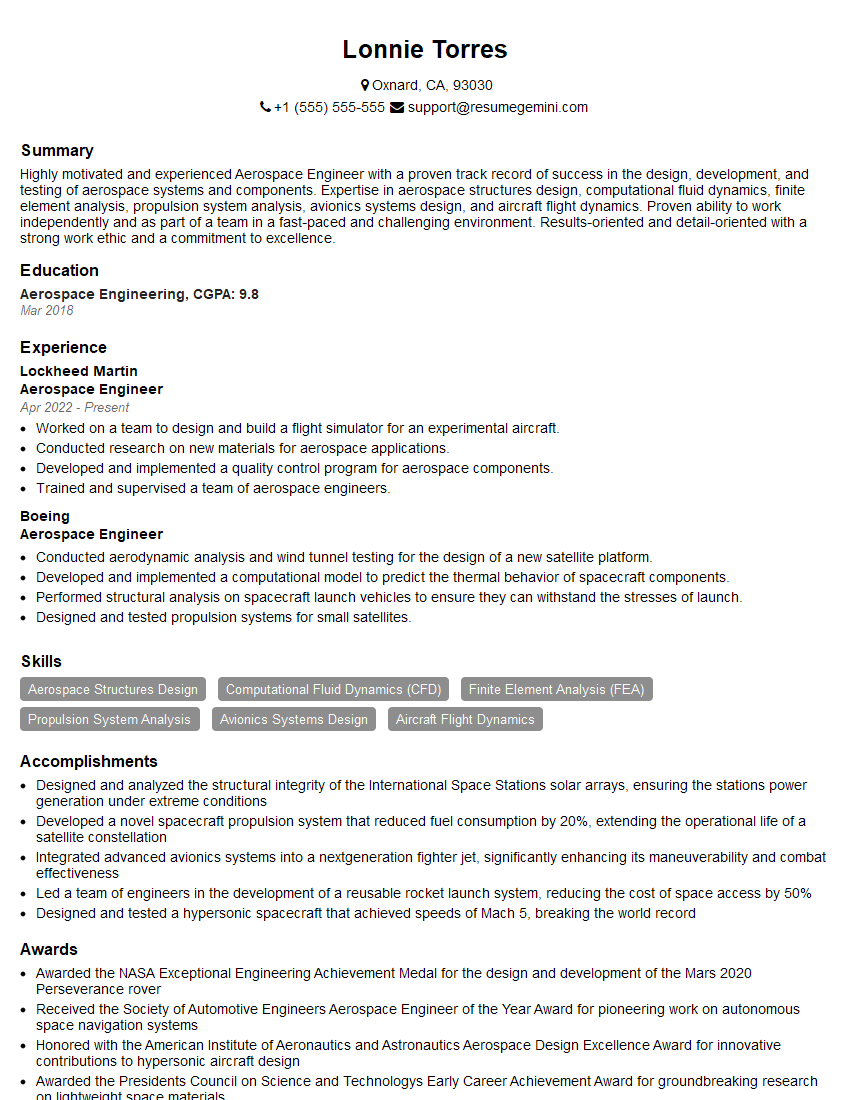
Aerospace Engineer Resume Sample
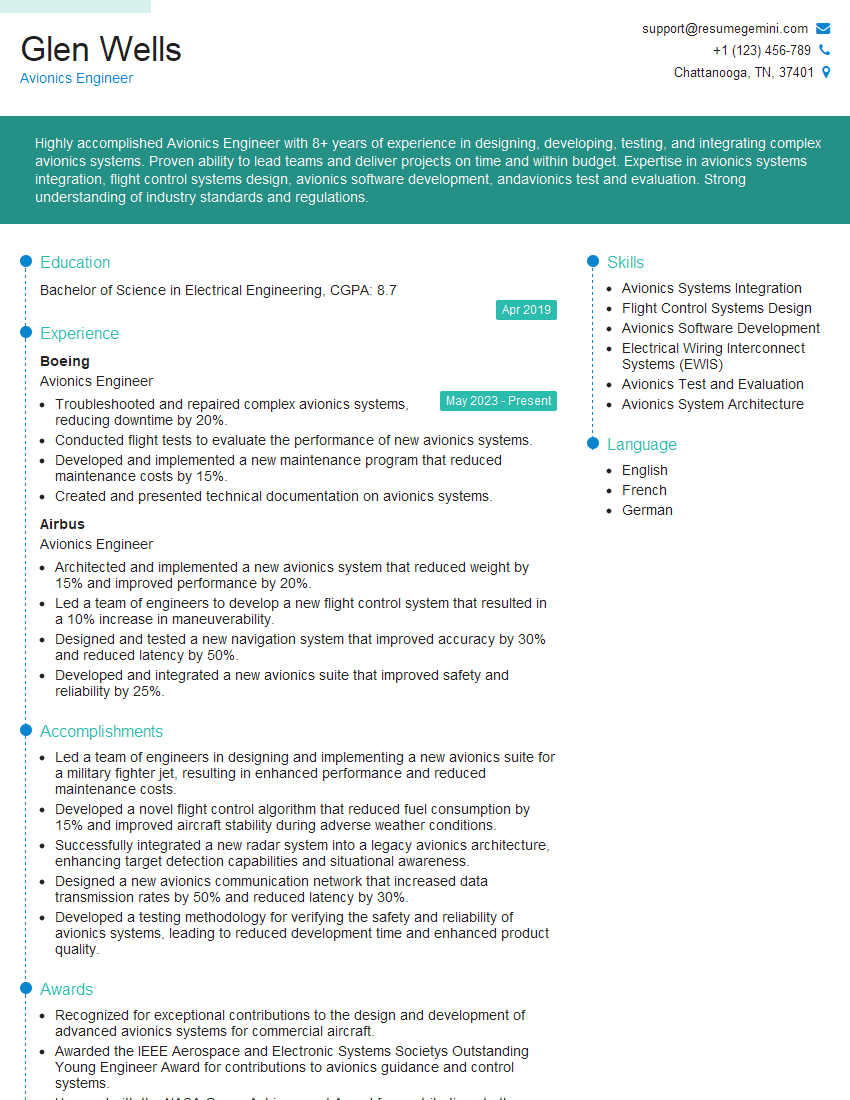
Avionics Engineer Resume Sample
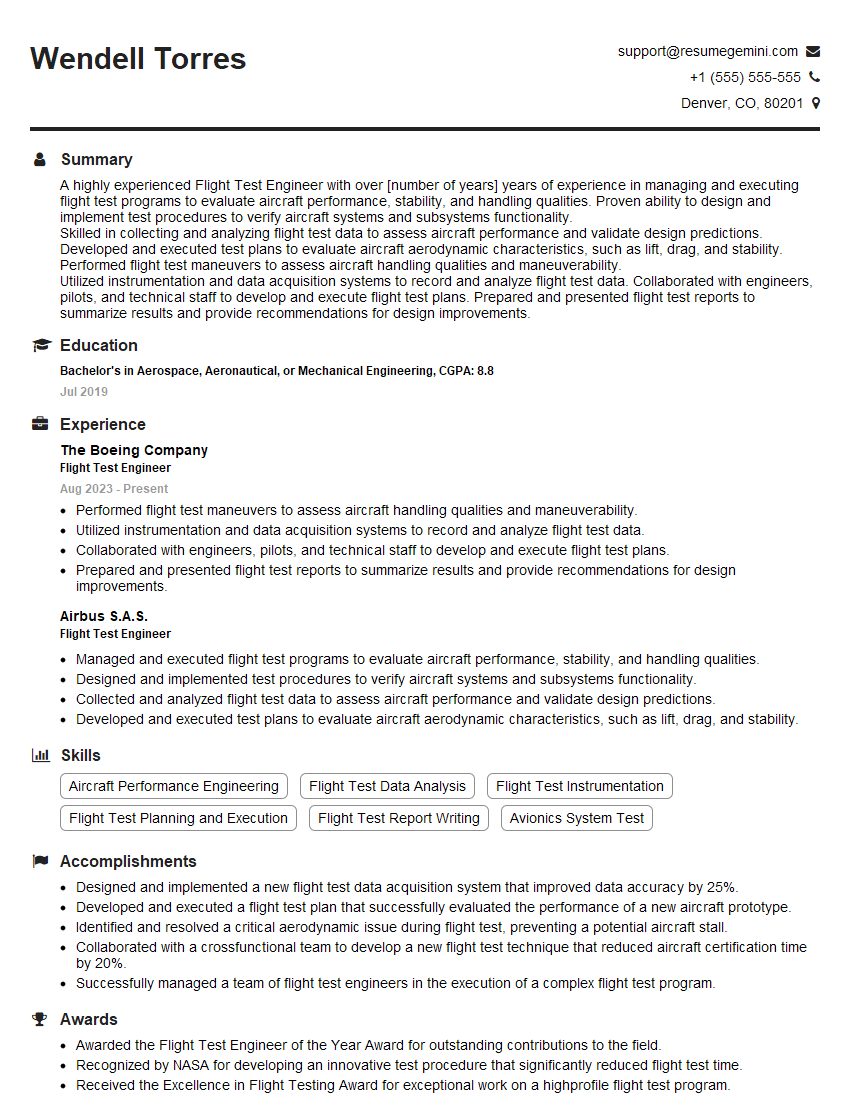
Flight Test Engineer Resume Sample
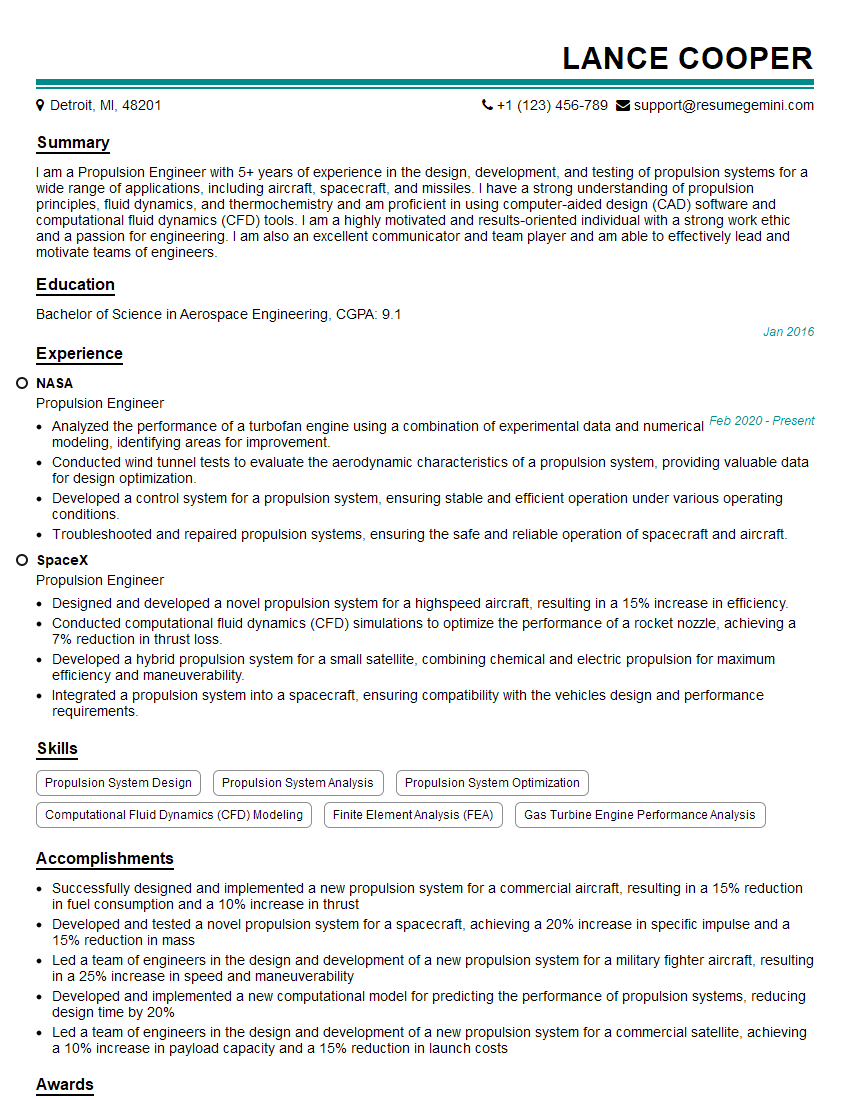
Propulsion Engineer Resume Sample
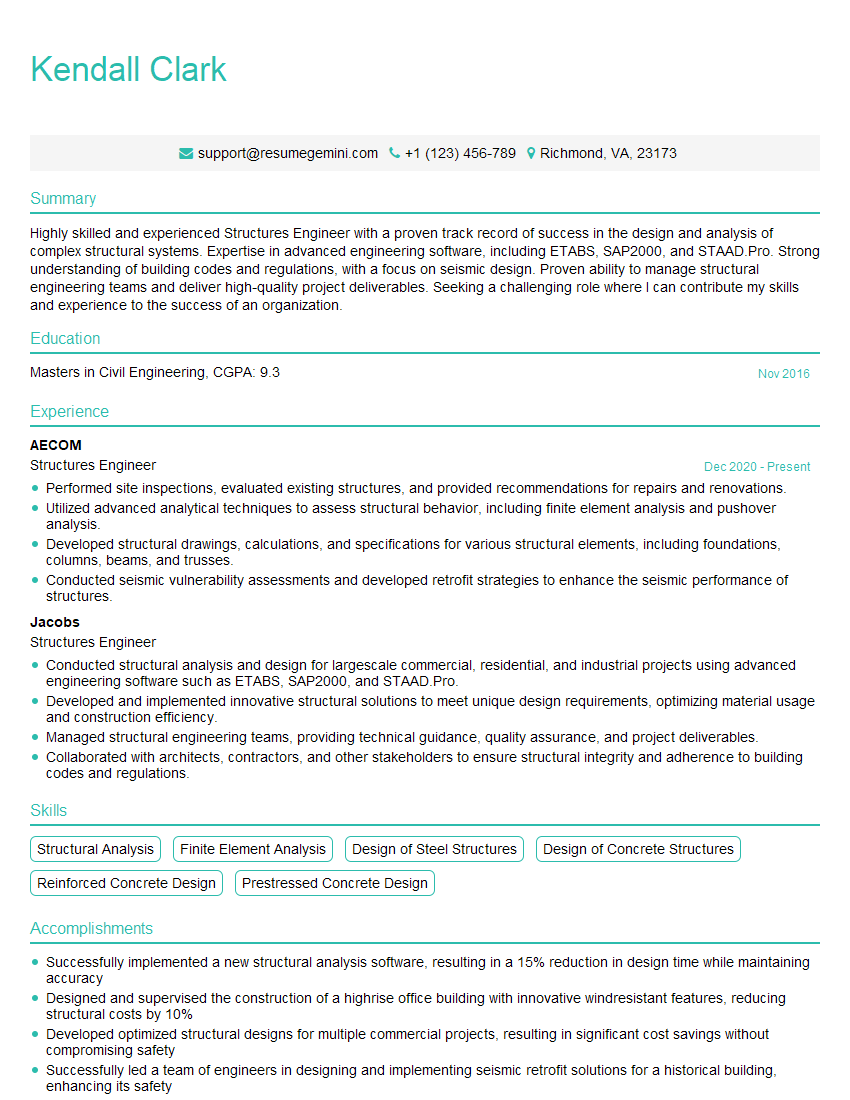
Structures Engineer Resume Sample
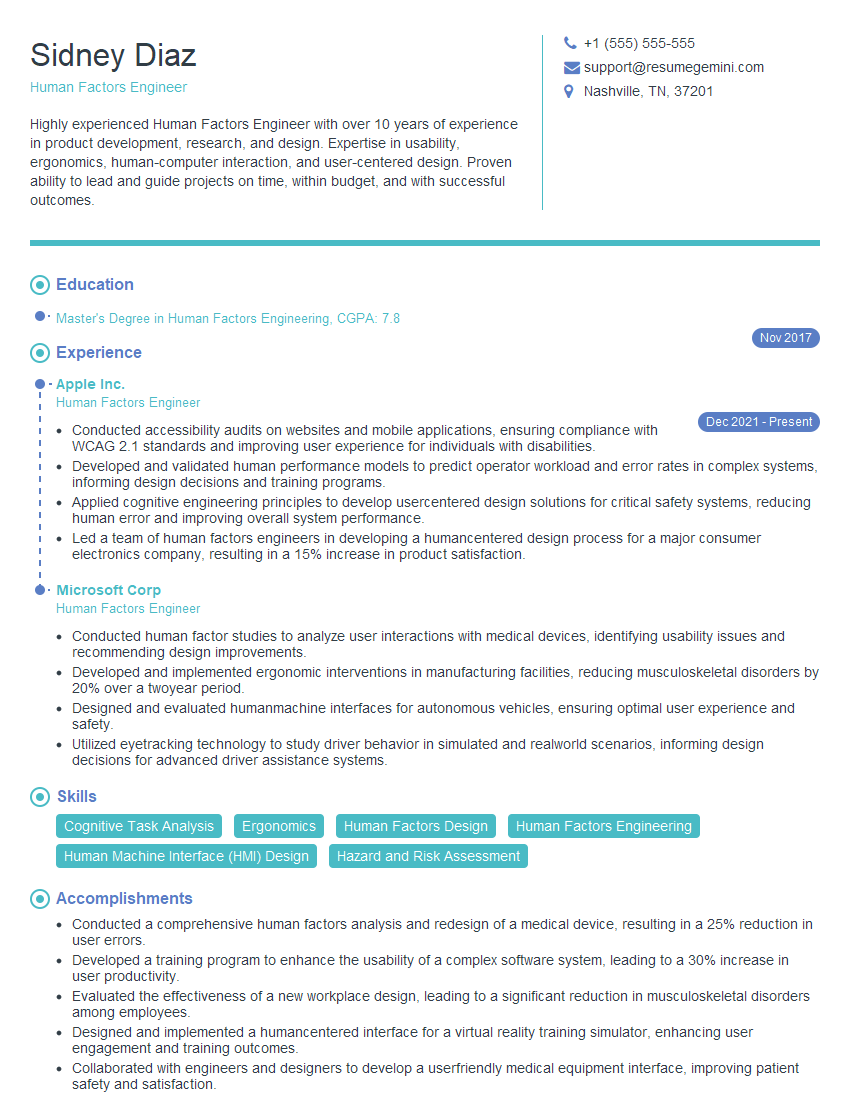
Human Factors Engineer Resume Sample
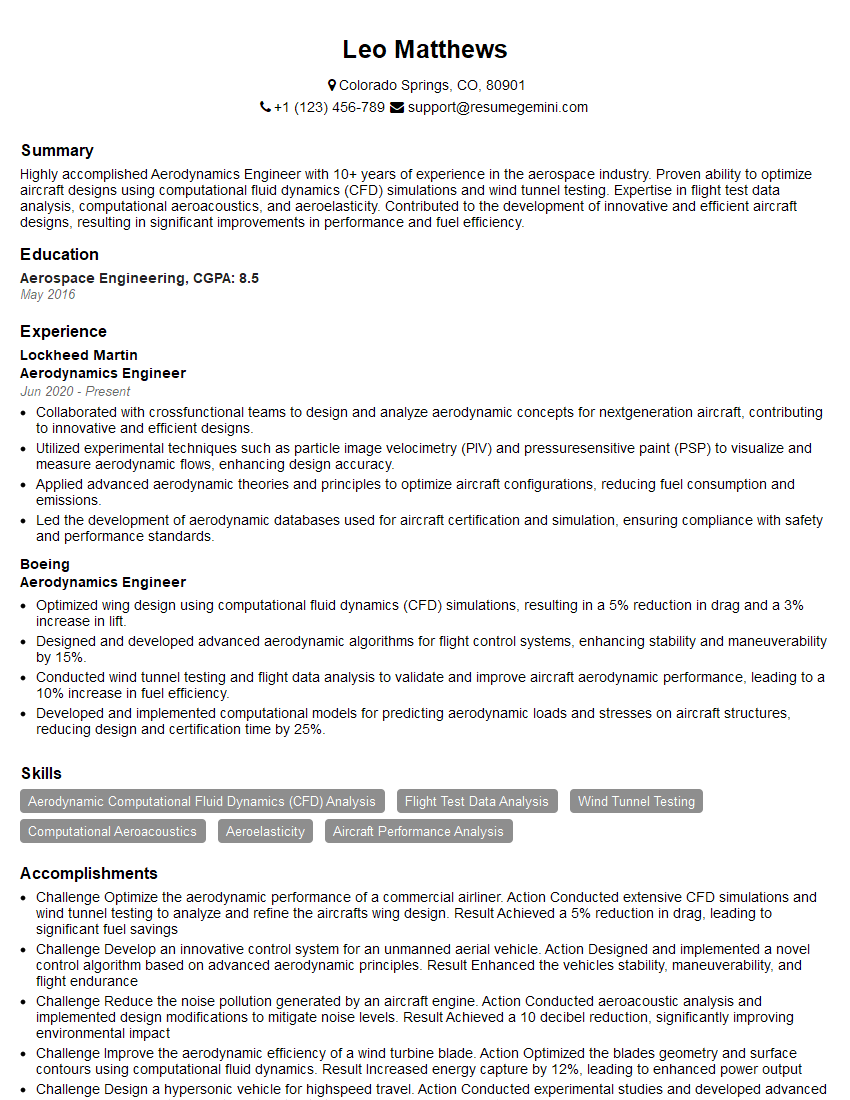
Aerodynamics Engineer Resume Sample
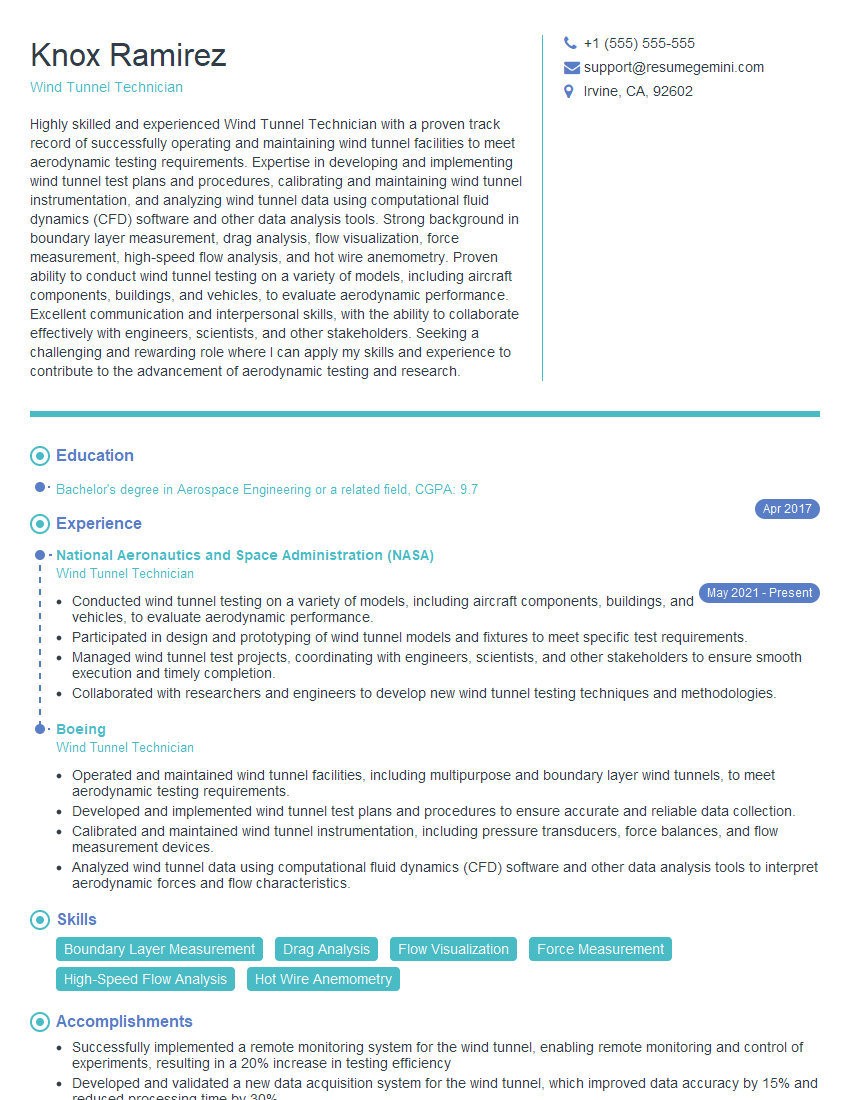
Wind Tunnel Technician Resume Sample
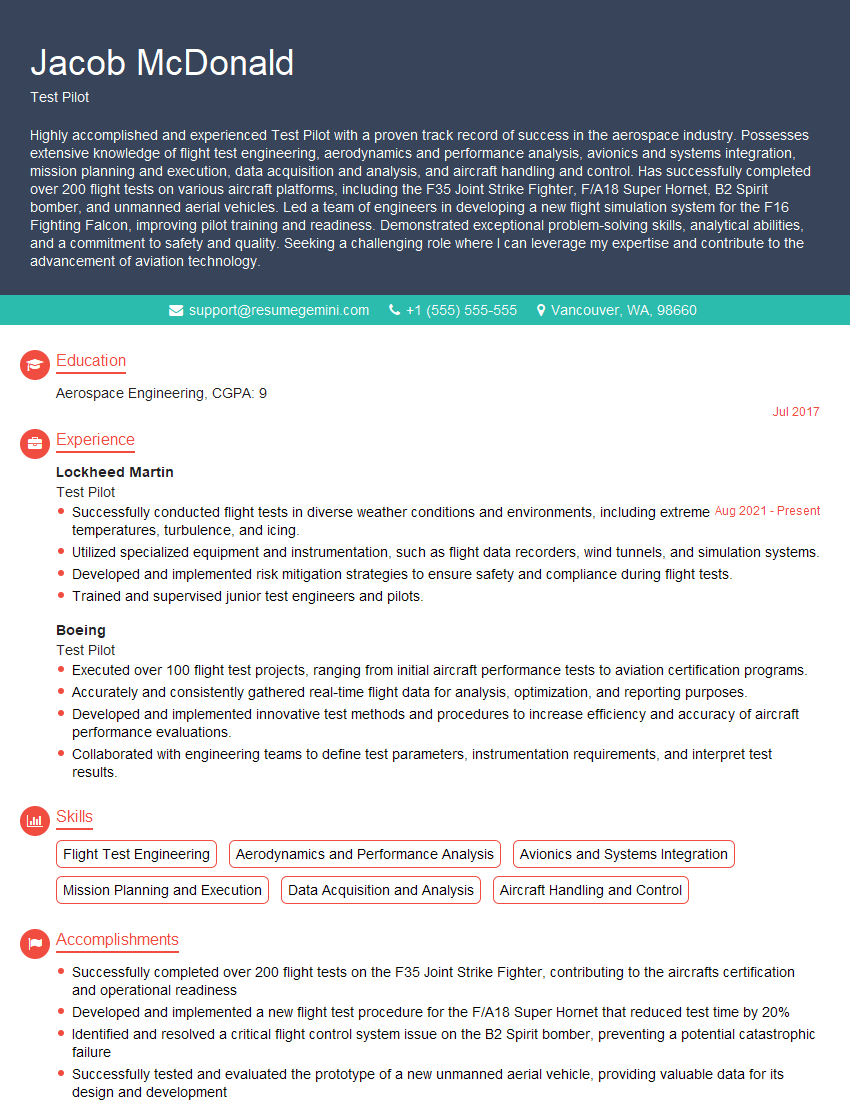
Test Pilot Resume Sample
Explore more articles
Users Rating of Our Blogs
Share Your Experience
We value your feedback! Please rate our content and share your thoughts (optional).
What Readers Say About Our Blog
Very informative content, great job.
good