Are you ready to stand out in your next interview? Understanding and preparing for Avionics Proficiency interview questions is a game-changer. In this blog, we’ve compiled key questions and expert advice to help you showcase your skills with confidence and precision. Let’s get started on your journey to acing the interview.
Questions Asked in Avionics Proficiency Interview
Q 1. Explain the principles of GPS navigation.
GPS, or Global Positioning System, relies on a constellation of satellites orbiting the Earth. These satellites transmit precise timing signals, allowing a GPS receiver (like the one in an aircraft) to pinpoint its location. The receiver calculates its position by measuring the time it takes for signals from multiple satellites to reach it. Think of it like triangulation – if you know the distance to three points, you can determine your exact location. The more satellites the receiver ‘sees’, the more accurate the position. This process uses extremely accurate atomic clocks in the satellites to ensure precision timing. Errors are minimized through sophisticated signal processing within the receiver and correction data broadcast from the satellites. In aviation, this precise positioning is critical for navigation, approach procedures, and terrain awareness.
Q 2. Describe the function of an Air Data Computer (ADC).
The Air Data Computer (ADC) is the brain of the aircraft’s flight instrumentation system. It takes raw measurements from various sensors, such as the pitot-static system (measuring airspeed, altitude, and vertical speed), and processes them to provide accurate and reliable flight data to the cockpit displays. It compensates for factors like temperature and altitude, ensuring that the displayed information is corrected and readily usable by the pilots. Imagine the ADC as a sophisticated translator: it takes the raw, unrefined data from the sensors and converts it into the easy-to-understand information presented on the instruments, like airspeed indicators and altimeters. A faulty ADC can lead to inaccurate flight data presentation, so regular maintenance and calibration are essential for safe operation.
Q 3. What are the common types of aircraft communication systems?
Aircraft use a variety of communication systems depending on the range and purpose. Common types include:
- VHF (Very High Frequency) Communication: Used for short-to-medium range communication with air traffic control (ATC) and other aircraft. It’s the backbone of communication during takeoff, landing, and most flight phases.
- UHF (Ultra High Frequency) Communication: Often used for longer ranges and in situations with challenging terrain, such as mountainous regions. Some emergency services also operate on UHF frequencies.
- HF (High Frequency) Communication: Employed for long-range communication, primarily over oceans and during transoceanic flights, where VHF and UHF signals are too weak.
- Satellite Communication: Used for communication with ground stations anywhere in the world, providing a connection even beyond the range of VHF, UHF, or HF. This is crucial for flights over remote areas.
- ACARS (Aircraft Communications Addressing and Reporting System): A data link system used for exchanging data between the aircraft and ground stations, such as maintenance information, weather updates, and flight plans.
The choice of system depends on factors like distance, terrain, and the type of communication needed.
Q 4. How does a Traffic Collision Avoidance System (TCAS) work?
The Traffic Collision Avoidance System (TCAS) is a crucial safety system designed to prevent midair collisions. It uses transponders on other aircraft to determine their position and relative movement. Essentially, each aircraft acts as a beacon, broadcasting its identity and position. TCAS receivers onboard process this information, calculating collision risk. If a potential conflict is detected, TCAS issues alerts (visual and/or audible) to the pilots, instructing them on evasive maneuvers (typically climb or descent). There are two main versions: TCAS I provides traffic advisories (TA) warning the pilots of nearby traffic, while TCAS II adds resolution advisories (RA) that provide specific instructions (e.g., ‘climb’ or ‘descend’) to avoid a collision. TCAS is a last-line defense, but its role in preventing midair collisions is invaluable.
Q 5. Explain the difference between VHF and UHF communication.
VHF and UHF are both radio frequency bands used for aircraft communication, but they differ in their properties and applications. VHF (30-300 MHz) is suitable for shorter ranges and relatively unobstructed paths; it’s commonly used for communication with air traffic control within a specific area. Think of VHF as having a shorter, more focused beam. UHF (300 MHz-3 GHz), on the other hand, can travel further, especially through obstacles, making it suitable for longer ranges and communication in challenging terrain. UHF signals can penetrate clouds and mountains more effectively. Therefore, UHF is better for long-range communication or communication in areas with challenging terrain.
Q 6. Describe the process of troubleshooting a faulty transponder.
Troubleshooting a faulty transponder involves a systematic approach. The first step is to identify the nature of the malfunction. Is the transponder not transmitting at all? Is it transmitting incorrect information? Is it intermittent? After identifying the symptoms, one can use built-in test equipment to check the transponder’s functionality. This may involve checking voltage levels, signal strength, and the correct operation of internal components. Specialized test equipment specific to the transponder model will be needed. If a fault is identified within a component, repair or replacement may be required following the aircraft maintenance manual and regulations. Documentation is critical throughout the troubleshooting process, recording every step, test result, and performed action. Finally, after repair, thorough testing and verification are crucial to ensure the transponder is operating correctly and meets regulatory standards.
Q 7. What are the safety regulations surrounding avionics maintenance?
Avionics maintenance is heavily regulated to ensure the safety and reliability of aircraft. Regulations are determined by national aviation authorities like the FAA (in the US) or EASA (in Europe). These regulations dictate the qualifications of maintenance personnel, the types of tools and equipment used, and the procedures followed. All maintenance must be meticulously documented, with detailed records of work performed, parts replaced, and test results. Strict adherence to maintenance manuals and industry best practices is vital. Furthermore, regular inspections and audits are conducted to ensure compliance. Non-compliance can lead to serious consequences, including fines, grounding of the aircraft, and even legal action. Safety is paramount, making adherence to these regulations absolutely non-negotiable.
Q 8. How do you interpret an avionics schematic diagram?
Avionics schematic diagrams are essentially blueprints of an aircraft’s electronic systems. They use standardized symbols to represent different components like radios, transponders, and sensors, and show how they’re interconnected via wires and data buses. Think of it like a wiring diagram for your car, but far more complex.
To interpret one, you start by identifying the key components and their symbols. Then, you trace the signal paths to understand how information flows between them. For instance, you might follow the path of a GPS signal from the antenna, through the GPS receiver, to the flight management system. Understanding the different colors of wires (often denoting different voltage levels or data types) and the use of bus systems is crucial. Experienced technicians often use these diagrams for troubleshooting and maintenance, locating faults by tracing signals and checking connectivity.
Consider a scenario where the aircraft’s navigation display isn’t working. By consulting the schematic, you could trace the signal path from the GPS receiver to the display, checking for breaks or faulty connections along the way. This systematic approach helps in efficient problem solving.
Q 9. Explain the function of an autopilot system.
An autopilot system is an automated flight control system that maintains a pre-selected flight path and altitude. Think of it as a sophisticated ‘co-pilot’ that takes over some of the workload from the human pilots, allowing for increased efficiency and reduced pilot fatigue, especially on long flights.
It achieves this by receiving inputs from various sensors (like altitude, airspeed, and heading indicators) and using this data to adjust control surfaces (ailerons, elevators, rudder) accordingly. Different autopilot modes exist, including heading select, altitude hold, vertical speed, and even coupled navigation modes that follow pre-programmed flight plans. These modes can be selected by the pilots depending on the flight phase and requirements. It’s a complex system involving computers, sensors, and actuators working together seamlessly. Imagine driving a car with cruise control – the autopilot is a similar concept, but for flying.
For example, during a long cruise, the pilot can engage the autopilot to maintain a specific altitude and heading, freeing them up to focus on other tasks like air traffic control communications or navigation.
Q 10. Describe the principles of flight management systems (FMS).
Flight Management Systems (FMS) are sophisticated onboard computers that manage various aspects of flight, integrating navigation, performance calculations, and flight planning. They’re the central brains of modern aircraft navigation, streamlining complex tasks and increasing safety.
The principles behind FMS revolve around using a database of navigation data (including airways, airports, and terrain information) to compute optimal flight paths, considering factors like weather, wind conditions, and fuel efficiency. The system then provides guidance to the pilots via displays, showing the planned route, estimated time of arrival (ETA), and other relevant flight parameters. It also helps with performance calculations, such as fuel consumption estimates and required climb/descent rates.
A key function is the generation of flight plans. Pilots input their desired departure and arrival airports, and the FMS generates the most efficient route, considering factors like air traffic control restrictions and weather conditions. The FMS also interacts with the autopilot to automatically fly the planned route, significantly reducing pilot workload and enhancing flight safety. Imagine it as a highly advanced GPS system for airplanes, but with far more capabilities.
Q 11. What are the different types of flight data recorders (FDR)?
Flight Data Recorders (FDRs), often called ‘black boxes’, come in various types, primarily categorized by their data storage capacity and recording capabilities. While the primary function remains recording flight parameters, technological advancements have led to different types.
- Digital FDRs: These are the most common type, storing data digitally on solid-state memory. They record a wider range of parameters compared to older analog versions.
- Solid-State FDRs (SSFDRs): These are a modern advancement using solid-state memory, offering improved reliability and durability compared to older tape-based systems. They can store a larger volume of data for longer durations.
- Cockpit Voice Recorders (CVRs): While technically separate, CVRs are frequently integrated with FDRs into a single unit. They record the cockpit conversations and other audible sounds.
The specific parameters recorded vary depending on the aircraft and regulations but generally include flight controls, engine performance, airspeed, altitude, and more. This data is crucial for accident investigations, helping determine the cause of incidents and improving aviation safety.
Q 12. How do you perform a pre-flight avionics check?
A pre-flight avionics check is a critical procedure ensuring all the aircraft’s electronic systems are functioning correctly before takeoff. This systematic check minimizes the risk of in-flight malfunctions and enhances safety.
The process involves a thorough examination of all essential avionics, typically using a checklist tailored to the specific aircraft type. This usually begins with a visual inspection to check for any obvious damage or loose connections. Then, each system is powered on and tested individually. For example, you’d verify the functionality of the navigation radios, transponder, GPS, and autopilot by checking their displays and responses to inputs. Any discrepancies or malfunctions are immediately addressed. The check often includes testing the communication systems by establishing contact with air traffic control. Finally, all the systems are tested together to check the interaction between various components and communication systems.
A thorough pre-flight avionics check is vital for safe flight operations. Failing to identify and address a malfunction before takeoff could have severe consequences.
Q 13. Explain the function of an inertial navigation system (INS).
An Inertial Navigation System (INS) is a self-contained navigation system that determines the position, velocity, and orientation of an aircraft without relying on external references like GPS. It achieves this using highly sensitive accelerometers and gyroscopes.
Accelerometers measure changes in acceleration, allowing the system to calculate velocity and displacement. Gyroscopes measure angular velocity, providing information about the aircraft’s orientation. By integrating these measurements over time, the INS can continuously estimate the aircraft’s position. It’s like keeping track of your movement by measuring how much you’ve sped up, slowed down, and turned – but with incredibly precise sensors. However, because these measurements are integrated over time, errors can accumulate; hence, they are often combined with other navigation aids like GPS.
Imagine a scenario where GPS signals are unavailable. In such circumstances, an INS can provide a reliable backup navigation source, although the accuracy might degrade over time. This makes INS a critical component for safety and navigation, especially in challenging environments.
Q 14. What are the common causes of avionics malfunctions?
Avionics malfunctions can stem from various sources, ranging from simple issues to complex system failures. Understanding the potential causes is essential for effective troubleshooting and maintenance.
- Component Failures: This includes failures of individual components like circuit boards, sensors, or actuators due to wear and tear, manufacturing defects, or environmental factors.
- Wiring Issues: Damaged, loose, or corroded wiring can disrupt signal paths and lead to malfunctions. This can result from vibration, moisture ingress, or physical damage during maintenance.
- Software Glitches: Software errors within the avionics systems can cause unpredictable behavior or system crashes. This requires careful software development and testing to prevent this.
- Environmental Factors: Extreme temperatures, humidity, or vibration can negatively affect the performance of delicate electronic components.
- Power Supply Problems: Inadequate or intermittent power can cause system failures or erratic behavior.
Troubleshooting these issues typically involves systematic checks using diagnostic tools, schematic diagrams, and a methodical approach to eliminate potential causes one by one. Understanding the aircraft’s systems and using a structured methodology is crucial for identifying the root cause of the malfunction.
Q 15. Describe your experience with avionics testing equipment.
My experience with avionics testing equipment spans a wide range of tools and techniques. This includes utilizing sophisticated test sets like the Boeing Integrated Test System (BITS) and Honeywell Avionics Test Equipment for comprehensive system-level testing. I’m proficient with specialized instruments for individual component testing, such as multi-meters for voltage and current checks, oscilloscopes for signal analysis, and signal generators for simulating various input conditions. Beyond the hardware, I’m also experienced in using specialized avionics software for automated testing and data analysis, helping to identify faults quickly and efficiently. For example, during a recent project involving the installation of a new GPS receiver, I used a BITS system to verify its proper communication with the aircraft’s flight management system. This involved running pre-programmed tests and analyzing the output data to confirm signal strength, accuracy, and integrity, ensuring compliance with regulatory standards.
Career Expert Tips:
- Ace those interviews! Prepare effectively by reviewing the Top 50 Most Common Interview Questions on ResumeGemini.
- Navigate your job search with confidence! Explore a wide range of Career Tips on ResumeGemini. Learn about common challenges and recommendations to overcome them.
- Craft the perfect resume! Master the Art of Resume Writing with ResumeGemini’s guide. Showcase your unique qualifications and achievements effectively.
- Don’t miss out on holiday savings! Build your dream resume with ResumeGemini’s ATS optimized templates.
Q 16. How do you maintain accurate avionics documentation?
Maintaining accurate avionics documentation is crucial for safety and regulatory compliance. I utilize a combination of digital and paper-based methods to ensure accuracy and traceability. All modifications, repairs, and inspections are meticulously recorded in the aircraft’s maintenance logbooks, adhering strictly to industry standards like FAA regulations. This includes detailed descriptions of the work performed, parts used (with serial numbers), and the technicians’ signatures. We also leverage digital tools like electronic maintenance tracking systems (EMTS), which provide a centralized, searchable database of all maintenance activities, simplifying audits and improving efficiency. Think of it like a highly organized and regulated medical record for the aircraft. Every piece of information, no matter how seemingly insignificant, contributes to the overall health and safety of the system. This rigorous approach ensures that the aircraft’s history and its avionics systems are completely documented and easily accessible.
Q 17. Explain the process of installing new avionics equipment.
Installing new avionics equipment is a multi-stage process demanding precision and adherence to strict procedures. It begins with a thorough pre-installation review of the aircraft’s documentation, the new equipment’s specifications, and the installation manual. This ensures compatibility and prevents conflicts. Next, the aircraft is prepared, often involving power isolation and grounding to prevent static discharge damage to sensitive components. The physical installation follows, carefully routing wires and ensuring proper connections. This is followed by rigorous testing and verification using the appropriate test equipment, as mentioned earlier, to confirm functionality and proper integration with existing systems. After successful testing, documentation is updated, reflecting the modifications made. For instance, installing a new transponder might involve careful routing of wires through existing bundles to avoid interference, ensuring proper grounding, and then testing its reception and transmission using a test set to verify its correct operation within the aircraft’s communication system.
Q 18. Describe your experience with different avionics software.
My experience with avionics software includes working with various types of flight management systems (FMS), communication management units (CMU), and specialized diagnostic software. I’m familiar with different programming languages used in avionics, including Ada and C++, though my work mainly involves using pre-existing software packages for configuration, testing, and troubleshooting. For example, I’ve used Honeywell’s Primus Epic software for configuring the flight management system and Rockwell Collins’ Pro Line Fusion software for managing communication systems. I’m also adept at using diagnostic software for troubleshooting issues, which often involves interpreting error codes and using built-in self-test routines to pinpoint problematic areas within the system. It’s vital to understand the software’s limitations and capabilities to perform effective troubleshooting and maintenance.
Q 19. How do you handle emergency situations related to avionics failure?
Handling avionics emergencies requires swift, decisive action based on established procedures. The first step is to assess the situation and its impact on flight safety. This involves determining the nature of the failure, its severity, and the aircraft’s capabilities with the failed system. Based on this assessment, we follow established emergency procedures, which may involve switching to backup systems, rerouting communications, or performing emergency landings. Proper communication with air traffic control is critical. For instance, a transponder failure requires immediate notification to ATC, followed by procedures to maintain safe separation from other aircraft. Every situation is unique, and the appropriate response depends on a combination of training, experience, and a calm, methodical approach. Regular training and simulation exercises are crucial to prepare for these potentially life-threatening scenarios.
Q 20. What are your troubleshooting skills when dealing with complex avionics systems?
My troubleshooting skills involve a systematic approach. I begin by gathering information—observing symptoms, reviewing error logs, and querying relevant databases. Then, I formulate hypotheses about the cause of the problem. This often involves consulting schematics, wiring diagrams, and technical manuals. I proceed with testing these hypotheses, using appropriate test equipment and procedures. If the initial hypotheses are incorrect, I refine them based on the test results and continue the process until the root cause is identified and resolved. For example, if an instrument is displaying incorrect data, I might first check power and grounding, then signal integrity using an oscilloscope, before moving to a more in-depth examination of internal components. My approach focuses on methodical investigation and eliminates guesswork. I consider it like detective work, where each piece of evidence leads us closer to the solution.
Q 21. Describe your experience with specific avionics components (e.g., radios, transponders).
I have extensive experience with a range of avionics components, including VHF and UHF radios, transponders, GPS receivers, and inertial navigation systems. My experience with radios includes troubleshooting signal strength issues, antenna problems, and frequency selection difficulties. With transponders, I’m proficient in testing their encoding, decoding, and communication with ground-based radar systems. Understanding the nuances of each component is critical, as a malfunction in one area can have knock-on effects elsewhere. For example, during the repair of a faulty VHF radio, I discovered a corroded connector which was causing intermittent communication problems. Replacing the connector, followed by thorough testing, restored reliable communications. Each component presents a unique set of challenges, and familiarity with their functionalities and failure modes is essential for efficient diagnosis and repair.
Q 22. How do you ensure compliance with relevant aviation regulations?
Ensuring compliance with aviation regulations is paramount in avionics. It’s not just about following rules; it’s about ensuring safety and maintaining the integrity of the entire system. This involves a multi-faceted approach.
- Understanding the Regulations: I thoroughly understand and stay current on regulations from bodies like the FAA (Federal Aviation Administration) in the US, EASA (European Union Aviation Safety Agency) in Europe, and other relevant national authorities. This includes Part 25 for airworthiness, Part 145 for maintenance organizations, and specific regulations regarding avionics installations and modifications.
- Documentation and Traceability: Meticulous record-keeping is crucial. Every step, from design and installation to maintenance and modifications, is meticulously documented. This ensures traceability and allows for easy auditing in case of any discrepancies or investigations. We utilize digital maintenance tracking systems to manage this effectively.
- Quality Control and Audits: We implement rigorous quality control procedures at every stage of the process, ensuring all work conforms to the highest standards. Regular internal and external audits help identify potential weaknesses and maintain a high level of compliance. I’ve personally been involved in multiple successful audits across various aircraft platforms.
- Continuous Improvement: The regulatory landscape is ever-changing. We actively participate in industry forums and training to stay abreast of the latest updates and best practices. This ensures we’re always compliant and proactively address potential issues before they arise.
For example, during a recent project involving the upgrade of an aircraft’s navigation system, we meticulously documented every step, ensuring strict adherence to FAA Part 25 and the manufacturer’s specifications. This meticulous approach led to a successful audit and timely certification.
Q 23. Explain your knowledge of different avionics data buses (e.g., ARINC 429).
Avionics data buses are the nervous system of a modern aircraft, facilitating communication between various systems. ARINC 429 is a common example, but others include ARINC 629, AFDX (Aerospace Fibre optic Data network), and Ethernet.
- ARINC 429: This is a high-speed, serial data bus that uses a specific protocol for transmitting data packets between avionics units. It’s known for its reliability and widespread use in older and some modern aircraft. Each message has a specific label identifying the data source and type. Data is sent asynchronously, meaning devices don’t need to be synchronized.
- ARINC 629: A newer standard offering higher data rates and more complex messaging. It’s gaining popularity, but ARINC 429 is still prevalent in many systems.
- AFDX (Aerospace Fibre optic Data network): A switched Ethernet network designed for high-bandwidth, deterministic communication, essential for the increasing complexity of modern avionics systems. It uses fiber optics for superior performance and immunity to electromagnetic interference.
- Ethernet: Standard Ethernet is becoming increasingly integrated into aircraft, especially in newer designs. This often requires specialized hardware and protocols to guarantee real-time performance and reliability.
Understanding these bus systems is crucial for troubleshooting and maintenance. For instance, I recently diagnosed a navigation system fault by analyzing the ARINC 429 data stream. I pinpointed the problem to a faulty data word being transmitted from the Air Data Computer (ADC).
Q 24. Describe your experience working with different types of aircraft.
My experience spans a variety of aircraft types, including both commercial airliners and smaller general aviation aircraft. This diverse background provides me with a comprehensive understanding of the unique avionics challenges and solutions each platform presents.
- Airbus A320 Family: I have significant experience working with the A320 family, including system maintenance, troubleshooting, and modifications. I understand its complex network of AFDX and ARINC 429 data buses.
- Boeing 737NG: I’ve worked on Boeing 737NG aircraft, familiarizing myself with its systems and the nuances of its avionics architecture, focusing on the troubleshooting of flight control and navigation systems.
- Cessna 172: My experience also extends to general aviation, including work on Cessna 172 aircraft. This experience taught me the importance of practical troubleshooting in less complex systems, grounding my understanding of fundamental principles.
This diverse range of experience allows me to quickly adapt to new systems and environments. The fundamental principles of avionics remain consistent, but the implementation and specific technology differ based on the aircraft type. For example, while the core principles of GPS navigation are the same across all these aircraft types, the specific integration with the flight management system and display units varies substantially.
Q 25. How do you stay updated with the latest advancements in avionics technology?
Staying updated in the rapidly evolving field of avionics requires a proactive and multi-pronged approach.
- Industry Publications and Journals: I regularly read publications like Aviation Week & Space Technology and other specialized journals to keep abreast of the latest technological advancements and regulatory changes.
- Conferences and Workshops: Attending industry conferences and workshops allows me to network with colleagues and experts, learning about the latest innovations firsthand. I actively participate in presentations and discussions.
- Manufacturer Training Programs: I actively participate in manufacturer-provided training programs to deepen my knowledge of specific avionics systems and software. This includes both online and in-person courses.
- Online Resources and Webinars: I utilize online resources, such as webinars and manufacturer websites, to stay informed about new technologies and updates to existing systems. This provides a flexible way to expand my knowledge base.
A recent example: I learned about the increased use of AI in predictive maintenance through a webinar. This information allowed me to explore incorporating such techniques into our current maintenance procedures, potentially improving efficiency and safety.
Q 26. Explain your experience with avionics repair and maintenance procedures.
My avionics repair and maintenance experience covers a wide range of tasks, from minor repairs to complex system overhauls. I adhere strictly to established procedures and regulations, ensuring that all work is performed safely and accurately.
- Troubleshooting: I have extensive experience troubleshooting avionics systems using various diagnostic tools and techniques. This includes interpreting fault codes, analyzing data bus traffic, and performing functional tests.
- Repair and Replacement: I can perform repairs and replacements of various avionics components, ensuring that all repairs are properly documented and meet airworthiness standards.
- Calibration and Testing: I have experience calibrating and testing avionics equipment to ensure accurate performance and compliance with regulatory requirements.
- System Integration: I have experience with the integration of new avionics systems into existing aircraft, ensuring seamless compatibility and functionality.
For instance, I recently repaired a faulty transponder on a Cessna 172. After systematically troubleshooting the issue (checking wiring, power supply, and internal components), I replaced a faulty circuit board, meticulously documenting the process and testing the functionality before returning the aircraft to service. All work adhered to the aircraft’s maintenance manual and Part 145 regulations.
Q 27. Describe your understanding of avionics safety and reliability.
Avionics safety and reliability are not just buzzwords; they are the bedrock of my professional practice. Every decision and action is guided by the understanding that any failure can have severe consequences.
- Redundancy and Fail-Safes: I understand the critical role of redundancy and fail-safes in ensuring system reliability. Modern aircraft often employ multiple independent systems to perform critical functions. This redundancy minimizes the risk of single-point failures.
- Fault Tolerance: I’m proficient in analyzing systems for fault tolerance and identifying potential points of failure. This involves understanding the impact of a component failure on the overall system.
- Safety Procedures: I adhere rigorously to established safety procedures during all maintenance and repair activities. This includes the use of proper safety equipment, lockout/tagout procedures, and adherence to established best practices.
- Regular Inspections and Maintenance: Preventive maintenance is key to reliability. Regular inspections and scheduled maintenance help identify potential problems before they escalate into major failures.
A recent example: During a routine inspection, I noticed a slight degradation in a critical flight control sensor’s performance. By catching this early, we avoided a potential in-flight failure that could have had catastrophic consequences. This highlights the importance of proactive maintenance and meticulous inspection procedures.
Q 28. What are your salary expectations for this avionics position?
My salary expectations for this avionics position are commensurate with my experience, skills, and the responsibilities of the role. I’m open to discussing a competitive compensation package that reflects my market value and the contribution I can make to your team. I’m more focused on a role that provides growth opportunities and allows me to further develop my expertise in this field than on a specific numerical figure at this stage. Let’s discuss this further once we’ve had a chance to talk more in-depth about the position and its expectations.
Key Topics to Learn for Avionics Proficiency Interview
- Navigation Systems: Understanding principles of GPS, VOR, ILS, and RNAV; troubleshooting common navigation system malfunctions and their impact on flight safety.
- Communication Systems: Familiarity with VHF, HF, and satellite communication systems; practical application of communication protocols and emergency procedures.
- Flight Management Systems (FMS): Knowledge of FMS operation, data entry, route planning, and performance calculations; troubleshooting common FMS errors and discrepancies.
- Automatic Dependent Surveillance-Broadcast (ADS-B): Understanding the principles of ADS-B technology, its applications in air traffic management, and its contribution to enhanced situational awareness.
- Aircraft Electrical Systems: Knowledge of AC and DC power systems, bus architectures, and troubleshooting electrical faults; understanding the importance of power distribution and system redundancy.
- Avionics Integration and Troubleshooting: Practical experience in identifying and resolving faults within complex avionics systems; using diagnostic tools and techniques for effective problem-solving.
- Air Data Systems: Understanding the operation of pitot-static systems, airspeed indicators, altimeters, and vertical speed indicators; troubleshooting common air data system errors.
- Regulations and Standards: Familiarity with relevant FAA (or other regulatory body) regulations and standards pertaining to avionics maintenance, operation, and safety.
Next Steps
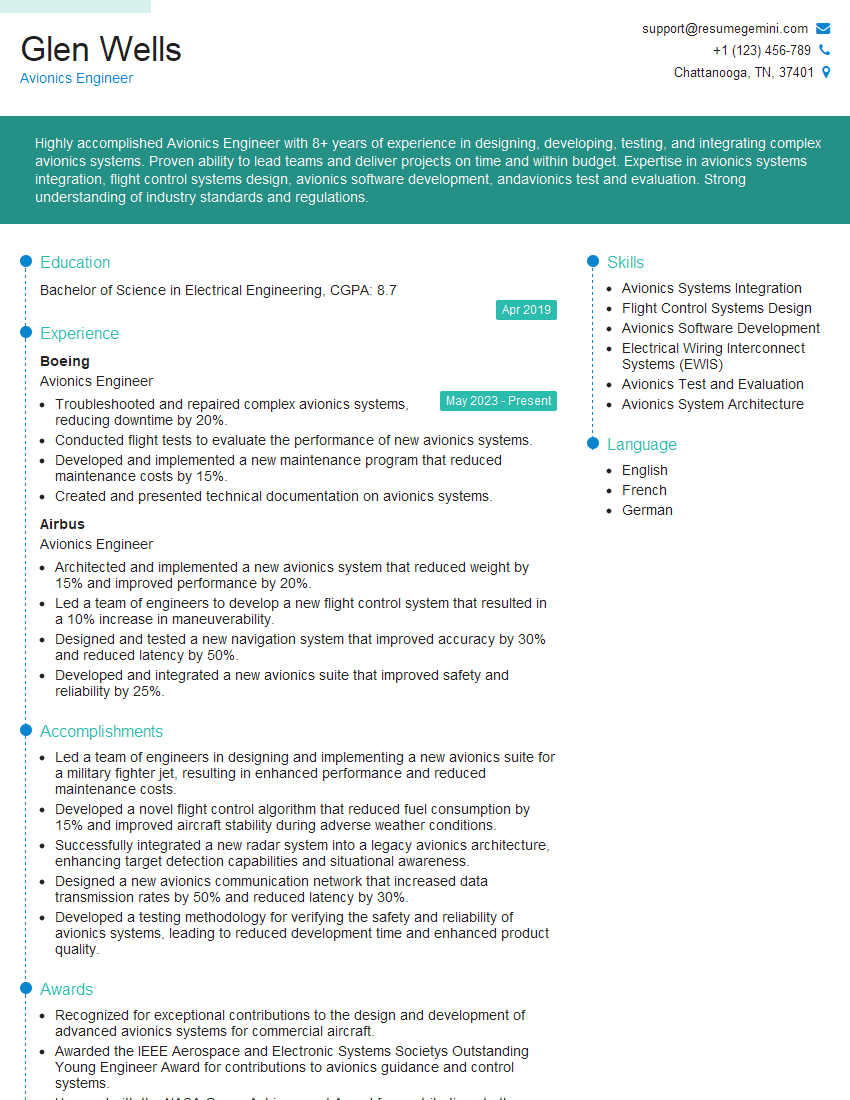
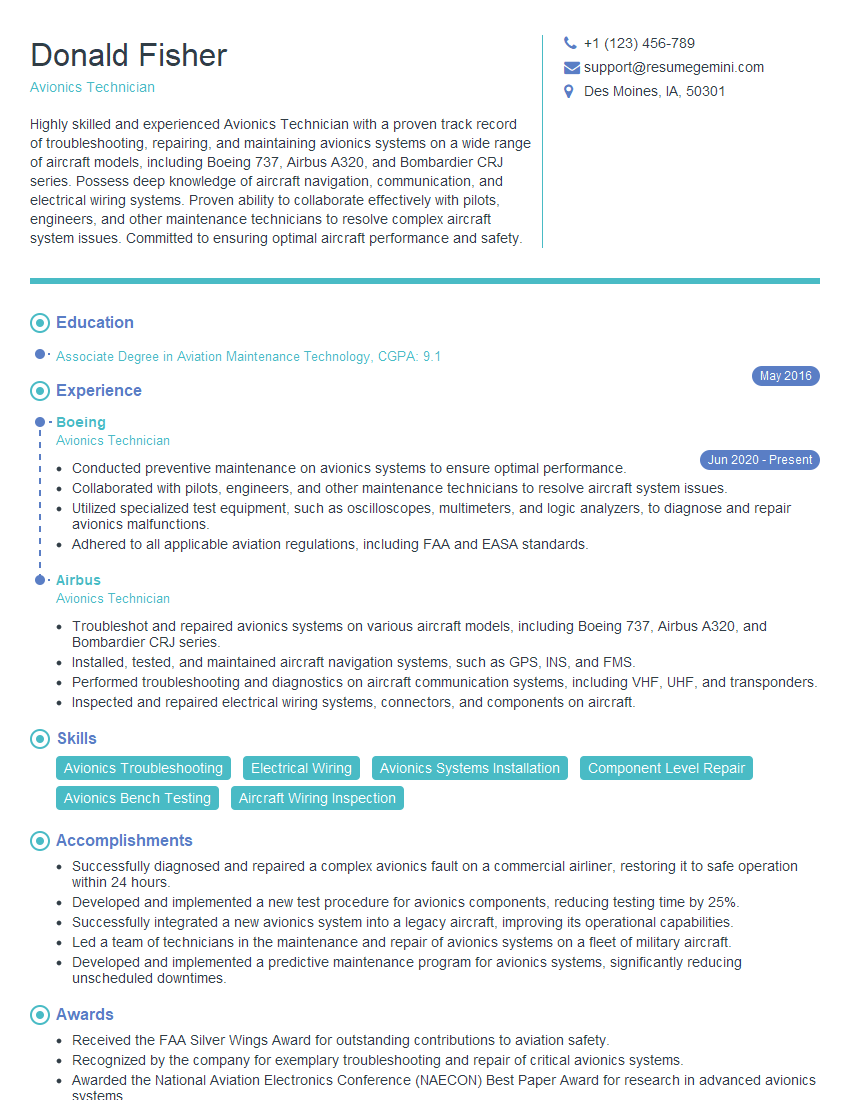
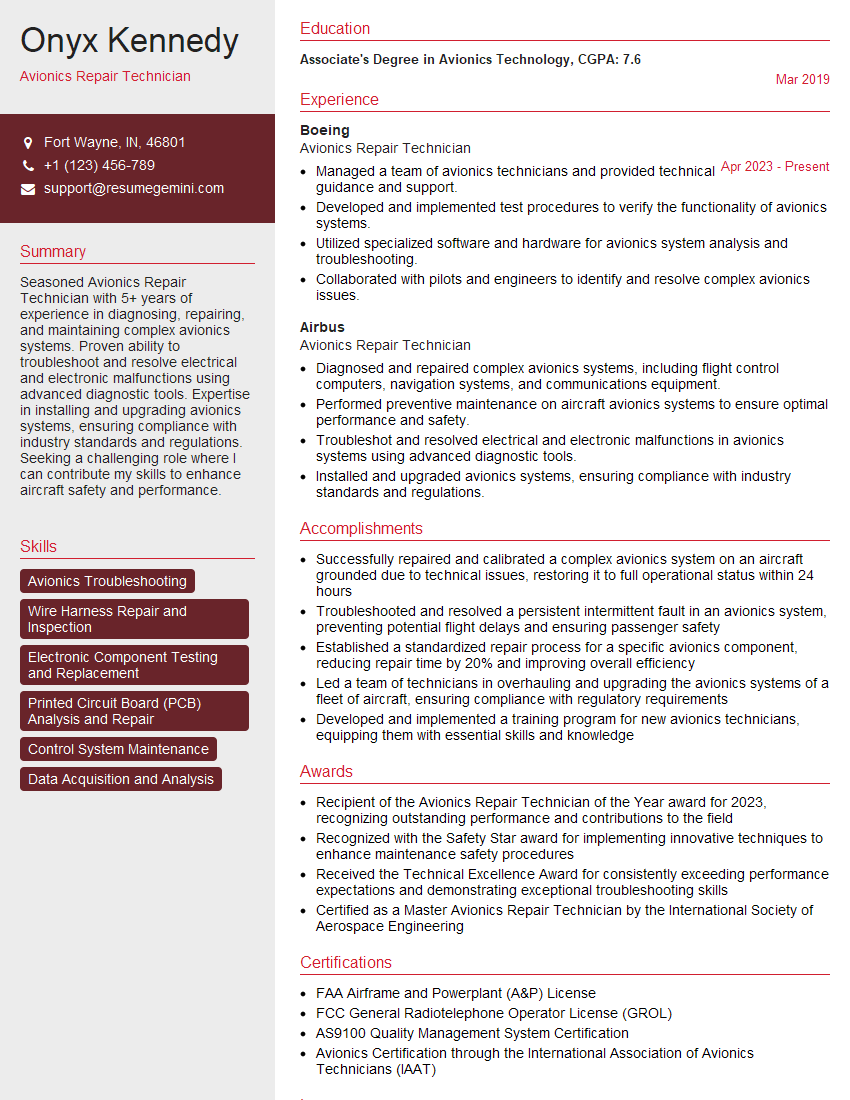
Mastering Avionics Proficiency opens doors to exciting and rewarding careers in the aviation industry, offering opportunities for continuous learning and professional growth. A strong resume is crucial for showcasing your skills and experience to potential employers. Building an ATS-friendly resume is key to getting your application noticed. ResumeGemini is a trusted resource that can help you craft a compelling and effective resume tailored to the specific requirements of Avionics Proficiency roles. Examples of resumes tailored to Avionics Proficiency are available to guide you. Invest the time to create a professional and impactful resume – it’s your first impression and a vital step in securing your dream job.
Explore more articles
Users Rating of Our Blogs
Share Your Experience
We value your feedback! Please rate our content and share your thoughts (optional).
What Readers Say About Our Blog
Very informative content, great job.
good