Unlock your full potential by mastering the most common Plant Material Knowledge interview questions. This blog offers a deep dive into the critical topics, ensuring you’re not only prepared to answer but to excel. With these insights, you’ll approach your interview with clarity and confidence.
Questions Asked in Plant Material Knowledge Interview
Q 1. Explain the difference between monocotyledonous and dicotyledonous plants.
Monocotyledonous (monocots) and dicotyledonous (dicots) plants are two major groups of flowering plants, distinguished primarily by the number of cotyledons—embryonic leaves—present in their seeds. This difference reflects broader variations in their anatomy and physiology.
- Monocots: Possess a single cotyledon in their seed. They typically have parallel leaf venation (veins run parallel to each other), fibrous root systems (a network of thin roots), flower parts in multiples of three, and scattered vascular bundles in their stems (the xylem and phloem aren’t arranged in a ring). Examples include grasses (like wheat, rice, corn), lilies, orchids, and palms.
- Dicots: Have two cotyledons in their seeds. They usually exhibit reticulate leaf venation (a network of veins branching from a central vein), taproot systems (a main root with smaller lateral roots), flower parts in multiples of four or five, and vascular bundles arranged in a ring within their stems. Examples include roses, sunflowers, oaks, beans, and most flowering trees and shrubs.
Understanding this distinction is crucial in agriculture, horticulture, and botany. For instance, knowing that grasses (monocots) have fibrous roots impacts how we manage soil erosion, while understanding dicot taproots informs planting strategies and weed control.
Q 2. Describe the process of photosynthesis.
Photosynthesis is the remarkable process by which green plants and some other organisms use sunlight to synthesize foods from carbon dioxide and water. It’s the cornerstone of most food chains on Earth.
The process occurs in chloroplasts, organelles within plant cells containing chlorophyll, the green pigment that absorbs light energy. In simplified terms, photosynthesis can be represented by the following equation:
6CO₂ + 6H₂O + Light Energy → C₆H₁₂O₆ + 6O₂This translates to: six molecules of carbon dioxide plus six molecules of water, using light energy, produce one molecule of glucose (a sugar) and six molecules of oxygen.
The process involves two main stages:
- Light-dependent reactions: Light energy is absorbed by chlorophyll, exciting electrons and initiating a chain of reactions that produce ATP (energy) and NADPH (reducing power).
- Light-independent reactions (Calvin cycle): ATP and NADPH are used to convert carbon dioxide into glucose. This involves a series of enzyme-catalyzed reactions that fix carbon dioxide and ultimately create the sugar molecules the plant uses for energy and growth.
Understanding photosynthesis is vital in fields such as agriculture, where optimizing light exposure and CO2 levels can significantly increase crop yields. It’s also crucial in climate change research, as plants play a vital role in regulating atmospheric carbon dioxide levels.
Q 3. What are the key factors affecting plant growth and development?
Plant growth and development are influenced by a complex interplay of factors. These can be broadly categorized as:
- Environmental factors: These include light intensity and quality, temperature, water availability, humidity, soil conditions (including nutrient availability and pH), and the presence of pests and diseases.
- Genetic factors: The plant’s genetic makeup dictates its potential for growth, its tolerance to various environmental stresses, and its overall characteristics. Different cultivars of the same species can exhibit vastly different growth patterns.
- Nutritional factors: Plants require various nutrients for optimal growth, including macronutrients (nitrogen, phosphorus, potassium) and micronutrients (iron, zinc, manganese, etc.). Deficiencies in any of these can lead to stunted growth and other problems.
- Hormonal factors: Plant hormones (phytohormones) such as auxins, gibberellins, cytokinins, abscisic acid, and ethylene regulate various aspects of plant growth, development, and responses to environmental stimuli.
For example, a plant might have the genetic potential to grow tall, but if it lacks sufficient sunlight or water, its growth will be stunted. Conversely, a plant with superior genetics might still succumb to disease or pests if proper management isn’t implemented.
Q 4. Explain the importance of soil pH for plant health.
Soil pH, a measure of the acidity or alkalinity of the soil, is a critical factor affecting plant health. It influences nutrient availability, microbial activity, and overall root health.
Most plants thrive within a specific pH range, typically between 6.0 and 7.0 (slightly acidic to neutral). Outside this range, nutrient availability can be significantly affected. For instance:
- Low pH (acidic soil): Essential nutrients like phosphorus, molybdenum, and calcium can become less available to plants, leading to deficiencies and stunted growth. Aluminum toxicity can also become a problem at very low pH.
- High pH (alkaline soil): Iron, manganese, zinc, and other micronutrients can become less soluble and unavailable, resulting in chlorosis (yellowing of leaves) and other nutrient deficiency symptoms.
Understanding and managing soil pH is crucial in agriculture and horticulture. Soil testing helps determine the current pH, and amendments like lime (to raise pH) or sulfur (to lower pH) can be added to adjust the soil’s pH to the optimal range for the specific plants being grown. This ensures that plants can access the nutrients they need for healthy growth.
Q 5. Discuss common plant diseases and their management strategies.
Plants are susceptible to a wide range of diseases caused by various pathogens, including fungi, bacteria, viruses, and nematodes. Some common plant diseases include:
- Powdery mildew: A fungal disease characterized by a white, powdery coating on leaves and stems.
- Root rot: Caused by various soilborne fungi, leading to root decay and wilting.
- Rust: Fungal diseases that produce orange or brown pustules on leaves and stems.
- Bacterial leaf spot: Bacterial infections causing spots or lesions on leaves.
- Viral diseases: Various viruses can infect plants, causing mosaic patterns, stunted growth, and other symptoms.
Management strategies: Disease management relies on a combination of approaches, including:
- Cultural practices: Rotating crops, providing good soil drainage, ensuring proper spacing between plants, and removing infected plant material.
- Biological control: Utilizing beneficial microorganisms or natural predators to suppress pathogens.
- Chemical control: Applying fungicides, bactericides, or nematicides when necessary, always following label instructions carefully.
- Resistant varieties: Selecting and planting disease-resistant cultivars.
Integrated pest management (IPM) approaches are often preferred, combining various strategies to minimize disease impact while minimizing environmental risks.
Q 6. Describe various methods of plant propagation.
Plant propagation refers to the methods used to increase the number of plants from a single parent plant. Various methods exist, categorized broadly into sexual and asexual propagation.
- Sexual propagation: Involves using seeds, which are produced through the fusion of male and female gametes. This method produces genetically diverse offspring, often displaying variability.
- Asexual propagation (vegetative propagation): Involves using vegetative plant parts to produce new plants that are genetically identical to the parent plant (clones). Methods include:
- Cuttings: Sections of stems, leaves, or roots are planted to produce new plants (e.g., rose cuttings).
- Layering: A stem is bent to the ground, covered with soil, and allowed to root before being separated from the parent plant.
- Grafting: A section of a desirable plant (scion) is joined to the rootstock of another plant.
- Division: Plants with rhizomes or tubers can be divided into smaller sections, each capable of producing a new plant.
- Tissue culture: Small pieces of plant tissue are grown in a sterile medium to produce numerous plantlets.
The choice of propagation method depends on various factors, including the species of plant, the desired number of plants, the resources available, and the level of genetic uniformity required.
Q 7. Explain the concept of plant hardiness zones.
Plant hardiness zones are geographical areas with similar average annual minimum temperatures. They provide gardeners and horticulturalists with a guideline for selecting plants that are likely to survive the winter conditions in a particular region. The zones are based on the lowest average annual minimum temperature experienced in a given location.
The most widely used system is the USDA Plant Hardiness Zone Map. This map divides North America into zones, each representing a 10°F (5.6°C) range of average annual minimum temperatures. For example, Zone 7a has an average annual minimum temperature between 0°F (-17.8°C) and 5°F (-15°C), while Zone 8a is between 10°F (-12.2°C) and 15°F (-9.4°C). Plants rated for a specific zone are expected to survive the winters in that zone, though microclimates and other factors can influence their survival.
Understanding hardiness zones is essential for successful gardening. Planting a plant outside its designated hardiness zone significantly increases the risk of winter damage or death. The map provides valuable guidance in plant selection, ensuring that gardeners choose plants that are adapted to their local climate and reduce the likelihood of plant loss.
Q 8. What are the different types of plant tissue and their functions?
Plants, like all multicellular organisms, are composed of different types of tissues, each with specialized functions. These tissues work together to ensure the plant’s survival and reproduction.
- Meristematic Tissue: This is the plant’s ‘growth tissue,’ responsible for cell division and the production of new cells. Think of it as the plant’s stem cell factory. There are apical meristems (at the tips of roots and shoots) which contribute to primary growth (lengthening), and lateral meristems (cambium) responsible for secondary growth (width).
- Ground Tissue: This forms the bulk of the plant body and is involved in photosynthesis (parenchyma cells), storage (parenchyma cells), and support (collenchyma and sclerenchyma cells). Imagine the fleshy part of a fruit – that’s mostly ground tissue.
- Dermal Tissue: This forms the outer protective layer of the plant, analogous to our skin. The epidermis (in non-woody plants) and periderm (in woody plants) protect against water loss, disease, and herbivores. Think of the waxy cuticle on a leaf; that’s part of the dermal tissue.
- Vascular Tissue: This is the plant’s transport system, responsible for moving water, minerals, and sugars. Xylem transports water and minerals from the roots to the rest of the plant (think of it as the plant’s plumbing), while phloem transports sugars produced during photosynthesis from the leaves to other parts of the plant (think of it as the plant’s food delivery system).
Understanding plant tissues is crucial for tasks such as grafting, pruning, and diagnosing plant diseases. For example, knowing that the cambium is the actively dividing tissue allows us to understand why grafting works: the cambium layers of the scion and rootstock must be in close contact to allow for successful fusion.
Q 9. How do you identify common weeds and control their spread?
Identifying weeds is the first step in controlling their spread. This involves careful observation of the plant’s characteristics, including leaf shape, arrangement, stem type, flower structure, and growth habit. Many field guides and online resources can help with identification.
Once identified, control methods can be implemented. These can be categorized as:
- Cultural Control: This involves altering the growing environment to make it less favorable for weeds. Examples include proper soil preparation to reduce weed seed germination, mulching to suppress weed growth, and crop rotation to disrupt weed life cycles.
- Mechanical Control: This includes physical removal of weeds through hand weeding, hoeing, or mowing. This is particularly effective for small infestations or annual weeds.
- Biological Control: This uses natural enemies, such as insects or fungi, to control weed populations. This is a more sustainable approach, but it requires careful consideration to avoid unintended ecological consequences.
- Chemical Control: This involves the use of herbicides to kill weeds. This should be a last resort, used judiciously and following label instructions carefully to minimize environmental impact and ensure human safety. Herbicide selection depends on the type of weed, the location, and the surrounding plants.
A comprehensive weed management strategy often involves a combination of these methods, known as Integrated Weed Management (IWM), for long-term effectiveness.
For example, in a vegetable garden, you might start with mulching to prevent weed seeds from germinating, then hand-weed any that emerge, resorting to a targeted herbicide only if necessary and always prioritizing minimizing herbicide impact on beneficial soil microbes and plants.
Q 10. Discuss the role of plant hormones in plant growth.
Plant hormones, also known as phytohormones, are chemical messengers that regulate various aspects of plant growth and development. They act at very low concentrations and influence processes such as cell division, elongation, differentiation, and senescence.
- Auxins: Promote cell elongation, apical dominance (suppressing lateral bud growth), and root formation. Synthetic auxins are used in rooting powders.
- Gibberellins: Stimulate stem elongation, seed germination, and flowering. They are used commercially to increase fruit size.
- Cytokinins: Promote cell division, delay senescence (aging), and influence shoot development. They often counteract the effects of auxins.
- Abscisic Acid (ABA): Promotes seed dormancy, inhibits growth, and helps plants cope with stress, such as drought.
- Ethylene: Promotes fruit ripening, leaf senescence, and flower wilting. This is a gaseous hormone.
The effects of plant hormones are complex and often involve interactions between multiple hormones. For example, the balance between auxins and cytokinins determines whether a plant will develop roots or shoots. Understanding plant hormone interactions is crucial in agricultural practices like plant tissue culture and improving crop yield.
Q 11. Explain the importance of integrated pest management (IPM).
Integrated Pest Management (IPM) is a holistic approach to pest control that minimizes reliance on synthetic pesticides. It emphasizes prevention and monitoring, using various methods to suppress pest populations while minimizing ecological harm.
IPM involves several key steps:
- Monitoring: Regularly inspecting plants for signs of pests and diseases.
- Identification: Accurately identifying the pest or disease to determine the best control method.
- Prevention: Implementing cultural practices, like crop rotation or proper sanitation, to prevent pest infestations.
- Biological Control: Utilizing natural enemies of pests, such as beneficial insects or microorganisms.
- Mechanical Control: Employing physical methods like traps, barriers, or handpicking to remove pests.
- Chemical Control: Using pesticides only as a last resort, selecting the least toxic option and applying it judiciously.
IPM is crucial for sustainable agriculture and protecting human health and the environment. By reducing pesticide use, IPM minimizes the risk of pesticide resistance, groundwater contamination, and harm to beneficial organisms. For example, a farmer might use pheromone traps to monitor moth populations in an orchard, then release natural predators of the moths if the population becomes too high, only resorting to insecticides if the other methods are insufficient.
Q 12. Describe the different types of irrigation systems and their suitability for various plants.
Irrigation systems are crucial for providing plants with the water they need to thrive. Different systems have varying efficiencies and suitabilities for different plants and environments.
- Drip Irrigation: Delivers water directly to the roots, minimizing water loss through evaporation. Excellent for water-sensitive plants and arid regions.
- Sprinkler Irrigation: Sprays water over the plant canopy. Suitable for larger areas but can lead to higher water loss through evaporation and runoff. Better for plants that tolerate foliar wetting.
- Flood Irrigation: Floods the entire area with water. Simple and inexpensive but inefficient and prone to waterlogging. Generally not suitable for most plants unless specifically designed for rice paddies etc.
- Surface Irrigation: Water flows over the surface of the land. Simple but inefficient and leads to uneven water distribution. Usually used for larger fields.
- Subsurface Irrigation: Water is applied beneath the soil surface. Reduces evaporation and weed growth. Requires specialized infrastructure.
The choice of irrigation system depends on factors such as the type of plants, the climate, the available water resources, and the budget. For example, a drip irrigation system would be ideal for a vegetable garden in a dry climate, while a sprinkler system might be more suitable for a large lawn. Choosing the correct irrigation method can significantly improve water use efficiency and plant health.
Q 13. What are the key considerations for selecting plants for a specific landscape design?
Selecting plants for a landscape design requires careful consideration of various factors to ensure aesthetic appeal, environmental suitability, and long-term success.
- Climate: Choose plants that are adapted to the local climate, including temperature, rainfall, and sunlight.
- Soil Type: Select plants that thrive in the existing soil conditions, considering factors like pH, drainage, and fertility.
- Space Availability: Choose plants that are appropriately sized for the available space, considering their mature size and growth habit.
- Aesthetic Goals: Select plants that complement the overall design theme, considering factors like color, texture, and form. This might involve balancing flowering times for seasonal interest.
- Maintenance Requirements: Consider the level of maintenance required for each plant, including watering, fertilization, and pruning. This is particularly important for busy lifestyles.
- Pest and Disease Resistance: Choose plants that are relatively resistant to common pests and diseases in the area, minimizing the need for chemical interventions. Using native plants often provides this advantage.
For example, designing a drought-tolerant landscape in a desert climate would involve selecting native succulents and drought-resistant shrubs, while a shady woodland garden might feature ferns and shade-loving perennials.
Q 14. Explain the principles of pruning and training different plant types.
Pruning and training are essential techniques for shaping plants, improving their health, and maximizing their aesthetic appeal. The approach varies significantly depending on the plant type.
- Pruning Techniques: Different pruning cuts achieve different objectives. These include heading cuts (removing the tip of a branch to promote branching), thinning cuts (removing entire branches back to a lateral or main stem, improving air circulation and sunlight penetration), and reduction cuts (removing larger sections of a branch or stem to decrease plant size).
- Training Techniques: These techniques guide plant growth and development. This includes staking, espalier (training plants to grow flat against a wall or support), and pinching (removing the terminal bud to promote bushier growth).
- Plant Type Considerations: Different plant types respond differently to pruning. For example, flowering shrubs often require different pruning strategies than deciduous trees. Knowing which type of pruning to apply (i.e., hard pruning for some plants and light pruning for others) and when to perform it is critical for optimal plant health. Over pruning can kill a plant.
Proper pruning removes dead, damaged, or diseased branches and helps to maintain the plant’s shape and size. For example, pruning fruit trees promotes fruit production, while pruning roses encourages more flowers. Understanding the timing of pruning relative to flowering cycles is also crucial; pruning at the wrong time can significantly affect flowering.
Q 15. How do you assess the health of a plant?
Assessing plant health involves a holistic approach, considering various visual and physiological indicators. Think of it like giving a plant a thorough checkup! We look for signs of vigor and stress.
Visual inspection: This is the first step. We examine the leaves for color (chlorosis indicates nutrient deficiency, while browning suggests disease or drought stress), texture (crispness and turgidity), and presence of pests or diseases. We also check the stems for strength and flexibility, looking for wilting or unusual growths. The roots, if accessible, are examined for healthy development and absence of rot.
Growth assessment: We compare the plant’s growth rate to expected rates for its species and growing conditions. Stunted growth may point to nutrient deficiency, pest infestation, or environmental stress. Measurements of height, stem diameter, and leaf area can quantify growth.
Physiological tests: These offer a more in-depth understanding. Soil testing can reveal nutrient levels. Leaf tissue analysis can identify specific deficiencies. Measuring water potential helps assess hydration status. For example, low water potential suggests drought stress.
For example, a tomato plant exhibiting yellowing leaves (chlorosis) and stunted growth could indicate a lack of nitrogen. By analyzing soil samples and leaf tissues, we could confirm this and implement appropriate corrective measures, like adding nitrogen-rich fertilizer.
Career Expert Tips:
- Ace those interviews! Prepare effectively by reviewing the Top 50 Most Common Interview Questions on ResumeGemini.
- Navigate your job search with confidence! Explore a wide range of Career Tips on ResumeGemini. Learn about common challenges and recommendations to overcome them.
- Craft the perfect resume! Master the Art of Resume Writing with ResumeGemini’s guide. Showcase your unique qualifications and achievements effectively.
- Don’t miss out on holiday savings! Build your dream resume with ResumeGemini’s ATS optimized templates.
Q 16. Describe the different types of plant grafting techniques.
Plant grafting is a horticultural technique where tissues from two different plants are joined together, allowing them to grow as a single plant. It’s like a plant surgery! There are several techniques, each with its own benefits and applications:
Whip and tongue grafting: This is a common method for grafting woody plants. Both scion (the desired plant part) and rootstock (the base plant) are cut with a sloping cut, and then a tongue-like cut is made to create a better interlocking surface. This method ensures a good connection.
Cleft grafting: This method is used when the scion is smaller than the rootstock. A split is made in the rootstock, and the scion is inserted into the split. It’s useful for repairing damaged trees or introducing new varieties.
Bud grafting (budding): A single bud is grafted onto the rootstock. This is a very efficient method and requires less scion material. It’s commonly used for fruit trees like roses.
Approach grafting: The scion and rootstock are grown independently and then their stems are joined. After the graft union heals, the rootstock above the graft is removed. This method is good for plants that are hard to graft otherwise.
Inarching: This is a type of approach grafting where branches from two separate plants are joined. It can be used to restore damaged trees or to combine desirable traits.
The choice of technique depends on the species of plants involved, their size, and the time of year. Successful grafting requires careful technique and clean tools to minimize the risk of disease.
Q 17. What are the best practices for managing plant nutrient deficiencies?
Managing plant nutrient deficiencies requires a multifaceted approach that begins with identifying the problem. It’s like diagnosing a patient – we need the right diagnosis before we can find the cure!
Diagnosis: Visual symptoms are a starting point, but laboratory analysis (soil and leaf tissue testing) provides definitive answers. This helps identify specific deficiencies.
Soil testing: This helps determine the overall soil health and nutrient levels. It guides fertilizer application and soil amendment strategies. Soil pH is critical, as nutrient availability varies with pH.
Leaf tissue analysis: This confirms suspected deficiencies and helps assess the plant’s nutritional status. It’s more direct than soil testing as it reflects the actual nutrients absorbed by the plant.
Amendment strategies: Based on the analysis, appropriate measures are taken. This might include: adding organic matter to improve soil structure and nutrient availability; applying fertilizers (organic or synthetic) to supply specific nutrients; using foliar sprays for quicker uptake of nutrients, especially for micronutrients.
Preventive measures: Implementing practices like crop rotation and cover cropping to improve soil health and nutrient levels are crucial preventive steps. This is like taking vitamins to prevent illnesses!
For example, if soil tests reveal low potassium, potassium-rich fertilizers should be applied to the soil. If leaf analysis shows iron deficiency, a foliar spray containing iron chelates can address the issue quickly. The key is careful monitoring, ongoing assessment, and a balanced approach.
Q 18. Explain the impact of climate change on plant growth and distribution.
Climate change significantly impacts plant growth and distribution. Think of it like shifting the rules of the game for plants! Changes in temperature, precipitation patterns, and CO2 levels are altering plant life in profound ways.
Range shifts: As temperatures rise, many species are shifting their ranges towards higher altitudes or latitudes in search of suitable climates. This can lead to habitat loss and competition with existing species.
Phenological changes: Plants are altering their timing of life cycle events, such as flowering and leafing out. These changes can disrupt pollination, seed dispersal, and overall ecosystem functioning. Imagine flowers blooming before their pollinators emerge!
Increased stress: More frequent and intense droughts, heat waves, and extreme weather events put plants under immense stress, impacting growth, reproduction, and survival. This can lead to reduced crop yields and increased risk of wildfires.
Changes in species composition: Some species are thriving in the changing conditions, while others are declining. This can lead to changes in biodiversity and ecosystem stability. Imagine forests dominated by drought-tolerant species over previously dominant ones.
Increased pest and disease outbreaks: Warmer temperatures can expand the ranges of pests and diseases, increasing the risk of plant damage and losses. This creates more challenges for farmers.
Understanding these impacts is crucial for developing strategies to mitigate climate change impacts on plant life and ensure food security and ecosystem resilience. This includes breeding climate-resilient crops and developing sustainable land management practices.
Q 19. How do you collect and prepare plant samples for analysis?
Collecting and preparing plant samples for analysis requires careful procedures to maintain sample integrity and avoid contamination. Think of it like collecting evidence at a crime scene – precision and cleanliness are essential.
Sampling: The sampling method depends on the research question and type of analysis. For example, to assess nutrient status, leaf samples are collected from representative locations within the plant canopy. Root samples require careful excavation to avoid damage.
Sample size and replication: Sufficient sample size and replication are critical for statistical validity. The number of samples depends on the variability within the plant population and the desired level of precision.
Cleaning and labeling: Samples should be cleaned to remove soil or debris. Each sample must be clearly labeled with details such as collection date, location, species, and any relevant treatment information. This is essential for accurate tracking and analysis.
Preservation: Depending on the analysis, samples may need to be preserved. For example, fresh samples are ideal for some analyses, but others require drying, freezing, or chemical preservation.
Transport and storage: Samples should be transported and stored in appropriate containers to prevent contamination or degradation. Appropriate packaging ensures no damage occurs during shipping.
For example, when analyzing leaf nutrient content, samples are usually washed, dried in an oven at a specific temperature, ground into a fine powder, and then analyzed using spectroscopic or other laboratory techniques. Adherence to standardized protocols ensures data reliability and comparability across studies.
Q 20. Describe the process of seed germination.
Seed germination is a complex process that transforms a dormant seed into a young seedling. It’s like a plant’s awakening! It involves several stages:
Imbibition: The seed absorbs water, triggering metabolic activity. Think of it like the seed drinking a refreshing glass of water after a long nap. This causes the seed to swell.
Enzyme activation: Water activates enzymes that break down stored food reserves (starch, proteins, lipids) within the seed into simpler molecules that the embryo can utilize for growth. These are the energy reserves the seed needs for growth.
Cell division and elongation: The embryo begins to grow, utilizing the nutrients released from the food reserves. The radicle (embryonic root) emerges first, anchoring the seedling and absorbing water and nutrients. The plumule (embryonic shoot) then emerges, developing leaves and stems.
Seedling establishment: The seedling develops its own photosynthetic capabilities, becoming independent of its food reserves. This is the point the seedling is self-sufficient.
Environmental factors like temperature, moisture, oxygen, and light play a crucial role in germination. For example, some seeds require specific temperature ranges for germination. Some need light while others germinate in the dark. The process is finely tuned, but understanding this is key to successful plant propagation.
Q 21. What are the different types of plant reproduction?
Plants reproduce through diverse mechanisms, broadly classified into two categories: sexual and asexual reproduction. This diversity allows plants to adapt and thrive in different environments.
Sexual reproduction: Involves the fusion of male and female gametes (sperm and egg) to produce genetically diverse offspring. This process usually involves pollination (transfer of pollen from anther to stigma) leading to fertilization. Seeds are produced, allowing for dispersal and establishment of new plants in new locations.
Asexual reproduction: Does not involve the fusion of gametes, resulting in genetically identical offspring. Various methods exist, including:
- Vegetative propagation: New plants arise from vegetative structures like stems, roots, or leaves. Examples include runners (strawberries), bulbs (onions), tubers (potatoes), and cuttings (many shrubs and trees).
- Apomixis: Seeds develop without fertilization, producing clones of the parent plant. This is a type of asexual reproduction occurring in seeds.
Sexual reproduction promotes genetic diversity and adaptation, while asexual reproduction allows for rapid multiplication of successful genotypes in stable environments. Many plants utilize both methods at different stages of their life cycle. For example, many plants are capable of sexual and asexual reproduction, allowing for both adaptation and rapid spread.
Q 22. Explain the importance of biodiversity in plant communities.
Biodiversity in plant communities is crucial for their resilience and overall health. Think of it like a well-stocked toolbox – the more diverse the tools, the better equipped you are to handle various challenges. A high level of biodiversity provides a wider range of genetic material, making the community more resistant to diseases and pests. For example, if a specific disease targets one plant species, the presence of other species prevents a complete collapse of the ecosystem. Furthermore, diverse plant communities support a greater variety of pollinators, soil organisms, and other wildlife, enhancing the overall ecosystem services like carbon sequestration and nutrient cycling. A monoculture, in contrast (like a field of only corn), is incredibly vulnerable to widespread damage from a single disease or pest outbreak. In short, biodiversity is the insurance policy for a thriving and stable plant community.
Q 23. Discuss the ethical considerations involved in plant biotechnology.
Ethical considerations in plant biotechnology are complex and multifaceted. We must carefully weigh the potential benefits against the potential risks. For instance, genetically modified (GM) crops offer increased yields and pest resistance, potentially addressing food security issues globally. However, concerns exist regarding the potential impact on biodiversity through gene flow to wild relatives, the development of herbicide-resistant weeds, and the potential health effects of consuming GM foods. Transparency and rigorous safety testing are crucial. Furthermore, issues of access and equity arise; the benefits of plant biotechnology should not be concentrated in the hands of a few, while excluding small-scale farmers in developing countries. Open dialogue involving scientists, policymakers, and the public is crucial to ensure responsible innovation and ethical development of plant biotechnology.
Q 24. What are some common plant pests and diseases in your region?
Common plant pests and diseases in my region (let’s assume a temperate climate) include fungal diseases like powdery mildew and blight, affecting a wide range of plants from roses to vegetables. Insect pests are prevalent, such as aphids, which suck sap from plants, and caterpillars that devour foliage. Specific examples would include the Colorado potato beetle devastating potato crops, or Japanese beetles damaging ornamental plants and fruit trees. The specific pests and diseases vary seasonally and are influenced by factors like weather patterns and agricultural practices. Disease management often involves integrated pest management strategies, utilizing cultural practices like crop rotation, biological control agents (like beneficial insects), and judicious use of pesticides only when absolutely necessary.
Q 25. Describe your experience with using plant growth regulators.
My experience with plant growth regulators (PGRs) spans several years, involving both practical application and research. I’ve used PGRs such as gibberellins to promote stem elongation in certain crops, increasing fruit size and yield. Cytokinins have been applied to enhance branching and delay senescence, prolonging the shelf life of harvested products. Auxins have been used in rooting cuttings, aiding propagation in horticultural settings. However, it’s important to understand that PGRs must be used precisely; incorrect application rates can cause adverse effects such as plant deformities or even death. Accurate measurements and following label instructions are essential. My research involved assessing the effectiveness of various PGRs under different environmental conditions, optimizing their use for maximum benefit while minimizing potential negative impacts.
Q 26. How do you manage plant stress caused by drought or excessive moisture?
Managing plant stress from drought or excessive moisture requires a multi-pronged approach. For drought stress, this might involve selecting drought-tolerant cultivars, implementing water-efficient irrigation systems (such as drip irrigation), applying mulch to conserve soil moisture, and using drought-resistant landscaping techniques. For excessive moisture, good drainage is crucial. This may involve amending the soil to improve its structure, installing drainage systems, or avoiding overwatering. In both cases, monitoring soil moisture levels regularly is vital. We also consider the use of stress-relieving compounds in certain cases, however these need to be judiciously used, always preferring sustainable and holistic methods first. Plant health monitoring is crucial to identify symptoms of stress early on, allowing for timely intervention and preventing significant yield losses.
Q 27. Explain your understanding of sustainable plant management practices.
Sustainable plant management emphasizes long-term ecological and economic viability. It integrates ecological principles, economic considerations, and social equity in decision-making. Key principles include minimizing pesticide and fertilizer use, promoting biodiversity through crop rotation and intercropping, conserving soil health via cover cropping and reduced tillage, and optimizing water use efficiency. Sustainable practices also encompass ethical considerations such as fair labor practices and equitable access to resources. For example, using compost instead of synthetic fertilizers reduces pollution, builds soil health, and saves money in the long run. Employing integrated pest management reduces reliance on harmful chemicals, promoting beneficial insects and natural pest control. By adopting these holistic practices, we can ensure the health of our plant systems for future generations while also improving the economic viability and social sustainability of plant-based industries.
Key Topics to Learn for Plant Material Knowledge Interview
- Plant Physiology: Understanding plant growth, development, and responses to environmental factors. Consider practical applications like optimizing crop yields or managing plant stress.
- Plant Anatomy and Morphology: Familiarize yourself with the structure and function of plant tissues and organs. Think about how this knowledge relates to plant identification, disease diagnosis, or harvesting techniques.
- Plant Taxonomy and Classification: Learn about the systems used to classify plants and their evolutionary relationships. This is crucial for accurate plant identification and understanding biodiversity.
- Plant Pathology and Pest Management: Develop a strong understanding of plant diseases, pests, and effective management strategies. Be prepared to discuss integrated pest management (IPM) approaches.
- Plant Genetics and Breeding: Grasp fundamental concepts in plant genetics, including inheritance, genetic modification, and plant breeding techniques. Consider applications in crop improvement or conservation.
- Plant Biochemistry and Molecular Biology: Understand the chemical processes within plants and how they relate to growth, development, and stress responses. This can involve understanding metabolic pathways or genetic expression.
- Soil Science and Plant Nutrition: Learn about soil properties, nutrient cycling, and the relationship between soil and plant health. Be able to discuss nutrient deficiencies and soil management practices.
- Sustainable Plant Management Practices: Demonstrate knowledge of environmentally friendly techniques for plant cultivation and resource management. This might include organic farming, water conservation, or reduced pesticide use.
Next Steps
Mastering Plant Material Knowledge is crucial for career advancement in various fields, from agriculture and horticulture to environmental science and biotechnology. A strong understanding of these principles will significantly enhance your job prospects and allow you to contribute meaningfully to your chosen career path. To increase your chances of landing your dream job, it’s essential to create a resume that is both ATS-friendly and highlights your unique skills and experience. We strongly recommend using ResumeGemini to build a professional and impactful resume. ResumeGemini provides a user-friendly platform and offers examples of resumes tailored to Plant Material Knowledge, helping you present your qualifications effectively.

Farm Manager Resume Sample

Greenhouse Manager Resume Sample

Horticulturist Resume Sample

Nursery Manager Resume Sample

Landscape Contractor Resume Sample

Landscape Architect Resume Sample

Agronomist Resume Sample

Arborist Resume Sample
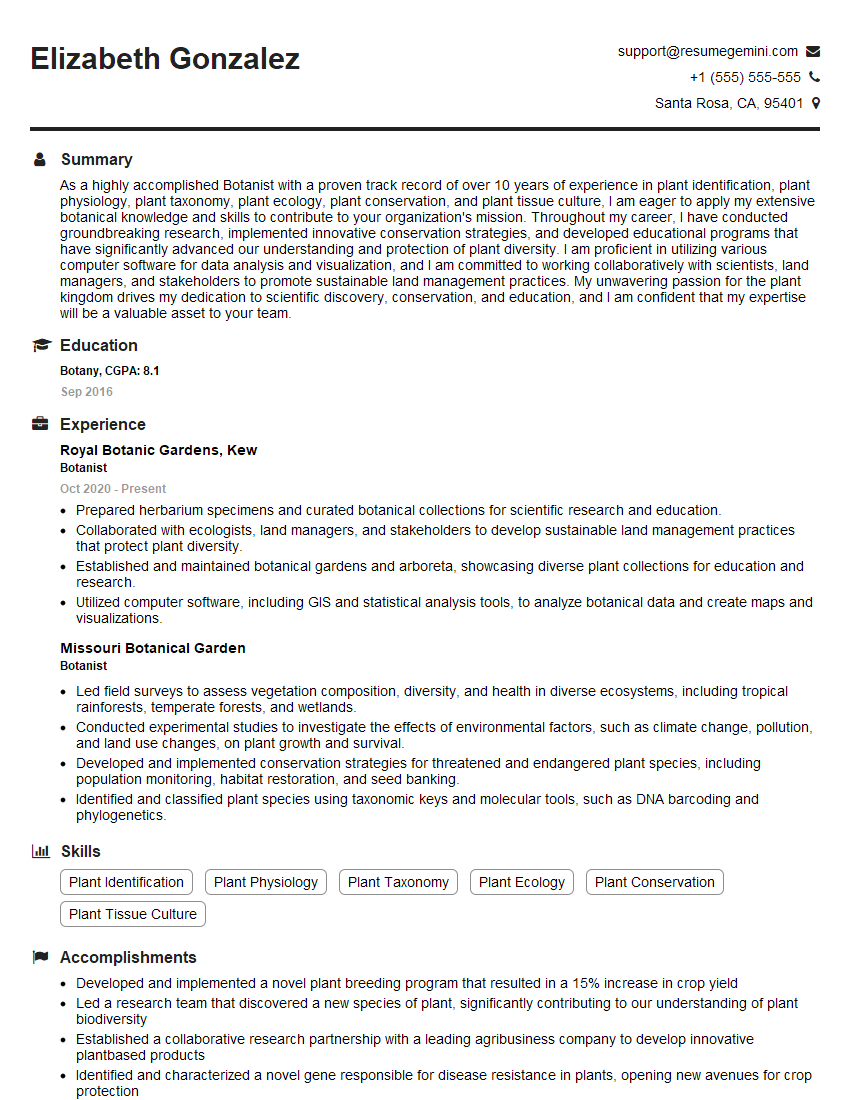
Botanist Resume Sample

Plant Breeder Resume Sample

Plant Pathologist Resume Sample

Plant Physiologist Resume Sample

Soil Scientist Resume Sample

Ecologist Resume Sample

Conservationist Resume Sample

Forestry Technician Resume Sample

Urban Forester Resume Sample

Horticultural Therapist Resume Sample

Orchard Manager Resume Sample
Explore more articles
Users Rating of Our Blogs
Share Your Experience
We value your feedback! Please rate our content and share your thoughts (optional).
What Readers Say About Our Blog
Very informative content, great job.
good