The thought of an interview can be nerve-wracking, but the right preparation can make all the difference. Explore this comprehensive guide to Avionics Systems Maintenance interview questions and gain the confidence you need to showcase your abilities and secure the role.
Questions Asked in Avionics Systems Maintenance Interview
Q 1. Explain the difference between scheduled and unscheduled maintenance in avionics.
Scheduled maintenance, also known as preventive maintenance, is performed at predetermined intervals based on the aircraft’s flight hours, calendar time, or cycles. It’s designed to prevent failures before they occur. Think of it like regular car servicing – changing oil, rotating tires – to keep your vehicle running smoothly. Unscheduled maintenance, on the other hand, is reactive maintenance performed in response to a malfunction or failure. This is like needing roadside assistance for a flat tire; it’s unexpected and disrupts operations.
For example, a scheduled maintenance task might be replacing a specific avionics component after a certain number of flight hours, even if it’s still functioning perfectly. An unscheduled task would be repairing a faulty transponder after it unexpectedly fails mid-flight.
- Scheduled: Calibration of navigation instruments, periodic inspections, component replacements based on life limits.
- Unscheduled: Repairing a failed autopilot, troubleshooting a communication system outage, replacing a damaged antenna.
Q 2. Describe your experience troubleshooting avionics system malfunctions.
My experience in troubleshooting avionics malfunctions spans various aircraft types and systems. I follow a systematic approach, beginning with a thorough review of the aircraft’s logbooks and maintenance records to identify any prior issues or trends. I then gather information from the pilots – what were they doing when the malfunction occurred? What indications were displayed? – to build a clear picture of the problem.
After initial data collection, I use built-in test equipment (BITE) within the avionics systems themselves to obtain diagnostic codes and isolate the faulty component. This often pinpoints the issue to a specific line replaceable unit (LRU). Following this, I utilize specialized test equipment, such as signal generators, oscilloscopes, and multi-meters, to conduct more detailed analysis of the suspected LRU’s performance. This might involve checking voltage levels, signal integrity, and component functionality. Finally, once the faulty component is identified, I perform the necessary repair or replacement, following the prescribed procedures outlined in the aircraft’s maintenance manual.
For instance, I once successfully troubleshooted a navigation system failure by using a signal generator to simulate various GPS signals and isolating a faulty signal processor within the system. By carefully tracing the faulty signal, I was able to pinpoint the problem and quickly rectify the issue, minimizing aircraft downtime.
Q 3. What are the common causes of GPS system errors in aircraft?
GPS system errors in aircraft can stem from several sources. One common cause is interference from other electronic signals. This can be from ground-based sources or even other systems within the aircraft itself. Another frequent source of error is signal blockage – obstructions like mountains or buildings can prevent the GPS receiver from acquiring sufficient satellites.
Furthermore, atmospheric conditions, such as ionospheric disturbances, can affect the accuracy of the GPS signals. Lastly, malfunctions within the GPS receiver itself – such as faulty components or software glitches – are also potential causes of errors. Sometimes, even simple things like incorrect antenna positioning or damaged cabling can create issues.
- Interference: Other radio signals, electrical noise.
- Signal Blockage: Terrain, buildings, weather.
- Atmospheric Effects: Ionospheric delays, tropospheric refraction.
- Internal Malfunctions: Faulty components, software bugs.
Q 4. How do you interpret and utilize aircraft maintenance manuals (AMM)?
Aircraft Maintenance Manuals (AMMs) are the bible for avionics maintenance. They’re highly detailed documents containing all the necessary information for maintaining and repairing an aircraft’s systems. I use them extensively, referring to them at every stage of the maintenance process, from troubleshooting to repair procedures.
I begin by using the AMM’s troubleshooting sections to diagnose malfunctions, following the flow charts and diagrams to systematically isolate the problem. These sections often contain detailed schematics, wiring diagrams, and fault isolation procedures. Once the fault is isolated, I use the repair sections of the AMM to obtain precise instructions on how to fix or replace the faulty component. The AMMs also detail required tools, specialized equipment, and safety procedures that must be followed. In essence, the AMM acts as a comprehensive guide, ensuring that all maintenance is performed correctly and safely, adhering to the manufacturer’s specifications.
For example, if I encounter a problem with an instrument’s display, I would consult the appropriate section of the AMM for that instrument. It might direct me to check power supply voltages, communication links, or internal sensor values before identifying the failing component.
Q 5. Explain the process of performing a pre-flight avionics check.
A pre-flight avionics check is a critical safety procedure performed before each flight to ensure all systems are functioning correctly. This typically involves visually inspecting the avionics equipment for any physical damage, checking that all systems power up and display the correct indications, and verifying communication links with ground stations and other aircraft.
The specific checks vary depending on the aircraft type and the avionics suite installed, but generally include checking the functionality of the navigation systems (GPS, VOR, ILS), communication systems (radio, transponder), and flight instruments. This might involve switching on and monitoring each system, checking for proper indications on displays, and performing simple functional tests like verifying the correct operation of navigation radios by selecting different frequencies.
I personally make use of checklists to ensure thoroughness and consistency. These checklists guide me through each step of the pre-flight procedure, reducing the chance of oversight. Any discrepancies found during the pre-flight check are meticulously recorded in the aircraft logbook and addressed before the flight can proceed.
Q 6. Describe your experience with various avionics test equipment.
Throughout my career, I’ve become proficient with a wide range of avionics test equipment. This includes:
- Multimeters: For measuring voltage, current, and resistance.
- Oscilloscopes: For analyzing waveforms and identifying signal anomalies.
- Signal Generators: To simulate various signals and test system responses.
- Spectrum Analyzers: To identify and analyze radio frequency interference.
- Logic Analyzers: To diagnose digital circuits and bus communication problems.
- Specialized Avionics Test Sets: These are manufacturer-specific testers designed to test specific avionics components and systems. They often conduct complex tests and automatically report diagnostics.
My experience extends to using both hand-held testers for basic troubleshooting and sophisticated computerized test equipment for in-depth analysis and fault isolation. Proficiency with these tools allows me to effectively and efficiently diagnose and resolve a wide variety of avionics issues.
Q 7. What are your troubleshooting techniques for resolving communication system issues?
Troubleshooting communication system issues requires a systematic approach. I start by determining the nature of the problem: is it a complete communication failure, intermittent communication, or reduced range? I then gather information from pilots and other crew members about the symptoms observed. This helps to create a clear picture of the problem and its impact.
Next, I use built-in test equipment (BITE) within the system to get initial diagnostic information. Then, I move to external test equipment. For example, I would use a spectrum analyzer to look for interference from other sources. If the problem lies with radio transceivers, I would use specialized test equipment to check the transmission and reception of signals, checking power output, antenna connections, and signal quality. Testing various communication frequencies and modes is critical, too.
In cases where the problem is intermittent, I may need to employ more advanced diagnostic techniques, potentially involving a detailed analysis of the system’s software and communications protocols. Documenting all tests and findings allows for efficient and effective diagnosis. Once the fault is identified, I proceed with repairs or replacements, always documenting all steps taken and results obtained.
Q 8. How familiar are you with FAA regulations regarding avionics maintenance?
My familiarity with FAA regulations regarding avionics maintenance is extensive. I’m well-versed in Part 145 repair station operations, Part 43 maintenance requirements, and the associated Advisory Circulars (ACs). This includes a deep understanding of airworthiness directives (ADs), service bulletins (SBs), and manufacturer’s maintenance manuals. For example, I’m proficient in interpreting ADs to determine the required actions for specific avionics components, ensuring compliance and preventing potential safety hazards. I regularly consult the FAA’s website and relevant publications to stay abreast of any updates or changes to regulations. My experience includes working directly with FAA inspectors during audits and ensuring all maintenance records are meticulously maintained and compliant with all applicable regulations.
Q 9. Explain your experience with different types of avionics systems (e.g., EFIS, FMS).
Throughout my career, I’ve worked extensively with various avionics systems. My experience encompasses Electronic Flight Instrument Systems (EFIS), Flight Management Systems (FMS), Automatic Dependent Surveillance-Broadcast (ADS-B) systems, transponders, radios (both VHF and HF), and integrated flight decks. For instance, I’ve troubleshooted and repaired EFIS displays, ensuring accurate altitude, airspeed, and heading data presentation to pilots. With FMS, my work includes database updates, troubleshooting navigation issues, and performing periodic checks to ensure precise flight planning and execution. I’ve also been involved in the installation and maintenance of ADS-B systems, ensuring compliance with mandated airspace requirements. Each system requires a unique understanding of its intricacies, including testing procedures, diagnostic tools, and specific maintenance documentation.
Q 10. How do you ensure the safety and compliance of your avionics maintenance work?
Safety and compliance are paramount in avionics maintenance. My approach follows a rigorous multi-layered system. First, I meticulously follow all manufacturer’s instructions and FAA regulations. Every step, from initial inspection to final testing, is documented rigorously. Second, I utilize specialized test equipment calibrated according to strict standards to ensure accurate measurements and diagnoses. Third, I perform thorough pre-flight and post-flight checks to verify the correct functioning of all repaired or replaced components and systems. If any discrepancies are found, they are immediately addressed. For example, before returning an aircraft to service, I’ll meticulously check all system parameters using specialized test sets and compare the readings against factory specifications and published limits. Finally, I maintain detailed maintenance logs which adhere to strict FAA requirements. This ensures full traceability of all work performed. This layered approach minimizes risk and ensures compliance and safety.
Q 11. Describe your experience with aircraft wiring diagrams and schematics.
I possess extensive experience interpreting aircraft wiring diagrams and schematics. This includes understanding wire routing, identifying components, and tracing signal paths. I’m proficient in using various schematic reading techniques, including following wire color codes, pinouts, and component designations. For example, when troubleshooting an intermittent communication problem between a transponder and the main avionics computer, I use wiring diagrams to visually trace the signal path, identifying potential points of failure along the way, such as loose connectors or damaged wires. My experience extends to both traditional paper schematics and digital versions used within modern aircraft maintenance systems. I can effectively utilize these documents to accurately diagnose and repair a wide range of avionics issues.
Q 12. Explain your process for documenting maintenance activities and findings.
My documentation process is comprehensive and adheres strictly to FAA requirements. Every maintenance activity is recorded accurately and completely. This includes the date, time, aircraft identification, work performed, parts used (including serial numbers), test results, and any anomalies found. I utilize both paper-based logbooks and digital maintenance tracking systems, ensuring the information is readily accessible and auditable. For instance, a typical entry would document the replacement of a faulty GPS antenna, including the part number, serial number of the replacement unit, the test results confirming proper functionality after installation, and a reference to the relevant maintenance manual section. This detailed record-keeping guarantees traceability and supports airworthiness compliance.
Q 13. How do you handle unexpected maintenance issues during flight operations?
Handling unexpected maintenance issues during flight operations requires a calm and systematic approach prioritizing safety. First, I assess the severity of the issue – does it affect flight safety immediately? If so, immediate actions are taken to mitigate the risk; perhaps initiating emergency procedures or diverting to the nearest suitable airport. Second, if the issue isn’t immediately critical, I’ll communicate with the pilots and ground support to gather additional data regarding the problem’s symptoms and impact on the flight. Third, I’ll consult available documentation, including maintenance manuals, troubleshooting guides, and technical orders, to identify the root cause and possible solutions. Fourth, I may use diagnostic tools remotely or coordinate on-site support to resolve the issue while considering the safety and time constraints of the flight. Thorough documentation of the issue and the corrective actions taken is vital following any such incident.
Q 14. What is your experience with avionics system upgrades and modifications?
I have significant experience with avionics system upgrades and modifications. This includes tasks ranging from simple component replacements to complex system installations involving multiple integrated systems. My experience includes reviewing proposed modifications against the aircraft’s type certificate data sheet (TCDS) to ensure compliance with all regulations. This includes understanding the impact of upgrades on the aircraft’s overall performance and airworthiness. For example, I recently oversaw the upgrade of an aircraft’s navigation system from legacy VOR/ILS to a modern GPS-based system. This involved careful planning, installation, testing, and documentation to ensure seamless integration and compliance with all regulatory requirements. I always adhere to stringent safety protocols during such procedures to ensure a smooth transition and maintain the aircraft’s airworthiness.
Q 15. Describe your proficiency in using diagnostic software for avionics systems.
My proficiency in using diagnostic software for avionics systems is extensive. I’m adept at utilizing various software packages, both proprietary and open-source, designed for fault isolation and troubleshooting within different aircraft systems. This includes experience with integrated diagnostic systems like those found in modern airliners, as well as standalone test equipment for legacy systems. I can efficiently navigate complex system architectures, interpret diagnostic data (fault codes, parameter readings, etc.), and generate reports outlining troubleshooting steps and findings. For example, I’m proficient in using tools that provide real-time data visualization and allow me to analyze trends, helping to identify potential problems before they escalate into major failures. My experience spans a wide range of aircraft types and avionics systems, making me capable of handling diverse diagnostic challenges. I’m also familiar with the use of simulator software to test repairs and configurations before implementing them on an aircraft.
Career Expert Tips:
- Ace those interviews! Prepare effectively by reviewing the Top 50 Most Common Interview Questions on ResumeGemini.
- Navigate your job search with confidence! Explore a wide range of Career Tips on ResumeGemini. Learn about common challenges and recommendations to overcome them.
- Craft the perfect resume! Master the Art of Resume Writing with ResumeGemini’s guide. Showcase your unique qualifications and achievements effectively.
- Don’t miss out on holiday savings! Build your dream resume with ResumeGemini’s ATS optimized templates.
Q 16. What is your understanding of different types of aircraft bus systems?
Aircraft bus systems are the nervous system of modern aircraft, enabling communication between various avionics components. Understanding these systems is critical for effective maintenance. There are several types, each with its own characteristics and advantages:
- ARINC 429: This is a high-speed, point-to-point data bus system, commonly used for distributing critical flight information like airspeed, altitude, and heading. It’s a robust system, but its point-to-point nature can make troubleshooting complex.
- ARINC 629/653: These protocols are higher-level, message-based systems, offering improved flexibility and efficiency compared to ARINC 429. They are used for exchanging more complex data and managing system resources.
- AFDX (Avionics Full Duplex Switched Ethernet): This is a packet-switched Ethernet-based network that provides high bandwidth and deterministic communication. It’s increasingly prevalent in modern aircraft, offering improved fault tolerance and scalability. Its use of Ethernet standards simplifies integration with other systems.
- 1553B: A high-speed, time-division multiplexed (TDM) bus, it’s a robust and reliable system often employed in military applications. Its TDM nature requires a specific understanding for troubleshooting.
My experience encompasses working with all these bus systems, including their specific protocols and diagnostic procedures. Understanding the intricacies of these different bus architectures is essential for accurately diagnosing and resolving faults in complex avionics systems.
Q 17. How familiar are you with the principles of flight instrumentation?
My understanding of flight instrumentation principles is thorough. I know how various flight instruments work and how their readings are interpreted by pilots to safely operate an aircraft. This encompasses:
- Basic Flight Instruments: Air speed indicator (ASI), altimeter, vertical speed indicator (VSI), heading indicator (HI), attitude indicator (AI), and turn coordinator.
- Navigation Systems: GPS, VOR, ILS, and RNAV systems, including their operation, signals received, and data processing.
- Engine Instrumentation: Understanding engine parameters such as RPM, EGT, oil pressure, and fuel flow, their significance, and how malfunctions manifest.
- Integrated Flight Displays (IFDs): Modern glass cockpits, their functionality, data processing, and associated troubleshooting.
I understand how errors or malfunctions in these systems can affect flight safety and how accurate readings are vital for safe and efficient flight operations. My experience includes both troubleshooting individual instruments and working with integrated systems where a problem in one area might affect the readings or functionality of another.
Q 18. Explain your understanding of ARINC standards and their application.
ARINC standards are crucial for interoperability and safety within the avionics industry. They define specifications for various aspects of aircraft systems, ensuring that components from different manufacturers can seamlessly integrate. My knowledge of ARINC standards covers several key areas:
- ARINC 429: As mentioned earlier, this defines the data bus protocol. Understanding this standard is vital for troubleshooting communication issues between systems.
- ARINC 629/653: These standards define message-based communication, and I’m familiar with their implementation and diagnostic procedures.
- ARINC 659: This standard relates to the integration of data systems and the protocols for data transmission across different systems. I am versed in managing this standard’s specifications while performing maintenance.
- ARINC 704: This relates to the handling of various types of electronic components and systems, and adhering to this standard is vital for safety and interoperability.
Adherence to these standards is not just a best practice; it’s a requirement for ensuring airworthiness. My work consistently incorporates these standards to maintain safety and compliance. For instance, when integrating new components or repairing existing ones, I meticulously follow relevant ARINC standards to ensure compatibility and avoid potentially hazardous conflicts.
Q 19. Describe a time you had to resolve a complex avionics problem. What was your approach?
During a recent maintenance check on a regional jet, we encountered an intermittent failure in the aircraft’s primary flight display. The problem was intermittent, making diagnosis challenging. The initial fault code pointed to a potential problem with the display unit itself, but replacing it didn’t resolve the issue. My approach was systematic:
- Data Acquisition: I first thoroughly reviewed all available logs and diagnostic data. I noted that the failure only occurred during specific flight phases, hinting at a potential environmental trigger.
- Hypothesis Formation: Based on the intermittent nature and the flight phase correlation, I suspected a potential issue with power supply fluctuations or a loose connection somewhere in the wiring harness.
- Systematic Testing: I then systematically checked all power lines, connectors, and associated wiring harness components. This involved meticulous visual inspection and electrical testing to ensure all connections were secure and power was stable.
- Root Cause Identification: After a thorough examination, I discovered a loose connection within a power distribution unit, which was exacerbated by vibration during certain flight phases. Tightening the connection resolved the issue.
- Verification & Documentation: Post-repair, rigorous testing confirmed the fix, and I meticulously documented the entire process, including fault codes, troubleshooting steps, and the final solution, ensuring future reference and traceability.
This experience highlighted the importance of a methodical and systematic approach to troubleshooting complex avionics issues. Jumping to conclusions based on initial fault codes alone can lead to inefficient repairs and potentially overlooked safety risks.
Q 20. What safety measures do you follow during avionics maintenance?
Safety is paramount in avionics maintenance. My adherence to safety measures is unwavering, encompassing several key areas:
- Lockout/Tagout Procedures: Before any maintenance, I rigorously follow lockout/tagout procedures to prevent accidental energization of circuits, ensuring the safety of both myself and others.
- ESD Precautions: I strictly adhere to electrostatic discharge (ESD) precautions to protect sensitive electronic components from damage, which can lead to system malfunctions.
- Proper Tool Usage: I always use the correct tools and equipment for each task, ensuring efficient and safe maintenance procedures.
- Compliance with Regulations: I meticulously follow all relevant FAA regulations and manufacturer’s guidelines to maintain compliance and safety.
- Regular Inspections: Thorough inspections are a cornerstone of my work. Regularly inspecting equipment and checking for wear and tear helps avoid potential problems.
Safety isn’t an afterthought; it’s integral to my approach. Neglecting safety protocols could have catastrophic consequences, making rigorous adherence to all relevant safety procedures an absolute non-negotiable.
Q 21. How do you stay updated with the latest advancements in avionics technology?
Staying updated on the latest advancements in avionics technology is crucial for maintaining my expertise. I employ several methods to ensure I remain current:
- Industry Publications: I regularly read industry publications and journals like *Avionics International*, *Aviation Week*, and others to stay informed about the latest technological developments and best practices.
- Manufacturer Training: I actively participate in training courses and workshops offered by various avionics manufacturers to learn about new systems and troubleshooting techniques.
- Conferences and Seminars: Attending industry conferences and seminars allows me to network with other professionals and learn about cutting-edge advancements firsthand.
- Online Resources: I utilize online resources, including professional forums and websites, to access the latest technical information and participate in discussions with other experts.
- Continuing Education: I pursue continuing education opportunities to maintain and expand my knowledge and skills, ensuring I remain proficient with new technologies and methods.
This continuous learning ensures that I can effectively diagnose and repair the most advanced avionics systems. The field is constantly evolving, and continuous learning is essential to maintain a high level of competency and remain a valuable asset in this dynamic industry.
Q 22. Explain the importance of proper grounding techniques during avionics maintenance.
Proper grounding techniques are paramount in avionics maintenance to prevent static electricity discharge which can damage sensitive electronic components. Think of it like this: avionics systems are incredibly delicate; a tiny spark can be catastrophic. Improper grounding can lead to voltage surges that fry circuit boards, causing malfunctions or complete system failure. This is especially critical when working near high-voltage systems or during component replacement.
During maintenance, we employ several techniques, including:
- Using anti-static wrist straps connected to a known ground point to prevent the buildup of static on our bodies.
- Ensuring all equipment and tools are properly grounded before making contact with any avionics component. This often involves using grounding straps or dedicated grounding points on the aircraft.
- Using conductive mats to work on sensitive components, preventing static discharge from the workbench.
- Following specific grounding procedures laid out in the aircraft’s maintenance manual. These procedures often involve grounding specific points on the aircraft before starting work.
Failing to use proper grounding can result in costly repairs, flight delays, and, in worst-case scenarios, compromise flight safety. I’ve personally witnessed a situation where a technician forgot to ground himself before working on a flight control computer, resulting in a short circuit that required a complete unit replacement and several hours of downtime.
Q 23. What is your understanding of electromagnetic interference (EMI) and its impact on avionics?
Electromagnetic interference (EMI) refers to unwanted electromagnetic energy that disrupts the operation of electronic devices. In avionics, this can manifest as signal degradation, false readings, or even complete system failures. Imagine a radio signal being overwhelmed by static – that’s essentially EMI in action. Sources of EMI within an aircraft can include other avionics systems, electrical motors, and even lightning strikes.
The impact of EMI on avionics can be severe. It can lead to:
- Inaccurate navigation data: GPS receivers can be particularly vulnerable, leading to navigation errors.
- Communication failures: Radio communication can be disrupted, hindering pilot-ground communication.
- System malfunctions: Sensitive flight control systems could malfunction due to EMI, creating a significant safety hazard.
- Data corruption: Flight data recorders might record faulty data.
Mitigation strategies include shielding critical components, using filters to reduce noise, and implementing proper grounding techniques. Careful design and placement of avionics systems, following established best practices for EMI reduction, is crucial during aircraft design and maintenance to minimize the effects of EMI.
Q 24. How do you prioritize maintenance tasks based on urgency and criticality?
Prioritizing maintenance tasks involves a careful assessment of both urgency and criticality. Urgency refers to how quickly a task needs to be done, while criticality relates to the impact of a failure on safety or flight operations. I utilize a system combining a risk matrix and the aircraft’s maintenance schedule.
My approach involves:
- Identifying safety-critical systems: Flight controls, engine instruments, and communication systems are prioritized higher than less critical systems.
- Assessing the severity of a potential failure: A malfunction in a critical system causing a complete loss of function rates higher than a minor fault in a non-critical system.
- Considering the potential impact on flight operations: A potential delay or cancellation would be a higher priority if associated with a critical system.
- Using a risk matrix: I often use a matrix that plots urgency against criticality. Tasks falling into the high-urgency/high-criticality quadrant are addressed immediately, while lower priority tasks are scheduled accordingly.
- Referring to the aircraft’s maintenance manual: This provides guidance on scheduled maintenance and prioritization based on manufacturer recommendations and regulatory requirements.
For example, a faulty airspeed indicator is a higher priority than a malfunctioning cabin light because an inaccurate airspeed can significantly impact flight safety.
Q 25. Describe your experience working with different types of aircraft.
Throughout my career, I’ve gained experience working on a variety of aircraft, ranging from small, single-engine piston aircraft to large, multi-engine turboprop and jet aircraft. This experience includes working on various aircraft models from different manufacturers such as Cessna, Beechcraft, Boeing and Airbus.
My experience encompasses:
- Cessna 172: I’ve performed routine maintenance tasks, including inspections, troubleshooting electrical systems, and minor repairs.
- Beechcraft King Air: I’ve been involved in more complex avionics troubleshooting and repair, including working with sophisticated flight management systems.
- Boeing 737: My experience here involved working with advanced avionics systems, performing line replaceable unit (LRU) replacements, and troubleshooting complex system failures, always in strict adherence to the manufacturer’s maintenance manual and safety regulations.
- Airbus A320: Similarly, this involved working on advanced avionics, emphasizing safety procedures and detailed fault isolation techniques.
This diverse experience allows me to adapt quickly to different aircraft systems and maintenance procedures, applying my knowledge effectively across various platforms.
Q 26. What are the common failure modes of transponders and how are they diagnosed?
Transponders are critical for air traffic control, transmitting the aircraft’s identification and altitude. Common failure modes include:
- Antenna failure: A damaged or improperly connected antenna can prevent the transponder from transmitting or receiving signals.
- Power supply issues: Problems with the transponder’s power supply, including low voltage or voltage surges, can cause malfunctions.
- Internal component failures: Various internal components such as integrated circuits, transistors, or capacitors can fail, leading to malfunctions or complete system failure.
- Software glitches: Though less common, software bugs can lead to unpredictable behavior.
Diagnosis often involves:
- Visual inspection: Checking for obvious signs of damage to the unit, cables, or antenna.
- Testing with specialized equipment: Using a transponder tester to verify the transponder’s functionality and pinpoint specific failures. This tester stimulates signals and evaluates the responses.
- Checking power supply: Confirming that the correct voltage is supplied to the transponder.
- Reviewing maintenance logs: To identify any prior issues or previous repairs.
- Using built-in test equipment (BITE): Some transponders provide self-diagnostic capabilities that can help isolate faults.
I’ve personally dealt with a transponder failure that was initially suspected to be an antenna issue. Through careful testing, however, we discovered a faulty internal component, requiring a complete unit replacement.
Q 27. Explain your experience with replacing and testing avionics Line Replaceable Units (LRUs).
Replacing and testing avionics Line Replaceable Units (LRUs) is a routine task. LRUs are modular units that can be easily replaced if faulty. The process typically involves:
- Disconnecting power: Ensuring the power to the LRU is disconnected before removal to avoid damaging other components.
- Removing the LRU: Following the manufacturer’s procedures for disconnecting connectors and securing the unit for removal.
- Installing the new LRU: Precisely connecting all connectors and securing the unit in place.
- Testing the new LRU: Using built-in test equipment (BITE) and/or external testing equipment to confirm the new LRU is functioning correctly. I often use specialized software for testing to confirm that all parameters and data communication are as expected.
- Documenting the work: Recording the maintenance actions, including the serial numbers of the replaced LRUs and test results, in the aircraft’s maintenance log.
I have extensive experience with replacing and testing various LRUs, including transponders, GPS receivers, and communication systems. For example, I once replaced a faulty GPS receiver on a Boeing 737. After the replacement, I performed rigorous tests, verifying the accuracy of the GPS data using both built-in and external test equipment.
Q 28. How do you ensure the accuracy and reliability of avionics system data?
Ensuring the accuracy and reliability of avionics system data is critical for flight safety. This involves several steps:
- Calibration: Regularly calibrating sensors and instruments to ensure their readings are accurate and within acceptable tolerances. This often involves specialized equipment and procedures.
- Data validation: Comparing data from multiple sources to detect inconsistencies or errors. For example, cross-referencing airspeed from multiple sources.
- Built-in test equipment (BITE): Utilizing BITE systems to identify and report malfunctions. This often provides real-time diagnostics.
- Regular maintenance: Following a strict maintenance schedule to prevent component failure and ensure the overall health of the avionics system.
- Data logging and analysis: Logging data from various systems, then analyzing trends to identify potential issues before they escalate.
- Redundancy: Avionics systems are often designed with redundancy, meaning multiple systems perform the same function. If one system fails, another can take over.
Data accuracy is paramount, as inaccurate information can lead to wrong decisions and compromise flight safety. I routinely use data logging and analysis to spot early signs of potential problems, allowing proactive maintenance instead of reactive repairs.
Key Topics to Learn for Avionics Systems Maintenance Interview
- Aircraft Electrical Systems: Understanding AC and DC power distribution, generators, and associated safety regulations. Practical application: Troubleshooting power interruptions during flight simulation.
- Avionics Instruments and Displays: Familiarity with various cockpit instruments (e.g., altimeters, airspeed indicators, navigation systems), their functions, and troubleshooting common malfunctions. Practical application: Diagnosing and repairing faulty flight instruments in a workshop environment.
- Navigation Systems: In-depth knowledge of GPS, VOR, ILS, and other navigation systems, including their principles of operation and maintenance procedures. Practical application: Calibrating and testing navigation equipment to ensure accuracy.
- Communication Systems: Understanding VHF, UHF, and satellite communication systems, their functionalities, and troubleshooting techniques. Practical application: Performing routine checks and repairs on communication radios and transponders.
- Flight Control Systems: Basic understanding of flight control actuators, sensors, and associated systems, focusing on safety and maintenance implications. Practical application: Identifying and resolving issues related to flight control system malfunctions using diagnostic tools.
- Troubleshooting and Diagnostics: Mastering fault isolation techniques using schematics, wiring diagrams, and specialized diagnostic equipment. Practical application: Applying systematic troubleshooting methods to identify and rectify system failures.
- Safety Regulations and Compliance: Thorough understanding of relevant aviation safety regulations and maintenance documentation procedures. Practical application: Ensuring all maintenance actions comply with regulatory standards and are properly documented.
- Avionics Software and Systems: Basic understanding of the software components within avionics systems and their interaction with hardware. Practical application: Performing software updates and configurations following manufacturer guidelines.
Next Steps
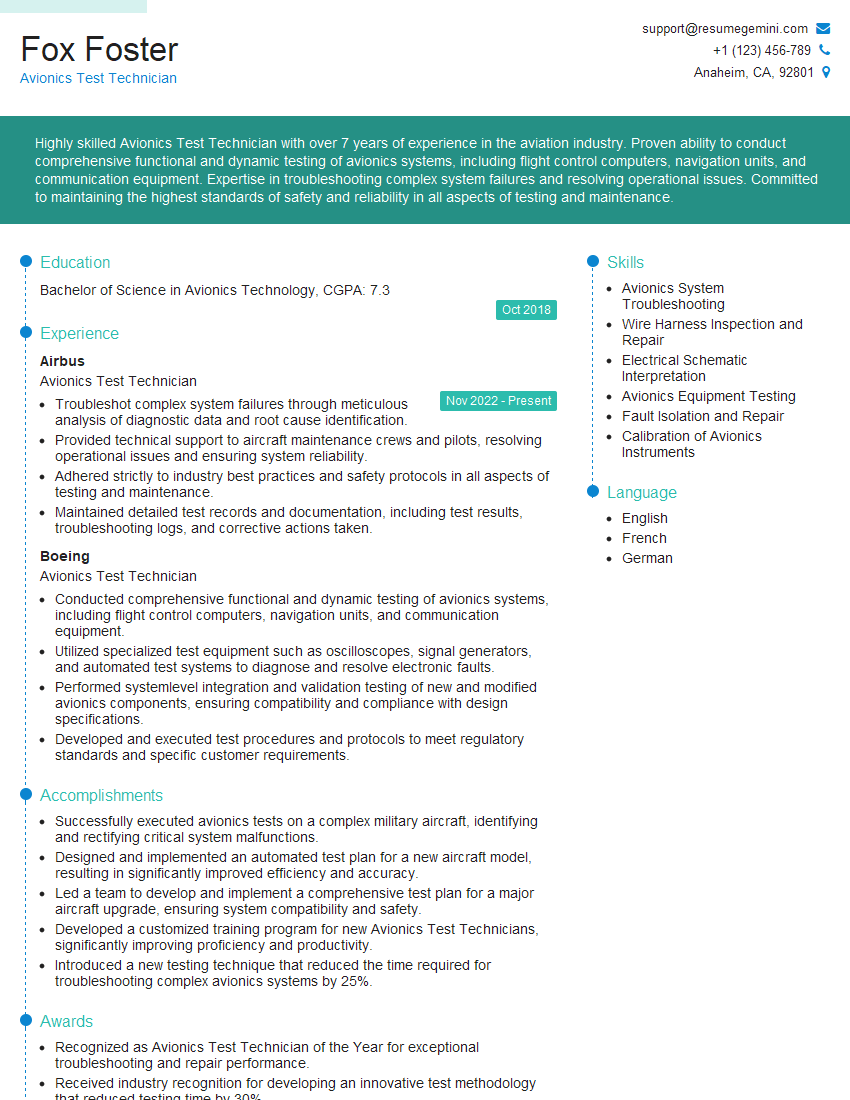
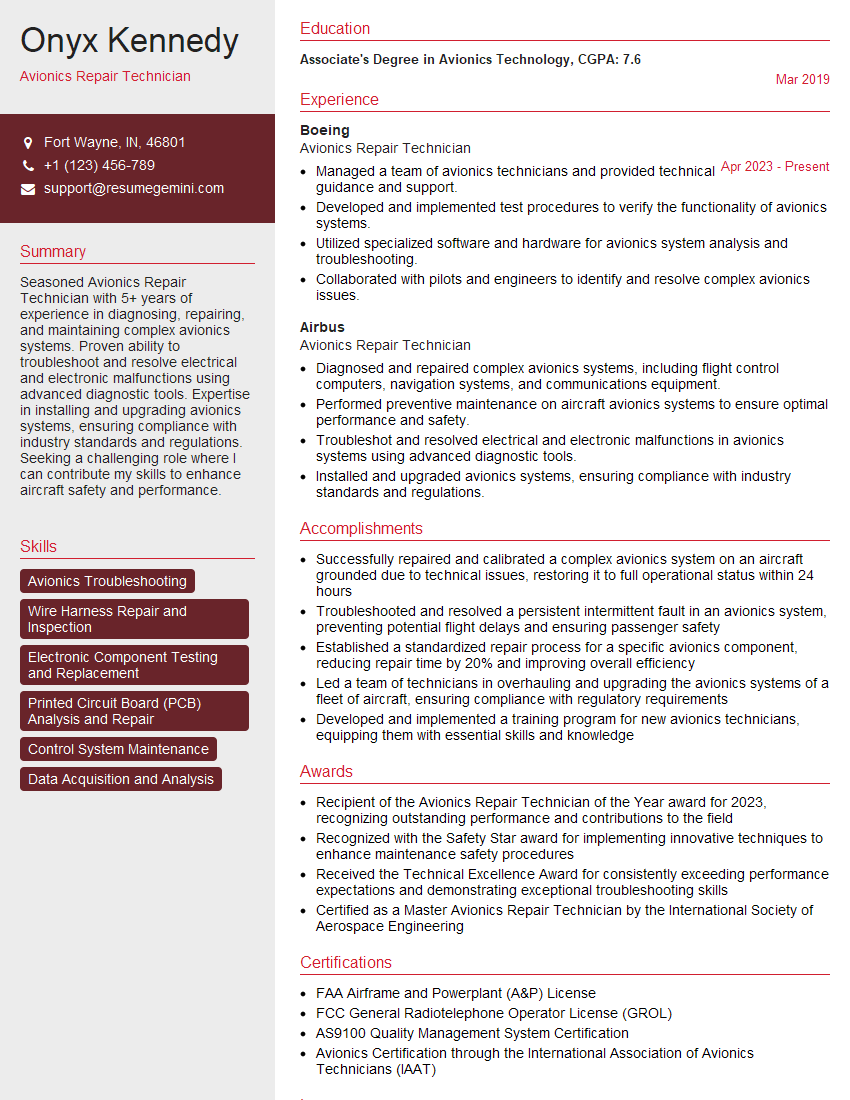
Mastering Avionics Systems Maintenance opens doors to a rewarding and challenging career with significant growth potential. To maximize your job prospects, create an ATS-friendly resume that highlights your skills and experience effectively. ResumeGemini is a trusted resource that can help you build a professional and impactful resume. They offer examples of resumes tailored specifically to Avionics Systems Maintenance, providing you with a head start in your job search. Take the next step towards your dream career – build a resume that showcases your expertise!
Explore more articles
Users Rating of Our Blogs
Share Your Experience
We value your feedback! Please rate our content and share your thoughts (optional).
What Readers Say About Our Blog
Very informative content, great job.
good