Feeling uncertain about what to expect in your upcoming interview? We’ve got you covered! This blog highlights the most important Ax Handling interview questions and provides actionable advice to help you stand out as the ideal candidate. Let’s pave the way for your success.
Questions Asked in Ax Handling Interview
Q 1. Describe the proper technique for felling a tree using an axe.
Felling a tree with an axe requires precision and a methodical approach. It’s not just about brute strength; it’s about understanding wood grain and using leverage effectively. The process typically involves these steps:
- Choosing the felling direction: Carefully assess the surrounding area to identify a safe felling direction, considering obstacles like other trees, power lines, or buildings. The ideal direction minimizes the risk of damage and injury.
- Making the felling cut: This is a notch cut made on the side of the tree facing the felling direction. It usually consists of two cuts: a horizontal undercut followed by a slightly angled back cut above it, leaving a hinge.
- Making the back cut: This cut is made on the opposite side of the tree from the felling cut, a few inches higher than the bottom of the notch. The depth of the back cut determines the direction of the tree’s fall. Stop cutting before the back cut completely severs the hinge.
- Felling the tree: Once the back cut is nearly complete, the tree will fall under its own weight. Use wedges if necessary to control the direction of the fall. Always have an escape route planned.
Example: Imagine felling a large oak. You’d assess the wind direction and clear the area around the tree before making your notch and back cuts. You’d ensure the hinge is strong enough to control the fall and use wedges if needed to guide the tree gently to the ground.
Q 2. Explain the safety precautions you take when using an axe.
Safety is paramount when using an axe. My safety routine includes:
- Proper attire: Always wear sturdy, closed-toe boots, long pants, and gloves to protect against cuts and slips. Eye protection is crucial to prevent flying debris from causing eye injuries.
- Axe inspection: Before each use, I inspect the axe head for cracks or loose fittings. A damaged axe can be dangerous.
- Clear workspace: Ensure a clear area around the tree, free of obstacles that could cause a trip or impede the axe swing.
- Secure footing: Maintain a stable and balanced stance during the entire process.
- Controlled swings: Swing the axe with controlled power, avoiding wild or erratic motions. Practice controlled swings before working on a tree.
- Awareness of surroundings: Remain constantly aware of your surroundings and potential hazards, including other people or animals.
- First-aid preparedness: Having a well-stocked first-aid kit readily available is essential for dealing with minor injuries.
Example: Before felling any tree, I always clear a safety zone with a radius greater than the tree’s height. I also ensure I have an escape route clearly defined in case the tree falls unexpectedly.
Q 3. What are the different types of axes and their specific applications?
Axes come in various types, each designed for specific applications:
- Hand axes/Hatchets: Smaller and lighter, ideal for limbing, splitting smaller pieces of wood, and general carpentry tasks.
- Double-bit axes: Feature two cutting edges, allowing for efficient chopping and splitting of larger pieces of wood. Useful for felling larger trees and preparing firewood.
- Single-bit axes: Have one cutting edge, suitable for felling trees, chopping wood, and creating more precise cuts. Generally preferred for felling because of the better control.
- Broad axes: Have a wide, flat blade used for hewing timbers and shaping large pieces of wood. Excellent for woodworking projects requiring shaping.
- Felling axes: Typically single-bit axes designed for felling trees, often with a heavier head and longer handle to maximize power.
Example: I’d use a hand axe for limbing a felled tree due to its maneuverability. For felling a large tree, a felling axe provides the necessary power and control.
Q 4. How do you choose the right axe for a particular job?
Choosing the right axe depends on the job’s nature and the wood’s characteristics. Factors to consider:
- Size and weight of the axe head: Heavier axes are more powerful but require more strength. A lighter axe is more maneuverable but less powerful.
- Length of the handle: Longer handles provide greater leverage but require more swing space. Shorter handles are better for closer work or confined spaces.
- Type of axe: Double-bit axes are best for splitting, while single-bit axes are better for felling and shaping.
- Wood type: Hardwoods require a stronger, sharper axe than softer woods.
- Personal strength and experience: Choose an axe you can comfortably and safely handle.
Example: If I needed to fell a large oak tree, I’d select a heavy single-bit felling axe with a long handle. For shaping smaller pieces of wood, a lighter hand axe or hatchet would be appropriate.
Q 5. Describe your experience with maintaining and sharpening axes.
Maintaining and sharpening axes is crucial for safety and efficiency. My process involves:
- Regular cleaning: After each use, I remove any resin, dirt, or debris from the axe head and handle.
- Lubrication: Applying a light oil to the axe head helps prevent rust and keeps it in good condition.
- Sharpening: I use a file or sharpening stone to maintain a sharp edge. The technique involves filing the bevel at a consistent angle, checking for sharpness regularly.
- Handle inspection: Regularly check for cracks or splits in the handle. A damaged handle compromises safety and should be replaced immediately.
- Storage: I store axes in a dry place, away from moisture, to prevent rust and damage.
Example: I typically sharpen my axes after every few hours of use, depending on the hardness of the wood I’m working with. I always use a file that matches the bevel angle of the axe to maintain its cutting efficiency.
Q 6. How do you assess the risk of tree fall and mitigate potential hazards?
Assessing tree fall risk involves evaluating several factors:
- Tree condition: Look for signs of disease, decay, or structural weakness, like leaning, cracks, or dead branches.
- Surrounding environment: Identify any potential hazards like power lines, buildings, or other trees in the vicinity.
- Wind conditions: Strong winds significantly increase the risk and can affect the direction of the fall.
- Soil conditions: Loose soil can increase the risk of the tree falling unexpectedly or causing damage.
Mitigation involves:
- Planning a safe felling direction: Choose a felling direction that minimizes risk to people and property.
- Using proper felling techniques: Employing notch cuts and back cuts as described earlier is key to control the fall.
- Employing additional safety measures: Wedges can help redirect the tree’s fall. Having spotters to alert to potential dangers adds extra layers of safety.
Example: Before felling a tree near a power line, I’d assess its structural integrity and wind conditions. I might use additional safety measures like securing the tree with ropes and having additional personnel present to help.
Q 7. Explain the process of limbing a felled tree.
Limbing a felled tree is the process of removing branches. This is done systematically and involves:
- Clearing the immediate area around the felled tree: This ensures a safe work environment, and prevents accidental cuts or obstructions during limbing.
- Start from the top of the tree: Begin by removing the larger branches near the top of the tree, then work your way down.
- Use controlled axe swings: Place the axe strategically to ensure a clean cut. Aim for cuts that sever the branch cleanly and efficiently.
- Maintain a safe distance: Never stand directly under a branch while cutting. Always maintain a safe distance and be mindful of falling branches.
- Work methodically and safely: Ensure a stable footing and maintain awareness of your surroundings throughout the limbing process. Always utilize a safe escape route.
Example: When limbing, I’d start with the topmost branches, ensuring I use short controlled strokes to make cuts. I’d also carefully consider how branches are falling to avoid injuring myself or damaging nearby items.
Q 8. What are the signs of a potentially dangerous tree?
Identifying a potentially dangerous tree requires a keen eye and understanding of arboriculture. Several signs indicate a tree might pose a risk. These include:
- Visible decay or rot: Look for cavities, cracks, fungal growth (conks), or soft, spongy wood. This often indicates internal weakness.
- Leaning or unstable trunk: A tree significantly leaning, especially towards structures or areas of high traffic, is a major concern.
- Large, dead branches: These are prone to breaking off, especially in windy conditions. Their weight adds stress to the tree.
- Cracks or splits in the trunk or branches: These can weaken the tree’s structure and make it more susceptible to failure.
- Signs of insect or disease infestation: Extensive damage from insects or diseases can weaken the tree’s support system.
- Damaged or uprooted root system: Exposed or damaged roots reduce the tree’s stability. This can be visible during dry periods.
For example, I once encountered an oak with a large, hollow cavity at its base. Even though it appeared healthy above ground, the internal rot made it extremely unstable and dangerous. Removal was necessary to prevent an accident.
Q 9. How do you handle unexpected situations while ax handling?
Unexpected situations in ax handling demand quick thinking and a strong safety focus. These might include:
- Axe bounce: If the axe glances off the wood, I immediately stop, assess the situation, and reposition myself for a safer swing.
- Tool malfunction: If the axe head loosens or breaks, I immediately stop work, secure the axe, and replace or repair it before continuing.
- Changes in weather: Sudden high winds or rain can make conditions dangerous. I would immediately cease operations and find safe cover.
- Unforeseen obstacles: If an unexpected obstruction, like a hidden rock, is encountered, I adjust my stance and swing accordingly.
Remember, a controlled swing and good observation are key to preventing accidents. Prioritizing safety always trumps speed. For instance, if I were splitting wood and the wood unexpectedly moved, I would immediately halt my swing to ensure I don’t hit myself or anyone else.
Q 10. Describe your experience with different cutting techniques (e.g., chopping, splitting).
My experience encompasses various cutting techniques tailored to specific situations and wood types.
- Chopping: This is typically used for felling trees or removing large branches. It involves a series of precise, powerful swings directed at the target area. The angle and force of the swing must be meticulously planned to avoid damage to adjacent trees or persons.
- Splitting: This involves driving the axe into a log to cleave it into smaller pieces. The technique requires accuracy and the right splitting angle; this angle changes depending on the grain and wood type.
- Hewing: Hewing is a specialized chopping method used to shape timbers for construction. This involves careful planning and multiple precise cuts.
Each technique requires a different grip, swing pattern, and understanding of wood grain. For instance, splitting green wood requires a different technique than splitting seasoned wood because of its moisture content.
Q 11. How do you ensure the safety of yourself and others in a team ax handling environment?
Team ax handling demands strict adherence to safety protocols to protect everyone involved. This includes:
- Designated safe zones: Establishing clear areas where people are not allowed during cutting operations is paramount.
- Clear communication: Verbal warnings before each swing and a designated spotter to alert other members of the team of potential hazards are essential.
- Proper personal protective equipment (PPE): This includes sturdy boots, gloves, eye protection, and hearing protection.
- Regular safety checks: Ensuring tools are in good condition and the work area is clear of debris.
- Training and experience: Only skilled and experienced individuals should handle axes in a team environment.
Before every project, a safety briefing is crucial. We discuss the plan, potential hazards, escape routes, and communication procedures. I have been on teams where clear communication has prevented accidents.
Q 12. What are the legal and regulatory requirements related to ax handling in your area?
Legal and regulatory requirements related to axe handling vary by location. Generally, there is usually no specific ax handling legislation but other areas of legislation such as workplace health and safety which encompasses ax handling must be adhered to. Always consult local ordinances and workplace safety regulations. These regulations usually cover:
- Proper training and certification for professional ax users: Many jurisdictions require arborists and similar professionals to have specific certifications for working with axes.
- Safe handling procedures: Regulations typically outline safe operating procedures and guidelines for different types of work.
- PPE requirements: Specific types of safety gear must be used.
- Liability and insurance: Professional ax users usually need to carry appropriate liability insurance.
For example, ignoring safety regulations could lead to fines, accidents, or even legal action in case of injuries to others.
Q 13. How do you handle different types of wood with varying densities?
Different wood densities require adjustments in technique.
- Hardwoods (e.g., oak, hickory): These require more forceful swings and may need a splitting wedge to break them apart. The technique should also account for hardness and grain orientation.
- Softwoods (e.g., pine, fir): These are easier to chop and split, requiring less force.
- Green wood (recently felled): More difficult to split due to higher moisture content. Often requires more swings at varied angles.
- Seasoned wood (dried): Easier to split, with cleaner breaks.
For example, I would use a heavier axe and a more powerful swing for oak than I would for pine. Understanding the grain direction is crucial in all cases to achieve a clean and safe cut.
Q 14. Explain the importance of proper axe storage and maintenance.
Proper axe storage and maintenance are critical for safety and longevity.
- Storage: Axes should be stored in a dry, secure location, preferably in a sheath or scabbard to protect the blade from damage and prevent accidental injury. Avoid leaving them where children might access them.
- Maintenance: Regular sharpening is crucial for efficient cutting and safety. A dull axe requires more force, increasing the risk of accidents. After each use, clean the axe blade and apply a light coat of oil or wax to prevent rust.
- Head tightness: Regularly check the axe head to ensure it’s firmly attached to the handle. A loose head is extremely dangerous.
Neglecting maintenance can lead to a dull blade, a loose head, and ultimately, accidents. A sharp axe is safer than a dull one because it requires less force and less work to accomplish a task.
Q 15. Describe your experience with working in different weather conditions.
My experience with axe handling spans diverse weather conditions, from the scorching heat of summer to the freezing cold of winter. I’ve worked in heavy rain, snow, and even high winds. Adapting to these conditions is crucial for safety and efficiency.
In summer’s heat, dehydration is a major concern. I prioritize regular water breaks and wear light, breathable clothing to avoid heatstroke. I also adjust my work schedule to avoid the hottest parts of the day. During winter, maintaining dexterity is key. I wear layers to stay warm and dry, and use insulated gloves that still allow for precise grip. Icy conditions require extra caution; I’ll often use additional traction aids to prevent slips and falls, and may need to modify my cutting techniques to avoid damaging the axe head.
Working in rain or snow necessitates a careful assessment of the ground conditions. Wet wood is more difficult to cut and can be slippery, increasing the risk of injury. I modify my grip and stance accordingly, taking smaller, more deliberate swings. I always make sure the area around me is clear of obstacles, ensuring a safer work environment even in challenging weather.
Career Expert Tips:
- Ace those interviews! Prepare effectively by reviewing the Top 50 Most Common Interview Questions on ResumeGemini.
- Navigate your job search with confidence! Explore a wide range of Career Tips on ResumeGemini. Learn about common challenges and recommendations to overcome them.
- Craft the perfect resume! Master the Art of Resume Writing with ResumeGemini’s guide. Showcase your unique qualifications and achievements effectively.
- Don’t miss out on holiday savings! Build your dream resume with ResumeGemini’s ATS optimized templates.
Q 16. What is your experience with using personal protective equipment (PPE) for ax handling?
Safety is paramount in axe handling, and proper PPE is essential. My standard PPE includes:
- Safety Helmet: Protects my head from falling debris and accidental axe blows.
- Eye Protection: Safety glasses or goggles shield my eyes from flying wood chips and sawdust.
- Hearing Protection: Earplugs or earmuffs reduce the risk of noise-induced hearing loss from repeated impacts.
- Cut-Resistant Gloves: These gloves offer protection against cuts and blisters, but still allow for a good grip on the axe handle.
- Steel-Toed Boots: These protect my feet from falling objects and rolling logs.
- High-Visibility Clothing: Especially important when working in areas with machinery or other workers, enhancing visibility and preventing accidents.
I always inspect my PPE before starting work, ensuring it’s in good condition and correctly fitted. Neglecting PPE is a serious risk; a single lapse in safety could lead to severe injury.
Q 17. How do you identify and avoid potential hazards in the work area?
Identifying and avoiding hazards is a systematic process I follow religiously. It starts with a thorough pre-work inspection of the area:
- Assessing the terrain: Looking for uneven ground, slippery surfaces, hidden obstacles (rocks, roots), and potential trip hazards.
- Identifying overhead hazards: Checking for dead branches, overhanging limbs, and power lines that could pose a threat.
- Checking for wildlife: Being aware of potential encounters with animals that could disrupt my work or cause injury.
- Weather conditions: Evaluating the impact of wind, rain, or snow on stability and safety.
- Others in the area: Ensuring sufficient distance from others to avoid accidental collisions or injury from stray blows.
Once hazards are identified, I implement control measures. This could involve removing obstacles, using safety lines, adjusting my work location, or postponing work until conditions improve. Proactive hazard identification is the best way to prevent accidents.
Q 18. Explain your experience with using other forestry tools in conjunction with an axe.
Axe handling often involves synergy with other forestry tools. My experience includes using:
- Saws (chainsaw, hand saw): I use saws to fell larger trees and to create precise cuts, and then use the axe for limbing and bucking (cutting into smaller sections).
- Hatchets: For smaller and more precise cuts or tasks requiring finer detail and control, a hatchet may be better suited than a large axe.
- Wedges: When felling large trees, wedges are crucial to control the direction of the fall and prevent dangerous kickbacks.
- Pulaskis: These tools are used for clearing brush and preparing a safe working area.
Understanding the strengths and limitations of each tool allows me to optimize my workflow and improve safety. For example, using a chainsaw for felling reduces the strain and risk associated with using an axe on larger trees. Effective coordination between tools is a cornerstone of efficient and safe forestry work.
Q 19. How do you ensure the accuracy and precision of your cuts?
Accuracy and precision in axe cuts come from a combination of factors:
- Proper Axe Technique: Mastering the swing, using the full weight of my body, and maintaining a controlled motion is vital for clean and accurate cuts.
- Sharp Axe Head: A dull axe requires more force, resulting in inaccurate cuts and increased risk of injury. Regular sharpening and maintenance are crucial.
- Understanding Wood Grain: Knowing how the grain runs is essential for making clean cuts that follow the natural structure of the wood. Cutting across the grain can lead to splintering and inaccurate cuts.
- Visual Assessment: Before each swing, I carefully assess the target area, planning the cut to achieve the desired result. Precision comes from careful planning and controlled execution.
- Practice and Experience: Years of experience have honed my skills, enabling me to instinctively make accurate cuts even in challenging situations.
The combination of these factors results in efficient and safe cutting practices. It’s a skill built through consistent practice and a deep understanding of wood and axe handling.
Q 20. Describe your experience with emergency procedures related to ax handling accidents.
Emergency procedures are ingrained in my work practices. In the event of an axe-related accident, my immediate actions are:
- Assess the Situation: Determine the nature and severity of the injury.
- Provide First Aid: Administer first aid as needed, controlling bleeding, stabilizing injuries, and preventing further harm.
- Call for Help: Contact emergency services immediately, providing accurate location details and a description of the incident.
- Secure the Area: Ensure the safety of others by securing the accident site and preventing further injuries.
- Cooperate with Authorities: Provide necessary information to emergency personnel and any investigating authorities.
Regular safety training and practice drills have equipped me to handle such situations efficiently and effectively. The speed and effectiveness of emergency response are vital in minimizing the consequences of accidents.
Q 21. What is your understanding of tree anatomy and how it affects cutting techniques?
Understanding tree anatomy significantly impacts cutting techniques. Key aspects include:
- Grain Direction: Knowing the direction of the wood grain is essential for making clean cuts. Cutting with the grain is easier and produces less splintering. Cutting against the grain is more difficult and prone to creating dangerous kickbacks.
- Branch Structure: Understanding how branches are attached to the trunk helps in planning cuts to avoid splintering or breaking off large sections.
- Knots: Knots are points of weakness in the wood, and cutting through them requires extra care to prevent the axe from binding or deflecting.
- Heartwood vs. Sapwood: The heartwood is denser and harder than the sapwood. Understanding this density difference affects the force required for effective cutting.
- Growth Rings: These provide insights into the wood’s density and direction, influencing cutting techniques for a cleaner cut.
By considering these anatomical features, I can choose the most efficient and safest cutting techniques, preventing damage to the axe and ensuring a clean, precise cut.
Q 22. How do you handle challenging terrain while using an axe?
Handling challenging terrain with an axe requires a combination of skill, awareness, and preparation. Uneven ground can lead to poor swing mechanics, reduced accuracy, and increased risk of injury. My approach focuses on three key elements: stability, stance, and swing adjustment.
Stability: Before making a swing, I assess the terrain. If the ground is unstable, I’ll find a solid footing, perhaps widening my stance or using a sturdy branch or rock as a support point. Think of it like finding your center of gravity in a yoga pose – a stable base is crucial.
Stance: My stance adapts to the terrain. On slopes, I position myself so the uphill foot is slightly forward for better balance. This prevents slipping and improves control during the swing.
Swing Adjustment: On uneven surfaces, I shorten my swing slightly to maintain accuracy and reduce the risk of losing balance. A shorter, controlled swing is safer and more effective than a full, powerful swing on unstable ground. Think of it like adjusting your golf swing based on the lie of the ball. The goal is always consistent and controlled power.
Q 23. Describe your experience with using different types of wedges for splitting wood.
My experience with wedges encompasses various types, each suited for specific splitting tasks. Steel wedges are my go-to for tough hardwoods and large logs because of their durability and ability to withstand high impact. I’ve also used malleable iron wedges, which are slightly more forgiving and less likely to damage if struck with an axe. For smaller, softer wood, I find plastic wedges sufficient and less likely to damage the axe blade.
The key to effective wedge use lies in proper placement. The wedge should be driven into a pre-existing crack or fissure, aligning it with the grain of the wood. For stubborn splits, I sometimes use a combination of wedges, working my way in progressively to widen the crack.
I’ve found that the shape of the wedge is also important. A wedge with a narrower head is better for precise placement, while a wider head is more effective for forcing a larger split.
Q 24. What is your understanding of sustainable forestry practices related to ax handling?
Sustainable forestry practices are paramount in ax handling. It’s not just about felling trees; it’s about responsible resource management. My understanding centers around several key principles:
- Selective felling: Identifying and removing only the designated trees, leaving behind a healthy forest structure.
- Minimizing damage: Precise axe work prevents unnecessary damage to surrounding trees and vegetation.
- Reforestation: Participating in or supporting replanting efforts to ensure future timber supplies.
- Waste reduction: Efficient splitting techniques maximize the usable wood and minimize waste.
For example, understanding the tree’s growth pattern and the direction of the grain helps to make efficient and clean cuts, minimizing waste and damage. Proper felling techniques ensure the tree falls in the intended direction, minimizing collateral damage.
Q 25. How do you prioritize safety while maintaining efficiency in your work?
Prioritizing safety without compromising efficiency is a constant balancing act. My approach involves a three-pronged strategy: preparation, technique, and awareness.
Preparation: This includes wearing appropriate personal protective equipment (PPE), such as safety glasses, gloves, steel-toed boots, and a hard hat. Regular axe maintenance, ensuring a sharp blade and secure handle, is also vital. Clearing the work area of obstacles before starting work is crucial.
Technique: Proper axe handling techniques, including a controlled swing, balanced stance, and awareness of surroundings, significantly reduces risk. I avoid over-swinging and always ensure a clear path for the axe head after the swing.
Awareness: This means constant vigilance. I’m aware of my surroundings, including other people, obstacles, and potential hazards. I take breaks when needed and never rush the job. It’s similar to driving a car; being constantly alert and aware makes all the difference.
Q 26. How do you adapt your techniques to different tree sizes and species?
Adapting techniques to different tree sizes and species requires a nuanced approach. Size: For smaller trees, a precise chopping technique or a series of well-placed cuts might suffice. Larger trees might require a combination of felling cuts, including the notch and back cuts. Different wood species have varying densities and grain patterns.
Species: Hardwoods require more forceful swings and potentially wedges, while softer woods are easier to split. I adjust my axe swing accordingly, using more power for hardwoods and less for softer woods. I also consider the grain pattern of the wood – following the grain makes splitting easier and prevents the axe from becoming stuck.
For instance, felling a large oak requires a different approach compared to felling a smaller birch tree. The oak might need multiple strategic cuts to control its fall, while the birch may only require a single, well-placed cut.
Q 27. Describe a time you had to solve a challenging problem related to ax handling.
During a forestry project, I encountered a particularly stubborn root system that prevented the safe felling of a large redwood. The tree was leaning precariously, and a direct cut could have caused it to fall in an unsafe direction. My initial attempts to clear the roots with an axe were unsuccessful.
My solution involved a combination of techniques. First, I used a digging bar to expose more of the root system, assessing its structure. Then, I made strategic cuts using my axe to sever some of the smaller roots. Finally, I used a come-along winch and rigging to gently guide the fall of the tree. Combining brute force with careful planning and the use of specialized tools solved the problem safely and efficiently. This experience reinforced the importance of adaptability and thinking outside the box when facing challenging situations.
Q 28. What are your career goals related to ax handling?
My career goals revolve around combining my expertise in ax handling with a commitment to sustainable forestry practices. I aim to progress into a supervisory role, leading and mentoring others in safe and efficient techniques. I’m also keen to explore advanced training in forestry management and potentially pursue certifications in arboriculture or related fields. Ultimately, I want to contribute to the responsible and sustainable management of forest resources.
Key Topics to Learn for Ax Handling Interview
- Safety Procedures and Regulations: Understanding and adhering to all relevant safety protocols and regulations related to axe handling, including personal protective equipment (PPE) and safe work practices.
- Axe Types and Selection: Knowing the different types of axes (e.g., felling axes, splitting mauls) and their appropriate applications based on wood type, task, and environmental conditions. Practical application includes explaining the criteria for selecting the right axe for a specific job.
- Axe Maintenance and Sharpening: Proper techniques for maintaining and sharpening axes to ensure optimal performance, safety, and longevity. This includes understanding different sharpening methods and the importance of regular inspection.
- Wood Anatomy and Felling Techniques: Understanding the structure of wood and applying this knowledge to safe and efficient felling techniques. This includes recognizing potential hazards and implementing mitigation strategies.
- Splitting and Shaping Techniques: Mastering various splitting and shaping techniques for different types of wood and desired outcomes, considering factors like grain direction and wood density. Practical application involves demonstrating knowledge of different splitting methods and their effectiveness.
- Emergency Procedures: Being prepared for and knowing how to handle emergencies, including injuries and equipment malfunctions, following established safety protocols. This includes understanding first aid procedures relevant to axe-related injuries.
- Environmental Considerations: Understanding the environmental impact of axe handling and the importance of sustainable forestry practices. This might involve knowledge of selective logging or minimizing waste.
Next Steps
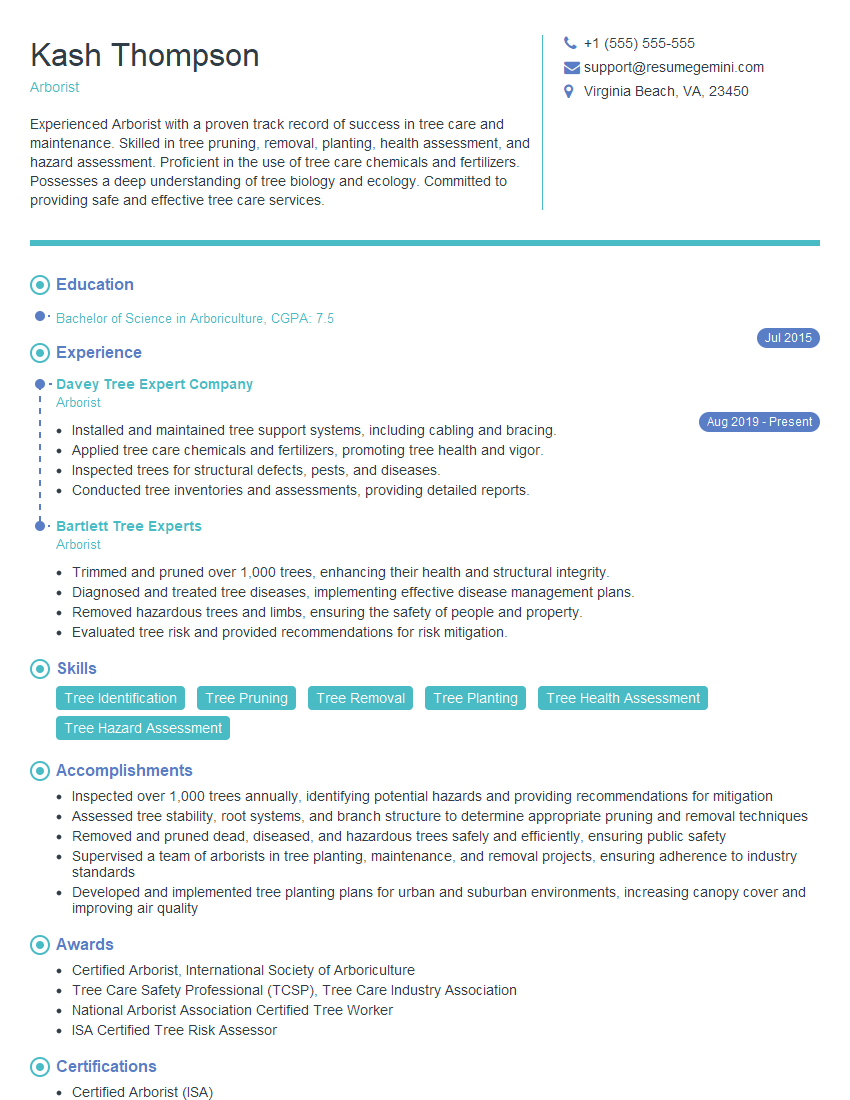
Mastering ax handling skills opens doors to diverse and rewarding career opportunities in forestry, arboriculture, and other related fields. A strong foundation in these skills, demonstrated through a well-crafted resume, is crucial for securing your dream job. To increase your chances of getting noticed by potential employers, focus on building an ATS-friendly resume that highlights your expertise and accomplishments effectively. ResumeGemini is a trusted resource that can help you create a professional and impactful resume tailored to the specific requirements of your target roles. Examples of resumes tailored to Ax Handling are available to help guide you.




Explore more articles
Users Rating of Our Blogs
Share Your Experience
We value your feedback! Please rate our content and share your thoughts (optional).
What Readers Say About Our Blog
Hello,
we currently offer a complimentary backlink and URL indexing test for search engine optimization professionals.
You can get complimentary indexing credits to test how link discovery works in practice.
No credit card is required and there is no recurring fee.
You can find details here:
https://wikipedia-backlinks.com/indexing/
Regards
NICE RESPONSE TO Q & A
hi
The aim of this message is regarding an unclaimed deposit of a deceased nationale that bears the same name as you. You are not relate to him as there are millions of people answering the names across around the world. But i will use my position to influence the release of the deposit to you for our mutual benefit.
Respond for full details and how to claim the deposit. This is 100% risk free. Send hello to my email id: [email protected]
Luka Chachibaialuka
Hey interviewgemini.com, just wanted to follow up on my last email.
We just launched Call the Monster, an parenting app that lets you summon friendly ‘monsters’ kids actually listen to.
We’re also running a giveaway for everyone who downloads the app. Since it’s brand new, there aren’t many users yet, which means you’ve got a much better chance of winning some great prizes.
You can check it out here: https://bit.ly/callamonsterapp
Or follow us on Instagram: https://www.instagram.com/callamonsterapp
Thanks,
Ryan
CEO – Call the Monster App
Hey interviewgemini.com, I saw your website and love your approach.
I just want this to look like spam email, but want to share something important to you. We just launched Call the Monster, a parenting app that lets you summon friendly ‘monsters’ kids actually listen to.
Parents are loving it for calming chaos before bedtime. Thought you might want to try it: https://bit.ly/callamonsterapp or just follow our fun monster lore on Instagram: https://www.instagram.com/callamonsterapp
Thanks,
Ryan
CEO – Call A Monster APP
To the interviewgemini.com Owner.
Dear interviewgemini.com Webmaster!
Hi interviewgemini.com Webmaster!
Dear interviewgemini.com Webmaster!
excellent
Hello,
We found issues with your domain’s email setup that may be sending your messages to spam or blocking them completely. InboxShield Mini shows you how to fix it in minutes — no tech skills required.
Scan your domain now for details: https://inboxshield-mini.com/
— Adam @ InboxShield Mini
Reply STOP to unsubscribe
Hi, are you owner of interviewgemini.com? What if I told you I could help you find extra time in your schedule, reconnect with leads you didn’t even realize you missed, and bring in more “I want to work with you” conversations, without increasing your ad spend or hiring a full-time employee?
All with a flexible, budget-friendly service that could easily pay for itself. Sounds good?
Would it be nice to jump on a quick 10-minute call so I can show you exactly how we make this work?
Best,
Hapei
Marketing Director
Hey, I know you’re the owner of interviewgemini.com. I’ll be quick.
Fundraising for your business is tough and time-consuming. We make it easier by guaranteeing two private investor meetings each month, for six months. No demos, no pitch events – just direct introductions to active investors matched to your startup.
If youR17;re raising, this could help you build real momentum. Want me to send more info?
Hi, I represent an SEO company that specialises in getting you AI citations and higher rankings on Google. I’d like to offer you a 100% free SEO audit for your website. Would you be interested?
Hi, I represent an SEO company that specialises in getting you AI citations and higher rankings on Google. I’d like to offer you a 100% free SEO audit for your website. Would you be interested?
good