Interviews are more than just a Q&A session—they’re a chance to prove your worth. This blog dives into essential Baggage Claim Assistance interview questions and expert tips to help you align your answers with what hiring managers are looking for. Start preparing to shine!
Questions Asked in Baggage Claim Assistance Interview
Q 1. Describe your experience handling oversized or overweight baggage.
Handling oversized or overweight baggage requires a multi-step process prioritizing safety and efficiency. First, I visually assess the bag to ensure it doesn’t pose an immediate safety hazard, like protruding objects or signs of damage. Then, I check its dimensions and weight against airline regulations. Oversized bags often require special handling and may need to be gate-checked, meaning they travel separately from the main baggage hold and are delivered directly to the gate. Overweight bags can impact weight distribution on the aircraft, so I coordinate with the airline’s ground handling staff to ensure proper loading. I always clearly label these bags with appropriate tags indicating their size and weight restrictions. For example, I once encountered a large antique trunk that exceeded weight limits. I worked with the airline to secure special handling and ensure its safe transport. This involved finding a suitable spot in the aircraft’s cargo hold and confirming that the baggage handlers were aware of its unique characteristics.
Q 2. How do you prioritize tasks during peak baggage claim periods?
During peak periods, effective task prioritization is crucial. My approach is based on a combination of urgency and impact. I begin by focusing on immediate needs like delayed or damaged baggage requiring urgent attention. Next, I prioritize bags from connecting flights to avoid potential delays for other passengers. Then I tackle the general flow of baggage from each carousel. I use a system of visual cues and a mental checklist to track progress. Think of it as a triage system in a hospital – the most critical cases get immediate attention, followed by urgent and then routine cases. This ensures a smooth flow, minimizes passenger wait times, and reduces stress on the whole team. For instance, if there is a rush of bags from a particularly busy flight, I’ll allocate more staff to that carousel and temporarily redirect resources from other less pressing areas.
Q 3. Explain your process for identifying and handling damaged baggage.
Identifying and handling damaged baggage involves a systematic approach. First, I visually inspect each bag for obvious damage like tears, dents, or broken zippers. If damage is apparent, I document it thoroughly, taking photos and noting the precise location and nature of the damage. I then assist the passenger in filing a damage report with the airline, providing them with the necessary documentation and guiding them through the claim process. The airline’s specific procedures vary, but usually involve completing a form describing the damage, providing baggage identification tags, and potentially arranging for repair or replacement. I’ve encountered scenarios where significant damage necessitates immediate action, such as water damage to sensitive electronics. In such cases, I prioritize communication with both the passenger and the airline to promptly initiate the claim and minimize inconvenience.
Q 4. What is your experience with baggage tracking systems?
My experience with baggage tracking systems is extensive. I am proficient in using various technologies, from basic barcode scanners to sophisticated automated baggage handling systems that track bags from check-in to arrival. These systems provide real-time information on bag location and status, enabling efficient tracing in case of delays or loss. I use this data to locate misplaced bags quickly, providing passengers with accurate updates. Knowing where a bag is at any given point in its journey is invaluable, especially during periods of high volume. For example, if a passenger reports a missing bag, I can use the tracking system to pinpoint its last known location, helping me and the airline determine where it might be and what steps are needed to recover it.
Q 5. How do you manage customer complaints regarding lost or delayed baggage?
Managing customer complaints regarding lost or delayed baggage requires empathy, patience, and clear communication. I begin by actively listening to the passenger’s concerns, validating their frustrations, and assuring them that I’ll do everything possible to help. Next, I access the baggage tracking system to determine the bag’s status and provide them with the most accurate information possible. I will then follow the airline’s established procedures for handling lost or delayed baggage, ensuring the passenger is kept updated on progress. This may involve filing a lost baggage report, coordinating with other airports, or initiating the claim process for compensation. I always strive to offer solutions and to make the experience as painless as possible for the passenger. I remember a time when a passenger’s luggage was delayed by a major weather event. Though I couldn’t immediately locate it, I maintained regular contact with them, providing updates and ensuring they received a compensation package as per the airline’s policy. This proactive approach helped ease their anxiety significantly.
Q 6. Describe your method for efficiently loading and unloading baggage from carousels.
Efficient loading and unloading from carousels involves a combination of organization, teamwork, and knowledge of the system. I ensure bags are placed on the carousel in an orderly fashion, minimizing congestion and ensuring a smooth flow. This includes grouping similar-sized bags together and utilizing the carousel’s entire surface area effectively. When unloading, I prioritize bags based on urgency (e.g., connecting flights first) and ensure a consistent pace to prevent bottlenecks. This requires clear communication with my team and consistent vigilance to prevent jams. Imagine it like a well-oiled machine, with each individual component (baggage handler) working in synchronicity to achieve the maximum output with minimal friction. Effective communication and clear roles are vital to avoiding delays and ensuring an even flow of baggage.
Q 7. What safety procedures do you follow when operating baggage handling equipment?
Safety is paramount. Before operating any baggage handling equipment, I always conduct a thorough pre-operational check, ensuring that all safety features are functioning correctly. This includes checking for loose parts, examining the condition of the belts and rollers, and confirming the proper functioning of the emergency stop mechanisms. I strictly adhere to all safety guidelines, wearing appropriate protective gear, and maintaining a safe distance from moving equipment. I am trained in recognizing potential hazards and responding to emergencies. This includes knowing how to react in case of a malfunction or injury. Moreover, I prioritize teamwork, ensuring that communication within the team is clear and constant to prevent accidents caused by miscommunication or lack of awareness. Every safety precaution is a crucial step in protecting myself and others from potential hazards, ensuring a safe and productive work environment.
Q 8. How would you handle a situation where baggage carousels malfunction?
A malfunctioning baggage carousel is a major disruption, requiring swift and coordinated action. My first step would be to assess the situation – is it a minor glitch or a complete system failure? For minor issues, like a jammed belt, I’d immediately alert maintenance and try to guide passengers to minimize delays. For a complete failure, I’d activate our emergency procedures.
- Immediate Communication: Announce the problem clearly and calmly to passengers, providing updates as information becomes available. We’d use the public address system and digital displays to keep everyone informed.
- Passenger Reassurance: Emphasize that we are working to resolve the problem quickly and efficiently. Offer water or comfortable seating areas if the wait is prolonged.
- Manual Baggage Retrieval: If safe and feasible, we may manually retrieve bags from the carousel, prioritizing fragile or perishable items. This needs to be done with caution to prevent damage or injury.
- Alternative Solutions: If the carousel remains down, we’d investigate alternate solutions, such as using a spare carousel (if available) or temporarily diverting bags to a different area for retrieval.
- Collaboration with Airlines: Close communication with airline representatives is essential to ensure that passengers’ bags are properly identified and delivered, possibly involving a temporary manual tracking system.
For example, during a recent power outage at a busy airport, we successfully used manual retrieval of priority bags (connecting flights) while maintaining clear communication with passengers, minimizing significant delays.
Q 9. Describe your experience with baggage reconciliation procedures.
Baggage reconciliation is crucial for ensuring that every bag reaches its rightful owner. My experience involves meticulously comparing the number of bags loaded onto the aircraft with the number unloaded, resolving any discrepancies. This process utilizes various tools, including baggage tracking systems and manual counts.
- Pre-Flight Reconciliation: This involves verifying the number of bags checked in against the number scanned onto the flight. Any discrepancies are investigated immediately.
- Post-Flight Reconciliation: This involves comparing the number of bags offloaded from the flight with the manifest. Missing or excess bags are flagged immediately.
- Mishandled Baggage Reporting: Any discrepancies require detailed documentation, including flight number, bag tag information, and passenger details. This is crucial for tracing missing baggage.
- Data Entry and Tracking: Accurate and timely data entry into the baggage tracking system is essential for tracing and locating mishandled bags. This often involves working with airline representatives and ground handling teams.
In one instance, a significant discrepancy was discovered post-flight. Through careful reconciliation, we were able to locate bags that had been accidentally loaded onto a different flight, preventing significant delays for many passengers.
Q 10. How familiar are you with different types of baggage tags and their significance?
I’m very familiar with different baggage tags. They are essential for tracking and identifying bags throughout the journey. Different types serve different purposes:
- Standard Baggage Tags: These contain the passenger’s name, flight information, and baggage identification number. They’re crucial for initial identification.
- Priority Tags: Used for bags needing special handling (e.g., fragile items or connecting flights). These often have distinctive colors or markings.
- Oversized/Overweight Tags: Identify bags that exceed size or weight limits. These usually have specific warnings and instructions.
- Transfer Tags: Used for connecting flights, indicating the final destination airport.
- Damaged Baggage Tags: Used to mark damaged bags, noting the extent of damage before the bag is handled. This helps in insurance claims.
Understanding these different tags helps ensure efficient baggage handling and prevents confusion or mishandling. For example, a priority tag would alert ground staff to handle a bag quickly, ensuring timely transfer for connecting passengers.
Q 11. How would you respond to a customer who is frustrated about a delayed bag?
Handling a frustrated customer regarding a delayed bag requires empathy, professionalism, and clear communication. My approach would be:
- Active Listening: Allow the customer to fully express their frustration without interruption. Show empathy and understanding.
- Gather Information: Obtain the passenger’s details, flight information, and bag tag information. This is crucial for tracking.
- Provide Updates: Use the baggage tracking system to determine the bag’s location and provide realistic timeframes for its arrival. I would avoid making promises I can’t keep.
- Offer Solutions: Depending on the circumstances, offer solutions like temporary replacement items ( toiletries, medications) or assistance with lodging, if the delay is significant.
- Follow-up: Provide contact information and promise to follow up regularly on the bag’s status. Keep the customer informed.
For instance, if a bag is delayed due to a missed connection, I would explain the situation transparently and offer to submit a claim for compensation.
Q 12. Explain your understanding of IATA baggage regulations.
My understanding of IATA (International Air Transport Association) baggage regulations is comprehensive. These regulations cover various aspects of baggage handling, aiming to standardize procedures and improve safety and efficiency globally. Key areas include:
- Liability: IATA sets limits on airline liability for lost, damaged, or delayed baggage.
- Baggage Dimensions and Weight: Regulations specify acceptable baggage sizes and weights, which vary depending on the airline and ticket class.
- Dangerous Goods: Strict regulations govern the transport of dangerous goods in checked and carry-on baggage. These regulations are crucial for safety.
- Handling Procedures: IATA provides guidelines on proper baggage handling procedures, including loading, unloading, and transfer processes.
- Passenger Rights: Regulations outline passenger rights regarding baggage handling and compensation for mishandled baggage.
Compliance with IATA regulations is not just a matter of following rules; it’s a commitment to passenger safety and satisfaction. For example, adhering to dangerous goods regulations prevents potential hazards during flights.
Q 13. What steps would you take if you discovered a suspicious item in a piece of baggage?
Discovering a suspicious item in baggage requires immediate and decisive action. My response would follow these steps:
- Do Not Touch: Avoid touching or handling the suspicious item. Maintain a safe distance.
- Isolate the Baggage: Immediately isolate the baggage containing the suspicious item to prevent further access.
- Alert Security: Notify airport security personnel immediately. Provide clear and concise details about the item and its location.
- Evacuation (If Necessary): If deemed necessary by security personnel, assist in evacuating the immediate area.
- Documentation: Document all relevant information, including the time, location, and description of the item. This assists in the investigation.
Following established security protocols is paramount. This is a safety-critical situation requiring adherence to airport regulations.
Q 14. How do you maintain a clean and organized baggage claim area?
Maintaining a clean and organized baggage claim area is crucial for passenger safety and a positive experience. Our strategies include:
- Regular Cleaning: Scheduled cleaning throughout the day to remove debris, spills, and lost items. This includes floors, carousels, and seating areas.
- Lost and Found Procedures: Establish clear procedures for handling lost items found in the baggage claim area.
- Signage and Wayfinding: Ensure clear signage to guide passengers and inform them of procedures.
- Carousel Maintenance: Regularly inspect and maintain carousels to prevent malfunctions and ensure smooth operation.
- Staff Training: Train staff on proper cleaning and maintenance procedures, emphasizing safety and efficiency.
By maintaining a clean and organized space, we create a welcoming environment for passengers, reducing stress and promoting safety. For example, regular sweeping and mopping prevent slips and falls.
Q 15. How would you handle a situation with a large volume of lost or mishandled baggage?
Handling a surge in lost or mishandled baggage requires a systematic approach. Think of it like a well-orchestrated emergency response. First, we’d activate our established emergency protocol, which involves immediately notifying all relevant teams – baggage services, customer service, and potentially airport authorities depending on the scale of the issue. We would then implement a triage system: categorizing bags based on urgency (e.g., connecting flights, essential medications) and initiating a rapid search process using our baggage tracking system and visual inspection. Simultaneously, we would set up a dedicated customer service area to manage passenger inquiries and provide updates. Real-time communication is key; we’d utilize digital platforms like SMS or email updates for progress. After the immediate crisis is managed, a detailed post-incident review is essential to identify systemic issues and prevent future occurrences. For example, if a significant number of bags were misloaded onto a different flight, we’d analyze our baggage handling procedures to pinpoint the breakdown and implement corrective actions.
Imagine a scenario where a severe snowstorm causes significant delays and baggage handling disruption. Our protocol would immediately be triggered, enabling us to identify affected passengers and their baggage. We’d collaborate with the airlines to expedite the search and reunite passengers with their luggage. Transparency and regular communication would keep passengers informed, mitigating frustration.
Career Expert Tips:
- Ace those interviews! Prepare effectively by reviewing the Top 50 Most Common Interview Questions on ResumeGemini.
- Navigate your job search with confidence! Explore a wide range of Career Tips on ResumeGemini. Learn about common challenges and recommendations to overcome them.
- Craft the perfect resume! Master the Art of Resume Writing with ResumeGemini’s guide. Showcase your unique qualifications and achievements effectively.
- Don’t miss out on holiday savings! Build your dream resume with ResumeGemini’s ATS optimized templates.
Q 16. What is your experience with baggage transfer between different airlines or flights?
Baggage transfer between airlines or flights is a critical aspect of my experience. It involves close collaboration with interline partners and adhering to strict procedures. This often includes using standardized baggage tags and tracking systems to ensure smooth transitions. I’m proficient in utilizing interline baggage agreements to track and manage transfers, resolving any discrepancies or delays. I’m experienced in handling situations where bags are misdirected or delayed during transfers, such as employing proactive communication with connecting airlines and utilizing expedited delivery services if necessary. Think of it like a complex relay race – each leg (airline) needs to pass the baton (baggage) seamlessly. My role is to ensure a smooth handoff at each stage.
For example, if a passenger is transferring from United Airlines to British Airways, I’d work with both airlines’ ground staff to ensure their luggage is correctly transferred and loaded onto the connecting flight. Any delays or missing bags are immediately reported using the interline baggage tracking system, allowing for swift investigation and resolution.
Q 17. Describe your proficiency in using baggage scanners and other related technology.
My proficiency with baggage scanners and other technology is extensive. I’m skilled in operating various types of X-ray machines, including those with advanced imaging capabilities. I can quickly and accurately identify prohibited items, ensuring passenger and airline security. I’m also adept at utilizing baggage tracking systems (both manual and automated), allowing me to pinpoint the location of bags within the system. This includes understanding the coding and data input required to effectively track and trace each individual piece of baggage. I’m also familiar with baggage handling system software used to manage and optimize baggage flow, ensuring efficient and timely delivery. This extends to mobile applications used to receive and input baggage information and respond to customer inquiries.
For instance, I can interpret the different images produced by the X-ray machine to distinguish between harmless items and potentially dangerous objects. The software used with the scanner provides helpful guidelines, but I am also trained to assess anomalies that may be missed by the software.
Q 18. How would you ensure the security and integrity of passenger baggage?
Ensuring the security and integrity of passenger baggage involves a multi-layered approach. It starts with adhering to strict security protocols, using baggage scanners to detect prohibited items and employing thorough visual inspections. We maintain a secure environment for baggage handling areas, limiting access to authorized personnel. We also use tamper-evident seals to prevent unauthorized access and carefully monitor baggage throughout the entire journey, from check-in to final delivery. Data security is critical too, protecting passenger information and baggage tracking data from unauthorized access. We adhere to strict privacy regulations and utilize secure databases to store sensitive information.
Think of it like protecting a valuable package. We use a combination of technology (scanners, tracking systems), physical security measures (access control, seals), and strict operational procedures to safeguard both the contents and the integrity of the bags.
Q 19. What is your understanding of different baggage handling equipment?
My understanding of baggage handling equipment is comprehensive. I’m familiar with various conveyor belt systems, automated sorting machines, baggage carousels, and specialized equipment for handling oversized or fragile items. I understand the mechanics of these systems, including their operational limitations and safety features. My knowledge extends to the integration of these systems within the overall baggage handling infrastructure, enabling me to troubleshoot malfunctions and identify potential bottlenecks in the baggage flow. This also includes experience working with baggage tugs and loaders for transporting baggage between terminals or aircraft.
For example, I know the difference between a conventional conveyor belt and a tilt-tray sorter, and I understand how each contributes to the overall efficiency of the baggage handling process. I’m also familiar with the safety mechanisms in place to prevent jams or other issues that could cause delays.
Q 20. How do you handle situations involving fragile or valuable items in baggage?
Handling fragile or valuable items requires extra care and attention. We use specialized handling procedures, including special baggage tags to indicate fragility and careful placement during loading to minimize risk of damage. We prioritize these bags during handling, ensuring they are handled gently and transported separately if necessary. For high-value items, we often recommend using specialized shipping services or encourage passengers to carry them onboard. Clear communication with the passenger is crucial to manage expectations and outline the steps we’re taking to protect their belongings. Documentation is important too, as it helps us manage liability if anything were to go wrong.
For example, if a passenger has a valuable antique in their luggage, we would make a note of it and ensure it’s handled with utmost care, potentially placing it in a less turbulent area of the aircraft’s hold. If the item is extremely valuable, we may suggest alternative means of transportation.
Q 21. How would you prioritize baggage based on flight connections and passenger needs?
Prioritizing baggage is crucial, particularly during periods of high volume or disruption. Our system prioritizes bags for passengers with connecting flights, ensuring timely transfers. Bags containing essential medications or other time-sensitive items also receive priority handling. We use a combination of software and manual processes to identify and prioritize these bags. This might involve marking bags with special tags or using the baggage handling system’s sorting capabilities. This prioritization process ensures that passengers with urgent needs receive their baggage as quickly as possible, even amidst potential delays. Clear communication with passengers about the baggage handling priority process minimizes anxiety and enhances transparency.
For instance, a passenger transferring from a domestic flight to an international flight with a short layover would have their bags prioritized to ensure they’re loaded onto their connecting flight without delay. Similarly, bags marked as containing essential medications are given top priority, ensuring they reach the passenger quickly.
Q 22. Explain your experience with reporting baggage handling incidents.
Reporting baggage handling incidents is crucial for improving efficiency and safety. My experience involves meticulously documenting every detail, adhering to company protocols. This includes noting the time, location, type of incident (e.g., damaged bag, mishandled item, delayed baggage), the flight number, passenger details (if applicable), and a detailed description of the event. I use a standardized reporting system, often a digital platform, which allows for easy retrieval and analysis of data. For instance, if a bag was damaged, I would photograph the damage, note the baggage tag number, and record the passenger’s contact information for follow-up. This detailed information helps identify recurring issues, allowing for process improvements to prevent future incidents.
Furthermore, I am trained in escalating serious incidents to the appropriate supervisors immediately to ensure timely action and passenger support.
Q 23. How do you maintain accurate records of baggage movements?
Maintaining accurate baggage records is paramount. We primarily utilize a barcode scanning system where each bag is scanned at various points throughout its journey: at check-in, during loading onto the aircraft, and upon unloading. This system automatically tracks the bag’s location and status in real-time. In addition to this automated system, we maintain manual logs for situations where the automated system fails (like during a power outage). This two-pronged approach creates redundancy ensuring accurate tracking. For instance, if a bag is flagged as missing, I can quickly trace its last scanned location, which helps narrow down the search area and speeds up the investigation.
Moreover, we cross-reference this data with flight manifests and passenger information, ensuring a complete and accurate record of baggage movements.
Q 24. Describe your ability to work effectively under pressure and meet tight deadlines.
Working under pressure and meeting deadlines is a crucial aspect of baggage handling, especially during peak travel seasons or unexpected disruptions. I thrive in such environments, prioritizing tasks effectively. I am adept at quickly assessing the situation, focusing on the most critical aspects first and delegating tasks when appropriate. I’ve handled several instances where a flight was delayed, resulting in a backlog of baggage needing to be processed quickly. My approach involves calmly prioritizing bags based on connecting flights and ensuring all urgent baggage is processed efficiently. This involves excellent time management and a focus on clear communication with my team to efficiently handle the increased workload.
Q 25. How would you resolve a discrepancy between the number of bags loaded and unloaded?
A discrepancy between loaded and unloaded bags requires immediate attention. My first step involves a thorough recount of bags both on the aircraft and in the baggage handling area. I cross-reference the count with the flight manifest and the baggage tracking system. If the discrepancy remains, I systematically investigate all potential causes. This could include a bag inadvertently left on the tarmac, a miscount during loading, or even a bag that was accidentally placed on the wrong aircraft. I would work closely with ground crew, the pilots, and other relevant personnel to trace the missing bag. I’d also document the discrepancy and the steps taken to resolve it, following established protocols for reporting discrepancies.
For example, if a bag was left on the tarmac, it might be found using ground crew reports and airport security camera footage. Documentation is crucial, as it aids in future prevention of such incidents.
Q 26. What is your experience with special baggage handling requests (e.g., wheelchairs, sports equipment)?
I have extensive experience handling special baggage requests, including those for wheelchairs, sports equipment (oversized or fragile items), and items requiring special temperature control. This involves understanding specific handling requirements, following airline regulations, and ensuring proper documentation. For instance, handling a wheelchair requires ensuring it’s properly secured and protected during transit. Similarly, oversized sports equipment requires additional care, including proper labeling and specific loading procedures to avoid damage or injury. I always confirm with passengers the proper handling instructions for their special items, including labeling any fragile items accordingly and taking pictures as documentation.
Q 27. How do you maintain a professional demeanor when dealing with stressed passengers?
Maintaining professionalism with stressed passengers is crucial. I approach each situation with empathy and understanding, actively listening to their concerns and offering assistance calmly and efficiently. I use clear and concise communication, avoiding jargon, and providing updates regularly. A reassuring tone and a genuine effort to resolve the issue quickly often de-escalates tense situations. I might use phrases like, “I understand your frustration, let’s work together to find your bag,” or, “I’ll do everything I can to assist you.” Even if I can’t immediately resolve the issue, providing clear expectations and timelines manages their expectations effectively.
Q 28. Describe your teamwork skills and how they benefit baggage handling operations.
Teamwork is fundamental to efficient baggage handling. I collaborate effectively with colleagues, sharing information, and coordinating tasks smoothly. In a fast-paced environment, clear communication and shared responsibility are paramount. I actively participate in team briefings, offering suggestions for improvements and assisting colleagues when needed. For instance, during peak hours, I might help a colleague struggling with a particularly large number of bags, or share information regarding delayed flights that may impact our workflow. A cohesive team environment allows us to resolve issues rapidly and efficiently, minimizing delays and passenger inconvenience.
Key Topics to Learn for Baggage Claim Assistance Interview
- Customer Service Excellence: Handling customer inquiries with empathy and efficiency, resolving complaints professionally, and maintaining a calm demeanor under pressure.
- Baggage Handling Procedures: Understanding baggage claim processes, identifying and resolving baggage discrepancies (delays, damage, misdirection), and utilizing baggage tracking systems.
- Safety and Security Protocols: Adhering to airport security regulations, recognizing and reporting suspicious activity, and ensuring the safety of both passengers and baggage.
- Problem-Solving and Decision-Making: Effectively assessing situations, prioritizing tasks, finding creative solutions to unexpected baggage issues, and making sound judgments in stressful environments.
- Teamwork and Communication: Collaborating effectively with colleagues, supervisors, and other airport staff, communicating clearly and concisely, and working as part of a cohesive team.
- Technology Proficiency: Familiarity with baggage handling systems, computer applications used for tracking and reporting, and potentially, mobile device applications related to baggage claim.
- Regulations and Policies: Understanding airline baggage policies, international regulations concerning baggage handling, and internal company procedures.
Next Steps
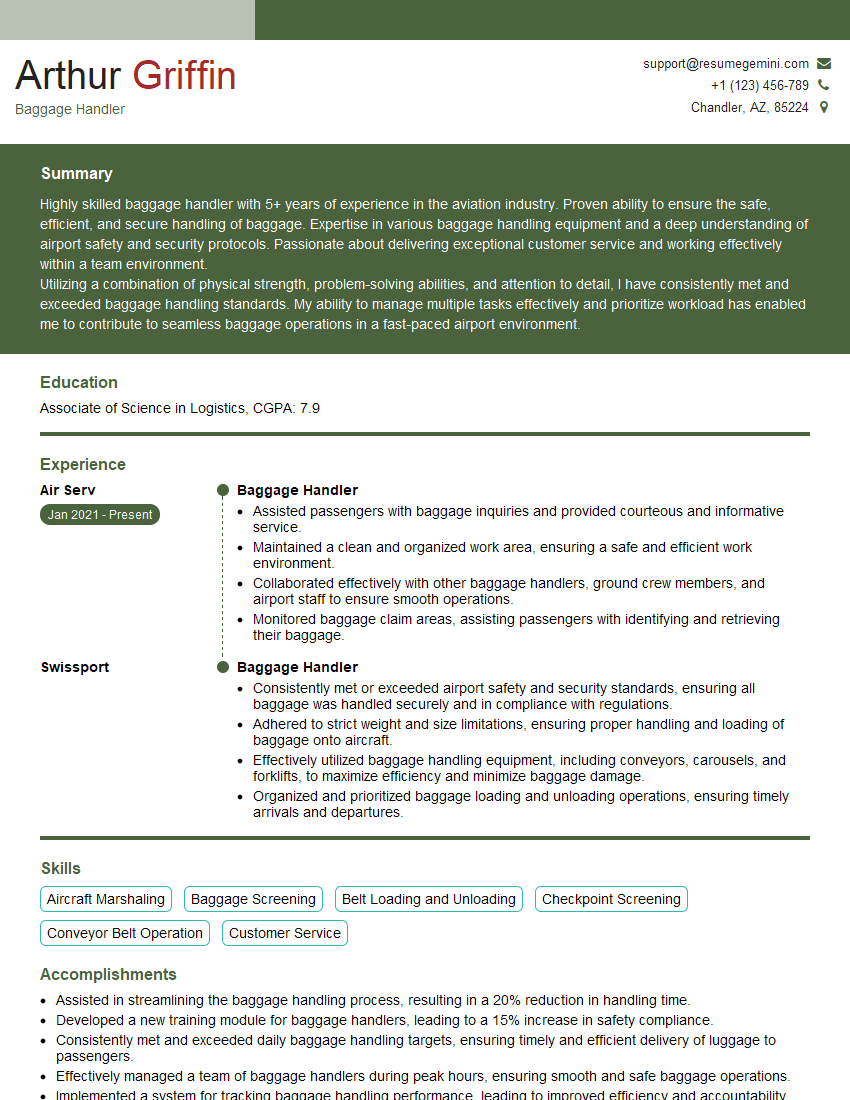
Mastering Baggage Claim Assistance skills opens doors to a rewarding career in the aviation industry, offering opportunities for growth and advancement. A strong resume is crucial for showcasing your abilities to potential employers. Creating an ATS-friendly resume increases your chances of getting your application noticed. To build a professional and impactful resume, we recommend using ResumeGemini, a trusted resource for crafting effective resumes. Examples of resumes tailored to Baggage Claim Assistance are available to help you get started.
Explore more articles
Users Rating of Our Blogs
Share Your Experience
We value your feedback! Please rate our content and share your thoughts (optional).
What Readers Say About Our Blog
Very informative content, great job.
good