Interviews are opportunities to demonstrate your expertise, and this guide is here to help you shine. Explore the essential Bagging and Sealing interview questions that employers frequently ask, paired with strategies for crafting responses that set you apart from the competition.
Questions Asked in Bagging and Sealing Interview
Q 1. Describe your experience with various bagging and sealing machines.
My experience with bagging and sealing machines spans over 10 years, encompassing a wide range of technologies and applications. I’ve worked extensively with horizontal form-fill-seal (HFFS) machines, vertical form-fill-seal (VFFS) machines, and various semi-automatic and fully automated systems. I’m proficient in operating and maintaining equipment from leading manufacturers such as Bosch, Hayssen, and Multivac. This experience includes everything from basic troubleshooting and preventative maintenance to complex repairs and system upgrades. For example, I successfully resolved a recurring jam issue on a high-speed HFFS machine by identifying and replacing a worn-out sealing jaw, resulting in a significant increase in production efficiency. In another instance, I assisted in the installation and commissioning of a new VFFS machine for a client, ensuring seamless integration with their existing packaging line.
I am also familiar with various bag styles including pillow pouches, stand-up pouches, three-side seal bags, and gusseted bags, and how the machine settings need to be adjusted to accommodate each.
Q 2. Explain the different types of sealing methods used in packaging.
Several sealing methods are employed in packaging, each suited to different materials and applications. Heat sealing is the most common, using heat to melt and fuse thermoplastic films together. This is further categorized into several types:
- Impulse Sealing: A quick burst of heat seals a small area, often used for smaller bags. It’s energy-efficient but may not be suitable for larger or more demanding applications.
- Continuous Sealing: A continuous heated bar creates a long seal, ideal for high-speed production lines.
- Ultrasonic Sealing: High-frequency vibrations generate heat to seal the material, creating a strong and hermetic seal without the need for heat elements. It is excellent for sensitive products or delicate materials.
- Hot Air Sealing: This method uses hot air to seal the packaging materials together, often used in high-speed applications for larger packages.
- Induction Sealing: A coil creates a magnetic field, inducing heat in a foil liner to create a hermetic seal. This method is particularly beneficial for extending shelf life.
Beyond heat sealing, other methods include adhesive sealing (using hot melt or pressure-sensitive adhesives) and mechanical sealing (clamping or crimping). The choice of sealing method depends on factors like material type, product characteristics, desired seal strength, and production speed.
Q 3. How do you ensure the integrity of sealed packages?
Ensuring the integrity of sealed packages involves a multi-faceted approach that starts with selecting the appropriate sealing method and materials for the product and its environmental conditions. Regular inspections are vital throughout the process. We use a variety of techniques:
- Visual Inspection: Checking for any obvious seal flaws like gaps, wrinkles, or incomplete seals.
- Leak Testing: Employing pressure or vacuum tests to detect microscopic leaks. We often use specialized equipment to perform these tests, ensuring reliable and sensitive detection.
- Destructive Testing: Occasionally, samples are destructively tested to assess seal strength and integrity under extreme conditions.
- Regular Maintenance: Preventative maintenance on the sealing equipment is crucial. This ensures the sealing jaws are correctly aligned, heated evenly, and free from debris.
Furthermore, maintaining precise control over sealing parameters (temperature, time, pressure) is essential for consistent seal quality. Implementing a robust quality control system, including regular calibration of equipment and operator training, completes the process. Using tamper-evident seals also helps guarantee product integrity.
Q 4. What are the common causes of package leaks or failures?
Package leaks or failures stem from several sources. Improper machine settings are a leading cause. Incorrect temperature, pressure, or sealing time can all compromise the seal. Contamination on the sealing jaws—dust, debris, or product residue—can prevent a proper seal. Worn-out or damaged sealing jaws also lead to frequent failures. Faulty materials are another common contributor; poor quality film or inadequate liner thickness are major problems. Finally, incorrect handling or storage after sealing can also cause damage.
For instance, a common issue involves the build-up of product residue on the sealing jaws leading to incomplete seals. This is easily prevented with regular cleaning and maintenance. I’ve also seen instances where the improper tensioning of the film leading to weak seals and potential leaks.
Q 5. How do you troubleshoot malfunctions in bagging and sealing equipment?
Troubleshooting malfunctions in bagging and sealing equipment is a systematic process. I begin with a visual inspection to identify any obvious issues, like damaged parts or obstructions. Then, I review the machine’s operational logs for error messages or unusual patterns. Following that, I check the settings for the machine to ensure that they are correctly configured for the current type of packaging material. Then, I test individual components—the sealing jaws, the film feed mechanism, and the cutting system—to isolate the problem. My approach involves methodically eliminating possibilities. If the problem persists, I refer to the machine’s technical manual and may consult with the manufacturer’s support team.
For example, if the machine consistently produces incomplete seals, I’d check the sealing temperature and pressure, inspect the jaws for damage or contamination, and verify the film’s sealability. A step-by-step approach, combined with thorough documentation, ensures efficient and effective troubleshooting.
Q 6. Describe your experience with quality control procedures in packaging.
Quality control in packaging is paramount. My experience includes implementing and overseeing rigorous QC procedures, from incoming material inspection to finished goods verification. This involves regular sampling and testing to ensure that seal integrity meets pre-defined specifications. We use statistical process control (SPC) techniques to monitor key parameters and identify potential problems before they escalate. A crucial aspect is maintaining detailed records of inspections and test results, allowing for continuous improvement.
We’ve implemented a system where every batch of bags undergoes a thorough inspection, with samples being tested for seal strength and leak resistance. Any non-conformances are meticulously documented, and corrective actions are implemented to prevent future occurrences. We also utilize visual inspection and regularly schedule calibrations for all equipment.
Q 7. How do you maintain accurate production records related to bagging and sealing?
Maintaining accurate production records is crucial for traceability and regulatory compliance. We utilize a combination of manual and automated data collection methods. Production parameters (speed, temperature, pressure, and quantity) are automatically logged by the machines. Manual data entry supplements this, including information on material usage, downtime, and any quality control findings. This data is then compiled into detailed reports that track key performance indicators (KPIs), such as production output, efficiency, and defect rates.
We use a specialized software system to manage these records, ensuring data integrity and easy access for analysis and reporting. This system allows us to generate real-time reports and detailed summaries which can be reviewed at any time.
Q 8. What safety precautions do you follow when operating bagging and sealing machinery?
Safety is paramount when operating bagging and sealing machinery. My approach is threefold: pre-operation checks, safe operation procedures, and emergency response. Before starting any machine, I meticulously inspect all guards, safety interlocks, and emergency stop buttons to ensure they’re functioning correctly. I never operate equipment with malfunctioning safety features. During operation, I maintain a safe distance from moving parts and wear appropriate Personal Protective Equipment (PPE), including safety glasses, gloves, and hearing protection. High-speed equipment demands extra vigilance. Finally, I’m thoroughly trained in emergency shutdown procedures and know exactly how to react in case of a malfunction or accident, including how to use the emergency stop and contact relevant personnel.
For instance, during one instance involving a jam in a high-speed vertical form-fill-seal (VFFS) machine, my immediate response was to activate the emergency stop, not attempting to manually clear the jam until the machine was completely still. This prevented any potential injuries.
Q 9. How familiar are you with different types of packaging materials (e.g., film, foil, paper)?
My experience encompasses a wide range of packaging materials, each with its own unique properties and demands. I’m proficient in working with various films (e.g., polyethylene, polypropylene, polyester), foils (e.g., aluminum foil, metalized films), and papers (e.g., kraft paper, coated paper). Understanding these materials is critical for selecting the appropriate sealing method and parameters. For example, polyethylene film requires a different sealing temperature and pressure than aluminum foil to achieve a strong, hermetic seal. Furthermore, I understand the importance of material compatibility with the product being packaged and any environmental concerns (e.g., recyclability, biodegradability). The selection of materials directly affects the shelf life, product integrity, and the overall cost-effectiveness of the packaging process.
Q 10. Explain your experience with high-speed bagging and sealing equipment.
I have extensive experience operating high-speed bagging and sealing equipment, including vertical form-fill-seal (VFFS) machines, horizontal flow wrappers, and automated bagging systems. I’m adept at setting up, adjusting, and troubleshooting these complex machines to achieve optimal performance. This includes understanding and adjusting parameters such as film speed, sealing temperature, dwell time, and bag length to ensure high-quality bags with consistent seals. For instance, I’ve worked with VFFS machines capable of producing over 150 bags per minute, requiring precise control and rapid response to minimize downtime and waste.
My experience extends to different types of high-speed machinery, each demanding its specific configuration. This includes troubleshooting and maintaining equipment from various manufacturers, enhancing my understanding of overall system operation and component replacement strategies.
Q 11. How do you handle production line jams or stoppages?
Production line jams and stoppages demand a systematic approach. My first step is always to ensure the safety of personnel, activating the emergency stop if necessary. Next, I perform a thorough visual inspection to identify the source of the jam – whether it’s a material build-up, a mechanical fault, or a sensor malfunction. I have a good understanding of troubleshooting techniques specific to various types of equipment. My experience helps me to quickly pinpoint problems. For example, if the problem is a film jam, I know to carefully clear it while avoiding damage to the film and the machine’s mechanism. If it’s an electrical fault, I’ll follow established lockout/tagout procedures before investigating.
Following the resolution, I document the cause and corrective action taken to prevent recurrence and improve overall process efficiency. This data helps in proactive maintenance and continuous improvement of the entire system.
Q 12. Describe your experience with preventative maintenance of bagging and sealing equipment.
Preventative maintenance is key to maximizing equipment uptime and minimizing costly repairs. My approach involves a combination of scheduled maintenance tasks and regular inspections. This includes cleaning and lubricating moving parts, checking sealing elements for wear, inspecting sensors and controls, and verifying the proper functioning of safety features. I maintain detailed records of all maintenance activities, including dates, actions taken, and any parts replaced. I also adhere strictly to the manufacturer’s recommended maintenance schedules and utilize any available diagnostic tools provided by the manufacturer.
For example, I routinely check the sealing jaws on a VFFS machine for wear and tear, replacing them promptly if needed to ensure consistent seal integrity. This proactive approach has significantly reduced downtime caused by unexpected seal failures.
Q 13. How do you ensure compliance with packaging regulations and standards?
Compliance with packaging regulations and standards is critical. My knowledge includes awareness of relevant regulations concerning food safety (e.g., FDA regulations), labeling requirements, and environmental guidelines. I am trained in understanding material safety data sheets (MSDS) and ensuring that the packaging materials used comply with all applicable regulations. I meticulously ensure that all labels are accurate and legible, clearly displaying necessary information such as ingredients, nutritional facts, and warnings. We implement quality control checks at various stages of the packaging process to ensure that all products meet required standards. I’m also involved in reviewing and updating standard operating procedures (SOPs) to ensure they align with current regulations.
Q 14. How do you identify and resolve discrepancies in packaging materials?
Discrepancies in packaging materials are identified through a multi-layered approach. This starts with visual inspection, checking for defects such as tears, punctures, or inconsistencies in film thickness or color. We also employ quality control checks using measurement tools to ensure dimensions and weight are within specified tolerances. Statistical process control (SPC) charts are utilized to monitor key packaging parameters and identify trends that might indicate a problem. In case of discrepancies, I investigate thoroughly, tracing the issue back to its source, whether it’s a supplier issue, a machine malfunction, or a procedural error. This might involve collaborating with suppliers to address the material quality or adjusting machine settings. Clear documentation of the discrepancy, investigation, and corrective actions is maintained to prevent recurrence.
Q 15. What is your experience with different types of bagging and sealing machine controls (e.g., PLC, HMI)?
My experience with bagging and sealing machine controls encompasses a wide range of Programmable Logic Controllers (PLCs) and Human-Machine Interfaces (HMIs) from various manufacturers. I’m proficient in programming and troubleshooting PLCs from Siemens, Allen-Bradley, and Mitsubishi, using languages like ladder logic and structured text. This includes configuring inputs and outputs, developing control algorithms for automated processes like bag filling, sealing, and conveying, and implementing safety interlocks. My HMI experience involves designing user-friendly interfaces for operators to monitor and control the machines, displaying real-time data like production rates, error messages, and machine status. For example, in a recent project, I used an Allen-Bradley PLC and a Siemens HMI to design a system that automatically adjusted the sealing temperature based on the type of bagging material and product characteristics, leading to improved seal integrity and reduced waste.
I’m also familiar with integrating PLCs and HMIs with other factory automation systems, including Supervisory Control and Data Acquisition (SCADA) systems for overall production monitoring and management. This integration allows for real-time data analysis and improved decision-making.
Career Expert Tips:
- Ace those interviews! Prepare effectively by reviewing the Top 50 Most Common Interview Questions on ResumeGemini.
- Navigate your job search with confidence! Explore a wide range of Career Tips on ResumeGemini. Learn about common challenges and recommendations to overcome them.
- Craft the perfect resume! Master the Art of Resume Writing with ResumeGemini’s guide. Showcase your unique qualifications and achievements effectively.
- Don’t miss out on holiday savings! Build your dream resume with ResumeGemini’s ATS optimized templates.
Q 16. How do you optimize bagging and sealing processes for efficiency and speed?
Optimizing bagging and sealing processes for efficiency and speed involves a multi-faceted approach. It starts with a thorough understanding of the bottleneck(s) in the current process. This can be achieved through process mapping, time studies, and data analysis from the machine’s control system. Once the bottlenecks are identified, strategies can be implemented to address them. This might involve upgrading to faster machinery, improving material handling, or optimizing the control system logic. For instance, eliminating unnecessary delays in the PLC program can significantly increase the throughput.
Another critical aspect is minimizing downtime. Implementing preventative maintenance schedules and having readily available spare parts reduces disruptions. Furthermore, operator training is crucial – well-trained operators are less likely to make mistakes leading to downtime or product defects. Finally, continuous improvement methodologies, such as Lean manufacturing principles, can be applied to identify and eliminate waste, improving overall efficiency.
For instance, in one project, we reduced cycle time by 15% by optimizing the PLC program to minimize unnecessary wait times and improving the material handling system to reduce the distance the bags had to travel.
Q 17. Explain your experience with automated bagging and sealing systems.
My experience with automated bagging and sealing systems spans various industries, including food, pharmaceuticals, and chemicals. I have worked with fully automated lines, integrating different machines like bag makers, fillers, sealers, and conveyors. This involves selecting appropriate equipment based on production requirements, integrating the various components, and programming the overall control system. I have experience with both vertical and horizontal form-fill-seal (VFFS and HFFS) machines, and I understand the nuances of each type.
A recent project involved the integration of a high-speed VFFS machine with a robotic palletizer. This required careful coordination of the timing and sequencing of the machines to ensure efficient operation and prevent bottlenecks. The PLC program managed the communication between the various machines, monitoring their status and adjusting the process as needed. I also handled the safety aspects of the system, ensuring that all safety interlocks and emergency stop systems were properly implemented. The project resulted in a significant increase in production efficiency and a reduction in labor costs.
Q 18. How do you manage inventory of packaging materials?
Managing the inventory of packaging materials requires a robust system that ensures sufficient supply while minimizing storage costs and waste. We typically use a combination of methods: first, establishing accurate minimum and maximum stock levels for each material based on consumption rates and lead times from suppliers. Second, we utilize inventory management software to track stock levels, monitor consumption, and generate purchase orders automatically when levels fall below the minimum threshold. Third, we implement a FIFO (First-In, First-Out) system to minimize the risk of material expiration. This involves careful labeling and rotation of stock. We perform regular stock checks to verify accuracy and address discrepancies.
Furthermore, we work closely with suppliers to ensure timely delivery and to optimize ordering quantities to minimize holding costs. A well-managed inventory system prevents production downtime due to material shortages and reduces the risk of spoilage or obsolescence.
Q 19. Describe your experience with cleaning and sanitizing bagging and sealing equipment.
Cleaning and sanitizing bagging and sealing equipment is crucial for maintaining hygiene standards, especially in industries like food and pharmaceuticals. The process typically involves a multi-step procedure, including a thorough shutdown and lockout/tagout procedure to ensure safety. The first step involves removing all loose debris and product residue. Then, the equipment is cleaned with appropriate detergents and sanitizers, following the manufacturer’s recommendations. Different cleaning agents are used depending on the type of material the equipment is made of and the type of product being packaged. We use high-pressure water jets for cleaning difficult-to-reach areas.
After cleaning, the equipment is thoroughly rinsed with clean water and allowed to dry completely. Regular preventative maintenance, such as lubricating moving parts, also contributes to longer equipment lifespan and reduces the need for extensive cleaning. Documentation of cleaning and sanitizing procedures is vital for compliance and traceability.
Q 20. How do you ensure the accuracy of packaging weights and dimensions?
Ensuring the accuracy of packaging weights and dimensions is critical for meeting product specifications and regulatory compliance. We use a multi-pronged approach: First, we employ checkweighers and dimensioners at strategic points in the production line to continuously monitor weight and size. These machines provide real-time data, allowing for immediate adjustments if discrepancies are detected. Second, regular calibration of these machines is performed to maintain accuracy. Third, we use statistical process control (SPC) techniques to monitor the variability of weights and dimensions over time. This allows us to identify trends and prevent deviations before they become significant issues.
Our PLC programs incorporate checks on the weight and dimensions and can trigger alarms or stop the process if out-of-specification products are detected. Finally, regular product sampling and quality control testing are performed to confirm that the packaging meets the specified requirements.
Q 21. Explain your experience with different types of sealing technologies (e.g., heat sealing, ultrasonic sealing).
My experience with different sealing technologies includes heat sealing, ultrasonic sealing, and impulse sealing. Heat sealing is the most common method, using heat to melt and fuse the bagging material. This method is effective for a wide range of materials but requires careful control of temperature and sealing time to achieve optimal seal strength and prevent damage to the product. Ultrasonic sealing uses high-frequency vibrations to create friction and heat, which melts and fuses the material. This method is faster and often produces stronger seals than heat sealing, but it is suitable for only specific materials. Impulse sealing is a variation of heat sealing, using a short burst of heat to seal the bag. This is often used for smaller bags or when speed is less critical.
The selection of the appropriate sealing technology depends on factors such as the type of packaging material, the product characteristics, and the required production speed. For example, in a project involving heat-sensitive products, we selected ultrasonic sealing to minimize the risk of product damage. I understand the strengths and limitations of each technology and can choose the best option for a given application.
Q 22. How do you handle damaged or defective packages?
Handling damaged or defective packages begins with a robust quality control system. We employ a multi-layered approach, starting with in-line inspection during the packaging process itself. This involves visual checks for defects like tears, creases, or incorrect seals. Beyond visual inspection, we often use automated systems that can detect subtle flaws, such as inconsistent seal strength or package dimensions.
When a damaged or defective package is identified, it’s immediately quarantined to prevent contamination or further damage. We then conduct a thorough root cause analysis (RCA) to determine the source of the problem. This might involve reviewing machine settings, material quality, operator training, or even environmental factors. Once the root cause is identified, we implement corrective actions to prevent recurrence. This could involve machine adjustments, supplier changes, improved training protocols, or process optimization. Defective packages are typically scrapped, depending on the severity and nature of the damage and applicable regulations. For instance, minor damage might allow for repackaging, whereas severely compromised packages are disposed of according to company and regulatory guidelines.
For example, imagine a recurring issue with pouch seals failing. Our RCA might reveal that the sealing machine’s temperature isn’t consistent. After correcting the temperature setting, we’d monitor seal integrity to ensure the problem is resolved. Detailed records of all damaged packages, including the RCA and corrective actions, are meticulously maintained to enhance continuous improvement.
Q 23. Describe your experience with statistical process control (SPC) in packaging.
Statistical Process Control (SPC) is an integral part of ensuring consistent packaging quality. We utilize control charts, such as X-bar and R charts, to monitor key process parameters like seal strength, package weight, and fill level. These charts help identify trends and variations in the process that might indicate a problem before it leads to widespread defects. By regularly collecting data and plotting it on control charts, we can establish control limits, and any data point outside those limits triggers an investigation.
For example, if the seal strength consistently falls below the lower control limit, we know there’s a problem with the sealing process. This prompts us to investigate potential causes, such as machine malfunction, incorrect material settings, or operator error. SPC helps to shift our approach from reactive (responding to problems after they occur) to proactive (preventing problems before they occur). We utilize software to automate data collection and analysis, streamlining the SPC process and ensuring timely interventions.
Q 24. What is your experience with root cause analysis related to packaging failures?
Root cause analysis (RCA) is a crucial process in our packaging operations. When a packaging failure occurs, we employ a structured approach to identify the underlying cause, not just the symptoms. We commonly use tools such as the 5 Whys, Fishbone diagrams (Ishikawa diagrams), and Fault Tree Analysis. The 5 Whys involves repeatedly asking ‘why’ to progressively drill down to the root cause. The Fishbone diagram helps to visually brainstorm and organize potential causes. Fault Tree Analysis works backward from the failure to identify contributing factors.
For instance, if we experience a high rate of package bursting, we might use the 5 Whys: Why are packages bursting? (Overfilling). Why is there overfilling? (Inaccurate filling machine). Why is the filling machine inaccurate? (Faulty sensor). Why is the sensor faulty? (Lack of regular calibration). This process leads us to the root cause: inadequate sensor calibration. Corrective actions would then involve calibrating the sensor and establishing a preventative maintenance schedule.
Q 25. How familiar are you with different packaging formats (e.g., pouches, bags, boxes)?
My experience encompasses a wide range of packaging formats, including pouches (stand-up, flat), bags (various types: foil, plastic, paper), boxes (corrugated, folding cartons), and even specialized containers for specific products requiring unique protection. I’m familiar with the materials used in each format (e.g., different types of plastics, films, papers, and cardboard), the machinery required for their production, and the sealing and closure mechanisms for each. I have extensive knowledge of the advantages and limitations of each format and how to select the optimal packaging solution based on product characteristics, shelf life requirements, transportation needs, and environmental considerations.
For example, flexible pouches are cost-effective and lightweight for smaller products, whereas corrugated boxes offer better protection and branding opportunities for larger, heavier items. Understanding the nuances of each format allows me to make informed decisions and optimize the packaging process for both efficiency and effectiveness.
Q 26. How do you ensure that packaging meets customer specifications?
Ensuring packaging meets customer specifications involves a rigorous process that begins with a thorough understanding of the customer’s requirements. This includes reviewing specifications for dimensions, material composition, print quality, seal strength, barrier properties (e.g., moisture and oxygen resistance), and any other relevant parameters.
Throughout the production process, we conduct regular quality checks to verify that the packaging conforms to these specifications. This includes in-line inspection during packaging and off-line testing in our quality control lab. Testing may involve measuring physical properties, conducting barrier tests, and assessing the package’s ability to withstand the rigors of distribution. Any deviations from the specifications are investigated and corrective actions are implemented to address them. Regular audits and documentation ensure complete traceability throughout the entire process. Finally, we often conduct customer approvals to ensure complete satisfaction with the final product.
Q 27. Describe your experience with working in a GMP (Good Manufacturing Practices) environment.
I have extensive experience working in GMP (Good Manufacturing Practices) environments. I’m thoroughly familiar with the principles of GMP, including hygiene protocols, documentation procedures, personnel training requirements, equipment maintenance and calibration, and environmental monitoring. My experience includes following strict procedures to prevent contamination and maintain product quality and safety. This includes the use of appropriate personal protective equipment (PPE), maintaining a clean and organized work area, and adhering to stringent sanitation protocols for both equipment and personnel.
In a GMP environment, thorough documentation is critical. I am adept at maintaining detailed records of production processes, quality control checks, and any deviations from established procedures. This attention to detail ensures the traceability and accountability needed to maintain compliance with GMP regulations and deliver consistently high-quality products.
Q 28. Explain your experience with using and interpreting packaging line performance metrics.
Packaging line performance metrics are vital for evaluating efficiency and identifying areas for improvement. Key metrics I regularly use and interpret include: Overall Equipment Effectiveness (OEE), which combines availability, performance, and quality; line speed; defect rate; downtime; and production output. Understanding these metrics allows us to identify bottlenecks, optimize processes, and improve overall efficiency.
For example, consistently low OEE might indicate that a machine frequently malfunctions, necessitating maintenance improvements. A high defect rate points to potential process flaws needing correction. By analyzing these metrics and their trends, we can effectively manage resources, optimize line performance, and reduce costs. Data visualization tools and reporting systems help ensure that this information is readily accessible and used for decision making.
Key Topics to Learn for Bagging and Sealing Interview
- Equipment Operation & Maintenance: Understanding the mechanics of various bagging and sealing machines (e.g., vertical form fill seal, horizontal flow wrappers), troubleshooting common malfunctions, and performing preventative maintenance.
- Packaging Materials & Selection: Knowledge of different bag types (e.g., polyethylene, polypropylene, foil), their properties, and appropriate selection based on product characteristics and environmental considerations. This includes understanding seal integrity and material compatibility.
- Quality Control & Assurance: Implementing quality checks throughout the bagging and sealing process, identifying defects, and ensuring adherence to industry standards and company specifications. This involves understanding statistical process control (SPC) principles.
- Safety Procedures & Regulations: Familiarity with relevant safety protocols, including lockout/tagout procedures, proper handling of materials, and compliance with OSHA regulations for machinery operation and personal protective equipment (PPE).
- Production Efficiency & Optimization: Identifying bottlenecks in the bagging and sealing process, suggesting improvements for increased efficiency, and minimizing waste through techniques like lean manufacturing principles.
- Troubleshooting & Problem-Solving: Developing systematic approaches to diagnosing and resolving issues related to machine malfunctions, material defects, or production slowdowns. This includes using root cause analysis techniques.
- Data Analysis & Reporting: Understanding and interpreting production data to identify trends, track key performance indicators (KPIs), and generate reports to monitor efficiency and quality.
Next Steps
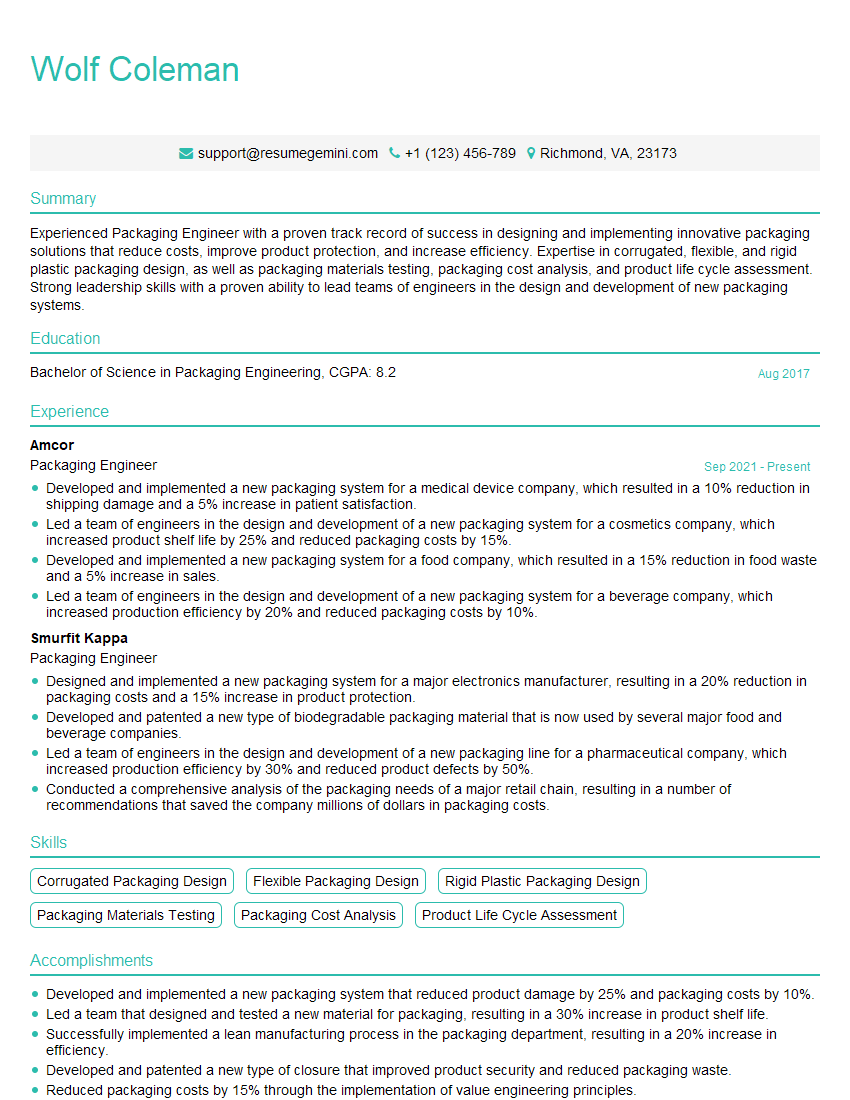
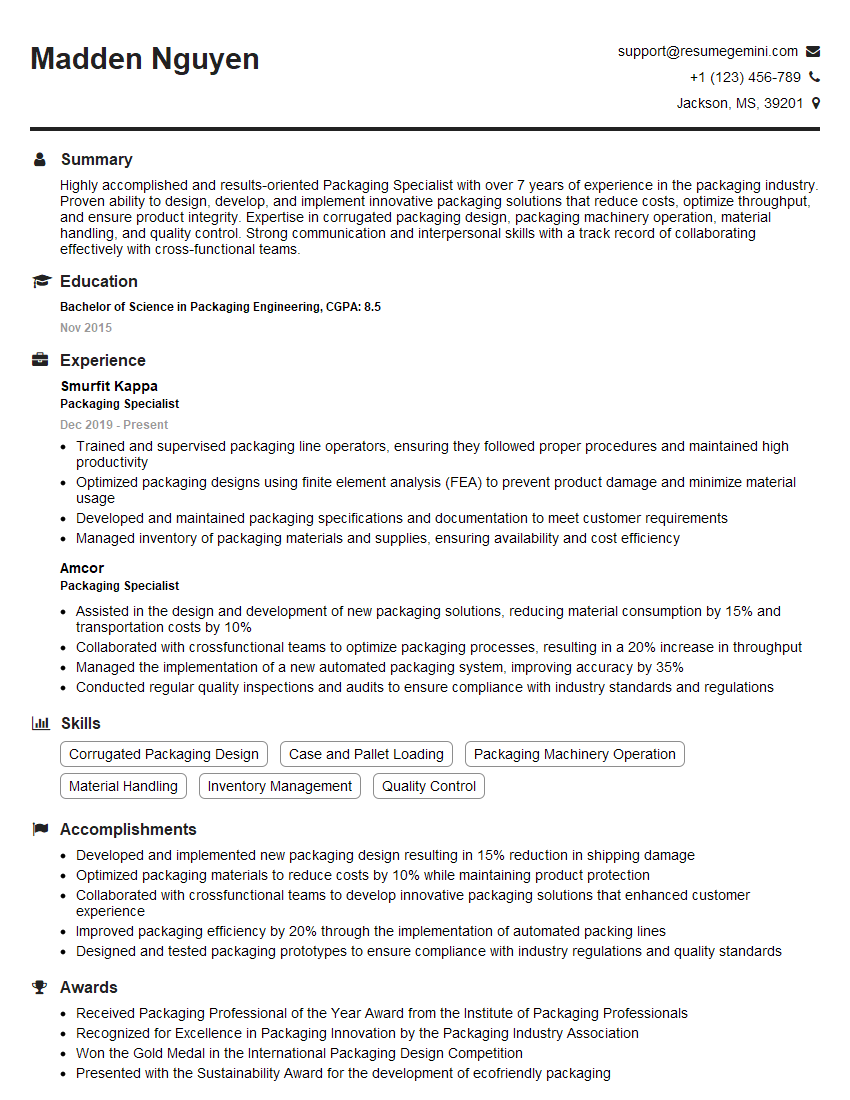
Mastering bagging and sealing techniques opens doors to diverse roles within manufacturing and logistics, offering opportunities for advancement and specialization. A strong resume is crucial for showcasing your skills and experience to potential employers. Creating an ATS-friendly resume is key to ensuring your application gets noticed by recruiters. ResumeGemini is a trusted resource to help you build a professional and impactful resume that highlights your qualifications effectively. Examples of resumes tailored to the Bagging and Sealing industry are available through ResumeGemini to help guide you.
Explore more articles
Users Rating of Our Blogs
Share Your Experience
We value your feedback! Please rate our content and share your thoughts (optional).
What Readers Say About Our Blog
Very informative content, great job.
good