Cracking a skill-specific interview, like one for Facility Planning and Layout, requires understanding the nuances of the role. In this blog, we present the questions you’re most likely to encounter, along with insights into how to answer them effectively. Let’s ensure you’re ready to make a strong impression.
Questions Asked in Facility Planning and Layout Interview
Q 1. Explain your understanding of facility planning principles.
Facility planning principles are the foundational guidelines for creating efficient, safe, and productive workspaces. They encompass a holistic approach, considering factors beyond just the physical layout. Key principles include:
- Needs Analysis: Thoroughly understanding the current and future needs of the organization, including space requirements, workflow processes, and technological needs. This forms the basis for all subsequent decisions.
- Workflow Optimization: Designing the layout to minimize movement and maximize efficiency. This often involves analyzing the flow of materials, information, and people through the facility.
- Ergonomics and Safety: Prioritizing the health and well-being of employees by considering factors such as workstation design, lighting, noise levels, and safety procedures. A comfortable and safe environment leads to increased productivity and reduced risk of injury.
- Flexibility and Scalability: Designing a facility that can adapt to changing needs over time. This includes considering future expansion, technological advancements, and potential changes in organizational structure.
- Sustainability: Incorporating environmentally friendly practices, such as energy-efficient lighting, water conservation measures, and the use of sustainable building materials.
- Cost-Effectiveness: Balancing the initial investment costs with long-term operational costs and ensuring the facility’s design provides a good return on investment.
For example, a hospital’s facility planning would prioritize efficient patient flow, sterile environments, and immediate access to emergency equipment, while a manufacturing plant might prioritize minimizing material handling distances and optimizing production line layout.
Q 2. Describe your experience with different facility layout types (e.g., process, product, fixed-position).
I have extensive experience with various facility layout types, tailoring my approach to the specific needs of each client. Here’s a breakdown:
- Process Layout (Functional Layout): This approach groups similar activities together, such as all machining operations in one area. It’s suitable for companies with diverse product lines and low production volume. For example, I worked with a machine shop where we grouped lathes, milling machines, and grinders together, improving efficiency in tool maintenance and operator expertise utilization.
- Product Layout (Line Layout): This is optimal for high-volume, repetitive production. Machines and workers are arranged sequentially to create a production line. In a previous project, I helped redesign a food processing plant using a product layout to significantly increase throughput and reduce production time.
- Fixed-Position Layout: This layout is used when the product remains stationary, and resources and workers move around it. This is common in large-scale construction projects or shipbuilding. I’ve contributed to the layout planning for a major bridge construction project, coordinating the movement of equipment and personnel around the fixed site.
- Cellular Layout (Group Technology): This combines aspects of process and product layout by grouping machines to produce families of similar parts. I’ve successfully implemented this in a manufacturing plant, which reduced setup times and improved production flexibility.
The choice of layout type depends heavily on factors like production volume, product variety, and material handling requirements.
Q 3. How do you conduct a space needs analysis?
A space needs analysis is a crucial first step in facility planning. It involves a systematic process to determine the quantity and type of space needed to support an organization’s operations. This involves:
- Data Collection: Gathering data on current and projected space requirements. This includes analyzing existing floor plans, interviewing staff to understand their space needs, and forecasting future growth.
- Space Requirements Calculation: Determining the area needed for each department or function, considering factors like workstations, equipment, storage, and circulation space. This often involves using standardized space allowances per employee or per unit of equipment.
- Space Allocation: Assigning space to different departments or functions based on their needs and priorities. This requires balancing the requirements of various departments while optimizing overall space utilization.
- Space Optimization: Evaluating different layout options to maximize efficiency and minimize wasted space. This may involve using computer-aided design (CAD) software to create and analyze different floor plans.
- Reporting and Documentation: Preparing a comprehensive report outlining the space needs analysis, including detailed calculations, justifications for space allocations, and potential cost implications.
For instance, a growing software company might conduct a space needs analysis to determine how much additional office space is required to accommodate new hires, while a hospital may need to analyze its space needs to accommodate the introduction of new medical equipment or procedures.
Q 4. What software are you proficient in for facility planning and design (e.g., AutoCAD, Revit)?
I am proficient in several software applications for facility planning and design, including:
- AutoCAD: I use AutoCAD extensively for 2D drafting and creating detailed floor plans, site plans, and other design drawings. I’m skilled in creating accurate and dimensionally precise drawings for construction documentation.
- Revit: I utilize Revit for 3D modeling and BIM (Building Information Modeling). This enables the creation of more comprehensive and detailed models that facilitate better collaboration among design teams and improved construction management.
- SketchUp: This software is excellent for quick conceptual design and client presentations. Its intuitive interface allows for rapid prototyping and exploration of different design ideas.
My proficiency in these software packages allows me to create high-quality, accurate drawings and models, ensuring that the facility design is well-documented and readily understood by all stakeholders.
Q 5. Explain your approach to optimizing workflow within a facility.
Optimizing workflow is a critical aspect of facility planning. My approach involves:
- Workflow Mapping: I start by mapping the current workflow processes to identify bottlenecks and inefficiencies. This often involves observing existing operations, interviewing staff, and analyzing data on material flow and production times.
- Process Improvement Analysis: I analyze the workflow map to identify areas for improvement, such as reducing unnecessary steps, eliminating redundancies, and streamlining processes. Lean methodologies and Six Sigma principles are invaluable tools in this stage.
- Layout Optimization: I use the improved workflow processes to design a facility layout that supports efficient movement of materials, information, and people. This might involve rearranging departments, optimizing equipment placement, or implementing material handling systems.
- Simulation and Modeling: For complex projects, I use simulation software to model different layout options and predict their performance. This allows me to evaluate various scenarios and select the best option for maximizing efficiency.
- Implementation and Evaluation: After implementing the optimized layout, I monitor the workflow to identify any unexpected issues and make adjustments as needed. Continuous improvement is a key element of this process.
For example, in a warehouse setting, optimizing workflow could involve implementing a more efficient picking and packing system, using warehouse management systems (WMS), and reorganizing storage to minimize travel times.
Q 6. How do you incorporate ergonomics and safety into facility design?
Incorporating ergonomics and safety is paramount. My approach integrates these considerations throughout the design process:
- Ergonomic Workstation Design: I ensure workstations are designed to minimize physical strain and promote good posture. This includes selecting appropriate chairs, desks, and equipment, considering monitor placement, and providing adjustable features.
- Safety Considerations: I incorporate safety measures throughout the facility design, including adequate lighting, clear signage, emergency exits, fire suppression systems, and appropriate materials handling equipment.
- Accessibility: I design facilities that are accessible to people with disabilities, complying with relevant building codes and regulations. This includes providing ramps, elevators, and appropriate restroom facilities.
- Risk Assessment: I conduct a thorough risk assessment to identify potential hazards and implement measures to mitigate them. This may involve using safety equipment, implementing safety protocols, or modifying the layout to eliminate or reduce risks.
- Compliance with Regulations: I ensure that the facility design complies with all relevant safety and health regulations, including OSHA (Occupational Safety and Health Administration) guidelines.
For instance, in an office setting, ergonomic considerations could include providing adjustable standing desks and ergonomic chairs, while a manufacturing facility may require safety features like machine guards, emergency stop buttons, and proper ventilation systems.
Q 7. Describe your experience with building information modeling (BIM).
Building Information Modeling (BIM) is a crucial part of my workflow. I utilize BIM to create a digital representation of the facility, including its physical and functional characteristics. My experience with BIM includes:
- 3D Modeling: Creating detailed 3D models of the facility, which allows for better visualization and coordination among design teams.
- Data Management: Using BIM to manage and share project data efficiently, ensuring that all stakeholders have access to the most up-to-date information.
- Collaboration: Utilizing BIM to facilitate collaboration among architects, engineers, contractors, and other stakeholders.
- Clash Detection: Employing BIM to identify and resolve potential clashes between different building systems before construction begins.
- Cost Estimation and Scheduling: Leveraging BIM for more accurate cost estimations and project scheduling.
In a recent project, BIM allowed us to identify and resolve several potential clashes between mechanical, electrical, and plumbing systems, saving significant time and cost during construction. It also allowed for a more seamless collaboration among the design and construction teams.
Q 8. How do you manage facility projects within budget and timeline constraints?
Managing facility projects within budget and timeline requires a proactive, multi-faceted approach. It starts with meticulous planning. This includes a detailed scope of work, a comprehensive budget breakdown, and a realistic project schedule using tools like Gantt charts. We utilize earned value management (EVM) to track progress against the baseline plan, identifying variances early and allowing for corrective action. For instance, on a recent hospital expansion, we used EVM to spot cost overruns in the electrical work early in the project. By renegotiating contracts and adjusting the schedule slightly, we avoided significant budget issues.
Regular meetings with stakeholders – contractors, designers, and clients – are crucial for communication and conflict resolution. Change management processes are vital, as unforeseen issues inevitably arise. Any changes must be formally documented, approved, and incorporated into the budget and schedule. Transparency is key. We provide frequent progress reports, highlighting both successes and challenges. This proactive management, combined with contingency planning for unexpected delays or cost increases, ensures projects stay on track and within budget.
Q 9. How do you handle conflicts between different departmental space requirements?
Departmental space conflicts are a common challenge in facility planning. The key is to facilitate open communication and collaboration from the outset. We start by engaging all departments involved, understanding their individual needs, workflow processes, and space requirements. This often involves conducting space needs analyses, analyzing existing space utilization data, and incorporating workflow diagrams to visually represent the processes.
Often, a weighted prioritization matrix helps rank departmental needs based on factors like criticality, efficiency gains, and long-term strategic goals. Compromise and creative solutions are essential. We may explore options such as modular furniture, flexible workspaces, or shared resources to maximize space efficiency. In one project, we resolved a conflict between two departments needing similar lab space by designing a shared, adaptable space with modular partitions that allowed for reconfiguration as needed. Negotiation and mediation skills are critical to find solutions that satisfy everyone to the extent possible, balancing competing demands while adhering to the overall project goals.
Q 10. How do you ensure compliance with building codes and regulations?
Compliance with building codes and regulations is paramount. This requires a deep understanding of local, regional, and national codes – including fire safety, accessibility (ADA), environmental regulations, and energy efficiency standards. We employ experienced architects and engineers who are well-versed in these codes. During the design phase, we conduct thorough code reviews, ensuring all plans meet the minimum requirements and best practices.
Throughout construction, we work closely with regulatory authorities, including regular inspections to ensure compliance. Documentation is key; we maintain comprehensive records of all inspections, approvals, and any necessary modifications. We utilize building information modeling (BIM) software, which allows for integration of building codes and regulations directly into the design process, ensuring compliance throughout the project lifecycle. Proactive compliance prevents costly delays and potential legal issues later on.
Q 11. What is your experience with sustainable facility design practices?
Sustainable facility design is a core principle in my work. This extends beyond just energy efficiency. We consider the entire life cycle of a building, from material selection to waste management. We prioritize using sustainable and locally sourced materials whenever possible, minimizing transportation costs and environmental impact. We incorporate features such as green roofs, natural ventilation, and daylighting to reduce energy consumption and improve indoor air quality.
LEED certification is a common goal in many of our projects. We understand the requirements and implement strategies to achieve the desired certification level. For example, in a recent office building project, we achieved LEED Gold certification by incorporating rainwater harvesting, high-efficiency HVAC systems, and energy-efficient lighting. We also focus on optimizing water usage, reducing waste, and creating a healthy, productive environment for occupants. The long-term cost savings and environmental benefits of sustainable design make it a sound investment.
Q 12. Describe your experience with material handling and logistics within a facility.
Material handling and logistics are crucial for efficient facility operations. This involves optimizing the flow of materials, goods, and information within a facility. We analyze the entire process, from receiving and storage to production and shipping, identifying bottlenecks and inefficiencies. Tools like process mapping and simulation software help to visualize workflows and optimize layouts.
We consider factors such as storage capacity, equipment selection (e.g., conveyors, forklifts), and layout design. We often utilize lean manufacturing principles to eliminate waste and improve efficiency. For example, in a warehouse design, we optimized the layout to minimize travel distances, using a ‘U-shaped’ flow to reduce material movement. Effective material handling systems translate to reduced labor costs, faster processing times, and improved overall productivity.
Q 13. How do you assess and mitigate facility risks (e.g., fire, safety)?
Facility risk assessment involves identifying potential hazards and developing mitigation strategies. We use a systematic approach, starting with a thorough risk assessment, considering fire safety, security, health and safety, and environmental risks. This includes identifying potential hazards, assessing the likelihood and severity of each risk, and determining appropriate mitigation measures.
We develop comprehensive emergency plans, including fire evacuation procedures, security protocols, and crisis management strategies. We ensure appropriate safety measures are implemented, such as fire suppression systems, emergency exits, and safety training for employees. Regular inspections and maintenance are crucial for preventing accidents and ensuring the effectiveness of safety systems. Documentation of risk assessments, mitigation plans, and emergency procedures is vital for compliance and effective risk management.
Q 14. How do you evaluate the efficiency of existing facility layouts?
Evaluating existing facility layouts involves a multi-step process. We begin by observing and documenting the current workflow, identifying bottlenecks and inefficiencies. We use data analysis to quantify factors such as material handling distances, space utilization, and employee movement. This often involves analyzing existing data, conducting site visits, and interviewing staff to gain insights into their day-to-day operations.
We use various metrics, such as space utilization ratios, material handling costs, and productivity rates, to assess the efficiency of the layout. Tools like space planning software and simulation modeling can help to analyze different scenarios and evaluate potential improvements. Based on our analysis, we propose recommendations for improvements, including reconfigurations, equipment upgrades, or process changes to enhance efficiency and productivity. A key element is presenting these findings and recommendations clearly, with concrete data to support the need for change.
Q 15. Describe your experience with facility renovations and upgrades.
My experience with facility renovations and upgrades spans over ten years, encompassing projects ranging from small-scale improvements to large-scale overhauls. I’ve worked on projects involving everything from updating HVAC systems and electrical infrastructure to completely reconfiguring layouts to optimize workflow and improve space utilization. For instance, in a recent project for a manufacturing plant, we implemented a Lean manufacturing approach, reorganizing the production floor to minimize waste and maximize efficiency. This involved analyzing material flow, identifying bottlenecks, and redesigning the layout to streamline the process. Another project involved renovating an older office building to incorporate modern, collaborative workspaces, focusing on creating a more appealing and productive environment for employees. This required careful consideration of lighting, acoustics, and technology integration.
- Needs Assessment: Thorough assessment of existing conditions, including structural integrity, equipment functionality, and compliance with regulations.
- Design & Planning: Creating detailed plans and specifications, considering factors like building codes, accessibility, and sustainability.
- Budget Management: Developing and managing project budgets, ensuring cost-effective solutions while maintaining high quality.
- Project Management: Overseeing the entire renovation process, from initial planning to final completion, coordinating contractors and ensuring timely delivery.
- Post-Renovation Evaluation: Assessing the success of the renovation through metrics such as employee satisfaction, operational efficiency, and cost savings.
Career Expert Tips:
- Ace those interviews! Prepare effectively by reviewing the Top 50 Most Common Interview Questions on ResumeGemini.
- Navigate your job search with confidence! Explore a wide range of Career Tips on ResumeGemini. Learn about common challenges and recommendations to overcome them.
- Craft the perfect resume! Master the Art of Resume Writing with ResumeGemini’s guide. Showcase your unique qualifications and achievements effectively.
- Don’t miss out on holiday savings! Build your dream resume with ResumeGemini’s ATS optimized templates.
Q 16. How do you measure the success of a facility planning project?
Measuring the success of a facility planning project goes beyond simply completing it on time and within budget. It involves a multi-faceted approach, focusing on key performance indicators (KPIs) aligned with the project’s objectives. For example, improved space utilization is often a key goal. We measure this through post-project space audits, comparing pre- and post-renovation occupancy rates. Other KPIs include:
- Increased Efficiency: Quantifying improvements in workflow, production output, or service delivery. For example, a reduction in travel time between departments could be measured and translated into cost savings.
- Employee Satisfaction: Surveys and feedback sessions to gauge employee satisfaction with the new layout and amenities. A happier, more productive workforce is a critical metric of success.
- Cost Savings: Tracking energy consumption, maintenance costs, and other operational expenses to determine whether the project resulted in cost reductions.
- Safety Improvements: Measuring the reduction in workplace accidents or incidents following the implementation of safety improvements in the facility layout.
- Sustainability: Measuring improvements in energy efficiency, waste reduction, and water conservation in line with environmental goals.
Ultimately, success is defined by achieving the project’s goals and delivering a facility that meets the needs of its occupants and supports the organization’s strategic objectives.
Q 17. What is your experience with space utilization analysis?
Space utilization analysis is a crucial aspect of facility planning. It involves systematically evaluating how space is currently being used and identifying opportunities for improvement. This typically involves a combination of physical inspections, data analysis, and interviews with occupants. I have extensive experience using various techniques including:
- Space Audits: Conducting physical surveys of the facility to measure the size and occupancy of various areas.
- Data Analysis: Analyzing occupancy data, maintenance records, and other relevant information to identify patterns and trends in space usage.
- Space Planning Software: Utilizing software to model different layouts and assess their impact on space utilization and workflow.
- Workflow Analysis: Observing and documenting workflows to identify inefficiencies and opportunities to improve space utilization through layout changes.
For example, in a recent project for a hospital, we used space utilization analysis to identify underutilized areas and repurpose them for expanded patient care services. This involved a detailed analysis of patient flow, staff movement, and equipment requirements to optimize the layout and maximize the use of available space.
Q 18. How do you incorporate technology into facility planning and management?
Technology plays a significant role in modern facility planning and management. I’ve integrated various technologies to improve efficiency and decision-making. Examples include:
- Building Information Modeling (BIM): Utilizing BIM software to create 3D models of facilities, allowing for better visualization and coordination during the planning and construction phases. This helps catch potential conflicts early on, saving time and money.
- Computer-Aided Facility Management (CAFM) Software: Employing CAFM software to manage space allocation, track maintenance schedules, and monitor energy consumption. This provides a centralized platform for managing all aspects of facility operations.
- IoT Sensors and Data Analytics: Implementing IoT sensors to collect real-time data on occupancy, temperature, and energy use. This data can then be analyzed to optimize building operations and reduce costs. For example, we can identify areas with consistently low occupancy and potentially consolidate or repurpose them.
- Virtual and Augmented Reality (VR/AR): Using VR/AR to create immersive walkthroughs of proposed facility designs, enabling stakeholders to visualize the changes before construction begins. This helps in gaining buy-in and identifying potential issues early on.
The integration of these technologies results in more data-driven decisions, improved efficiency, and better overall facility management.
Q 19. How do you communicate effectively with stakeholders throughout a project?
Effective communication is critical to the success of any facility planning project. I prioritize open and transparent communication with all stakeholders, including building occupants, management, contractors, and other relevant parties. My approach involves:
- Regular Meetings: Conducting regular meetings to provide updates on project progress, address concerns, and solicit feedback.
- Visual Communication: Using diagrams, charts, and 3D models to effectively communicate complex information and facilitate understanding.
- Written Communication: Providing clear and concise written reports and documentation to keep stakeholders informed.
- Active Listening: Actively listening to the concerns and suggestions of stakeholders and incorporating them into the project plan whenever possible.
- Feedback Mechanisms: Establishing feedback mechanisms such as surveys and questionnaires to gather input from stakeholders throughout the project lifecycle.
By fostering open communication and collaboration, I build trust and ensure that the final facility design meets the needs and expectations of all stakeholders.
Q 20. Explain your experience with data analysis in facility planning.
Data analysis plays a vital role in informing decisions throughout the facility planning process. I utilize various data analysis techniques to gain insights into space utilization, energy consumption, maintenance needs, and other key performance indicators. This often involves:
- Data Collection: Gathering data from various sources such as building management systems, occupancy sensors, maintenance records, and employee surveys.
- Data Cleaning and Preparation: Cleaning and preparing the data to ensure its accuracy and consistency.
- Statistical Analysis: Employing statistical methods to analyze the data and identify trends and patterns.
- Data Visualization: Creating charts and graphs to visualize the data and communicate findings effectively.
- Predictive Modeling: Using predictive modeling techniques to forecast future needs and anticipate potential issues.
For example, by analyzing energy consumption data, we can identify areas where energy efficiency improvements are needed. Similarly, analyzing maintenance records can help us predict potential equipment failures and schedule preventative maintenance proactively. This data-driven approach allows for more informed and cost-effective decisions throughout the facility planning process.
Q 21. How do you prioritize facility projects based on their impact and urgency?
Prioritizing facility projects requires a systematic approach to balance impact and urgency. I typically use a multi-criteria decision analysis (MCDA) approach, which involves assigning weights to various factors and scoring each project based on those criteria. These factors often include:
- Impact: The extent to which the project will improve operational efficiency, employee satisfaction, safety, or sustainability.
- Urgency: The time sensitivity of the project and the potential consequences of delay. For example, a critical system failure would obviously demand urgent attention.
- Cost: The estimated cost of the project and its impact on the overall budget.
- Feasibility: The likelihood of successfully completing the project given available resources and constraints.
Once projects are scored, they are ranked based on their overall score, allowing for a data-driven prioritization process. This approach ensures that resources are allocated to projects that deliver the greatest impact while addressing the most urgent needs. We often use a matrix to visually represent these factors, allowing for easy comparison and prioritization among competing projects.
Q 22. Describe a time you had to solve a complex space planning problem.
One particularly challenging space planning problem involved optimizing the layout of a new research and development facility for a pharmaceutical company. The key challenge was balancing the need for specialized labs with varying space requirements (some requiring cleanrooms, others needing fume hoods and high-voltage power) alongside collaborative workspaces, offices, and break areas. The initial floor plan was inefficient and lacked a cohesive workflow, resulting in potential bottlenecks and wasted space.
My solution involved a multi-stage process. First, I conducted a thorough needs analysis, interviewing researchers and lab managers to meticulously document their specific spatial and equipment requirements. This included creating detailed space matrices that cross-referenced equipment dimensions and workflow dependencies. Second, I utilized specialized facility planning software to generate various layout options, employing different algorithms to optimize workflow efficiency and minimize travel distances between labs and common areas. Third, I implemented a ‘mock-up’ phase, using scaled models and virtual reality simulations to allow stakeholders to visualize and interact with the potential layouts and identify potential conflicts or inefficiencies early on. Finally, I developed a phased implementation plan, ensuring that the lab space was ready and equipped before personnel moved in, minimizing disruption.
The result was a significantly improved layout with increased efficiency, improved communication, and a reduction in operational costs. The workflow was dramatically improved, saving an estimated 15% on researchers’ daily commute times within the building, translating to a significant increase in productivity.
Q 23. How do you handle unexpected challenges during a facility project?
Unexpected challenges are inevitable in facility projects. My approach focuses on proactive risk management and adaptability. I start by identifying potential risks during the initial planning stages, such as unforeseen construction delays, material shortages, or changes in regulatory requirements. For each risk, I develop contingency plans.
For example, during a recent project involving the renovation of a hospital wing, we encountered unexpected asbestos in a section of the ceiling. Instead of halting the project, we immediately activated our pre-defined contingency plan: We contacted a specialized asbestos abatement contractor, secured necessary permits, adjusted the project schedule, and communicated the delay transparently to stakeholders. Open communication was crucial in mitigating the impact on the project timeline and budget. By having a flexible plan and strong communication, we managed to keep the project within budget and on schedule despite the unexpected obstacle.
This proactive approach minimizes disruptions and demonstrates a commitment to effective problem-solving under pressure.
Q 24. What are your strengths and weaknesses as a facility planner?
My strengths lie in my analytical skills, my ability to visualize complex spatial relationships, and my excellent communication and collaboration skills. I’m adept at using facility planning software and translating complex technical information into easily understandable plans for non-technical stakeholders. I am also highly organized and detail-oriented, crucial for managing the numerous components of large-scale facility projects.
A potential weakness is my tendency to be meticulous, which can sometimes lead to spending more time on details than initially planned. However, I actively manage this by prioritizing tasks effectively using project management techniques and clearly defining deadlines, ensuring that my attention to detail enhances the project, rather than delaying it.
Q 25. What are your salary expectations?
My salary expectations are commensurate with my experience and skills, and competitive within the industry. I am open to discussing a specific range after learning more about the responsibilities and benefits associated with this particular role.
Q 26. Why are you interested in this position?
I’m highly interested in this position because of [Company Name]’s reputation for innovation and its commitment to creating efficient and sustainable workspaces. The opportunity to contribute my expertise to such a forward-thinking organization, particularly on a project of this scale and complexity, is incredibly exciting. The details of the project you described during the initial screening process are precisely the type of challenging and rewarding work I thrive on.
Q 27. Where do you see yourself in 5 years?
In five years, I see myself as a seasoned and respected member of the [Company Name] team, having made significant contributions to the design and implementation of several successful facility projects. I aim to develop further expertise in sustainable facility design and potentially take on a leadership role, mentoring junior team members and contributing to the overall strategic direction of the company’s facility planning initiatives.
Q 28. Do you have any questions for me?
Yes, I do have a few questions. First, could you elaborate on the specific technologies and software used by your team for facility planning and design? Second, what are the company’s long-term plans for expansion or renovation of existing facilities? And finally, what opportunities exist for professional development and career advancement within the company?
Key Topics to Learn for Facility Planning and Layout Interview
- Space Planning & Allocation: Understanding workflow analysis, adjacency matrices, and space utilization strategies to optimize layouts for efficiency and productivity.
- Ergonomics and Workplace Design: Applying ergonomic principles to create safe and comfortable work environments that enhance employee well-being and performance. Practical application includes designing workstations and considering factors like lighting, noise levels, and temperature.
- Building Codes and Regulations: Familiarity with relevant building codes, safety regulations, and accessibility standards to ensure compliance and create legally sound designs.
- Material Handling and Logistics: Optimizing material flow within a facility, considering factors like storage, transportation, and equipment placement. This includes understanding lean manufacturing principles and their application in facility layout.
- CAD Software and Design Tools: Proficiency in using relevant software (AutoCAD, Revit, etc.) to create detailed floor plans, 3D models, and simulations. Practical application includes demonstrating competency in creating and interpreting design drawings.
- Sustainability and Green Building Practices: Incorporating sustainable design principles, such as energy efficiency, water conservation, and the use of eco-friendly materials, into facility planning.
- Cost Estimation and Budgeting: Developing accurate cost estimates for facility projects, including construction, equipment, and operating expenses. This involves understanding various cost estimation methodologies.
- Project Management and Implementation: Understanding project planning, scheduling, and execution to ensure projects are completed on time and within budget. This includes risk management and change management in a project lifecycle.
- Data Analysis and Reporting: Utilizing data to inform decision-making, evaluating the effectiveness of existing layouts, and presenting findings clearly through reports and visualizations.
Next Steps
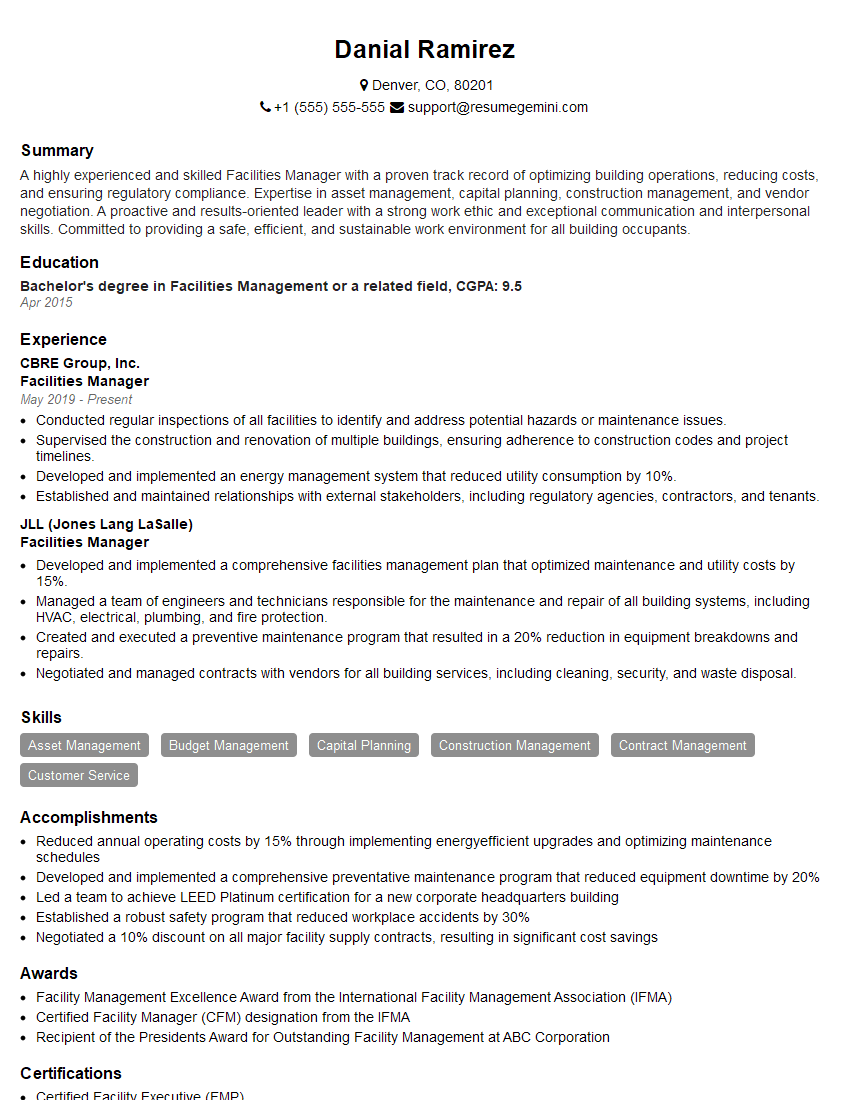
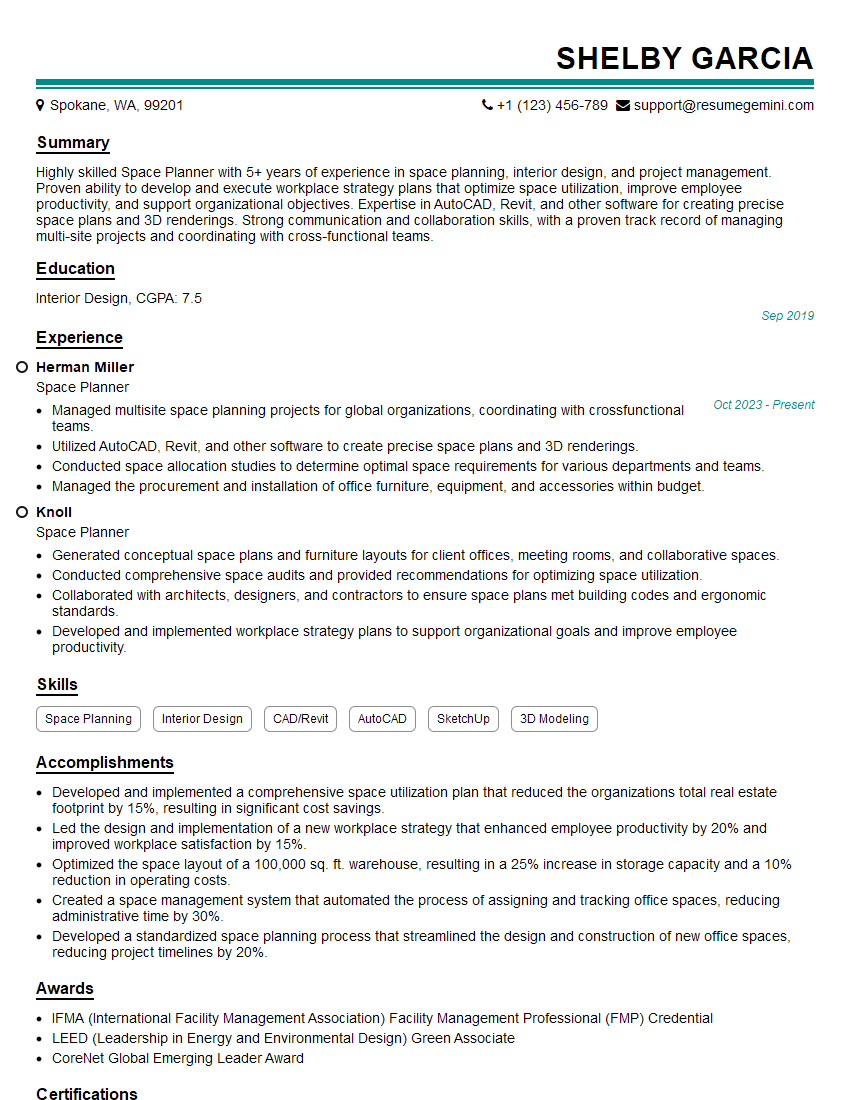
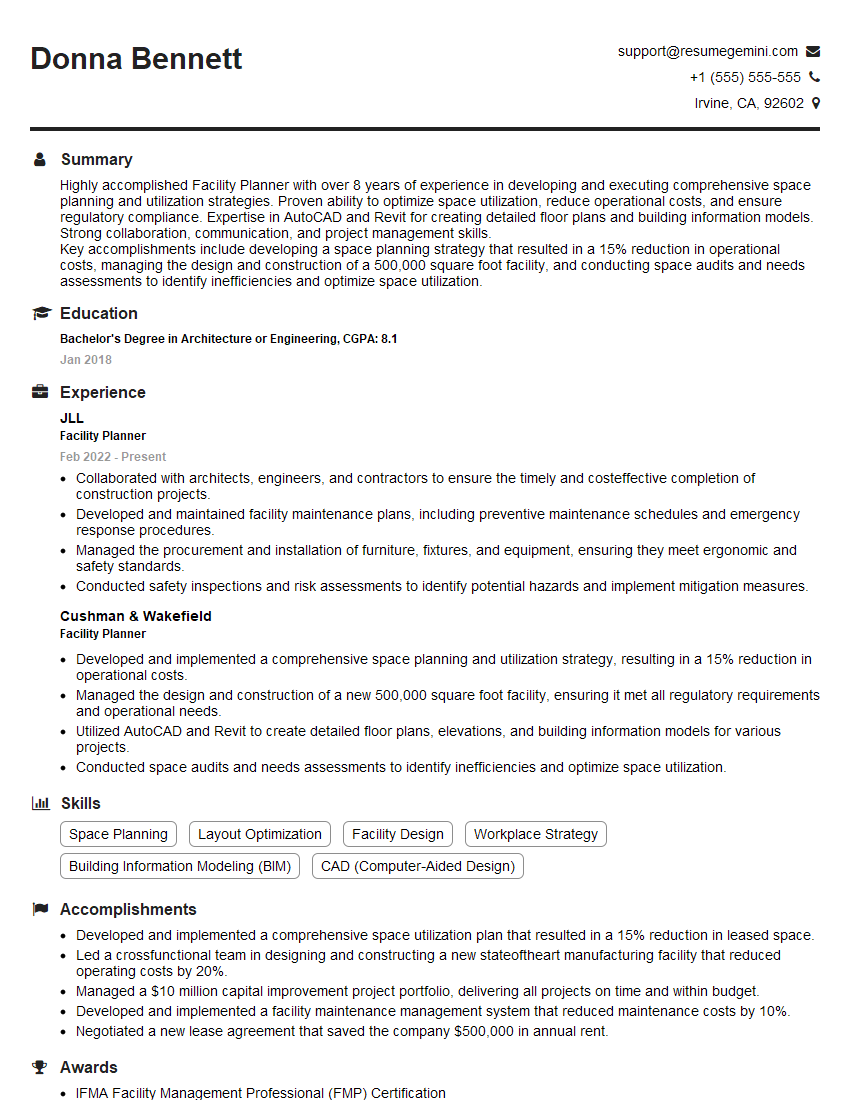
Mastering Facility Planning and Layout opens doors to exciting career opportunities with significant growth potential. A strong understanding of these principles demonstrates valuable skills highly sought after by employers. To maximize your job prospects, creating a professional, ATS-friendly resume is crucial. ResumeGemini is a trusted resource that can help you build a compelling resume that highlights your skills and experience effectively. Examples of resumes tailored to Facility Planning and Layout are available to help guide your resume creation process. Invest in your future – build a resume that showcases your expertise and gets you noticed!
Explore more articles
Users Rating of Our Blogs
Share Your Experience
We value your feedback! Please rate our content and share your thoughts (optional).
What Readers Say About Our Blog
Very informative content, great job.
good