Feeling uncertain about what to expect in your upcoming interview? We’ve got you covered! This blog highlights the most important Band Knife Operation interview questions and provides actionable advice to help you stand out as the ideal candidate. Let’s pave the way for your success.
Questions Asked in Band Knife Operation Interview
Q 1. What are the different types of band knives and their applications?
Band knives come in various types, each suited for specific applications. The key differentiators are blade material, blade width, and the machine’s overall design.
- Standard Band Knives: These are the most common type, used for general-purpose cutting of materials like wood, leather, and rubber. They typically have a relatively narrow blade and are found on smaller, more versatile machines. Think of these as the ‘Swiss Army Knife’ of band saws, adaptable to numerous tasks.
- Wide Band Knives: These feature wider blades, enabling the cutting of larger sheets or rolls of material. They are often used in industrial settings for tasks such as slicing large slabs of foam or cutting textiles. Imagine the scale of this – think about cutting fabric for a large banner, needing a wider blade to handle the material’s width efficiently.
- Precision Band Knives: Designed for fine, detailed work, these often incorporate thinner blades made of high-speed steel or other specialized materials. This is crucial for applications requiring precision and a smooth cut, such as slicing delicate meats or creating intricate shapes in leatherwork.
- Reciprocating Band Knives: Unlike continuous-loop band knives, these have blades that move back and forth, offering precise control and reduced vibration. They’re very useful for tasks requiring intricate cuts or when working with thinner materials where vibration could cause damage.
The choice of band knife depends entirely on the material being cut, the desired cut quality, and the volume of work. A butcher will need a different knife than a furniture maker.
Q 2. Explain the process of setting up a band knife for a specific cutting task.
Setting up a band knife involves several crucial steps, ensuring both safety and optimal performance. First, select the appropriate blade for the material and thickness. Consult the blade manufacturer’s specifications for recommendations.
- Blade Installation: Carefully guide the blade through the wheels, ensuring it’s properly seated and tracks correctly. Incorrect alignment can lead to blade breakage or inaccurate cuts.
- Tension Adjustment: Properly tension the blade using the machine’s adjustment mechanism. Too much tension can cause the blade to break, while insufficient tension leads to blade wander and poor cuts. Many machines have tension gauges for precise setting.
- Blade Tracking: Adjust the blade tracking to ensure it runs straight and centered between the wheels. This is critical for preventing the blade from rubbing against the guides and causing damage.
- Guide Adjustments: Adjust the blade guides to maintain the proper distance from the blade, minimizing friction and maximizing blade life. This is particularly important for longer cuts.
- Safety Checks: Before starting any cutting operation, ensure all safety guards are in place and functioning correctly. Double check the blade tension and tracking.
Each machine will have its own specific instructions, but the principles remain the same: proper blade installation, correct tensioning, accurate tracking, and ensuring all safety mechanisms are operational before cutting.
Q 3. How do you ensure the safety of yourself and others while operating a band knife?
Safety is paramount when operating a band knife. Treating the machine with respect is key.
- Personal Protective Equipment (PPE): Always wear appropriate safety glasses or a face shield, hearing protection, and cut-resistant gloves. Closed-toe shoes are a must.
- Machine Guarding: Ensure all guards are properly installed and functioning correctly before operation. Never operate the machine with guards removed or damaged.
- Material Handling: Use proper material handling techniques to avoid pinching fingers or hands. Keep hands away from the blade’s cutting path. Push sticks or other similar tools are essential.
- Proper Training: Only operate a band knife after receiving proper training and understanding the machine’s safety features and operating procedures.
- Emergency Stop: Familiarize yourself with the location of the emergency stop button and practice using it.
- Regular Maintenance: Regular maintenance reduces the risk of unexpected malfunctions. This includes checking for loose parts, blade condition, and the proper functioning of all safety mechanisms.
Think of safety as an integral part of the process, not an afterthought. A momentary lapse in concentration can have serious consequences.
Q 4. Describe your experience with different blade materials and their suitability for various materials.
Blade material significantly impacts performance and longevity. The choice depends heavily on the material being cut.
- High-Speed Steel (HSS): A common choice for its hardness and ability to maintain a sharp edge. It’s suitable for most materials, but its wear resistance can vary depending on the material being cut.
- Molybdenum High-Speed Steel (M2): Offers improved wear resistance compared to standard HSS, making it a good choice for cutting harder materials or for high-volume production.
- Carbide-Tipped Blades: Extremely durable and capable of cutting very hard materials like bone or certain plastics. These are typically more expensive but offer exceptional longevity.
- Bi-Metal Blades: These blades combine a hard cutting edge (often carbide) with a more flexible backing material. They offer a good compromise between durability and flexibility.
For example, cutting hardwoods might require a M2 high-speed steel blade for its durability, while slicing softer materials like leather might utilize a standard HSS blade. Always consult the blade manufacturer’s recommendations for material compatibility.
Q 5. How do you troubleshoot common band knife malfunctions?
Troubleshooting band knife malfunctions requires systematic investigation. Let’s look at some common issues and their solutions.
- Blade Breakage: This usually points to excessive tension, improper blade tracking, or striking a hard object. Check the tension, tracking, and the material being cut for any unexpected hard spots.
- Blade Wander: The blade isn’t tracking straight, often due to misaligned guides or incorrect tension. Adjust the guides and blade tension.
- Blade Dullness: A dull blade will struggle to cut, producing poor quality cuts. Sharpen or replace the blade as needed.
- Vibration: Excessive vibration can result from loose components, unbalanced wheels, or poor blade tension. Check all fasteners, wheels, and the blade tension.
- Motor Issues: A faulty motor may result in inconsistent power or failure to operate. This requires professional electrical assessment.
Always remember safety first. Turn off and unplug the machine before attempting any repairs or adjustments beyond basic tracking and tension adjustments.
Q 6. What are the signs of a dull or damaged band knife blade?
Recognizing a dull or damaged blade prevents subpar cuts and potential machine damage. Look for:
- Increased cutting effort: If the machine struggles to cut, the blade is likely dull.
- Rough or uneven cuts: A dull blade produces ragged edges, while a damaged blade might leave inconsistent cuts.
- Burning or discoloration of material: Excessive friction from a dull blade can scorch or discolor the material being cut.
- Visible damage to the blade: Chips, cracks, or excessive wear are clear signs of damage and necessitate replacement.
- Excessive vibration: A damaged or severely dull blade may cause the machine to vibrate more than usual.
Regular inspection is key. Before starting a cutting job, always visually assess the blade’s condition and listen for unusual sounds during operation. A few seconds of visual assessment can save hours of struggle later.
Q 7. How do you maintain and clean a band knife machine?
Proper maintenance extends the life of your band knife and ensures its safe operation. A regular cleaning and maintenance schedule is crucial.
- Regular Cleaning: After each use, remove any debris from the machine, including sawdust, metal shavings, or scraps of material. Clean the wheels, guides, and blade.
- Blade Cleaning: Regularly clean the blade to remove any resin buildup or debris that can impair its cutting ability. Use a soft brush and appropriate cleaner.
- Guide Adjustment and Lubrication: Check and adjust blade guides, and ensure they are properly lubricated to reduce friction and wear.
- Wheel Inspection: Periodically inspect the wheels for wear and damage. Replace or repair as needed.
- Tension Mechanism Check: Ensure that the tension mechanism is functioning correctly and is properly lubricated.
- Safety Check: Before each use, check for loose components or damage to the machine and safety guards.
Think of maintenance as preventive medicine for your machine. Regular attention will minimize downtime and extend its operational life.
Q 8. What are the safety procedures for changing a band knife blade?
Changing a band knife blade is a crucial operation that demands meticulous attention to safety. Before you even touch the machine, ensure it’s completely powered off and unplugged. Think of it like this: you wouldn’t work on a car engine while it’s running, right? The same principle applies here.
- Lockout/Tagout Procedure: Implement a proper lockout/tagout procedure to prevent accidental power restoration. This is a critical step to prevent serious injury.
- Personal Protective Equipment (PPE): Don appropriate PPE, including cut-resistant gloves, safety glasses, and hearing protection. This is non-negotiable; your safety is paramount.
- Blade Removal: Carefully follow the manufacturer’s instructions for blade removal. This usually involves releasing tension on the blade using the machine’s tensioning mechanism. Never attempt to force anything; work slowly and deliberately.
- Blade Installation: New blade installation is the reverse process. Ensure the blade is correctly seated in the wheel guides and is properly tensioned, following manufacturer’s specifications.
- Visual Inspection: Before starting the machine, always inspect the blade for any damage or imperfections. A damaged blade is a hazard waiting to happen.
- Test Run: After installation, run the machine at a low speed for a short period to ensure correct tracking and blade alignment before operating at full speed.
Ignoring these steps can result in serious injuries, including severed fingers or more severe trauma. Always prioritize safety!
Q 9. Explain the importance of blade tension and tracking in band knife operation.
Proper blade tension and tracking are fundamental to safe and efficient band knife operation. Imagine trying to cut with a loose, floppy knife – it would be unpredictable and dangerous! Similarly, a poorly tracked blade on a band saw will vibrate excessively, leading to inaccurate cuts, blade breakage, and potential injury.
Blade Tension: Appropriate tension ensures the blade remains taut and runs smoothly without excessive vibration. Insufficient tension leads to blade wander and potential breakage. Too much tension can cause premature wear and tear, and even damage to the machine.
Tracking: Correct tracking means the blade runs perfectly aligned down the center of the wheels, maintaining consistent distance from the guides. Misalignment, or ‘tracking’, causes uneven cuts, excessive friction, and increases the risk of blade breakage.
A well-tensioned and tracked blade is a hallmark of a skilled operator, guaranteeing quality cuts and machine longevity.
Q 10. How do you measure and adjust blade tension?
Measuring and adjusting blade tension typically involves using a tension gauge (often a dial or digital type) provided by the machine’s manufacturer. The gauge usually engages with the blade itself to measure its deflection under a specific load, allowing you to make small adjustments to the tensioning mechanism until the reading falls within the manufacturer’s specified range.
Procedure: First, consult your machine’s manual for the correct tension setting for your blade material and thickness. Then, the tension is typically adjusted with a hand wheel or lever. Most machines will have markings to guide you. Some advanced machines may use digital indicators to measure and control tension.
Example: Let’s say the manual recommends a tension of 25-30 pounds. You would adjust the tensioning mechanism until the gauge reads within that range. It’s crucial not to exceed the maximum tension specified to avoid blade or machine damage.
Careful observation and incremental adjustments are key to accurate tensioning. Practice and experience build confidence in precisely setting the tension for optimal cutting.
Q 11. Describe your experience with different types of cutting guides and their applications.
Cutting guides are essential for ensuring straight, accurate cuts, especially on curved or intricate shapes. The choice of guide depends on the material and the desired cut.
- Straight Guides: These are the most common and are used for straight cuts on various materials like wood, leather, and plastics. They are typically made of metal or plastic and offer a rigid, stable cutting surface.
- Fence Guides: Similar to straight guides but often adjustable and allow for parallel cuts of varied width. Think of them as a rip fence on a table saw, but for a band saw.
- Mitre Guides: For angled cuts, mitre guides provide precise angle settings, typically up to 45 degrees. They’re particularly useful for woodworking projects.
- Radius Guides: These guides allow for controlled curved cuts. They can consist of templates that are shaped to meet the curves that you need to create.
- Specialty Guides: Some specialized applications, like cutting intricate shapes in leather, might require specialized guides designed specifically for that type of material and cutting technique.
Experience dictates the selection of the correct guide and the knowledge of how to adjust the settings to the specific task at hand.
Q 12. How do you ensure accurate and consistent cuts with a band knife?
Achieving accurate and consistent cuts with a band knife requires a combination of proper technique and machine setup. Think of it like baking – you need the right ingredients and technique to get a perfect cake.
- Sharp Blade: A dull blade is the enemy of precision. Regularly inspect and sharpen or replace blades to maintain sharpness.
- Proper Tension and Tracking: This is crucial for consistent results. A poorly tensioned or tracked blade will result in inconsistent cuts and is dangerous.
- Correct Cutting Speed: Different materials require different feed rates. Faster feeds are for softer materials, while slower feeds are needed for harder materials to prevent blade breakage and ensure clean cuts.
- Steady Hand: Maintaining a consistent feed rate and pressure on the material is essential to keep the cut straight and uniform.
- Using Guides: Effective use of guides is essential for achieving consistently straight, accurate, or angled cuts.
Consistent practice is key to developing the precision needed for consistent and accurate cuts.
Q 13. How do you handle different material thicknesses and densities while cutting?
Cutting different material thicknesses and densities requires adjusting several machine settings and cutting techniques. It’s about adapting to the material’s properties.
Thickness: For thicker materials, a slower feed rate is essential to prevent blade overload and breakage. For thinner materials, you can increase the feed rate. Think of it like slicing a tomato versus a steak—you’d adjust your knife speed and pressure.
Density: Denser materials like hardwoods require more power and a slower feed rate than softer materials like balsa wood or foam. You may also need to adjust the blade type, choosing a harder blade for dense materials and softer blades for softer materials. A harder blade might be more robust against the harder material to prevent wear and tear.
Blade Selection: The selection of the right blade is also crucial for different materials. A thinner blade is suitable for softer materials where precision is essential, whereas a thicker, more robust blade would be better for denser materials to prevent breakage.
Q 14. What are the proper techniques for handling different types of materials (e.g., wood, leather, meat)?
Different materials require different approaches when using a band knife. It’s about understanding the material’s properties and adjusting your technique accordingly.
- Wood: Use sharp blades, appropriate tension, and steady feed rates. Consider the grain direction—cutting with the grain minimizes tearout.
- Leather: Use a very sharp blade and slow feed rates. Leather can be damaged easily by overheating, so light pressure and even feeding are crucial. A finer-toothed blade is often preferable.
- Meat: Keep the blade extremely sharp to minimize the tearing and smearing of the meat, and work quickly to maintain the meat’s cold temperature. Again, use a slow, steady feed rate to get a clean cut.
Proper material handling depends greatly on experience and understanding of the materials and their various properties. A key aspect is to avoid using excessive force or speed.
Q 15. How do you identify and address variations in cutting quality?
Variations in cutting quality on a band knife machine are usually caused by factors like blade sharpness, tension, tracking, feed rate, and material inconsistencies. Identifying the root cause requires a systematic approach.
- Blade Sharpness: Dull blades produce uneven cuts, ragged edges, and increased friction. I check for burrs, chipping, or dulling using a magnifying glass and a feel test. A consistently poor cut across the entire length points to blade dullness.
- Blade Tension: Incorrect tension can lead to wandering cuts or blade breakage. I verify tension using the machine’s tension gauge and observe the blade’s straightness during operation. A vibrating or overly loose blade indicates a tension problem.
- Tracking: If the blade isn’t tracking straight, it causes inconsistent cuts. I check the tracking mechanism and ensure proper alignment. A consistently skewed cut usually means a tracking issue.
- Feed Rate: Too fast a feed rate can overload the blade, resulting in poor cuts and blade damage. Too slow a rate can cause unnecessary wear and tear. I optimize feed rate based on material type and blade condition. A gradual deterioration in cut quality over time suggests a need to adjust the feed rate.
- Material Inconsistencies: Variations in material density, hardness, or moisture content can also affect cutting quality. Consistent issues with a specific batch of material point to a material problem. I document such observations.
Addressing these issues involves sharpening or replacing the blade, adjusting tension and tracking, optimizing feed rate, and ensuring material consistency. In cases of complex issues, I consult the machine’s manual or seek assistance from experienced technicians.
Career Expert Tips:
- Ace those interviews! Prepare effectively by reviewing the Top 50 Most Common Interview Questions on ResumeGemini.
- Navigate your job search with confidence! Explore a wide range of Career Tips on ResumeGemini. Learn about common challenges and recommendations to overcome them.
- Craft the perfect resume! Master the Art of Resume Writing with ResumeGemini’s guide. Showcase your unique qualifications and achievements effectively.
- Don’t miss out on holiday savings! Build your dream resume with ResumeGemini’s ATS optimized templates.
Q 16. Describe your experience with automated band knife systems.
I have extensive experience operating and maintaining automated band knife systems, primarily those utilized in high-volume production environments. My experience covers various automation levels, from semi-automatic systems with automated feed mechanisms to fully automated lines incorporating robotic material handling and stacking. I’m proficient in troubleshooting PLC-controlled systems and familiar with various safety interlocks and emergency stop procedures.
For example, I worked on a project where we integrated a vision system into an automated band saw to detect and reject parts with defects in real time. This significantly reduced waste and improved overall productivity. Another project involved optimizing the PLC program of an automated band knife system to improve the cut quality and reduce cycle time. This involved fine-tuning parameters such as blade speed, feed rate, and cutting pressure.
I’m comfortable working with a variety of automated systems and their associated software, and I can quickly adapt to new equipment with proper training.
Q 17. How familiar are you with different types of band knife blade sharpening methods?
I’m familiar with several band knife blade sharpening methods, each with its advantages and disadvantages. These methods range from manual grinding and honing to automated sharpening machines.
- Manual Sharpening: This method, using hand-held grinders or honing stones, offers precise control but is time-consuming and requires skill. It’s suitable for smaller blades or intricate shapes. Think of it like honing a chef’s knife – precision is key.
- Automated Sharpening Machines: These machines offer significantly faster and more consistent sharpening, particularly beneficial for high-volume operations. They utilize various techniques, including robotic grinding, electro-discharge machining (EDM), and laser sharpening. These machines are incredibly efficient but require regular maintenance and calibration.
- Specialty Sharpening Services: For complex blade geometries or very high-quality requirements, outsourcing sharpening to specialized companies might be necessary. They have the expertise and equipment to handle specialized blades.
My choice of method depends on the blade type, the volume of work, and the desired level of precision. For example, I use manual sharpening for intricate shapes and automated machines for high-volume, standard blades.
Q 18. What are the potential hazards associated with band knife operation and how can they be mitigated?
Band knife operation presents several potential hazards, including blade breakage, cutting injuries, material ejection, and machine malfunctions. Effective mitigation strategies are crucial.
- Blade Breakage: This can cause serious injuries. Mitigation involves regular blade inspection, proper tensioning, and using blades appropriate for the material being cut. Following manufacturer recommendations for blade speed and feed rate is also important.
- Cutting Injuries: Cuts and lacerations are a major risk. Safety measures include using appropriate personal protective equipment (PPE), such as cut-resistant gloves, safety glasses, and hearing protection. Never reach into the cutting area while the machine is running.
- Material Ejection: Pieces of material can be ejected during cutting. Enclosing the cutting area with appropriate guards and using clamping mechanisms helps contain material. Regularly inspect these safety features.
- Machine Malfunctions: Mechanical failures can lead to injuries or damage. Regular maintenance, proper lubrication, and adherence to manufacturer’s guidelines are vital. Immediate shutdown and reporting of any malfunction is essential.
Implementing a robust safety program, including regular training on safe operating procedures and emergency protocols, is paramount to minimizing risk.
Q 19. How do you maintain accurate cutting dimensions and tolerances?
Maintaining accurate cutting dimensions and tolerances involves a combination of careful setup, precise operation, and regular monitoring. This is critical for ensuring product quality and consistency.
- Accurate Setup: I ensure the blade is properly aligned, tensioned, and tracking correctly. I carefully measure and adjust the workpiece guides and fence to maintain the required dimensions. Using precision measuring tools is vital.
- Consistent Operation: Maintains consistent feed rate and blade speed, avoiding jerky movements or excessive pressure. Consistent cutting pressure is essential.
- Regular Monitoring: Continuous observation of the cut is necessary to detect any deviations from the desired dimensions. I regularly measure the cut pieces to verify accuracy and make any necessary adjustments.
- Calibration and Maintenance: Regular calibration of the machine and proactive maintenance of the blade and cutting mechanism ensures continuous precision.
For instance, when cutting thin sheets of material, even slight variations in blade tension or tracking can lead to significant dimensional errors. By meticulously focusing on setup, operation, and monitoring, I ensure consistently accurate results.
Q 20. Explain the importance of regular machine maintenance.
Regular machine maintenance is crucial for ensuring safe operation, maintaining cutting accuracy, and maximizing the lifespan of the equipment. Neglecting maintenance can lead to costly repairs, downtime, and safety hazards.
- Preventative Maintenance: This includes regular lubrication of moving parts, checking blade tension and tracking, and inspecting safety features. It’s like regularly changing your car’s oil—preventative measures save you money and hassle in the long run.
- Predictive Maintenance: This involves monitoring key parameters such as vibration levels and motor currents to detect potential problems before they occur. Early detection prevents major breakdowns. Think of it like checking your tire pressure regularly – it avoids flats.
- Corrective Maintenance: Addressing problems as they arise is essential. This includes replacing worn parts and repairing malfunctions. It’s like fixing a flat tire – getting it done quickly minimizes disruption.
A well-defined maintenance schedule, customized to the specific machine and operating conditions, ensures the equipment remains in optimal condition.
Q 21. How do you perform pre-operational checks on a band knife machine?
Pre-operational checks are critical for ensuring safe and efficient operation. They prevent accidents and ensure high-quality cuts.
- Visual Inspection: I check the blade for damage, cracks, or dullness. I inspect the machine for any loose parts, signs of damage, or leaks. I look for any obstructions near the cutting area.
- Blade Tension and Tracking: I verify the blade is correctly tensioned and tracking straight. I use the machine’s tension gauge to verify tension and adjust as needed.
- Safety Features: I ensure all safety guards are in place and functioning correctly. I check the emergency stop button and other safety interlocks.
- Lubrication: I verify the machine is adequately lubricated. Insufficient lubrication can cause wear and tear.
- Test Cut: Before starting the actual job, I usually perform a test cut on a scrap piece of material to verify the setup and cutting parameters.
This systematic approach prevents unforeseen issues during operation, ensuring safety and productivity.
Q 22. How do you handle emergency situations during band knife operation?
Emergency situations during band knife operation require swift, decisive action. My primary focus is always on safety – both my own and that of others nearby. My first step is to immediately shut off the machine using the emergency stop button, ensuring the power is completely cut. This is paramount. Then, I assess the situation. Is there a blade breakage? A material jam? An injury?
- Blade breakage: I’d secure the area, preventing anyone from approaching the machine. I’d then contact maintenance and follow the company’s established procedure for blade replacement. I would document the incident thoroughly.
- Material jam: Depending on the nature of the jam, I might attempt a controlled release after ensuring the machine is off. However, if it’s unsafe, I immediately seek assistance and do not attempt to force the material.
- Injury: My immediate priority is first aid. I’d call for emergency medical services and follow our company’s established protocols for handling workplace injuries. I would also fully document the circumstances leading to the incident.
Regular maintenance and adherence to safety protocols significantly reduce the likelihood of emergencies. For example, I always inspect the blade for wear and tear before operation.
Q 23. Describe your experience with different control systems for band knife machines.
I have extensive experience with various band knife machine control systems, ranging from basic manual controls to advanced CNC (Computer Numerical Control) systems. Manual systems require precise hand-eye coordination and careful adjustment of speed and feed rate. This experience gave me a strong foundational understanding of the cutting process. CNC systems, on the other hand, allow for programmable cutting paths, improving precision and repeatability. I’m proficient in using various control panels and programming interfaces. For instance, I’ve used systems with touch screen interfaces allowing for precise adjustments to cutting parameters and real-time monitoring of the process.
One specific example involved working with a machine that had a PLC (Programmable Logic Controller) based control system. Understanding the PLC’s programming logic allowed me to troubleshoot issues efficiently. I once had to diagnose a problem where the machine was intermittently cutting too deep. By reviewing the PLC program, I identified a minor glitch in the code controlling the blade depth, corrected it, and resolved the issue.
Q 24. What are your preferred methods for material handling and stacking?
Efficient material handling and stacking are crucial for productivity and safety. My preferred methods prioritize ergonomics and safety. I utilize appropriate material handling equipment like forklifts or pallet jacks for heavy materials, always ensuring they are in good working condition and that I’m properly trained in their use. For lighter materials, I use carts or hand trucks. Stacking is equally important; I follow the guidelines provided in the material safety data sheets (MSDS), ensuring proper stacking heights and stability.
For example, when working with large sheets of material, I ensure that they are evenly distributed on the pallet to maintain balance and prevent tipping during transport. Prioritizing proper stacking prevents workplace accidents and material damage.
Q 25. How do you ensure the efficient use of materials and minimize waste?
Minimizing waste and maximizing material efficiency requires a multi-pronged approach. It begins with careful planning and precise cutting. Using the right blade and optimizing the cutting parameters (feed rate, blade speed, etc.) is crucial. I carefully measure materials before cutting to avoid excessive waste. Precisely following cutting diagrams is also vital. I’ve found that using software like CAD (Computer-Aided Design) can significantly reduce material waste by allowing for precise planning and efficient nesting of parts.
Beyond the cutting process itself, I also ensure that scrap materials are properly collected and sorted for possible recycling or repurposing, reducing overall waste.
Q 26. How do you adhere to workplace safety regulations and guidelines?
Adhering to workplace safety regulations and guidelines is non-negotiable. I always wear the appropriate Personal Protective Equipment (PPE), including cut-resistant gloves, safety glasses, and hearing protection. Before operating the band knife, I inspect the machine for any damage or defects and report any issues immediately. I also ensure the work area is clean, organized, and free of clutter to prevent accidents. I regularly review the safety procedures and participate in safety training sessions to stay updated on best practices.
I treat every safety protocol with the utmost seriousness. My commitment to safety goes beyond simply following the rules. It reflects my responsible attitude towards my work and the well-being of my colleagues.
Q 27. How would you train a new employee on the safe operation of a band knife?
Training a new employee involves a structured approach. It begins with a thorough review of the safety regulations and procedures. I’d then provide hands-on training, starting with demonstrations and gradually increasing their involvement. This would include explaining the different machine controls, proper material handling techniques, and emergency procedures. I would emphasize the importance of inspecting the blade and machine before operation. Throughout the training, I would provide close supervision and address any questions or concerns.
The training wouldn’t be considered complete until the trainee demonstrates competency and understands the safety implications of improper operation. Following the training, I’d follow up with regular checks and mentoring to ensure their continued safety and proficiency.
Q 28. What are your strengths and weaknesses related to band knife operation?
My strengths lie in my precision and efficiency in band knife operation, stemming from years of experience and attention to detail. I have a strong understanding of material properties and their effect on the cutting process. I am also adept at troubleshooting machine problems.
A potential area for improvement would be enhancing my proficiency with the newest CNC control systems. While I have experience with various systems, I aim to stay updated with the latest advancements to further increase efficiency and precision. I am actively seeking opportunities to improve my expertise in this area.
Key Topics to Learn for Band Knife Operation Interview
- Band Knife Mechanics: Understanding the principles of blade tension, speed control, and cutting action. This includes knowledge of different types of band knives and their applications.
- Safety Procedures and Regulations: Demonstrate a thorough understanding of OSHA and industry-specific safety protocols related to band knife operation, including lockout/tagout procedures and personal protective equipment (PPE).
- Material Handling and Selection: Explain your knowledge of different materials commonly cut with band knives and the appropriate techniques for handling and processing each type. This includes understanding material properties and potential hazards.
- Blade Maintenance and Sharpening: Discuss the importance of regular blade maintenance, including sharpening techniques, alignment checks, and identifying signs of wear and tear. This also includes knowing when to replace a blade.
- Troubleshooting and Problem Solving: Describe your ability to diagnose and resolve common issues encountered during band knife operation, such as blade breakage, inconsistent cuts, or machine malfunctions. Explain your approach to troubleshooting.
- Quality Control and Inspection: Explain your understanding of quality control procedures related to band knife operation, including inspection of the final product and identifying defects. This includes knowledge of relevant quality metrics.
- Operational Efficiency and Optimization: Discuss strategies for maximizing efficiency and minimizing downtime during band knife operation, including techniques for optimizing cutting speeds and material flow.
Next Steps
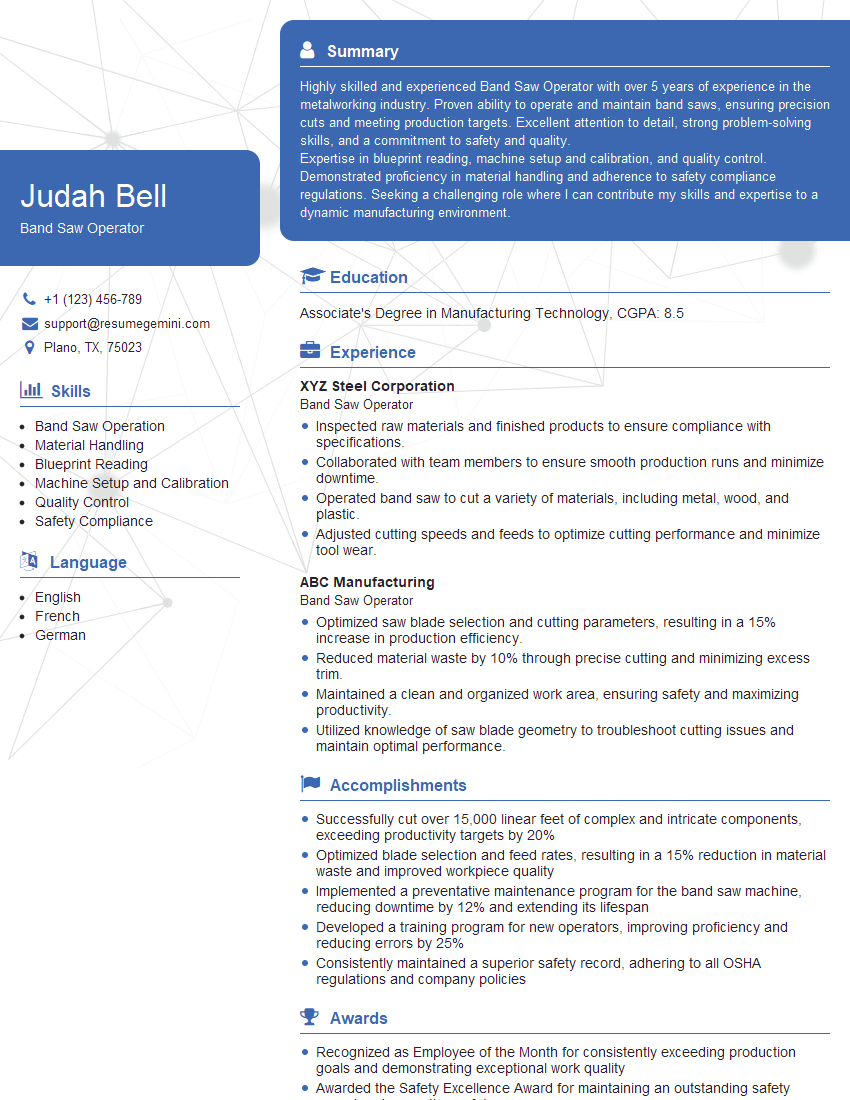
Mastering Band Knife Operation opens doors to rewarding careers in manufacturing, woodworking, and various other industries. A strong understanding of these techniques is highly sought after by employers, leading to increased earning potential and career advancement opportunities. To stand out to potential employers, crafting an ATS-friendly resume is crucial. This ensures your application gets noticed and considered. We recommend using ResumeGemini to build a professional and effective resume tailored to your skills and experience. Examples of resumes specifically tailored to Band Knife Operation are available to guide you.
Explore more articles
Users Rating of Our Blogs
Share Your Experience
We value your feedback! Please rate our content and share your thoughts (optional).
What Readers Say About Our Blog
Very informative content, great job.
good