The thought of an interview can be nerve-wracking, but the right preparation can make all the difference. Explore this comprehensive guide to Music Special Education interview questions and gain the confidence you need to showcase your abilities and secure the role.
Questions Asked in Music Special Education Interview
Q 1. Explain your experience adapting music therapy techniques for students with diverse learning needs.
Adapting music therapy for diverse learners requires a deep understanding of individual needs and a flexible approach. I begin by conducting thorough assessments to identify strengths, challenges, and preferred learning styles. For example, a student with ADHD might benefit from shorter, more engaging sessions with frequent changes in activity, while a student with autism might respond better to structured, repetitive routines. My approach involves modifying musical elements like tempo, rhythm, and instrumentation to match the student’s capabilities. If a student struggles with fine motor skills, I might adapt activities to use larger instruments or focus on rhythmic movement rather than precise finger placement on a keyboard. For students with auditory processing difficulties, I might use visual aids such as color-coded charts to represent musical patterns or focus on tactile experiences with instruments.
I’ve successfully adapted music therapy techniques for students with a wide range of disabilities, including visual impairments (using tactile instruments and verbal cues), intellectual disabilities (simplifying musical concepts and using repetitive patterns), and physical disabilities (adapting instrument playing techniques and incorporating adaptive equipment). Each adaptation is tailored to the student’s unique profile, ensuring the experience is engaging, achievable, and therapeutic.
Q 2. Describe your experience using assistive technology in music therapy.
Assistive technology plays a crucial role in making music therapy accessible to students with diverse needs. I have extensive experience using various technologies, including:
- Adaptive musical instruments: These can range from oversized instruments to switch-activated devices, allowing students with limited fine motor control or physical disabilities to participate actively in music-making.
- Software and apps: Music creation software with customizable features can be adapted to suit individual needs. For instance, apps that provide visual representations of musical notation or offer simplified interfaces can greatly benefit students with learning disabilities.
- Augmentative and alternative communication (AAC) devices: These can assist students who have difficulty expressing themselves verbally, allowing them to communicate their musical preferences and experiences.
- Hearing assistive technology: For students with hearing impairments, assistive listening devices ensure they can hear and participate fully in music therapy sessions.
For instance, I worked with a student with cerebral palsy who used a switch-activated keyboard to create simple melodies. This allowed her to express her creativity and experience the joy of music-making, something that would have been impossible without the assistive technology.
Q 3. How do you assess a student’s musical abilities and tailor instruction accordingly?
Assessing a student’s musical abilities involves a multifaceted approach that goes beyond traditional music tests. I use a combination of formal and informal assessments to gain a comprehensive understanding of the student’s strengths and challenges. Formal assessments might include standardized music aptitude tests, while informal assessments involve observing the student’s responses to various musical stimuli, their ability to follow instructions, and their engagement with different musical activities.
Observations are crucial. I pay attention to the student’s body language, facial expressions, and level of engagement during different activities. For instance, I might observe whether a student shows more interest in singing, playing an instrument, or moving to music. This information is used to tailor instruction, focusing on areas where the student shows potential and adapting activities to suit their learning style and preferences. For example, a student who struggles with pitch accuracy but shows a strong sense of rhythm might benefit from activities focused on percussion or rhythmic movement.
Tailoring instruction means creating individualized lesson plans that address the student’s specific needs and goals. This is an iterative process, with ongoing assessment and adjustments to ensure the student is progressing and enjoying the learning experience.
Q 4. What strategies do you employ to create an inclusive and supportive music learning environment?
Creating an inclusive and supportive music learning environment is paramount. This involves fostering a sense of belonging, respecting individual differences, and adapting the learning experience to meet the diverse needs of all students. Key strategies include:
- Differentiated instruction: Providing various learning options and activities to cater to different learning styles and abilities.
- Positive reinforcement: Focusing on celebrating successes, no matter how small, to build confidence and motivation.
- Collaboration and peer support: Encouraging students to work together and support each other’s learning.
- Accessible materials and equipment: Ensuring that all materials and equipment are accessible to students with disabilities.
- Adaptable learning spaces: Creating a flexible learning environment that can be easily adapted to accommodate different needs.
For instance, in a group session, I might pair a student with a visual impairment with a student who excels at sight-reading, fostering collaboration and mutual learning. Creating a safe and accepting environment allows students to feel comfortable taking risks, expressing themselves, and developing their musical abilities without fear of judgment.
Q 5. How do you address behavioral challenges during music therapy sessions?
Addressing behavioral challenges requires a proactive and individualized approach. Understanding the root cause of the behavior is crucial. Is it frustration, sensory overload, or a lack of engagement? I often use a combination of strategies, including:
- Positive behavior supports (PBS): Identifying triggers and developing strategies to prevent challenging behaviors from occurring.
- Sensory regulation techniques: Providing breaks or sensory input as needed to help students regulate their emotions and attention.
- Environmental modifications: Adapting the learning environment to reduce distractions and create a calming atmosphere.
- Communication strategies: Encouraging clear and respectful communication between the student, therapist, and others involved.
- Collaboration with parents and other professionals: Working together to develop a consistent approach to managing challenging behaviors across settings.
For example, if a student becomes overwhelmed during a loud activity, we might take a break to engage in a quieter activity, such as listening to calming music or engaging in a rhythmic movement exercise. A collaborative approach ensures consistency and understanding, leading to better outcomes.
Q 6. Explain your understanding of different learning disabilities and their impact on musical learning.
Different learning disabilities significantly impact musical learning. Understanding these impacts is crucial for effective instruction. For example:
- Dyslexia: Students with dyslexia may struggle with reading musical notation and remembering sequences. Visual aids, tactile activities, and verbal cues can help.
- Auditory processing disorder (APD): Students with APD may have difficulty distinguishing between pitches, rhythms, and musical patterns. Visual aids, repetition, and simplified musical tasks are beneficial.
- ADHD: Students with ADHD may have difficulty focusing and following instructions. Short, engaging sessions, frequent changes in activity, and positive reinforcement can help.
- Autism spectrum disorder (ASD): Students with ASD may have sensory sensitivities and challenges with social interaction. Structured activities, repetitive patterns, and individualized approaches are crucial.
It’s vital to remember that students with learning disabilities are not defined by their difficulties. They possess unique strengths and talents which should be nurtured through personalized instruction.
Q 7. What music therapy approaches are most effective for students with autism spectrum disorder?
Several music therapy approaches are effective for students with autism spectrum disorder (ASD). The key is to tailor the approach to the individual’s specific needs and preferences. Effective approaches often include:
- Sensory integration therapy: Using music to address sensory processing challenges, such as calming overwhelming sensory input or providing stimulating input for under-responsive individuals.
- Repetitive and predictable structures: Utilizing familiar songs and repetitive patterns to promote comfort and predictability. This is particularly beneficial for individuals with ASD who often thrive in structured environments.
- Communication-focused approaches: Using music to enhance communication skills, either verbally or nonverbally. This might involve singing songs about feelings, using music to express oneself, or using assistive technology to facilitate communication.
- Adaptive music therapy: Modifying musical instruments or activities to meet specific sensory needs and physical abilities.
For example, a student with ASD who is sensitive to loud noises might benefit from sessions focused on quieter instruments like the ukulele or hand chimes. The structured nature of these approaches, combined with the therapeutic benefits of music, can significantly improve communication, emotional regulation, and social skills.
Q 8. How do you integrate music therapy with other therapeutic interventions?
Integrating music therapy with other therapeutic interventions is crucial for holistic student development. It’s not about music therapy in isolation, but rather how music can enhance and support other therapies. For example, I’ve successfully integrated music therapy with occupational therapy to improve fine motor skills. A student struggling with hand-eye coordination during handwriting might find it easier to coordinate their movements while playing a xylophone or strumming a ukulele. Similarly, I’ve used music therapy alongside speech therapy to improve articulation and fluency. Singing songs and using rhythmic patterns can help a child practice pronouncing words and improve their speech clarity. The key is to create a cohesive treatment plan where each intervention complements and strengthens the others. I often collaborate with other therapists to create a shared understanding of the student’s goals and how music can contribute to achieving them. A common approach is to use music to address emotional regulation difficulties identified in counseling, thereby reinforcing strategies learned in that context. This multidisciplinary approach creates a synergistic effect, leading to more significant progress than any single intervention could achieve alone.
Q 9. Describe your experience with creating individualized education programs (IEPs) for music therapy.
Creating Individualized Education Programs (IEPs) for music therapy requires a thorough understanding of the student’s strengths, needs, and learning style. I begin by conducting a comprehensive assessment, which includes observations, informal testing, and often standardized assessments tailored for music therapy. This helps me identify specific musical goals based on their unique learning profile and the IEP goals across subject areas. For instance, if a student has difficulty with social interaction, I might create a goal focusing on collaborative ensemble playing, which enhances their ability to cooperate and take turns. If cognitive skills are a focus, I might incorporate activities using melodic dictation or rhythmic transcription to strengthen auditory processing skills. The IEP also outlines the specific music therapy strategies I’ll employ, the frequency and duration of sessions, and the methods used to assess progress. A crucial component of this process is consistent communication with parents, teachers, and other professionals involved. This ensures that the IEP goals are aligned with overall educational objectives and creates a supportive environment for the student’s success. We utilize data tracking systems to objectively monitor progress and adjust the IEP as needed.
Q 10. How do you measure the effectiveness of your music therapy interventions?
Measuring the effectiveness of music therapy interventions involves a multifaceted approach using both qualitative and quantitative data. Quantitative data might include standardized assessments of musical skills (e.g., rhythm accuracy, melodic imitation), behavioral observation scales tracking social interaction or emotional regulation, and pre- and post-intervention scores on academic assessments relevant to the IEP goals. For example, I might track a student’s improvement in reading fluency using measures such as words per minute, both before and after implementing music-based interventions targeting phonological awareness. Qualitative data, often gathered through observations and anecdotal records, might focus on changes in the student’s motivation, engagement, and self-esteem. These qualitative aspects are just as valuable as quantitative measures in understanding the impact of the music therapy. Regular parent and teacher feedback sessions are crucial for building a holistic picture of the student’s progress. The overall goal isn’t just about improvement in music skills; it’s about how music therapy contributes to their broader educational and therapeutic goals.
Q 11. What are your strategies for collaborating with parents and other school professionals?
Collaboration with parents and other school professionals is paramount to successful music therapy. I establish open communication channels with parents from the outset, explaining the therapy’s goals, methods, and expected outcomes. Regular meetings, progress reports, and home practice suggestions foster a sense of partnership. I also proactively engage with teachers, sharing information about the student’s progress and providing suggestions on how they can integrate music-related activities into the classroom. For instance, a student working on beat awareness in therapy might benefit from integrating rhythmic activities into math lessons, enhancing their counting and sequencing skills. Joint planning sessions with other specialists, such as occupational or speech therapists, ensure that the music therapy interventions are complementary and reinforce progress across various areas of the student’s development. Team meetings allow us to create a unified approach, optimizing the student’s overall progress. This collaborative approach creates a supportive network that helps the student reach their full potential.
Q 12. How do you adapt musical instruments or materials for students with physical limitations?
Adapting musical instruments and materials for students with physical limitations is a key aspect of inclusive music therapy. For students with limited fine motor skills, I might use larger, easier-to-manipulate instruments like adapted percussion instruments, oversized shakers, or modified keyboards with larger keys. Adaptive switches and assistive technology can allow students with limited mobility to control electronic instruments or sound-generating devices. For students with visual impairments, I emphasize tactile instruments and incorporate verbal cues and auditory feedback. Creating alternative input methods using voice control or specialized switches lets them explore musical expression regardless of physical limitations. It’s about finding creative ways to make music accessible to everyone, ensuring that every student can experience the joy and therapeutic benefits of making music, whatever their physical abilities. This is done through careful assessment and close collaboration with occupational therapists, if involved.
Q 13. Explain your familiarity with different types of musical notation and their adaptations.
My familiarity with musical notation extends across various systems, including traditional staff notation, tablature, and various forms of simplified notation. I adapt the notation system to meet the individual needs of my students. For students with visual processing difficulties, I may use a color-coded system or tactile notation. For students with cognitive challenges, I may start with simpler, graphic representations of rhythm and pitch before gradually introducing more complex notation. I’ve also created visual aids such as flashcards with symbols corresponding to different rhythms or notes, which can be significantly helpful in improving understanding. I’ve developed simplified systems using picture symbols that represent musical elements. For instance, a picture of a sun might represent a high note and a picture of the moon a low note, bridging the gap between abstract notation and musical understanding. Adaptability in this area is crucial to ensuring successful learning and engagement for all students.
Q 14. Describe your experience working with students with sensory processing disorders.
Working with students with sensory processing disorders requires a highly individualized approach, tailored to their specific sensitivities. For students with auditory sensitivities, I might use quieter instruments, adjust the volume and tempo of the music, and provide opportunities for breaks as needed. For example, we might use a quieter instrument like a kalimba instead of a piano. For students with tactile sensitivities, I may use instruments with smooth, soft surfaces, and avoid textures that cause discomfort. I emphasize creating a calming and predictable environment in the therapy sessions using calming soundscapes, reduced lighting, and consistent routines. The therapeutic goal is to help students manage their sensory experiences and use music as a tool for self-regulation. I often collaborate with occupational therapists to understand the student’s sensory profile, using this information to design music-based interventions that are both engaging and supportive of their sensory needs. Success lies in creating a safe and predictable musical environment, gradually introducing new sensory stimuli while ensuring the student feels comfortable and in control.
Q 15. How do you incorporate music into social-emotional learning?
Music is a powerful tool for social-emotional learning (SEL) because it taps into our feelings and experiences in a non-threatening way. It allows students to express themselves, build self-awareness, and develop empathy.
- Emotional Expression: Students can express a wide range of emotions through playing instruments, singing, composing, or improvising. For example, a student feeling anger might create a powerful and dynamic piece of music, while a student feeling sadness might compose a slow, melancholic melody. This process of externalizing emotions can be incredibly cathartic.
- Self-Awareness: Through music activities, students become more aware of their own emotional responses to different musical elements – tempo, rhythm, dynamics, and melody. This can help them understand their emotional landscape better.
- Empathy and Collaboration: Group music activities like ensemble playing or songwriting encourage collaboration and cooperation, fostering empathy and understanding of others’ perspectives. Learning to listen attentively to other musicians and adjust their own playing to create a harmonious whole builds important social skills.
- Stress Reduction: Music can be a relaxing and calming activity. Activities like listening to calming music or engaging in rhythmic movement can lower stress levels and improve focus.
For example, I’ve used guided imagery with calming music to help students manage anxiety. We’d listen to peaceful music and I’d guide them through visualizations of relaxing environments, helping them connect their feelings to the music and learn self-regulation techniques.
Career Expert Tips:
- Ace those interviews! Prepare effectively by reviewing the Top 50 Most Common Interview Questions on ResumeGemini.
- Navigate your job search with confidence! Explore a wide range of Career Tips on ResumeGemini. Learn about common challenges and recommendations to overcome them.
- Craft the perfect resume! Master the Art of Resume Writing with ResumeGemini’s guide. Showcase your unique qualifications and achievements effectively.
- Don’t miss out on holiday savings! Build your dream resume with ResumeGemini’s ATS optimized templates.
Q 16. What are your strategies for motivating students with low engagement in music therapy?
Motivating students with low engagement requires a multifaceted approach that focuses on building intrinsic motivation and making music enjoyable and relevant.
- Choice and Autonomy: Offering choices in instruments, songs, or activities gives students a sense of control and ownership, increasing engagement. For example, allowing students to select a song they enjoy playing can drastically increase participation.
- Success-Oriented Activities: Starting with achievable goals and gradually increasing the complexity builds confidence. Breaking down larger tasks into smaller, manageable steps helps prevent frustration and fosters a sense of accomplishment. For instance, focusing on mastering a specific rhythm before moving to a full song.
- Positive Reinforcement and Feedback: Focusing on effort and improvement, rather than solely on perfection, provides positive reinforcement. Offering specific, constructive feedback helps students understand their progress and encourages improvement.
- Connecting Music to Interests: Incorporating students’ interests into music activities can make them more engaging. If a student loves superheroes, we might compose a superhero-themed song together.
- Utilizing Technology and Multisensory Approaches: Using technology like music apps, interactive games, or visual aids can engage students with different learning styles. The multisensory approach might incorporate movement, visuals, or tactile experiences alongside auditory elements.
I once had a student who was extremely reluctant to participate. By letting him choose the songs he wanted to learn on the drums, focusing on simple rhythms at first, and praising his efforts, he gradually began to show enthusiasm. He eventually became one of the most enthusiastic members of the class!
Q 17. Explain your understanding of the ethical considerations in music therapy.
Ethical considerations in music therapy are paramount. Our primary responsibility is to the well-being of our clients. Key ethical principles include:
- Beneficence and Non-Maleficence: We must act in the best interest of our clients and avoid causing harm. This involves careful assessment, appropriate treatment planning, and ongoing monitoring of the client’s progress and well-being.
- Respect for Autonomy: Clients have the right to make their own choices regarding their treatment. We must ensure they are fully informed and understand the potential benefits and risks of therapy before engaging.
- Justice and Fairness: We must provide equal access to quality music therapy services, regardless of background or circumstances. This includes equitable billing practices and culturally sensitive approaches.
- Confidentiality: Protecting the privacy of our clients’ information is crucial. This includes all verbal and written information shared during therapy sessions. We have the moral and often legal obligation to maintain confidentiality.
- Professional Boundaries: Maintaining clear and appropriate professional boundaries with clients is essential to safeguard their safety and well-being. This means refraining from dual relationships (e.g. becoming friends with a client outside of therapy) and seeking supervision when facing any ethical dilemmas.
For example, if a client shares sensitive information, I must ensure that it remains confidential. I wouldn’t discuss this information with others, even colleagues, without the client’s explicit consent. I always prioritize my client’s needs and well-being.
Q 18. How do you maintain confidentiality and privacy within music therapy sessions?
Maintaining confidentiality and privacy in music therapy sessions involves several crucial steps:
- HIPAA Compliance: If working in a healthcare setting, adhering to HIPAA regulations is non-negotiable. This includes proper documentation, secure storage of client records, and adherence to disclosure protocols.
- Informed Consent: Obtaining informed consent from clients or their guardians is essential. They need to understand how their information will be used and stored.
- Secure Record Keeping: Maintaining client records in a secure location, whether physical or electronic, prevents unauthorized access.
- Confidentiality in Sessions: Ensuring privacy during sessions is vital. This might involve using private rooms, avoiding discussions of sensitive information in public areas, and being mindful of electronic devices that could record conversations.
- Professional Boundaries: Maintaining strict professional boundaries helps protect client privacy. Avoiding casual conversations about clients outside of therapeutic settings is crucial.
- Data Encryption: If using electronic record-keeping, data encryption is necessary to prevent unauthorized access.
For instance, I always ensure I’m in a private room for sessions, secure all documentation, and obtain signed consent forms before initiating therapy. I also take extra care not to discuss client information in any public setting.
Q 19. How do you adapt your teaching style to accommodate different learning styles?
Adapting teaching styles to accommodate different learning styles is crucial for effective music special education. I use a variety of methods to ensure all students can access the material.
- Visual Learners: For visual learners, I use diagrams, charts, and videos to illustrate musical concepts. Color-coding musical notations, using visual aids, and showing demonstrations of techniques can be helpful.
- Auditory Learners: Auditory learners benefit from listening to music, singing, and verbal explanations. I emphasize listening exercises, aural training, and group singing activities.
- Kinesthetic Learners: Kinesthetic learners learn best through movement and hands-on activities. I incorporate movement exercises, dance, and instrument playing to make learning more engaging and tactile.
- Multi-Sensory Approaches: Combining different learning methods (visual, auditory, kinesthetic) caters to diverse learning styles. For example, I might explain a musical concept verbally, then visually represent it using a chart, and finally demonstrate it physically.
I had a student who struggled to understand musical notation. By using colored blocks representing different notes, and physically arranging them to correspond with the notation, she was able to grasp the concept much more easily. This multi-sensory approach greatly helped her progress.
Q 20. What are some common challenges in Music Special Education and how do you overcome them?
Common challenges in music special education include:
- Limited Resources: Schools may lack adequate funding for specialized instruments, adapted equipment, and assistive technology.
- Diverse Needs: Students with disabilities have a wide range of needs, making it challenging to create inclusive and effective learning environments for all.
- Teacher Training: Music educators may lack specific training in working with students with disabilities.
- Accessibility Issues: Ensuring access to music education for students with physical or sensory impairments requires careful planning and adaptation.
- Assessment Challenges: Assessing the musical progress of students with disabilities can be complex, requiring specialized assessment tools and methodologies.
To overcome these challenges, I advocate for:
- Collaboration: Working closely with special education teachers, therapists, and parents is essential to create individualized education plans (IEPs).
- Advocacy: Advocating for increased funding and resources for music special education is crucial.
- Professional Development: Participating in professional development opportunities helps enhance skills and knowledge in working with students with disabilities.
- Adaptive Teaching Strategies: Utilizing adaptive teaching strategies, assistive technology, and inclusive classroom practices helps make music education accessible to all students.
For example, I collaborated with an occupational therapist to create adapted instruments for a student with limited fine motor skills. This allowed the student to participate fully in music activities and experience the joy of making music.
Q 21. Describe your experience with conducting music assessments for students with disabilities.
Conducting music assessments for students with disabilities requires a holistic approach that goes beyond traditional standardized tests. My approach involves:
- Informal Assessments: Observing student participation in music activities, assessing their responses to different musical stimuli, and evaluating their progress through informal methods.
- Formal Assessments: Using standardized tests or adapted assessments to measure specific musical skills, but adapting the assessment to the student’s abilities.
- Multi-Method Approach: Combining formal and informal assessments to gain a comprehensive understanding of the student’s strengths and weaknesses.
- Adaptive Assessments: Modifying assessments as needed to accommodate the student’s sensory, motor, or cognitive abilities. This could involve adjusting time limits, providing alternative response methods, or using assistive technology.
- Culturally Sensitive Assessments: Being mindful of cultural factors and considering the student’s background and experiences in the assessment process.
For example, I recently assessed a student with visual impairments. Instead of relying on written tests, I used auditory and tactile assessments. I created Braille musical notation and used adaptive instruments. This provided a more accurate and inclusive assessment of their musical abilities.
Q 22. How do you select appropriate music repertoire for students with various abilities?
Selecting appropriate music repertoire for students with diverse abilities is crucial for effective music education. It requires a deep understanding of each student’s cognitive, physical, and emotional capabilities, as well as their musical preferences. My approach involves a multi-step process:
- Assessment: I begin with a thorough assessment of each student’s strengths and challenges, considering their musical skills, learning styles, and any specific disabilities. This might involve informal observations during music activities, formal assessments of musical skills, and collaboration with other professionals such as therapists and teachers.
- Repertoire Selection: Based on the assessment, I select music that is both engaging and accessible. This might include simplified arrangements of familiar songs, pieces with repetitive patterns, or music that aligns with the student’s interests. For students with visual impairments, I might choose pieces with strong rhythmic patterns or incorporate tactile elements. For students with mobility limitations, I might select songs that encourage gentle movement or focus on vocal expression.
- Adaptation and Modification: Rarely will a piece of music be perfect “as is.” I often adapt existing music, simplifying melodies, slowing tempos, changing keys, or adding visual cues as needed. This ensures that the music remains challenging yet achievable for each student.
- Differentiated Instruction: I create different learning pathways within the same musical context. For example, some students might focus on playing a simplified accompaniment, while others might focus on singing the melody, and still others might work on rhythmic improvisation.
For example, I once worked with a student with autism who was highly sensitive to sound. We started with very simple, quiet songs, gradually introducing more complex pieces as his tolerance and engagement increased. Another student with Down syndrome thrived on repetitive musical patterns; we used this knowledge to build her musical skills and confidence by focusing on songs with predictable structures and simple melodies.
Q 23. How do you differentiate instruction to meet individual student needs in a music therapy setting?
Differentiating instruction in a music therapy setting is essential for maximizing each student’s potential. It’s about tailoring the music therapy experience to meet the individual’s unique needs and learning style. I employ several strategies:
- Individualized Goals: Each student’s goals are different. Some students might be working on improving their fine motor skills through playing an instrument, others might focus on emotional regulation through singing, and still others on improving communication skills through music-based games. These goals inform the choice of music, activities, and techniques.
- Adaptive Techniques: I adapt techniques and methods based on the student’s capabilities. For example, a student with limited mobility might use assistive technology to play an instrument, while a student with auditory processing challenges might benefit from visual cues and tactile feedback.
- Varied Modalities: I utilize various musical modalities – singing, playing instruments, movement, listening, composing – to cater to different learning styles and preferences. Some students respond best to kinesthetic learning, while others are more auditory or visual learners.
- Assistive Technology: Technology plays a crucial role. Software programs can provide adapted music scores, customized rhythmic and melodic exercises, and feedback systems. Adaptive instruments offer more accessible ways for students with physical limitations to create and experience music.
For instance, I worked with a student with cerebral palsy who had difficulty with fine motor control. By utilizing adapted instruments like a large xylophone with oversized mallets, and incorporating adapted software with visual cues, I was able to help her successfully play simple melodies and experience the joy of music making.
Q 24. Describe your experience with incorporating technology in Music Special Education.
Technology has revolutionized Music Special Education. I’ve extensively incorporated technology in several ways:
- Music Software: I use software like GarageBand, Ableton Live (with simplified interfaces), and specialized music education apps for composing, arranging, and learning music theory. These tools allow students to create their music, experiment with different sounds, and receive immediate feedback.
- Assistive Technology: For students with physical limitations, assistive technology such as adapted keyboards, switches, and eye-gaze systems empower them to engage with music technology. They can compose, play instruments, and even control software with minimal physical effort.
- Digital Audio Workstations (DAWs): DAWs allow for creative exploration, personalized learning experiences, and detailed analysis of musical elements. For example, I use them to create individualized audio feedback loops for students who are struggling with rhythm or pitch.
- Interactive Whiteboards and Projectors: Interactive technology enhances the learning environment by enabling visual demonstrations, interactive games, and collaborative music-making experiences.
For example, I used GarageBand to create a collaborative song project with a group of students with varying abilities. Each student contributed their part – some played instruments virtually, others recorded vocals, and others added sound effects. This fostered teamwork, creativity, and a sense of accomplishment.
Q 25. What is your philosophy towards inclusive music education?
My philosophy towards inclusive music education is rooted in the belief that all students, regardless of their abilities or disabilities, deserve access to high-quality music education. It’s about creating a welcoming and supportive learning environment where every student feels valued, respected, and empowered to participate fully. This involves:
- Universal Design for Learning (UDL): Applying UDL principles to create flexible and adaptable learning experiences that cater to diverse learning styles and needs.
- Differentiated Instruction: Providing various learning pathways and activities to meet individual student needs and preferences.
- Collaboration: Working closely with teachers, therapists, and parents to create a cohesive and supportive learning plan for each student.
- Creating a Sense of Belonging: Fostering a positive classroom climate where students feel accepted, respected, and encouraged to express themselves.
Inclusive music education isn’t just about accommodating students with disabilities; it’s about enriching the learning experience for all students by celebrating diversity and fostering empathy and understanding. It’s about recognizing the unique talents and contributions of every student and creating a community of learners who support and inspire each other.
Q 26. Explain your understanding of the role of music in cognitive development for students with disabilities.
Music plays a significant role in cognitive development for students with disabilities. It engages multiple brain areas simultaneously, stimulating cognitive functions in unique ways:
- Memory and Attention: Learning and remembering musical patterns enhances memory skills and improves attention span. Repetitive musical phrases and structures provide valuable practice for these skills.
- Language Development: Singing songs and learning musical vocabulary enhances language comprehension and expression, especially for students with communication challenges. The rhythm and intonation of music can facilitate speech development.
- Cognitive Flexibility: Music activities that involve switching between different tasks or instruments challenge the brain’s ability to adapt and switch between different mental processes. This improves cognitive flexibility and executive function.
- Problem-Solving Skills: Composing, improvising, and performing music encourage problem-solving skills as students learn to work through musical challenges, develop strategies, and adapt to unexpected situations.
For instance, a student with cognitive impairment might improve their memory skills through repeated exposure to a simple song. A student with language delays might benefit from the rhythmic structure and melodic patterns of songs to support their verbal communication.
Q 27. How do you promote self-expression and creativity in your music therapy sessions?
Promoting self-expression and creativity is central to my music therapy approach. I foster this by:
- Providing Choice and Autonomy: Allowing students to select their instruments, songs, or activities empowers them to take ownership of their musical experience.
- Creating a Safe and Non-Judgmental Environment: Students are encouraged to experiment without fear of criticism. Their unique musical ideas are valued and explored.
- Improvisation and Composition Activities: Improvisation exercises allow students to freely express their emotions and ideas through music, while composition tasks encourage them to develop their own musical pieces.
- Using Technology for Creative Expression: Technology like music software provides new avenues for self-expression. Students can manipulate sounds, create unique musical textures, and share their work with others.
For example, I often incorporate free improvisation sessions where students can explore their emotions through spontaneous musical expression. I also encourage students to compose their own songs, using their own lyrics and melodies, which enables a deeper connection to the musical process.
Q 28. How do you ensure the safety and well-being of students during music therapy activities?
Ensuring student safety and well-being is paramount. My approach involves:
- Risk Assessment: Thoroughly assessing potential risks associated with activities and adapting them as needed. This includes considering physical limitations, sensory sensitivities, and potential emotional responses to certain activities.
- Clear Instructions and Supervision: Providing clear and concise instructions, ensuring appropriate supervision, and modifying activities based on the students’ individual needs and abilities.
- Safe Environment: Creating a physically and emotionally safe environment, free from potential hazards and with appropriate accommodations for students with physical or sensory challenges.
- Emergency Preparedness: Having a clear plan in place for handling emergencies and knowing how to respond to various situations, including allergic reactions or medical episodes.
- Respect for Boundaries: Respecting students’ physical and emotional boundaries is key. Allowing them to opt out of an activity or take a break is crucial for maintaining their well-being.
For example, if a student has a seizure disorder, I ensure the space is free of objects that could cause injury during a seizure. I also collaborate with the student’s caregivers to ensure proper medical management and response procedures are in place.
Key Topics to Learn for Your Music Special Education Interview
- Understanding Diverse Learning Needs: Explore various learning disabilities (e.g., dyslexia, auditory processing disorder) and their impact on music learning. Consider how different learning styles influence musical development.
- Adapting Music Instruction: Discuss practical strategies for modifying musical activities and assessments to meet diverse needs. Examples include adapting notation, using assistive technology, and differentiating instruction based on individual student profiles.
- Inclusive Music Curriculum Design: Showcase your understanding of creating inclusive and accessible music curricula that cater to students with varying abilities and interests. Consider the use of Universal Design for Learning (UDL) principles.
- Assessment and Evaluation: Explain different methods for assessing musical progress in students with special needs. Discuss the importance of using both formal and informal assessment tools and how to translate assessment data into effective instructional decisions.
- Collaboration and Communication: Highlight your experience collaborating with other professionals (e.g., general education teachers, therapists, parents) to support students’ musical and overall development. Emphasize effective communication strategies.
- Assistive Technology in Music Education: Demonstrate your knowledge of various assistive technologies (e.g., music notation software, adaptive instruments) and their applications in supporting students with disabilities.
- Ethical Considerations: Discuss the ethical implications of working with students with special needs in music education, including issues of confidentiality, advocacy, and culturally responsive teaching.
Next Steps
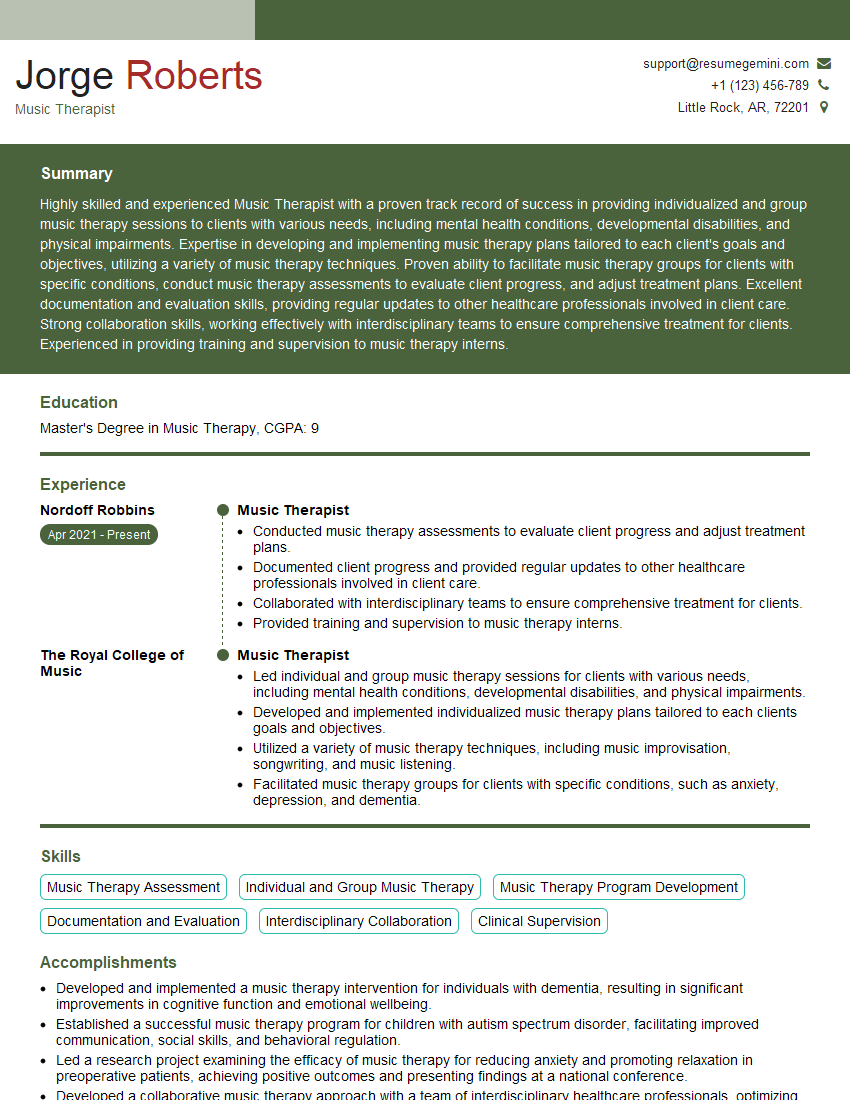
Mastering Music Special Education opens doors to a rewarding career where you can make a profound difference in the lives of your students. A strong resume is crucial for showcasing your skills and experience to potential employers. To significantly boost your job prospects, create an ATS-friendly resume that highlights your key qualifications effectively. ResumeGemini is a trusted resource that can help you craft a compelling and professional resume tailored to the specific requirements of Music Special Education positions. Examples of resumes designed for this field are available to guide you through the process.
Explore more articles
Users Rating of Our Blogs
Share Your Experience
We value your feedback! Please rate our content and share your thoughts (optional).
What Readers Say About Our Blog
Very informative content, great job.
good