Feeling uncertain about what to expect in your upcoming interview? We’ve got you covered! This blog highlights the most important Band Management interview questions and provides actionable advice to help you stand out as the ideal candidate. Let’s pave the way for your success.
Questions Asked in Band Management Interview
Q 1. Describe your experience managing a band’s tour logistics.
Tour logistics are the backbone of a successful band tour. It’s about meticulous planning and execution, encompassing everything from transportation and accommodation to rider management and on-site support. My approach is highly systematic, utilizing project management tools to track every detail.
For instance, with one band, I managed a 30-date US tour. This involved securing reliable transportation (tour bus and potentially support vehicles), booking hotels and venues well in advance, coordinating with local promoters regarding load-in/load-out times, and meticulously tracking expenses for fuel, tolls, accommodation, and per diems. I also oversaw the creation and adherence to a detailed tour itinerary, ensuring smooth transitions between cities and minimizing travel delays. This involved pre-planning routes, considering traffic patterns, and incorporating buffer times for unexpected issues.
Rider management is crucial. I ensure the band’s technical and hospitality riders are clearly communicated to venues in advance, to avoid issues on the day of the show. This ensures the band has everything they need for a successful performance – including instruments, equipment, and specific catering requests. We also work with the venues to handle local permits, security requirements and insurance aspects.
Q 2. How do you handle conflicts within a band?
Band conflicts are inevitable, but effective management can mitigate their impact significantly. My approach emphasizes open communication, proactive intervention, and a focus on the band’s shared goals. I create a safe space for band members to express their concerns and frustrations without judgment.
For example, if creative differences arise, I facilitate a structured discussion, helping the band members explore alternative solutions collaboratively. I might use techniques such as brainstorming or compromise to reach a mutually agreeable outcome. If personality clashes escalate, I might suggest individual or group therapy sessions with a professional mediator, particularly to help members communicate their concerns constructively.
Ultimately, my goal is to preserve the band’s unity while ensuring that individual needs are appropriately considered. The key is to find a balance between individual expression and the band’s collective success. Keeping the shared goals in mind (like album release or successful tour) and reminding members of the positive impact of a cohesive team can be hugely beneficial.
Q 3. What strategies do you employ for promoting a band’s music?
Promoting a band’s music requires a multi-faceted approach leveraging various digital and traditional marketing strategies. My approach is data-driven, using analytics to refine our strategies and ensure maximum impact.
- Digital Marketing: This includes managing social media presence (creating engaging content, running targeted ads), optimizing the band’s website for SEO, and utilizing email marketing to build a fan base. We’d utilize platforms like Spotify, Apple Music and YouTube to get their music featured on relevant playlists.
- Public Relations: I actively reach out to music journalists, bloggers, and influencers to secure reviews, interviews, and features, expanding the band’s reach and credibility.
- Content Marketing: Creating high-quality content like behind-the-scenes videos, live performance recordings, and blog posts enhances engagement and builds a strong brand narrative.
- Live Performances: Securing gigs at relevant venues and festivals provides direct engagement with fans and creates opportunities for future promotion.
For example, I successfully launched a campaign for a new band by building their social media presence from scratch. Using targeted ads, we increased their follower base by 500% in three months. We followed up this online success with strategic partnerships and local media appearances, resulting in a sold-out launch gig.
Q 4. Explain your process for negotiating contracts with venues or festivals.
Negotiating contracts is a critical aspect of band management. It requires a detailed understanding of the legal landscape and strong negotiation skills. My approach is thorough and proactive, ensuring fair compensation and protecting the band’s interests.
Before any negotiation, I carefully review the contract, identifying potential issues and areas for improvement. This includes scrutinizing details like guarantees (minimum compensation), payment schedules, performance clauses, cancellation policies, and intellectual property rights. I then prepare a counter-offer, justifying our requests with relevant market data and the band’s achievements.
During negotiations, I maintain professional yet assertive communication. I aim to establish a mutually beneficial agreement through clear and concise discussions. If required, I consult with legal counsel to address complex issues or ensure the contract is airtight. For example, I successfully negotiated a significantly higher guarantee for a band at a major festival by demonstrating the band’s strong draw and growing popularity, backed by data like social media engagement and ticket sales figures.
Q 5. How do you track and manage a band’s finances?
Financial management is crucial for a band’s sustainability. I utilize accounting software to track all income and expenses meticulously. This includes gig revenues, merchandise sales, royalties, sponsorship deals, and all operational costs like travel, equipment, and marketing.
I create detailed budgets for tours and recording projects, forecasting income and expenses to ensure financial viability. Regular financial reports provide transparency and inform strategic decision-making. I work closely with the band, providing clear and concise updates on their financial status, highlighting both successes and areas for improvement. Tax implications are carefully considered, ensuring compliance with all relevant regulations.
For example, using detailed budgeting, I helped a band save significantly on tour expenses by negotiating better deals on transportation and accommodation, optimizing their route planning, and managing per-diem costs effectively. Regular financial reports allow the band to see how much money they are making and where they can improve spending.
Q 6. What metrics do you use to measure the success of a band’s marketing campaign?
Measuring the success of a marketing campaign requires a data-driven approach. I utilize a range of metrics to assess effectiveness and inform future strategies. These metrics often fall under these categories:
- Website Analytics: Website traffic, bounce rate, time spent on site, conversion rates (e.g., newsletter sign-ups, merchandise purchases).
- Social Media Analytics: Follower growth, engagement rates (likes, comments, shares), reach, website traffic from social media platforms.
- Streaming and Download Data: Plays, downloads, listeners, geographic distribution.
- Sales Data: Merchandise sales, ticket sales for shows.
- Brand Awareness: Media mentions, social media sentiment, surveys.
For instance, in one campaign, we saw a 40% increase in social media engagement after implementing a new content strategy. Coupled with a 20% rise in website traffic, this demonstrated the success of the campaign and provided insights for future promotional endeavors. These numbers allowed us to justify further investment in this kind of strategy.
Q 7. How do you build and maintain relationships with key industry stakeholders?
Building and maintaining relationships with key industry stakeholders is essential for a band’s long-term success. This involves consistently demonstrating professionalism, reliability, and mutual respect.
I actively network with promoters, venue managers, booking agents, record labels, music journalists, and other key individuals in the industry. I attend industry events, maintain regular communication, and actively seek opportunities for collaboration. Providing excellent service and delivering on promises is paramount. Building trust takes time and consistent effort, but it forms the foundation for lasting and beneficial relationships.
For example, I built a strong relationship with a prominent booking agent by consistently exceeding expectations. This resulted in securing several high-profile gigs for the band, boosting their exposure and career trajectory. This strong working relationship was built through consistent communication and the ability to follow through on commitments.
Q 8. Describe your experience managing a band’s social media presence.
Managing a band’s social media presence is crucial for building a fanbase, promoting gigs, and maintaining a consistent brand image. It’s not just about posting; it’s about strategic engagement.
My approach involves a multi-platform strategy, focusing on platforms most relevant to the band’s target audience. This often includes Instagram for visual content, TikTok for short-form videos, Facebook for event announcements and community building, and Twitter for quick updates and interactions. I carefully curate content, balancing behind-the-scenes glimpses with professionally shot photos and videos of performances and music releases.
I use analytics tools to track engagement – likes, comments, shares, website clicks – to understand what resonates with the audience and adapt the content strategy accordingly. For example, if we see high engagement on Instagram Stories using a specific filter or format, we’ll incorporate that into future content. I also actively monitor and respond to comments and messages, fostering a sense of community and building relationships with fans.
Beyond organic content, I manage paid social media campaigns to broaden reach, particularly for new releases or tour announcements. This requires careful targeting based on demographics and interests to maximize the return on investment.
Q 9. How do you handle negative press or online reviews?
Handling negative press or online reviews is an inevitable part of being in the music industry. My approach is proactive and focuses on transparency and addressing concerns directly, rather than ignoring them.
First, I thoroughly analyze the criticism. Is it a legitimate concern about a performance, a misunderstanding, or simply a troll comment? For legitimate criticisms, I might respond publicly acknowledging the issue and explaining the band’s perspective. For example, if a review criticizes the sound mix at a gig, I might respond by explaining the technical challenges faced that night and outlining improvements made for future shows.
For untrue or defamatory comments, I’ll typically consult legal counsel before responding. However, even in those cases, a calm and professional response can sometimes diffuse the situation better than ignoring it.
For less severe issues, a simple, polite response acknowledging the feedback might suffice. The goal is always to maintain professionalism and not get drawn into arguments, while showing that the band values its fans’ opinions. We treat every interaction as an opportunity to showcase our professionalism and commitment to our fans.
Q 10. What is your experience with merchandise sales and management?
Merchandise sales are a significant revenue stream for many bands, and effective management is essential. My experience encompasses all aspects, from design and sourcing to sales and inventory management.
I begin by collaborating with the band to create unique and appealing designs. This includes working with artists to develop the merchandise’s aesthetic, ensuring it aligns with the band’s brand identity and appeals to the target audience. Next, I research and select reliable suppliers, balancing quality with cost-effectiveness. This involves negotiating prices, understanding production timelines, and ensuring timely delivery.
For sales, I utilize an online store, often integrated with our website, and potentially a presence at merchandise booths during live performances. We use inventory management software to track stock levels, sales data, and profits, enabling us to optimize stock levels and make informed decisions on future merchandise orders. We also consider offering pre-orders for new merchandise items to gauge demand and manage production effectively.
I regularly analyze sales data to identify popular items and trends, and this informs future merchandise design and inventory decisions. For instance, if a particular T-shirt design consistently outsells others, we’ll consider creating new versions or variations of that design.
Q 11. How do you create and manage a tour budget?
Creating and managing a tour budget is a critical skill for a band manager. It involves careful planning, detailed cost estimation, and meticulous tracking of expenses.
The budgeting process starts with defining the scope of the tour – the number of dates, locations, travel methods, accommodation, and the band’s desired level of comfort. Then, I meticulously estimate all anticipated costs, breaking them down into categories such as:
- Travel: Transportation (flights, vans, gas), accommodation (hotels, Airbnbs), per diems for meals.
- Venue Costs: Rental fees, technical fees, promoter fees.
- Personnel Costs: Band members’ salaries, crew salaries, manager fees.
- Marketing & Promotion: Advertising, social media campaigns, promotional materials.
- Merchandise: Production, shipping, sales personnel.
- Contingency: A buffer for unexpected expenses.
Once the budget is finalized, I track all expenses carefully, using accounting software to maintain detailed records. Regular reviews ensure the budget remains on track and highlight any potential overspending areas. This allows for timely adjustments, preventing financial surprises at the end of the tour. A well-managed budget is crucial for ensuring a profitable and stress-free tour.
Q 12. Explain your crisis management plan for unexpected tour issues.
A crisis management plan is essential for navigating unexpected issues during a tour. My plan is proactive and addresses various potential scenarios.
The plan includes:
- Communication Protocols: A clear chain of command and communication methods among band members, crew, and management, ensuring quick and effective responses to crises.
- Emergency Contacts: A readily accessible list of emergency contacts, including legal counsel, medical professionals, and relevant industry professionals.
- Contingency Funds: A dedicated fund for unexpected expenses, such as equipment repairs, medical emergencies, or missed gigs.
- Backup Plans: Alternatives for various scenarios, such as alternate transportation, accommodation options, or replacement equipment.
- Public Relations Strategy: A pre-prepared strategy for handling media inquiries and public announcements in the event of a crisis. This might include a template press release to maintain a consistent message.
For example, if a band member falls ill, the plan outlines procedures for finding a replacement, notifying venues and ticket holders, and managing the potential financial implications. By proactively planning for potential problems, I can minimize their impact and maintain a smooth tour operation.
Q 13. Describe your understanding of music licensing and royalties.
Music licensing and royalties are crucial aspects of the music industry, and a deep understanding is necessary to protect the band’s rights and revenue streams.
Music licensing pertains to the legal right to use a musical composition in various contexts, like in a film, commercial, or video game. Royalty payments are the compensation paid to copyright holders when their music is used.
I understand the different types of licenses, such as mechanical licenses (for physical copies or digital downloads), synchronization licenses (for use in audiovisual media), and performance licenses (for public performances). I ensure that the band’s compositions are properly registered with organizations like performing rights organizations (PROs), such as ASCAP, BMI, or SESAC. This ensures that the band receives royalties when their music is played publicly or used in other media. I also maintain detailed records of all licensing agreements and royalty payments to ensure accurate accounting and avoid disputes. This includes tracking the usage of the band’s music and the corresponding royalties earned. A clear understanding of these processes is crucial to ensure the band receives fair compensation for its creative work.
Q 14. How do you select and manage a band’s booking agent?
Selecting and managing a band’s booking agent is a critical decision impacting the band’s career trajectory. It’s crucial to choose someone with a strong reputation, relevant experience, and a good understanding of the band’s musical genre and target audience.
My selection process involves:
- Research: Thoroughly investigating potential agents, reviewing their client rosters, and researching their track record of success.
- Referrals: Seeking recommendations from other bands, industry professionals, or music managers.
- Interviews: Conducting in-depth interviews to assess the agent’s experience, approach, and communication style.
- Contract Negotiation: Carefully reviewing and negotiating the agency contract to ensure fair terms and protect the band’s interests.
Once an agent is selected, ongoing management includes regular communication, performance evaluation, and financial reporting. I regularly review the agent’s performance, monitoring the number of gigs secured, the quality of venues, and the overall financial success of booking efforts. Open and honest communication is crucial to ensure a productive and mutually beneficial working relationship. If the agency isn’t meeting expectations, it’s important to discuss concerns and consider alternatives. The agent is an extension of the band’s management team and a successful partnership is paramount for career advancement.
Q 15. What software or tools do you use for band management?
Effective band management relies heavily on robust software and tools. My approach is multifaceted, utilizing a combination of solutions tailored to specific needs. For scheduling and communication, I leverage tools like Google Calendar for shared calendars and task management, and Slack for instant messaging and file sharing, ensuring everyone stays informed and coordinated. For financial management, I use accounting software such as Xero or QuickBooks, which allows for streamlined invoicing, expense tracking, and profit and loss reporting. These are complemented by project management tools like Asana or Trello for tracking progress on album releases, tours, and marketing campaigns. Finally, a CRM (Customer Relationship Management) system helps me manage fan interactions, mailing lists, and overall engagement.
For example, when planning a tour, I’ll use Google Calendar to schedule rehearsals, gigs, travel, and hotel bookings, sharing it with all band members and crew. Slack is invaluable for quick updates on logistical issues or creative changes. QuickBooks is crucial for meticulous tracking of tour income and expenses, ensuring accurate financial reporting for tax purposes.
Career Expert Tips:
- Ace those interviews! Prepare effectively by reviewing the Top 50 Most Common Interview Questions on ResumeGemini.
- Navigate your job search with confidence! Explore a wide range of Career Tips on ResumeGemini. Learn about common challenges and recommendations to overcome them.
- Craft the perfect resume! Master the Art of Resume Writing with ResumeGemini’s guide. Showcase your unique qualifications and achievements effectively.
- Don’t miss out on holiday savings! Build your dream resume with ResumeGemini’s ATS optimized templates.
Q 16. How do you ensure the band’s legal compliance with contracts and regulations?
Legal compliance is paramount. I ensure this through proactive measures, starting with meticulously drafted contracts. These cover everything from performance agreements with venues and promoters to merchandise licensing agreements and publishing deals. I work closely with a specialized entertainment lawyer to review all contracts, ensuring they’re watertight and protect the band’s interests. Beyond contracts, I stay abreast of industry regulations, particularly those concerning copyright, royalties, and performance rights. Regular reviews of these regulations are crucial to remain compliant and prevent any legal issues. This also involves understanding and adhering to local regulations, like licensing requirements for public performances.
For instance, when negotiating a performance contract, I would specifically address issues like payment terms, cancellation clauses, and intellectual property rights to safeguard against potential disputes. Regular consultations with the lawyer are key to maintaining compliance.
Q 17. How do you maintain accurate accounting records for a band’s income and expenses?
Accurate accounting is essential for financial transparency and sound decision-making. I maintain detailed records using accounting software like QuickBooks or Xero, categorizing all income and expenses. This includes gig fees, merchandise sales, sponsorship revenue, studio recording costs, travel expenses, marketing costs, and any other band-related expenditure. Regular bank reconciliations ensure accuracy and identify discrepancies promptly. This data helps in generating financial reports, such as profit and loss statements and cash flow projections, essential for making informed business decisions, seeking funding, or presenting to potential investors.
Imagine tracking the income from a successful tour. I’d meticulously record each gig’s earnings, merchandise sales at each venue, and any other revenue streams. Similarly, detailed expense tracking involves recording costs related to travel, accommodation, equipment rentals, marketing materials, and more. Regular reporting allows us to assess the tour’s profitability and plan future ventures more effectively.
Q 18. What is your approach to securing sponsorship deals for a band?
Securing sponsorship deals requires a strategic approach. It begins with identifying potential sponsors whose brand aligns with the band’s image and target audience. I develop a comprehensive sponsorship proposal outlining the band’s reach, engagement metrics (social media following, concert attendance, etc.), and potential benefits for the sponsor (brand exposure, increased sales, enhanced reputation). The proposal includes different sponsorship packages with varying levels of commitment and corresponding benefits. It’s critical to build relationships with potential sponsors, showcasing the band’s value proposition and presenting compelling case studies or data highlighting past successes. Active follow-up and maintaining consistent communication are key to converting prospects into sponsors.
For example, a band with a strong following among young adults might attract sponsorships from clothing brands, energy drink companies, or tech companies targeting that demographic. A compelling proposal would showcase the band’s social media reach, concert attendance, and previous sponsorship successes.
Q 19. How do you assess the potential of a band’s music for commercial success?
Assessing a band’s commercial potential involves analyzing various factors. The music itself is crucial – its originality, catchiness, and broad appeal are key. I also analyze the band’s overall image and branding – does it have a unique selling proposition? Market research is important – identifying the band’s target audience and the competitive landscape. Digital metrics play a significant role – analyzing streaming numbers, social media engagement, and website traffic can provide valuable insights into the band’s popularity and potential for growth. Live performance ability is also considered; a captivating live show is often a key driver of success.
Think of a band with a catchy, radio-friendly song that also has significant social media engagement. This suggests a high potential for commercial success. Conversely, a band with unique music but low engagement might face a steeper path to commercial success, requiring a more targeted marketing strategy.
Q 20. Describe your experience working with different musical genres.
My experience spans a broad range of musical genres, from indie rock and alternative music to pop, folk, and even some experimental genres. This diverse experience has honed my ability to adapt my management style to the unique needs and characteristics of each genre. Understanding the nuances of each genre, from its typical audience to its promotional strategies, is crucial for effective management. For example, promoting a heavy metal band requires a different approach than promoting a folk-acoustic group; the target audiences, preferred platforms, and even the types of sponsorship deals differ significantly.
Working with diverse genres allows me to build a wider network of contacts within the music industry, access various resources and strategies, and ultimately enhance the success of any band I manage, regardless of its genre.
Q 21. How do you handle scheduling conflicts with band members’ personal commitments?
Scheduling conflicts are inevitable, especially with busy band members who might have other commitments. Proactive communication is key. I utilize shared calendars to maintain transparency and early identification of potential clashes. Open and honest communication with the band members about their commitments allows me to build a realistic schedule that accommodates everyone’s needs. Flexibility is essential – sometimes, minor adjustments to tour dates or rehearsal times can effectively prevent major conflicts. In situations where a conflict is unavoidable, I work collaboratively to find solutions, such as bringing in a temporary replacement or rescheduling gigs if necessary.
Imagine a band member needing to attend a family event during a planned tour date. Early communication allows me to explore options, such as postponing that particular gig or arranging a replacement musician for the specific event.
Q 22. How do you manage the expectations of band members and their families?
Managing band member and family expectations is crucial for a harmonious and productive working relationship. It’s about clear, consistent communication and realistic goal-setting. I start by establishing open lines of communication with each member and their families, individually and collectively. This involves regular meetings – formal and informal – to discuss tour schedules, financial projections, creative decisions, and any personal concerns they might have.
Realistic Expectations: I emphasize the realities of the music industry, highlighting both the potential rewards and the inevitable challenges – long hours, travel demands, periods of uncertainty, and the competitive nature of the market. I clearly outline my role and responsibilities and encourage them to express their own expectations openly and honestly. This proactive approach prevents misunderstandings and sets a foundation of mutual trust.
Example: If a band member’s family is concerned about the time commitment involved in a lengthy tour, I address their anxieties by providing a detailed schedule, outlining potential downtime and arranging for regular check-ins. This transparent approach shows respect for their concerns and fosters a positive relationship.
Q 23. Explain your understanding of copyright and intellectual property in the music industry.
Copyright and intellectual property (IP) are fundamental to the music industry. Copyright protects the original musical works – the composition and lyrics – and sound recordings. It grants exclusive rights to the copyright holders, allowing them to control reproduction, distribution, performance, and creation of derivative works. Intellectual property encompasses broader rights, including trademarks (band name, logo), patents (for specific technologies), and trade secrets (unique musical processes).
Understanding the nuances is vital. For instance, songwriting credits must be meticulously documented and fairly allocated amongst the band members. Similarly, publishing rights, which cover the use of the composition, must be correctly assigned and managed. Ensuring the band owns their master recordings (the actual audio recording) is paramount. Without proper IP management, a band can be vulnerable to exploitation and loss of revenue.
Practical Application: I work with legal counsel to ensure that all necessary copyright registrations and contracts are in place. This includes negotiating fair and equitable agreements with labels, publishers, and streaming services. I educate the band members on their rights and responsibilities regarding IP, ensuring they understand the implications of their creative choices and business dealings.
Q 24. What is your experience in developing marketing strategies for different platforms (streaming, radio, etc.)?
My marketing strategies are tailored to each band’s unique characteristics and target audience. I develop holistic campaigns leveraging different platforms, understanding their respective strengths and limitations.
- Streaming Platforms (Spotify, Apple Music, etc.): I focus on optimizing metadata (artist name, track titles, album art, genre tags) to enhance discoverability. This includes strategic playlist pitching to editors and curators, leveraging social media to promote releases, and running targeted ads to reach specific demographics.
- Radio: I build relationships with radio programmers and DJs, providing them with high-quality promotional materials and ensuring timely submissions of new music. I also leverage radio airplay reports to track success and refine strategies.
- Social Media: I develop a robust social media presence, engaging with fans, creating compelling content (photos, videos, behind-the-scenes glimpses), running contests, and utilizing paid advertising to broaden reach.
- Website and Email Marketing: A well-maintained website and email list are key for direct engagement with fans, offering exclusive content and updates, promoting merchandise, and driving ticket sales.
Example: For a band targeting a younger audience, I might focus heavily on TikTok and Instagram, utilizing viral trends and user-generated content. For a band with a more mature following, a stronger emphasis on radio and targeted email campaigns might be more effective.
Q 25. Describe your experience working with PR agencies and media outlets.
I have extensive experience collaborating with PR agencies and media outlets to amplify a band’s message and visibility. My approach involves carefully selecting agencies aligned with the band’s style and target audience. This includes briefing the agency on the band’s goals, image, and key messaging, ensuring consistent brand representation across all communication channels.
Building Relationships: I actively cultivate relationships with music journalists, bloggers, and reviewers, providing them with relevant press materials (press kits, bio, high-resolution photos, music), and proactively pitching story ideas that align with their editorial interests. I manage media requests, schedule interviews, and ensure that the band is presented in a professional and engaging manner.
Example: I secured a feature interview in a prominent music magazine by crafting a compelling press release highlighting the band’s unique musical style and their recent community involvement. The result was increased exposure, new fan acquisition, and enhanced credibility.
Q 26. How do you handle disputes or disagreements between band members and management?
Disputes within a band are inevitable. My approach is based on proactive conflict resolution and open communication. I establish clear procedures for addressing disagreements from the outset, emphasizing collaboration and mutual respect.
Handling Disputes: I encourage band members to express their concerns openly and constructively in a safe environment. I act as a neutral mediator, facilitating respectful dialogue and ensuring that all voices are heard. If necessary, I leverage outside resources like therapists or mediators specialized in creative conflict resolution. In situations involving legal or financial matters, I involve legal counsel to ensure fair and transparent solutions.
Example: If a creative disagreement arises about the direction of the band’s next album, I facilitate a series of meetings where each member can present their ideas, explore compromises, and collaboratively reach a consensus. The emphasis remains on finding a solution that respects everyone’s creative vision while maintaining the band’s overall artistic integrity.
Q 27. How do you build and maintain positive relationships with fans and the band’s community?
Building and maintaining positive relationships with fans is fundamental to a band’s long-term success. I believe in cultivating a sense of community and reciprocal engagement. This involves multiple approaches:
- Social Media Engagement: Consistent and authentic communication on social media platforms is paramount. I actively respond to comments and messages, organize Q&A sessions, run contests, and share exclusive behind-the-scenes content to foster a feeling of connection.
- Fan Clubs and Newsletters: Dedicated fan clubs and email newsletters provide direct channels for sharing updates, releasing exclusive content, and fostering a strong sense of community among dedicated fans.
- Live Interactions: At concerts and shows, I aim to create an engaging and memorable experience, encouraging interaction between the band and their fans through meet-and-greets and opportunities for personal connection.
- Merchandise and Fan Experiences: Offering exclusive merchandise and unique fan experiences (e.g., meet-and-greets, backstage access) creates lasting memories and strengthens the emotional bond between the band and their supporters.
Example: Organizing a pre-show meet-and-greet where fans can interact directly with the band members, fostering personal connections and strengthening their sense of belonging to the band’s community.
Q 28. What are your salary expectations for this role?
My salary expectations are commensurate with my experience and the responsibilities of this role, and are dependent on the specifics of the contract. I am open to discussing a competitive compensation package that reflects the band’s financial projections and the overall success of the partnership. I would be happy to provide a detailed breakdown of my compensation expectations once we have reviewed the specifics of the position and the band’s projected income and expenses.
Key Topics to Learn for Band Management Interview
- Artist Relations & Contract Negotiation: Understanding artist contracts, royalty structures, and building strong working relationships.
- Tour Management & Logistics: Planning and executing successful tours, including venue booking, transportation, accommodation, and rider management. Practical application: Developing a realistic tour budget and contingency plan.
- Financial Management & Budgeting: Tracking income and expenses, creating financial reports, and managing artist finances responsibly.
- Marketing & Promotion: Developing and implementing marketing strategies to promote the band and increase their fanbase. This includes social media management, public relations, and advertising.
- Legal & Business Affairs: Understanding relevant music industry laws, intellectual property rights, and navigating legal complexities.
- Team Management & Leadership: Building and leading a high-performing team, including delegation, communication, and conflict resolution. Problem-solving approach: Handling disagreements within the band or management team effectively.
- Merchandising & Licensing: Managing the creation and sale of band merchandise and licensing opportunities.
- Performance & Production: Understanding stage production, sound, lighting, and the overall technical aspects of live performances.
- Strategic Planning & Growth: Developing long-term strategies for the band’s career progression, including exploring new markets and opportunities.
Next Steps
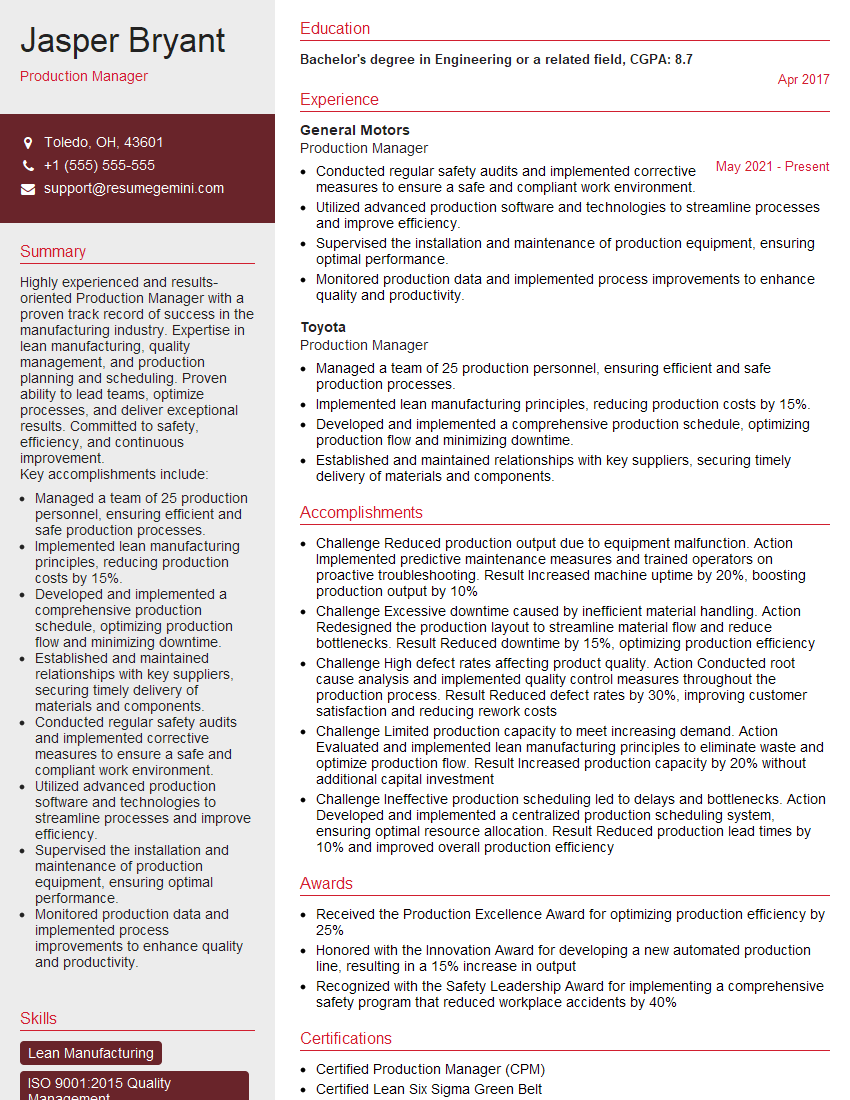
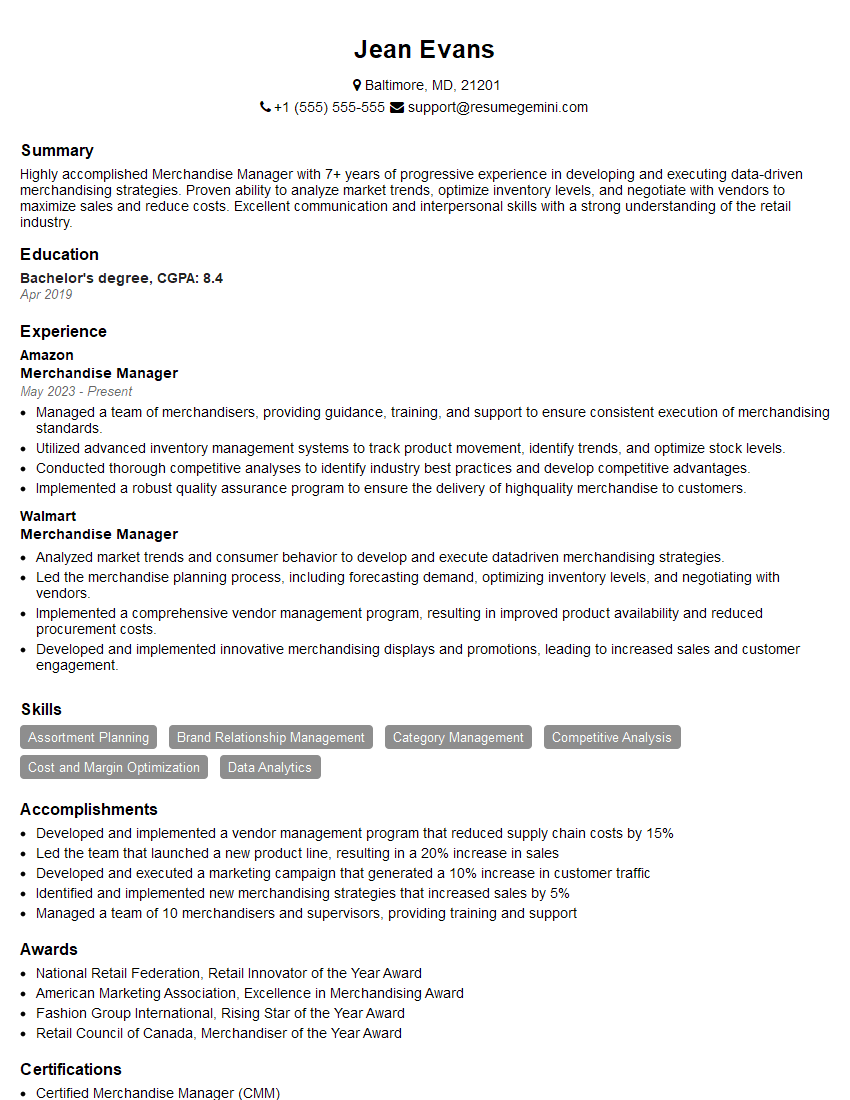
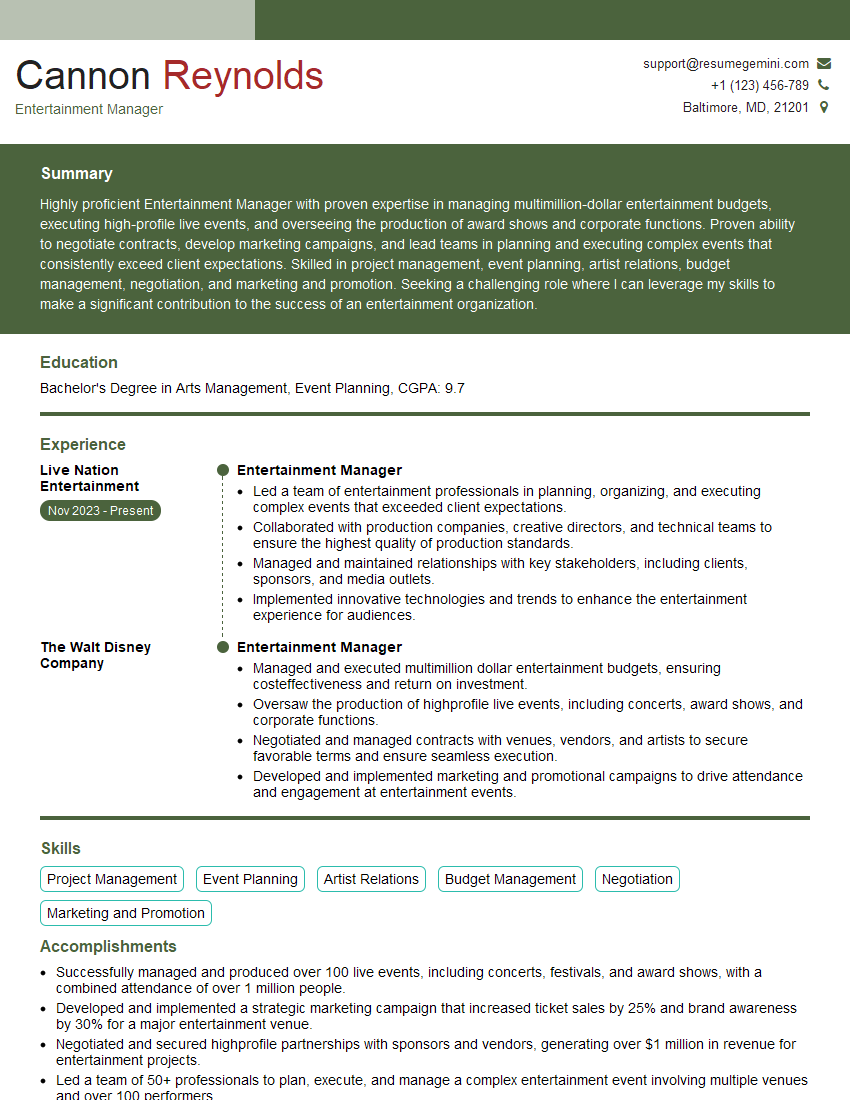
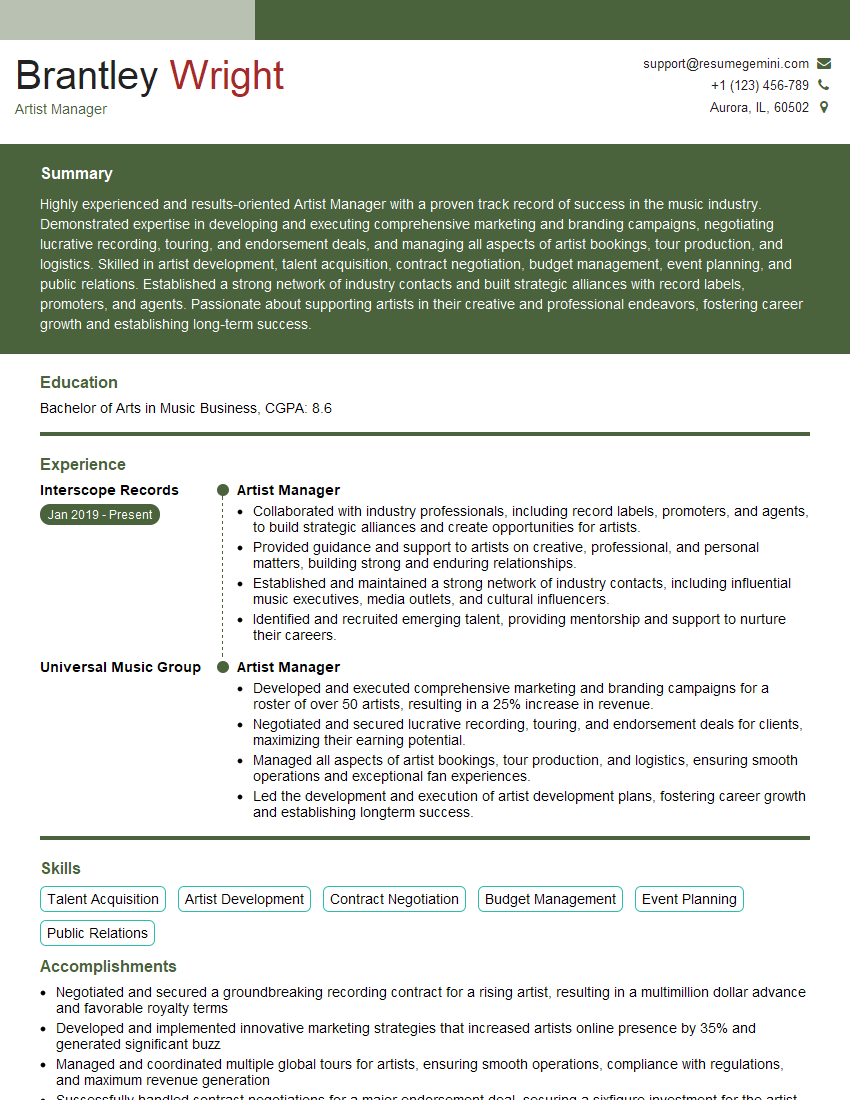
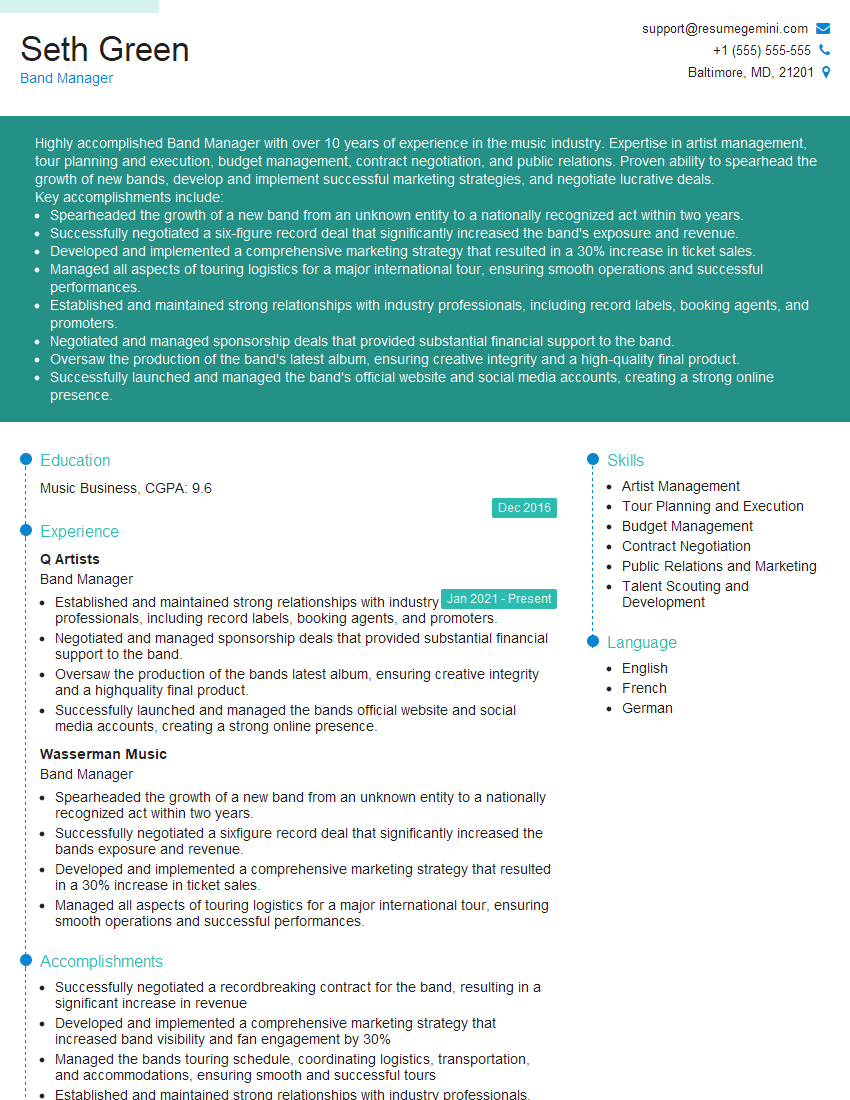
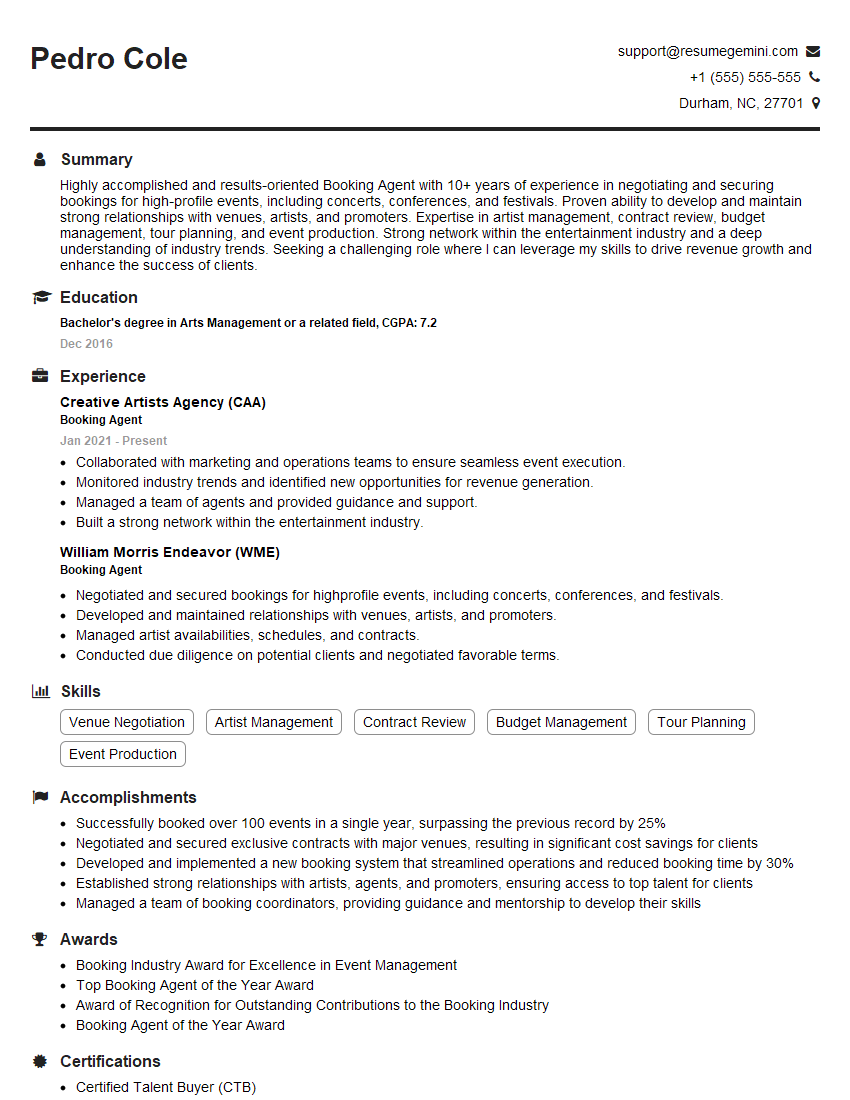
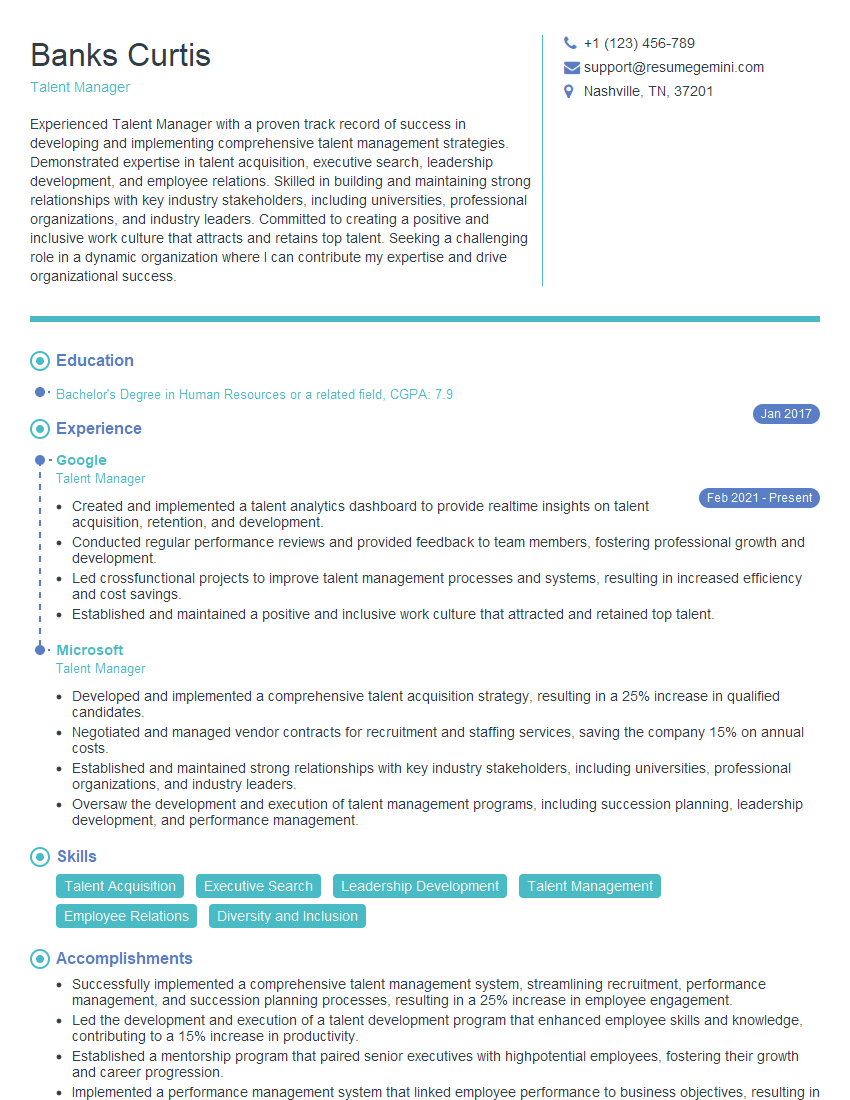
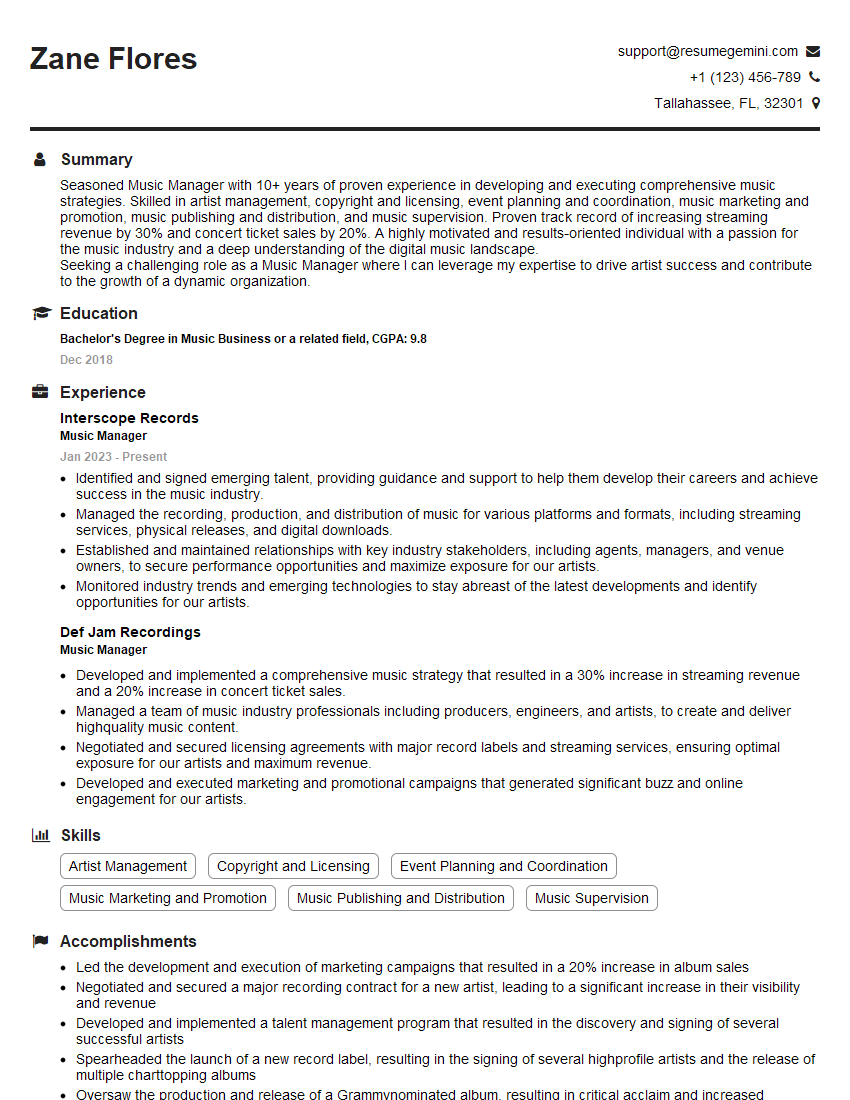
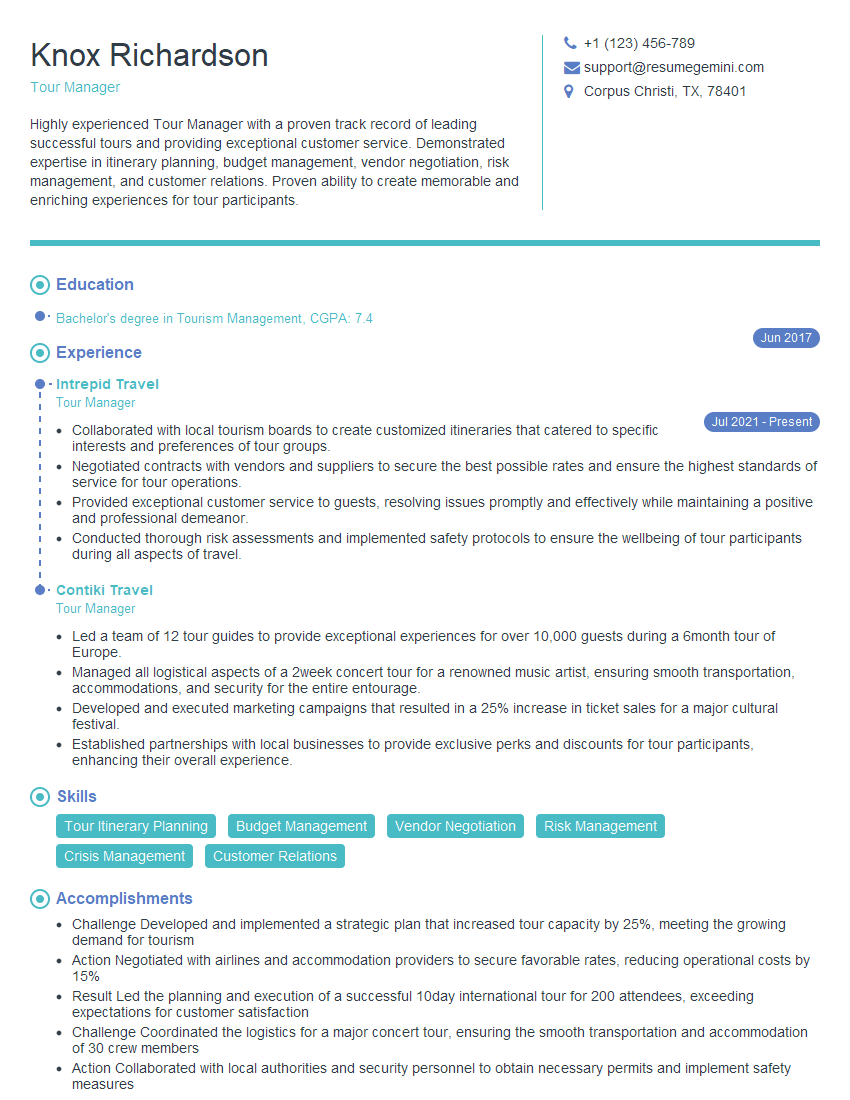
Mastering Band Management opens doors to a dynamic and rewarding career, offering a unique blend of creativity and business acumen. To maximize your job prospects, creating a strong, ATS-friendly resume is crucial. ResumeGemini can help you craft a compelling resume that highlights your skills and experience effectively. We provide examples of resumes tailored to Band Management to guide you in showcasing your qualifications. Take the next step in your career journey – build a standout resume with ResumeGemini.
Explore more articles
Users Rating of Our Blogs
Share Your Experience
We value your feedback! Please rate our content and share your thoughts (optional).
What Readers Say About Our Blog
Very informative content, great job.
good