Preparation is the key to success in any interview. In this post, we’ll explore crucial Electrical Harmonics Analysis interview questions and equip you with strategies to craft impactful answers. Whether you’re a beginner or a pro, these tips will elevate your preparation.
Questions Asked in Electrical Harmonics Analysis Interview
Q 1. Explain the causes of harmonics in power systems.
Harmonics in power systems are caused by non-linear loads, which draw current in a non-sinusoidal waveform, unlike the ideal sinusoidal current supplied by the utility. These non-linear loads distort the current waveform, creating harmonic currents that are multiples of the fundamental frequency (typically 50Hz or 60Hz).
- Rectifiers: Used in power supplies for electronics, these devices convert AC to DC, drawing current in pulses, thus producing harmonics. Imagine a water pump that only works intermittently – its flow isn’t smooth, creating irregular pulses like harmonic currents.
- Variable Speed Drives (VSDs): Used to control motor speeds, VSDs produce significant harmonics due to the pulse-width modulation (PWM) technique employed. Think of it like a dimmer switch – it creates irregular current flow to adjust brightness, resulting in harmonic distortion.
- Switching Power Supplies: Ubiquitous in modern electronics, these power supplies chop up the input voltage to create a DC output, injecting harmonics into the system. This is similar to chopping a continuous stream of water into irregular bursts.
- Arc Furnaces and Welders: These high-power loads generate substantial harmonics due to the non-linear nature of the arc. Visualize this as irregular sparks from a welding arc creating ripples in the current.
The severity of harmonic distortion depends on the type and size of the non-linear load, and its interaction with the power system impedance.
Q 2. Describe the effects of harmonics on power system equipment.
Harmonics cause several detrimental effects on power system equipment:
- Overheating of transformers: Harmonic currents produce additional losses in transformer windings and core, leading to overheating and reduced lifespan. It’s like constantly adding extra weight to a machine, forcing it to work harder and wear down faster.
- Capacitor failures: Harmonics can cause excessive current stress and resonance in capacitors, leading to premature failure. This is similar to constantly overloading a capacitor, causing it to fail.
- Malfunctioning of protection relays: Harmonic currents can cause inaccurate operation of protection relays, potentially leading to unnecessary tripping or failure to clear faults. This is like a faulty alarm system that trips too often or doesn’t sound when needed.
- Increased neutral current: Triplen harmonics (3rd, 9th, 15th, etc.) add up in the neutral conductor, potentially exceeding its capacity. Think of it as a pipe in a plumbing system being overloaded due to the accumulation of additional water.
- Equipment malfunction and motor vibration: Harmonics can cause erratic operation of sensitive equipment and increased motor vibration. This is similar to irregular jolts in a vehicle’s movement.
- Increased power losses: Harmonic distortion leads to increased I2R losses in conductors and equipment.
Q 3. What are the different methods for measuring harmonics?
Several methods exist for measuring harmonics:
- Power Quality Analyzers: These sophisticated instruments provide comprehensive measurements of voltage and current waveforms, identifying individual harmonic components and calculating THD. Think of them as advanced multimeters that provide detailed analysis of the power waveform.
- Oscilloscope with FFT (Fast Fourier Transform): An oscilloscope captures the voltage or current waveform, and the FFT function breaks it down into its frequency components, revealing the harmonic content. It’s like dissecting a complex sound to identify its individual notes.
- Clamp-on meters with harmonic analysis capability: These meters, utilizing current transformers, allow for non-invasive measurement of current harmonics. They are more basic and suitable for less complex assessments.
- Software-based harmonic analysis tools: Some software applications, used in conjunction with data acquisition devices, allow for harmonic analysis of data logged over extended periods.
The choice of method depends on the level of detail required, budget, and access to equipment.
Q 4. How do you identify harmonic sources in a power system?
Identifying harmonic sources involves a systematic approach:
- Conduct a thorough site survey: This involves identifying all major loads in the system and classifying them based on their potential to generate harmonics.
- Perform harmonic measurements: Use appropriate measurement techniques, as described above, to determine the harmonic levels at various points in the system.
- Analyze the harmonic data: Analyze the magnitude and phase of each harmonic component to identify the contributing sources. This might involve correlation analysis between load operation and harmonic levels.
- Utilize harmonic analysis software: Advanced software can simulate the power system and assist in identifying harmonic sources based on the measured data.
- Targeted monitoring: Once potential sources are identified, targeted monitoring can be deployed to confirm their contribution to the overall harmonic distortion.
For example, if the 5th harmonic is particularly high, and it coincides with the operation of a specific VSD, this VSD is likely a major harmonic contributor. It’s a detective work to find the culprit.
Q 5. Explain the concept of Total Harmonic Distortion (THD).
Total Harmonic Distortion (THD) is a measure of the harmonic distortion present in a periodic waveform. It quantifies the deviation of the waveform from a pure sine wave. It is expressed as a percentage of the fundamental frequency component. A THD of 0% indicates a perfect sine wave, while higher values indicate greater harmonic distortion.
The formula for THD is:
THD = √(Σ(Ih2) / I12) x 100%Where:
Ihis the RMS value of the hth harmonic currentI1is the RMS value of the fundamental frequency current
For instance, a THD of 5% indicates that the harmonic components represent 5% of the fundamental current. A low THD is desirable for power quality.
Q 6. What are the IEEE standards related to harmonics?
Several IEEE standards address harmonics:
- IEEE 519-2014: This standard provides recommended practices and limits for harmonic control in electric power systems. It specifies acceptable levels of harmonic currents and voltages injected by various types of equipment.
- IEEE 100: This is a dictionary of terms used in power systems and includes definitions related to harmonics and power quality.
- IEEE 1459: This standard covers measurements of harmonic currents in power systems.
- IEEE 519-1992 (older version): While superseded, understanding this older version is valuable to grasp the evolution of standards.
These standards are crucial guidelines for power system designers, operators, and manufacturers. They ensure that equipment is designed and operated in a way that minimizes harmful harmonic effects.
Q 7. Describe various harmonic mitigation techniques.
Several techniques mitigate harmonics:
- Passive Filters: These are tuned circuits (typically LC filters) that absorb harmonic currents at specific frequencies. They’re like specially designed sieves that filter out specific unwanted frequencies.
- Active Filters: These employ power electronics to actively counteract harmonic currents by injecting compensating currents. These are more sophisticated and adaptable solutions that actively correct the waveform.
- Harmonic Impedance Compensation Techniques: Methods that aim to modify the power system’s impedance to reduce harmonic resonance, such as adding reactive power compensation. This is like adjusting the impedance of a sound system to minimize noise.
- Improved Power Factor Correction (PFC): Proper power factor correction using capacitors can reduce the impact of harmonics in some cases. PFC ensures more efficient power utilization.
- 12-Pulse Rectifiers: These rectifiers inherently produce lower levels of harmonics compared to 6-pulse rectifiers and are useful in high-power applications.
- Load Balancing: Distributing non-linear loads more evenly across phases can lessen the effects of harmonics. This is like dispersing the weight more evenly to maintain stability.
The most effective mitigation strategy depends on the specific harmonic problem, system configuration, and cost constraints. A comprehensive harmonic study is essential for selecting the most appropriate approach.
Q 8. How do passive filters work in mitigating harmonics?
Passive harmonic filters are essentially tuned circuits designed to resonate at specific harmonic frequencies, thus presenting a low impedance path for those harmonics to ground. Think of them as carefully designed ‘traps’ for unwanted frequencies. They consist primarily of inductors and capacitors, arranged in either a shunt configuration (connected across the power line) or a series configuration (in series with the power line), depending on the application and harmonic to be mitigated.
Shunt filters are more common and work by creating a low impedance path to ground for specific harmonic currents. The inductor’s high impedance at high frequencies and the capacitor’s low impedance form a resonant circuit that effectively absorbs harmonic currents. Imagine a drain for unwanted water (harmonic currents).
Series filters are used less frequently, primarily for mitigating higher-order harmonics. They work by presenting a high impedance to specific harmonic frequencies, preventing them from propagating through the system. This is like a barrier preventing unwanted water from entering a pipe.
The design of passive filters requires careful consideration of the system’s harmonic characteristics, impedance, and resonance conditions to ensure optimal performance and avoid resonance issues that can lead to instability. A poorly designed filter can amplify harmonics instead of attenuating them.
Q 9. How do active filters work in mitigating harmonics?
Active harmonic filters (AHFs) are more sophisticated than their passive counterparts. Instead of relying on fixed resonant circuits, they use power electronic converters to actively compensate for harmonic currents. They measure the harmonic currents in real-time and inject compensating currents of opposite phase, effectively canceling out the harmonics. It’s like having a smart system that instantly identifies and neutralizes the unwanted water (harmonic currents).
AHFs typically use a voltage source converter (VSC) which includes a control system that analyzes the harmonic content of the current waveform through a fast Fourier transform (FFT). Based on this analysis, the AHF generates a compensating current waveform that cancels out the harmonic components, resulting in a cleaner sinusoidal current waveform. This makes them highly flexible and adaptable to changing load conditions.
The advantages of AHFs include their ability to mitigate a broader range of harmonics compared to passive filters, their better dynamic response to changes in harmonic levels, and their ability to mitigate both current and voltage harmonics.
Q 10. Explain the use of harmonic filters in power systems.
Harmonic filters play a crucial role in power systems to protect equipment and maintain power quality. Harmonics, caused by non-linear loads like rectifiers and variable speed drives, can lead to overheating, increased losses, and equipment malfunction. Filters are used to reduce these issues, improving the overall performance and reliability of the system.
Their application includes:
- Protecting sensitive equipment: Harmonics can damage sensitive electronic equipment, and filters safeguard these assets.
- Improving power factor: Harmonic currents contribute to power factor distortion, and filters help improve it.
- Reducing losses: Harmonics increase power losses in transformers and transmission lines, and filters help minimize these losses.
- Meeting regulatory compliance: Many regions have regulations limiting harmonic emissions, and filters ensure compliance.
The specific type of filter (passive or active) and its design are chosen based on the magnitude and frequency of harmonics present, the budget, and the specific requirements of the application. For example, a large industrial plant might use a combination of passive and active filters for comprehensive harmonic mitigation.
Q 11. What are the advantages and disadvantages of different harmonic mitigation methods?
Choosing between different harmonic mitigation methods involves weighing their advantages and disadvantages:
- Passive Filters:
- Advantages: Simple design, relatively low cost, reliable, low maintenance.
- Disadvantages: Less flexible, effective only at specific frequencies, potential resonance problems, bulky size.
- Active Filters:
- Advantages: Flexible, effective over a wide range of frequencies, fast dynamic response, high efficiency.
- Disadvantages: High initial cost, complex control systems, requires regular maintenance, may introduce switching harmonics.
- Other Methods (e.g., harmonic cancellation using pulse width modulation techniques):
- Advantages: Can be integrated directly into the load, improves efficiency.
- Disadvantages: Limited effectiveness, high cost, complex design.
The optimal choice depends on factors like the severity of harmonic distortion, budget constraints, space limitations, and the specific characteristics of the load and power system.
Q 12. How do you analyze harmonic distortion using FFT analysis?
FFT analysis is a powerful tool for analyzing harmonic distortion in power systems. It transforms a time-domain signal (voltage or current waveform) into a frequency-domain representation, showing the amplitude and frequency of each harmonic component present in the signal. Imagine it as breaking down a complex musical chord into its individual notes.
Steps involved in FFT analysis of harmonic distortion:
- Data Acquisition: Collect the voltage or current waveform using a suitable data acquisition system. The sampling rate must be at least twice the highest harmonic frequency of interest (Nyquist-Shannon sampling theorem).
- Preprocessing: Clean the signal by removing any noise or glitches that may affect the accuracy of the analysis. This may involve filtering or windowing techniques.
- FFT Algorithm: Apply the Fast Fourier Transform algorithm to transform the time-domain data into the frequency domain. This results in a spectrum showing the amplitude of each frequency component.
- Harmonic Identification: Identify the harmonic frequencies by analyzing the resulting spectrum. The fundamental frequency is identified, and integer multiples of this frequency correspond to the harmonic frequencies. For example, if the fundamental frequency is 50 Hz, the 5th harmonic would be 250 Hz.
- Harmonic Analysis: Calculate the Total Harmonic Distortion (THD) and individual harmonic amplitudes from the spectrum. THD is a measure of the overall harmonic distortion present in the signal.
Software tools and specialized hardware are commonly used for FFT analysis, providing detailed reports on harmonic content.
Q 13. What are the common harmonic frequencies found in power systems?
The common harmonic frequencies found in power systems are integer multiples of the fundamental frequency (typically 50 Hz or 60 Hz). The most significant harmonics are usually the lower-order ones (3rd, 5th, 7th, etc.), with their amplitudes decreasing as the order increases. However, the exact harmonic profile depends on the types of non-linear loads present.
For example:
- 3rd harmonic: Frequently found due to three-phase non-linear loads with a three-pulse rectifier.
- 5th and 7th harmonics: Also common, resulting from various non-linear loads and their interactions.
- Higher-order harmonics: Can be present depending on the specific load configurations and their switching characteristics.
It’s important to note that even harmonics (2nd, 4th, etc.) are generally less prevalent in three-phase systems due to their cancellation effects. However, they can be present in single-phase systems or under specific unbalanced load conditions.
Q 14. How do harmonics affect power factor?
Harmonics significantly affect power factor. Power factor is a measure of how effectively the electrical power is used. A unity power factor (1.0) indicates perfect efficiency. Harmonics distort the current waveform, causing it to be non-sinusoidal, which leads to a lower power factor. This is because harmonic currents are not in phase with the voltage waveform, and they do not contribute to the actual useful power delivered to the load.
The distortion caused by harmonics increases the apparent power without increasing the real power, leading to higher current magnitudes for the same real power demand. This increased current can lead to greater I²R losses, overheating in transformers and cables, and reduced efficiency. It also places increased strain on the power system infrastructure.
The power factor is affected by both displacement power factor (due to phase difference between voltage and fundamental frequency current) and distortion power factor (due to harmonic currents). Measuring and mitigating harmonics are thus crucial to improve power factor and optimize the efficiency of the electrical system.
Q 15. How do you select appropriate harmonic filters for a specific application?
Selecting appropriate harmonic filters requires a thorough understanding of the harmonic spectrum of the load and the power system characteristics. It’s like choosing the right tool for a job – you wouldn’t use a hammer to screw in a screw!
The process typically involves these steps:
- Harmonic Load Analysis: First, you need to determine the magnitude and frequency of the harmonics present in the load current. This often involves harmonic measurements or simulations using power system software.
- System Impedance Analysis: You must understand the impedance of the power system at harmonic frequencies. This helps identify potential resonance points that could magnify the harmonic currents. A high impedance at a specific harmonic frequency can exacerbate the harmonic problem.
- Filter Type Selection: Based on the harmonic analysis, you choose the appropriate filter type. Common filter types include passive filters (simple LC filters, tuned filters), active filters (using power electronics to inject compensating currents), and hybrid filters. Passive filters are cost-effective for targeting specific harmonics but can be bulky. Active filters are more flexible and effective for complex harmonic profiles but are more expensive.
- Filter Rating and Sizing: The filter’s rating (kVA) and component values (capacitor and inductor sizes) are determined to effectively mitigate the identified harmonics without causing instability or resonance issues.
- Filter Location: The optimal placement of the filter within the system is important to maximize its effectiveness. Often, filters are located close to the harmonic source.
Example: A large industrial plant with significant non-linear loads (like variable speed drives) might require a combination of tuned passive filters to address dominant low-order harmonics and an active filter to handle the remaining higher-order harmonics.
Career Expert Tips:
- Ace those interviews! Prepare effectively by reviewing the Top 50 Most Common Interview Questions on ResumeGemini.
- Navigate your job search with confidence! Explore a wide range of Career Tips on ResumeGemini. Learn about common challenges and recommendations to overcome them.
- Craft the perfect resume! Master the Art of Resume Writing with ResumeGemini’s guide. Showcase your unique qualifications and achievements effectively.
- Don’t miss out on holiday savings! Build your dream resume with ResumeGemini’s ATS optimized templates.
Q 16. Describe the role of power system simulation software in harmonic analysis.
Power system simulation software is crucial for harmonic analysis. It’s like a virtual laboratory allowing us to test and optimize designs before implementation in the real world, saving time and money.
These software packages enable us to:
- Model the power system: We create detailed models of power system components including generators, transformers, transmission lines, and loads, accurately representing their harmonic characteristics.
- Simulate harmonic generation and propagation: The software simulates the flow of harmonic currents through the system, identifying potential hotspots and resonance points.
- Evaluate the effectiveness of harmonic mitigation strategies: We can test different harmonic filter designs and placement strategies virtually, optimizing the system for minimal harmonic distortion.
- Perform ‘what-if’ analysis: It allows us to explore various scenarios, such as changes in load or the addition of new equipment, to assess their impact on harmonic levels.
Example: Using software like PSCAD or ETAP, we can model a factory with several VFDs and simulate different harmonic filter configurations to determine the optimal solution that minimizes harmonic distortion while maintaining system stability.
Q 17. What are the key considerations for designing a harmonic mitigation system?
Designing a harmonic mitigation system requires careful consideration of several factors. It’s a balancing act between effectiveness, cost, and system stability.
Key considerations include:
- Harmonic Standards and Regulations: Compliance with relevant IEEE, IEC, or local standards is crucial to avoid penalties and ensure safe operation. These standards define acceptable levels of harmonic distortion.
- Load Characteristics: Understanding the harmonic generating characteristics of the loads is paramount. Different loads produce different harmonic spectra.
- Power System Impedance: Analyzing the system impedance at harmonic frequencies helps identify potential resonance points, which can amplify harmonic currents.
- Cost-effectiveness: Balancing the cost of the mitigation system against the potential costs associated with harmonic-related problems is important.
- System Stability: The mitigation system shouldn’t destabilize the power system; it needs to be designed and tuned properly.
- Maintainability: The chosen system needs to be easily maintained and monitored.
Example: When designing for a data center with numerous rectifiers, we might opt for active filters, given their flexibility in addressing complex harmonic profiles. For a simple industrial motor application, passive filters might suffice.
Q 18. Explain the concept of harmonic resonance and its consequences.
Harmonic resonance occurs when the system impedance at a specific harmonic frequency is very low, leading to a significant amplification of the harmonic current. Think of it like pushing a child on a swing at the right frequency – you get a much larger amplitude than if you push randomly.
Consequences of harmonic resonance can be severe:
- Overheating of equipment: The amplified harmonic currents cause excessive heating in power system components, particularly capacitors and transformers, potentially leading to failure.
- Equipment malfunction: Harmonics can interfere with the operation of sensitive equipment such as electronic controllers and computers.
- System instability: In extreme cases, resonance can lead to instability and widespread system outages.
- Increased losses: Higher harmonic currents cause increased resistive losses in the system.
Example: A series resonance between a capacitor bank and the system inductance can amplify specific harmonics, causing excessive capacitor heating and potential failure.
Q 19. How do you determine the harmonic load current?
Determining the harmonic load current typically involves measurements and/or analysis. It’s like taking the ‘fingerprint’ of the load’s harmonic contribution.
Methods include:
- Direct Measurement: Using a power quality analyzer with harmonic measurement capabilities to directly measure the current waveform and extract the harmonic components. This provides the most accurate assessment of existing harmonics.
- Indirect Calculation: If the load’s characteristics are known (e.g., type of rectifier, motor characteristics), you can estimate the harmonic currents using established models and calculation methods. This is less accurate than direct measurement.
- Power System Simulation: Software simulations can model the load and power system to predict the harmonic currents generated and their propagation through the system.
The harmonic current is typically expressed as a percentage of the fundamental frequency current for each harmonic order (e.g., 5% of 5th harmonic). This allows for comparison and compliance checks against standards.
Q 20. How do harmonics affect motor performance?
Harmonics can significantly affect motor performance, leading to reduced efficiency, increased losses, and premature failure. It’s like adding grit to a well-oiled machine.
Effects include:
- Increased heating: Harmonics cause additional losses in the motor windings and core, leading to increased temperature rise.
- Torque pulsations: The non-sinusoidal current waveform can result in uneven torque production, leading to vibrations and noise.
- Reduced efficiency: Higher losses due to harmonics translate to reduced motor efficiency.
- Premature bearing failure: Vibrations caused by torque pulsations can accelerate bearing wear and tear.
- Overcurrent tripping: High harmonic currents can overload motor protection devices, causing nuisance tripping.
Example: High levels of 5th and 7th harmonics in the supply current to an induction motor can cause significant overheating and reduce the motor’s lifespan.
Q 21. How do harmonics affect transformers?
Harmonics significantly impact transformer performance, primarily through increased losses and overheating. It’s like constantly overloading a transformer beyond its design limits.
The effects include:
- Increased eddy current losses: Harmonics induce additional eddy currents in the transformer core, causing extra heat generation.
- Increased hysteresis losses: The distorted current waveform increases hysteresis losses in the core material.
- Overheating: Combined effect of increased eddy current and hysteresis losses leads to excessive temperature rise, potentially exceeding the transformer’s thermal limits and shortening its lifespan.
- Insulation degradation: Prolonged overheating can damage the transformer’s insulation, reducing its reliability and safety.
- Increased winding losses: Higher-order harmonics can cause increased resistive losses in transformer windings.
Example: A significant 5th harmonic component can lead to a considerable increase in eddy current losses in a transformer, requiring a larger-rated transformer for the same apparent power.
Q 22. How do harmonics affect capacitors?
Harmonics, those pesky non-sinusoidal components of a power waveform, can significantly impact capacitors. Capacitors are designed to store energy in an electric field, assuming a sinusoidal voltage. However, when subjected to harmonic currents, they experience increased heating, leading to potential premature failure. This increased heating is due to the additional energy dissipation caused by the harmonic currents flowing through the capacitor’s equivalent series resistance (ESR).
Imagine a capacitor like a water tank. A steady flow of water (sinusoidal current) fills it smoothly. Now, imagine adding sudden bursts and fluctuations (harmonic currents). These bursts create turbulence and extra friction (heat) in the tank, potentially stressing the tank’s structure and even causing it to leak (fail). The higher the harmonic content, the greater the heating effect and the shorter the capacitor lifespan. Capacitors rated for power factor correction are particularly susceptible due to their high current ratings and harmonic amplification properties, especially when used for applications where the harmonic currents are high such as motor drives.
Specifically, the harmonic currents can cause dielectric losses and increased ESR leading to reduced capacitor life and potential catastrophic failures. Therefore, selecting capacitors with high ripple current ratings or employing harmonic filters is crucial in harmonic-rich environments.
Q 23. How do you perform a harmonic study on a power system?
Performing a harmonic study on a power system involves a multi-step process. It begins with data acquisition, using power quality analyzers to measure voltage and current waveforms at various points within the system. This data reveals the presence and magnitude of harmonic components. Next, the data is analyzed using specialized software, employing techniques like Fast Fourier Transform (FFT) to quantify harmonic distortion levels, typically expressed as Total Harmonic Distortion (THD).
This analysis then allows us to identify the sources of harmonics within the system. Common culprits include non-linear loads such as variable speed drives, computers, and rectifiers. Once the sources are identified, mitigation strategies can be implemented. These can include harmonic filters (passive or active), improved power factor correction, or even load balancing techniques. Finally, simulation software can be employed to predict the effectiveness of mitigation strategies and ensure that the system complies with relevant standards and regulations.
For example, a power system serving a large industrial plant might reveal high 5th and 7th harmonic levels due to numerous variable frequency drives (VFDs) used for motor control. The study would not only quantify the harmonic levels but also pinpoint the exact locations of the VFDs contributing most to the problem, allowing for targeted mitigation solutions.
Q 24. Explain the difference between even and odd harmonics.
The difference between even and odd harmonics lies in their relationship to the fundamental frequency. Odd harmonics are integer multiples of the fundamental frequency (e.g., 3rd, 5th, 7th), while even harmonics are even integer multiples (e.g., 2nd, 4th, 6th). This distinction is crucial because non-linear loads tend to generate predominantly odd harmonics. This is because many non-linear devices generate waveforms that have a half-wave symmetry, which mathematically only generates odd-order harmonics.
Consider a simple half-wave rectifier: it only conducts current during one half of the input waveform cycle. This non-symmetrical current waveform produces only odd harmonics. Even harmonics, on the other hand, are often associated with other system imbalances or asymmetries within three-phase systems, like unequal loads or imbalances in the supply lines. Understanding this difference is important for troubleshooting harmonic issues, as it often provides a clue about the nature of the harmonic source.
Think of it like this: odd harmonics are like ripples of a single wave, while even harmonics are like two waves interfering in a slightly offset manner. The distinct symmetry of their waveforms leads to the different harmonic components generated.
Q 25. What are the different types of harmonic filters?
Several types of harmonic filters exist, each with its own advantages and disadvantages. The most common are:
- Passive Filters: These are typically composed of tuned LC (inductor-capacitor) circuits designed to resonate at specific harmonic frequencies, thus attenuating those harmonics. They are cost-effective but can be bulky and may require precise tuning to avoid resonance problems at other frequencies.
- Active Filters: These use power electronic devices to actively compensate for harmonic currents. They offer precise control and can handle a wider range of harmonics, but they are more expensive and complex than passive filters. They are often digitally controlled for greater accuracy and adaptability to changing harmonic content.
- Hybrid Filters: These combine passive and active filter technologies, leveraging the strengths of both. They might use passive filters to attenuate the larger, more prevalent harmonics, and active filters to handle smaller, more sporadic ones.
The choice of filter type depends on factors like the harmonic spectrum, the budget, the available space, and the overall power system design. For example, a small installation might benefit from a passive filter, while a large industrial facility with complex harmonic problems might require a hybrid or active filter system.
Q 26. Describe the use of power quality analyzers in harmonic measurement.
Power quality analyzers are indispensable tools for harmonic measurement. These devices precisely measure voltage and current waveforms, allowing for detailed harmonic analysis using sophisticated algorithms such as the Fast Fourier Transform (FFT). They typically display harmonic content in terms of individual harmonic amplitudes, THD, and other relevant parameters.
These analyzers record data over time, giving insights into how harmonic levels change throughout the day or under different operating conditions. They are particularly valuable in identifying the sources of harmonics and in assessing the effectiveness of mitigation strategies. Some analyzers can even pinpoint the source of the harmonics and the specific device causing the problem in the system.
For example, a power quality analyzer could be used to measure harmonic distortion at the input of a large motor drive to verify whether it is exceeding the acceptable levels set by IEEE 519 or other relevant standards. This provides accurate data to support decisions on whether or not mitigation strategies are needed.
Q 27. How do harmonics affect power system protection relays?
Harmonics can significantly affect power system protection relays. High levels of harmonic distortion can lead to relay misoperation, causing unnecessary tripping or, worse, failure to trip during a fault. This is because the distorted waveforms can cause the relays to interpret non-fault events as faults, leading to system instability and potential economic damage.
The presence of harmonics can saturate the current transformers (CTs) and voltage transformers (VTs), leading to inaccurate measurements fed to the relays. Furthermore, some relays are sensitive to the shape of the waveform and may not function correctly under severely distorted conditions. Therefore, it is crucial to select relays that are immune to harmonic effects and/or to filter the signals before they reach the relays.
For instance, a relay designed for a specific fault detection might trip prematurely due to the high harmonic currents generated by a large motor drive, triggering a shutdown and potentially halting production. Selecting and appropriately setting protection relays capable of withstanding the harmonic disturbances is critical to maintain grid stability and operational efficiency.
Q 28. What are the potential regulatory implications of high harmonic levels?
High harmonic levels have significant regulatory implications. Many countries and regions have established standards and guidelines to limit harmonic distortion in power systems. These regulations usually specify maximum allowable THD levels for voltage and current, depending on the point of common coupling (PCC) and the type of customer. Exceeding these limits can result in penalties, fines, or even disconnection from the grid.
These regulations are crucial in maintaining the stability and reliability of the power system as a whole. They also help to protect other customers connected to the same grid who might be negatively impacted by high harmonic levels. Compliance requires careful harmonic analysis, the implementation of mitigation strategies, and regular monitoring of harmonic levels.
For example, the IEEE 519 standard provides guidelines on harmonic limits at the PCC. Failure to meet these limits can lead to significant consequences for industrial facilities, necessitating costly mitigation measures and potential regulatory action. Hence, understanding and complying with relevant standards is a critical aspect of power system design and operation.
Key Topics to Learn for Electrical Harmonics Analysis Interview
- Fundamentals of AC Waveforms and Fourier Series: Understanding the decomposition of complex waveforms into their harmonic components is foundational. Practice visualizing and interpreting these series.
- Harmonic Sources and Their Effects: Identify common sources of harmonics in power systems (e.g., non-linear loads like rectifiers) and understand their impact on system performance and equipment.
- Harmonic Impedance and Resonance: Grasp the concept of harmonic impedance and how resonances can lead to amplified harmonic currents and voltage distortions. Be prepared to discuss mitigation strategies.
- Power Quality Analysis: Learn to analyze power quality issues related to harmonics, including Total Harmonic Distortion (THD) calculations and their interpretation.
- Harmonic Filtering Techniques: Familiarize yourself with various harmonic filtering techniques, including passive filters, active filters, and hybrid solutions. Be ready to compare their strengths and weaknesses.
- Measurement and Instrumentation: Understand the equipment and methods used for measuring harmonics in power systems (e.g., power analyzers, current transformers).
- Standards and Regulations: Gain familiarity with relevant standards and regulations concerning harmonic limits and compliance (e.g., IEEE 519).
- Practical Problem Solving: Develop your ability to diagnose and troubleshoot harmonic-related problems in real-world scenarios. Practice applying your theoretical knowledge to practical applications.
- Simulation and Modeling: Familiarize yourself with software tools used for simulating and analyzing harmonic behavior in power systems (mentioning specific software is optional here to avoid external links).
Next Steps
Mastering Electrical Harmonics Analysis significantly enhances your expertise in power systems engineering, opening doors to advanced roles and higher earning potential. A strong understanding of this critical area sets you apart from other candidates. To maximize your job prospects, create an ATS-friendly resume that highlights your skills and experience effectively. ResumeGemini is a trusted resource to help you build a professional and impactful resume. They offer examples of resumes tailored specifically to Electrical Harmonics Analysis positions, enabling you to present your qualifications in the best possible light. Invest the time to craft a compelling resume; it’s a crucial step in securing your dream job.
Reliability Engineer Resume Sample
Field Service Engineer Resume Sample
Commissioning Engineer Resume Sample
Maintenance Engineer Resume Sample
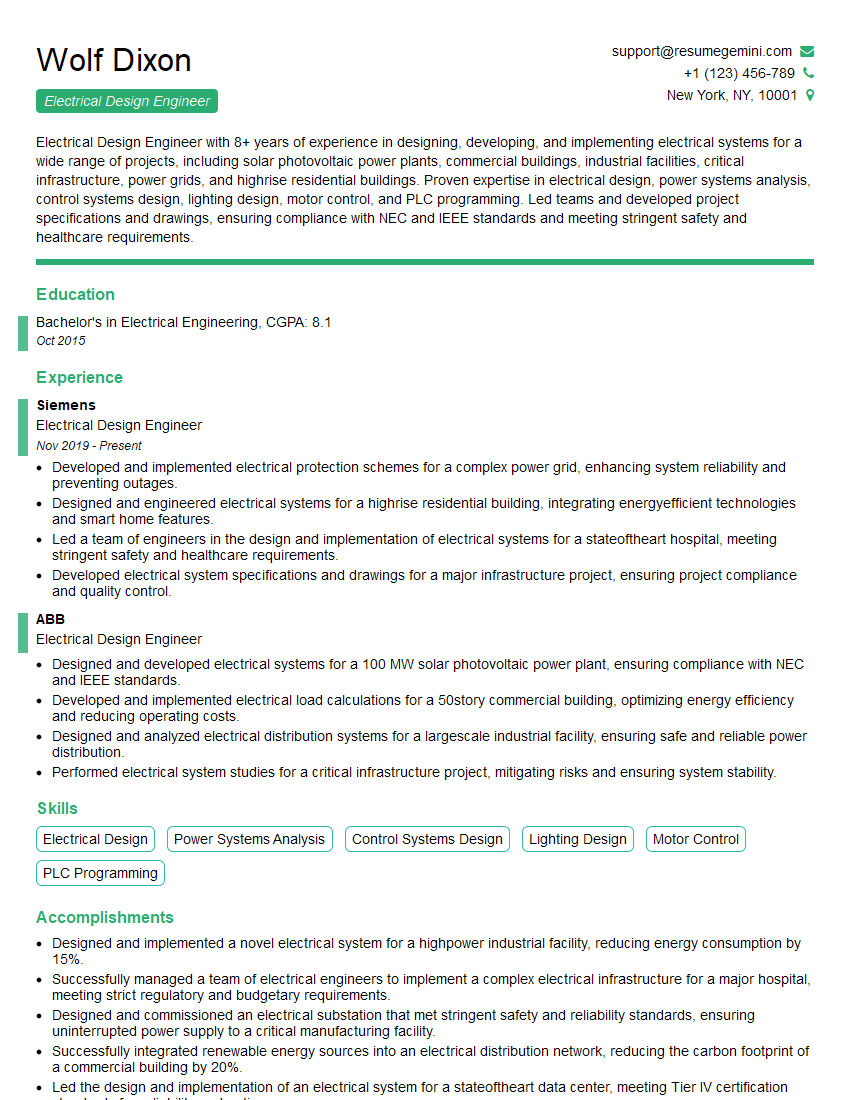
Electrical Design Engineer Resume Sample
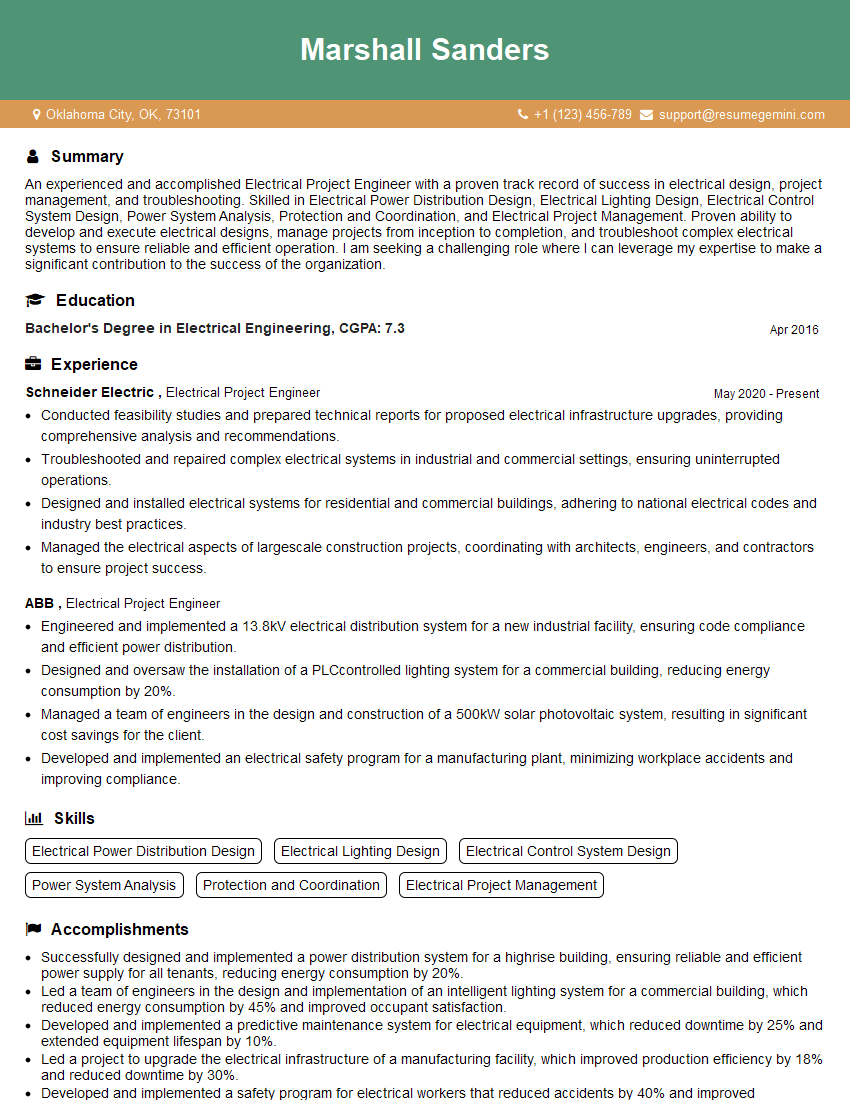
Electrical Project Engineer Resume Sample
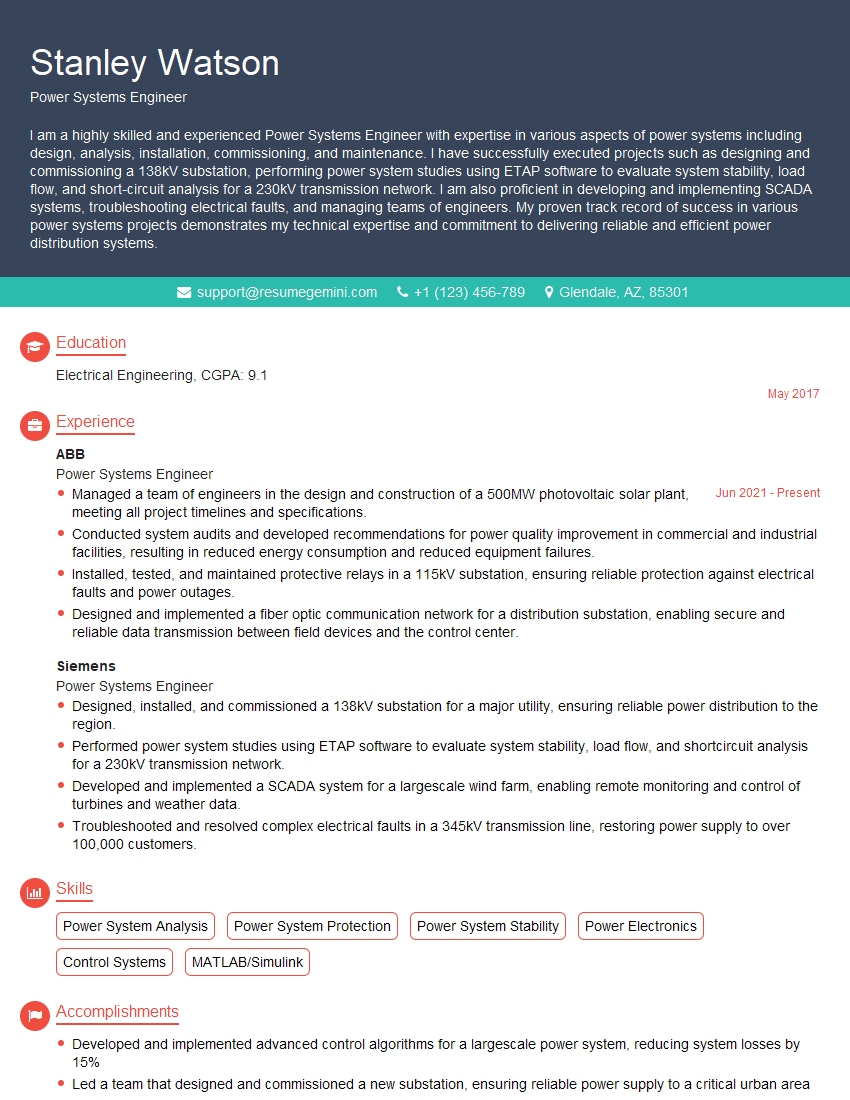
Power Systems Engineer Resume Sample
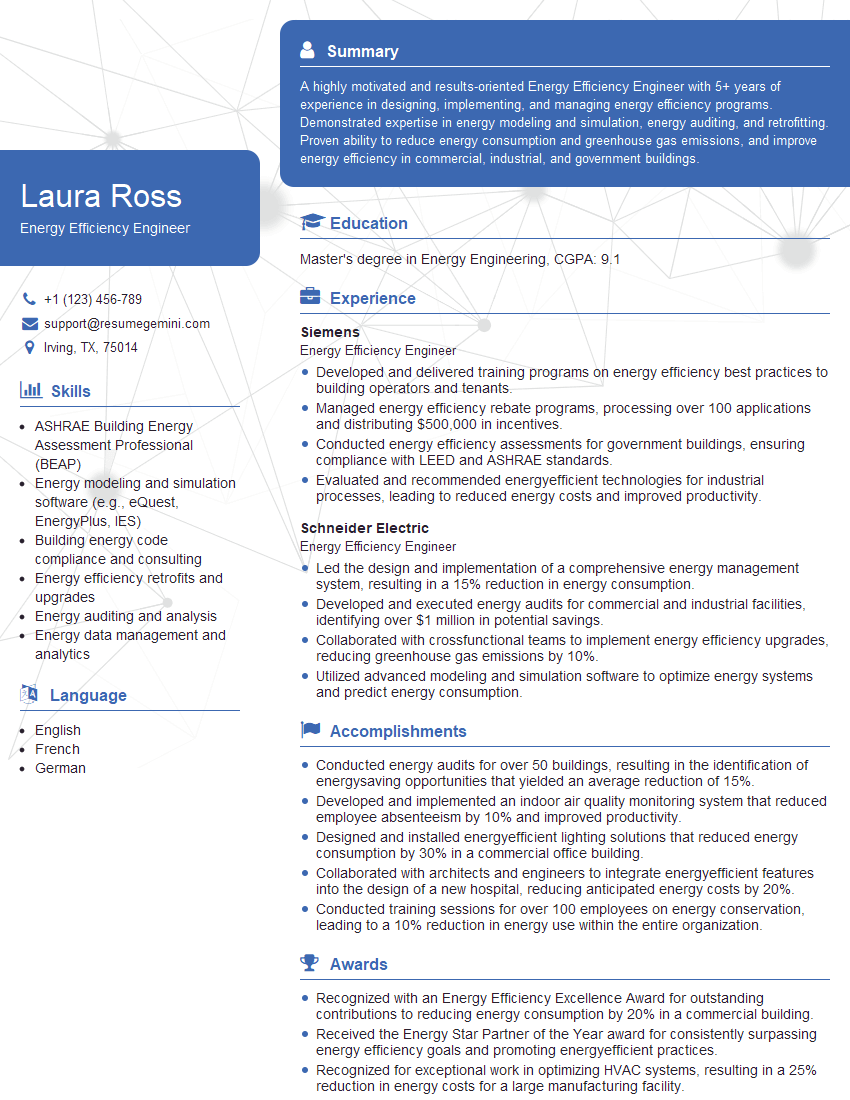
Energy Efficiency Engineer Resume Sample

Renewable Energy Engineer Resume Sample
Control Systems Engineer Resume Sample
Explore more articles
Users Rating of Our Blogs
Share Your Experience
We value your feedback! Please rate our content and share your thoughts (optional).
What Readers Say About Our Blog
Very informative content, great job.
good