Interviews are opportunities to demonstrate your expertise, and this guide is here to help you shine. Explore the essential Basic Carpentry and Construction Skills interview questions that employers frequently ask, paired with strategies for crafting responses that set you apart from the competition.
Questions Asked in Basic Carpentry and Construction Skills Interview
Q 1. What are the different types of wood commonly used in carpentry?
Choosing the right wood is crucial in carpentry, as different species offer varying properties of strength, durability, workability, and aesthetic appeal. Here are some commonly used types:
- Hardwoods: These are denser and more durable, often used for flooring, furniture, and fine cabinetry. Examples include oak (known for its strength and grain), maple (hard and smooth), cherry (beautiful reddish hue), and walnut (rich dark color).
- Softwoods: Generally less dense and easier to work with, they’re frequently used for framing, sheathing, and general construction. Examples include pine (affordable and versatile), fir (strong and stiff), and spruce (lightweight and resonant).
- Engineered Wood Products: These are manufactured from wood fibers or smaller pieces, offering consistent quality and often cost-effectiveness. Examples include plywood (layers of veneer glued together), MDF (Medium-Density Fiberboard, smooth and easy to finish), and OSB (Oriented Strand Board, used for sheathing).
The choice of wood depends heavily on the project’s requirements. For instance, a sturdy table would benefit from hardwood like oak, while framing a wall might use cost-effective pine.
Q 2. Explain the process of measuring and cutting lumber accurately.
Accurate measuring and cutting are fundamental to carpentry. Inaccuracy leads to wasted material and structural problems. Here’s the process:
- Plan and Measure: Carefully review the project plans and measure the required dimensions twice, preferably thrice, to minimize errors. Use a measuring tape that is in good condition and read the markings carefully.
- Mark the Lumber: Use a pencil to clearly mark the cut lines on the lumber. A sharp pencil is crucial for precision. For angled cuts, use a speed square or protractor to ensure accuracy.
- Choose the Right Tool: Select the appropriate saw based on the type of cut and the material. For straight cuts, a hand saw or circular saw works well. For intricate cuts, a jigsaw or hand saw might be better.
- Secure the Lumber: Use a vise or clamps to securely hold the lumber in place while cutting. This prevents movement and ensures a clean cut.
- Cut the Lumber: Make the cut slowly and steadily, following the marked line. Avoid rushing, as this increases the likelihood of errors.
- Check the Cut: After cutting, double-check the dimensions against your measurements to ensure accuracy. If necessary, make minor adjustments.
For example, when cutting a 2×4 for a wall stud, I’d measure the precise length required, add a few millimeters for trimming, mark it clearly, and then carefully cut it with a miter saw, ensuring the saw blade is properly aligned with my mark.
Q 3. Describe your experience with various hand tools (e.g., saws, hammers, chisels).
My experience with hand tools spans decades of hands-on work. I’m proficient in using a wide range of tools, each for its specific purpose:
- Saws: I’m comfortable with hand saws (rip saws, crosscut saws), coping saws, and hacksaws for various cuts in different materials. I understand the importance of proper saw blade selection for different materials and types of cuts.
- Hammers: I use claw hammers for driving nails and removing them, and I select hammer size and weight depending on the material and the size of the nails.
- Chisels: I use chisels for shaping wood, removing excess material, and creating mortises and tenons—essential joinery techniques. I’m experienced in using both wood chisels and metal chisels appropriately.
- Other tools: My skillset also extends to using planes for smoothing surfaces, levels for ensuring horizontal and vertical accuracy, and squares for checking right angles. I understand the importance of maintaining sharp tools for efficiency and safety.
On a recent project, I used a combination of hand tools to create intricate dovetail joints for a custom drawer. The precision demanded by this technique required the deft use of chisels, saws, and mallets. It demonstrated the importance of understanding the nuances of each tool.
Q 4. How do you ensure the squareness of a structure during framing?
Ensuring squareness during framing is critical for structural integrity. A non-square structure will lead to instability and potential collapse. Here’s how I ensure squareness:
- Using a Speed Square: This tool is invaluable for checking and establishing right angles (90 degrees). I use it to mark the corners of wall frames, ensuring that the studs are placed at 90 degrees to the top and bottom plates.
- Measuring Diagonals: In a rectangle, the diagonals must be equal in length. I measure the diagonals of rectangular frames (e.g., door frames, wall frames) to verify squareness. If the diagonals are unequal, the frame is not square, requiring adjustments.
- Plumb Bob and Level: A plumb bob ensures verticality, while a level ensures horizontality. These tools, used in conjunction with a square, are crucial for accurate framing.
- Using a framing square: A framing square is a more precise tool than a speed square and is ideal for accurate layout in complex framing.
For instance, when framing a wall, I always check the diagonals to ensure they are equal, and use a level to confirm that the top plate is perfectly horizontal. This ensures a structurally sound and plumb wall.
Q 5. What are the safety precautions you take when using power tools?
Safety is paramount when using power tools. I adhere to strict safety protocols to prevent accidents:
- Personal Protective Equipment (PPE): I always wear safety glasses or a face shield to protect my eyes from flying debris. Hearing protection is essential when using noisy tools. Work gloves provide hand protection. A dust mask protects my lungs from sawdust and other particulates.
- Tool Maintenance: I ensure that all power tools are in good working condition, with sharp blades and bits. Loose parts or damaged cords are immediately addressed or replaced.
- Proper Tool Use: I use power tools according to the manufacturer’s instructions. I never force a tool beyond its capacity or use it in a way it wasn’t designed for.
- Workspace Safety: I maintain a clean and organized workspace, free from clutter and trip hazards. Adequate lighting is also crucial for visibility and safety.
- Disconnecting Power: Before making adjustments or cleaning a tool, I always disconnect it from the power source.
For example, before using a circular saw, I always inspect the blade for damage, wear appropriate safety glasses and hearing protection, and make sure the work area is free of obstructions. I never reach over the spinning blade.
Q 6. Describe your experience with different types of fasteners (nails, screws, bolts).
The choice of fastener depends on the application, the material being joined, and the strength required. I’m experienced with various types:
- Nails: I use nails for general construction, framing, and fastening sheathing. I select nails based on their length, diameter, and type (common, finish, etc.), matching them to the material’s thickness and strength requirements.
- Screws: Screws offer superior holding power and are better for applications where disassembly might be required. I use wood screws, sheet metal screws, and drywall screws for different purposes, choosing the correct type, length, and head style for each task.
- Bolts: For heavy-duty applications or where maximum strength is required, bolts are the preferred fastener. I use different types of bolts (carriage bolts, machine bolts, etc.) depending on the application and material.
In a recent project, I used structural screws for framing because of their superior holding power compared to nails in that application. The increased holding power ensured a stronger and more stable structure.
Q 7. Explain the process of installing drywall.
Drywall installation involves several steps to create smooth, even walls and ceilings:
- Preparation: Ensure the framing is plumb and square. Clean the framing of any debris.
- Cutting Drywall: Measure and cut drywall panels to the required sizes using a utility knife or drywall saw. Score the face side and snap the panel along the score line.
- Fastening: Attach drywall to the framing using drywall screws, spacing them appropriately. Countersink the screws slightly to allow for seamless finishing.
- Taping and Mudding: Apply drywall tape over the seams and screw heads. Apply joint compound (mud) over the tape, feathering it out to create a smooth transition. Multiple coats are usually required.
- Sanding: Once the mud is dry, sand it smooth to prepare for priming and painting.
- Priming and Painting: Prime the drywall to create a uniform surface for the paint. Apply paint coats according to the paint instructions.
For example, when installing drywall in a new room, I start by meticulously measuring and cutting the panels, ensuring they fit perfectly between the studs. Then, I carefully fasten them using the appropriate screws, paying attention to proper spacing and countersinking. The finishing process involves several coats of mud and meticulous sanding to ensure a smooth, flawless finish.
Q 8. How do you prepare a surface for painting?
Preparing a surface for painting is crucial for a long-lasting, professional finish. It involves several key steps, ensuring the paint adheres properly and looks its best. Think of it like preparing a canvas for a masterpiece – you wouldn’t start painting without prepping the canvas, would you?
- Cleaning: First, thoroughly clean the surface to remove dirt, dust, grease, or any loose particles. I typically use a stiff brush, a scraper, and a damp cloth, adjusting the cleaning method depending on the material (wood, drywall, metal, etc.). For particularly stubborn grime, a degreaser might be necessary.
- Repairing: Next, address any imperfections. This could involve filling holes with spackle or wood filler, sanding down rough patches, and caulking gaps to create a smooth, even surface. Allow ample drying time before proceeding.
- Sanding: Sanding is key to creating a smooth surface for even paint application. I use progressively finer grit sandpaper, starting with a coarser grit to remove imperfections and finishing with a finer grit to achieve a silky smooth finish. Always sand in the direction of the wood grain for wood surfaces.
- Priming (Often Necessary): Priming seals the surface, improves paint adhesion, and can help prevent bleed-through from stains or knots in the wood. The type of primer depends on the surface and the type of paint being used. For example, oil-based primer is often used on bare wood.
- Final Wipe Down: Finally, wipe down the entire surface with a tack cloth to remove any sanding dust. This ensures a dust-free surface for painting, preventing imperfections in the final coat.
For instance, on a project painting kitchen cabinets, I meticulously cleaned the cabinets, repaired any chipped areas with wood filler and sanded them smooth, applied a primer to ensure the paint adhered well and prevented bleed through from the wood grain, and then gave everything a final wipe-down before applying the paint. The result? A stunning, professional-looking finish.
Q 9. What are different types of paint and their applications?
There’s a wide variety of paints available, each suited for different applications and surfaces. Selecting the right paint is crucial for achieving the desired aesthetic and durability.
- Oil-based paints: These paints are known for their durability, water resistance, and smooth finish. However, they have a strong odor, take longer to dry, and require solvents for cleanup. They are excellent for exterior applications and trim work where durability is paramount.
- Latex paints (Water-based): Latex paints are the most common type, offering a wide range of colors and finishes (matte, satin, semi-gloss, gloss). They are low-odor, easy to clean up with soap and water, and dry relatively quickly. Ideal for interior walls and ceilings.
- Acrylic paints: These water-based paints are versatile and fast-drying, making them suitable for various surfaces like wood, canvas, and metal. They offer excellent adhesion and are less prone to cracking than some other options. Common in arts and crafts, but also increasingly used for interior projects.
- Enamel paints: Known for their hardness and glossy finish, enamel paints are exceptionally durable and resistant to scratches and scuffs. They’re often used for trim, doors, and other areas subject to heavy wear and tear.
For example, when painting a bathroom, I’d choose a semi-gloss latex paint for the walls for easy cleaning, and an oil-based or enamel paint for the trim for increased durability and water resistance.
Q 10. Describe your experience with installing flooring (e.g., hardwood, tile).
I have extensive experience installing various types of flooring, including hardwood and tile. Each material presents its own set of challenges and techniques.
- Hardwood Flooring: Installing hardwood flooring requires precision and attention to detail. The process involves acclimating the wood to the environment, preparing the subfloor (ensuring it’s level and stable), laying out the flooring according to the chosen pattern (e.g., straight, diagonal), and carefully securing each plank using nails or adhesive. Proper expansion gaps must be maintained around the perimeter of the room to account for changes in temperature and humidity.
- Tile Flooring: Tile installation begins with preparing the subfloor, ensuring it’s perfectly level and smooth. Then, I use a thinset mortar to adhere the tiles, ensuring proper spacing between them. After the mortar sets, I grout the joints to create a watertight and aesthetically pleasing finish. Leveling is critical here to avoid uneven surfaces.
In one project, I installed hardwood flooring in a living room, carefully acclimating the wood before installation to avoid expansion issues. I used a moisture meter to verify the subfloor was dry enough to prevent problems. In another project, I installed ceramic tile in a bathroom, ensuring a level surface and waterproof grout to prevent water damage.
Q 11. Explain the process of building a basic frame for a wall or structure.
Building a basic wall frame is fundamental in construction. It involves precision and understanding of structural principles. Imagine building with LEGOs – each piece needs to be in the right place to create a stable structure.
- Measure and Cut: Start by measuring the dimensions of the wall and cutting the lumber (typically studs, top and bottom plates) to the correct lengths using a saw (circular saw or miter saw). Accuracy is key; inaccurate cuts lead to instability.
- Assemble the Frame: Lay out the bottom plate (the horizontal support at the base) and position the studs (vertical supports) at the required spacing (typically 16 inches on center). Then secure the top plate (the horizontal support at the top) using nails or screws, creating a rectangular frame.
- Corner Construction: For corner walls, studs are positioned to create a strong, interlocking joint. This usually involves using a king stud (a longer stud that extends the full height of the wall) and jack studs (shorter studs to fill the gap at the corner).
- Sheathing (Optional): Once the frame is complete, sheathing (plywood or OSB) can be attached to provide structural stability and a surface for the wall covering.
For example, when framing a partition wall, I would precisely measure and cut the studs to fit within the designated space, creating a strong and square frame, ensuring proper alignment using a level and square. This would then be sheathed with plywood to add structural rigidity and provide a solid base for finishing.
Q 12. How do you read and interpret blueprints?
Reading blueprints is a crucial skill for any carpenter or builder. Blueprints are essentially detailed maps of a construction project, providing all the necessary information to bring a design to life.
I approach reading blueprints systematically:
- Title Block: I always start with the title block, which provides essential information like project name, date, scale, and the names of the architect and engineers.
- Legends and Symbols: The legend or key explains the various symbols used in the drawings. Understanding these is crucial to interpreting the plans correctly.
- Floor Plans: These show the layout of the building, including walls, doors, windows, and other features. Dimensions and notations are critical for accurate construction.
- Elevations: Elevations show the exterior and interior views of the building, indicating height, materials, and other details.
- Sections: Sections are cutaway views that show the interior structure of the building, helping to understand the construction methods and details.
- Details: These drawings provide enlarged views of specific elements, such as door and window details or connections between structural members.
For example, if the blueprint shows a specific type of window with dimensions, I’ll use this information to order the correct window and properly install it, ensuring it fits precisely within the designated opening, and matches the design specifications.
Q 13. What is your experience with using a level and plumb bob?
A level and a plumb bob are essential tools for ensuring accuracy and precision in construction. They are used to verify verticality (plumb) and horizontality (level) in various applications.
- Level: A level is used to ensure surfaces are horizontal or perfectly flat. It utilizes a vial of liquid with a bubble; when the bubble rests in the center, the surface is level. I use levels for setting posts, installing cabinets, and ensuring the flatness of floors and countertops.
- Plumb Bob: A plumb bob is a weighted object suspended from a string, used to determine vertical alignment. It helps ensure walls are perfectly plumb (vertical) and that supports are positioned correctly. I rely on this for accurate vertical alignment of walls, posts and other vertical components.
On a recent project, I used a level to ensure the sill plate for a wall was perfectly horizontal before framing. I then used a plumb bob to double-check that the walls were plumb. This level of precision ensures the structural integrity of the wall and the aesthetics of the completed project.
Q 14. How do you handle unexpected problems or challenges on a job site?
Unexpected problems are inevitable on any job site. My approach is methodical and focused on safety and problem-solving.
- Assessment: First, I carefully assess the problem, identifying its scope and potential impact on the project. I take photos and make detailed notes to document the issue.
- Solutions: I brainstorm solutions, considering factors like time, cost, and safety. I consult blueprints, building codes, and other relevant resources. If needed, I consult with the project manager or other skilled tradespeople.
- Implementation: Once a solution is decided upon, I implement it carefully, ensuring all safety precautions are followed. This might involve modifying the plan, using alternative materials, or seeking expert advice.
- Documentation: I thoroughly document the problem, the solution chosen, and the steps taken to resolve it. This is important for future reference and to maintain transparency with the client.
For instance, I once discovered a hidden pipe during demolition that wasn’t shown on the blueprints. Instead of panicking, I carefully assessed the situation, consulted the plans, and modified my work plan to avoid the pipe, documenting the change to keep the project manager informed and prevent any future conflict.
Q 15. Describe your experience with using different types of saws (circular, miter, hand saw).
My experience with saws is extensive, encompassing various types for different applications. The circular saw is my workhorse for ripping (cutting along the grain) and crosscutting (cutting against the grain) larger pieces of lumber quickly. I’m proficient in adjusting the blade depth and bevel to achieve precise cuts, always prioritizing safety by using a push stick and ensuring the material is securely clamped. The miter saw is indispensable for accurate angled cuts, particularly when creating frames or molding. I’m adept at setting the angles and using the fence to ensure consistent results. Finally, the hand saw offers control and precision in tighter spaces where power tools are impractical. I frequently use a hand saw for fine cuts, intricate details, and when working on delicate materials. I understand the importance of proper blade selection for each material, ensuring a clean, smooth cut each time. For instance, a fine-tooth blade for hardwoods and a coarser one for softer woods.
Career Expert Tips:
- Ace those interviews! Prepare effectively by reviewing the Top 50 Most Common Interview Questions on ResumeGemini.
- Navigate your job search with confidence! Explore a wide range of Career Tips on ResumeGemini. Learn about common challenges and recommendations to overcome them.
- Craft the perfect resume! Master the Art of Resume Writing with ResumeGemini’s guide. Showcase your unique qualifications and achievements effectively.
- Don’t miss out on holiday savings! Build your dream resume with ResumeGemini’s ATS optimized templates.
Q 16. What are the different types of joints used in carpentry?
Carpentry hinges on strong joints, and I’m familiar with a wide range. The simplest are butt joints, where two pieces meet squarely. For increased strength, a dado joint (a groove cut into one piece to receive the other) is much stronger. Mortise and tenon joints, where a projecting tenon fits into a mortise (a hole), are incredibly strong and classic, ideal for furniture making. Dovetail joints, with interlocking finger-like projections, are known for their strength and aesthetic appeal, perfect for drawers and boxes. Lap joints overlap pieces for added strength and are great for framing and beams. Choosing the correct joint depends entirely on the project’s requirements – the strength needed, the aesthetic goals, and the material being used. For instance, while a butt joint might suffice for a simple shelf, a mortise and tenon is essential for the leg of a sturdy table.
Q 17. Explain the process of finishing wood (sanding, staining, sealing).
Wood finishing enhances both the look and the longevity of a project. Sanding is the first step, progressively using finer grits (from coarse to fine) to create a smooth surface free of imperfections. The goal is to eliminate scratches and create a uniform texture, ready for staining or painting. Staining is an art form, allowing you to enhance the natural beauty of the wood or change its color. Different stains yield different effects – some penetrate deep into the grain while others only coat the surface. The application method, from brush to rag, impacts the final look. Sealing is critical for protection. A clear coat of varnish or polyurethane protects the wood from moisture, scratches, and UV damage. Applying multiple thin coats is usually better than one thick coat to avoid drips and runs. Proper preparation and application are paramount. For example, I once used a cherry wood stain on a handcrafted table, which brought out the richness of the wood grain beautifully before applying a protective sealant.
Q 18. How do you ensure the structural integrity of a project?
Ensuring structural integrity is paramount, involving careful planning and execution. Starting with solid, properly graded lumber is essential. All cuts must be accurate to ensure proper fit and alignment. Using the appropriate type of fasteners – nails, screws, or bolts – is crucial, using enough to withstand anticipated loads. Properly spaced joists, studs, and rafters provide sufficient support and prevent sagging or collapse. Understanding the physics of load bearing and stress distribution is critical, especially for larger projects. I always adhere to building codes and industry best practices, and on larger projects, I’d consult engineering plans to verify structural soundness. A seemingly simple mistake like improper spacing of support beams can compromise the entire structure, highlighting the need for precision and attention to detail.
Q 19. Describe your experience with working at heights.
I have significant experience working at heights, always prioritizing safety. I’m comfortable using scaffolding, ladders, and harnesses, and I’m fully aware of fall protection protocols. Before starting any elevated work, I thoroughly inspect the equipment, making sure it’s properly secured and stable. I always have a spotter when working at significant heights and strictly follow all safety regulations and company procedures. This includes the proper use of personal protective equipment (PPE), such as safety harnesses and helmets. I remember one job where we were installing roof trusses, and the use of appropriate safety harnesses was non-negotiable, ensuring the safety of the entire team. Working safely at heights is not just a matter of following rules; it’s about consistently maintaining a culture of safety.
Q 20. What is your experience with working with different types of building materials (concrete, brick, metal)?
My experience extends beyond wood to various building materials. I’m proficient in working with concrete, including mixing, pouring, and finishing. I understand the importance of proper curing and the different applications of concrete, from foundations to countertops. Bricklaying involves precision and attention to detail; I understand the various laying patterns and the importance of proper mortar mixing and application. I have experience working with metal framing, understanding the different types of metal and how to fasten them securely. Each material requires specific tools and techniques, and I am experienced with all of them. For example, proper bricklaying requires not only physical strength but also knowledge of how bricks should be laid for structural stability and water resistance.
Q 21. How familiar are you with building codes and regulations?
I’m very familiar with building codes and regulations, understanding their importance in ensuring structural safety and compliance. I regularly consult local and national building codes to ensure my work meets all requirements. This includes understanding regulations related to load-bearing capacity, fire safety, and accessibility. Staying current on code updates is essential, and I actively seek out training and resources to maintain my knowledge. Ignoring building codes can lead to serious consequences, ranging from structural failure to legal issues. It’s an integral aspect of responsible and ethical building practices. In one project, I had to adjust my design to meet specific requirements regarding fireproofing and egress pathways, showing how crucial it is to be up to date with regulations.
Q 22. Describe a time you had to troubleshoot a problem on a construction site.
Troubleshooting is a daily occurrence on a construction site. One instance involved installing a pre-hung door. After careful measuring and installation, the door wouldn’t close properly; it was rubbing against the frame. Initially, I suspected an error in my measurements. However, a closer inspection revealed a slight warp in the door itself, likely from moisture damage during storage.
My troubleshooting involved several steps: First, I carefully checked my measurements again to rule out any mistakes in the installation. Then, I used a level to verify the frame’s plumbness and squareness. Once I confirmed the frame was correctly installed, I focused on the door. Using a woodworking plane, I carefully shaved down the rubbing edges of the door. I worked in small increments, regularly testing the fit, until the door closed smoothly and without binding. This highlighted the importance of meticulous inspection and the need to adapt to unforeseen circumstances on the job site.
Q 23. What is your experience with using a nail gun?
I’m highly proficient with various nail guns, from framing nailers to finish nailers. I’m comfortable using both pneumatic and cordless models. My experience includes selecting the appropriate nail gun for the task, ensuring proper nail depth and minimizing damage to the surrounding material. For example, when installing trim, I’d use a finish nailer with smaller nails to avoid damaging the delicate trim molding. When framing a wall, I’d opt for a framing nailer with larger nails for increased strength and speed. Safety is always paramount, and I always use safety glasses and ensure the nail gun is properly maintained and adjusted for the type of nail being used. Regular cleaning and lubrication are crucial to prevent jams and malfunctions.
Q 24. How do you manage your time and prioritize tasks on a construction site?
Effective time management and task prioritization are crucial in construction. I utilize a combination of techniques. Firstly, a detailed understanding of the project plan and blueprints is essential. This allows me to break down large tasks into smaller, more manageable units. Secondly, I prioritize tasks based on their dependencies – completing tasks that must be finished before others can begin. Thirdly, I always communicate with my team and supervisors to keep the workflow efficient. We regularly check in to identify and address any potential delays or roadblocks. Finally, I use checklists and daily logs to track progress and ensure accountability. Think of it like baking a cake – you need to follow the recipe (project plan) carefully and complete each step (task) before moving on to the next, ensuring everything is done in the right order for the best result.
Q 25. Explain the importance of proper safety procedures in construction.
Safety is the absolute top priority on any construction site. It’s not just about following regulations; it’s about creating a culture of safety. This includes adhering strictly to all safety regulations and wearing appropriate personal protective equipment (PPE) such as hard hats, safety glasses, hearing protection, and work boots. Proper lifting techniques are also crucial to prevent back injuries. Regular safety meetings are important to reinforce safety procedures and address any potential hazards. For instance, we always ensure proper fall protection is in place when working at heights. A simple misstep can lead to serious consequences. Furthermore, a safe work environment requires vigilance, communication, and a shared commitment to preventing accidents. It’s about protecting yourself and your colleagues.
Q 26. What is your experience with using scaffolding and ladders?
I have extensive experience using scaffolding and ladders. Safety is always paramount when using these tools. Before using any scaffolding, I ensure it is properly erected and secured according to manufacturer’s instructions. This includes checking the stability of the structure and the condition of the planks. I understand the importance of proper weight distribution and never overload the scaffolding. When using ladders, I ensure they are placed on a firm, level surface and extend at least three feet above the landing point. I maintain three points of contact at all times when ascending or descending. Regular inspections for damage or wear are essential before using either ladders or scaffolding. Ignoring these precautions can lead to serious accidents.
Q 27. Describe your experience with demolition and removal of existing structures.
I have participated in various demolition projects, ranging from small-scale interior renovations to larger exterior demolition. My experience includes careful planning and preparation, starting with proper permits and ensuring the area is secured. Before beginning demolition, I identify and disconnect utilities such as gas, electricity, and water lines to prevent accidents. I’m proficient in using various demolition tools such as sledgehammers, wrecking bars, and power tools. Safety is crucial throughout the process. We employ methods to minimize dust and debris, and workers are always equipped with the appropriate PPE. Waste management is a critical aspect; all materials are sorted and disposed of according to environmental regulations. A thorough understanding of structural integrity is essential, as uncontrolled demolition can lead to unforeseen problems and hazards.
Q 28. How do you maintain your tools and equipment?
Proper tool and equipment maintenance is critical for efficiency and safety. After each use, I clean my tools thoroughly to remove debris, dust, and any corrosive materials. I lubricate moving parts regularly to prevent wear and tear. Blades and cutting edges are sharpened or replaced as needed. I store tools in a designated area to prevent damage and protect them from the elements. Regular inspections help to identify any defects early on, preventing potential accidents or costly repairs later. Think of it as preventative maintenance for your car – regular servicing prevents breakdowns and extends its lifespan. Similarly, maintaining your tools ensures they’re in top condition, ready for the job, and increases their longevity.
Key Topics to Learn for Basic Carpentry and Construction Skills Interview
- Reading and Interpreting Blueprints: Understanding architectural drawings, symbols, and measurements; translating designs into practical construction steps.
- Safe Tool Usage and Maintenance: Proper handling of hand and power tools (saws, drills, hammers, levels); regular maintenance and safety procedures for preventing accidents.
- Measuring and Marking Techniques: Accurate measurement using various tools (tape measures, squares); transferring measurements onto materials; understanding tolerances.
- Woodworking Fundamentals: Cutting, shaping, and joining wood; understanding different wood types and their properties; applying finishes.
- Basic Framing Techniques: Building walls, floors, and roofs using standard framing methods; understanding load-bearing principles.
- Understanding Building Codes and Regulations: Familiarity with local building codes and safety standards; adhering to best practices for construction.
- Problem-Solving and Troubleshooting: Identifying and resolving common construction challenges; adapting to unforeseen circumstances on the job site.
- Material Selection and Estimation: Choosing appropriate materials for different applications; accurately estimating material quantities for projects.
- Basic Drywall and Finishing Techniques: Hanging, taping, and finishing drywall; understanding different types of drywall and their applications.
- Working with Concrete and Masonry: Mixing and pouring concrete; laying bricks and blocks; understanding different types of mortar.
Next Steps
Mastering basic carpentry and construction skills opens doors to a rewarding and diverse career path, offering opportunities for growth and specialization. To maximize your job prospects, it’s crucial to present your skills effectively. Creating an ATS-friendly resume is key to getting your application noticed by employers. ResumeGemini is a trusted resource that can help you build a professional and impactful resume, ensuring your qualifications shine through. Examples of resumes tailored to Basic Carpentry and Construction Skills are available to guide you.
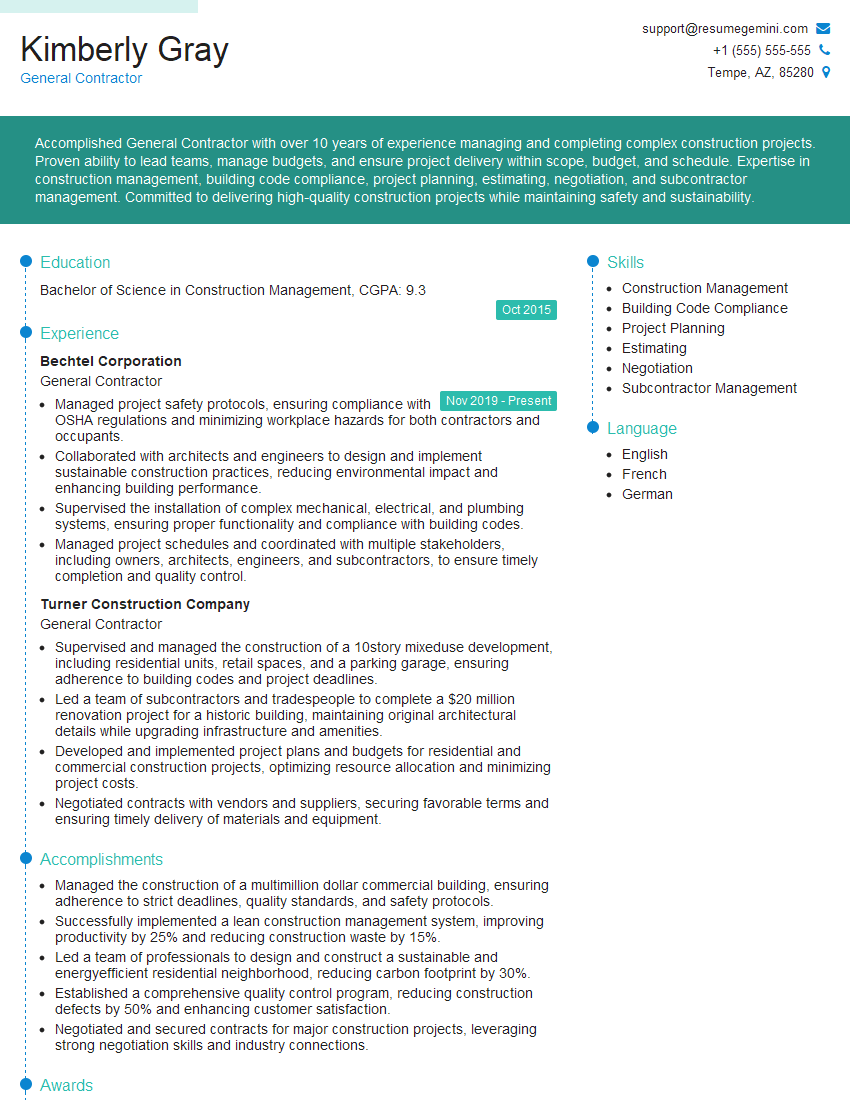
General Contractor Resume Sample
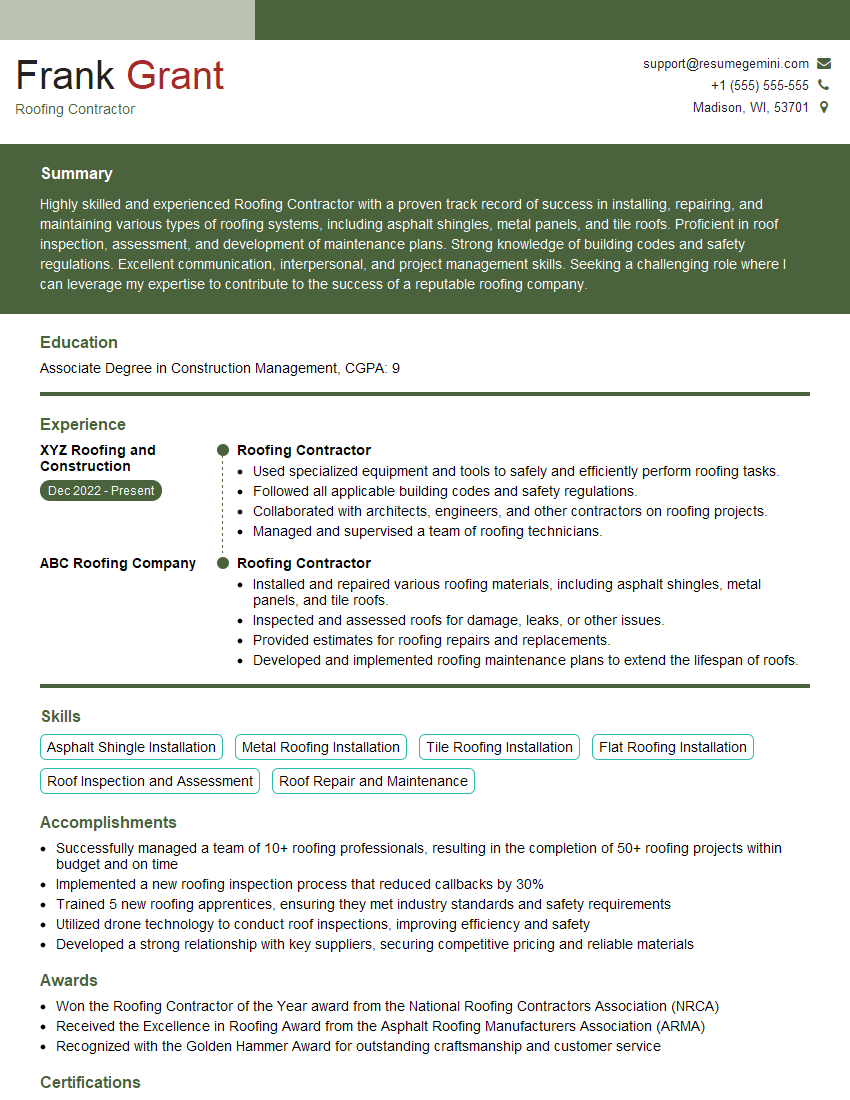
Roofing Contractor Resume Sample
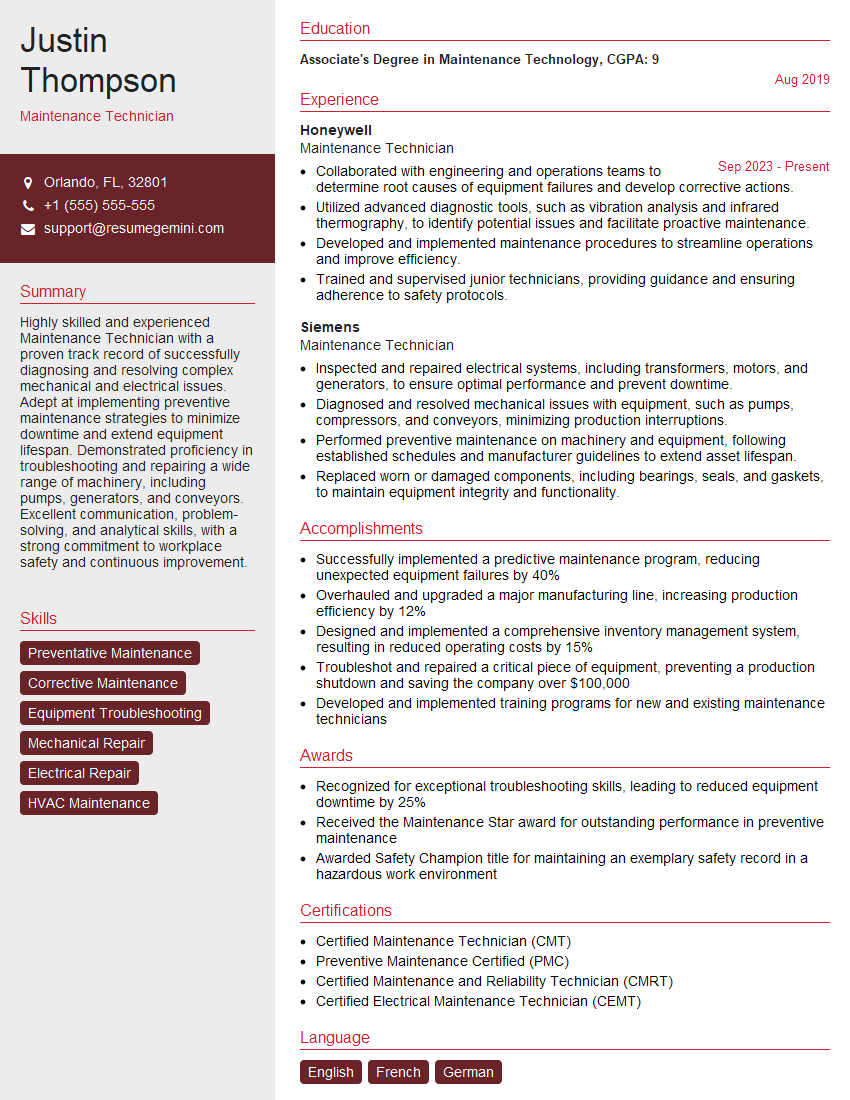
Maintenance Technician Resume Sample
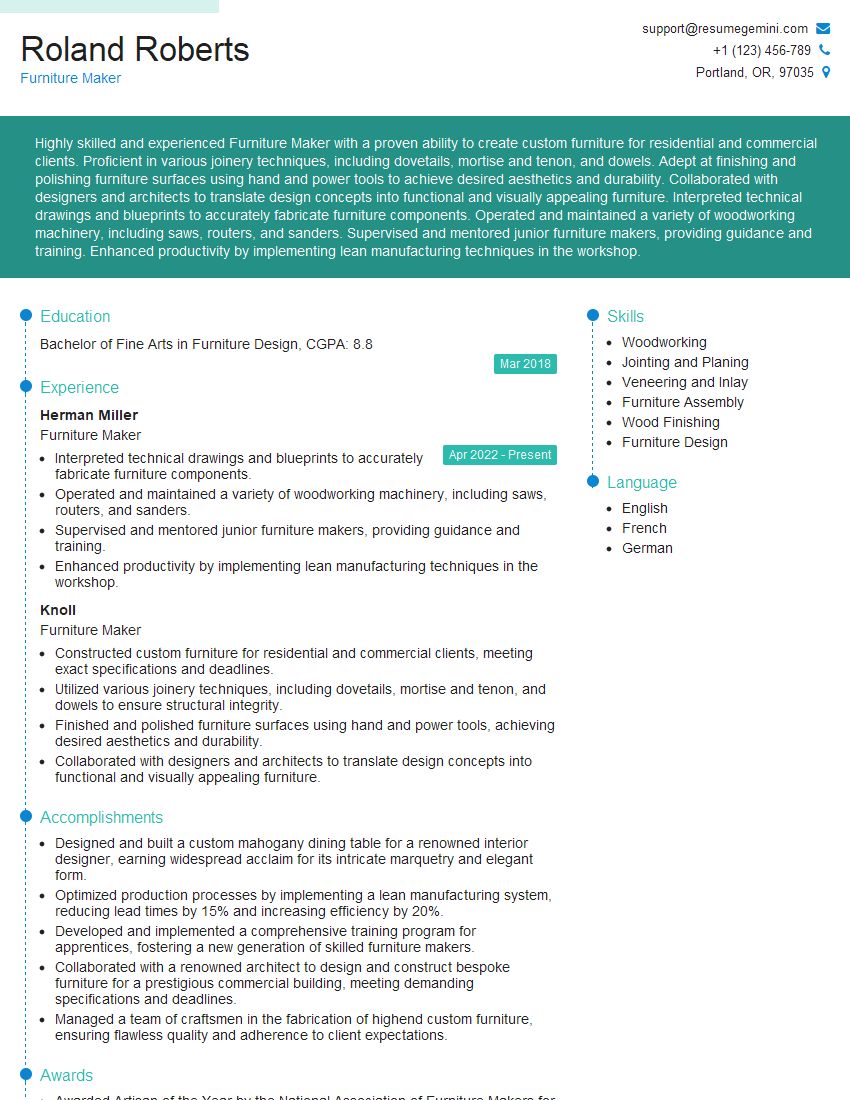
Furniture Maker Resume Sample
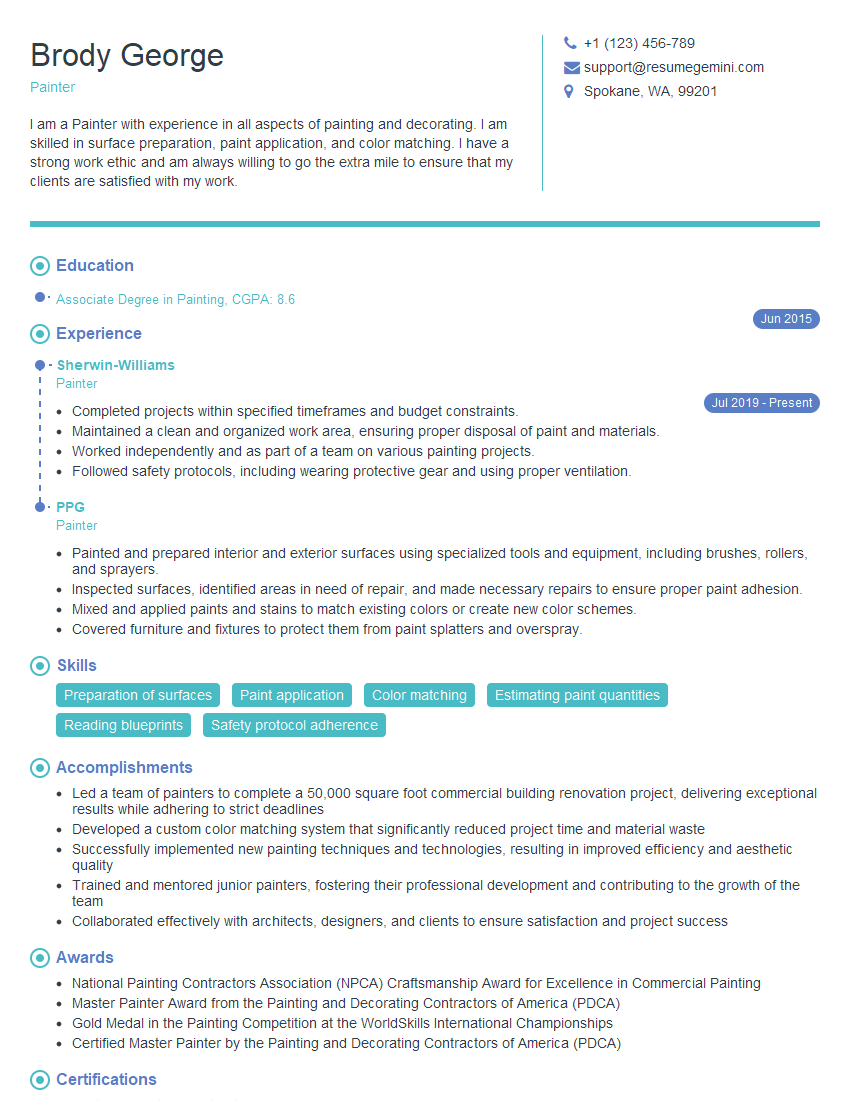
Painter Resume Sample
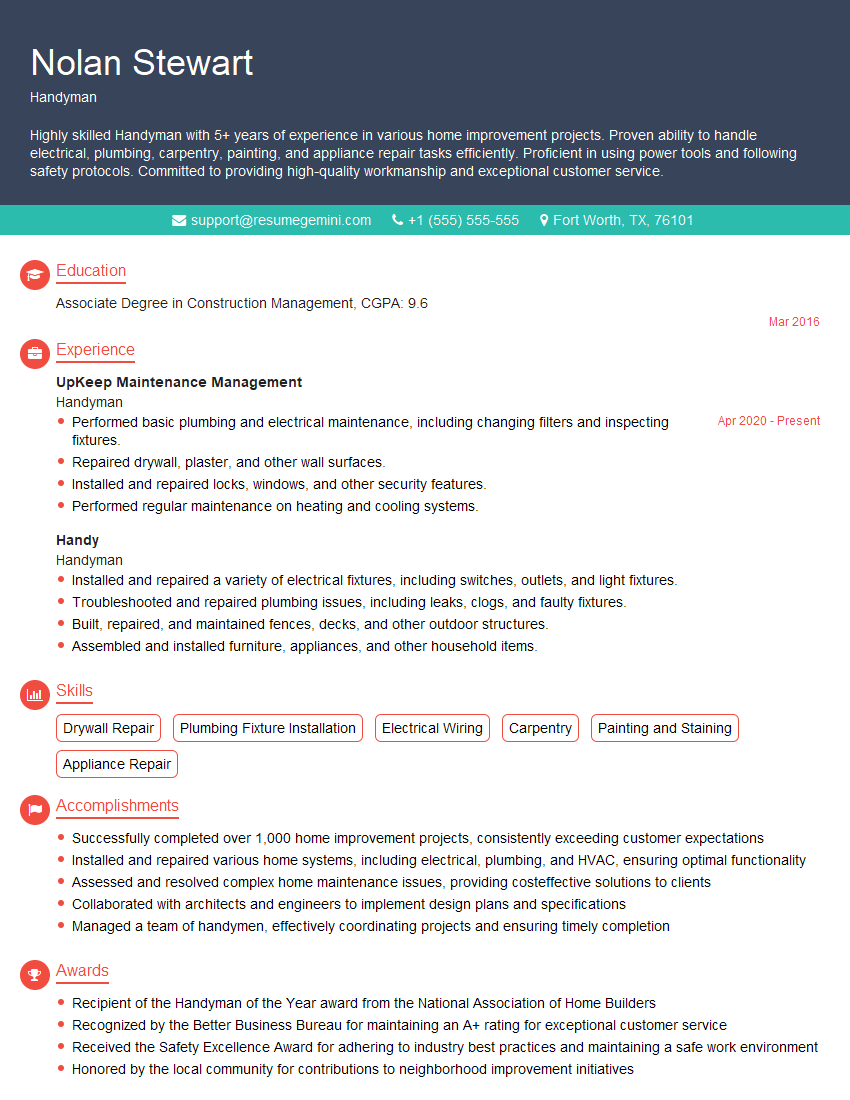
Handyman Resume Sample
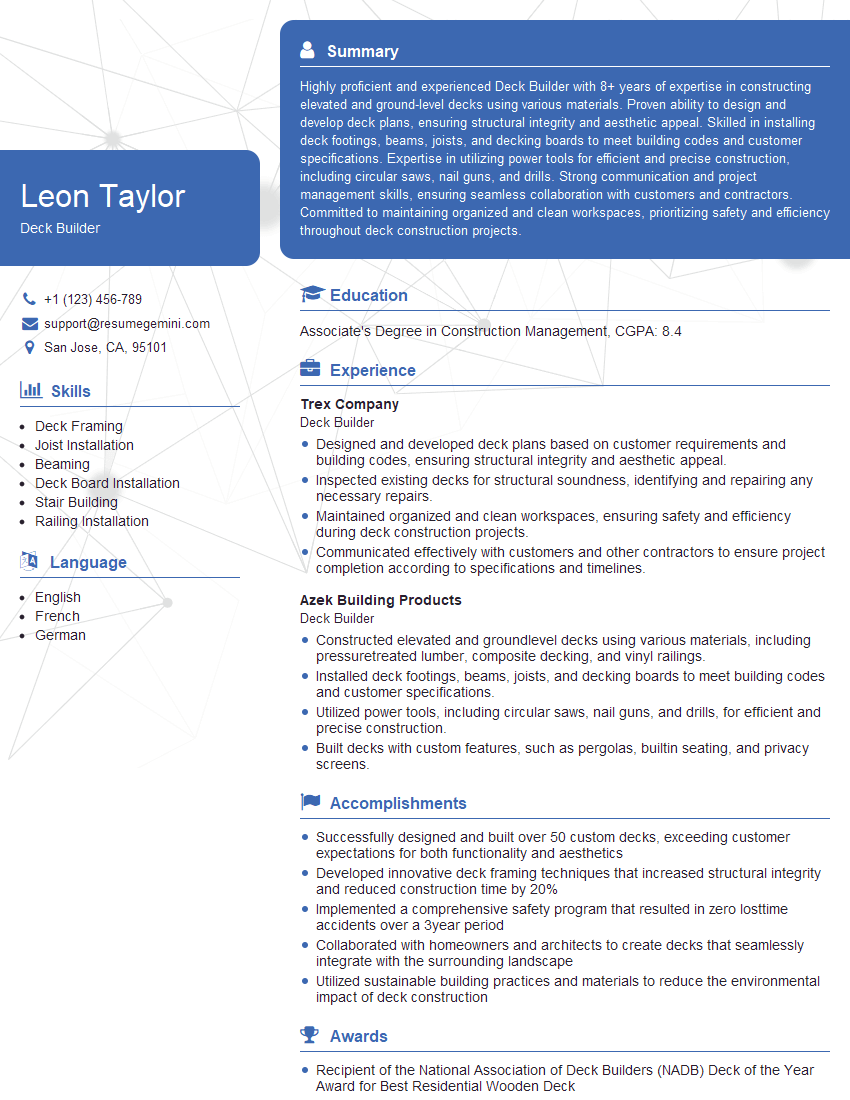
Deck Builder Resume Sample
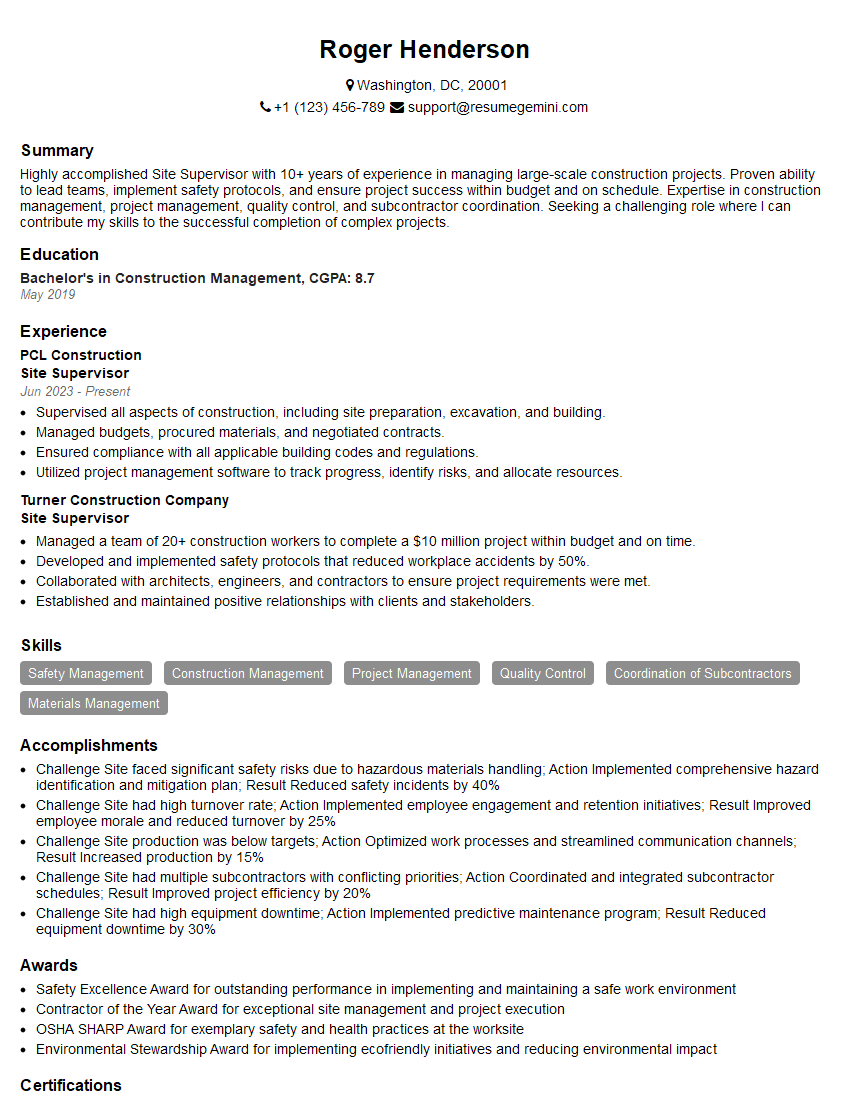
Site Supervisor Resume Sample
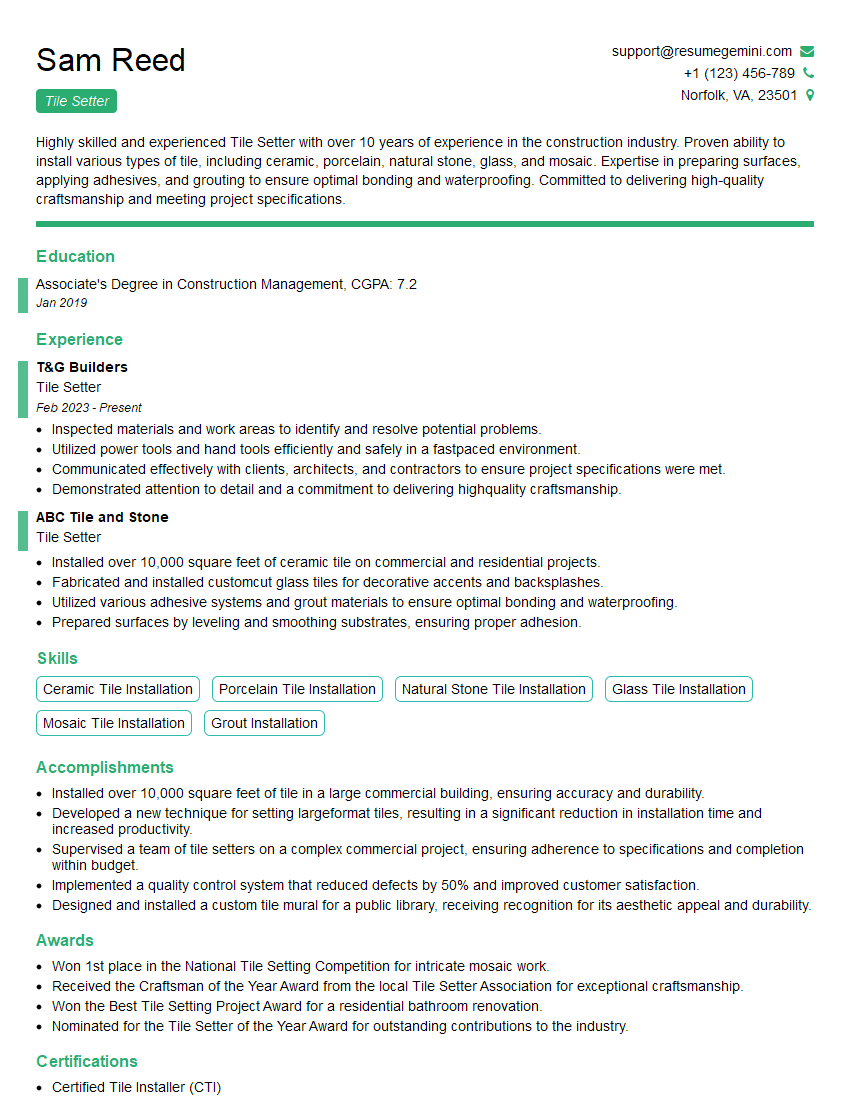
Tile Setter Resume Sample
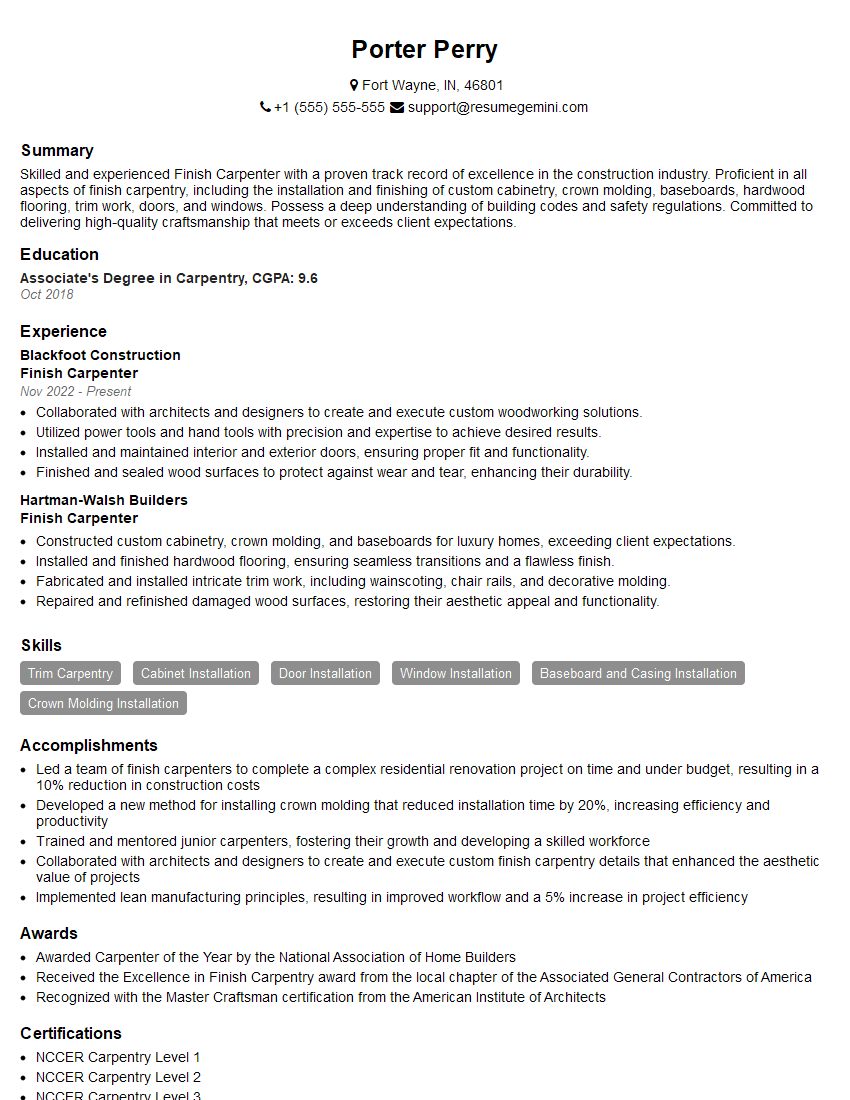
Finish Carpenter Resume Sample
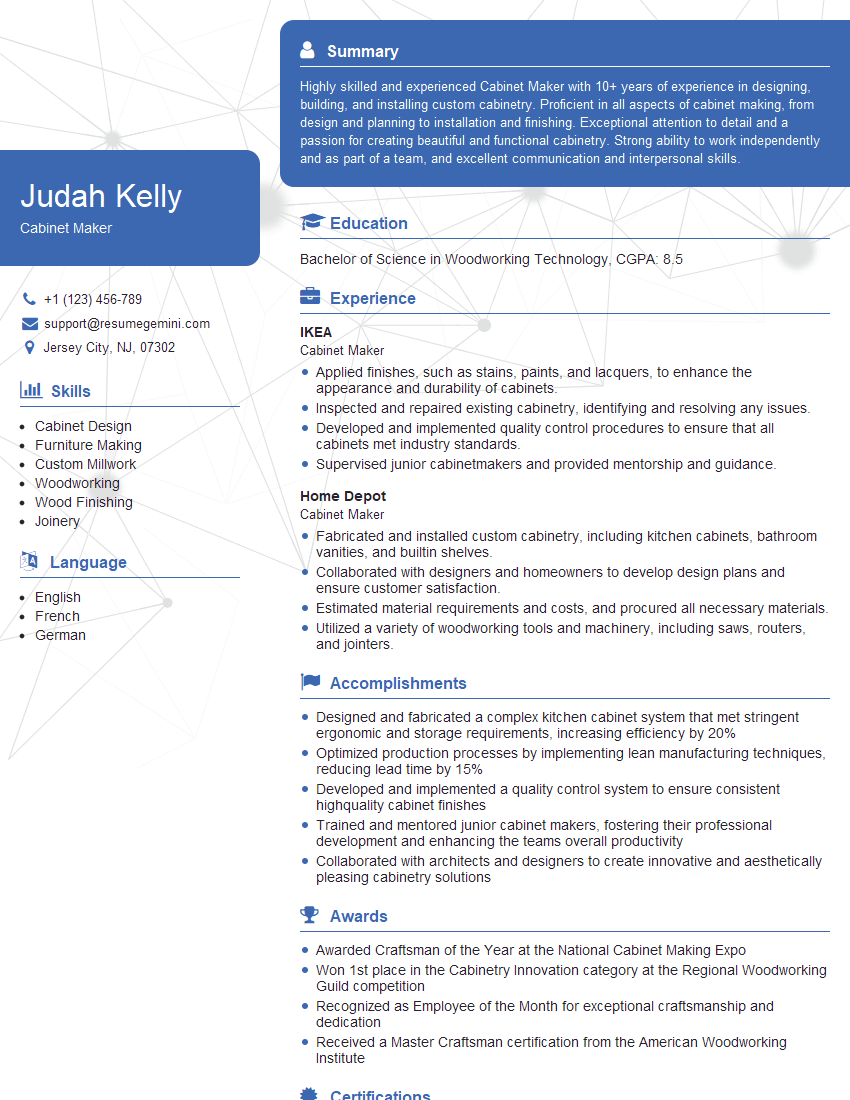
Cabinet Maker Resume Sample
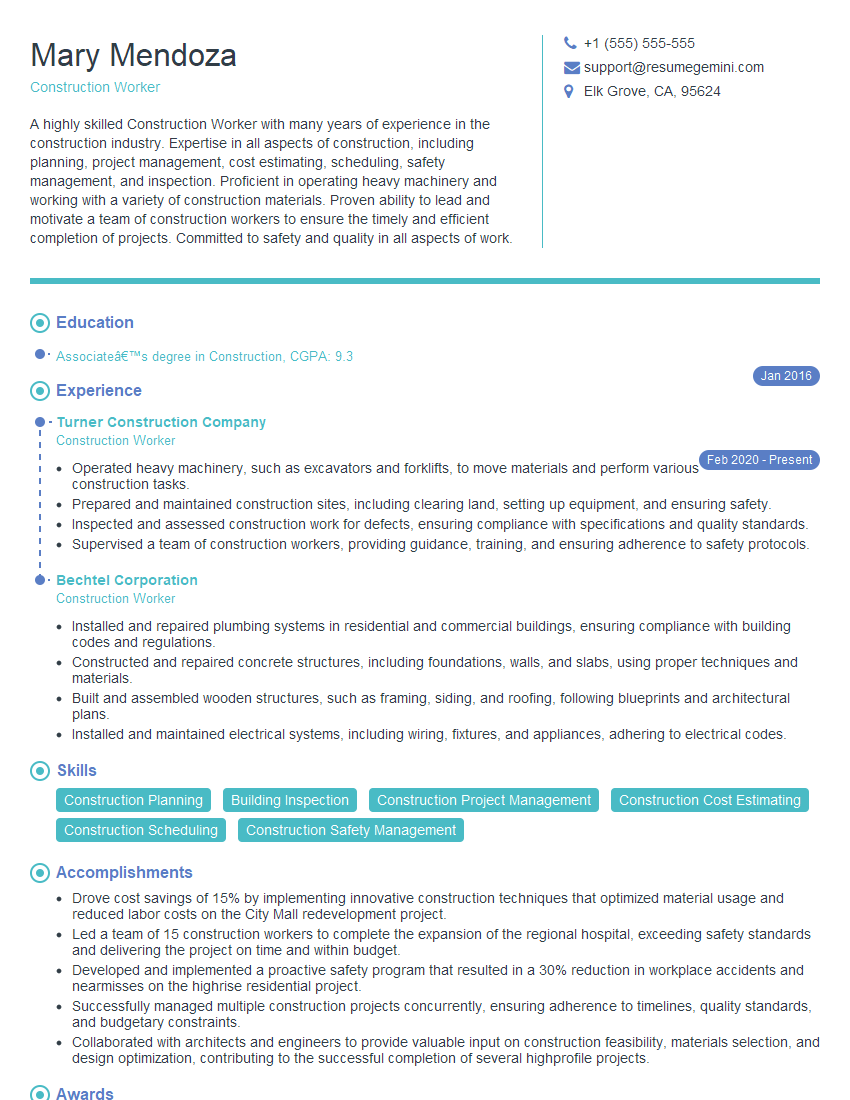
Construction Worker Resume Sample
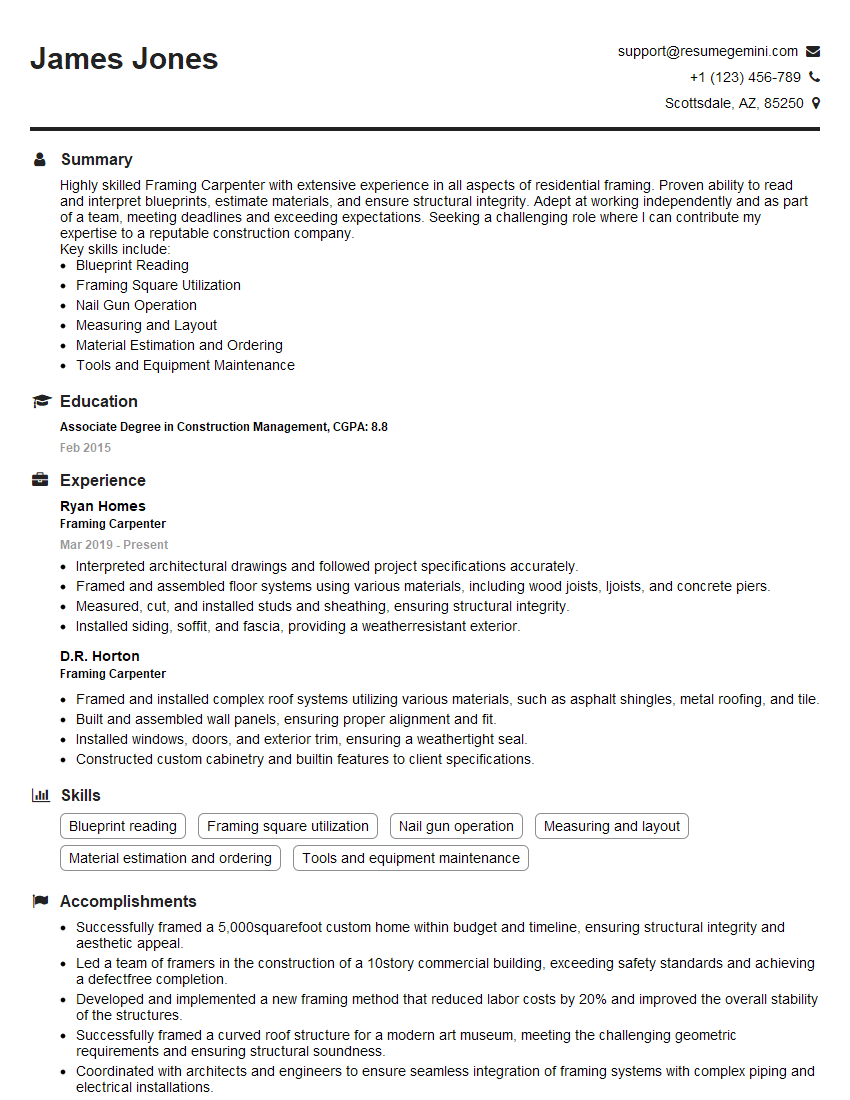
Framing Carpenter Resume Sample
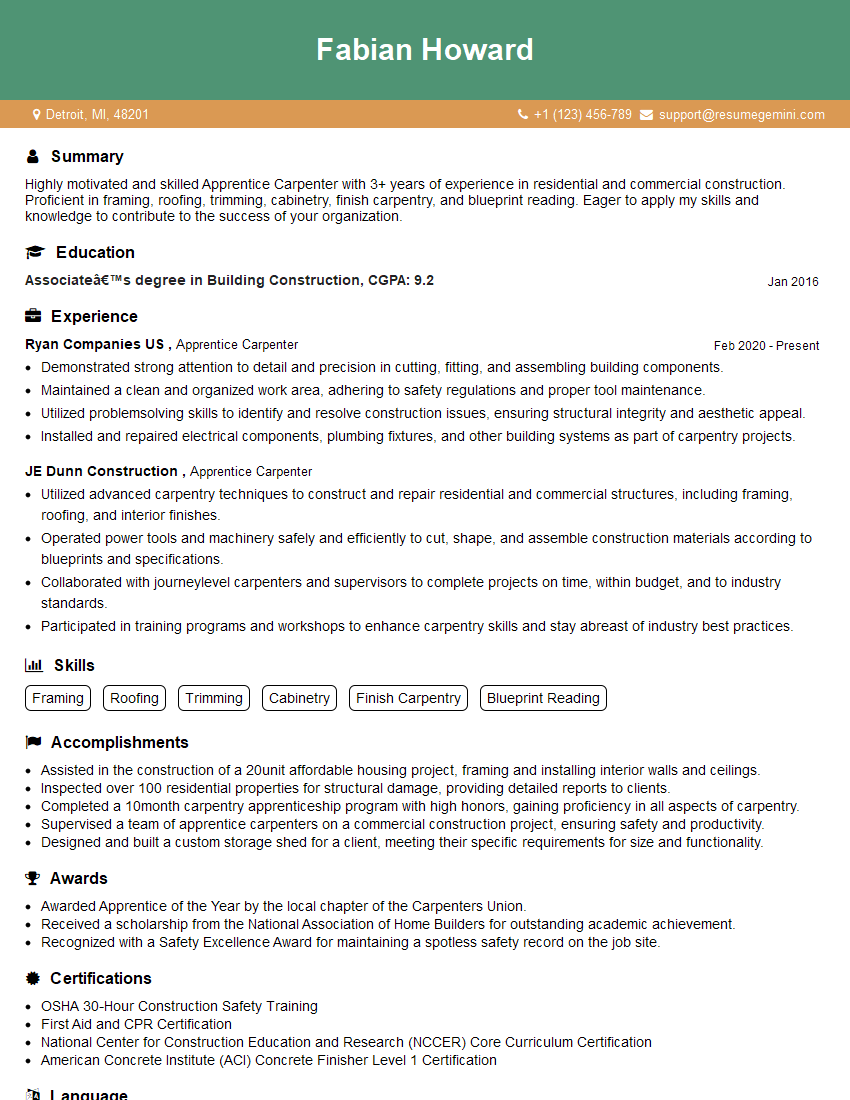
Apprentice Carpenter Resume Sample
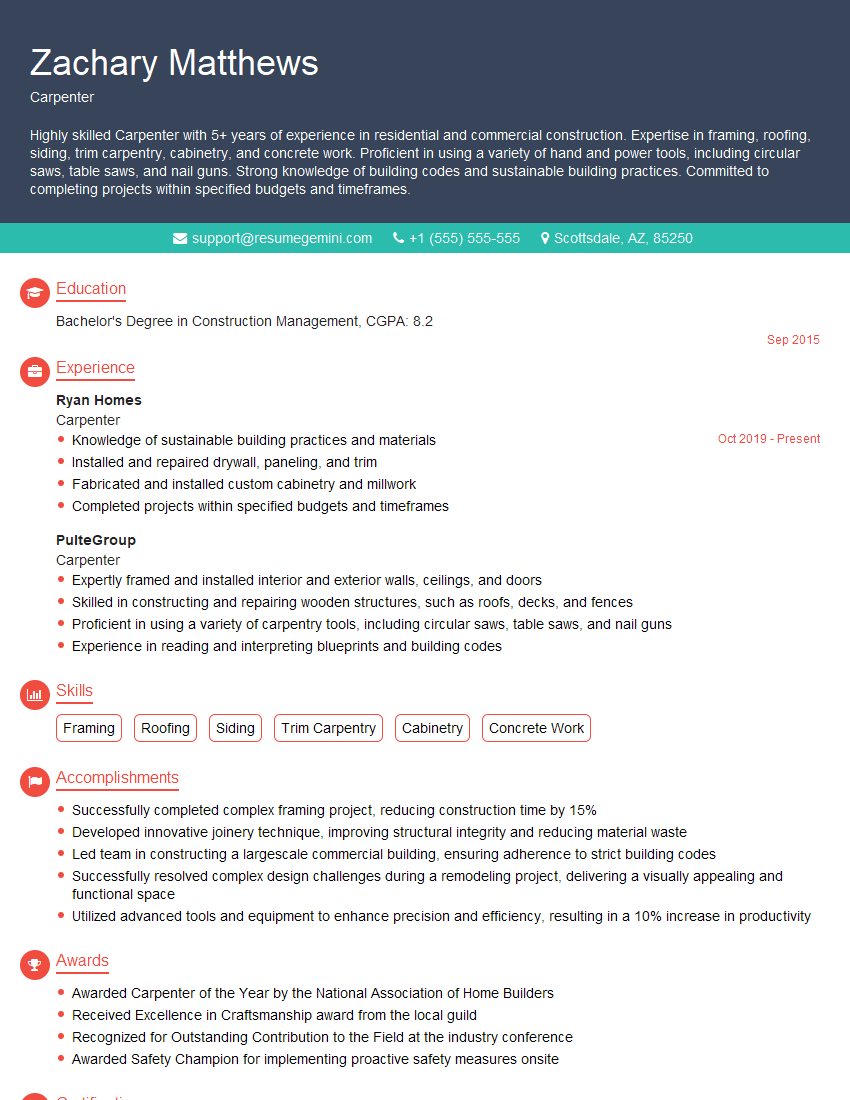
Carpenter Resume Sample
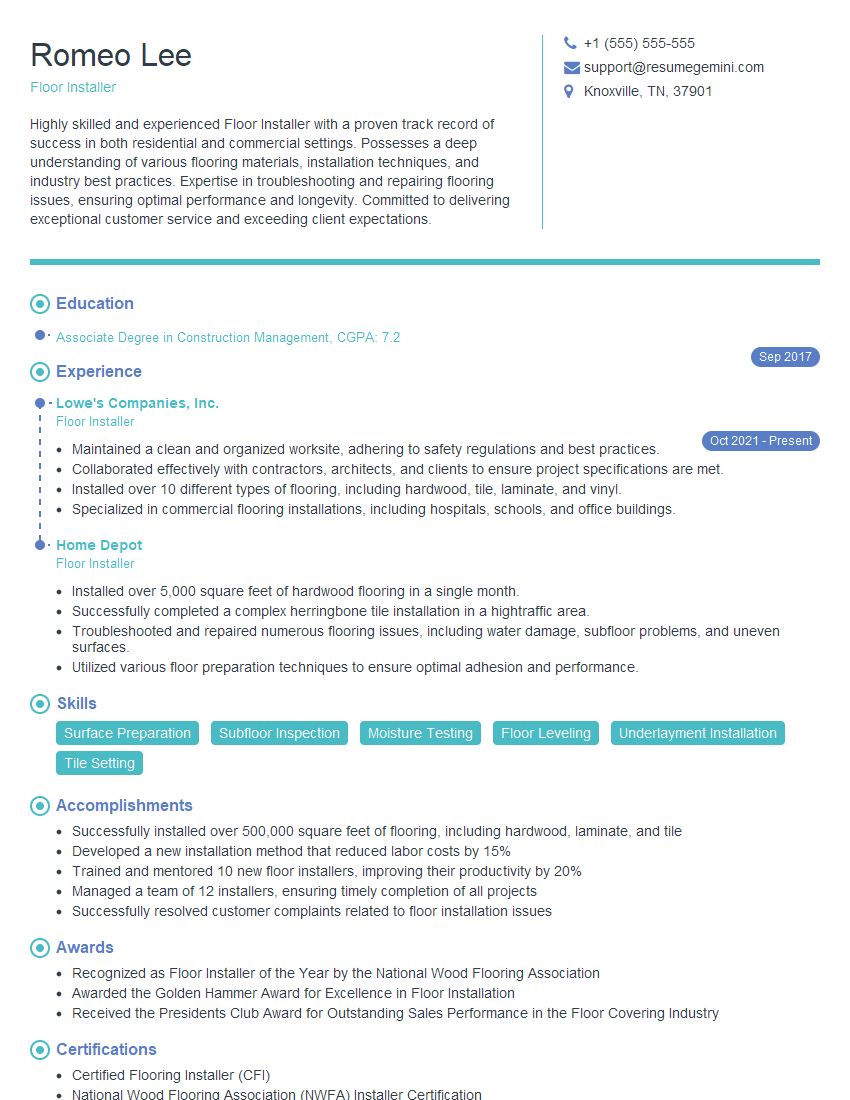
Floor Installer Resume Sample
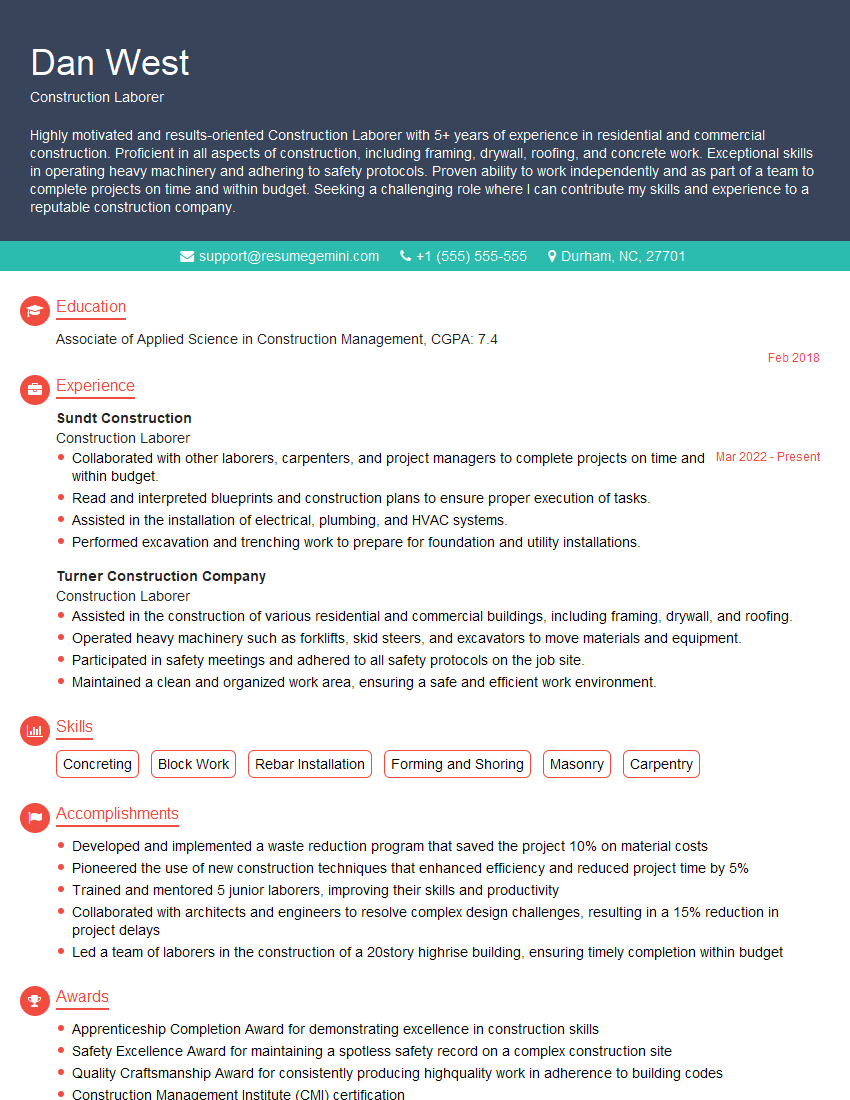
Construction Laborer Resume Sample
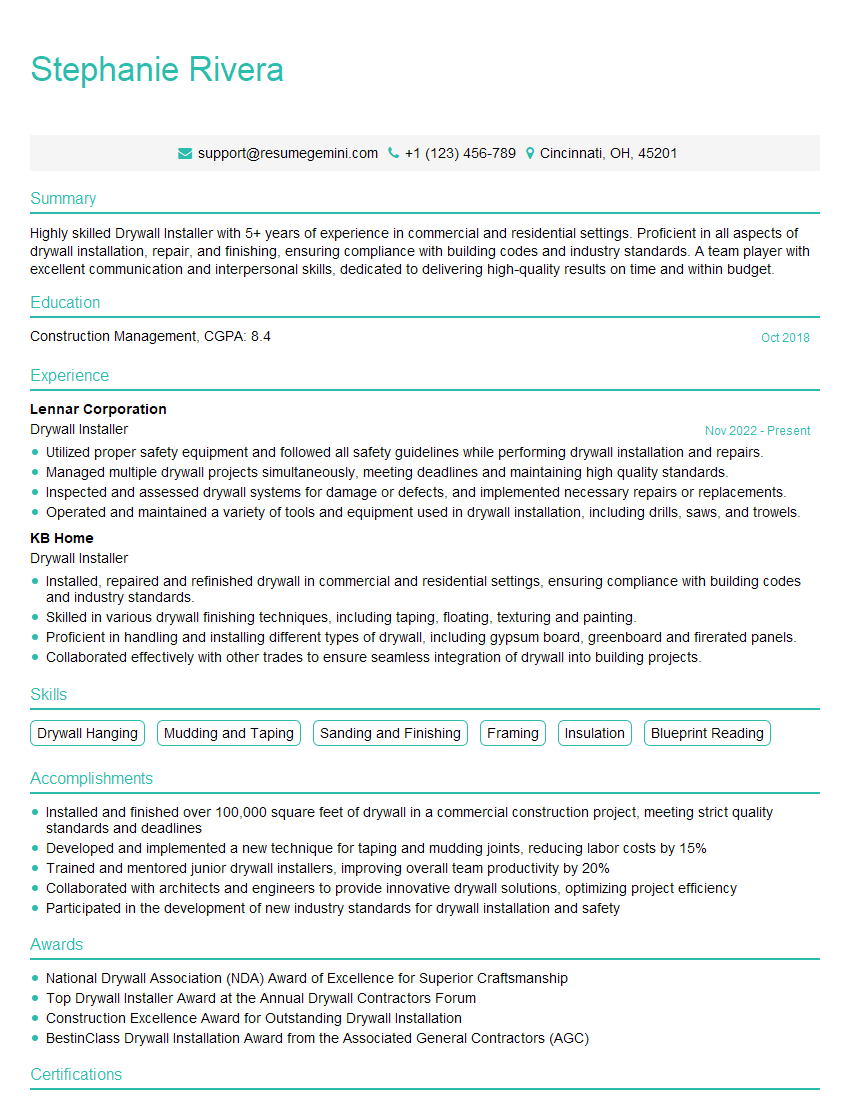
Drywall Installer Resume Sample
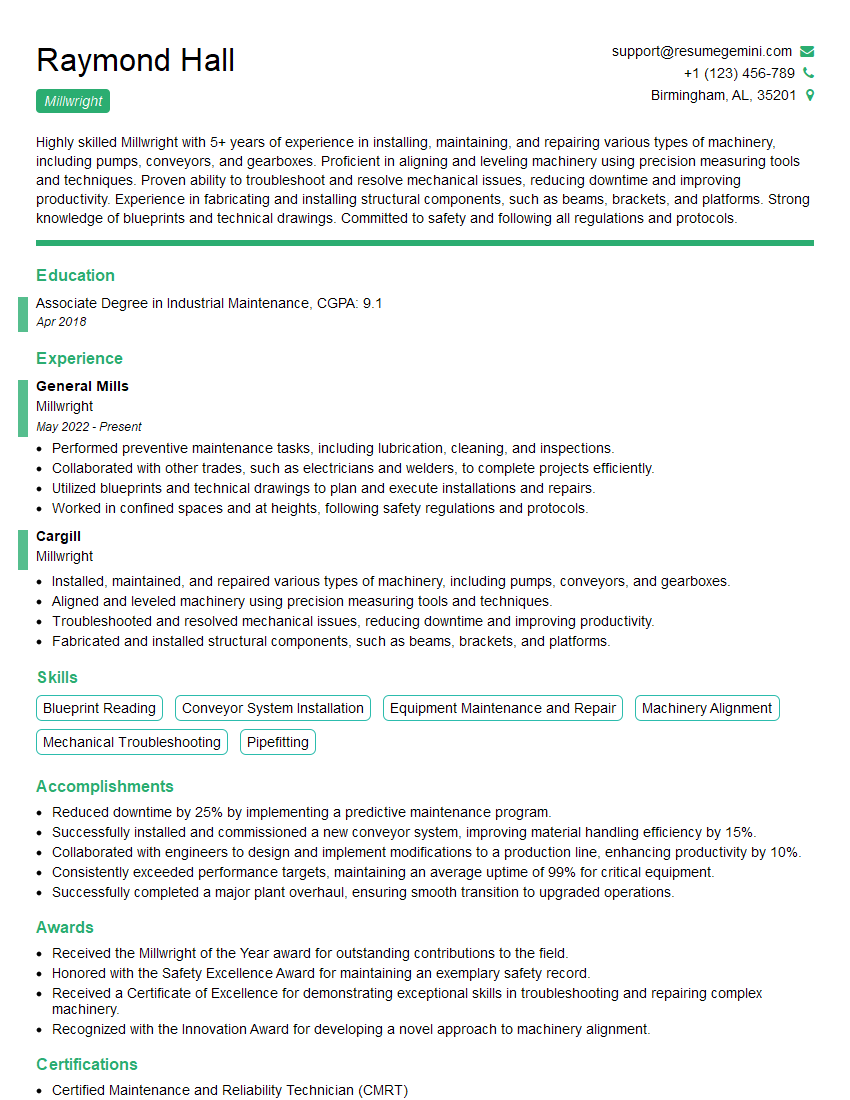
Millwright Resume Sample
- General Contractor
- Roofing Contractor
- Maintenance Technician
- Furniture Maker
- Painter
- Handyman
- Deck Builder
- Site Supervisor
- Tile Setter
- Finish Carpenter
- Cabinet Maker
- Construction Worker
- Framing Carpenter
- Apprentice Carpenter
- Carpenter
- Floor Installer
- Construction Laborer
- Drywall Installer
- Millwright
Explore more articles
Users Rating of Our Blogs
Share Your Experience
We value your feedback! Please rate our content and share your thoughts (optional).
What Readers Say About Our Blog
Very informative content, great job.
good