The thought of an interview can be nerve-wracking, but the right preparation can make all the difference. Explore this comprehensive guide to Knowledge of printing substrates interview questions and gain the confidence you need to showcase your abilities and secure the role.
Questions Asked in Knowledge of printing substrates Interview
Q 1. What are the key differences between coated and uncoated paper?
The key difference between coated and uncoated paper lies in the surface treatment. Uncoated paper has a natural, porous surface, absorbing ink readily. This gives it a more textured feel and a slightly duller appearance. Think of a classic notebook – that’s usually uncoated. Coated paper, on the other hand, has a layer of coating applied to its surface, making it smoother and less porous. This coating can be matte, gloss, or satin, impacting the final look and feel. Because the ink sits on top of the coating rather than being absorbed, coated paper provides sharper, more vibrant colors and a crisper image. Think of a glossy magazine cover – that’s typically coated.
- Uncoated: Absorbent, textured surface; duller appearance; good for writing and drawing; ink can feather.
- Coated: Smooth, non-porous surface; vibrant colors; sharp images; less absorbent; better for high-quality printing.
Q 2. Explain the advantages and disadvantages of using recycled paper.
Recycled paper offers significant environmental advantages, reducing the demand for virgin pulp and minimizing landfill waste. However, it also presents some challenges.
- Advantages: Environmentally friendly; conserves natural resources; reduces pollution; often more affordable.
- Disadvantages: Can have lower brightness and opacity compared to virgin paper; may contain inconsistencies in color or texture; can sometimes have a slightly rougher feel; may not be suitable for all printing applications requiring high resolution or vibrant colors.
For example, a company prioritizing sustainability might choose recycled paper for internal memos, while a luxury brand might opt for virgin paper for high-impact brochures to ensure the best print quality.
Q 3. Describe the properties of various paper weights (e.g., 80lb, 100lb).
Paper weight, often expressed in pounds (lbs) based on a ream of 500 sheets, significantly impacts the paper’s thickness, strength, and overall feel. Higher weights generally mean thicker, more durable paper.
- 80lb: Considered a lightweight paper, suitable for everyday printing like office documents or newsletters. It’s relatively inexpensive but may feel flimsy for high-end applications.
- 100lb: A medium-weight paper, offering a good balance of durability and cost-effectiveness. Commonly used for brochures, flyers, and business cards. It provides a more substantial feel than 80lb.
- Heavier weights (e.g., 130lb and above): These are thicker, more robust papers suitable for covers, postcards, and other applications demanding high durability and a premium feel.
Imagine sending a thank-you note printed on 80lb paper versus one on 130lb cover stock. The heavier weight will immediately convey a greater sense of quality and permanence.
Q 4. What is the difference between matte, gloss, and satin finishes?
These finishes refer to the surface texture and sheen of coated paper. The choice impacts the overall aesthetic and the way the printed image appears.
- Matte: Offers a non-reflective surface, ideal for reducing glare and ensuring readability. It provides a more subtle, elegant appearance, often preferred for text-heavy documents or projects where a sophisticated feel is desired. Think of high-end business cards or invitations.
- Gloss: Provides a highly reflective surface, making colors appear more vibrant and saturated. The shine can be striking but can also cause glare. Gloss is often chosen for applications where visual impact is paramount, such as magazine covers or promotional materials.
- Satin: Falls between matte and gloss, offering a balance of subtle sheen and vibrancy. It’s a versatile option, providing a good compromise between the smoothness of gloss and the subdued elegance of matte. It’s a popular choice for brochures and catalogs.
Q 5. How does paper grain direction impact printing results?
Paper grain refers to the direction of the wood fibers in the paper sheet. Printing with the grain (parallel to the fiber direction) generally produces smoother results, reducing the likelihood of paper breakage during the printing process and preventing fuzzy edges. Printing against the grain (perpendicular to the fiber direction) can lead to greater resistance and potential damage, resulting in inconsistent ink absorption and potentially fuzzy or jagged edges.
Always align your print layout with the grain direction for optimal results. Most paper reams have arrows or markings indicating the grain direction. Ignoring this crucial aspect can significantly affect the final quality of your print job.
Q 6. What are some common issues related to paper moisture content?
Paper moisture content plays a critical role in printing quality and consistency. Excessive moisture can lead to issues like stretching, buckling, and uneven ink absorption, resulting in blurry prints, color variations, and difficulties in feeding the paper through printing machinery. On the other hand, paper that’s too dry can be brittle and prone to cracking or tearing.
Maintaining optimal moisture content is key. Proper storage in climate-controlled environments, far from direct sunlight or heat sources, helps minimize these problems. Using a moisture meter to regularly check paper moisture levels is a professional practice that can significantly improve print quality.
Q 7. Explain the properties of different types of card stock (e.g., cover stock, index board).
Card stock encompasses a range of heavier papers designed for applications requiring greater durability and rigidity than regular printing paper.
- Cover Stock: Thicker than standard paper, usually between 65lb and 130lb, offering excellent rigidity and durability. It’s commonly used for book covers, brochures, postcards, and business cards, adding a premium feel.
- Index Board: A very stiff and thick type of card stock, characterized by its exceptional rigidity and strength. Often used for file folders, presentation boards, and other applications needing significant structural support.
- Other types: There are many other types of card stock, each with specific properties. For instance, some card stocks feature special coatings for added durability or specific printing processes.
The choice of card stock depends on the specific application. If you need something sturdy and durable like a heavy-duty box, index board will work well. For a business card, cover stock would be a much more suitable choice.
Q 8. What are the characteristics of various film substrates (e.g., vinyl, polyester)?
Film substrates, like vinyl and polyester, offer a range of properties crucial for diverse printing applications. Let’s explore their characteristics:
- Vinyl: Known for its durability, flexibility, and affordability. It comes in various thicknesses and finishes (gloss, matte, etc.), making it suitable for both indoor and outdoor signage, vehicle wraps, and decals. Its inherent flexibility allows for application to curved surfaces. However, it can be susceptible to scratching and may not be as resistant to UV degradation as polyester.
- Polyester: Offers superior durability and resistance to UV degradation, chemicals, and abrasion compared to vinyl. It’s often preferred for applications requiring longevity, such as high-quality banners, photographic prints, and labels demanding long-term outdoor exposure. It can be more expensive than vinyl but provides a premium look and feel. Different polyester films offer varied levels of clarity and stiffness.
Think of it like choosing between a durable, everyday backpack (vinyl) and a high-end, weatherproof travel bag (polyester) – both serve their purpose, but the choice depends on your needs and budget.
Q 9. Discuss the suitability of different substrates for various printing methods (offset, digital, screen).
The choice of substrate significantly impacts the success of your printing project. Different printing methods have unique requirements:
- Offset Printing: Typically requires absorbent substrates like paper or coated boards. It struggles with non-porous surfaces like untreated vinyl because the ink doesn’t adhere well. Offset excels at high-volume, high-quality printing with consistent results, ideal for large-scale projects needing fine detail.
- Digital Printing: Offers greater flexibility in substrate choice. It works well with a wider variety of materials, including various films (vinyl, polyester), canvas, and even some fabrics. Digital is perfect for smaller runs, personalized prints, and fast turnaround times.
- Screen Printing: Best suited for substrates with a relatively smooth, flat surface. It works exceptionally well with fabrics, plastics, and certain types of vinyl. Screen printing is excellent for bold, vibrant colors and is cost-effective for high-volume, simple designs.
Imagine trying to paint a delicate watercolor on a rough canvas (offset on vinyl) versus using acrylics on a prepared canvas (digital printing on polyester). The result will depend on the right combination.
Q 10. How do you select the appropriate substrate for a specific project?
Selecting the right substrate involves a systematic approach. Consider these factors:
- Project Purpose: What is the final application of the printed material? (e.g., outdoor banner, indoor poster, product label)
- Durability Requirements: How long does the print need to last? Will it be exposed to sunlight, moisture, or abrasion?
- Printing Method: What printing technique will be used? Offset, digital, or screen printing each have compatible substrates.
- Budget: Different substrates have varying costs, impacting the overall project expense.
- Aesthetic Considerations: What finish is desired (gloss, matte, etc.)? The substrate’s texture and surface characteristics will influence the final appearance.
For example, a temporary indoor poster might use a cost-effective paper, while a long-lasting outdoor sign would need durable, UV-resistant vinyl or polyester.
Q 11. Explain the importance of color management when selecting a substrate.
Color management is critical for achieving accurate and consistent colors across different substrates. Different materials absorb and reflect light differently, affecting color appearance. Without proper color management, your printed colors might deviate significantly from the design.
A Color Management System (CMS) is essential. This system ensures your design’s colors are correctly translated to the chosen substrate by calibrating your monitor, printer, and profiling the substrate. Failure to do so can lead to inaccurate color reproduction and costly reprints. This is particularly relevant in applications where precise color matching is important, such as brand logos or photographic prints.
Q 12. What are some common substrate defects and how are they identified?
Several substrate defects can impact print quality. Identifying them early prevents wasted materials and rework:
- Caliper Variations: Uneven thickness can cause issues in feeding and printing, resulting in inconsistencies.
- Surface Defects: Scratches, dents, or holes can affect print adhesion and appearance.
- Curling or Warping: This can happen due to improper storage or moisture changes, making printing difficult.
- Static Electricity: This can cause issues with paper feeding and ink adhesion.
- Color Variations: Inconsistencies in substrate color itself can affect the final printed colors.
Careful inspection before printing, using proper lighting, and sometimes employing measuring tools are necessary to identify such defects.
Q 13. How does substrate choice affect the cost of a print project?
Substrate cost significantly impacts the overall print project budget. More durable and specialized substrates (e.g., high-quality polyester films, specialty coated papers) tend to be more expensive than standard options (e.g., basic paper or vinyl). The quantity also plays a role; larger print runs will reduce the per-unit cost of the substrate.
For example, printing 1000 flyers on standard paper will cost less than printing the same quantity on thick, textured cardstock. Careful consideration of the substrate’s cost relative to the project’s requirements is essential for effective budgeting.
Q 14. Describe the process of determining the correct caliper for a substrate.
Caliper, the thickness of a substrate, is measured in points (thousandths of an inch) or microns. The correct caliper is determined by considering several factors:
- Printing Method: Different printing methods have compatibility requirements. Offset printing might need thicker substrates, while digital printing is more flexible.
- Desired Rigidity: Thicker substrates are more rigid and suitable for applications requiring sturdiness.
- Finishing Techniques: Certain finishing techniques, such as embossing or die-cutting, require substrates of a specific caliper to work effectively.
- Application: The final use of the printed product (e.g., hanging banner, brochure) influences the required caliper for adequate durability and handling.
Often, manufacturers provide caliper specifications for their substrates. Using a caliper gauge, a simple measuring instrument, ensures accurate measurement. The wrong caliper can lead to jams during printing, poor finishing results, or a product that doesn’t meet the functional needs of the project.
Q 15. What are some sustainable substrate options available?
Sustainable substrate options are crucial for environmentally conscious printing. The ideal substrate minimizes environmental impact throughout its lifecycle, from sourcing raw materials to disposal. Several options are gaining popularity:
- Recycled Paper: Made from post-consumer waste, significantly reducing the need for virgin pulp. Look for certifications like FSC (Forest Stewardship Council) to ensure responsible sourcing of recycled fibers. The percentage of post-consumer recycled content is key; higher percentages mean a smaller environmental footprint.
- Post-Consumer Recycled (PCR) Plastics: Similar to recycled paper, but using plastic waste. This is gaining traction for applications like banners and signage, though considerations for recyclability of the final printed product are paramount.
- Bamboo Paper: A rapidly renewable resource requiring less water and pesticides than traditional tree pulp. It’s a good alternative for stationery and promotional materials, offering a unique texture and appearance.
- Seed Paper: Embedded with seeds, this biodegradable substrate allows for planting after use, promoting environmental regeneration. Ideal for eco-friendly marketing materials.
- Hemp Paper: A strong and durable alternative, hemp grows quickly and requires minimal resources. It offers a unique look and feel, suitable for various applications.
Choosing a sustainable substrate often involves a trade-off between environmental impact, cost, and print quality. A thorough life-cycle assessment helps in making an informed decision.
Career Expert Tips:
- Ace those interviews! Prepare effectively by reviewing the Top 50 Most Common Interview Questions on ResumeGemini.
- Navigate your job search with confidence! Explore a wide range of Career Tips on ResumeGemini. Learn about common challenges and recommendations to overcome them.
- Craft the perfect resume! Master the Art of Resume Writing with ResumeGemini’s guide. Showcase your unique qualifications and achievements effectively.
- Don’t miss out on holiday savings! Build your dream resume with ResumeGemini’s ATS optimized templates.
Q 16. Explain the concept of substrate compatibility with inks and coatings.
Substrate compatibility with inks and coatings is paramount for achieving high-quality, durable prints. It refers to the ability of the substrate to accept and retain the ink or coating without issues like feathering, bleeding, or poor adhesion. This depends on several factors:
- Porosity: Highly porous substrates (like uncoated paper) absorb ink readily, potentially leading to feathering (ink spreading beyond the printed area). Less porous substrates (like coated paper or plastics) offer better ink control.
- Surface Energy: The substrate’s surface energy dictates how well the ink adheres. Low surface energy substrates (like plastics) may require pre-treatment (like a corona discharge) to improve ink adhesion.
- Chemical Composition: The chemical makeup of the substrate influences ink compatibility. Some inks may react with certain substrate materials, leading to discoloration or degradation. This is crucial when selecting inks for plastics or metallic substrates.
- Coating Type: Coated papers have different coating weights and compositions, which affect ink absorption and drying time. A heavier coating provides a smoother surface, better ink holdout, and less feathering.
Understanding these interactions is crucial for print shop professionals. Testing different inks and coatings on the chosen substrate is essential to avoid costly mistakes and ensure consistent print quality. For example, using a water-based ink on a plastic substrate may require a specific primer to facilitate adhesion. Selecting the right ink and coating for your substrate is a critical step in the print production workflow. A simple test print on a small area before mass production is always recommended.
Q 17. What are the environmental considerations related to different substrates?
Environmental considerations related to different substrates are multifaceted. The entire lifecycle—from raw material sourcing to manufacturing, printing, and disposal—must be assessed:
- Deforestation: Paper production from virgin pulp contributes to deforestation. Choosing recycled paper significantly mitigates this issue.
- Water Usage: Pulp and paper production is water-intensive. Sustainable substrates like bamboo paper reduce water consumption.
- Energy Consumption: Manufacturing and transportation contribute to carbon emissions. Locally sourced and sustainably produced substrates reduce this impact.
- Waste Generation: Printing waste should be minimized. Choosing substrates that are easily recycled or compostable is essential.
- Chemical Emissions: Some substrates may involve the use of harmful chemicals during production. Opting for substrates with minimal chemical processing reduces pollution.
- Microplastic Pollution: The disposal of plastic-based substrates contributes to microplastic pollution in the environment. Proper recycling or biodegradable alternatives are crucial.
Responsible print production requires carefully considering the entire environmental footprint of the substrate. A life-cycle analysis can help to quantify and compare the environmental impact of different options.
Q 18. How does the substrate’s absorbency affect ink adhesion?
A substrate’s absorbency directly impacts ink adhesion. The degree of ink absorption influences how the ink sits on the surface and how well it bonds with the substrate.
- High Absorbency (e.g., uncoated paper): Inks are quickly absorbed, potentially leading to feathering, reduced color vibrancy, and slower drying times. The ink can penetrate deep into the substrate, affecting the final look and potentially resulting in less vibrant colors.
- Low Absorbency (e.g., coated paper, plastics): Inks sit on the surface, allowing for sharper details, brighter colors, and faster drying. This means the ink remains on the surface, providing better image quality, vibrancy, and durability.
Understanding absorbency is crucial for selecting the correct ink type. Water-based inks work well with highly absorbent substrates, while UV-curable inks are better suited for less absorbent materials like plastics or coated papers. Testing is vital to find the ideal combination for optimal print quality. For instance, if you’re printing on highly absorbent canvas, a water-based ink would likely be ideal, whereas printing on a plastic banner would benefit from a UV-curable ink due to its non-absorbent nature.
Q 19. What are some common problems encountered when printing on textured substrates?
Textured substrates, while aesthetically pleasing, present unique challenges during printing:
- Ink Smudging/Blurring: The uneven surface can cause ink to pool in crevices, leading to uneven color distribution and blurred edges.
- Difficulty in Achieving Sharp Details: Fine details can get lost in the texture. Ink may not reach all parts of the valleys and peaks of the texture evenly, thus reducing detail resolution.
- Increased Ink Consumption: More ink may be required to fill the texture’s crevices, leading to increased costs.
- Problems with Certain Printing Techniques: Screen printing might be more challenging on deeply textured substrates due to the limitations of screen mesh pressure. In such cases, techniques like digital printing or flexography could be more suitable.
- Blanking/Color Loss: Especially in higher-density areas of the image, the peaks of the texture might appear less saturated due to ink being distributed thinly.
Careful planning and technique are vital. Pre-press testing with different inks and printing methods is crucial to optimize results. Techniques like under-printing a base color can improve the overall consistency of the color. Also, proper ink viscosity is critical for proper coverage of the textured surface.
Q 20. How can you minimize paper waste during the printing process?
Minimizing paper waste during printing involves a multi-pronged approach:
- Efficient File Preparation: Properly designing files with minimal margins and accurate imposition saves paper during the printing process. This includes using nested layouts, minimizing unused areas, and precise imposition planning.
- Accurate Proofing: Thorough proofing minimizes the need for reprints due to errors. Color proofing and test prints can avoid substantial waste due to errors that are only discovered once printing has commenced.
- Nesting and Imposition Techniques: Efficient imposition ensures optimal use of the print sheet, minimizing leftover scraps.
- Advanced Print Management Software: Software can help optimize sheet usage, cut down on waste, and improve the overall efficiency of the printing process. This helps ensure that print jobs are organized efficiently and minimal paper is wasted.
- Recycling Printed Materials: Recycling all leftover paper, scraps, and unsuccessful prints reduces the overall environmental impact.
- Using Sustainable Substrates: Choosing recycled paper minimizes reliance on virgin pulp, contributing to reduced deforestation and resource depletion.
By implementing these strategies, printers can significantly reduce waste and contribute to a more environmentally friendly operation.
Q 21. Describe your experience with different types of specialty papers (e.g., metallic, textured).
My experience with specialty papers is extensive, encompassing a wide range of applications. I’ve worked extensively with:
- Metallic Papers: These substrates offer a luxurious look and feel, ideal for high-end packaging, invitations, and marketing materials. I’ve found that the choice of ink and printing technique significantly impacts the final appearance. For instance, foil stamping complements metallic papers exceptionally well, creating a sophisticated finish. Certain inks, however, may not adhere well to metallic substrates unless specific primers are used to improve the surface energy.
- Textured Papers: From linen and canvas to embossed textures, I’ve worked with a diverse range. The texture adds visual interest but requires careful consideration of ink selection and print technique to avoid smudging or uneven ink distribution. Digital printing often provides better results than traditional screen printing due to its superior control over ink placement and avoiding issues like blocking.
- Embossed Papers: These offer a raised design on the paper surface, providing a unique tactile quality. Again, the right ink selection is critical, often favoring those that fill the embossed areas completely to provide a sharp, clean print. Testing and experimentation are vital to determine the optimal ink and pressure for achieving this.
- Colored Papers: Beyond standard white, the use of various colored papers adds creativity. However, the color of the substrate affects ink mixing and overall print color. Color calibration is a significant factor when using colored paper, and careful attention to color profiles is necessary for accurate reproduction.
Working with specialty papers necessitates a deep understanding of their properties, and how these interact with different printing processes and ink types. A thorough understanding of the material and its properties ensures a successful final result.
Q 22. How do you determine the best substrate for a high-volume print job?
Selecting the right substrate for a high-volume print job is crucial for efficiency and cost-effectiveness. It’s not just about the aesthetics; factors like print speed, ink absorption, durability, and cost-per-unit all play a significant role. My approach is methodical, beginning with a thorough understanding of the print job’s specifications.
- Print Method: Offset printing demands different substrates than digital printing. Offset prefers smoother, coated papers, while digital can handle a wider range, including uncoated stocks.
- Print Volume: For incredibly high volumes, cost becomes paramount. This often favors substrates that are readily available and economical, even if they might have slightly less ideal print characteristics.
- Paper Weight and Finish: The weight impacts the overall feel and perceived quality. The finish (gloss, matte, uncoated) affects ink absorption, color vibrancy, and the final aesthetic.
- Durability Requirements: Will the printed material be handled frequently? Will it be exposed to moisture or sunlight? These considerations drive substrate choices toward more durable options like synthetic papers or thicker cardboards.
- Budget: This is often the deciding factor. While premium substrates offer superior quality, they come at a premium price. A balance needs to be struck between quality and affordability based on the client’s budget and the job’s requirements.
For instance, a high-volume magazine might opt for a relatively inexpensive, high-opacity coated paper for offset printing to maximize cost efficiency, while a high-end brochure might require a thicker, textured stock for an elevated feel.
Q 23. What are the key considerations for selecting a substrate for outdoor applications?
Outdoor applications present unique challenges. Substrates must withstand harsh environmental conditions like sun exposure, rain, wind, and temperature fluctuations. The key considerations are:
- UV Resistance: Prolonged sun exposure can fade printed colors. Substrates with UV inhibitors or coatings are essential for maintaining vibrant prints over time. Consider vinyl banners or specially treated papers.
- Water Resistance: Rain and moisture can damage the print and the substrate itself. Waterproof or water-resistant materials are crucial. Think of weatherproof inks combined with vinyl or polypropylene substrates.
- Durability and Tear Resistance: Outdoor substrates should be robust enough to withstand wind and potential physical damage. Thicker materials, such as PVC or mesh banners, often provide better durability.
- Temperature Stability: Extreme temperatures can affect the substrate’s integrity and the ink’s adhesion. Choosing substrates that can withstand temperature fluctuations is critical for longevity.
For example, a billboard would utilize a durable vinyl banner with UV-resistant inks, whereas a temporary outdoor poster might use a more cost-effective, water-resistant paper with lamination for protection.
Q 24. Explain your understanding of substrate color and its effect on the final print.
Substrate color, often referred to as the base color or background color, plays a critical role in the final print’s appearance. It impacts color accuracy, vibrancy, and overall aesthetic appeal.
- Ink Absorption: Darker substrates absorb more ink, potentially leading to duller colors and increased ink consumption. Lighter substrates reflect more light, resulting in brighter, more vibrant colors.
- Color Mixing: The substrate color mixes with the ink during printing. For example, printing cyan ink on a yellow substrate will result in a different shade of green than printing cyan ink on a white substrate.
- Color Calibration: Accurate color reproduction requires considering the substrate’s color during the color profile creation. Different substrates require different color profiles to ensure consistent results.
Imagine printing vibrant red text on a dark blue substrate. The red may appear significantly darker and less vibrant than if printed on white, due to the substrate absorbing a considerable portion of the red ink’s light. This is why understanding and accounting for substrate color is a critical part of pre-press preparation.
Q 25. How do you handle situations where a specified substrate is unavailable?
When a specified substrate is unavailable, I follow a systematic approach to find a suitable replacement. First, I carefully analyze the reasons for the unavailability: Is it a temporary shortage, discontinuation, or perhaps a miscommunication about the substrate specification?
- Identify Key Properties: I determine the crucial properties of the original substrate, such as weight, finish, color, and any special coatings.
- Explore Alternatives: I research comparable substrates from different suppliers, examining their technical data sheets for close matches. Visual comparisons are also crucial.
- Consult with the Printer: I discuss the available alternatives with the printer to ensure they are suitable for the chosen printing method and equipment.
- Client Communication: I inform the client about the substitution and explain the potential implications. A sample print using the alternative substrate may be helpful.
- Document the Change: I meticulously document the original substrate specification, the reasons for the substitution, and the properties of the chosen replacement.
In practice, this often involves comparing the gamut of colors achievable on similar substrates. A slight shift in paper weight might be acceptable, but a significant change in finish might require adjustments to the print design or color profiles.
Q 26. Describe a time you had to troubleshoot a problem related to substrate selection or use.
In one project involving the printing of high-resolution images on metallic paper, we initially experienced significant color shifting and inconsistent print quality. The metallic coating was interacting unexpectedly with the inks, leading to a muddy appearance and banding issues.
My troubleshooting process involved:
- Substrate Analysis: I examined the metallic paper’s technical specifications to understand its surface properties and ink absorption capabilities. I discovered it had a higher than average coating thickness.
- Ink Testing: We conducted various print tests with different ink types and settings to determine which combination produced the most consistent and accurate colors.
- Printer Calibration: The printing press was carefully calibrated to account for the metallic substrate’s specific characteristics. We adjusted the ink density and drying settings.
- Color Profile Adjustment: A new color profile was created for this specific metallic paper to accurately map colors and minimize shifts.
By systematically investigating and implementing these adjustments, we were able to resolve the color inconsistencies and produce high-quality prints on the metallic substrate, demonstrating the importance of careful substrate selection and appropriate calibration.
Q 27. What are your preferred resources for staying up-to-date on new printing substrates?
Staying current with new printing substrates requires a multi-pronged approach. I regularly utilize:
- Industry Trade Publications: I subscribe to several print industry magazines and journals that regularly feature articles on new substrate developments.
- Supplier Websites and Catalogs: I frequently visit the websites of major paper and substrate manufacturers to review their product lines and technical data sheets.
- Industry Events and Trade Shows: Attending industry events provides hands-on experience with new substrates and allows me to network with industry professionals.
- Online Forums and Communities: Participating in online communities allows for the exchange of knowledge and information regarding new products and techniques.
This combination of resources keeps me informed about the latest innovations and helps me make informed decisions about substrate selection.
Q 28. How do you ensure that the selected substrate meets the client’s requirements?
Ensuring the selected substrate meets the client’s requirements involves a multi-step process starting well before the printing phase.
- Thorough Requirements Gathering: I begin with a detailed discussion with the client to fully understand their expectations for the final product. This includes aesthetic preferences, functional needs, and budget constraints.
- Substrate Sampling and Testing: I provide clients with samples of potential substrates to allow them to evaluate the visual appearance, texture, and feel. This helps avoid misunderstandings and ensures the final product aligns with their vision.
- Proofing and Review: A proof print is essential. This allows the client to see the actual print on the chosen substrate and approve the final color and quality before proceeding with the full print run.
- Detailed Specifications: Clear specifications are documented for all stakeholders, including the substrate’s type, weight, finish, and any special treatments.
- Post-Print Evaluation: Even after printing, I maintain communication to ensure the client is fully satisfied with the final product and address any concerns.
By following this systematic approach, potential issues are identified and resolved early in the process, enhancing client satisfaction and guaranteeing successful project delivery.
Key Topics to Learn for Knowledge of Printing Substrates Interview
- Paper Types & Properties: Understanding different paper weights, finishes (coated, uncoated, textured), and their impact on print quality, ink absorption, and overall cost-effectiveness. Consider the environmental impact of different paper choices.
- Paper Grades and Applications: Matching specific paper types to print applications (e.g., offset printing, digital printing, flexography). Analyze the suitability of different substrates for various projects based on factors like durability, image sharpness, and budget.
- Film Substrates: Exploring various types of film (e.g., vinyl, polyester) and their properties, suitability for different printing methods (e.g., screen printing, large format printing), and applications (e.g., banners, decals, labels).
- Textile Substrates: Understanding the unique challenges and considerations when printing on fabrics (e.g., cotton, polyester, blends). Consider ink adhesion, colorfastness, and pre-treatment processes.
- Substrate Selection Process: Developing a systematic approach to choosing the right substrate based on project requirements (e.g., print method, budget, desired outcome, environmental concerns). This includes evaluating factors like printability, durability, and cost.
- Color Management and Substrate Interaction: How different substrates affect color reproduction and the techniques used to achieve accurate color consistency across various materials. This involves understanding color profiles and calibration processes.
- Troubleshooting Print Defects Related to Substrates: Diagnosing and resolving common print issues caused by improper substrate selection or handling, such as ink bleeding, poor adhesion, and uneven color distribution.
Next Steps
Mastering your knowledge of printing substrates is crucial for advancing your career in the printing industry. A strong understanding of this area demonstrates technical expertise and problem-solving skills highly valued by employers. To enhance your job prospects, focus on crafting an ATS-friendly resume that effectively showcases your skills and experience. ResumeGemini is a trusted resource to help you build a professional and impactful resume. We offer examples of resumes tailored specifically to highlight expertise in Knowledge of printing substrates, providing you with a head start in your job search.

Print Production Manager Resume Sample

Print Buyer Resume Sample

Packaging Specialist Resume Sample

Pressroom Supervisor Resume Sample
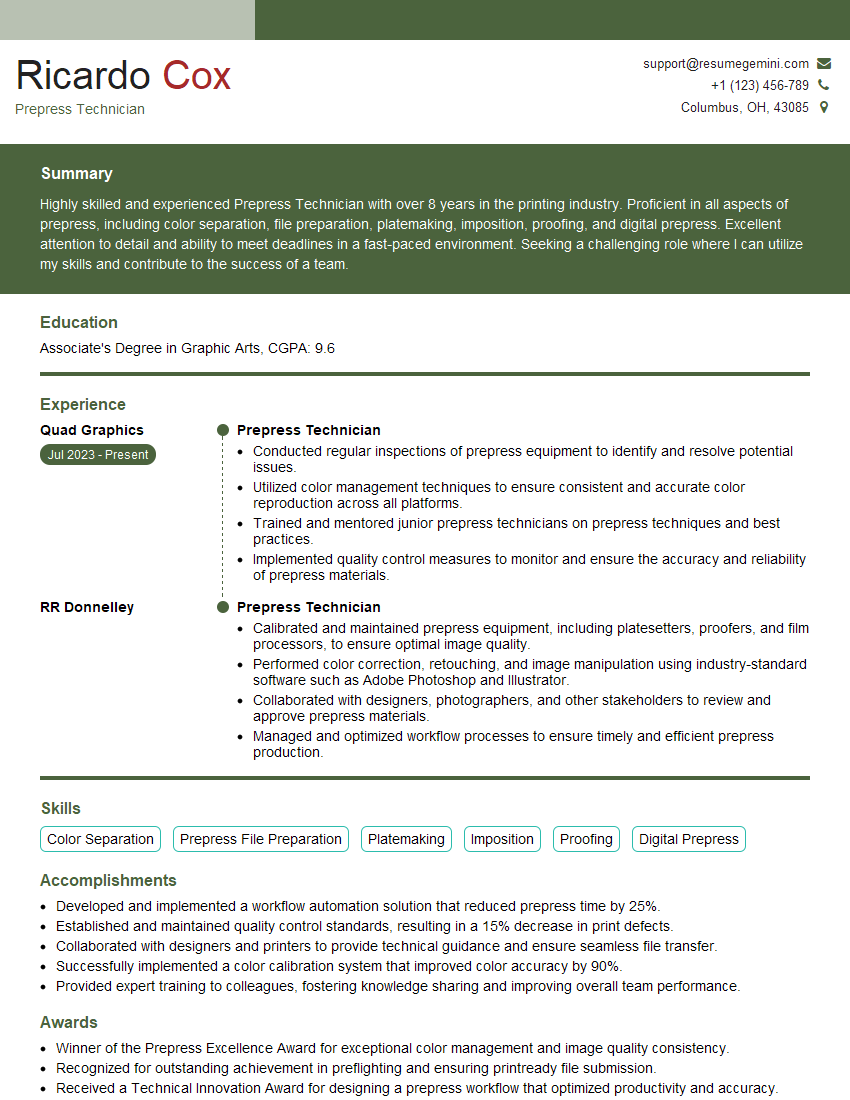
Prepress Technician Resume Sample
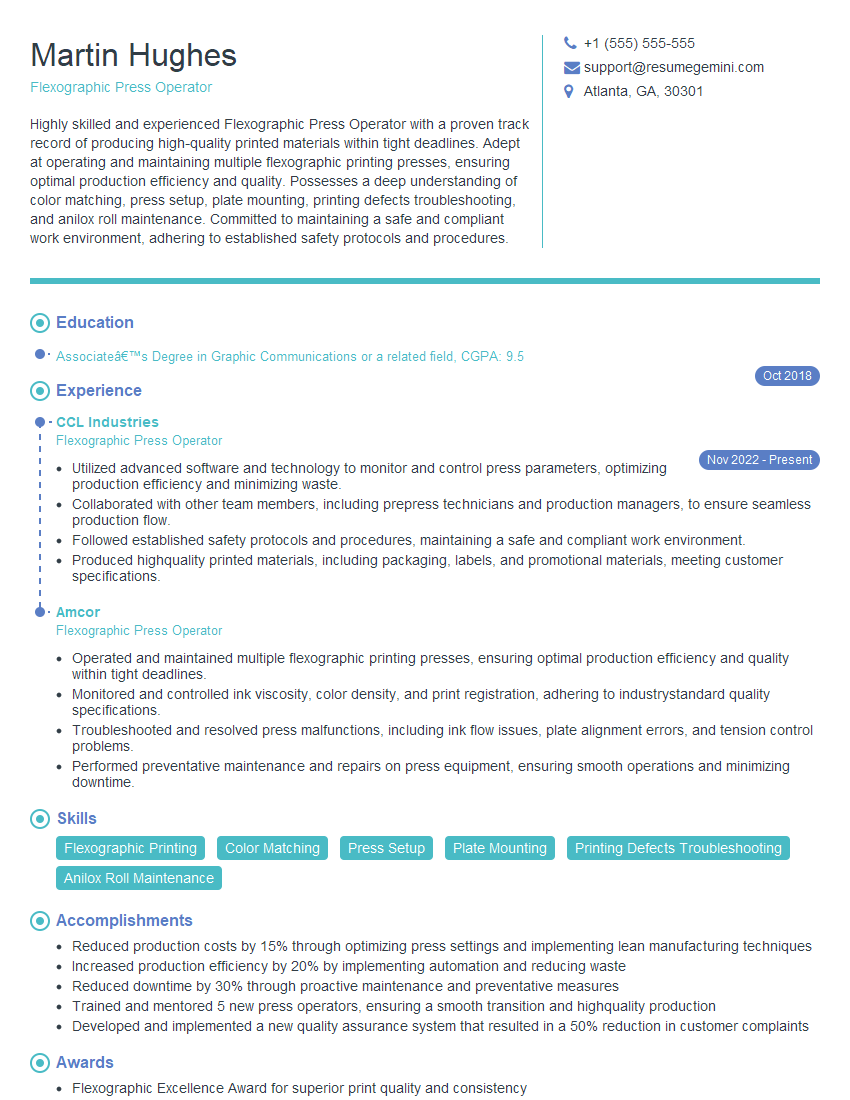
Flexographic Press Operator Resume Sample
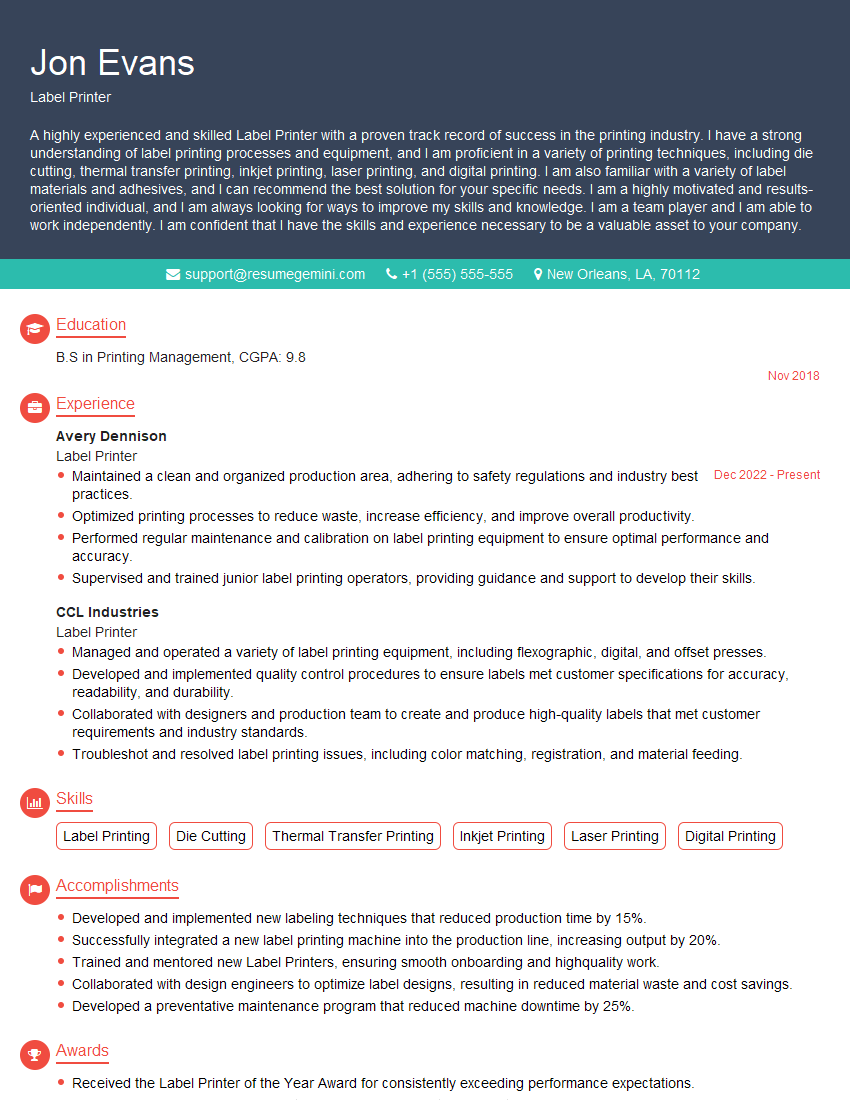
Label Printer Resume Sample

Offset Press Operator Resume Sample
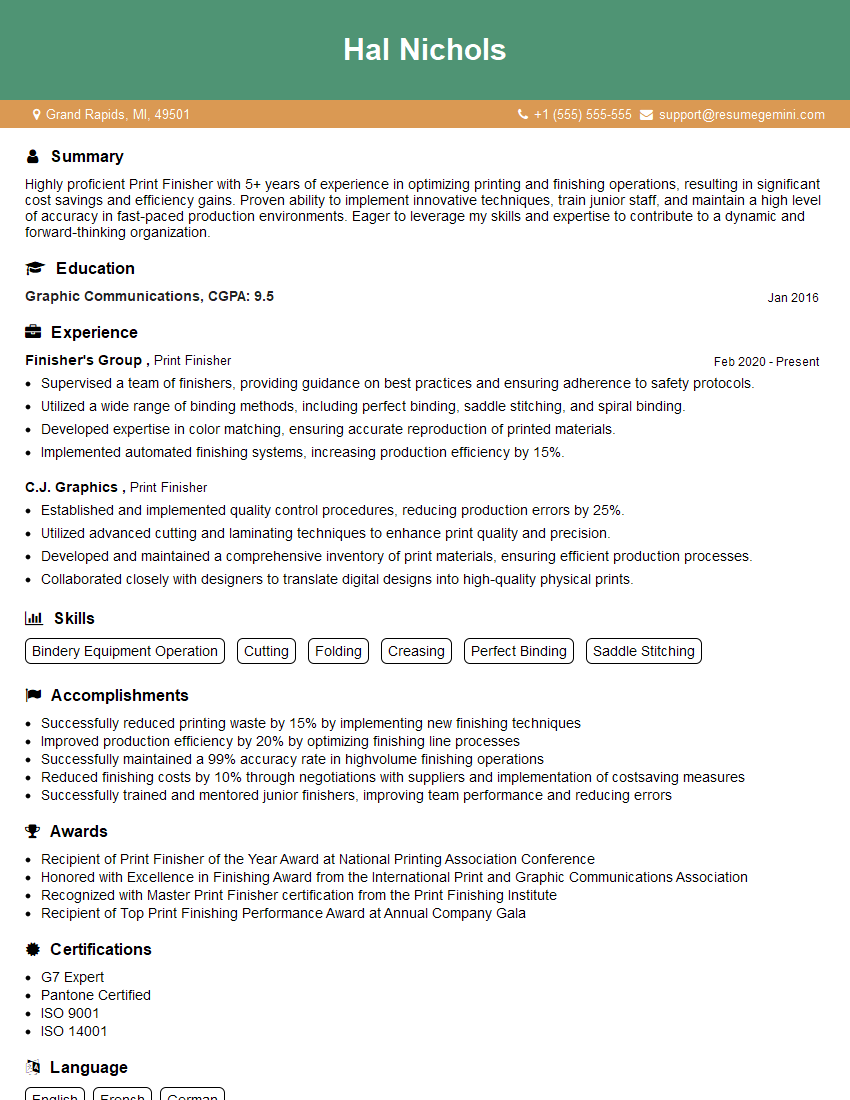
Print Finisher Resume Sample
Explore more articles
Users Rating of Our Blogs
Share Your Experience
We value your feedback! Please rate our content and share your thoughts (optional).
What Readers Say About Our Blog
Very informative content, great job.
good