Interviews are opportunities to demonstrate your expertise, and this guide is here to help you shine. Explore the essential Basic Machine Operation interview questions that employers frequently ask, paired with strategies for crafting responses that set you apart from the competition.
Questions Asked in Basic Machine Operation Interview
Q 1. Describe your experience with basic machine operation.
My experience with basic machine operation spans over five years, encompassing a wide range of machinery including CNC milling machines, lathes, and various assembly line equipment. I’ve worked extensively in manufacturing environments, gaining hands-on experience in setup, operation, and basic maintenance procedures. I am proficient in interpreting blueprints, setting up tooling, and monitoring machine performance to ensure quality output. For example, while working at Acme Manufacturing, I was responsible for operating a CNC milling machine to produce precision parts for automotive components. My responsibilities involved programming the machine, selecting the correct tooling, and monitoring the machining process to ensure dimensional accuracy and surface finish.
Q 2. What safety procedures are essential when operating machinery?
Safety is paramount in any machine operation. Essential procedures include:
- Proper Personal Protective Equipment (PPE): Always wear appropriate safety glasses, hearing protection, gloves, and steel-toed boots, depending on the machine and task. Ignoring this is simply unacceptable.
- Machine Guards: Ensure all machine guards are in place and functioning correctly before operation. Never operate a machine with a malfunctioning guard. Think of it as a seatbelt for your machine.
- Lockout/Tagout Procedures: Always follow established lockout/tagout procedures before performing any maintenance or repair work. This prevents accidental startup and serious injury. This is not just a guideline, it’s a life-saving procedure.
- Emergency Stops: Familiarize yourself with the location and operation of emergency stop buttons and switches. Knowing how to stop the machine quickly is crucial.
- Awareness of Surroundings: Maintain awareness of your surroundings and avoid distractions while operating machinery. Clear the area of any obstacles that could cause a trip or fall.
- Regular Inspections: Conduct routine checks of machinery for any signs of wear, damage, or loose parts before starting operation. A little prevention goes a long way.
Q 3. Explain the importance of regular machine maintenance.
Regular machine maintenance is crucial for several reasons:
- Increased Efficiency: Properly maintained machines operate at optimal efficiency, reducing downtime and increasing production output.
- Extended Lifespan: Regular maintenance prevents premature wear and tear, significantly extending the lifespan of the equipment and reducing replacement costs.
- Improved Safety: Maintenance identifies and addresses potential safety hazards before they lead to accidents or injuries. A stitch in time saves nine, especially when it comes to machine safety.
- Reduced Repair Costs: Regular maintenance prevents small problems from escalating into major breakdowns, thus reducing costly emergency repairs.
- Consistent Quality: Well-maintained machinery produces consistent, high-quality output, meeting specifications and reducing waste.
Think of it like servicing your car regularly – it’s cheaper and more efficient than dealing with unexpected breakdowns.
Q 4. How do you identify and troubleshoot common machine malfunctions?
Troubleshooting involves a systematic approach:
- Identify the Problem: Carefully observe the machine’s behavior and note any unusual sounds, vibrations, or error messages. Document all relevant observations.
- Check the Obvious: Start with simple checks, such as power supply, lubrication levels, and loose connections. Often, the solution is simpler than it seems.
- Consult Manuals and Documentation: Refer to the machine’s operational manuals and troubleshooting guides. These often contain detailed diagrams and step-by-step solutions.
- Isolate the Problem: Try to narrow down the source of the malfunction by systematically testing different components. This might involve checking individual circuits or mechanical parts.
- Seek Assistance if Needed: If the problem persists, don’t hesitate to consult experienced colleagues or technicians. Two heads are better than one, especially when dealing with complex machinery.
For example, if a lathe produces rough cuts, I would first check the sharpness of the cutting tool, the condition of the machine’s ways, and the feed rate settings. A methodical approach increases your chances of solving the problem efficiently.
Q 5. What are the different types of machine controls you are familiar with?
I’m familiar with several types of machine controls, including:
- Manual Controls: These involve direct physical interaction with levers, switches, and dials to control machine functions. Common in older machinery.
- Programmable Logic Controllers (PLCs): PLCs use computer programs to automate and control machine operations. They offer flexibility and precision.
- Computer Numerical Control (CNC): CNC systems use computer programs to control the movement and operations of numerically controlled machines like lathes and milling machines.
- Human-Machine Interfaces (HMIs): HMIs provide a user-friendly interface for interacting with PLCs and CNC systems, displaying real-time machine data and allowing for easy parameter adjustments.
Each control type has its advantages and disadvantages, and the choice depends on the specific machine and application. I am proficient in using all these types in a safe and effective way.
Q 6. Describe your experience with different types of machine safety guards.
I have experience with a variety of machine safety guards, including:
- Fixed Guards: Permanently attached guards that provide a physical barrier between the operator and moving parts.
- Interlocked Guards: Guards that automatically shut down the machine if opened or removed.
- Adjustable Guards: Guards that can be adjusted to accommodate different workpiece sizes, while still maintaining safety.
- Light Curtains: Non-contact safety sensors that detect the presence of an object in the machine’s danger zone and immediately stop operation.
- Emergency Stop Buttons: Strategically placed buttons that instantly shut down the machine in case of an emergency.
The type of guard used depends on the specific machine and the hazards it presents. Regular inspections of these guards are crucial for safety.
Q 7. How do you ensure the quality of output from the machine you operate?
Ensuring quality output involves several steps:
- Pre-Operational Checks: Begin by verifying that the machine is properly calibrated and functioning correctly. Check tooling condition and lubrication levels.
- Material Inspection: Inspect the raw materials for any defects or inconsistencies that could impact the final product’s quality.
- Monitoring the Process: Pay close attention to the machine’s operation throughout the process. Check for unusual sounds, vibrations, or variations in the output.
- Regular Measurements: Use appropriate measuring tools to ensure that the output meets the required specifications.
- Post-Operational Checks: After completion, inspect the finished product for any defects or flaws. Clean and maintain the machine for the next operation.
- Data Logging: Maintain thorough records of machine settings and outputs. This helps to identify trends and potential problems.
By meticulously following these steps, I consistently ensure that the machine produces high-quality output, meeting or exceeding expectations.
Q 8. Explain your process for cleaning and maintaining your assigned machine.
Cleaning and maintaining my assigned machine is a crucial part of ensuring its longevity and optimal performance. My process is methodical and follows a standardized checklist, adapted to the specific machine’s requirements. It always begins with a safety check, ensuring the power is off and the machine is locked out before any cleaning begins.
- Step 1: Visual Inspection: I carefully examine the machine for any signs of damage, loose parts, or unusual wear and tear. This often involves checking belts, pulleys, and other moving parts for wear, and looking for any leaks or spills.
- Step 2: Dust and Debris Removal: I use compressed air (at a safe pressure) to remove dust and debris from hard-to-reach areas. For easily accessible surfaces, I use appropriate cleaning agents and cloths, avoiding harsh chemicals that might damage the machine’s finish.
- Step 3: Lubrication: As per the manufacturer’s guidelines, I lubricate moving parts with the specified lubricants. Over-lubrication is as harmful as under-lubrication, so precision is key here.
- Step 4: Functional Test: After cleaning, I perform a thorough functional test to ensure all components are working correctly. This might involve running a test cycle, or performing specific checks based on the machine’s operation.
- Step 5: Documentation: Finally, I document all maintenance activities performed, including date, time, actions taken, and any observed issues. This log is critical for tracking machine history and preventative maintenance scheduling.
For instance, when working with a CNC milling machine, I meticulously clean chips and debris from the work area and the machine itself, paying close attention to the coolant system and ensuring proper filtration. This meticulous approach minimizes downtime and extends the lifespan of the equipment.
Q 9. How do you handle unexpected downtime or machine errors?
Unexpected downtime is always a challenge, but a structured approach is key to minimizing disruption. My first step is to ensure the safety of myself and others. Then, I follow a systematic troubleshooting procedure:
- Identify the Problem: Carefully observe the machine for any error codes, unusual noises, or visible issues. Note the exact circumstances leading to the downtime.
- Consult Documentation: Review the machine’s operation manual and troubleshooting guide for potential solutions. Many machines have diagnostic systems that pinpoint the source of the problem.
- Attempt Basic Fixes: If the manual suggests simple fixes like power cycling or checking connections, I attempt those first.
- Escalate if Necessary: If basic fixes fail, I immediately report the problem to my supervisor or the maintenance team, providing them with as much information as I’ve gathered. This includes error codes, timestamps, and any observations made.
- Document Everything: I maintain a detailed log of the downtime event, including the steps taken, the resolution (if any), and the time it took to resolve the issue. This helps in identifying recurring problems and improving preventative maintenance strategies.
For example, if a packaging machine suddenly stops, and I see an error code related to a sensor malfunction, I will first check the sensor’s connections and cleanliness. If that fails, I immediately report the issue to the maintenance team and provide the error code and my troubleshooting attempts. This rapid response ensures minimal production disruption.
Q 10. Describe your experience with different machine operating systems.
My experience encompasses various machine operating systems, from simple programmable logic controllers (PLCs) to more complex computer numerical control (CNC) systems. I’m proficient in interpreting control panel displays, understanding program logic, and troubleshooting system errors in different operating environments.
- PLCs: I’m familiar with various PLC brands like Allen-Bradley and Siemens, understanding ladder logic programming and troubleshooting techniques for common issues. I can use programming software to monitor and adjust PLC parameters.
- CNC Systems: I have hands-on experience with CNC machines, understanding G-code programming and operation. I can load and edit programs, manage tool changes, and perform basic CNC maintenance and diagnostics.
- Human-Machine Interfaces (HMIs): I’m comfortable navigating HMIs to monitor machine parameters, adjust settings, and diagnose issues through graphical interfaces. This is vital for effective operation and error detection.
For example, on a recent project involving a robotic arm controlled by a Siemens PLC, I successfully diagnosed a communication error by carefully checking the network connection and identifying a loose cable, bringing the system back online quickly.
Q 11. How do you prioritize tasks when operating multiple machines?
Prioritizing tasks when operating multiple machines requires a well-defined strategy. My approach focuses on efficiency and avoiding bottlenecks:
- Urgency and Importance: I prioritize tasks based on their urgency and importance. Urgent tasks, such as those impacting production deadlines or involving safety concerns, take precedence.
- Machine Dependencies: I consider interdependencies between machines. Sometimes, a task on one machine needs to be completed before starting work on another.
- Setup Time: I consider setup time for each task to minimize downtime. Tasks that require longer setups might be grouped together to optimize workflow.
- Workload Balancing: I aim to distribute my workload evenly across different machines to avoid overloading any single unit and ensure a consistent output.
Imagine a scenario where I’m running two injection molding machines and a packaging machine. If one molding machine needs maintenance, I prioritize that task since it impacts the supply to the packaging machine. I then carefully balance the workload between the remaining molding machine and the packaging machine, ensuring efficient use of my time and resources.
Q 12. What is your experience with preventative maintenance procedures?
Preventative maintenance is crucial for maximizing machine uptime and preventing costly repairs. My experience includes regular inspections, lubrication, and cleaning, all based on manufacturer recommendations and established schedules.
- Scheduled Inspections: I conduct regular inspections, noting any signs of wear, damage, or potential problems. This includes checking for loose connections, worn belts, or unusual noises.
- Lubrication: I lubricate moving parts according to the manufacturer’s specifications, using appropriate lubricants and adhering to recommended intervals. Over-lubrication can be as detrimental as under-lubrication.
- Cleaning: Regularly cleaning the machine helps to prevent buildup of debris, which can lead to malfunction. This includes removing dust, chips, and other contaminants.
- Calibration and Adjustment: I perform calibration checks and adjustments to ensure the machine is operating within the specified tolerances. This helps to maintain accuracy and consistency in output.
For instance, in a packaging facility, regular lubrication of conveyor belts prevents premature wear, reducing downtime and the need for costly repairs. Following a strict preventative maintenance schedule keeps the entire line running smoothly and efficiently.
Q 13. How do you read and interpret machine operation manuals?
Reading and interpreting machine operation manuals is essential for safe and effective operation. My approach is systematic and thorough:
- Safety Procedures: I always prioritize reviewing safety procedures first. This includes lockout/tagout procedures, emergency shutdown protocols, and safety precautions specific to the machine.
- Operating Instructions: I carefully study the operating instructions, paying close attention to startup and shutdown procedures, operational parameters, and any specific cautions.
- Troubleshooting Section: I familiarize myself with the troubleshooting section to quickly identify and resolve common problems.
- Maintenance Schedules: I review the recommended maintenance schedules and procedures to plan regular maintenance activities.
- Diagram and Schematics: I utilize diagrams and schematics to understand the machine’s components and their interrelationships. This helps in troubleshooting and maintenance.
I treat the operation manual as a critical reference document and always keep it readily accessible. If I encounter something unfamiliar or need clarification on a procedure, I consult the manual before proceeding.
Q 14. Explain your understanding of machine calibration and adjustment procedures.
Machine calibration and adjustment are vital for ensuring accuracy and precision in operation. Calibration involves verifying the machine’s output against a known standard, while adjustment involves fine-tuning the machine’s settings to meet the desired specifications.
- Calibration: This process often involves using precision measuring instruments to compare the machine’s output to a known standard. For example, calibrating a weighing machine involves comparing its readings to certified weights.
- Adjustment: Once calibration reveals deviations from the standard, adjustments are made using the machine’s controls or internal mechanisms. This could involve adjusting screws, settings, or software parameters.
- Documentation: All calibration and adjustment procedures are meticulously documented, including the date, time, measurements taken, adjustments made, and the results obtained.
For example, a CNC lathe needs regular calibration to ensure the accuracy of its cutting operations. Regular checks with calibrated measuring tools and adjustments to the machine’s settings maintain the required tolerances and prevent production of defective parts. Proper calibration ensures consistent and precise output, a critical aspect of maintaining quality control.
Q 15. Describe a time you improved the efficiency of a machine operation.
In my previous role at a manufacturing plant, we were using an outdated CNC milling machine that consistently experienced bottlenecks in its production cycle. The issue stemmed from inefficient tool changes; the operator had to manually swap tools, which was time-consuming and prone to errors. To address this, I proposed and implemented a quick-change tooling system. This involved installing a specialized tool holder and a more streamlined tool storage system. The results were dramatic. Tool change time reduced from an average of 5 minutes to under 1 minute. This improvement translated to a 20% increase in overall production output, without requiring any additional personnel or significant capital investment. This illustrates my proactive approach to identifying and resolving inefficiencies, focusing on practical, cost-effective solutions.
Career Expert Tips:
- Ace those interviews! Prepare effectively by reviewing the Top 50 Most Common Interview Questions on ResumeGemini.
- Navigate your job search with confidence! Explore a wide range of Career Tips on ResumeGemini. Learn about common challenges and recommendations to overcome them.
- Craft the perfect resume! Master the Art of Resume Writing with ResumeGemini’s guide. Showcase your unique qualifications and achievements effectively.
- Don’t miss out on holiday savings! Build your dream resume with ResumeGemini’s ATS optimized templates.
Q 16. What are your strategies for continuous improvement in machine operation?
My strategies for continuous improvement in machine operation are multifaceted and revolve around data-driven decision-making, proactive maintenance, and a commitment to learning. I employ the following:
- Data Analysis: I meticulously track machine performance metrics such as cycle time, downtime, and material waste. Identifying trends in this data helps pinpoint areas needing improvement. For example, if I notice recurring downtime related to a specific component, I’ll investigate root causes and propose preventive measures.
- Preventive Maintenance: Rather than reacting to breakdowns, I focus on proactive maintenance. This involves regular inspections, lubrication, and component replacements based on manufacturer recommendations and historical data. This dramatically reduces unexpected downtime and extends machine lifespan.
- Process Optimization: I continuously look for ways to streamline workflows. This might involve exploring improved cutting parameters, adjusting feed rates, or implementing lean manufacturing principles to minimize waste and maximize efficiency.
- Continuous Learning: The field of machine operation is constantly evolving with new technologies and best practices. I stay current by attending workshops, reading industry publications, and actively seeking opportunities to learn from experienced colleagues.
Essentially, my approach is to think critically, utilize available data, and remain adaptable in order to optimize machine performance continually.
Q 17. How do you ensure the safety of yourself and coworkers while operating machinery?
Safety is paramount in any machine operation. My approach is built on a foundation of adherence to safety protocols, thorough training, and proactive risk assessment. This includes:
- Following Safety Regulations: I rigorously adhere to all company safety policies, including the use of personal protective equipment (PPE) such as safety glasses, hearing protection, and appropriate clothing.
- Lockout/Tagout Procedures: Before performing any maintenance or repair on machinery, I always follow strict lockout/tagout procedures to prevent accidental activation. This ensures the safety of myself and my colleagues.
- Regular Machine Inspections: I conduct regular inspections of the machines I operate, checking for any signs of damage, wear, or malfunctions. Addressing these promptly minimizes the risk of accidents.
- Reporting Hazards: I immediately report any unsafe conditions or potential hazards to my supervisor. This fosters a culture of safety awareness and prevents potential accidents.
- Training and Awareness: I actively participate in and encourage safety training programs, sharing my knowledge and experience with coworkers to ensure everyone is aware of potential risks and proper safety procedures.
Safety isn’t just a checklist; it’s a mindset. I believe in fostering a culture of mutual responsibility where everyone is looking out for the well-being of their colleagues.
Q 18. Describe your experience with different types of machine tooling.
My experience encompasses a wide range of machine tooling, including:
- Cutting Tools: I’m proficient in using various types of milling cutters, drills, taps, reamers, and end mills, understanding the selection criteria based on material properties and machining operations.
- Holding Tools: I’m experienced with different types of chucks, collets, and vises, knowing how to select and use them appropriately to securely hold workpieces.
- Measuring Tools: I’m skilled in using precision measuring instruments such as micrometers, calipers, and dial indicators to ensure accuracy and quality control.
- Specialized Tools: I have experience with specialized tooling such as tooling for specific machining processes like thread milling, gear cutting, or surface finishing.
I understand the importance of selecting the appropriate tooling for each specific application and can quickly diagnose issues related to tool wear or improper selection.
Q 19. Explain the importance of following standardized operating procedures.
Following standardized operating procedures (SOPs) is crucial for ensuring consistent, safe, and efficient machine operation. SOPs provide a structured framework that guarantees:
- Consistency: SOPs ensure that all operators perform tasks in a consistent manner, reducing variability and errors. This leads to higher quality output and predictable results.
- Safety: SOPs incorporate safety measures, minimizing the risk of accidents or injuries. This creates a safer working environment for everyone.
- Efficiency: Well-defined SOPs streamline workflows, reducing wasted time and resources. They optimize the process, leading to improved productivity.
- Compliance: Following SOPs ensures compliance with industry regulations and company standards, mitigating potential legal or financial risks.
- Training: SOPs are valuable training tools, providing new employees with a clear understanding of the required procedures. This accelerates onboarding and minimizes errors.
In short, SOPs are the bedrock of efficient and safe machine operation. Deviation from them can lead to inconsistencies, errors, and potentially hazardous situations.
Q 20. How do you handle production delays or unexpected changes in work orders?
Production delays and unexpected work order changes are inevitable in manufacturing. My approach involves a combination of problem-solving, communication, and prioritization:
- Identify the Root Cause: Upon encountering a delay, I first identify the root cause. Is it a machine malfunction, material shortage, or a change in specifications? Understanding the cause is the first step to finding a solution.
- Develop a Contingency Plan: Once the cause is identified, I develop a contingency plan to mitigate the impact of the delay. This may involve re-prioritizing tasks, seeking alternative resources, or adjusting production schedules.
- Communicate Effectively: I immediately communicate the situation and the contingency plan to my supervisor and relevant colleagues. Open communication helps coordinate efforts and prevents misunderstandings.
- Utilize Available Resources: I explore all available resources to resolve the issue as quickly as possible. This may involve utilizing spare parts, seeking assistance from maintenance personnel, or collaborating with other operators.
- Document the Incident: After resolving the issue, I document the incident, including the root cause, the solution implemented, and any lessons learned. This helps prevent similar delays in the future.
My goal is always to minimize the impact of disruptions, ensuring we meet deadlines while maintaining quality and safety.
Q 21. How do you communicate effectively with supervisors and colleagues regarding machine operation?
Effective communication is crucial in a machine operation setting. I prioritize clear, concise, and timely communication, using various methods based on the context:
- Verbal Communication: For immediate issues or quick updates, I utilize clear and direct verbal communication with my supervisors and colleagues. I ensure I use plain language, avoiding jargon, to ensure everyone understands the message.
- Written Communication: For detailed reports, documentation of problems, or formal requests, I use written communication such as emails or reports. This creates a documented record of the communication.
- Visual Aids: When explaining complex issues or illustrating processes, I utilize visual aids like diagrams or photographs. This ensures a clearer and more effective communication.
- Active Listening: I actively listen to instructions and feedback, ensuring I completely understand the task or the issue before responding. This minimizes misinterpretations and ensures collaboration.
- Proactive Communication: I proactively communicate any potential issues or challenges before they escalate into major problems. This allows for preventative measures and better resource allocation.
My aim is always to maintain transparent and open communication, ensuring everyone is informed and working together effectively.
Q 22. Describe your experience with different types of machine lubricants and their applications.
Selecting the right lubricant is crucial for machine longevity and efficiency. Different lubricants have different properties, making them suitable for various applications and machine types. My experience encompasses a wide range, including:
- Mineral Oils: These are widely used and cost-effective for general-purpose applications like lightly loaded gears and bearings in less demanding environments. For example, I’ve used various grades of mineral oil in older conveyor systems, ensuring smooth operation and preventing excessive wear.
- Synthetic Oils: These offer superior performance at extreme temperatures and pressures. I’ve worked with synthetic oils in high-speed CNC milling machines, where the demanding conditions require a lubricant that resists breakdown and maintains viscosity.
- Grease: Grease is a thicker lubricant ideal for applications where continuous lubrication is difficult or impossible. I regularly use different types of grease, ranging from lithium-based greases for general-purpose applications to high-temperature greases for bearings in ovens and kilns.
- Specialized Lubricants: This category includes lubricants formulated for specific tasks, such as those containing extreme pressure (EP) additives for heavily loaded gears or food-grade lubricants for machinery in the food processing industry. I’ve utilized EP greases in heavy-duty stamping presses to minimize wear under immense pressure.
Choosing the right lubricant involves careful consideration of factors like operating temperature, load, speed, and the type of machine component being lubricated. Incorrect lubrication can lead to premature wear, machine failure, and potentially safety hazards.
Q 23. What are the potential hazards associated with operating the types of machines you are familiar with?
Operating machinery involves inherent hazards, and safety should always be the top priority. The risks vary depending on the machine, but common hazards include:
- Moving Parts: Entanglement, crushing, and shearing injuries are significant risks, especially with machines like lathes, milling machines, and presses. Proper guarding and lockout/tagout procedures are essential.
- Ejected Materials: Machines can eject chips, sparks, or other materials at high velocity. Safety glasses, face shields, and appropriate clothing are crucial to mitigate these risks.
- Noise: Prolonged exposure to loud machine noise can lead to hearing loss. Hearing protection is mandatory in noisy environments.
- Vibration: Excessive vibration can cause fatigue and health problems. Regular maintenance and proper machine mounting are key to minimizing vibration.
- Electrical Hazards: Electrical shocks are a risk with electrically powered machinery. Regular inspection of wiring and grounding are crucial for safety.
- Hydraulic/Pneumatic Systems: These systems can operate at high pressure, potentially causing serious injury if lines rupture or components fail. Regular inspection and pressure testing are essential.
I always follow established safety protocols and ensure that all safety devices are in place and functioning correctly before operating any machinery. Regular training and adherence to safety regulations are paramount.
Q 24. Explain your understanding of the relationship between machine operation and overall production goals.
Machine operation is intrinsically linked to overall production goals. Efficient machine operation directly translates to:
- Increased Output: Well-maintained and efficiently operated machines produce more goods or services per unit of time.
- Reduced Downtime: Proper maintenance and preventative measures minimize unexpected breakdowns, reducing lost production time.
- Improved Product Quality: Machines that operate within their design parameters produce higher-quality products with fewer defects.
- Lower Costs: Efficient machine operation reduces material waste, energy consumption, and maintenance costs.
For example, in my previous role, we implemented a preventative maintenance program for our injection molding machines. This resulted in a 15% increase in production output and a 10% reduction in downtime due to malfunctions. It’s about understanding the machine’s capabilities, optimizing its performance, and linking its operation directly to the production targets.
Q 25. How do you track and record machine performance data?
Tracking machine performance is vital for identifying areas for improvement and ensuring efficient production. Methods I use include:
- Data Logging Systems: Many modern machines have built-in data logging capabilities that record parameters such as operating hours, cycle times, temperature, and pressure. I analyze this data to detect trends and potential problems.
- Manual Data Collection: For older machines without data logging capabilities, I manually record relevant parameters at set intervals. This information is then recorded in a log book and entered into spreadsheets for analysis.
- Computerized Maintenance Management Systems (CMMS): CMMS software helps manage maintenance schedules, track machine performance, and identify potential problems before they occur. I’ve worked with various CMMS systems, each offering different functionalities.
- Production Monitoring Software: This software often integrates with machine data logging systems to provide real-time insights into production performance. This allows for immediate identification of bottlenecks or efficiency issues.
Regular review of this data helps identify patterns, predict potential failures, and ultimately optimize machine performance and improve overall productivity.
Q 26. Describe your experience using measuring instruments to ensure accurate machine output.
Accurate measurement is essential to ensure machines are producing output to the required specifications. I’m proficient in using a range of instruments, including:
- Vernier Calipers: For precise measurements of linear dimensions.
- Micrometers: For even more precise measurements of small parts.
- Dial Indicators: For measuring surface irregularities or runout.
- Height Gauges: For precise height measurements.
- Coordinate Measuring Machines (CMMs): For highly accurate three-dimensional measurements of complex parts.
For instance, during the production of precision parts, I would use a CMM to verify dimensional accuracy and identify any deviations from the design specifications. Regular calibration of measuring instruments is crucial to maintain accuracy and ensure consistent product quality. I always follow strict calibration procedures and ensure traceability.
Q 27. How do you identify and report potential machine safety hazards?
Identifying and reporting potential machine safety hazards is a critical responsibility. My approach involves:
- Regular Inspections: I conduct regular visual inspections of machinery, looking for signs of wear, damage, or malfunctioning safety devices.
- Operational Checks: I test safety features such as emergency stop buttons, guards, and interlocks to ensure they function correctly.
- Near Miss Reporting: I encourage a culture of reporting near misses, which are events that could have resulted in an accident but did not. This helps identify potential hazards before they cause incidents.
- Documentation: All identified hazards are meticulously documented, including details of the hazard, location, potential consequences, and corrective actions taken.
- Communication: I promptly communicate identified hazards to my supervisor and relevant personnel to ensure appropriate action is taken. I utilize reporting systems, such as formal safety incident reports, to ensure thorough documentation and follow-up.
For example, if I found a damaged guard on a machine, I would immediately report it, tag the machine out of service, and initiate the necessary repair process. Safety is a shared responsibility, and proactive hazard identification and reporting are crucial.
Q 28. What is your understanding of different types of machine control systems (e.g., PLC, HMI)?
Modern machinery often incorporates sophisticated control systems. My understanding of these systems includes:
- Programmable Logic Controllers (PLCs): PLCs are the brains of many automated systems, controlling the sequence of operations, monitoring inputs, and regulating outputs. I’ve worked with various PLC platforms, programming and troubleshooting them to optimize machine performance. My experience involves understanding ladder logic and troubleshooting PLC programs using programming software.
- Human-Machine Interfaces (HMIs): HMIs provide a user-friendly interface for interacting with PLCs and other machine control systems. I use HMIs to monitor machine status, adjust parameters, and troubleshoot issues. Understanding HMI design principles allows efficient interaction with the machine and data analysis.
- Other Control Systems: Beyond PLCs and HMIs, I have experience with other control systems, such as servo drives and variable frequency drives (VFDs), which are used to precisely control the speed and positioning of motors.
Understanding these control systems is essential for diagnosing problems, optimizing machine performance, and ensuring safe and efficient operation. Knowledge of industrial networking protocols like Ethernet/IP and Profibus is also important for integrating machines into larger production systems. I strive to keep my skills updated on the latest technologies and best practices.
Key Topics to Learn for Basic Machine Operation Interview
- Machine Safety Procedures: Understanding and applying lockout/tagout procedures, safe operating practices, and emergency protocols. This includes recognizing and avoiding potential hazards.
- Machine Operation Fundamentals: Gaining practical experience with starting, stopping, and monitoring basic machinery. This encompasses understanding control panels, gauges, and indicators.
- Troubleshooting Basic Malfunctions: Developing the ability to identify, diagnose, and report common machine problems. This might involve recognizing unusual sounds, vibrations, or performance issues.
- Preventive Maintenance Procedures: Learning how to perform routine inspections and maintenance tasks to ensure machine longevity and optimal performance. This includes cleaning, lubrication, and minor adjustments.
- Quality Control and Inspection: Understanding the importance of producing high-quality output and the methods used to inspect and ensure product quality. This includes understanding relevant quality metrics.
- Basic Hydraulics and Pneumatics (if applicable): For machines utilizing these systems, understanding fundamental principles and recognizing potential issues is crucial.
- Data Recording and Reporting: Accurately documenting machine performance, maintenance activities, and any issues encountered. This often involves using logbooks or digital systems.
Next Steps
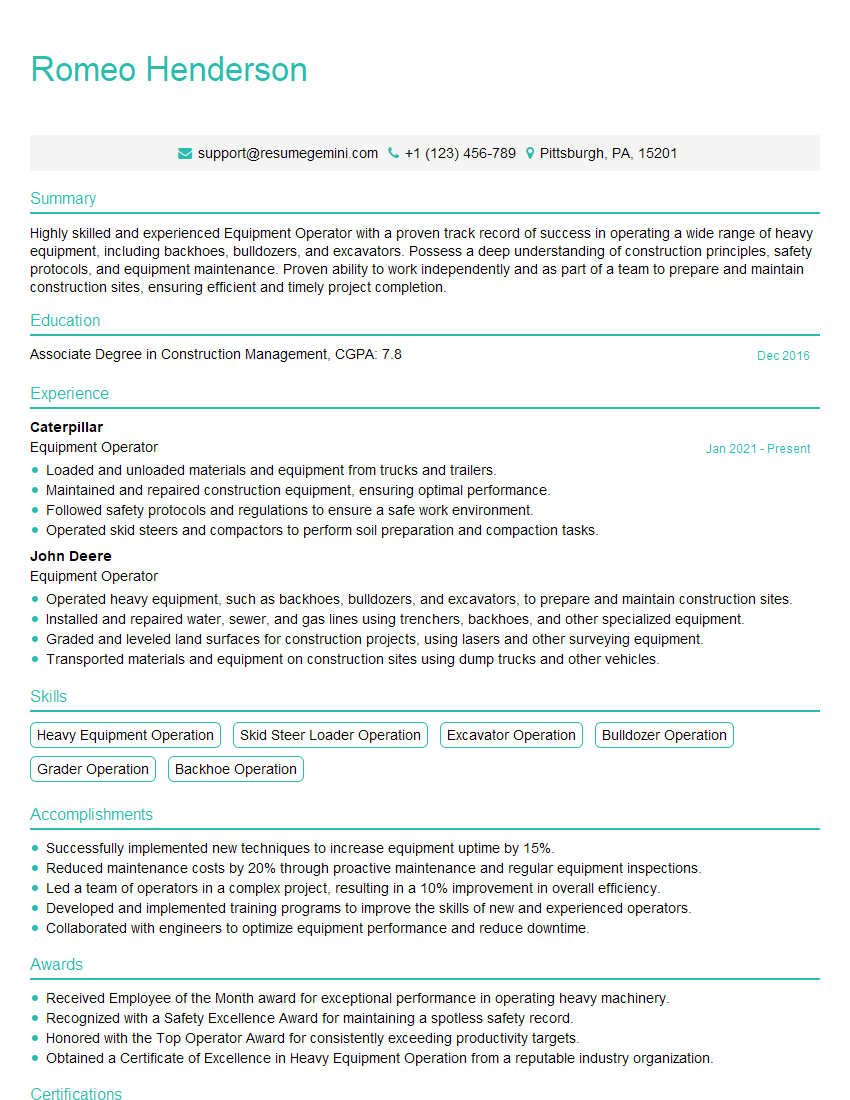
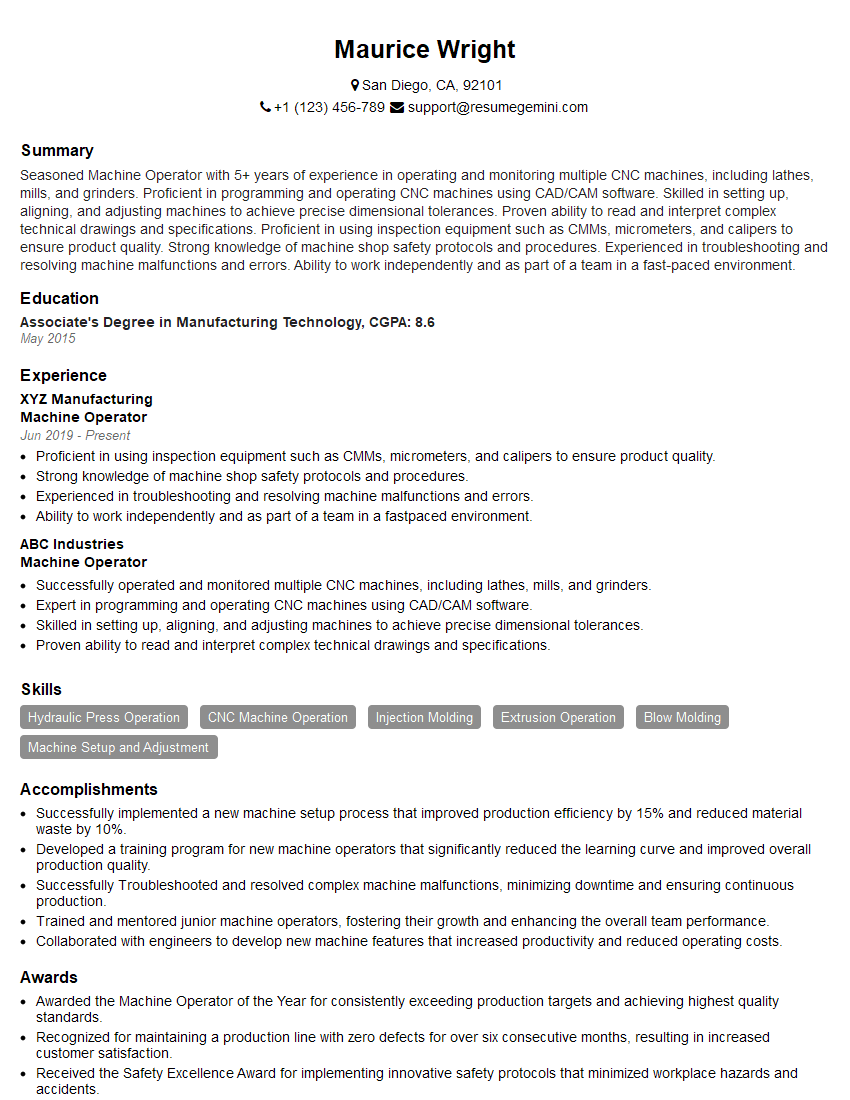
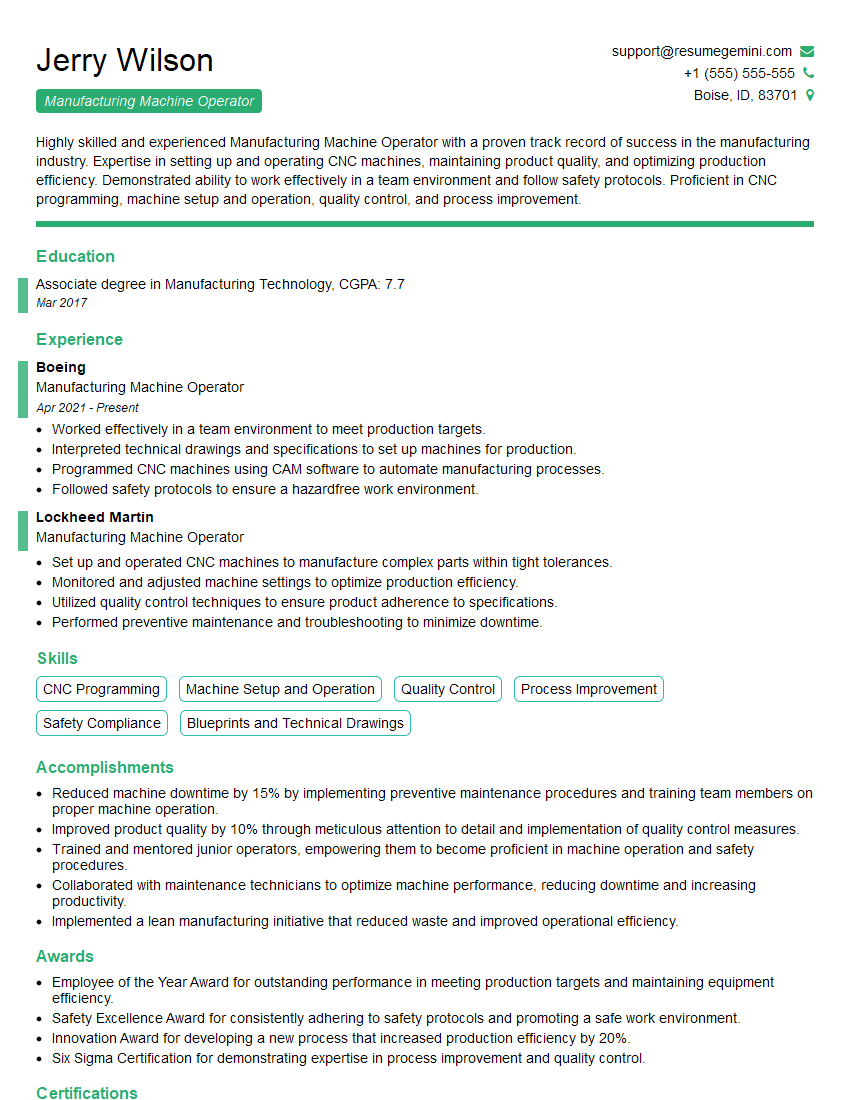
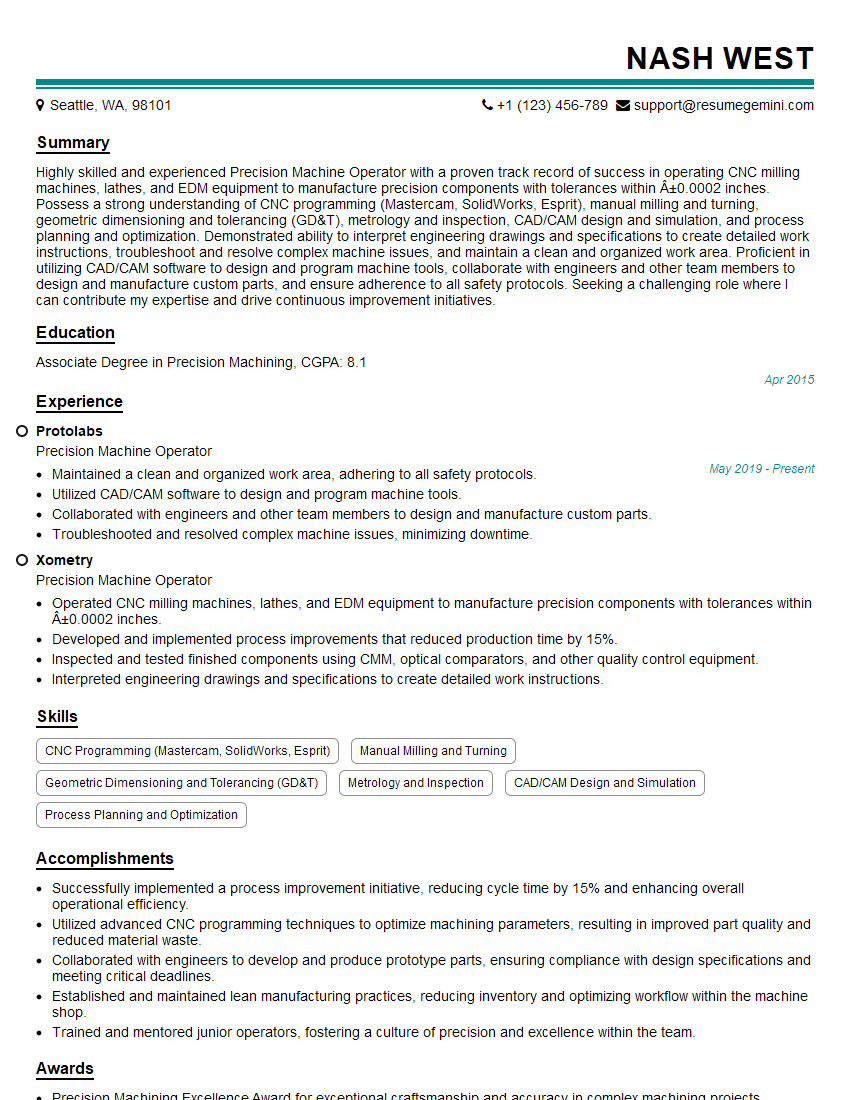
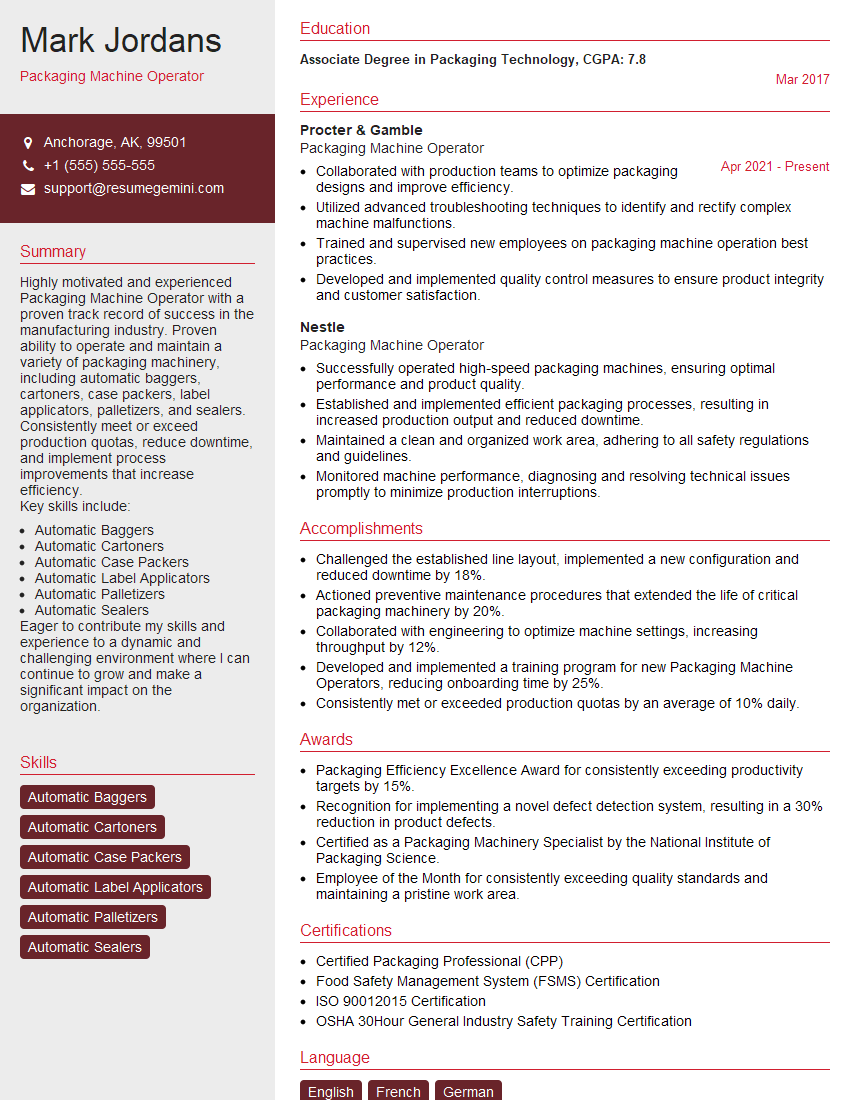
Mastering basic machine operation is crucial for a successful and rewarding career in many manufacturing and industrial settings. It demonstrates a commitment to safety, efficiency, and technical proficiency – skills highly valued by employers. To significantly boost your job prospects, create an ATS-friendly resume that highlights your skills and experience effectively. ResumeGemini is a trusted resource that can help you craft a professional and compelling resume tailored to the specific demands of the Basic Machine Operation field. Examples of resumes optimized for this role are available, providing valuable templates and guidance to help you stand out from the competition.
Explore more articles
Users Rating of Our Blogs
Share Your Experience
We value your feedback! Please rate our content and share your thoughts (optional).
What Readers Say About Our Blog
Very informative content, great job.
good