Preparation is the key to success in any interview. In this post, we’ll explore crucial Rivet Tapping Machine Production Planning Manuals interview questions and equip you with strategies to craft impactful answers. Whether you’re a beginner or a pro, these tips will elevate your preparation.
Questions Asked in Rivet Tapping Machine Production Planning Manuals Interview
Q 1. Explain the significance of cycle time in rivet tapping machine production planning.
Cycle time, in rivet tapping machine production, is the total time it takes to complete one full cycle of the process, from raw material input to finished product output. It’s a crucial metric because it directly impacts production capacity and overall efficiency. A shorter cycle time translates to more units produced per hour, leading to higher profitability and faster order fulfillment.
For example, if a machine’s cycle time is 10 seconds per rivet, and it operates for 8 hours a day, the theoretical maximum output is 28,800 rivets. However, this calculation needs to factor in downtime, maintenance, and other inefficiencies. Understanding and optimizing cycle time is essential for effective production planning.
Q 2. Describe different methods for optimizing rivet tapping machine production schedules.
Optimizing rivet tapping machine production schedules involves a multi-pronged approach. We can employ techniques like:
- Lean Manufacturing Principles: Identifying and eliminating waste (muda) in the production process. This includes reducing setup times, improving workflow, minimizing inventory, and preventing defects. For example, implementing a 5S system (Sort, Set in Order, Shine, Standardize, Sustain) to organize the workspace drastically improves efficiency.
- Kanban Systems: Implementing a visual system to manage workflow and inventory. This helps prevent overproduction and ensures just-in-time delivery of materials.
- Production Scheduling Software: Utilizing software solutions that can create optimized schedules based on machine capacity, demand forecasts, and material availability. These systems can factor in variables like machine downtime and maintenance schedules.
- Line Balancing: Ensuring that the workload is evenly distributed across different stages of the production process, minimizing bottlenecks.
For instance, if one stage of the process consistently takes longer than others, we might re-engineer the process, invest in faster equipment, or add extra personnel to that stage to bring it in line with others. This improves overall throughput.
Q 3. How do you handle unexpected downtime in rivet tapping machine operations?
Unexpected downtime is a major threat to production targets. Our response involves a structured approach:
- Immediate Action: Quickly identify the cause of the downtime (machine malfunction, material shortage, power outage etc.).
- Problem Solving: Implement troubleshooting procedures and utilize existing maintenance documentation and/or call in specialist engineers if needed.
- Temporary Workarounds: If the problem cannot be solved immediately, explore potential workarounds such as shifting production to other machines (if available) or temporarily adjusting the production schedule.
- Root Cause Analysis: After resolving the immediate issue, conduct a thorough root cause analysis to prevent future occurrences. This often involves documenting the issue and corrective actions taken.
- Schedule Adjustment: Once the problem is resolved, re-evaluate the production schedule and adjust it to compensate for lost time, prioritizing urgent orders.
For example, if a critical component breaks down, we might have a spare part on hand for immediate replacement. If not, expediting a new part while exploring alternate production strategies is crucial.
Q 4. What key performance indicators (KPIs) would you monitor to assess the efficiency of rivet tapping machine production?
Several KPIs are critical for evaluating rivet tapping machine production efficiency:
- Overall Equipment Effectiveness (OEE): Measures the effectiveness of equipment utilization, incorporating availability, performance, and quality.
- Cycle Time: Tracks the time taken per cycle, allowing for identification of bottlenecks.
- Production Output: Monitors the number of rivets tapped per unit of time.
- Defect Rate: Measures the percentage of defective rivets produced, highlighting quality control issues.
- Downtime Percentage: Tracks the percentage of time the machine is not in operation.
- Inventory Turnover: Monitors the efficiency of inventory management.
Regularly monitoring these KPIs provides valuable insights into areas requiring improvement and allows for data-driven decision-making.
Q 5. How do you incorporate preventive maintenance into rivet tapping machine production planning?
Preventive maintenance is crucial for maximizing machine lifespan and minimizing unexpected downtime. We incorporate it into production planning by:
- Scheduled Maintenance: Establishing a regular maintenance schedule with specific tasks and timelines for each machine component. This might include lubrication, cleaning, part replacements and inspections.
- Predictive Maintenance: Utilizing sensor data and machine learning to predict potential failures before they occur. This allows for proactive maintenance, preventing unexpected downtime.
- Spare Parts Inventory: Maintaining a sufficient inventory of commonly replaced parts to minimize downtime during repairs.
- Training: Providing adequate training to maintenance personnel on the proper maintenance procedures.
- Documentation: Maintaining detailed records of all maintenance activities to track performance and identify recurring issues.
For example, a regular lubrication schedule for the tapping mechanism is vital to prevent wear and tear and prolong the machine’s lifespan.
Q 6. Explain the role of safety protocols in your rivet tapping machine production planning process.
Safety is paramount. Our production planning process incorporates safety protocols by:
- Risk Assessment: Conducting thorough risk assessments to identify potential hazards associated with the machines and the work environment.
- Safety Training: Providing comprehensive safety training to all operators and maintenance personnel.
- Machine Guarding: Ensuring that all machines are properly guarded to prevent accidents.
- Personal Protective Equipment (PPE): Mandating the use of appropriate PPE such as safety glasses, hearing protection, and gloves.
- Emergency Procedures: Establishing clear emergency procedures and ensuring that all personnel are trained on these procedures.
- Regular Inspections: Conducting regular safety inspections of the machines and the work environment to identify and correct potential hazards.
Safety is not an add-on; it’s integral to our production planning, ensuring a safe and productive work environment.
Q 7. How do you manage inventory for rivet tapping machine parts and consumables?
Efficient inventory management is key for minimizing storage costs and preventing production delays. Our strategy incorporates:
- Just-in-Time (JIT) Inventory: Minimizing the amount of inventory on hand by ordering parts and consumables only when needed.
- Material Requirements Planning (MRP): Utilizing MRP software to plan and schedule the procurement of parts and materials based on production demands.
- Vendor Management: Establishing strong relationships with reliable vendors to ensure timely delivery of materials.
- Inventory Tracking: Implementing a robust inventory tracking system to monitor inventory levels and identify potential shortages.
- Regular Stock Audits: Conducting regular stock audits to verify inventory accuracy and identify discrepancies.
Imagine needing a specific rivet type for a large order. With effective inventory management, we ensure that the material is available when the production line needs it, preventing production delays and ensuring timely order fulfillment.
Q 8. What are the common causes of production bottlenecks in rivet tapping machine operations?
Production bottlenecks in rivet tapping machine operations often stem from a combination of factors. Think of it like a chain – if one link is weak, the whole process slows down.
- Insufficient raw materials: A shortage of rivets, tapped parts, or even lubricants can bring the entire line to a halt. Imagine a factory line suddenly running out of rivets; production stops immediately.
- Machine malfunctions: Rivet tapping machines are complex pieces of equipment. Mechanical failures, pneumatic issues, or faulty electrical components can cause significant downtime. This is similar to a car breaking down – it requires repair before it can function again.
- Operator errors: Incorrect machine settings, inefficient work practices, or inadequate training can significantly reduce output. This is like a chef not following a recipe correctly – the outcome won’t be as good.
- Inadequate tooling: Worn-out or improperly maintained tooling, such as rivet sets or dies, can lead to defective parts and production delays. Imagine using a dull knife to chop vegetables – it’s slow and inefficient.
- Inefficient workflow: Poorly designed production layouts, bottlenecks in material handling, or insufficient storage space can impede the flow of work. It’s like a congested highway – the smoother the flow, the more efficient the system.
Q 9. Describe your experience using specific software for production planning in a rivet tapping machine environment.
My experience with production planning software in a rivet tapping machine environment is extensive. I’ve worked extensively with MRP (Material Requirements Planning) systems like SAP and Oracle, as well as more specialized MES (Manufacturing Execution Systems) software designed for discrete manufacturing.
In my previous role, we used an MES system that integrated real-time data from the rivet tapping machines, including production rates, downtime, and part quality. This allowed for dynamic scheduling adjustments based on actual performance. For example, if a machine was consistently underperforming due to a recurring issue, we could proactively schedule maintenance or operator retraining. We also used the system for material tracking and inventory management, ensuring we always had the necessary rivets and other components available. The system also generated comprehensive reports that helped in identifying areas for improvement. It was extremely effective at optimizing our production process and reducing waste.
Q 10. How do you balance production capacity with demand forecasting in rivet tapping machine production?
Balancing production capacity with demand forecasting is crucial for efficient rivet tapping machine production. This involves a blend of art and science.
We start with accurate demand forecasting, utilizing historical data, market trends, and sales projections. This could involve analyzing past sales data, using statistical forecasting models, or consulting with sales and marketing teams. Once we have a demand forecast, we assess our current production capacity. This includes considering the number of operational machines, their efficiency, available workforce, and potential downtime.
If demand surpasses capacity, we explore several options: increasing machine utilization (through overtime or better scheduling), investing in additional equipment, outsourcing part of the production, or adjusting the product mix to prioritize higher-demand items. If capacity exceeds demand, we can optimize production schedules to reduce overtime or re-allocate resources to other projects.
Q 11. What is your experience with lean manufacturing principles in relation to rivet tapping machines?
Lean manufacturing principles are fundamental to optimizing rivet tapping machine production. My experience shows that by applying these principles, we can significantly reduce waste and improve efficiency.
- Value stream mapping: This involves identifying and eliminating all non-value-added steps in the production process. This is like streamlining a recipe – removing any unnecessary steps to make the process more efficient.
- 5S methodology: Implementing 5S (Sort, Set in Order, Shine, Standardize, Sustain) creates a clean, organized, and efficient work environment. This reduces waste and improves safety.
- Kaizen events: Conducting regular Kaizen events, or continuous improvement workshops, allows teams to identify and solve problems collaboratively. This creates a culture of continuous improvement.
- Just-in-time (JIT) inventory: Implementing JIT inventory management ensures that materials are delivered only when needed, minimizing storage costs and reducing waste. This is like receiving ingredients for a dish just as you’re about to cook it.
By embracing these lean principles, we can achieve higher productivity, reduced costs, and improved product quality.
Q 12. How would you address a significant increase in demand for rivet tapping machine output?
A significant increase in demand requires a multi-pronged approach. It’s a bit like scaling a successful restaurant; you need to expand your capacity while maintaining quality.
- Assess current capacity and bottlenecks: First, we thoroughly analyze our current production capacity, identifying potential bottlenecks, to understand how much we can increase production without significant investment.
- Increase machine utilization: This might involve overtime, optimizing machine setups, or improving operator efficiency.
- Invest in additional equipment: Depending on the scale of increased demand, purchasing or leasing additional rivet tapping machines may be necessary.
- Improve scheduling and resource allocation: Employ more sophisticated scheduling software to optimize production flow and efficiently allocate resources.
- Outsourcing: Consider subcontracting part of the production to a reliable third-party manufacturer to alleviate the immediate pressure.
- Employee training and development: Invest in training to enhance operator skills and improve efficiency.
The key is to develop a phased approach, carefully balancing short-term solutions with long-term capacity expansion.
Q 13. What quality control measures do you implement in rivet tapping machine production?
Quality control is paramount in rivet tapping machine production. We employ a multi-layered approach to ensure that every product meets our exacting standards.
- Incoming inspection: We inspect all raw materials upon arrival to ensure they meet specifications. This prevents defective parts from entering the production process.
- In-process inspection: Regular checks during the production process, including random sampling and visual inspections, identify any defects early on, preventing large batches of faulty parts.
- Final inspection: Each finished part undergoes a thorough inspection to ensure it meets all quality standards. This often involves dimensional checks, strength testing, and visual assessment.
- Statistical Process Control (SPC): We utilize SPC charts and other statistical methods to monitor process variability and identify trends, allowing for proactive adjustments to maintain consistent quality.
- Regular machine maintenance: Proper maintenance of the rivet tapping machines is crucial to ensure consistent quality and minimize defects.
By implementing these measures, we maintain high quality standards and minimize waste, leading to greater customer satisfaction.
Q 14. How do you interpret and use data from rivet tapping machine performance reports?
Rivet tapping machine performance reports are gold mines of information. I utilize data from these reports to identify areas for improvement and optimize our production process.
For example, reports on machine downtime help pinpoint recurring issues, whether it’s mechanical breakdowns or operator errors. Analyzing production rates allows us to identify machines or operators requiring further training or attention. Tracking defect rates highlights areas where quality control measures may need reinforcement. We also use data to analyze overall equipment effectiveness (OEE), a key metric that combines availability, performance, and quality, guiding investment decisions and process improvement initiatives.
The data is not just numbers; they tell a story about our process. By understanding the narrative within the data, we can make informed decisions that ultimately improve efficiency, quality, and profitability.
Q 15. Explain your understanding of different production scheduling techniques (e.g., Kanban, MRP).
Production scheduling is crucial for efficient rivet tapping machine production. Different techniques offer various approaches to planning and managing resources. Two prominent methods are Kanban and Material Requirements Planning (MRP).
Kanban is a visual system that focuses on just-in-time production. Think of it like a supermarket shelf: when a part is used, a signal triggers the production of another. This minimizes inventory and waste. In rivet tapping machine production, we might use Kanban cards to signal the need for specific components, like rivets or tapping heads, ensuring we only produce what’s needed, when it’s needed.
MRP, on the other hand, is a more complex system that uses a bill of materials (BOM) to calculate the precise quantity of each component required for a given production schedule. This ensures that all necessary parts are available at the right time, preventing delays. For example, an MRP system for rivet tapping machines would take into account the number of machines planned for production, the number of rivets per machine, and lead times for component procurement, to create a detailed plan for material ordering.
Choosing between Kanban and MRP often depends on the complexity of the production process and the demand variability. For simpler processes with stable demand, Kanban might be more efficient. For more complex products with fluctuating demands, MRP offers better control and predictability.
Career Expert Tips:
- Ace those interviews! Prepare effectively by reviewing the Top 50 Most Common Interview Questions on ResumeGemini.
- Navigate your job search with confidence! Explore a wide range of Career Tips on ResumeGemini. Learn about common challenges and recommendations to overcome them.
- Craft the perfect resume! Master the Art of Resume Writing with ResumeGemini’s guide. Showcase your unique qualifications and achievements effectively.
- Don’t miss out on holiday savings! Build your dream resume with ResumeGemini’s ATS optimized templates.
Q 16. How do you handle material shortages in rivet tapping machine production?
Material shortages are a significant threat to production. My approach involves a multi-pronged strategy. First, proactive monitoring of inventory levels is key. We use real-time inventory tracking systems to identify potential shortages before they disrupt production. Second, we maintain strong relationships with our suppliers, ensuring reliable delivery schedules and communicating any potential issues early. Third, we have established contingency plans. This could include identifying alternative suppliers, having a safety stock of critical components, or adjusting the production schedule to prioritize the assembly of machines using available materials.
For example, if we face a rivet shortage, we might temporarily prioritize machine assemblies that require fewer rivets, while expediting the delivery of the missing rivets from our supplier. Simultaneously, we’d begin root cause analysis to understand why the shortage occurred and implement corrective actions to prevent future occurrences.
Q 17. How do you integrate rivet tapping machine production planning with the overall manufacturing strategy?
Rivet tapping machine production planning is intrinsically linked to the overall manufacturing strategy. Our planning process aligns with the company’s overall goals, considering factors like production capacity, market demand forecasts, and resource allocation. For instance, if the company’s strategic goal is to increase market share by producing a new, high-demand model, our production plan would prioritize this model, allocating appropriate resources (personnel, materials, and equipment) accordingly.
We utilize a rolling forecast model that adjusts to changing market conditions. This allows us to dynamically reallocate resources and adapt our production schedule in response to unexpected changes in demand or supply chain disruptions. The overall manufacturing strategy provides the framework, and the rivet tapping machine production plan is a crucial element within that framework.
Q 18. Describe your experience with root cause analysis related to rivet tapping machine production issues.
Root cause analysis (RCA) is crucial for improving rivet tapping machine production. I’m experienced in using various RCA methodologies, including the 5 Whys, Fishbone diagrams, and Fault Tree Analysis. When a production issue arises, we systematically investigate the problem to identify its root cause, not just the symptoms. For example, if machines are failing due to premature wear on the tapping heads, we won’t just replace the heads; we’ll use RCA to understand why they are wearing out prematurely. This might reveal issues with the material quality, the tapping head design, or even operator training.
Once the root cause is identified, we implement corrective actions to prevent recurrence. This could involve changing suppliers, improving machine design, or revising operator training procedures. We also track the effectiveness of these corrective actions through appropriate metrics, ensuring the problem is truly resolved.
Q 19. How would you improve the efficiency of rivet tapping machine operation using data analysis?
Data analysis significantly improves rivet tapping machine operation efficiency. We collect data from various sources, including machine sensors (cycle times, downtime, error rates), production records, and inventory management systems. This data is analyzed using statistical methods and data visualization tools to identify bottlenecks, inefficiencies, and areas for improvement.
For example, by analyzing machine downtime data, we can identify recurring issues, such as specific components failing frequently. This allows us to prioritize maintenance and potentially redesign components to improve reliability. Similarly, analyzing production data can reveal inefficiencies in the assembly process, leading to process optimization and increased throughput.
Predictive analytics can further enhance efficiency. By analyzing historical data, we can predict potential problems and proactively address them, preventing downtime and production delays. For instance, we can predict when a specific component is likely to fail and schedule its replacement before it causes a production stoppage.
Q 20. What is your experience with Six Sigma methodology in relation to rivet tapping machines?
Six Sigma methodology has been invaluable in enhancing the quality and efficiency of our rivet tapping machine production. We use DMAIC (Define, Measure, Analyze, Improve, Control) to systematically reduce defects and variations in the production process. For instance, we might define a project to reduce the number of defective tapping heads produced. We would then measure the current defect rate, analyze the root causes of the defects (using techniques like those mentioned above), implement improvements (like modifying the manufacturing process), and finally control the process to maintain the improved performance.
Six Sigma helps us establish robust processes with predictable outcomes. By focusing on data-driven decision-making and continuous improvement, we consistently strive to achieve near-zero defects in our production processes.
Q 21. How do you communicate production plans and updates to relevant stakeholders?
Effective communication is critical in production planning. We use a multi-faceted approach to communicate plans and updates to stakeholders. This includes regular meetings with production teams, providing daily production reports, and using project management software to track progress and share relevant information. Visual management tools, such as Kanban boards, are employed to keep everyone informed about the status of various tasks.
For senior management, we provide high-level summaries and dashboards highlighting key performance indicators (KPIs) such as production output, defect rates, and on-time delivery. Transparent communication ensures that everyone is aligned on goals and is aware of any potential challenges, enabling proactive problem-solving.
Q 22. Describe your experience with different types of rivet tapping machines.
My experience encompasses a wide range of rivet tapping machines, from pneumatic and hydraulic models to fully automated CNC systems. I’ve worked extensively with machines from various manufacturers, each with unique features and capabilities. For instance, I’ve used pneumatic rivet setters for smaller-scale, simpler applications, where speed and ease of use are prioritized. These are generally less complex and easier to maintain. On the other hand, I’ve been involved in the operation and planning of high-speed, automated CNC rivet tapping cells, capable of handling complex geometries and high production volumes. These machines require more sophisticated programming and maintenance expertise. I’m familiar with their specific control systems, error diagnostics, and preventative maintenance routines. My experience also includes working with machines employing different rivet types, including solid rivets, tubular rivets, and blind rivets, each demanding a tailored approach to operation and planning.
Q 23. What are the common maintenance issues encountered with rivet tapping machines?
Common maintenance issues with rivet tapping machines often stem from wear and tear, improper lubrication, and operator error. For example, pneumatic machines can suffer from air leaks, leading to reduced power and inconsistent riveting. This requires careful inspection of air hoses, fittings, and the pneumatic cylinder itself. Hydraulic systems can experience fluid leaks, requiring prompt attention to prevent damage to components. Wear and tear on the riveting dies and anvils are also common, affecting the quality and consistency of the rivets. Regularly inspecting these components and replacing them as needed is crucial. Furthermore, incorrect setting of the riveting pressure can lead to damaged parts or inconsistent rivets. Finally, regular cleaning to prevent debris build-up is paramount to prevent malfunctions and jams.
Q 24. Explain how you would develop a preventative maintenance schedule for rivet tapping machines.
Developing a preventative maintenance schedule requires a systematic approach. I begin by thoroughly reviewing the manufacturer’s recommendations, which typically specify intervals for lubrication, inspection, and part replacement. Then, I incorporate additional checks based on operational experience and historical maintenance data. A typical schedule might include:
- Daily: Visual inspection for leaks, loose parts, and debris buildup.
- Weekly: Lubrication of moving parts, checking air pressure or hydraulic fluid levels.
- Monthly: More thorough inspection of dies, anvils, and other critical components. This includes checking for wear and tear.
- Quarterly/Semi-annually: Complete system cleaning, including removal of accumulated dust and debris. This will likely necessitate a shutdown of the production line.
- Annually: A full preventative maintenance overhaul, which may involve complete disassembly and inspection of key components. Professional servicing may be required at this point.
This schedule should be documented and tracked meticulously, using a CMMS (Computerized Maintenance Management System) or a similar system to ensure adherence and efficient record-keeping. The schedule can be adjusted based on the machine’s usage, operational environment, and historical maintenance data.
Q 25. How do you ensure compliance with safety regulations during rivet tapping machine operations?
Ensuring safety compliance involves several key steps. First and foremost, proper operator training is essential. Operators must be thoroughly trained on the safe operation and maintenance of the machines, including lockout/tagout procedures, emergency shut-off mechanisms, and the correct use of personal protective equipment (PPE) such as safety glasses, hearing protection, and gloves. Regular safety inspections and audits of the work area and machinery are crucial. These should check for potential hazards such as exposed wiring, leaks, and damaged guards. All safety guards and interlocks must be functional and regularly inspected. Furthermore, implementing a system for reporting and addressing safety concerns is vital, encouraging operators to report any potential hazards immediately. Compliance with all relevant OSHA or equivalent local safety regulations is mandatory and must be diligently followed. This includes maintaining detailed records of training and inspections.
Q 26. Describe your experience with production planning software specific to rivet tapping or similar machinery.
My experience includes extensive work with production planning software tailored for manufacturing environments. While there isn’t a specific software solely for rivet tapping machines, I’ve used ERP (Enterprise Resource Planning) systems like SAP and Oracle, as well as more specialized Manufacturing Execution Systems (MES). These systems allow for detailed scheduling of production runs, tracking of material usage, and monitoring of machine performance. I’m proficient in using these systems to optimize production schedules, minimizing downtime and maximizing efficiency. Specifically, I use these systems to input production requirements, allocate resources, and monitor real-time production data. This allows for proactive identification and resolution of potential bottlenecks before they impact production targets. For example, I’ve used these systems to generate reports on machine uptime, identifying equipment that requires more frequent maintenance or operator training, and to forecast material demands.
Q 27. How do you manage production changes and updates to the rivet tapping machine’s production plan?
Managing production changes requires a methodical approach. Any changes to the rivet tapping machine’s production plan, whether it’s a shift in production volume, a change in the type of rivet being used, or a modification to the product design, need to be carefully considered and implemented. I start by thoroughly analyzing the impact of the changes. For example, changing the rivet type might require adjustments to the machine’s settings or even a change of dies. A change in production volume might require adjustments to staffing or machine run times. Then, I update the production schedule in the relevant software, taking into account the necessary adjustments to machine settings, material requirements, and labor allocation. The updated plan is then communicated to the relevant teams, including operators, maintenance personnel, and procurement. Throughout the process, I meticulously document all changes and their effects on production parameters. Regular monitoring of the updated plan is essential to promptly address any unforeseen issues.
Key Topics to Learn for Rivet Tapping Machine Production Planning Manuals Interview
- Production Scheduling & Sequencing: Understanding different scheduling techniques (e.g., FIFO, Kanban) and their application in optimizing rivet tapping machine production flow. Consider the impact of machine downtime and material availability.
- Material Requirements Planning (MRP): Mastering the process of calculating material needs based on production schedules, lead times, and inventory levels. Practice calculating safety stock and addressing potential shortages.
- Capacity Planning & Resource Allocation: Analyzing machine capacity, identifying bottlenecks, and effectively allocating resources (machines, personnel, tools) to meet production targets. Explore methods for improving overall equipment effectiveness (OEE).
- Quality Control & Process Improvement: Understanding quality control procedures related to rivet tapping, identifying potential defects, and implementing strategies for continuous improvement (e.g., Lean Manufacturing principles). This includes understanding quality metrics and root cause analysis.
- Preventive Maintenance & Downtime Management: Understanding the importance of preventive maintenance schedules for rivet tapping machines and developing strategies for minimizing downtime due to equipment failures. Explore methods for predicting and preventing potential issues.
- Production Reporting & Data Analysis: Familiarize yourself with key performance indicators (KPIs) related to rivet tapping machine production and the ability to analyze data to identify areas for improvement and make data-driven decisions.
- Safety Procedures & Regulations: Understand and be prepared to discuss safety protocols and regulations specific to operating and maintaining rivet tapping machines. This may include personal protective equipment (PPE) and machine guarding.
Next Steps
Mastering Rivet Tapping Machine Production Planning Manuals is crucial for career advancement in manufacturing and operations. A deep understanding of these concepts demonstrates valuable skills highly sought after by employers. To significantly improve your job prospects, create a compelling, ATS-friendly resume that highlights your relevant skills and experience. We strongly recommend using ResumeGemini, a trusted resource, to build a professional and impactful resume. ResumeGemini provides examples of resumes tailored to roles involving Rivet Tapping Machine Production Planning Manuals, ensuring your application stands out.
Operations Manager Resume Sample
Maintenance Manager Resume Sample
Demand Planner Resume Sample

Manufacturing Planner Resume Sample
Production Control Manager Resume Sample
Quality Control Manager Resume Sample
Production Supervisor Resume Sample
Materials Manager Resume Sample
Supply Chain Manager Resume Sample

Project Engineer Resume Sample

Scheduling Manager Resume Sample

Training Specialist Resume Sample
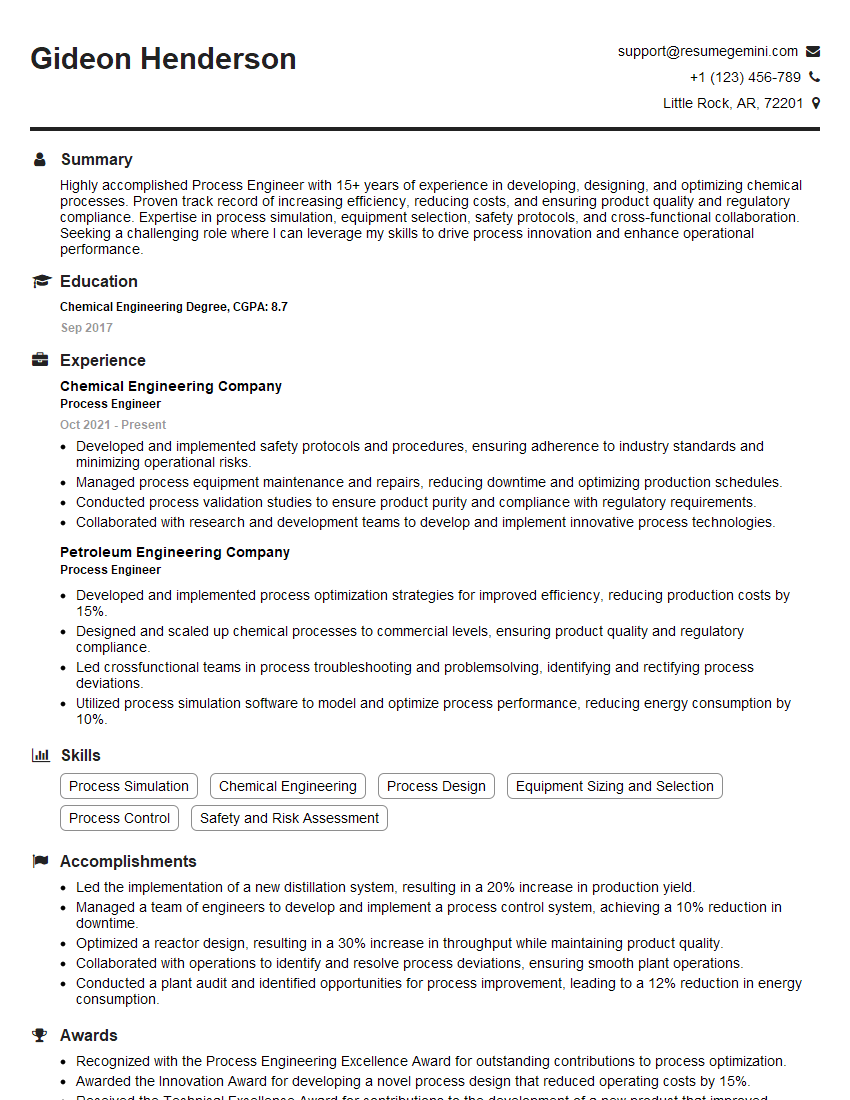
Process Engineer Resume Sample

Documentation Specialist Resume Sample
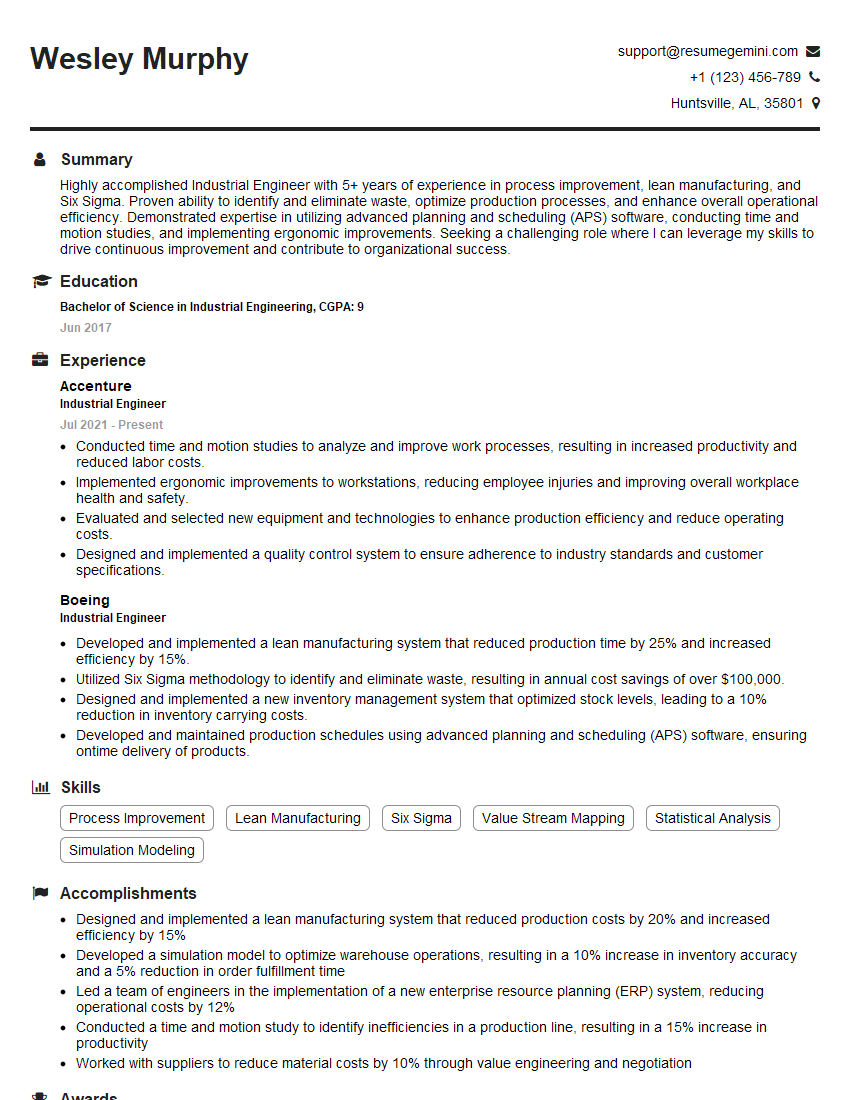
Industrial Engineer Resume Sample
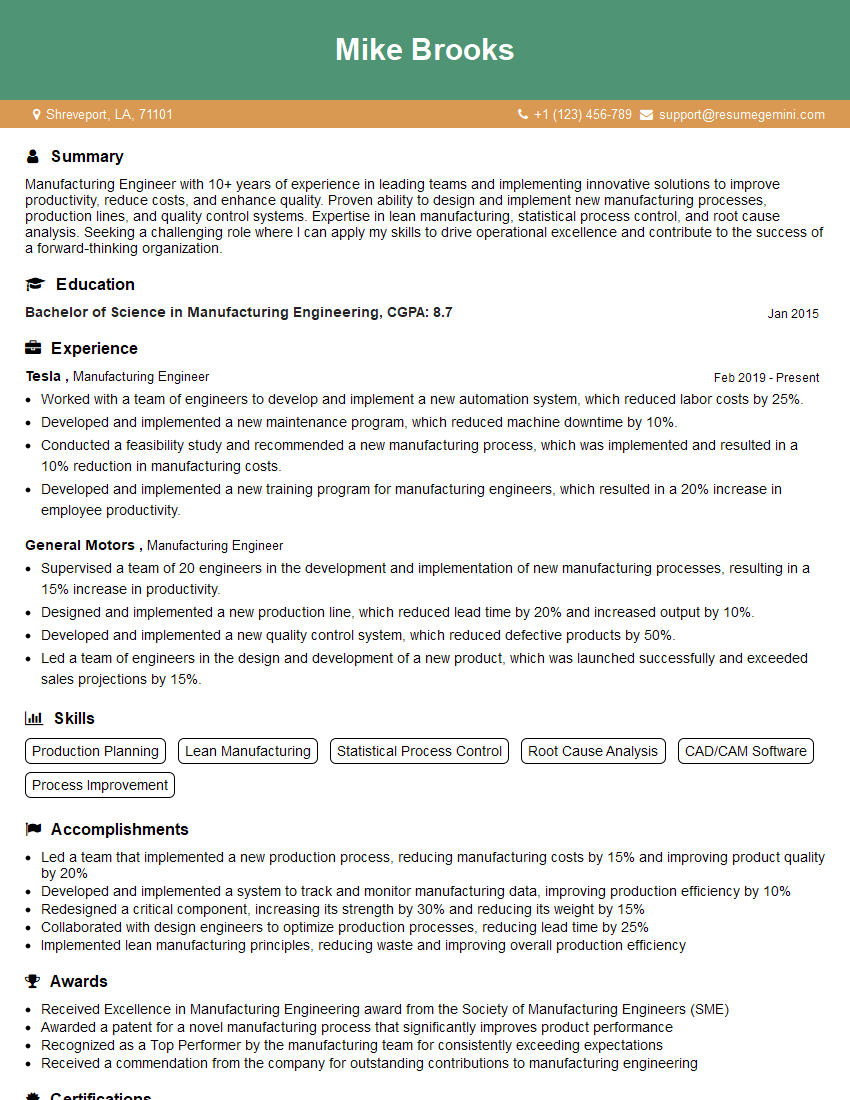
Manufacturing Engineer Resume Sample
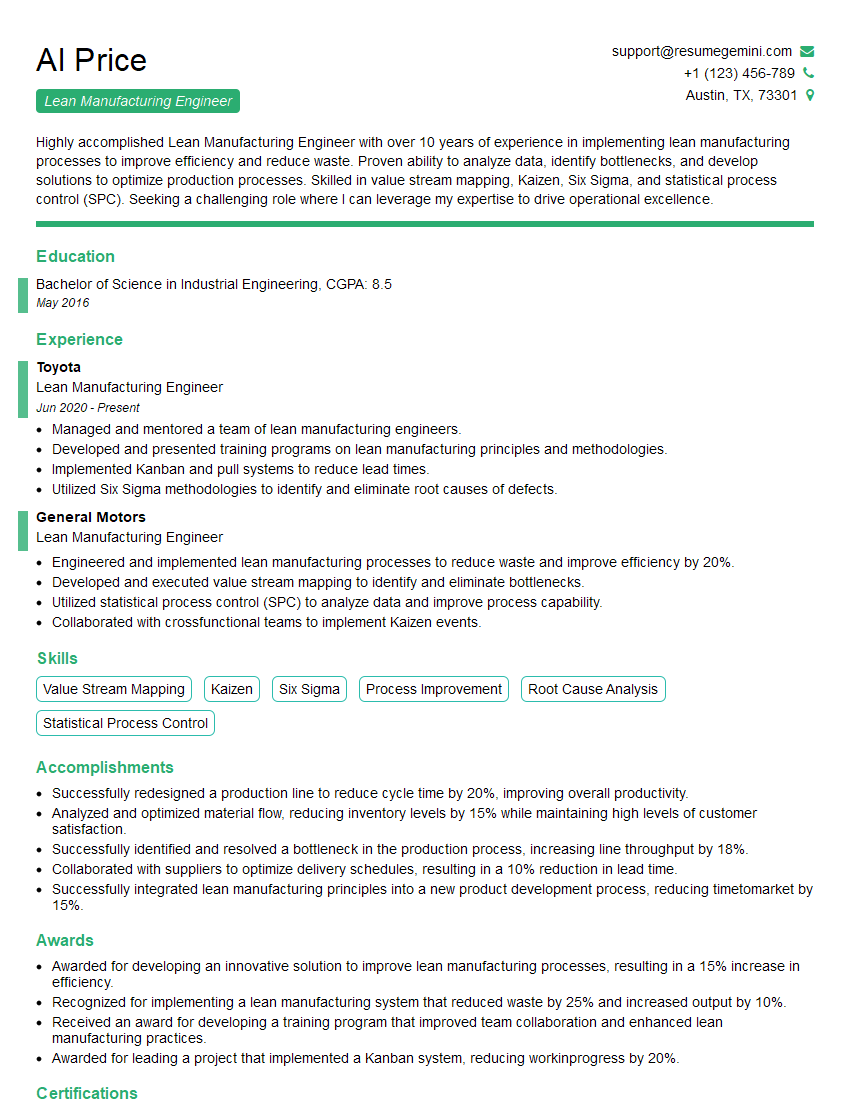
Lean Manufacturing Engineer Resume Sample
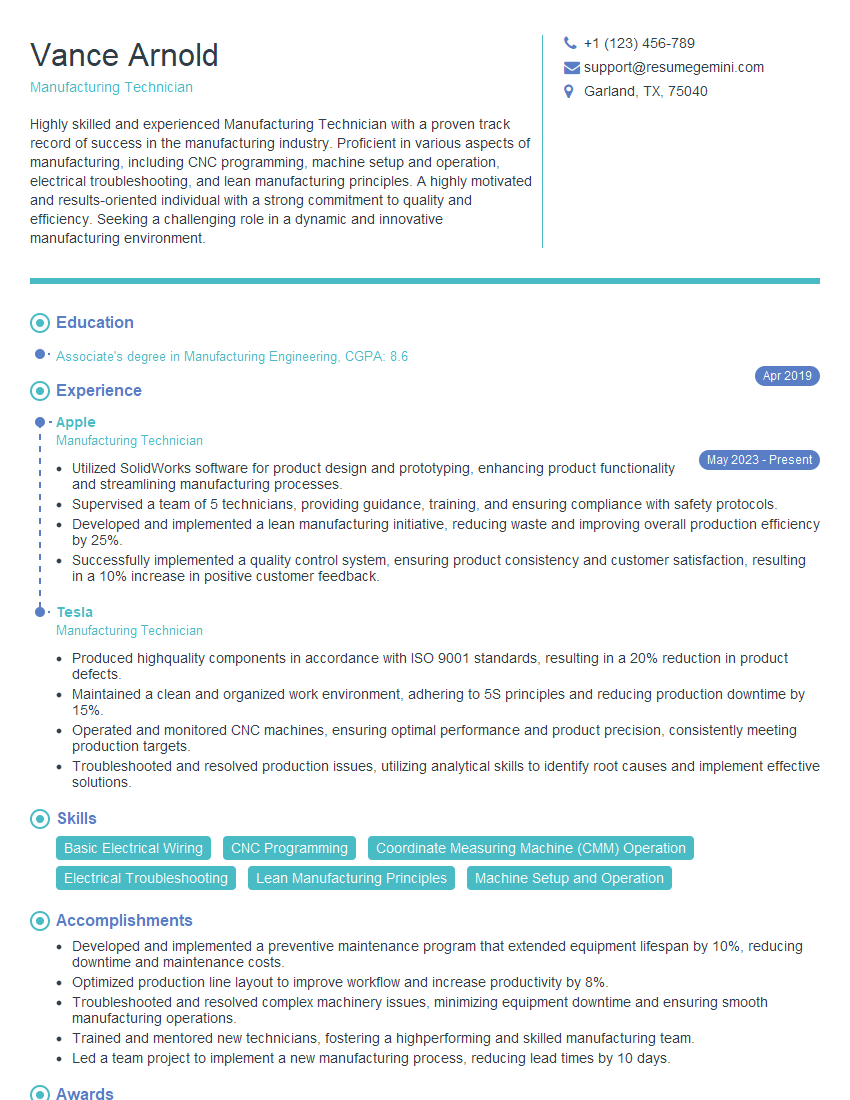
Manufacturing Technician Resume Sample
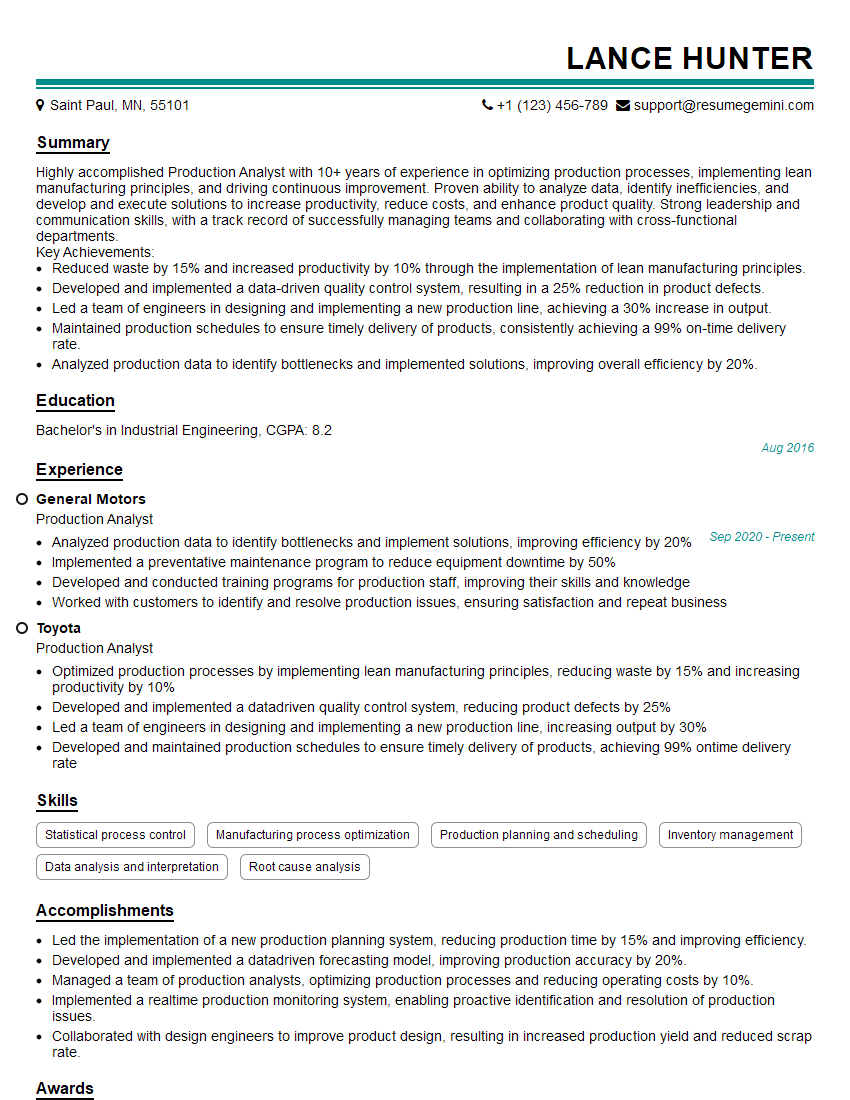
Production Analyst Resume Sample

Technical Writer Resume Sample
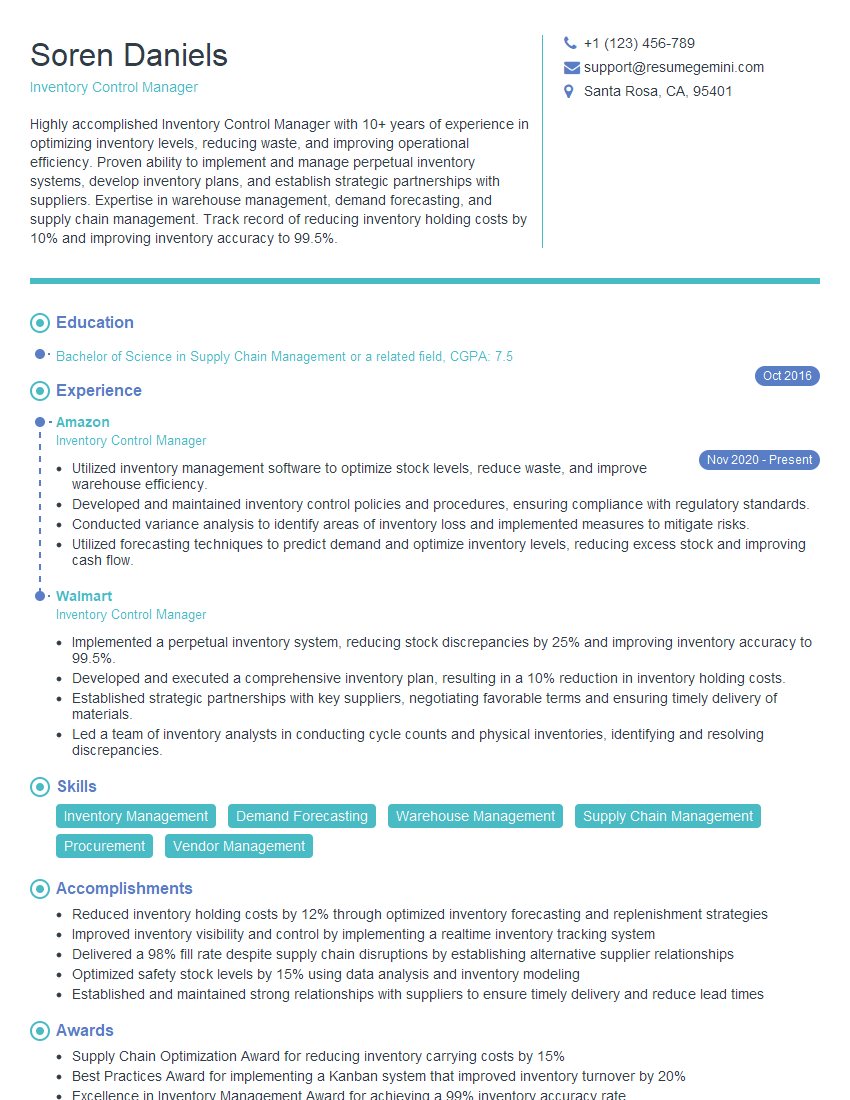
Inventory Control Manager Resume Sample
- Operations Manager
- Maintenance Manager
- Demand Planner
- Manufacturing Planner
- Production Control Manager
- Quality Control Manager
- Production Supervisor
- Materials Manager
- Supply Chain Manager
- Project Engineer
- Scheduling Manager
- Training Specialist
- Process Engineer
- Documentation Specialist
- Industrial Engineer
- Manufacturing Engineer
- Lean Manufacturing Engineer
- Manufacturing Technician
- Production Analyst
- Technical Writer
- Inventory Control Manager
Explore more articles
Users Rating of Our Blogs
Share Your Experience
We value your feedback! Please rate our content and share your thoughts (optional).
What Readers Say About Our Blog
Very informative content, great job.
good