Are you ready to stand out in your next interview? Understanding and preparing for Collaborative Stakeholder Engagement interview questions is a game-changer. In this blog, we’ve compiled key questions and expert advice to help you showcase your skills with confidence and precision. Let’s get started on your journey to acing the interview.
Questions Asked in Collaborative Stakeholder Engagement Interview
Q 1. Describe your experience in developing and implementing stakeholder engagement strategies.
Developing and implementing stakeholder engagement strategies involves a systematic approach, starting with a thorough understanding of the project’s context and objectives. This includes identifying all relevant stakeholders, analyzing their interests and influence, and then designing a tailored communication and collaboration plan. I typically begin by creating a stakeholder map, visually representing the relationships and influence of different groups. Then, I develop a communication plan outlining the methods, frequency, and channels for engagement – this could include surveys, workshops, focus groups, regular meetings, and newsletters. Implementation involves meticulous execution of this plan, closely monitoring feedback, and adapting strategies as needed to ensure effective engagement throughout the project lifecycle. For instance, in a recent urban development project, we utilized a combination of online surveys, community forums, and individual interviews to gather input from residents, businesses, and local government agencies. This multi-pronged approach ensured inclusivity and yielded rich, multifaceted data that significantly influenced the final project design.
Q 2. How do you identify and prioritize key stakeholders in a project?
Identifying and prioritizing stakeholders is crucial for effective engagement. I use a combination of methods, including stakeholder analysis techniques like power/interest grids and influence/impact matrices. These tools help visualize stakeholder influence and their level of interest in the project. A power/interest grid, for example, categorizes stakeholders based on their power (ability to influence outcomes) and interest (level of concern about the project). Those with high power and high interest are prioritized for close engagement. Beyond these grids, I consider factors like stakeholder dependence on the project’s success, their potential to obstruct or support the project, and their communication preferences. For example, in a software development project, the end-users might have high interest but limited power, while the funding agency might possess high power and moderate interest. Prioritization ensures that resources are allocated effectively, focusing engagement on the most influential and critical stakeholders.
Q 3. Explain your approach to managing conflicting stakeholder interests.
Managing conflicting stakeholder interests is an inevitable aspect of collaborative engagement. My approach involves open communication, active listening, and a collaborative problem-solving framework. I start by facilitating transparent dialogue, ensuring all stakeholders have a platform to express their views and concerns. Then, I employ techniques such as negotiation, mediation, and compromise to find common ground. It’s crucial to identify the underlying interests driving the conflict, not just the stated positions. I often use a collaborative decision-making process, involving stakeholders in developing solutions that address their concerns while aligning with overall project goals. Visual aids, like mind maps, can be helpful in brainstorming solutions collaboratively. In a recent environmental project, conflicting views arose between developers and conservationists. By employing facilitated workshops and establishing clear communication channels, we were able to identify shared interests and develop solutions that balanced development with environmental protection.
Q 4. What techniques do you use to build rapport and trust with stakeholders?
Building rapport and trust is paramount for successful stakeholder engagement. I prioritize active listening, showing genuine interest in stakeholders’ perspectives and concerns. I make a point of understanding their individual needs and communication styles. Transparency is key – I ensure clear and consistent communication, keeping stakeholders informed throughout the project. I also strive to be empathetic and respectful, acknowledging their contributions and addressing their concerns promptly. Demonstrating competence and reliability builds confidence, so ensuring I deliver on my promises and meet commitments is essential. For example, by proactively seeking feedback and incorporating stakeholder suggestions into the project plan, I foster a sense of ownership and collaboration, enhancing trust and rapport.
Q 5. How do you effectively communicate complex information to diverse stakeholder groups?
Communicating complex information to diverse groups requires a tailored approach. I adapt my communication style and medium to suit each stakeholder group’s needs and preferences. This involves simplifying technical language, using visual aids such as charts, graphs, and infographics, and delivering information in various formats – presentations, reports, written summaries, and even short videos. I utilize storytelling to make information more engaging and memorable. Understanding the stakeholders’ prior knowledge and their capacity to receive information is critical for choosing an effective communication method. For example, when explaining a complex environmental impact assessment to a community group, I would use simple language, visuals, and a question-and-answer session to ensure clear comprehension. For technical experts, a detailed report with data would be appropriate.
Q 6. Describe a time you had to manage a challenging stakeholder relationship. What was your approach?
In a recent infrastructure project, a key stakeholder – a local business owner – expressed strong opposition to the project due to concerns about potential disruptions to their business. My approach involved several steps: First, I scheduled a one-on-one meeting to listen to their concerns without interruption. I then actively acknowledged their anxieties and validated their perspective. I presented a detailed plan outlining mitigation strategies to minimize disruptions, such as providing financial compensation during construction and marketing support afterward. Finally, I ensured that they were actively involved in the planning and execution of these mitigation strategies, allowing them to participate in shaping the solutions. This collaborative approach transformed their opposition into support, turning a potential conflict into a mutually beneficial partnership. Open communication, empathy, and active problem-solving were key to resolving the challenge.
Q 7. What tools or technologies do you utilize for stakeholder communication and collaboration?
For stakeholder communication and collaboration, I utilize a range of tools and technologies. Project management software like Asana or Trello facilitates task management and shared progress updates. Collaboration platforms such as Microsoft Teams or Slack enable real-time communication and file sharing. Survey tools like SurveyMonkey or Qualtrics are invaluable for gathering stakeholder feedback. Video conferencing platforms like Zoom or Google Meet enable virtual meetings and workshops. Finally, I often use specialized stakeholder management software to track engagement activities and analyze feedback to ensure we are effectively engaging all stakeholders and addressing their needs throughout the project lifecycle.
Q 8. How do you measure the success of a stakeholder engagement initiative?
Measuring the success of stakeholder engagement isn’t about ticking boxes; it’s about assessing whether the initiative achieved its intended impact. We need to define success beforehand, aligning it with project goals. This often involves a blend of qualitative and quantitative measures.
- Quantitative Measures: These focus on measurable outcomes. For example, we might track the number of stakeholders actively participating, the level of agreement on key decisions (measured through surveys or feedback forms), or the reduction in project risks identified through stakeholder input. A successful project might demonstrate a high level of stakeholder satisfaction, as measured by post-project surveys.
- Qualitative Measures: These delve into the ‘why’ behind the numbers. We would assess the quality of stakeholder relationships, looking for improvements in trust and collaboration. We might analyze feedback from focus groups or interviews to understand how effectively communication flowed and how stakeholders felt included in the process. For example, observing increased collaboration in team meetings after a successful engagement initiative.
- Impact Assessment: Ultimately, success is measured by the impact on the project itself. Did the engagement process enhance the project’s feasibility, reduce conflict, improve solutions, or lead to broader buy-in? This might be assessed through project milestones or comparing performance against initial predictions.
For instance, in a recent project implementing a new software system, we tracked employee satisfaction through surveys and observed a reduction in project delays due to early identification of technical issues via stakeholder feedback. This provided a quantifiable demonstration of the initiative’s positive impact.
Q 9. How do you handle situations where stakeholders resist change or proposed solutions?
Resistance to change is normal and often stems from fear of the unknown, perceived loss of control, or lack of trust. Addressing this requires empathy, open communication, and a strategic approach.
- Understanding the Resistance: The first step is to actively listen and understand the source of resistance. Why are they resisting? What are their concerns? This often requires individual conversations to address specific concerns. Simply stating ‘they need to accept the change’ rarely works.
- Addressing Concerns: Tailor solutions to the specific concerns raised. If it’s fear of job security, address that directly with clear communication about retraining opportunities or future roles. If it’s a lack of trust, build trust by being transparent, sharing information proactively, and involving them in the decision-making process.
- Collaboration and Negotiation: Involve resistant stakeholders in the solution-finding process. Frame the change not as an imposition, but as a collaborative effort to achieve a shared goal. Negotiation and compromise are often necessary to reach a mutually acceptable solution.
- Demonstrate Value: Clearly communicate the benefits of the proposed solutions for all stakeholders, including the resistant ones. Highlighting specific advantages that directly address their needs increases the likelihood of acceptance.
For example, I once encountered resistance to a new workflow in a marketing department. Through individual meetings, I discovered that the resistance stemmed from a fear of losing control over their tasks. By involving them in designing the new workflow and incorporating their feedback, I transformed resistance into support and even advocacy for the change.
Q 10. Describe your experience in facilitating stakeholder workshops or meetings.
Facilitating stakeholder workshops and meetings requires strong organizational skills, active listening, and the ability to guide discussions effectively. My approach is centered around creating a safe and inclusive environment where everyone feels heard and valued.
- Planning and Preparation: Before the meeting, I clearly define objectives, develop an agenda, and send out pre-reading materials or surveys to gather input beforehand. This ensures a focused and productive session.
- Engaging Activities: I incorporate interactive activities like brainstorming sessions, group discussions, or problem-solving exercises to foster collaboration and participation. This makes the meeting more engaging and prevents passive attendance.
- Active Listening and Conflict Resolution: I actively listen to all participants, ensuring everyone has an opportunity to contribute. I proactively manage conflicts, ensuring that discussions remain respectful and productive. When necessary, I guide the conversation towards finding common ground.
- Documentation and Follow-Up: I document key decisions, action items, and next steps. After the meeting, I share the minutes and follow up with participants to ensure action items are addressed and progress is tracked. This creates accountability and ensures outcomes align with the agenda.
In a recent workshop for a large-scale infrastructure project, I facilitated a series of brainstorming sessions that resulted in innovative solutions for community engagement and environmental impact mitigation. This collaborative approach significantly improved the project’s social license and streamlined approval processes.
Q 11. How do you ensure transparency and accountability in stakeholder engagement processes?
Transparency and accountability are cornerstones of successful stakeholder engagement. This is achieved through open communication, documented processes, and regular feedback loops.
- Open Communication Channels: Establishing clear and accessible communication channels is critical. This might include regular newsletters, project updates, online portals, or dedicated communication managers. Proactive communication is far more effective than reactive communication.
- Documented Processes: All engagement activities should be documented, including meeting minutes, decisions made, and action items assigned. This creates an audit trail, ensuring transparency and accountability.
- Regular Feedback Mechanisms: Regular feedback loops are essential to assess effectiveness and address concerns. This might include surveys, interviews, or focus groups. Acting on feedback demonstrates responsiveness and builds trust.
- Accountability Framework: Establish an accountability framework that clearly outlines roles and responsibilities. Who is responsible for what? How will progress be measured? This clarity prevents misunderstandings and ensures actions are taken.
For example, in a recent community engagement project, we established a dedicated website with regular updates, a public forum for Q&A, and a feedback form to gather community input. This transparent approach built trust and significantly improved community relations.
Q 12. How do you adapt your communication style to different stakeholders?
Adapting communication style is crucial for effective stakeholder engagement. Different stakeholders have different communication preferences, backgrounds, and levels of understanding.
- Understanding Your Audience: Before communicating, I assess the audience’s needs and preferences. Who are they? What are their interests and concerns? What’s their level of technical expertise? This informs the tone, style, and content of communication.
- Tailoring Your Message: I adjust the language, complexity, and format of my messages to match the audience. Using simple language for a non-technical audience, and more detailed technical information for those with relevant expertise is essential.
- Choosing the Right Channel: I select the appropriate communication channels for each stakeholder group. Email may be sufficient for some, while others may require in-person meetings or presentations. Some stakeholders prefer informal communication, while others prefer formal communications.
- Active Listening and Feedback: I actively listen to their responses and adjust my approach as needed. Continuous feedback helps ensure effective communication and prevents misinterpretations.
In a project involving a diverse range of stakeholders, from government officials to local community members, I adapted my communication style accordingly, using formal reports for government stakeholders and more informal community meetings to engage with local residents. This personalized approach ensured that everyone felt understood and involved.
Q 13. What is your experience with stakeholder mapping and analysis?
Stakeholder mapping and analysis is a crucial initial step in any engagement process. It helps identify key stakeholders, their influence, and their interests. This informed approach prevents overlooking critical players or misinterpreting their concerns.
- Identifying Stakeholders: I begin by systematically identifying all individuals or groups that may be affected by or could influence a project. This often involves brainstorming sessions, reviewing project documentation, and consulting with subject matter experts.
- Analyzing Influence and Interest: Once identified, I analyze each stakeholder’s level of influence and interest in the project. This often involves using a matrix or other visualization tools to map stakeholders based on their power and interest levels. This matrix helps prioritize engagement efforts.
- Developing Stakeholder Profiles: Detailed profiles are developed for each key stakeholder. These profiles include information about their communication preferences, key concerns, potential impacts on the project, and approaches for engagement.
- Prioritizing Engagement Strategies: Based on the mapping and analysis, engagement strategies are tailored to each stakeholder group. This may include direct communication, participation in decision-making processes, or managing expectations.
In a recent project, stakeholder mapping revealed that a particular community group, while not initially considered influential, held significant power to block project approval. By proactively engaging them early on and addressing their concerns, we secured their support, avoiding potential project delays.
Q 14. How do you manage expectations with stakeholders throughout a project lifecycle?
Managing stakeholder expectations is an ongoing process, requiring consistent communication and proactive problem-solving. Unmet expectations can lead to conflict and jeopardize project success.
- Setting Clear Expectations: At the outset of a project, I work with stakeholders to establish clear expectations about timelines, deliverables, and communication processes. Transparency is key.
- Regular Progress Updates: I provide regular and transparent updates on project progress, highlighting achievements and addressing any challenges. This keeps stakeholders informed and allows for early detection of potential issues.
- Proactive Communication: I proactively communicate any changes or unexpected delays, explaining the reasons and potential impacts. This reduces misunderstandings and maintains trust.
- Feedback Mechanisms: I use feedback mechanisms to continuously monitor stakeholder satisfaction and address concerns. This ongoing dialogue helps adjust expectations as needed.
- Conflict Resolution: When disagreements arise, I facilitate open and constructive dialogue to address concerns and find solutions. This might involve mediation or negotiation.
In a previous project, we encountered unforeseen delays. By communicating these delays transparently and proactively involving stakeholders in finding solutions, we maintained their trust and prevented negative repercussions. They understood the challenges and were willing to adjust their expectations.
Q 15. Describe your approach to risk management in stakeholder engagement.
My approach to risk management in stakeholder engagement is proactive and multifaceted. It begins with a thorough risk assessment, identifying potential challenges early on. This involves analyzing stakeholder groups, their interests, potential conflicts, and the likelihood of negative impacts on the project or initiative. I utilize a framework like a risk matrix, plotting likelihood against impact to prioritize risks.
For instance, if a key stakeholder has expressed strong opposition to a proposed change, that’s a high-impact, potentially high-likelihood risk. We’d address this by engaging them early and frequently, seeking to understand their concerns and collaboratively finding solutions.
Mitigation strategies vary but commonly include: enhanced communication, developing contingency plans, building strong relationships with influential stakeholders, and implementing robust monitoring mechanisms to detect emerging risks promptly. Regularly reviewing the risk register and adapting our engagement strategies based on emerging information is crucial.
Career Expert Tips:
- Ace those interviews! Prepare effectively by reviewing the Top 50 Most Common Interview Questions on ResumeGemini.
- Navigate your job search with confidence! Explore a wide range of Career Tips on ResumeGemini. Learn about common challenges and recommendations to overcome them.
- Craft the perfect resume! Master the Art of Resume Writing with ResumeGemini’s guide. Showcase your unique qualifications and achievements effectively.
- Don’t miss out on holiday savings! Build your dream resume with ResumeGemini’s ATS optimized templates.
Q 16. How do you ensure that stakeholder feedback is incorporated into decision-making?
Ensuring stakeholder feedback is incorporated into decision-making is paramount. It’s not simply about collecting feedback; it’s about actively using it to inform and shape decisions. My approach involves several key steps:
- Systematic Feedback Collection: Employing diverse methods such as surveys, focus groups, interviews, and online forums to gather a wide range of perspectives.
- Feedback Analysis & Synthesis: Analyzing the gathered information to identify common themes, trends, and areas of concern. This often involves using qualitative and quantitative data analysis techniques.
- Transparency & Communication: Clearly communicating how stakeholder feedback is being considered, the decision-making process, and the rationale behind choices made. This builds trust and engagement.
- Feedback Incorporation: Actively integrating the synthesized feedback into project plans, decisions, and communication materials. This might involve revisions to designs, strategies, or communications.
- Traceability and Accountability: Documenting the feedback received, how it was considered, and the resulting decisions. This demonstrates accountability and strengthens transparency.
For example, in a recent project, stakeholder feedback highlighted concerns about the environmental impact of a proposed development. By incorporating their feedback, we adjusted the project plan to include sustainable practices, thus addressing their concerns and improving the overall outcome.
Q 17. How do you handle sensitive or confidential information related to stakeholders?
Handling sensitive or confidential information requires a rigorous approach. This starts with clear communication about data privacy and confidentiality at the outset of any engagement. We establish strict protocols for data collection, storage, and access. This often involves using secure platforms for online surveys and storing sensitive data in encrypted formats on secure servers.
We adhere to all relevant data protection regulations and internal policies. For extremely sensitive information, we may only share anonymized or aggregated data to protect individual identities. Transparency and consent are key; stakeholders need to understand how their information will be used and protected. In cases where sharing specific information is unavoidable, we use non-disclosure agreements (NDAs) to ensure confidentiality.
Q 18. Describe your understanding of power dynamics within stakeholder groups.
Understanding power dynamics within stakeholder groups is critical for effective engagement. Power can manifest in various forms – formal authority (e.g., government officials), influence (e.g., community leaders), resources (e.g., financial backers), or expertise (e.g., subject matter experts). Ignoring power dynamics can lead to ineffective engagement and conflict.
My approach involves:
- Identifying Key Stakeholders: Mapping out the stakeholders, their roles, and their level of influence.
- Analyzing Power Relationships: Identifying potential power imbalances and potential conflicts arising from these imbalances.
- Strategic Engagement: Tailoring my communication and engagement strategies to address the specific needs and influence levels of different stakeholder groups. This might involve engaging high-power stakeholders early and building alliances with influential groups.
- Inclusivity: Making a conscious effort to ensure the voices of less powerful stakeholders are heard and considered. Employing methods that empower these stakeholders to participate actively.
For example, in a community development project, engaging with local community leaders early on is important, but ensuring the voices of residents are heard is equally vital to fostering a sense of ownership and inclusivity.
Q 19. How do you leverage technology to enhance stakeholder engagement?
Technology significantly enhances stakeholder engagement. I leverage several tools:
- Online Survey Platforms: Tools like SurveyMonkey or Qualtrics enable efficient, large-scale data collection and automated analysis.
- Collaboration Platforms: Using platforms like Microsoft Teams or Slack facilitates communication, file sharing, and real-time discussion with diverse stakeholders.
- Project Management Software: Tools like Asana or Jira enable stakeholders to track progress, provide input, and manage tasks related to the project.
- Virtual Meeting Tools: Zoom or Microsoft Teams enable effective virtual meetings and workshops, minimizing geographical barriers.
- Interactive Data Visualization Tools: Tools like Tableau or Power BI allow stakeholders to interact with data and gain insights in an accessible manner.
By combining these technologies, I can reach a broader range of stakeholders, enhance communication, improve collaboration, and foster a more inclusive engagement process. This saves time, improves efficiency, and gathers richer, more easily analyzed data than traditional methods.
Q 20. What ethical considerations do you take into account when engaging with stakeholders?
Ethical considerations underpin all my stakeholder engagement activities. My approach emphasizes:
- Transparency and Openness: Being upfront about the project’s goals, processes, and potential impacts on stakeholders.
- Respect and Inclusivity: Treating all stakeholders with respect, ensuring their voices are heard, and creating an inclusive environment.
- Fairness and Equity: Ensuring that all stakeholders have equal opportunities to participate and that decisions are made fairly.
- Confidentiality: Protecting the privacy and confidentiality of stakeholder information.
- Informed Consent: Obtaining informed consent from stakeholders before collecting or using their data.
- Accountability: Taking responsibility for actions and decisions related to stakeholder engagement.
For example, we might use plain language in our communications, provide materials in multiple languages, and ensure accessibility for individuals with disabilities. This demonstrates a commitment to ethical and inclusive engagement.
Q 21. How do you manage competing priorities and deadlines related to stakeholder engagement?
Managing competing priorities and deadlines in stakeholder engagement requires careful planning and prioritization. My strategy typically involves:
- Prioritization Matrix: Using a matrix to prioritize stakeholder groups based on their influence and interest levels. This ensures that critical stakeholders are engaged effectively and efficiently.
- Project Timeline and Milestones: Creating a detailed project timeline that incorporates key stakeholder engagement activities, deadlines, and milestones.
- Resource Allocation: Allocating sufficient resources (time, personnel, budget) to stakeholder engagement activities.
- Regular Communication: Keeping stakeholders informed about progress, challenges, and any changes to the project timeline.
- Flexible Approach: Remaining flexible and adaptable to changing priorities and unforeseen circumstances.
- Risk Management: Identifying potential conflicts or delays related to stakeholder engagement and developing contingency plans.
Using project management tools to track progress and manage tasks, I can keep all stakeholders informed and ensure the timely completion of all engagement activities.
Q 22. Explain your experience with stakeholder consultation and feedback mechanisms.
Stakeholder consultation and feedback are crucial for successful projects. My experience encompasses a wide range of methods, from formal surveys and focus groups to informal one-on-one interviews and online feedback platforms. I tailor my approach to the specific context, considering the number and type of stakeholders, the project’s complexity, and the available resources. For example, in a large-scale infrastructure project, I’d likely employ a multi-faceted approach, combining surveys to gather broad input with targeted interviews to gain deeper insights from key stakeholders. In a smaller, community-based project, more informal methods like workshops and community meetings might suffice. Feedback mechanisms are designed to be accessible and inclusive, employing various languages and formats to ensure all voices are heard.
In one project involving the development of a new park, we used online surveys, in-person public forums, and individual interviews with community leaders to gather feedback on design preferences, amenity choices, and accessibility concerns. This allowed us to synthesize a wide range of perspectives and build a truly community-driven design.
Q 23. How do you deal with stakeholders who provide incomplete or inaccurate information?
Dealing with incomplete or inaccurate information requires a tactful and investigative approach. I begin by acknowledging the stakeholder’s input and thanking them for their contribution. Then, I use open-ended questions to clarify any ambiguities or inconsistencies. This often involves probing further, asking for supporting evidence or context, and gently guiding the conversation towards a more complete understanding. If discrepancies exist with other information gathered, I directly address them in a neutral and professional manner, avoiding accusations. It’s about collaborative problem-solving rather than confrontation. Sometimes, the best approach is to acknowledge the limitations of the information and seek out additional data points from other sources to complete the picture. The goal is not to dismiss the stakeholder, but to improve data quality for a better decision-making process.
For instance, if a stakeholder provides an overly optimistic estimate for project costs, I’ll ask them to elaborate on their assumptions and potentially suggest alternative methods of estimation to ensure a more realistic budget is established.
Q 24. Describe your process for documenting stakeholder communication and interactions.
Meticulous documentation is essential for transparency and accountability. My process involves using a combination of methods to maintain a comprehensive record of stakeholder communication and interactions. This includes:
- Detailed meeting minutes: These meticulously document discussions, decisions, and action items from all stakeholder meetings.
- Communication logs: These track all correspondence, including emails, phone calls, and letters, with a brief summary of the communication’s content and outcome.
- Centralized database: A database stores all collected feedback, categorized and tagged for easy retrieval and analysis, allowing for consistent tracking and reporting. This also facilitates effective data analysis and pattern identification.
- Feedback summaries and reports: These synthesize stakeholder input, highlighting key themes and trends. These summaries are shared with stakeholders to enhance transparency.
This structured approach ensures that all stakeholder interactions are documented accurately and consistently, enabling effective project management and informed decision-making. We leverage project management software to streamline this process further.
Q 25. How do you identify and address potential stakeholder conflicts?
Identifying and addressing potential stakeholder conflicts requires proactive engagement and strong conflict resolution skills. I begin by carefully mapping out stakeholder relationships and interests, identifying potential areas of conflict early on. This can be achieved through stakeholder analysis matrices and other visualization tools that clearly show points of potential conflict. Once identified, I engage stakeholders in open dialogue, facilitating a safe space for expressing concerns and perspectives. Techniques like active listening, reframing issues, and finding common ground are crucial. Mediation may be necessary to assist stakeholders in finding mutually acceptable solutions. The focus is on building understanding and collaboration rather than forcing a compromise.
In one instance, two community groups had conflicting visions for a new community center. Through facilitated workshops, we helped them identify their shared goals, like improved community cohesion and access to resources. By focusing on the common ground, we were able to find a design solution that addressed both groups’ concerns.
Q 26. How do you build consensus among stakeholders with differing viewpoints?
Building consensus amongst stakeholders with diverse viewpoints involves fostering collaboration and finding common ground. This often requires effective facilitation and negotiation skills. My approach involves the following steps:
- Active listening: Carefully listening to and understanding each stakeholder’s perspective without judgment.
- Identifying common goals: Focusing on shared objectives and values to establish a foundation for agreement.
- Creative problem-solving: Brainstorming solutions that meet the needs of all stakeholders, often requiring compromise and creative solutions.
- Transparency and open communication: Ensuring all stakeholders are kept informed and involved in the decision-making process.
- Win-win solutions: Seeking outcomes that satisfy the core interests of as many stakeholders as possible.
For example, when managing a project concerning environmental regulations, I facilitated discussions between environmental groups, developers, and local residents. By identifying shared concerns for environmental protection and economic growth, we were able to create an agreement that included environmentally responsible development practices.
Q 27. What is your experience in developing stakeholder engagement plans?
Developing effective stakeholder engagement plans requires careful planning and a deep understanding of the project’s context. I begin by identifying all relevant stakeholders, analyzing their interests and influence, and assessing potential risks and opportunities. The plan outlines how we will engage with stakeholders throughout the project lifecycle, defining specific communication strategies, methods, and timelines. The plan includes detailed procedures for gathering and analyzing feedback, managing conflicts, and reporting progress. It should be tailored to the unique needs and preferences of each stakeholder group, utilizing appropriate communication channels and engagement methods. A key component is clearly defining roles and responsibilities for all team members to ensure consistent communication and engagement.
A robust stakeholder engagement plan is critical for ensuring buy-in and successful project delivery. It provides a roadmap for effective communication and collaboration, minimizing potential conflicts and ensuring positive outcomes.
Q 28. How do you maintain ongoing engagement with stakeholders after a project is completed?
Maintaining ongoing engagement after project completion is crucial for building long-term relationships and ensuring the project’s sustainability. This involves establishing mechanisms for continued communication and feedback. This could include regular newsletters, feedback surveys, or stakeholder meetings to discuss project outcomes, lessons learned, and future collaborations. Monitoring the impact of the project and actively addressing any unexpected consequences or issues is also important. Maintaining an ongoing dialogue helps build trust and ensures future opportunities for collaboration.
For instance, after the park project mentioned earlier, we established a community advisory board to monitor the park’s upkeep and receive ongoing feedback on its effectiveness. This ensured the community remained engaged and invested in the project’s long-term success.
Key Topics to Learn for Collaborative Stakeholder Engagement Interview
- Understanding Stakeholder Needs: Identifying and analyzing the diverse interests, expectations, and concerns of all stakeholders involved in a project or initiative. This includes techniques for active listening and effective communication to accurately grasp perspectives.
- Building Consensus and Collaboration: Developing and implementing strategies to foster open communication, mutual understanding, and agreement among stakeholders with potentially conflicting interests. This includes practical application of negotiation, conflict resolution, and facilitation techniques.
- Effective Communication Strategies: Mastering various communication channels and methods (e.g., meetings, presentations, written reports) tailored to specific stakeholder groups and situations. This includes understanding the nuances of non-verbal communication and adapting messaging for maximum impact.
- Stakeholder Mapping and Analysis: Creating a visual representation of stakeholders, their influence, and their interests to prioritize engagement efforts and tailor communication strategies effectively. This includes practical application of tools and techniques for stakeholder mapping and analysis.
- Managing Expectations and Risks: Proactively identifying and addressing potential conflicts or issues that may arise during the engagement process. This includes developing strategies for managing stakeholder expectations and mitigating potential risks.
- Measuring and Evaluating Success: Defining clear metrics and methods for assessing the effectiveness of stakeholder engagement initiatives. This includes understanding the importance of feedback mechanisms and continuous improvement.
- Ethical Considerations in Stakeholder Engagement: Recognizing and addressing ethical dilemmas that may arise during stakeholder interactions. This includes maintaining transparency, fairness, and accountability in all engagement activities.
Next Steps
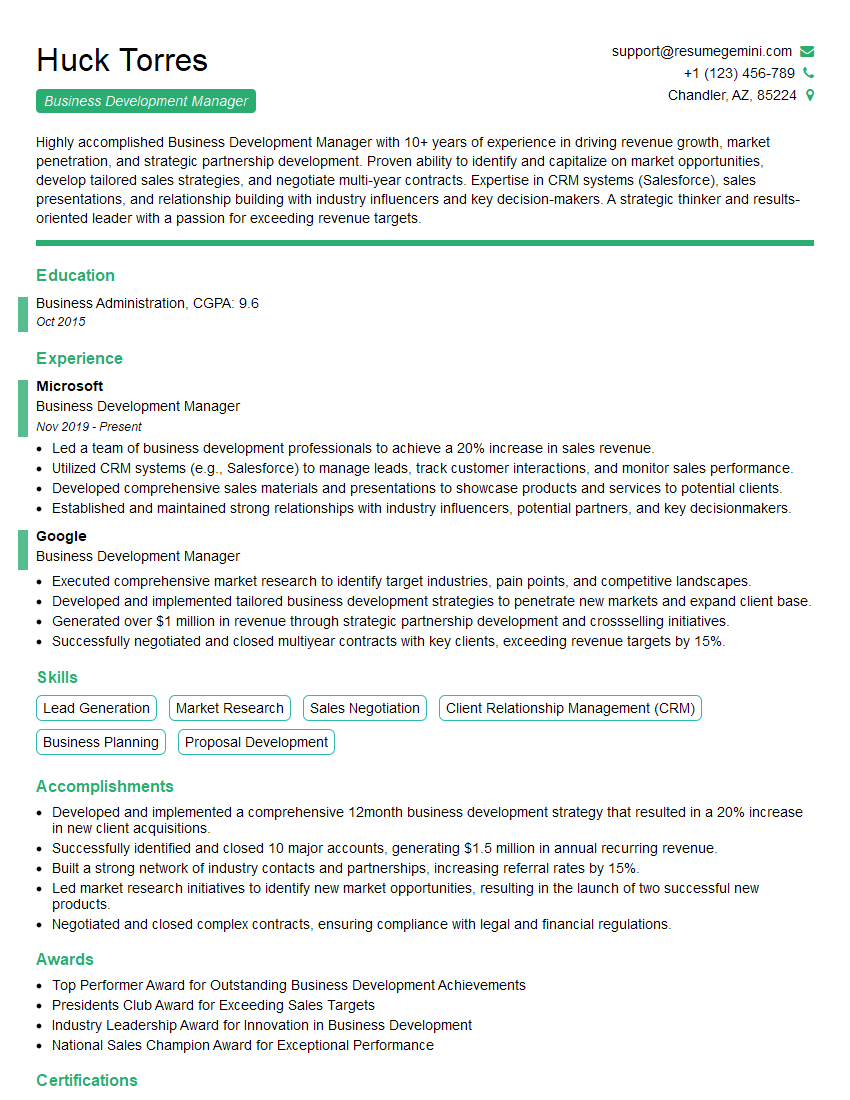
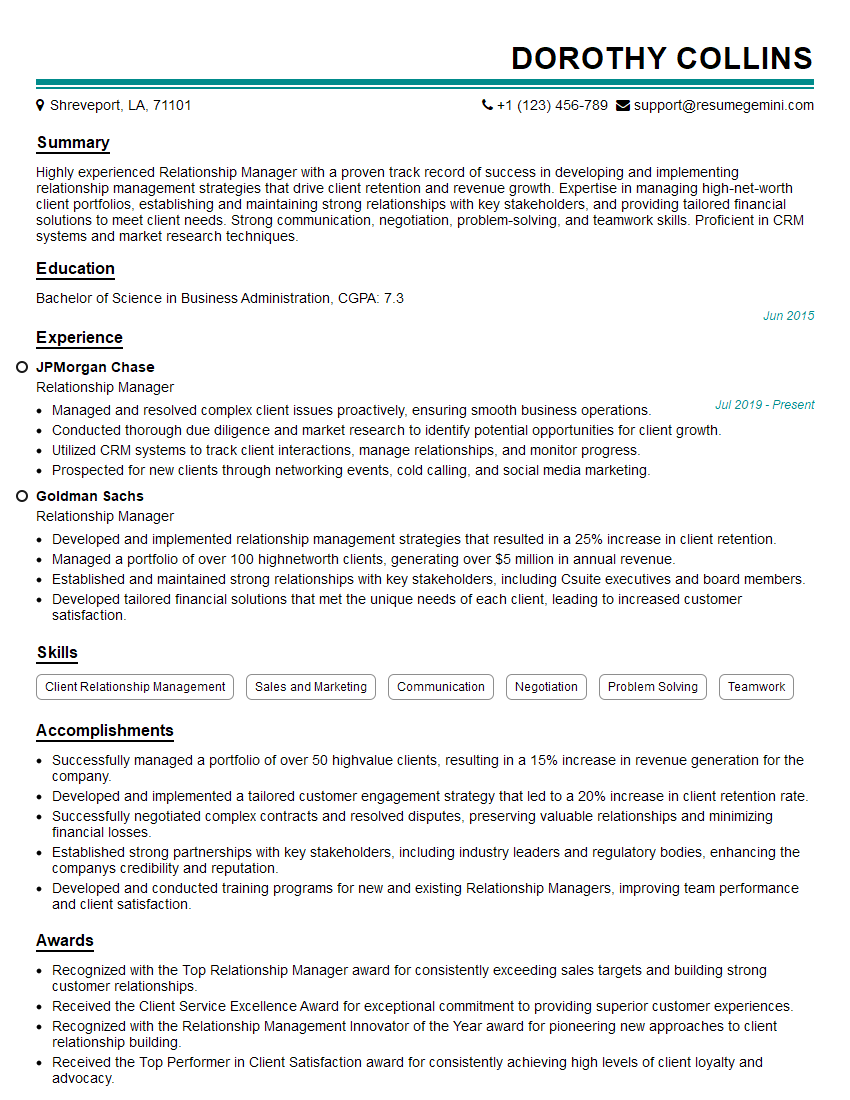
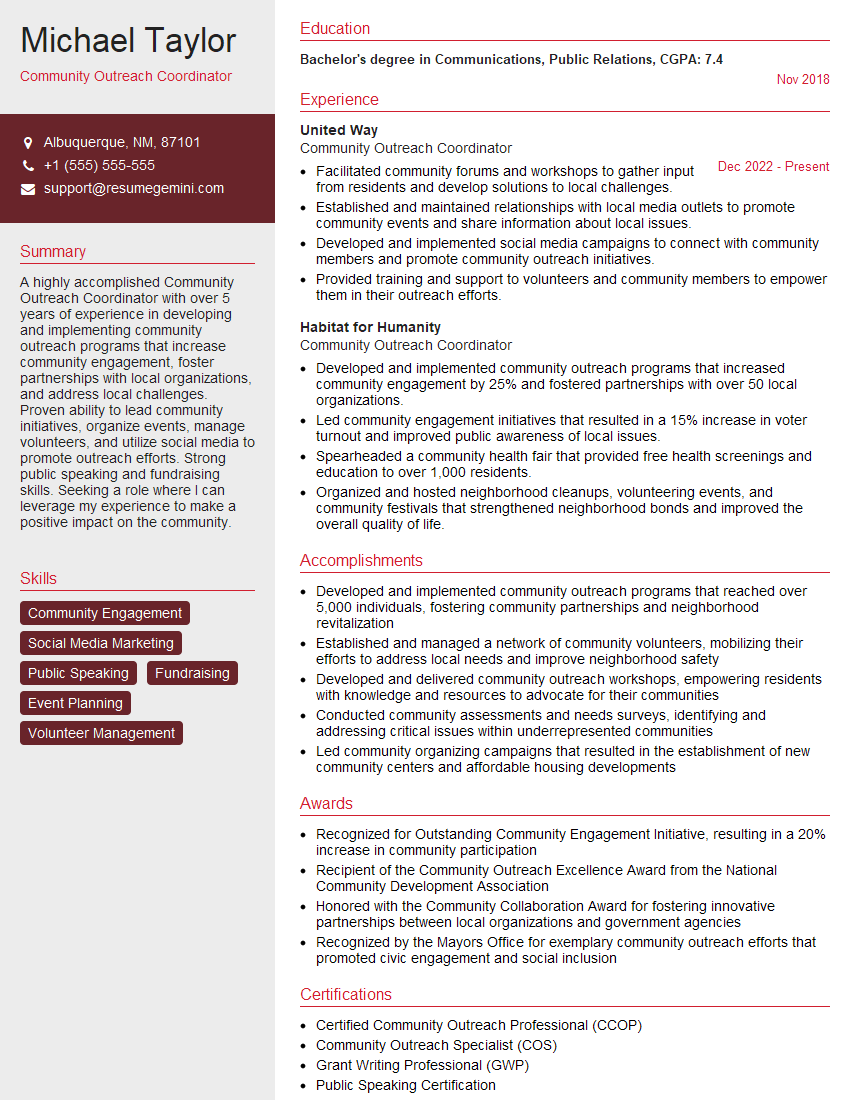
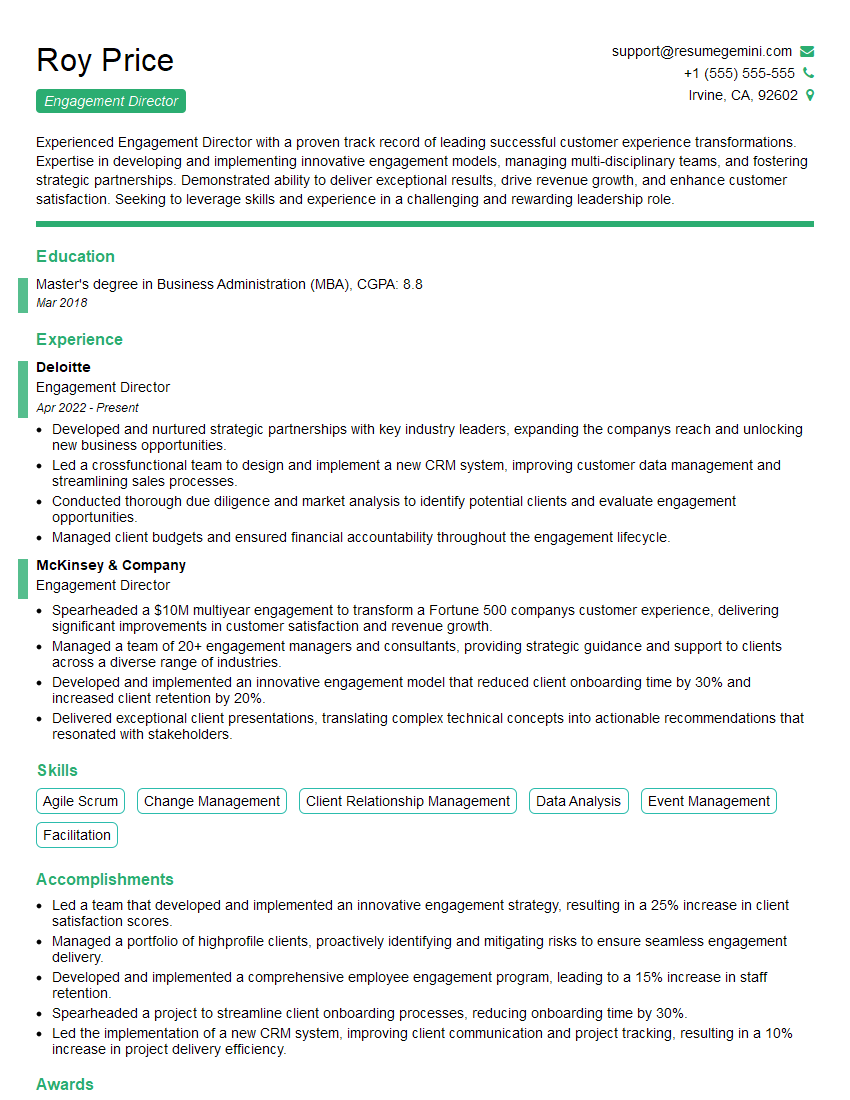
Mastering Collaborative Stakeholder Engagement is crucial for career advancement, opening doors to leadership roles and enhancing your ability to influence and drive positive change within organizations. A well-crafted resume is your first impression – ensuring it’s ATS-friendly is vital for getting your application noticed. To significantly improve your job prospects, build a professional and impactful resume with ResumeGemini. ResumeGemini offers a streamlined process and provides examples of resumes tailored to Collaborative Stakeholder Engagement to help you showcase your skills effectively. Take advantage of this valuable resource and present yourself confidently to potential employers.

Explore more articles
Users Rating of Our Blogs
Share Your Experience
We value your feedback! Please rate our content and share your thoughts (optional).
What Readers Say About Our Blog
Very informative content, great job.
good