Interviews are opportunities to demonstrate your expertise, and this guide is here to help you shine. Explore the essential Beat Production interview questions that employers frequently ask, paired with strategies for crafting responses that set you apart from the competition.
Questions Asked in Beat Production Interview
Q 1. Describe your workflow for creating a beat from start to finish.
My beat-making process is iterative and often starts with a feeling or concept. I rarely begin with a rigid plan. It’s more like a conversation with the instruments and samples.
- Idea Generation: This could be anything – a catchy melody fragment humming in my head, a rhythmic pattern on a drum machine, or a compelling sample I’ve found. I often start by jamming on my MIDI keyboard or experimenting with drum loops.
- Arrangement: Once I have a basic idea, I begin arranging the elements. This involves sequencing drums, basslines, melodies, and chords, building up the structure of the beat. I pay close attention to the flow and dynamics, ensuring there’s a compelling build-up and release.
- Sound Design/Sample Manipulation: This is where I really shape the sound. I might chop and layer samples, apply effects like reverb, delay, and distortion, and create custom synths to complement the core sounds. This is crucial for finding the right tone and texture.
- Mixing and Mastering: This is the final polish. I adjust the levels, EQ, compression, and panning of each instrument to ensure clarity and a balanced mix. Mastering is the final stage where I prepare the track for distribution, focusing on loudness and overall sonic cohesion. I aim for a professional sound that translates well across different playback systems.
- Iteration & Refinement: This entire process is cyclical. I constantly listen back, tweak sounds, rearrange sections, and experiment until I’m fully satisfied. This iterative approach is vital to achieve the desired sound.
For example, I might start with a funky bassline, then add a driving drum groove, layer in some atmospheric pads, and finally add a catchy melody using a synth or vocal sample. Throughout, I’ll constantly be adjusting the mix and experimenting with effects to find the right sound.
Q 2. What DAWs are you proficient in and why do you prefer them?
I’m proficient in Ableton Live and Logic Pro X. I choose them for their different strengths.
- Ableton Live: I prefer Ableton for its intuitive workflow and excellent session view, perfect for improvisational beat making and live performance. Its warping capabilities are unmatched, making sample manipulation seamless. Its built-in effects are also high-quality and easy to use.
- Logic Pro X: Logic shines in its extensive virtual instrument library and powerful mixing capabilities. The arrangement view is fantastic for detailed editing and meticulous polishing. Its advanced MIDI editing features allow for intricate compositions.
The choice really depends on the project. For quick, experimental beats, Ableton is my go-to. For more complex and polished productions, I might opt for Logic’s more comprehensive features.
Q 3. Explain your experience with different sampling techniques.
Sampling is fundamental to my production. It’s about finding the perfect sonic element and transforming it into something new.
- Loop-based sampling: I often start with a pre-existing loop (a repeating musical phrase), chop it into smaller segments, and rearrange those segments to create entirely new rhythms and melodies. This allows for creative manipulation of existing musical ideas.
- One-shot sampling: This involves isolating individual sounds – a drum hit, a vocal phrase, a guitar riff – and using them as building blocks for my beat. Each sound is unique and can be manipulated extensively, offering flexibility in creating unique rhythms and textures.
- Chopping and slicing: This is a crucial technique where I take a longer sample and divide it into smaller, more manageable pieces. These fragments are then rearranged and sequenced to create new rhythmic patterns or melodic phrases. Using this I can create complex drum patterns or interesting melodic variations from a single sample.
- Time-stretching and pitch-shifting: These techniques allow altering the tempo and pitch of samples without drastically degrading audio quality. This lets me seamlessly incorporate samples that might not fit perfectly within my desired tempo or key.
For example, I might take a soulful vocal sample, chop it into several phrases, and then use those phrases to create a melodic hook that fits the overall vibe of the beat. I might also chop a breakbeat into individual hits to program unique, complex drum patterns.
Q 4. How do you approach creating a beat with a specific genre in mind?
Genre awareness is crucial. It’s not just about mimicking existing sounds, it’s about understanding the fundamental sonic characteristics of the genre.
For example, when creating a Trap beat, I would focus on: heavy 808 bass, precise hi-hats, layered percussion, and a dark, atmospheric tone. A typical Trap beat might involve using a heavy 808 sub-bass, crisp snares, and precise hi-hat patterns. These elements will create the fundamental sonic imprint of Trap. I would also explore samples from existing Trap songs and study the arrangement and mixing styles commonly used in that genre.
Creating a lofi hip-hop beat requires a different approach. The focus will be on warm, mellow sounds, using vinyl crackle samples, chilled-out drum grooves, and often incorporating a melancholic melody. I would likely use samples from older soul and funk records, processed with tape saturation and reverb to achieve the desired vintage and warm feel.
The process always starts with research – listening to prominent examples within the genre to identify key elements, rhythmic patterns, and tonal characteristics. Then, I use these as a springboard for my own creativity, aiming to make something new while honoring the conventions of that genre.
Q 5. Describe your process for selecting and manipulating samples.
Sample selection is critical. I look for samples with unique character and potential for creative transformation. I often source samples from vinyl records, online sample packs, and even field recordings.
My manipulation process includes:
- Cleaning: Removing unwanted noise and hiss using noise reduction plugins.
- Chopping: Dividing the sample into smaller, usable segments, using my DAW’s built-in editing tools.
- Time-stretching/Pitch-shifting: Adjusting the tempo and pitch to fit the beat’s tempo and key.
- Effects Processing: Applying effects such as reverb, delay, distortion, and EQ to shape the sound and integrate it into the mix. I use these to add depth and character to the samples, matching them to the overall sonic aesthetic of the beat.
- Layering: Combining multiple samples or versions of the same sample to create a richer, more complex sound.
For example, I might take a soulful vocal sample, remove background noise, chop it into different phrases, adjust the tempo and pitch, and then apply reverb to give it a spacious feel. Finally, I layer it with other vocals or synths to create a layered and fuller sound.
Q 6. How do you handle creative blocks when producing?
Creative blocks are inevitable. My approach is multifaceted.
- Step Away: Sometimes, the best solution is to simply take a break. I might go for a walk, listen to music outside my usual genres, or work on a completely different project. This allows my mind to rest and approach the problem with fresh perspective.
- Change Environment: A change of scenery often helps. I might work in a different room, go to a coffee shop, or even collaborate with another producer. A new setting can spark fresh ideas.
- Experiment: I’ll try something completely different. If I’m stuck on a melody, I might focus on the drums. If the drums aren’t working, I’ll explore different samples or synths. Experimentation often leads to unexpected discoveries.
- Referencing: Listening to music I admire can be inspirational. I focus on the elements that grab my attention and try to incorporate similar techniques into my work without copying directly.
It’s about changing your approach. A creative block isn’t necessarily a failure; it’s an opportunity to explore new avenues and discover unexpected solutions.
Q 7. What are your go-to plugins and why?
My go-to plugins are versatile and cover a wide range of sound design and mixing needs.
- FabFilter Pro-Q 3: An incredibly precise and powerful EQ plugin, essential for shaping the tone of individual instruments and the overall mix.
- Waves plugins (e.g., API 2500, CLA-76): These offer classic analog compressor emulations, providing warmth, punch, and dynamics control. I use these extensively for adding character and punch to drums and bass.
- Soundtoys plugins (e.g., Echoboy, Decapitator): These provide creative effects that add character and texture. I use these for subtle enhancements and occasionally more dramatic effects like tape saturation and distortion.
- Serum (Xfer Records): A powerful and versatile wavetable synthesizer, allowing me to design custom sounds for melodies, leads, and pads.
The choice of plugins often depends on the specific project and the desired aesthetic, but these are my core tools for achieving professional results. I like plugins that offer fine-grained control, allowing me to precisely shape the sound to my vision.
Q 8. How do you ensure your beats have good mix and mastering?
Achieving a professional-sounding mix and master is crucial. It’s not just about making things loud; it’s about balance, clarity, and a polished final product. I approach this in a multi-stage process. First, the mix: I meticulously balance each instrument and vocal in my DAW (Digital Audio Workstation), paying close attention to frequency ranges to avoid muddiness or harshness. This involves using EQ (Equalization) to sculpt the sound of each element, compression to control dynamics, and reverb/delay to add space and depth. I frequently use reference tracks – professionally mastered songs in a similar genre – to compare my mix and ensure it sits in the same sonic landscape. Once the mix is finalized, I send it to a mastering engineer. Mastering is the final stage, where a professional applies subtle adjustments to the overall track to optimize it for various playback systems (streaming platforms, radio, etc.). They focus on things like loudness, stereo width, and overall tonal balance, ensuring the final product is consistent and impactful.
For example, I recently worked on a hip-hop track where the bass was overpowering the vocals. I used EQ to cut some low-end frequencies in the bass and boost the mids in the vocals, creating a much clearer and more balanced sound. The mastering engineer then further refined this balance, ensuring the track translated well across different platforms without losing its impact.
Q 9. What is your experience with MIDI programming and sequencing?
MIDI programming and sequencing are fundamental to my workflow. I’m highly proficient in using MIDI to create melodies, harmonies, and drum patterns. I’m comfortable with various DAWs, including Ableton Live, Logic Pro X, and FL Studio. My sequencing skills allow me to arrange musical elements in a compelling and creative way. I can build complex rhythmic patterns and explore unconventional time signatures, adding texture and depth to my beats. Beyond basic sequencing, I often utilize MIDI effects like arpeggiators and note repeaters to add variation and interest to my melodies and basslines. I also extensively use MIDI controllers, such as keyboards and drum pads, for more intuitive and expressive input.
For instance, I might use an arpeggiator to transform a simple chord progression into a complex and evolving melody. Or I might program a drum pattern using different velocity levels to add subtle nuances and create a more organic feel. Proficiency in MIDI allows for a huge degree of flexibility and creativity in beat production.
Q 10. Explain your understanding of music theory and its application in beat production.
Music theory is the backbone of my beat production. A strong understanding of scales, chords, harmony, and rhythm is essential for crafting compelling and memorable tracks. I use this knowledge to create interesting chord progressions, build captivating melodies, and develop sophisticated rhythmic structures. For instance, understanding different chord qualities (major, minor, diminished) allows me to create a wide range of emotional textures within a beat. Knowing how to create and utilize chord inversions provides depth and sonic complexity. Understanding rhythmic concepts like syncopation and polyrhythms allows me to add groove and create a distinctive sound. I don’t rigidly adhere to theory but rather use it as a foundation for experimentation and innovation. It’s a tool that allows me to take risks and push creative boundaries, all while maintaining musical coherence.
Recently, I experimented with using a Phrygian dominant scale in a trap beat, creating a unique and unexpected sound. My understanding of music theory allowed me to identify the specific intervals and harmonies that made this scale effective within the genre’s conventions.
Q 11. How do you incorporate various rhythmic and melodic elements into your beats?
Incorporating rhythmic and melodic elements is a process of layering and arranging sounds to build a cohesive whole. I start by establishing a fundamental groove with drums, often using a combination of programmed and sampled drums to add realism and character. Then I introduce basslines, creating a foundation that complements the drums and establishes the harmonic structure. Melodies are added next, usually starting with a simple motif that develops and evolves throughout the track. I carefully consider the interplay between different melodic and rhythmic ideas, striving for a balance between complexity and memorability. I frequently use syncopation and polyrhythms to add unexpected twists and turns to the rhythmic feel of my beats. I experiment with different instrumental textures, incorporating elements like strings, pads, and other synthesizers to enrich the sonic tapestry.
For example, I might start with a simple four-on-the-floor kick drum pattern and then layer a syncopated hi-hat pattern on top, creating a more complex and interesting rhythmic foundation. I might then add a melody using a pentatonic scale that interacts subtly with the underlying harmonic structure. This layering process is iterative, involving many revisions and refinements until I achieve the desired overall effect.
Q 12. How do you stay up-to-date with current trends in beat production?
Staying current in beat production requires active engagement with the industry. I regularly listen to new releases across various genres to identify emerging trends in instrumentation, sound design, and production techniques. I follow influential producers and artists on social media platforms, attend online and offline workshops and conferences, and subscribe to relevant publications and blogs. I also actively participate in online communities and forums where producers share insights and feedback. Critically analyzing the work of others allows me to identify new ideas and techniques I can integrate into my own productions. I experiment with new plugins, software, and hardware, constantly expanding my sonic palette and workflow.
For example, recently I’ve noticed a surge in popularity of certain granular synthesis techniques. By experimenting with these new plugins, I am able to explore new sonic territories and integrate those sounds into my current production styles.
Q 13. Describe your experience collaborating with artists or other producers.
Collaboration is an essential aspect of my work. I’ve had the pleasure of working with various artists and producers, each experience enriching my creative process. I find that collaborating allows for the exchange of ideas and perspectives, often leading to unexpected and innovative outcomes. The collaboration process typically involves initial discussions to establish the project’s direction and goals. I then create initial beats that are tailored to the artist’s style and vision. Throughout the process, I maintain open communication to incorporate feedback and make necessary adjustments. I’m comfortable adapting my workflow to suit the needs of my collaborators, whether it’s providing stems for mixing or working directly within their preferred DAW.
In one recent collaboration, an artist wanted a beat that incorporated elements of both trap and afrobeat. By combining my understanding of these genres, and through dialogue with the artist, we were able to create a unique sound that surpassed our initial expectations.
Q 14. How do you handle feedback and constructive criticism on your work?
Constructive criticism is invaluable for growth. I actively seek feedback on my work, and I approach it as an opportunity for learning and improvement. I listen carefully to all feedback, separating subjective opinions from objective observations. I focus on understanding the underlying rationale behind critiques, looking for patterns and trends in the feedback I receive. This helps me identify areas where I need to improve my skills or refine my approach. While I appreciate positive feedback, I find the most valuable lessons come from constructive criticism. I use this feedback to iterate and refine my work, often revisiting old projects to implement improvements based on later insights.
For example, if someone comments that a beat lacks energy in the second half, I would re-examine that section, perhaps adding a more dynamic instrumental hook or a change in rhythm. This iterative approach based on feedback continuously refines my production skills.
Q 15. What is your understanding of copyright and sample clearance?
Copyright and sample clearance are crucial aspects of music production. Copyright protects original creative works, including musical compositions and sound recordings. If you use someone else’s copyrighted material – a melody, a drum beat, a vocal sample – in your own track without permission, you are infringing on their copyright and could face legal action. Sample clearance involves obtaining written permission from the copyright holder to use their work. This usually involves negotiating a licensing agreement, which specifies the terms of use, such as the duration of the license, the media in which the sample can be used, and the payment amount. Failing to secure proper clearance can lead to costly lawsuits and the removal of your track from platforms like Spotify or YouTube. Think of it like borrowing a car – you wouldn’t just take someone’s car without asking, right? The same principle applies to musical elements. It’s vital to always research the ownership of any samples you consider using and to actively pursue legal clearance. Many organizations specializing in sample clearances can assist in this process.
Career Expert Tips:
- Ace those interviews! Prepare effectively by reviewing the Top 50 Most Common Interview Questions on ResumeGemini.
- Navigate your job search with confidence! Explore a wide range of Career Tips on ResumeGemini. Learn about common challenges and recommendations to overcome them.
- Craft the perfect resume! Master the Art of Resume Writing with ResumeGemini’s guide. Showcase your unique qualifications and achievements effectively.
- Don’t miss out on holiday savings! Build your dream resume with ResumeGemini’s ATS optimized templates.
Q 16. How do you organize and manage your audio files and projects?
Organizing audio files and projects is paramount for efficient workflow. I employ a hierarchical folder system, typically using a date-based structure. For example, a project folder might be named “2024-10-26_TrackTitle.” Inside, I have subfolders for individual stems (drums, bass, vocals, etc.), project files (DAW sessions), and final mixes and masters. I use descriptive filenames, such as “2024-10-26_TrackTitle_Drums_Final.wav.” My DAW (Digital Audio Workstation) – I primarily use Ableton Live – also plays a key role; its project management tools help keep everything organized within the software itself. I regularly back up all my projects to an external hard drive and cloud storage to safeguard against data loss. This meticulous organization prevents chaos, allows for quick retrieval of specific files, and streamlines the collaborative process when working with other musicians or engineers.
Q 17. Describe your experience with sound design and synthesis.
Sound design and synthesis are foundational skills in beat production. My experience spans a wide range of techniques. I’m proficient in using both subtractive and additive synthesis to create unique sounds, from gritty basslines to ethereal pads. Subtractive synthesis involves starting with a complex waveform and filtering out unwanted frequencies; I often use Serum or Massive X for this. Additive synthesis builds sounds by layering pure sine waves; I might use Operator in Ableton or other software synthesizers depending on the desired outcome. I also extensively employ sample manipulation techniques, such as granular synthesis, time-stretching, and pitch-shifting to transform existing sounds into something entirely new. For example, I might take a short field recording of a crackling fire and use granular synthesis to create an evolving ambient texture or manipulate a simple percussive sample to create a completely different rhythmic pattern. My approach always prioritizes finding the unique sonic character that best serves the musical context.
Q 18. How do you approach creating a unique and memorable sonic identity?
Creating a unique sonic identity is a crucial element of establishing a brand as a producer. It involves developing a signature sound that instantly identifies your work. For me, this begins with exploring distinctive sounds and textures through experimentation with synthesis, sampling, and effects processing. I might develop a particular fondness for a certain type of distorted bass sound, or a specific way of layering pads and textures, or a signature drum kit sound. A distinctive sonic identity also manifests through sound selection; I’m very deliberate in what sounds I choose to use, whether it is a specific synthesizer, a certain type of drum sample, or a unique sound effect. It’s also about the musical choices you make – the progressions, the melodies, and the overall vibe. Consider the distinct sounds of artists like Burial or Aphex Twin – their sonic fingerprints are instantly recognizable. To solidify my own identity, I consistently focus on refining these signature elements while always exploring new and evolving methods of production.
Q 19. What is your experience with different types of microphones and recording techniques?
My experience with microphones and recording techniques is extensive. I’m familiar with various microphone types, including condenser mics (for capturing detailed high-frequency sounds like vocals and acoustic instruments), dynamic mics (for capturing powerful, close-mic’d sounds like drums and vocals in loud environments), and ribbon mics (for their warm, smooth, and often vintage character). The choice of microphone significantly impacts the final sound. I’ve worked with both studio-grade mics and more affordable options, understanding the trade-offs in terms of detail, clarity, and noise floor. My recording techniques vary depending on the sound source. For instance, I might use close miking techniques for snare drums, emphasizing attack and transient response, or employ more distant miking for room ambiance and a spacious sound for vocals. I understand concepts like phase cancellation and polar patterns and utilize these to optimize microphone placement and minimize issues in recordings. The knowledge extends to using field recorders and capturing unique ambient sounds. Ultimately, the goal is to capture the most accurate and impactful representation of the sound source.
Q 20. How familiar are you with various compression, equalization, and reverb techniques?
Compression, equalization (EQ), and reverb are essential tools in my mixing and mastering processes. Compression reduces the dynamic range of a signal, making it more consistent in volume. I use compression for various purposes – controlling peak levels of drums, adding punch and sustain to bass, and shaping the dynamics of vocals. Different compressors offer various characteristics; I am experienced with both hardware and software compressors and select the best fit for each task. Equalization shapes the frequency content of a sound. I use EQ to sculpt sounds, removing unwanted muddiness in the low-end, boosting clarity in the mids, and adding air and sparkle in the highs. I am comfortable using parametric, graphic, and shelving EQs. Reverb adds spaciousness and depth, simulating the acoustic environment. I utilize different reverb types – plates, halls, rooms – depending on the desired effect and how it interacts with the overall mix. I carefully adjust parameters like decay time, pre-delay, and size to achieve natural and impactful reverb. Proficiency in these three processes is vital for achieving a professional-sounding mix and master.
Q 21. Explain your understanding of dynamic range and its importance in music production.
Dynamic range refers to the difference between the quietest and loudest parts of an audio signal. In music production, a wide dynamic range implies a significant variation in volume, while a compressed dynamic range means the volume levels are more consistent. Dynamic range is essential because it significantly impacts the emotional impact and perceived energy of a track. A track with a wide dynamic range can create a sense of drama, excitement, and intimacy, with quiet moments of reflection and loud, powerful bursts of energy. Conversely, a track with a compressed dynamic range can sound loud and punchy but might lack nuance and emotional depth, sometimes sounding “flat.” The choice of dynamic range is dependent on the musical genre and artistic intent. Modern pop often features heavily compressed tracks, aiming for a consistent loudness, whereas genres like classical music often prioritize a wider dynamic range to enhance the emotional experience of the listener. Understanding and controlling dynamic range is key to achieving the desired artistic effect.
Q 22. How do you approach creating beats for different musical styles?
Approaching beat creation for different musical styles hinges on understanding the genre’s core elements. It’s not just about using specific instruments; it’s about the feel, rhythm, and harmonic structure.
- Hip-Hop: Often uses heavy 808 bass, crisp snares, and intricate hi-hat patterns. The rhythmic emphasis is crucial. I might start with a boom-bap drum pattern as a foundation and layer synths and melodies that complement the groove.
- Trap: Characterized by its 808-heavy bass, layered synths with heavy use of reverb and delay, and often incorporates complex rhythmic variations. The focus is on creating a dark, atmospheric vibe. I’d likely experiment with various 808 sub-bass frequencies and create complex layered percussion patterns.
- Lo-fi Hip-Hop: Emphasizes mellow, often melancholic moods. I’d focus on using warm, vintage-sounding samples, simple drum patterns, and mellow melodies. The production is often intentionally less polished, with a focus on nostalgic feel.
- House: Relies on a driving four-on-the-floor beat, typically with a prominent kick drum and hi-hat rhythm. Synths are crucial, often with a focus on layered sounds and rhythmic variations in the bassline. I might experiment with different synth sounds to create a pulsating and driving beat.
Ultimately, I adapt my approach by researching the genre’s history and prominent artists, listening to a wide range of examples, and experimenting with sounds and rhythms until I find the perfect fit for the style.
Q 23. What are some common mistakes to avoid when producing beats?
Many pitfalls can derail a beat’s potential. Here are some crucial ones to avoid:
- Poor Mix and Mastering: A great beat can be ruined by muddled frequencies, weak dynamics, and a lack of clarity. This needs meticulous attention to detail throughout the production process.
- Overusing Effects: Excessive reverb, delay, or other effects can obscure the individual elements of the beat and create a messy sound. Less is often more.
- Ignoring the Groove: The rhythmic feel is paramount. A beat lacking groove, no matter how technically proficient, won’t be engaging. Experiment with swing, humanization, and subtle rhythmic variations to get it right.
- Weak Melody and Harmony: A strong melodic and harmonic foundation is key. Generic or uninspired melodies and harmonies will make a beat forgettable.
- Lack of Dynamic Range: Beats that are consistently loud are fatiguing to listen to. Using dynamics, building tension and release, keeps the listener engaged.
- Ignoring Headroom: Leaving enough headroom (unused signal space) during mixing and mastering to prevent clipping and distortion is crucial for sound quality.
Regularly listening to your beat on different playback systems—headphones, car stereo, etc.—helps you identify these issues early.
Q 24. How do you use automation in your production process?
Automation is my secret weapon for creating dynamic and interesting beats. I use it to:
- Automate volume levels: Create subtle changes in volume throughout the track to add movement and interest, such as using automation to bring in elements gradually or to create build-ups.
- Automate effects parameters: Gradually change the settings of effects like reverb, delay, or filters over time. This adds depth and texture, building tension or creating exciting transitions.
- Automate pan positions: Change the stereo placement of sounds over time to create a wider soundstage and add interest. For example, I might pan a synth across the stereo image during a chorus.
- Create dynamic filters: Using automation to control filter cutoff frequencies (low-pass, high-pass), resonance, and other filter parameters creates movement and excitement in your sounds. I might filter sounds in and out gradually during a breakdown, or increase resonance on a bass during the drop to add punch.
DAWs like Ableton Live and Logic Pro offer powerful automation tools. I usually prefer drawing automation curves directly onto the track, giving me very granular control, but also use envelopes and LFOs for rhythmic movement in my automation.
Q 25. Explain your understanding of signal flow in a typical recording studio setup.
Signal flow in a recording studio describes the path an audio signal takes from its source to the final output. Understanding this is crucial for achieving a clean and professional sound.
A typical flow might be: Instrument/Mic → Preamp → Compressor → EQ → DAW (Digital Audio Workstation) → Plugins (e.g., reverb, delay) → Mixer → Master Bus → Mastering Software/Hardware → Output (Speakers/Headphones).
- Instrument/Mic: The source of the audio signal.
- Preamp: Boosts the signal’s level and often adds its own character to the sound.
- Compressor: Controls the dynamic range, making the signal more consistent in volume.
- EQ: Shapes the tonal balance of the signal, boosting or cutting frequencies.
- DAW: The central hub for recording, editing, and processing audio.
- Plugins: Provide additional processing such as reverb, delay, distortion, etc.
- Mixer: Consolidates and controls the levels of multiple audio tracks.
- Master Bus: The final processing stage before output.
- Mastering Software/Hardware: Polishes the final mix for optimal playback across various systems.
- Output: The final destination of the audio signal (speakers, headphones).
Understanding this allows me to optimize each stage of the process, ensuring a consistent and high-quality audio signal throughout.
Q 26. How do you manage your time effectively when working on multiple projects?
Juggling multiple projects requires a structured approach. My strategy involves:
- Detailed Planning: I create a project schedule outlining deadlines for each beat, its individual stages (sketching, arrangement, mixing, mastering), and allocate specific time blocks for each.
- Prioritization: I identify the most urgent project and focus on completing its critical stages before moving on to others.
- Time Blocking: I dedicate specific time blocks each day to particular tasks, minimizing distractions.
- Utilizing Project Management Tools: Tools like Trello or Asana help me visualize tasks, set deadlines, and track progress across multiple projects.
- Regular Breaks: I ensure breaks to avoid burnout and maintain focus. Stepping away helps provide fresh perspective.
- Setting Realistic Deadlines: This prevents overwhelming myself and ensures I deliver quality work, instead of rushing to meet impossible goals.
This system prevents me from feeling overwhelmed and maintains a steady workflow, ensuring all projects move forward at a satisfactory pace.
Q 27. Describe your process for quality control and ensuring a polished final product.
Quality control is a multi-stage process that begins from the initial idea. I use a combination of technical and artistic evaluations:
- Reference Tracks: I constantly compare my work to professional tracks in the same genre to benchmark quality.
- Frequency Analysis: Using spectrum analyzers helps to identify muddiness or clashes in the frequency range, ensuring a balanced and clear mix.
- Multiple Listening Environments: Checking the beat on various systems (headphones, car stereo, monitors) helps reveal any issues specific to different playback setups.
- Objective Feedback: I seek feedback from trusted collaborators with different perspectives. This helps to identify any biases and provides external validation.
- Revision Cycles: My workflow includes multiple rounds of revisions, allowing me to fine-tune aspects of the beat based on my own analysis and external feedback.
- Mastering Process: The final polish happens through mastering, which ensures a consistent level and dynamic range across various platforms.
This iterative approach, combining technical analysis with artistic judgment and external feedback, ensures my beats meet the highest possible quality standards.
Q 28. How do you market and promote your beats?
Marketing and promotion are crucial for getting my beats heard. My strategy incorporates several channels:
- Online Beat Stores: Platforms like Beatstars, Airbit, and Tracklib provide a direct marketplace for selling beats.
- Social Media: Regularly posting snippets, behind-the-scenes content, and finished products on Instagram, TikTok, and YouTube showcases my work and connects with potential clients.
- Networking: Connecting with artists and producers through online forums, collaborations, and industry events builds relationships and creates opportunities.
- Website/Portfolio: A website showcases my best beats and allows for direct contact.
- Targeted Advertising: Paid advertising on social media or through Google Ads, targeting specific audiences or music genres, can significantly increase visibility.
- Collaborations: Working with artists and offering free beats for promotional purposes can increase reach and exposure.
By diversifying my marketing approach and continuously engaging with my audience, I can effectively promote my beats and reach a broader audience.
Key Topics to Learn for Your Beat Production Interview
- Music Theory Fundamentals: Understanding scales, chords, rhythm, and melody is crucial for crafting compelling beats. Practical application includes analyzing existing tracks to understand their harmonic and rhythmic structures.
- Digital Audio Workstations (DAWs): Proficiency in at least one DAW (e.g., Ableton Live, Logic Pro X, FL Studio) is essential. Demonstrate your understanding of MIDI sequencing, audio editing, mixing, and mastering techniques within your chosen DAW.
- Sound Design & Synthesis: Explore the creation and manipulation of sounds using synthesizers, samplers, and effects processors. Be prepared to discuss your approach to designing unique and impactful sounds for your beats.
- Beat Structure & Arrangement: Understanding common beat structures (intro, verse, chorus, bridge, outro) and how to arrange elements effectively is vital. Be able to discuss your creative process in structuring a beat and making it engaging.
- Mixing & Mastering Techniques: Showcase your knowledge of equalization, compression, reverb, delay, and other effects used to achieve a polished and professional sound. Explain your workflow for achieving a balanced and dynamic mix.
- Collaboration & Workflow: Discuss your experience collaborating with other artists or producers, highlighting your communication and teamwork skills. Be ready to discuss your preferred workflow and how you handle feedback.
- Genre Expertise: Demonstrate a strong understanding of the specific genre(s) you specialize in. Be ready to discuss the nuances and characteristics that define those genres.
- Software & Hardware Knowledge: Be prepared to discuss your familiarity with various plugins, instruments (virtual and physical), and audio interfaces. Highlight your understanding of their capabilities and limitations.
- Problem-Solving & Creative Approaches: Be ready to discuss how you approach creative blocks or technical challenges. Highlight your ability to adapt and find solutions to overcome obstacles in the production process.
Next Steps
Mastering beat production opens doors to exciting careers in music production, sound design, and the broader music industry. To maximize your job prospects, create an ATS-friendly resume that highlights your skills and experience effectively. ResumeGemini is a trusted resource that can help you build a professional resume tailored to the demands of the beat production field. Examples of resumes specifically tailored for Beat Production roles are available to help guide you. Take the next step towards your dream career today!

Production Coordinator Resume Sample
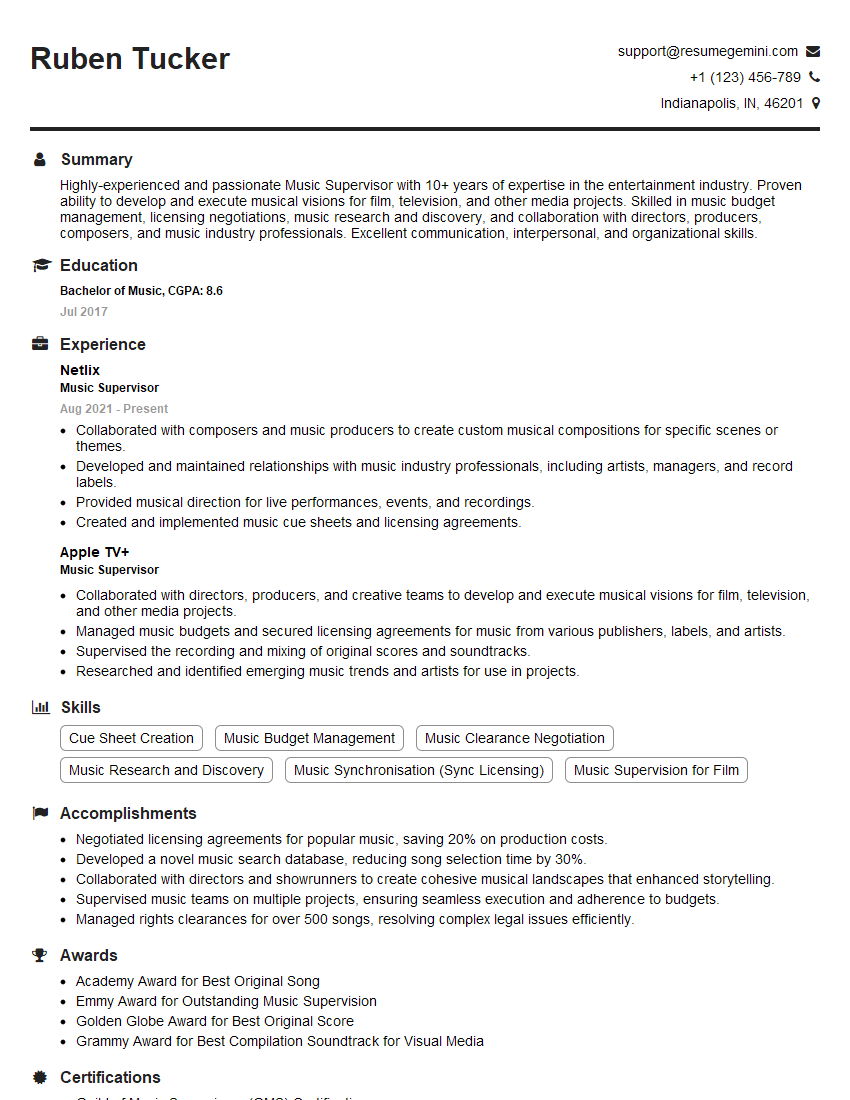
Music Supervisor Resume Sample
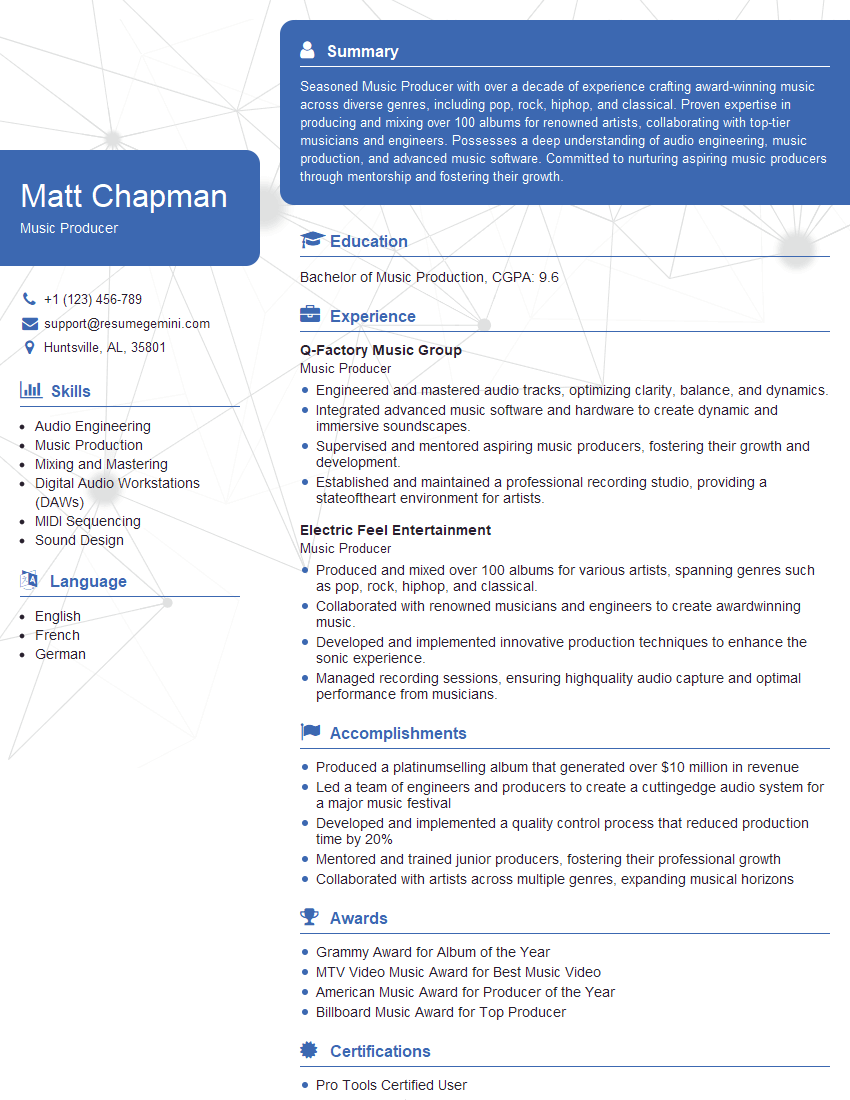
Music Producer Resume Sample
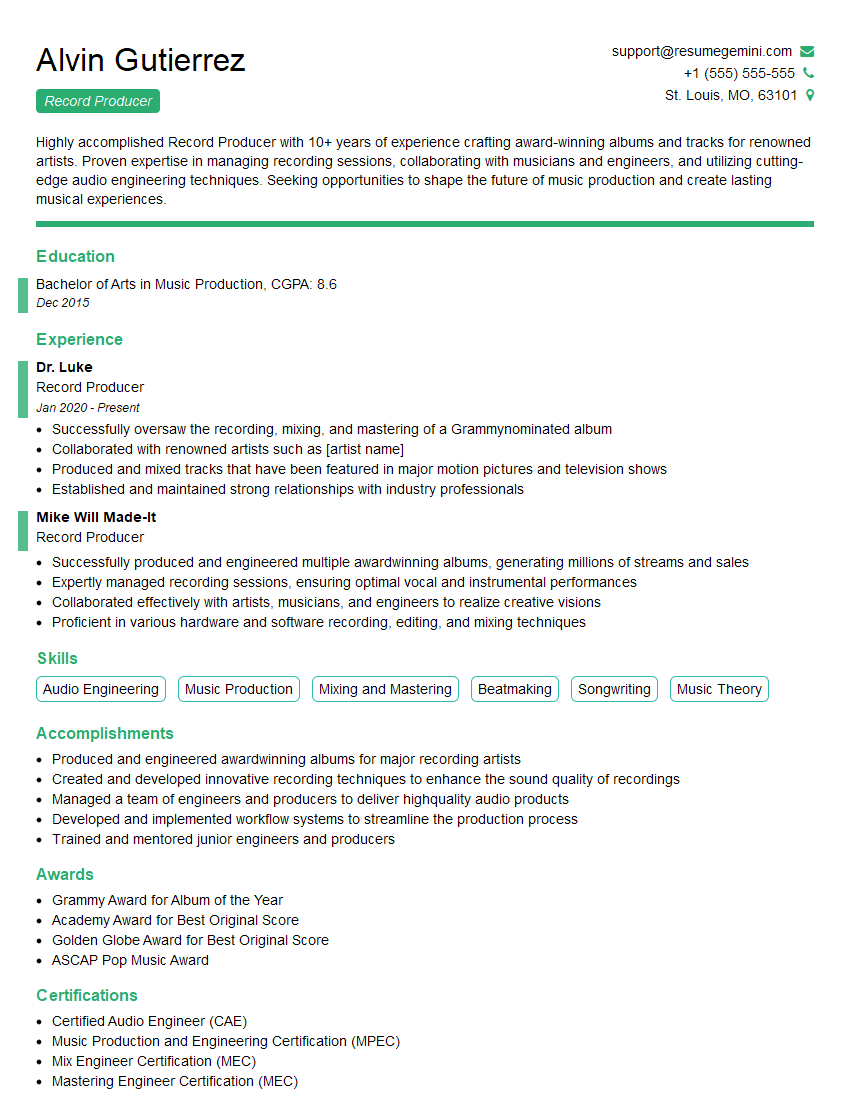
Record Producer Resume Sample
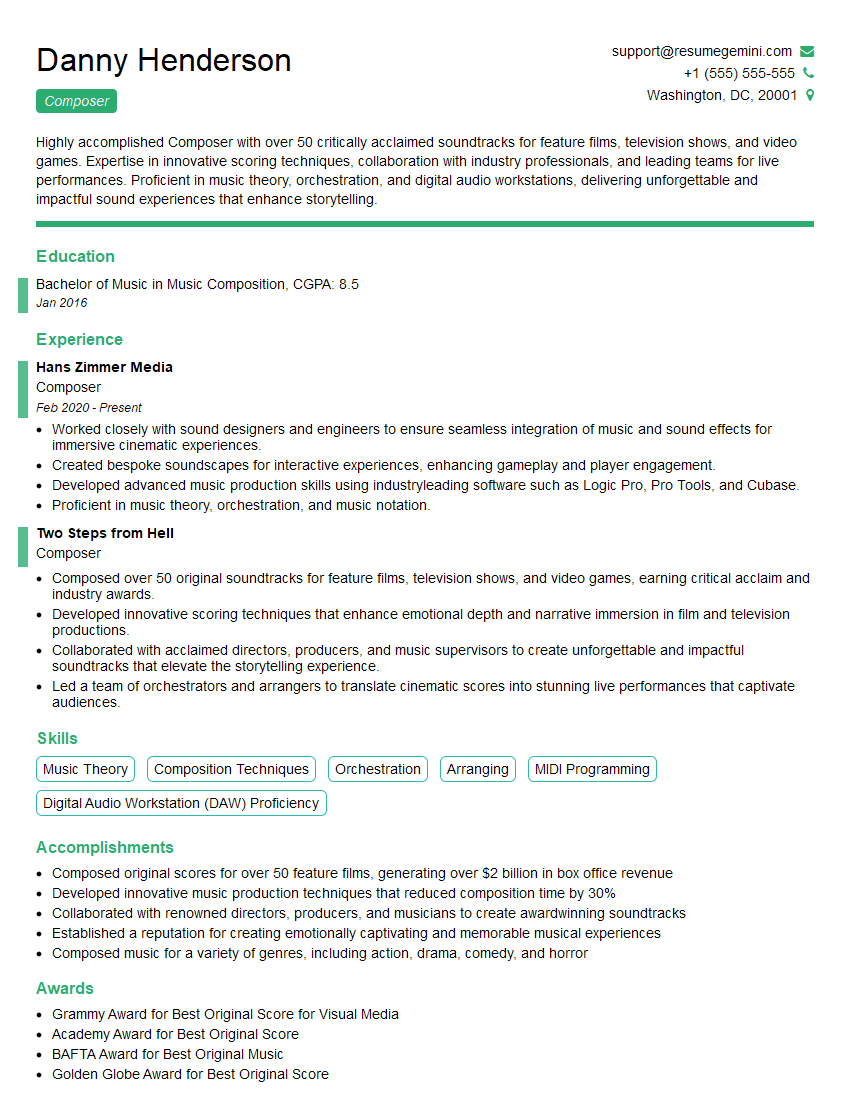
Composer Resume Sample
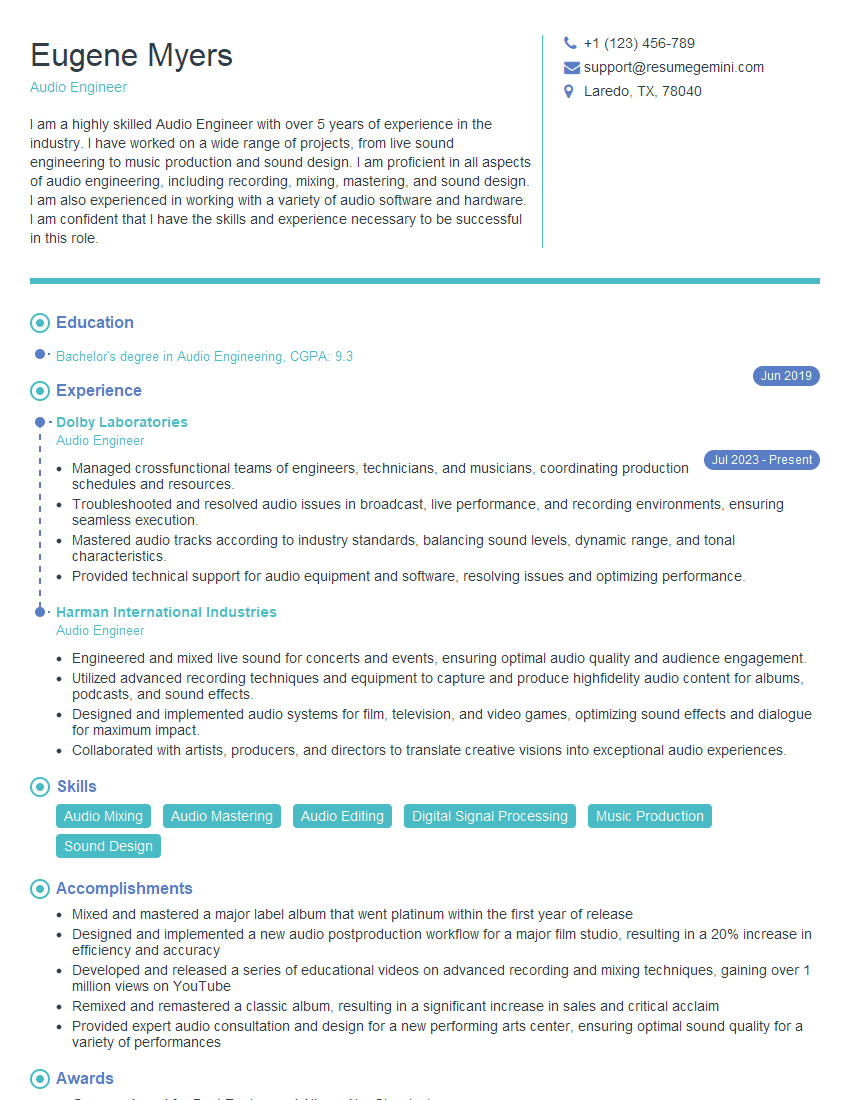
Audio Engineer Resume Sample

Studio Engineer Resume Sample
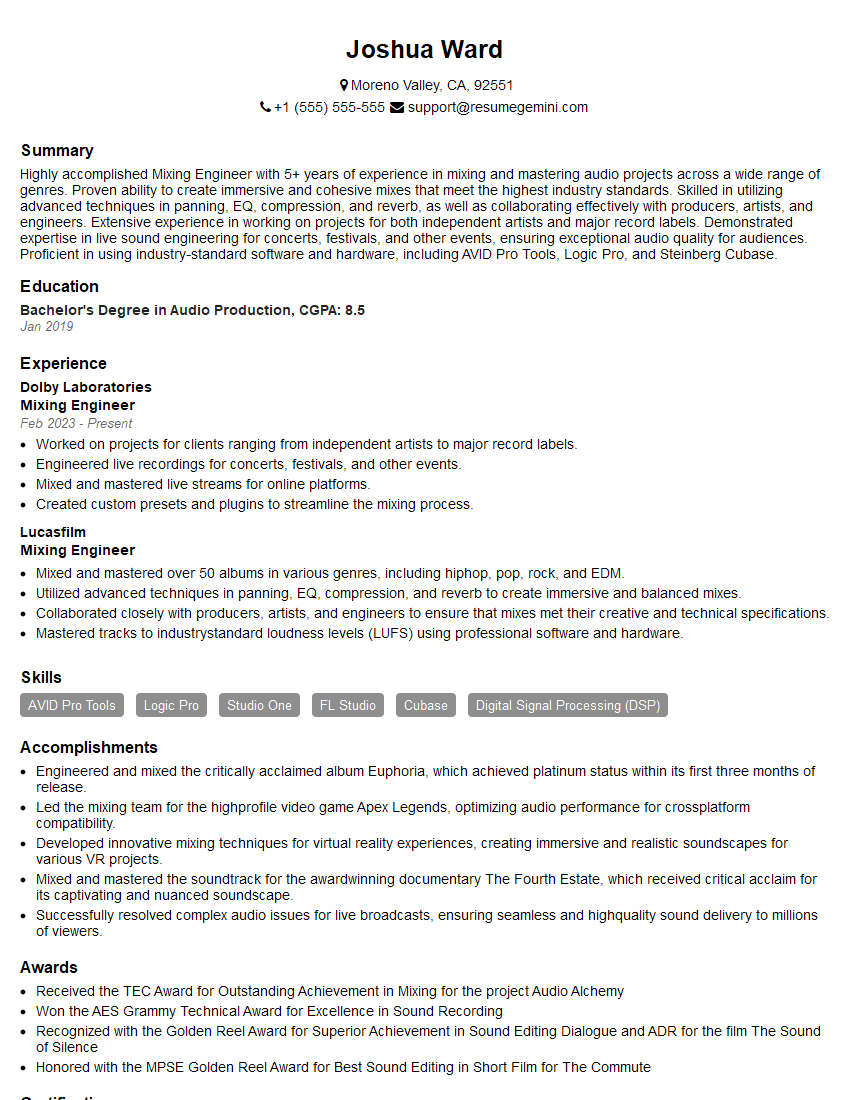
Mixing Engineer Resume Sample
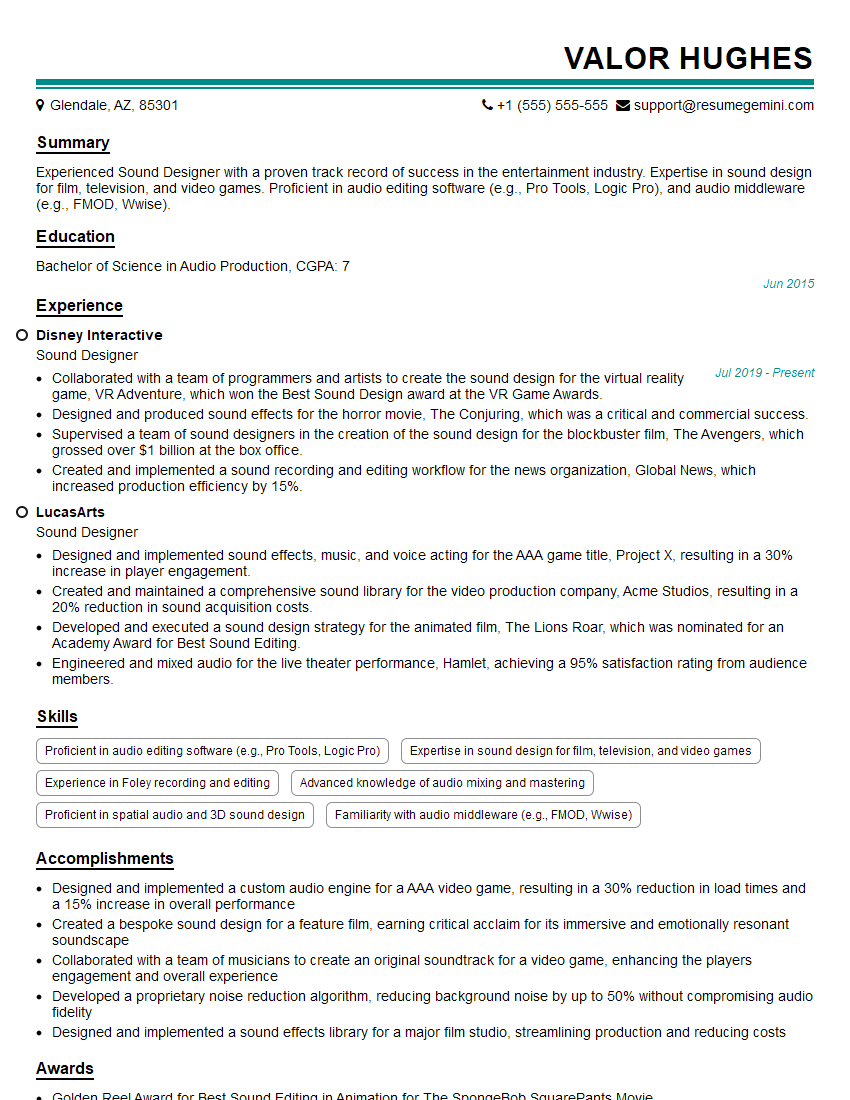
Sound Designer Resume Sample
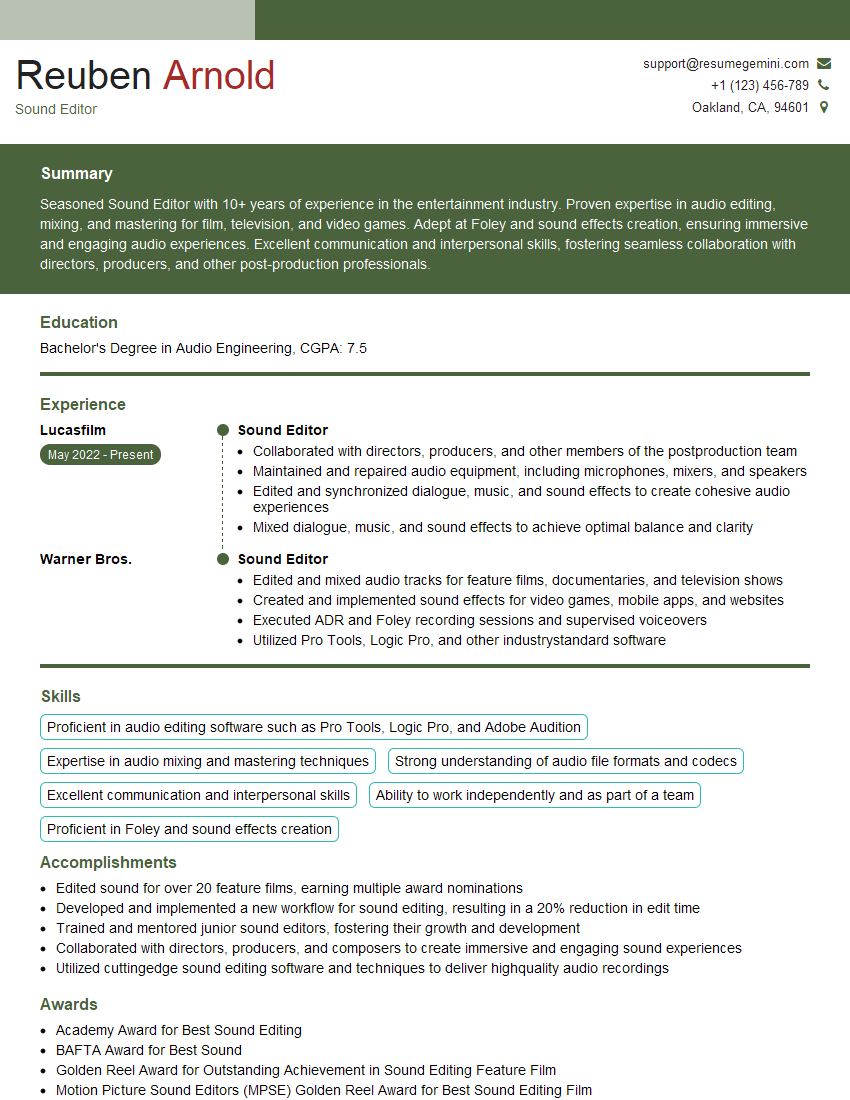
Sound Editor Resume Sample
Explore more articles
Users Rating of Our Blogs
Share Your Experience
We value your feedback! Please rate our content and share your thoughts (optional).
What Readers Say About Our Blog
Very informative content, great job.
good