The right preparation can turn an interview into an opportunity to showcase your expertise. This guide to Berry Farm Management interview questions is your ultimate resource, providing key insights and tips to help you ace your responses and stand out as a top candidate.
Questions Asked in Berry Farm Management Interview
Q 1. Describe your experience with different berry varieties and their specific cultivation needs.
My experience encompasses a wide range of berry varieties, each with unique cultivation demands. For example, strawberries, known for their shallow root systems, thrive in well-drained, slightly acidic soil and require consistent moisture. They are also particularly susceptible to frost damage, necessitating protective measures like row covers in early spring. In contrast, blueberries, a more challenging crop to grow, demand highly acidic soil (pH 4.5-5.5) and well-maintained organic matter for optimal growth. Their larger root systems require more space and careful management of soil moisture to avoid drought stress. Raspberries, depending on the type (summer or fall-bearing), have different pruning requirements. Summer-bearing varieties need a summer pruning immediately after harvest to promote the development of next year’s canes. Fall-bearing raspberries, on the other hand, have a different pruning schedule, focusing on removing old canes in late winter or early spring. Finally, blackberries, like raspberries, need diligent cane management to maximise yield and fruit quality. Understanding these specific needs allows me to tailor cultivation practices – from soil preparation and fertilization to irrigation and pest management – to maximize yield and quality for each variety.
Q 2. What are the common pests and diseases affecting berry crops, and how would you manage them?
Berry crops face a multitude of pests and diseases. Common issues include fungal diseases like powdery mildew (affecting strawberries and raspberries), anthracnose (blackberries and raspberries), and botrytis (gray mold on all berries). Insect pests such as aphids, spider mites, and Japanese beetles can significantly impact yield and fruit quality. Integrated Pest Management (IPM) is my go-to approach. This involves a combination of strategies, starting with preventative measures such as crop rotation, choosing disease-resistant cultivars, and maintaining good sanitation practices. Monitoring for pests and diseases is crucial. I utilize regular visual inspections and, when necessary, employ traps or sentinel plants. Biological controls, like introducing beneficial insects, are often my first line of defense against pests. Only when these methods prove insufficient do I consider using pesticides, always selecting the least toxic and most environmentally friendly option. For example, to control powdery mildew, I might use sulfur or potassium bicarbonate, before resorting to stronger chemical interventions.
Q 3. Explain your understanding of soil nutrient management for optimal berry production.
Soil nutrient management is paramount for successful berry production. Berries are heavy feeders, demanding a balance of macro and micronutrients. Regular soil testing is essential to determine the existing nutrient levels. I utilize this data to create a tailored fertilization plan, including organic and synthetic fertilizers as appropriate. Organic matter plays a critical role, improving soil structure, water retention, and nutrient availability. Cover cropping between rows helps to build soil fertility naturally and suppress weeds. I often use legumes, like clover, which fix nitrogen in the soil. For example, a soil test revealing low levels of potassium would lead to the application of potassium-rich fertilizers, either through broadcast application or fertigation (applying fertilizers through the irrigation system). Precision nutrient management ensures the plants receive the right nutrients at the right time, maximizing yield and fruit quality while minimizing environmental impact.
Q 4. How do you monitor and control irrigation in a berry farm?
Precise irrigation is key to berry success. Overwatering can lead to fungal diseases, while underwatering reduces yield and fruit size. I utilize a combination of methods. Drip irrigation, applying water directly to the plant roots, is highly efficient and minimizes water waste. Soil moisture sensors provide real-time data on soil conditions, guiding irrigation decisions. Weather data, including rainfall and evapotranspiration rates, are also integrated into my irrigation scheduling. I often use a scheduling system which automatically adjusts watering based on sensor data and weather forecasts. For instance, a period of heavy rainfall would trigger a temporary suspension of irrigation until soil moisture levels are monitored again. This data-driven approach ensures optimal water use while maximizing berry production and quality.
Q 5. What are the key factors influencing berry yield and quality?
Berry yield and quality are influenced by a complex interplay of factors. Climate plays a significant role; adequate sunlight, appropriate temperatures, and sufficient chilling hours are crucial for optimal fruit development. Soil conditions, including nutrient availability and water retention, directly influence plant health and productivity. Pest and disease management is crucial; untreated infestations can drastically reduce yield and compromise fruit quality. Cultivar selection is important. Choosing the right berry variety for the specific climate and soil conditions is critical. Proper pruning and training ensure proper sunlight penetration and airflow, promoting healthy growth and preventing diseases. Finally, nutrient management is a key factor influencing the sugar content and overall flavor profile of the berries. For example, inadequate chilling hours may prevent proper flower bud formation, resulting in reduced yield. A comprehensive approach addressing all these factors allows for consistent high yields and excellent fruit quality.
Q 6. Describe your experience with various harvesting techniques and equipment.
My experience encompasses both hand harvesting and mechanical harvesting, depending on the berry variety and scale of operation. Hand harvesting, though labor-intensive, is often preferred for delicate berries like strawberries and raspberries, ensuring minimal fruit damage. For larger-scale operations with robust berries like blueberries, mechanical harvesters offer significant efficiency gains. I utilize different types of mechanical harvesters, including those that shake the plants and collect the fallen fruit and others that use specialized combs or vacuum systems. The choice of harvesting method is influenced by factors such as the berry type, its maturity level at harvest, labor costs, and the desired level of fruit quality. For example, if I need to harvest multiple fields simultaneously, I’d favor mechanical harvesting for blueberries, but I would opt for hand-picking for strawberries to maintain their integrity.
Q 7. How do you ensure the quality and safety of harvested berries during post-harvest handling?
Post-harvest handling is critical for maintaining berry quality and safety. Careful harvesting practices minimize bruising and damage. Rapid cooling is essential to slow down respiration and enzymatic activity, extending shelf life. I use hydrocooling to quickly reduce the berry temperature. Proper cleaning and sorting remove any damaged or diseased fruit. Storage conditions are precisely controlled to maintain optimal temperature and humidity, preventing spoilage and maintaining freshness. Packaging is also important; containers are selected to minimize damage during transportation. Throughout the entire process, strict adherence to food safety regulations ensures the berries reach consumers in the best possible condition. For instance, employing appropriate sanitation procedures at every stage – from the field to the packing facility – prevents contamination and enhances food safety.
Q 8. What are your strategies for maximizing berry shelf life?
Maximizing berry shelf life is crucial for minimizing losses and maintaining product quality. It involves a multi-pronged approach starting even before harvest.
- Careful Harvesting: Berries should be picked at the optimal ripeness, avoiding any bruising or damage. Gentle handling is paramount. Imagine picking a delicate strawberry – you wouldn’t want to crush it!
- Rapid Cooling: Immediately after harvest, berries need to be cooled rapidly to slow down respiration and enzymatic activity, the processes that cause spoilage. This often involves hydrocooling (submerging in chilled water) or forced-air cooling.
- Proper Storage: Berries are best stored at temperatures just above freezing (around 32°F or 0°C) with high humidity (90-95%). This slows down microbial growth and water loss, keeping them firm and flavorful. Storage containers should also be breathable to prevent condensation.
- Controlled Atmosphere Storage (CAS): For longer shelf life, especially for commercial operations, CAS modifies the atmosphere within the storage facility by reducing oxygen and increasing carbon dioxide levels. This dramatically slows down ripening and spoilage. However, it’s a more complex and expensive method.
For example, in my previous role, we implemented a hydrocooling system that reduced our post-harvest losses by 15% within the first year.
Q 9. Explain your experience with different berry packing and storage methods.
Berry packing and storage methods significantly impact shelf life and marketability. My experience encompasses a range of techniques:
- Packaging Types: I’ve worked with various containers, including clamshells, punnets, and bulk containers. The choice depends on the berry type, transportation distance, and market requirements. For example, delicate raspberries might require smaller, more protective punnets than robust blueberries.
- Modified Atmosphere Packaging (MAP): This involves packaging berries in films that control gas exchange, reducing oxygen and increasing carbon dioxide levels, similar to CAS but on a smaller scale. This extends shelf life significantly, especially for retail settings.
- Refrigerated Transportation: Maintaining the cold chain from farm to market is essential. I’ve managed logistics to ensure that berries are kept at the ideal temperature throughout transport, using refrigerated trucks and containers. Temperature monitoring devices were employed to constantly check and document the temperature.
- Storage Facilities: I have experience managing both on-farm and off-farm storage facilities. On-farm storage needs to be properly insulated and equipped for temperature and humidity control, while off-farm facilities often involve larger-scale cold storage units.
In one instance, we switched to MAP for our strawberries, resulting in a 30% reduction in spoilage during transport and retail display.
Q 10. How do you manage labor effectively during peak harvesting seasons?
Effective labor management during peak harvesting seasons is critical. It’s a delicate balancing act of securing enough workers, ensuring their efficiency, and maintaining a positive work environment.
- Seasonal Labor Sourcing: I’ve established relationships with local recruitment agencies and utilized online platforms to attract seasonal workers. This allows access to a pool of skilled and reliable pickers.
- Training and Supervision: Comprehensive training programs teach safe harvesting techniques, quality standards, and efficient picking methods. Effective supervision ensures adherence to these standards and addresses any issues promptly.
- Incentive Programs: Piece-rate pay systems or bonus structures are implemented to motivate workers and incentivize productivity. This encourages careful picking and efficient work.
- Technology Integration: We utilize tools to track worker productivity and allocate resources effectively. This includes handheld devices that can help with record-keeping and optimize picking routes.
- Worker Welfare: Creating a safe and comfortable work environment is crucial. This involves providing shade, rest breaks, and access to clean water, especially during hot weather.
In one season, by implementing a combination of these strategies, we improved our harvesting efficiency by 20%, despite having a similar number of workers compared to the previous year.
Q 11. What are your strategies for managing farm expenses and maximizing profitability?
Managing farm expenses and maximizing profitability requires a holistic approach focusing on both cost reduction and revenue enhancement.
- Precision Farming Techniques: Using data-driven methods for irrigation, fertilization, and pest management reduces waste and optimizes resource utilization. For example, soil sensors can help ensure that plants receive only the necessary amount of water and fertilizer.
- Efficient Irrigation Systems: Implementing drip irrigation systems reduces water waste compared to flood irrigation, significantly cutting down water costs.
- Pest and Disease Management: Integrated Pest Management (IPM) strategies prioritize preventative measures and biological control agents, reducing reliance on expensive chemical pesticides.
- Direct Marketing and Value-Added Products: Selling directly to consumers through farmers’ markets or farm stands, and creating value-added products (e.g., jams, pies) can increase revenue and reduce reliance on wholesale markets.
- Careful Financial Planning and Budgeting: Regularly monitoring expenses, tracking income, and using financial planning tools are crucial for making informed decisions and identifying areas for potential cost savings.
In my previous farm, we reduced fertilizer costs by 15% by implementing precision fertilization based on soil testing, and increased revenue by 20% by starting a U-pick program.
Q 12. How familiar are you with different farm management software and technologies?
I am proficient in utilizing various farm management software and technologies to improve efficiency and decision-making.
- Farm Management Software: I have experience with software like AgriWebb and FarmLogs for record-keeping, inventory management, and financial tracking. These systems streamline data management, providing valuable insights for informed decision-making.
- GIS and Remote Sensing: I am familiar with using Geographic Information Systems (GIS) and remote sensing data (e.g., from drones) to monitor crop health, assess yield potential, and optimize resource allocation.
- Data Analytics Tools: I utilize data analytics to identify trends, predict yields, and optimize farming practices. Understanding data enables better resource allocation and efficient decision-making.
- Precision Agriculture Technologies: I have experience integrating technologies like GPS-guided machinery, variable-rate fertilization, and sensors for real-time data collection.
For example, using FarmLogs, we were able to accurately track our production costs for each variety of berry and adjust our pricing strategy accordingly.
Q 13. Describe your experience in implementing sustainable farming practices.
Sustainable farming practices are central to my approach. I strive to minimize environmental impact while maintaining productivity and profitability.
- Integrated Pest Management (IPM): This prioritizes preventative measures and biological control agents, minimizing reliance on synthetic pesticides, protecting beneficial insects, and reducing the environmental impact of pest control.
- Soil Health Management: Implementing cover cropping, crop rotation, and no-till farming techniques improves soil structure, reduces erosion, and enhances soil fertility. This reduces the need for synthetic fertilizers and promotes biodiversity.
- Water Conservation: Utilizing efficient irrigation systems, such as drip irrigation, minimizes water waste and conserves this precious resource.
- Renewable Energy: Exploring the use of solar power for energy needs reduces reliance on fossil fuels and lowers carbon footprint.
- Biodiversity Enhancement: Creating habitats for beneficial insects and pollinators supports a healthy ecosystem, reduces the need for pesticides, and enhances overall farm biodiversity.
For instance, introducing cover crops increased our soil organic matter by 15%, reducing our reliance on fertilizers.
Q 14. How do you plan for and respond to unexpected weather events?
Planning for and responding to unexpected weather events is critical for berry farming, as these events can significantly impact yields and quality.
- Weather Monitoring and Forecasting: Regularly monitoring weather forecasts and utilizing weather stations provides early warning of potential extreme events, enabling proactive responses.
- Crop Protection Strategies: Implementing strategies such as hail nets, windbreaks, and frost protection methods minimizes the impact of adverse weather conditions on crops.
- Emergency Response Plan: Developing a detailed emergency response plan outlines procedures for addressing events like heavy rain, hailstorms, or extreme temperatures. This plan outlines steps to protect the crops, personnel, and infrastructure.
- Insurance Coverage: Securing appropriate crop insurance helps mitigate financial losses in case of significant weather-related damage.
- Diversification: Growing a variety of berry types reduces the risk of total crop loss due to a specific weather event. This provides resilience against unexpected circumstances.
During a severe hailstorm, our pre-emptive installation of hail nets prevented significant damage to our blueberry crop, significantly reducing our losses.
Q 15. What are your methods for tracking and analyzing farm data?
Tracking and analyzing farm data is crucial for efficient berry farm management. My approach involves a multi-pronged strategy combining manual record-keeping with sophisticated data analytics tools. We meticulously track yields, weather patterns, soil conditions, irrigation schedules, pest and disease occurrences, and labor hours using both paper logs and digital spreadsheets. This data is then uploaded into a farm management software that allows for detailed analysis.
For example, we use sensors to monitor soil moisture levels and temperature, providing real-time insights into irrigation needs. This data, combined with historical yield data, allows us to optimize irrigation schedules and reduce water waste. The software also helps identify trends and patterns, such as correlations between weather patterns and disease outbreaks, enabling proactive interventions. We then use this analyzed data to create detailed reports that inform decisions related to planting strategies, fertilization, and pest management.
Furthermore, we perform regular data quality checks to ensure accuracy and reliability. This ensures we make informed decisions based on sound, dependable data.
Career Expert Tips:
- Ace those interviews! Prepare effectively by reviewing the Top 50 Most Common Interview Questions on ResumeGemini.
- Navigate your job search with confidence! Explore a wide range of Career Tips on ResumeGemini. Learn about common challenges and recommendations to overcome them.
- Craft the perfect resume! Master the Art of Resume Writing with ResumeGemini’s guide. Showcase your unique qualifications and achievements effectively.
- Don’t miss out on holiday savings! Build your dream resume with ResumeGemini’s ATS optimized templates.
Q 16. Explain your experience with crop rotation and its benefits.
Crop rotation is a cornerstone of sustainable berry farming. It involves systematically changing the types of crops grown in a particular field over time. This practice significantly reduces pest and disease pressure, improves soil health, and minimizes the need for chemical interventions. We typically employ a 3-4 year rotation, alternating berries with legumes (like clover or beans) or cover crops (such as rye or buckwheat).
Legumes are particularly beneficial as they fix nitrogen in the soil, reducing the need for nitrogen fertilizers, which are expensive and can harm the environment. Cover crops help improve soil structure, reduce erosion, and suppress weeds. For example, we might rotate strawberries with clover followed by raspberries and then a cover crop before returning to strawberries. This reduces the buildup of pests and diseases specific to strawberries and improves the overall health and fertility of our soil.
The benefits are substantial: increased yields, reduced input costs (fertilizers, pesticides), enhanced soil quality, and better environmental sustainability.
Q 17. How do you maintain accurate farm records and comply with relevant regulations?
Maintaining accurate farm records and complying with regulations is paramount. We use a combination of digital and paper-based systems to ensure detailed and organized record-keeping. We maintain meticulous records of all aspects of farm operations, including planting dates, harvesting dates, yields, pesticide applications, fertilization schedules, labor costs, and equipment maintenance logs. This information is digitally stored in a secure database and backed up regularly.
We also maintain comprehensive records of all pesticide and fertilizer use, adhering strictly to label instructions and all relevant state and federal regulations. This documentation is readily available for audits and inspections by regulatory bodies. We participate in food safety training programs to ensure our team is fully versed in the latest protocols and regulations, ensuring traceability of our products from field to consumer. Our commitment to transparency and precise record-keeping is a fundamental part of our farm’s integrity and operational success.
Q 18. Describe your experience with farm equipment maintenance and repair.
Proper farm equipment maintenance is critical for operational efficiency and minimizing downtime. Our team is highly skilled in maintaining and repairing our tractors, harvesters, irrigation systems, and other essential equipment. We establish a preventative maintenance schedule, performing regular inspections and servicing according to manufacturer recommendations. This includes lubrication, cleaning, and replacement of worn parts. We also keep a detailed log of all maintenance activities, including parts replaced and labor hours.
For more significant repairs, we work with reputable equipment repair specialists, ensuring timely repairs and minimizing disruption to farm operations. We invest in high-quality equipment and prioritize proper storage and handling to extend the lifespan of our assets. We also train our staff on safe operation and basic maintenance procedures to reduce the risk of accidents and equipment damage.
Q 19. How do you deal with issues related to labor shortages or employee relations?
Addressing labor shortages and fostering positive employee relations are essential for successful berry farm management. We proactively address labor shortages through strategic recruitment and retention efforts. This includes offering competitive wages and benefits, providing opportunities for skill development, and creating a positive and respectful work environment. We also work with local employment agencies and educational institutions to access a reliable workforce.
We emphasize open communication and teamwork within our workforce. Regular team meetings, employee feedback sessions, and fair conflict resolution mechanisms are implemented to ensure a positive working relationship. We invest in training programs to develop the skills of our employees and promote career progression within the farm. By creating a supportive and respectful environment, we encourage loyalty and reduce employee turnover.
Q 20. How do you ensure food safety compliance on a berry farm?
Food safety compliance is a top priority on our berry farm. We adhere strictly to Good Agricultural Practices (GAPs) and Hazard Analysis and Critical Control Points (HACCP) principles. This involves implementing comprehensive protocols at every stage of production, from planting to harvesting and packaging.
We maintain strict hygiene standards, including proper handwashing facilities, sanitation of equipment, and pest control measures. We carefully monitor water sources for contamination and utilize appropriate irrigation techniques. We train all staff on food safety protocols and conduct regular internal audits to ensure compliance with all relevant regulations. We also maintain complete traceability of our products, allowing us to identify and address any potential food safety issues quickly and efficiently.
Q 21. What is your experience with organic berry cultivation?
We have significant experience in organic berry cultivation, employing methods that minimize or eliminate the use of synthetic pesticides, herbicides, and fertilizers. This involves careful soil management practices, including cover cropping, composting, and crop rotation to improve soil fertility and suppress weeds. We use biological pest control methods such as introducing beneficial insects and utilizing pheromone traps to manage pests.
We meticulously document all practices to maintain certification under the relevant organic standards, including rigorous record-keeping of inputs and growing techniques. Organic berry cultivation requires more intensive labor and attention to detail, but it yields high-quality products that are in increasing demand, commanding premium prices in the market. We’ve found the positive environmental impact and consumer preference for organic berries to be strong incentives.
Q 22. How would you develop a marketing plan for a berry farm?
A successful berry farm marketing plan needs a multi-pronged approach focusing on both direct sales and brand building. It starts with understanding your target market – are you selling to local consumers, restaurants, or large distributors?
- Direct-to-Consumer Marketing: This includes establishing a farm stand, offering pick-your-own opportunities (PYO), creating a website with online ordering and local delivery, and utilizing social media platforms like Instagram and Facebook to showcase beautiful berry photos and announce events. Think vibrant images of ripe berries, happy families picking, and mouth-watering recipes featuring your berries.
- Wholesale Marketing: For larger-scale operations, building relationships with local restaurants, grocery stores, and food processors is crucial. This involves creating professional brochures highlighting your farm’s commitment to quality and sustainability, attending industry trade shows, and having strong contract negotiation skills (discussed in question 4).
- Branding and Storytelling: Develop a strong brand identity that communicates the unique aspects of your farm – are your berries organically grown? Do you use sustainable practices? Do you have a unique story behind the farm’s origin? A compelling narrative resonates with consumers.
- Seasonal Promotions and Events: Host PYO events, berry festivals, or farm tours to attract customers and create a memorable experience. Seasonal promotions, like discounts on larger purchases or special offers during peak season, can boost sales.
For example, I once worked with a farm that increased its direct-to-consumer sales by 40% in one season by implementing a robust social media strategy combined with a well-designed farm stand and PYO program. They also used beautiful, high-quality photography to showcase their berries.
Q 23. What are your strategies for attracting and retaining skilled farm labor?
Attracting and retaining skilled farm labor is a significant challenge in the agricultural sector. My approach involves a combination of strategies focusing on fair wages, benefits, and creating a positive work environment.
- Competitive Wages and Benefits: Offering competitive wages and benefits packages, including health insurance, paid time off, and housing assistance, is essential to attract and retain top talent.
- Employee Development and Training: Providing opportunities for professional development and training, such as specialized courses in berry cultivation or leadership skills, demonstrates a commitment to employee growth and increases loyalty.
- Creating a Positive Work Environment: A supportive and respectful workplace is key to employee retention. This involves fostering open communication, offering fair and consistent treatment, and ensuring a safe working environment.
- Recruitment Strategies: Partnering with local agricultural colleges and vocational schools, utilizing online job boards specialized in agriculture, and creating a strong employer brand to attract skilled workers. We would need to showcase our farm’s positive reputation and the opportunities for growth and development.
- Seasonal Housing: Providing adequate and comfortable housing options for seasonal workers is often a crucial factor in securing and retaining a good workforce, especially if the farm is located in a rural area.
I’ve found that investing in employee well-being pays off significantly. A happy and skilled workforce is much more productive and less prone to turnover.
Q 24. How do you manage risk related to market fluctuations and crop failure?
Managing risk in berry farming requires a multi-faceted approach, addressing both market fluctuations and potential crop failures.
- Market Fluctuations: Diversifying your sales channels (selling to different buyers, both wholesale and retail) helps mitigate the impact of price changes in any single market. Forward contracts with buyers can help lock in prices for a portion of your crop, reducing risk. Exploring value-added products, such as jams, jellies, or frozen berries, allows you to leverage surplus crops and generate additional revenue streams.
- Crop Failure: Implementing crop insurance is a crucial risk management tool. This protects against losses due to unforeseen events like frost, disease, or pests. Rotating crops, adopting integrated pest management strategies, and practicing proper irrigation techniques minimize the risk of crop failure. Maintaining good soil health (discussed in questions 6 & 7) directly impacts crop resilience and yield.
- Financial Planning: Developing robust financial plans with contingency funds to cover unexpected losses or market downturns is crucial for long-term farm viability. Diversification of income sources reduces reliance on a single product and improves financial stability.
For example, a severe frost can decimate a strawberry crop. Having crop insurance can significantly lessen the financial impact of such an event. Diversifying into raspberries and blueberries helps mitigate risk if one crop fails.
Q 25. What is your experience with negotiating contracts with buyers and suppliers?
Negotiating contracts with buyers and suppliers is a key skill in berry farm management. It requires strong communication, understanding market dynamics, and the ability to build trust-based relationships.
- Preparation: Before any negotiation, I thoroughly research market prices, understand my own production costs, and define my desired outcomes. Having a clear understanding of your own strengths and potential weaknesses during the negotiation is paramount.
- Communication: Effective communication is crucial. Clearly articulating the value proposition of your product (quality, sustainability, etc.) and actively listening to the buyer’s needs are essential.
- Relationship Building: Building long-term relationships with buyers and suppliers is far more beneficial than short-term transactional deals. Trust and mutual respect foster collaborative partnerships and better outcomes for everyone involved.
- Contract Terms: Pay close attention to contract terms regarding pricing, delivery schedules, quality standards, and payment terms. Having a legal review of contracts is recommended to ensure a comprehensive and protective agreement.
I have extensive experience in negotiating contracts, ensuring fair pricing for our berries while also securing the ongoing business relationships crucial for our farm’s success. One memorable example involved negotiating a long-term contract with a major grocery chain based on quality standards and sustainable practices, which significantly increased the farm’s profitability and reputation.
Q 26. Describe your understanding of relevant agricultural regulations and certifications.
Understanding and complying with agricultural regulations and certifications is essential for any berry farm. This includes food safety regulations, labor laws, environmental regulations, and any certifications relevant to your chosen market (organic, etc.).
- Food Safety Regulations: These regulations, such as the FDA’s Food Safety Modernization Act (FSMA), are designed to ensure food safety throughout the production process. This involves implementing Good Agricultural Practices (GAPs) and maintaining accurate records of all production steps.
- Labor Laws: Compliance with labor laws, including minimum wage, overtime pay, and worker safety regulations, is critical. Understanding and adhering to these requirements is essential to avoid penalties and maintain a positive working relationship with employees.
- Environmental Regulations: Regulations related to pesticide use, water quality, and waste management must be adhered to. This often involves obtaining permits and complying with environmental impact assessments.
- Certifications: Obtaining relevant certifications, such as organic certification (USDA Organic), Global GAP, or Fair Trade, can enhance the marketability of your products and command premium prices. These certifications demonstrate a commitment to quality and sustainability.
Staying updated on these regulations requires continuous learning and often involves working with agricultural extension services and industry associations to ensure compliance.
Q 27. How familiar are you with different soil testing methods and interpretations?
Soil testing is fundamental to successful berry farming. Different methods provide information about various soil properties, helping to inform fertilization and other management decisions.
- Standard Soil Tests: These tests assess basic soil properties such as pH, organic matter content, nutrient levels (nitrogen, phosphorus, potassium), and potentially soil texture. This provides a general overview of soil health and fertility.
- Tissue Testing: This involves analyzing plant tissue samples to assess nutrient uptake and identify potential deficiencies. This is a more targeted approach, providing information about what nutrients are actually being absorbed by the plants.
- Water Testing: Analyzing irrigation water quality is crucial. This tests for salinity, nutrient levels, and potential contaminants that could negatively impact plant health and soil quality.
- Interpretation: Understanding the results of soil tests requires experience and often necessitates consulting with soil scientists or agricultural extension specialists. These experts can help interpret the data and develop recommendations tailored to the specific needs of the berry farm.
The frequency of soil testing depends on factors such as soil type, cropping history, and management practices. Regular testing, typically annually or even more frequently, is essential for informed decision making.
Q 28. What are your strategies for improving soil health and fertility on a berry farm?
Improving soil health and fertility is crucial for sustainable and profitable berry farming. My strategies focus on building organic matter, improving soil structure, and managing nutrient levels effectively.
- Cover Cropping: Planting cover crops during the off-season helps improve soil structure, add organic matter, suppress weeds, and prevent erosion. Leguminous cover crops also fix nitrogen, reducing the need for synthetic fertilizers.
- Composting: Incorporating compost, whether from your own farm or from external sources, adds organic matter and improves soil structure and nutrient retention.
- Mulching: Using organic mulch (straw, wood chips) suppresses weeds, conserves moisture, and regulates soil temperature.
- Crop Rotation: Rotating crops helps prevent nutrient depletion and pest and disease buildup.
- Integrated Pest Management (IPM): IPM minimizes reliance on synthetic pesticides, which can harm beneficial soil organisms and negatively impact soil health.
- No-Till or Reduced-Till Farming: These practices minimize soil disturbance, preserving soil structure and improving organic matter accumulation.
- Nutrient Management: Soil testing guides appropriate fertilization strategies, balancing the application of nutrients to meet plant needs while minimizing environmental impacts.
By focusing on these practices, we can build healthy, fertile soils that support vigorous berry plants, leading to higher yields, improved fruit quality, and increased farm sustainability. For example, I helped one farm implement a cover cropping program that resulted in a 15% increase in berry yield within two years, demonstrating the effectiveness of this soil health strategy.
Key Topics to Learn for Berry Farm Management Interview
- Crop Production & Management: Understanding berry varieties, planting techniques, soil health management, irrigation strategies, and fertilization best practices. Practical application: Describe your experience with optimizing yield or managing pest infestations.
- Pest & Disease Management: Identifying common berry pests and diseases, implementing integrated pest management (IPM) strategies, and utilizing sustainable control methods. Practical application: Detail your experience implementing a successful IPM program or resolving a significant pest issue.
- Harvesting & Post-Harvest Handling: Efficient harvesting techniques, proper handling and storage to minimize losses and maintain quality, and understanding market demands. Practical application: Discuss methods you’ve used to improve harvest efficiency or extend the shelf life of berries.
- Farm Economics & Budgeting: Analyzing production costs, pricing strategies, profit margins, and financial planning for long-term sustainability. Practical application: Explain how you’d approach budgeting for a new berry variety or optimizing resource allocation.
- Labor Management & Team Leadership: Supervising and motivating teams, scheduling work effectively, ensuring workplace safety, and fostering a positive work environment. Practical application: Describe your experience managing a team, addressing conflict, or training new employees.
- Sustainable Farming Practices: Implementing environmentally friendly techniques such as water conservation, reduced pesticide use, and soil health improvement. Practical application: Discuss your experience with implementing sustainable farming methods and their impact on the farm.
- Marketing & Sales: Understanding consumer preferences, direct-to-consumer marketing strategies, relationships with wholesale buyers, and effective pricing strategies. Practical application: Describe a successful marketing campaign you’ve been involved in or a new market you explored.
Next Steps
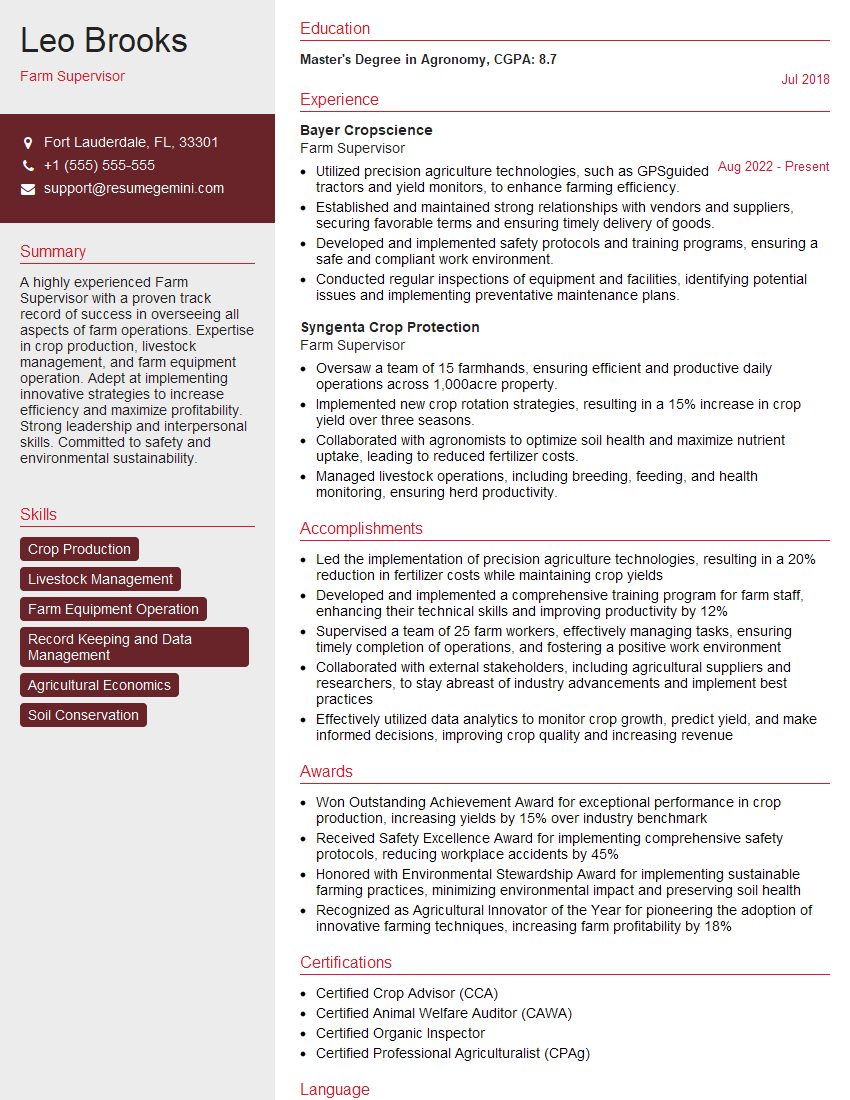
Mastering Berry Farm Management opens doors to rewarding careers with excellent growth potential. Demonstrating your expertise effectively is crucial, and a well-crafted resume is your first step. An ATS-friendly resume, optimized for applicant tracking systems, significantly increases your chances of landing an interview. We highly recommend using ResumeGemini to build a professional and impactful resume. ResumeGemini offers a user-friendly platform and provides examples of resumes tailored specifically to Berry Farm Management roles, helping you present your skills and experience in the best possible light.
Explore more articles
Users Rating of Our Blogs
Share Your Experience
We value your feedback! Please rate our content and share your thoughts (optional).
What Readers Say About Our Blog
Very informative content, great job.
good