Interviews are more than just a Q&A session—they’re a chance to prove your worth. This blog dives into essential Bindery Operation interview questions and expert tips to help you align your answers with what hiring managers are looking for. Start preparing to shine!
Questions Asked in Bindery Operation Interview
Q 1. What are the different types of bookbinding methods?
Bookbinding methods encompass various techniques to assemble pages into a cohesive book. The choice depends on factors like the document’s length, desired aesthetic, and budget. Common methods include:
- Perfect Binding: Sheets are glued together along the spine, then the spine is coated with glue and a cover is wrapped around it. Think of most paperback novels.
- Saddle Stitching: Pages are folded in half, and wire staples are driven through the fold to secure them. Often used for magazines and booklets.
- Wire-O Binding: Metal wire is looped through punched holes along the spine, creating a durable and lay-flat book. Popular for calendars and notebooks.
- Spiral Binding (Coil Binding): Plastic or metal coils are inserted through punched holes along the spine. Frequently used for reports and papers.
- Case Binding: Sections of pages are sewn together, then glued to the cover boards which are attached to form a sturdy cover. Typical for hardback books.
- Concertina Binding (Accordion Binding): Pages are folded in a zig-zag pattern to create a self-standing structure. Useful for brochures and invitations.
Q 2. Explain the process of perfect binding.
Perfect binding is a popular method for creating paperback books and other publications with a significant page count. Here’s a step-by-step breakdown:
- Gathering/Collating: The printed sheets are arranged in the correct order.
- Folding: If necessary, sheets are folded to create signatures (groups of pages).
- Perfecting: Signatures are glued together along the spine edge, creating a block of pages.
- Trimming: The spine and edges of the block are trimmed to create a neat, square appearance.
- Cover Application: Glue is applied to the spine, and the cover is wrapped around the glued spine. This creates a smooth, finished look.
- Pressing/Drying: The finished book is pressed and left to dry so that the glue fully bonds.
Imagine building a wall – the signatures are the bricks, glue is the mortar, and the cover is the finishing facade. A well-executed perfect bind ensures a smooth, durable, and professional-looking book.
Q 3. Describe the process of saddle stitching.
Saddle stitching is a simple yet effective method ideal for shorter documents. The process is:
- Folding: Sheets are folded in half to create pages.
- Gathering: Folded sheets are arranged in the correct order.
- Stitching: Wire staples are inserted through the folded edge, securing the pages together. This is usually done using a saddle stitcher machine.
Think of it like stapling papers together, but the staples go through the fold creating a neat and secure binding. It’s very cost-effective for smaller projects like brochures, magazines, and booklets.
Q 4. How does wire-O binding differ from spiral binding?
Both Wire-O and Spiral binding use punched holes along the spine to attach pages, but they differ significantly in their mechanism and resulting product:
- Wire-O Binding: Uses double-looped metal wire. This produces a professional, lay-flat binding ideal for high-frequency use (notebooks, calendars). It’s more durable and offers a cleaner aesthetic than spiral binding.
- Spiral Binding: Uses plastic or metal coils inserted through punched holes. This method is more economical but less durable than Wire-O. The coils can be prone to damage, and the book does not lay perfectly flat.
Choosing between the two hinges on the project’s durability requirements, budget, and desired aesthetic. Wire-O is preferred for high-quality, long-lasting documents, while spiral binding is suitable for less demanding applications.
Q 5. What are the safety procedures for operating bindery equipment?
Safety is paramount in bindery operations. Essential procedures include:
- Proper Training: All operators must receive thorough training on equipment operation, maintenance, and safety procedures.
- Personal Protective Equipment (PPE): Always wear safety glasses, gloves, and appropriate clothing to protect against cuts, jams, and other hazards.
- Machine Guards: Ensure all machine guards are in place and functioning correctly before operation.
- Clear Work Area: Maintain a clean and organized workspace to prevent accidents and jams.
- Emergency Shut-off: Know the location and operation of emergency stop buttons on all equipment.
- Lockout/Tagout Procedures: Follow lockout/tagout procedures when performing maintenance or repairs on machinery.
- Regular Maintenance: Schedule regular maintenance checks on all bindery equipment to prevent malfunctions and ensure safe operation.
Think of safety measures as a crucial investment – they protect both the equipment and the personnel involved. Neglecting these precautions could lead to serious injury or equipment damage.
Q 6. How do you troubleshoot common problems with a folding machine?
Troubleshooting a folding machine often involves systematic investigation. Common problems and solutions include:
- Paper Jams: Check for obstructions in the paper path, ensure the paper is properly aligned, and adjust the paper feed settings.
- Creasing Problems: Inspect the folding rollers for wear or damage, check the pressure settings, and ensure the paper type is appropriate for the machine.
- Misaligned Folds: Verify the folding plates are correctly aligned, check the registration marks on the paper, and adjust the fold settings as needed.
- Double-feeding: Check the paper feed mechanism for malfunctions, adjust the paper feed settings, and ensure the paper is properly stacked.
- Slow Operation: Check for lubrication issues, adjust speed settings, and examine the motor for any signs of damage.
Addressing these issues requires a methodical approach—inspect the machine, test different settings, and consult the machine’s manual if needed. Documenting these troubleshooting steps is key for future reference and improved efficiency.
Q 7. Explain the process of collating documents.
Collating refers to the process of assembling pages or sheets of a document in the correct order. Methods vary depending on the project’s size and complexity:
- Manual Collation: Suitable for small projects, this involves manually arranging pages in the correct order.
- Mechanical Collation: Larger projects benefit from mechanical collators which automatically feed and assemble pages, ensuring accuracy.
- Digital Collation: Modern digital printing often integrates collation into the printing process, streamlining the overall workflow.
Imagine building a deck of cards—each card represents a page, and proper collation ensures the deck is arranged correctly. Accurate collation is essential for a professional final product, avoiding the frustration of misplaced pages and increasing the efficiency of the printing and binding process.
Q 8. How do you ensure accurate gathering of pages?
Accurate page gathering is paramount in bindery operations, ensuring the final product is correctly sequenced. We achieve this through a multi-pronged approach. Firstly, we rely on precise sheet feeding mechanisms on our gathering machines. These machines use sophisticated sensors and controls to ensure each sheet is correctly positioned and fed in the proper order. Secondly, we implement rigorous quality checks at various stages. This includes visual inspection of the gathered signatures (sets of pages) to confirm the sequence and the presence of any missing or duplicated pages. Thirdly, we utilize barcode or other automated tracking systems for high-volume jobs to ensure error-free gathering. For example, a barcode on each sheet allows the machine to verify the correct sequence instantly, significantly reducing human error. If discrepancies are found during inspection, the signatures are immediately corrected, preventing further downstream issues.
Think of it like building a house: If you get the foundation (page order) wrong, the entire structure (finished book) will be compromised. Our meticulous page gathering process is our foundation.
Q 9. What is the role of a trimming machine in the bindery process?
The trimming machine plays a crucial role in post-gathering processes, responsible for creating clean, uniform edges on the printed sheets or folded signatures. This step is essential for achieving a professional finish and ensuring all pages are neatly aligned. Trimming machines use sharp blades or cutters to accurately remove excess paper from the edges, creating perfectly squared edges. This is especially important when preparing pages for different binding methods like perfect binding or saddle stitching, as uneven edges can lead to issues such as uneven spine thickness or visible imperfections. The machine’s precision also ensures that the finished product meets the specific dimensions required by the client, which is crucial for brand consistency and overall presentation.
Imagine trimming a photograph to remove any unwanted areas. The trimming machine performs this function on a much larger scale, ensuring the precision necessary for professional-quality bound materials.
Q 10. Describe your experience with die-cutting machines.
My experience with die-cutting machines spans several years, encompassing both basic and complex projects. I’m proficient in setting up and operating various models, including those using flat-bed or rotary cutting systems. I understand the importance of selecting the appropriate die for the desired shape and material. Preparing the die and the material correctly is crucial to prevent damage to either. I’ve worked extensively with dies that create a wide variety of shapes and forms, from simple rectangles for business cards to complex designs for packaging and promotional materials. I’m adept at troubleshooting machine malfunctions and ensuring efficient production while consistently maintaining high-quality output. For example, I once had to troubleshoot a problem with a die that was causing inconsistent cuts. Through careful analysis and adjustments, I identified a slight misalignment in the die and corrected it, resulting in a significant improvement in the quality of the cut pieces.
Die-cutting isn’t just about cutting; it’s about precision and creativity. It’s like sculpting with paper – transforming a flat piece into something unique and functional.
Q 11. How do you maintain the quality of your work in a high-volume bindery environment?
Maintaining quality in a high-volume bindery necessitates a proactive approach. We employ a multi-layered quality control system. First, regular machine maintenance is essential. This includes daily checks, routine lubrication, and timely replacement of worn parts to ensure consistent performance and prevent costly downtime. Secondly, we implement rigorous in-process checks at each stage of production. This involves regular inspections by trained personnel who are skilled at identifying potential defects and ensuring that the quality standards are consistently met. Finally, a dedicated team performs a final quality check on a sample of the finished products to confirm that all specifications are met before the entire batch is released. This meticulous approach helps us prevent large-scale errors and guarantees customer satisfaction, even under pressure to meet deadlines.
It’s like conducting a symphony: each instrument (process step) needs to be tuned and functioning optimally for a flawless performance (finished product).
Q 12. What are the key performance indicators (KPIs) you track in a bindery operation?
Key performance indicators (KPIs) in our bindery operation focus on efficiency, quality, and cost-effectiveness. We track metrics such as:
- Units produced per hour: This measures the overall productivity of the bindery machines.
- Waste percentage: This helps identify areas where material usage can be improved.
- Defect rate: This tracks the number of defective products produced, indicating quality control effectiveness.
- Machine uptime: This indicates the percentage of time machines are operational and productive, reflecting maintenance effectiveness.
- Turnaround time: This measures the time taken to complete a job from start to finish.
Regular monitoring of these KPIs enables us to identify bottlenecks, areas for improvement, and ensure optimal resource allocation.
Q 13. How do you manage workflow in a bindery operation?
Workflow management in a bindery requires a well-defined system to ensure smooth operation. We use a combination of techniques, including:
- Job scheduling: Prioritizing jobs based on deadlines and resource availability.
- Production planning: Sequencing jobs efficiently to minimize downtime and optimize resource allocation.
- Visual management systems: Using Kanban boards or similar tools to track job progress visually.
- Inventory management: Maintaining sufficient stock of materials and supplies to prevent delays.
- Communication & Collaboration: Fostering clear communication and collaboration among team members.
By implementing these strategies, we ensure that jobs are completed on time and to the highest standards of quality, all while maintaining efficient resource allocation.
Q 14. What types of materials are commonly used in bindery operations?
Bindery operations utilize a diverse range of materials. Common examples include:
- Paper: Various weights, finishes (coated, uncoated), and types (offset, book, cover stock) are used depending on the project requirements.
- Cardboard: Different thicknesses and types for packaging and box making.
- Bindery Adhesives: Hot melt glue, PUR (Polyurethane Reactive), and other specialized adhesives for different binding styles.
- Threads: For stitching and sewing various binding types like saddle stitch or case binding.
- Cover materials: Cloth, leather, or synthetic materials for high-end book covers.
- Foils and Laminates: Enhance the look and feel of the finished products.
The specific materials used depend on the project needs and the desired final product quality.
Q 15. Explain the difference between signatures and sections in bookbinding.
In bookbinding, signatures and sections are related but distinct stages. A signature is a folded sheet of paper, typically containing a multiple of four pages (e.g., 8, 16, 32 pages). Think of it as a single unit created by folding a large sheet. Multiple signatures are then gathered and assembled to form a section. A section can be composed of one or more signatures, often grouped based on the printing or binding requirements. For instance, a 128-page book might have eight 16-page signatures, which could be further divided into two 64-page sections for easier handling during the binding process. The difference lies in the scale; a signature is a fundamental building block, while a section represents a larger, combined unit ready for further binding processes.
Career Expert Tips:
- Ace those interviews! Prepare effectively by reviewing the Top 50 Most Common Interview Questions on ResumeGemini.
- Navigate your job search with confidence! Explore a wide range of Career Tips on ResumeGemini. Learn about common challenges and recommendations to overcome them.
- Craft the perfect resume! Master the Art of Resume Writing with ResumeGemini’s guide. Showcase your unique qualifications and achievements effectively.
- Don’t miss out on holiday savings! Build your dream resume with ResumeGemini’s ATS optimized templates.
Q 16. How do you handle paper jams in various bindery machines?
Paper jams are unfortunately a common occurrence in bindery machines. The approach varies depending on the machine and the location of the jam. For example, in a saddle stitcher, a jam might occur at the stitching head or the folding section. I always start by turning the machine off completely before attempting any intervention. Safety first! Next, I carefully identify the location of the jam – consulting the machine’s manual helps. Often a gentle release is enough; I might carefully remove the jammed sheets by hand, using tools only as a last resort and always ensuring not to force anything that could damage the machine. In more complex situations with larger machines like perfect binders, I might need to access internal mechanisms, which I’d only do after having properly examined safety protocols. Regular preventative maintenance is key to minimize jams. A well-maintained machine usually offers far fewer problems.
Q 17. What are your methods for detecting and correcting errors in the binding process?
Error detection in binding involves a multi-step process, starting from the very beginning. Before binding even starts, I meticulously check the printed sheets for misprints, missing pages, or incorrect page order. During the binding process itself, I regularly monitor the output, visually checking for misaligned pages, uneven folds, or improper adhesive application. For instance, with perfect binding, I ensure the spine is properly glued and the cover is firmly attached. After the binding process, I conduct a thorough quality check by inspecting several finished books, opening them to check for loose pages or pages that are out of order. Any errors detected lead to correcting the source of the problem, whether it’s adjusting the machine settings, rectifying a printing error, or replacing faulty components. Consistent attention to detail and regular quality checks are crucial for maintaining high standards.
Q 18. How familiar are you with different types of adhesives used in binding?
My experience encompasses a wide range of adhesives used in bookbinding, each with its strengths and weaknesses. I’m familiar with hot melt adhesives, commonly used for their fast drying time and strong bond in applications like saddle stitching. I also have experience with PUR (Polyurethane Reactive) adhesives, known for their flexibility and durability, ideal for perfect binding demanding high flexibility such as softcover books or those needing to lay flat. Furthermore, I’m proficient in using various types of EVA (Ethylene Vinyl Acetate) hot melts, offering a balance between cost and performance. The selection of adhesive always depends on the binding method, paper type, and the desired final product quality and durability. Knowing the properties of each adhesive is vital for ensuring optimal performance and avoiding issues such as poor adhesion or excessive glue application.
Q 19. Describe your experience with different types of paper and their suitability for various binding methods.
Different papers have varying characteristics that significantly impact their suitability for different binding methods. For example, thin papers are generally unsuitable for perfect binding as they tend to tear or wrinkle easily. Thicker, heavier papers are often better suited for this method. On the other hand, saddle stitching works well with lighter weight papers. The paper’s grain direction also plays a role. Working against the grain during folding can lead to cracking. My experience ranges from working with various types of coated and uncoated papers, newsprint, specialty papers, etc. This knowledge allows me to choose the most suitable paper stock and binding method to deliver high-quality bound products that meet the client’s specific needs and budget requirements.
Q 20. How do you maintain a clean and organized workspace in the bindery?
Maintaining a clean and organized workspace is paramount in a bindery. It’s not just about aesthetics; it’s about safety and efficiency. My methods include a daily cleanup routine where I clear away excess paper scraps, discarded materials, and cleaning the surfaces. Tools and equipment are always put back in their designated places after use to maintain smooth workflow and prevent accidents. Regular preventative maintenance such as oiling the machines also improves workspace cleanliness. A well-organized workspace reduces the risk of accidents, improves workflow efficiency, and helps to ensure high-quality work. I believe a clean and organized bindery is a reflection of respect for oneself and the work environment.
Q 21. What is your experience with preventative maintenance of bindery equipment?
Preventative maintenance is crucial for the longevity and efficient operation of bindery equipment. My approach involves regular inspections, lubrication of moving parts, cleaning of rollers and other components, and prompt attention to any minor issues before they escalate into major problems. I follow the manufacturer’s recommended maintenance schedules meticulously. These might include daily, weekly, or monthly checks and cleaning routines. This includes checking for wear and tear on parts and proactively replacing them as needed. Regular maintenance not only prevents costly repairs but also ensures a smoother workflow, reducing downtime and increasing productivity. I have experience maintaining a range of equipment, from small tabletop collators to large-scale perfect binders and saddle stitchers. It’s not just about extending machine life; it also improves safety and overall efficiency.
Q 22. How would you handle a situation where a machine malfunctions during a production run?
My first response to a machine malfunction during a production run is safety. I immediately ensure the machine is shut down and the area is secure, preventing any accidents. Then, I assess the situation to identify the problem. Is it a simple jam? A broken part? A power issue? My approach depends on the nature of the malfunction.
For minor issues like jams, I’m trained to resolve them quickly, following the machine’s operating manual. For more complex problems, I’d first try troubleshooting using my experience and knowledge, referring to troubleshooting guides or contacting the maintenance team if necessary.
For instance, if a stitching machine jams, I’d first check for paper misalignment or obstructions. If a simple solution doesn’t work, I would systematically check the thread tension, needle condition, and other moving parts before calling for maintenance. The goal is always to minimize downtime and maintain production flow. I document all occurrences and resolutions to identify recurring problems and contribute to preventative maintenance.
Q 23. What are your skills in operating different types of bindery equipment?
My bindery experience encompasses a wide range of equipment. I’m proficient in operating various folder types, including knife folders, buckle folders, and perfect binders. My skills extend to saddle stitchers, both manual and automated, as well as wire-o and coil binding machines. I also have experience with different types of cutters, including guillotine and three-knife trimmers. I’m comfortable operating both high-speed production machines and more specialized equipment for smaller projects.
For example, I’m adept at adjusting the settings on a perfect binder to accommodate varying book thicknesses and cover stocks, ensuring accurate glue application and a strong, professional-looking bind. Similarly, I’m able to expertly manage the different paper sizes and thicknesses on a guillotine cutter to produce accurate and clean cuts.
Q 24. Describe your experience working with various finishing techniques.
My experience with finishing techniques is extensive. I’m familiar with various binding methods, including perfect binding (the most common type for softcover books), saddle stitching (for brochures and booklets), wire-o binding (for notebooks and calendars), and coil binding (for reports and presentations). Beyond binding, my finishing skills encompass die-cutting (for creating custom shapes), embossing and debossing (for adding texture), and lamination (for added durability and protection).
For example, I’ve worked on projects requiring intricate die-cuts for invitations or packaging. I can expertly adjust the pressure and heat settings for embossing and debossing to achieve the desired effect without damaging the material. I understand the different types of lamination films and their applications, choosing the best option based on project needs, such as matte for a subtle look or glossy for a high-shine finish.
Q 25. How familiar are you with different types of finishing materials?
I have a strong understanding of various finishing materials, including different types of paper stocks (coated, uncoated, textured), cover boards (chipboard, binder board), and various adhesives (hot melt, PUR). I’m familiar with the properties of each material and how to select the appropriate material for a specific job, considering factors such as durability, printability, and aesthetic appeal. I am also knowledgeable about different films used in lamination, such as matte, gloss, and UV coatings.
For instance, selecting the right adhesive is crucial for perfect binding. I know that PUR (polyurethane reactive) adhesive offers superior durability compared to traditional hot melt glue, but it’s more expensive and requires specialized equipment. The choice depends on the project’s needs and budget. Similarly, choosing the right cover board provides the necessary rigidity and protection for the book’s content.
Q 26. How do you ensure adherence to quality standards in the bindery?
Maintaining quality standards is paramount in bindery operations. My approach involves several key strategies. First, I meticulously follow established procedures and quality control checklists for each machine and process. This includes regularly inspecting materials for defects and adjusting machine settings as needed to achieve the desired outcome. Secondly, I perform regular quality checks throughout the production process, addressing any issues immediately. This preventative approach minimizes waste and ensures a high-quality final product.
For example, during perfect binding, I regularly check the spine thickness, glue application, and cover alignment to ensure a consistent, professional-looking finish. If inconsistencies are identified, I immediately investigate the root cause – whether it’s a machine issue, material defect, or operator error – and take corrective action. All completed jobs undergo a final quality inspection before leaving the bindery.
Q 27. What are your strategies for improving efficiency in the bindery process?
Improving bindery efficiency requires a multifaceted approach. One crucial aspect is optimizing workflow. This includes streamlining processes, minimizing material handling, and ensuring smooth transitions between different bindery stages. Another key strategy is preventative maintenance – regularly servicing machines to minimize downtime and increase overall productivity. This also includes proper training for operators to improve their efficiency and accuracy.
For example, implementing a Kanban system can optimize the flow of materials through the bindery, reducing bottlenecks. Similarly, regular cleaning and lubrication of machines prevent unexpected breakdowns and reduce the frequency of repairs. In addition, ongoing training enables operators to master their machines and identify potential problems early, increasing productivity and improving the quality of the finished product.
Q 28. Describe your experience working in a team environment within a bindery operation.
My experience working in team environments within a bindery has been overwhelmingly positive. I value collaboration and believe in a strong team dynamic to achieve optimal results. In my previous role, I worked closely with fellow operators, pre-press personnel, and quality control inspectors, fostering open communication and mutual respect. We regularly shared best practices, problem-solved collaboratively, and supported each other to meet tight deadlines and maintain high quality standards.
For instance, when facing a particularly challenging project with a tight deadline, we worked as a team to develop strategies to optimize our processes and improve efficiency. This involved efficient task delegation, proactive problem-solving, and effective communication to ensure we stayed on schedule and produced a high-quality final product. This collaborative approach not only improved our efficiency but also strengthened team cohesion and overall morale.
Key Topics to Learn for Bindery Operation Interview
- Equipment Operation & Maintenance: Understanding the functionality and maintenance procedures for various bindery equipment (e.g., folding machines, stitching machines, perfect binders, three-knife trimmers). This includes preventative maintenance and troubleshooting common issues.
- Finishing Techniques: Practical knowledge of different finishing techniques such as folding (parallel, right-angle, etc.), stitching (saddle-stitch, side-stitch), trimming, and binding (perfect binding, case binding, wire-o binding). Be prepared to discuss the suitability of each technique for different projects.
- Material Handling & Quality Control: Safe and efficient handling of paper stock, understanding paper types and their properties, and implementing quality control measures to ensure consistent output and minimize waste. This includes identifying and addressing defects in the finished product.
- Production Planning & Scheduling: Familiarity with production workflows, job scheduling, and the ability to estimate job completion times based on project requirements and equipment capabilities. This includes understanding job tickets and production tracking.
- Safety Procedures & Regulations: Thorough understanding of safety protocols related to bindery equipment operation, including proper use of personal protective equipment (PPE) and adherence to workplace safety regulations.
- Workflow Optimization & Efficiency: Demonstrate understanding of optimizing workflow processes to improve efficiency and minimize downtime. This could include suggesting improvements to existing processes or identifying bottlenecks.
Next Steps
Mastering Bindery Operation opens doors to a rewarding career with opportunities for advancement and specialization. A strong understanding of these techniques and processes is highly valued by employers. To significantly improve your job prospects, creating an ATS-friendly resume is crucial. ResumeGemini is a trusted resource that can help you build a professional resume that highlights your skills and experience effectively. Examples of resumes tailored to Bindery Operation are available to guide you through the process, helping you present yourself as the ideal candidate.
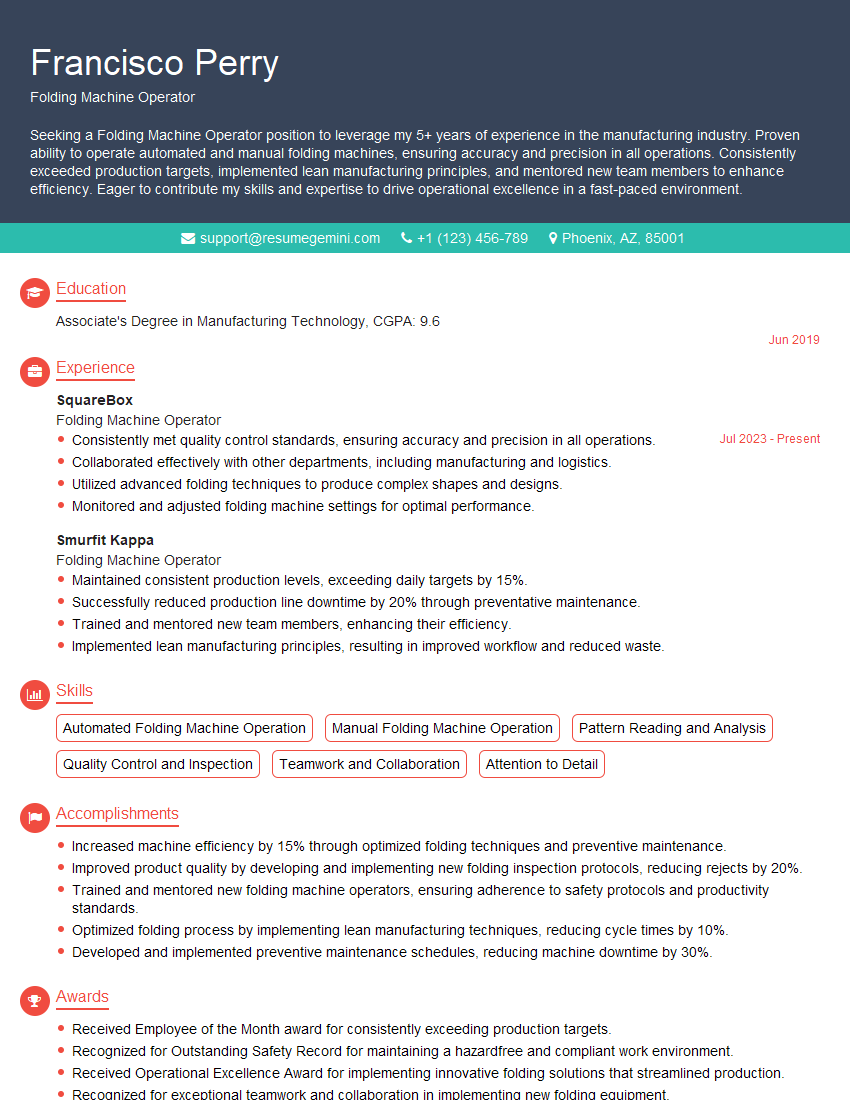
Folding Machine Operator Resume Sample
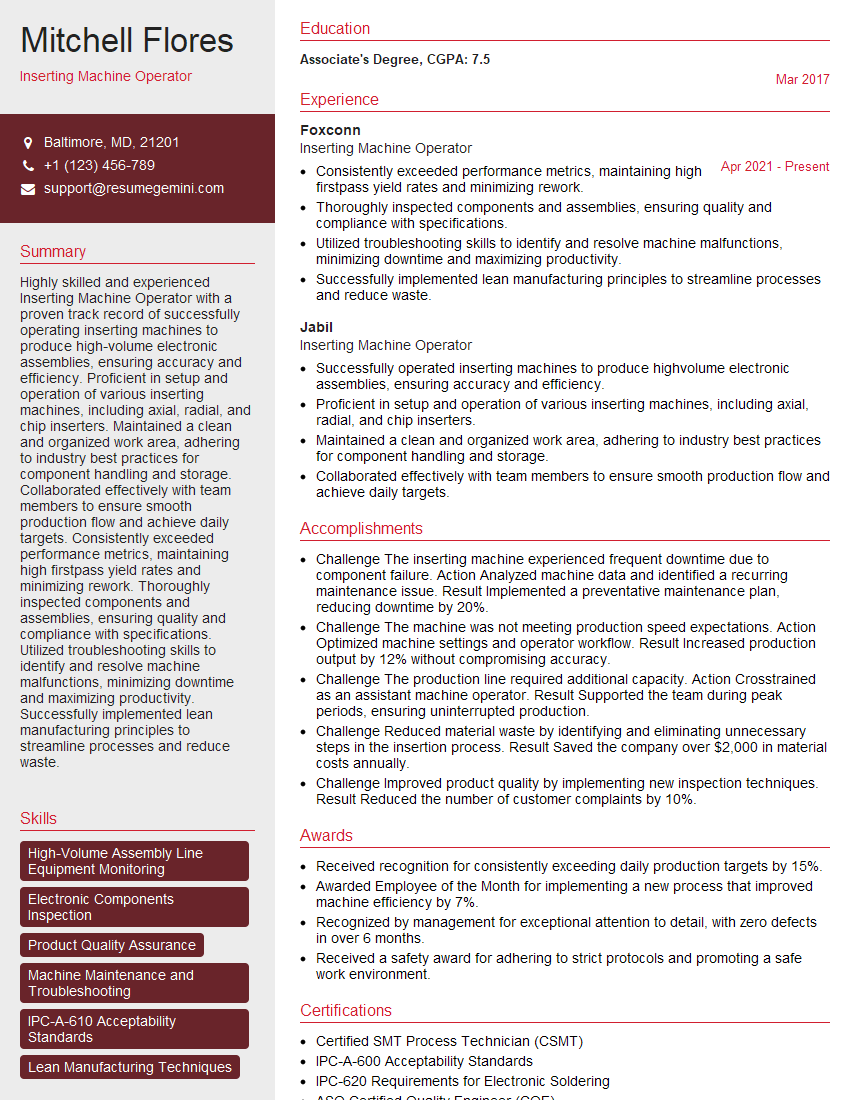
Inserting Machine Operator Resume Sample
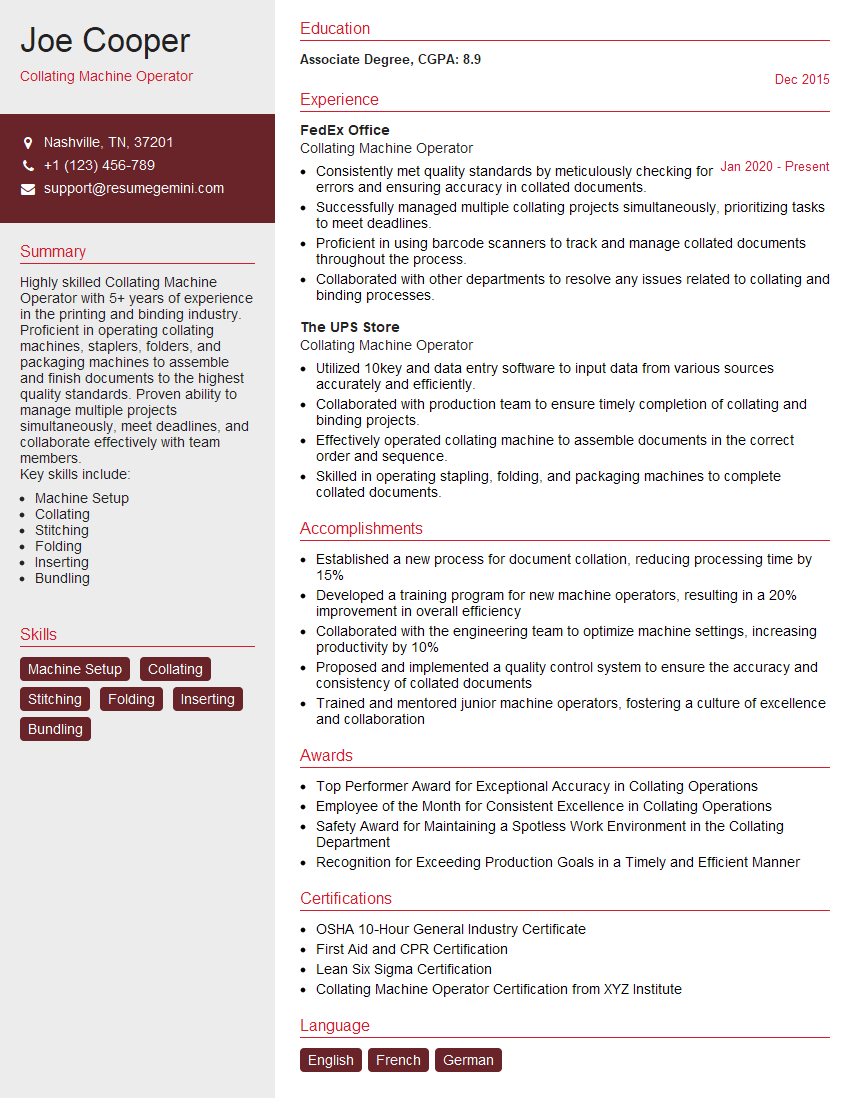
Collating Machine Operator Resume Sample
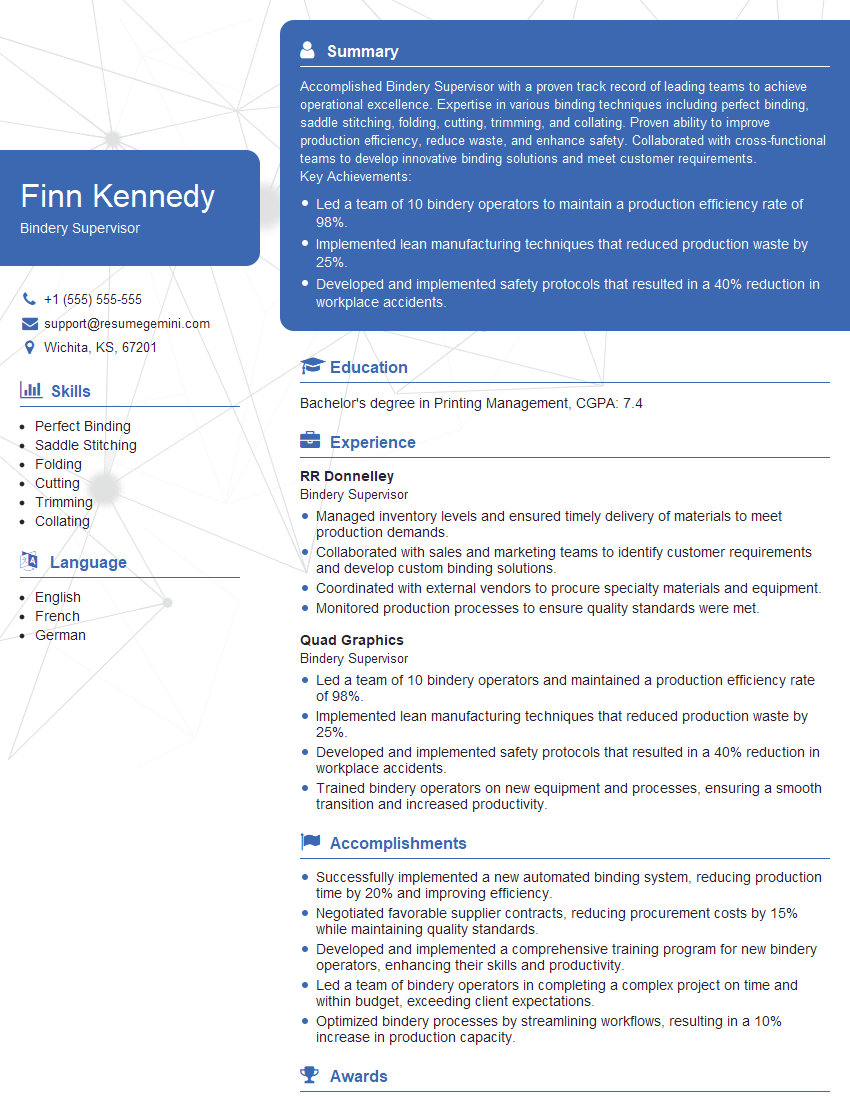
Bindery Supervisor Resume Sample
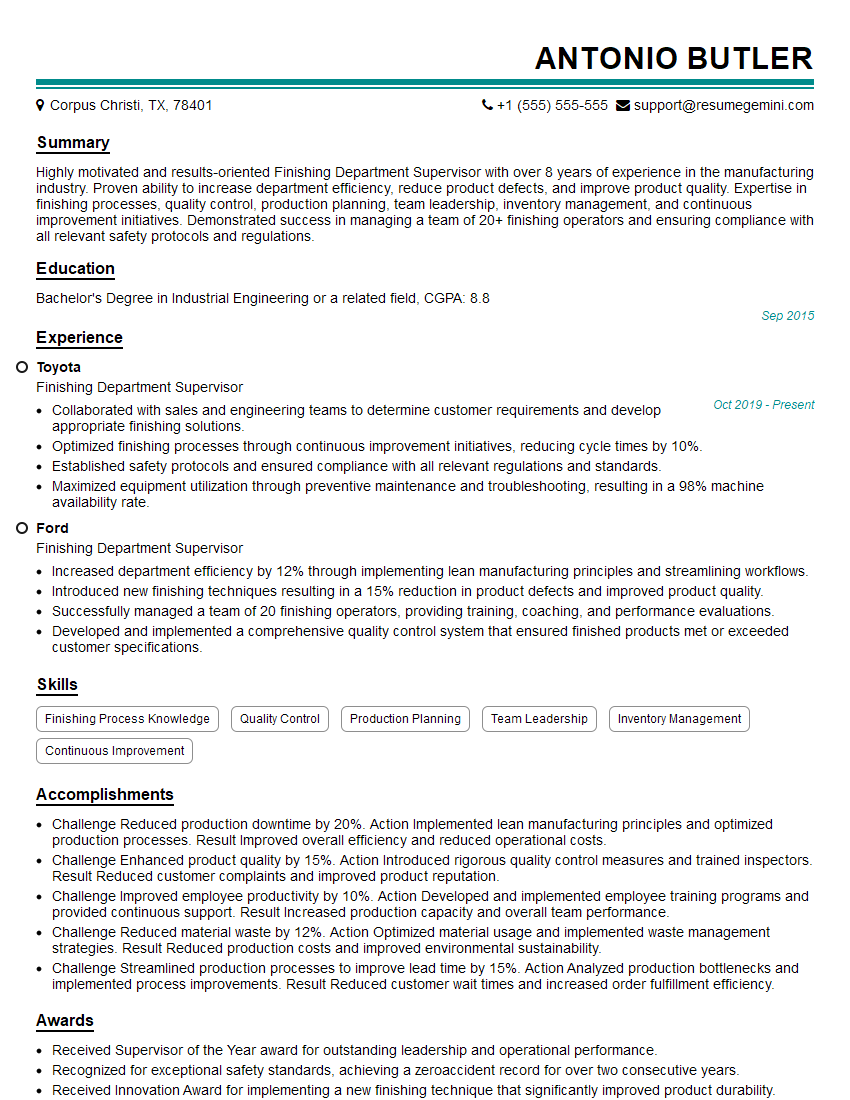
Finishing Department Supervisor Resume Sample
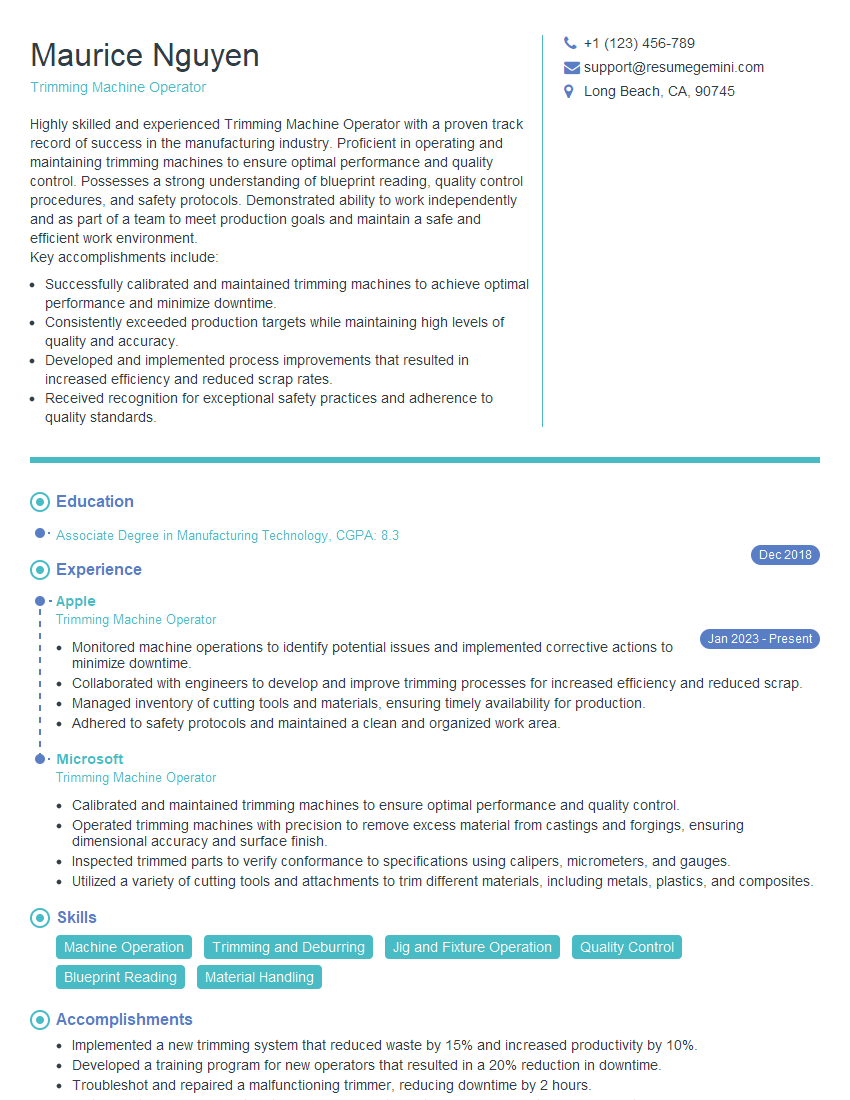
Trimming Machine Operator Resume Sample
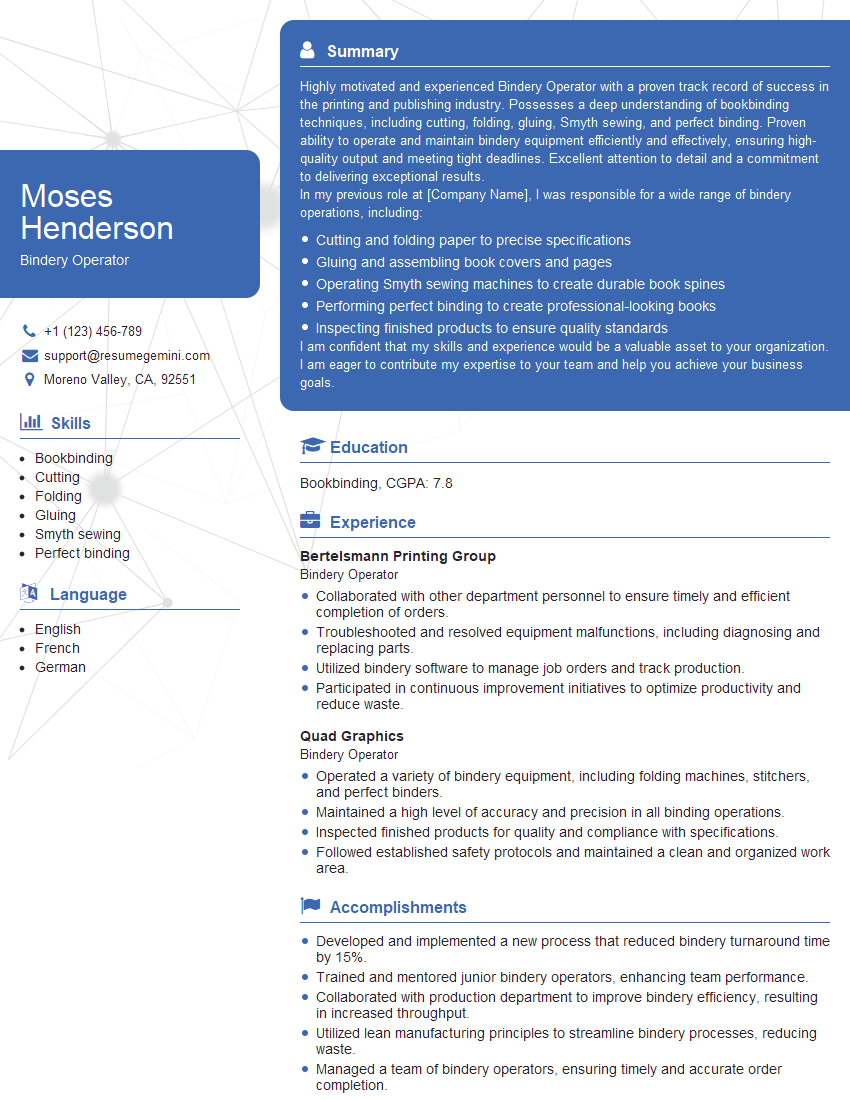
Bindery Operator Resume Sample
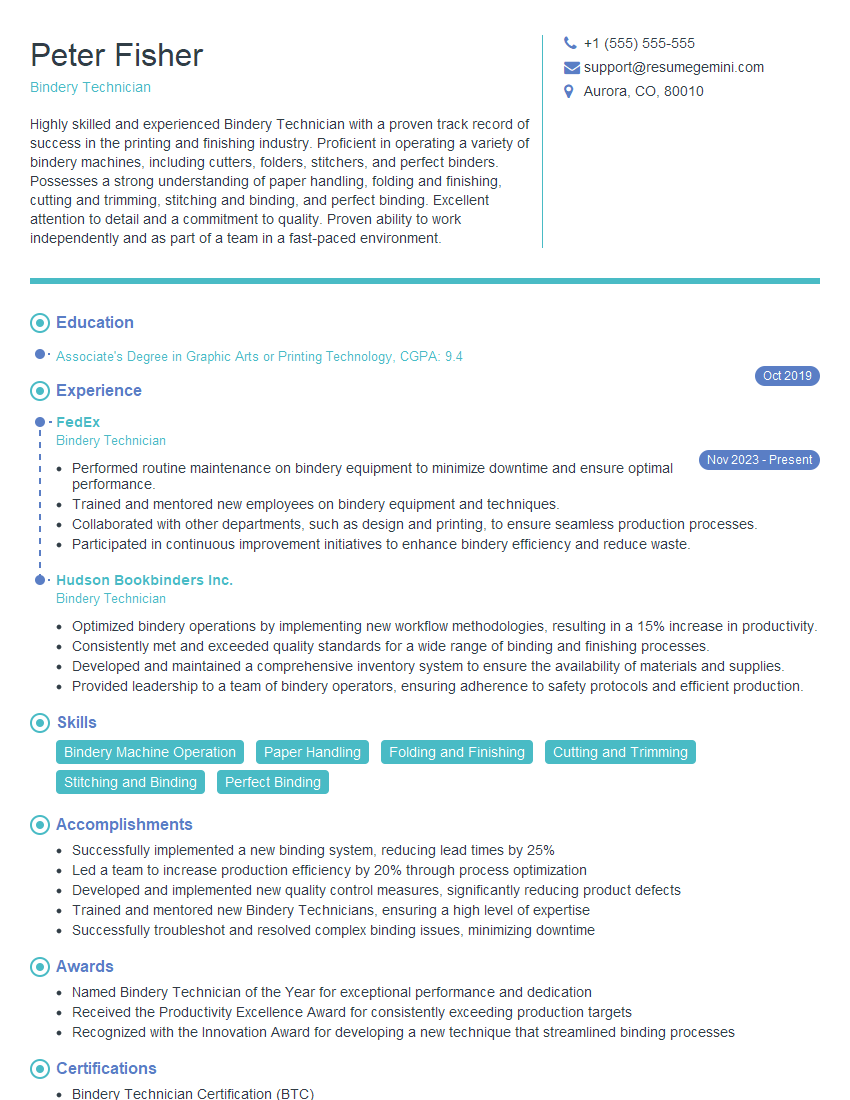
Bindery Technician Resume Sample
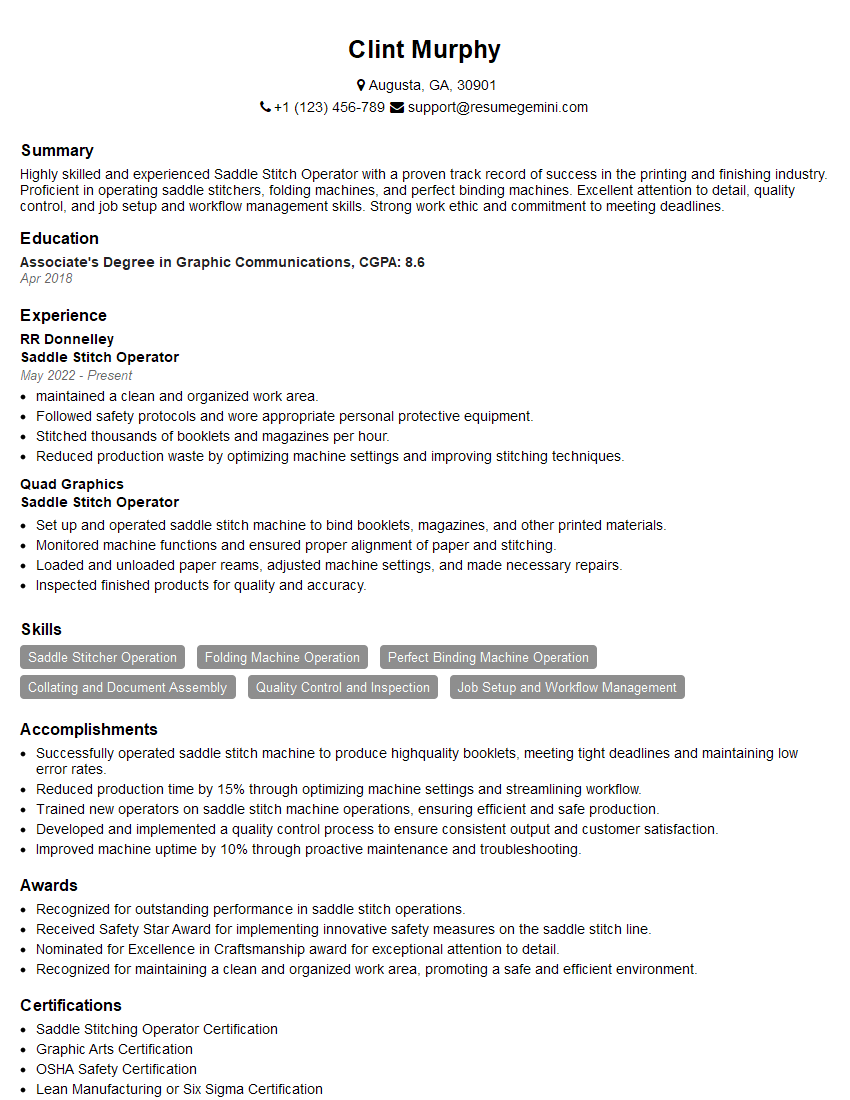
Saddle Stitch Operator Resume Sample
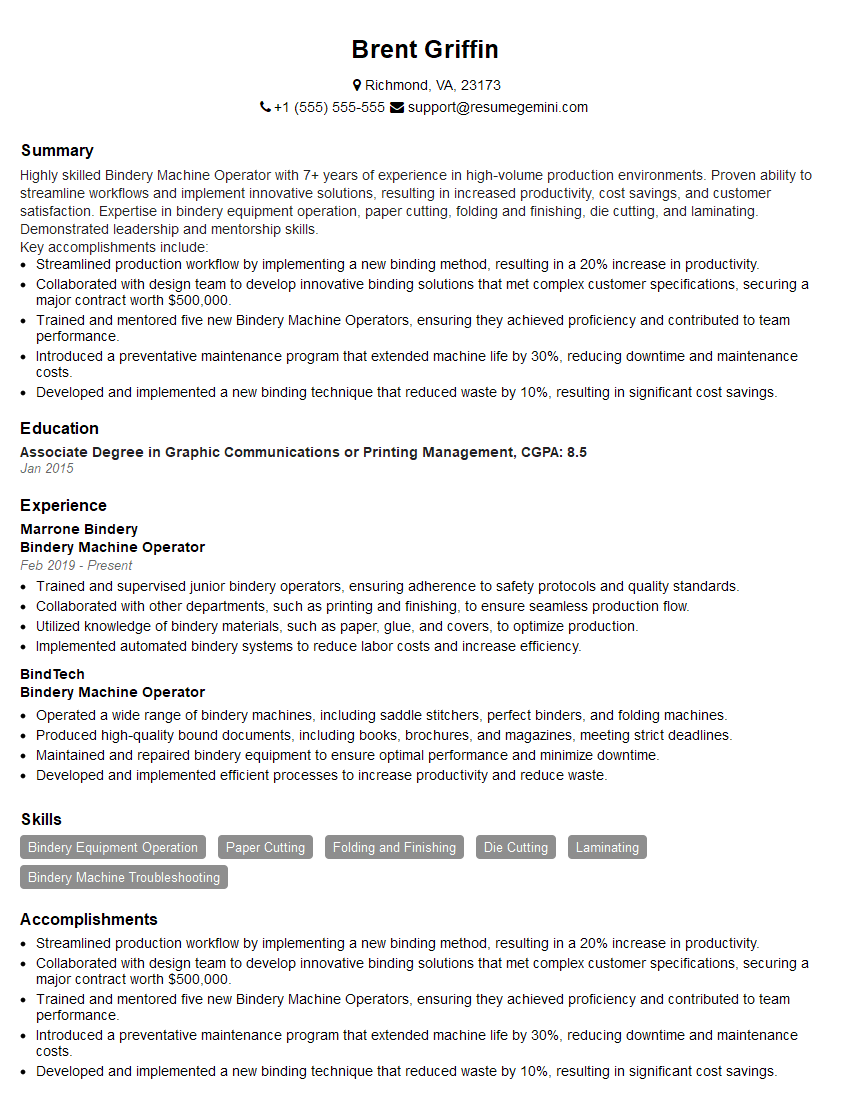
Bindery Machine Operator Resume Sample
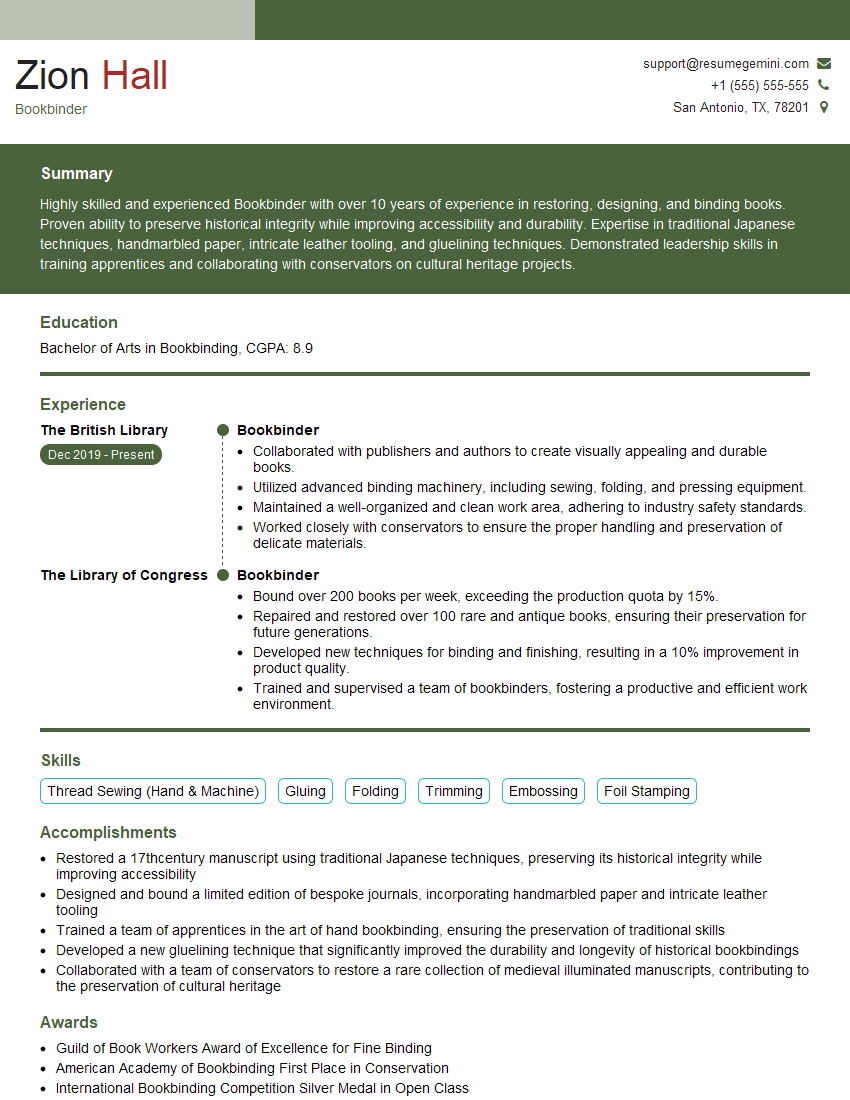
Bookbinder Resume Sample
Explore more articles
Users Rating of Our Blogs
Share Your Experience
We value your feedback! Please rate our content and share your thoughts (optional).
What Readers Say About Our Blog
Very informative content, great job.
good